To see original records you will have to either visit us in Kew or, if you can locate document references, order copies.
This is a brief guide to researching records of an apprentice or master. Official records of apprentices were kept in England and Wales between 1710 and 1811, when stamp duty was payable on indentures of apprenticeship. Registers of the duty paid were kept by the Commissioners of Stamps.
What do I need to know before I start?
You may not be able to find records for common trades such as weaving or other 18th century industries because:
- informal indentures became increasingly common with fathers often teaching sons and nephews
- the Statute of Apprentices only applied to trades which existed when it was passed in 1563
Try to find out:
- the date of birth of the apprentice
- in which area they were apprenticed and where the stamp duty would have been paid
The indentures on which duty was payable cover Great Britain but not Ireland.
Online records
Apprenticeship books (1710-1811)
From 1710 to 1811 masters paid stamp duty for taking on apprentices. Details of the stamp duty paid were recorded in apprenticeship books. Search the apprenticeship books from 1710 to 1811 (IR 1) on Ancestry.co.uk (£) by name of master. Alternatively, you can browse the apprenticeship books on digital microfilm.
The apprenticeship books are divided into Town Registers (London, 1711-1811) and Country Registers (elsewhere, 1710-1808), depending on where the stamp duty was paid. There are original indexes of masters to some of these registers, available to view online, in IR 1/74-79. The catalogue description for each index indicates the series of volumes to which they refer (for example, IR 1/74 refers to volumes 22-25). These volume numbers equate to National Archives piece numbers (so, using the previous example, IR 1/74 refers to IR 1/22-25).
If the apprenticeship was in Middlesex or one of the home counties the duty may have been paid in London and the details entered in one of the London registers.
The payment could be made at the start of the apprenticeship or any time up to one year after the expiry of the indenture.
Indexes to apprenticeship books, 1710-1774
Search the indexes of apprentices from 1710 to 1774 on findmypast.co.uk (£)
Indexes to apprentices registered in the Merchant Navy, 1824-1910
Search by name the indexes of apprentices registered in the Merchant Navy between 1824 to 1910 (BT 150/1–53) on Ancestry (£).
These index the original indentures in BT 151 and BT 152. Please note only a sample of the original indentures survive – for more information see below.
Articles of clerkship, 1756-1874
Search articles of clerkship (KB 105-107) by name on Ancestry (£). These are the contracts between an apprentice clerk, who wanted to become an attorney or solicitor, and an attorney who agreed to train the clerk. The contracts were often entered into by fathers (or other sponsors) on their sons’ behalf.
Records available only at The National Archives at Kew
To access these records you will either need to visit us, pay for research (£) or, where you can identify a specific record reference, order a copy (£).
Apprenticeship records of the Merchant Navy, 1824-1953
Consult BT 150 for indexes of apprentices registered in the merchant service between 1824 to 1953. Please note the indexes for 1824-1910 are available online (see above).
The earlier volumes give:
- the apprentice’s name
- age
- the date and terms of his indenture
- the name of his master
- the port where he signed on and the name of the ship (in later volumes only)
Browse by date and by port BT 151 and BT 152 for samples of the original indentures, including some for fishing vessels. Please note only a sample survive (a two-month sample for every five years).
Apprenticeship records in the Admiralty, 19th century onwards
Browse records such as:
- ADM 12 under the headings ‘Boys’ (code 13) and ‘Apprentices in Dockyards’ (code 41.16)
- ADM 1 and ADM 106
- ADM 73/421 and ADM 73/448 for apprenticeship registers
- CSC 10 for marks and results of examinations of dockyard and artificer apprentices from 1876
Board of Trade papers, 1846-1895
Find references to apprenticeships in the indexes to papers (BT 19). Read the catalogue details for BT 19 to find related correspondence from various departments of the Board.
Poor Law union indexes and papers, 1836-1920
Find mentions of apprenticeships in the index of subjects (MH 15). This index may help you find additional related papers of individual Poor Law unions in MH 12.
These records relate to children of paupers and orphans who were apprenticed out by the guardians and overseers of the poor. They frequently relate to administrative and policy issues.
Records in other archives and organisations
Apprenticeships at London livery companies, 1442-1850
Search London Apprenticeship Abstracts 1442–1850, held at the Guildhall Library, on the Findmypast website (£) for apprenticeship records of London livery companies.
Livery companies, also known as guilds, were (and still are) trade and craft associations. They encompass a wide variety of trades, from fishmongers, butchers and grocers to blacksmiths, clothworkers and brewers. Not all London apprentices came from London.
Various apprenticeship records held at the London Archives
The London Archives hold a huge collection of records of companies and businesses mainly based in the ‘Square Mile’ of the City of London and in the wider Greater London region. These include records of company members and apprentices.
Various apprenticeship records held at local archives
A variety of apprenticeship records are held at county and metropolitan archives throughout the country. The National Archives’ catalogue contains collection and contact details of local archives around the UK and beyond. To locate these records, search our catalogue with keywords such as ‘apprenticeship’ and ‘indenture’ and refine your results to ‘Other archives’ using the filters.
Other resources
Books
Search The National Archives’ shop to see whether any of the publications below may be available to buy. Alternatively, look in The National Archives’ library catalogue to see what is available to consult at Kew.
Amanda Bevan, ‘Tracing your ancestors in The National Archives’ (The National Archives, 2006)
Paul Carter and Kate Thompson, ‘Sources for local historians’ (2005)
Websites
Visit the Children’s Homes website for information on apprenticeships and the training of poor children.
Journal articles
Read ‘The City Boys: records of London apprentices’ by C Webb and E Churchill (Ancestors, 21, 2004).
1. Why use this guide?
Use this guide if you are searching for records of people who worked for railway companies in the UK before the railways were nationalised in 1947.
It is only the larger railway companies for which we have comprehensive sets of staff records. These records cover a broad range of occupations connected with the railways, such as:
- engine drivers
- warehouse workers
- typists
- office managers
Please note that only a few records have survived for:
- men who worked on the construction of the railways
- the navvies
- casual employees
If you are not looking for staff records but want to find other railway records, such as official reports or records of accidents or locomotives, please consult our Railways guide.
2. Records since 1947
As a general rule, personnel records for staff who worked for the railways from 1948, during the period of nationalisation, have not been retained. For staff record cards, which contain summaries of employment, contact county record offices for each of the British Rail regions (as these are dispersed across regions).
For details of people employed by privately run railway companies operating since railway privatisation in 1994, and employed by these companies since 1 April 1994, contact Network Rail.
For the possible locations of staff records for the privatised train operating companies, contact the Association of Train Operating Companies (ATOC).
3. What records do we hold?
3.1 Salary registers
Salary registers cover clerical staff rather than railway operatives.
Salary registers seldom provide personal details other than date of birth, but they can record career changes.
Their primary purpose was to record details of:
- accident registers
- regular salaries
- salary increases
- benefits
- bonuses
- fines
3.2 Staff registers
The basis of most staff registers is financial. Most types of staff registers include:
- full name
- occupation
- place of work
An entry may include:
- the starting pay and any increases, bonuses and allowances
- detail fines for misdemeanours
- periods of absence and ill health can also be described, as well as any payment during ill health, or following medical discharge or retirement.
There can be a name index, either enclosed or in a separate volume.
3.3 Personnel records
Personnel records can vary in both format and content.
Some companies maintained administrative files on individuals or groups.
Files can also cover subjects, such as pensions, with papers relating to an individual’s circumstances.
Such papers may be bound or filed with material covering a variety of subjects.
3.4 Other records
These records can cover both clerical and operative staff. They can include:
- attendance logs
- discipline
- fine registers
- complaints files
- registers of joiners and leavers
- records of those receiving pensions or of members of staff associations
4. Online records
You can search for and download railway staff records of a number of railway companies, 1833-1956 at Ancestry.co.uk (£). These are records for employees of:
- Great Central Railway Company (the original records are in RAIL 226)
- Great Western Railway Company (the original records are in RAIL 264)
- London and North Eastern Railway Company (the original records are in RAIL 397)
- London and North Western Railway Company (the original records are in RAIL 410)
- London and South Western Railway Company (the original records are in RAIL 411)
- London, Brighton and South Coast Railway (the original records are in RAIL 414)
- London, Chatham and Dover Railway Company (formerly the East Kent Railway) (the original records are in RAIL 415)
- London, Midland and Scottish Railway Company (the original records are in RAIL 426)
- Manchester, Sheffield and Lincolnshire Railway Company (the original records are in RAIL 463)
- Midland Railway Company (the original records are in RAIL 491)
Most of these records date from before 1949.
Theses online records also include records from series RAIL 1156 of senior officials who served on the railways at the end of the 19th century and at the start of the 20th century, which include small biographies and photographs of senior officials. You can use RAIL 1156 if you are looking for:
5. Online record summaries
Use our catalogue to search by name for free summaries of:
- service registers of clerks employed by the Great Western Railway (1835-1962) in RAIL 264
- staff registers for 4,586 members of staff who worked on the North London Railway (1848-1920) in RAIL 529
Alternatively you may wish to browse the registers of clerks in RAIL 264 and the staff registers in RAIL 529/130-138. Copies of the records themselves are available online at Ancestry.co.uk (£) (see section 4).
6. Original records: railway staff in Britain
As there is no central name index for employees who worked on the railways, to find most records (besides those covered in sections 4 and 5) you will usually need to know:
- the name of railway company for which they worked
- the type of work undertaken
- their place of residence or employment
It may also help to know:
- date of birth (or date of death if applicable)
- or time of employment
To search for original records follow these steps:
Step 1: Establish the company
Before you search for records, you need to know which company the individual worked for. If you know this piece of information, go to step 2.
If you do not know, consult:
- the British Railways Pre-Grouping Atlas and Gazetteer or one of the Railway and Commercial Gazetteers as they may show which companies owned or operated through a particular station
- the census returns or records of births, marriages and deaths may sometimes record employment on the railways and the name of railway companies
Step 2: Establish if staff records exist and the series reference for the company in question
Consult Appendix 1 for a list of surviving staff records by company, with their National Archives record series reference at the end of this guide. Where a company has amalgamated with or been taken over by another company, the staff records of both companies may need to be checked.
Step 3: Establish catalogue search terms
Staff records can be arranged by:
- place of work
- staff number
- the department or office for which the individual worked, such as Carriage Works
If these are known, then it is relatively straightforward to choose the relevant document reference from Appendix 1.
However, there are alternative terms commonly used in the catalogue descriptions for each occupation so you may need to check for various terms.
Some common variants are in the following table:
| Occupation | Common catalogue index term |
|---|---|
| Guards; Porters; Signalmen | Traffic; Coaching |
| Engine drivers; Enginemen; Firemen; Cleaners; Wagon repairers; Workshop staff | Locomotive; Locomotive, Carriage and Wagon |
| Staff handling collection, delivery or merchandise | Goods Handling; Commercial |
| Track maintenance staff (platelayers); Staff engaged on bridge and station construction and maintenance | Signal; Signal and Telegraph |
| Management and clerical staff | Accountants; Audit Office; Headquarters; Divisional Superintendent; Secretary’s Office; Clerical Staff |
Further details of search terms for staff trades and occupations can be found in Appendix 2 of this guide, below (see also Appendix 6 of D T Hawkings’ Railway Ancestors).
Step 4: Search our catalogue
Using our catalogue, try searching using the index terms outlined in Step 3, restricting your search to the appropriate record series as detailed in Step 2.
7. Original records: railway staff overseas
Little information is held on British railway staff working overseas, and there is no specific railway staff index to the surviving material. Searches will be speculative and time-consuming.
Occasional references to individuals may, however, be found amongst the records of the Colonial, Dominions or Foreign Offices (The National Archives’ department codes CO, DO or FO).
The best period for finding such career information is the 1920s and 1930s. This was a time of general retrenchment in the colonial service and appeals against being laid off or for compensation often includes career details.
For more information on how on these records read our guides:
8. Records in other archives and elsewhere online
Appendix 3 of Railway Records: A Guide to Sources by C J Edwards provides a guide to which record offices might hold the records of which railway companies.
The Cheshire Record office provides an index to railway staff registers for:
- Cambrian Railway
- Great Western Railway
- London and North Western Railway
- London and North Western
- Great Western Joint Railway
To identify other archives which may hold records do a keyword search on our catalogue find out what is held elsewhere.
Use the search engine on the National Railway Museum website, York, which holds staff magazines of the major railway companies of the 20th century, and which feature staff promotions, retirements, awards and photographs.
Consult the ‘Railway records across the land’ resource on ‘All change!’ on Britain’s railways.
9. Further reading
Some or all of the recommended publications below may be available to buy from The National Archives’ shop. Alternatively, search The National Archives’ Library to see what is available to consult at Kew.
Cliff Edwards, Railway records: a guide to sources (Public Record Office, 2001)
David T Hawkings, Railway ancestors (A. Sutton, 1995)
Tom Richards, Was your grandfather a railwayman? A directory of railway archive sources for family historians (Federation of Family History Societies, 2002)
10. Appendix 1: Staff records by company
The table below provides the document series reference for every railway company whose staff records have been preserved at The National Archives.
These records can include staff registers, salary registers and personnel files as well as:
- apprenticeship indentures
- photographs
- accident books
- pension records
* The covering dates given in the table below should be treated with caution. Sometimes the opening dates refer to the date of birth of the oldest member of staff whose service is covered by the records.
| Name of company | Covering dates* | Series reference |
|---|---|---|
| Ashby and Nuneaton Junction Railway | 1902-1911 | RAIL 410/1801 |
| Barry Railway | 1886-1923 | RAIL 23/46-60, RAIL 23/64-65, RAIL 1057/2245 |
| Birkenhead Railway | 1849-1925 | RAIL 35/24/5, RAIL 35/33-35, RAIL 35/38, RAIL 35/45, RAIL 35/46, RAIL 35/51 |
| Bodmin and Wadebridge Railway | 1863-1884 | RAIL 57/19 |
| Blyth and Tyne Railway | 1853-1856 | RAIL 56/6 |
| Brandling Junction Railway | 1839-1843 | RAIL 64/8 |
| Brecon and Merthyr Tydfil Junction Railway | 1880-1922 | RAIL 65/31-35 |
| Burton and Ashby Light Railway | 1906-1920 | RAIL 491/1038 |
| Cambrian Railway | 1898-1944 | RAIL 92/136, RAIL 92/140, RAIL 92/142-148, RAIL 1057/1995/1-117 |
| Cardiff Railway | 1869-1923 | RAIL 97/32-43 |
| Carmarthen and Cardigan Railway | 1865-1875 | RAIL 99/57-60 |
| Cheshire Lines Committee | 1913-1926 | RAIL 110/160, RAIL 783/333, RAIL 783/369, RAIL 783/370-372, RAIL 783/374 |
| Chester and Holyhead Railway | 1856-1862 | RAIL 113/53, RAIL 1057/2857 |
| Cleator and Workington Junction Railway | 1879-1923 | RAIL 119/13 |
| Cleobury and Mortimer and Dutton Priors Railway | 1908-1919 | RAIL 1057/410/2 |
| Cornwall Railway | 1854-1889 | RAIL 134/16, RAIL 134/40, RAIL 134/60, RAIL 134/62, RAIL 134/149 |
| Cowbridge Railway | 1862-1872 | RAIL 1057/1834 |
| Darlington and Barnard Castle Railway | 1856 | RAIL 149/27 |
| East and West Junction Railway | 1873 | RAIL 56/6 |
| East Lincolnshire Railway Joint Committee | 1848-1850 | RAIL 177/21 |
| East London Railway Joint Committee | 1884 | RAIL 179/37 |
| Eastern Counties Railway | 1851-1857 | RAIL 186/105, RAIL 1016/1/64, RAIL 1021/11/13 |
| Eden Valley Railway | 1858 | RAIL 189/2 |
| Furness Railway | 1852-1922 | RAIL 214/97-104 |
| Great Central Railway | 1857-1949 | RAIL 226/178-179, RAIL 226/192-235, RAIL 226/386, RAIL 226/386, RAIL 226/508, RAIL 226/637, RAIL 1174/213, RAIL 1174/276-280 |
| Great Eastern Railway | 1855-1930 | RAIL 227/342, RAIL 227/371, RAIL 227/445-490, RAIL 227/510, RAIL 227/514-535, RAIL 227/540-553, RAIL 463/217-221 |
| Great North of England Railway | 1840-1847 | RAIL 232/54-55 |
| Great Northern Railway | 1848-1943 | RAIL 236/600, RAIL 236/727-745, RAIL 393/225-226, RAIL 783/331, RAIL 783/383-387, RAIL 1174/305-309 |
| Great Western and Midland Railways Joint Committee | 1865-1915 | RAIL 241/28 |
| Great Western Railway | 1840-1967 | RAIL 264, RAIL 253/454, RAIL 257/6-8, RAIL 270/1-30, RAIL 276/22, RAIL 278/5, RAIL 1014/22-27, RAIL 1014/33, RAIL 1014/36, RAIL 1014/37, RAIL 1014/48, RAIL 1014/49 |
| Hampstead Junction Railway | 1857-1860 | RAIL 291/6-7 |
| Hartlepool Dock and Railway | 1832-1842 | RAIL 294/48-50 |
| Hull and Barnsley Railway | 1885-1927 | RAIL 312/77-81, RAIL 312/130 |
| Hull and Holderness Railway | 1859 | RAIL 313/22 |
| Hull and Selby Railway | 1845-1875 | RAIL 315/30 |
| Isle of Wight Central Railway | 1860-1933 | RAIL 328/16-18 |
| Lancashire and Yorkshire and Great Northern Joint Stations Committee | c.1906 | RAIL 341/7 |
| Lancashire and Yorkshire Railway | 1853-1941 | RAIL 343/725, RAIL 343/748, RAIL 343/750-751, RAIL 343/827-845, RAIL 623/67-68 |
| Lancashire, Derbyshire and East Coast Railway | 1904-1906 | RAIL 344/56 |
| Leeds Northern Railway | 1847-1858 | RAIL 357/29, RAIL 357/33, RAIL 357/36-40 |
| Liverpool and Manchester Railway | 1845 | RAIL 371/22, RAIL 371/23 |
| Llanelli Railway and Dock | 1873 | RAIL 377/30 |
| London and Birmingham Railway | 1833-1847 | RAIL 384/126, RAIL 384/284-291 |
| London and North Eastern Railway | 1897-1947 | RAIL 397, RAIL 390/897, RAIL 390/928, RAIL 390/938, RAIL 390/992, RAIL 390/1019, RAIL 390/1037, RAIL 390/1053, RAIL 390/1059, RAIL 390/1076, RAIL 390/1081, RAIL 390/1095, RAIL 390/1107, RAIL 390/1177, RAIL 390/1188, RAIL 390/1190, RAIL 390/1201, RAIL 390/1206, RAIL 390/1107, RAIL 390/1112, RAIL 390/1126, RAIL 390/1131, RAIL 390/1170, RAIL 390/1177, RAIL 390/1186, RAIL 390/1189, RAIL 390/1201, RAIL 390/1202, RAIL 390/1206, RAIL 390/1208-10, RAIL 390/1214, RAIL 390/1217, RAIL 390/1220, RAIL 390/1226, RAIL 390/1234, RAIL 390/1236, RAIL 390/1237, RAIL 390/1238, RAIL 390/1242-43, RAIL 390/1245, RAIL 390/1247-48, RAIL 390/1258-59, RAIL 390/1262, RAIL 390/1264, RAIL 390/1280-1282, RAIL 390/1289, RAIL 390/1294, RAIL 390/1297, RAIL 390/1300, RAIL 390/1577, RAIL 393/170, RAIL 393/226, RAIL 393/225-226, RAIL 397/1-3, RAIL 397/6, RAIL 397/8, RAIL 397/11-13 |
| London and North Western and Furness Railways Joint Committees | 1899-1906 | RAIL 403/7 |
| London and North Western and Great Western Joint Committee | 1871-1897 | RAIL 404/177-180 |
| London and North Western and Lancashire and Yorkshire Railways Joint Committee | 1861-1913 | RAIL 405/43, RAIL 405/44 |
| London and North Western and Midland Railways Joint Committee | 1861-1911 | RAIL 406/16 |
| London and North Western Railway | 1853-1873 1831-1927 |
RAIL 410/1217-1219, RAIL 410/1797-1986, RAIL 410/1267-1268, RAIL 410/127-1271, RAIL 410/1402, RAIL 410/2212-2222 |
| London and South Western Railway | 1838-1944 | RAIL 411/483-537 , RAIL 411/665-667, RAIL 411/673 |
| London, Brighton and South Coast Railway | 1837-1925 | RAIL 414/600-611, RAIL 414/630, RAIL 414/636, RAIL 414/750-796, RAIL 414/863-873 |
| London, Chatham and Dover Railway (formerly the East Kent Railway ) | 1859-1918 | RAIL 415/104, RAIL 415/108-111, RAIL 415/173, RAIL 415/279 |
| London, Midland and Scottish Railway | 1923-1947 | RAIL 426/1-15, RAIL 421/13, RAIL 1015/8 |
| London, Midland and Scottish, and London, and North Eastern Railways Joint Committee | 1891-1938 | RAIL 417/16 |
| London, Tilbury and Southend | 1871-1923 | RAIL 437/44-57 |
| Lynton and Barnstaple Railway | 1921-1924 | RAIL 1172/51 |
| Manchester and Milford Railway | 1873 1880 1905-1911 |
RAIL 456/13, RAIL 456/15 |
| Manchester, Sheffield and Lincolnshire Railway | 1847-1926 | RAIL 463/174, RAIL 463/176-177, RAIL 463/210-250, RAIL 463/305-315 |
| Manchester South Junction and Altringham Railway | 1905-1908 | RAIL 465/55, RAIL 465/56 |
| Maryport and Carlisle Railway | 1861-1912 1917 |
RAIL 472/50-51, RAIL 472/53 |
| Mersey Railway | 1885-1907 | RAIL 475/41 |
| Midland and Great Northern Railways Joint Committee | 1879-1893 | RAIL 487/78-80, RAIL 487/115 |
| Middlesborough and Guiseborough Railway | 1853 | RAIL 483/26 |
| Middlesborough and Redcar Railway | 1845-1857 | RAIL 484/33, RAIL 484/40, RAIL 484/41, RAIL 484/46 |
| Midland and South Western Junction Railway | 1891-1921 | RAIL 489/21 |
| Midland Railway | 1864-1924 | RAIL 491/969-1081, RAIL 491/1259 |
| Mid-Wales Railway | 1862-1902 | RAIL 482/17 |
| Monmouthshire Railway and Canal Company | 1801-1877 | RAIL 500/43, RAIL 500/57, RAIL 500/65-68, RAIL 500/74, RAIL 500/80 |
| Neath and Brecon Railway and Canal | 1872-1921 | RAIL 505/13, RAIL 1057/2420, RAIL 1057/2431 |
| Newcastle and Carlisle Railway | 1845-1862 | RAIL 509/58, RAIL 509/96, RAIL 509/128-129 |
| Newcastle and Darlington Junction Railway | 1847-1848 | RAIL 772/121 |
| North and South Western Junction Railway | 1883-1916 | RAIL 521/19 |
| North Eastern Railway | 1843-1957 | RAIL 527/974, RAIL 527/977, RAIL 527/1043-1044, RAIL 527/1049, RAIL 527/1058, RAIL 527/1092, RAIL 527/1895-1898, RAIL 527/1902, RAIL 527/1909-1913, RAIL 527/1917-1965, RAIL 527/1984, RAIL 527/2255, RAIL 527/2258, RAIL 527/2272-2279, RAIL 667/1500 |
| North London Railway | 1854-1920 | RAIL 529/130-138 |
| North Midland Railway | 1840-1844 | RAIL 530/10 |
| North Staffordshire Railway | 1847-1923 | RAIL 532/58-67 |
| North Sunderland Railway | 1893-1948 | RAIL 533/75-76 |
| Otley and Ilkley Joint Line Committee | 1865-1901 | RAIL 554/24-25 |
| Oxford Worcestershire and Wolverhampton Railway | 1856 | RAIL 558/32 |
| Port Talbot Railway and Docks | 1883-1918 | RAIL 574/13, RAIL 1057/1568/11, RAIL 1057/2484, RAIL 1057/2504-2505, RAIL 1057/2643-2646 |
| Railway Clearing House | 1842-1960 | RAIL 1085/14, RAIL 1085/71, RAIL 1085/128, RAIL 1096/3, RAIL 1172/1701-1708 |
| Rhondda and Swansea Bay Railway | 1882-1922 | RAIL 581/36-37, RAIL 1057/2013-2014 |
| Rhymney Railway | 1860-1922 | RAIL 583/41-65, RAIL 1057/1642 |
| Sheffield District Railway | 1897-1916 | RAIL 611/25-26 |
| Shrewsbury and Hereford Railway | 1848-1862 | RAIL 617/29 |
| Shropshire Union Railways and Canal | 1844-1897 | RAIL 623/66-68 |
| Somerset and Dorset Railway | 1863-1877 | RAIL 627/6 |
| Somerset and Dorset Joint Line Committee | 1877-1928 | RAIL 626/44-53, RAIL 972/1 |
| South Devon Railway | 1858-1870 | RAIL 631/28, RAIL 631/39, RAIL 631/108 |
| South Durham and Lancashire Union Railway | 1858-1864 | RAIL 632/61, RAIL 632/56 |
| South Eastern Railway (including London, Deptford and Dover Railway) | 1845-1944 | RAIL 635/196-197, RAIL 635/196, RAIL 635/201-204, RAIL 635/206, RAIL 635/302-310, RAIL 635/399, RAIL 1057/2935 |
| South Eastern and Chatham Railway Companies Managing Committee | 1850-1944 | RAIL 633/343-382, RAIL 633/440-450, RAIL 1025/80 |
| South Wales Railway | 1844-1864 | RAIL 640/30, RAIL 640/45, RAIL 640/47, RAIL 640/52, RAIL 640/55, RAIL 640/56 |
| Southern Railway | 1923-1957 | RAIL 651/1-10 |
| Stockton and Darlington Railway | 1825-1925 | RAIL 667/261-262, RAIL 667/432, RAIL 667/484, RAIL 667/504, RAIL 667/523, RAIL 667/555, RAIL 667/594, RAIL 667/603, RAIL 667/616, RAIL 667/676, RAIL 667/956, RAIL 667/1077, RAIL 667/1117, RAIL 667/1283-1291, RAIL 667/1301-1311, RAIL 667/1326, RAIL 667/1426-1427, RAIL 667/1450-1455, RAIL 667/1497-1529, RAIL 667/1530-1532, RAIL 1057/2885 |
| Stratford Upon Avon Railway | 1858 | RAIL 675/24 |
| Stratford Upon Avon and Midland Junction Railway | 1873-1923 | RAIL 674/11 |
| Swindon and Cheltenham Railway | 1884-1887 | RAIL 1057/318, RAIL 1057/319, RAIL 1057/351 |
| Taff Vale Railway | 1890-1924 | RAIL 684/55, RAIL 684/73-82, RAIL 684/94-120, RAIL 1057/1857/2 |
| Tees Valley Railway | 1865-1870 | RAIL 687/16 |
| Tottenham and Hampstead Junction Railway Joint Committee | 1863-1936 | RAIL 697/9-12 |
| Trent Valley Railway | 1845-1846 | RAIL 699/5 |
| Vale of Glamorgan Railway | 1894-1922 | RAIL 1057/1021, RAIL 1057/2245-2248 |
| Vale of Neath Railway | 1851-1904 | RAIL 704/17 RAIL 1057/2951 |
| Watton and Swaffham Railway | 1875 | RAIL 714/7 |
| West Cornwall Railway | 1833-1851 | RAIL 725/6 |
| Wear and Derwent Junction Railway | 1846 | RAIL 716/7 |
| West London Extension Railway | 1862-1897 | RAIL 623/67 |
| Whitehaven and Furness Junction Railway | 1856 | RAIL 744/9 |
| Whitland and Cardigan Railway | 1876-1877 1883 |
RAIL 747/21, RAIL 747/35-38 |
| Whitland and Taff Vale Railway | 1876-1880 | RAIL 747/35, RAIL 747/37 |
| Wiltshire, Somerset and Weymouth Railway | 1845-1858 | RAIL 750/14-16 |
| Wirral Railway | 1884-1926 | RAIL 756/10, RAIL 756/11 |
| Wrexham and Ellesmere Railway | 1898-1901 | RAIL 1057/632 |
| Wycombe Railway | 1858-1861 | RAIL 768/14 |
| York and North Midland Railway | 1843-1855 | RAIL 770/46, RAIL 770/66, RAIL 770/77-81 |
| York and Newcastle Railway (Newcastle and Darlington Junction) | 1847-1848 | RAIL 772/121 |
| York Newcastle and Berwick Railway | 1845-1860 | RAIL 772/60-62, RAIL 772/77, RAIL 772/79, RAIL 772/99, RAIL 772/106, RAIL 772/121, RAIL 772/123-125 |
11. Appendix 2: Search terms for railway occupations
| Occupation | Search term | Occupation | Search term |
|---|---|---|---|
| Accountants | Office staff | Adzers | Engineering staff |
| Asphalters | Engineering staff | Auditors | Office staff |
| Blacksmiths | Engineering staff | Boat Builders | Engineering staff |
| Boatmen | Engineering staff | Boilermakers | Engineering staff |
| Book carriers | Cartage staff | Bookers | Goods Staff |
| Booking office clerks | Station staff | Booking office clerks | Goods Staff |
| Brass finishers | Engineering staff | Bricklayers | Engineering staff |
| Bus conductors | Cartage staff | Bus drivers | Cartage staff |
| Busmen | Cartage staff | ||
| Callers off | Goods Staff | Canalmen | Engineering staff |
| Capstan Men | Goods Staff | Carmen | Cartage staff |
| Carriage cleaners | Maintenance staff | Cart drivers | Cartage staff |
| Carters | Cartage staff | Carters | Engineering staff |
| Chain boys | Cartage staff | Chainmen | Engineering staff |
| Checkers | Engineering staff Goods Staff |
Concrete makers | Engineering staff |
| Cleaners | Office staff Station staff |
Controllers | Engineering staff |
| Clerks | Goods Staff Office staff Station staff |
Crane testers | Engineering staff |
| Contracting staff | Engineering staff | Cranesmen | Engineering staff |
| Crane attendants | Goods Staff | Creosoters | Engineering staff |
| Deliverers | Goods staff | Dining car attendants | Operating staff |
| Drainmen | Engineering staff | Draymen | Cartage staff |
| Drivers | Engineering staff Operating staff |
||
| Electricians | Engineering staff | Engine drivers | Engineering staff |
| Erectors | Engineering staff | ||
| Fencers | Engineering staff | Firemen | Engineering staff Operating staff |
| Fitters | Maintenance staff | Flagmen (Steam rollers) | Engineering staff |
| Foreman porters | Station staff | ||
| Gangers | Engineering staff Maintenance staff |
Gas linemen | Engineering staff |
| Gasmen | Goods Staff | Gatemen | Engineering staff |
| Glaziers | Engineering staff | Goods Agents | Goods staff |
| Goods Guards | Operating staff | Grooms | Cartage staff |
| Handymen | Engineering staff | Hookers on | Goods Staff |
| Hotel Staff | Operating staff | Housekeepers | Cartage staff |
| Inspectors | Engineering staff | Inspectors | Station staff |
| Invoice clerks | Goods Staff | ||
| Kitchen staff | Operating staff | ||
| Labellers | Goods Staff | Labourers | Engineering staff |
| Lavatory attendants | Station staff | Lavatory attendants and cleaners | Engineering staff |
| Lengthmen | Maintenance staff | Lime Washers | Engineering staff |
| Loaders | Goods Staff | Lock-keepers | Engineering staff |
| Locksmiths | Engineering staff | Locomotive cleaners | Operating staff |
| Machine operators | Engineering staff | Machinists | Engineering staff |
| Managers | Office staff | Masons | Engineering staff |
| Messengers | Goods Staff Office staff Station staff |
Meter readers | Engineering staff |
| Number takers | Goods Staff | Nurserymen | Engineering staff |
| Office cleaners | Engineering staff | Office women | Engineering staff |
| Packers | Engineering staff | Painters | Engineering staff |
| Parcel porters | Station staff | Parcel van drivers | Cartage staff |
| Passengers | Engineering staff | Passengers guards | Operating staff |
| Paviors | Engineering staff | Pitchers | Engineering staff |
| Plankeepers | Engineering staff | Plasterers | Engineering staff |
| Platelayers | Maintenance staff | Platform inspectors | Station staff |
| Plumbers | Engineering staff | Porters | Goods Staff Station staff |
| Post firemen | Operating staff | ||
| Quarrymen | Cartage staff | ||
| Railway police | Operating staff Station staff |
Receivers | Goods Staff |
| Refreshment room staff | Station staff | Riveters | Engineering staff |
| Road roller drivers | Engineering staff | ||
| Sawyers | Engineering staff | Scaffolders | Engineering staff |
| Scalesmen | Goods Staff | Screw cutters | Engineering staff |
| Searchers | Goods Staff | Sheeters | Goods Staff |
| Shippers | Goods Staff | Ships’ crews (ferry) | Operating staff |
| Shunters | Goods Staff Operating staff |
Shunters and tallymen | Engineering staff |
| Shunt-horse drivers | Goods Staff | Signalmen | Operating staff |
| Slate counters | Goods Staff | Sleeper chairers | Engineering staff |
| Sleeping car attendants | Operating staff | Slip boys | Goods Staff |
| Stablemen/ostlers | Cartage staff | Station masters | Station staff |
| Stone weighers | Engineering staff | Storekeepers | Engineering staff |
| Storemen | Engineering staff | Strikers | Engineering staff |
| Telegraph operators | Office staff Station staff |
Ticket collectors | Station staff |
| Telephonists | Office staff | Timber measurers | Goods Staff |
| Timber loaders | Goods Staff | Timekeepers | Engineering staff |
| Timbermen | Engineering staff | Toolmen | Engineering staff |
| Toolboys | Engineering staff | ||
| Typists | Office staff Station staff |
||
| Van men | Cartage staff | Van settlers | Cartage staff |
| Van washers | Goods Staff | ||
| Wages clerks | Engineering staff Office staff |
Wagon berthers | Goods Staff |
| Wagoners | Cartage staff | Warehousemen | Goods Staff |
| Watchmen | Engineering staff | Weighers | Goods Staff |
| Winchmen | Goods Staff | ||
| Yard inspectors | Goods Staff | Yard loaders | Goods Staff |
| Yardsmen | Goods Staff |
1. Why use this guide?
This guide will direct you to the appropriate institutions and websites for information on funds in court. It includes advice on where to go to make a claim for funds you believe you are entitled to.
The National Archives holds some records that may assist such a claim. Section 3.2 provides advice on what those records are and how to search for them.
2. What are funds in court?
The law courts (particularly the Chancery Division of the High Court) look after money and property awarded through the courts to people who cannot be found, or are unable to look after it themselves, such as children, or to people with disabilities that mean they cannot make decisions for themselves. This money is known as funds in court and is administered by the Court Funds Office.
The main types of funds in court include:
- awards of the family court
- compensation from the Civil Injuries Compensation Board
- compensation under Compulsory Purchase Acts, in cases where either the ownership of the property is unknown or the owner refuses to accept it
- legacies, where missing heirs cannot be found
- money lodged for dissenting shareholders
- the net proceeds of sales from mortgage foreclosures, when the mortgagor cannot be traced
You can find more information on how the Court Funds Office manages your money on GOV.UK.
3. Making a claim for funds in court in England and Wales
The Court Funds Office makes most decisions about whether payments of funds should be made to claimants.
3.1 Making a claim for a deceased relative’s estate
Estates of people who died without leaving a will (known as intestate) and without known kin are called ‘bona vacantia’ and are looked after by the Crown. If you believe you are entitled to such an estate, you can make a claim to the Treasury Solicitor.
Find out how to make a claim on GOV.UK.
3.2 Making a claim for all other funds in court
Read the advice on unclaimed balances on the Ministry of Justice website to find out how to claim unclaimed funds in court.
You must show evidence to support your claim.
The main sources of evidence, some of which are available at The National Archives, are:
- orders of the High Court and County Court
- wills, probates and letters of administration
- birth, marriage and death registers
- census returns
The National Archives keeps orders of the court of Chancery up to 1955. If you would like to find an order in court, consult the entry books of decrees and orders in record series J 15. See the research guide Chancery equity suits after 1558 for advice on how to search these records.
Chancery orders from 1955 to 1966 were destroyed in error. After 1966, orders were placed in case files and only a small sample of these has been kept for each year.
Consult our research guides for advice on obtaining documentation of wills, births, marriages and deaths and the census.
4. Funds in court in Scotland and Ireland
4.1 Scotland
Enquiries concerning Scottish Estates which have fallen to the Crown in default of heirs, should be made to Queen’s and Lord Treasurer’s Remembrancer.
Contact the The Office of the Accountant of Court for enquiries concerning funds lodged in the court of session and other unclaimed sums resulting from company liquidations, bankruptcies, judicial factories and so on, if the funds were lodged in the last seven years. After seven years they are transferred to the Queen’s and Lord Treasurer’s Remembrancer.
4.2 Northern Ireland
For funds lodged in court in Northern Ireland since 1921, contact Court Funds Office in Belfast.
For records prior to 1921, contact the Accountant of Courts of Justice in Dublin.
4.3 Ireland
Contact the Accountant of the Courts of Justice in Dublin.
This is a guide to finding records of individual internees. During the First and Second World Wars both sides set up internment camps to hold enemy aliens – civilians who were believed to be a potential threat and have sympathy with the enemy’s war objectives. Internees were treated differently to prisoners of war and were given more privileges.
The National Archives does not hold registers of all internees. Very few records of individual internees survive for the First World War.
Online records
Records of enemy aliens and internees, First and Second World Wars
An array of records exist documenting people who were interned in the First and Second World Wars as well as of people who were exempted from internment. Many of these records are held within our Home Office collections (identified by catalogue references beginning HO) and are available online.
Search for the records of enemy aliens and internees in the First and Second World Wars by first and last name on Findmypast.co.uk and Ancestry.co.uk (£). You can also browse the same collections of enemy aliens and internees by year and by record series.
Among these online collections is the Aliens Department internees index, 1939–1947, drawn from record series HO 396. The index cards which make up this series (example below) provide more detail than any other single record on individual internees. They document mostly Germans, Austrians and Italians, as well as their spouses, interned or considered for internment by tribunals during the Second World War. Most of the cards were originally issued in September 1939 when the first round of decisions on internment were made. They were reused for later tribunals that took place in the early 1940s when larger numbers of resident aliens were interned following panic in Britain about the course the war was taking. Those interned included Jewish refugees who had escaped Nazi persecution.
They contain personal details on the front and sometimes information about the individual’s case on the reverse. Access to records of individuals who were interned is partially restricted, with only the front of the internment card open to access without restriction (you can request the opening of restricted records under the Freedom of Information Act 2000 by filling out our Freedom of Information enquiry form or by writing to our Records Enquiry Service at The National Archives, Kew, Richmond, Surrey TW9 4DU. Cards for aliens who were considered for internment but were not actually interned, also held in HO 396, are open without restriction.
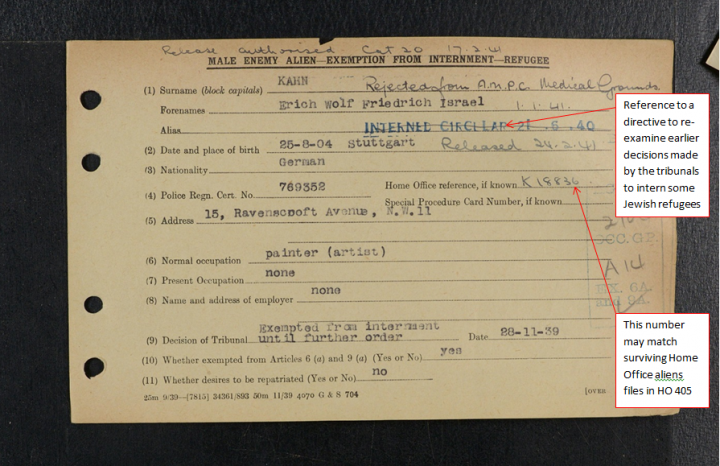
An Exemption From Internment Card (catalogue reference HO 396/180/00136). The card shows that although the person in question was exempted from internment in 1939, a decision was then made in 1940 to intern the individual, whose release was then authorised in 1941.
Details of the other record series from which the online collection on Findmypast is drawn are below:
-
- First World War internment lists in HO 144/11720, 1915 and 1918
- Central Register of Aliens in United Kingdom; policy of internment and repatriation of alien enemies in HO 45/11522 Parts 1 and 2, 1914–1924
- reception and internment of aliens: list of internees in PCOM 9/661–662, 1938–1946
- nominal rolls for various internment camps at Isle of Man: HO 215/469 (Hutchinson), HO 215/471 (Metropole), HO 215/473 (Mooragh), HO 215/475 (Onchan), HO 215/478 (Port Erin) and HO 215/502 (married camp)
- register of some 2,000 enemy aliens interned during the First World War in England and Wales in HO 45/11522/287235
Passenger lists (which may include details of deported enemy aliens), 1939–1942
For the first two years of the Second World War about 8,000 enemy aliens were temporarily interned in British camps prior to being deported to the colonies and the dominions.
Search and download lists of passengers leaving from UK and Irish ports travelling to places such as Canada, India, New Zealand and Australia, including deported internees, on the findmypast.co.uk (£) website.
Many ships carrying internees were torpedoed at sea in enemy action and these losses led to the end of the policy of deporting internees.
Prisoners of war records, 1715–1945
Search and download selected prisoners of war records 1715-1945 from Findmypast (£). These include some civilian internees.
Security Service Personal Files, 1913–1983
Security Service Personal Files may include records of former internees in which the Security Service took an interest. Search among the Security Service Personal Files (KV 2) by name and/or date/year of birth.
Records available only at The National Archives in Kew
To access these records you will either need to visit us, pay for research (£) or, where you can identify a specific record reference, order a copy (£).
German record cards of British and Commonwealth prisoners of war and civilian internees, Second World War
Search by name for details of several hundred captured allied civilians as recorded on German record cards. These are among the records primarily of prisoners of war held by German authorities during the Second World War, in series WO 416. Records remain closed for those individuals born less than 100 years ago.
Channel Island civilians deported and interned in Germany
German forces deported and interned 2,300 Channel Islands civilian residents to camps in Germany. These were mainly residents born in the UK mainland. Lists of those deported can be found in HO 144/22920. Reports of deaths and injuries sustained in camps are in HO 45/25164 and UK compensation claims against Germany by those who were deported are in FCO 33/12437-12441
Allied Civilians interned in the Far East, 1941-1945
Consult CO 980 for civilian internees detained when Singapore and Hong Kong were invaded by the Japanese. There are also files on conditions in prisoner of war and internee camps; and on aliens interned in British Colonial territories.
The card index, CO 1070, was created by the Prisoners of War and Civilian Internee Department during the Second World War, to record information relating to civilians and civilian volunteers who were, or were thought to be, subject to internment or imprisonment in Hong Kong and Malaya.
Correspondence from the Foreign Office’s Prisoners of War and Aliens Department, 1915–1919
Use the search box below to search in series FO 383 by name for correspondence about British subjects resident overseas and interned during the First World War.
Narrow your search by using double quotation marks to find a person’s full name, such as “Henry Keates”:
Please note, some of these are available on Findmypast (£).
Home Office personal files of internees, 1940–1949
Search the very small sample of Home Office case files for internees in HO 214 by name:
Second World War internment papers in Home Office applications for naturalisations, 1934–1948
Search among the Aliens Personal Files in series HO 405 and HO 382 by name and/or date/year of birth. These may include internment papers of foreign citizens interned in the UK during the Second World War. These are Home Office files created for European immigrants who arrived in the UK between 1934 and 1948 and who applied for naturalisation.
Registered files of the Prisoners of War Department, 1939–1948
Browse the Foreign Office files of prisoners of war and internees, including lists of alien internees, in FO 916.
Records in other archives and organisations
International Committee of the Red Cross
Contact the International Committee of the Red Cross, which keeps information on all known prisoners of war and internees of all nationalities affected by conflicts during the 20th century. In general, searches are only made in response to written enquiries and an hourly fee is charged. However, some of their First World War records are available to view online free of charge.
Manx Heritage Centre. The Library and Archives hold records of internees and internment camps on the Isle of Man in both the first and second world wars.
Other resources
Websites
Visit the website describing the work of the Emergency Committee for the Assistance of Germans, Austrians and Hungarians in Distress to find out more about internees in the First World War.
Books
All the books listed here are available at The National Archives’ Library in Kew. Some may also be available in the The National Archives’ shop.
British civilians interned by the Japanese in World War Two (prepared by the Association of British Civilian Internees, Far East Region, 2009)
Roger Kershaw, Migration Records (The National Archives, 2009)
Miriam Kochan, Britain’s internees in the Second World War (Macmillan, 1983)
Panikos Panayi, Prisoners of Britain: German civilian and combatant internees during the First World War (Manchester University Press, 2012)
Matthew Stibbe, British civilian internees in Germany: The Ruthleben Camp, 1914–1918 (Manchester University, 2008)
Simon Parkins, The island of extraordinary captives : a painter, a poet, an heiress, and a spy in a World War II British internment camp (New York: Scribner 2022)
Connery Chappell, Island of barbed wire : internment on the Isle of Man in World War Two (London: Robert Hale, 1984)
William Butler, Roger Kershaw and Ela Kaczmarska, Captives: Prisoners of War and Internees 1939-1945 (The National Archives, 2024)
1. Why use this guide?
At the end of the Second World War, Western Allied forces captured German Foreign Ministry documents, covering the period 1867-1945, a smaller number of Italian documents on foreign and internal affairs covering Benito Mussolini’s time in power and some files from the Japanese embassies in Berlin and Rome. The original records were returned to the Federal Republic of Germany in the 1950s, and to Italy in 1947, but The National Archives holds copies of the documents. This guide provides an overview of these records and advice on how to find individual items within the copied documents.
The originals are now available at the German Foreign Ministry Archives in Berlin and the German Federal Archives (collection ‘Deutsches Reich’). A set of copies of the captured German Foreign Ministry documents is also held by the United States National Archives and Records Administration. Furthermore, a number of academic institutions in the UK and USA which were involved in reviewing and filming these records still hold copies of those portions that they microfilmed.
The majority of these documents are, of course, written in German, Italian or Japanese.
2. The story behind these records
The original records were returned to the Federal Republic of Germany in sections in 1950, 1956 and 1958 and documents captured by the Soviets were also returned to Germany. In this section we describe, in brief, the events leading up to their return.
2.1 An overview of the German Foreign Ministry and its records
The German Foreign Ministry (Auswärtiges Amt) was created at the formation of Germany in 1871. Until 1919 it doubled as the Ministry of Foreign Affairs for Prussia. Between the First and Second World Wars, it underwent a number of reorganisations (these are described in GFM 1/14 and GFM 32-34 – see below).
In response to the threat of Allied action, between 1943 and 1945 the German Foreign Ministry decided to move the bulk of its Political Archive to safer rural areas. Only current working files remained in Berlin. As the military situation deteriorated, some records were microfilmed and/or deliberately destroyed, while others fell into the hands of the Soviets. Most records from Germany’s diplomatic missions in Europe survived the war, but only relatively few from its diplomatic missions overseas.
2.2 The records in Allied hands
In spring 1945, specially created Anglo-American expert teams were sent to Germany to search for political and economic archives, particularly those which shed light on the origins of the war, and Germany’s operations and war aims. The experts assembled several tons of German Foreign Ministry documents discovered in the Harz Mountains and Thuringia, together with documents from other places of deposit at Marburg Castle. Alongside the captured Italian documents, a small number of Japanese files were also seized, from the Japanese embassies in Berlin and Rome. These established a unified collection of the captured material.
The records were appraised for microfilming by the German War Documents Project (GWDP) set up by the British and United States governments in 1946 and later joined by the French (these records are now held in GFM 1 and GFM 33-35, see below). In summer 1948 the collection was sent to Britain, where it was housed at Whaddon Hall in Buckinghamshire. Until 1952 only official representatives of the British, US and French governments had access to the records.
After 1952 universities and scholars were permitted to sponsor microfilming programmes, but mainly only of pre-1920 records (these records are in GFM 6-25, described below).
3. Understanding the records: content and arrangement
The copied records are held at The National Archives under department reference GFM.
Only those records judged worthy of historical interest were copied (around 60% of the total captured by the British and Americans). The records are largely in microfilm format and, with a very few exceptions (such as the Stresemann papers in GFM 9), these mircofilm copies only cover the period up to 1920. Some files were microfilmed more than once, some only in part, others not at all. There are, however, paper copies of records covering 1867-1945, from the North German Federation (Norddeutscher Bund) to the German Reich. Many of these are extremely poor-quality photostats, illegible in places. For more details see the catalogue description of GFM.
The records have been grouped into several dozen series, described below. Click on the record series references in the table for more detailed information on each series. Note that series GFM 2-5 and GFM 26-32 contain no records. Record series GFM 26 to GFM 29 and GFM 31 and GFM 32 used to comprise material from the German Naval Archives. In 1966 it was transferred from The National Archives to the Ministry of Defence and can be viewed by appointment at the Naval Historical Branch.
Italian records are in GFM 36 and Japanese records in GFM 34 and GFM 35.
| Record series | Content and arrangement |
|---|---|
| GFM 1 | A mixture of finding aids and repertoria, mostly created by the GWDP researchers and microfilmers |
| GFM 6 to GFM 25 | Special collections chosen by particular individuals, institutions or governments for filming. For example, GFM 8 was a selection copied by the South African government, and includes primarily files which related to Africa.They cover a wide range of areas of special interest. Note that GFM 6-25 does contain copies of records not found in GFM 33-36 |
| GFM 33 | Paper copies of the microfilmed records 1867-1945, also includes some records from the Ministry of Armaments and War Production, Reich Chancellery, Naval Archives, and from the Prussian Ministry of Foreign Affairs and the North German Federation. Arranged in microfilm serial number order |
| GFM 34 | Mostly duplicates of GFM 33 and GFM 36 and records of: the Japanese Embassy, Rome (use the advanced search option in our catalogue and search within GFM 34 using Japanese AND embassy), Austrian topographical material (GFM 34/1037-1039, GFM 34/1109-1114, GFM 34/1126-1134), German agencies in Italy (GFM 34/3270, GFM 34/3314) |
| GFM 35 | Microfilms of the following: The ‘Whaddon Special Films’ – copies of documents used in the Documents on German foreign policy volumes. This duplicates material in GFM 33, GFM 34 and other GFM series (GFM 35/1-233, with background notes in GFM 35/365). Records of the German consulates in Tsingtao, Chefoo, Hankow and Yokohama (GFM 35/240-300). Records of Japanese and Manchurian diplomatic and commercial representatives in other Axis states (GFM 34/300-317). The ‘Von Loesch collection’ (also known as the ‘Buro RAM files’ or the ‘Film Find’), correspondence between and meeting minutes involving Hitler and Ribbentrop between 1938 and 1943 (GFM 35/319-358). These records are not catalogued, but indexes to them are in GFM 35/318 and GFM 1/29)Prussian Ministry of Foreign Affairs. Setting up of overseas colonies and naval stations 1860 to 1884 (GFM 35/359-363)Biographical data on German diplomats (GFM 35/364) |
| GFM 36 | Paper copies of the following:Italian documents on foreign and internal affairs c1920-1945 (‘the Italian Collection’) including Mussolini’s private papers, and other private and official papers from leading Italian ministers and ministries. There are corresponding microfilms in GFM 34 |
4. Understanding the records: how to search
A good way to get started is to consult the published Documents on German Foreign Policy 1918-1945 series, copies of which are held at The National Archives library. Compiled from the German records themselves, this series, published by the British government, aimed to place in the public domain the most significant documents of the German Foreign Ministry relating to the build up to and execution of the Second World War.
A search for the documents themselves usually begins in our online catalogue but there are also published finding aids which may aid a search.
4.1 Using the online catalogue
Use our online catalogue to search for records by date and by keyword. To search across the entire GFM department, use the advanced catalogue search, placing GFM in one of the reference boxes. Alternatively, go to the GFM catalogue description for a full list of series references and links. Click on the series links to search that series, again using keywords and dates.
Keywords can be in English or German. For example, try both ‘France’ and ‘Frankreich’, ‘Rhineland’ and ‘Rheinland’. The catalogue entries for GFM 1 and GFM 33-35 are largely in English, whilst those for GFM 6-25 are in German. The extent and quality of catalogue descriptions varies.
4.2 Using published catalogues in German
Use the following published catalogues (only of use if you understand German), available through The National Archives library, for basic descriptions of the files in German, details of whether the files were filmed (in total or in part) and serial prefixes and serial/frame numbers of the films. They cover almost all of the records in the series in the table above with the exception of GFM 1, GFM 35 and those records that are not duplicates in GFM 34:
- Catalogue of Files and Microfilms of the German Foreign Ministry Archives 1867-1920 (Oxford 1959)
- Catalogue of Files and Microfilms of the German Foreign Ministry Archives, 1920-1945 (4 volumes: Hoover Institution 1962 to 1972)
Each volume contains an index of countries, topics and people, again in German.
Each volume also includes a list of serial/frame numbers in numerical order at the back. You can convert serial prefixes and serial/frame numbers into National Archives references as follows:
- Go to the advanced catalogue search, placing GFM in one of the reference boxes, and search with the serial prefix (for example, SA). This should establish the records series (SA, for example, is GFM 6)
- With the records series established, go to the paper version of The National Archives catalogue (in the Open Reading Rooms) and browse to the respective serial/frame number
Our catalogue only generally provides one serial number, even where a file was filmed more than once. The only way to establish whether a further copy exists is to look through all the relevant National Archives series lists covering files of the same date.
4.3 Searching in GFM 33 and GFM 34
It’s much easier to search the paper copies in GFM 33 rather than the duplicate films in GFM 34. Each item in GFM 33 has a description in our catalogue but the records in GFM 34 are not described at all. Furthermore, the paper copies are generally easier to leaf through than the microfilm.
If it is necessary to convert a GFM 33 reference into a GFM 34 reference, paper conversion charts are available at The National Archives in Kew, placed at the start of the paper catalogue volume for GFM 33.
Occasionally pieces within GFM 33 and GFM 34 (as well as GFM 35) are marked ‘wanting’, which in most cases indicates that the files were removed from the original Foreign Office collection and might now be found at The Imperial War Museum.
5. Related material in Foreign Office and Cabinet Office records
The following records in The National Archives also relate to these documents:
- Records of the Foreign Office committee (later a Cabinet committee) that administered the collection of enemy records and the GWDP: CAB 146
- Records of the British Embassy in Washington relating to these documents can be found in FO 115/4239-4244 for 1946, in FO 115/4308-4309 for 1947 and in FO 115/4360 for 1948
- Records of the Allied Commission for Austria (British Element) Headquarters and Regional Files (ACA series) relating to these records can be found in FO 1020/2796
6. Further reading
Robert Wolfe ed, Captured German and Related Documents: a National Archives Conference (Ohio University Press, 1974)
1. Why use this guide?
The National Archives has one of the UK’s richest archival collections of material relating to international borders, referred to more often in the records held here as international boundaries.
This guide will help you to find maps and many other kinds of records of international borders within our vast holdings, providing historical context for borders around the globe, some dating back centuries, others from recent decades.
Many international boundaries remain in dispute today. The resolution of such disputes often depends on records of earlier definitions, demarcations and surveys. As time has passed, archives in many countries have been destroyed by war, natural disasters or major changes in government. As a result, documents at The National Archives often constitute the sole surviving record of earlier boundaries and boundary surveys.
2. What kinds of records do we hold?
The National Archives holds the records of UK central government which have been selected for permanent preservation.
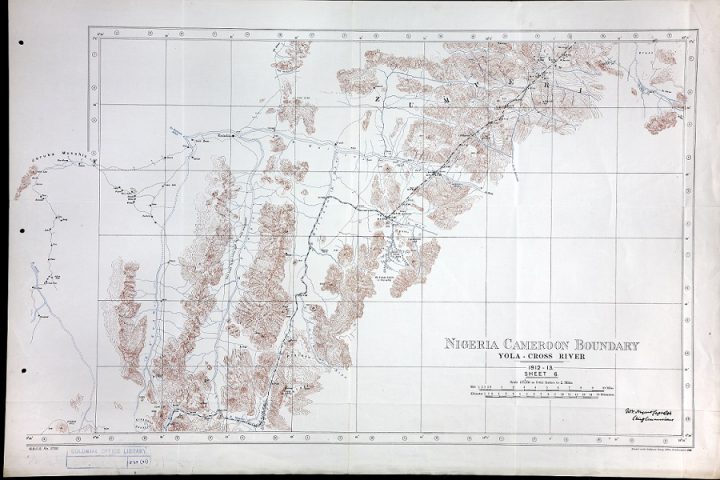
One of a number of Colonial Office maps from 1912-1913 showing the Nigeria Cameroon boundary at the Yola Cross River (catalogue reference CO 1054/175). The Colonial Office is among the past government departments that collected large numbers of records of international boundaries, since transferred to The National Archives. You can order a high-resolution copy of this image from our Image Library.
2.1 Where our records of boundaries come from
The practice of accurately surveying and mapping international boundaries did not become the norm until the 19th century. Boundaries between British and neighbouring colonies of other European nations were often defined by treaty and then mapped out by an international boundary commission. Even when Britain had no direct interest in the territories affected there was frequently a British commissioner on international boundary commissions, such was the high regard in which British surveying expertise was held internationally. The records generated by these surveys were usually deposited in the archives of the countries concerned but a certified copy was often brought back to London by the British commissioner and invariably deposited among the Foreign Office archives.
It is among the records of the Foreign Office and the other government departments responsible for handling foreign affairs and British interests overseas that you are most likely to find documents relating to international boundaries at The National Archives. The most significant among these past and present departments are:
- The Foreign Office
- The Foreign and Commonwealth Office
- The Dominions Office
- The Colonial Office
- The War Office
- The Cabinet
- The pre-1782 Secretaries of State
We also hold the International Boundary Archive of the Ordnance Survey International Library.
Other sets of records held here that contain information about – and maps depicting – boundaries are the private papers of a relatively small number of high-ranking civil servants, politicians and military officers who were involved in boundary making (see section 4 for examples).
2.2 Record types
The National Archives has an especially rich collection of maps but records of boundaries extend well beyond just maps. Document types include treaties, official reports by boundary commissioners, diplomatic despatches, survey data, memoranda, cahiers de specification (containing the technical specifications needed for the marking out and drawing up of boundaries) and photographs.
The chances of records existing is increased where there has been a boundary dispute at some point in the past.
3. How to search for records
The vast majority of these records are not available to view online. To view them you will either need to visit us to view the originals in person or order copies by first finding document references.
3.1 Getting started: broad searches
Use our catalogue to search for document references. Once you have a document reference you will find instructions in our catalogue for how you can view that document. The following keyword searches will return search results for maps and other records concerning boundaries:
- ‘boundary’ or ‘border’ and the name of a country or territory
- ‘frontier’ and the name of a country or territory
- “Boundary Commission” and the name of a country or territory
- “Boundary Commission” and the name of a boundary line, such as Turco-Persian or Austrian-Yugoslav
- ‘border’ and the name of a borderline, such as Syria/Israel border
A note on terminology: the word ‘boundary’ in this context occurs more frequently in our catalogue than ‘border’. We therefore use ‘boundary’ as the main term in this guide but consider ‘border’ to be a synonymous term.
3.2 Drilling down further: target records of specific departments
Using the same, or similar, keyword search terms suggested in 3.1, search across The National Archives departments most likely to hold maps and other records of international borders, as listed in section 2.1. It may be worth starting with the International Boundary Archives of the Ordnance Survey International Library but other key series are among the records of the Foreign Office, Colonial Office and, for records before 1782, State Papers record series. Some of the most significant series in these departments are listed in the table below. They contain various types of records, including:
- treaties and records relating to treaties
- correspondence
- confidential print (many of which contain printed versions of boundary maps)
- the archives of British embassies and consulates
- the archives of British High Commissions (these are among the records of the Dominions Office and its successors – from 1925 the Dominions Office handled semi-autonomous territories such as Canada, Australia and South Africa and some anomalous territories such as the ‘High Commission territories’ of Botswana, Lesotho and Swaziland)
For more in-depth advice on these record types and how to locate them see our guides to Foreign Office records, Colonial Office records and State Papers Foreign.
Treaties are published as Command Papers and as such may be found in UK Parliamentary Papers. You can access these online via Proquest UK Parliamentary Papers. This is a subscription website you can access at The National Archives. You may also be able to access it via a large reference library such as a university library.
Each series in the table below covers material relating to numerous countries and regions. Click on the series reference and search the series using the kinds of keywords listed in section 3.1:
| Records series | Details | Series dates | Series reference |
|---|---|---|---|
| Dominions Office and Commonwealth Relations Office: Original Correspondence | This series includes reports, including some maps, regarding the boundaries of and maritime borders of India, Canada, Australia and New Zealand. | 1915-1971 | DO 35 |
| Part one of the principal collection of maps accumulated by the Colonial Office | Includes numerous maps of boundaries of British colonial territories. | 1595-1927 | CO 700 |
| Part two of the principal collection of maps accumulated by the Colonial Office | Includes numerous maps of boundaries of British colonial territories. | 1779-1947 but predominantly 1910-1940 | CO 1047 |
| Part three of the principal collection of maps accumulated by the Colonial Office | Includes numerous maps of boundaries of British colonial territories. | 1897-1984 but predominantly after 1940 | CO 1054 |
| Marine and Transport Department: Registered Files | Includes reports on disputes and arbitration concerning various maritime boundaries, including: the Channel Tunnel jurisdictional boundary; UK Continental Shelf boundaries; UK fishing boundaries and the maritime boundaries of British overseas territories or former colonies. | 1961-1982 | FCO 76 |
| General correspondence of the Political Department and other departments | The Foreign Office bound much of its general correspondence relating to maps of various parts of the world in a separate series of Library ‘cases’. This series also contains information about map production, accuracy, printing and distribution. | 1745-1975 but mostly pre-1906 | FO 83 |
| Protocols of Treaties | Many treaties contain maps showing a boundary as envisaged during negotiations but before demarcation on the ground. There is a typescript Index to Important Treaties 1635-1913 in the reading rooms at The National Archives. | 1695-2003 | FO 93 |
| Foreign Office miscellanea | 1639-1950 | FO 95 | |
| Foreign Office miscellanea | c1700-1953 | FO 96 | |
| Foreign Office general correspondence | 1906-1966 | FO 371 | |
| Foreign Office Treaty Department correspondence | 1906-1967 | FO 372 | |
| Foreign Office Maps and Plans | The principal collection of maps accumulated by the Foreign Office. It includes numerous maps of international boundaries in the demarcation of which Britain played a role. | 1700-1944 | FO 925 |
| International Boundary Archive of the Ordnance Survey International Library | This collection contains international boundary survey data, maps, correspondence and files. | 1879-2003 | OS 62 |
| Treaty papers in State Papers Foreign | 1577-1780 | SP 103 | |
| Treaties | State Papers Foreign series (there is a typescript Index to Important Treaties 1635-1913 in the reading rooms at The National Archives). | 1579-1780 | SP 108 |
| Directorate of Military Survey papers | There are many papers relating to boundary surveys of former British colonies in the records of the Directorate of Military Survey. | 1887-1985 | WO 181 |
As well as records of the State Paper Office, Foreign Office and Colonial Office, the minutes, memoranda and conference papers of the Cabinet and its numerous committees contain many maps of international boundaries. Such maps were usually printed at a small scale to illustrate discussion papers or to provide background information. For more advice on these records and how to find them see our guide to the records of the Cabinet and its committees.
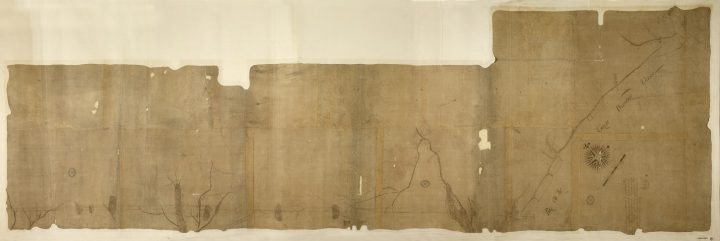
A Colonial Office map of the division line between North and South Carolina in 1730 (catalogue reference CO 700/CAROLINA8). You can order a high-resolution copy of this image from our Image Library.
3.3 Search in country- or region-specific series
Use the tables in section 4 to find a series specific to the country, region, boundary or border you are interested in.
4. Selected series by country, region or subject
The following record series all contain maps or other records of international boundaries in the regions indicated.
Although the Colonial Office was responsible for administering the colonies of the British Empire, it was the East India Company and subsequently the India Office that administered the Indian sub-continent and a number of other territories east of Suez. These records are held at the British Library.
Click on the record series references below and search the series using keywords (see section 3.1 for some suggested keywords).
Ireland
| Records series | Series dates | Records description |
|---|---|---|
| CAB 61 | 1924-1925 | Records of the Irish Boundary Commission |
| CO 537/1072-1110 | 1925 | Printed records of the Irish Boundary Commission within Colonial Office confidential print, covering conference proceedings, reports and memoranda |
| HO 267 | 1900-1932 | Records on the Irish Boundary Commission among the correspondence and papers of the Imperial Secretary to the Governor of Northern Ireland |
Africa and the Middle East
| Records series | Series dates | Records description |
|---|---|---|
| FO 83 | 1745-1975 but predominantly pre-1906 | Foreign Office Library ‘cases’ which include maps of boundaries in the former Ottoman Empire after 1878. |
| FO 367 | 1906-1913 | General correspondence from the Foreign Office’s African Department (correspondence after 1913 is in FO 371). |
| FO 633 | 1840-1929 | Material about the Rafah-Aqaba Line (the southern border of Israel with Egypt) in the papers of Lord Cromer. |
| FO 800 | 1824-1968 | Material about the Rafah-Aqaba Line (the southern border of Israel with Egypt) in the papers of Sir Edward Grey. |
| FO 867 | 1903-1971 | Records relating to the administration of Anglo-Egyptian Sudan. Includes minutes and correspondence, 1931 to 1954, relating to the Darfur-Wadi boundary. |
| OD 6 | 1939-1990 | Files of the Directorate of Overseas Surveys. Contains a small number of files about the Kenya-Ethiopia boundary. |
| WO 181 | 1887-1995 | There are many papers relating to boundary surveys of the Middle East and North Africa in the records of the Directorate of Military Survey. |
The Americas
| Records series | Series dates | Records description |
|---|---|---|
| CO 6 | 1816-1868 | Colonial Office correspondence on British North America. Includes papers relating to the boundary between British North America [Canada] and the United States of America pursuant to the Treaty of Ghent; and report of Commissioners appointed under the Treaty of Washington (1848 to 1850). |
| FO 83 | 1745-1975 but predominantly pre-1906 | Foreign Office Library ‘cases’ which include a number of papers about maps of the boundary between the United States and Canada. |
| FO 96 | c1700-1953 | Foreign Office miscellanea which includes financial accounts relating to the North American Boundary Commission 1843-1848. |
| FO 302 | 1872-1876 | Archives of American North-West Boundary Commission. Includes an album of photographs of the Commission at work. |
| FO 303 | 1796-1829 | Archives of American Treaty of Ghent Commission. |
| FO 304 | 1796-1812 | Archives of American Claims Commission, 1794.
Includes discussions of commerce and navigation between Great Britain and the United States to decide on the identity of the River St Croix named therein as a boundary line. |
| FO 928 | 1965-1967 | Argentine-Chile Boundary Arbitration |
Asia
| Records series | Series dates | Records description |
|---|---|---|
| CO 129 | 1841-1951 | Hong Kong, Original Correspondence. Includes reports, photographs, maps and plans relating to the ‘New territories’, 1899-1949 |
| CO 874 | 1865-1949 | British North Borneo Company papers. Include correspondence and reports and copies of treaties and conventions regarding the Anglo-Dutch boundary between British North Borneo and the Dutch East Indies. |
| CO 1069/452 | 1898 | Colonial Office Photographic Collection: Photographs relating to the work of the Chinese and British Boundary Commissioners delimiting the New Territories |
| DO 133 | 1946-1971 | High Commission and Consular Archives, India: Registered Files. Includes files relating to the boundaries between China and India, and India and Pakistan, including disturbances in Bengal and Punjab arising from Boundary Commission awards in 1947. |
| DO 196 | 1960-1968 | South Asia Department: Registered Files. Some files relate to border incidents and boundary disputes regarding India, Pakistan, Afghanistan and Burma. |
| FCO 40 | 1965-1989 | Hong Kong Departments, registered files. Contains documents relating to the future of Hong Kong and its boundaries |
Europe
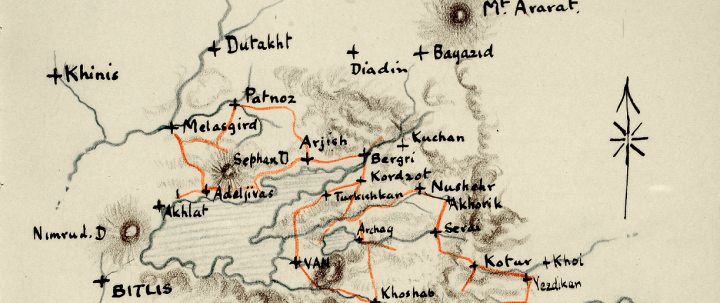
Cross section of a Foreign Office map showing the Armenian-Turkish border in 1908 (catalogue reference FO 195/2283). You can order a high-resolution copy of this image from our Image Library.
| Records series | Series dates | Records description |
|---|---|---|
| CO 926 | 1938-1966 | Mediterranean Department: the registered files include reports on boundaries between Spain and Gibraltar, and Sovereign Base Areas in Cyprus |
| FCO 27 | 1967-1968 | Mediterranean Department: a continuation of the registered files from CO 926 |
| FCO 42 | 1967-1971 | Gibraltar and South Atlantic Department: there are some papers relating to Gibraltar’s maritime boundary in this series |
| FO 32 | 1827-1905 | Greece original correspondence: contains papers of Lieut-Col G. Baker of the Greco-Turkish Boundary Commission, 1830-1834 and of the Frontier rectification boundary Commission, 1881. Greco-Turkish Boundary Commission archives, 1832-1833 may also be found in FO 97/232 |
| FO 78 | 1780-1905 | Ottoman Empire original correspondence: includes reports from the Eastern Roumelian, Bulgarian, Serbian and Montenegrin Boundary Commissions, 1879-1879 |
Wartime and post-war boundaries
| Records series | Series dates | Records description |
|---|---|---|
| FO 373 | 1918-1919 | Handbooks prepared by the Historical Section of the Foreign Office for the use of officials attending the Paris Peace Conference of 1919 to 1920. Many contain maps illustrating the history of international boundaries under consideration at the end of the First World War. |
| FO 608 | 1918-1920 | Correspondence and papers of the British delegation at the Paris Peace Conference of 1919 to 1920. Includes numerous files about the boundary changes following the end of the First World War. |
| FO 893 | 1920-1924 | Ambassadors to the Peace Conference: minutes of proceedings. Includes reports and details of expenses, appointments and associated documents for the various boundary commissions established under the treaties of Versailles, Sevres, St. Germain-en-Laye, Trianon and Neuilly. |
| FO 1049 | 1943-1951 | Records of the Control Commission for Germany (British Element). Includes maps of boundaries between the British Occupation Zone and neighbouring countries, and of inter-zonal boundaries. |
| WO 106 | 1837-1962 but predominantly post-1870 | Correspondence and papers from the Directorate of Military Operations and Intelligence. |
5. Maps, documents and other resources elsewhere
The IBRU Centre for Borders Research at the Department of Geography of Durham University is one of the world’s leading research centres on international boundary making and dispute resolution.
A number of other institutions have significant holdings of maps relevant to studies of international boundaries. Particularly of note are:
6. Further reading
All of the recommended publications below are available in The National Archives’ Library at Kew. Some may also be available to buy from The National Archives’ shop.
John B Allcock (ed), Border and Territorial Disputes (3rd edition, Harlow, 1992)
Louise Atherton, ‘Never Complain, Never Explain’: Records of the Foreign Office and State Paper Office 1500-c1960 (PRO Readers’ Guide No 7, PRO 1994)
Mandy Banton, Administering the Empire, 1801-1968: A Guide to the Records of the Colonial Office in The National Archives of the UK (Institute of Historical Research and The National Archives, 2008) – this title is also available from our shop
Ian Brownlie, African Boundaries: A legal and Diplomatic Encyclopaedia (London, 1979)
Edward Hertslet, The Map of Europe by Treaty, 1814 to 1891 (4 volumes, London, 1875-1891)
Edward Hertslet, The Map of Africa by Treaty (3 volumes, London: 2nd edition 1896, 3rd edition 1909) – also available through HathiTrust Digital Library
Michael Roper, The Records of the Foreign Office 1782-1968, Public Record Office Handbooks No33 (Public Record Office, 2002)
List of Colonial Office Confidential Print to 1916 (PRO Handbook no 8, HMSO 1965)
1. Why use this guide?
Use this guide for advice on how to find records of criminal trials held at the assize courts in England, from 1559 to 1971, and Wales, from 1831 to 1971. For information on Welsh trials from 1543–1830, consult the National Library of Wales website. Their Crime and Punishment database contains records of criminal trials as well as other information relating to criminals, punishment and crime in Wales.
Assize courts tended to deal with the more serious criminal offences, although this was not always the case. Cases heard by assize courts typically included homicide, theft, rape and assault among other crimes.
Up to 1733 most assize court records are in Latin.
2. What were assize courts?
Assize courts were the foundation, along with the courts of quarter sessions, of the criminal court system in England and Wales up until 1971. Based in the main county towns in England and Wales, cases were only heard at the courts twice yearly, when judges from the higher courts in London visited and presided over cases.
Often known simply as ‘the assizes’, the courts originally dealt predominantly with property disputes, but their remit soon widened to include criminal cases as well as cases passed on from the central Westminster courts. By about the mid-13th century the courts were dealing with cases of:
- homicide
- theft (stolen goods were often under-valued as worth less than 12d to avoid making it a capital offence)
- highway robbery
- rape
- assault
- coining
- forgery
- witchcraft
- trespass
- vagrancy
- recusancy
- infanticide
Assize courts also heard civil cases, the records of which are covered in our civil assizes guide.
2.1 The timetable
For much of their history the assize courts sat twice yearly, for Lent and Summer assizes. Typically, Lent assizes, also referred to as Spring assizes, were heard in March/April and Summer assizes in July/August, although there could be variations. By the 19th century and into the 20th century the courts sat more regularly, with Spring, Summer, Autumn and Winter assizes.
2.2 Judges’ circuits
England and Wales were divided into judicial circuits, each circuit making up the areas covered by the visiting judges. Up until 1876 there were six circuits. They were:
- Home, Norfolk and South-Eastern circuits
- Midland circuit
- Northern and North-Eastern circuits
- Oxford circuit
- Welsh circuits including Chester
- Western circuit
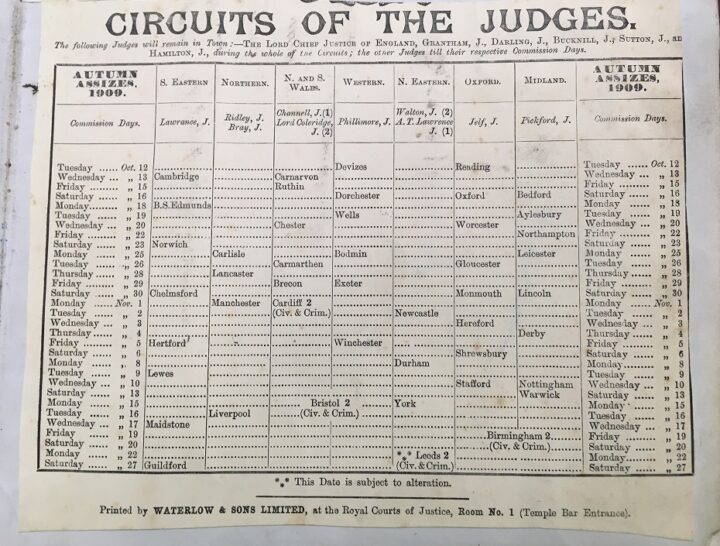
The judges’ circuits with scheduled dates for the Autumn assizes in 1909. As shown in the image, there were seven circuits at this time (catalogue reference ASSI 2/49).
3. Record types and the information they contain
Not all assize records have survived as the assize clerks sometimes destroyed them when they ran out of space. Earlier records are less likely to have been kept than later ones.
In terms of information about people, assize records, most commonly, give details of the accused. Typically this includes the name, occupation and place of abode of the accused, but some or all of this information can be unreliable as aliases were often used and other false details were given. The place of abode mentioned is often where the crime took place rather than where the accused lived.
3.1 Crown and gaol books (aka minute books or agenda books)
The best place to begin a search in the assize records is in the Crown and gaol books, also known as minute books or agenda books. These usually list:
- names of the accused
- charges against the accused
- plea
- verdict
- sentence
There may be a separate series of minute books for offences such as the failure of local communities to keep local roads and bridges in a good state of repair. These kinds of ‘public office’ offences were considered criminal offences.
3.2 Indictments
These are the formal statements of the charge against the accused, usually annotated with plea, verdict and sentence.
Indictments were filed in large unwieldy bundles together with other related records, depending on the period and the circuit. Bundled in with indictment records you may also find details of jury panels, coroners’ inquisitions, examinations and depositions, gaol calendars, trial minutes, commissions, presentments of non-criminal offences and recognizances (which give names, parishes of residence and occupation and are usually far more accurate than those given on the indictments themselves).
Each indictment usually gives:
- name of the defendant together with any aliases
- his or her occupation
- a parish of residence
- the date of the alleged offence (by regnal year)
- details of the alleged offence, together with the name of the victim
- a list of prosecution witnesses
The details of the defendant should be treated with caution, especially before the late 19th century. The defendant’s occupation was normally given as ‘labourer’ and the parish of residence is invariably the parish in which the alleged offence took place. The alleged offence is defined by lengthy and formal phrases and some, especially in cases of serious misdemeanour, such as perjury or libel, are several membranes long.
Until 1916, assize indictments were either handwritten or partly printed and partly written on parchment. After 1916 all indictments were prepared using standard, usually pre-printed, forms. These give the jurisdiction and venue, the name of the defendant, the plea, a summary statement of the charge or charges and particulars of the charges.
3.3 Depositions and examinations
Depositions, sometimes known as sessions papers, consist of pre-trial witness statements. However, the survival rate for these records is relatively poor and those that do survive have been heavily weeded. Only depositions in capital cases, usually murder and riot, tend to survive.
Deposition files, especially those from the mid-20th century or later, may also contain items used as trial exhibits, including:
- photographs
- maps
- appeal papers
3.4 Transcripts
Transcripts of what was actually said in court do not normally survive with the records held at The National Archives. A collection of contemporary pamphlet accounts of what was said in court during mostly celebrated trials for the period 1660-1908 is available on microfiche in the reading rooms at The National Archives.
The Old Bailey Online website provides detailed proceedings (although not complete transcripts of what was said) for trials at the London central criminal court.
3.5 Other records
Other assize records can include:
- pleadings
- statements of claim, defence and counterclaim
- draft minutes of trials
- correspondence of the assize clerks, mostly administrative
- coroners’ inquisitions
- jury lists
- financial business including fees and costs
- estreats (records of fines and forfeits)
4. How to search for records
As most assize court records remain available only in their original paper or parchment form (copies are not available online), to search for them and see them you will need to visit us at our building in Kew. Alternatively, if you can establish the record series and document references within the series, you can use our record copying service to have copies sent to you for a charge. Either way, you will need to follow these steps to locate records:
Step 1: Establish where and when the trial took place
If you do not know the date or at least the year of a trial and the county in which the trial took place, you may find your search hits a dead end very quickly. Consult our criminal court cases overview guide for advice on using newspapers, criminal registers and calendars to try to establish these facts.
Step 2: Decide which type of record to look for
Usually, the best place to begin a search in the assize records is the crown and gaol books. To decide which kind of record will be most useful for your research see the information on record types in section 3.
Step 3: Identify the record series
All assize court records at The National Archives are identified by the department code ASSI. You will also need a series number (each circuit has its own set of series) to narrow your search. To find the right record series refer to the keys in the appendices of this guide. For English counties use Appendix 1; for Welsh counties use Appendix 2.
By searching or browsing the right series you will hopefully find a piece number that covers the records of the trial in question. Once you have the piece number you can view the original records in person at The National Archives in Kew or pay for copies to be sent to you.
5. Related records and alternatives
There are some other scattered records outside of the ASSI department at The National Archives which relate to criminal trials at assize courts. There are also records and accounts of trials elsewhere, in other archives and libraries.
5.1 Transcripts held by government departments and other courts
There are court transcripts for some trials among Court of Appeal, Director of Public Prosecutions or Treasury Solicitor and Home Office records. There are sometimes additional notes which can provide insight into a trial. The following record series are the best place to start if you are looking for court transcripts:
- Treasury Solicitor and Director of Public Prosecutions: Transcripts of Proceedings in Selected Criminal Trials (1846-1958) in DPP 4
- Treasury Solicitor: Transcripts of Proceedings (1812-1963) in TS 36
- Court of Criminal Appeal and Supreme Court of Judicature, Court of Appeal, Criminal Division: Case Papers (1945-1993) in J 82
5.2 Records of payments and expenses, c.1715-1832
Payments and expenses incurred by sheriffs in the punishment of prisoners were often recorded. These records can include lists of prisoners tried or transported, accounts for maintenance in prison or expenses for carrying out an execution. They provide a useful alternative for the many missing assize records from this period.
You cannot search these records by keyword. Instead, click on the links below to browse through the records by year ranges:
- Sheriff’s assize vouchers are held in a subseries of E 389and consist of pieces E 389/241 to E 389/257, covering the period 1715-1832. To use this series effectively you will need to refer to the E 389 paper list in the reading rooms at Kew.
- Payments to sheriffs which refer to individual prisoners are in T 90/146-170, covering the period 1733-1822
- Entry books of warrants of payments for the period 1676-1839 are in T 53/1-68.
5.3 Judicial reviews at the Court of King’s Bench
The Court of King’s Bench would sometimes direct an assize court to send the records of a trial for review, a process known as certiorari. There are copies of indictments within the records of writs of certiorari in KB 9.
For more advice on records of the King’s Bench, see King’s Bench 1675-1875 research guide.
5.4 Miscellaneous DPP, HO and PCOM records
The following National Archives departments contain records of various kinds related to trials held at the assize courts:
- Director of Public Prosecutions (department code DPP)
- Home Office (department code HO)
- The Prison Commission (department code PCOM)
The Office of Director of Public Prosecutions (DPP) was created in 1879 with powers to institute and conduct criminal proceedings in any of the senior criminal courts – assizes, Crown Court, King’s/Queen’s Bench or Central Criminal Court.
Before 1879, the Home Office gave advice on prosecutions to police forces and magistrates’ clerks and gave directions to the Treasury Solicitor (TS) to institute proceedings in important cases, notably those involving political crimes.
Director of Public Prosecutions and Treasury Solicitor files on cases can be searched for by surname of the defendant.
Search or browse case files of the Director of Public Prosecutions in DPP 1 1889-1930, and DPP 2 1931-2016 (recent records are closed), and transcripts of certain trials in DPP 4 1846-1958.
Treasury Solicitor’s files on criminal cases can be found in various series, including case papers in TS 11, TS 18 and TS 22; and transcripts of proceedings in TS 36.
Appendix 1: Key to records of criminal cases in the English assizes 1559-1971
Click on the links in the table to search or browse through the respective series in our catalogue. See section 4 for detailed advice on how to search. For advice on whether to browse or search, see our Discovery help pages.
Of the pre-19th century depositions that have survived, most are from northern counties. Of the pre-19th century Midland circuit records, most that survive are from after 1818.
Bristol assize records prior to 1832 are held by Bristol Record Office.
In 1830 the palatinate of Chester (Cheshire) joined the assizes court system. Durham and Lancaster (Lancashire) merged into the assizes system in 1876. Prior to these years you will need to consult the Palatinate of Chester court records, the Palatinate of Durham court records or the Palatinate of Lancaster court records.
| County | Crown & Gaol Books | Indictments | Depositions | Other | |||
|---|---|---|---|---|---|---|---|
| Bedfordshire | 1863-1876 1734-1863 1876-1945 |
ASSI 32 ASSI 33 ASSI 11 |
1658-1698 1693-1850 1851-1971 |
ASSI 16 ASSI 94 ASSI 95 |
1832-1876 1876-1971 |
ASSI 36 ASSI 13 |
ASSI 34, ASSI 38, ASSI 39, ASSI 15, ASSI 90 |
| Berkshire | 1657-1971 1847-1951 |
ASSI 2 ASSI 3 |
1650-1971 | ASSI 5 | 1719-1971 | ASSI 6 | ASSI 4, ASSI 9, ASSI 10, ASSI 93, ASSI 89 |
| Bucks | 1863-1876 1734-1863 1876-1945 |
ASSI 32 ASSI 33 ASSI 11 |
1642-1699 1695-1850 1851-1971 |
ASSI 16 ASSI 94 ASSI 95 |
1832-1876 1876-1971 |
ASSI 36 ASSI 13 |
ASSI 34, ASSI 38, ASSI 39, ASSI 15, ASSI 90 |
| Cambridgeshire | 1902-1943 1863-1971 1734-1863 |
ASSI 31 ASSI 32 ASSI 33 |
1642-1699 1692-1850 1851-1971 |
ASSI 16 ASSI 94 ASSI 95 |
1834-1971 | ASSI 36 | ASSI 34, ASSI 38, ASSI 39, ASSI 90 |
| Cheshire | 1532-1831 1831-1938 1835-1883 1945-1951 |
CHES 21 ASSI 61 ASSI 62 ASSI 79 |
1341-1659 1831-1945 1945-1971 |
CHES 24 ASSI 64 ASSI 83 |
1831-1944 1945-1971 |
ASSI 65 ASSI 84 |
ASSI 59, ASSI 63, ASSI 66, ASSI 67, ASSI 91 |
| Cornwall | 1730-1971 1670-1824 |
ASSI 21 ASSI 23 |
1801-1971 | ASSI 25 | 1861-1971 1951-1953 |
ASSI 26 ASSI 82 |
ASSI 24, ASSI 30, ASSI 92 |
| Cumberland | 1714-1873 1665-1810 |
ASSI 41 ASSI 42 |
1607-1876 1877-1971 |
ASSI 44 ASSI 51 |
1613-1876 1877-1971 |
ASSI 45 ASSI 52 |
ASSI 43, ASSI 46, ASSI 47, ASSI 93 |
| Derbs | 1818-1945 | ASSI 11 | 1868-1971 1662,67,87 |
ASSI 12 ASSI 80 |
1862-1971 | ASSI 13 | ASSI 15, ASSI 88 |
| Devon | 1746-1971 1670-1824 |
ASSI 21 ASSI 23 |
1801-1971 | ASSI 25 | 1861-1971 1951-1953 |
ASSI 26 ASSI 82 |
ASSI 24, ASSI 30, ASSI 92 |
| Dorset | 1746-1971 1670-1824 |
ASSI 21 ASSI 23 |
1801-1971 | ASSI 25 | 1861-1971 1951-1953 |
ASSI 26 ASSI 82 |
ASSI 24, ASSI 30, ASSI 92 |
| Durham | 1770-1876 1753-1858 1858-1944 |
DURH 15 DURH 16 ASSI 41 |
1582-1877 1876-1971 |
DURH 17 ASSI 44 |
1843-1876 1877-1971 |
DURH 18 ASSI 45 |
DURH 19, ASSI 46, ASSI 47, ASSI 87, ASSI 93 |
| Essex | 1734-1943 1826-1971 |
ASSI 31 ASSI 32 |
1559-1688 1689-1850 1851-1971 |
ASSI 35* ASSI 94 ASSI 95 |
1825-1971 | ASSI 36 | ASSI 34, ASSI 38, ASSI 39, ASSI 90 |
| County | Crown & Gaol Books | Indictments | Depositions | Other | |||
| Glos | 1657-1971 1847-1951 |
ASSI 2 ASSI 3 |
1662-1971 | ASSI 5 | 1719-1971 | ASSI 6 | ASSI 4, ASSI 9, ASSI 10, ASSI 89, ASSI 93 |
| Hampshire | 1746-1971 1670-1824 |
ASSI 21 ASSI 23 |
1801-1971 | ASSI 25 | 1861-1971 1951-1953 |
ASSI 26 ASSI 82 |
ASSI 24, ASSI 30, ASSI 92 |
| Herefordshire | 1657-1971 1847-1951 |
ASSI 2 ASSI 3 |
1627-1971 | ASSI 5 | 1719-1971 | ASSI 6 | ASSI 4, ASSI 9, ASSI 10, ASSI 89, ASSI 93 |
| Hertfordshire | 1734-1943 1826-1971 |
ASSI 31 ASSI 32 |
1573-1688 1689-1850 1851-1971 |
ASSI 35 ASSI 94 ASSI 95 |
1829-1971 | ASSI 36 | ASSI 34, ASSI 38, ASSI 39, ASSI 90 |
| Hunts | 1902-1943 1863-1971 1734-1863 |
ASSI 31 ASSI 32 ASSI 33 |
1643-1698 1693-1850 1851-1971 |
ASSI 16 ASSI 94 ASSI 95 |
1851-1971 | ASSI 36 | ASSI 34, ASSI 38, ASSI 39, ASSI 90 |
| Kent | 1734-1943 1826-1971 |
ASSI 31 ASSI 32 |
1559-1688 1689-1850 1851-1971 |
ASSI 35 ASSI 94 ASSI 95 |
1812-1971 | ASSI 36 | ASSI 34, ASSI 38, ASSI 39, ASSI 90 |
| Lancashire | 1524-1843 1686-1877 |
PL 25 PL 28 |
1660-1867 1877-1971 |
PL 26 ASSI 51 |
1663-1867 1877-1971 |
PL 27 ASSI 52 |
PL 28 ASSI 46, ASSI 53, ASSI 93, ASSI 86 |
| Leics | 1818-1864 1864-1875 1876-1945 |
ASSI 11 ASSI 32 ASSI 11 |
1653, 1656 1864-1875 1876-1971 |
ASSI 80 ASSI 35 ASSI 12 |
1862 1863-1875 1876-1971 |
ASSI 13 ASSI 36 ASSI 13 |
ASSI 15, ASSI 34, ASSI 38, ASSI 39, ASSI 88 |
| Lincolnshire | 1818-1945 | ASSI 11 | 1868-1971 1652-1679 |
ASSI 12 ASSI 80 |
1862-1971 | ASSI 13 | ASSI 15, ASSI 88 |
| London & Middlesex | 1834-1949 | CRIM 6 | 1834-1957 1833-1971 |
CRIM 4 CRIM 5 |
1839-1971 1923-1971 |
CRIM 1 CRIM 2 |
CRIM 7, CRIM 8, CRIM 9, CRIM 10, CRIM 11, CRIM 12, CRIM 13 |
| Monm | 1657-1971 1847-1951 |
ASSI 2 ASSI 3 |
1666-1971 | ASSI 5 | 1719-1971 | ASSI 6 | ASSI 4, ASSI 9, ASSI 10, ASSI 89, ASSI 93 |
| Norfolk | 1902-1943 1863-1971 1734-1863 |
ASSI 31 ASSI 32 ASSI 33 |
1606-1699 1692-1850 1851-1971 |
ASSI 16 ASSI 94 ASSI 95 |
1817-1971 | ASSI 36 | ASSI 34, ASSI 38, ASSI 39, ASSI 90 |
| Northants | 1818-1864 1864-1876 1876-1945 |
ASSI 11 ASSI 32 ASSI 11 |
1659-1660 1864-1675 1876-1971 |
ASSI 80 ASSI 95 ASSI 12 |
1862 1864-1875 1876-1971 |
ASSI 13 ASSI 36 ASSI 13 |
ASSI 15, ASSI 34, ASSI 38, ASSI 39, ASSI 88 |
| County | Crown & Gaol Books | Indictments | Depositions | Other | |||
| Northumberland | 1714-1944 1665-1810 |
ASSI 41 ASSI 42 |
1607-1971 | ASSI 44 | 1613-1971 | ASSI 45 | ASSI 43, ASSI 46, ASSI 47, ASSI 87, ASSI 93 |
| Notts | 1818-1945 | ASSI 11 | 1868-1971 1663-4, 82 |
ASSI 12 ASSI 80 |
1862-1971 | ASSI 13 | ASSI 15, ASSI 88 |
| Oxford | 1657-1971 1847-1951 |
ASSI 2 ASSI 3 |
1661-1971 1688 |
ASSI 5 PRO 30/80 |
1719-1971 | ASSI 6 | ASSI 4, ASSI 9, ASSI 10, ASSI 89, ASSI 93 |
| Rutland | 1818-1864 1864-1876 1876-1945 |
ASSI 11 ASSI 32 ASSI 11 |
1667, 1685 1864-1875 1876-1971 |
ASSI 80 ASSI 95 ASSI 12 |
1862 1864-1873 1876-1971 |
ASSI 13 ASSI 36 ASSI 13 |
ASSI 15, ASSI 34, ASSI 38, ASSI 39, ASSI 88 |
| Shropshire (Salop) |
1657-1971 1847-1951 |
ASSI 2 ASSI 3 |
1654-1971 | ASSI 5 | 1719-1971 | ASSI 6 | ASSI 4, ASSI 9, ASSI 10, ASSI 89, ASSI 93 |
| Somerset | 1730-1971 1670-1824 |
ASSI 21 ASSI 23 |
1801-1971 | ASSI 25 | 1861-1971 1951-1953 |
ASSI 26 ASSI 82 |
ASSI 24, ASSI 30, ASSI 92 |
| Staffs | 1657-1971 1847-1951 |
ASSI 2 ASSI 3 |
1662-1971 1662 |
ASSI 5 ASSI 80 |
1719-1971 | ASSI 6 | ASSI 4, ASSI 9, ASSI 10, ASSI 89, ASSI 93 |
| Suffolk | 1902-1943 1863-1971 1734-1863 |
ASSI 31 ASSI 32 ASSI 33 |
1653-1698 1689-1850 1851-1971 |
ASSI 16 ASSI 94 ASSI 95 |
1832-1971 | ASSI 36 | ASSI 34, ASSI 38, ASSI 39, ASSI 90 |
| Surrey | 1734-1943 1826-1971 |
ASSI 31 ASSI 32 |
1559-1688 1689-1850 1851- |
ASSI 35 ASSI 94 ASSI 95 |
1820-1971 | ASSI 36 | ASSI 34, ASSI 38, ASSI 39, ASSI 90 |
| Sussex | 1734-1943 1826-1971 |
ASSI 31 ASSI 32 |
1559-1688 1689-1850 1851-1971 |
ASSI 35 ASSI 94 ASSI 95 |
1812-1971 | ASSI 36 | ASSI 34, ASSI 38, ASSI 39, ASSI 90 |
| Warw | 1818-1945 | ASSI 11 | 1868-1971 1652, 1688 |
ASSI 12 ASSI 80 |
1862-1971 | ASSI 13 | ASSI 15, ASSI 88 |
| Westmor | 1714-1873 1718-1810 |
ASSI 41 ASSI 42 |
1607-1876 1877-1971 |
ASSI 44 ASSI 51 |
1613-1876 1877-1971 |
ASSI 45 ASSI 52 |
ASSI 43, ASSI 46, ASSI 47, ASSI 53, ASSI 86, ASSI 93 |
| Wilts | 1746-1971 1670-1824 |
ASSI 21 ASSI 23 |
1729 1801-1971 |
ASSI 25 ASSI 25 |
1861-1971 1951-1953 |
ASSI 26 ASSI 82 |
ASSI 24, ASSI 30, ASSI 92 |
| Worcs | 1657-1971 1847-1951 |
ASSI 2 ASSI 3 |
1662-1971 | ASSI 5 | 1719-1971 | ASSI 6 | ASSI 4, ASSI 9, ASSI 10, ASSI 89, ASSI 93 |
| Yorks** | 1658-1811 1718-1863 1864-1876 1876-1944 |
ASSI 42 ASSI 41 ASSI 11 ASSI 41 |
1607-1863 1868-1875 1876-1971 |
ASSI 44 ASSI 12 ASSI 44 |
1613-1863 1868-1875 1876 1971 1877-1971 |
ASSI 45 ASSI 13 ASSI 45 ASSI 52 |
ASSI 15, ASSI 43, ASSI 46, ASSI 47, ASSI 87, ASSI 93 |
* You can search by name and the term ‘assize’ for the calendars of Essex Assizes indictments in ASSI 35 (1558-1714) on the Essex Record Office catalogue.
** For Yorkshire there are two series of Crown & Gaol Books for the earlier period so you will need to check both.
Appendix 2: Key to records of criminal cases in the Welsh assizes 1831-1971
Click on the links in the table to search or browse through the respective series in our catalogue. See section 4 for detailed advice on how to search. For advice on whether to browse or search, see our Discovery help pages.
| County | Crown & Gaol Books | Indictments | Depositions | Other | |||
|---|---|---|---|---|---|---|---|
| Anglesey | 1831-1938 1835-1883 1945-1951 |
ASSI 61 ASSI 62 ASSI 79 |
1831-1945 1945-1971 |
ASSI 64 ASSI 83 |
1831-1944 1945-1971 |
ASSI 65 ASSI 84 |
ASSI 59, ASSI 63, ASSI 66, ASSI 67 |
| Breconshire | 1841-1842 1844-1946 1945-1951 |
ASSI 74 ASSI 76 ASSI 79 |
1834-1945 1945-1971 |
ASSI 71 ASSI 83 |
1837-1971 1945-1971 |
ASSI 72 ASSI 84 |
ASSI 73, ASSI 77 |
| Caernarvonshire | 1831-1938 1835-1983 1945-1951 |
ASSI 61 ASSI 62 ASSI 79 |
1831-1945 1945-1971 |
ASSI 64 ASSI 83 |
1831-1944 1945-1971 |
ASSI 65 ASSI 84 |
ASSI 59, ASSI 63, ASSI 66, ASSI 67 |
| Cardiganshire | 1841-1842 1844-1946 1945-1951 |
ASSI 74 ASSI 76 ASSI 79 |
1834-1945 1945-1971 |
ASSI 71 ASSI 83 |
1837-1971 1945-1971 |
ASSI 72 ASSI 84 |
ASSI 73, ASSI 77 |
| Carmarthenshire | 1841-1842 1844-1946 1945-1951 |
ASSI 74 ASSI 76 ASSI 79 |
1834-1945 1945-1971 |
ASSI 71 ASSI 83 |
1837-1971 1945-1971 |
ASSI 72 ASSI 84 |
ASSI 73, ASSI 77 |
| Denbighshire | 1831-1938 1835-1883 1945-1951 |
ASSI 61 ASSI 62 ASSI 79 |
1831-1945 1945-1971 |
ASSI 64 ASSI 83 |
1831-1944 1945-1971 |
ASSI 65 ASSI 84 |
ASSI 59, ASSI 63, ASSI 66, ASSI 67 |
| Flint | 1831-1938 1835-1883 1945-1951 |
ASSI 61 ASSI 62 ASSI 79 |
1831-1945 1945-1971 |
ASSI 64 ASSI 83 |
1831-1944 1945-1971 | ASSI 65 ASSI 84 |
ASSI 59, ASSI 63, ASSI 66, ASSI 67 |
| Glamorganshire | 1841-1842 1844-1946 1945-1951 |
ASSI 74 ASSI 76 ASSI 79 |
1834-1945 1945-1971 |
ASSI 71 ASSI 83 |
1837-1971 1945-1971 |
ASSI 72 ASSI 84 |
ASSI 73, ASSI 77 |
| Merionethshire | 1831-1938 1835-1883 1945-1951 |
ASSI 61 ASSI 62 ASSI 79 |
1831-1945 1945-1971 |
ASSI 64 ASSI 83 |
1831-1944 1945-1971 |
ASSI 65 ASSI 84 |
ASSI 59, ASSI 63, ASSI 66, ASSI 67 |
| Montgomeryshire | 1831-1938 1835-1883 1945-1951 |
ASSI 61 ASSI 62 ASSI 79 |
1831-1945 1945-1971 |
ASSI 64 ASSI 83 |
1831-1944 1945-1971 |
ASSI 65 ASSI 84 |
ASSI 59, ASSI 63, ASSI 66, ASSI 67 |
| Pembrokeshire | 1841-1842 1844-1946 1945-1951 |
ASSI 74 ASSI 76 ASSI 79 |
1834-1945 1945-1971 |
ASSI 71 ASSI 83 |
1837-1971 1945-1971 |
ASSI 72 ASSI 84 |
ASSI 73, ASSI 77 |
| Radnor | 1841-1842 1844-1946 1945-1951 |
ASSI 74 ASSI 76 ASSI 79 |
1834-1945 1945-1971 |
ASSI 71 ASSI 83 |
1837-1971 1945-1971 |
ASSI 72 ASSI 84 |
ASSI 73, ASSI 77 |
Appendix 3: Latin abbreviations still used in the records after 1733
Until 1733 (with the exception of the period of the interregnum), records were written in Latin and in distinctive legal scripts. The annotations on indictments are often in Latin abbreviations which remained in use even after 1733.
| Latin abbreviation | Full Latin version | English translation |
|---|---|---|
| ca null | catalla nulla | no goods/chattels to forfeit |
| cog ind | cognovit indictamentum | confessed to the indictment |
| cul | culpabilis | guilty |
| ign | ignoramus | we do not know, that is, no case to answer |
| non cul nec re | non culpabilis nec retraxit | not guilty and did not flee |
| po se | ponit se super patriam | puts himself on the country (that is, opts for jury trial and pleads not guilty) |
| sus | suspendatur | let him be hanged |
Appendix 4: Further reading
J S Cockburn’s publications are invaluable guides to assize records. His history of assizes is particularly valuable, with sage advice on the pitfalls of taking the records at face value.
J S Cockburn, A History of English Assizes, 1558-1714 (1972)
J S Cockburn, Calendars of Assize Records (various publications covering the home circuits)
L Knafla, Kent at Law 1602 (1994)
D T Hawkings, Criminal Ancestors (2009) – also covers assizes and related records
1. Why use this guide?
This guide will help you to find records of and relating to the Royal Household which are now held at The National Archives. These records are a window on the life of the British and (formerly) English monarchy, and are particularly illuminating for studies of the medieval and early modern periods. The records provide insights into the administration, lifestyle, tastes and inner-workings of the monarchy and the royal court surrounding it, and include details of:
- officials and other personnel
- royal expenditure and patronage
- royal piety and religiosity
- royal dress and diet
- armoury, weaponry and the conduct of war
- architecture and the arts
- material culture at court
- transport
2. What is the Royal Household?
From the Anglo-Saxon period onwards, the monarch employed a variety of officials and other personnel to maintain the running of their household and tend to their person, possessions and affairs. Originally these would have been their kinsmen but gradually this collection of servants was divided into a more organised structure, consisting of a number of official departments which together made up the Royal Household.
Many of these departments emerged during the medieval period, when offices within the Royal Household gained their own identity, among them the Royal Wardrobe, which became the main accounting office of the monarch’s household, and the departments of the Lord Chamberlain and Lord Steward.
The majority of the surviving records for the Royal Household are from these three departments.
2.1 Royal Wardrobe
The Royal Wardrobe was a department within the Royal Household, responsible not just for the cloth, clothing and accoutrements worn by the monarchy in their official business and used to adorn royal buildings and furnishings but also for their expenditure and financial accounts.
2.2 Lord Chamberlain’s department
The Lord Chamberlain’s department was in charge of the ceremonial (royal christenings, marriages, funerals and coronations, and supervision of regalia), social, and artistic life of the monarch and royal court.
2.3 Lord Steward’s department
The Lord Steward’s department was responsible for the domestic side of the Royal Household, including the catering, the chapels royal, grounds and gardens of royal palaces.
3. Online records
Search for a Royal Household employee from 1526–1924 using the Royal Household establishment lists and Royal Household index sheets (£) on findmypast.co.uk. Each record includes an image, or multiple images, of original documents held at the Royal Archives.
There are over 386,000 records covering staff employed at Royal residences across the UK. The date range includes the reigns of King Charles I, Queen Victoria and King George V.
4. Royal Wardrobe records (c.1154-1830)
The surviving records of the Royal Wardrobe provide detailed material for studies of royal administration, expenditure, patronage and the life of the royal court in general.
The Royal Wardrobe often drew funds from the Exchequer (E), the main financial department of the medieval and early modern English state, and this is reflected in the records held by The National Archives.
4.1 Exchequer accounts: records of expenditure and revenue
One of the primary sources for records of the Royal Household and Wardrobe is the series of Exchequer records in E 101. These records, often rich in detail, include:
- Documents sent to the Exchequer, minutely detailing expenses
- Daily summaries of the expenses of individual household departments with totals for each day and each week
- Foreign expense rolls recording the extraordinary expenditure of the Wardrobe, and usually divided into separate sections for alms, gifts, necessaries and messengers
- Lists of household personnel under the details of summer and winter robes given as livery to royal servants
- War wages, horses, munitions and garrisoning
- Accounts and indentures from individual household officers, such as tailors or armourers, giving very detailed descriptions of their expenses for particular occasions, such as tournaments or coronations, and descriptions of garments and decorations for the royal family
- Inventories of the royal treasure, and great wardrobe accounts listing purchases of cloth, fur, precious metals and jewels, spices and other flavourings, wax, and exotic foods
- Wine details found in the butlerage accounts
To find specific document references (for example, E 101/531/2) in series E 101, which you will need before you can see the documents themselves, consult the following published finding aids:
- Lists of various accounts and documents in the Exchequer and now in the Public Record Office (Volume 35 of Lists and Indexes, 1912) – use the subject and name index to get an E 101 reference
- List of documents relating to the household and wardrobe, John-Edward I (Public Record Office Handbook, no.7, 1964).
Other useful Exchequer records include:
- Miscellaneous Treasury of the Receipt records in series E 36
- Treasury books in series E 315
- Miscellaneous books in series E 407
- Miscellaneous accounts relating to significant events and substantial sources of revenue in series E 358
- Names of members of the royal household, separately listed for 1523–1696 in the taxation returns – search for these in the E 179 database
- Summary information of wardrobe and household expenditure, often supplying or supplementing information in the accounts of individual household and wardrobe officials from 1257–1548 in series E 361; before this date and during the reigns of Henry III (1216–1272) and Edward I (1272–1307), the information is usually found in the pipe rolls in series E 372
- Details of royal expenditure in the warrants for issues and wardrobe debentures in series E 404 and the issue rolls, where payments were recorded in series E 403
- A number of stray household accounts in series E 364
- Several series of household accounts of royal children in series E 351
4.2 Payments to staff
Consult the following publications, all available at The National Archives, for names of many of the servants and officials who received payments:
- Issues of the Exchequer by Frederick Devon (three volumes, 1835–37)
- Warrants for issues 1399–1485 (List and Index Supplementary Volume 9, 1964)
- Appointments and offices in the Exchequer (two manuscript volumes compiled in 1827)
5. Lord Chamberlain’s department records (1500-1901)
The records of the Lord Chamberlain’s department are held at The National Archives under department code LC.
5.1 Staff records
Employees of the Lord Chamberlain’s department included:
- housekeepers
- messengers
- yeoman of the guard
- watermen
- physicians
- musicians, artists and craftsmen
More specific and specialist posts included Latin Secretary, Poet Laureate, Examiner of Plays and Keeper of Lions at The Tower.
Staff records from the Lord Chamberlain’s department are found in a range of different record series in the LC department:
| Date ranges | Description | Catalogue references |
|---|---|---|
| 1641–1849 | Establishment books | LC 3/1-23 |
| 1660–1800 | Warrant books of the treasurer of the chamber | LC 5/11-26 |
| 1660–1851 | Appointment books, series II | LC 3/61-71 |
| 1667–1857 | Salary, livery and pension books | LC 3/37-52 |
| 1685–1838 (incomplete between 1685 until 1838) | Appointment books, series I | LC 3/56-60 |
| 1754–1781 | Comptroller | LC 5/27-30 |
| 1806–1846 | Palaces ledgers | LC 9/367-374 |
| 1820–1866 | Miscellaneous: includes some appointments | LC 5/248-251 |
| 1830–1901 | Offices of robes letter books | LC 13/1-5 |
| 1851–1901 | Appointment books, series II | LC 5/237-241 |
| 1864-1897 | Officers and servants of the Lord Chamberlain’s Department | LC 5/247 |
5.2 Other associated staff records
- There are some entry books of wills and letters of attorney from 1750–1754 in LC 5/104-106
- There is material relating to servants among the correspondence books in series LC 1
- Examine messengers’ travelling expense from 1784–1838 in LC 10/1-9
- Records of funerals in series LC 2 may list the households of deceased royal persons
- The household of the later duke of York in 1827 is listed in LC 2/56
- Housemaids are named in connection with mourning in the bill books for sundries, LC 11/144-145 (1846–1857)
- Gamekeepers are rarely named in the Royal Household records, although four gamekeepers at Richmond are named in LC 3/23 (1846–1849)
- There is a break in the series of Royal Household records for the Commonwealth period, but some bills of the 1650s have been preserved in series of bills and vouchers LC 9/377-390
Look for names of office holders in the following publications, available at The National Archives:
- Frederick Devon’s Issues of the Exchequer
- List and index of warrants for issues 1399–1485
- Appointments and offices in the Exchequer (compiled in 1827) – https://tna.koha-ptfs.co.uk/cgi-bin/koha/opac-detail.pl?biblionumber=34794
5.3 Warrant holders
Royal warrants were issued to suppliers of specific goods, some of which were the responsibility of the Lord Chamberlain’s department. The records include:
| Dates | Description | Series |
|---|---|---|
| 1660–1766, 1774–1837 |
Appointment books – these are primarily records of the employment or re-employment of officers and servants but include some warrants for trades people | LC 3/61-70 |
| 1800–1837 | Bill books – these contain the original bills presented by tradesmen, both warrant holders and other suppliers, to the department | LC 11 |
| 1830–1901 | Royal warrant holders: tradesmen supplying items for ceremonial occasions, such as peruke-makers, embroiderers and feather-dressers and more personal items, such as combs, perfumes and corset stays | LC 13/1-5 |
| 1837–1901 | Royal warrant holders: tradesmen supplying furnishings, floor and wall coverings, linens and stationery | LC 5/243-246 |
| 1900 onwards | Royal warrant holders: annual lists published in the London Gazette | ZJ 1 or online at The Gazette |
5.4 Suppliers of goods
Search in the following records for details of suppliers of goods to the Lord Chamberlain’s department from 1600 to 1900:
| Dates | Description | Series |
|---|---|---|
| 1600–1900 | Suppliers of goods to the Royal Household | LC 9, LC 10, LC 11 |
| 1628–1810 | Suppliers of all kinds of goods | LC 5/132-163 |
| 1773–1827 | Orders to tradesmen and for court mourning | LC 5/197-199 |
| 1830–1901 | Original bills presented by tradesmen, both warrant holders and other suppliers | LC 11 |
| 1860–1901 | Suppliers of goods to the office of robes | LC 12 |
| 1773–1827 | Orders to tradesmen and for court mourning | LC 5/197-199 |
| 1860–1901 | Office of robes accounts | LC 12 |
6. Lord Steward’s department records (1600-1870)
Responsibilities of the Lord Steward’s department included:
- the kitchen (divided into smaller sub-departments such as the buttery and the wine cellar)
- counting house, wood and coal yards
- gardens and stables
- table deckers and other related positions, such as keeper and repairer of the buckets, keeper of ice and snow, trunkmaker, brewer, cistern cleaners
The records of the Lord Steward’s department are held at The National Archives under the department code LS.
6.1 Staff records
Records of Lord Chamberlain’s department staff, such as caretakers, waiters and porters, are found in a range of different LS record series:
- Warrants of appointment to servants and officers of the Lord Steward’s department appear in LS 13/246-267 (1660–1820) and there is an entry book for 1627–1641, LS 13/251
- Extraordinary staff and the higher officers of the stables appear in the cheque rolls, LS 13/6-13 (Jas I – Geo II)
Certificate books of admission in LS 13/197-204 (1672–1820) include servants of the Lord Steward’s department such as stables, chapels, and the Secretaries of State - Special duties and leaves of absence from 1766 to 1811 are recorded in LS 13/205-208
- Receipt books for wages and allowances, LS 13/154-167 (1761–1816) contain the signatures of many servants for receipt of boardwages and other payments, including ‘carpet and cushion money’
- The creditors also record the payment of boardwages from 1641 to 1854 in series LS 8
- Stable creditors, LS 13/210-230 (1761–1781) show creditors and salary bills for the stables, chamber and chapels
- Record allowances in kind, including ‘pitchers and platters’ from 1815–1834 are in LS 13/295-299. The names and often the signatures are included
- Records of the royal gardens from 1796 to 1854, which provided produce for the table appear in LS 10-12
Garden labourers at Kew, Windsor and Hampton Court from 1834 to 1835 are named in LS 11/19-20
6.2 Records of minor households
The creditors of two minor royal households survive. Consult records of Princess Charlotte from 1814 to 1815 in LS 8/315-316, and for the prince of Hesse-Homburg for the year 1818 in LS 8/317. Records of pensions for members of Princess Charlotte’s household are in LS 13/321. The households of royal princesses and the duke of Clarence for the year 1805 are mentioned in LS 8/237.
6.3 Royal warrants
The Royal Household was a major consumer of luxury and staple goods. Royal warrants were issued to suppliers of goods for which the Lord Steward’s department was responsible. After 1830 the issuing of warrants became more regulated and those who became royal warrant holders effectively became the recognised official supplier of those goods to the Royal Household.
Grants to warrant holders of the right to use the royal coat of arms began in 1830, and were made by the Lord Chamberlain. Today the issue of royal warrants to tradesmen is carefully controlled by the Royal Household. The grant of such a warrant entitles the holder to use the phrase ‘by appointment’, and to display the royal coat of arms.
The records include:
| Dates | Description | Series |
|---|---|---|
| 1761–1782 | Some original warrants to purveyors and other tradesmen e.g. cork cutter, wine chest maker, cake maker | LS 13/246-250 |
| 1627–1820 | Enrolled copies of warrants. From 1674 they are divided into two series, Royal and Steward’s. Warrants to purveyors appear in the Steward’s series. Grocery, poultry, wines and wax candles are among the goods to be purveyed | LS 13/251-267 |
| 1820 onwards | The issue of tradesmen’s warrants does not appear to have been recorded | |
| 1838–1850 | Fees for warrants, including fees for purveyor’s warrants | LS 13/306 |
| 1854–1900 | In 1854 the office of Lord Steward was replaced by that of the master of the royal household, whose records are not public records | Royal Archives, Windsor |
| 1900 onwards | Royal warrant holders: annual lists of published in the London Gazette | ZJ 1 or London Gazette available online at The Gazette |
6.4 Suppliers of goods
Records of different suppliers of goods under the responsibility of the Lord Steward’s department from 1641 to 1854 are found in the following:
| Dates | Description | Series |
|---|---|---|
| 1641–1760 | Creditors (showing amounts owed to various suppliers) | LS 8/1-98 |
| 1660–1729 | Kitchen Ledgers, names of suppliers given | LS 9/60-77 |
| 1761–1781 | Stables creditors | LS 13/210-230 |
| 1761–1814 | Mensils. Monthly lists of the consumption of foodstuffs and wines, coals and brushes. Gives names of suppliers | LS 9/227-290 |
| 1761–1815 | Kitchen creditors for foods | LS 8/100-270 |
| 1761–1815 | Household creditors, for foods, fuel, lights and laundry | LS 8/100-270 |
| 1761–1815 | Incidental creditors, for stationery, hardware and cartage | LS 8/100-270 |
| 1761–1854 | Tradesmen’s bills | LS 2 |
| 1761–1782 | Original warrants to purveyors | LS 13/246-250 |
| 1763–1851 | Orders to tradesmen. The tradesmen are not always named, especially in the earlier period, where often only the trade is given, e.g. the glassman | LS 13/134-153 |
| 1795–1799 | Creditors for Hampton Court Palace | LS 8/100-270 |
| 1815–1854 | Quarterly accounts, arranged according to palaces. Give names of goods, suppliers and costs | LS 8/271-314 |
| 1838–1850 | Fees for purveyor’s warrants | LS 13/306 |
7. Other Royal Household records (1154-1958)
7.1 Staff records
The following record series contain a variety of documents relating to staff, some of them easily searchable on our catalogue, others which require that you visit us before you can begin your search:
- c.1154–c.1272 – ancient petitions in series SC 8 – click on the series codes and search by name for household servants
- c.1272–c.1625 – ancient correspondence in series SC 1 – click on the series codes and search by name for household servants
- 1201 onwards – the patent rolls in series C 66 – search for grants of offices and mention of officials and servants
- 1230–1485 – warrants for the Great Seal in series C 81
- 1485–1714 – warrants for the Great Seal in series C 82
- c.1216-c.1702 – Chancery miscellanea in C 47 – search for records mentioning staff and officials and relating to the household
- 1204–1903 – close rolls in C 54 – there are frequent mentions of officials and servants
- 1766–1958 – records of the Crown Estate office in series CRES 4 – try a name search or browse these detailed records relating to the employment of estate staff, such as gamekeepers, park and gatekeepers and fishermen, at Windsor Great Park
The huge collections of State Papers Domestic include countless mentions of officials and servants. For advice on how to search these records see our state papers research guides.
See also the printed calendars of patent rolls and close rolls (mostly covering the medieval period), Letters and Papers of Henry VIII, and calendars of state papers domestic, which are all well indexed and available at The National Archives.
7.2 Discipline of royal staff
The marshal of the household, who was in charge of discipline of the royal staff, had the right to try crimes which occurred within verge. The verge was the area stretching 12 miles around wherever the household happened to be and was subject to change.
Records relating to the discipline of staff:
- marshalsea inquisitions from the reign of Henry VI (1422–1461) in series E 35
- up to 1623 – pleas of the hall, which the marshal heard, in series E 37
- after 1623 – records relating to the discipline of staff in series PALA 6.
8. Records in other archives
Contact the Royal Archives for records of Royal Household servants after 1854. The Royal Archives also hold a comprehensive card index of persons employed in the Lord Chamberlain’s and Lord Steward’s departments.
9. Further reading
Books
Some of the publications below may be available to buy from The National Archives’ bookshop. Alternatively, search The National Archives’ library catalogue to see what is available to consult at our library and reading rooms in Kew.
V Carr, ‘By Royal Appointment, Ancestors’, issue 45, May 2006, pp. 36–42
B F Byerly and C F Byerly (eds), ‘Records of the Wardrobe and Household for 1285–1286 and 1286–1289’, two volumes (HMSO, 1977, 1986)
Court & City Register, 1742–1808
C J Given-Wilson, ‘The Royal Household and the King’s Affinity: Service, Politics and Finance in England, 1360–1413’ (Yale University Press, 1986)
Royal Kalendar, 1767–1849
J C Sainty and R O Bucholz, ‘Officials of the Royal Household, 1660–1837, two volumes (Institute of Historical Research, 1997–98)
R Sherwood, ‘The Court of Oliver Cromwell’ (London, 1977)
D Starkey, ‘The English Court: from the Wars of the Roses to the Civil War’ (London, 1987)
T F Tout, ‘Chapters in the Administrative History of Mediaeval England’, six volumes (Manchester, 1920-1933)
‘Webster’s Royal Red Book’, from 1847
Websites
The Database of Court Officers 1660–1837 (DCO), which goes further than the published work and contains the career histories of every person who served in the British royal household from the restoration of the Stuart monarchy to the death of Queen Victoria.
The IHR publications site for provisional lists of office holders. These are, at present, largely confined to the post-medieval offices of the English central government.
1. Why use this guide?
This is a guide to records held at The National Archives that document the arrival, settlement, status and activities of Jewish people and communities in Britain and its former colonies over the last 900 years.
Only a small percentage of these records are available to view online so to see them you will usually have to either visit us in Kew or, if you can locate document references, order copies. However, you may find that to locate document references you will also need to visit us – there are calendars and indexes held in our building that may prove essential in your search.
2. Getting started on a search for records
Records relating to the history of Jewish people in the UK are scattered throughout our collections. This means that the way you target a search will depend very much on the period of time that you are interested in and the specifics of what you would like to find out.
A search for documents at The National Archives usually begins in our online catalogue. The catalogue contains short descriptions of the records and a document reference for each – you will need the document reference to see the record itself. You can search the catalogue using keywords and dates. The following keywords, or a combination of them, will give you a good start:
-
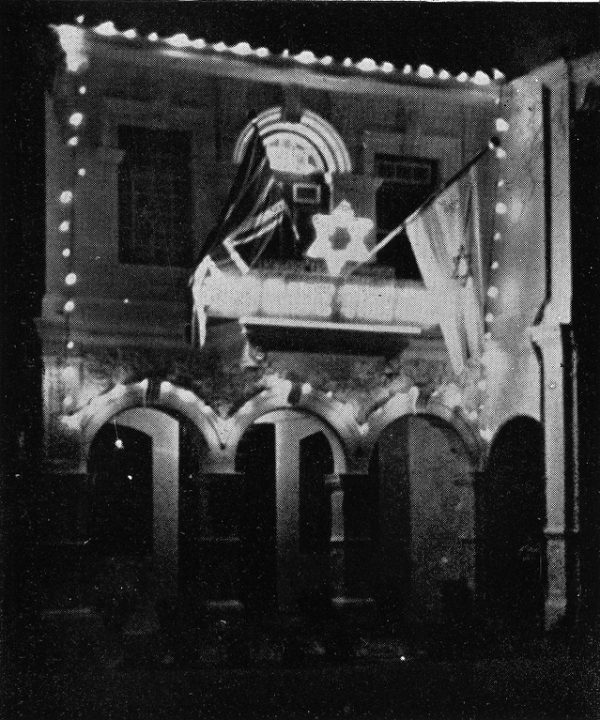
An image from The National Archives’ Colonial Office collection of the Penang Synagogue in 1937, in what was then British-controlled Malaysia (catalogue reference CO 1069/502).
Jews OR Jewish
- Hebrew
- Yiddish
- Kosher
- Rabbi
Use the advanced search of our catalogue to restrict your search results to records of a specific government department (and its predecessors) or multiple departments and record series. Departments and series are identified by letter and number codes and useful departments and series are highlighted throughout this guide.
However, some record types are better described in the catalogue than others. To pin down individual records from the medieval and early modern periods often requires consultation of additional finding aids, in conjunction with the catalogue. Among the key finding aids are the calendars of State Papers, available from the library at our building in Kew and online via institutional subscriptions at universities and specialist libraries, including our own. More advice on these appears in sections 3 and 4 of this guide.
2.1 Tracing individuals
Locating records of Jewish individuals at The National Archives can be tricky, largely because they are not specifically denoted as Jewish in most of the records in which they appear. A person’s religion was not routinely indicated in most official records (religion was not a question in the census until 2001; the most recent census available for details of individuals is 1911).
Jewish individuals and families are usually identifiable because they have typically Jewish names but, of course, this is not an exact science. Many surnames widely perceived to be Jewish are, more accurately, German or Eastern European, or in the case of Sephardic Jewish families, Spanish or Portuguese. So surnames may not be uniquely Jewish, and many Jewish immigrants who came to the UK anglicised their surnames or simply changed them. Jewish forenames are typically from the Old Testament, but again were not unique to Jewish people, and many such names were also favoured by some English and Welsh nonconformists, for example.
Similarly, birthplace is not always helpful, because many non-Jewish immigrants came from the same places.
For suggestions on how to locate records of Jewish individuals held in other archives, see sections 9 and 10.
2.2 Locating specific communities
There is advice throughout this guide on how you can try searching for records of Jewish communities and how to use the records to pinpoint the locations of these communities. There are also some search methods that can work more broadly across time periods and this is particularly true for the last two centuries. For 19th- and 20th-century communities try the following approaches:
- Search for ‘synagogue’ in The Gazette, which listed places licensed for worship. As Orthodox Jews have to live within walking distance of a synagogue, locating these places of worship is a good indicator of where Jewish communities have or had formed.
- Use the advanced search to search our ED records using the search terms ‘Jewish’ ‘Hebrew’ or ‘Jewish school’ to locate Jewish schools, another good indicator of nearby Jewish settlement.
- Search the 1851 Ecclesiastical Census Returns in series HO 129 using the search term ‘Jewish’. The Ecclesiastical Census lists synagogues.
For further catalogue search help see our website.
3. Jewish people and communities in England in the medieval period
The Norman conquest of 1066 heralded the arrival of Jewish communities in England. Jewish financiers from Rouen soon arrived at William I’s invitation. Leading Jewish figures, like Josce of Gloucester or Aaron of Lincoln, were key funders of English kings and their policies in the 12th century. By the 13th century communities had been established in London and other major centres such as York, Leicester, Norwich, Winchester, Gloucester and Oxford. For more background detail on the period, read Sean Cunningham’s National Archives blog on England’s Medieval Jews.
Many of the medieval sources noted in our guide to medieval and early modern family history are relevant for tracing Jewish people and communities before 1290. The texts of royal letters and orders to sheriffs or commissioners concerning prominent Jews, their families and property appear in the Chancery patent rolls and close rolls. For insights in to how to use these records see our guide to royal grants in letters patent and charters.
3.1 Records of immigration
The England’s Immigrants Database 1330-1550 has opened up National Archives records documenting immigrants from the medieval period but it does not provide for searching by religion. Searching by nationality or place or origin is, however, possible and may be the best way to have a chance of tracing individual Jewish immigrants.
Consult our guide to immigration and immigrants for more detailed advice on records of immigration from the medieval period.
3.2 Records of economic life
The close connection to the Crown led to a flourishing of Jewish businesses built on trade in goods, property, finance and commercial loans. Records of the contracts between Jews and Christians were created in repositories called archae in each centre with a large Jewish population.
The perceived wealth of the Jewish community was reflected in the heavy taxes – tallages – imposed on Jews by all monarchs. They paid particularly heavily towards the ransom of King Richard I in 1194. Richard I set up the Exchequer of the Jews to administer the collection of taxes, and to register loans and other financial dealings. It was also a legal body, settling disputes between Jews and handling the suits of Jews with Christians.
- Search among the surviving records of the Exchequer of the Jews (1219-1286) in series E 9.
- Search in the E 179 database and accounts relating to Jews in a sub-series of E 101 for evidence of the royal pressure for cash and to identify settlements and individuals paying historical taxes.
Content from records of the Exchequer of the Jews is also available in some useful published sources, all available for consultation at The National Archives library in Kew:
- Calendar of the Plea Rolls of the Exchequer of the Jews (6 volumes, Jewish Historical Society of England, 1905-2005)
- Select Pleas, Starrs and other records from the rolls of the Exchequer of the Jews, A.D. 1220-1284, J M Rigg (ed) (Selden Society, vol. 15, 1902) – contains cases and commercial contracts
- The Earliest English Law Reports, vol. IV, P Brand (ed) (Selden Society, vol. 123, 2006) – contains some law reports on cases heard by the Exchequer of the Jews
Evidence for the economic activities of the Jewish community can also be found in personal property deeds, involving Jews, that later came into Crown hands. Search for examples in the catalogue with keywords such as Jew*, grant, lease or quitclaim in the period before 1300 in the following series:
Medieval contracts involving Jewish merchants, sometimes referred to as starrs drawn up by the individuals involved, survive among series of ancient deeds.
3.3 Records of persecution
The early 13th century brought stronger restrictions on Jewish communities. Henry III followed other rulers throughout Europe in limiting the building of synagogues and concentrating segregated Jewish communities in larger towns and cities. Defamatory cartoons and sketches found in 13th century records indicate that medieval Jews endured constant prejudice despite being under the king’s protection. The Ancient Correspondence series, SC 1 contains letters showing how the king and his officials discussed and managed the Jewish community.
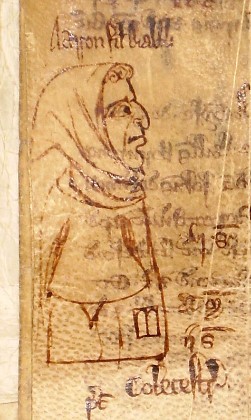
Aaron of Colchester, speaking up for his sons Isaac and Samuel who were accused, among others, of illegal deer hunting in Essex in 1277, was caricatured as the ’Son of the Devil’ in this image. It is the earliest English representation of the ‘Badge of Shame’, the yellow cloth which was to be worn by all Jews aged over seven after the 1275 Statute of Jewry.
Anti-semitic pressure on Jews included allegations that they kidnapped Christian children for forced conversion or even murder in mysterious rituals. Accusations of kidnapping, mutilation and ritual murder by Jews, many of them baseless or explained away, begin to appear more frequently in the king’s courts from this part of Henry III’s reign. Records of the General Eyres contain information on many of these cases. Search for them in the following series:
Though protected by the Crown, statutes of Jewry in 1253 and 1275 regulated the Jewish community stringently. The 1275 Act sought to end Jewish rights to loan money at interest and though open trading between Jews and Christians was encouraged, restrictions on residence and the Crown’s close control effectively ended the legitimate ways for Jewish business to survive. Consult the following records for details:
- A book of statutes held in Exchequer records, reference E 164/9, contains the comprehensive 1275 statute recorded in Statutes of the Realm.
- Evidence of how the statute was enforced comes from enrolments of letters sent to justices and sheriffs on Close Rolls held in record series C 54 and summarised in the Calendar of Close Rolls, Edward I, 1272-79 (HMSO, London, 1900).
3.4 Records of expulsion
Emigration left a Jewish population of c.3000 by the 1280s. With a significant fall in royal tax income from Jewish communities, Edward I no longer saw them as a valued resource for the Crown. The related hostility of the Christian church whipped up popular discontent and the expulsion of Jewish communities by other European rulers was among the final elements in convincing the king to expel the Jews from England.
In 1287, King Edward ordered all Jews to leave his French lands in Gascony. In July 1290 it was proclaimed that all Jews were to have left England by 1 November that year. They could take personal goods but their lands, rents, debts and property were taken by the Crown.
- Search in the Patent Rolls Calendar and Close Rolls Calendar for 1290 for the orders, licences, safe conducts and instructions relating to the expulsion.
- Search in series E 101 for evidence of efforts by the king’s officers to exploit Jewish-owned resources, the records collectively providing a snapshot of the condition of England’s Jewish community at the time of the expulsion.
3.5 Records of the Domus Conversorum or House of Converts
After the expulsion, though no practicing Jews lived in England, a small number who chose to convert remained. Having forfeited all their possessions at the expulsion, they lived at the Crown’s expense in the Domus Conversorum on Chancery Lane in central London (the site of the former Public Record Office, the predecessor of The National Archives). The last Jewish person born in England before the expulsion, Clarice of Exeter, died in the Domus in 1356.
- Search in series E 101 for records and accounts of the keeper of the Domus.
- Search in series E 145 for petitions for welfare and provisions, and occasional surveys of the building and its residents; use summaries of and indexes for this series from the first volume of Calendar of Inquisitions Miscellaneous (HMSO, London, 1916).
4. Jewish people and communities in England in the early modern period, to 1782
Following the expulsion of the Jews in the late 13th century, though some Jews and Jewish converts were resident in England, there was no official right of residence or worship until the late 1650s.
Although after 1492, when the Jews and Muslims were expelled from the Spanish kingdoms, Marrano (Portuguese-Spanish) Jews and New Christians (Jews who had accepted Christianity), sought homes in northern Europe, including in England, they were not free to practice as Jews. The official re-establishment of a Jewish presence in England was made possible in the years following the English Civil War (a period known now as the Interregnum), by the religious tolerance of Oliver Cromwell’s government. There was also lots of interest in Hebrew scholarship of the Old Testament during the Interregnum and various conferences were proposed to address the petition of the Marrano Jews to settle in England. The numbers of refugees from the Inquisition in Spain and Portugal rose during the 17th and 18th centuries.
The richest sources at The National Archives for tracing Jewish people and communities connected to England or Britain during this period are those collections of petitions, orders, letters and grants created by government officials in the course of their work for the state. For this reason, material in State Papers Domestic and Foreign remains the best way to approach the scattered evidence of Jewish activities. Access to State Papers Online (institutional subscription required) will open up correspondence, petitions and discussions of events in the Privy Council.
4.1 Records of immigration
A small community of Jewish merchants and doctors, though unable to openly practice their faith, existed in London by the mid-16th century.
Searching for records of any immigrants from this period, whether Jewish or otherwise, involves largely speculative searches. You may find evidence of Jewish merchants and settlers in Chancery and Exchequer records, in which we know there are references to immigrants. State Papers are also worth trying. Some good places to start might include:
- E 179, Exchequer subsidy rolls – includes names of foreigners living in the city and suburbs of London and details of the taxes levied on them 1523 to 1561
- SP 37, State Papers Domestic, George III – there is material in this series on Jewish immigration in the 1770s
For more advice see our guide to immigration and immigrants.
4.2 Records of economic life
It may be worth searching in records documenting overseas trade in State Papers Foreign. Start by consulting our guide to State Papers Foreign. The following series are likely to be useful:
It might also be worth consulting port books. Port books were kept to record customs duties paid on overseas trade. Our guide to port books contains all the necessary search advice.
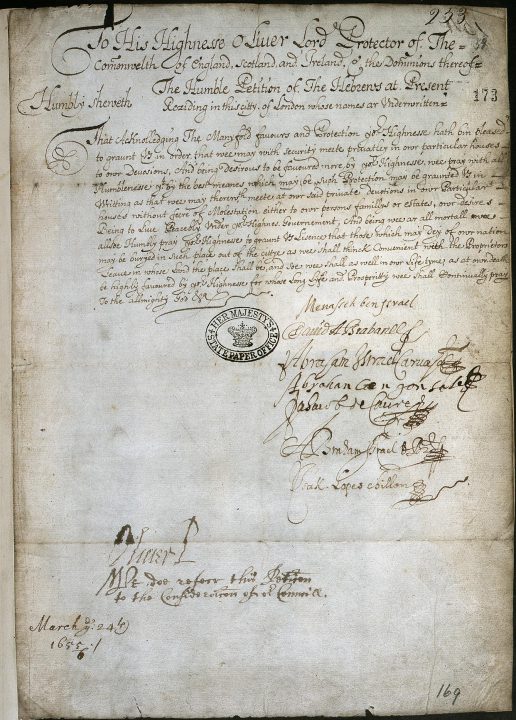
A petition to Oliver Cromwell, dated 1656, from ‘the Hebrews at present residing in this city of London’ requesting protection so that they might meet in their houses ‘without fear of molestation’ (catalogue reference SP 18/125).
4.3 Records of persecution and royal protection
Since Jews did not have full rights or protections under English and British law until the 19th century, the best evidence of Jewish lives and settlement in this period is reflected in complaints about the abuses they suffered or appeals for the intervention of the agencies of government on their behalf.
In the 16th century the presence of the small Jewish community in London caused the king’s council to investigate those suspected of being practising Jews. Records of the Privy Council and in State Papers Domestic of the Tudor governments show orders to investigate individuals and provide evidence that the Jewish religion had to be practiced in great secrecy.
Reactionary attitudes to the greater religious tolerance exercised by the Interregnum government were given greater voice with the Restoration of the Stuart monarchy in 1660, which brought with it an expectation that Jews would be expelled from England once again, evidence of which is in SP 29. Anti-Jewish petitioners rehearsed the old claims that the Jews had damaged English society, undermined trade and harmed the Christian faith, with demands for heavy Jewish taxation and a licencing system for residency. Yet the king was very aware of the value of Jewish trade and the wealth that had flowed into London and the colonies during the Interregnum as a result. There is evidence of royal policy to protect Jewish traders in London who had expressed fears of threats to their livelihoods and lives in SP 44/18.
Consult State Papers Domestic from the Hanoverian era for insights into the increasing economic contributions and political influence of Jewish merchants in the 18th century which led to the so-called ‘Jew Bill’ of 1753, providing a route to naturalisation for Jewish settlers in England. The new law provoked anti-Semitic unrest in the country, much of which was stirred by religious and trading groups. The threat of violence became so great that it was considered necessary to introduce a new bill to repeal the act.
5. Jewish people and communities in the United Kingdom in the modern period, 1782 to late 19th century
The significance of 1782 in our records is as the year the Home Office and Foreign Office were created, heralding the beginnings of two of the great collections of records held at The National Archives (for advice on Foreign Office records see section 8).
Given its broad remit, the Home Office inevitably created records relating to Jewish people, communities and affairs. Use our guide to Home Office correspondence for detailed advice on how to search for information on specific subjects and locate individual items of correspondence.
You can also try keyword searches in the following Home Office series by clicking on the series references below, though only some parts of these series are keyword searchable (consult the Home Office guide above for more information):
- Domestic correspondence (outgoing letters) in HO 42 and HO 44
- Registered files (from 1841) in HO 45
- Supplementary registered files in HO 144 – some are closed until a specified date
Search by date in the following series of incoming correspondence, some items of which may relate to the outgoing letters in the series listed above:
5.1 Records of immigration, aliens and naturalisation
Anti-Jewish pogroms in Russia in the 1880s drove Jewish communities west and thousands of Jewish people from these communities came to the UK to settle or to move on to America.
People born outside the country and who did not have British parents were classed as ‘aliens’. If immigrants came to Britain from the British colonies they were not classed as aliens but were simply Britons. The government established an Aliens Office in the 19th century and various Aliens Acts were passed. For insight into government policy towards Jewish immigrants and aliens try a keyword-search in:
- Aliens entry books from HO 5 (1794-1921) at Ancestry.co.uk (£)
- Home Office denization and naturalisation papers and correspondence in HO 1
- Home Office registered papers in HO 45
For records of individuals rather than policy, search our records of alien arrivals 1810-1811 and 1826-1869 by name, date, port of arrival or country/place of origin at Ancestry.co.uk (£). The original records are held in HO 2, HO 3, FO 83/21-22 and CUST 102/393-396.
See our respective research guides for more general advice on records of immigration and immigrants and naturalisation.
5.2 Records of economic life
Jewish people held all kinds of occupations, but were particularly associated with the retail and garment trades, and in the late 19th century many Jewish immigrants from the Netherlands were cigar makers. To locate records that involve Jewish businesses try any of the following:
- Search exhibits in Chancery by name using the advanced search and searching within references C 103 to C 114
- Browse by area the Registrar of Friendly Societies records in FS 1, FS 3, FS 9 and FS 15 for rules and activities of Jewish Friendly, Benefit and Loan Societies
Our guide to records of companies and businesses provides more detailed guidance on searching for company records.
6. Jewish people and communities in the United Kingdom in the 20th century
By the end of the 20th century there were over 250,000 Jewish people living in the United Kingdom. The most significant period of Jewish migration to the UK was not, as you might expect, during or just before the Second World War but between 1870 and 1914 when, it is estimated, some 200,000 Jewish immigrants arrived, mostly from Russia and Eastern Europe.
6.1 Records of refugees and immigration
Tens of thousands of Jewish refugees fleeing the Nazis in the 1930s and 1940s came to Britain, either temporarily, en-route to the United States and elsewhere, or to settle permanently. They included thousands of Jewish children from Nazi Germany and Nazi-occupied territories known as Kindertransport children, who were given homes in the United Kingdom just prior to the outbreak of the Second World War. The children were placed in British foster homes, hostels, schools and farms.
Search our Kindertransport records (drawn predominantly from series FO 371 and HO 213 but also from other National Archives record departments) at Findmypast.co.uk (charges apply). These records include lists of refugees, British government correspondence and official reports. You can also listen to and read the transcript of a National Archives talk on Kindertransport, given by Ela Kaczmarska in 2010. The majority of personal papers relating to Kindertransport cases are held at The London Archives.
Jewish refugees who arrived in England and Wales before 29 Sep 1939 and were in the country on that date will be recorded in the 1939 Register. Among other records covering Jewish refugees are the following:
- AST 1/24 – contains details on assistance to Jewish refugees in the 1930s and 40s
- RG 101/1781c-1781f – four 1939 Register records covering 3000 Jewish refugees at Kitchener Camp near Sandwich in Kent
Home Office records (department code HO) contain material on Jewish immigration from Central and Eastern Europe into the United Kingdom and Palestine.
Use the advanced search of our catalogue to target HO records and search using the construction ‘Jews OR Jewish AND aliens’ to uncover dozens of references to the related records. Drill down into smaller sections of the collection by clicking on the following series references and following the search advise below:
- HO 45 – search using keywords in these Home Office registered papers
- HO 162 – browse by date the papers on the working of the Aliens Act, 1905, covering the period up to 1921, revealing restrictions on aliens including Jews
For more general advice on these kinds of records, see our guides to records of immigration and immigrants and of refugees.
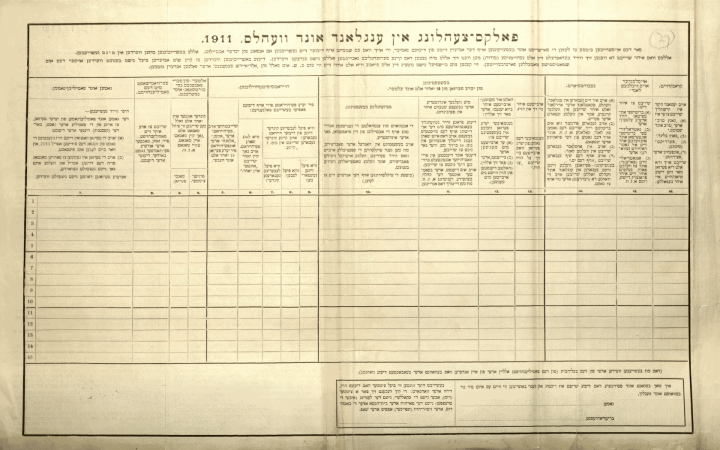
The Board of Deputies of British Jews worked with the Census authorities to help Jewish immigrants who didn’t read English well, or at all. This is an example of a 1911 census household schedule in Yiddish (catalogue reference RG 27/8).
6.2 Records of aliens and internment
The National Archives holds a small collection of aliens’ registration cards for the London area. These represent some 1,000 cases out of the tens of thousands of aliens resident in London since 1914. Although the cards represent a small sample they do include some notable cases including Ernst Freud, MEPO 35/29/4, who arrived in the UK in 1934, as Jewish Austrians and Germans fled Nazi persecution. Tens of thousands of Jews who escaped Nazi persecution in the 1930s and settled in the UK were assessed for internment at the start of the Second World War as they held German or Austrian citizenship. Many were imprisoned in internment camps along with Italian Jews in 1940. Search for and download:
- surviving aliens’ registration cards for the London area (1918-1957) direct from our catalogue from record series MEPO 35
- records of enemy aliens and internees from the First and Second World Wars at Findmypast.co.uk, all drawn from National Archives records
See our research guide on Internees for further information.
6.3 Records of economic life
Jewish businesses could be exempted from the Sunday trading laws on grounds of their Jewish faith. Search in HO 239 for minutes and papers of the Jewish Tribunal Under the Shops Acts, 1936 and 1950.
Search in BT 31 using the term ‘Jewish’ or ‘Kosher’ which will find records of the dissolving of companies which included these words in their name.
6.4 Military records from the First and Second World Wars
Among the tens of thousands of Jewish soldiers who served in the British military in the First World War were those of the Jewish Legion, Britain’s first all-Jewish regiment, which fought in Palestine. Another Jewish unit, the Jewish Labour Corps, formed in 1915 in Egypt, served in Gallipoli. Search for:
- records of the Jewish Legion and Jewish brigades in WO 32 using ‘Jews OR Jewish’ as search terms
- medal index cards for members of the Jewish Labour Corps in WO 372 using the names of individuals or units as search terms
In the Second World War, the Jewish Brigade, formed in 1944, fought under the command of the British Army and served in the Italian Campaign. Search for:
- records of the Jewish Brigade in WO 204 and WO 219 using ‘Jews OR Jewish’ as search terms
- recommendations for awards of members of the Jewish Brigade in WO 373 using the names of individuals or units as search terms
- war diaries of Jewish units in the Second World War in WO 169, WO 170 and WO 171 using ‘Jews OR Jewish’ as search terms
Jewish pilots served in various Royal Air Force squadrons during the Second World War. Many were British born, but others were members of exiled European air forces, principally from Poland and Czechoslovakia. Search the following which may include mention of Jewish pilots:
- combat reports in AIR 50
- operations record books in AIR 27
For advice on records relating to the Holocaust see section 8.3.
7. Jewish history and communities in former British colonies
The National Archives holds the records of now-disbanded central government departments once responsible for administering British colonies, notably the Colonial Office and Dominions Office. Connected material was also gathered by the State Paper Office. These records include documents relating to Jewish history, but they tend to be distributed throughout the collection, rather than collected in specific series. They are generally concerned with policy and administrative matters, so organisations and institutions are more likely to occur than individual persons. Individuals are only likely to be represented in the records if they were prominent in government or politics.
Please see our research guide to records of Colonies and dependencies from 1782 and American and West Indian colonies before 1782 for detailed advice on how to tackle these records.
Early Jewish presence in and connection to the English and British colonies is found in the CO 1, CO 5 and early Board of Trade records, digitised and made searchable in the related ProQuest and Adam Matthew Colonial State papers resources (subscription required).
During Charles II’s reign, a Jewish presence in England’s Caribbean colonies first appears. As foreigners, Jews were effectively prohibited by the terms of the Navigation Act of 1651 from trading with the American plantations. Nevertheless, Jewish merchants had been connected to islands such as Barbados for almost as long as English settlers had travelled there. In Jamaica, an Act in 1683 allowed the governors to grant naturalisation to foreigners willing to settle, and many Jews took up the invitation. A decade later, attempts to tax Jewish settlers at higher rates than others threatened their ruin.
A search for records of Jewish traders with interests in the colonies in the 17th and 18th centuries could include targeting:
- Petitions from Jewish traders to demonstrate their value to English trade and influence in series such as CO 1
- Appeals against the requirement to pay higher rates of tax in SP 44
- Petitions from Jewish merchants to receive formal protection as denizens in SP 34
Among the more revealing and information-rich of record types is the correspondence received by the Colonial Office and Dominions Office from colonial governors, other government departments, external organisations and individuals. Sometimes a sensible way to start your research into these records is to target a particular former colony of interest and search the respective correspondence. The following examples serve as illustrations of this approach:
- Search the correspondence for the Transvaal in CO 291 and the Union of South Africa in CO 633 for documentation of the many Jewish people who migrated from Lithuania to southern Africa in the late 19th and early 20th centuries, with the rise of gold mining around Johannesburg in the Transvaal.
- Search Palestine correspondence in CO 733 for a wealth of material on the British administration of Palestine under the League of Nations mandate and the establishment of Israel. The correspondence covers such topics as Jewish immigration into Palestine, the activities of the Zionist Organisation, Arab-Jewish relations and campaigns for independence (associated government records include the Palestine government gazette, held in CO 742, and sessional papers held in CO 814).
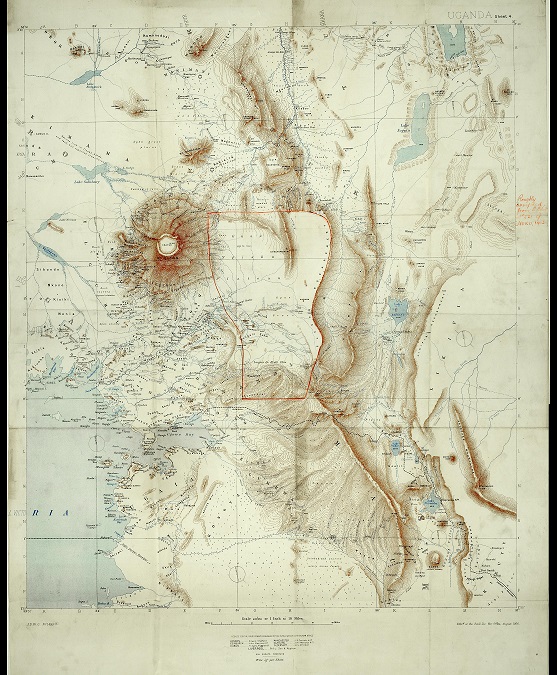
A map held in our Foreign Office collection showing the area proposed at the Sixth Zionist Congress in Basel, in 1903, for a Jewish settlement in British-controlled East Africa (catalogue reference FO 2/785).
Emigration registers and emigration registers of correspondence may also prove useful sources of information on the movement of Jewish people to British colonies. Search for “emigration registers” in our catalogue.
It is also possible to find correspondence relating to the settlement of German Jews and refugees in British colonies in the 1930s and 1940s in CO 323.
8. British records of Jewish communities in other countries
Our vast collection of Foreign Office records provides information on and insights into Jewish communities elsewhere in the world. Researching Foreign Office records can be complex, because of the structure of the records and the cursory nature of cataloguing detail before the early 1950s.
Our guides to State Papers Foreign 1509-1782: government papers on foreign affairs and Foreign Office and Foreign and Commonwealth Office records from 1782 suggest research approaches and outline the means of searching the records.
8.1 Getting a search started
As with Colonial Office research (covered above) the best method is usually to start with a country of interest and then identify the respective correspondence series. For example, it may be possible to find information on Jews in Poland for the period before 1782 in SP 88, State Papers Foreign, Poland and Saxony. Between 1795 and 1918, Poland did not exist as an independent state, so you would have to examine Foreign Office correspondence under Austria, Germany and Russia. From 1918, records are likely to be found in the Foreign Office’s political correspondence at FO 371.
8.2 Jewish refugees, emigrants and overseas settlements
Use the advanced search of our catalogue to search for records of Jewish people seeking refuge or simply settling in other countries by using the ‘Searching for or within references’ option to target records with ‘FO’ references and searching with these words:
- Jewish AND refugees
- Jewish AND settlement
- Jewish AND immigration
- Jewish AND emigration
8.3 The Holocaust and other Nazi atrocities
Our research guide to Nazi persecution is the best place to start for advice on how to trace British government records of Nazi crimes and the Holocaust.
The National Archives holds records across various series which document the Jewish experience under Nazi rule and occupation. GFM 33 includes records from the German Foreign Ministry Archives, which include documents relating to the Jewish population in various Nazi occupied European territories. Additionally, FO 371 contains general correspondence from political departments in relation to Germany, including the plight of Jews in the country, the situation of Jews in Nazi occupied territories, and atrocities committed in these areas. This series also includes records relating to German war criminals, including for crimes against Jewish people.
Records in FO 916 include registered files relating to the exchange of German prisoners for Jews in various European countries.
Read Lauren Willmot’s National Archives blog for insights into what happened to refugees and displaced persons after the Holocaust?
9. Other online resources and records elsewhere
Genealogy
Workhouse creed registers, which recorded the religion of all workhouse inmates from 1869, allow you to search for people by religion. They are held in local archives and some are available online through genealogy websites like Ancestry.co.uk, Findmypast.co.uk and Familysearch.org.
It’s usually worth trying a search in newspapers when trying to trace evidence of individuals. Try The Jewish Chronicle Archive, also available through MyHeritage.com.
The London Archives has published a summary of Jewish genealogy sources ‘which would be helpful in tracing a Jewish ancestor’.
Modern period including 20th century
The London Archives holds the majority of personal papers relating to Kindertransport cases, including lists of children and their “white cards”, and guardianship files. Use their Collections Catalogue to search for records.
The Wiener Holocaust Library is a library, archive and information service dedicated to supporting research, learning, teaching and advocacy about the Holocaust and genocide, their causes and consequences.
Yad Vashem, The World Holocaust Remembrance Center has collected and recorded the names and biographical details of millions of victims of systematic anti-Jewish persecution during the Holocaust.
Medieval period
The Fine Rolls of Henry III project website is a fully searchable resource on payments made for the king’s favour, 1216-1272. It includes much evidence of Jewish life and business activity. Related essays in the ‘Fine of the Month’ feature expand on this content.
General
Yerusha is an online catalogue providing extensive information on European Jewish heritage. The database describes Jewish and Jewish-related collections from a wide range of holding institutions across Europe, from Jewish communities to national state archives.
You can explore Jewish history in British towns and cities using the resources provided by National Anglo-Jewish Heritage Trails.
Hidden Treasures, from the Board of Deputies of British Jews, celebrates Jewish archives in Britain.
For extensive records of the Anglo-Jewish community in London contact The London Archives.
10. Further reading
Most of the following publications are available for consultation at The National Archives library at our building in Kew and some are available from our bookshop.
Geneaology
Doreen Berger, The Jewish Victorian: Genealogical Information from the Jewish Newspapers, 1861-1870 (Robert Boyd Publications, 2004)
Doreen Berger, The Jewish Victorian: Genealogical Information from the Jewish Newspapers, 1871-1880 (Robert Boyd Publications, 2000)
Anthony Joseph, My Ancestors were Jewish (Society of Genealogists, 2005), also available to buy from The National Archives bookshop
Roger Kershaw, Migration Records: A Guide for Family Historians (The National Archives, 2009)
Rosemary Wenzerul, A Beginner’s Guide to Jewish Genealogy in Great Britain (The Jewish Genealogical Society of Great Britain, 2000)
Modern period
Paula Kitching, British Jews in the First World War (Amberley, 2019)
Louise London, Whitehall and the Jews: British Immigration Policy, Jewish Refugees and the Holocaust (Cambridge University Press, 2000)
Early modern period
John Edwards, The Jews in Christian Europe 1400-1700 (Routledge, 1988)
David S Katz, Philo-semitism and the Readmission of the Jews to England, 1603-1655 (Clarendon Press, 1982)
Medieval period
Richard Huscroft, Expulsion: England’s Jewish Solution (The History Press [Tempus], 2006)
S Lipton, Dark Mirror: The Medieval Origins of Anti-Jewish Iconography (Metropolitan, 2014)
Robin R Mundill, England’s Jewish Solution: Experiment and Expulsion 1262-1290 (Cambridge University Press, 1998)
J Olszowy-Schlanger (ed), Hebrew and Hebrew-Latin Documents from Medieval England: A Diplomatic and Palaeographical Study (Brepols, 2014)
E M Rose, The Murder of William of Norwich: The Origins of the Blood Libel in Medieval Europe (OUP, 2015)
M Rubin, Gentile Tales: Narrative Assault on Late-Medieval Jews (Yale, 1999)
Calendar of the Plea Rolls of the Exchequer of the Jews preserved in the Public Record Office, 6 volumes
1. Why use this guide?
This guide explains how to find records relating to civil cases heard in the Chancery Division of the High Court between about 1875 and 1990.
The Chancery Division of the High Court is chiefly concerned with cases relating to
- real property (land), including land ownership and mortgages
- the administration of trust property
- the administration of wills
- business partnerships
- and the wardship of infants.
Other civil business, including cases concerning commercial and contractual disputes, personal injury, and defamation, is heard in the King’s Bench Division of the High Court.
N.B. For judgments in more recent cases, from circa 2003 onwards, see Find Case Law.
2. What do I need to know?
The Chancery Division of the High Court was created in 1875 as part of the reform of the central courts of common law and equity of England into a single Supreme Court of Judicature, which sat in several divisions to hear different sorts of cases.
In 1966, the Denning Committee on Legal Records (Cmnd 3084) determined that in most instances the records of routine civil court business should not be permanently preserved. These recommendations applied to all court records created after 1875, though they were only systematically implemented in respect of records created after about 1945. For the period after 1945, typically little information has been transferred to The National Archives for most mainstream civil court business.
3. Chancery Division Action papers (1873-1990)
The Chancery Division action papers are an exception to the rule that records relating to a case are archived by file type. Following the Report of the Denning Committee on Legal Records it was decided that, for a sample of cases, files of action papers should be created – bringing together in a dossier all the preserved material relating to the case selected. These dossiers are found in two series:
Three types of case were selected for these series, which are name searchable. Looking at the file cover, “L” identifies a case which was selected as long-running, “H” denotes a case which the masters deemed to be of historical interest, and “S” signifies a case chosen as part of a random 2% sample. Although these series include cases begun as far back as 1873 and concluded as late as 1990, the bulk of the material dates to the early – mid twentieth century. Often the files do not include the judgment or remedy given.
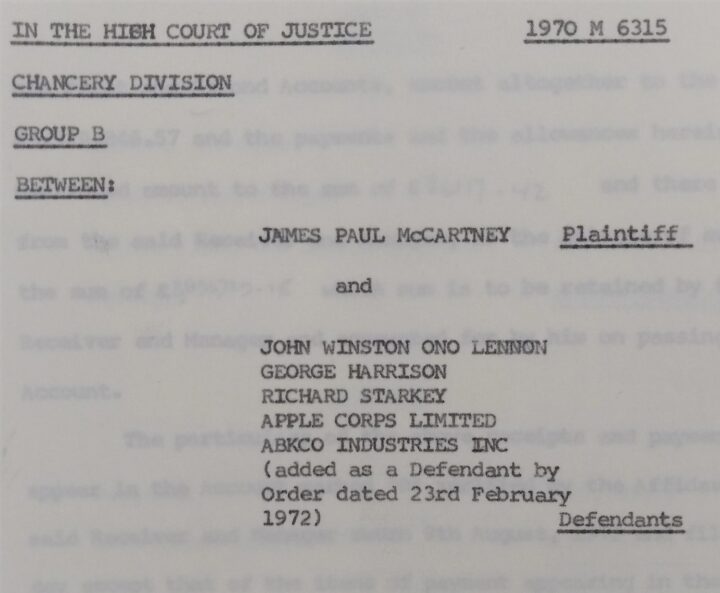
A detail from J 84/647 a box of action papers in the dissolution of the Beatles as a business partnership and the settling of accounts with Apple Corps Ltd and ABKCO Industries Inc.
If the case you are looking for is not one of the small number of cases selected as action papers, you will need to follow the search instructions in the rest of this guide. Researching a single case will probably require more than one visit to The National Archives.
4. How to search for records
Court records are generally archived in series according to file type. To piece together the different records relating to a single case, you usually must search several different record series. To do this successfully you need to:
- Establish a timeline and preliminary information for the case – if possible, identify the start and finish dates and the points in between at which records may have been created.
- Dig deeper – looking at the pleadings and various forms of proof within each relevant file series.
Each different type of record is kept separately and must be searched for separately. There is no guarantee that all records relating to a single case will have been kept.
Often, relevant records can only be located by using the original indexes in series IND 1. Most of these need to be ordered as original documents. Others are kept in the Map and Large Document Reading Room. Very few, if any, records have been digitised and, while the indexes are generally on-site, many of the series to which they refer are stored off-site and must be ordered in advance of your visit.
5. Establishing a Timeline and Preliminary Information for a Case
There are a variety of sources which can be used to determine the start date, and possibly the end date, of a case. As you work through these, you will also begin to gather other key information about a case. Note that many cases were typically discontinued or settled out of court before final judgment. These out of court disposals will not be reflected in the formal records. Similarly, the records we do hold often will not include the judgment or outcome in a case. This information may sometimes be found in published sources.
5.1 Published Sources
Some details of a case, especially relating to the hearing and judgment or remedy imposed, and therefore when proceedings ended, may be found in published sources. Places to look include:
- newspapers such as The Times(charges apply)
- Law reports(charges apply)
- the London Gazette (available via The Gazette website)
5.2 The Cause Number
From 1842, all cases in the civil courts were given a cause number. This consists of the year in which the case commenced, the initial letter of the claimant’s surname, and a running number – e.g. 1885 A 1271. All records relating to a case should be marked with this number. This allows you to link different records to a particular case, and to use those records to determine the year in which a case began.
5.3 Cause Books (1875 – 1940)
The cause books identify when a case began. They do not record the judgment, and so cannot be used to determine the end point of a case, but they include other useful information:
- The cause number
- The names of the claimant and defendant and their solicitors
- Dates of appearances, and sometimes of when pleadings were filed
Where they survive, the cause books provide the most complete listing of civil cases commenced in the High Court. The location and survival of the cause books varies:
- 1875 – 31 March 1880: All of the cause books of the Chancery Division are preserved in C 32.
- 1 April 1880 – 1940: The cause books from 1880 onwards do not survive except for the years 1880, 1890, 1900, 1910, 1920, 1930 and 1940. Samples for those years are found in J 89. Up to 1930 they include the writs of summons endorsed with the plaintiff’s statement of claim.
- 1941 onwards: The cause books do not survive.
5.4 Entry Books of Decrees and Orders (1876 – 1955)
Using the Entry Books, you can determine the year in which a case commenced, and, if it was settled in court, the year in which any judgment was given, as well as key points in the case’s history.
The Entry Books record:
- The cause number
- The names of the registrar, the presiding judge, and all parties
- The dates of any hearings
- The decrees, orders and judgments made by the judge in a case
Entry Books of Decrees and Orders survive for the period 1876 – 1955 in document series J 15. The Entry Books for 1956 onwards do not survive.
Finding the entry book
To access the Entry Books, use the indexes available in the Map and Large Document Reading Room. Note that:
- Up to 1932, there are two main series of Entry Books and corresponding indexes for each year. The A series covers cases whose titles begin with the letters A–K and the B series for those beginning L–Z.
- Internally, the indexes are arranged by law term and then by first letter of the claimant’s name or the title of the case, but not in strict alphabetical order.
- There can be multiple entries running over several years in respect of a single case.
When you find a relevant entry in the index, note down:
- The year
- The series (A or B)
- The number of the order
- Whether it is written or printed – until 1921 the Entry Books contain two sets of running numbers: one for printed orders and the other for written ones.
Then:
- Search by year within J 15.
- Sort your results by reference.
- Use the information you noted from the index to work out which volume you need to order.
N.B. If the number is written across the two columns it refers to an ‘order of course’ Most of these have been destroyed. See samples in J 89.
5.5 Registrars’ Court Books and Minute Books (1876 – 1982)
The Minute Books vary enormously in coverage and quality, but they can be helpful for establishing key dates in the lifecycle of a case. They may also give information on the contents of cross-examinations, exhibits submitted, and arguments made by the parties in court. This is particularly important where a case is not otherwise reported.
The Registrars’ Court and Minute Books are in J 56. Search these by registrar’s name and by year. For the period 1927 – 1982 only a 2% sample has been preserved. Thereafter they do not survive.
6. Digging Deeper: Records Commencing an Action
Once you have, so far as possible, established the timeline for your case, and gathered preliminary information, you can begin the process of delving into the records created at each stage of a case. The first of these are known generally as the pleadings and refer to the process by which a case came into court. In the Chancery Division of the High Court this typically happened in one of two ways – by pleadings or petition.
6.1 Pleadings (1876 – 1942)
Pleadings only survive if a case reached trial and resulted in a judgment. They are formal written statements setting out the claim of the claimant and the defence of the defendant. They do not include evidence, which is filed separately, and are meant to be confined to material facts in the case. They may include certificates of the outcome of cases and notices of change of solicitor.
Pleadings are preserved as a separate file series, in J 54, only for the period 1876 – 1942. Indexes only survive for the years 1876-1879, at The National Archives in the Map and Large Document reading room.
To identify relevant pleadings, search by year within J 54. Sort your results by reference. The records are arranged by the initial letter of the name of the plaintiff and (usually) by the month of the final judgment.
6.2 Petitions (1876 – 1954)
Some actions, usually applications under acts of Parliament, such as the Companies Acts and Charitable Trusts Acts, or concerning the administration of estates, are commenced by petition. These petitions are found as a separate file series in J 53 for the period 1876 – 1954 only. They are arranged by year and then alphabetically.
There are indexes to petitions in IND 1/15048 – IND 1/15051 and IND 1/15282. Search “J 53” AND “index” for the relevant year.
7. Digging Deeper: Records providing Proof and Additional Information
After pleading, which established the legal questions at issue, the next step was for the parties to prove their case. They could do this by introducing evidence in the form of affidavits, depositions, and exhibits. In addition, Chancery Masters, officials who worked for the judge, might make reports relating to the case.
7.1 Affidavits (1876 – 1945)
Affidavits are sworn written statements submitted in evidence. Often, they are formal and formulaic – relating to different procedural steps in a case. Sometimes, however, they provide a treasure trove of information about a case.
Affidavits survive as a separate file series, in J 4, only for the period 1876 – 1945. They are arranged by date of filing, then alphabetically by claimant name. Use the indexes to affidavits in IND 1 to identify relevant records. These are not on the open shelves and must be ordered as original documents. To find the correct index, search “J 4” AND “index” AND e.g. “B” (first letter of the claimant’s name) for the relevant years. Sort your results into reference order.
7.2 Depositions (1876 – 1991)
Depositions are oral statements made on oath and recorded in writing. They are located as follows:
- 1876 – 1880: They are filed with the pleadings in J 54.
- 1880 – 1925 and 1960 – 1991: They are filed in J 17. No depositions survive for the period 1925 – 1959. From 1960 only a small representative sample has been preserved.
Depositions are arranged by date of filing and then alphabetically by claimant name. Use the indexes to depositions to identify relevant records. These are in IND 1 and must be ordered as original records. Search “J 17” AND “index” for the relevant year or years.
7.3 Reports and Certificates (1875 – 1962)
Masters, officials working for a judge, might make reports and certificates relating to a case. These are in J 57 and can include:
- Accounts and schedules of debts
- Arbitration awards
- Trust schemes
- Statements
- Special reports
The records are arranged by date of filing, and then alphabetically by name of claimants. There are Indexes in IND 1 and catalogue entries in J 57 give the reference for the relevant index, which must then be ordered as an original document.
7.4 Exhibits and Pedigrees
Exhibits are documents or objects introduced as evidence in court. As a collection of records, they are incredibly diverse and can include material such as maps, wills, deeds, share certificates and letters. There are many exhibits in Masters’ series in J23-J 47. Browse through these to find the master and date which best fits your research enquiry.
Further exhibits, which were deposited in the Central Office of the High Court, are in J 90. This series is name and, to an extent, key word searchable. It may, therefore, be a path into identifying cases of interest, which can then be traced through other record series using the claimant name and cause number.
In cases involving wills and intestates one of the core pieces of evidence is often a pedigree or “family tree”. Though these may appear in other masters’ papers, there are also multiple pedigrees series. These are a rich source of genealogical information. They are name searchable by the name of the claimant or testator. See:
- J 63 Master Mosse’s papers, c1852-1917
- J 64 Master Hawkins’ pedigrees, 1849-1925
- J 66 Master Hulbert’s pedigrees, 1849-1926
- J 68 Various masters’ pedigrees, 1852-1977
8. Further reading
Some of the publications below may be available to buy from The National Archives’ shop. Alternatively, search The National Archives’ library catalogue to see what is available to consult at Kew.
J M Lely and W D Foulkes, The Judicature Acts 1873 and 1875 (H Sweet, 1877)
I H Jacob, ‘Later Legal Records and the Historian’, Archives, Vol VI Number 31 (1964)
C T and M J Watts, ‘In the High Court of Justice…’ Genealogist Magazine, Vol 20 pp200-206 (1981)