1. Why use this guide?
In this guide to military maps from the Second World War you will find advice primarily on how to find these maps among the huge collections held at The National Archives. There is, however, some advice on maps held by other archives and libraries.
Most of our maps are not viewable online and to view them you will need to visit The National Archives at Kew or pay for copies to be sent to you.
2. The origins of the maps held by The National Archives
The maps held here were those used by the War Office and the other central government departments that oversaw military operations during the war. As early as 1919, the War Office had agreed to supply mapping for the RAF and the Air Ministry. They are also maps used by the military forces themselves, some in theatres of battle, and many of them are annotated or show other signs of use and wear.
Most of the maps used by British land and air forces were made by the Geographical Section, General Staff (GSGS, also known as MI 4). Senior staff members were usually Royal Engineer officers with surveying qualifications, although there were a few Royal Artillery or infantry officers. The rest of the staff were civil technical assistants and clerks, together with some Royal Engineer non-officer ranks.
GSGS operated under the Directorate of Military Operations and Intelligence which in 1936 began to map north-eastern France and Belgium at 1:50,000, though some of this work was allocated to Ordnance Survey. The Directorate’s role during the war was to supply maps to the forces, collect data on foreign survey networks, provide training, and prepare survey data for Expeditionary Force mobilisation. It was organised into small sections, each of which specialised in maps of a particular region. The War Office Map Library, which was also part of MI 4, acquired maps and cartographic intelligence data.
In September 1939, MI 4 moved to Cheltenham. However, General Staff and the Map Library remained in London. In late 1940, the Map Depot moved to Alperton in west London and remained there throughout the war. This resulted in fragmentation of functions and records. MI 4 at Cheltenham had limited accommodation so new accommodation for MI 4/GSGS was acquired at Eastcote in north-west London. A Distribution Section was set up to handle supplies of maps to overseas expeditions. The Map Section at the Air Ministry was also under the technical supervision of MI 4 officers.
Though The National Archives holds many GSGS maps, we do not have complete or discrete sets and most are found among operational records or other wider sets of files.
3. How to search online
Though the maps themselves are not viewable online, you can use our catalogue to locate document references for maps. You will need the document reference to see the record itself. To see the maps you will have to either visit us in Kew or order copies. Bear in mind that a search in our catalogue from the catalogue homepage will also search for records in other archives around the country – keep your eye on the ‘Held by’ field to establish whether the records are here or elsewhere.
The amount of detail for each map in our catalogue varies and many maps, including those that form part of wider sets of operational records, are not described in the catalogue at all.
Search our catalogue using the following kinds of keywords and include the phrase ‘AND (map OR plan)’ after the words you are searching with:
- place name
- the name of a battle or operation
- the name of a regiment or other army unit
- GSGS number
Use the advanced catalogue search to target the records of one or more entire departments (for example, the War Office. Use the department reference, which is always a letter code, to do this (the code for the War Office is WO).
You may find it useful to look at maps alongside written records about Second World War events, strategy and operations.
Maps were given reference numbers starting with the letters GSGS and though we do not use those references in our catalogue you may find other sources refer to maps by these GSGS numbers.
4. Additional searches possible only at our reading rooms in Kew
Some Second World War maps that are not yet listed in the online catalogue are noted in paper catalogues and indexes held in our reading rooms at Kew:
- the published catalogue Maps and Plans in the Public Record Office 4: Europe and Turkey (TSO, 1998)
- card indexes arranged by place name and by military map designations (including GSGS numbers)
- a summary catalogue available at The National Archives, with separate binders arranged by place and by subject. Try looking in the subject binders under the headings ‘Military mapping’ and ‘Military operations’
Only a small proportion of the maps preserved among our records are listed in any of these catalogues. You may be able to find other maps by looking speculatively through files and volumes of textual records from the Second World War period.
5. Looking for maps within British Army operational records
Many war diaries include maps, often in the appendices. These maps are rarely mentioned in catalogue entries so you will need to search speculatively.
To find a map of a particular area, action or operation, try looking for:
- the war diary of the relevant regiment or other army unit
- the war diaries of other units known to have been in the area at the same time
- the war diaries of brigades, divisions and armies
- Military Headquarters papers
For more information about these operational records and guidance on how to search, read our guide to British Army operations in the Second World War.
6. Understanding military grid references
Many records such as war diaries, operational orders and combat reports contain grid references to locations which look like Ordnance Survey National Grid references but do not make sense when related to the National Grid.
These location references relate to a separate military grid, which was top secret during the Second World War. This grid is sometimes called the ‘purple grid’, because it was originally overprinted on Ordnance Survey maps in purple ink.
Enter keywords in the search box or browse ZOS 3 for a set of purple grid maps covering Great Britain only.
Consult the following websites which are useful for understanding and converting military grid references:
- Notes on the Modified British System of coordinates used on the European Theatre of Operations during the WWII
- FieldenMaps Co-ordinate Converter
7. Record series known to contain many military maps
Below are links to key record series that you can search within our catalogue, helping you to target your searches more precisely. By clicking on the series links you will arrive on the respective ‘series description’ pages from where you can search the series, using keywords such as the names of places, operations or battles and/or dates/years. Series description pages provide information on the arrangement of the records and sometimes some of the historical context in which they were created, as well as suggesting related series you could explore.
- WO 32 – some files include maps
- WO 106 – some files include maps
- WO 192 – includes plans of forts in the United Kingdom
- WO 208 – includes maps related to the operations of foreign armies
- WO 223 – includes maps relating to operations in France and Netherlands, and a few maps of Britain
- WO 234 – consists of maps of Crete, Cyrenaica (including El Alamein and Tobruk) and Egypt
- WO 252 – includes maps, plans and surveys of places in theatres of war worldwide
- WO 401 – includes military map catalogues and indexes from the Second World War
Other record series including many military maps are:
- ADM 234 – includes similar material to WO 252 but for naval operations
- CAB 44 – includes working copies of maps used in the Official War Histories
- CAB 106 – includes maps within military reports and dispatches
- CAB 145 – consists of maps created by the Cabinet Office Historical Section for historians writing the Official War Histories
- DEFE 2 – includes many maps relating to named operations such as Chariot, Overlord and Torch
- HO 193 – see our guide to the Bomb Census survey. Many Bomb Census maps are annotated copies of GSGS maps
- WORK 43 – includes some plans, such as Catterick Camp and the defences of Portsmouth
Records relating to air and sea operations also include maps, plans and charts. See our guides to Royal Air Force operations and Royal Navy operations in the Second World War for more information about these records.
8. Second World War maps held elsewhere
The record set of GSGS mapping (dating back to 1881) has been transferred from the Ministry of Defence Map Library to the British Library Map Library. This includes a very large amount of Second World War material.
Many other libraries and archives hold maps dating from the Second World War period. Use the Library Hub Discover to find maps in the collections of some major UK research libraries.
9. Further reading
Use our library catalogue to find a recommended book list.
Documentation about military surveying during the Second World War is available on the Defence Surveyors’ Association website.
Home Guard Personnel
Durham Home Guard service papers are available online, see below.
Service histories of members of the Home Guard other than Durham will be available online in March 2028.
What do I need to know before I start?
The Home Guard was organised by region and enrolment forms for the County of Durham have been transferred to The National Archives as a pilot project and are available through our catalogue, Discovery, see below.
Enrolment records for the remainder of England and Wales have been transferred to The National Archives as part of the Ministry of Defence service records project and will be made available through a licensed partnership with Ancestry. It is expected they will be accessible online by March 2028.
What do the records look like?
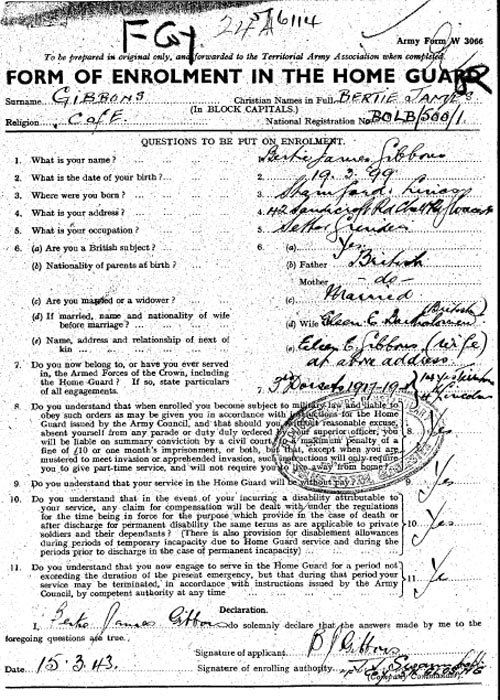
When a person joined the Home Guard they were asked a series of questions. Their answers were then recorded on the enrolment form.
The records contain the following basic information:
- first and last name
- date and place of birth
- address
- brief details of former military service on the reverse side
Some of the records also include applications for medals, medical forms and general correspondence. The medical forms are closed until 2045 for data protection reasons.
Durham Home Guard enrolment forms, 1940–1945
For papers relating to the rest of the Home Guard see the section below.
Home Guard enrolment forms, 1940–1945
You can request a search for a military service record using one of the following two forms (charges apply):
Form 1: For a deceased person born before 1940
Form 2: For a living person, or your own record, born before 1940
Online records
Recommendations for military honours and awards, 1935–1990
Search our catalogue for recommendations for awards (£) such as the Victoria Cross and the Military Medal. This collection (WO 373) includes awards to some Home Guard personnel.
Home Office Committee on Civil Defence recommendations for gallantry awards, 1940-1949
Search Ancestry.co.uk (£) by name for papers submitted to the committee recommending Home Guard personnel for the George Cross, George Medal or Empire Gallantry Award.
Cabinet Papers
Read our research guide to Cabinet and its committees for advice on searching our catalogue for cabinet papers.
The archived Cabinet Papers site has themed pages which you can browse, some with links to downloadable documents.
Records available only at The National Archives in Kew
To access records held by The National Archives you will either need to visit us, pay for research (£) or, where you can identify a specific record reference, order a copy (£). To access records held in other archives please contact the archives directly.
Home Forces papers and regimental histories
Browse the records of the Home Forces in WO 199 for regimental histories, nominal rolls of Home Guard auxiliary units and other papers. The unit war diary for the Durham Second Battalion is in WO 199/3324.
Treasury Ceremonial Branch Civil Defence Awards Files, 1938-1950
Search the records in T 336 by name, most of the information in these files was published in the London Gazette but some files contain unpublished accounts of actions.
Recommendations for the award of the British Empire Medal, 1944
Consult AIR 2/9040 to find recommendations for the award of the British Empire Medal to some members of the Home Guard on stand-down.
Other records
Records in other archives and organisations
Durham Light Infantry records, 1940s and 1950s
Search the online catalogue of Durham County Record Office to find records of the Durham Light Infantry. These include regulations, orders and instructions for the Durham Home Guard.
Various local records
The National Archives’ catalogue contains collections and contact details of local archives around the UK and beyond. To locate these records, search our catalogue with keywords and refine your results to ‘Other archives’ using the filters.
Other resources
Consult published Home Guard Lists, available at The National Archives library and other specialist libraries, to trace an officer in the Home Guard. These are arranged by area and include name indexes.
1. Why use this guide?
This guide will help you find records at The National Archives of medieval lawsuits and legal cases heard before travelling (‘itinerant’) courts, known as general eyres.
Records of general eyres provide insights into various elements of medieval society in England, including the following:
- the evolution of English common law
- crime and criminality during the medieval period
- the administration of justice in the regions
- local lords and officials, the land they owned and the power they wielded
- specific people and places
The earliest surviving eyre roll dates from 1194 and the last eyre to produce any records was in Kent in 1348.
2. What were general eyres?
During the late 12th and 13th centuries, small groups of judges (often referred to as justices) were sent from the central courts at Westminster to all the counties of England, except Durham and Chester where the royal jurisdiction did not extend, to preside over local courts.
Counties were grouped into circuits, with a group of justices assigned to each one; and the circuits, as well as the courts themselves, were known as eyres. Evidence from the Pipe Rolls suggests that eyres were first held in the mid-1160s. Although general eyres were suspended in 1294, there were isolated eyres during the first half of the 14th century, and a failed attempt at a general revival in 1329-1330. Occasional eyres were summoned until 1374 but there are no known surviving records after 1348.
In theory the eyre justices travelled these circuits at seven-year intervals, although the intervals were in practice often much more varied.
They sat in judgment over various kinds of legal cases, referred to as pleas, that had occurred since the last eyre was conducted – see section 7.3. Among other things, they dealt with:
- lawsuits (known as civil pleas)
- criminal offences (known as crown pleas)
- offences against the King’s property rights (also known as crown pleas)
- after 1278, investigations into the land, property and rights held by local lords with a view to claiming them for the King (a process known as quo warranto)
The term ‘general eyre’ is modern; they were known to contemporaries as eyres ‘for common pleas’ or ‘for all pleas’.
3. How to search for an eyre roll and what they look like
Not all eyre rolls have survived but you can search for details of those that have using Discovery, our catalogue. None of the records described in this guide are available online, so to view any of the documents that you find references for in our catalogue, you will need to either visit The National Archives at Kew or pay for copies to be sent to you. Alternatively, you can pay for research.
For general tips on searching the catalogue, see the Discovery help page.
3.1 All counties except Chester and Durham
Search for eyre rolls by clicking on the following series references, using the name of a county as your search term:
- up to 1216, before the death of King John, in KB 26 (they were mistakenly placed in this series in the late 19th century)
- from 1199 in JUST 1 (this series includes a few veredicta, or original lists of presentments, the earliest from 1238 – see section 7.4 for a definition of these)
3.2 Chester and Durham
The Palatinates of Durham and Chester were areas of special jurisdiction and had their own independent systems of justice.
In Durham, royal officials could only conduct an eyre after the death of the bishop and before the appointment of his successor.
Use our catalogue to search or browse for eyre rolls from 1285 for the Palatinate of Chester in CHES 17.
Search using ‘Durham’ as your keyword to find the few surviving eyre rolls for the Palatinate of Durham in JUST 1.
3.3 What do the records look like and how were they written?
The records of the eyre courts are very formal, and are written almost entirely in Latin, much abbreviated and full of technical legal terminology.
They were kept on rolls of parchment. Each roll is made up of lengths of parchment, known as membranes, stitched together.
The early eyres, during the 13th century, produced one roll per county, but as business expanded and material was increasingly arranged into sections, it was necessary to use more than one roll per county.
4. How to search for related records
4.1 Cases adjourned from other courts
Some of the civil cases which were heard in the eyre courts had been adjourned from the Westminster courts, especially the Bench or Common Bench, later the Court of Common Pleas.
Search for these cases in KB 26, CP 40 and KB 27, using regnal years as your search terms. Browse any of these series to see how the regnal years are expressed.
4.2 Lawsuit agreements: feet of fines files
If the parties in a lawsuit came to an agreement in any of these courts, they frequently recorded this agreement in what is known as a final concord, often referred to as a foot of fine.
You can search for these feet of fines in CP 25/1. Many have been printed in regional record society volumes.
4.3 Writs
A writ was a sealed document conveying a formal command of the court.
Writ files from a small number of eyres survive in JUST 4.
Use the search box in JUST 4 and search using ‘eyre’ and the name of a county as your keywords.
4.4 Copies of eyre court records in Chancery files
Browse by date through C 260 in our catalogue for copies of eyres records that were used in Chancery cases. Most were taken from the earlier eyre rolls.
4.5 Revenues from fines
Eyres generated a large amount of revenue for the crown. Amercements and fines were paid into the Exchequer and recorded on the Pipe Rolls.
Browse the pipe rolls by date for records of revenue generated by eyres in E 372. For more information and advice see our guide on Medieval financial records: pipe rolls 1130-1300.
4.6 Gaol delivery sessions outside eyres
Gaol delivery sessions (see section 7.5 for more on these) can provide evidence of legal process and court hearings during periods when the eyre was not conducted. They record the clearance of gaols and the delivery of prisoners awaiting trial into court.
Search JUST 3 for gaol delivery rolls for separate court sessions outside eyres.
5. Interpreting and understanding the records: general
The courts employed clerks to record the details which appear on the eyre rolls. There would usually have been a panel of two or three judges, sometimes more, hearing cases together, each with their own clerk or clerks to make notes and record judgments. Usually each justice had a roll of his own but a roll may consist of the writing of as many as ten different clerks as notes were added during the course of proceedings. Furthermore, as they moved from town to town, the rolls might be amended as they went – and could be further annotated retrospectively if the case was transferred to Westminster, or the plaintiff failed to appear, or a subsequent hearing was requested.
From around 1280 often all the rolls of the various justices that presided over the same eyre have survived. Although there are usually minor discrepancies – spelling, form of words – between them, the salient points of the case, and its verdict, should be consistent. Where discrepancies do occur, historians tend to give precedence to the records of the named leading judge who had been appointed to lead the commission.
Eyre rolls before 1278 generally consist of two main sections: civil pleas and crown pleas.
6. Interpreting and understanding the records: civil pleas
Most eyre rolls have a separate section for civil pleas.
The order of the civil pleas in their section of the roll probably reflects the order in which the justices heard them; there is no geographical pattern.
The civil pleas section is usually divided into the following sub-sections:
6.1 The pleas
Until 1247, civil pleas both from the county in which the eyre was being held and from other counties (known as foreign pleas) were recorded in the same sub-section.
After 1247, foreign pleas were entered in a separate section and were later often filed as separate rolls.
6.2 Essoins
Essoins were excuses for non attendance at the court. They are recorded on a separate section of the roll, usually at the end of the civil pleas.
6.3 Attorneys
From 1247, there is a separate roll listing attorneys appointed by either plaintiff or defendant. This is often filed at the end of the civil pleas, although occasionally it is at the beginning.
7. Interpreting and understanding the records: crown pleas
Most eyre rolls have a separate section for crown pleas.
7.1 Establishing the place
There are usually separate sub-headings for all the court cases that take place in the following:
- a single hundred or wapentake
- major towns – usually appearing at the end of the crown pleas section (Oxford, for example, has its own heading)
- some minor towns (vills) or even manors (especially in Herefordshire and Shropshire)
7.2 Lists of jurors: the kalendars
In each hundred, vill or town ‘jurors’ were appointed. These men were freeholders and were usually the leading men in the district.
There is usually a separate roll on which the jurors, sometimes referred to as the ‘presenting jurors’, for each hundred, vill or town were listed. This roll is known as the Calendar or Kalendar. The place names on the Kalendar follow the same order as on the main crown pleas roll.
There were twelve men appointed as jurors (including two electors, who usually appointed the other ten men) and a bailiff.
The earliest surviving kalendar is from 1238.
7.3 Articles of the eyre
In the months or years in between visits from the eyres justices, jurors kept records of crown pleas which were then presented to the justices the next time they arrived to hold court. These records of crown pleas were known as ‘articles of the eyre’.
7.4 Veredicta or presentments
The official responses to the articles of the eyre are known as veredicta or lists of presentments.
7.5 Gaol delivery sessions
When all the prisoners awaiting trial in a particular gaol were tried at once, it was known as a gaol delivery session.
Gaol delivery sessions were regularly held in eyres courts and have their own separate sections in the rolls from 1279.
8. Interpreting and understanding the records: new sections after 1278
8.1 Private civil lawsuits
After 1278 the eyre justices also dealt with pleas brought using a bill of complaint, privately drawn up, rather than a royal writ. A bill of complaint was drawn up by a potential litigant seeking justice in the royal court against another private individual. A royal writ, on the other hand, was used to instigate proceedings against an individual on behalf of the Crown. There were sections in the rolls for private civil lawsuits after 1278 but they are rather small.
8.2 Quo warranto
There are often quite large sections, or sometimes whole rolls, devoted to pleas of quo warranto. These were lawsuits brought against local lords who were suspected of holding land, property and rights previously belonging to the crown with a view to claiming them back for the King. Many of these were published in Placita de Quo Warranto – see Further reading below.
9. Further reading
David Crook, Records of the General Eyre (PRO Handbook No. 20), (HMSO, 1982)
C A F Meekings, Crown Pleas of the Wiltshire Eyre 1249 (Wiltshire Archaeological and Natural History Society, Record Branch, 1960)
Michael Clanchy, The Roll and Writ File of the Berkshire Eyre of 1248 (Selden Society, 1973)
C A F Meekings and D Crook, The 1235 Surrey Eyre (Surrey Record Society, 1979)
Alan Harding, The Roll of the Shropshire Eyre of 1256 (Selden Society, 1981)
Placita de Quo Warranto (Record Commission, 1818)
D Crook, ‘The later eyres’, English Historical Review, XCVII (1982), pp 241-268
1. Why use this guide?
Use this guide to find the principal primary and published/secondary sources for the major confiscations of Crown and royalist lands during the Civil War and Interregnum (1642-1660). It can be difficult to identify the most useful records as the descriptions in our catalogue do not contain sufficient details. This guide will highlight the most useful record series .
In some cases records have not survived.
No detailed analysis of the confiscations and sales of Crown, church and royalist lands has been published.
2. How do I search these records?
You will either need to use calendars and indexes to identify relevant records or, if the record references to documents are not supplied in this guide, you will need to browse.
Use Discovery, our catalogue to ‘browse by reference’ through the suggested record series and identify relevant record references.
3. Church lands
Almost all the original records of the trustees and contractors to whom the lands of bishops, deans and chapters were committed and sold have been lost.
Surviving records can be found in the following original sources:
- The deeds of purchase enrolled on the Close Rolls in C 54 – précis in IND 1/17355 and indexed in IND 1/17356
- treasurers’ declared accounts of revenue (1646-1660) in E 351/453 and AO 1/367/1-4
- trustees’ accounts and papers (1646-1648) in SP 28/289
- Vouchers of receivers’ accounts for Canterbury in SP 28/291
- lists of revenues of St Paul’s Cathedral, London (1644-1646) in SP 28/355/1 and of Rochester Cathedral (1644-1646) in SP 28/355/3
4. Crown goods and lands
Sales of the lands of Charles I, Queen Henrietta Maria and Prince Charles were governed by an Act of 16 July 1649. See Acts and Ordinances of the Interregnum, ii (1911), pp. 168-91. The lands were vested in trustees and the profits from them were used to pay off army arrears.
Contractors were nominated to conclude agreements with the purchasers, and treasurers to receive the money and settle any administrative expenses.
A registrar and deputy registrar kept the records, enrolled the transactions, and gave the purchasers their deeds of title. The trustees appointed surveyors for the lands, and the Act named a surveyor general.
4.1 Original sources
Surviving records can be found in the following original sources:
- the parliamentary surveys of crown lands in E 317; see the eleven-volume typescript calendar available in The National Archive’s Library; duplicates of parliamentary surveys can be found in DL 32 and LR 2
- the entry book of orders and minutes of the contractors (1649-1659) in E 315/314
- particulars for the sale of estates of Charles I in E 320 and an index of places by county is available in the Map and Large Document Room at The National Archives
- the close rolls in C 54 include enrolments of the deeds of sale; use the calendar in IND 1/17353, and the index IND 1/17354
- the inventory of the personal possessions of Charles I in LR 2/124
- papers of the trustees for sale of the King’s goods, 1649-1658 in SP 28/282
- orders and correspondence from the Committee for sale of the King’s lands in SP 28/286
- certificates of sale in E 121, E 308/7 pt I, SP 28/286, folios 425-55 and SP 28/289
- contracts 1650-1659 in SP 26/1-4
- entry books of contracts 1649-1653 in E 315/173-174
- correspondence between trustees and contractors in SP 46/109, SP 46/128, SP 28/286 and E 315/481. Only a small portion survives. See also State papers domestic 1642-1660
- original warrants to the treasurers 1649-1659 in SP 28/271-277 and SP 28/330
- treasurers’ accounts 1649-1659 in SP 28/350/8
- declared accounts 1649-1656 in E 351/602-4
- acquittance books 1651-1659 in SP 28/330
- orders to regional sequestrators in SP 23/18. See also LR 2/81-83 and E 367
4.2 Published sources
Read The Domesday of Crown Lands by S J Madge, (1938), for a useful analysis of the Parliamentary surveys.
5. Sales of fee farm rents
Surviving records can be found in the following original sources:
- local auditors’ certificates of extant fee-farm rents in E 315/37 (with strays in SP 28/286, SP 28/288-289, E 308/7 pt II and LR 13/16/7)
- certificates of sale in E 308/7 and E 315/145
- enrolments of sales on the close rolls in C 54 with an abstract in IND 1/17347
- particulars of sale in E 308 and among the particulars for leases in E 367
- regional entry books of particulars for Hertfordshire, Suffolk, Cambridgeshire, Huntingdonshire and Norfolk in LR 10/24
- requests to purchase in SP 28/286 with counterpart deeds of sale in E 307
- entry books of contracts 1650-55 in E 308/7 pt I and E 315/141, E 315/144
- a chronological summary of purchases 1650-58 in SP 28/288
- an entry book of payments by the treasurers 1650-58 in SP 28/286 ff 401-24 contains warrants from the trustees to the treasurers E 315/143
- a list of sums offset against fee-farm rents 1651-52 in E 369/121
- original warrants to treasurers in SP 28/278
- trustees’ orders (1651) in E 315/139, and parts of their correspondence in SP 46/109, SP 46/128, E 315/481 and SP 28/286
- a chronological list of sales, March-June 1650 in E 308/7 pt I
- entry books of agreements to purchase in SP 26/1-4
- auditors’ entry books of orders for London, Middlesex, Norfolk, Suffolk, Hertfordshire and Essex, 1650-1653, in E 164/53, and for the south-western counties, 1649-1655, in LR 1/308
- the parliamentary surveys in E 317, LR 2/276-304 and DL 32
6. Forfeited royalist lands
Royalist delinquents’ estates were generally forfeited until they paid a fine to the Committee for Compounding when their lands were returned.
Those who refused or were not permitted to compound had their estates remitted to the treason trustees (or Drury House trustees). The papers from the trustees have largely disappeared.
The names of the new owners were notified to the Committee for Compounding.
The committee’s papers include names of
- buyers
- agents representing buyers
- people who expressed interest but didn’t complete a purchase
Consult surviving records such as:
- the papers of the Committee for Compounding with Delinquents in SP 23 (use the Committee’s calendars, 1889-1893, published by HMSO to locate records)
- the Close rolls in C 54 – précis in IND 1/17355 and indexed in IND 1/17356
- the entry book of payments by the treasurers in E 164/60 and IND 1/17349, which has an abstract of claims of the forfeited estates of delinquents, made in 1652
7. Forests
Surviving records can be found in the following original sources:
8. The Restoration
From 1660 commissioners were appointed to investigate the ‘late pretended [ie, illegal] sales’. Most of their records were lost, but there are some individual commissions of inquiry in:
- E 178
- E 134
- the Calendars of state papers domestic which supply document references for State Paper records
You could also consult:
- the constat books of the surveyor-general of Crown lands in CRES 6/1-8 which contains material on restitutions
- a book of orders to the commissioners and notes of action taken, 1660-1666 in CRES 6/3
Developments at a local level may be traced through the entry books of the regional officers of land revenue in LR 1.
Look under the heading ‘Crown lands’ in the index of the Calendar of treasury books, 1660-1667 (1904) for relevant records from the Treasury.
9. Other related records
Further light is shed on the activities of the trustees etc in the directives sent to the auditors and receivers of land revenue and in their accounts and correspondence.
Browse:
- auditors’ memoranda in LR 9
- ministers’ accounts in SC 6
- a few strays in Exchequer miscellanea (for example E 163/19/4; E 163/19/10; E 163/24/24)
- the bills and answers against defaulting accountants in E 113 for details of taxes and other assessments. They also include claims connected with tithes and confiscated lands
10. Further reading
The Civil War and interregnum: sources for local historians by Aylmer, Gerald Edward, 1926-; Morrill, John Stephen, 1946. Standing Conference for Local History
J Thirsk, ‘The Sales of Royalist Lands during the Interregnum’, Economic History Review, 2nd series, vol. 5 (1953)
J Thirsk, ‘The Restoration Land Settlement’, Journal of Modern History, vol. 26 (1954)
H E Chesney, ‘The Transference of Lands in England 1640-60’, Transactions of the Royal Historical Society, 4th series, vol. 15, (1932)
H J Habakkuk, ‘Landowners and the Civil War’, Economic History Review, 2nd series, vol. 18 (1965)
This guide provides advice on how to search for records of Royal Naval Division personnel, whether officers or ratings. When looking for a person who served in the Royal Naval Division, you may find his service history, next of kin, religion and personal description.
What do I need to know before I start?
The Royal Naval Division was established in 1914 and was made up of surplus members of various armed services.
The Royal Naval Division served on shore alongside the Army and was transferred into the control of the Army in 1916.
Online records
Service records (1914-1922)
Search and download (£) Royal Naval Division service records for officers and ratings (ADM 339) on Discovery, our catalogue.
Campaign medals (1914-1918)
Search and download (£) First World War medal index cards for a person in the Royal Naval Division who was awarded an Army campaign medal (WO 372).
War diaries (1914-1918)
Download (£) Royal Naval Division war diaries in WO 95/3118-9.
Royal Naval Division Casualties of The Great War (1914-1924)
Search Ancestry (£) for a person who died in the Royal Naval Division during the First World War. These records were compiled from multiple sources, including The National Archives and the Imperial War Museum.
Records available only at The National Archives in Kew
To access these records you will either need to visit us, pay for research (£) or, where you can identify a specific £, order a copy (£).
War diaries and operational orders (1860-1937)
Read Royal Naval Division war diaries and operational orders in WO 95/4290-1 and ADM 137/3063-3088d.
Campaign and service medals (1793-1975)
Find out about campaign, long service and good conduct medals in the Royal Navy medal roll in ADM 171. The records are usually arranged by battle, ship, rank and then by name and do not usually contain biographical information.
Records in other archives and organisations
Record cards at the Fleet Air Arm Museum
Contact the Fleet Air Arm Museum who hold Royal Naval Division record cards for the Divisional Engineers, Divisional Train, RM Medical Unit and Ordnance Company.
Records held elsewhere
The National Archives’ catalogue contains collections and contact details of local archives around the UK and beyond. To locate these records, search our catalogue with keywords and refine your results to ‘Other archives’ using the filters.
Other resources
Books
Some or all of the recommended publications below may be available to buy from The National Archives’ Bookshop. Alternatively, search The National Archives’ Library to see what is available to consult at Kew.
Read Tracing Your Naval Ancestors by Bruno Pappalardo (The National Archives, 2003).
Consult the published Navy Lists and Army Lists to follow an officer’s career in the Royal Naval Division.
Read Family History in the Wars by William Spencer (The National Archives, 2007).
Simon Fowler, Tracing your Naval Ancestors (Pen & Sword, 2011)
Websites
Visit the Commonwealth War Graves Commission website to search for details of people who died in the First and Second World Wars.
1. What are these records?
These records comprise more than 60 different maps depicting plantations, fortifications and townships in Ireland during the reigns of Elizabeth I and James I, in the 16th and 17th centuries.
These maps are among the earliest cartographic representations of Ireland and include the famous map of Hibernia drawn by John Goghe in 1567 (MPF 1/68).
The maps come from state papers Ireland, the main record of government business in Ireland during the early modern period. They have been extracted from series SP 64, and are now held in MPF 1/35-102.
2. How do I search the records?
You can search and download the records in Discovery (£) by using the search box below.
Please note, your results will show all instances of the term(s) you searched for within the record descriptions, as this is currently a keyword search.
Alternatively go to Discovery, our catalogue, to search by either the new reference (beginning MPF), or old reference (beginning SP).
3. What information do the records contain?
Most of the maps show areas of Ireland from provinces and baronies to towns and forts, while there are also several maps showing the whole of Ireland. Two of the only maps in this collection that depict areas outside of Ireland are MPF 1/65, a map of the west coast of Great Britain, and MPF 1/66, a map of the Mediterranean.
These maps were drawn at a time when the English were colonising or ‘planting’ Ireland. Maps were one of the English colonists’ tools, along with the written survey and the gun. The English were trying to increase the loyalty of Ireland to the English crown by transferring land ownership from the native Irish to English settlers.
The maps were usually made in response to a particular threat, to show a siege or battle, or to help inform defence strategy against a background of ongoing clashes with Irish chieftains.
The maps show information that would have been used for defence strategies, such as:
- castles and forts
- mountains and lakes
- strategic islands
- rivers and river crossings
- coasts
- harbours
- drawings of ships and boats
- forests
- bogs
- churches
Some maps show actual sieges of towns and military engagements with firing cannon. They often name the local chiefs and the family dominant in particular areas.
We do not know who made all of the maps. Some of them are signed by well-known mapmakers of the day, such as:
- Robert Lythe
- Francis Jobson
- Richard Bartlett
- John Norden
Some of the maps bear annotations and endorsements in the hand of Sir William Cecil, who became Lord Burghley, one of Queen Elizabeth I’s most influential ministers.
4. What do the records look like?
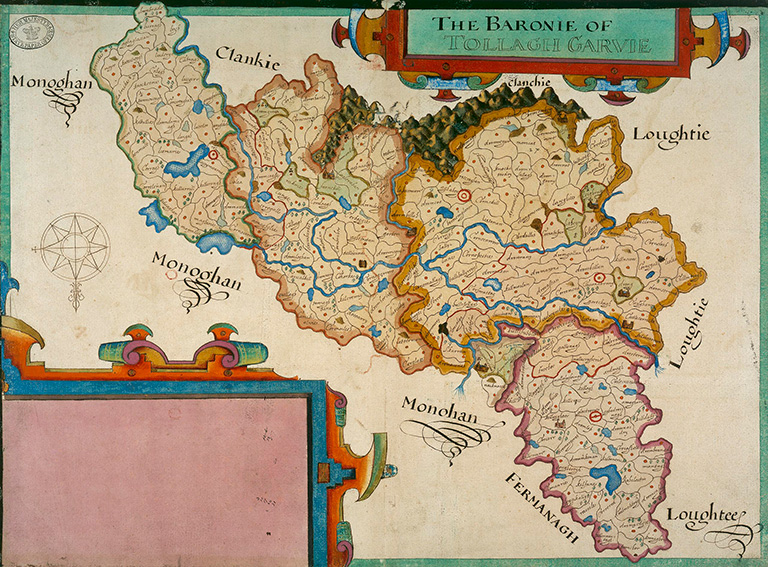
The maps are mostly drawn on parchment, some brightly coloured and decorated, and were originally bound in vellum covers embossed with coats of arms.
To get an idea of what these maps look like, you can download the following map, from MPF 1/58, free of charge:
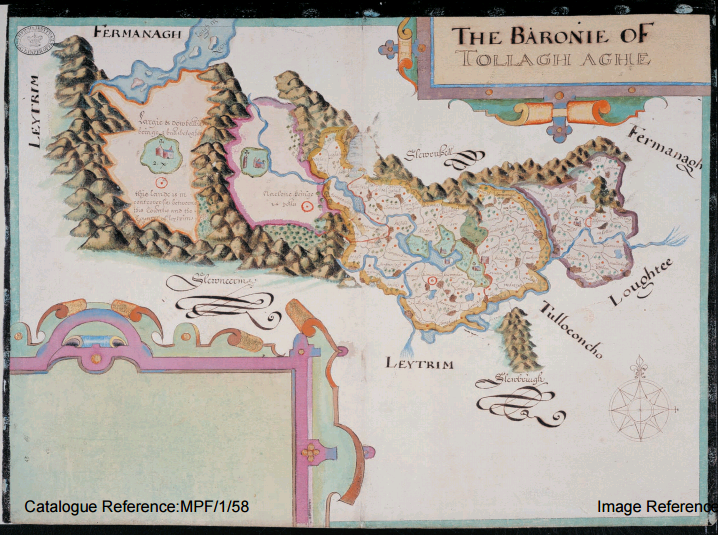
Map of Tullyhaw, County Cavan (TNA ref: MPF 1/58)
If you have problems with the handwriting of the documents or maps, our palaeography tutorial can help.
You can download the state papers that relate to these maps free of charge using the following links: SP 64/1, SP 64/2, SP 64/3.
5. Why can’t I find what I’m looking for?
The following important points may help you find what you are looking for:
- place names are those used at the time, and are usually old English ones rather than native Irish
- spellings were not consistent in this period and you may need to be flexible when searching; for more advice on searching, see our search tips
- instead of searching you may wish to browse through details of the whole collection
1. Why use this guide?
Use this guide for advice on how to find records of health and social welfare policy, and central health administration, since the creation of the Ministry of Health, established in 1919 under the Ministry of Health Act.
The Ministry of Health records at The National Archives are wide-ranging and cover many aspects of the development of health policy in Britain. They show the ways successive governments tried to tackle social and health problems.
This guide will also point you to some related records held elsewhere.
2. Key changes to central health administration
The Ministry of Health, following its creation in 1919, took on the powers and duties of the health functions of the government, which were previously fragmented across departments, most notably from the following:
- Local Government Board
- The National Health Insurance Commissions of England and Wales
- Privy Council
- The Home Office
- The Board of Education
For papers relating to the formation of the Ministry of Health search within MH 78, RECO 1, CAB 21/72 and PC 8/854.
The principal purpose of the new ministry was to consolidate under a single authority the medical and public health functions of the central government and the co-ordination and supervision of local health services in England and Wales. Revisions to the administration came throughout the 20th century; notably, the co-ordination of local medical services was greatly extended in connection with emergency and wartime services from 1938 to 1945, and these developments culminated in the establishment of the National Health Service in 1948.
The Department of Health and Social Security (DHSS) was created in November 1968, merging the Ministry of Health and the Ministry of Social Security. Responsibility for a number of its functions was transferred into and out of DHSS during the twenty years of its existence. In 1988 the department was divided once more and the Department of Health was formed, separate to the Department of Social Security.
Throughout the 20th century there was a rise in lobbying of central government by groups with an interest in health and social welfare issues, and policy on health care provision was affected by the economic events, crises, and developments of the period such as:
- unemployment
- poverty
- maternal and infant mortality
- health insurance
- mental health
- preventative medicine
For information on public health before this period, see our guide, Public health and social policy in the 19th century.
3. How to search for records
Records of the ministry are arranged largely in file series broadly reflecting the functions of its specialised divisions. Due to the complex system of registration each record series can contain very broad topics; for example, MH 148 is a series that contains policy review relating to food hygiene, fluoridation of water supplies, medical examinations of Commonwealth immigrants, and the 1962 survey of children born with congenital deformities due to thalidomide. You can browse each series using the browse function from the catalogue description page.
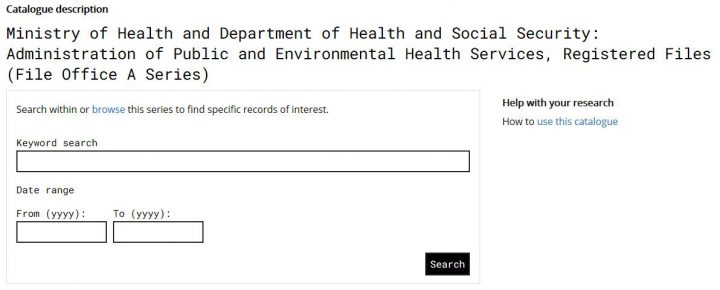
The MH 148 catalogue description page in our catalogue. The search boxes allow you to search for records within this specific series, as is the case with the catalogue description pages for all National Archives records series.
As health can impact all aspects of life, health records can be found in files of the majority of government departments. Depending on the topic, it is always worth doing a broad key word search in the catalogue to start with.
The majority of records relating to health policy and social care in the 20th century will come under the following record series and department references:
- MH – Records created or inherited by the Ministry of Health and its successor the Department of Health and Social Security, Local Government Boards and related bodies relating to the provision of health and public health services (1798-2001).
- BN – Records created or inherited by the Department of Health & Social Security and related bodies (1834-2003).
- JA – Records created or inherited by the Department of Health (1988 to 2018).
- PIN – Records created or inherited by the Ministry of Pensions and National Insurance, and of related, predecessor and successor bodies (1854-1998).
- FD – Records of the Medical Research Committee and Medical Research Council touching all aspects of medical research carried out in the UK (1901-2017). Annual Reports are catalogued by date in FD 2.
- MH 96 – Records of the Welsh Board of Health (1872-1978).
Other significant departments are:
- HLG – Records of branches and divisions relating to the supervision of local government services (1831-1996).
- AST – Records of the Unemployment Assistance Boards, the Supplementary Benefits Commission, and of related bodies (1894-1997).
- INF – Records of the Central Office of Information (COI) and its predecessor government information departments and ministries relating to the provision of government publicity and public information.
These record series and department references will help you to focus your search for relevant records using the advanced search option in our catalogue. For more tips on how to search the catalogue effectively, use the help page.
You can also browse series by record creators, such as the Department of Health and Social Security and the Department of Health.
It is worth bearing in mind that relevant records relating to health and social policy may also be found in other key government departments such as:
- Cabinet Office (CAB)
- Prime Minister’s Office (PREM)
- Department of Employment/ Ministry of Labour (LAB)
- Home Office (HO)
- Department of Education (ED)
- Treasury (T)
4. Online records
Some useful resources relating to health policy are available online.
4.1 Parliamentary Papers (1715-present)
Search Proquest UK Parliamentary Papers for reports relevant to health, unemployment and poverty. This is a subscription website you can access on TNA computers by visiting us at Kew. You may also be able to access it via a large reference library such as a university library. You can:
- search for papers using the paper number and the year
- browse by century, year and volume
- browse the 20th century collection by department
Discussions in Parliament can be found in Hansard, which is available online on the Parliament website. Please note there are some volumes missing from the online data.
Our research guide to Hansard details different ways of accessing the reports and records of Parliamentary debates.
4.2 Legislation
Search legislation.gov.uk for relevant legislation. Please note that historic Acts of Parliament are not all available online.
4.3 Government datasets
Search Discovery, our catalogue, for information and statistics related to health policy held in digital datasets. See our research guide on government datasets for detailed advice on how to do this.
4.4 The King’s Fund Digital Archive
Search the King’s Fund Digital Archive for King’s Fund publications and documents from 1898 onwards.
4.5 The Wellcome Library’s Digital Collections
The digital collections of the Wellcome Library cover wide-ranging topics, including public health.
4.6 The UK Government Web Archive
Browse archived websites to view snapshots of the Department of Health and NHS departmental websites. You can also use keywords to search the whole of the UK Government Web Archive..
5. The National Health Service and hospitals
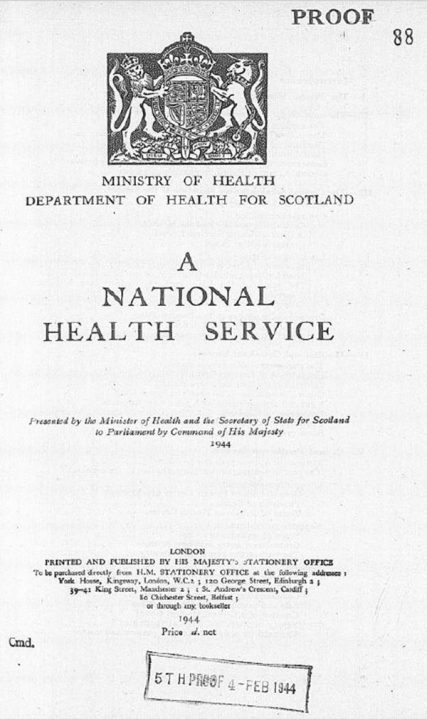
Draft of the Coalition Government’s White Paper on a National Health Service, February 1944 (catalogue reference CAB 66/46/24).
With some minor exceptions The National Archives does not hold records of hospital patients. We do, however, provide guidance on where you can find Historical NHS patient records.
Many hospital records are held at local archives and the records we hold mainly relate to high-level administrative matters. For more information see our research guidance on Hospitals.
Prior to the NHS, joint hospital boards were authorised to establish and maintain local hospitals. Search for their records in:
- Local Government Board correspondence (1868-1935), organised by County and District Councils, in MH 48
- Joint hospital boards’ correspondence and minutes (1903-1961) in MH 67
You should also search for related records in local archives.
After the inception of the NHS in 1948, regional hospital boards (RHBs) were established to administer hospitals in specific regions. You can browse representative correspondence between the RHBs and the ministry (1941-1969) in MH 90.
Target the following key series:
- Committee on Reconstruction Problems and Nuffield College Reconstruction Survey (1940-1945) in CAB 117.
- General policy files relating to the implementation of the National Health Service Act 1946 (1935-1965) in MH 137. Specialist services (1923-1977) are in MH 135.
- Search by region and date the correspondence between the department and selected local regional bodies (North Western, Northern, and Yorkshire) leading up to the 1974 reorganisation of the NHS (1947-1974).
- Search by broad topics and date publicity material on various aspects of the National Health Service (1939-1944) in BN 10.
- Records relating to the Royal Commission on the National Health Service (Merrison Commission 1976-1979) in BS 6 are organised by subject’s name or organisation giving evidence as well as by sub-committee.
6. Public assistance and health insurance
In 1911 the National Insurance Act was passed, which created a system of health insurance for workers based on contributions from individuals, employers and the government.
Search the following key series:
- Papers and correspondence relating to the administration of health insurance (1911-1960) in PIN 4.
- Papers relating to insurance regulations and legislation (1912-1997) in PIN 19.
- Files relating to the introduction and administration of social insurance schemes and allied services under the Ministry of National Insurance (1912-1965) in MH 62.
A main function of the ministry was the supervision of public assistance services. In 1930 the old poor law boards of guardians were replaced, under the Local Government Act 1929, by public assistance committees and county borough councils. High unemployment levels between the wars were a major influence on economic, social and political practice and theory; successive governments sought new ways to address the problems of widespread poverty.
To find relevant records, use the advanced search option in our catalogue and search within department reference MH, PIN, or AST, or click on the following series references to search for records within each respective series, using keywords such as ‘public assistance’, ‘casual poor’, ‘medical relief’, ‘care of the aged’ and ‘welfare’, or try browsing:
- General files relating to public assistance and poor law outdoor relief covering children’s training and employment, pensions in respect of relief, medical relief for paupers and vagrancy (1907-1970), organised by topic in MH 57.
- Social welfare files, including records concerning the care of the aged in Public Assistance Homes and Institutions (1938-1965) in MH 130, organised by topic, with some files organised by area.
- Correspondence of the Ministry of Health with local authorities (1913-1973), organised by county council, topic, and date in MH 52.
The following series are best searched by browsing by date and/or area or county council:
- Circular letters issued by the Poor Law Commission, the Poor Law Board, the Local Government Board and the Ministry of Health (1834-1962), organised by date in MH 10.
- Correspondence of the Local Government Board and Ministry of Health with poor law authorities, including the transfer of poor law functions to local authorities in 1929 (1904-1933), organised by area and date in MH 68.
- Files of the Ministry of Health, with a few earlier ones of the Local Government Board, relating mainly to the administration of casual wards and reception centres in various parts of England (1894-1950) in AST 8 are organised broadly by county or committee with some files catalogued by date only.
7. Food, diet and nutrition
The key records relating to food, diet and nutrition are in record series MH 56, which includes papers from various food and nutrition committees (1850-1967). Use the advanced search option in our catalogue to identify specific records from this series or from across all the records in MH, AST, JV (Milk Marketing Board) and MAF (Ministry of Food).
Search using keywords such as ‘food’, ‘diet’, ‘nutrition’, ‘malnutrition’, ‘children’, ‘families’, ‘welfare’, ‘milk’ – or combinations of these.
- Browse the papers of the Committee on Medical and Nutritional Aspects of Food Policy and Food and Nutrition Surveys (1948-1992), including files relating to imported meat, food hygiene and food additives in MH 148.
Search by keyword or browse the following key series:
- Files of the Milk Marketing Board (1930-1994) relating to the promotion of sales of milk including publicity and advertising campaigns in JV 7.
- General reports and technical information of the Scientific Advisor’s Division of the Ministry of Food on foodstuffs, rations and nutrition (1936-1959) in MAF 98 -some of the committee minutes are organised by date only.
8. Family planning and mother and child welfare
With the rise of the welfare state in Britain and the inception of the National Health Service, educational campaigns on birth control were launched and the provision of mother and child welfare services increased.
The records consist of internal correspondence between officials and correspondence with organisations lobbying for reform, covering issues such as:
- whether ante-natal clinics should be provided by the local authority or the voluntary sector
- moral and social questions relating to birth control including abortion
- religious opinion on the provision of such clinics
To find specific records, use the advanced search option in our catalogue and search across all records within MH and JA, using keywords such as: ‘birth control’, ‘abortion’, ‘birth clinic’, and ‘maternity clinic’ or ‘child welfare’.
Browse the following key series:
- Files covering medical services and public health relating to areas designated as distressed under The Special Areas Acts of 1934 and 1937 (1934-1960) in MH 61/4-10.
- Health Education Council files on Sex Education and Prevention of Unwanted Teenage Pregnancies (1980-1992) in JA 630.
- Files covering Confidential Enquiries into Maternal Deaths in England and Wales (1947-1994) in MH 156. Search this series by keyword for other files relating to local authority services, including child welfare and welfare foods.
9. Mental health
The Lunacy Commission and Board of Control had responsibility over admission, detention and discharge of psychiatric patients and had powers to inspect asylums.
- Browse by date the Correspondence, papers and minutes from the Lunacy Commission (1845-1913) and Board of Control (1913-1960) in MH 50.
- Search by asylum or gaol the correspondence and reports from the Lunacy Commission and Board of Control (1798-1971) in MH 51. Some files can be searched by patient name.
- Browse the policy files relating to the implementation of the Mental Health Act 1959 (1958-1966) in MH 140.
For more information about the Lunacy Commission, Board of Control and related record series, read the administrative background to MH Division 14 in our catalogue.
See our separate guide to lunatic asylums, psychiatric hospitals and mental health for how to search records on this topic.
10. Public health: diseases, epidemics, sanitation and health education
Public health is complex and can cover environmental health and the provision of adequate sanitation, responses to infectious, chronic, and epidemic diseases, as well as the introduction of public health services and campaigns.
Advances in medicine reduced levels of infectious diseases, but serious outbreaks of smallpox, typhoid, poliomyelitis, diphtheria, tuberculosis, and measles were not unusual through the inter-war period, although epidemics were increasingly rare.
By the end of the 20th century, authorities dealing with public health tended to focus on chronic conditions, such as diabetes or obesity, or on health education about lifestyle choices. There were also responses to the appearance of new infectious diseases like HIV/ AIDS.
To identify specific records from the catalogue use the the advanced search option in our catalogue and search by name of a disease, sanitary measure, and/or a place name.
Browse or search by keyword the following main record series:
- Correspondence between the Ministry of Health and local authorities (1913-1973) in MH 52.
- Files relating to public health services, including tuberculosis, medical inspection of aliens, midwifery, propaganda and vaccination, as well as port health authority case files, and reports of medical officers of health (1853-1970) in MH 55.
- Welsh public health and environment matters (1854-1985) in BD 11.
- Committee meetings, papers and correspondence of the Expert Advisory Group on Acquired Immune Deficiency Syndrome (AIDS) (1985-2000), including files relating to the interdepartmental group on AIDS and the nationwide advertising campaign, in JA 235.
Browse by date the following series:
- The Public Health Laboratory Board was established in 1961 to provide a continuous picture of the communicable microbial diseases of England and Wales. Public Health Laboratory Service Board minutes and papers (1961-1983) are found in DN 1 and the Public Health Laboratory Service yearbooks (1962-1982) in DN 2.
- Sir George Newman’s diaries (1907-1946), relating to his role as Medical Officer of the Board of Education and Chief Medical Officer at the Ministry of Health in MH 139. Covers subjects such as tuberculosis, medical research, milk, dental registration, medical education and maternal mortality.
- Central Council for Health Education: Minutes and Papers (1927-1969) in MH 82.
- General Register Officer Circulars (1910-1940), containing annual reports of the Medical Officer of Health and mental health statistics (limited years) in RG 41.
A more comprehensive list of key series relating to public health can be found in the catalogue description of the Records of the Health Divisions.
11. Sterilization and eugenics
Physical and mental degenerative diseases were of interest to eugenicists both in Britain and abroad.
Whilst no legislation for legalising sterilization and euthanasia was introduced in Britain, the government corresponded with groups who favoured legislation on sequestration, sterilisation and euthanasia of people suffering degenerative diseases. A report on the illegal sterilisation undertaken in Britain at the Gateshead School is found in MH 79/291.
Search by the key words ‘mental defective’, ‘euthanasia’, ‘sterilisation’ and ‘heredity’ in Discovery or browse the following key series:
- Papers of the Departmental Committee on Sterilisation (1932-1933) in MH 51/208-211 and the proceedings of the Departmental Committee on Sterilisation (1932-1933) in MH 51/212-235, organised by date.
- Papers of the Departmental Committee on Sterilisation (1928-1935), including discussions about sterilising ‘mental defectives’ in MH 58/100-105.
- Papers of the Special Operations Executive’s intelligence reports on euthanasia and genocide in Germany in the 1930s and 1940s in HS 6.
The Foreign Office’s General Correspondence printed indexes, available at The National Archives in Kew also include mention of cases for sequestration of people with mental diseases and also some general reports on genocide. Many papers referred to in the printed indexes do not survive, but those that do are in FO 371. See our guide to Foreign Office correspondence for detailed advice on searching for these records.
12. The pharmaceutical industry
Regulation of pharmaceutical products was limited at the beginning of the 20th century. Throughout the period the industry became increasingly regulated, particularly in the wake of the introduction of thalidomide to the market, which resulted in the births of children with congenital deformities.
The Committee on Safety of Drugs was set up in 1963 to advise government health ministers on the quality, efficacy and safety of medicines and was replaced in 1968 by the Committee on Safety of Medicines following the Medicines Act, 1968. It provides advice to the Licensing Authority on whether new products should be granted a marketing authorisation and it also monitors the safety of marketed medicines.
To identify specific records from the catalogue use the advanced search option in our catalogue and search by name of a Pharmacy Act, poison, and/or drug.
You can target the following series to narrow your search:
- Minutes, papers and reports of the Committee of Inquiry into the Pharmaceutical Industry (Sainsbury Committee) (1964-1967) in MH 104.
- Files relating to regulation of pharmaceutical products (1926-1972) in MH 58.
The following committee minutes are arranged by date and may not include names of drugs or specifics of regulations in the catalogue description:
- Minutes and papers of the Committee on Safety of Drugs and the Committee on Safety of Medicines (1963-1976) in MH 171.
- Minutes and papers of the Committee on Safety of Medicines together with the minutes and papers of its three sub-committees (1970-1988) in BN 116 and minutes of the Committee on Safety of Medicine’s sub-committees (1964-1975) in MH 148.
13. Doctor and nurse recruitment
Nursing shortages throughout the 20th century led to various nursing workforce policies and planning. Ministries dealing with nurse recruitment policy and planning include:
- The Ministry of Labour and National Service
- The Ministry of Health
- Colonial Office
The Ministry of Health took over the recruitment of nurses from the Ministry of Labour from 1957.
Search the following key series using keywords such as ‘doctor shortage’, ‘nurse recruitment’, ‘overseas nurse’, ‘foreign nurse’, ‘recruitment of doctors’ – or combinations of these. You can, alternatively, search across the whole of LAB, MH and CO series using the
- Files relating to nurse recruitment in Department of Employment records in LAB 12 (1915-1978).
- General subject files relating to health, including nurse recruitment (1853-1970) in MH 55.
- Browse the files of the Colonial Nursing Service (1940-1955) in CO 850.
See our guide on Doctors and Nurses for information on other records we hold.
14. Further reading
14.1 Online resources
- The National Archives blogs
- BBC archive Birth of the National Health Service
- National Health Service history from an archived version of the NHS website
- Nuffield Trust NHS timeline
- Search archived data from the Hospital Records Database to find information on the location of hospital records, including those about staff and patients, in the UK
- The King’s Fund’s audio and visual animation of how the NHS works
- Digital resources at the King’s Fund’s library
- The Health Foundation’s ‘Policy Navigator’ time-line of health care reform
14.2 Online journals
Online journals available via our e-library:
Jane Lewis, ‘ Gender, the Family and Women’s Agency in the Building of ‘Welfare States’: The British Case’, Social History, 19 (1994). Access via the e-library on-site at Kew.
14.3 Printed resources
The following recommended publications are available in The National Archives’ Library.
- Christopher Ham, ‘Health Policy in Britain: the politics and organisation of the National Health Service’ (Macmillan, 2004).
- Bryan Rayner, ‘History of the Department of Health’ (DoH, 1994).
- Geoffrey Rivett, ‘From cradle to grave: fifty years of the NHS’. Revised editions of Rivett’s book are available at history.net.
- Sally Sheard and Sir Liam Donaldson, ‘The Nation’s Doctor: the role of the Chief Medical Officer 1855-1998’ (The Nuffield Trust, 1998).
- Pat Thane, ‘Foundations of the Welfare State’ (Longman, 1996).
- Charles Webster, ‘The National Health Service: a political history’ (Oxford University Press, 1998).
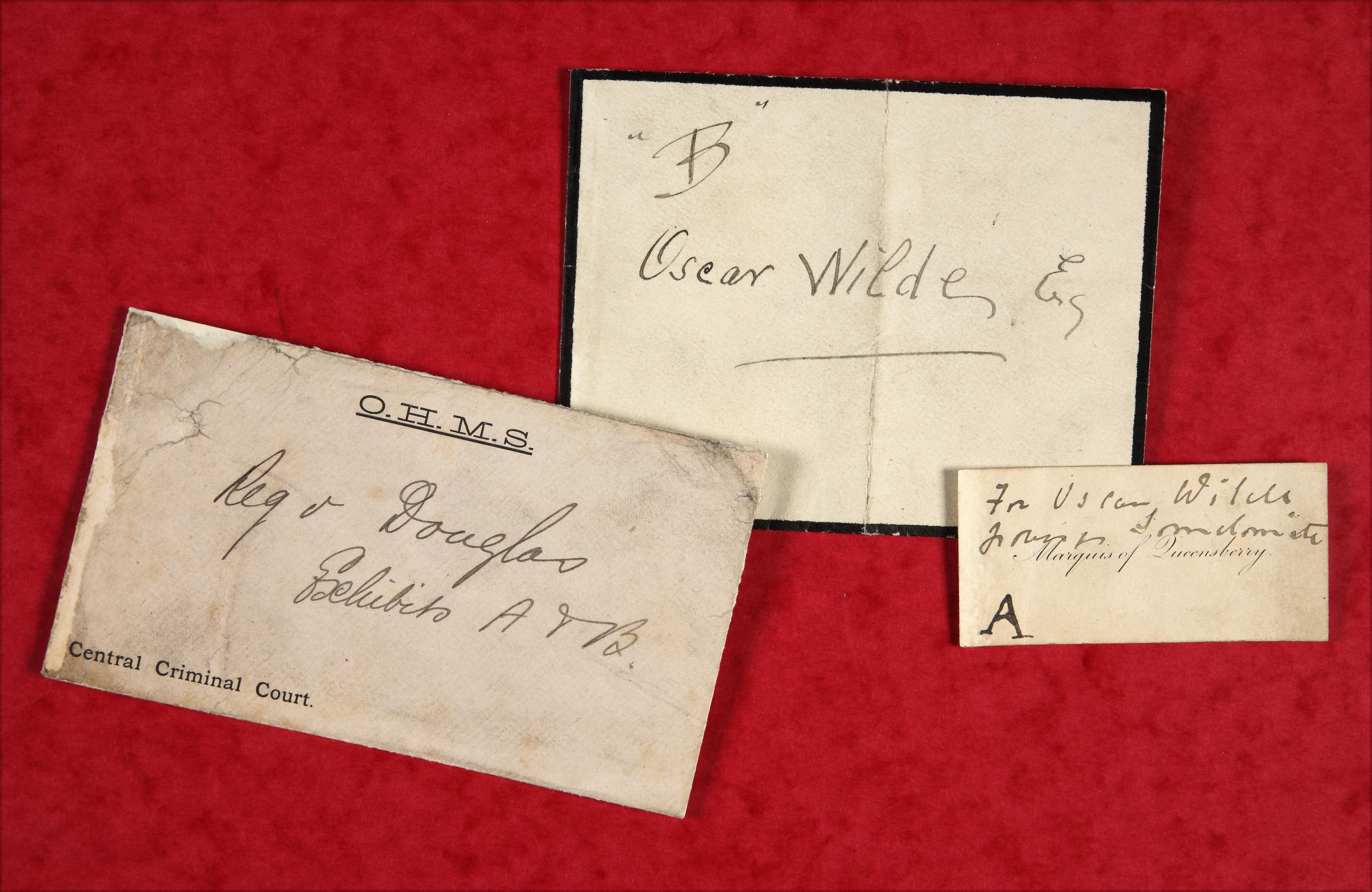
1. Why use this guide?
This guide will help you find records relating to sexuality and gender identity history at The National Archives, including finding records relating to people who we might now consider to be lesbian, gay, bisexual, transgender or queer. It may also assist with exploring other archives on this topic, although this is not it’s primary function.
This guide provides an overview of the types of records held at The National Archives, explores historic language, and outlines subject-specific research approaches. The guide also suggests some useful search methods, sources, and terms – but it is not exhaustive. Certain methodologies help to get more from these records, such as reading records against the grain of their original purpose to reveal more personal or marginalised experiences. For support on how to approach this type of research see our blog on Researching LGBTQ+ histories in the archives of government .
In 2026, this guide was updated with the support of a lived experience focus group, whose insights helped make it more inclusive, practical, and compassionate. We are deeply grateful for the time and knowledge the participants shared.
To help us better support researchers, including with catalogue navigation – we welcome your feedback through Your Views.
2. Content note
Our records, spanning 1000 years, hold many possibilities for exploring and understanding the past. These records powerfully show the historical existence of sexual and gender variation but also reflect historic homophobic, biphobic and transphobic attitudes. As state-produced documents, they often privilege certain perspectives and rarely represent an individual’s own voice or sense of identity.
These records can be bureaucratic and dehumanising in nature; frequently including outdated, problematic, and offensive language. Consent is not always clear, some records reference sexual violence, reflect colonial attitudes, or relate to sensitive medical issues. Researchers may encounter records that document issues still relevant and challenging for LGBTQ+ people today.
If you’ve been affected by the content of these records, support is available. You can find guidance on looking after your mental health and wellbeing through the NHS Every Mind Matters website, the mental health charity Mind, and the national LGBTQ+ charity Switchboard.
3. What kinds of records are held at The National Archives?
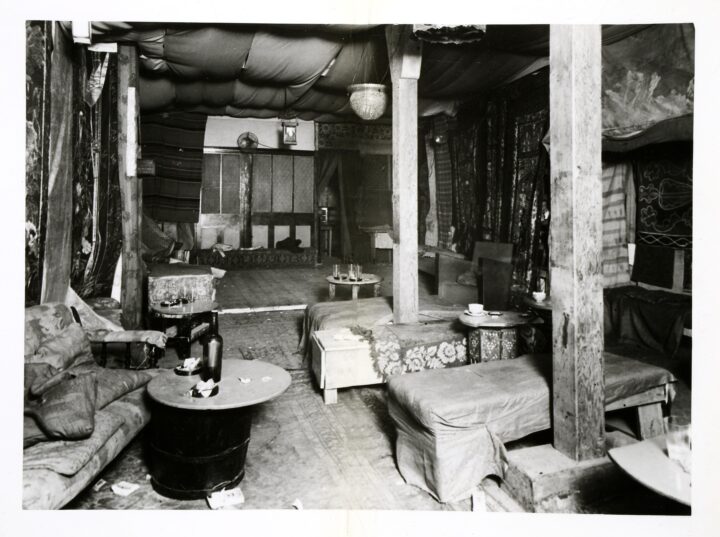
A photograph of the interior of the Caravan Club, a venue under surveillance by police in the 1930s. Catalogue reference: MEPO 3/758.
The National Archives’ records provide valuable insights into how the government interacted with and viewed LGBTQ+ communities in the past. The state’s attempts to suppress and regulate sexuality and gender have left us with many sources that document the experiences of LGBTQ+ people. As the official archive for England and Wales and the UK government, England and Wales are the primary focus with some records that relate to Scotland, Northern Ireland, former colonial and overseas territories. This guide mainly focuses on the 19th and 20th centuries.
The collection primarily reflects the government’s perspective on LGBTQ+ people, including police, criminal justice, policy, and legislative materials that capture key moments and milestones in LGBTQ+ history. These can be vital sources in times when preserving personal histories was dangerous or difficult.
Government records reflect the interests of those in power, leading to some parts of this community being represented more than others. Intersectional experiences—shaped by race, class, disability, and other identities—are often underrepresented or obscured.
Other archives—including some listed in Section 13—actively collect materials from LGBTQ+ individuals and activist organisations, offering more personal narratives and experiences. Asking whether the government would have been interested in a particular subject can help determine if The National Archives is the right place for you to research.
We hold many 20th-century criminal records but a significant proportion remain closed under the Data Protection Act. If you come across a closed record like this in our collection, there will be an option to request a Freedom of Information review to see if it can be opened.
4. What can I see online?
Although no major LGBTQ+ archive collections have been digitised, there is some online material that might be of interest to researchers in this area:
- Old Bailey Online– search proceedings from 197,752 criminal trials held at London’s Central Criminal Court 1674-1913. Proceedings may not be reported in cases involving “indecency”.
- The archived Cabinet Paperswebsite has themed pages which you can browse.
- UK Government web archive– search or browse government videos, tweets, and websites dating from 1996 to the present for information, reports and advice published online by government bodies relating to sexuality and gender identity. This could include public health advice or blogs from the Government Equalities Office.
- For legislation see gov.uk. Such as full text versions of Gender Recognition Act 2004 and Civil Partnership Act 2004.
- Hansard (reports of Parliamentary debates). Search online for the official reports of all parliamentary debates, both in the House of Commons and the House of Lords, from 1803 onwards. You can search by date and keyword.
- British Newspaper archive – LGBTQ+ lives have often been sensationalised in the press, with moments of protest or public backlash making headlines in both national and local newspapers. The British Newspaper Archive gives access to millions of historical newspapers from around the world.
- British Film Institute – short and feature films on the BFI Player and YouTube channel, showing the best from the BFI, national and regional archives.
- Bishopsgate Institute’s Special Collections and Archives – have digitised some of the most frequently researched and significant material from its collections. There is a lot more to view in person at the archives.
- The London School of Economics and Political Science archives on Flickr feature a selection of photographs and ephemera from the Hall-Carpenter Archives, documenting the development of gay activism in the UK since the 1950s, and on .
- Digital Transgender Archive – Access to digitised trans collections from archives and libraries from across the globe.
5. Searching The National Archives’ catalogue
Discovery, our catalogue, incorporates catalogues of over 2,500 archives across the UK and some abroad. This means that when you search Discovery your results can include records held at many different archives, or you can choose to search only records held by the National Archives. For more information about effective searching and understanding your search results use the Discovery help pages.
Records at The National Archives are listed with varying levels of detail, often just one or two words representing a file title. Searches are of catalogue descriptions not the contents of files. Identifying records relating to LGBTQ+ history is particularly difficult as the catalogue descriptions do not always make it clear that they contain relevant material.
Terms used to describe sexuality and gender identity have evolved over time. LGBTQ+ is used in this guide as an umbrella term across time periods. Historically, such language was shaped by legal, medical, moral, or sexological perspectives. Only in the past 50 years has mainstream terminology become more community driven.
To search our catalogue effectively, it may be necessary to use historical terms as research tools. This includes outdated or offensive language, which we retain to preserve the authenticity of records, reflect the lived reality people faced and avoid imposing modern concepts on the past. For more explanation, see our guidance on Cataloguing approach to offensive terminology and Addressing offensive terminology in our catalogue.
Some historical terms found in our records are listed in the appendix to this guide. Note that while these terms might be used within a record, they may not appear in the catalogue description and using them for keyword searches may not find all relevant records.
If you restrict your search to records held at The National Archives, you can filter search results by government departments, allowing you to focus on records of courts, Metropolitan Police, the Home Office or other government departments.
Some records, for example, correspondence of the Foreign Office or Colonial Office, may not be keyword searchable. Our research guides will provide more general advice on research strategies.
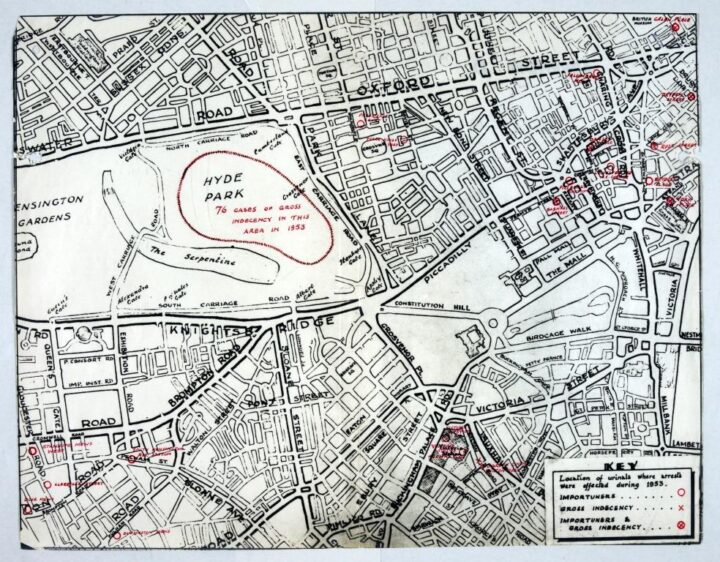
A map of Hyde Park and the surrounding area in London, showing the location of public toilets where arrests were made for “importuning” and “gross indecency” during 1953. Catalogue reference: HO 345/7.
6. Life records at The National Archives
Life records related to LGBTQ+ people, or people we might now recognise as reflected in these terms before the language existed, are created incidentally through their interactions with government. They were not created because of their sexuality or gender but can shed light on individuals’ identities and relationships.
6.1 Divorce
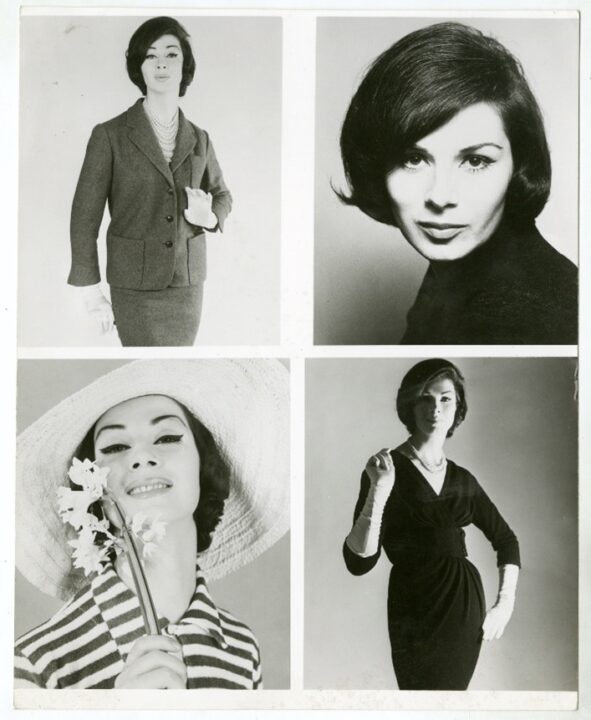
April Ashley during her modelling days, 1960s. From the divorce files Corbett A C and A. Catalogue reference: J 77/4537.
Divorce case records can offer valuable insights into LGBTQ+ history, including personal histories and instigators for legal change. They may include references to:
- ‘Irregular marriages’, where .
- Marriages of convenience, often used by individuals concealing their sexuality.
- Cases where sexuality or gender identity were cited as grounds for divorce.
Read our guide on divorces to learn about what records survive and how to search for them.
6.2 Wills and death duties
Wills and death duty records show what and who was most important to someone at the end of their life. They can often be revealing of intimate relationships. These can be particularly helpful for tracing love that could not be expressed in other ways, such as criminal or socially unacceptable relationships.
The National Archives holds a substantial collection of wills, refer to our research guides to
For death duty records
6.3 Census records
From 1841 to 1921 we can use surviving census records to focus on people’s home lives and the family units they were living in. LGBTQ+ people can be found on the enumeration sheets of the census, just as everyone else can. However, until 2021, the census did not ask for information about sexuality or gender identity.
You can search these records by name. It is simplest to trace LGBTQ+ people who were openly known to be in same-sex relationships, identified as bisexual, were gender non-conforming or identified as a different gender than the one they were assigned as at birth.
On the more recent censuses, it is also possible to search by other categories of information, such as “relationship to head of household”. Try speculative searches such as:
- “Partners”
- “Friends”
- “Joint owners”
While not definitive evidence of romantic relationships – some will relate to companionship, business and financial reasons – others will statistically represent same sex relationships given the diversity of historic lived experiences.
7. Court and police records
It has never been illegal, as such, to be gay, but the associated sex acts between men have been punishable at various times throughout history.
Similarly, while the state did not directly criminalise gender nonconformity or trans identities, certain associated behaviours were targeted. For example, feminine presentation in people perceived as male was often treated as evidence of homosexuality or fraud.
The legal framework means there is a substantial body of criminal records documenting prosecutions against men. In contrast, female homosexuality was never explicitly criminalised, meaning lesbian relationships are generally absent from criminal records and underrepresented in our collections.
7.1 Court records
Read our overview guide on criminal court cases to learn about what records survive and how to search for them.
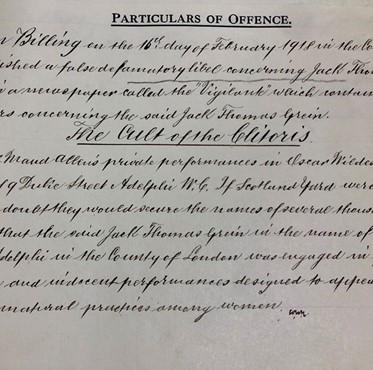
Extract from the Central Criminal Court Indictments, 1918 23 April, in relation to attempts to censor Maud Allan’s version of Salome on the stage. She was accused of being part of the “Cult of the Clitoris”, leading to a libel trial. Catalogue reference: CRIM 4/1398.
Court records can include:
- indictments that list a person’s name and offence
- depositions of the evidence taken by the court
Transcripts of trial proceedings are very rare.
Search our catalogue for records held by The National Archives relating to defamation, slander, libel and blackmail which often involved allegations of sexual ‘immorality’.
Home Office files contain discussions of individual cases and considerations of appeals. The series HO 17 and HO 18 contain petitions for the revocation or reduction of sentences. For example petitions linked to James Pratt and John Smith the last men in England hanged for “sodomy”.
Read our guidance on Home Office correspondence 1839-1959 to find out more about how to use Home Office records in your research.
HO 161 consist of the Casement Diaries, including three private diaries, a notebook and a ledger related to Roger Casement, a diplomat and Irish nationalist who was tried for treason. Items about his imprisonment, trial and execution are available by general catalogue searches, in HO, PCOM and MEPO records.
7.2 Hate crimes
LGBTQ+ people have also been the target of crimes, because of their sexuality or gender identity.
You can try searches by type of crime, individual or place, such as the Neo-Nazi bombing of the iconic LGBTQ+ venue the Admiral Duncan pub.
7.3 Censorship and obscenity
Public depictions of LGBTQ+ people in literature, art, and media often faced censorship or prosecution under obscenity laws. The 1928 novel The Well of Loneliness was subject to an obscene publications trial. Relevant records can be found in departments such as HO, LCO, CRIM, MEPO, and DPP. You can search for an author, publication title, artist or film.
7.4 Police records
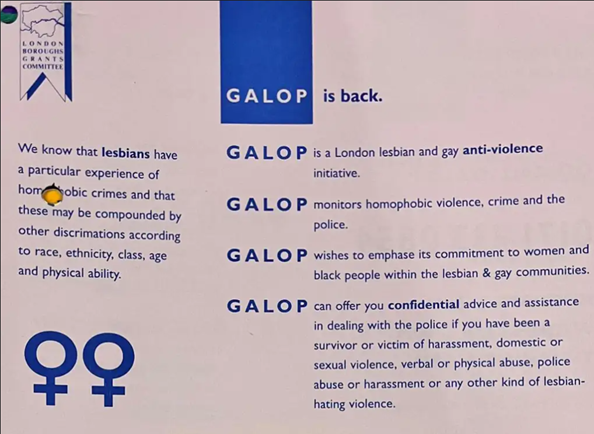
Gay London Police Monitoring Group leaflet highlighting lesbian hate crimes and support, within a file called Policing the gay community, 1994-1995. Catalogue reference: HO 500/165.
The National Archives holds London Metropolitan Police records, while City of London police records are at The London Archives.
Other police constabulary records are held in local or county archives.
Other government departments, particularly the Home Office, may also have records relating to policing practice and policy. For example, HO 500/165 Policing the gay community, 1994-1996.
8. Legal and policy changes
These records can be used to chart the historical criminalisation of homosexual acts and more recent progressive legislation.
Discussions behind acts of parliament can be found in various series depending on which government department legislation was being created by and which government departments might have had an interest in it. Various government departments sponsored legislation. For example, Section 28 of the Local Government Act 1988 was created by the Ministry of Housing and Local Government, but sections of government, such as the Department of Education, also had an interest.
Some legislation that was not enacted is still discussed in the records. In 1921 a Parliamentary Bill to criminalise ‘gross indecency between females’ failed to become law, associated discussions appear in Home Office , HO 45/12250.
Try keyword search terms relating to specific legislation or broader terms, such as “Criminal Amendment Act” or “sexual offences”.
Language and policy changed over time, with a more active focus on equality from the 1990s. Search terms similarly change over this period, with files named “homosexual rights” encompassing broader LGBTQ+ issues, including trans rights, and “equality and diversity” used by the early 2000s, covering wider equality issues.
Records of various committees can be found at The National Archives, including
- HO 345 – Committee on Homosexual Offences and Prostitution: Records. Transcripts of evidence, minutes of meetings, the report, and other papers of the Committee appointed by the Home Secretary to consider the law and practice relating to homosexual offences and prostitution. 1954-1957. Including a digitised copy of the Wolfenden Report.
- HO 291/123-131 – records relating to action on homosexual law reform from the departmental committee on homosexuality and prostitution to introduce the Sexual Offences Act 1967.
- BS 2 – Royal Commission on the Press (Finer and McGregor Commission), 1974-1977.
- BS 12 – Royal Commission on Criminal Procedure (Philips Commission), 1977-1981
- HO 265 – Committee on Obscenity and Film Censorship, 1977-1981
Correspondence and papers from the Prime Minister’s office also contain records of policy and legislation discussions. The period of the Wolfenden Committee is covered in PREM 11 and PREM 13
Read our research guide to Cabinet and its committees for advice on searching our catalogue for cabinet papers.
Read our guidance on Political history in the modern era for some general advice to researching in this area.
Refer to our guide to Parliament for guidance on researching debates, reports and legislation.
9. Activism
The National Archives is not the best place to come for records relating to campaigning organisations themselves, however in the course of campaigning for change many activists, charities and LGBTQ+ organisations have interacted with government.
The activities of these organisations and the political debates they generated are reflected in government records – particularly those from the Home Office (HO), Cabinet Office (CAB) and Prime Minister’s Office (PREM). Sometimes these organisations would write into the government, submit evidence to committees or work together on policies.
Search Discovery using the names of the organisations or other keywords to identify relevant documents. It is often advisable to look for broader topic’s activist groups might have been campaigning on, such as the age of consent or Section 28, to find any associated correspondence.
The archives of campaign groups themselves are not held by The National Archives. Specialist LGBTQ+ archives, political archives and local archives (for local groups) may hold these records. See Section 13 for some specific archives that will be useful in this area of research.
10. Colonial and migration related records
10.1 Colonial Office records
that criminalised and marginalised LGBTQ+ people across the globe. While The National Archives’ Colonial Office records are extensive, their intersection with LGBTQ+ histories has been underexplored, and they frequently reflect the dehumanising language and attitudes of the time.
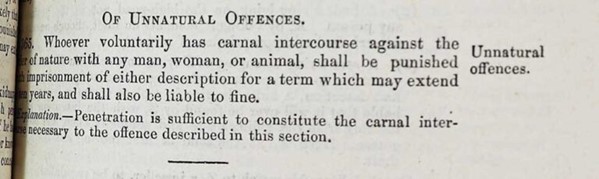
The 1884 legislation from Ceylon that included the criminalisation of “unnatural offences”. Catalogue reference: CO 56/11, Ceylon, acts.
Much of the material is described in broad terms, and locating relevant content often requires navigating original indexes.
This guide provides an overview of how to locate records relating to the British Empire from 1782 onward and offers strategies for researching particular topics. However, tracing LGBTQ+ lives in colonial records remains a challenge. Many of these lives are obscured in the archives, and their presence is often ephemeral or indirect.
For reflections on the challenges of using these records, see Garfield Campbell, Narrating ephemeral archival presence: LGBTQ+ histories and Colonial Office records.
10.2 Migration and citizenship records
The National Archives holds hundreds of thousands of citizenship records. Many, but not all, are name searchable. Some of these records are likely to comment on sexuality or gender identity as a reason to refuse or grant asylum or citizenship but are not catalogued in a way that this is searchable. Such records will be limited as unsuccessful applications may not have been retained.
Case papers are likely to contain more discussion. See our Naturalisation, registration and British citizenship for research options.
For policy related to this try combined keyword searches such as “homosexuality”, “same-sex” or “sex change” and “immigration” or “naturalisation” or “nationality”.
11. Public health, medicine and the welfare state
Items in this area of research are likely to contain medical terminology, outdated and discriminatory language, as well as potential medical images. Some items will also reference death and state failings towards marginalised communities.
The state attitude to LGBTQ+ people has changed over time, and this is reflected in their medical treatment. For general guidance see Public health and social policy in the 20th century. Use search terms, such as “health AND homosexual” or “sex change operations”.
Sexuality and gender identity have often been pathologised and historically associated with mental health. Refer to our guide to asylums, psychiatric hospitals and mental health for research advice. Many records of asylums are kept in local archives and most patient files have been destroyed.
11.1 HIV/AIDS epidemic
Acquired Immune Deficiency Syndrome (AIDS) and Human Immunodeficiency Viruses (HIV) emerged in the UK in the early 1980s, affecting a significant number of gay and bisexual men, as well as other groups including Black communities, people who inject drugs, haemophiliacs, sex workers, and individuals facing barriers to healthcare. Records may contain medical images, stigma and outdated medical attitudes.
Search our catalogue with full or abridged search terms, such as “Acquired Immune Deficiency Syndrome”, “AIDS” or “HIV”.
The Terrence Higgins Trust submitted evidence of their work to the charity commission. This educational pamphlet is titled “Understanding AIDS”, 1991. Catalogue reference: CHAR 19/235/2.
Key series include:
- JA 235 – this encompasses the committee meetings, papers, and correspondence of the Expert Advisory Group on AIDS from 1985 to 2000. It also contains records concerning various groups of people impacted by HIV and AIDS, such as women, children, people of the global majority, sex workers, bisexual men and immigration and overseas visitors. Some items include sample advertisements by government and non-government organisations, as well as advocacy from charities and community groups.
- PREM 19 – this includes cabinet papers relating to the conservative administration of 1979 to 1997 and include the government initial response to the HIV and AIDS epidemic.
- BN 97 – a government-commissioned survey assessed the impact of AIDS awareness campaigns across diverse groups, collecting data on knowledge, attitudes, and behaviour. Datasets are available for download but are currently in hard to interpret formats, work is underway to change this. It later developed into The National Survey of Sexual Attitudes and Lifestyles (Natsal) who have their own data archive.
- FD 10 – Registered files of the Medical Research Council dealing with the award (or refusal of award) of grants for medical and related biological research projects, including HIV and AIDS.
For further information on HIV and AIDS collections see HIV and AIDS highlights gallery and ‘Documenting the HIV and AIDS epidemic: a survey of HIV and AIDS archives in England and Wales’.
12. Education
Single-sex institutions such as prisons, borstals, and reform schools drew official scrutiny regarding sexuality and gender identity. Archival evidence reveals both the presence of same-sex relationships and institutional anxieties about them, including decisions about whether individuals should be placed in male or female facilities. Keyword search series within PCOM and ED.
Local archives may also have relevant records.
Authorities often aimed to ensure children conformed to heterosexual norms. LGBTQ+ teachers were viewed with suspicion, particularly in educational and youth settings. This context intensified with the introduction of Section 28 of the Local Government Act 1988, which prohibited local authorities from “intentionally promoting homosexuality.” Section 28 was also known as Clause 28 and Section 2A in Scotland, all terms can be used to search, as well as broader phrases.
See Researching Section 28 for more advice.
13. Records in other archives
There are many records relating to LGBTQ+ history in other archives across the UK. Use our Find an Archive tool or explore the selection below:
- Manchester Central Library– see under LGBT history.
- Liverpool libraries and archives– see under other collections for LGBT heading.
- Glasgow Women’s Library, The Lesbian Archive.
- The London Archives– see their information leaflet on LGBTQ+ archives.
- British Film Institute– including the Sandi Hughes film archive.
- Bishopsgate Institute– includes Lesbian and gay news media archive.
- LSE archives and special collections.
14. Further resources
14.1 Books
The National Archives collections reflect a specific, government perspective. Use our library to support your research and to supplement our records with themes or perspectives they do not cover.
- See our list of LGBTQ+ publicationsheld at The National Archives Library.
- You may also be able to find these books in a local library.
Some books offer support through the research process:
- Same sex love 1700-1957: a history and research guide by Gill Rossini
- A practical guide to searching LGBTQIA historical records by Norena Shopland
- Forbidden lives: lesbian, gay, bisexual and transgender stories from Wales by Shopland, Norena
14.2 Websites
-
Researching LGBTQ+ histories in the archives of government – National Archives blog by Vicky Iglikowsk- Broad
- [ARCHIVED CONTENT] Gay and Lesbian History at the National Archives: An Introduction – Your Archives
- [ARCHIVED CONTENT] Lesbian, Gay, Bisexual and Transgender (LGBT) History in The National Archives: Identified documents by theme – Your Archives
- Link to archived blog content – [ARCHIVED CONTENT] UK Government Web Archive – The National Archives
- Discover the stories behind the records: Explore the collection – The National Archives
- Pride of Place: England’s LGBTQ Heritage – resource and map by Historic England
- Queer Britain – a museum of British LGBTQ+ history and culture located in Kings Cross, London. It is the first dedicated LGBTQ+ museum in the UK.
- Digital Resources – Lesbian Herstory Archives – the Lesbian Herstory Archives collects personal papers and organizational records donated by Lesbian individuals and groups, some are digitalised.
- Digital Transgender Archive – online hub for digitized historical materials, born-digital materials, and information on archival holdings throughout the world.
15. Appendix 1: Terminology
Historic language can be used as research tools to unlock areas of our collections.
Historical terms relating to sexuality:
- character defect
- deviant
- gay
- homosexual
- homogenic
- immoral
- intermediate sex
- invert
- lesbian
- lesbian type
- pervert
- queer
- same sex
- same sex co-habitation
- sapphism
- sodomite
- tribade
- vice
Historical terms relating to gender expression, gender identity and intersexuality:
- change of sex
- cross-dressing
- drag
- drag dance
- female husband
- females in male attire
- gender
- gender affirmation surgery
- gender reassignment
- gender recognition
- hermaphrodite
- male impersonator
- males in female attire
- masquerading
- sex-change or sex change
- transgender
- transsexuals
- transvestite
Historical terms for relevant criminal offences:
- blackmail (extortion or extorting)
- buggery
- conspiracy to corrupt public morals
- corrupting morals
- disorderly house
- fraud
- gross indecency
- homosexual offences
- importuning
- indecency
- masquerading
- misconduct
- obscenity
- sexual offences
- sodomy
- soliciting
- street offences
- unnatural act
- unnatural offences
Terms related to the policing of queer spaces
- bottle parties
- disorderly houses
- liquor licensing
- unregistered clubs
16. Appendix 2: Timeline
This is a list of some select key moments in the history of sexuality and gender identity history, mainly in relation to the UK. These have been selected to convey the context of this history, give ideas of potential areas to research and illustrate some of our records potential.
- 1534 – Although already proscribed under Canon Law, ‘buggery’ was first made a criminal offence.
- 1728 – Chevalier d’Éon was born. D’Éon lived part of their life as a man and part as a woman.
- 1860 – The British colonial government introduced Section 377 of the Indian Penal Code, which outlawed “carnal intercourse against the order of nature”.
- 1865 – James Barry, army surgeon, dies and was reported to have female body parts.
- 1870 – Performers Fanny and Stella were arrested for the “abominable crime of buggery”. The pair dressed in male and female clothes and used masculine/feminine names interchangeably.
- 1885 – The Criminal Amendment Act, including the controversial Labouchere Amendment, became law. This amendment extended the acts that were criminalised between men.
- 1900 – Oscar Wilde died in Paris, having left England after his imprisonment for “gross indecency”.
- 1921 – The House of Lords reject a proposed new offence of acts of gross indecency between women under the Criminal Law Amendment Bill.
- 1928 – Prominent censorship trial against Radclyffe Hall’s The Well of Loneliness due to its depiction of lesbian relationships.
- 1935 – The Shim Sham Club opened on Wardour Street, London. This club encouraged a queer cliental of all backgrounds and nationalities.
- 1946 – Harold Gillies and a colleague carried out one of the first sex reassignment surgeries from female to male on Michael Dillon.
- 1952 – Alan Turing, famed codebreaker and computer scientist, was arrested and prosecuted for “gross indecency”. He was given oestrogen injections and is believed to have died by suicide.
- 1957 – The Wolfenden Committee recommended that private homosexual acts between consenting adults should be decriminalised.
- 1958 – The Homosexual Law Reform Society was formed to campaign for the Government to implement reforms recommended by the Wolfenden Report.
- 1967 – The Sexual Offences Act was passed, decriminalising homosexual acts in private in England and Wales. There was a higher age of consent, an in private clause and the Armed Forces and Merchant Navy were exempted.
- 1970 – After a high profile court case model April Ashley’s divorce was annulled on the basis that she was considered legally male, setting a precedent for trans people for decades.
- 1972 – The first UK Pride march was organised by the Gay Liberation Front
- 1974 – Gay Switchboard (now known as LGBT+ Switchboard) helpline was founded to support lesbian and gay people.
- 1980 – Homosexual activities were partially decriminalised in Scotland on the same terms as the 1967 Act under the Criminal Justice (Scotland) Act 1980.
- 1982 – North Ireland decriminalises same sex acts between men in line with England, Wales and Scotland, after pressure from the European Court of Human Rights.
- 1984 – Gay’s the Word, the renowned LGBTQ+ bookshop, was raided but ultimately not prosecuted under obscenity laws.
- 1988 – Section 28 was introduced under the Local Government Act putting in to law a ‘Prohibition on promoting homosexuality’ by local government.
- 1991 – Actor Ian McKellen met Prime Minister John Major to discuss gay rights. McKellen co-founded the LGBTQ+ campaigning organisation Stonewall.
- 2001 – The age of consent was lowered to 16 in England, Wales and Scotland for gay and bisexual men after decades of campaigns.
- 2004 – Gender Recognition Act was passed, enabling people to change their legal gender under certain conditions.
- 2021 – England, Wales and Northern Ireland were the first countries in the world to hold a national census that asked about sexual orientation. A question about gender identity was also asked.
This guide provides advice on how to search for records of non-commissioned ranks in the Royal Marines. As soldiers trained for service at sea, marines have served as part of the Royal Navy for more than 260 years and the records of the marines are, therefore, Admiralty records.
Records held at The National Archives include service records for marines who enlisted up to 1926, records for marines who enlisted after 1926 are held by the Ministry of Defence.
The evolution of the Royal Marines
The Royal Marines trace their beginnings to the formation in 1664, under Charles II, of the ‘Duke of York and Albany’s Maritime Regiment of Foot’.
In 1755 a permanent Marine Corps of 5,000 marines was established and grouped into 50 companies under three divisions: Chatham, Plymouth and Portsmouth. It became the ‘Royal Marines’ in 1802, by an order of King George III.
In 1855 the Royal Marine Light Infantry (RMLI) was formed, followed by the Royal Marine Artillery (RMA) in 1859. The RMLI and RMA merged in 1923 to form a single Royal Marine Corps.
Online records
Royal Marines enlisted 1842–1926
Search by name and download (£) Royal Marines’ service records using the search box in series ADM 159, for marines who enlisted between 1842 and 1926 from Discovery, our catalogue.
Royal Marine campaign medal rolls, 1793–1995
Search the award of campaign medals (ADM 171) for Royal Marines on Ancestry.co.uk (£). This database provides a complete listing of all Royal Marines who served in the First World War and also has service details for a large number of men.
Recommendations for honours and awards, 1935–1990
Search online by name and download (£) Recommendations for Honours and Awards (WO 373) from our catalogue. These are mainly British army awards but do include some for the Royal Marines.
Registers of births, marriages and of the deaths of children, 1830–1920
Search marriage registers by name for marines who served in the Chatham Division (ADM 183/114–120) and Portsmouth Division (ADM 184/43–54) on findmypast.co.uk (£). Included among these records are details of the births and deaths of the children of marines.
Registers of deaths, 1893–1948
Download and browse through digital microfilm copies of the registers of those killed or wounded on board ship between 1893 and 1948 (ADM 104/109 to ADM 104/142). The registers are arranged by ships and later in alphabetical lists by surname. Details recorded changed from era to era but can include:
- rank
- age
- date, place and cause of death
- place and date of birth
- next-of-kin
- some information on their posting from the division to a ship, or station, under the heading ‘Disposal’
Second World War lists of prisoners of war in Germany
Search by name for entries from the nominal lists of Royal Marines who were held as prisoners of war in Germany, 1939-1945 (ADM 201/111) among the prisoners of war records digitised by findmypast.co.uk (£).
Wills, 1786–1909
Search by name for Royal Marines’ wills, 1786–1882 (ADM 48), part of The National Archives online collections.
You can also browse digital microfilm copies of the registers of seamen’s wills (ADM 142), which include some Royal Marines among the Royal Navy personnel, for a date of death and in some cases the name, address and relationship of the executor or administrator of the will. These are very large files and only suitable for download on a fast and unlimited broadband connection.
How to find a Royal Marine’s division
Most of the original Royal Marines records were arranged by division so if you can find out what division a marine belonged to it may help to locate and use the records presented in the next section. You can find a marine’s division by locating his service record in ADM 159 (see above) or locating him in the campaign and medal rolls in ADM 171 (see above) but you can also try the following:
- If you know which ship/s he served on, search ships’ musters 1688–1878 (ADM 36 to ADM 39) by ship’s name and date in to establish the home port. Before 1947, marines served on ships drawn from the same division as the home port of the ship.
- If the marine was a war casualty, consult the war graves roll (ADM 242/7–10), for the First World War, or the book A Register of Royal Marine Deaths, 1939–1945 for the Second World War.
- If you know or can find out his home address it should indicate his division as most marines were drawn from the ‘catchment area’ of the nearest division. Check the birth or marriage certificate of a marine or the census to find his address.
- Consult the book The Records of the Royal Marines by Garth Thomas which provides guidance on how to find a division if you know a marine’s company number.
Records available only at The National Archives in Kew
Attestation and discharge forms, 1790–1925
Search our catalogue for an attestation form in ADM 157. These were compiled for each Marine on enlistment and show birthplace, previous occupation, physical description and often a record of service.
Please note, this is a search across the entire catalogue description of each record, not just the name. A search for someone called Barnes, for example, may give some results for people born in Barnes.
Narrow your search by using quotation marks to find a person’s full name, such as “John Williams”
Index to attestation forms, 1914–1925
Consult index ADM 313/1–26 if you cannot find an individual’s attestation paper. Failing this, browse ADM 157 and choose the relevant file.
Description books, 1750–1940
Consult description books in ADM 158. These volumes summarise the information given in attestation forms and provide a useful alternative where the attestation no longer exists. They are arranged largely by division and then by last name and provide a reason for and date of discharge.
Birth, baptism and marriage registers, 1810–1921
In addition to the online birth and marriage registers (see above), you can also look through the following registers:
- Portsmouth Division marriage register, 1869–1881 (ADM 185/69)
- Woolwich Division marriage rolls and registers, 1822–1869 (ADM 81/23–25)
- Royal Marine Artillery register of marriages and baptisms, 1810–1853 (ADM 193/9)
- Royal Marine Artillery register of baptisms, 1866–1921 (ADM 6/437)
First World War war graves roll
Locate some First World War marine casualties in ADM 242/7–10, which are arranged by first letter of surname. Details in these records include:
- name
- rank
- service number
- ship’s name
- date and place of birth
- cause of death
- where buried (including plot number)
- next-of-kin
First World War medical records
A representative sample of medical records from the various theatres of war can be found in series MH 106 . You can search admission and discharge registers by name or regimental number on Findmypast (charges apply) in the collection British Armed Forces, First World War Soldiers’ Medical Records, which includes registers from 1918 of No.2 General Hospital, based in Le Havre (MH 106/986–997) and Royal Marines treated at 18th General Hospital (MH 106/1163).
The series also contains 306 boxes of medical case sheets and medical cards for individual service personnel. Use the search option in our catalogue at MH 106 to search by name, regimental number, unit, and condition, injury and disease. These records are only available as original records and cannot be downloaded.
Wills and administrations, 1740–1764 and 1836–1915
Search for marines’ wills or administrations, 1740–1764 (ADM 96/524), within the records of the Royal Marines Pay Office.
You can also search for letters of administration from the Army and Navy, 1836–1915 (PMG 50), in the probate registers of the Paymaster General’s Office.
Records of good conduct medals and gratuities, 1849–1884
Search in the records of good conduct medals and gratuities, 1849–1884 (ADM 201/21), within the correspondence and other papers of the Royal Marine Office.
Courts martial registers and case files, 1803–1978
Search the courts martial case files, 1890–1965 (ADM 156), by the name of a marine or Royal Navy ship.
Search courts martial registers, 1812–1978 (ADM 194), by year and division to find the appropriate register.
Look through the indexed registers of courts martial, 1803–1856 (ADM 13/103–104).
Correspondence, registers, muster lists, pay lists and other records of the Royal Marines Pay Office, 1688–1862
Search by date in the records of the Royal Marines Pay Office, 1688–1862 (ADM 96), or browse through the series by reference, to find correspondence, muster lists, pay lists and other records of the Royal Marines Pay Office. These records do not contain detailed information of individuals but can be used to connect marines to ships or to dates.
Records in other archives and organisations
Service records, 1927 to date
Look on the GOV.UK website to find out how to obtain service records from the Royal Navy for Royal Marines who enlisted after 1926.
Short and continuous service records
Consult the ‘Research’ pages of the Fleet Air Arm Museum website to see a list of the service records they hold.
Other resources
Websites
Browse the collection of research documents which are available to download from the Royal Marines Museum website.
Books
Read A Register of Royal Marine Deaths, 1939–1945, which gives rolls of all ranks, lists of casualties by ship and unit, and burial details for Second World War casualties.
Visit The National Archives’ bookshop for a range of publications on the Royal Marines.
Use our library catalogue to find a recommended book list or look for the same books at a local library.
Richard Brooks and Matthew Little, Tracing your Royal Marine Ancestors (Pen & Sword, 2008)
Ken Divall, My Ancestor was a Royal Marine (Society of Genealogists, 2008)
1. Why use this guide?
This guide briefly describes:
- how to search for records of gardens held in archives across the UK
- the principal relevant repositories with strong collections relating to garden history
- other useful links and general works of reference
This guide predominantly focuses on records not held by The National Archives.
2. How to search for records
Search Discovery, our catalogue, to find records from over 2,500 archives across the UK, as well as from The National Archives itself. Your search results will include details of which archives currently hold the records.
Click on the title of a result for the contact details of the archive which holds the record – you will need to contact this archive for further information about the collection or the record itself.
Where the keywords you searched for appear in the description of a record, the search results are displayed under the ‘Records’ tab.
Where the keywords you searched for appear in the name of the institution or person that originally created the record (often not the same as the institution or person that currently holds the record), the search results are displayed under the ‘Record creators’ tab. For further tips on searching, see our Discovery help pages.
3. Major collections
The following provides details of repositories and institutions that hold major collections relating to garden history.
Holds the archives of the Linnean Society, founded in 1788, the papers of Carolus Linnaeus and manuscripts from contemporary naturalists such as William Swainson. The archive is therefore rich in 18th and early 19th century material and includes prints, watercolours and sketches. See the Catalogues of the manuscripts in the library of the Linnean Society of London (1934-1948).
Formerly the Royal Commission on Historical Monuments of England (RCHME), now absorbed within English Heritage. Maintains the National Archaeological Record, including written reports, measured surveys, drawings and reports, as well as the record files of the RCHME dating from 1908. Also maintained by the RCHME are the National Library of Air Photos and a number of special collections of papers, including copies of a collection of Gertrude Jekyll’s papers. See RCHME The National Monuments Record: a guide to the archive (1992).
Holds a collection of manuscripts associated with scientists such as Sir Joseph Banks. Non-manuscript material includes watercolour paintings and sketches of natural history subjects and a collection of portraits of naturalists. See also Catalogue of the books, manuscripts, maps and drawings in the British Museum (Natural History) (8 volumes, 1903-1949).
Holds records of gardens in central government and royal custody, generated especially in the Office of Works; for example, WORK 16 contains files on the Royal Parks and Pleasure Gardens. For a description of the history and records of works departments see department and series level information for WORK on Discovery, our catalogue.
Textual records, maps and plans are scattered throughout many different series of records. Consult our catalogue and the research guides Maps: further research and Architectural drawings.
Royal Botanic Garden, Edinburgh,
Originally established in 1670 as a physic garden for growing and studying medicinal plants, it has developed as a distinctive focus within Scotland for world-wide botanical research and horticulture. Holds much historical published and unpublished material, the latter including the correspondence of George Forrest, Joseph Rock and others.
Royal Botanic Gardens, Kew, Library and Archives
Holds letters, diaries, files and field notebooks of those botanists and horticulturists involved in the creation of Kew’s plant collection, as well as the registered files of the garden itself.
Royal Commission on the Ancient and Historical Monuments of Scotland
Maintains the National Monuments Record of Scotland, with similar archaeological responsibilities as English Heritage.
National Monuments Record of Wales
Maintains the National Monuments Record of Wales, with similar archaeological responsibilities as English Heritage.
Founded in 1804 to encourage the science, art and practice of horticulture in all its branches. It is now the world’s leading horticultural organisation, with extremely active science and educational departments based at RHS Garden, Wisley. The Society is responsible for organising a number of shows, of which the Chelsea Flower Show is the most famous.
Besides the archives of the RHS, the Lindley Library holds the English Heritage Register of parks and gardens of special historic interest, and sets of gardening magazines, including The gardener’s magazine and The gardener’s chronicle.
Local record offices
These repositories have a fairly standard collection of estate, enclosure, tithe and Ordnance Survey maps for the area they cover, all of which may help in tracing the development of parks and gardens. They also usually have a good collection of prints, drawings, photographs and sale particulars, as well as the standard sources such as census and land tax returns. Contact details can be found using the Find an archive tool.
4. Other useful resources
The Archives Hub – provides descriptions of collections held at archives in UK universities and colleges. At present the descriptions are primarily of the broad themes and subject matters of the collections, although where possible they are linked to more detailed descriptions of the records that make up each collection.
Archives in London and the M25 area (AIM25) – AIM25 provides online descriptions of collections held at the archives of over fifty higher education institutions and other academic and cultural organizations within the greater London area.
The Scottish Archive Network – the project aims to revolutionise access to Scotland’s archives by providing a single electronic catalogue to the holdings of more than 50 Scottish archives.
Parks and Gardens UK – provides a searchable directory of historic gardens and parks with biographies of the garden creators.
5. Further reading
Rebecca M Bailey, Scottish architects’ papers: a source book (1996)
HM Colvin, A biographical dictionary of British architects 1600-1840 (third edition, 1995)
HM Colvin (ed), The history of the King’s works (1973-)
HM Colvin, English architectural history: A guide to sources (second edition, 1976)
Roger Dixon and Stefan Muthesius, Victorian architecture (1978)
Alison Felstead, Jonathan Franklin, Leslie Pinfield, Directory of British architects 1834-1900 (1993)
A Stuart Gray, Edwardian architecture: A biographical dictionary (1985)
John Harvey, English mediaeval architects: A biographical dictionary down to 1550 (1987)
John H Harvey, Sources for the history of houses (British Records Association, Archives and the User No 3, 1974)
Rolf Loeber, A biographical dictionary of architects in Ireland 1600-1720 (1981)
Nikolaus B Pevsner (et al), The buildings of England, Ireland, Scotland and Wales (1951-)