The National Archives holds various records of women’s service in the British Army, though finding an individual’s record can be difficult. This short guide will outline the records which can be found and explain how to begin searching for them.
What do I need to know before I start?
Many army service records between 1914 and 1920 no longer exist as they were destroyed by German bombing in 1940; only about 7,000 Women’s Auxiliary Army Corps service records survive.
Try to find out:
- the name and rank of the person
- a date range to help focus the search
The Women’s Army Auxiliary Corps was formed in 1917 and was renamed the Queen Mary’s Army Auxiliary Corps in 1918; it was disbanded in 1921.
The Auxiliary Territorial Service was formed in 1938 and was succeeded by the Women’s Royal Army Corps in 1949, which was in turn fully integrated into the British army in 1992.
About 57,000 women joined the Women’s Army Auxiliary Corps, performing non-combatant roles such as clerical and mechanical work. Most of these served within the United Kingdom.
Online records
Service records (1917-1920)
Search and download £ the Women’s Auxiliary Army Corps service records (WO 398) on our website.
First World War campaign medal records
Search and download £ the index cards to First World War campaign medals (WO 372) on our website.
Second World War campaign medals
World War Two army medal cards are available to search and download through Forces War Records (charges apply).
The medal cards are application cards, known as C.S. 20, which soldiers of the British Army and other units administered by the War Office could fill out and send to the War Office after the war to claim the campaign medals that they were entitled to. There are approximately 1.7 million cards for personnel from various army units. Read the blog on Forces War Records for more information.
First World War medical records
A representative selection of several types of medical records relating to the diagnosis and medical treatment of service personnel during the First World War can be found in the series MH 106. The records include women who served in the likes of the Voluntary Aid Detachment and the Queen Mary Army Auxiliary Corps. The first 2078 boxes of the series are admission and discharge registers from military hospitals and casualty clearing stations, field ambulances, an ambulance train and a hospital ship.
Search MH 106 admission and discharge registers by name or regimental number on FindmyPast (charges apply) in the collection British Armed Forces, First World War Soldiers’ Medical Records. Details may include year of birth, service number, rank and hospital admission date.
Records available only at The National Archives in Kew
Selected medical records (1914-1918)
The series MH 106 also contains 306 boxes of medical case sheets and medical cards for individual service personnel. The case sheets were selected to illustrate the diversity of diseases contracted, the type of injuries received and the kinds of treatments prescribed to the war wounded, and the medical cards relate to individuals from selected regiments.
Search within MH 106 by name, regimental number, unit, and condition, injury and disease. These records are only available as original records and cannot be downloaded.
Selected honours (1917-1918)
Consult WO 162/65 for details of women who received honours OBE, CBE, MBE, DBE or Mentioned in Despatches.
Women’s services in East Africa: nurses and other ranks
This collection consists of a selection of service records for those who served in women’s units in East Africa during the Second World War. They include those who served in the Queen Alexandra’s Imperial Military Nursing Service (QAIMNS); East African Military Nursing Service (EAMNS); Auxiliary Territorial Service (ATS); Women’s Territorial Service (WTS); and First Aid Nursing Yeomanry (FANY).
Search WO 427 surname, service number, and date of birth for the available records.
ATS Service records (1938-1949)
These records have been transferred to The National Archives as part of the Ministry of Defence service records project.
As they have only very recently been transferred, most of the records are currently unfindable in our catalogue. If you have been unable to find the record in our catalogue, you can request a search for a military service record using one of the following two forms (charges may apply):
Form 1: For a deceased person born before 1940
Form 2: For a living person, or your own record, born before 1940
Other resources
Websites
Search the London Gazette on The Gazette website for information about British army officers’ commissions and gallantry awards.
Books
Visit The National Archives’ bookshop for a range of publications on tracing your military ancestors. Alternatively, look in The National Archives’ library catalogue to see what is available to consult at Kew.
William Spencer, ‘First World War Army Service Records’ (The National Archives, 2008)
What are these records?
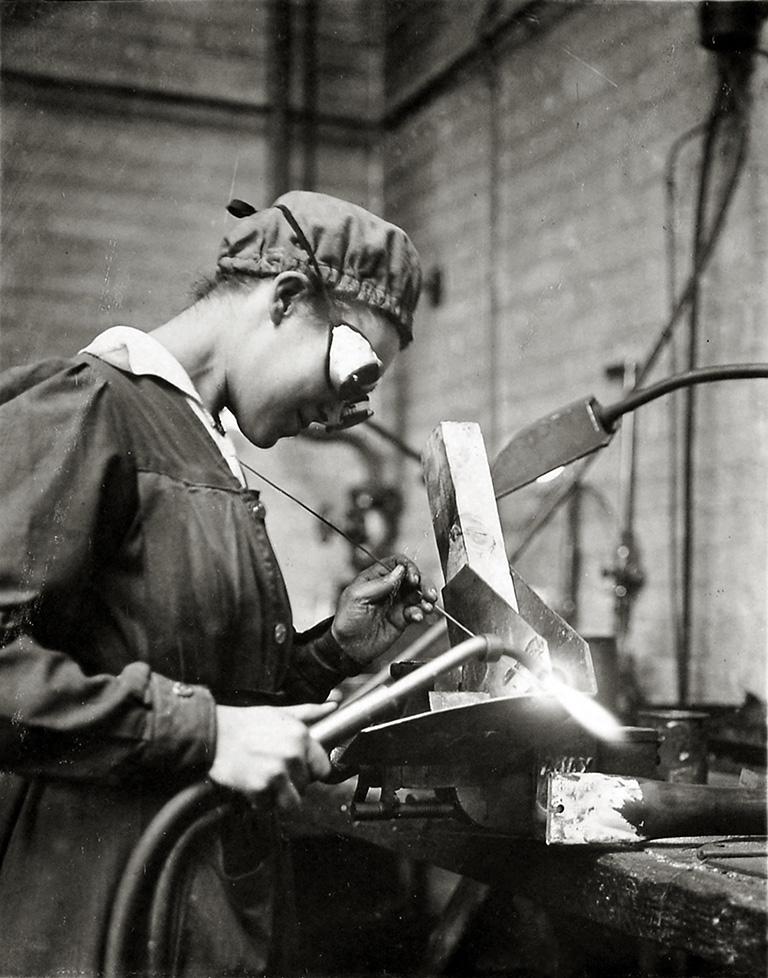
These are the service records of around 30,000 airwomen who served with the Women’s Royal Air Force (WRAF) between 1918 and 1920.
These records, from series AIR 80, include volunteers from the Women’s Army Auxiliary Corps, Women’s Legion drivers and the Women’s Civilian Subordinates.
The women were based in Britain at first, performing roles such as drivers, mechanics, cooks or office clerks. Later around 500 women served in France and Germany. After the war Helen Gwynne-Vaughan, Commandant of the WRAF, was awarded the Dame Commander of the Order of the British Empire (DBE) in recognition of her work.
What information do the records contain?
Information on the service record can include the following:
- age
- address
- religion
- marital status
- dependants
- details of next of kin
- statement of services and promotions
- transfers
- trade or profession
- physical description
- discharge details
Occasionally there might be correspondence or notes.
How do I search the records?
You can search the records in our catalogue (£), by filling in the form below.
You don’t need to complete every field to find a record.
What do the records look like?
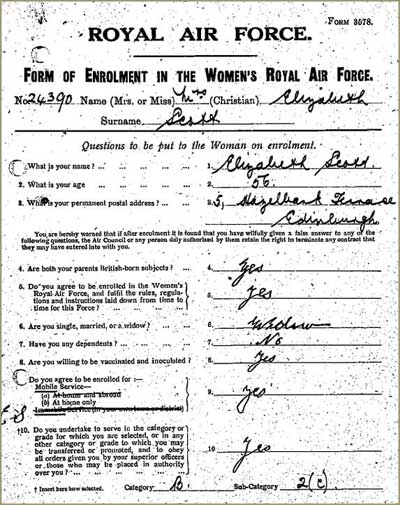
Enrolment form AIR 80/213
A service record can contain one or more of the following:
- an enrolment form
- a certificate of discharge on demobilisation
- a casualty form for active service
You might also find a statement for the services form.
The image above is from the enrolment form of Mrs Elizabeth Scott who was living in Edinburgh when she joined up (catalogue reference AIR 80/213). A widow with no dependants, she was 56 at that time.
Why can’t I find what I’m looking for?
There are a number of reasons why you might not find an entry:
- no officers’ records are known to have survived
- the service record dates from after 1920. Refer to our research guide Women’s Royal Air Force personnel for advice.
1. Why use this guide?
This guide will help you find records at The National Archives relating to Royal Navy operations and actions that took place between 1939 and 1945.
During the Second World War, the integration of the three armed services with one another, and with civil government and allied forces, went far further than ever before. Consequently there is a large amount of material on naval operations in records not relating specifically to the Royal Navy, and therefore not mentioned here. For a brief introduction to some of these records see our Second World War guide.
For a more detailed overview, see J Cantwell, The Second World War: A Guide to Documents in the Public Record Office (PRO Handbook no. 15, 1998).
The guide does not cover records of:
- personnel (for Royal Navy personnel records from the Second World War contact the Ministry of Defence via the Veterans Agency)
- administration or supply
- technological development and research (for guidance on these subjects see our Research and development in the Royal Navy guide)
2. Starting your research
2.1 Consult the Official History of the Second World War
The best way to start your research into Second World War naval operations is to consult the volumes of the Official History of the Second World War, available in The National Archives Library at Kew and some other specialist libraries. In particular, consult The War at Sea.
The unpublished version of The War at Sea is in CAB 101/36-39. It is annotated with file references to the original Admiralty papers on which the history is based but these references are all but redundant now, following subsequent rearrangements of the files.
A large collection of operational reports, military despatches, war diaries and other documents used by historians to compile the Official History of the Second World War are in CAB 106. Search within CAB 106 using keywords in the embedded search box.
2.2 Use keywords to search Discovery, our catalogue
To view records at The National Archives you must first find document references for the records you are interested in.
Use keywords to search record descriptions in Discovery, our catalogue.
A successful search will provide you with a document reference but not all records are described in detail in our catalogue.
Use the advanced search in our catalogue to restrict your dates to 1939-1945, to search within the ADM department and try searching by, for example:
- name of operation (for example, ‘Operation Neptune’ or ‘Neptune’)
- battle (for example, ‘Battle of the Java Sea’ or ‘Java Sea’)
- theatre of operations (for example, ‘Pacific’ or ‘Persian Gulf’)
- ship (for example, ‘HMS Wanderer’ or ‘Wanderer’)
- convoy number (for example, ‘HXF 1’)
- date or month (for example, ’27 February 1942′ or ‘February 1942’)
2.3 Search in the key record series
Restrict your catalogue search, as outlined above, to the principal record series for World War Two operations. Click on the following series references to search for records within each respective series using keywords and dates: ADM 1, ADM 116 and ADM 199.
More specific guidance on how to find information in these series appears throughout this guide.
3. Naval high command
At the head of the Royal Navy sat the Board of Admiralty which was itself headed by the First Sea Lord. Records of meetings of the Board of Admiralty cover broad operations strategies for the various theatres of operations in which the Royal Navy was engaged.
Click on the following series references, using keywords and dates to search for records within:
- minutes of the Board of Admiralty in ADM 167
- Admiralty Fleet Orders and Confidential Admiralty Fleet Orders in ADM 182
- First Sea Lord’s papers in ADM 205
- minutes and papers of the War Cabinet Committees on the Battle of the Atlantic and on Anti-U-Boat Warfare are in CAB 86
Alternatively, use the phrase “First Lord’s records” to search ADM 199.
4. Fleets, stations and squadrons
During the Second World War the Royal Navy was deployed around the world, divided into various fleets and operating from a number of regional stations, also known as commands. The most significant were:
- the Home Fleet based at various stations in the UK
- the Mediterranean Fleet based in Alexandria, Egypt
- the Eastern Fleet based at both the East Indies Station and China Station
- the Pacific Fleet based in Sydney, Australia (this fleet was not formed until November 1944)
- the South Atlantic and Africa Station
- the America and West Indies Station
- the Western Approaches Station (base for ships deployed in the Battle of the Atlantic)
These stations and the various other operational headquarters and units of the Royal Navy kept records, sometimes in the form of daily diaries or summaries of events, many of which are now in ADM 199, as well as other record series.
Click on the series reference to search within ADM 199 using keywords, such as those outlined in section 3.2, names of stations, fleets or any of the phrases listed below:
- “daily summary of Naval events”
- “daily Operations Report for First Lord”
- “war diary summaries”
- “war diaries” and the name of a command or squadron (for example, “War diaries” and “South Atlantic Command”)
There are specific record series for the following stations:
- Portsmouth Station in ADM 179 (contains numerous reports of operations in the Channel)
- Western Approaches Station in ADM 217
- East Indies Station in ADM 127
- China Station in ADM 125
5. Ships, submarines and other vessels
5.1 Ships’ logs
A ship’s log is primarily a navigational record, concerned only incidentally with operations. HM ships do not keep war diaries.
Click on the series reference to search by ship’s name (for example, ‘Venerable’ – don’t include ‘HMS’) within ADM 53 for logs from almost all types of Royal Navy ships – use the date range option to restrict your search to the appropriate years.
For more guidance see our guide to ships’ logs.
5.2 Records of submarines
Click on the series reference to search within ADM 199 for reports concerning submarines. Use the following keywords and phrases:
- submarines AND reports
- “U-boat attacks”
- “U-boat incidents”
- “Submarine patrol reports”
- “Admiral submarines”
There is an incomplete collection of submarine patrol reports from the Mediterranean in ADM 236, supplementing those in ADM 199. Search by submarine name within ADM 236 using the embedded search box.
Monthly reports of anti-submarine warfare from the East Indies Station are in the Confidential Reference Books in ADM 239. Click on the series reference to search by keyword ‘submarine’ within ADM 239.
Click on the series reference to search for submarine logs in ADM 173 by submarine’s name (for example, ‘H.34’ or ‘Tribune’ – don’t includes ‘HMS’) – use the date range option to restrict your search to the appropriate years.
Some of the records are missing as they were destroyed in enemy action.
5.3 Lists of vessels
The confidential edition of the Navy List, the official list of naval officers, their ranks and the ships to which they were appointed, is in ADM 177. It contains the complete information on officers and ships which was omitted from the published edition in wartime.
Click on the following series references to search for records within each respective series using keywords and dates:
- ADM 187, the pink lists, for location in port, though not position at sea, of all HM ships and Naval Air Squadrons in commission (issued twice weekly)
- ADM 208, the red lists, for location in port, though not position at sea, of minor war vessels in home waters
- ADM 210, the green lists, for landing ships, landing craft and the like in home waters
- ADM 209, the blue lists, for shipbuilding (issued monthly)
6. Ships lost or damaged
Click on the series reference to search ADM 199 using “Wartime damage to ships” as your search term.
Search the Printed Books of Reference issued to Navy personnel in ADM 234 for reports and studies of damage to ships in action.
The loss of merchant vessels is recorded in BT 347. For more guidance on this see our Registration of merchant ships guide.
7. Naval aviation services: Fleet Air Arm and RAF Coastal Command
7.1 Fleet Air Arm
The Fleet Air Arm, formed on 1 April 1924, is the air force of the Royal Navy.
Using the advanced search in our catalogue, search for:
- Fleet Air Arm Operations Record Books by name and number of squadron in ADM 207 and AIR 27 (for example, for 801 squadron search using the phrase ‘801 AND “Fleet Air Arm”‘)
- various kinds of operations reports by name of squadron or ship in ADM 199 (for squadrons, try searching by number and the word “squadron” or the phrase “naval air squadron”)
- combat reports by squadron name and number in AIR 50
- flying log books of RAF personnel serving with the Fleet Air Arm in ADM 900 (search using the word “log”)
- operational and technological histories relating to the Fleet Air Arm in the Second World War in ADM 335/1-4 and ADM 335/63-65
No aircraft carrier flying log books are known to have survived.
7.2 Coastal Command
RAF Coastal Command, founded in 1936, was the Royal Air Force’s premier maritime unit, based at Lee-on-Solent in Hampshire. Amongst its most significant roles in the war were the protection of convoys and allied shipping, playing a decisive role in the Battle of the Atlantic.
The other principal theatres of operations were the Mediterranean, the Middle East and Africa.
Click on the following series references to search for records within each respective series using keywords and dates:
- Headquarters Papers in AIR 15
- Operations Record Books in AIR 24
- squadrons and constituent formations in AIR 25, AIR 26 and AIR 27
- combat reports by squadron name and number in AIR 50
8. Convoys and operations with the Merchant Navy
8.1 War history cases and papers
Click on the series reference to search within ADM 199 for records of Royal Navy operations involving the Merchant Navy, including convoy records. Search using these phrases:
- “Trade Division”
- convoy AND reports
8.2 Western Approaches station records
ADM 217, Western Approaches Command, consists of an incomplete series of Reports of Proceedings from Senior Officers of Escorts and others, and is indexed by convoy and by Senior Officers’ ships. Use the search box embedded within ADM 217 to search by:
- ship’s name
- convoy number
- start or end date of the convoy voyage
8.3 Convoy reports
‘Convoy Packs’, in ADM 237, are convoy records maintained in the Operations Division of the Naval Staff. They include:
- reports of proceedings
- Commodores’ reports
- other papers
Click on the series reference to search within ADM 237 by:
- convoy number (for example, ‘OG 71’)
About half this series was destroyed.
9. Combined operations
Combined operations are operations with the other branches of the military, namely the Army, RAF or Royal Marines.
Use the advanced search in our catalogue to restrict your search to ADM 1, ADM 116 and ADM 199 and search using the term “combined operations”.
Browse or search by date in DEFE 2, records of the Combined Operations Headquarters, covering the planning and execution of all sorts of seaborne military operations.
Click on the series reference to search by name of unit or operation within ADM 202, for details of combined operations involving the Royal Marines.
10. Naval Intelligence records
A collection of reports and papers of the Naval Intelligence Division (N.I.D.) is in ADM 223.
In addition to texts of early decrypts of German naval wireless traffic enciphered on the ENIGMA machine, there are reports and summaries, both from N.I.D. and the Operational Intelligence Centre (O.I.C.), based on this ‘Special Intelligence’. These reports include:
- O.I.C. Daily Reports up to September 1940 (ADM 223/79-83)
- O.I.C. Special Intelligence Summaries from 1940 onwards (ADM 223/8-24, 43-50, 92-101, 170-175, 310-314, 321-329)
Consult The Battle of the Atlantic and Signals Intelligence for transcriptions of documents relating to ENIGMA and the Battle of the Atlantic selected from ADM 223.
Other records in ADM 223 include:
- general daily and weekly intelligence summaries in ADM 223/146-169, 830-834, 852-863
- ‘operational packs’ regarding particular engagements and operations in ADM 223/332-342, 507-619, 676-686, 697
- photocopies of documents not yet transferred, but cited in the footnotes of Volume 1 of The Official History of British Intelligence in the War in ADM 223/84-86, 107-108, 209, 212-214
Also consult:
- DEFE 3 which contains the texts of enemy signals, both naval and other, decrypted by the Government Code and Cypher School
- HW 1 which contains summaries of selected signals intelligence reports sent to the Prime Minister
11. Photographs
There are many photographs filed within the record series covered in this guide, but there is no single index to them, and no easy means of tracing them.
You can find some photographs using the advanced search in our catalogue, searching with “photograph” as your keyword (with or without additional keywords), selecting an appropriate date range and searching within ADM.
Search for photographs of:
- Royal Navy ships in ADM 176
- battle damage to ships, air and sea attacks and other photographs taken before, during or after operations in CN 1
- views of the Mulberry artificial harbours constructed for the Allied invasion of Normandy in WO 24
Consult our Photographic series guide for details of other ADM series that contain photographs.
Alternate collections of photographs of ships are held by the National Maritime Museum and the Imperial War Museum.
12. Further reading
The following recommended publications are available in The National Archives’ library.
Gordon Smith, The War at Sea: Royal & Dominion Navy Actions in World War 2 (Ian Allan, 1989)
Derek Howse, Radar at Sea: The Royal Navy During World War 2 (Macmillan, 1993)
Juurgen Rohwer and Gerhard Hummelchen, Chronology of the War at Sea 1935-1945: The Naval History of World War Two (Greenhill Books, 1992)
Myron J Smith, World War II at Sea: A Bibliography of Sources in English (Scarecrow Press, 1976)
David Syrett, The Battle of the Atlantic and Signals Intelligence: U-Boat Tracking Papers 1941-1947 (Ashgate, 2002)
David Syrett, The Battle of the Atlantic and Signals Intelligence: U-Boat Situations and Trends 1941-1945 (Ashgate, 1998)
1. Why use this guide?
This guide provides advice on how to locate records of immigrants to England and Britain from the 13th century onwards. It also covers records which reflect government policy towards immigration over the last 800 years.
The National Archives is the archive of central government in the UK. The immigration records we hold were originally created by the various government departments that recorded the arrival and existence of foreign nationals in Britain, as well those that formulated the government’s immigration policy.
Many records of individual immigrants have been destroyed so tracing someone’s arrival can sometimes prove impossible. There is no comprehensive index of names for immigrants.
You may also wish to consult one of our other research guides on related subjects, listed in the right-hand panel of this page.
Look out for the grey boxes in this guide – they indicate that the records described are available online.
2. Records of arrival
Many of our records of immigrants are records of ‘aliens’. An alien is someone who is born outside the country and does not have English parents (before 1707), or British parents (after 1707). From 1707 English and Scottish subjects were British subjects and from 1801 Irish subjects were also British subjects. If immigrants came to Britain from the British colonies they were not classed as aliens but were simply Britons.
The Home Office established an Aliens Department in 1913 (there having already been an Aliens Office in the 19th century) and many of the records of aliens at The National Archives are from that department.
2.1 Passenger lists
There are no passenger lists for people arriving in the UK by air.
2.2 Certificates and lists of alien arrivals
HO 2 contains original certificates of arrival of individual aliens in England and Scotland, arranged under the ports of arrival. These certificates include:
- nationality
- profession
- date of arrival
- last country visited
- signature and other details
Early certificates appear to have been destroyed. However, some records survive for the following dates:
- 1810–1811: FO 83/21–22 – aliens arriving in English ports
- July–November 1826: CUST 102/393–395 – accounts of aliens arriving in the port of London
- October 1826–August 1837: CUST 102/396 – accounts of aliens arriving in the port of Gravesend
HO 3 consists of returns of alien passengers made by masters of ships under section 2 of the Aliens Act of 1836. The lists survive for the period July 1836 to December 1869 but none survive from January 1861 to December 1866.
Earlier records relating to the arrival of aliens and aliens’ accounts are in local county archives, normally among Quarter Session papers. For example, certificates of alien arrivals issued at the port of Hull from 1793 to 1815 are held by Hull History Centre.
3. Records after arrival
In some cases the Aliens Department continued to take an interest in aliens long after their arrival, particularly at times of war. With questions of national security at stake the Home Office, both during the World Wars and later, amid the heightened security threat at the onset of the Cold War, sought to keep a close eye on foreign nationals living in the UK. Our records reflect these concerns.
3.1 Entry books, 1794–1921
Surviving in series HO 5 are entry books recording the out-letters of the Home Office and the Aliens Office relating to aliens and naturalization.
Browse and download aliens’ entry books, 1794–1921, including indexes to certificates of alien arrivals (HO 5/25–32) at Ancestry.co.uk (£).
HO 5 includes registers of applications for denization, naturalization and exemptions, and indexes to the certificates of arrivals in HO 2 (see above).
3.2 Alien registration cards and registers of aliens from 1914
The Aliens Registration Act of 1914 introduced the requirement for aliens, other than those from British colonies or Ireland, to register with the police. They were required to give their name, marital status, address, occupation and other details. Though we only hold a sample of these registration records, from the London area only, you may be able to find registers of aliens from other parts of the country in local record offices.
Alien registration cards of London residents
Search a sample of open digitised Metropolitan Police aliens registration cards (£) for the London area, dating from 1914.
Other records can be found by searching directly in the series using the form at MEPO 35.
Owing to the sensitive nature of these cards, they may be closed during the lifetime of the individuals concerned or until they can be assumed to be deceased. You can make a Freedom of Information request using the link in the catalogue description.
Registers of aliens from around the country in local archives
Use the advanced search of our catalogue to search other archives (scroll down to the ‘Held by’ section to select this option) for registers of aliens. Use the words ‘registers’ and ‘aliens’ and, optionally, the name of a county or city, as your keywords.
3.3 Aliens personal files since 1935
We hold a selection of files of the Aliens Department relating to individual aliens who entered the United Kingdom after 1935. They are held in series HO 382. Some of the files relate to famous individuals.
Search HO 382 by name to locate individual files. Many contain small photographs of the subject. Significant numbers of these records are closed and sight of them is dependent on a successful Freedom of Information request.
3.4 Records of internees: First and Second World Wars
During the First and Second World Wars both sides set up internment camps to hold enemy aliens – civilians who were believed to be a potential threat and have sympathy with the enemy’s war objectives. Internees were treated differently to prisoners of war and were given more privileges.
Some of these records are of people who were interned but others are of people who were exempted from internment.
You can search for British internment records from the First and Second World Wars by first and last name on findmypast.co.uk and Ancestry.co.uk (£). These online records are drawn from HO 144/11720, HO 45/11522, PCOM 9/661 & 662, nominal rolls in HO 215, and the internees index in HO 396.
For more detailed advice on these records see our Internees guide.
3.5 Records of the London Reception Centre at the Royal Patriotic Schools
This collection details the development of policy for the screening of internees at the Royal Patriotic School (RPS) between January 1941 and June 1945. The London Reception Centre was established to process aliens arriving in the UK, to gather intelligence from them on conditions in occupied Europe, and to screen arrivals for possible enemy agents. The screening centre for men was located at Trinity Road, Wandsworth, and at nearby Nightingale Lane for women.
The files include:
- interrogations of civilians arriving in the UK from abroad (KV 2) and WO 208/3663-3748
- correspondence and minutes of meetings of the sub-committee of the Home Defence (Security) Executive set up to run the London Reception Centre at the RPS (KV 4)
- lists of categories of people to be processed by the RPS (KV 4/339)
- reports of inspection visits to the school (KV 4)
- a list of the administrative staff at RPS in May 1941 at serial 68B (KV 4/240)
- a detailed note on the history of RPS at serial 211A (KV 4/342)
- a report from March 1941 at serial 49A (KV 2/339) which summarises the Security Service view of the schools and their importance
3.6 Operation Post Reports
Operation Post Reports (OPRs) date from the mid 1940s – 1950s and are the result of an initiative to investigate foreign nationals living in Britain at the onset of the ‘Cold War’. These individuals were required to report to the Aliens Office for an assessment of their potential risk to national security. Each OPR consists of a report containing some or all of the following details: Home Office reference number; Port and date of arrival in Britain; name; date of birth; place of birth; nationality; passport number; Police registration number; landing conditions; address at time of interview, occupation, religious denomination, marital status, place and date of interview
OPRs for up to 400,000 foreign nationals can be found in the series HO 481. They include refugees and displaced persons who fled to the UK. Most are for refugees from east Europe at the end of the Second World War but there OPRs for other refugees such as those from Hungary after the Hungarian Revolution of 1956.
Each OPR include a potted history of the individual’s status and time in the UK and an assessment of the individual’s security risk, which may include reference to any political affiliations. Often the OPRs contain phrases that would be considered offensive today.
The assessments were generally carried out by members of Special Branch.
Records in HO 481 are all closed for 100 years but a review can be requested under the Freedom of Information (FOI) through our Catalogue, Discovery. Within HO 481, there are two different sets of volumes (each set running by surname A-Z), which have been intermingled and combined to form one sequence. Therefore, when searching for a surname, there is normally a chance of finding it in either of two volumes. To submit a review under FOI, you would need to identify the relevant piece or item and follow the prompts in Discovery. There are usually about 200-400 reports in each piece.
Scroll through the alphabetical ranges of HO 481 to locate the surname range you are looking for. Be aware of the probability that there will be two pieces covering roughly or sometimes exactly the same range.
3.7 Birth, baptism, marriage, death and burial registers, 1567-1970
Immigrants arriving from outside England or the United Kingdom were unlikely to have belonged to the Church of England. Those that retained the religion of their homeland would have had births, baptisms, marriages, deaths and burials recorded in non-parochial registers – where they were recorded at all.
We hold non-parochial registers, received from the General Register Office (RG 4 and RG 8). They include:
- registers of births and baptisms, marriages and burials for various periods between 1567 and 1857
- records formerly kept in the French, Dutch, German and Swiss churches in London and elsewhere (in RG 4)
- the archive of the Russian Orthodox Church in London, 1721–1927 (in RG 8), which contains more than just birth, marriage and death registers
All of the Dutch registers, and some of the French and German ones are for those countries Chapels Royal, but most are French (Huguenot) or German (Lutheran) church registers. There is only one Swiss church register.
4. Records of citizenship: denization and naturalisation
For hundreds of years, foreign nationals living in the UK have been able to attain British citizenship through naturalisation. The National Archives holds records of naturalisation up to 1 October 1986. For records since 1 October 1986 to the present you should go to the United Kingdom Visa and Immigration Service.
Denization was a legal process granting limited naturalisation to aliens. It granted a foreign national almost equivalent status of native-born Britons and provided them the protection of the law.
For more information about denization and naturalisation and advice on how to find the related records, see our research guide to records of Naturalisation, registration and British citizenship.
5. Earlier records, 13th to early 19th centuries
Searching for records of immigrants from the early modern and medieval periods involves largely speculative searches, though there were some sets of records from these periods created specifically to record immigrants or refugees of one kind or another. The earliest references to immigrants in England are in records of Chancery and the Exchequer.
5.1 Records of early-18th century German Protestant refugees
German Palatines came from the Middle Rhine region of what is now Germany, but was, in the early 18th century, part of the Holy Roman Empire. Thousands of them emigrated to England in 1709.
Embarkation lists of Palatine subjects shipped from Holland to England in 1709 are contained in a bundle of Treasury in-letters in T 1/119. Although these people were originally seeking a new life in the New World, many stayed in England. Other references to Palatines can be found in:
- the State Papers Foreign, Holland (SP 84)
- Colonial Office records (CO 5/1230–1231)
Lists of names traced in these series have been printed in WA Knittle’s Early Eighteenth Century Palatine Emigration; LD MacWethy’s The Book of Names Especially Relating to the Early Palatines and the First Settlers in the Mohawk Valley; and in The New York Genealogical and Biographical Record, XL and XLI.
5.2 Records of French emigres, 1789 to 1814
In 1793 the Aliens Act introduced the first official immigrant registration system. It was introduced to manage the influx of people coming to Britain to escape the French Revolution.
For letters and papers concerning French émigrés, 1789 to 1814, look in:
- HO 69, Home Office records in the series of Bouillon papers
- PC 1, Privy Council unbound papers
- FO 95, Foreign Office miscellanea, series I
- WO 1, War Office in-letters
A descriptive note about all these letters and papers, and a full list of them in typescript, is available in the Open Reading Room. There are also names in registers and on pension lists in Treasury records of the French Refugees Relief Committee (T 93) for the period 1792 to 1828. These are described in PRO lists and indexes, no. XLVI (1922).
5.3 Early Chancery records
In records of Chancery there are documents from the reigns of Henry III to Henry VIII (1207–1547) relating to:
- alien clergy – C 269/15 and C 270/17/15
- foreign merchants – C 47/35/10/41-44
5.4 Records of the Exchequer
Records of the Exchequer include various documents and records related to immigration from 1229 to 1830:
- 1229 to 1483: E 106, King’s Remembrancer: extents of alien priories, aliens etc, which covers the period Edw I to Edw IV. The series includes documents relating to possessions of laymen who were foreign subjects and accounts of fines imposed on alien clergy
- 1523 to 1561: E 179, Exchequer subsidy rolls, including names of foreigners living in the city and suburbs of London and details of the taxes levied on them
- 1207 to 1830: E 101, Exchequer accounts various, including accounts of transactions involving foreign merchants living in London. These records extend over a long period, from Hen III to Charles I – see PRO Lists and Indexes, No. XXXV, pp 103–107
5.5 State Papers
The following state papers domestic include returns of strangers in London and elsewhere from 1232 to 1603, as well as other references to aliens:
- 1547–1553: SP 10 – Edward VI
- 1553–1558: SP 11 – Mary I
- 1558–1603: SP 12 – Elizabeth I
- 1547–1624: SP 13 – Elizabeth I: large documents
- 1603–1640: SP 14 – James I
- 1547–1625: SP 15 – addenda
- 1232–1665: SP 16 – Charles I
- 1649–1660: SP 18 – interregnum
- 1649–1688: SP 29 and SP 30 – Charles II
From 1560 onwards the state papers domestic contain names of Huguenots from France and Walloons from the Low Countries who emigrated as a result of Spanish persecution.
Some lists of the people mentioned in the above records also appear in the printed Calendar of state papers, domestic, Edw VI to James I (1537–1625), Vols I to V, which each have indexes and can be searched using State Papers Online (£) (institutional subscription required – access is free on the public computers at The National Archives) and British History Online.
You may be able to find names in the indexes to the printed calendars of SP 14–16, 18, 29 and 30.
Lists of names from these records can also be found in REG Kirk, Returns of aliens in London, 1523–1603, as well as:
- names of members of French and Dutch churches in London in 1561 and 1562
- returns of aliens in London in 1571
- lists of refugees settled at Norwich, Colchester, Rye, Sandwich, Canterbury and other parts of England
Short lists of names can also be found in J S Burn, ‘The history of the French, Walloon, Dutch and other foreign Protestant refugees settled in England from the reign of Henry VIII to the revocation of the Edict of Nantes’.
Lists of denizations of refugees escaping from the persecution of Huguenots in France, 1681 to 1688, are available in William A Shaw (ed), ‘Letters of denization and acts of naturalization for aliens in England and Ireland, 1603–1700’.
5.6 Parliament or patent rolls
Immigration records can be found in:
- Parliament rolls (C 65) – these contain records of many acts of naturalisation over a long period from c.1400
- Patent rolls (C 66–67) – these contain records of grants of denizations by letters patent c.1400–1844
There may be additional information on people naturalised by Act of Parliament in other collections held at The National Archives. For more guidance see our research guide on Naturalisation, registration and citizenship.
5.7 Treasury in-letters
Treasury in-letters (T 1) contain references to refugees and other foreign people who received annuities, pensions and other payments for their support, or in return for services rendered to the Crown. These can be traced in the indexes to printed volumes of the Calendar of Treasury papers, which covers the period 1556 to 1745.
6. Records in other archives
Other archives with records about foreigners settling in the UK:
- The London Archives
- the Bodleian Library, Oxford
- Cambridge University Library
- the Huguenot Society of London
- Lambeth Palace Library, London
- The National Archives of Ireland
7. Further reading
Most of the following publications are available in the The National Archives’ library. You can visit The National Archives shop for a range of related titles.
Family history and genealogy
Guy Grannum, Tracing Your Caribbean Ancestors (Bloomsbury, 2012)
Gerhard Hirschfeld, Exile in Great Britain: Refugees from Hitler’s Germany (Berg for German Historical Institute, 1984)
Roger Kershaw, Migration Records: A Guide for Family Historians (Kew, 2009)
Roger Kershaw and Mark Pearsall, Immigrants and Aliens: A Guide to Sources on UK Immigration and Citizenship (The National Archives, 2004)
List and Index Society, General Register Office list of non-parochial registers and records in the custody of the Registrar-General of births, deaths and marriages (List and Index Society, XXXXII, 1969)
L D MacWethy, The Book of Names Especially Relating to the Early Palatines and the First Settlers in the Mohawk Valley (Genealogical Publishing Company, 1933)
The New York Genealogical and Biographical Record, XL and XLI (New York Genealogical and Biographical Society, 1909 and 1910)
Dhoeleka S Raj, Where Are You From?: Middle Class Migrants in the Modern World (University of California Press, 2003)
Michael Tepper (ed), New World Immigrants: A Consolidation of Ship Passenger Lists and Associated Data from Periodical Literature (Genealogical Publishing Company, 1979)
19th and 20th centuries
Shompa Lahiri, Indians in Britain: Anglo-Indian Encounters, Race and Identity, 1880–1930 (Frank Cass, 1999)
Lucio Sponza, Italian Immigrants in Nineteenth-Century Britain: Realities and Images (Leicester University Press, 1988)
Roger Swift and Sheridan Gilley (eds), The Irish in Britain 1815–1939 (Pinter, 1989)
Roger Swift and Sheridan Gilley (eds), The Irish in the Victorian City (Croom Helm, 1985)
Early Modern and Medieval periods
J S Burn, ‘The history of the French, Walloon, Dutch and other foreign Protestant refugees settled in England from the reign of Henry VIII to the revocation of the Edict of Nantes’ (London, 1846)
Calendar of Treasury Papers, 1556–1728 (Public Record Office)
Calendar of Treasury Books and Papers, 1729–[1745] (HMSO)
Peter Wilson Coldham, English Adventurers and Emigrants, 1609–1660: Abstracts of Examinations in the High Court of Admiralty with Reference to Colonial America (Genealogical Publishing Company, 1984)
Peter Wilson Coldham, More English Adventurers and Emigrants, 1625–1777: Abstracts of Examinations in the High Court of Admiralty with Reference to Colonial America (Genealogical Publishing Company, 2002)
Ian D Colvin, The Germans in England 1066–1598 (Kennikat Press, 1971)
R E G Kirk and Ernest F Kirk (eds), Returns of Aliens Dwelling in the City and Suburbs of London from the Reign of Henry VIII to that of James I (Aberdeen University Press, 1900–1908)
W A Knittle, Early Eighteenth-Century Palatine Emigration (Dorrance & Company, 1937)
Public Record Office, List of Various Accounts and Documents Connected Therewith Formerly Preserved in the Exchequer and Now in the Public Record Office: Bundles 1–603 [Henry III to George III] (Kraus Reprint, 1963)
William A Shaw (ed), Letters of Denization and Acts of Naturalization for Aliens in England and Ireland, 1603–1700 (Huguenot Society of London, 1911)
1. Why use this guide?
Until 1534, England was a Catholic country. Then, after years of upheaval, the 1559 Act of Supremacy made the Protestant Church of England the established church. Following this act there was a significant increase in the number of state records created documenting Catholics’ status and activities, subject as they were to new laws, taxes and a wave of persecution. The primary focus of this guide is on those records, especially from the 16th and 17th centuries, and how to find them at The National Archives. They include:
- records of penalties and punishments
- details of arrests
- letters from private citizens and spies sent to the authorities
- reports on Catholics sent by ecclesiastical and civil authorities
- baptism, marriage and burial registers
By the 18th century Catholics were no longer persecuted, but were still effectively barred from entering the professions, holding civil or military office, or inheriting land. Formal emancipation finally came in 1829 and state records relating to Catholics exists in smaller numbers from this date onwards.
Like all churches, Catholic churches kept their own records, though very few of these, in common with most local or parish church records, have found their way into The National Archives.
2. Catholic baptism, marriage and burial registers
Very few catholic birth, marriage and death registers are kept at The National Archives. They were collected together when the Registrar General called in the non-parochial registers in 1837 and 1857, part of the process of establishing the new system of civil registration. There are 77 in total, held in record series RG 4, and they originate from the following counties:
| Cumberland 1 | Hampshire 1 | Northumberland 10 | Warwickshire 1 |
| Dorset 1 | Lancashire 1 | Nottinghamshire 1 | Westmoreland 1 |
| Durham 13 | Lincolnshire 2 | Oxfordshire 1 | Yorkshire 44 |
Most of these are baptism registers. Search the registers by name at BMD Registers, one of our partner websites.
Perhaps so few catholic registers were surrendered because they contained records of illegal marriages; between 1754 and 1837, under the terms of Lord Hardwicke’s Marriage Act, it was a legal requirement to marry in the Church of England. Most of those that were handed over came from Yorkshire, Durham and Northumberland.
Find a list of all the catholic registers we hold using an advanced search of our catalogue, searching with ‘catholic’ and restricting the search to record series RG4. For more on catholic registers see section 4.
3. Catholic recusants
The 1559 Act of Uniformity imposed fines on all men who refused to attend Church of England services at their parish church and these people were known as recusants. Holders of public office and many others were required to swear an oath of loyalty to the Sovereign as head of the Church and records were kept of people who did and didn’t take these Oaths of Allegiance. Catholics could not accept the monarch as head of the Church, and so could not be loyal subjects in the eyes of the law.
Subsequent laws imposed numerous penalties and fines for non-attendance at Church of England services, for which there are equally numerous records, and catholics were effectively barred from inheriting land, entering the professions or taking up civil or military office. These punishments were not always strictly enforced and there was considerable variation according to time and place but the records of their issue, collection and enforcement provide a rich source of information on catholics during this period.
3.1 Catholic recusants in state papers
Within the records originally assembled by the State Paper Office (department code SP), one of the richest sources of information on catholics during the 17th and 18th centuries, there are numerous details of and references to catholics. These include reports sent by ecclesiastical and civil authorities, letters from private citizens and spies as well as details of arrests and prosecutions.
3.2 Catholic recusants in other records
Details of catholic recusants can also be found in records relating to the imposition of fines or seizures of land for failure to attend Church of England services. The fines laid down in the 1559 Act of Uniformity for failure to attend church were collected by churchwardens and so do not appear in the central government records. After 1581, recusancy became an indictable offence, so fines levied were accounted for at the Exchequer (department code E) by sheriffs of each county. There are records of catholics who took the Oath of Allegiance, as well as of some who didn’t.
3.3 Searching the records
Searching online indexes by the name of an individual is either impossible or very problematic with records detailing catholic recusants. State papers (searchable under department code SP) are generally indexed by subject matter in our catalogue. However, not all documents in this department have a catalogue description and therefore some are unsearchable. Details of how best to search state papers, along with the other relevant record departments and series, are found in the following table.
| Principal subjects covered relating to catholic recusants | Record department/ series | Main dates covered | How to search the index to this series online | Other search resources |
| Surveillance and scrutiny of catholic activities and movements; reports of catholic attitudes and opinions | SP | c.1600–1782 | Search by keyword on the State Papers Online website (£) (institutional subscription required) or by using one or more of the following terms in our catalogue: catholic; recusant; papist; popish; romish; nonjuror | The Calendars of State Papers (each calendar has a subject index). See ‘Further reading’ below |
| Catholic recusants in Dorset | PRO 30/24 | c.1580–c.1680 | Search using one or more of the following terms in our catalogue: recusant; popish | |
| Catholic recusants in Lancaster | KB 18 | 1714 | This series cannot be searched online. Order the original document at The National Archives at Kew | |
| Catholics who took the Oath of Allegiance; petitions from catholics on various matters | PC 1 | c.1700–c.1800 | Search using one or more of the following terms in our catalogue: catholic; recusant; papist | |
| Fines, taxes, seizures and registrations of lands and estates, and other revenues received from recusants; oaths of allegiance from catholics | E | 1581–c.1870 | Search by county (including abbreviations of) in our catalogue or using the following terms: catholic; recusant; papist; popish; nonjuror | |
| Seizure of recusants’ lands and estates | FEC 1, FEC 2 | 1552–1744 | Search by county or town in our catalogue or using the following terms: papist; popish; recusant | |
| Revenues received from recusants | AO | 1627–1655 | Search using the following terms in our catalogue: popish; recusant |
3.4 ‘Papist’ returns
In 1680, 1706, 1767 and 1781, Parliament requested information about known or reputed Roman Catholics. This information was laid before the House of Lords and survives in the Main Papers (YHL/PO/JO/10). To find them, search the catalogue for the exact phrase “Papist Returns”. In most cases names are not given and only the total numbers of Catholics living in the area are recorded. Sometimes descriptions of individual people are given, including details such as age and occupation, but omitting the name. Sometimes names of individuals are given, especially in the Return for 1767. The 1767 returns have been transcribed and published by the Catholic Record Society (see Further Reading below).
Other Parliamentary material relating to Catholics recusants can be found by searching for terms such as ‘catholic’ and ‘papist’, including petitions.
3.5 Legislation
Public Acts of Parliament affecting Catholics will be published and some can be searched for on legislation.gov.uk. However they are not all available online. For more information see our research guide on Original Acts of Parliament and Royal Assent.
The original manuscript parchments of some of the most significant Acts have been digitised and are available on the catalogue including: Act of Supremacy 1534; Act of Uniformity 1551; Act of Uniformity 1558; Act of Uniformity 1662.
4. Records in other archives
Specifically catholic records are relatively few in number compared to many protestant denominations in England and the UK. The number of catholics themselves in England dwindled following the Act of Uniformity, and remained low from the 17th to the 19th centuries. Furthermore, between 1754 and 1837 it was a legal requirement to marry in the Church of England and though many Catholics were still married illegally according to catholic rites, registers for these illegal marriages were not generally kept since it might have been dangerous to do so.
The first new catholic chapels since the Reformation were built in the 18th century and more catholic registers were kept from 1791, but most do not begin until the early to mid-19th century. The earliest records were often kept in small notebooks or even loose sheets, which could easily be concealed or destroyed if necessary. Most surviving registers are for baptisms, and these often give more detail than Church of England registers, but there is considerable variation.
You can search our catalogue to find out what is held at catholic libraries, catholic archives and local records offices. Refine your results using the filters.
4.1 Catholic priests’ mission records
Until 1918, the catholic church was based on missions rather than geographical parishes; as a result some priests seem to have treated the registers as their private or personal property and many registers moved around with their keepers. Events from different places may therefore be entered in a single register. Many of these personal registers are in the custody of Archbishop’s House, Westminster. There is a list of these in ‘Sources for Roman catholic and Jewish Genealogy and Family History’ in the National Index of Parish Registers series. Others can be found at the catholic National Library which is part of Durham University Library.
4.2 Catholic parish records
The majority of catholic registers remain in the custody of parish priests, although a number have been transcribed and indexed by the Catholic Record Society. Many of these transcripts have been deposited at the Catholic National Library, and some are available at the library of the Society of Genealogists. Those that have been published are listed in the National Index of Parish Registers but a more comprehensive and up to date listing is contained in the six volumes of Michael Gandy’s Catholic Missions and Registers. Names and addresses of parish priests and diocesan archives are in the Catholic Directory, managed by the Catholic Bishops’ Conference of England and Wales. The Catholic Archives Society website is also a useful source of information.
Some Catholic registers from local archives have been digitised and indexed. Search among the:
- Registers from Southwark Archdiocese, Diocese of Plymouth, Birmingham, Liverpool, Middlesbrough and Westminster at Findmypast.co.uk (£)
4.3 Church of England records
Although catholic registers may be relatively few in number, many Catholics appear in Church of England registers. Marriages between 1754 and 1837 had to be in the Church of England to be legally valid (even if the parties were also married according to catholic rites) and burials of Catholics might be in the Church of England parish churchyard, as there was often no other burial ground in the area. Catholic children might appear in the parish baptism registers, and they are not always identified as Catholics. Church of England clergy were required to supply lists of recusants in their parishes and as a result, the names of Catholics may appear in Church of England parish records, though not in the baptism, marriage or burial registers.
4.4 Catholic school records
Admission and discharge records for maintained schools, including many catholic schools, are held in county record offices. Many have been digitised and indexed an can be viewed online at Ancestry.co.uk (£) or at Findmypast.co.uk (£).
5. Further reading
Visit the National Archives’ bookshop for a range of publications useful for tracing your ancestors by their religion.
M Gandy, ‘Catholic parishes in England, Wales and Scotland: an atlas‘ (M Gandy, 1993)
M Gandy, ‘Catholic Missions and Registers 1700–1880‘ (six volumes) (M Gandy, 1998)
M Gandy, ‘Tracing Catholics ancestors‘ (PRO, 2001)
D Shorney, ‘Protestant Non-conformity and Roman Catholicism: a guide to sources in the Public Record Office‘ (PRO, 1996)
D J Steel, ‘Sources for Roman Catholic and Jewish Genealogy and Family History‘ (Society of Genealogists by Phillimore, 1974)
See also the multiple volumes of ‘Calendar of State Papers, Domestic’ published by various publishers including PRO.
This guide provides advice on how and where to search for records of ratings and officers who served in the Royal Naval Volunteer Reserve (RNVR). The RNVR was established in 1903 and was made up of volunteers who served both on-shore and at sea. It was merged with the Royal Naval Reserve in 1958.
Not all Royal Naval Volunteer Reserve records have survived.
The Royal Naval Volunteer Reserve also administered the Mine Clearance Service (MCS), although men came from all branches of the Royal Navy. The MCS was established in 1919 to clear all sea mines.
What do I need to know before I start?
Online records
Service records (1903-1922)
Download Royal Naval Volunteer Reserve service records (£) on our website for a rating (1903-1919) or officer (1903-1922) in the Royal Naval Volunteer Reserve (ADM 337).
Naval officers’ service record cards and files (c1880-1950s)
Search by name and download (£) Royal Naval officers’ service record cards and files on our website (ADM 340/1-150) for officers in the Royal Naval Volunteer Reserve (c1880-1950s). To view ADM 340/151-456 visit The National Archives at Kew.
Duplicated and additional information on many officers will be found in RNVR service records.
Medal Rolls (1909-1949)
Search by name for information about the award of First World War, long service and good conduct medals in the Royal Navy medal roll using Ancestry.co.uk (£). These rolls do not usually contain biographical information.
Digital microfilm copies of these records are also available to download and browse from our website free of charge. See ADM 171/70-72, ADM 171/89-91 and ADM 171/125-9.
Records available only at The National Archives in Kew
To access these records you will either need to visit us, pay for research (£) or, where you can identify a specific record reference, order a copy (£).
Naval officers’ service record cards and files (c1880-1950s)
Browse Discovery, our catalogue for officers’ service records for this period in ADM 340/151-456.
RNVR divisional records (1904-1939)
Browse ADM 900/75-86 for the small sample of surviving divisional records. Most have been destroyed.
Navy Lists (from 1903)
Trace RNVR officers who were included in the Navy List from September 1903. The Confidential Navy lists (ADM 177) contain information omitted during the world wars. These can be found in the reading rooms at The National Archives, Kew.
Records in other archives and organisations
Service records (1920-present)
Visit the GOV.UK website for information about how to request a summary of an officer’s or rating’s service record from the Royal Navy.
Fleet Air Arm Museum
Contact the Fleet Air Arm Museum who hold information such as Engagement Papers and First World War pay and appointing ledgers.
National Maritime Museum
Contact the National Maritime Museum which has an extensive collection of books, photographs, paintings, drawings and manuscripts dealing with most aspects of the Royal Navy and some of the Royal Naval Volunteer Reserve. They do not hold official records of the Royal Navy.
Other resources
Books
Consult the published Navy Lists to follow an officer’s career.
Use our library catalogue to find a recommended book list.
The books are all available in The National Archives’ reference library. You may also be able to find them in a local library. You can buy from a wide range of history titles in our bookshop.

This guide contains advice on how to search for records of Royal Flying Corps (RFC) airmen. Depending on when an airman served his records may be among the records of the British army or the Royal Air Force.
What do I need to know before I start?
The RFC was in existence from 1912 to 1918 as a part of the British army.
In July 1914 the RFC’s naval wing was detached to form the Royal Naval Air Service (RNAS). On 1 April 1918 the two services were merged again to form the Royal Air Force (RAF).
If an RFC airman continued to serve in the RAF after April 1918, his record would be kept with RAF service records.
Online records
Royal Flying Corps personnel records (1914-1920)
The service records of RFC airman who died or were discharged before the foundation of the RAF were kept with the British Army personnel records.
Search the surviving service records (WO 363), pension records (WO 364) and medal index cards (WO 372) for soldiers in the British army in the First World War on the Ancestry (£) website.
RAF service records (1918-1939)
Look in the RAF service records for RFC airmen who served after April 1918. Search the RAF service records (AIR 79) on findmypast (£). The records provide details of previous employment on joining the RAF. This information appears on the forms under ‘current engagement’. Some men were serving in the Army or Navy before moving to the Royal Air Force.
Records of RAF airmen who served after 1939, and of men whose service numbers were above 562875, are currently being transferred from the Ministry of Defence. These records are not yet available to search on the catalogue. However, you can request a search for a military service record using one of the following two forms (charges may apply):
Form 1: For a deceased person born before 1940
Form 2: For a living person, or your own record, born before 1940
If you do not know a service number, you can use the name indexes in AIR 78.
First World War Medal Index Cards (1914-1922)
Search the First World War Medal Index Cards (WO 372) on our website (£) to find details of campaign medal awarded to some members of the RFC and RAF (Royal Air Force). RFC airmen who served overseas in 1916 or later had their medals issued by the Air Ministry, not the War Office.
Campaign medal rolls (1914-1920)
Search by name the campaign medal rolls on Ancestry (£). You may find abbreviations on a roll entry – some of these abbreviations are explained on our army medal index card guide (see section above).
Over 26,000 members of the RFC and nearly 27,000 men of the RAF are listed in the campaign medal records.
Records available only at The National Archives in Kew
The major collections of RFC airmen records held by The National Archives are available online (see above).
Records in other archives and organisations
Other RFC and RAF records
Find out about the aircraft record cards, personal papers and other records kept by the Royal Air Force Museum.
Other resources
Websites
Search the Commonwealth War Graves Commission website for details of men and women who died in the First and Second World Wars.
Look up an announcement of a 20th-century gallantry award in the London Gazette on The Gazette website.
Books
Visit The National Archives’ bookshop for a range of publications on the Royal Flying Corps and the associated records.
Read A Contemptible Little Flying Corps by I McInnes and JV Webb (London Stamp Exchange, 1991) to find out about airman who joined the RFC between 1912 and August 1914.
Read Air Force Records: A guide for family historians by William Spencer (The National Archives, 2008).
1. Why use this guide?
The National Archives holds a large quantity and variety of records relating to refugees. This guide will help you to find them.
You can find records on:
- refugee crises
- the treatment of refugees, including observer reports
- international law on refugees
- government policy on the relocation and settlement of refugees
There is also some advice on tracking down records of individual refugees but such documents are often very hard and sometimes impossible to find.
2. Definition of refugee
The definition of ‘refugee’ on which this research guide is based is the modern definition, as follows:
- a refugee is a person who does not enjoy the legal rights and protections of citizenship
This reflects the development of national and international laws arising from examples of forced, or otherwise necessary, migrations.
3. Where to start
Our records relating to refugees are mainly in the surviving Foreign Office (FO), Colonial Office (CO), and Foreign and Commonwealth Office (FCO) records. Home Office (HO) papers also contain records on the domestic treatment of minorities, including refugees, who sought asylum in the UK.
Records relating to the Kindertransport refugee programme are available on findmypast (£). See section 7 for more details.
The best place to start a search is in our catalogue, using keywords. Try searching for the word ‘refugee’ plus the term(s) you are interested in, such as:
- a country/former country (for example, Yugoslavia)
- a nationality, religion or ethnicity (for example, Rwandan, Jewish, or Asian)
- a time or event (for example, the First World War)
- an organisation (for example, the League of Nations)
- a treaty or agreement (for example, the Geneva Convention)
You can further refine your search results by subject, date, and government department depending on your research interests.
The Foreign Office’s political correspondence in FO 371, 1906-1966, is a key source of information about refugees.
For detailed advice on how to search for general correspondence from different periods see the following guides:
- Foreign Office correspondence 1782-1890
- Foreign Office correspondence 1891-1905
- Foreign Office correspondence 1906-1919
- Foreign Office and Foreign and Commonwealth Office correspondence 1920 onwards
4. Refugees and international law
Most international discussion on the treatment of refugees occurs once the emergency that caused their condition has stabilised. Therefore you should keep your date ranges broad when you search for records.
British involvement in developing international laws on the treatment of refugees is the subject of many records at The National Archives.
These files mainly cover negotiated agreements, between nations and international institutions, to help refugees.
Search our catalogue, combining the keyword ‘refugee’ with, for example:
- League of Nations
- Hague Conference
- Geneva Convention
- United Nations
- human rights
These files can provide detailed case studies on specific instances of a refugee crisis as precedence for new laws and procedures. They generally do not include personal information on individual refugees.
5. Finding a refugee
It is extremely difficult to trace individual histories. Refugees who lose their rights as a citizen often lose the documents that record their legal identity. This also means there is no comprehensive central database of refugees.
Unless there was an organised government initiative to move refugees, the main records about an individual’s journey will probably be among documents created when the person travels.
You can try searching passenger list records online:
- inward passenger lists (BT 26), which contain the names of people travelling to Britain mainly from outside Europe, 1878-1960
- outward-bound passenger lists (BT 27), which contain the names of people leaving Britain for the United States and other places outside Europe, 1890-1960
Our research guide on Passengers gives more information and suggests some other sources.
Nowadays, non-government organisations and other charitable agencies often play a crucial role in dealing with the immediate circumstances of migrating populations.
If you know of an organisation operating in a region where refugees emerged, you can try contacting them for records.
6. Refugees in Britain
Since the start of the 20th century, Britain has been a refuge for many displaced populations from around the world. Many refugees have chosen to come to Britain not only to escape persecution, but also as a right afforded to them as British colonial citizens.
MH 8 contains minutes, history cards and other documents from the voluntary War Refugees Committee. These primarily relate to Belgian refugees settling in the UK during the First World War.
Once refugees arrive in Britain, responsibility for their right to settlement is mainly with the Home Office (HO). For example HO 294 are papers of the Czechoslovak Refugee Trust, established by the British Government in 1939. The series contains specimen personal files and case papers of over 15,000 refugees, in many instances these provide a detailed case history. The series can be searched by name of refugee.
Search our catalogue, using the search term(s) ‘refugee’ or ‘displaced person’ plus, for example:
- asylum
- immigration
- naturalisation
- alien’s registration
For more information about refugees please consult additional research guides on:
- aliens’ registration cards 1918-1957
- naturalisation, registration and British citizenship
- immigration and immigrants
The Housing and Local Government (HLG) records also provide information about welfare provisions to facilitate the transition of resettlement.
Try searching for ‘refugee’ with, for example:
- housing
- education
- employment
- name of a local area
7. Operation Post Reports
Operation Post Reports Post Reports (OPRs) date from the mid 1940s – 1950s and are the result of an initiative to investigate foreign nationals living in Britain at the onset of the ‘Cold War’. These individuals were required to report to the Aliens Office for an assessment of their potential risk to national security. Each OPR consists of a report containing some or all of the following details: Home Office reference number; Port and date of arrival in Britain; name; date of birth; place of birth; nationality; passport number; Police registration number; landing conditions; address at time of interview, occupation, religious denomination, marital status, place and date of interview.
OPRs for up to 400,000 foreign nationals can be found in the series HO 481. They include refugees and displaced persons who fled to the UK. Most are for refugees from east Europe at the end of the Second World War but there OPRs for other refugees such as those from Hungary after the Hungarian Revolution of 1956.
Each OPR include a potted history of the individual’s status and time in the UK and an assessment of the individual’s security risk, which may include reference to any political affiliations. Often the OPRs contain phrases that would be considered offensive today.
The assessments were generally carried out by members of Special Branch.
Records in HO 481 are all closed for 100 years but a review can be requested under the Freedom of Information (FOI) through our Catalogue, Discovery. Within HO 481, there are two different sets of volumes (each set running by surname A-Z), which have been intermingled and combined to form one sequence. Scroll through the alphabetical ranges of HO 481 to locate the surname range you are looking for. Be aware of the probability that there will be two pieces covering roughly or sometimes exactly the same range. To submit a review under FOI, you would need to identify the relevant piece or item and follow the prompts in Discovery.
8. Kindertransport refugees
Kindertransport records have been made available on findmypast.co.uk (£). These records relate to the arrival of Jewish children in Britain at the outbreak of the Second World War. They include lists of refugees, British government correspondence and official reports. The children were placed in British foster homes, hostels, schools and farms.
9. Further reading
The National Archives Library holds many books on refugees, which in turn cite records held at The National Archives. Refer to our recommended book list for some suggestions or try your own search.
You may also be able to find relevant books in a local library. You can buy from a wide range of history titles in our bookshop.
What are these records?
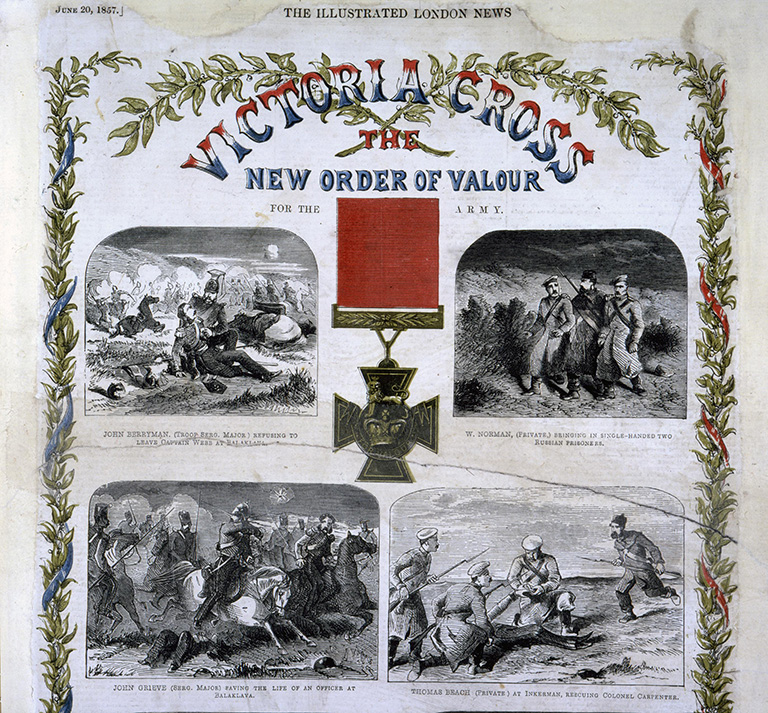
These records in series WO 373 are recommendations for military honours and awards for gallantry or distinguished service between 1935 and 1990, they are not campaign medals. They cover recommendations for awards to:
- British Army personnel
- dominions armies personnel
This collection also contains details of:
- some awards to members of the Royal Navy, Royal Marines and Royal Air Force
- decorations exchanged between British and Allied armies
The recommendations were made for various reasons including:
- gallantry in the face of the enemy
- ‘meritorious service’ (that is, not in the face of the enemy)
- distinguished service
How do I search the records?
You can search the records in Discovery, our catalogue, by filling in the form below.
You do not need to fill out every field to search these records.
What information do the records contain?
Each recommendation provides a detailed summary of the action or deed carried out by the person who earned the award. For some records the date will refer to the date of announcement in the London Gazette; for others it refers to the date of the action or deed which earned the award.
The collection includes recommendations for the following awards, presented in order of precedence (descriptions based on the system in force before 1993):
Victoria Cross
The Victoria Cross (VC) is the highest award available to the armed forces for gallantry in action with the enemy. All ranks are eligible.
George Cross
The George Cross (GC) is the highest civilian award for gallantry. It may be awarded to members of the armed forces, irrespective of rank, for acts of gallantry other than in action with the enemy (for example, bomb disposal, rescue from minefields and so on).
Most Honourable Order of the Bath (Military Division)
The three classes, Knight Grand Cross (GCB), Knight Commander (KCB) and Companion (CB) were available to recognise outstanding services by senior officers, generally major-general or above.
Most Excellent Order of the British Empire (Military Division)
The five classes, Knight Grand Cross (GBE), Knight Commander (KBE), Commander (CBE), Officer (OBE) and Member (MBE) are awarded for meritorious service. A number of awards of OBE and MBE were made for gallantry ‘not in the face of the enemy’ (for example, bomb disposal and so on) and ranked below the George Medal.
Distinguished Service Order
The Distinguished Service Order (DSO) was awarded to commissioned officers for distinguished service, normally in positions of command but also, and much less frequently, for individual acts of gallantry.
Indian Order of Merit
Awarded for gallantry in battle displayed by members of the Indian Army. The Indian Distinguished Service Medal is awarded to Indian citizens in the forces for distinguished service.
Royal Red Cross
Available in two classes, Member (RRC) and Associate (ARRC) and is restricted to the Nursing Services of the armed forces. Award of the RRC is to more senior officers.
Military Cross
The Military Cross (MC) was awarded to officers for acts of gallantry during active operations against the enemy on land. In 1931 the award was extended to Royal Air Force personnel for gallantry on the ground.
Distinguished Flying Cross
The Distinguished Flying Cross (DFC) may be awarded to all ranks for courage or devotion to duty while flying in active service against the enemy.
Distinguished Conduct Medal (DCM)
Awarded to warrant and non-commissioned ranks for gallantry in action against the enemy.
Burma Gallantry Medal
Awarded to the Governor’s Commissioned Officers, Non-Commissioned Officers and other ranks of the Burma military, frontier and military police forces for acts of personal bravery in peace or on active service.
George Medal
The George Medal (GM) is the second highest civilian award for gallantry, ranking below the George Cross. It may be awarded to members of the armed forces, irrespective of rank, for acts of gallantry other than in action with the enemy (for example, bomb disposal).
Military Medal
The Military Medal (MM) was awarded to warrant and non-commissioned ranks for gallantry in action against the enemy. It ranked below the Distinguished Conduct Medal.
British Empire Medal
The British Empire Medal (BEM) was awarded to ranks below warrant officer for the same services as OBE and MBE.
Mention in Despatches
Commanders-in-Chief in the field submitted periodical lists of officers and soldiers who were ‘mentioned in despatches’. Award of a Mention ranked below MC or MM and could be for gallantry in action or for a wide range of services on and off the battlefield.
Foreign Awards to British recipients
Since the Second World War a significant number of British Army personnel have been granted an award for gallantry or meritorious service by a foreign nation. Many of these awards were for service alongside foreign troops or for service in places where there was little military presence.
The easiest way to search for such records is to do so by the name of recipient only.
A typical example
Avtar Singh was recommended for the Military Cross. This was approved and details were published in the London Gazette of 13 July 1945. See Avtar Singh’s recommendation below.
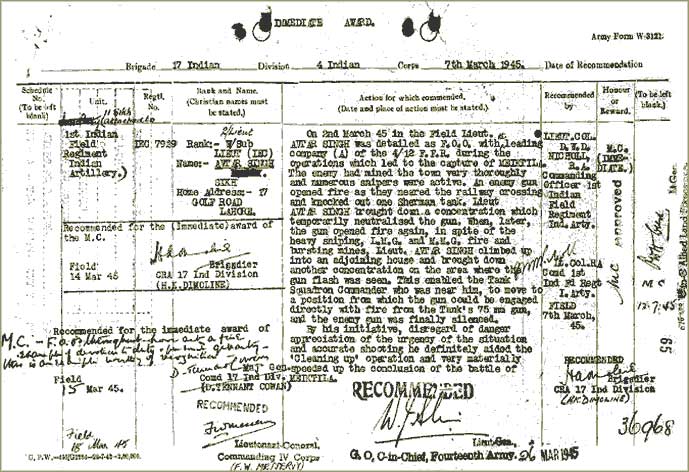
Recommendation of Avtar Singh for the Military Cross (Army Form W3121) (TNA reference: WO 373/40/39)
Very often you will find the army form ‘W3121’, although other forms were also used.
The ‘miscellaneous images’ associated with each piece do not contain recommendations, but are related material. They appear to be paperwork created as part of the administrative process associated with awarding honours.
Why can’t I find what I’m looking for?
Only a few recommendations for Mentions in Despatches and the Most Honourable Order of the Bath have survived.
Prior to 1979 only the Victoria Cross and George Cross or a Mention in Despatches could be awarded posthumously.
A very small number of recommendations for honours and awards might not be found under a search by the name. It was not possible to index all of the series by name, because the original documents are quite complex.
If you can’t find an entry here, you may want to browse the entire series of recommendations for honours and awards (WO 373) by date order.
You should also be aware that in some cases the record will consist only of listings. This is where the person did not receive the award or the details of the circumstances have not survived (these particular documents may be downloaded free of charge).
1. Why use this guide?
You should use this guide for advice on how to find records at The National Archives created by and relating to the Privy Council, a group of advisers to the monarch that emerged during the middle ages. These records provide insights into the policies and day-to-day problems and issues of government between the 14th and 20th centuries, covering a broad range of affairs, including:
- law and order
- trade and industry
- colonial policy
- naval and military policy
- education and public health
Privy Council papers have been subject to losses and dispersal. Many Privy Council papers were treated as private papers by the clerks of the Council, with the result that survival may occur amongst private collections held outside The National Archives. Some earlier papers were destroyed in a fire in 1698.
Though there is a specific department for Privy Council records at The National Archives (department code PC), many Privy Council papers, and papers related to or sent to the Council, can be found in other departments, most notably in state papers (department code SP), both foreign and domestic.
This guide gives advice on the various series of records in which Privy Council papers can be found and how to search for them.
2. Early records 1386-1540
The earliest Privy Council records date from 1386, when it was known as the King’s Council. Many surviving pre-1540 records relating to the Privy Council and its predecessor can be found within the following departments and record series:
- in records of the Privy Seal Office: PSO 1
- in records of Chancery: C 49
- in records of the Exchequer: E 28, E 30, E 39, E 175, E 364
Most of the early Privy Council records can be found in the British Library.
There is a register of Privy Council papers 1392-1393 in JF Baldwin’s book, see Further reading, below. See also Published finding aids and resources, below.
3. Privy Council correspondence 1481-1971
3.1 Main record series
The most significant record series for Privy Council correspondence is PC 1 (1481-1946 but mostly post-1700).
Privy Council correspondence can also be found in:
- PC 6 (1660-1900)
- PC 7 (1825-1952)
- PC 8 (1860-1971; indexes in PC 9)
- PC 12 (1898-1949; indexes for 1860 onwards in PC 9)
Transcripts of correspondence to and from the Privy Council can be found in PC 2.
3.2 Other record series
Correspondence between the Privy Council and other government departments can be found in some of the records of those departments. Below are listed some of the most significant record series of this kind:
- T 9 (1793-1922, Treasury out-letters to the Privy Council)
- SP 45 and SP 46 (1696-1752, Privy Council minutes, including Council warrants, letters and memoranda)
- HO (various Home Office record series; for more details see Subject areas, below)
3.3 Subject areas
A huge range of subjects are covered within Privy Council correspondence. You can search for specific subject areas through our catalogue. Search using any or all of the record series listed in this section of the guide, and a keyword relevant to your subject.
Series PC 1 is split into dozens of sub series, each covering a discrete subject area. The sub series can be viewed in our catalogue. For more information on subjects covered and the kinds of documents you can find in PC 1, see the series description.
Below is an overview, along with some significant examples, of some of the subjects covered in Privy Council correspondence. Some or all of the relevant record series are listed in each case:
- Defence and law and order
PC 1
For example, during the War of American Independence, the French Revolutionary War and the Napoleonic Wars - Colonial policy and affairs
PC 1
Particularly the American and West Indian colonies. An index to PC 1/46/1-PC 1/57/85B can be found in Volume 6 of the Acts of the Privy Council Colonial series – see Published finding aids and resources, below) - Foreign affairs
PC 1
Particularly the French Revolution - Scotland, Ireland, the Channel Islands and the Isle of Man
PC 1, PC 6, PC 8, HO 98 and HO 99 - Ecclesiastical policy
PC 1
Including reports of recusancy and returns of papists - Military and naval affairs
PC 1, PC 6
Including militia returns and petitions for relief and maintenance from the widows of army and naval officers - Trade and financial policy
PC 1
Including trading companies, the regulation of smuggling, war embargoes and the coinage, the affairs of the East India Company and reports from the Board of Trade - Convicts, criminals and prisons
PC 1/67-92, PC 8, HO 11, HO 13, HO 17, HO 18, HO 42, HO 44, HO 45 and HO 145 - Royal ceremonial and state occasions
PC 1, PC 8 - Local government
PC 1, PC 8, PC 12
Including charters of incorporation
4. Privy Council registers 1540-1964
Privy Council registers are found in series PC 2. The Privy Council began to keep its own register before 1540 but the earliest surviving registers date from that year. The registers can be supplemented, from 1670 to 1928, by surviving minutes in PC 4 which include items of business which did not necessarily result in orders or other action.
Each register contains its own subject index. There are also subject indexes compiled in the 1840s for 1628-1645 and 1660-1714, and these are bound in the relevant register. There is a draft copy of the subject index for 1660-1714 in the reading rooms at The National Archives in Kew.
There are transcripts of the registers for 1631-1636, allowing you to bypass the demands of deciphering the seventeeth century handwriting of the originals. The transcripts can be found in Z BOX 1/41-45.
4.1 What can you find in the registers?
The registers are arranged by reign and date. Most include:
- minutes of proceedings
- orders
- some texts of proclamations
- reports of privy council committees
- lists of members of the Privy Council and occasionally lists of the membership of its committees with transcripts of official oaths
Some include:
- maps (particularly from the 1890s)
- revised King’s regulations and Admiralty instructions issued by order in Council
- petitions to the Council, often referred to in relation to actions taken as a result of them; they are not usually fully transcribed
- transcripts of outgoing letters and warrants
It should be noted that in judicial appeals not all final decisions were necessarily recorded in the register.
4.2 Missing registers
There are no registers for some date ranges, though some of the gaps can be filled using alternative sources, including the collections in the British Library. See table below for details:
| Missing date range | Alternative source |
|---|---|
| 10 May 1545 to 28 January 1547 | British Library (reference BL Add Mss 5476) |
| June 1582 to February 1586 | None |
| 1 January 1602 to 1 May 1613 | None |
| 30 August 1645 to 3 May 1649 (the registers are blank during the Civil War period) | Records of the Council of State in the Interregnum are in SP 18, SP 25, SP 26 and SP 27 |
5. Legislative functions
The Privy Council is responsible for the issue of proclamations, Orders in Council and statutory instruments. References can be found in the registers, but this is not necessarily the best place to look and the series listed below may prove more useful.
5.1 Royal proclamations
Royal proclamations, often referred to simply as proclamations, are formal announcements made by the King or Queen and vary greatly in nature, from declarations of war or states of emergency, to the summoning or dissolution of Parliament. They were, also, declarations of law.
These proclamations were usually issued with the agreement of the Privy Council and can therefore be found in Privy Council papers. You can find them and documents related to them within the following record series:
- SP 45 includes draft proclamations for consideration by the Privy Council 1625-1804 and 1706-1741
- PC 2 includes texts of proclamations in full
- C 66 includes the enrolments of proclamations
- C 82 and C 83
- SP 12 and SP 14 include collections of original printed proclamations
5.2 Statutory instruments and Orders in Council
The Crown, government ministers and other bodies are often given the power to make laws through a process known as delegated or secondary legislation. This legislation is expressed in the form of statutory instruments (known as statutory rules and orders before 1948).
Many statutory instruments are recorded in published works, allowing you to bypass the need to consult original documents at The National Archives. For more details see the Published finding aids and resources section, below.
From 1893 statutory rules and orders were classified in the same way as acts of parliament, as ‘public’ or ‘local’ and ‘personal’ or ‘private’. ‘Local’ statutory rules and orders and statutory instruments are not published in the annual volumes of rules, orders and statutory instruments (see Published finding aids and resources, below); surviving rules and orders and instruments from 1922 are in the series TS 37. If you do not know the year and number you need to use the registers in TS 76.
Orders in Council are a form of statutory instrument, made by the sovereign with the advice of the Privy Council. These are published in the same way as statutory instruments, and can be found in the following record series:
For the earlier period you should also search the State Papers (SP). For the later period they may be found in the series of the originating government department; try searching for ‘Order in Council’ within the relevant series. If you are unsure of whether the Order originated from the Privy Council or another department you can check the registers in TS 76 for 1894 to 1998. The registers also allow you to trace the responsible authority, so you can narrow your search by government department.
Orders in Council are also published in the London Gazette, from 1665, which contains a subject index from 1848, available online at The Gazette website and in ZJ 1.
6. Judicial Committee of the Privy Council: Appeals
Digitised texts of Privy Council decisions can be found on the BAILII website.
The British Library holds an incomplete set of the full Printed Papers.
You can find related records in PC2 and PCAP – read their series descriptions to find out what types of records are within these series.
For more recent cases (after approximately 1999) visit the Judicial Committee website.
7. Background information
Medieval in origin, the Privy Council was at its apogee during the 16th and early 17th centuries. Originally known as the King’s Council, its purpose was to serve as a group of advisers to the reigning King or Queen. The group varied in size and composition over the years but generally consisted of the chief ministers of state, a few bishops, secular peers and senior royal household officials.
As well as its advisory role, it served judicial and administrative functions. Its jurisdiction covered offences against the king’s person or property and appeals from petitioners, and its authority was expressed through the conciliar courts (for example Star Chamber) until the mid 17th century. The judicial work of the Privy Council in appeals after 1834 can be found in the records of the Judicial Committee of the Privy Council (PCAP series).
8. Published finding aids and resources
The Ames Foundation provides an online resource for Appeals to the Privy Council from the American colonies 1680-1775. This includes relevant digitised records from:
- Privy Council Correspondence (PC 1) and the Privy Council Registers (PC 2)
- pages from the printed volumes
- Acts of the Colonial series
- printed individual appeal cases
Of the published works listed below, some provide references to records of Privy Council at The National Archives, whilst others provide reproductions of the records themselves.
8.1 Registers
Entries in the Privy Council register can be traced using:
- Privy Council of England, Proceedings and Ordinances, 10 Richard II-33 Henry VII (1386-1542), edited by Sir Harris Nicolas, 7 volumes (Record Commission, 1834-1837)
- Acts of the Privy Council of England, 1542-1631, ed JR Dasent, EG Atkinson, JV Lyle, RF Monger and PA Penfold, 45 volumes (London, 1890-1964). View online via British History Online
Privy Council registers for 1637 to 1645 have been copied in the following published work:
- Privy Council registers preserved in the Public Record Office reproduced in facsimile : 1 June, 1637-[August, 1645] 12 volumes (London, 1967-1968)
8.2 Royal proclamations
For modern printed texts of proclamations, see PL Hughes and JF Larkin, eds, Tudor Royal Proclamations, 1485-1605 (Yale, 1964, 1969), and Stuart Royal Proclamations, 1603-1646 (Oxford, 1973, 1983).
8.3 Statutory instruments
Annual editions of Statutory Rules and Orders are published from 1890. From 1987 statutory instruments are published on the Legislation website. Most of the publications below are available in The National Archives Library.
1671 onwards
Table of Government Orders
1665-1890
London Gazette on The Gazette website (the original gazettes are in record series ZJ 1)
1890 onwards
The Index of Statutory Rules and Orders and Statutory Instruments …, (this notes instruments in force)
1890-1949
Annual Volumes of Statutory Rules and Orders
1948-1986
Data-sets of Statutory Instruments, legislation.gov.uk
1949 onwards
Annual Volumes of Statutory Instruments; from 1980 unpublished SIs are noted
1951-1965
Guide to Government Orders: indexing SR and Os and S Is in force 31 December annual volumes (London, 1952-1961)
1962-1995
Index to Government Orders annual volumes (London, 1963-1995)
9. Further reading
ER Adair, The sources for the history of the Council in the 16th and 17th centuries (Historical Association, 1924)
JF Baldwin, The King’s Council in England during the middle ages (Oxford, 1913)
Catalogue of British Official Publications not published by HMSO (Chadwyck Healy, annually)
GR Elton, The sources of history, England 1200-1640 (London, 1969)