1.Why use this guide?
This guide will help you to find UK copyright records held at The National Archives. Among these records is one of the great British photography collections of the Victorian and Edwardian eras, with well over 100,000 individual images. There is also a huge and wonderful collection of British branding and advertising images from the late 19th and early 20th centuries, as well as records of the copyright protection of published books and musical scores.
The primary sets of copyright records held here are those originally held by:
- The Stationers’ Company 1842-1924 (but mostly up to 1912)
- The Stationery Office 1887-1955 (government publications only)
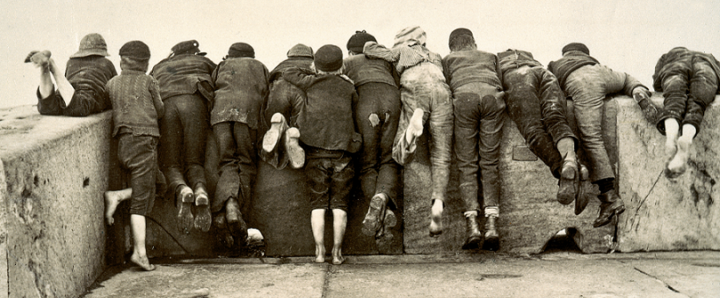
This photograph is among the tens of thousands of photographs registered for copyright and now held at The National Archives. The photograph was registered in 1892 (catalogue reference COPY 1/408/127).
These records include:
- details of literary and commercial books registered for copyright (1842-1912), including, in some cases, a copy of the title page of the book and the date of its first publication
- details of photographs, advertisement artwork, paintings and drawings registered for copyright (1862-1912), including, in many cases, reproductions or versions of the image
- details of dramatic and musical works registered for copyright
The records do not include:
- whole published works submitted as part of the copyright process – see the section on Copyright libraries for details of institutions which may hold these
- Copyright records and images from before 1842 or, in the main, after 1912 – see The Stationers’ Company Library and Archives for these

This image was registered for copyright in 1911 and is among the many commercial artworks held in our collection (catalogue reference COPY 1/302).
To view records referred to in this guide you will either need to visit The National Archives or order digital or paper copies to be sent to you (£). The vast majority of the records are not available to view online. However, there is a good selection of photographs, artwork and advertising from this collection available to preview in our Image Library.
Watch our Spotlight On: Copyright Office video for a brief introduction to copyright records at The National Archives.
2.What are these records?
Our copyright records come from two very distinct branches of government and make up two very different collections – it’s the records of the Stationers’ Company where you will find the photographs and artworks.
2.1 Copyright records of the Stationers’ Company 1842-1924 (but mostly up to 1912)
Between 1554 and 1924 individuals and businesses could apply to secure copyright by submitting an application for registration to the Stationers’ Company.
The copyright records held at The National Archives are those that were registered under the terms of a succession of copyright acts which began in 1842, including the following:
- The Copyright Act 1842
The key piece of legislation for records held here. The Act fixed the term of copyright at either 42 years or the life of the author plus seven years, whichever proved longer. The Act decreed that a copyright registry would be kept at Stationers’ Hall, the home of the Stationers’ Company. It covered only literary and commercial works.
- The International Copyright Acts of 1844, 1852, 1875 and 1886
Registration of foreign authors’ works began at Stationers’ Hall in 1846, in accordance with the 1844 Act.
- The Fine Arts Copyright Act 1862
This extended the terms of the 1842 Copyright Act to paintings, drawings and photographs. This Act conferred copyright protection for the life of the author plus seven years.
- The Imperial Copyright Act 1911
The Imperial Copyright Act of 1911 repealed the 1842 Act. The 1911 Act gave protection to all copyrighted material without the requirement for registration. The statutory registers at Stationers’ Hall therefore closed on 30 June 1912, except for those which recorded works first published in the self-governing dominions (for example, Canada and Australia). These continued to be registered for each dominion until it adopted the Act and such registrations continued until 31 December 1923, when our copyright records of the Stationers’ Company come to a close. The Act also required a copy of every book published in the United Kingdom to be deposited at the British Library (then part of the British Museum).
After the final expiration of statutory registration in 1924, the Stationers’ Company set up a new, voluntary register which was maintained until April 2000 (see section 7.1). After the voluntary register closed no further registrations were taken.
Throughout the period of copyright registration the procedure was often disregarded, partly because of the fees for registration but more importantly to avoid the obligation to provide complimentary copies for copyright libraries.
A wide range of images were registered for copyright protection under these Acts. Some examples include:
- Photographs of people and places
- Press photographs
- Paintings and illustrations
- Advertisements
- Artwork for product packaging or branding
- Designs for stationery and greetings cards
2.2 Copyright records of the Stationery Office 1887-1955
The Stationery Office is responsible for the copyright, printing, publication and sale of government publications.
Most of the Stationery Office records held at The National Archives are those of the working life of the office itself, as opposed to copyright records per se. However, there are some records that make reference to specific works of copyright (see section 6).
3. The record types and their content
The process of registration required the copyright proprietor to fill out an Entry Form with a description of the work and their personal details. This information was then entered into the Copyright Registers. We hold both the forms and registers here.
3.1 Entry forms
Entry forms often include copies of the title pages of books, or copies of the photographs or artwork being registered.
The entry forms include the following information:
- dates of registration or first publication
- titles of publications or descriptions of the works supplied
- details of the copyright proprietor and the creator of the work (the author, photographer or artist)
- name of publisher and place of publication (for published works)
All entry forms are held in series COPY 1 (see section 4).
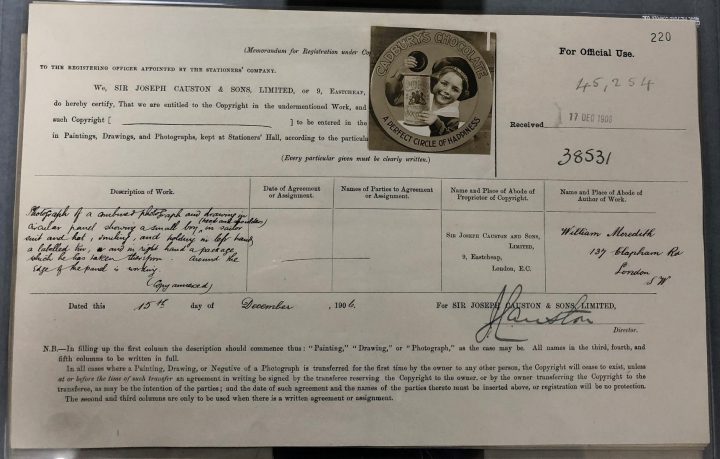
This entry form is dated 15 December 1906 and has a copy of the image being registered attached to the form. The image is a combined photograph and drawing created for an advertisement for Cadbury’s Chocolate. (catalogue reference COPY 1/504/220).
3.2 Copyright registers
Copyright Registers include the same details as those recorded in the entry forms, as listed above.
There are original indexes for the registers.
There are separate registers for the various categories of works:
- ‘Books, Literary’ registers, which covered:
- published plays and fiction
- pamphlets
- research guides of a technical nature
- printed music
- prints
- games
- advertising matter
- ‘Books, Commercial’ registers, which covered:
- labels
- trade marks
- catalogues
- advertising matter
- ‘Paintings and Drawings’ registers, split into ‘artistic’ and ‘commercial’ works
- ‘Photographs’ registers
- ‘Dramatic and Musical’ registers
- ‘General Series’ registers which covered all the above fine arts entries from 1862 to 1883
- Foreign entries and registers
The registers and indexes are held in series COPY 3 (see section 5).
3.3 Label Books
Label Books 1873-1912 are scrap books which mostly duplicate items in COPY 1 – they contain pasted-up labels, cards, commercial advertisements and the like.
Label books are found in record series COPY 2. To find an entry you must select a year range and leaf through the original book itself.
4. How to find entry forms (including copies of photographs and artwork)
All entry forms are held in series COPY 1. Photographs, prints and other representations of registered works come attached to the entry forms and their existence is usually highlighted in the catalogue description.
You can use our online catalogue to search by keyword and year in COPY 1 for entry forms of the following:
- Most of the photographs and artworks registered for copyright from 1862-1882
- All of the photographs registered for copyright from 1883-1912
Your keywords can be of the following types:
- description of the image (such as the name of the person, place, subject or theme depicted)
- name of the copyright proprietor (owner), photographer or artist
- address of the proprietor (owner), photographer or artist
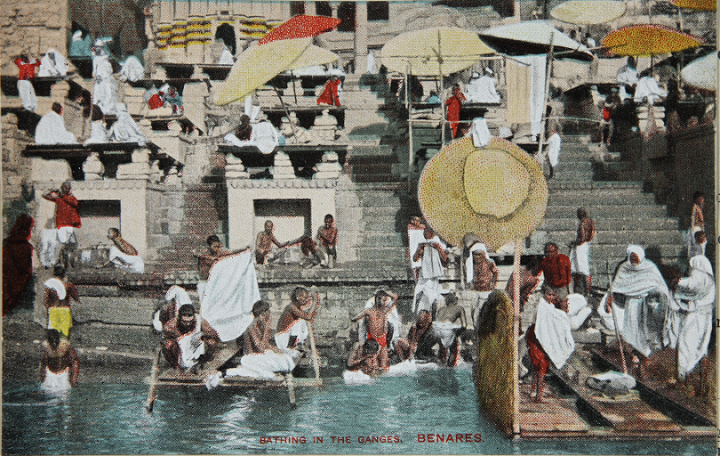
This photograph of people bathing in the Ganges in Benares was registered in 1907 in the name of Walter Meakin. It’s listed in our catalogue as a photograph and as a ‘coloured postcard’ (catalogue reference COPY 1/514/30).
To find the reference for the photograph shown above in our catalogue you could search in COPY 1 with any of the following: ‘Ganges’, ‘Benares’, ‘Walter Meakin’ or even ‘coloured postcard’, though for the latter you would have a lot of results to pick through.
Not all entry forms have a copy of the work attached. If you are searching specifically for copies of works, check the record descriptions carefully as they usually indicate whether or not a copy is attached with a phrase such as ‘copy annexed’ or ‘no copy annexed’.
If you can’t find an entry form using keywords you can try browsing COPY 1 by date and type of entry. However, as all works other than photographs and artworks are not listed in our catalogue in individual detail, including books, musicals and plays, you will need to know the year and probably the month of registration to have a hope of finding anything.
Also bear in mind that descriptions are written in the language common at the time. If you cannot find what you are looking for, try considering the language used to develop different keywords for your search.
5. How to find entries in copyright registers
All registers are held in record series COPY 3.
The copyright registers in the COPY 3 series are arranged chronologically and are not searchable by keyword in our online catalogue. There are, however, original indexes to some of the registers (listed in the tables below) arranged alphabetically by the name of the copyright proprietor. You can use the paper indexes to find a volume and page number for the entry in the respective register – you will need to visit us to do so.
When a register entry is followed by the words ‘Copy Annexed’, it means that a copy of the work is attached to the original entry form in COPY 1.
5.1 Books registers
Assignments, up to and including 2 July 1883, are included in the registers with the original entries. They are included separately at the end of each volume.
| Register types | References for registers | References for indexes | References for assignments, registers and indexes |
|---|---|---|---|
| Books, Literary and Commercial 1842-1883 | COPY 3/1-29 | COPY 3/81, COPY 3/91 | COPY 3/1-29, COPY 3/101-102 |
| Books, Literary 1883-1924 | COPY 3/30-62 | COPY 3/82-90 | COPY 3/97-100, COPY 3/103 |
| Books, Commercial 1883-1912 | COPY 3/63-80 | COPY 3/92-96 | COPY 3/97-100, COPY 3/103 |
5.2 Fine arts registers (including photographs, paintings and drawings)
The registers in this division include both original entries and assignments of all paintings, drawings and photographs registered.
From 1862 to 1883 all the fine arts entries are in a ‘General Series’ of registers.
| Register types | References for registers | References for indexes |
|---|---|---|
| Paintings, Drawings & Photographs 1862-1883 in ‘General series’ registers | COPY 3/104-118 | COPY 3/200-203 |
| Paintings & Drawings 1883-1912 | COPY 3/119-163 | COPY 3/204-212 |
| Photographs 1883 – 1912 | COPY 3/164-199 | COPY 3/213-220 |
| Dramatic & Musical 1873-1922 | COPY 3/221-224 | COPY 3/225-226 |
| Paintings and Drawings: Artistic 1906-1912 | COPY 3/149-152 | |
| Paintings & Drawings: Commercial 1906-1912 | COPY 3/153-163 |
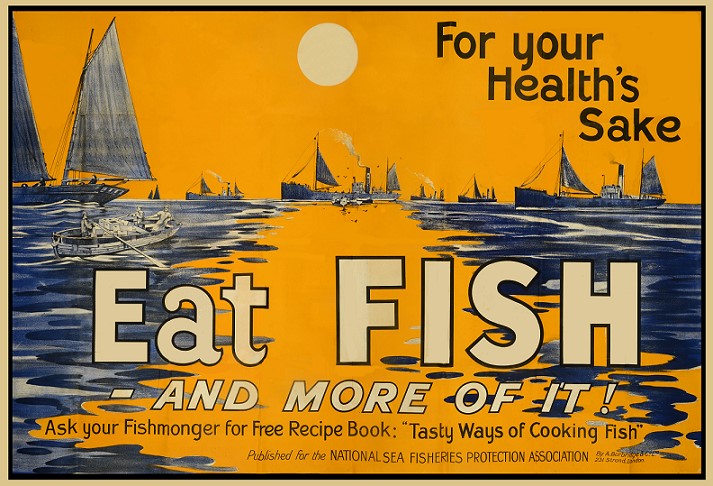
The details of the copyright registration of this image, and many others commercial artworks, appear in the ‘Paintings and Drawings: Commercial” registers. The image itself, registered in 1909, is held in COPY 1 (catalogue reference COPY 1/288).
5.3 Foreign entries and registers
Between 1847 and 1854 foreign copyright entries were made in the General Series of Registry Books, but these are indexed separately.
After 1883 the Foreign Register is divided into separate divisions such as books, music or prints. Before 1883 assignments for books, music, prints, sculpture and so on are included in the General Series, at the end of each volume.
| Register types | References for registers | References for indexes |
|---|---|---|
| Foreign Entries 1846-1912 (inc. in General) | COPY 3/4-7 | COPY 3/251-256 |
| Foreign Representations Dramatic 1883-1912 | COPY 3/221, 223, 224, 250 | |
| Foreign Sculpture, Paintings & Drawings 1883-1888 | COPY 3/248-249 | |
| Foreign Prints 1883-1888 | COPY 3/247 | |
| Foreign Books 1883-1891 | COPY 3/241-242 |
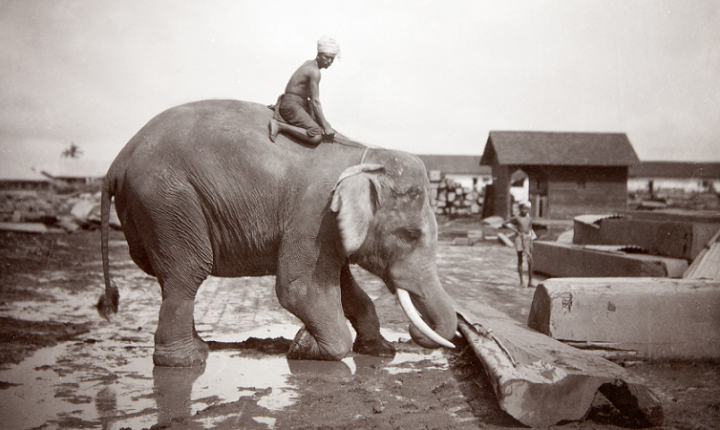
One of the foreign entries in our copyright records, registered in 1907. The address of the copyright owner of this photograph was in Rangoon in Burma, now known as Myanmar (catalogue reference COPY 1/514/560).
Note: Domestic Registers which continue beyond 1912 do so as Registers for Dominions (principally Canadian) works.
6. How to find Stationery Office records
All Stationery Office records are held in the STAT department.
Most of the Stationery Office records held at The National Archives are those of the working life of the office itself, as opposed to copyright records per se. However, the following records cover copyright issues and specific works of copyright:
- out-letters from 1888-1955 in STAT 4
- registers of in-letters from 1888-1921 in STAT 5
- files of copyright correspondence from 1887-1955 in STAT 14/27–255
7. Records and resources held elsewhere
7.1 Records of the Stationers’ Company held at Stationers’ Hall
For copyright records from between 1554 and 1842 and voluntary registrations from 1912 until April 2000, you should visit The Stationers’ Company archive. Please note that these records do not include copies of registered works.
To find individual records from 1710 to 1842 you need to consult the original registers at the archive itself and it’s essential to know the date of publication as no reliable index exists (there are less than perfect indexes up to 1750 and no indexes at all after 1750). For entries up to 1709 you can consult the transcripts in the following publications, though they are available only in specialist and academic libraries:
- A Transcript of the Registers of the Company of Stationers of London 1554-1640, ed Edward Arber (1875-1894)
- A Transcript of the Registers of the Worshipful Company of Stationers from 1640 to 1708 (1709), ed Briscoe Eyre (1913-1914)
The Stationers’ Company holds records of voluntary registration from 1912 to 2000. These records consist only of registers and do not include copies of registered works.
7.2 Copyright libraries
The following copyright libraries hold complimentary copies of publications:
- The British Library
- The Bodleian Library in Oxford
- The Cambridge University Library
- National Library of Scotland
- The library of Trinity College Dublin
- National Library of Wales
8. Further reading
The following publications are available at The National Archives’ library in Kew.
Sidney Hodgson, The Worshipful Company of Stationers and Newspaper Makers: Archives and Portraits (Stationers’ Hall, 1953)
Hugh Barty-King, Her Majesty’s Stationery Office: the story of the first 200 years, 1786-1986 (H.M.S.O., 1986)
Robin Myers, The Stationers’ Company Archive: An Account of the Records 1554-1984 (St Paul’s Bibliographies, 1990)
1. Why use this guide?
Use this guide for advice on locating records at The National Archives of emigration and of individual emigrants from Britain. Of the millions of people who have emigrated from Britain over the last four hundred years, the largest number have gone to the USA, Canada, Australia, New Zealand and South Africa. Records of British migrants to these countries form the primary focus for this guide.
The guide provides an overview of the records, but is not a comprehensive list of all sources. Some records are available online but many are not. To make use of the records covered in sections 5 to 11 you will need to visit us or pay for copies to be sent to you. To request copies you will need to identify document references and this will not be possible in some cases without first consulting printed and published resources available at our building in Kew.
You may also be interested in our webinar on emigration.
2. What we hold
Our records are the records sent to us for permanent preservation by the central government of the United Kingdom. Most of the records related to emigration are policy and administrative documents, rather than records of emigrants themselves. As we hold relatively few records of people leaving Britain, you are more likely to find records of migrants in their destination country (see section 3). There are, nonetheless, large numbers of records in our collection in which you can identify individual emigrants, but there is no single index for them so tracking them down means looking in a variety of different record series.
The records of emigrants divide into two broad types: records of the journeys that emigrants made and of their lives once settled overseas. Records of British emigrants once they were settled abroad were much more likely to have been kept if they moved to a British colony. The bulk of the records we hold for British emigration were originally kept by the government departments concerned with life in the colonies.
The government departments, past and present, most concerned with matters of emigration are the following (each with its National Archives department code in brackets):
3. Records of emigrants in their destination countries
Of course, emigrants from the UK become immigrants in the countries they travel to. In general, you are more likely to find a record of a person, after they emigrate, in the destination country.
The following libraries and record offices in popular destination countries for UK emigrants have much material on immigration:
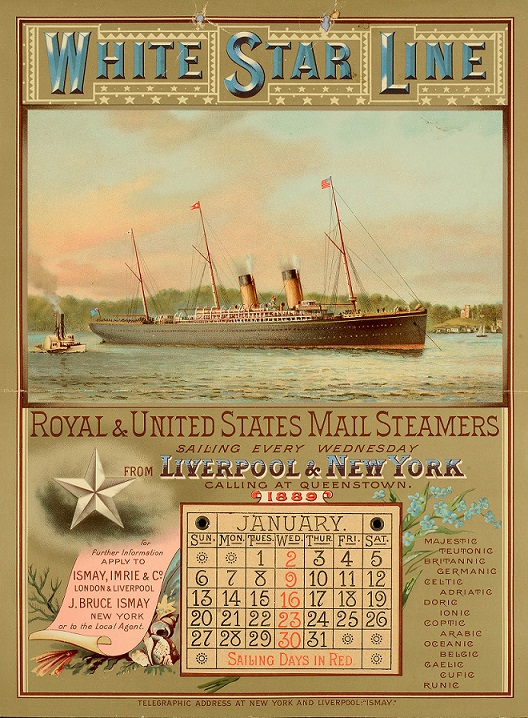
An advertisement from 1889 for the White Star Line (catalogue reference COPY 1/930). White Star Line ships transported tens of thousands of British emigrants to Canada and the United States in the late 19th and early 20th centuries. Buy a high-quality reproduction of this image through our Image Library.
USA
Canada
Australia
- National Archives of Australia
- National Library of Australia
- State Library of New South Wales
- State Library Victoria
New Zealand
South Africa
Other significant collections of emigrant records are available through:
4. Online records
Most of our online records in this subject area are documents listing individual emigrants. If you cannot find who you are looking for in the records described in this section, your search is likely to become very much more complicated and will probably require consultation of original documents at The National Archives in Kew (see sections 5 to 11).
4.1 Outward passenger lists, 1890-1960
Search outward passenger lists on findmypast.co.uk (£) for lists of passengers leaving by ship from UK and Irish ports and travelling to places outside Europe and the Mediterranean Sea, including the USA, Canada, India, New Zealand and Australia.
The lists include citizens of other countries who travelled through the UK on their way to other destinations. Lists were not kept for every ship and some have been lost.
The information on any list can vary from the next but some of the details you may find on a list include:
- age at departure
- profession
- last address in the UK
- country of departure
- country of destination
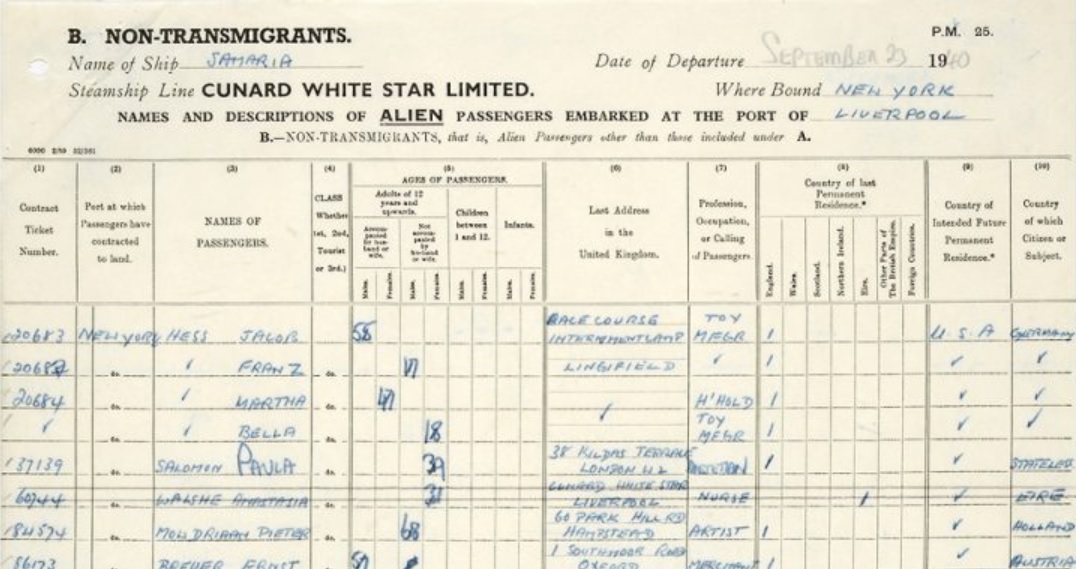
A cross section of a passenger list from 23 September 1940 for the RMS Samaria, bound for New York from Liverpool (catalogue reference BT 27/1557). This list shows passengers who were not British nationals.
4.2 Early emigration from Britain, 1636-1815
Search a variety of early emigration records, largely of emigrants to North America and the West Indies, covering intermittent year ranges between the 17th and early 19th centuries. These are records brought together from the Treasury, the Exchequer, the Colonial Office and the Audit Office, on findmypast.co.uk (£) including details of emigrants from Britain to:
- Canada 1815 and 1818-1822 (AO 3/144)
- America and the West Indies 1634-1638 and 1740-1761 (CO 1/8-9 and CO 324/55-56)
- North America and the West Indies, 1773-1775 (T 47/9-12)
4.3 Registers of travel to Europe, New England, Barbados and other colonies, 1573-1677
Search the Registers Of Licences To Pass Beyond The Seas 1573-1677 (E 157) on findmypast.co.uk (£) for records of soldiers leaving for the Low Countries (1613-1633), individuals travelling to Europe (1573-1677) and to Barbados, New England and other colonies (1634-1639 and 1677).
4.4 Emigration to Barbados, 1678-1680 and 1715
Search for details of emigrants from England, and later Britain, who settled in Barbados on findmypast.co.uk (£) within Colonial Office papers and correspondence (CO 1/44 and CO 28/16), which include a census of the white population in Barbados from 1715.
4.5 Immigrant Ancestors Project
The Immigrant Ancestors Project – sponsored by the Center for Family History and Genealogy at Brigham Young University – uses emigration records, including sources at The National Archives, to locate information about the birthplaces of immigrants in their native countries. Volunteers working with scholars and researchers at Brigham Young University are creating a database of millions of immigrants based on these emigration sources.
4.6 Migration to the New Worlds
The Adam Matthew website (£ institutional subscription required or free to view at The National Archives) includes a selection of National Archives records relating to emigrants and emigration to the New World, covering the period 1800 to 1924.
5. Passenger lists
Passenger lists are among the most accessible and straightforward of records documenting emigrant journeys. Our guide on records of passengers contains more information.
5.1 Outward passenger lists, 1890-1960
This is our more comprehensive set of passenger lists. They are held in record series BT 27 and are described in more detail in the ‘Online records’ section.
5.2 Registers of passenger lists, 1906 to 1951
Registers of passenger lists were arranged by port and kept by the Board of Trade. Before 1908 the registers relate only to the ports of Southampton, Bristol and Weymouth.
They provide the names of ships and the month of arrival and departure. After 1920 the precise date of arrival or departure is recorded.
The lists are held in record series BT 32. You can select documents by year range from this list of all BT 32 references.
5.3 Lists of passengers travelling within the Mediterranean, 1831-1834
We hold passenger lists of HM steam packets carrying passengers to, from and within the Mediterranean area between 1831 to 1834. Steam packets were steamships that departed from a port on a regular schedule.
The lists are in ADM 30/35.
6. Emigration to North America
This section covers records and record series specific to emigration to North America. For more general advice on colonial era documents for this region see our guide to records of American and West Indian colonies before 1782.
6.1 Lists of 17th-century emigrants
John C Hotten compiled Original lists of persons who went from great Britain to the American plantations 1600-1700 (London 1874) based on Colonial Office records, as well as the Registers of Licences to Pass beyond the Seas kept by the Exchequer (series E 157) for passengers requiring licences to travel to New England, Barbados, Maryland, Virginia and other colonies 1634-1639 and 1677.
See the ‘Online records’ section of this guide for advice on how to view the registers in series E 157.
6.2 Records of the Hudson’s Bay Company, 1667-1991
The Hudson’s Bay Company was founded in 1670. Its chief interests were originally the fur trade, exploration and settlement. After 1870, when its territory of Rupert’s Land was incorporated into the Dominion of Canada, its interests became more varied.
The Hudson’s Bay Company archives, covering 1667-1991, are held on microfilm at The National Archives in record series BH 1. The original Hudson Bay Company archives are held at the Archives of Manitoba, Canada. The records include names and information about settlers who emigrated to North America and worked for the company.
6.3 Records of the West New Jersey Society, 1675-1921
The West New Jersey Society records in TS 12, covering 1675 to 1921, relate to tracts of land in West and East New Jersey, Pennsylvania, New England and elsewhere, divided up as shares of the company. The records contain many names in the original correspondence, minute books, registers of shares, original deeds, and papers about claims.
6.4 Directory of Scottish settlers in North America
David Dobson’s Directory of Scottish settlers in North America 1625-1825 (Baltimore, 1984) draws on records in the Audit Office accounts (AO 3), Prince Edward Island original correspondence (CO 226/23), Home Office correspondence and papers, Scotland (HO 102) and the Treasury registers (T 47).
6.5 Records of the American Loyalist Claims Commission
Search for records of the American Loyalist Claims Commission in T 79.
There is an index to these records printed in Lists of the Records of the Treasury, the Paymaster General’s Office, the Exchequer and Audit Department and the Board of Trade to 1837 (Public Record Office Lists and Indexes No XLVI; London 1922) pp.105-110. A similar list of East Florida claims for compensation for territory ceded in 1783 to Spain is in the same volume, pp.95-97.
6.6 Records of emigrants to America, 1773-1775
Bernard Bailyn’s Voyagers to the West: Emigration from Britain to America on the Eve of the Revolution (I B Tauris, 1986), utilizes the registers kept by port customs officials of emigrants leaving for the New World – these register are held in T 47/9-12 and are available to view on Findmypast.co.uk (£) – see section 4.2.
They give a person’s name, age, occupation, reason for leaving the country, last place of residence, date of departure and destination.
6.7 Colonial Office correspondence
Colonial Office records on North America are mostly for colonies which later became part of Canada. Some of the records in the following record series contain names of people who emigrated. Click on the catalogue reference and browse the series by reference and date:
| Date range | Description of records | Catalogue reference |
|---|---|---|
| 1817-1851 | Emigration original correspondence. Includes letters from settlers or prospective settlers. | CO 384 |
| 1815-1833 | Emigration Entry books. | CO 385 |
| 1840-1876 | Land and Emigration Commission papers. Includes registers of births and deaths of emigrants at sea from 1854 to 1869 and lists of ships chartered from 1847 to 1875. | CO 386 |
| 1662-1872 | Original correspondence and entry books. Contain details of land grants and applications. | CO 323 CO 381 |
| 1816-1868 | British North America original correspondence. | CO 6 |
| 1633-1849 | General registers. | CO 326 |
| 1850-1863 | British North America emigration registers of correspondence. | CO 327 |
| 1864-1868 | British North America general registers of correspondence (including emigration). | CO 328 |
| 1872-1880 | British North America registers of out-letters. | CO 329 |
6.8 Records of the Treasury
Treasury correspondence and registers show that the department handled a considerable amount of colonial business, and contain references to British people in the colonies or planning to emigrate, with many references to North America.
Though many other series may contain references to and records of emigrants to North America, the following may prove most useful:
- The indexed entry books of royal warrants, 1667-1857 in T 52
- The order books, 1667-1831 in T 60
- Register kept by port customs officials of emigrants going from England, Wales and Scotland to North America, 1773-1776 in T 47/9-12
See our guide to Treasury Board letters and papers 1557-1920 for more information about how to search for Treasury records.
6.9 Passport registers and indexes, 1795-1948
For information about passport registers and indexes in FO 610 and FO 611, see our guide to passport records.
7. Emigration to Australia
See our guide on Criminal transportation for information about the records available on convicts transported to Australia.
Many of the record series referred to in this section refer to both convicts and settlers since, once in Australia, the two were often less distinct than when they set out. The National Archives holds no lists of passengers who sailed to Australia as ordinary emigrants until 1890.
| Date range | Description of records | Catalogue reference |
|---|---|---|
| 1784-1900 | New South Wales original correspondence, entry books and registers. These series all contain lists of names of emigrants, settlers and convicts | CO 202, CO 201, CO 360 and CO 369 |
| 1788-1859 | Home Office convicts, New South Wales and Tasmania papers. Contains a series of censuses of convicts which include the names of members of their families. See our Criminal transportation guide for more information | HO 10 |
| 1846-1851 | War office in-letters contain papers relating to Army pensioners encouraged to emigrate to New South Wales and to New Zealand | WO 1 |
| 1803-1857 | Correspondence, old series. Contains papers on measures for relief of poor pensioners and the encouragement of emigration | WO 43 |
| 1949-1950 | Dominions Office correspondence. Contains extensive information on post-war assisted passages to Australia and other colonies | DO 35/3366-3443 |
The website of The National Archives of Australia has more information about emigration to Australia. In addition, details of some 8.9 million free settlers to New South Wales, 1826-1922 can be searched and downloaded online at Ancestry.com.au (£).
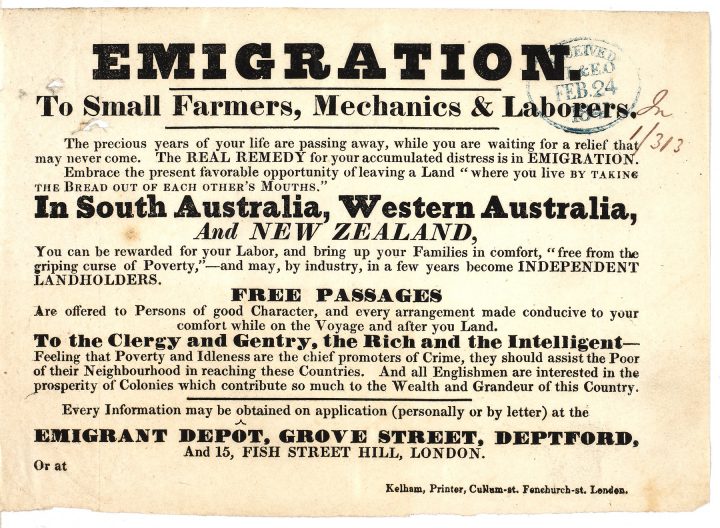
This notice dates from 1841 (catalogue reference CO 384/66). It was issued after the Poor Law Amendment Act of 1834 which stipulated that provision could be made for the emigration of the poor, with the cost being borne by the pauper’s home parish (see section 9).
8. Emigration to New Zealand
The first European settlement of New Zealand was around 1820. The New Zealand Company was formed in 1839 and incorporated in 1841 with power to buy, sell, settle and cultivate land in New Zealand, and details of British emigrants can be found in the company’s records, now held at The National Archives. It surrendered its charter in 1850 and was dissolved in 1858.
| Date range | Description of records | Catalogue reference |
|---|---|---|
| 1839-1858 | New Zealand Company original correspondence | CO 208 |
| 1839-1850 | Registers of cabin passengers emigrating | CO 208/269-272 |
| 1839-1850 | Applications for free passage | CO 208/273-274 (indexed in CO 208/275 |
| 1839-1850 | Applications for land, lists of landowners, lists of agents and surveyors, lists of German emigrants, and lists of maintained emigrants | CO 208/254-255 |
For further information see the Archives New Zealand website.
9. Pauper emigration
We hold records of the Poor Law Commission and related bodies. These records include material about pauper emigration under the terms of the Poor Law Amendment Act of 1834. The act stipulated that provision could be made for the emigration of the poor, with the cost being borne by the pauper’s home parish.
- Search Poor Law Union papers 1834-1900 in MH 12 using keywords like ‘emigration’, ‘emigrant’ or ‘emigrate’. Try adding words and phrases such as ‘lists of persons’, ‘children’ ‘Australia’, ‘New Zealand’, ‘Canada’ or ‘Quebec’.
These records include lists of paupers who were ‘seeking to emigrate’ as well as those of paupers who had already emigrated to the colonies.
Look for correspondence between the Poor Law authorities and the Colonial Land and Emigration Commissioners in:
Some of the correspondence of the Poor Law Commission and Board with other government departments and local government services relates to emigration:
- Use the registers of correspondence in MH 20 to locate items of correspondence in MH 19. The registers, as with the correspondence itself, are arranged by government department so to have an idea of where to look for records of emigration you will need to determine which departments the Poor Law Commission would be corresponding with on that subject – the departments listed in section 2 would be a good start.
10. Child emigration
Child emigration schemes operated in Britain from 1618 to 1967. About 150,000 children were sent to the British colonies and dominions during this time, with numbers peaking between the 1870s and 1914 when approximately 80,000 children were sent to Canada alone.
Many of them were pauper children, often in the care of voluntary organisations (in the mid-18th century around one in three of all paupers was under 16). The enormous strain on poor law authorities meant they could not find apprenticeships for all pauper children. The Poor Law Amendment Act 1850 provided a response, allowing Boards of Guardians to send children under 16 overseas for the first time. The majority of schemes began in 1870. Frequently it was the voluntary organisations that arranged for the child’s migration.
They were sent mainly to North America and Australia, but also Zimbabwe (Rhodesia), New Zealand, South Africa and the Caribbean.
An exhibition and website on child migration called On their own – Britain’s child migrants has been developed by the Merseyside Maritime Museum and the Australian National Maritime Museum.
10.1 Records of pauper children sent abroad
This notice dates from 1841 (catalogue reference CO 384/66). It was issued after the Poor Law Amendment Act of 1834 which stipulated that provision could be made for the emigration of the poor, with the cost being borne by the pauper’s home parish (see section 9).
We hold few emigration records for child paupers and those that we do hold tend to record only statistical information on the numbers of children sent overseas, though they sometimes include poor law union posters giving notice of the names and ages of children being sent abroad. See section 9 for advice on how to search for records of pauper emigrants, including children, in general.
Among the most detailed records we hold of this kind are the reports on pauper child emigrants resident in Canada, 1887 to 1892, held in MH 19/9. The reports comment on the children’s condition, health, character, schooling, frequency of church attendance, and each child’s view of their new homes. They cite the Poor Law Union or parish from which they were sent, as well as each child’s name, age and host’s name and address.
The following archives may provide a better chance of finding details of individual children:
- Registers and case files of child emigrants (subject to 100-year closure periods from the date of birth) within the records relating to Maria Rye and Annie Macpherson, who both championed child emigration, and to the work of Dr Barnardo’s, held by the University of Liverpool’s Department of Special Collections and Archives.
- Photographs of former Barnardo’s residents in Barnardo’s Photographic and Film Archive.
- Canadian government inspectors’ reports and statistical information regarding child migrants in Parliamentary Papers (institutional subscription required).
- Home Children’s record collections on Findmypast brings together Canadian records of child immigrants to Canada including searchable inspection reports and records of children sent to Canada by Boards of Guardians.
10.2 Children’s Overseas Reception Board, 1940-1944
In May 1940 the growing threat to the UK from both invasion and mass air attack led to offers of hospitality for British children from Australia, New Zealand, South Africa, Canada and the USA. About 11,000 children were evacuated overseas via private schemes before, on 7 June 1940, the creation of the Children’s Overseas Reception Board (CORB).
A total of 3,100 children were sent to Australia, Canada, New Zealand and South Africa under the CORB scheme between July and September 1940. Evacuation stopped on 17 September 1940 when SS City of Benares was torpedoed with the loss of 77 Canada-bound children on board. All future CORB sailings were cancelled, but the Board remained active until its disbandment four years later. Many CORB children returned to the UK after the hostilities to be reunited with their families.
Search our catalogue using the search box below by name for case histories of the CORB children evacuated overseas during the Second World War (DO 131).
Narrow your search by using quotation marks to find a person’s full name, such as ‘John Williams’
The majority of files were destroyed under statute in 1959 and those that remain are mostly administrative in nature. However, you can also find:
- case files relating to children in DO 131/94-105
- case files relating to the child escorts in DO 131/71-87
- a register of child applicants, searchable by name of child, in DO 131/106-113
Dominions Office policy files relating to the activities of the Board are in DO 35.
Contemporary newspapers in the destination countries provide accounts and photographs, especially of the arrival of evacuees in the summer of 1940. Additional records about child migrants may be held in the archives of the recipient countries (see section 3).
10.3 Home Office policy files on child emigration, 1908-1960
Before 1972 the Home Office was responsible for putting into effect various Acts relating to children.
Search the broader Home Office policy files in MH 102 for policy documents on child emigration. Most of these records relate to schemes between 1910 and 1960 set up by the UK, South Africa, Canada, New Zealand and Australia. They include initiatives by Dr Barnardo’s Homes, the Fairbridge Society, the Overseas Migration Board, and the Big Brother Movement. Some files are closed for 75 or 100 years but can be requested under the Freedom of Information Act.
Search for earlier records in Home Office registered papers in HO 45 and HO 144 using keyword phrases such as ‘children AND emigration’. The relevant documents are mainly policy and correspondence files relating to the emigration of children under the Children Act 1908. They include information about schemes for the emigration of children to Canada and Australia.
11. Other possible sources for records of emigration to the colonies
The work of the larger departments of central government inevitably involved issues of emigration from time to time. It is therefore worth searching among the records of some departments not primarily concerned with emigration. However, searching among these records will be speculative and time-consuming.
11.1 Treasury records, 17th and 18th centuries
The tentacles of the Treasury reach into the work of almost every other government department at some stage, so you can find almost every subject covered in its records.
Much colonial business was handled by the Treasury and its records contain references to people in or travelling to the colonies.
The best place to begin a Treasury records search is in the Treasury Board papers and in-letters kept in series T 1. For advice on locating these records read our guide to Treasury Board records. Alternatively, try browsing or searching by year in the following series:
Use the following calendars, available at our library in Kew, to locate Treasury documents (for original records in T 27, T 29, T 52, T 53, T 54, T 60 and T 99):
- Calendar of Treasury books 1660-1718, multiple volumes (London, 1904-1962)
- Calendar of Treasury books and papers 1729-1745, multiple volumes (London 1897-1903)
11.2 Audit Office records, 16th to 19th centuries
- References to the pensions and allowances paid to emigrants, American loyalists and others, 1779-1827, are among the Audit Office accounts in AO 1
- The names of some individual settlers, 1539-1886, are listed in the Audit Office accounts held in AO 3
11.3 Records of the Privy Council
The records of the Privy Council, an advisory body to the monarch, cover numerous matters relating to the colonies.
Privy Council registers include petitions and letters regarding people going to or already resident in English and British colonies. They are in PC 2 and are supplemented by the papers in PC 1. To find documents use the calendars in the Acts of the Privy Council of England, Colonial series, 1613-1783 (London, 1908-1912), together with all the register entries from 1613-1783
Plantation books, 1678-1806, include letters to colonial governors and other officials and warrants for the appointment of colonial councillors. They are in PC 5/1-16. To find documents use the calendars in the Acts of the Privy Council of England, Colonial series, 1613-1783 (London, 1908-1912)
11.4 Chancery records
The Court of Chancery presided over hundreds of thousands of civil dispute cases from the late 14th century onwards. For more in-depth advice on how to locate Chancery records read our guides to Chancery equity suits after 1558 and before 1558.
The records of Chancery pleadings in series C 2 to C 11 (1558-1758) can include disputes with people living in or trading in America and the West Indies. Search each series by name of plaintiff.
The Chancery patent rolls (1201-2007) in C 66 contain various entries relating to grants of offices and lands in North America and elsewhere, some of which can be traced using indexes available at The National Archives
Chancery Masters Exhibits c1250-1859 in C 103-C 114 include material relating to grants of lands and sometimes wills.
12. Further reading
Search The National Archives’ shop to see whether any of the publications below may be available to buy. Alternatively, look in The National Archives’ library catalogue to see what is available to consult at Kew.
Websites
Look at the Ship’s List website for information about passenger lists to Canada, USA, Australia and even some for South Africa, as well as immigration reports and newspaper records.
Find information about British emigrants to Argentina and Uruguay in the 19th and 20th century at argbrit.org.
Find information about child migrants sent from Britain to Canada, Australia and other Commonwealth countries from the 1860s-1960s using the On Their Own website.
Books
Bernard Bailyn, The peopling of British North America: an introduction (Random House, 1986)
Bernard Bailyn, Voyagers to the west: emigration from Britain to America on the eve of the Revolution (Random House, 1987)
J N W Blewett, Guide to the National Archives of the United States (Washington, 1987)
J M Bumsted, The people’s clearance: Highland emigration to British North America 1770-1815 (Edinburgh University Press, 1982)
Peter Wilson Coldham, English adventurers and emigrants, 1609-1660: abstracts of examinations in the High Court of Admiralty with reference to Colonial America (Genealogical Publishing Company, 1984)
Peter Wilson Coldham, American migrations, 1765-1799: the lives, times and families of colonial Americans who remained loyal to the British Crown before, during and after the Revolutionary War, as related in their own words and through their correspondence (Genealogical Publishing Company, 2000)
David Dobson, Directory of Scottish settlers in North America 1625-1825 (Genealogical Publishing Company, 1980)
Ira A Glazier, The famine immigrants (Genealogical Publishing Company, 1983)
Guy Grannum, Tracing Your Caribbean Ancestors (Bloomsbury, 2012)
W L Grant and James Munro (eds), Privy Council, Acts of the Privy Council of England, colonial series 1613-1783 (Hereford Press for HMSO, 1908-1912), I-VI
David T Hawkings, Bound for Australia (The History Press, 2012)
John Camden Hotten, Original lists of persons emigrating to America 1600-1700 (Chatto and Windus, 1874)
Robert Hughes, The fatal shore: a history of the transportation of convicts to Australia, 1787-1868 (Viking, 2003)
Maldwyn Allen Jones, Destination America (Weidenfeld & Nicolson, 1976)
Roger Kershaw and Mark Pearsall, Family history on the move: where your ancestors went and why (The National Archives, 2006)
Roger Kershaw, Migration records: a guide for family historians (The National Archives, 2009)
Roger Kershaw and Janet Sacks, New lives for old – the story of Britain’s child migrants (The National Archives, 2008)
T J Kiernan, Irish exiles in Australia (Clonmore & Reynolds, 1954)
W A Knittle, Early eighteenth century Palatine emigration (Genealogical Publishing Company, 1997)
L D MacWethy, The books of names especially relating to the Early Palatines and the first settlers of the Mohawk Valley (Genealogical Publishing Company, 1933)
New York genealogical and biographical records, XL and XLI (New York Genealogical & Bibliographical Society, 1909 and 1910)
R B Pugh, The records of the Colonial and Dominions Offices (HMSO, 1964)
Babette Smith, Australia’s birthstain (Allen Lane, 2009)
Anne Thurston, Records of the Colonial Office, Dominions Office, Commonwealth Relations Office and Commonwealth Office (HMSO, 1995) I-II
What are these records?
These are the records of over 80,000 people who served in the Home Guard in the County of Durham only, between 1939 and 1945.
You can search the entire Durham Home Guard collection, but if the date of birth is less than 100 years ago the records may be closed.
This means that although you can find them listed on our website, you cannot download them – this is the case for about a quarter of the records.
If the record you want is closed you can make a Freedom of Information request.
The records, in series WO 409, consist of enrolment forms which were completed when the men joined the Durham Home Guard. This is the first set of Home Guard enrolment forms that has ever been released to the public.
What information do the records contain?
The records contain the following information:
- first and last name
- date and place of birth
- address
- brief details of former military service
How do I search the records?
You can search the records in Discovery, our catalogue by filling in the form at series reference WO 409.
Searching is free, but there may be a charge to download documents.
If you search for a record and find it is closed, you will see an online form that you can complete to request a review. You will need to pay a search fee and provide evidence that the person who served in the Durham Home Guard is no longer living.
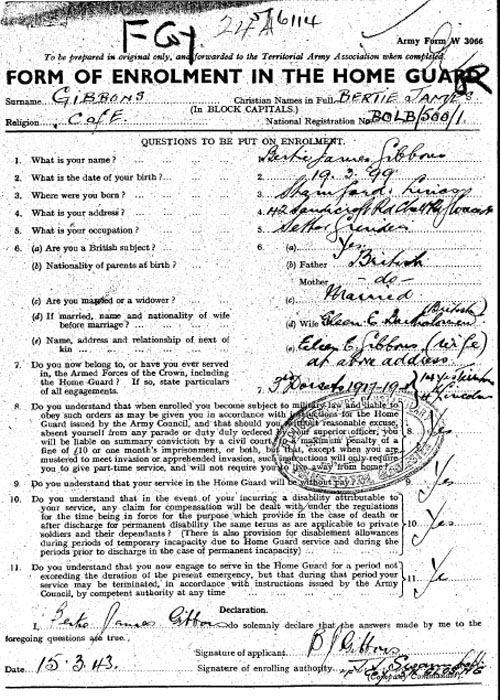
Example of a record in WO 409
What do the records look like?
Most of the records consist of a two-page enrolment form, like the example to the right. Click on this to see a larger image. When a person joined the Home Guard they were asked a series of questions. Their answers were then recorded on the enrolment form.
Some of the records also include applications for medals, medical forms and general correspondence. The medical forms are closed until 2045 for data protection reasons.
Why can’t I find what I’m looking for?
These records only include the Home Guard personnel who served in the County of Durham. For Home Guard records of other counties apply using the links in our general guide to Home Guard personnel.
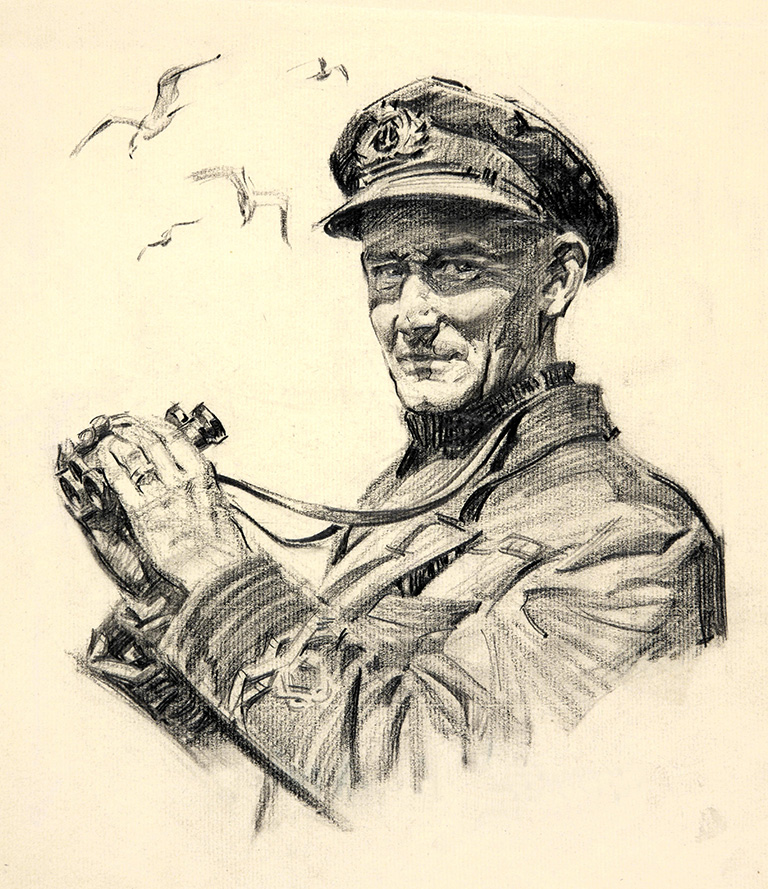
What are these records?
These records in ADM 240 contain the service records for Royal Naval Reserves officers between 1862 and 1964. These records of service include engineers and paymasters.
What information do the records contain?
They show details of merchant as well as naval service.
The information in these records can include:
- name
- date of birth
- place of birth
- rank
- date of seniority and promotions attained
- training undertaken
- names of ships served on, with dates of joining and discharge from each ship
- period of time served
- home address
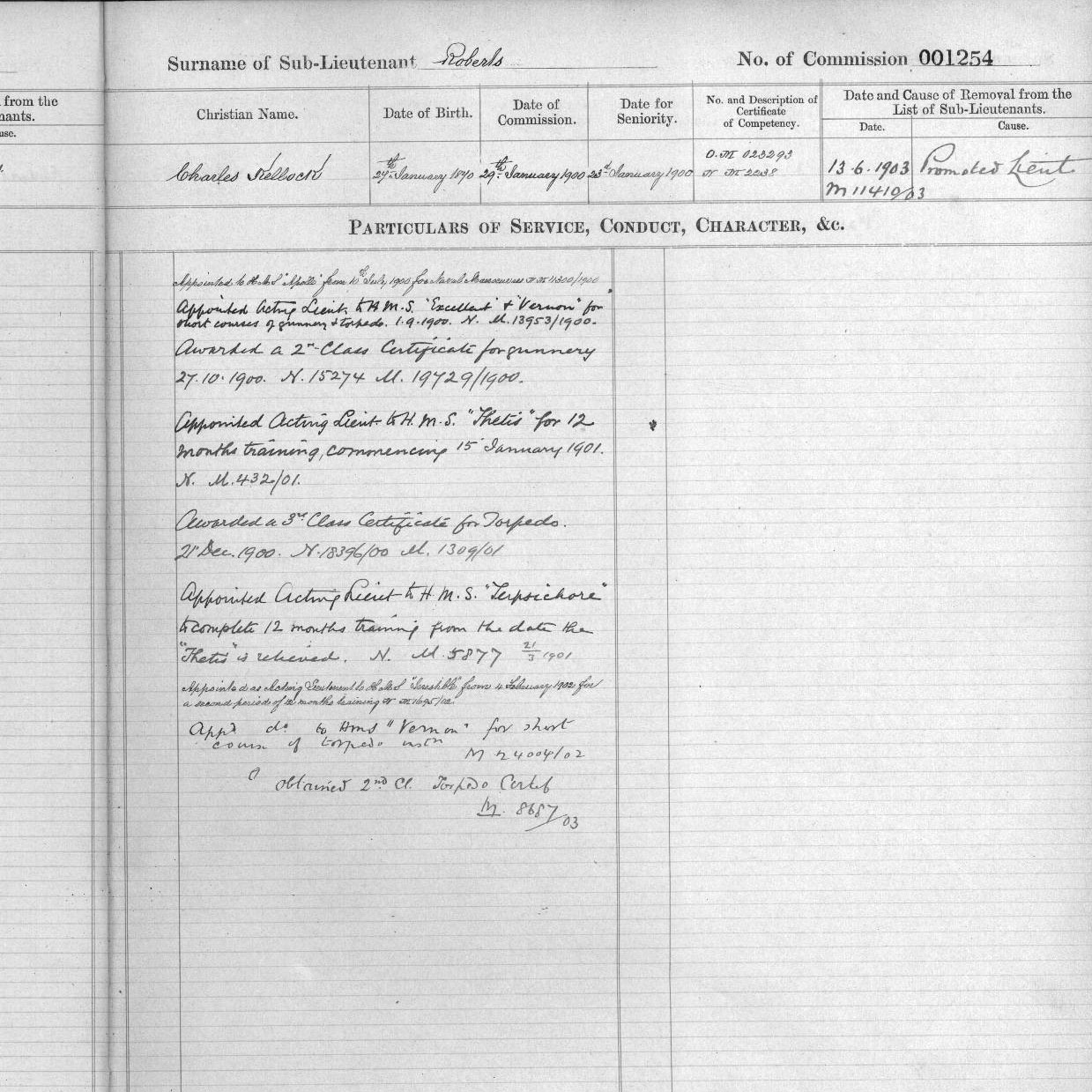
Sample service record from ADM 240
What do the records look like?
Details of the earlier officers’ service are recorded in books and registers.
For officers who served in the First World War, records may exist in both forms:
- book/register
- card/file
How do I search the records?
You can search the records using the fields below.
You don’t need to complete the date field to find a record but it may help you by narrowing your search.
Alternatively, go to Discovery, our catalogue, to search by catalogue reference.
Why can’t I find what I’m looking for?
It is unlikely that any records in ADM 240 will relate to officers born too late for active service in the First World War.
If you can’t find what you’re looking for in ADM 240, try searching by name in ADM 340.
You can also consult The Navy Lists, which are available to view at The National Archives. The Navy List gives name, rank, date of commission and seniority. It should also indicate names of ships served on.
What are these records?
These records, from series ADM 196, are the service records of officers who joined the Royal Navy between 1756 and 1931.
They include service records for commissioned officers joining the Navy up to 1917 and warrant officers joining up to 1931.
They also feature the records of Royal Marines officers commissioned between 1793 and 1925.
Commissioned officers included are:
- admirals (also known as flag officers)
- commodores
- captains
- commanders
- lieutenants
Warrant officers included are:
- gunners
- boatswains
- carpenters
- surgeons’ mates
- armourers
- sailmakers
- masters at arms
- caulkers
- ropemakers and coopers
- masters (pre-1808)
- surgeons (pre-1843)
- pursers (pre-1843)
- chaplains (pre-1843)
- engineers (pre-1847)
How do I search the records?
You can search and download the records in Discovery (£) by filling in the form below.
What information do the records contain?
Until the late 19th century these service records tend to be very basic. The majority will contain:
- an officer’s first name
- an officer’s rank
- the names of the ships they served on
- the dates of entry and discharge from each ship and the total time served
- they may record an officer’s date of death
From the late 19th century onwards some will also contain:
- date and place of birth
- next of kin

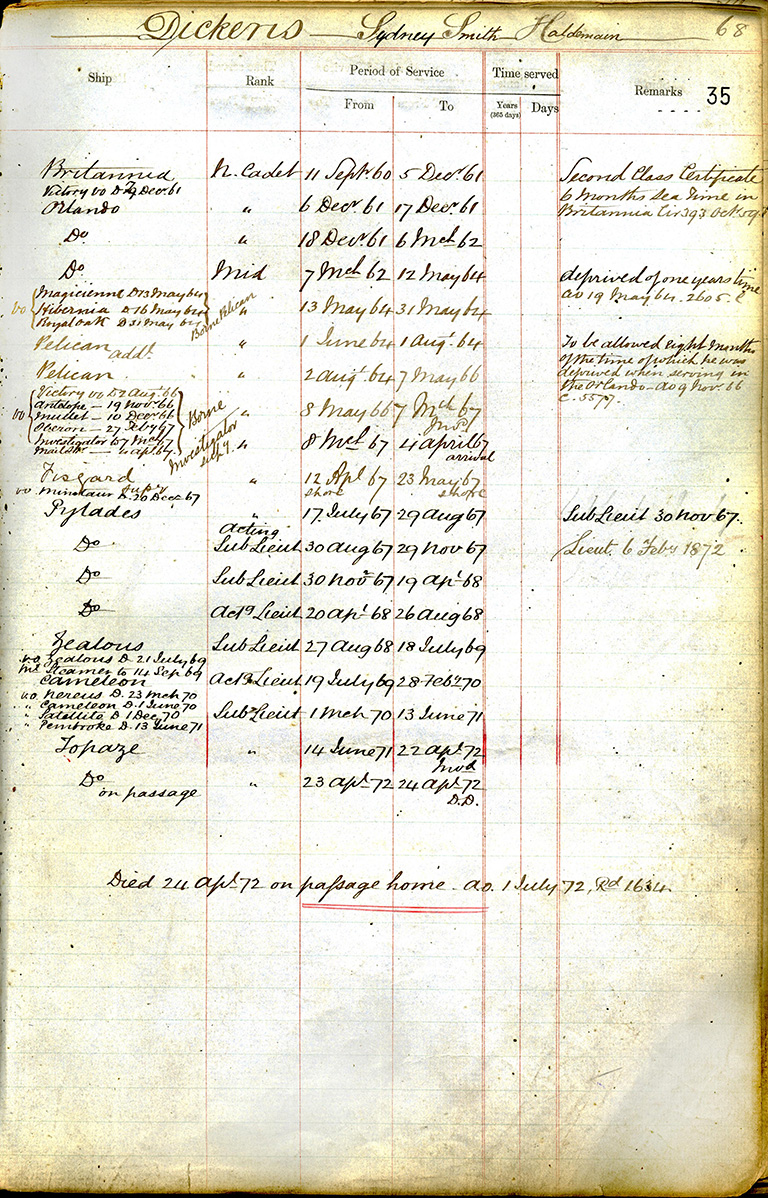
Early service record of Sir Fleetwood Broughton Reynolds Pellew (ADM 196/5)
It is possible for an officer to have multiple service records and in most of these instances we have joined them into one download.
What do the records look like?
These examples are taken from the service record of Sir Fleetwood Broughton Reynolds Pellew.
The first page, ADM 196/5, is an example of an early service record. It lists the various ships that Pellew served on and his rank during each service.

Service record of Sir Fleetwood Broughton Reynolds Pellew (ADM 196/37)
The second image is also part of Pellew’s service record, ADM 196/37. It lists his promotions, the date they took effect and various other details, including the fact that on 14 December 1852 Pellew hoisted his flag whilst on board Neptune at Portsmouth, and that on 6 February 1853 he was ordered to take his flag down. Lastly the record tells us that Pellew died on 28 July 1861.
Why can’t I find what I’m looking for?
If you cannot find a service record the explanation may be that:
- The officer died or left service before records were systematically kept from the 1840s
- The officer served with the Royal Naval Reserve or the Royal Naval Volunteer Reserve
- You should be searching for a rating, not an officer; in this case, try Royal Navy ratings’ service records from 1853 to 1928 instead
- You are searching for an admiral but he is described as a flag officer, another name used for admirals
The record may be held in a different record series instead. Look at records of carpenters or boatswains who enlisted between 1848 and 1912 in ADM 29/114-115 and ADM 29/116-119. You can find records of engineers who served during 1839-1862 in ADM 29/105-111. Try browsing series ADM 104 for surgeons’ and assistant surgeons’ service records.
Try searching the Royal Navy First World War Lives at Sea database by name, service number and numerous other criteria. As of June 2021, the database contains 32,000 records and is continually being updated. Once completed (scheduled for November 2022), it will contain information relating to all the Royal Navy officers and ratings that served in the First World War. The database is being compiled largely from records held at The National Archives and there is no charge for access. It is a joint project between The National Archives, The National Maritime Museum and the Crew List Index Project with the help of a global team of volunteers.
1. Why use this guide?
The Jacobites supported the restoration of the Stuart line to the thrones of England, Scotland and Ireland after the accession of William and Mary (1688-1689). They were a very real threat to the governing order until 1745, with the most significant invasion attempts occurring in 1715 and 1745.
This guide highlights key records and published sources for the Jacobite Risings of 1715 and 1745.
If you are researching this period or tracing a Jacobite ancestor this guide can help you.
2. How to begin your research
Start by reading a specialist publication on the Jacobite Risings. See section 10 for a list of recommended publications.
These can help you identify relevant records held at The National Archives and elsewhere. They do not cover all the potential records but are a good place to start.
Often, to identify relevant records you will need to use indexes and calendars which summarise documents in particular record series. The sections below will tell you which finding aids to use.
3. Administration and policy
For insights into government policy on the Jacobite issue, political and military correspondence, and other material such as lists of prisoners and trial papers, the following record series are particularly useful:
- state papers Scotland series II: SP 54
- state papers domestic George I: SP 35
- state papers domestic George II: SP 36
Use the search box contained within SP 54 to search by keyword (for example, Jacobite).
To identify relevant SP 35 records, search by keyword or use the following finding aids:
- calendars in List and Index Society vols 139, 144, 155 and 165
- index in List and Index Society vol 173
SP 36 contains 163 volumes, they can be searched by keyword in our catalogue. There is also a four-volume manuscript list of the whole series, in the reading rooms in The National Archives at Kew.
Other series of state papers contain supplementary information. In particular:
- military in SP 41, which you can search by keyword
- naval in SP 42, which you can search by keyword for 1715-1723 and 1740-1747
- entry books in SP 44 (see catalogue description for series for finding aids)
- Scotland, out-letter books in SP 55
You can also view all these records and calendars via State Papers Online (institutional subscription required). Many are also searchable on State Papers online as well as through our catalogue.
Records of administration and policy in Parliament may be found in (House of Lords Main Papers) YHL/PO/JO/10. Search the collection using the keyword ‘Pretender’.
4. Finance
For Treasury records relating to the 1715 rising, look at the
- calendar of Treasury Books Vols. 29-30 (HMSO, 1958-1959)
- calendar of Treasury Papers, Vol 5 (HMSO 1883)
For the 1745 rising look at the Calendar of Treasury Books and Papers, Vol 5 (HMSO 1903).
You can find other useful financial records within the Audit Office Declared Accounts in AO 1.
Search these by date, you can sort your search results by date ascending or descending.
5. Military and naval campaigns
War Office and, to a lesser extent, Admiralty records contain a lot of information about the campaigns against the risings.
The most useful series are likely to be the following which you can often browse by date:
- Secretaries of State: state papers foreign, military expeditions in the Duke of Cumberland SP 87 sub-series
- War Office, marching and militia orders in WO 5
- Secretary of War out-letters in WO 4 and departmental out-letters in WO 7
- Admiralty and Secretariat, papers in ADM 1 and out-letters in ADM 2. For help searching ADM 1 see our research guide on finding naval correspondence.
6. Trials
The records of the Court of King’s Bench contain:
- some of the treason trials which followed both risings in KB 8, the Baga de Secretis
- a diversity of legal records, many relating to the 1745 rising including draft indictments, some trial transcripts and list of prisoners, in KB 33
See our research guide on the Court of Kings Bench (crown side cases) 1675-1875 for further information.
The Treasury Solicitor Papers in TS 11 and The 1745 Rebellion Papers in TS 20 are rich in material on the judicial and administrative aspects of proceedings against those captured in 1745. They include trial records, lists of prisoners and papers relating to their backgrounds and fates. You can search these by keyword in our catalogue. Pardons are in The Patent Rolls: C66.
Although trials of prisoners held outside London were heard by Special Commissioners and the routine criminal business of the assize courts were largely suspended after each rising, a few documents and entries relating to rebels are among the assize records.
See the following ones in particular:
- the north-eastern circuit in ASSI 41-47
- the Palatinates of Chester in CHES 21 and CHES 24, Durham in DURH 17 and DURH 19 and Lancaster in PL 25-28
7. Forfeitures
The estates of many rebels were forfeit to the Crown.
After the 1715 rising a Forfeited Estates Commission was established. You can search by keyword the papers in FEC 1 and books in FEC 2 of the Commissioners for England and Wales. They are also described in The Records of the Forfeited Estates Commission (PRO Handbooks no 12, HMSO 1968).
The records of Greenwich Hospital in ADM 74-80 contain many estate and some family records of the Earl of Derwentwater whose lands, after forfeiture, passed to the Hospital. A smaller collection of records relating to forfeitures after the 1745 rising are in T 64.
8. Other resources at The National Archives
View our classroom resources for the 1715 rising and for the 1745 rising. You can download documents and each one comes with a transcript. These resources come with teachers’ notes and additional links to other archives and websites that you may find useful.
9. Other archives
The National Records of Scotland holds the records of the Forfeited Estates Commissioners for Scotland, together with many other valuable sources.
The Royal Collections Trust holds the Stuart Papers 1579-1823 (the papers of the Old Pretender, Prince James Francis Edward Stuart and of his sons, Prince Charles Edward Stuart, the Young Pretender, and Prince Benedict). These can be viewed online via State Papers Online (institutional subscription required).
The private papers and estate records of politicians, members of the armed forces, local officials and landowners can also provide useful detail. Find information about such collections from our catalogue and the National Register of Archives (Scotland).
10. Published sources
T B Howell, A Complete Collection of State Trials and proceedings for high treason and other crimes and misdemeanors (London, 1816) vols XV and XVIII. These include the trial records of some of the more notable prisoners. Some of the texts are derived from the reports of Sir Michael Foster, one of the trial judges, who himself compiled A Report of Some Proceedings on the Commission for the Trial of the Rebels in the Year 1746 … (3rd edition, ed M Dodson, London, 1792).
R C Jarvis, Collected Papers on the Jacobite Risings (2 vols, Manchester University Press, 1971-1972). Gives references to unpublished material in The National Archives and elsewhere.
R C Jarvis, The Jacobite Risings of 1715 and 1745 (Cumberland County Council, 1954). Extracts from the Lieutenancy and Quarter Sessions records of Cumberland. No parallel study has yet been published for other counties.
B Lenman, The Jacobite Risings in Britain 1689-1746 (Methuen, 1980). Gives full references to a wide range of published material.
J Riding, Jacobites: A New History of The ’45 Rebellion (Bloomsbury, 2015).
The Prisoners of the ’45 edited by B G Seton and J G Arnot (Scottish History Society, 3rd series, vols XIII-XV, 1928-1929). Contains a tabular analysis of the career and fates of most prisoners, with references to the documents on which the study is based.
Szechi, The Jacobites, Britain and Europe 1688-1788 (Manchester University Press, 1994).
Szechi, 1715: The Great Jacobite Rebellion (Yale University Press, 2006).
Please note, none of these printed sources exhausts the available manuscript material.
1. Why use this guide?
This is a guide to finding records at The National Archives on the dissolution of the monasteries between 1536 and 1540. It also covers the build-up to the dissolution and its consequences.
The Act of Supremacy in 1534 declared Henry VIII the Supreme Head of the Church of England, thus separating England from papal authority. This and subsequent acts gave the Crown the authority to disband monasteries in England, Wales and Ireland, appropriate their income and dispossess them of their assets.
The term ‘dissolution of the monasteries’ encompasses all the religious establishments that were appropriated by the Crown in this period. This guide, therefore, covers records relating to the dissolution of all kinds of religious houses, including abbeys, priories, convents and friaries, all of which can also be considered component parts of monasteries.
2. How to start your research
The best place to start is with the published volumes of Letters and Papers of Henry VIII. These are available via British History Online and State Papers Online (institutional subscription required), as well as in their published form. Use the indexes at the back of the published volumes to locate person, place name and subject index terms which you can use to search for documents in our catalogue. See our research guide on the letters and papers for more information.
Alternatively, you can use Discovery, our catalogue, to search many of the records series listed in this guide, using search terms such as:
- “dissolution”
- “monastic”
- “monastery” or “monasteries”
- “abbey”
- “priory”
- “Benedictine”
- “Dominicans”
It will often help to combine these words with a place name, using the following format:
- Whitby AND abbey
3. The dissolution and the build up to it 1524-1540: key records
You can trace the build up to the dissolution of the monasteries and the dissolution itself through the records described below. Not all of the records have been described in our catalogue in detail, making a search within them tricky, and most are not viewable online. To view records which are not online you will need to visit The National Archives at Kew or pay for research.
Try searching the following records using keywords in our catalogue or, if this proves fruitless, browse each series by clicking on the links:
3.1 1524–1528
Cardinal Wolsey’s dissolution of about 30 religious houses:
3.2 1534–1535
The Valor Ecclesiasticus, the greatest survey of ecclesiastical property since 1291. The survey valued taxes paid to the Crown from ecclesiastical property and income that had previously been paid to the Pope:
- E 344, E 346 and PRO 31/16/66
3.3 1534–c.1538
The Oath of Supremacy, with which all religious houses were ordered to acknowledge royal supremacy over the Church and the consequences of taking or not taking the oath:
- E 25: acknowledgements of royal supremacy
- KB 8: trial records of clerics who refused to take the oath
- SP 1 and SP 5: correspondence about the Oath of Supremacy and the visitation of monasteries (searchable on State Papers Online and British History Online)
3.4 1536
The Compendium Compertorum, which recorded whether or not the monasteries were complying with the Oath of Supremacy, detailing any alleged offences against the Crown:
- SP 1/102 ff 91–114 (viewable on State Papers Online)
3.5 1536–1540
The dissolution of the monasteries:
- E 315/2: copies of the acts relating to the dissolution
- E 322: surrenders of monasteries and other religious institutions
- KB 8: treason trial records of clerics who refused to surrender their houses
4. Consequences of the dissolution: key records
The Court of Augmentations was established for the purpose of managing the confiscated estates of religious houses. Consult records of the Court of Augmentations within the Exchequer records department.
Many of the following series cover more than the subject matter listed and with some series you may have to browse through them, by clicking on the links, to find relevant records. Alternatively, use the advanced search in our catalogue to try searching any series using your own search terms or those recommended in Section 2, above.
4.1 Audits and inventories of ex-monastic estates
- LR 1 and LR 2: audits of land revenue for land confiscated from the monasteries
- DL 41: monastic lands confiscated in Lancashire
- E 301, E 315, LR 2, DL 38 and SC 11: surveys of religious land and institutions taken over by the crown
- E 315/67-68 and DL 14: details of the sale of land and property
- E 117: inventories of religious houses
4.2 Managing the ex-monastic estates and their personnel
- LR 6, DL 29 and SC 6: local accounts of ex-monastic estates
- SC 2 and DL 30: court rolls which include accounts for ex-monastic estates
- SC 11, SC 12, LR 2, LR 10 and E 315: surveys and rentals of monastic lands
- C 66: sales and leases of ex-monastic land if above a certain annual value (calendared in Letters and Papers of Henry VIII)
- LR 1: sales and leases of ex-monastic land if below a certain annual value
- E 318: particulars for grants (There is a published alphabetical index of grantees’ names in the Deputy Keeper of Public Records’ 9th and 10th Reports. There is also a manuscript index of place names)
- E 315/244–247 and LR 5: warrants for pension grants to former monks and nuns
- SP 5, LR 1, E 314 and E 101: some lists of monks, nuns and other dissolution pensioners
4.3 Legal records
- E 315/108–133: court records of monastic lands confiscated as a result of the treason of their abbots
- E 321, E 314, E 315/19–23, E 315/108–133, E 315/165, E 315/516 and E 315/522: court records of the settlement of disputes over the former monastic lands
- E 134: later disputes about ex-monastic land
- E 324: records ratifying the new owners of ex-monastic property legal right to this property
5. Monastic property in Ireland
In 1540, royal commissioners surveyed monastic property in Ireland. Consult Letters and Papers, Foreign and Domestic, Henry VIII for summaries. Also use the Calendar of State Papers, Ireland, available online through State Papers Online (institutional subscription required). Both are available at The National Archives’ library at Kew.
Most Irish records relating to the dissolution were destroyed in 1922, but there are some printed records in the Calendar of the Patent and Close Rolls of Chancery in Ireland, Vol I (Dublin, 1861), also available in our library.
6. Records in other archives
Consult the English Monastic Archives database on the University College London website, for information on the types and current locations of documents generated by medieval English monasteries.
7. Further reading
The following publications are all available in The National Archives’ Library at Kew.
D Knowles, The Religious Orders in England vol III (Cambridge University Press, 1959)
J Youings, The Dissolution of the Monasteries (Allen and Unwin, 1971)
C Haigh, The Last Days of the Lancashire Monasteries and the Pilgrimage of Grace (Manchester University Press, 1969)
W C Richardson, History of the Court of Augmentations, 1536–1554 (Louisiana State University Press, 1961)
B Bradshaw, The Dissolution of the Religious Orders in Ireland under Henry VIII (Cambridge University Press, 1974)
A H Lawes,’The Dissolution of the Monasteries and Chantries’, The Genealogists’ Magazine vol 27 No 11 (September 2003)
1. Why use this guide?
This guide provides advice on how to find pension records of Royal Navy ratings and of some merchant seamen who served in Royal Navy employment. These records may prove useful if you are searching for information on an ancestor who served with the Royal Navy.
The biographical information in these records varies considerably, depending on the type of pension and the type of record but can include:
- dates of service
- place of birth
- age on entry to the Royal Navy
- date of death
- names of widows and children of seamen killed in service
Most of the records covered by the guide are from the 18th and 19th centuries but they date back as early as 1653; a few others cover First World War service and beyond.
2. Where do these records come from?
These records are now held at The National Archives, primarily under the department code ADM. However, they were originally created by a variety of charitable and government bodies responsible for the payment of naval pensions at the time they were granted. The three most significant were:
-
- The Royal Greenwich Hospital
- Founded in 1694 as a home for pensioned seamen, the Royal Greenwich Hospital admitted its first pensioners in 1705. As well as admitting a fixed number of in-pensioners, who lived in the hospital, from 1763 small out-pensions were paid to large numbers of applicants who had served in either the Navy or Marines. Although claimants of out-pensions had to have served in the Navy or Marines, there was no bar to them holding other employment: many out-pensioners of the hospital were in full employment as the pensions were scarcely sufficient to live on. It was possible for both in- and out-pensioners to re-enter the Navy, at which point their pensions lapsed until their discharge.
-
- The Navy Pay Office
- The accounting department and paymaster of the Royal Navy.
-
- The Chatham Chest (later The Greenwich Chest)
- Founded in 1581, this charity, supported by the monthly deduction of sixpence from officers’ and ratings’ pay, paid pensions to ratings wounded in naval service. Management of the Chatham Chest was taken over by the Royal Greenwich Hospital in 1803 and in 1814 it ceased to be a separate source of pensions, its funds melting into the wider Greenwich Hospital pension pot.
From the late 19th century, various other government departments became involved in the payment of naval pensions, such as the Paymaster General (PMG), and the Ministry of Pensions (PIN). For pre-19th century records it may also be worth checking for petitions for pensions in the records of the Secretaries of State (in SP) and the Privy Council (PC).
3. Who was entitled to a pension?
It was not until 1859 that pensions for service were granted automatically to all ratings who had served for 20 consecutive years in the Royal Navy. Up to 1859 there was no guarantee that a rating would receive a pension for service. Before then, pensions were rarely awarded to ratings unless they had been wounded or killed in action or on duty.
The majority of ratings entered as boys, signing their first engagement at 18 and therefore retired at 38, or 43 for those who signed on for a ‘fifth five’. This left a man with much of his working life remaining and naval pensioners were often still in employment, many of them in dockyards and other naval establishments.
4. Records covering First World War and later service
As for other periods, there are a hotchpotch of different pension records that survive for seamen who served in the First World War:
4.1 Selected First World War pension award files
A sample of disability pension awards from the First World War are held under references PIN 26/16684-17178. Search these records by name or number using the PIN 26 series search in our catalogue.
4.2 First World War widows’ pension forms
A random sample of First World War widows’ and dependants’ pensions forms were selected for preservation and are now held in record series PIN 82. They represent around 8% of all First World War armed services pensions. For more details see our research guide to disability and dependants’ pensions in the First World War or read the PIN 82 series description.
4.3 Pensions paid to widows and dependants between 1921 and 1926 for ratings killed in action
- Pensions paid 1921-1926 – PMG 72
- Pensions paid 1922-1926 – ADM 23/170
4.4 Merchant seamen in Admiralty employment
Allowances to widows, children and other dependants of merchant seamen killed during ‘warlike operations’ while serving on merchant ships and auxiliary craft commissioned into the service of the Royal Navy are in:
- PMG 56 – the records date from April 1914 to March 1928 and contain:
- name and rank of person killed
- name of ship/submarine
- name and address of claimant
- rate of pension
- widow’s age (not always given)
Other similar records include:
- Pension grants 1918-1925 to officers and men of the mercantile marine killed or injured in Admiralty employment in PIN 15/1733-1736
- Claims to pensions 1919-1925 by seamen of the Royal Naval Reserve in PIN 15/209-211
4.5 Seamen who died in service but not in conflict
5. Superannuation pensions, 18th and 19th centuries
A superannuation pension is a pension granted upon retirement of the individual.
5.1 Candidates for Greenwich Hospital pensions or other relief
| Date Range | Record type | Catalogue reference |
|---|---|---|
| 1789 – 1859 | Registers of applicants | ADM 6/271-322 |
| 1813 – 1834 | Numerical list of candidates (with an index) | ADM 6/267-269 |
5.2 Registers of candidates for admission to Greenwich Hospital
| Date Range | Catalogue reference | Name searchable in the catalogue? | Online version |
|---|---|---|---|
| 1737 – 1752 | ADM 6/223 | No | findmypast.co.uk (£) |
| 1752 – 1763 | ADM 6/224 | Yes | findmypast.co.uk (£) |
| 1781 – 1784 | ADM 6/225 | Yes | findmypast.co.uk (£) |
| 1815 – 1840 | ADM 6/226-247 | Yes | findmypast.co.uk (£) |
| 1841 – 1859 | ADM 6/248-266 | No | findmypast.co.uk (£) |
5.3 Greenwich Hospital in-pensioners admission papers, entry books and registers 1704-1869
Many of the records listed in the table below are from record series ADM 73, a series which contains a variety of other related record collections. Use the catalogue to browse the contents of the whole series or use the series search to search by name for admissions papers 1790-1865 which include dates served and date of admission to Greenwich Hospital.
| Date range | Record type | Catalogue references | Online version | Free content, searchable on the catalogue |
|---|---|---|---|---|
| 1704 – 1846 | General entry books of pensioners | ADM 73/36-41 | findmypast.co.uk (£) | None |
| 1704 – 1863 | Rough entry books of pensioners | ADM 73/51-62 | findmypast.co.uk (£) | None |
| 1782 – 1822 | Letters relating to the admission of pensioners to Greenwich Hospital | ADM 65/83-97 | Not available online | None |
| 1764 – 1869 | Entry books of pensioners | ADM 73/63-69 | findmypast.co.uk (£) | None |
| 1779 – 1866 | Registers of pensioners and their families | ADM 73/42-50 | findmypast.co.uk (£) | None |
| 1790 – 1865 | Admission papers | ADM 73/1-35 | findmypast.co.uk (£) | Name, dates served, date admitted |
| 1813 – 1834 | Numerical list of candidates for Greenwich Hospital | ADM 6/267-268 | findmypast.co.uk (£) | None |
| 1868 – 1870 | Register of Greenwich Hospital pensions | WO 23/24 | findmypast.co.uk (£) | None |
5.4 Greenwich Hospital out-pensions 1781-1809, 1814-1869 and 1879-1921
| Date Range | Record type | Catalogue reference | Online version |
|---|---|---|---|
| 1781-1809 | Out-pension pay books | ADM 73/95-131 | findmypast.co.uk (£) |
| 1814-1846 | Out-pension pay books | ADM 22/254-443 | findmypast.co.uk (£) |
| 1819-1821 | List of Greenwich Hospital temporary pensioners | ADM 6/321 | Not available online |
| 1842-1862 | Periodical returns of pensions paid or payable to out-pensioners of Chelsea and Greenwich Hospitals and of mercantile marine pensioners | WO 22 | Some returns of payments to out-pensioners of Greenwich Hospital can be found in the British Army service records collection on findmypast.co.uk (£). Select series WO 22 on the search page. |
| 1845-1854 | Royal Greenwich Hospital pensions | WO 4/887-891 | findmypast.co.uk (£) |
| 1863-1869 | Entry books of pensioners | ADM 73/63-64 | findmypast.co.uk (£) |
| 1879-1921 | Pensions of seamen and marines living abroad | PMG 71/5-13 | Not available online |
6. Certificates of service, 1802-1894
Certificates of service, issued by the Navy Pay Office, were used as proof that a rating qualified for a pension. The certificate was an abstract of successive postings derived from the ships’ musters. Before the introduction of continuous service registers for ratings, in the mid 19th century, these certificates formed the only official evidence of the careers of ratings. Collections survive of both the original certificates as received by Greenwich, and the Pay Office’s entry books of the certificates as issued.
Certificates of service provide the following information on seamen:
- rating (rank/job description)
- ships served on
- length of time on each ship
Search for ratings’ certificates of service (ADM 29) by name on Ancestry (£) for certificates issued up until 1894 (includes warrant officers up until 1919). However, you can find service details (such as rank, dates served and date of birth) for some ratings from the descriptions for a number of ADM 29 documents in our catalogue. Although they do not include images of the records themselves, the descriptions are free to view. To search for a seaman’s details in this way, either browse through ADM 29/2-73 or search by name using the ADM 29 series search.
Some seamen were issued with certificates of service years after they joined the Royal Navy and certificates do not necessarily cover all the service to date. If a Continuous Service (CS) or Official Number (ON) is given you should find further details in Royal Navy ratings’ service records 1853-1928.
7. Wounds and disability pensions, 1653-1799
Pensions for permanent disablement or grants to wounded ratings were paid by the Chatham Chest (later The Greenwich Chest), up until 1814, on production of a certificate known as a smart ticket.
Browse through ADM 82 by date in our catalogue to search for the records of payments to pensioners 1653-1799 from the Chatham Chest.
8. Widows’ and dependents’ pensions, 1675-1917
8.1 Pensions paid from the Chatham Chest, 1695-1779
The pay books of the Chatham Chest record payments of pensions to widows of ratings who died in service, 1695-1779: see ADM 82/12-119.
8.2 Royal Bounty payments
A lump sum of one year’s wages known as the Royal Bounty was payable to widows, dependent children or mothers (aged over 50) of ratings killed in action. Papers submitted to claim the bounty often include marriage and death certificates, with other documents attesting the age, relationship or poverty of the applicants.
| Date Range | Catalogue reference | How to search for a record |
|---|---|---|
| 1675 – 1722 (with gaps) | ADM 106/3023-3025 | Use the name index in the printed version of our catalogue, available only at The National Archives building in Kew |
| 1747 – 1752 | ADM 106/3026-3027 | Use the name index in the printed version of our catalogue, available only at The National Archives building in Kew |
| 1805 – 1822 | ADM 106/3028-3035 | Use the name index in the printed version of our catalogue, available only at The National Archives building in Kew |
Pay lists of the Royal Bounty, 1739-1787, giving name, address and relation of the payee, the name, quality and ship of the dead man, and the sum paid, are in ADM 106/3018-3020.
8.3 Greenwich Hospital pensions, 1882-1917
Search through the registers of Greenwich Hospital pensions and allowances paid to widows and children 1882-1917 in ADM 166/1-11.
8.4 Pension applications and awards 1892-1917 for men killed in conflict (but not in First World War)
| Date Range | Type of record | Catalogue reference |
|---|---|---|
| 1892 – 1911 | Indexed register of applications for pensions of seamen and marines killed in warlike operations | ADM 166/13 |
| 1901 – 1917 | Indexed register of pensions awarded to widows and children of seamen and marines killed in warlike operations, but not in the First World War | ADM 166/12 |
The National Archives does not hold any complete collections of electoral registers. This guide will direct you to some of the archives and organisations that do hold historical electoral registers.
Electoral registers were introduced in 1832 and, with a few exceptions, have been produced annually ever since. If you know what area a person lives or lived in you may be able to find their address in an electoral register – though the property through which they qualified to vote is not always the same as their home address.
Where to go for records and advice
- An increasing number of electoral registers and poll books are available on commercial websites such as Ancestry.co.uk (£) and Findmypast.co.uk (£).
- The electoral registers from 2002 onwards are available online at 192.com (£).
- Go to the British Library to consult the national collection of printed electoral registers. They hold a complete set of electoral registers from 1947 onwards.
- Go to local reference libraries and archives for electoral registers covering the respective local area. Find contact details for local archives using Find an archive.
- For electoral registers in Wales and Scotland go to the National Library of Wales and National Library of Scotland.
- Download and read Parliamentary Constituencies and their Registers since 1832 by Richard H A Cheffins, available from the British Library website.

What are these records?
These are the surviving service records for non-commissioned officers and other ranks who were discharged from the Household Cavalry between 1799-1920.
They cover the following regiments:
- Life Guards
- Royal Horse Guards
- Household Battalion
This collection, in series WO 400, consists of just over 11,500 service records.
What information do they contain?
The records can include the following information:
- regiment and rank
- remarks concerning the individual
- next of kin
- medical reports and pension details
How do I search the records?
You can search and download the records in Discovery (£) by filling in the form below.
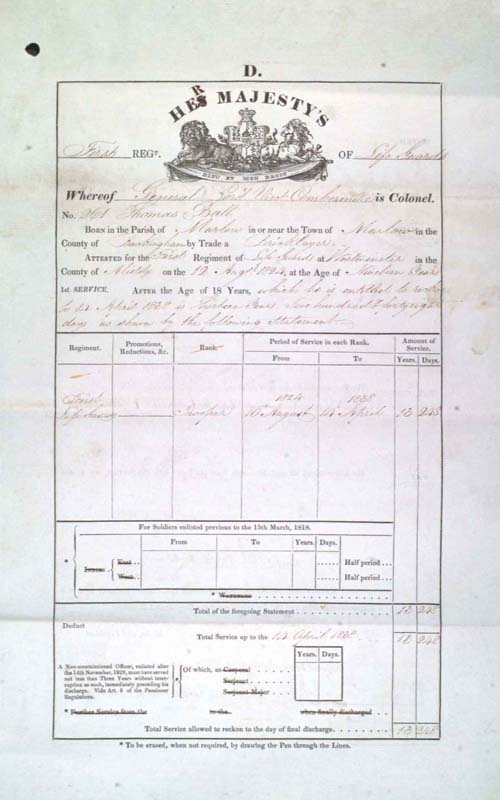
Service record of Thomas Ball (catalogue reference: WO 400/1/261)
What do these records look like?
To get an idea of what the records look like, you can enlarge the image on the right. This is a page from the record of Thomas Ball (catalogue reference: WO 400/1/261).
Why can’t I find what I’m looking for?
If the soldier went on to serve with another regiment of the British Army then try searching the First World War soldiers’ service records available on Ancestry (£).
If the soldier went on to serve with a Guards regiment, you will need to contact the relevant headquarters.