While some relevant documents are available online or held at The National Archives, the majority of records are held by the Ministry of Defence.
This is a guide to finding records of births, marriages and deaths in the Channel Islands and the Isle of Man. The Channel Islands and the Isle of Man are not part of the United Kingdom and have their own currencies and legal systems, but are dependencies under the Crown. They come under the jurisdiction of the Registrar General of England and Wales for census but not civil registration purposes.
What do I need to know before I start?
Records of births, marriages and deaths in the Channel Islands and the Isle of Man are kept in various places but not at The National Archives.
Civil registration began at different times on each of the Channel Islands; Guernsey in 1840, Jersey in 1842, Alderney in 1850 and Sark in 1915. Registration began on the Isle of Man in 1849, but was not compulsory until 1878 (1884 for marriages).
Your search will be easier if you know:
- the name of the person’s parents, spouse or next of kin, where applicable
- the approximate date of the birth, marriage or death
- the person’s religious denomination
Online records
There are no birth, marriage or death records for the Channel Islands and the Isle of Man available to see online.
Records available only at The National Archives in Kew
The National Archives does not hold any birth certificates or parish baptism records for the Channel Islands or the Isle of Man.
Records in other archives and organisations
Channel Islands: Civil and parish registers
Visit the Priaulx Library for civil records for Guernsey from 1840, Alderney from 1850, and for parish registers for the Bailiwick of Guernsey (c1570-present), and the Jersey Heritage Research Centre for indexes to civil and parish registers for Jersey.
Isle of Man: Civil and parish registers
Visit the Manx National Heritage Library & Archive Service; search their catalogue for parish registers (c.1607–1878); or contact the Douglas Civil Registry Office for civil registers from 1878.
Alternatively, search the FamilySearch catalogue for microfilm copies of records for the Channel Islands and the Isle of Man, which can be ordered for viewing at FamilySearch Centres worldwide.
Other resources
Websites
Search birth, marriage and death indexes for the Isle of Man up to 1979 at ManxBMD.com.
Search the FamilySearch website for Channel Islands births and baptisms 1820–1907; Isle of Man births and baptisms 1821–1911, marriages 1849–1911, deaths and burials 1844–1911 and parish registers 1598–1950.
Books
Visit the National Archives’ bookshop for a range of publications on birth, marriage and death records. Alternatively, look in The National Archives’ library catalogue to see what is available to consult at Kew.
Audrey Collins and David Annal, ‘Birth, marriage and death records’ (Pen and Sword, 2012)
Marie-Louise Backhurst, ‘Tracing your Channel Islands ancestors’ (Pen and Sword, 2011)
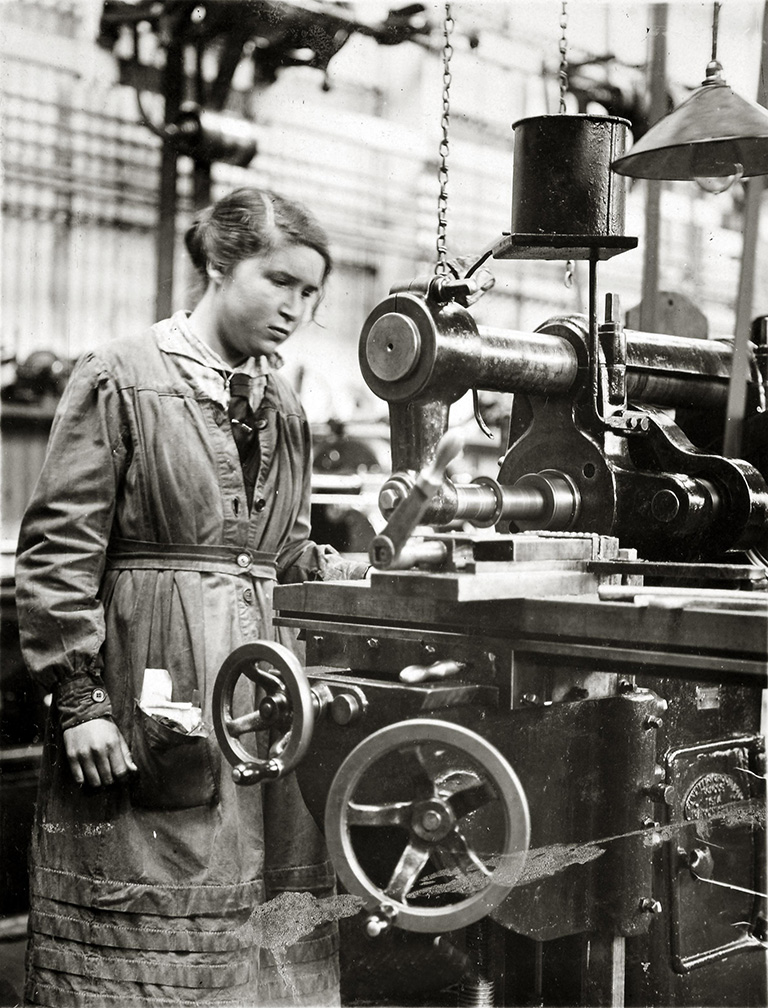
This is a brief guide to researching records of the Women’s Land Army. Though the original service records of the Women’s Land Army have not survived, The National Archives has microfiche copies of alphabetical index cards from 1939 to 1945 that contain some basic information about the women’s service.
What do I need to know before I start?
Try to find out the woman’s maiden name, if she subsequently married.
The Women’s Land Army was established in January 1917 to help increase the amount of food grown within Britain. It was wound up in 1919, and then re-established shortly before the outbreak of the Second World War, in June 1939. It was finally disbanded in 1950.
At its peak in 1943 over 80,000 women worked as ‘land girls’. They came from a wide range of backgrounds including towns and cities as well as the countryside.
Online records
Search for an index card recording service in the Women’s Land Army, 1939-1948, (MAF 421) on Ancestry (£) . The index cards can show name, address, date of birth, Women’s Land Army number and occasionally present occupation, where transferred to and when demobilised. The majority of women employed in the Women’s Land Army were unmarried, so it may be useful to search using maiden and married names.
Index cards for women born less than 100 years ago are not available through Ancestry.
Records available only at The National Archives in Kew
To access these records you will either need to visit us, pay for research (£) or, where you can identify a specific record reference, order a copy (£).
Minutes, photographs and posters (1938–1950)
Browse minutes of county committees, collections of photographs, recruiting posters and selected files in MAF 59.
Copies of alphabetical index cards (1939–1948)
Look through microfiche copies of index cards in MAF 421. The index cards can show name, address, date of birth, Women’s Land Army number and occasionally present occupation, where transferred to and when demobilised. The fiche is arranged alphabetically by surname. Many of these index cards can also be searched on Ancestry (£).
Records in other archives and organisations
Original alphabetical index cards (1939–1950)
Contact the Imperial War Museum for a photocopy of an index card. The originals are not available for the public to view. They require the full name, date of birth, the address at the time of service, and the location of service if possible.
Oral history recordings
Listen to some oral history recordings by members of the Women’s Land Army on the Imperial War Museum website.
Records held elsewhere
The National Archives’ catalogue contains collections and contact details of local archives around the UK and beyond. To locate these records, search our catalogue with keywords and refine your results to ‘Other archives’ using the filters.
The index cards for Scotland are held by the National Records of Scotland.
Other resources
Books
Search The National Archives’ bookshop to see whether any of the publications below may be available to buy. Alternatively, look in The National Archives’ library catalogue to see what is available to consult at Kew.
Nicola Tyrer, ‘They Fought in the Fields: The Women’s Land Army – The Story of a Forgotten Army’ (Mandarin, 1997)
1. Why use this guide?
This is a guide to the records that were created when wills were disputed in court and how to find them. It is not a guide to current legal disputes and refers to cases at least 20 years old but mostly cases much older than that.
Disputes could arise over the validity, interpretation or implementation of specified terms within a will, or over the validity of the will as a whole. Challenges to the validity of a will could lead to competing claims by people seeking letters of administration to settle the estate in the absence of a valid will.
For guidance on wills themselves, see the following research guides:
2. Which courts dealt with disputed wills?
Cases disputing a will could be brought in a number of different courts and some suits were brought in more than one court. Different courts administered differing legal regimes and could potentially award different remedies. The courts which heard cases concerning disputed wills changed over time.
Before 1858, suits could have been brought in both the ecclesiastical and the secular courts. The major ecclesiastical courts for these purposes were the Prerogative Court of Canterbury and, more rarely, the Prerogative Court of York. The secular court most often concerned with disputes relating to wills was the Chancery Court.
From 1858 all disputes concerning wills were heard, in the first instance, by the new Court of Probate, though cases could still be brought in the Chancery Court.
After 1875 the enactment of the Supreme Court of Judicature Act 1873 created a single unified High Court of Judicature. The Court of Probate and Chancery Court became divisions within this – the Probate, Divorce and Admiralty Division and Chancery Division respectively.
3. Does The National Archives hold the records?
The National Archives will hold the surviving records for a disputed will case if:
- Before 1858, the case was heard by the Prerogative Court of Canterbury.
- Between 1858 and 1873, the case was brought in the Probate Court.
- Before 1873, the case was heard by the (secular) Court of Chancery.
- After 1873, the case was brought in the Probate Divorce and Admiralty or Chancery Divisions of the High Court.
- On appeal, the case was heard by the High Court of Delegates, the Judicial Committee of the Privy Council, or the Court of Appeal. The National Archives also holds calendars of appeals to the Papal Court before 1534.
The following records are NOT held at The National Archives:
- The records of the archdeacons’ courts and diocesan courts which proved many wills before 1857 are typically in local record offices and diocesan record offices.
- The records of the Prerogative Court of York and the Chancery Court of York are at the Borthwick Institute for Archives. The cause papers can be viewed online on the Digital Humanities Institute.
- The records of the Court of Arches – these are held at Lambeth Palace Library. See Cases in the Court of Arches at Lambeth Palace Library 1660-1913, edited by Jane Houston.
- The records of the Judicial Committee of the House of Lords – these are held at the Parliamentary Archives.
4. Searching for disputed wills cases in the records of the Prerogative Court of Canterbury
You should first establish whether a will was indeed disputed in the Prerogative Court of Canterbury. There are five main ways to do this, all using our catalogue:
- For wills proved before 1799, search with the word “sentence” in PROB 11. Over 11,000 wills are so described.
- For wills proved between 1661 and 1858, search the initial complaints (allegations) held in PROB 18 by the full name of the deceased or the surname of the litigants. For example, you will find the catalogue description Purden and Bevan v Nevill, concerning the deceased Sarah Williams of Lambs Conduit Street, St George the Martyr, Middlesex with its full PROB 18 reference if you search PROB 18 with either ‘Purden AND Bevan’ or ‘Sarah Williams’
- Between 1796 and 1903, for estates which were subject to death duty, check if details of a dispute were noted in the relevant death duty register. See our guide to death duties, 1796–1903 for advice on how to do this.
- Check the relevant administration and probate act books held in the following series (click on the series links below to search each series – you will need to search these series by year – and for more advice on their composition):
- Search the indexes in PROB 12 for marginal notes saying ‘by decree’ or ‘by sentence’ (sometimes abbreviated). A note of this kind indicates a dispute. For advice on searching PROB 12, see our guide to wills and administrations before 1858.
Once you have identified a dispute then you can look for the records which it generated. How you do this will depend on the time period in question and there is often more than one series of records in which you should look:
- 1661-1858: search by name of the parties or the deceased among the allegations (the initial complaint, by the plaintiffs) in PROB 18
- 1664-1854: search in the answers by the defendants in PROB 25. Search by the name of the respondant in the index of each bound volume before 1785. After 1785 the papers are in bundles, each of which covers a number of years. Within each larger bundle, bundles relating to individual cases are labelled with the names of the parties and the name of the testator. These are not indexed.
- 1657-1809 and 1809-1858: search the depositions – statements of evidence by witnesses – in PROB 24 and PROB 26. Both have indexed volumes and paper indexes at our building in Kew.
- 1641-1722 and 1783-1858: search the early cause papers in PROB 28 by surnames of litigants (for example, Reddish con Bayley); and later cause papers in PROB 37 by surnames of litigants, testator/intestate name, profession or address (an example of a full catalogue description is ‘Smith and others v Smith. Testator or intestate: Smith, James formerly of Scotland Yard, Westminster, Middx.; late of Prospect Cottages, Thornhill Rd., Islington, Middx.; veterinary surgeon and farrier’).
- 1722-1858: search in the exhibits – papers and objects submitted in evidence – in PROB 31, which you can access via the indexes in PROB 33.
Note, the stages through which a cause passed are recorded in the acts of court in PROB 29 and PROB 30. These are concerned with procedure.
5. Searching for cases involving wills in the records of the Court of Chancery, Court of Probate and their successors
Typically, the later a case is, the harder it may be to find surviving records for it.
Up to 1903, if the estate was liable to death duty, then you can check the death duty register for notes of a dispute. For advice on how to do this see our guide to death duties, 1796–1903.
To find cases involving wills in the Court of Chancery, 1558–1875, see our research guide Chancery and Equity Suits, 1558-1875. There are specific search techniques to find disputes about a will or an administration:
- Search for the names of the executors (usually as defendants) in all series between C 1 and C 16.
- Search the catalogue using the terms “the estate of John Smith deceased” AND “pleadings”.
- Search the catalogue using the terms “the estate of John Smith deceased” AND “Chancery”. This will find later documents such as exhibits and accounts.
Many cases from c1750 onwards have only been described in our catalogue as ‘Smith v Jones’, and do not give any indication that a will is in dispute.
After 1875, for wills cases in Chancery Division see our research guide on civil court cases: Chancery Division since 1875. The following series may contain relevant records and can be searched by litigant name or the name of the testator:
- For the period 1858–1960, You may find exhibits relating to cases involving wills in J 90, but this consists of only a small sample of exhibits submitted in cases before the court.
- For the period 1960–1980, you may find cases relating to wills in the Chancery Division action papers in J 83 and J 84. Again, these series contain only a small sample of Chancery Division business. The series include some cases dating back to 1875 as well as a few which concluded as late as 1990.
To limit search results to cases involving wills try using search terms such as “deceased”, “executor/executrix”, “estate” or “will”.
For cases in the Court of Probate, 1858–1875, and Probate Divorce and Admiralty Division, 1875-1960, very few records survive. You may find papers and files relating to contested probate in J 121, but note that this consists of only a 7% sample of cases in that court. Search by litigant name or the name of the testator.
6. Finding appeals relating to disputed wills
There is a complex network of possibilities for appeals in disputed will cases. However, finding an appeal can considerably expedite the research process, since many of the document series generated by appeals bring together all or many of the different documents generated by the legal process in a case – including proceedings in the lower courts. This is particularly true if government law officers became involved in the litigation as there is a good chance that they will have brought the various strands of paperwork together into composite files. There are cases up to the middle of the 20th century for which this applies. To check if this did happen, search by the name of the testator or litigants within Treasury Solicitor files by using an advanced search of our catalogue and department code TS as your reference.
The court to which an appeal was sent was determined by the court in which the case was first heard, as follows:
| Year range/Time period | Case type and referring court | Appeal court | Where and how to search for the records of the appeal court |
|---|---|---|---|
| Before 1534 | Cases first heard in the ecclesiastical courts | Papal Court | Consult the calendars of appeals at The National Archives |
| From 1534 until 1858 | Cases first heard in the Prerogative Court of Canterbury | Court of Arches | The records of the Court of Arches are held at Lambeth Palace Library |
| From 1534 until 1858 | Cases first heard in the Prerogative Court of York | Chancery Court of York | The records of the Chancery Court of York are at the Borthwick Institute for Archives |
| From 1534 until 1832 | Appeals first heard and decided by the Court of Arches or Chancery Court of York | High Court of Delegates (on further appeal) | Search by the name of the testator or litigants within series DEL 1 |
| From 1833 to 1858 | Appeals first heard and decided in the Court of Arches and the Chancery Court of York | Judicial Committee of the Privy Council (on further appeal) | Search by the name of the testator or litigants within series PCAP 1 and PCAP 3 |
| Before 1873 | Cases first heard in the Chancery Division or Probate Divorce and Admiralty Division of the High Court | Judicial Committee of the House of Lords | The records of the Judicial Committee of the House of Lords are held at the Parliamentary Archives |
| From 1873 | Cases first heard in the Chancery Division or Probate Divorce and Admiralty Division of the High Court | Court of Appeal (with a further appeal lying to the Judicial Committee of the House of Lords) | For cases appealed to the Court of Appeal after 1875 only limited records are retained. See our research guide on civil courts: appeal cases after 1875 |
1. Why use this guide?
This guide will help you to find Royal Navy log books at The National Archives. These records reveal the location of Royal Navy ships and submarines, wherever they were in the world, and the voyages they took, from around 1669 onwards. Unlike the Army, the Royal Navy did not keep unit war diaries but naval logs are the nearest equivalent to those diaries.
Sometimes other elements of life aboard ship were recorded too, but rarely do logs provide personal information on the officers and crew of a particular ship. Medical officers’ journals (see section 6) are the logs most likely to contain information on individuals.
Most of the records described in this guide are not available online and to view them you will need to either visit The National Archives at Kew or pay for copies to be sent to you. Alternatively, you can pay for research.
2. What information do naval logs contain?
There are various types of naval logs and they do not all contain the same kind of information but most of them reveal:
- locations of ships
- movements of ships from one place to another
- weather that ships encountered
- signals and orders
Less commonly they can reveal:
- tasks performed and carried out by ships’ companies
- disciplinary action carried out on board
- loss of or damages to stores on board
3. Search tips
You can use Discovery, our catalogue, to search for logs by the name of a ship or submarine and by year. For a more targetted search you can:
- Go to the advanced search in our catalogue and enter the ship’s or submarine’s name in the keyword field
- Restrict your search by reference, using any or all of the series references provided in the sections below (for example, ADM 50)
For more tips on searching in the catalogue, use the Discovery help page.
4. Officers’ logs 1669-1916
4.1 Admirals’ journals 1702-1916
The records in series ADM 50 are the official journals of admirals and officers of acting flag rank, and are of varying forms and completeness.
Consult the ADM 50 series description for information on what the records contain.
Click on the series reference to search for logs in ADM 50:
- by name of admiral up to 1855
- by name of admiral, station or squadron from 1856 onwards
4.2 Masters’ logs 1672-1871
As well as recording a ship’s position, course and the weather, masters’ logs can include details of:
- punishments issued and carried out
- duties and tasks carried out by the ship’s hands
Click on the following series references to search for masters’ logs by ship’s name and date:
- between 1672 and 1840 in ADM 52 (read the ADM 52 series description for more information on what the records contain)
- between 1808 and 1871 in ADM 54 (read the ADM 54 series description for more information on what the records contain)
Consult the small collection of miscellaneous logs from between 1648 and 1706, bound into four volumes, in ADM 7/777-80.
4.3 Captains’ logs 1669-1852
Captains’ logs were compiled from the masters’ logs. The captain added whatever information he thought relevant, or was obliged to give by regulation. The logs can provide a full picture of the daily routine of a naval vessel under sail.
Click on the series reference to search for captains’ logs by ship’s name and date in ADM 51.
4.4 Lieutenants’ logs
Lieutenants’ logs were derived from the masters’ logs in a similar way to the captains’ logs and are now held by the National Maritime Museum.
5. Ships’ logs from 1799 onwards
The various types of officers’ logs discussed above were, by the mid 19th century, superseded by ships’ logs and these records are held in series ADM 53.
Ships’ captains would inspect the logs weekly and they were then sent to the Admiralty.
Consult the ADM 53 series description for information on what the records contain.
Click on the series reference to search for ships’ logs by ship’s name and date in ADM 53.
6. Medical officers’ journals 1785-1963
Medical officers, sometimes referred to as surgeons, on board ship were required to keep a general journal on the health of the ship’s company.
The Navy was always keen to preserve the health of its men and these journals, often written by educated men with acerbic and independent opinions, are usually the most accessible and informative source for the history of a voyage.
Click on the series reference to search for surviving medical officers’ journals in ADM 101, a record series which also contains other kinds of Admiralty medical journals. Search by:
- name of ship
- name of sick or injured person
- name of sickness, disease or injury (for example, scurvy, consumption, cough, broken leg)
- other keywords
For a further set of medical journals covering 1858-1867, search our catalogue by ship’s name within series MT 32.
The logs contain:
- details of individuals injured or sick
- accounts of the medical or surgical treatment of men
- daily sick lists
- statistics on diseases
- comments on the state of health of the crew
7. Logs and journals of ships of exploration 1757-1904
Search and download captains’ and masters’ logs and private journals kept on voyages of exploration in our online records pages.
Search ADM 55 in our catalogue by name of ship and date for log books that are not online.
Search ADM 51 in our catalogue using “explorations” as your keyword for other log books of ships of exploration.
8. Submarines’ logs from 1914 onwards
Submarine logs were kept by crew members otherwise engaged in steering or depth keeping, and contain many abbreviated references.
Click on the series reference to search for submarines’ logs in ADM 173. They record:
- all wheel, telegraph and depth keeping orders
- details of battery charges
- details of torpedo firing
- navigation information
This is a brief guide to researching records of the Women’s Royal Air Force, also known as the Women’s Auxiliary Air Force.
What do I need to know before I start?
Try to find out:
- the name and rank of the person
- a date range to help focus the search
Online records
Airwomen’s service records (1914–1918)
The Women’s Royal Air Force was formed in 1918, though records of its predecessors go back to 1914. Search the Women’s Royal Air Force service records (AIR 80) for a person who served as an airwoman.
No First World War service records for Women’s Royal Air Force officers are known to survive.
First World War medical records
The series MH 106 contains a representative selection of several types of medical records relating to the diagnosis and medical treatment of service personnel during the First World War.
Search MH 106 admission and discharge registers by name or regimental number on FindmyPast (charges apply) in the collection British Armed Forces, First World War Soldiers’ Medical Records, which includes the admission and discharge register of 4th Stationary Hospital, April to September 1919, MH 106/1497, listing women of the Women’s Royal Air Force.
Records available only at The National Archives in Kew
Selected medical records of the Women’s Royal Air Force (1919)
The series MH 106 also contains 306 boxes of medical case sheets and medical cards for individual service personnel. Search within MH 106 by name, regimental number, unit, and condition, injury and disease. These records are only available as original records and cannot be downloaded.
Airwomen’s Service records (1939–1963)
The Women’s Royal Air Force was disbanded in 1920 and then reformed in 1939 as the Women’s Auxiliary Air Force. It reverted to its original name in 1949, and finally merged with the Royal Air Force in 1994.
Records of WRAF airwomen who served after 1939 are currently being transferred from the Ministry of Defence. WRAF service records are not currently available to search on the catalogue. However, you can request a search for a military service record using one of the following two forms (charges may apply):
Form 1: For a deceased person born before 1940
Form 2: For a living person, or your own record, born before 1940
Service records (1963 onwards)
Visit the GOV.UK website for information about how to request a summary of a service record from the Ministry of Defence. These are not available to members of the general public, but next of kin may request access to them.
Other resources
Websites
Read the Royal Air Force museums’s history on the Women’s Royal Air Force for information on the service.
Books
Some or all of the recommended publications below may be available to buy from The National Archives’ Bookshop. Alternatively, search The National Archives’ Library to see what is available to consult at Kew.
Read ‘Family history in the wars: Find how your ancestors served their country’, William Spencer (The National Archives, 2007).
Video guides
This is a brief guide to researching records of the Women’s Royal Naval Service, also known as the Wrens.
What do I need to know before I start?
The Women’s Royal Naval Service was formed in 1917 as a branch of the Royal Navy. It disbanded in 1919 and then reformed in 1939. The service was disbanded fully in 1993 when women were allowed to join the Royal Navy. Initially Wrens undertook domestic duties like cleaning and cooking. This was later expanded to a greater variety of roles such as wireless telegraphists and electricians. Most Wrens were based in the United Kingdom.
Try to find out:
- the name and rank of the person
- a date range to help focus the search
Online records
Registers of Women’s Royal Naval Service officers (1917-1919)
Consult the registers of appointments of WRNS officers (ADM 321) (download and browse for no charge from our catalogue) and the service record cards and files (£) (ADM 340) for registers of appointments, promotions and resignations of WRNS officers.
Details of service during the First World War (if an officer served in the Second World War) are also included.
Service records (1917-1919)
Search the Women’s Royal Naval Service records online (£) for a person who served as either an officer (ADM 318) or a rating (ADM 336).
Naval medal records (1914-1920)
Consult the Roll of Naval War medals in ADM 171/133 to find a person who received a decoration during the First World War. You can download digital microfilm versions of these records for no charge direct from our catalogue (searching by name will not be possible) or search by name from Ancestry.co.uk (£).
Records in other archives and organisations
Service records (1939-present)
Visit the GOV.UK website for information about how to request a summary of a service record from the Ministry of Defence. These are available to next of kin and members of the general public on request to the MOD, provided the subject is no longer living. An administrative fee applies.
Other resources
Books
Visit The National Archives’ shop for a range of publications on tracing your military ancestors. Alternatively, search The National Archives’ Library to see what is available to consult at Kew.
Read ‘Tracing Your Naval Ancestors’ by Bruno Pappalardo (The National Archives, 2003).
This is a brief guide to help you with your research into the people employed or staying in workhouses after 1834.
More information on central government records relating to the working of the poor laws after 1834, and advice on records of earlier poor laws, can be found in our guide to Poverty and the Poor laws.
What do I need to know before I start?
The Poor Law Amendment Act of 1834 combined small numbers of parishes to form Poor Law Unions, each with its own workhouse. The Poor Law Unions continued until 1930.
The National Archives holds records of the Poor Law Commission (later called the Poor Law Board and the Poor Law Department of the Local Government Board), the central government department responsible for supervising the activities of the poor law unions. The records held at The National Archives are usually about the general business of the workhouses rather than records of inmates or members of staff but individuals may be mentioned in exceptional circumstances.
Local or county archives have surviving records of the workhouses themselves and are the best sources of information on workhouses inmates. Not all records survive, but where they do you may find admission and discharge books or registers of births, baptisms and deaths, details of staff appointments and general correspondence.
Some records held at local archives may be online but most will only be available at the local archives.
Online records from The National Archives
Poor law union correspondence online, 1834-1871
The National Archives has correspondence received by central government from the various unions in England and Wales. The correspondence is not a record of the everyday running of the unions, it is about events that the local guardians needed to communicate to their superiors for information or to seek advice.
Correspondence from 24 poor law unions has been catalogued in detail and digitised. Search in MH 12 using names, place names or occupations as search terms. The correspondence sometimes includes details of individual paupers and workhouse staff.
The unions and dates for which correspondence has been catalogued are listed in section 13 of our more detailed guide on poverty and the poor law.
Advice on finding correspondence that has not been digitised or catalogued in detail is below.
Census records for England and Wales, 1841-1921
Search for a person on the census in England and Wales 1841 to 1921 (charges apply). This may help you to find out whether a person was in a workhouse on the date the census was taken.
It may also be possible to find returns for a workhouse in the census by keyword searching or using advanced search options. For more advice refer to our guide to census records or instructions on our partner websites for searching for institutions.
Records available only at The National Archives in Kew
To access these records you will either need to visit us, pay for research (£) or, where you can identify a specific record reference, order a copy (£).
Registers of paid officers of the Poor Law Commission and its successors, 1837-1921
Browse our catalogue in MH 9 for registers of paid officers of the Poor Law Commission and its successors. The registers are arranged in alphabetical order of geographical district, and then under the various categories of staff, including administrative, workhouse, infirmary, school, medical and relieving staff.
Poor Law Union correspondence, 1834-1900
Most of the correspondence in MH 12 has not been digitised or catalogued in any detail and our catalogue, Discovery, just has the name and number of the union and a range of dates. For example, MH 12/559, contains correspondence from Cambridge between 1834 and 1837 but the catalogue description only tells you the name of the union and the covering dates.
Search in MH 12 by name of the Poor Law Union and date for correspondence between the union and the government department responsible for the poor law.
The catalogue descriptions will have the name of the poor law union which may not be the same as the place where the workhouse was sited. For example, the workhouse in Slough was the workhouse of the Eton poor law union. A search of MH 12 using Slough as a search term does not find the correspondence, instead you should search using Eton.
Use the Workhouses website to find lists of workhouses and poor law unions in England and in Wales.
Indexes to correspondence, 1836-1920
The series MH 15 contains subject indexes to correspondence and papers between 1836 and 1920. They are not name indexes of correspondence but if you know an individual was involved or associated with a particular event or subject area, for example, dismissed staff, the indexes may be a way to find correspondence.
Indexes up to 1855 are annual. From 1856 indexes cover a number of years but there may be up to four indexes covering the same date range, divided alphabetically by subjects. The subject divisions are not obvious to the modern eye, so it may be advisable to look at all indexes for a given year.
The indexes have a contemporary referencing system using the year, paper number and the union number. So, for example, a reference 64/3178/571 means paper number 3178 for 1864 in correspondence from union number 571 (Keighley). The union number can be found in the MH 12 correspondence catalogue entry, in this case MH 12/15164, Keighley 571, 1861-1864, a volume of correspondence covering 1861-1864. Look for the letter numbered 3178 in 1864.
Records in other archives and organisations
Visit workhouses.org.uk for extensive and varied information relating to workhouses and poor law unions. The ‘records and resources’ section may help you find out which local archives hold workhouse records.
Other resources
Books
Visit The National Archives’ bookshop for a range of publications on researching the history of poverty and poor laws. The following publications are available to consult at our library in Kew:
Poor Law Union records by Jeremy Gibson and others (Family History Partnership, 4 volumes)
Workhouse by Simon Fowler (The National Archives, 2007)
Poor Law records for Family Historians by Simon Fowler (Family History Partnership, 2011)
In their own write by Steven King, Paul Carter, Natalie Carter, Peter Jones and Carol Beardmore (Montreal & Kingston: McGill-Queen’s University, 2022)
1. Why use this guide?
This guide will help you to find government administration and policy records on secondary schools. The guide does not cover records of individual teachers or pupils, neither of which are held at The National Archives. The records cover the different sorts of secondary schools that have existed throughout the 19th and 20th centuries.
Another source of information on secondary schools is inspection files. Read our guide on inspection reports for search advice.
2. The changing face of secondary education
By the end of the 19th century there was a variety of secondary school provision:
- public schools
- endowed grammar schools
- private schools
- proprietary schools
- higher grade schools
The Education Act 1902 (Balfour Act) allowed the newly created Local Education Authorities (LEAs) to fund ‘education other than elementary’ and this resulted in two types of state-aided secondary school:
- the endowed grammar schools (which now also received grant-aid from LEAs)
- the municipal or county secondary schools (maintained by LEAs)
Other major developments in the state provision of secondary education since the beginning of the 20th century have included:
- The Education Act 1907 – this Act introduced the free place scholarship system to give promising children from elementary schools the opportunity to go to secondary school.
- The Education Act 1918 – under this Act the provision of secondary education became compulsory
- The Education Act 1944 (Butler Act) – the Act abolished fees for secondary schools (secondary education had been fee-paying until 1944); the Act also created the tri-partite education system in which children were streamed into Grammar Schools, Technical Schools and Secondary Modern Schools
- The government issued circular 10/65 in 1965, implementing the comprehensive school system
3. How to use this guide and get a search started
These records were created by central government departments, most of them by the Department of Education and its predecessors, and continue to be arranged and catalogued in the same way that they were originally grouped and used. To find information on an individual school or education district, therefore, you may need to look across a number of different record series.
A search for documents at The National Archives usually begins in our online catalogue. The following sections of this guide provide links to key series that you can search within our catalogue, helping you to target your searches more precisely. By clicking on the series links (for example, ED 270) you will arrive on the respective ‘series description’ pages from where you can search the series, using keywords (such as the name of a school or its location, though this will not always work) and/or dates/years. Keep in mind that a school may have changed its name. Series description pages provide information on the arrangement of the records and sometimes some of the historical context in which they were created, as well as suggesting related series you could explore.
Use the advanced catalogue search to restrict your, or widen, search results to all the records of a specific government department, including its predecessors (the Department of Education, for example). Use the department reference, which is always a letter code, to do this (the code for the Department of Education is ED). You can narrow your search using keywords, such as:
- the name of a school
- a type of school – for example, grammar school
- a type of record – for example, inspection report
- a committee name
Catalogue search results provide short descriptions of our records and a document reference for each one – you will need the document reference to see the record itself. The records covered in this guide are not available to view online so to see them you will have to either visit us in Kew or order copies. Bear in mind that a search in our catalogue will also search for records in other archives around the country – keep your eye on the ‘Held by’ field to establish whether the records are here or elsewhere.
4. 19th century commissions on secondary schools
A number of commissions reported on secondary education in the second half of the 19th century. All of their reports can be found online through Proquest UK Parliamentary Papers. This is a subscription service available to access at The National Archives. You may also be able to access it via a large reference library, such as a university library.
Between 1861 and 1864 the Clarendon Commission investigated nine public schools and the subsequent Public Schools Act 1868 resulted in more representative governing bodies and eventually a more flexible curriculum.
Consult:
- HO 73 for the surviving papers of the commission
Endowed secondary schools and proprietary schools were examined by the Schools Inquiry Commission (Taunton Commission) 1864-1868. Its investigations revealed:
- the poor provision of secondary education
- the uneven distribution of secondary schools
- the misuse of endowments
- that there were only 13 secondary schools for girls in the country
The Commissioners recommended the establishment of a national system of secondary education based on existing endowed schools. The resulting Endowed Schools Act 1869 created the Endowed Schools Commission to draw up new schemes of government for these schools.
Progress since the Taunton Commission was assessed by the Bryce Commission of 1895. It led to the creation of the Board of Education, replacing the Education Department, Science and Art Department and the educational functions of the Charity Commissioners.
Consult:
- bound copies of the Commission’s minutes which survive in ED 12/11-12
5. Secondary schools before 1902
5.1 Endowed schools
Use the catalogue to search for a school name or name of charitable trust in:
- ED 27 Secondary education endowment files – read the catalogue description for more information
- ED 43 Estate management files – read the catalogue description for more information
- ED 35 Secondary education institution files – read the catalogue description for more information
Some enrolled deeds relating to secondary schools made between 1903 and 1920 or the Technical and Industrial Institutions Act 1892 are in ED 191. Later material is still with the Department for Education.
Trust deeds enrolled with the Charity Commissioners between 1856 and 1925 are in:
A number of trust deeds for secondary schools were not enrolled.
5.2 Higher grade schools and the Cockerton Judgement
Use our catalogue to search for a school name within ED 21.
The Cockerton Judgment of 1900 made local school board financial support for higher grade schools illegal (papers in ED 14/25, ED 24/83, ED 24/136, MH 27/141-2), a situation regularised by the provisions of the 1902 Education Act.
6. Secondary schools after 1902
You can search for a school by name within:
- ED 35 secondary education institution files for papers dealing with the recognition and inspection of all secondary schools and institutions
- ED 27 for files on endowed schools, (papers between 1903 and 1921 are in ED 35), with estate management papers in ED 43
- ED 162 for individual school files after 1944
Browse:
- ED 53 for LEA files on secondary education
- ED 15 for surviving returns of a census of private schools made under the provisions of the Education Acts 1918 and 1921. Surviving returns relate mainly to art, commerce and professional training schools
For information on searching for inspection reports please see our guide on Education Inspectorate reports.
7. Free places and special places
The Education (Administrative Provisions) Act 1907 introduced the free place scholarship system to give promising children from elementary schools the opportunity to go to secondary school.
All grant-aided secondary schools had to admit free place scholars (not less than 25% of the previous year’s total intake) who had spent at least two years at public elementary school. The school received £5 per head for each scholar.
Consult:
- ED 12/125, ED 12/327, ED 24/368-382 and ED 24/1637-1652
The 1932 economy campaign converted free places into special places based on a means-tested scale of fees.
Consult:
- ED 55 for files on the administration of the special place system
Fees for secondary schools were abolished under the 1944 Education Act.
8. Examinations and curriculum
In 1911 the Consultative Committee made investigations into external examinations for secondary schools.
Its recommendations led to universities becoming responsible for external examination and to the creation of the Secondary Schools Examination Council. Two standard examinations were recognised: the School Certificate at 16 and Higher School Certificate at 18.
Consult the committee’s papers in:
In 1941 a committee of the Secondary Schools Examination Council investigated secondary school examinations and curricula.
The committee’s recommendations were accepted in 1947 when the School Certificate was replaced by the General Certificate of Education (GCE) in ordinary, advanced and scholarship levels.
Consult the committee’s minutes and papers in:
- ED 147/133-8, ED 147/212-326
The Beloe Committee 1958-1960 on examinations other than the GCE led to the introduction in 1965 of a less academic examination for secondary school children – the Certificate of Secondary Education (ED147/303-13).
The work of the Secondary Schools Examination Council which was taken over by the Schools Council for Curriculum and Examinations in 1964, following the recommendations of the Lockwood Committee (ED 147/812-16).
Information on the work of the Schools Council is in:
- ED 147/833-907, ED 147/1344-1349 and in EJ 1-3, EJ 5, EJ 9, EJ 11-13
In 1982 the functions were separated again with the creation of:
- the Secondary Examination Council – papers in EJ 8 and EJ 10
- the School Curriculum Development Committee – papers in EJ 4, EJ 6-7
In 1988 these two bodies were replaced by:
- the Secondary Examination Council was replaced by the Schools Examination and Assessment Council (papers in KC 1-2)
- the School Curriculum Development Committee was replaced by the National Curriculum Council (records in FW 1-4)
In 1993 examination and curriculum functions were combined under the Schools Curriculum and Assessment Authority (SCAA) (minutes and papers in EJ 15).
The SCAA was merged with the National Council for Vocational Qualifications (records in KY 1-2) in 1997 to form the Qualifications and Curriculum Authority.
9. The Consultative Committee reports (1899 onwards)
The Consultative Committee was created under the Education Act 1899. The committee issued several influential reports in the interwar period under the chairmanship of Sir Henry Hadow and Sir Will Spens.
The report Education and the Adolescent (1926) was concerned with elementary and secondary education.
Browse:
- ED 97 for files on the resulting reorganisation of schools to provide a system of advanced elementary education
- working papers of the Committee in ED 10/147, ED 24/1265
The Spens report of 1938 on Secondary Education recommended parity of all types of school in the secondary system, with a tripartite arrangement of grammar, modern and technical school (papers ED 10/151-153, ED 10/221-222; ED 12/530; ED 136/131).
10. Education Act 1944 (Butler Act)
The 1944 Education Act redefined and reorganised secondary education.
Junior technical schools, junior commercial schools and junior art departments became recognised as secondary technical schools.
Public education was to be organised in three progressive stages: primary, secondary and further education.
LEAs were required to submit development plans for primary and secondary education. Browse the resulting files in ED 152.
For individual school files after 1944 search by school name within ED 162.
General aspects of primary and secondary education are covered in the general files in ED 147.
11. Welsh education
Records for Welsh schools are generally in the same series as their English counterparts, although additional files are in ED 216. Many files on Welsh schools were destroyed during the Second World War and by flooding in 1960.
In 1880 a departmental committee under Lord Aberdare investigated secondary education in Wales. The Committee’s report revealed a state of affairs similar to that found in England by the Taunton Commission (papers in ED 91/8).
The Welsh Department of the Board of Education was set up in 1907. Browse the main papers of the Welsh Department relating to secondary education in ED 93.
The Curriculum Council for Wales was established in August 1988 under the Education Reform Act. It was responsible for all aspects of the National Curriculum in Wales.
In 1994 it became the Curriculum and Assessment Authority for Wales and three years later its functions were passed to the Qualifications, Curriculum and Assessment Authority for Wales. The records of these bodies are in JL 1-4.
12. Other records
12.1 List of schools
Browse ED 270 which contains various lists of schools giving details about:
- the type of institution
- status between 1834 and 1985
12.2 Schools’ census (form 7) datasets (1974-2006)
The Department of Education and Science collects information annually about individual schools in England and (up to 1977) Wales. These returns are known as ‘Form 7’ and include pupil numbers, teaching staff, classes and examination courses.
Consult:
- ED 147/341-351 (1945-1955)
- CRDA 13/ ED 267 (1975-2001)
There is also an EducBase snapshot for Nov 2006. It might be possible to identify entries for individual schools by using the Register of Educational Establishments in CRDA 47/ NV 2.
12.3 Grant maintained schools: database 1992-1999
Grant maintained (GM) schools were created by the Education Reform Act 1988 and were allowed to opt out of LEA control and to be directly funded by central government.
Parents were balloted and new GM schools were created by the Funding Agency for Schools – corporate plans and annual reports are in KL 1.
GM schools were abolished in 1998 and responsibility for these schools returned to the LEA. Schools were recategorised as foundation, voluntary aided or foundation special schools; some became community schools. The Funding Agency for Schools was abolished in 1999.
Consult ED 278/CRDA/36 for details on each school as at March 2000. It includes information about:
- the type of school
- denomination
- selection policy
- age of pupils
- when it applied for GM status
- the date of the parental ballot
- when it began operating as a GM school
- contact details
13. Further reading
Read Education and the State from 1833 by Ann Morton, Public Record Office Readers’ Guide No 18 (PRO 1997).
This guide provides a brief overview of Second World War records held at The National Archives. You’ll get a sense of the sorts of records we hold and links to guides with more details and advice on how to find and view specific sets of records. There is also advice on some of the related records you can find in other archives and organisations.
What are these records?
Second World War records at The National Archives are records once held by central government departments, especially the departments responsible for the British Army, the Royal Navy, the Merchant Navy and the Royal Air Force. Among them are records of service for individuals, operational plans and reports, administrative records of various kinds all the way up to those documenting top level government policy and decision making. These are the original records, most of them paper records, that played some part in the working life of these departments and the branches of the military which they governed.
How to search for and view records
Before you begin a search you should see if there is a guide to the records you are looking for – this guide is designed to help you to do that. Each guide listed in the sections below contains the links and advice you will need to search a specific set of records.
How you search will depend, partly, on whether the records are available online. Some of the online records are available on our own website but others are provided by our licensed partners and there are links to their websites in our guidance where this is the case.
Many records have no online version and to see these you will need to consult them at our building in Kew or pay for digital copies to be made and sent to you. The search for records held at Kew begins in our online catalogue. The catalogue contains short descriptions of the records and a catalogue search means searching for the keywords and dates that match these short descriptions (our guides provide keyword suggestions). Some descriptions are just a word or two, others contain several sentences of descriptive text. You can narrow a search using the advanced catalogue search to target the specific departments and series into which the records are arranged, each one identified by a code. Three of the most significant for Second World War research are:
- the War Office, which administered the British Army – department code WO
- the Admiralty, which administered the Royal Navy – department code ADM
- the Air Ministry, which administered the Royal Air Force – department code AIR
Numerous other government departments have transferred Second World War records to The National Archives. You will find details for many of them in the guides which we provide links to below.
When you find a description of a record in the catalogue it will come with a document reference – you will need the document reference to see the record at Kew or to request copies. For more guidance on using our catalogue, visit our Discovery help pages.
Records of individuals
Military and intelligence
The service record of an individual will usually provide more detail on them than any other single record. However, you can use operational records of the units they served with to paint a broader picture of service (see next section for advice on operational records). The Ministry of Defence service records project has seen all the service records of non-officer ranks in the British Army and Royal Air Force transferred to The National Archives and access to them is explained in our guides to British Army soldiers of the Second World War and RAF Personnel. However, all Royal Navy service records, for now, remain with the Ministry of Defence.
In general, the identities of individuals who worked for the security and intelligence services are protected and therefore records of them are not made available to the public. For more information read our guide to records of the intelligence and security services.
For other records at The National Archives which relate to individuals who served with the military during the war, read our guide to records of deaths in the First and Second World Wars, which includes advice on finding casualty lists, as well as our guides to records of medals and honours, courts martial and prisoners of war.
Merchant Navy
We hold relatively detailed records of merchant seamen who served during the Second World War and records of their service medals.
Home Front
Records of individuals on the Home Front include the 1939 Register, Home Guard, the Women’s Land Army and some records relating to conscientious objectors.
Our guide to refugees includes links to records of passengers, aliens’ registration and naturalisations.
We also have a guide to finding records of internees.
Although The National Archives has government records of policy regarding evacuation, no central records of evacuees were kept. Our guide to evacuees gives some advice and links which may help you to find information from other sources.
Operational records
Military and intelligence
Among the most sought-after records of British Army operations in the Second World War are unit war diaries, which provide information on the activities of army units down to battalion level. There is a separate but related guide on how to find military maps.
Read our guide to Royal Navy operations for an overview of naval records, including ship’s logs, convoys, combined operations and naval aviation services.
Consult our guide to RAF operations for a description of operational records and how to find them, including records of squadrons and units, station records, crashes and combat reports.
For advice on finding records of Special Operations Executive (SOE), signals intelligence and code breaking and other intelligence matters, see our intelligence and security services guide.
Merchant Navy
For advice on finding digitised records recording the movements of British and Allied merchant ships, consult our guide to merchant shipping movement cards.
Home Front
For information on finding records of air raid damage between 1940 and 1945, see the guide to records of the Bomb Census.
Use our guide to land requisitioned for war for guidance on finding records of land requisitioned by the military and by the state during the war.
Our guide to the National Farm Survey of England and Wales gives advice on finding records and maps from the 1941 to 1943 survey which aimed to collect data on every farm or holding of more than five acres in England and Wales.
Photographs
Though we do not generally hold photographs of individuals, there are large numbers of photographs depicting elements of military operations, some of them taken as part of the operations themselves, and some from the Home Front too. Consult the Second World War section of our photographs guide for more details and advice on how to find photographs at The National Archives.
Government policy and strategy, international relations and the aftermath of the war
For guidance on finding records of government policy, the conduct of the war and international relations, see our guides to Cabinet Papers, records of the Prime Minister’s Office, Foreign Office and Colonial Office as well as Sir Anthony Eden’s private office papers.
Consult our guide to Propaganda for advice on finding records of the Ministry of Information and of the Foreign Office concerning news, press censorship and publicity and propaganda at home and overseas.
To locate copies of captured German and Italian documents follow the advice in our guide to German Foreign Ministry records.
Read our Foreign Office guide for advice on finding records of the Control Commissions and the allied administrations in Germany and Austria following the war.
Our guide to war crimes includes advice on finding records of investigations and trials of war criminals in Europe and the Far East as well as of the tracing of ex-enemy nationals suspected of committing war crimes. There is a separate guide to records of Nazi persecution.
Records of the looting of works of art and cultural property throughout Europe by Nazi Germany are covered in our looted art guide.
Discussions in Parliament can be found in Hansard, which is available online on the Parliament website. Please note there are some volumes missing from the online data.
Our research guide to Hansard details different ways of accessing the reports and records of Parliamentary debates.
Other relevant records may be found in published Parliamentary papers. You can access these online via Proquest UK Parliamentary Papers. This is a subscription website you can access on The National Archives’ computers by visiting us at Kew. You may also be able to access it via a large reference library such as a university library.
Records in other organisations and other resources
Our Education pages provide other resources for learning about the Second World War.
Other organisations with collections or resources which may be useful include, the Imperial War Museums, the National Army Museum, the RAF Air Historical Branch, the Commonwealth War Graves Commission, the National Maritime Museum and the International Red Cross.
Our guide to newspapers gives links to online newspaper archives, the British Pathé website and the British Film Institute’s Britain on film have online films from the period.
1. Why use this guide?
Use the advice in this guide to find records of individual soldiers from the medieval and early modern periods. The guide covers records from the 12th to the 17th centuries, including the Civil War.
2. The nature of the records
Records of soldiers from these periods contain few personal details and many are written in Latin, with others in French or English.
There was no formal system for recording the service of soldiers during the medieval period and even for the Civil War there are no individual military service records.
Many of the earlier records relate to knights, the obligation to become a knight and the fees paid for so doing.
3. Military service in the medieval and early modern periods
Military service for most of the medieval period was based on land ownership. This feudal system determined that all holders of a certain amount of land were obliged to accept knighthood and do military service for their feudal overlord, either in person or by raising forces. An individual could, however, avoid military service through payment of a fine know as scutage which raised revenue that was usually used for hiring mercenaries.
During the early 14th century the contractual system gradually replaced the feudal system as a means of raising armies. This was based on contracts or ‘indentures’ and commissions, such as commissions of array and commissions to muster, whereby appointed lords or officials were authorised to raise forces in the name of the king.
Before the outbreak of the Civil War in 1642, there was still no regular standing army; forces were raised for specific purposes and then disbanded.
4. Land holders and military service: knights’ fees, scutage and serjeanty
In the absence of any formal or individual service records, some of the best sources for details of where, when and why an individual served in some kind of military capacity can be found in the records of knights’ fees, scutage, serjeanty and the like. Further record series containing similar documents are listed in section 5 and section 6.
| Record series or part series | Examples of relevant subject areas | Dates | Published finding aids | |
|---|---|---|---|---|
| C 47/1/1-19 | Returns of landholders who should be knights and inquisitions into scutage | 1256-1377 | ||
| C 54 | Respites from knights’ fees | 1204- | Calendar of Close Rolls, 1227-1509 | |
| C 55 | Writs of respite from knighthood, 1256-1258; writs of respite from assizes for those in the king’s service in Scotland, 1302-1304 | 1243-1434 | Calendar of various Chancery Rolls | |
| C 65 | Proceedings in Parliament relating to military service and operations | 1327- | ||
| C 72 | Enrolments of relief from scutage through service or compounding (payment of a fee) | 1214-1328 | Calendar of various Chancery Rolls (covering scutage rolls, 1285-1324) | |
| C 81 | Warrants issued by military commanders | 1230-1485 | ||
| C 82 | Warrants issued by military commanders | 1485-1714 | ||
| C 145 | Miscellaneous inquisitions including details of serjeanties, scutages and other services, and also returns of the names and possessions of those implicated in Simon de Montfort’s rebellion | 1218-1485 | ||
| DL 40 | Returns of knights’ fees in the Duchy of Lancaster | c1154-c1649 | ||
| DL 42 | Enrolments of payments of fines for respite of homage in the Duchy of Lancaster | c1200- | ||
| E 179 | Includes scutages in the “Divers counties and miscellaneous” list; knights’ fees | c1190-c1690 | See Feudal Aids in section 10 | |
| E 36/1-15 | Certificates of musters; transcripts and other documents relating to knights’ fees | c1272- | ||
| E 164/5-6 | Aids and knights’ fees | 1301-1302 | See Book of Fees in section 10 | |
| E 198 | Contains documents relating to serjeanties and knights’ fees | 1166-1649 | See Book of Fees in section 10 | |
| E 370/1/1-2/27 | A survey resulting from an attempt to raise one man-at-war from each town in the country (the Nomina Villarum, 1315-1316) and rolls of serjeanties (1250-1251) | See Book of Fees and Parliamentary Writs and Writs of Military Summons in section 10 | ||
| E 403 | Enrolments for wages paid out of the Lower Exchequer to soldiers and non-combatant professionals (e.g. carpenters, clerks, masons etc.) |
|
Extracts published and translated in Issues of the Exchequer, Henry III to Henry VI, ed. F. Devon (Record Commission, 1847) | |
| E 404 | Warrants for indentures for war and also for knights’ fees and wages in war | c1184-c1575 | List and index of Warrants for Issues, 1399-1485: with an appendix: Indentures of War, 1297-1527 | |
| SC 1 | May include material relating to military service | c1154-c1547 |
5. Military service in Wales, Scotland, Ireland and overseas
The following record series contain documents relating to wars fought beyond English borders but may also contain documents relating to military service within England. There may also be accounts referencing soldiers who served in foreign territories amongst the series listed in section 4, section 6 and section 7.
| Record series or part series | Examples of relevant subject areas | Dates | Published finding aids | |
|---|---|---|---|---|
| C 47/6 | Cases in the Court of Chivalry include testimonies of military service by soldiers acting as deponents to one of the parties in a case | N H Nicholas, De controversia in curia militari inter Ricardum Le Scrope et Robertum Grosvenor milites (2 vols.) – transcript of the Scrope vs Grosvenor court case in 1386 and biographical information on soldiers acting as deponents in the case | ||
| C 47/10/1 | Indentures for war relating to service in Ireland | 1273 | ||
| C 64 | Commissions of array in France | 1200-1204, 1417-1422 | Deputy Keeper’s Reports 41 & 42 (covering Norman rolls, 1417-1422) | |
| C 66 | Enrolled royal pardons to individuals for military service | 1294- 1509 | Calendar of Patent Rolls, 1216-1582 | |
| C 76 | Military matters of the English Crown’s possessions in France | 1234-1675 | Calendar of Treaty Rolls (2 vols for 1234-1325 & 1337-1339) | |
| C 77 | Conquest of Wales by Edward I | 1276-1295 | Calendar of Various Chancery Rolls (covering Welsh Rolls, 1277-1294) | |
| C 71 | Enrolments relating to preparations for war with Scotland, including summons for military service and precepts (orders or commands) for the levying of troops | 1290-1516 | ||
| E 30 | Agreements with overseas rulers regarding the supply of English troops for their use; agreements for the recruitment of foreign knights to serve in the English army | 1103-1624 | ||
| E 39 | War in Scotland and Edward I’s attempt to control and employ Scottish nobles | 1174-1586 | ||
| E 101 | Accounts of military expenditure including wages and garrisons | 1211-1805 | List and Index Society 35 | |
| E 358 | The Agincourt Roll (E 358/6), showing expenses and payments made to those who fought there | 1307-1558 | ||
| E 403 | Enrolments for wages paid out of the Lower Exchequer to soldiers and non-combatant professionals (e.g. carpenters, clerks, masons etc.) |
|
Extracts published and translated in Issues of the Exchequer, Henry III to Henry VI, ed. F. Devon (Record Commission, 1847) |
6. Raising and mustering troops: indentures and commissions
Many of the ‘indentures for war’ between the monarch and the nobility are preserved in Chancery and Exchequer records; those between lesser figures are unlikely to be found at The National Archives, but may be found in other collections. As commissions were issued by the Crown they should have been enrolled in Chancery and can be found in several of the Chancery enrolment series. Further record series containing similar documents are listed in section 4 and section 5.
| Record series or part series | Examples of relevant subject areas | Dates | Published finding aids |
|---|---|---|---|
| C 47/2/1-63 | Returns of commissions of array and liability to military service | c1216-c1422 | |
| C 47/5/1-11 | The Marshalsea Rolls, the returns from medieval musters of ‘the king’s host’ | 1213-1322 | |
| C 66 | Commissions of muster and array | 1201- | Calendar of Patent Rolls, 1216-1582 |
| E 101 | Wages for knights and men-at-war and indentures for war | c1154-c1830 | List and index of Warrants for Issues, 1399-1485: with an appendix: Indentures of War, 1297-1527 |
7. Accounts of the Army
These accounts include wages and payments made to soldiers as well as accounts for military equipment and hardware.
| Record series or part series | Examples of relevant subject areas | Dates | Published finding aids |
|---|---|---|---|
| AO 3 | Accounts of Elizabethan paymasters to the forces | 1539- | |
| E 36/1-15 | Accounts of the Army, Navy and Ordnance | 1350-1542 | |
| E 101 | Accounts of the Army and Navy | 1211-1805 | |
| E 364 | Administrative accounts of the Army and Navy | 1354-1458 | List of foreign accounts enrolled on the Great Rolls of the Exchequer preserved in the Public Record Office |
8. The medieval soldiers’ database 1369-1453
You can search for a soldier by name, commander or document reference in the medieval soldiers’ database which covers the period between the resumption of the Hundred Years War in 1369 and its end in 1453. To search by National Archives’ document reference use the following format: TNA_E101_46_36.
This database was compiled by staff from the University of Southampton and the International Capital Market Association Centre in Reading, using documents held at The National Archives.
The following series of records were used to compile the database (which can be used as a name index to these series):
- the muster rolls in E 101
- protections for war service and appointment of attorneys in the Treaty Rolls in C 76
- the Gascon Rolls in C 61 (for intended military service in Gascony)
- the Scotch Rolls in C 71, (for intended military service in Scotland)
9. Civil War and Interregnum soldiers 1642-1660
9.1 General
There are numerous references within documents at The National Archives to soldiers who fought in the Civil Wars and during the Interregnum, most notably in:
However, there is very little material on rank and file Royalists soldiers.
9.2 Royalist officers
The document series listed in the table below contain references to Royalist officers (documents on ordinary soldiers are very scarce and hard to find). There are additional published and printed search resources available at The National Archives’ site in Kew, some of which may also help you to locate soldiers, and these are listed in section 10.2. Commissions granted to junior officers by commanding officers are less easy to trace, although may sometimes be found in the private papers of local gentry families which may have been deposited in a local record office.
| Record series or part series | Relevant documents | Dates |
|---|---|---|
| C 115/64 no 5625 and C 115/71 no 6514-6516 | A few examples of commissions granted by Prince Rupert and Prince Maurice | 1644-1645 |
| SP 29/159 no 45 | A list of royalist officers of the rank of major and above | c1663 |
| SP 29/68 ff 42-107 | A List of Officers Claiming to the Sixty Thousand Pounds (a list of over 5000 officers who lay claim to a portion of the fund set up after the Restoration to reward loyalty to the Crown) | 1663 |
9.3 Parliamentary officers and soldiers
There are no comprehensive lists of officers in the parliamentary forces. Some may be found, along with ordinary soldiers, in the many warrants, accounts and muster rolls relating to the payment of soldiers and accounts of garrisons in SP especially SP 28 which is not included in the published Calendars. Most are not listed in detail. There are additional published and printed search resources available at The National Archives site in Kew, and these are listed in section 10.2.
| Record series or part series | Relevant documents | Dates |
|---|---|---|
| SP 28/1A-125 | Musters; warrants issued by army committees, military commanders and so on | 1642-1660 |
| SP 28/126-147 | Army accounts of military officers, garrisons and regiments detailing pay and suchlike, sometimes including certificates and testimonials providing information on where and when soldiers, but particularly officers, served. Some of these documents reveal the names of all the men who served in a particular regiment | 1642-1663 |
| SP 28/265 | A muster of the 55 officers and men of Captain Giles Hicke’s cavalry troop plus a separate list of ‘distressed widowes whose husbands were slaine in the service’ | 1645-1646 |
| SP 28/219-251 | Accounts and papers of the county committees; may contain payments made to local county forces (arranged by county) | 1640-1674 |
| E 315/5-6 | Some certified accounts of soldiers, including private soldiers, claiming arrears of pay, mainly for service 1642-1647, and these may give brief service histories | 1596-1602 |
| E 121 | Debentures containing thousands of names of officers and men who had served in the parliamentary forces (arranged by county) | 1649-1659 |
| E 101 | Accounts likely to record payments made to officers | c1154- |
| E 351 | Accounts likely to record payments made to officers | 1500- |
| WO 47, WO 49, WO 54, WO 55 | Ordnance related payments | c1568- |
9.4 The Scots Army
Muster rolls for the Scots Army in England in January 1646, arranged by regiment and company, are in SP 41/2. There is no name index.
9.5 Legal actions
Some court and legal records reveal references to individual soldiers, including the following:
| Record series | Relevant subject area | Dates |
|---|---|---|
| E 134 | The financial effects of quartering soldiers on local communities | c1650-c1680 |
| E 113 | Taxes and monies raised by both sides during the Civil War | c1660-c1685 |
| SP 24 | Parliamentary soldiers and officials protected against legal liability for acts committed during the Civil War | 1647-1656 |
10. Additional finding aids: published and printed sources
The following published and printed sources, all available at The National Archives in Kew, provide assistance in searching the records:
10.1 General
- Book of Fees, 1198-1293 (also known as Liber Feodorum and Testa de Nevil); contains information on knights fees, scutages, tenancies-in-chief and so on
- Calendar of Documents in the Public Record Office relating to Scotland, 1108-1509, J Bain ed
- Calendar of Documents relating to Ireland, 1171-1307
- Calendar of Miscellaneous Inquisitions, 1219-1422
- Feudal Aids (6 volumes for 1284-1431); arranged topographically and lists baronies, honours, fees and so on
- Parliamentary Writs and Writs of Military Summons (11 volumes); includes the Nomina Villarum
- Proceedings and Ordinances of the Privy Council, 1386-1542
- Rotuli Parliamentorum, 1278-1503; includes transcripts and an index of the Parliament rolls
- N H Nicholas, De controversia in curia militari inter Ricardum Le Scrope et Robertum Grosvenor milites: rege Ricardo Secundo, MCCCLXXXV-MCCCXC e recordis in Turre Londinensi asservatis (2 volumes) (London, 1832)
10.2 Civil War
- M Bennet, ‘All embarqued in one bottom: an introduction to sources for soldiers, administrators and civilians in civil war Britain and Ireland’, Genealogists’ Magazine, vol 25 no 18, pp 305-315
- WH Black (ed) Docquets of Letters Patent 1642-6 (1837); for commissions granted by the king to raise regiments and appoint senior officers
- Calendar for Committee for Compounding with Delinquents; especially good for Royalist officers
- The Calendars of State Papers Domestic and Foreign for Charles I’s reign and the Interregnum
- The Calendars of State Papers Domestic for Charles II’s reign; contain numerous petitions for rewards or favours from former royalists (mainly officers)
- CH Firth and G Davies, The Regimental History of Cromwell’s Army (1940); contains numerous references to individuals
- I Gentles, The New Model Army (Blackwell, 1992); contains numerous references to individuals
- A Laurence, Parliamentary Army Chaplains 1642-1651 (Royal Historical Society, 1990); includes a biographical list of army chaplains
- PR Newman, Royalist Officers in England and Wales, 1642-1660: A Biographical Dictionary (London, 1981)
- PR Newman, ‘The Royalist Officers Corps 1642-1660’, Historical Journal, 26 (1983); covering rank of major and above
- E Peacock, Army Lists of the Rounheads and Cavaliers (1863)
- RR Temple ‘The Original Officer List of the New Model Army’, Bulletin of the Institute of Historical Research 59 (1986); features a list of officers in the New Model Army in March 1645
For Parliamentary soldiers serving in Ireland see Fifteenth Report of the Irish Record Commission (1825) and Calendars of State Papers Ireland.
There are also research resources at the National Civil War Centre.
11. Further reading
Some or all of the recommended publications below may be available to buy from The National Archives’ Bookshop. Alternatively, search The National Archives’ Library to see what is available to consult at Kew.
GE Aylmer and JS Morrill, The English Civil War and Interregnum: Sources for Local Historians (1979)
Andrew Ayton, Knights and Warhorses under Edward III: Military Service and the English Aristocracy under Edward III (Woodbridge, 1999)
A Bell, War and the Soldier in the Fourteenth Century (Woodbridge, 2004)
A Bell, A Curry, A King and D Simpkin The Soldier in Later Medieval England (Oxford, 2013)
M Jones and S Walker (eds), Private Indentures for Life Service in Peace and War 1278-1476 (Royal Historical Society Camden Miscellany vol XXXII pp1-190, 1994)
A Hopper, Black Tom: Thomas Fairfax and the English Revolution (Manchester, 2007)
A Hopper, Turncoats and Renegades: Changing Sides during the English Civil Wars (Oxford, 2012)
Roger B Manning, An Apprenticeship in Arms: The Origins of the British Army 1585- 1702 (2006)
PR Newman, ‘The 1663 List of Indigent Royalist Officers’, Historical Journal, 30 (1987); in which the value of ‘A List of Officers Claiming to the Sixty Thousand Pounds’ is discussed (see section 9.2)
M Prestwich, War, Politics and Finance under Edward I (London, 1972), and Armies and Warfare in the Middle Ages: The English Experience (Yale, 1999)
David Simpkin, The English Aristocracy at War: From the Welsh Wars of Edward I to the Battle of Bannockburn (Woodbridge, 2008)