








Teaching resource
Early modern witch trials: Witchcraft and community
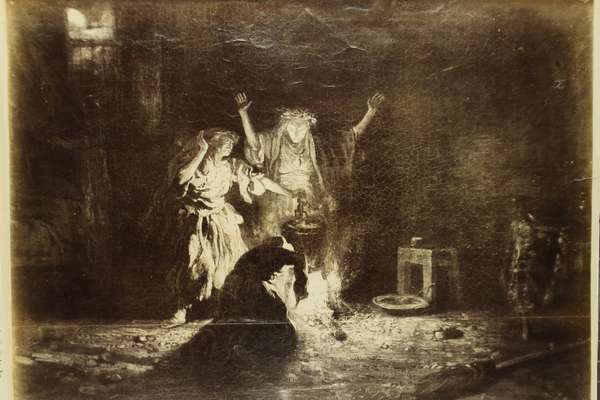
This set of documents relates to the witch craze in 17th-century England, focusing on attitudes in society and representations of witches.
Teaching resource
This set of documents relates to the witch craze in 17th-century England. Students and teachers can use this resource to develop their own questions on what witchcraft allegations reveal about the nature of beliefs and behaviours and the role of the authorities in society.

Petition to free Thomas Harvey, a man accused of witchcraft, 20 October 1650. Catalogue reference: SP 18/183 f. 10
Who was accused of witchcraft in early modern England?
This selection of documents held at The National Archives focuses on beliefs, behaviours and legal processes connected to accusations of witchcraft.
Discover more original documents in our related themed collection Early modern witch trials: Witchcraft and community.

1604: 1 James 1 c.12: An Act against Conjuration, Witchcraft and dealing with evil and wicked Spirits.
BE it enacted by the King our Soveraigne Lord; the Lords Spirituall and Temporall, and the Commons in this present Parliament assembled, and by the authority of the same, that the Statute made in the fifth yeare of the Reigne of our late Soveraigne Lady of most Famous and Happy memory, Queen Elizabeth, Entituled, An Acte againste Conjurations, Inchantments and Witchcraftes; be from the Feast of Saint Michael the Archangel next coming, for and concerning all offences to bee committed after the same Feaste, utterly repealed.
And for the better restraining of said offences, and more severe punishing the same, be it further Enacted by the Authority aforesaid; That if any person or persons, after the said Feast of St. Michael the Archangell next coming, shall use, practise, or exercise any invocation or conjuration of any evil and wicked spirit: or shall consult, covenant with, entertaine, imploy, feed, or reward any evil and wicked spirit, to or for any intent or purpose; or take up any dead man, woman, or child, out of his, her, or their grave, or any other place where the dead body resteth; or the skin, bone, or any other part of any dead person, to be imployed, or used in any manner of Witchcraft, Sorcery, Charme, or Inchantment, or shall use, practise, or exercise, any Witchcraft, Incantment, Charme or Sorcery, whereby any person shall be Killed, Destroyed, Wasted, Consumed, Pined, or Lamed, in His or Her body, or any part therof; that then every such Offender, or Offenders, their Ayders, Abettors, and Counsellors, being of the said offences duly and lawfully Convicted and Attainted, shall suffer paines of death as a Felon or Felons, and shall lose the priviledge and benefit of Clergy and Sanctuary.
And further, to the intent that all manner of practise, use or exercise of Witchcraft, Inchantment, Charme, or Sorcery, should be from henceforth utterly avoided, abolished, and taken away: Be it Enacted by the Authority of this present Parliament, that if any person or persons, shall from and after the said Feast of Saint Michael the Archangell next coming, take upon him or them, by Witchcraft, Inchantment, Charme, or Sorcery, to tell or declare in what place any Treasure of Golde or Silver should or might be found or had in the earth, or other secret places; or where goods, or things lost, or stolen, should be found or become, or to the intent to provoke any person to unlawful love, or whereby any Cattell, or Goods of any person shall be destroyed, wasted, or impaired; or to hurt or destroy any person in his or her body, although the same be not effected and done, that then all and every such person or persons so offending, and being therof lawfully convicted, shall for the said offence suffer imprisonment by the space of one whole year, without baile or maineprise; and once in every quarter of the said year, shall in some Market-Town, upon the Market day, or at such time as any faire shall be kept there, stand openly upon the Pillory by the space of six hours, and there shall openly confesse his or her errour and offence. And if any person or persons, being once convicted of the same offences as is aforesaid, do eftsoones perpetrate and commit the like offence, that then every such offender, being of any the said offences the second time lawfully, and duly convicted, and attainted as is aforesaid, shall suffer paines of death as a Felon, or Felons, and shall lose the benefit and priviledge of Clergy, and Sanctuary, saving to the wife of such person as shall offend in any thing contrary to this Act, her title of Dower, and also to the Heire and Successor of every such person, his, or their titles of inheritance, succession, and other rights, as though no such attainder of the Ancestor or Predecessor had been made: provided alwayes, that if the offender in any the cases aforesaid, shall happen to be a Peer of this Realm, then his tryall therein, to be had by his Peers, as it is used in cases of Felony or Treason, and not otherwise.
[Source & further reading: Newton and Bath, Witchcraft and the Act of 1604, Brill, 2008 (paywalled). Spelling lightly modernised. Transcript © John Levin for The Statutes Project, CC BY-SA 4.0]
The 1604 Act Against Witchcraft [1 Jas I, c 12], making it an offence to (among other things) use witchcraft to rob graves or find hidden treasure. Catalogue reference: C 65/181
Listen
The 1604 Act Against Witchcraft, 1 James 1st, c 12, making it an offence to (among other things) use witchcraft to rob graves or find hidden treasure. Catalogue reference: C 65/181
1604: 1 James 1 c.12: An Act against Conjuration, Witchcraft and dealing with evil and wicked Spirits.
Be it enacted by the King our Sovereign Lord; the Lords Spiritual and Temporal, and the Commons in this present Parliament assembled, and by the authority of the same, that the Statute made in the fifth year of the Reign of our late Sovereign Lady of most Famous and Happy memory, Queen Elizabeth, Entitled, An Act against Conjurations, Enchantments and Witchcrafts; be from the Feast of Saint Michael the Archangel next coming, for and concerning all offences to be committed after the same Feast, utterly repealed.
And for the better restraining of said offences, and more severe punishing the same, be it further Enacted by the Authority aforesaid; That if any person or persons, after the said Feast of St. Michael the Archangel next coming, shall use, practise, or exercise any invocation or conjuration of any evil and wicked spirit: or shall consult, covenant with, entertain, employ, feed, or reward any evil and wicked spirit, to or for any intent or purpose; or take up any dead man, woman, or child, out of his, her, or their grave, or any other place where the dead body resteth; or the skin, bone, or any other part of any dead person, to be employed, or used in any manner of Witchcraft, Sorcery, Charm, or Enchantment, or shall use, practise, or exercise, any Witchcraft, Enchantment, Charm or Sorcery, whereby any person shall be Killed, Destroyed, Wasted, Consumed, Pined, or Lamed, in His or Her body, or any part thereof; that then every such Offender, or Offenders, their Aiders, Abettors, and Counsellors, being of the said offences duly and lawfully Convicted and Attainted, shall suffer pains of death as a Felon or Felons, and shall lose the privilege and benefit of Clergy and Sanctuary.
And further, to the intent that all manner of practise, use or exercise of Witchcraft, Enchantment, Charm, or Sorcery, should be from henceforth utterly avoided, abolished, and taken away: Be it Enacted by the Authority of this present Parliament, that if any person or persons, shall from and after the said Feast of Saint Michael the Archangel next coming, take upon him or them, by Witchcraft, Enchantment, Charm, or Sorcery, to tell or declare in what place any Treasure of Gold or Silver should or might be found or had in the earth, or other secret places; or where goods, or things lost, or stolen, should be found or become, or to the intent to provoke any person to unlawful love, or whereby any Cattell, or Goods of any person shall be destroyed, wasted, or impaired; or to hurt or destroy any person in his or her body, although the same be not effected and done, that then all and every such person or persons so offending, and being thereof lawfully convicted, shall for the said offence suffer imprisonment by the space of one whole year, without bail or maineprise; and once in every quarter of the said year, shall in some Market-Town, upon the Market day, or at such time as any faire shall be kept there, stand openly upon the Pillory by the space of six hours, and there shall openly confess his or her error and offence. And if any person or persons, being once convicted of the same offences as is aforesaid, do eftsoons perpetrate and commit the like offence, that then every such offender, being of any the said offences the second time lawfully, and duly convicted, and attainted as is aforesaid, shall suffer pains of death as a Felon, or Felons, and shall lose the benefit and privilege of Clergy, and Sanctuary, saving to the wife of such person as shall offend in any thing contrary to this Act, her title of Dower, and also to the Heir and Successor of every such person, his, or their titles of inheritance, succession, and other rights, as though no such attainder of the Ancestor or Predecessor had been made: provided always, that if the offender in any the cases aforesaid, shall happen to be a Peer of this Realm, then his trial therein, to be had by his Peers, as it is used in cases of Felony or Treason, and not otherwise.
A key component of witchcraft trials was the examination of the accused by somebody in authority, when they would be presented with a series of questions and asked to give their account. In this document the Bishop of Chester describes the answers of three women accused of witchcraft in Lancaster.

The Examinations of Margaret Johnson, Mary Spencer
and Frances Dickenson, taken at Lancaster the 13th of June
Upon Command of the right honourable the Lords of his Majesty’s
most honourable Privy Council. By John Lord Bishop of
Chester
Margaret Johnson widow, aged 60 years of thereabouts, says that she hath been a witch
about 6 years last past, and that she was brought there upon some troubles
and vexations of her bad neighbours. And, about that time walking in the
highway in Marsden in the parish of Whalley, there appeared to her a man in
black attire [clothing] trussed with black points [laces or ties] who said to her: if she would give
him her soul, she should want nothing but should have power to hurt whom
she would both man and beast. But she then refused and thereupon he vanished.
In that manner he oftentimes returned to her, till at last she yielded to him,
and he gave her into her hand some silver and gold (as she thought) but it
vanished soon again and so knows not how, for she was ever bare and poor
though he often gave her the like. And she asked his name and he called
himself Mamilion and she said that most commonly at his coming to her, he
hath the use of her body, and she had some lust and pleasure thereby. And
after this he appeared to her in other shapes: as sometimes of a brown coloured
dog, sometimes as white cat, and at other times like a hare, and as those
shapes did suck her blood “at 2 duggs or papps” in her private parts, one whereof
is as big (she says) as her little fingers and half as long, the other less.
But since she lay in prison they have shrank up and grown less then formerly.
She says that she never hurt man or woman by Witchcraft, only there
was one Henry Heap her neighbour, who called her Witch (before she was one)
whereupon her spirit willed her to hurt him, but she assented not to him: yet (for-
getting herself) she says that Heap was dead, ere [before] her spirit advised her to it.
She also says that there were 7 or 8 others of her Neighbours who were
Witches, but most of them are dead, namely one Jane wife of Roger Cartwells
of Colne, the rest she cannot name, but says they were fetched in carts to Ladyham, to
the Justices ere she came to prison.
And she says the rest of the Witches which are condemned and now in Gaol were
unknown to her, till she was committed and she never was acquainted or in company
with any of them before.
And that she is in her conscience persuaded that Wilkinson and his
wife now in prison are not witches (nor many others who stand now condemned
for witchcraft) because he daily prays and reads and seems to her to be a godly man,
as do diverse [different] of the rest.
And that she herself did diligently frequent the Church till her soul
compact with the Devil, but from thence she seldom went to any Church.
The Lancaster Witches: examinations of Margaret Johnson, Mary Spencer, and Frances Dickenson, 15 June, 1634. Catalogue reference: SP 16/269 f.174
Listen
The Lancaster Witches: examinations of Margaret Johnson, Mary Spencer, and Frances Dickenson.
A key component of witchcraft trials was the examination of the accused by somebody in authority, when they would be presented with a series of questions and asked to give their account. In this document the Bishop of Chester describes the answers of 3 women accused of witchcraft in Lancaster, 15 June, 1634.
The Examinations of Margaret Johnson, Mary Spencer
and Frances Dickenson, taken at Lancaster the 13th of June
Upon Command of the right honourable the Lords of his Majesty’s
most honourable Privy Council. By John Lord Bishop of
Chester
Margaret Johnson widow, aged 60 years of thereabouts, says that she hath been a witch
about 6 years last past, and that she was brought there upon some troubles
and vexations of her bad neighbours. And, about that time walking in the
highway in Marsden in the parish of Whalley, there appeared to her a man in
black attire [clothing] trussed with black points [laces or ties] who said to her: if she would give
him her soul, she should want nothing but should have power to hurt whom
she would both man and beast. But she then refused and thereupon he vanished.
In that manner he oftentimes returned to her, till at last she yielded to him,
and he gave her into her hand some silver and gold (as she thought) but it
vanished soon again and so knows not how, for she was ever bare and poor
though he often gave her the like. And she asked his name and he called
himself Mamilion and she said that most commonly at his coming to her, he
hath the use of her body, and she had some lust and pleasure thereby. And
after this he appeared to her in other shapes: as sometimes of a brown coloured
dog, sometimes as white cat, and at other times like a hare, and as those
shapes did suck her blood “at 2 duggs or papps” in her private parts, one whereof
is as big (she says) as her little fingers and half as long, the other less.
But since she lay in prison they have shrank up and grown less then formerly.
She says that she never hurt man or woman by Witchcraft, only there
was one Henry Heap her neighbour, who called her Witch (before she was one)
whereupon her spirit willed her to hurt him, but she assented not to him: yet (for-
getting herself) she says that Heap was dead, ere [before] her spirit advised her to it.
She also says that there were 7 or 8 others of her Neighbours who were
Witches, but most of them are dead, namely one Jane wife of Roger Cartwells
of Colne, the rest she cannot name, but says they were fetched in carts to Ladyham, to
the Justices ere she came to prison.
And she says the rest of the Witches which are condemned and now in Gaol were
unknown to her, till she was committed and she never was acquainted or in company
with any of them before.
And that she is in her conscience persuaded that Wilkinson and his
wife now in prison are not witches (nor many others who stand now condemned
for witchcraft) because he daily prays and reads and seems to her to be a godly man,
as do diverse [different] of the rest.
And that she herself did diligently frequent the Church till her soul
compact with the Devil, but from thence she seldom went to any Church.
Another common component of witchcraft trials was an invasive medical examination where surgeons and midwives would examine the bodies of the accused for evidence of witches’ marks.

Surgeons Hall in Mugwell Street London, 2 July
1634
We in humble obeyance [obedience] to your Lordships have this day called unto us the
Surgeons and midwives whose names are hereunder written who have
by the directions of Mr Doctor Harvey (in our presence and his) made
diligent searches and inspections on those women which were lately
brought up from Lancaster and find as follows:
On the bodies of Jenett Hargreaves, Frances Dickenson
and Mary Spencer nothing unnatural neither in their
secrets or any other parts of their bodies, nor any thing
like a teat or mark, not any sign that any such
thing hath ever been
On the body of Margaret Johnson we find two things
[which] may be called teats
The Lancaster Witches: certificate of surgeons and midwives, 2 July 1634. Catalogue reference: SP 16/271 f.15
Listen
The Lancaster Witches: certificate of surgeons and midwives. (Catalogue ref: SP 16/271 f.15)
Another common component of witchcraft trials was an invasive medical examination where surgeons and midwives would examine the accused’s bodies for evidence of witches’ marks, 2 July, 1634.
Surgeons Hall in Mugwell Street London, 2 July
1634
We in humble obeyance [obedience] to your Lordships have this day called unto us the
Surgeons and midwives whose names are hereunder written who have
by the directions of Mr Doctor Harvey (in our presence and his) made
diligent searches and inspections on those women which were lately
brought up from Lancaster and find as follows:
On the bodies of Jenett Hargreaves, Frances Dickenson
and Mary Spencer nothing unnatural neither in their
secrets or any other parts of their bodies, nor any thing
like a teat or mark, not any sign that any such
thing hath ever been
On the body of Margaret Johnson we find two things
[which] may be called teats
This is the letter that accompanied the examinations carried out by the Bishop of Chester when he sent them on to the Privy Council. It was common for a senior church figure to carry out such examinations of people accused of witchcraft.

My it please your honour
I received a letter from yourself and others the Lords of his
Majesties most honourable privy council [closest advisers] dated the last of May wherein I was commanded
to examine 7 of those persons which lay condemned for witches in Lancaster
This letter was brought to me on Friday last, being the 13 of this
instant June when I was at Lancaster in triennial visitation [regular church inspection] and so had
the convenience of present dispatch [letter] thereof that very hour. But thereof
those persons mentioned in the letter died lately in the Gaol, namely John
Spencer, Alice Higgin and Jennet Loyd. A fourth named Jennet
Hargrave laid sick, past hope of recovery (as the keeper and the rest affirmed).
The other 3 I examined and have here enclosed sent your honour their examinations
I used the utmost of my ability to persuade them to a free confession
laying before them their miserable estate both for body (subject by the law
to death) and for soul (in extreme danger of damnation)
The old woman (called Margaret Johnson also the penitent witch) with
tears in her eyes (after my exhortations to her) replied: “I will not add sin to
I have already done enough nay too much and therefore will not increase
it by telling untruth or concealing truth. I pray God I may repent and I thank
God for bringing me here to further my repentance that I may be saved.”
And much more to this effect. And then she confessed as is set down in her
examinations, often acknowledging that she was a witch but more often faulting
in the particulars and circumstances of her actions, as one having a strange
imagination of the former, but of too weak a memory to retain or relate the
other.
The other 2 whom I examined were Mary Spencer and Francis the wife
of John Dickenson. Your wisdoms will soon discover their guilt or innocence
and it befits not me to utter what I conceive, before so deep, indecisions, just noble
and pious senators. Only I hold it my duty to signify what I find by
lamentable [regrettable] experience. Conceit and malice are so powerful with many
in these part as they will easily afford an oath to work revenge upon their
And it was offered to be deposed before me at Lancaster by Mary
Fisher widow (where the parties were in the Assizes Week) that if Dickenson
would have given the accuser Robinson 40s [shillings] before the Arraignment [formal reading of criminal charge] neither he
nor his son (the boy that first set this business on foot) would have said
anything against her, but when she (hearing thereof) advised her husband
to give nothing, Robinson said he had no malice to any but her. The like
(as is affirmed) will be testified by others. But such evidence being (as lawyers
speak) against the King [when somebody admits guilt and then acts as a witness in a trial], I thought not meet without further authority to
examine.
I pray God bless your honour and all that most noble and upright Table
with continual fruition of all temporal and spiritual blessings and at
last with eternal happiness amongst the saints
The Lancaster Witches: letter of Bishop of Chester,15 June 1634. Catalogue reference: SP 16/269 f. 172
Listen
The Lancaster Witches: letter of Bishop of Chester.
This is the letter that accompanied the examinations carried out by the Bishop of Chester when he sent them on to the Privy Council. It was common for a senior church figure to carry out such examinations of people accused of witchcraft,15 June, 1634.
May it please your honour
I received a letter from yourself and others the Lords of his
Majesties most honourable privy council dated the last of May wherein I was commanded
to examine 7 of those persons which lay condemned for witches in Lancaster
This letter was brought to me on Friday last, being the 13 of this
instant June when I was at Lancaster in triennial visitation and so had
the convenience of present dispatch thereof that very hour. But thereof
those persons mentioned in the letter died lately in the Gaol, namely John
Spencer, Alice Higgin and Jennet Loyd. A fourth named Jennet
Hargrave laid sick, past hope of recovery (as the keeper and the rest affirmed).
The other 3 I examined and have here enclosed sent your honour their examinations
I used the utmost of my ability to persuade them to a free confession
laying before them their miserable estate both for body (subject by the law
to death) and for soul (in extreme danger of damnation)
The old woman (called Margaret Johnson also the penitent witch) with
tears in her eyes (after my exhortations to her) replied: “I will not add sin to
I have already done enough nay too much and therefore will not increase
it by telling untruth or concealing truth. I pray God I may repent and I thank
God for bringing me here to further my repentance that I may be saved.”
And much more to this effect. And then she confessed as is set down in her
examinations, often acknowledging that she was a witch but more often faulting
in the particulars and circumstances of her actions, as one having a strange
imagination of the former, but of too weak a memory to retain or relate the
other.
The other 2 whom I examined were Mary Spencer and Francis the wife
of John Dickenson. Your wisdoms will soon discover their guilt or innocence
and it befits not me to utter what I conceive, before so deep, indecisions, just noble
and pious senators. Only I hold it my duty to signify what I find by
lamentable experience. Conceit and malice are so powerful with many
in these part as they will easily afford an oath to work revenge upon their
And it was offered to be deposed before me at Lancaster by Mary
Fisher widow (where the parties were in the Assizes Week) that if Dickenson
would have given the accuser Robinson 40s before the Arraignment neither he
nor his son (the boy that first set this business on foot) would have said
anything against her, but when she (hearing thereof) advised her husband
to give nothing, Robinson said he had no malice to any but her. The like
(as is affirmed) will be testified by others. But such evidence being (as lawyers
speak) against the King, I thought not meet without further authority to
examine.
I pray God bless your honour and all that most noble and upright Table
with continual fruition of all temporal and spiritual blessings and at
last with eternal happiness amongst the saints
During the course of the trial of the Lancaster Witches, one of the key witnesses, a young boy named Edmund Robinson, gave new evidence in which he admitted that he fabricated the accusations against the witches.

[Page one]
The re-examination of Edmund Robinson the younger,
taken the xvj [16] day of July 1634 before George Long
esquire one of his majesty’s Justices of Peace of the county of Middlesex.
Being examined touching his accusation of Frances, the wife of John
Dickenson, Jennet Hargraves the wife of Henry Hargraves, Jennet
Devys, William Devys, her half brother, and Beawser to be
witches, and that they were at a witch feast at Horestones in Pendle
Forest in the County of Lancaster, he says that he had had divers [many] &
several times heard the neighbours talk amongst themselves as they
sat together, of a witch feast that was kept at a place called
Mocking Tower in Pendle Forest in the County of Lancaster about
20 years since, to which feast divers witches came, and many of them
were apprehended and executed at Lancaster for witchcraft.
And thereupon he framed those tales of his concerning the persons aforesaid,
because he had heard divers of the neighbours repute them for witches.
Therefore he named them to be some of those whom he had seen at
And namely he hath heard one Edmund Stevenson
say that he was much troubled with the said Dickenson his wife in the
time of his sickness, and that he suspected her, and he heard Robert
Smith, another neighbour, say that his wife, lying upon her death bed
did accuse Jennet Hargraves to be the cause of her death. And he
had heard William Nutter his wife say that Jennet Devys and William Devys
had bewitched her; and it was so reported by those neighbours that watched
with her in her sickness. And it was generally spoken that Beawse his
wife, who went a-begging, was commonly taken for a witch, and he
had heard Sharpee Smith say that the wife of John Loynd
had laid her hand upon a cow of his, after which she never rose.
And having heard the story of the meeting of the witches at Mocking
Tower, it came in his head to make the like tale of a meeting at
Horestones in the forest aforesaid, at which place he had been formerly
with his father at such time as he built it for Thomas Robinson to dwell in.
[Page two]
And he sayeth that nobody was ever acquainted with any part of this his
fiction or intention, neither durst [did] he ever let anybody be acquainted
with it less they should tell. Neither did anybody ever advise or
counsel him to do or say anything, but it merely proceeded
out of his own brain and out of that those discourses that he
heard folk speak of Mocking Tower and the Witch Feast
that was there. He says he invented it at several times and
sometimes added one thing to it all and sometimes another.
And he utterly denies that he said unto the Kings Majesty or to any
other person that he was set on animated or advised to make the said
declarations touching the said witches.
He says that at the first he framed these tales to avoid his mother’s correction
and punishing of him for not bringing home her [kin?]. But afterwards
perceiving that many folks gave care unto him and believed him, in
that he spoke he grew confident in it more and more. And now
he sayeth he is very sorry for that he hath said and wishes heartily
that it were to speak for he would never say it.
The mark of
Edmond Robinson the Younger
The Lancaster Witches: re-examination of Edmund Robinson the younger, 16 July 1634. Catalogue reference: SP 16/271 f.227
Listen
The Lancaster Witches: re-examination of Edmund Robinson the younger.
During the course of the trial of the Lancaster Witches one of the key witnesses, a young boy named Edmund Robinson, gave new evidence in which he admitted that he fabricated the accusations against the witches,16 July, 1634.
Page One: (a)
The re-examination of Edmund Robinson the younger,
taken the xvj day of July 1634 before George Long
esquire one of his majesty’s Justices of Peace of the county of Middlesex.
Being examined touching his accusation of Frances, the wife of John
Dickenson, Jennet Hargraves the wife of Henry Hargraves, Jennet
Devys, William Devys, her half brother, and Beawser to be
witches, and that they were at a witch feast at Horestones in Pendle
Forest in the County of Lancaster, he says that he had had divers &
several times heard the neighbours talk amongst themselves as they
sat together, of a witch feast that was kept at a place called
Mocking Tower in Pendle Forest in the County of Lancaster about
20 years since, to which feast divers witches came, and many of them
were apprehended and executed at Lancaster for witchcraft.
And thereupon he framed those tales of his concerning the persons aforesaid,
because he had heard divers of the neighbours repute them for witches.
Therefore he named them to be some of those whom he had seen at
And namely he hath heard one Edmund Stevenson
say that he was much troubled with the said Dickenson his wife in the
time of his sickness, and that he suspected her, and he heard Robert
Smith, another neighbour, say that his wife, lying upon her death bed
did accuse Jennet Hargraves to be the cause of her death. And he
had heard William Nutter his wife say that Jennet Devys and William Devys
had bewitched her; and it was so reported by those neighbours that watched
with her in her sickness. And it was generally spoken that Beawse his
wife, who went a-begging, was commonly taken for a witch, and he
had heard Sharpee Smith say that the wife of John Loynd
had laid her hand upon a cow of his, after which she never rose.
And having heard the story of the meeting of the witches at Mocking
Tower, it came in his head to make the like tale of a meeting at
Horestones in the forest aforesaid, at which place he had been formerly
with his father at such time as he built it for Thomas Robinson to dwell in.
Page Two: (b)
And he sayeth that nobody was ever acquainted with any part of this his
fiction or intention, neither durst [did] he ever let anybody be acquainted
with it less they should tell. Neither did anybody ever advise or
counsel him to do or say anything, but it merely proceeded
out of his own brain and out of that those discourses that he
heard folk speak of Mocking Tower and the Witch Feast
that was there. He says he invented it at several times and
sometimes added one thing to it all and sometimes another.
And he utterly denies that he said unto the Kings Majesty or to any
other person that he was set on animated or advised to make the said
declarations touching the said witches.
He says that at the first he framed these tales to avoid his mother’s correction
and punishing of him for not bringing home her [kin?]. But afterwards
perceiving that many folks gave care unto him and believed him, in
that he spoke he grew confident in it more and more. And now
he sayeth he is very sorry for that he hath said and wishes heartily
that it were to speak for he would never say it.
The mark of
Edmond Robinson the Younger
When somebody was accused of witchcraft, testimonies could be collected from people who knew the accused. In this source, reputable townspeople testified that they did not believe Anne Piers to be a witch (although she was known to be a woman of 'loose life').

The names and ages of some of the better sorts & of most
credit of the town of Padstow & of the said parish who
being examined whether they know or ever heard that
Anne Piers of Padstow did practise witchcraft or had
the name to be a witch do affirm upon their conscience
that they think her to be no witch and that they never knew
any such thing in her neither ever heard her suspected therein
she having always dwelt in that town of Padstow
but they say otherwise she hath been accounted a woman of
loose life
1 Mr Robert Archer preacher vicar of Padstow of the age of xlvi [46]
2 Richard Lawrence one [of] the Constables of the age of lx [60] years & upwards
3 John Bishop of the age of xlij [42]
4 Martyn Coomer of the age of xxviij [28]: 2 other Constables of the town & parish of Padstow
5 John Pentier searcher of Padstow of the age of xlvij [47]
6 Richard Braband Custom of Padstow of the age of xlviij [48]
7 Richard Thomas Controller of Padstow of the age of xxxiiij [34]
8 John Middleton merchant of the age of lx [60] years
9 [?] Emoth merchant of the age of xl [40] years
10 John Thaw merchant of the age of lxx years [70] years
11 Nicholas Tarne Tayler of the age of l [50] years
12 John Endellycke sailer of the age of lx [60] years
All these and others testify as above said
Support for Anne Piers, date unknown. Catalogue reference: SP 12/150 f. 96
Listen
Support for Anne Piers.
When somebody was accused of witchcraft, testimonies could be collected from people who knew the accused. In this source reputable townspeople testified that they did not believe Anne Piers to be a witch (although she was known to be a woman of “loose life”). Date unknown.
The names and ages of some of the better sorts & of most
credit of the town of Padstow & of the said parish who
being examined whether they know or ever heard that
Anne Piers of Padstow did practise witchcraft or had
the name to be a witch do affirm upon their conscience
that they think her to be no witch and that they never knew
any such thing in her neither ever heard her suspected therein
she having always dwelt in that town of Padstow
but they say otherwise she hath been accounted a woman of
loose life
1 Mr Robert Archer preacher vicar of Padstow of the age of 46
2 Richard Lawrence one [of] the Constables of the age of 60 years & upwards
3 John Bishop of the age of 42
4 Martyn Coomer of the age of 28: 2 other Constables of the town & parish of Padstow
5 John Pentier searcher of Padstow of the age of 47
6 Richard Braband Custom of Padstow of the age of 48
7 Richard Thomas Controller of Padstow of the age of 34
8 John Middleton merchant of the age of 60 years
9 [?] Emoth merchant of the age of 40 years
10 John Thaw merchant of the age of 70 years
11 Nicholas Tarne Tayler of the age of 50 years
12 John Endellycke sailer of the age of 60 years
All these and others testify as above said
It was not just women who were accused of witchcraft. In this source, Henry Alcocke petitioned on the behalf of Thomas Harvey, who was accused of being a witch and then found innocent but was still in prison.

To the right honourable his highness most
honourable privy council
The humble petition of Henry Alcocke
Sheweth
That one Thomas Harvey of Oakham in
the County of Rutland mercer [dealer in fabrics] was by order
of this most honourable council apprehended
by a party of soldiers and carried to Barnstable
in Devonshire and the last Assizes held at
Exeter was tried upon suspicion of witchcraft
and wicked practices with the devil, but
upon the which traverse was acquitted by the
Jury yet by the command of the then Baron
Nicholas does still stand committed at Exeter
whereby he is not only deprived of his liberty
and put to great expenses but is withheld
at the distance of about 140 miles from
his family & lawful employments
The premised considered your said petitioner
humble prays this most honourable
council for his liberty upon bail or
otherwise as your honour’s wisdoms
shall judge most
And he shall ever pray &c [etc.]
Petition for Thomas Harvey, 20 October 1650. Catalogue reference: SP 18/183 f. 10
Listen
Petition for Thomas Harvey.
It was not just women who were accused of witchcraft. In this source, Henry Alcocke petitioned on the behalf of Thomas Harvey, who was accused of being a witch and then found innocent but was still in prison. 20 October, 1650
Transcript
To the right honourable his highness most
honourable privy council
The humble petition of Henry Alcocke
Sheweth
That one Thomas Harvey of Oakham in
the County of Rutland mercer was by order
of this most honourable council apprehended
by a party of soldiers and carried to Barnstable
in Devonshire and the last Assizes held at
Exeter was tried upon suspicion of witchcraft
and wicked practices with the devil, but
upon the which traverse was acquitted by the
Jury yet by the command of the then Baron
Nicholas does still stand committed at Exeter
whereby he is not only deprived of his liberty
and put to great expenses but is withheld
at the distance of about 140 miles from
his family & lawful employments
The premised considered your said petitioner
humble prays this most honourable
council for his liberty upon bail or
otherwise as your honour’s wisdoms
shall judge most
And he shall ever pray &c
In this letter the account of a woman who has been observed acting incredibly strangely is reported. The author suspects that she has either been bewitched, or is a witch herself. He is certain of what he has seen and that the Devil must be behind her bizarre behaviour.

[Page one]
All our wonder hereabouts is employed at the strange
condition of a maid near us, one Elizabeth
Tibbots of about 18 years of age living with her
uncle, one Thomas Crofts, at a place called Hust
in the parish of Stoneleigh, about two miles hence.
Which maid, for about this 3 weeks past has been
taken with strange fits, in which she has vomited
up several things incredible, as first several
pebble stones near as big as eggs, knives, scissors,
pieces of glass, some of them two or three inches
square, pieces of iron, an iron bullet of
at least 8 inches round and 2 pound & half
weight, a black drinking-pot of near
half a pint, pieces of cloth and wood, a
pocket pistol, a pair of pincers, bottoms
of yarn, and several other things, many
whereof are now at our Mayor’s, and have been
evidently seen to come out of her mouth
by many credible witnesses. Nor should I my
self venture to give you this relation, which
seems so unlike truth, had I not myself
been an eyewitness with my most curious
observation of so much of it, that I am con-
firmed in the belief of the whole. All which is
imputed to some diabolical practices of one
Watson, a strange kind of an empiric [fraud or charlatan] to whom
she was sometime a patient, who had it seems
so wrought with her, as that she had promised him
marriage, and to go with him (though she knew
not whither) but afterwards refused it. Immediately
upon which she fell into those fits. Yet now she has
respites, during which she appears reasonably well, and I
[Page two]
have heard her discourse very rationally of her
self and her condition, a full account whereof would
be too long to give. ‘Tis said
these 4 or 5 days past (in which I have
not seen her) some what appears to her in
the shape of a dog. Now, whether she is bewitched
or whether she be a witch, or whether
the devil be in her, as well as some others
of her sex, I know not, but that what I
have told you seemed to the most vigilant eye
to be infallibly true, is not doubtable. So
that it be not really so, I can only say
the devil’s in it, who, you may perhaps may
fancy to be in him that gives this seemingly
incredible relation. which be pleased to accept
for better for worse.
From
Sir your most obliged humble servant
Ralph Hope
Letter about Elizabeth Tibbots, 2 November, 1672. Catalogue reference: SP 29/317 f.116
Listen
Letter about Elizabeth Tibbots.
In this letter the account of a woman who has been observed acting incredibly strangely is reported. The author suspects that she has either been bewitched, or is a witch herself. He is certain of what he has seen and that the Devil must be behind her bizarre behaviour, 2 November, 1672.
(a)
All our wonder hereabouts is employed at the strange
condition of a maid near us, one Elizabeth
Tibbots of about 18 years of age living with her
uncle, one Thomas Crofts, at a place called Hust
in the parish of Stoneleigh, about two miles hence.
Which maid, for about this 3 weeks past has been
taken with strange fits, in which she has vomited
up several things incredible, as first several
pebble stones near as big as eggs, knives, scissors,
pieces of glass, some of them two or three inches
square, pieces of iron, an iron bullet of
at least 8 inches round and 2 pound & half
weight, a black drinking-pot of near
half a pint, pieces of cloth and wood, a
pocket pistol, a pair of pincers, bottoms
of yarn, and several other things, many
whereof are now at our Mayor’s, and have been
evidently seen to come out of her mouth
by many credible witnesses. Nor should I my
self venture to give you this relation, which
seems so unlike truth, had I not myself
been an eyewitness with my most curious
observation of so much of it, that I am con-
firmed in the belief of the whole. All which is
imputed to some diabolical practices of one
Watson, a strange kind of an empiric [fraud or charlatan] to whom
she was sometime a patient, who had it seems
so wrought with her, as that she had promised him
marriage, and to go with him (though she knew
not whither) but afterwards refused it. Immediately
upon which she fell into those fits. Yet now she has
respites, during which she appears reasonably well, and I
(b)
have heard her discourse very rationally of her
self and her condition, a full account whereof would
be too long to give. ‘Tis said
these 4 or 5 days past (in which I have
not seen her) some what appears to her in
the shape of a dog. Now, whether she is bewitched
or whether she be a witch, or whether
the devil be in her, as well as some others
of her sex, I know not, but that what I
have told you seemed to the most vigilant eye
to be infallibly true, is not doubtable. So
that it be not really so, I can only say
the devil’s in it, who, you may perhaps may
fancy to be in him that gives this seemingly
incredible relation. which be pleased to accept
for better for worse.
From
Sir your most obliged humble servant
Ralph Hope
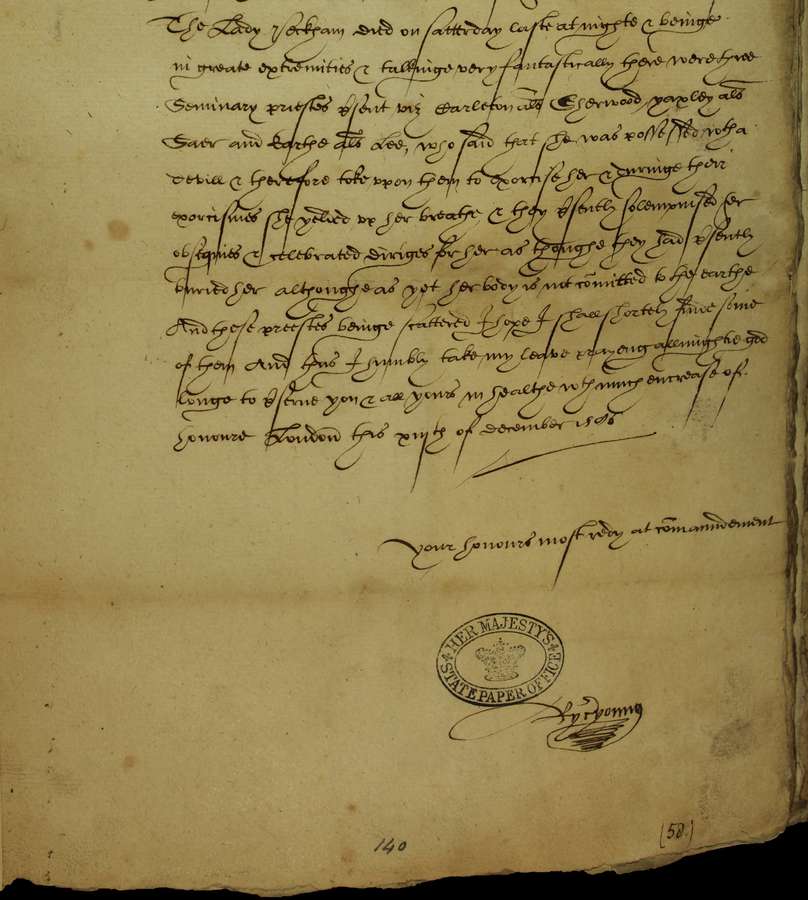
This source describes what happened when Roman Catholic priests attempted to exorcise a woman whom they presumed to be bewitched.

The Lady Peckham died on Saturday last at night & being
in great extremities & talking very fantastically there were three
seminary priests present, viz [namely], Carleton alias [known as] Sherwood, Yaxley alias
Saer, and Barthe alias Lee, who said that she was possessed with a
devil & therefore took upon them to exorcise her & during their
exorcisms she yielded up her breath & they presently solemnised her
obsequies [funeral rights] & celebrated diriges [Roman Catholic service for the dead] for her as though they had presently
buried her although as yet her body is not committed to the earth
Report about The Lady Peckham, 13 December 1586. Catalogue reference: SP 12/195 f. 103
Listen
Report about The Lady Peckham.
This source describes what happened when Roman Catholic priests attempted to exorcise a woman whom they presumed to be bewitched, 13 December, 1586.
Transcript
The Lady Peckham died on Saturday last at night & being
in great extremities & talking very fantastically there were three
seminary priests present, viz, Carleton alias Sherwood, Yaxley alias
Saer, and Barthe alias Lee, who said that she was possessed with a
devil & therefore took upon them to exorcise her & during their
exorcisms she yielded up her breath & they presently solemnised her
obsequies & celebrated diriges for her as though they had presently
buried her although as yet her body is not committed to the earth.
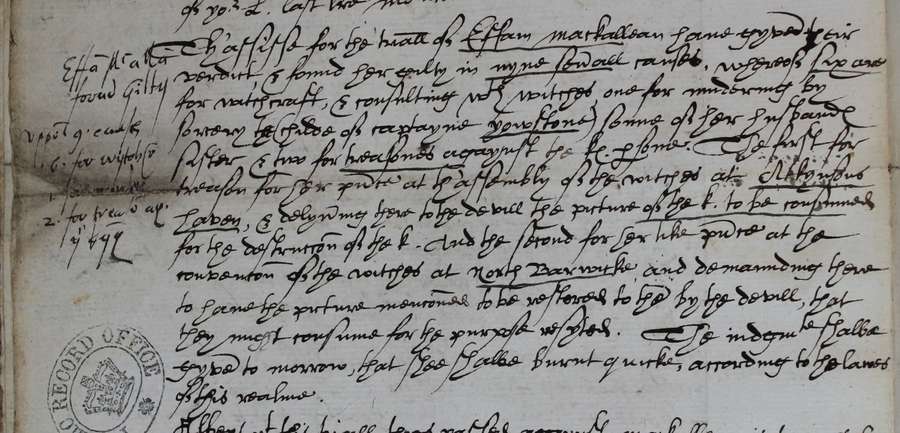
It was often feared that the powers of witches would be used against the King or Queen. In this source we see the judgment that one witch faced for consorting with the devil for treasonable purposes.

The Assize [a court where witches were tried] for the trial of Effam Mackallean have given their
verdict, and found her guilty in nine several causes, whereof six are
for witchcraft and consulting with witches, one for murdering by
sorcery (the child of Captain Yowstone, son of her husband’s
sister) and two for treasons against the King’s person. The first for
treason for her presence at the assembly of the witches at Atkynson’s
Haven, and delivering there to the devil the picture of the King to be consumed
for the destruction of the King. And the second for her like presence at the
convention of the witches at North Barwicke, and demanding there to
have the picture mentioned to be restored to them by the devil, that
they might consume for the purpose recited. The judgment shall be
given tomorrow, that she shall be burnt quick, according to the laws
of this realm
Report on the trial of Effam Mackallean, 14 June 1591. Catalogue reference: SP 52/47 f.66
Listen
Report on the trial of Effam Mackallean.
It was often feared that the powers of witches would be used against the King or Queen. In this source we see the judgment that one witch faced for consorting with the devil for treasonable purposes, 14 June, 1591.
Transcript
The Assize for the trial of Effam Mackallean have given their
verdict, and found her guilty in nine several causes, whereof six are
for witchcraft and consulting with witches, one for murdering by
sorcery (the child of Captain Yowstone, son of her husband’s
sister) and two for treasons against the King’s person. The first for
treason for her presence at the assembly of the witches at Atkynson’s
Haven, and delivering there to the devil the picture of the King to be consumed
for the destruction of the King. And the second for her like presence at the
convention of the witches at North Barwicke, and demanding there to
have the picture mentioned to be restored to them by the devil, that
they might consume for the purpose recited. The judgment shall be
given tomorrow, that she shall be burnt quick, according to the laws
of this realm
When people were accused of witchcraft by their neighbours sometimes those people might take it upon themselves to enact justice upon the supposed witches. In this source Joan Guppie tells the story of violence that was done to her by her neighbours on suspicion that she was a witch. It is a Bill, a legal document submitted by somebody who was claiming an injustice had been committed against them.

To the Kings most excellent Majesties
Humbly complaining sheweth unto your most excellent Majesty your poor dutiful and obedient subjects, Thomas Guppies of South Perrot in the county or Dorset and Joan
Guppie his wife. That whereas your said subject Joan Guppie hath all her time lived in good report and honest estimation amongst her neighbours, so it is may it please
your most excellent Majesty that Robert Gibbs, Judith Gibbs, Richard Shepard and Margaret Abington, wife of Andrew Abington, upon the nine and twentieth day of
June last being causeless malice against your said subject, did plot practice and combine to bring an imputation [accusation] upon your said subject Joan Guppie that she
should be a witch. Thereby to bring your said subject Joan into contempt and disgrace amongst her honest neighbours. And the more notoriously to defame and abuse
your said subject Joan. They well knowing that your said subject Joan Guppie, in and upon the said nine and twentieth day of June last past, did appoint and intend
to ride into South Perrot aforesaid unto Crewkerne being a market town within the said County of Somerset to buy and provide such provision as these defendants
thought fit for themselves and their families. They the said Robert Gibbs Margaret Abingdon the wife of Andrew Abingdon, gent, and Judith Gibbes, out
of their said inveterate [long-standing] and causeless hatred and malice towards your said subject Joan Guppie and desiring by all means to make some mischievous
revenge upon your said subject Joan Guppie, although she never gave them any cause of hatred or malice [wish to harm] against her, and thinking and imagining
that they could never hold a fitter time to effect their pretended revenge and malice towards your said subject Joan Guppie, then at such a time and place
that none might see or know of their barbarous and uncivil demeanours intended as aforesaid, did confederate conspire [secretly plan] and agree between them
selves to watch and waylay [stop] your said subject Joan Guppie as she should pass towards Crewkorne aforesaid then and there to work and
effect their cankered [corrupt] hatred and malice as aforesaid. And your said subject Joan Guppie according to her intent and purpose aforesaid did in and upon
the said nine and twentieth day of June last past ride towards Crewkerne aforesaid intending then and there to have dispatched her needful occasions as aforesaid
whereupon the said confederates according to their pretended plot and confederacy, did in and upon the said nine and twentieth day of June last past
being armed and arrayed with long piked staves, swords, daggers and other warlike weapons and having all provided great overgrown brambles
to tear and rend the flesh of the said Joan Guppie in riotous and unlawful manner assemble themselves together at or near unto the
street of South Perrot in the said county, and did then and there beset and waylay your said subject Joan Guppie and did then and there in most
riotous and barbarous manner set upon and assault your said subject, being in God’s peace and your Majesty’s, riding towards Crewkerne as aforesaid.
And the said Robert Gibbs giving the first onset came unto your said subject Joan Guppie, and took hold by the bridal of the beast whereon she rode
and stayed the same, and the said Judith came also and assaulted your said subject Joan Guppie and did with pins prick your said subject, and thrust
them into the body and legs of your said subject Joan Guppie and took the said great overgrown bramble and drew them about the face of your said
subject Joan Guppie, and did therewith rent and tear the flesh from the face of your subject Joan Guppie saying that your said subject Joan Guppie was a
witch, and that they came for the blood of your subject Joan Guppie, and they would have it and her life also before they left her...
Joan Guppie's story of being suspected of witchcraft, December 1605. Catalogue reference: STAC 8/149/24
Listen
Joan Guppie: Bill.
When people were accused of witchcraft by their neighbours sometimes those people might take it upon themselves to enact justice upon the supposed witches. In this source Joan Guppie tells the story of violence that was done to her by her neighbours, on suspicion that she was a witch. Note: a Bill was a legal document submitted by somebody who was claiming an injustice had been committed against them. December, 1605.
To the Kings most excellent Majesties
Humbly complaining sheweth unto your most excellent Majesty your poor dutiful and obedient subjects, Thomas Guppies of South Perrot in the county or Dorset and Joan
Guppie his wife. That whereas your said subject Joan Guppie hath all her time lived in good report and honest estimation amongst her neighbours, so it is may it please
your most excellent Majesty that Robert Gibbs, Judith Gibbs, Richard Shepard and Margaret Abington, wife of Andrew Abington, upon the nine and twentieth day of
June last being causeless malice against your said subject, did plot practice and combine to bring an imputation upon your said subject Joan Guppie that she
should be a witch. Thereby to bring your said subject Joan into contempt and disgrace amongst her honest neighbours. And the more notoriously to defame and abuse
your said subject Joan. They well knowing that your said subject Joan Guppie, in and upon the said nine and twentieth day of June last past, did appoint and intend
to ride into South Perrot aforesaid unto Crewkerne being a market town within the said County of Somerset to buy and provide such provision as these defendants
thought fit for themselves and their families. They the said Robert Gibbs Margaret Abingdon the wife of Andrew Abingdon, gent, and Judith Gibbes, out
of their said inveterate and causeless hatred and malice towards your said subject Joan Guppie and desiring by all means to make some mischievous
revenge upon your said subject Joan Guppie, although she never gave them any cause of hatred or malice against her, and thinking and imagining
that they could never hold a fitter time to effect their pretended revenge and malice towards your said subject Joan Guppie, then at such a time and place
that none might see or know of their barbarous and uncivil demeanours intended as aforesaid, did confederate conspire and agree between them
selves to watch and waylay [stop] your said subject Joan Guppie as she should pass towards Crewkorne aforesaid then and there to work and
effect their cankered hatred and malice as aforesaid. And your said subject Joan Guppie according to her intent and purpose aforesaid did in and upon
the said nine and twentieth day of June last past ride towards Crewkerne aforesaid intending then and there to have dispatched her needful occasions as aforesaid
whereupon the said confederates according to their pretended plot and confederacy, did in and upon the said nine and twentieth day of June last past
being armed and arrayed with long piked staves, swords, daggers and other warlike weapons and having all provided great overgrown brambles
to tear and rend the flesh of the said Joan Guppie in riotous and unlawful manner assemble themselves together at or near unto the
street of South Perrot in the said county, and did then and there beset and waylay your said subject Joan Guppie and did then and there in most
riotous and barbarous manner set upon and assault your said subject, being in God’s peace and your Majesty’s, riding towards Crewkerne as aforesaid.
And the said Robert Gibbs giving the first onset came unto your said subject Joan Guppie, and took hold by the bridal of the beast whereon she rode
and stayed the same, and the said Judith came also and assaulted your said subject Joan Guppie and did with pins prick your said subject, and thrust
them into the body and legs of your said subject Joan Guppie and took the said great overgrown bramble and drew them about the face of your said
subject Joan Guppie, and did therewith rent and tear the flesh from the face of your subject Joan Guppie saying that your said subject Joan Guppie was a
witch, and that they came for the blood of your subject Joan Guppie, and they would have it and her life also before they left her.
In the course of a legal trial witnesses would be called to answer Interrogatories (questions) about the case. In this source one of Joan Guppie’s neighbours gives his evidence about her supposed witchcraft.

[Page one]
To the 10th Interrogatory he saith that the said Joan
Guppie is in the place where she
dwelleth [lived] is suspected to be a witch & known
to have used sorcery or
charms.
To the 11th Interrogatory this defendant saith [said] that it is known that the
said Judith Gibbs hath been by the space
of 3 years of thereabouts troubled
with a swelling in her body, and that
it hath been thought by neighbours &
such as had her in cure
as this defendant hath been told, that the said Judith
[Page two]
was bewitched with that grief. And more than is aforesaid
he cannot say to this Interrogatory
Joan Guppie: Interrogatory, December 1605. Catalogue reference: STAC 8/149/24
Listen
Joan Guppie: Interrogatory.
In the course of a legal trial witnesses would be called to answer Interrogatories (questions) about the case. In this source one of Joan Guppie’s neighbours gives his evidence about her supposed witchcraft, December 1605.
To the 10th Interrogatory he saith that the said Joan
Guppie is in the place where she
dwelleth is suspected to be a witch & known
to have used sorcery or
charms.
To the 11th Interrogatory this defendant saith that it is known that the
said Judith Gibbs hath been by the space
of 3 years of thereabouts troubled
with a swelling in her body, and that
it hath been thought by neighbours &
such as had her in cure
as this defendant hath been told, that the said Judith
Page two:
was bewitched with that grief. And more than is aforesaid
he cannot say to this Interrogatory
The neighbours of a suspected witch were not always hostile towards them. This document (which is heavily damaged in places) is the certificate by some of the inhabitants of South Perrot, Dorset, stating that Joan Guppie is not a witch. It is written in Latin.

Certificate that Jane Guppie is not a witch, 1606. There is no transcript for this document owing to damage. Catalogue reference: E 163/17/5
In the course of a witchcraft trial the accused could give a confession (sometimes given freely, sometimes forced) which would be used as evidence against them. Agnes Samsone was burned for witchcraft, and this source contains parts of her confession.

[Page one, first eight lines]
Certain notes of Agnes Samsone her
confession 27 January 1590 whereupon she was
convicted by an Assize [legal court] &
burned in Edinburgh, 28 day
for a witch
Imprimis [Firstly] the said Agnes confesses that after the death of her hus-
band the devil appeared unto her in the night till she was
[?] and pensive [thinking] for the sustentation [keeping]of her and her bairns [babies]
bidding her be of good cheer and leave of that care for her
children, promising that if she would serve him she nor
they should lack nothing. And being motivated with her poverty
and his fair promises of riches and revenge of her enemies,
took him for her master and renounced Christ.
[Page two, third paragraph]
Item, she confesses that upon a complaint of a woman of the
frowardness [person who is difficult to deal with] of her father-in-law and her earnest desire
to be quit of him, she made a picture of wax and raised
a spirit at a waterside beside a brier bush [prickly shrub], desiring her
to enchant it to serve for his destruction, and send it to the said
woman to be put under his bed sheet or bed head.
[Page four, second paragraph]
Item, she confesses that she raised the devil by her
evocations [act of summoning the spirits] to ask if a gentlewoman should live or die.
He appeared to her in likeness of a black dog before supper,
she being alone. But after supper, having the gentle-
woman’s three daughters with her, of whom one
would have drowned herself in the well out of the which
the dog came and whether he went, and was hardly
stayed through the violent pulling and holding of
her sisters and the said Agnes Samsone the said
gentlewoman was made a quarter of an hour thereafter.
Confession of Agnes Samsone, 29 January 1590. Catalogue reference: SP 52/47 f. 14i
Listen
Confession of Agnes Samson.
In the course of a witchcraft trial the accused could give a confession (sometimes given freely, sometimes forced) which would be used as evidence against them. Agnes Samsone was burned for witchcraft, and this source contains parts of her confession. 29 January, 1590.
Page One, From Top into line 8 of main text:
Certain notes of Agnes Samsone her
confession 27 January 1590 whereupon she was
convicted by an Assize &
burned in Edinburgh, 28 day
for a witch
Imprimis the said Agnes confesses that after the death of her husband
the devil appeared unto her in the night till she was
and pensive for the sustentation of her and her bairns
bidding her be of good cheer and leave of that care for her
children, promising that if she would serve him she nor
they should lack nothing. And being motivated with her poverty
and his fair promises of riches and revenge of her enemies,
took him for her master and renounced Christ.
Page Two, Third Paragraph:
Item, she confesses that upon a complaint of a woman of the
frowardness of her father-in-law and her earnest desire
to be quit of him, she made a picture of wax and raised
a spirit at a waterside beside a brier bush, desiring her
to enchant it to serve for his destruction, and send it to the said
woman to be put under his bed sheet or bed head.
Page 4, Second Paragraph:
Item, she confesses that she raised the devil by her
evocations to ask if a gentlewoman should live or die.
He appeared to her in likeness of a black dog before supper,
she being alone. But after supper, having the gentle-
woman’s three daughters with her, of whom one
would have drowned herself in the well out of the which
the dog came and whether he went, and was hardly
stayed through the violent pulling and holding of
her sisters and the said Agnes Samsone the said
gentlewoman was made a quarter of an hour thereafter.
In the course of a legal trial witnesses would be called to answer Interrogatories (questions) about the case. Sources 15a and 15b contain three of the questions that were put to Thomas Saunders and Katherine Malpas (the elder) who were accused of pretending that Katherine Malpas (the younger) was a witch for their own financial gain. Sources 15c and 15d contain three of the answers of Thomas Saunders who denied the accusations.

Interrogatories to be ministered to
two of the defendants to the Information of Sir Thomas Coventry Knight his Majesty’s
Attorney General [the Crown’s adviser and representative in legal matters]
1. Imprimis [Firstly] did you in or about the month of December in the Eighteenth year of his Majesty’s Reign or England persuade
procure or incite Katherine Malpas the younger one other of the defendants to Counterfeit and fain [fake] herself to be bewitched & possessed with
an evil spirit. And to counterfeit & feign certain strange fits and trances & to practice and use divers strange & unusual tricks &
deceits in the manner and fashion or her behaviour and gesture, what other person or persons besides you self did move or incite her thereunto
or were privy acquainted or consenting to the same. And whether did not you teach & instruct her the said Katherine Malpas afterwards
at several times & shew unto her the manner how to do & perform the same or what other person or persons as you know or have heard
did instruct her therein, or show her any such form & did not she in a very short time become very expert & skilful in the said
counterfeited & dissembled fits and trances.
2. Item did you not report to divers of your friends and acquaintances that the said Katherine Malpas was strangely visited & did not you, or
the other defendants or some of them or some other person or persons, & whom by name devise and use means how to draw company unto the
house of the said Thomas Saunders where the said Katherine Malpas did then remain to see the strange & unusual fits and trances
counterfeited and practised by the said Katherine Malpas.
3. Item what was the end or intent that moved you, or any other the persons aforesaid to procure the said Katherine Malpas the younger to
be given unto you or the said Katherine Malpas by such persons as should come to see her, in pity & commiseration of so strange a sight. And
what sum or sums of money were given & by what persons by name & who received the same.
Interrogatories put to Thomas Saunders and Katherine Malpas the elder, February 1622. Catalogue reference: STAC 8/32/13
Listen
Katherine Malpas: Interrogatories put to Thomas Saunders & Katherine Malpas the elder.
In the course of a legal trial witnesses would be called to answer Interrogatories (questions) about the case. This source contains three of the questions that were put to Thomas Saunders and Katherine Malpas (the elder) who were accused of pretending that Katherine Malpas (the younger) was a witch for their own financial gain, February 1622.
Interrogatories to be ministered to
two of the defendants to the Information of Sir Thomas Coventry Knight his Majesty’s
Attorney General
1. Imprimis did you in or about the month of December in the Eighteenth year of his Majesty’s Reign or England persuade
procure or incite Katherine Malpas the younger one other of the defendants to Counterfeit and fain herself to be bewitched & possessed with
an evil spirit. And to counterfeit & feign certain strange fits and trances & to practice and use divers strange & unusual tricks &
deceits in the manner and fashion or her behaviour and gesture, what other person or persons besides you self did move or incite her thereunto
or were privy acquainted or consenting to the same. And whether did not you teach & instruct her the said Katherine Malpas afterwards
at several times & shew unto her the manner how to do & perform the same or what other person or persons as you know or have heard
did instruct her therein, or show her any such form & did not she in a very short time become very expert & skilful in the said
counterfeited & dissembled fits and trances.
2. Item did you not report to divers of your friends and acquaintances that the said Katherine Malpas was strangely visited & did not you, or
the other defendants or some of them or some other person or persons, & whom by name devise and use means how to draw company unto the
house of the said Thomas Saunders where the said Katherine Malpas did then remain to see the strange & unusual fits and trances
counterfeited and practised by the said Katherine Malpas.
3. Item what was the end or intent that moved you, or any other the persons aforesaid to procure the said Katherine Malpas the younger to
be given unto you or the said Katherine Malpas by such persons as should come to see her, in pity & commiseration of so strange a sight. And
what sum or sums of money were given & by what persons by name & who received the same.

Thomas Saunders of Upton in the parish of WestHam
in the county of Essex yeoman sworn &c [etc.]
To the first Interrogatory [question] this defendant says that he did not in or
about the month of December in the 18 year of his Majesty’s reign
persuade, procure or invite Katherine Malpas the younger
in this interrogatory mentioned to counterfeit [pretend] or fain herself to
be bewitched & possessed with an evil spirit or to
counterfeit or fain strange fits or trances or to practise
& use strange & unusual tricks of deceits as it is in this
interrogatory set forth. Neither doth he know of any other person or persons
that did move or incite her thereunto or were privy
acquainted or consenting to the same & doth utterly deny
that he did teach or instruct her the said K.M. [Katherine Malpas] at any time
or showed unto her the manner how to do or perform the same
in this interrogatory questioned. Neither doth he know or hath heard
of any other person or persons that did instruct her therein nor
show her any such form & to the rest
of this interrogatory this defendant denies the particulars therein
To the 2 Interrogatory this defendant say he did report to diverse
of his friends & acquaintances that the said K.M. was strangely
visited but denies that he or any other person or persons did
devise or use any means how to draw company out the
house of this defendant where the said K.M. did then remain to
see the strange & unusual fits & trances used by the
said K.M. but whether the said K.M. did counterfeit the
same this defendant knows not.
To the 3 interrogatory this defendant says he did not nor any other
person or persons to this knowledge that moved or persuaded the
said K.M. the younger to counterfeit as aforesaid or to draw
company to see her strange tricks & fits, neither was
it conceived by this defendant or any others that much money would
be given unto this defendant or the said K.M. by any person or persons
that should come to see her in pity or commiseration but confesses
& says that 4d was given unto this defendant by a stranger unknown to the use of
the said K.M. which was all that this defendant ever received in that
kind in this interrogatory demanded. And says that some other means
was given unto K.M. the elder but how much or from whom
she so received it this defendant knows not.
Answers of Thomas Saunders. Catalogue reference: STAC 8/32/13
Listen
Katherine Malpas: Answers of Thomas Saunders.
In the course of a legal trial witnesses would be called to answer Interrogatories (questions) about the case. This source contains three of the answers of Thomas Saunders who denied pretending that Katherine Malpas (the younger) was a witch for his own financial gain, February, 1622.
Thomas Saunders of Upton in the parish of WestHam
in the county of Essex yeoman sworn &c
To the first Interrogatory this defendant says that he did not in or
about the month of December in the 18 year of his Majesty’s reign
persuade, procure or invite Katherine Malpas the younger
in this interrogatory mentioned to counterfeit or fain herself to
be bewitched & possessed with an evil spirit or to
counterfeit or fain strange fits or trances or to practise
& use strange & unusual tricks of deceits as it is in this
interrogatory set forth. Neither doth he know of any other person or persons
that did move or incite her thereunto or were privy
acquainted or consenting to the same & doth utterly deny
that he did teach or instruct her the said K.M. at any time
or showed unto her the manner how to do or perform the same
in this interrogatory questioned. Neither doth he know or hath heard
of any other person or persons that did instruct her therein nor
show her any such form & to the rest
of this interrogatory this defendant denies the particulars therein
To the 2 Interrogatory this defendant say he did report to diverse
of his friends & acquaintances that the said K.M. was strangely
visited but denies that he or any other person or persons did
devise or use any means how to draw company out the
house of this defendant where the said K.M. did then remain to
see the strange & unusual fits & trances used by the
said K.M. but whether the said K.M. did counterfeit the
same this defendant knows not.
To the 3 interrogatory this defendant says he did not nor any other
person or persons to this knowledge that moved or persuaded the
said K.M. the younger to counterfeit as aforesaid or to draw
company to see her strange tricks & fits, neither was
it conceived by this defendant or any others that much money would
be given unto this defendant or the said K.M. by any person or persons
that should come to see her in pity or commiseration but confesses
& says that 4d was given unto this defendant by a stranger unknown to the use of
the said K.M. which was all that this defendant ever received in that
kind in this interrogatory demanded. And says that some other means
was given unto K.M. the elder but how much or from whom
she so received it this defendant knows not.
Through this set of documents students could explore questions such as how the persecution of witches was instigated, encouraged or enabled by the authorities or communities. How was the Church involved? What type of people experienced persecution? Were some people pretending to be witches and why? Were both men and women involved? What was the possible impact of printed material on the witch craze? What general conclusions can students draw from considering this group of documents as a whole? How could study of the topic be extended?
It is hoped that these documents will offer students a chance to develop their powers of evaluation and analysis concerning aspects of popular culture and the witch craze in the 17th century and beyond. They might consider how these aspects have been interpreted in debates between historians and social scientists.
Taking it further students could be encouraged to find out more about the legacy of medieval and 15th-century attitudes, beliefs and reactions to heresy, demonology and witches (e.g. Nider’s Formicarius) and what ultimately prompted decriminalisation.
Finally teachers could also use the collection to develop their own resources or encourage students to ‘curate’ their own ‘exhibition’ of the most significant sources on the topic. Please note that some sources contain sensitive material so use with care. Transcripts have been modernised in terms of spelling, with some additional punctuation added, some words have been defined within the text using square brackets.
Edexcel: A Level History:
OCR History A H505 Y312 Unit:
In early modern society there was a genuine fear of witchcraft, and those suspected of consorting with the Devil could be put on trial and executed, occasionally in large numbers. From a modern perspective, the so-called ‘witch crazes’ can be difficult to understand. What sorts of people were accused of witchcraft? Why? How genuine were people’s suspicions? And what evidence was required for somebody to be executed? This resource helps to highlight some of the reasons why people were accused of witchcraft, who they were, and what happened to them as a result.
The fear of witches, witchcraft, and bewitchment originated in the medieval period, when the Roman Catholic Church taught the dangers of witchcraft. Printed texts, such as Malleus Maleficarum, illustrated the horrors of witchcraft. Witchcraft remained within the popular imagination into the early modern period, and after the Reformation it was still perceived to be a threat to the church and a well-ordered society.
In times of uncertainty and upheaval, witchcraft accusations would increase, and so there were often more witchcraft accusations during times of war and famine. General fears of witchcraft within society could also feed into specific accusations that originated within a local community, so that somebody disliked by their neighbours might be more vulnerable to being accused.
In this resource there are lots of examples of ordinary people being accused of witchcraft by their neighbours. One example is Joan Guppie, whose neighbours believed her to be a witch and who took it upon themselves to try to punish her. There were also waves of accusations as groups of people were rounded up and put on trial together, such as the Lancaster witches: a group of women who were tried together 20 years after the famous Pendle witch trials.
Witchcraft was particularly associated with women in the early modern period, and this continued into the modern era. In this resource there are several examples of modern images of witches who were women, often riding on broomsticks with a pointy hat: the image that we most associate with witchcraft today. However, an image of a witch taken from the seventeenth century shows some aspects of this witchcraft stereotype have been around for a long time.
Women were more likely to be accused because of the church’s teaching that women were the weaker sex, seen as more vulnerable to the seductive powers of the Devil. Therefore, accusations of witchcraft became another way for women to be oppressed in early modern society. However, men were also suspected and accused of witchcraft, such as the male witches of Edmonton.
Lots of the sources in this resource are legal documents that relate to witchcraft trials. When a person was accused of witchcraft an Indictment would be drawn up, then witnesses would be called, an examination of the accused would be carried out, and then sometimes a confession drawn out, possibly with torture. Those found guilty would be executed.
Not all accusations of witchcraft were believed, however. Even in this period, people were suspicious of attempts to pretend to be bewitched, or pretending to be a witch, and were aware that not all cases of witchcraft were genuine. For example, in this resource is the case of Katherine Malpas, whose relatives pretended she was a witch for their own financial benefit.
Witchcraft caused great fear within society, but it also often became a function of normal life. Somebody new to a community might be accused of witchcraft because his or her neighbours were suspicious of them. Sometimes a person might pretend to be bewitched because it was a way of making money. People were more suspicious of witchcraft when the harvest failed, as they looked to find a cause. Witchcraft trials became ways for grievances and disputes to be aired, and for people to stand in testimony for or against their neighbours.
In many ways, therefore, understanding the history of witchcraft tells us less about the supernatural than it does about the realities of everyday life for ordinary people in early modern England.
Background information written by Dr Hannah Worthen (University of Hull).
Teaching resource
This set of documents relates to the witch craze in 17th-century England, focusing on attitudes in society and representations of witches.
In pictures
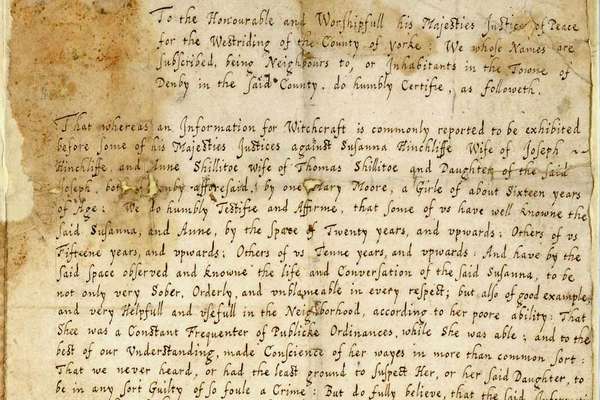
Accusations of witchcraft resulted in the trials of thousands of people in the early modern period, mostly women. Our records give descriptions of many cases.
youtube.com
A 30-minute talk featuring some of the documents in this resource by The National Archives' Dr Jessica Nelson.
witches.hca.ed.ac.uk
Use the Edinburgh University Survey of Scottish Witchcraft Database, which includes nearly 4,000 records of accused witches and documents on witchcraft belief.
sourcebooks.fordham.edu
A short collection of primary sources on the witch craze, including an extract from the Papal Bull of 1484 and Nider’s Formicarius.
oldbaileyonline.org
Detailed proceedings (although not entire transcripts) for trials at the London central criminal court. Search for witchcraft cases for the period 1679 to 1772.