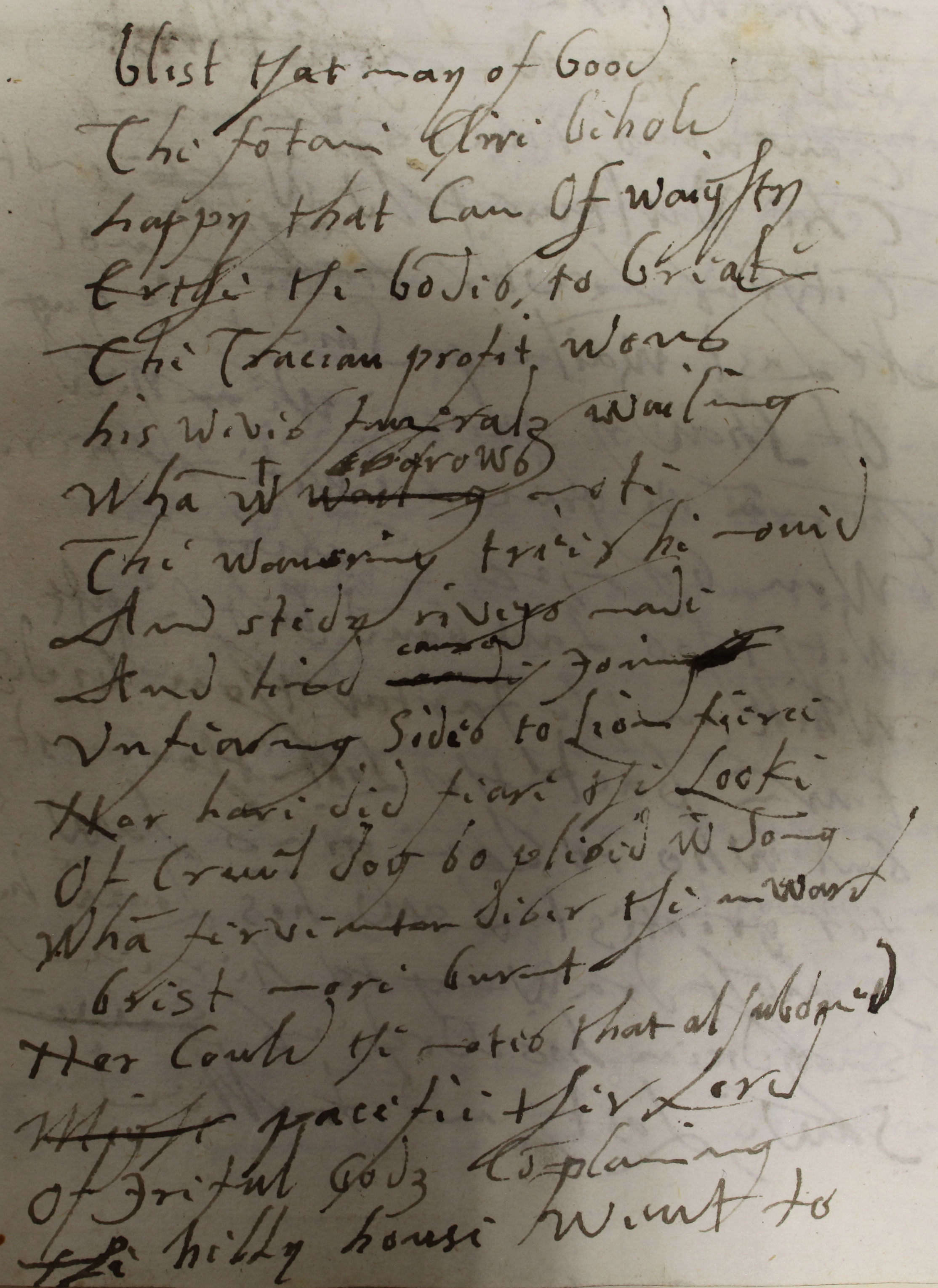
Elizabeth’s translation of Boethius’s De Consolatione Philosophie (The Consolation of Philosophy), October and November 1593 (SP 12/289 f.48)
Elizabeth had an exceptional intellect and had always loved learning for its own sake. From the age of five, she had been taught a range of languages, including Latin and Greek, and she loved to make translations of classical authors. It was clearly an abiding passion because the translation shown here was undertaken by the queen shortly after her sixtieth birthday. There is no evidence that it was intended for circulation, but rather for the pleasure that it gave her. She worked on it while staying at Windsor Castle in the autumn of 1593 and began writing it all in her own hand. After a few pages, however, she started dictating the prose sections to her secretary, Thomas Windebank, while continuing to write the verse herself. Boethius’s work had been written from prison during the closing years of the Roman Empire. It had already been ‘Englished’ by authors such as King Alfred, Geoffrey Chaucer and William Caxton. The following verse, in Elizabeth’s hand, uses the example of Orpheus to show that the light of truth may be lost by returning to darkness.
Transcript
blist that may of Good
The fontaine Clire behold
happy that Can of weighty
Erthe the bondes to breake
The Tracian profit wons
his wives funeralz wailing
Whan with sorows note
The wavering trees he moved
And stedy rivers made
And hind caused Join
Unfearing Sides to Lion fierce
Nor hare did feare the Looke
Of Cruel dog so plised with Song
Whan ferventar desir the inward
brest more burnt,
Nor Could the notes that al subdued
Pacefie ther Lord
Or Ireful Godz Complaining
The helly house went to…
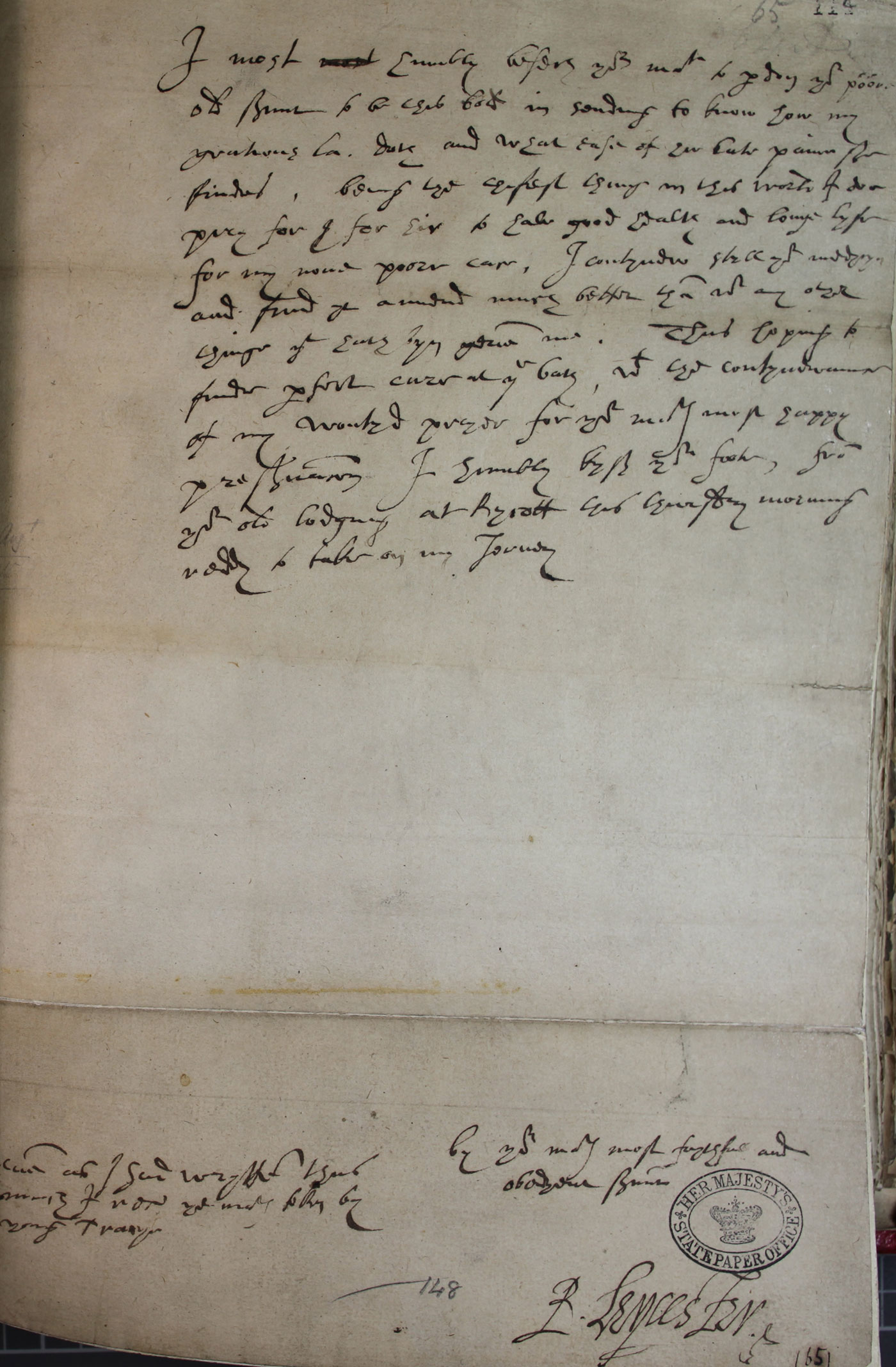
Robert Dudley, Earl of Leicester to Elizabeth, 29 August 1588 (SP 12/215 f.114)
Elizabeth’s long-standing favourite wrote this letter just a few days before his death, when he was staying at Rycote. This is the house where Elizabeth had lodged on her way to Woodstock after her imprisonment in the Tower in 1554, and she and Dudley had stayed there together in happier times as guests of Sir Henry and Lady Norris. The queen was grief-stricken at the death of her favourite on 4 September 1588. Years later, when she died, this letter was found in a casket by her bed. She had inscribed it ‘his Last lettar’.
Transcript
‘I most humbly besech your majeste to pardon your poore old servant to be this bold in sending to know how my gratious lady doth and what ease of her late paine she findes, being the chefest thinge in the world I doe prey for & for hir to have good health and longe lyfe/ for my none poore case, I contyndue still your meddycyn [medicine] and finde yt amended much better than with any other thinge that hath byn given me. Thus hoping to finde perfect cure at the bath, with the contynduance of my wontyd preyer for your majesty’s most happy preservacion. I humbly kyss your foote. From your old lodging at Rycott this Thursday morning reddy to take on my Journey.
by your most faythful and obedyent servant. R Leycester.
[postscript] Even as I had wrytten thus much I receyved your majesty’s token by young Tracye.
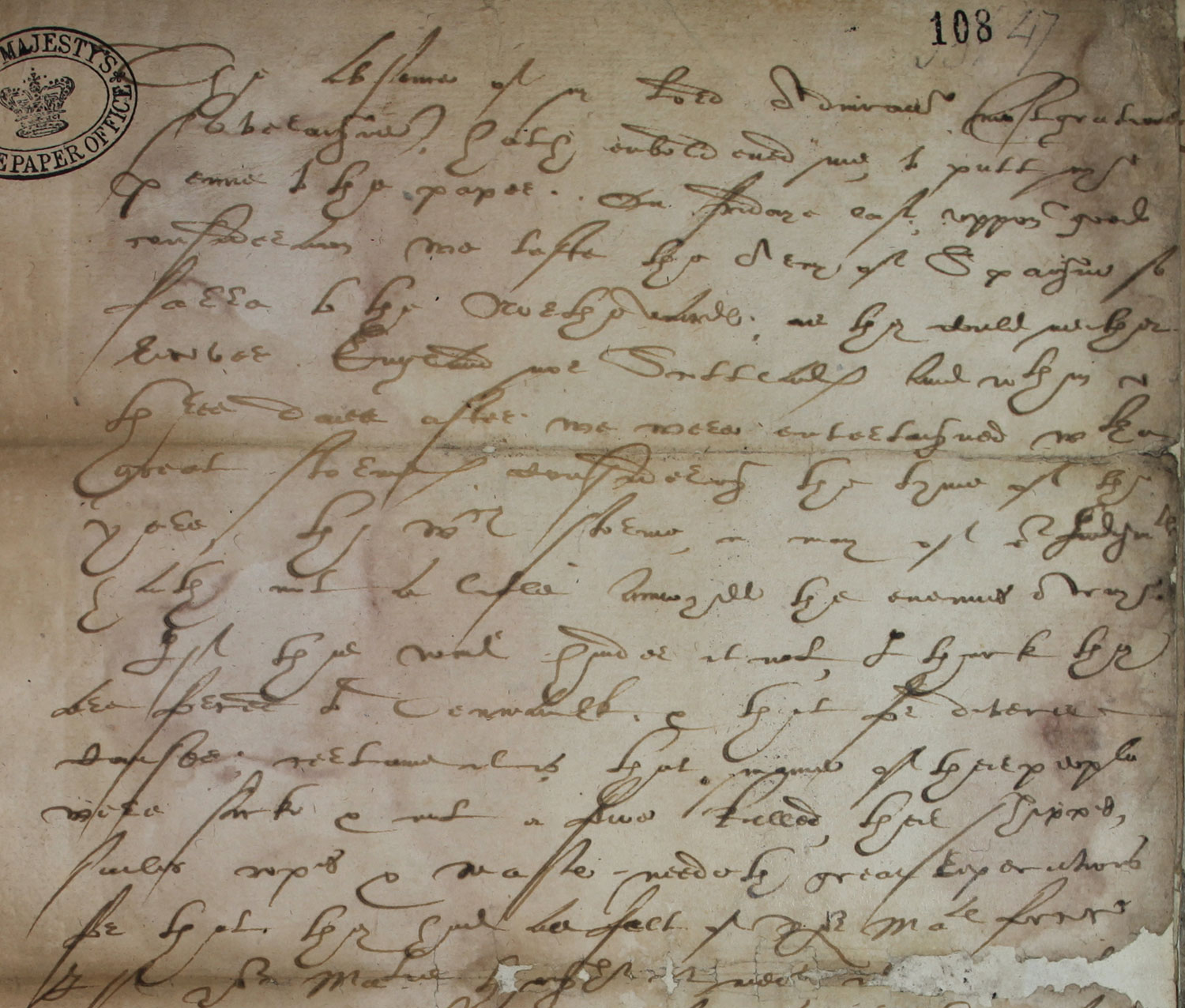
Sir Francis Drake to Elizabeth, 8 August 1588 (SP 12/214 f.108)
The queen would have rejoiced upon receiving this letter from her most celebrated naval commander, in which he announced the flight of the mighty Spanish Armada. The skill of Elizabeth’s navy, coupled with some fortuitous weather, had scattered Philip II’s ships. Many had been lost, and those that survived were blown so far northwards that they could reach neither England nor Scotland. The defeat of the Spanish Armada catapulted Elizabeth’s kingdom onto the world stage. It also secured the queen’s reputation as the iconic ‘Gloriana’ and her reign as the ‘Golden Age’. Although Drake was only second in command, he grabbed all of the glory. Even Elizabeth’s enemy Pope Sixtus V was fulsome in his praise, exclaiming: ‘Have you heard how Drake with his fleet has offered battle to the Armada? With what courage! Do you think he showed any fear? He is a great captain.’ The Spanish nicknamed him ‘El Draque’, the dragon.
Transcript (extract)
The absence of my Lord Admirall most gratious Soverayne, hath emboldened me, to putt my penne to the paper. On fridaye last, upon good consideracion we lefte the army of Spagne so farre to the northewardes, as they could neither recover England nor Scottland. And within three daies after we were entertayned with a great storme, considering the tyme of the yere, the which storme, in many of our judgmentes hath not a litle annoyedd the enemies army. If the wind hinder it not, I think they are forced to Denmark, & that for diverce causes. Certain it is that manie of their people were sick and not a fewe killed, there shippes, sailes ropes & mastes needeth great reperations for that they had all felt of your Majestie’s force…
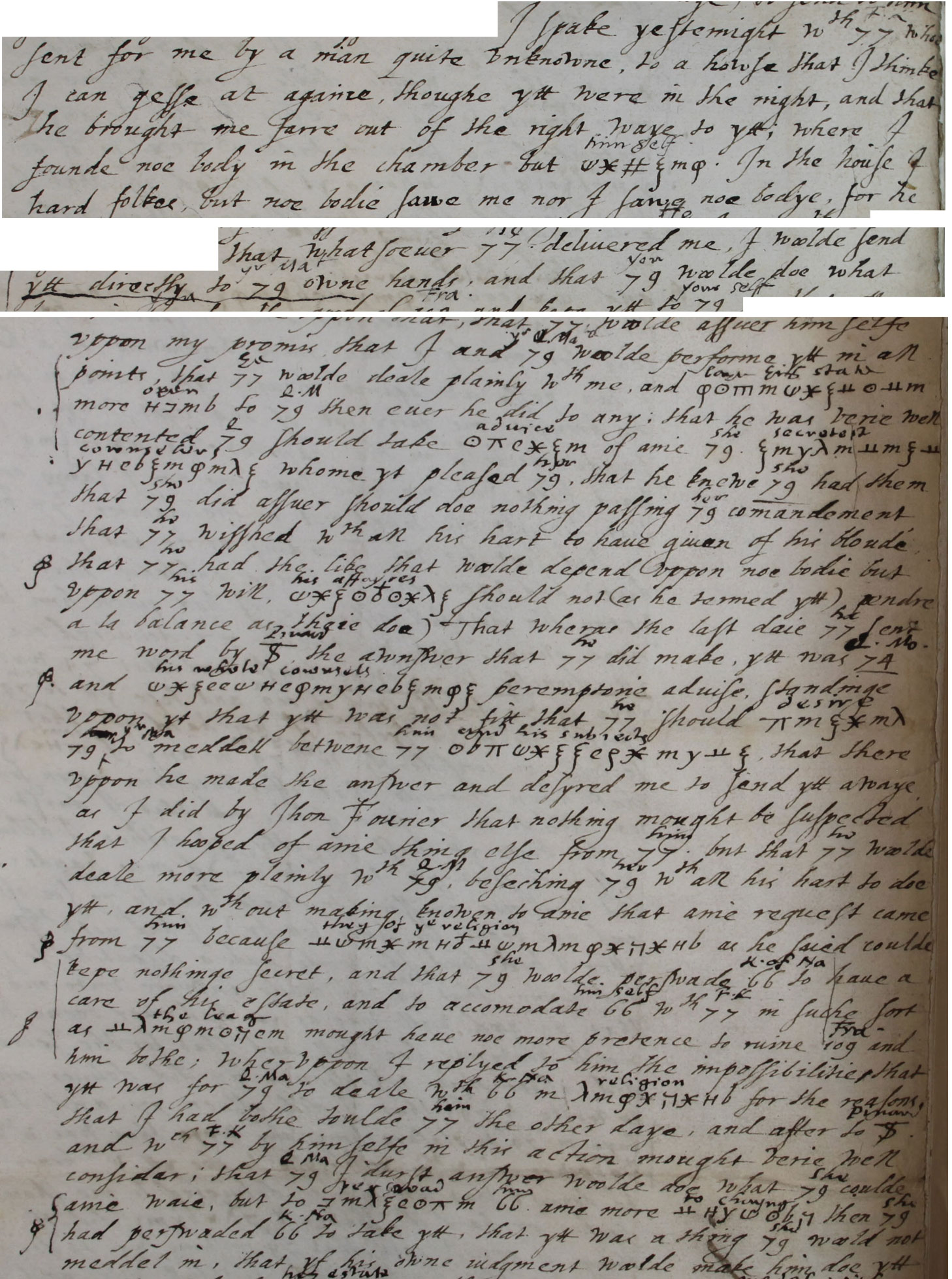
Sir Edward Stafford to Elizabeth, 25 February 1588 (SP 78/18 f.52- 52v)
Stafford was the queen’s ambassador to France. Written in the anxious months between the execution of Mary Queen of Scots and the coming of Philip II’s Armada, the letter describes a clandestine meeting with King Henry III of France. Mary Queen of Scots had spent much of her childhood in France, having been married to the Dauphin, Francis. Her execution therefore prompted outrage in that kingdom. Stafford reports that the French King wishes Elizabeth to persuade his brother-in-law and heir to the throne, Henry of Navarre (the future Henry IV) to convert to Catholicism and so disempower the hard-line Catholic League. This is Elizabethan espionage at its cloak-and-dagger best. He writes proper names in cipher, which Elizabeth’s great spymaster, Sir Francis Walsingham, has deciphered. The latter has also drawn trefoils against certain key passages that he wishes the queen to read.
Transcript
I spake yesternight with the King, who sent for me by a man quite unknown, to a house that I think I can guess at again, though it were in the night, and that he brought me far out of the right way to it; where I found nobody in the chamber but himself. In the house I heard folks, but nobody saw me nor I saw nobody, for that he brought me tarried not in the chamber. The King began with me… that whatsoever he delivered me, I would send it directly to your Majesty’s own hands, and that you would do what lay in you for the good of France, and keep it to yourself…
uppon my promis that I and your Majesty woolde performe ytt in all points, that he woolde deale plainly with me, and laye his state more open to QM then ever he did to any; that he was verie well contented Q should take advice of anie the secretest cownselors whome yt pleased her, that he knew she had them that she did assure should doe nothing passing her commandement, that he wisshed with all his hart to have given of his bloude that he had the like woolde depend uppon noe bodie but uppon his will, his affayres should not (as he termed ytt) pendre a la balance as theie doe…I hoped of anie thing else from him but that he woolde deale more pleinly with her Majestie, beseching her with all his hart to doe ytt, and without making knowen to anie that anie request came from him because they of ye religion as he saied coulde kepe nothinge secret, and that she woolde perswade the King of Navarre to have a care of his estate, and to accomodate him self with the French King in suche sort as the king mought have noe more pretence to ruine France and them bothe; wheruppon I replyed to him the impossibilitie that ytt was for the Queen’s Majestie to deale with the King of Navarre in religion…that ytt was a thing she woolde not meddel in…’
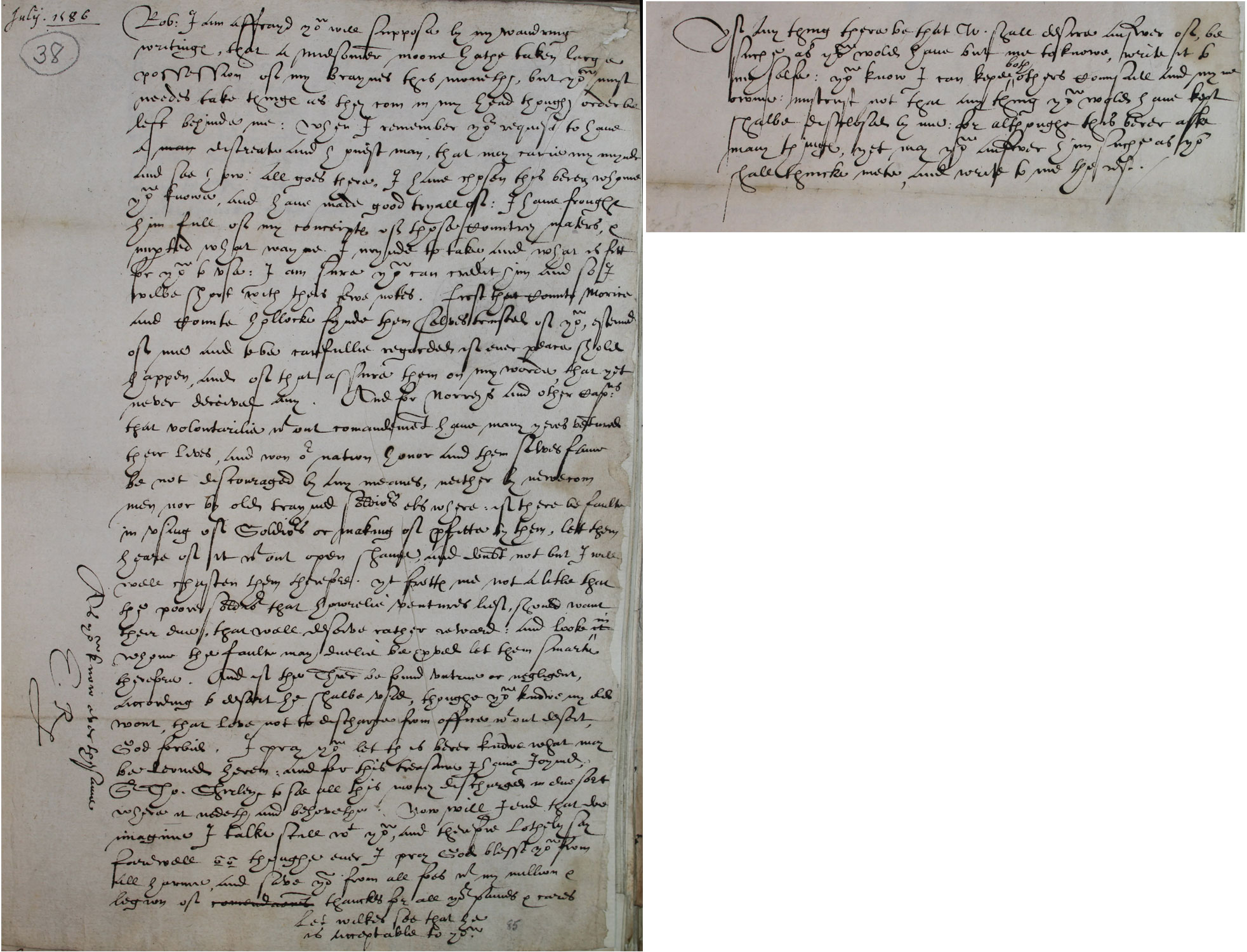
Elizabeth to Robert Dudley, Earl of Leicester, 19 July 1586 (SP 84/9 f.38)
Dudley was provided with no authority other than his military command over the English forces, and only an informal instruction to advise the Dutch on political matters. But bad weather in the North Sea severely restricted communication with England over the next two months, and as a result he felt abandoned. This may have prompted his fateful decision to accept the appointment as Governor-General of the Netherlands, and he was sworn in on 15 January 1586 [O.S.]. Elizabeth was incandescent with rage when she heard of this and demanded his immediate recall. But she could never stay angry with her favourite for long, and in July she wrote him this letter, making it clear that he had been entirely forgiven. Despite her protestations, Elizabeth was always reluctant to properly provide for her troops – an issue that sparked widespread criticism in the years to come.
Transcript
Rob: I am affrayd you will suppose by my wandring writings, that a midsomer moone hathe taken large possession of my braynes this moneth, but you must needes take thinges as they com in my head though order be left behind me. When I remember your request to have a discreate and honest man, that may carie my mynde and see how all goes there, I have chosen this berer whome you knowe, and have made good tryall of: I have froughte him full of my conceipte of those Country maters, & imparted what waye I mynde to take and what is fitt for you to use: I am sure you can credit him and so I wilbe short with thes fewe notes. First that Counte Morice and Counte Hollocke [Count Maurice and Count Hollock, commanders of the Dutch resistance against Spain] fynde them selves trusted of you, esteemd of mee and to be carefullie regarded if ever peace shold happen, and of that assure them on my worde, that yet never deceived any. And for Norrys [Sir John Norris, one of Elizabeth’s commanders in the Netherlands, and a rival of Dudley] and other captains that volontarilie without commandment have many yeres ventured their lives, and won our nation honor and themselves fame be not discouraged by any meanes, neither by newecom [new come] men nor by olde trayned soldiers elsewhere: If there be faulte in using of Soldiers or making of profitte by them, lett them heare of it without open shame, and doubt not but I will well chasten them therefore. Yt frettes me not a litle that the poore soldier that howrelie ventures life, should want ther due, that well deserve rather reward: and looke in whome the faulte may dulie be proved let them smarte therefore. And if the Treasurer be found untrue or negligent, according to desart he shalbe used, thoughe you knowe my old wont, that love not to discharge from office without desert, God forbid. I pray you let this berer knowe what may be lerned herein: and for this treasure I have joined, Sir Thomas Sherley to see all this money discharged in due sort where it nedeth and behoveth. Now will I end that do imagine I talke still with you, and therefore lothely say farewell ōō [the symbol for ‘eyes’, Elizabeth’s nickname for Dudley] thoughe ever I pray God blesse you from all harme and save you from all foes with my million and legion of thanckes for all your paines and cares. As you know, ever the same.* E.R.
[Postscript] Let Wilkes see that he is acceptable to you. Yf any thyng there be, that Wilkes shall desire answer of, be suche as you wold have but me to knowe, write it to my selfe: you know I can keep both others’ Counsaill and myne owne: mistrust not that anything you wold have kept shalbe disclosed by me: for althoughe this berer aske many thinges, yet may you answer him suche as you shall thincke mete, and write to me the rest.
* ‘Ever the same’ or ‘Semper eadem’ was Elizabeth’s motto.
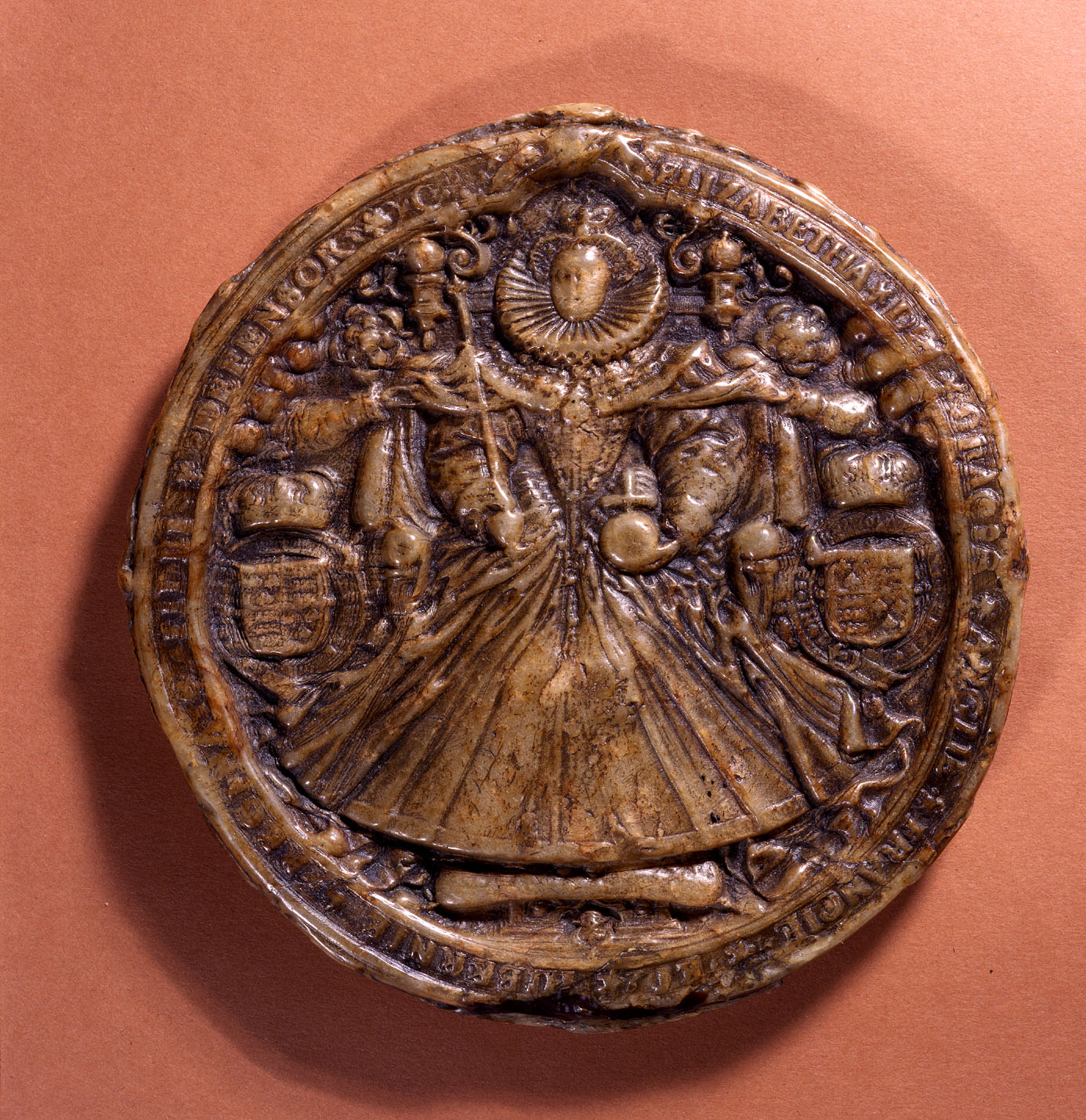
The Great Seal of Elizabeth I, 1586-1603 (SC 13/N3)
Almost all documents during the Tudor period were closed with seals, both to ensure that they would not be read before they reached the intended recipient and to identify the sender. Most seals had a picture of the owner and a motto around the edge. The same was true of a Great Seal, which belonged to the monarch and was attached to all the important transactions that he or she carried out.
The Great Seal was also an important instrument of propaganda. Of all the Tudor monrachs, Elizabeth I was the most skilled at crafting her public image. This, her second Great Seal, is laden with symbolism. The inscription reads: Elizabetha dei gracia Anglie Francie et Hibernie Regina Fidei Defensor (‘Elizabeth, by grace of God, Queen of England, France and Ireland, Defender of the Faith’). It depicts the queen in typically resplendent dress, flanked by the royal arms and Tudor roses. It was engraved by the celebrated miniaturist Nicholas Hilliard.
The image presented in this seal became the unwritten ‘official’ portrayal of the queen, and was reproduced in numerous potraits and illuminations.
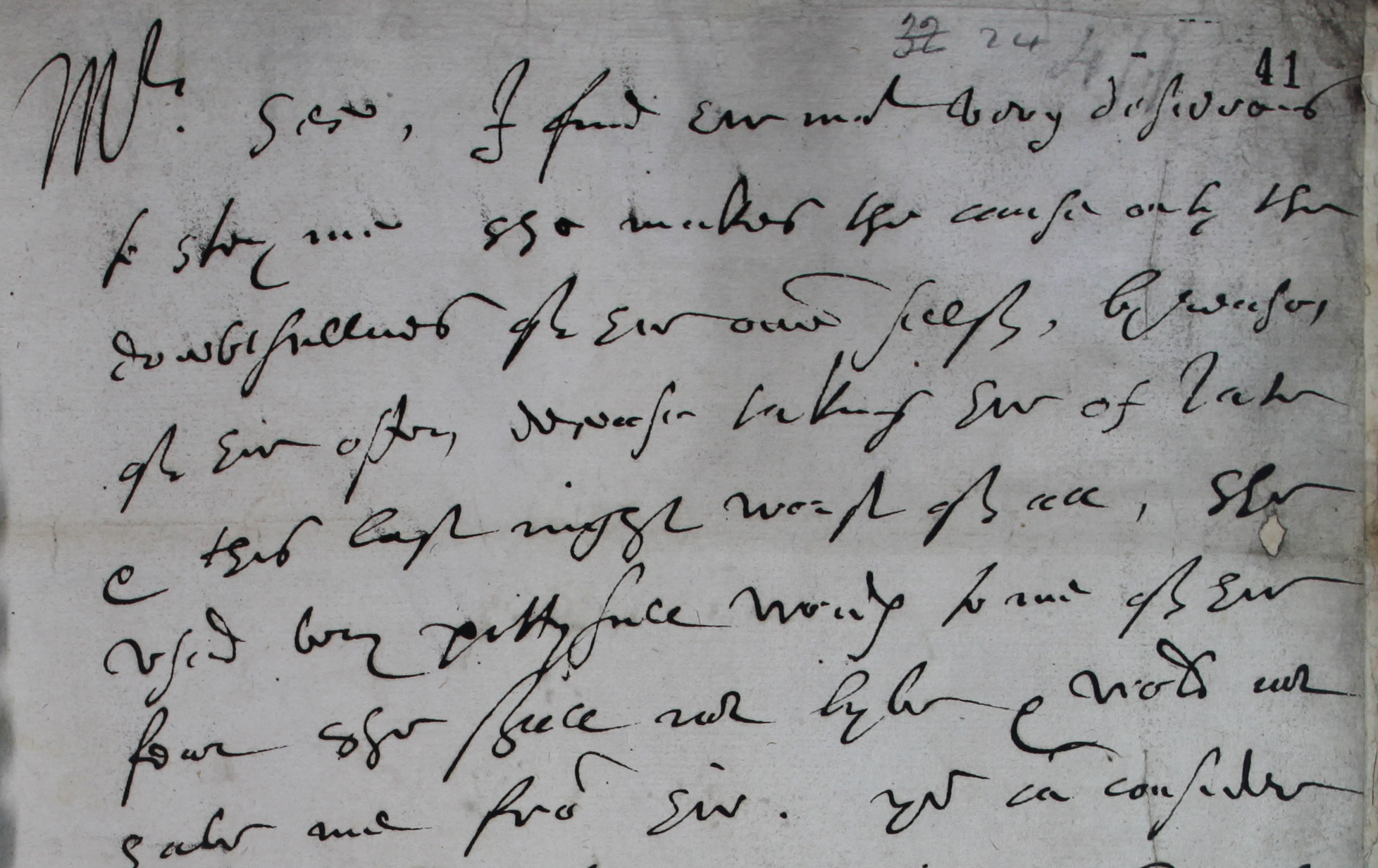
Robert Dudley, Earl of Leicester, to Sir Francis Walsingham, 28 September 1585 (SP 12/182 f.41)
On 10 August 1585, Elizabeth had forged an alliance with the United Provinces of the Netherlands – a group of seven states that had broken away from Spanish rule. The Treaty of Nonsuch pledged financial and military support for the Dutch rebels against Philip II. Although the United Provinces shared Elizabeth’s Protestant faith, the alliance was motivated more by self-interest than ideology. The Netherlands provided an ideal base from which the King of Spain could launch an invasion of England. As part of the treaty, the Dutch rebels handed over the key strategic towns of Brill and Flushing to the English queen, and in December 1585 she dispatched Robert Dudley to the latter as commander of her forces in the Netherlands. But when it came to his departure, Elizabeth suddenly lost her nerve and proved very unwilling to let him go, as Dudley confides to Sir Francis Walsingham in this letter.
Transcript (extract)
Mr. Secretary, I find hir majesty very desirous to stey me, she makes the cause only the dowtfullnes of hir owen self, by reason of hir often decease taking hir of late & this last night worst of all. She used very pittyfull words to me of hir fear she shall not lyve & wold not have me from hir. You can consider what manner of perswasion this must be to me from hir.
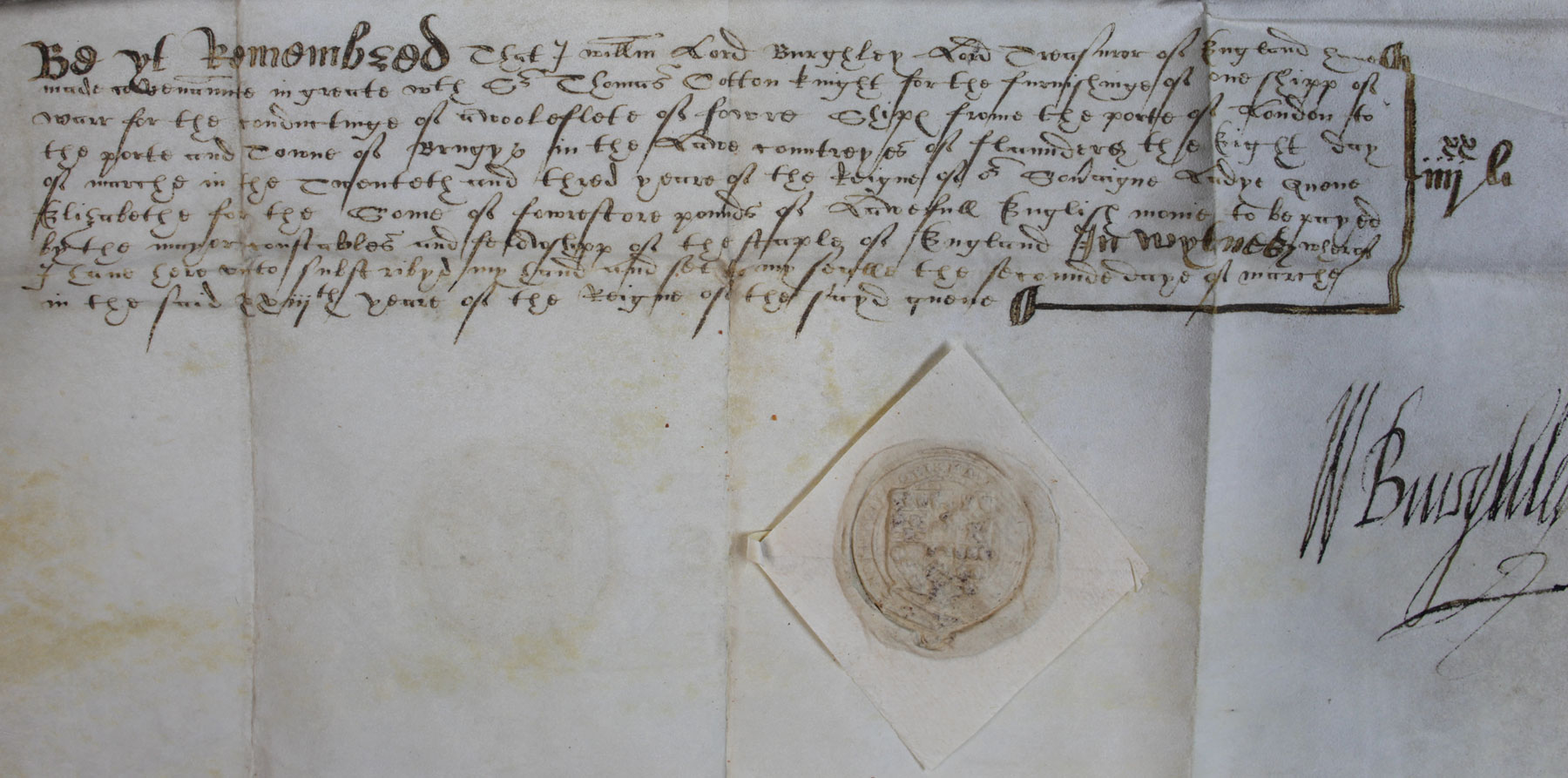
Proclamation by Lord Burghley, 2 March 1581 (E 101/668 f.48)
This proclamation by Elizabeth I’s chief minister William Cecil, Lord Burghley, assigns a warship to a wool convoy operating between London and Flanders. This protection was vital at a time of heightened international tension, when England was preparing for naval aggression by Spain. The cost of the venture was £80 (equivalent to almost £12,000 today), but given that the infrastructure of the entire wool industry depended on safe links with the continent, Burghley no doubt judged it worth the investment.
Transcript
Be yt remembred that I William Lord Burghley Lord Treasurer of England have made covenante in grant to Sir Thomas Cotton knight for the furnishing of one ship of war for the conducting of wool of late of four ships from the port of London to the porte and town of Bruges in the lowe countreyes of Flanders the eighth day of March in the twentieth and three year of the reigne of our sovereigne Ladye Quene Elizabethe for the sum of five score pounds of lawfull English monie to be payed by the mayor constables and fellowship of the staples of England. In witness whereof I have hereunto subscribed my hand and set my seale the seconde day of March in the said xxiij th yeare of the reign of the sayd Quene.
W. Burghley
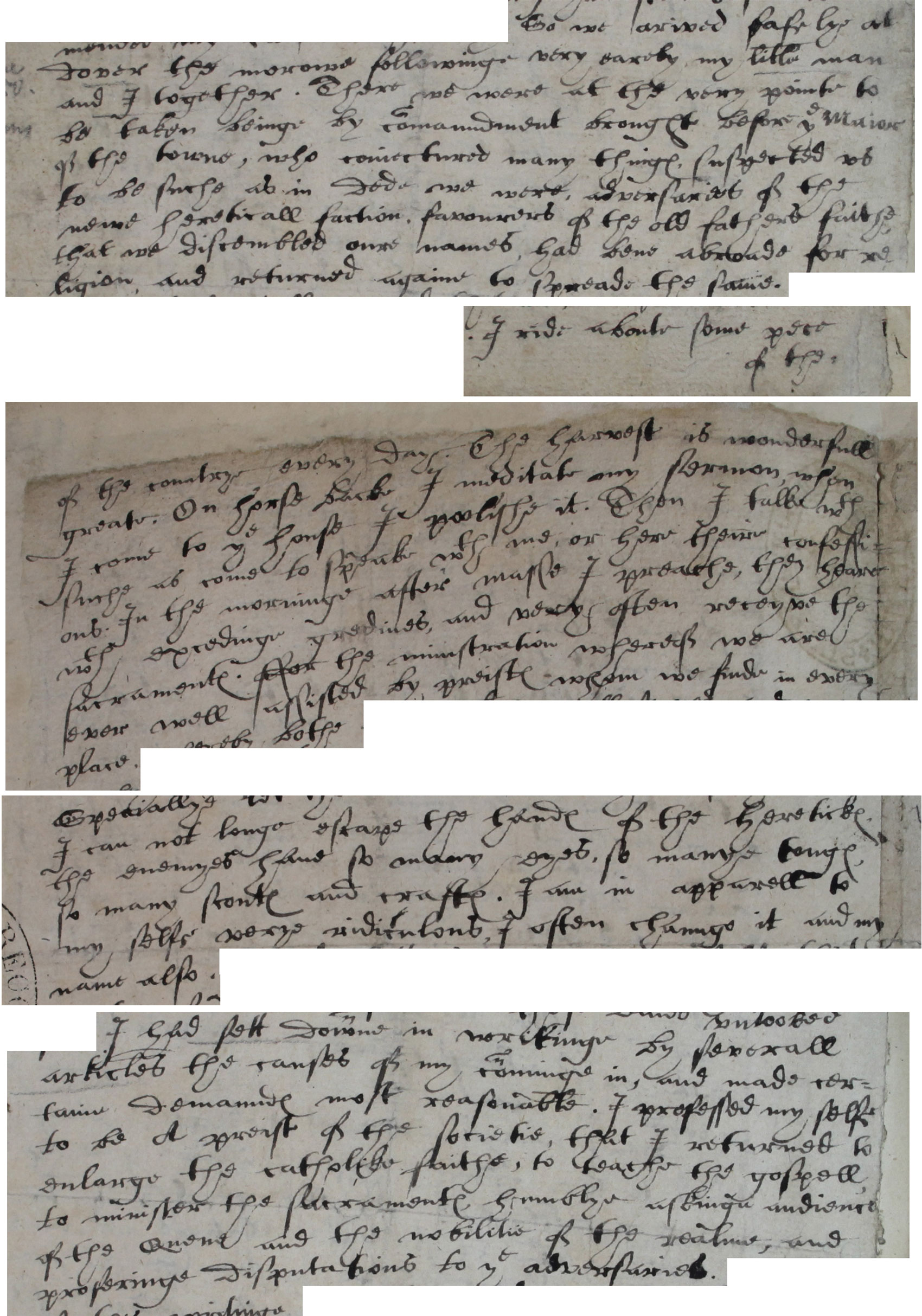
Letter from Edmund Campion to a friend (possibly Dr Allen), 1580 (SP 15/27B f117)
A substantial number of Elizabeth’s subjects still adhered to the Catholic faith. For the most part, they sustained their faith in private through spiritual reading, prayer and meditation, or the preservation of rosaries and relics. But from 1574 onwards, they had cause to hope that they might soon be able to worship more freely. From that year onwards, Elizabethan England experienced an influx of Roman Catholic missionaries from a seminary in Douai founded by William Allen, the former principal of St Mary Hall, Oxford. In June 1580, they were joined in England by the Jesuits, members of a dynamic religious order founded during the Reformation. One of the first to arrive was Edmund Campion, who had trained as a Roman Catholic priest in Dublin, Douai (in the Low Countries) and Prague. In this letter, which he may have written to his friend Allen, he describes what it was like for a Roman Catholic priest travelling in secret around England. Clearly he found many supporters, but he lived in fear of his life. The fact that this letter found its way into The National Archives suggests that the authorities were already aware of his activities. Campion was arrested at Wantage in July 1581. He was tortured, tried as a traitor and hanged.
Transcript
So we arived safelye at Dover the morowe followinge very earely my little man and I together. There we were at the very pointe to be taken beinge by comaundment brought before ye Maior of the towne, who coniectured many thinges, suspected us to be suche as in dede we were, adversaries of the
newe hereticall faction, favourers of the old fathers faithe that we discembled oure names, had bene abroade for religion, and returned againe to spreade the same…
I ride aboute some pece of the country every day. The harvest is wonderfull
greate. On Horse backe I meditate any sermons, when I come to ye house I poolishe it. Then I talke with suche as come to speake with me, or hear theire confessions. In the morninge after masse I preache, they heare with excedinge gredines, and very often receyve the sacramentes. For the ministration whereof we are ever well assisted by preistes whom we finde in every place…
I can not longe escape the handes of the heretickes the enemyes have so many eyes, so many tonges, so many scoutes. I am in apparell to my selfe verye ridiculous, I often change it and my name also…
I had sett downe in writinge by severall articles the causes of my comminge in, and made certaine demaundes most reasonable. I professed my selfe
to be A preist of the societie, that I returned to enlarge the catholike faithe, to teache the gospell, to minister the sacramentes, humblye askinge audience
of the Quene and the nobilitie of the realme, and proferinge disputations to ye adversaries.
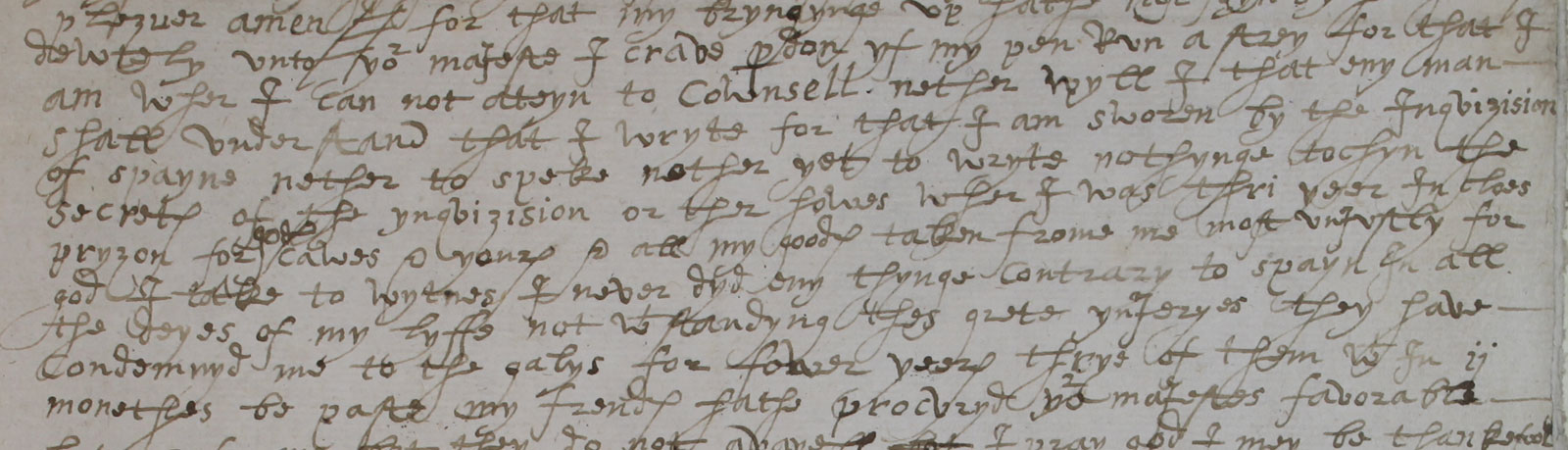
Thomas Cely to Elizabeth, 12 December 1579 (SP 94.1 f.89)
Thomas Cely, from Bristol, was one of Elizabeth’s Yeomen of the Guard and most probably also a spy for the queen. He wrote this letter from the port of Santa Maria, Andalucia, to where he had been sent by the Spanish Inquisition as a galley slave after having been put to the rack. He tells Elizabeth that he had been arrested ‘only for saying service in the churches of her Majesty’s realm and saying it in ships at sea.’ Elizabeth had already written in his favour, but Cely begs that she might do so again. Although the English queen was a religious moderate and famously declared that she had no wish to ‘make windows into men’s souls’, her reign saw the consolidation of the Protestant reforms instituted by her father’s Reformation. She was regarded as a heretic by most of Catholic Europe, and Philip II of Spain in particular, who made it his quest to conquer England and return it to papal authority.
Transcript (extract)
I am wher I can not atteyn to Cownsell, nether wyll I that eny man shall understand that I wryte for that I am sworen by the Inquizision of spayne nether yet to speke nether to wryte nothynge tochyn the secretes of the ynquizision or ther howes wher I was thri [three] yeer In cloes pryzon for godes cawes [cause] & youres & all my goodes taken frome me most unjustly for god I take to wytnes I never dyd eny thynge contrary to spayn In all the deyes of my lyffe not withstandyng thes grete injeryes [injuries] they have condemnyd me to the galys [galleys] for fower [four] yeeres the thrye [three] of them within ii monethes be paste [passed].’