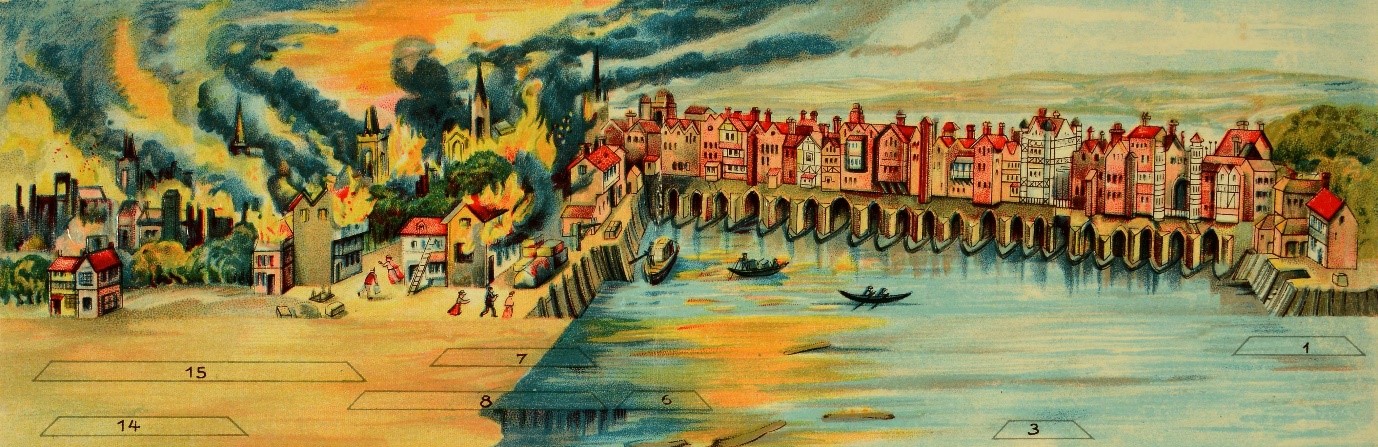
Special live event from The National Archives
Discover the story of the Great Fire of London in our free broadcast for Primary Schools. This engaging half-hour episode will tell the stories of those who experienced the fire through the documents they left behind.
In partnership with The London Archives and featuring The London Fire Brigade, we will delve into witness statements, building designs and artefacts that uncover the secrets of the fire and what made it such a significant event.
Designed for your classroom or school hall, this broadcast develops skills in evidential understanding and studying a significant event beyond living memory.
Archives Live is free for schools to take part, with one booking per school allowing you to connect in multiple classrooms. You only need a large screen and a speaker to take part. (A second device is suggested to allow your class to take part in interactive activities.)
More information will be released in September but booking is open now to secure your place for your school.
Date: Monday 5th October
Time: 10:30am
Duration: 30 minutes
Suitability: Key Stage One and Two
Price: Free
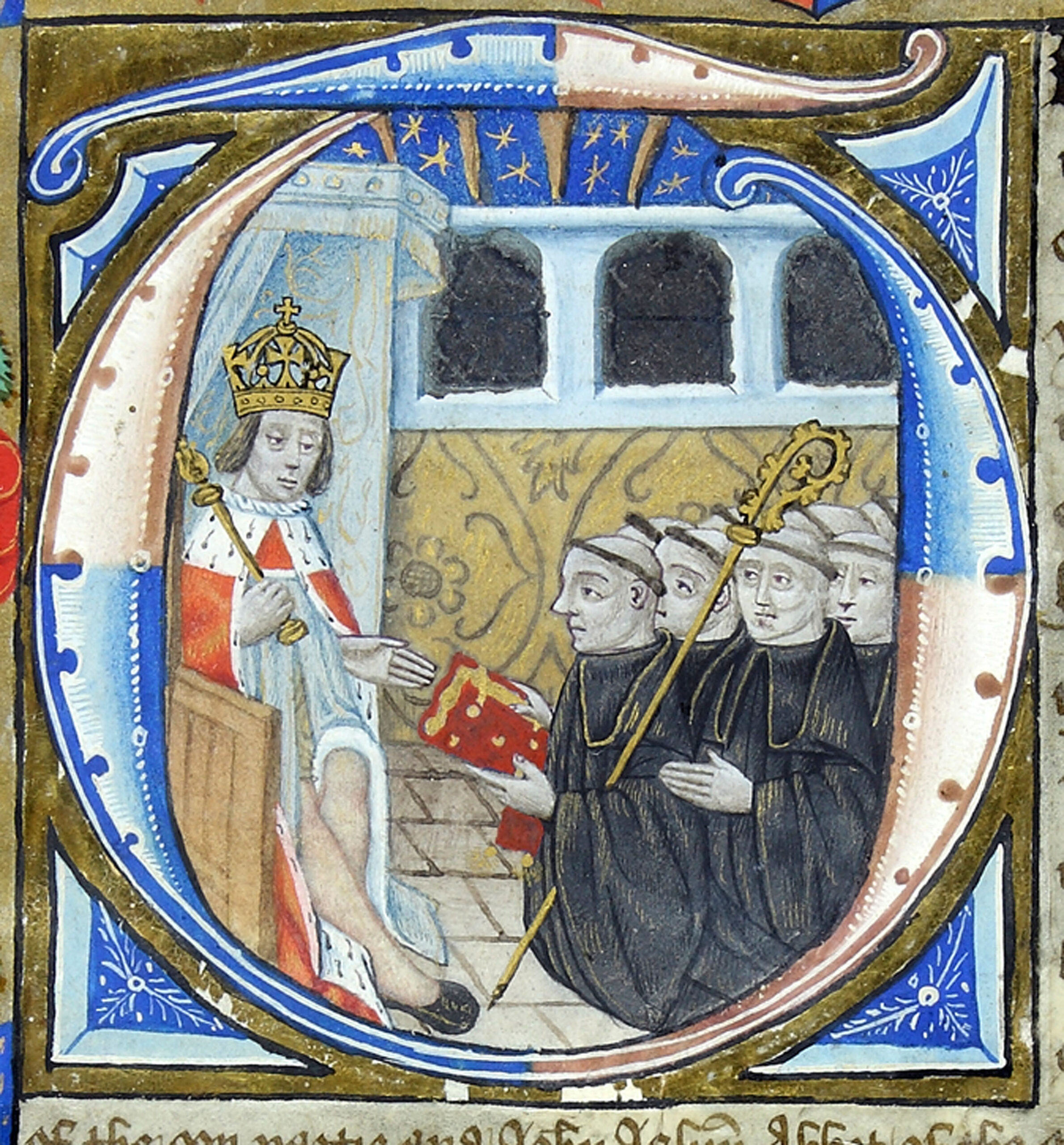
In this full day session, A-level students will firstly have a talk by Sean Cunnigham, Head of Collections (Medieval, Early Modern, Legal, Maps and Plans) at The National Archives, and author of a new biography: Henry VII: Treason and Trust.
Next, they will take part in a source-based workshop where they will analyse printed and digital copies of early Tudor documents from the National Archives.
Students will finish the day with a visit to Newcastle University’s School of History, Classics and Archaeology where they will take part in a further session on the early Tudors.
Connections to the Curriculum:
KS5
- AQA: The Tudors: England, 1485-1603
- OCR: Lancastrians, Yorkists and Henry VII
- Edexcel: Rebellion and Disorder under the Tudors, 1485-1603
- Edexcel: Lancastrians, Yorkists and Henry VII, 1399–1509
Contact Us
All activities must be booked in advance.
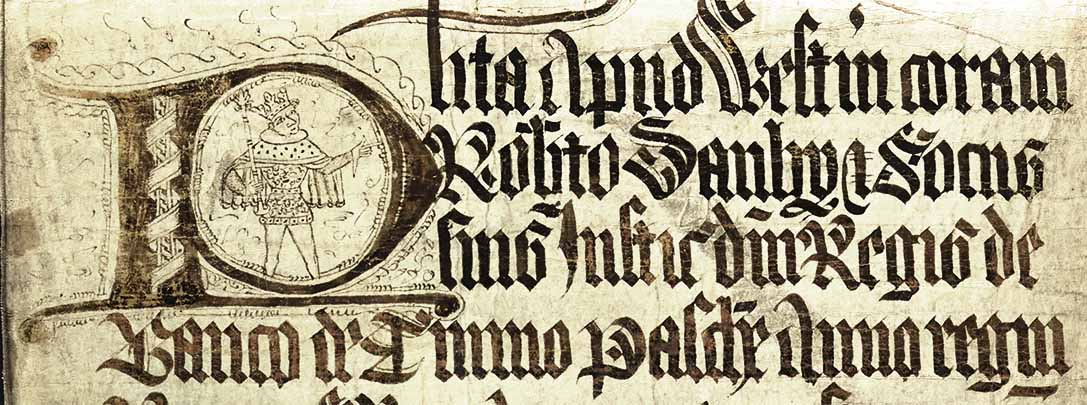
From a first-hand account of the Battle of St Albans to a warrant for the great seal featuring Richard III’s own handwriting, this video featuring Medieval Records Specialist Sean Cunningham explores three documents that each illuminate a critical moment in the Wars of the Roses.
Medieval Records Specialist Sean Cunningham explores three documents that each illuminate a critical moment in the Wars of the Roses.
Welcome to History Mysteries!
Watch the 2026 live-stream here:
To celebrate Local and Community History month and the start of a season exploring the Norman conquest, join us as we explore the form and function of Norman Castles. In partnership with English Heritage, we’ll take a look at two site studies, Restormel Castle in Cornwall and Pickering Castle in Yorkshire, to explore the design, usage and communities around each castle as an inspiration for looking a castle sites in your local area.
Date: 8th June 2026
Time: Video shown at 1:30pm, live-streamed Q&A at 1:55pm
Duration: 40 minutes if watching both the video and Q&A; 15 minutes if only joining for Q&A.
Suitability: Key Stage Three (Year 7-9)
Explore the form and function of Norman castles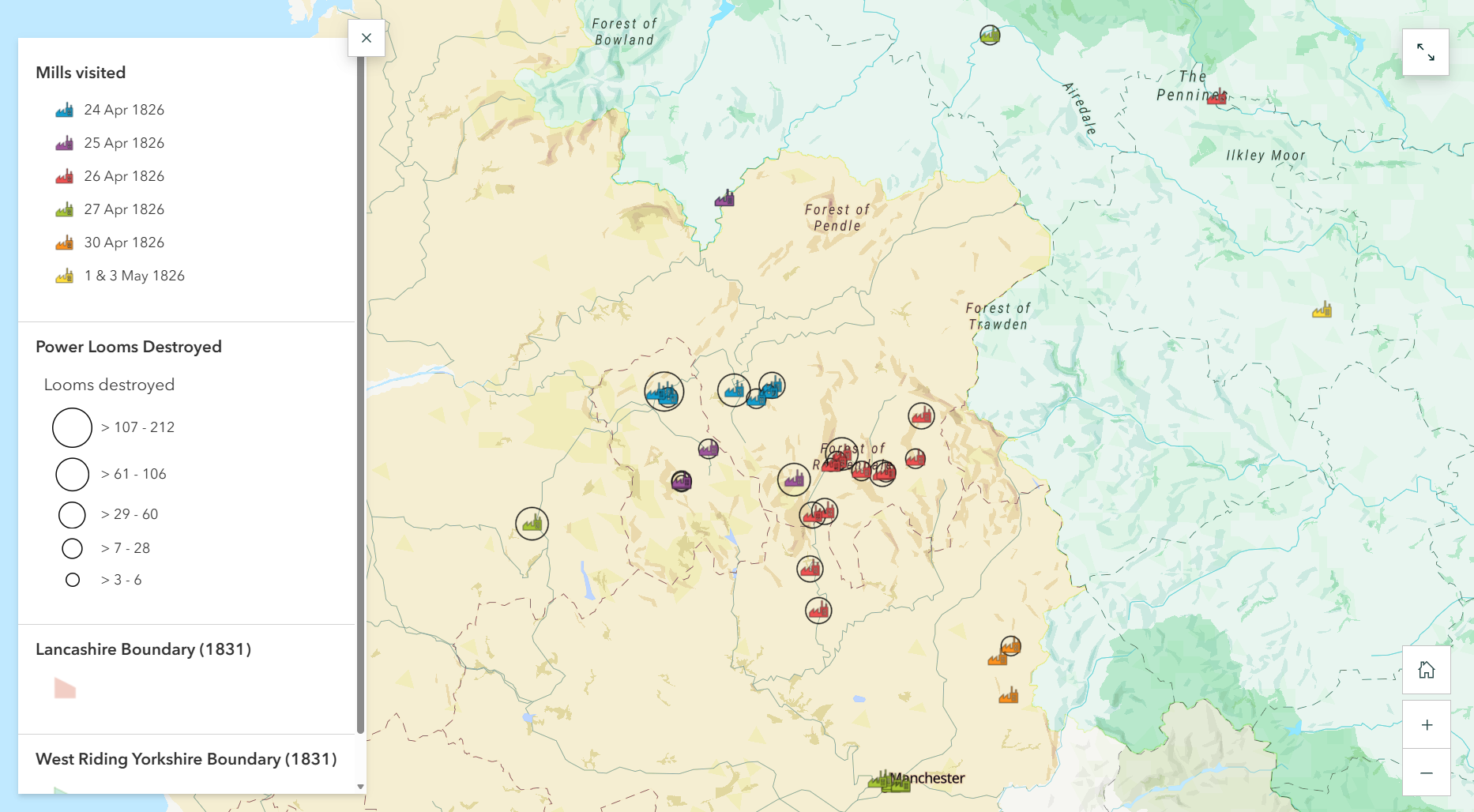
Two hundred years ago, between 24 April and 3 May 1826, tens of thousands of working people in Pennine Lancashire and the West Riding of Yorkshire rose in protest.
Factories were raided, and more than 1,100 power looms were destroyed in what was the most serious outbreak of industrial sabotage since the Luddite disturbances of 1811-12.
This project features interactive maps and resources you can explore to discover the details of factories struck by the crowds, the destruction caused and the authorities’ decisive response. It also showcases historical records from The National Archives (UK) to raise public awareness of the weavers’ rising of 1826.
Launched to mark the 200-year anniversary of the rising, the project aims to contextualise this important moment in British history by making it easier to understand and engage with.
The interactive version of this map is hosted on an external site that does not yet meet our criteria for accessibility. In the meantime, we provide an accessible spreadsheet of all events featured on the map.
The project was undertaken in collaboration with The Open University.

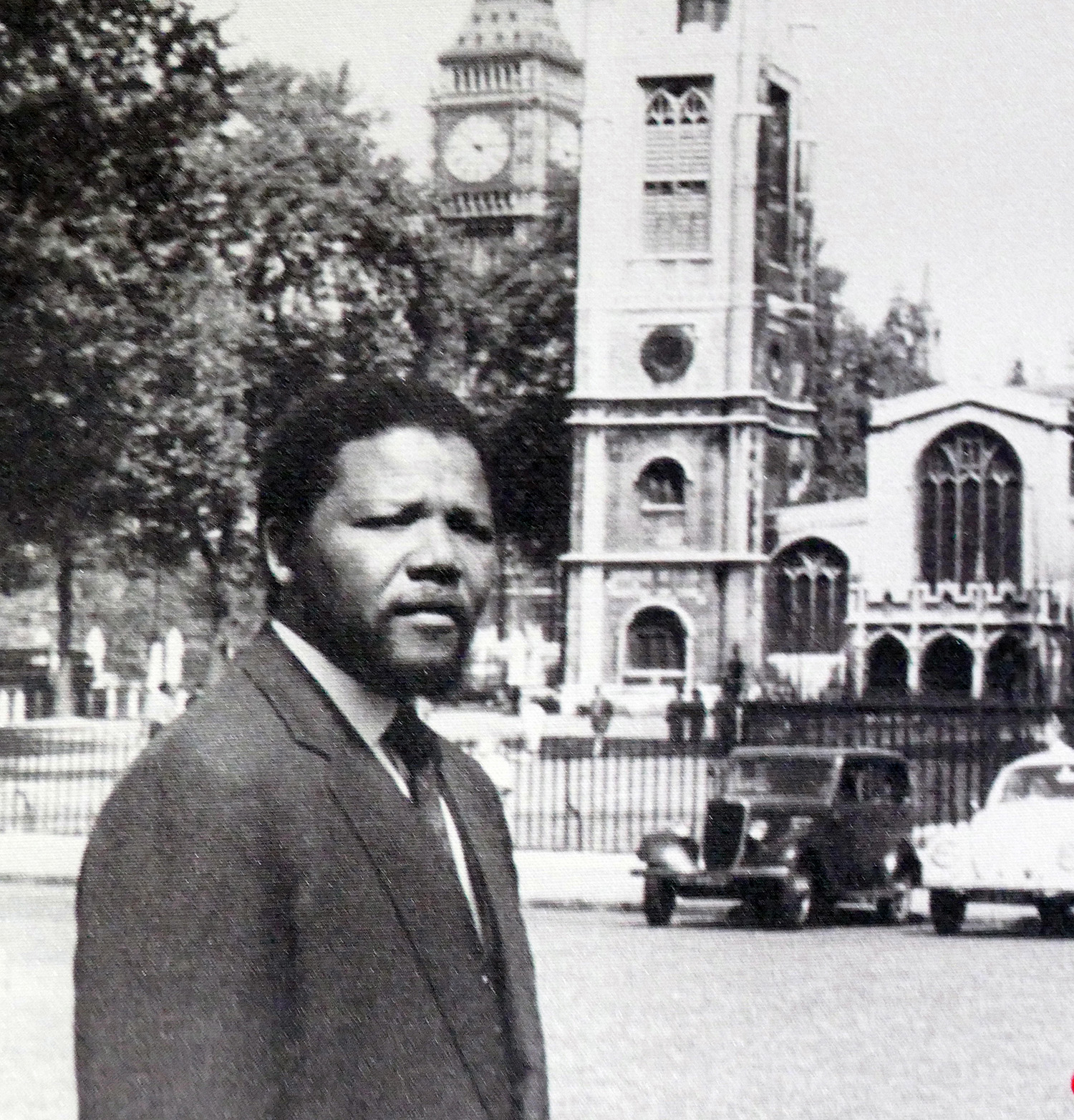
We hope you enjoyed watching our Education Service video with Elizabeth Haines, British Empire and Commonwealth Records Specialist at The National Archives looking at records from the Foreign Office collection. In this video we focus on a file from 1963 and a document from it about resistance to the apartheid government in South Africa, Catalogue ref: FO 371/167487.
This document contains ideas and language which reflect historical perspectives and attitudes at the time. It helps us to understand the people who experienced this history
Now try and answer the following questions:
- What is the Foreign Office known as today?
- What is its current role?
- What period does the Foreign Office collection cover?
- Where do many of the records held in the Foreign Office collection come from?
- How is information in the Foreign Office Collection organized?
- What type of information does this 1963 Foreign Office file contain?
- What did apartheid government mean for the population of South Africa?
- Why has some of the material in this file on South Africa been retained by the Foreign Office (redacted) and not kept by The National Archives?
- What does the contents of the file reveal about the role of the ANC (African National Congress) and its fight against apartheid?
- Why was the British Government interested in the activities of the ANC?
- Why are Foreign Office records valuable sources for historians?
- What other factors should we consider when using them for research?
Document 1
Typed copy of a document entitled ‘The Rumbles of a Volcano’, Catalogue ref: FO 371/167487.
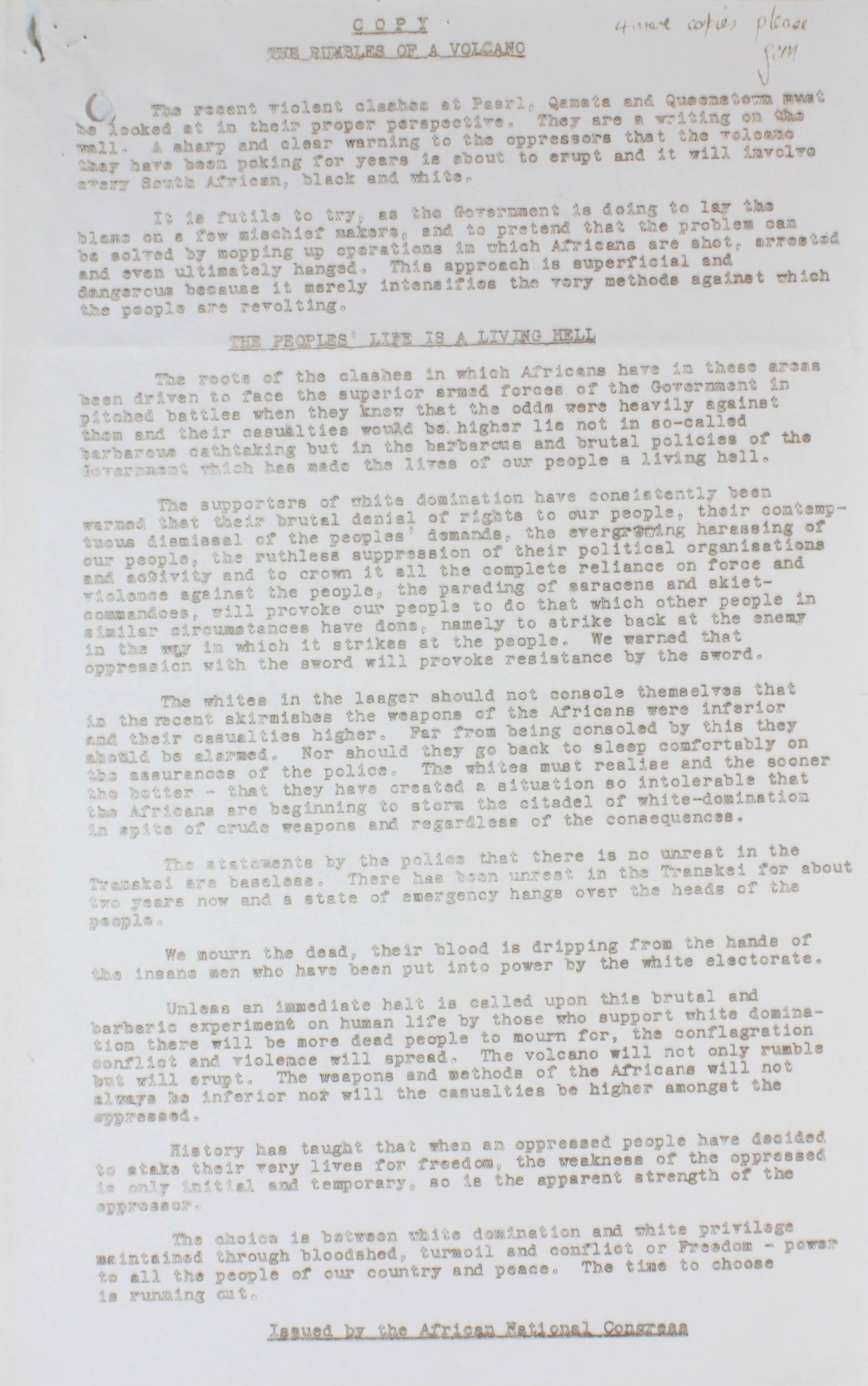
- Why is this document labelled as a ‘COPY’?
- After reading the document, explain why it is entitled ‘The Rumblings of a Volcano’.
- Who were ‘the oppressors’ mentioned in line 3?
- Why were South Africans prepared to adopt violent resistance to the government according to this document?
- The document says it is ‘Issued by the African National Congress’. What does this reveal about the political party which was banned at the time?
- Comment on the language and tone used in the document.
- Why has this document been created?
- Why do you think there is a copy of Document 1 in a Foreign Office file?
- What do we learn from the handwritten note on the top right of the document?
- Find out about the significance of events referred to in Paarl and Transkei. [You may also refer to Document 4.]
Transcript
4 more copies please
J.M
C O P Y
THE RUMBLES OF A VOLCANO
The present violent clashes at Paarl, Qamata and Queenstown [Komani] must be looked at in their proper perspective. They are a writing on the wall. A sharp and clear warning to the oppressors that the volcano they have been poking for years is about to erupt and it will involve every South African, black and white.
It is futile to try, as the Government is [doing] to lay the blame on a few mischief makers, and to pretend that the problem can be solved by mopping up operations in which Africans are shot, arrested and even ultimately hanged. This approach is superficial and dangerous it merely intensifies the very methods against which the people are revolting.
THE PEOPLES’ LIFE IS A LIVING HELL
The roots of the clashes in which Africans have in these areas been driven to face the superior armed forces of the Government in pitched battles when they knew that the odds were heavily against them and their casualties would be higher lie not in so-called barbarous cathtaking [?] but in the barbarous and brutal policies of the government which has made the lives of our people a living hell.
The supporters of white domination have consistently been warned that their brutal denial of rights to our people, their contemptuous dismissal of the peoples’ demands, the evergrowing harassing of our people, the ruthless suppression of their political organisations and activity and to crown it all the complete reliance on force and violence against the people, the parading of Saracens [armoured vehicle carriers] and skiet commandoes [shooting commandoes, unit of South African Army & Territorial Reserve], will provoke our people to do that which other people in similar circumstances have done, namely to strike back at the enemy in the way in which it strikes at the people. We warned that oppression with the sword will provoke resistance by the sword.
The whites in the laager [entrenched position or bunker] should not console themselves that in the recent skirmishes the weapons of the Africans were inferior and their casualties higher. Far from being consoled by this they should be alarmed. Nor should they go back to sleep comfortably on the assurances of the police. The whites must realise and the sooner the better- that they have created a situation so intolerable that the Africans are beginning to storm the citadel of white-domination in spite of crude weapons and regardless of the consequences.
The statements of the police that there is no unrest in the Transkei are baseless. There has been unrest in the Transkei for about two years now and a state of emergency hangs over the heads of the people.
We mourn the dead; their blood is dripping from the hands of the insane men who have been put into power by the white electorate.
Unless an immediate halt is called upon this brutal and barbaric experiment on human life by those who support white domination there will be more dead people to mourn for, the conflagration conflict and violence will spread. The volcano will not only rumble but will erupt. The weapons and methods of the Africans will not always be inferior, nor will the casualties be higher amongst the oppressed.
History has taught that when an oppressed people have decided to stake their very lives for freedom, the weakness of the oppressed is only initial and temporary, so is the apparent strength of the oppressor.
The choice is between white domination and white privilege maintained through bloodshed, turmoil and conflict or Freedom – power to all the people of our country and peace. The time to choose is running out.
Issued by the African National Congress
Document 2
Letter to P.M. Foster at the Foreign Office: West and Central African Department from J.S. Longrigg at the British Embassy, Pretoria, 28 December 1962, Catalogue ref: FO 371/167487.
The letter links to the pamphlet copied by the Foreign Office. [Document 1]
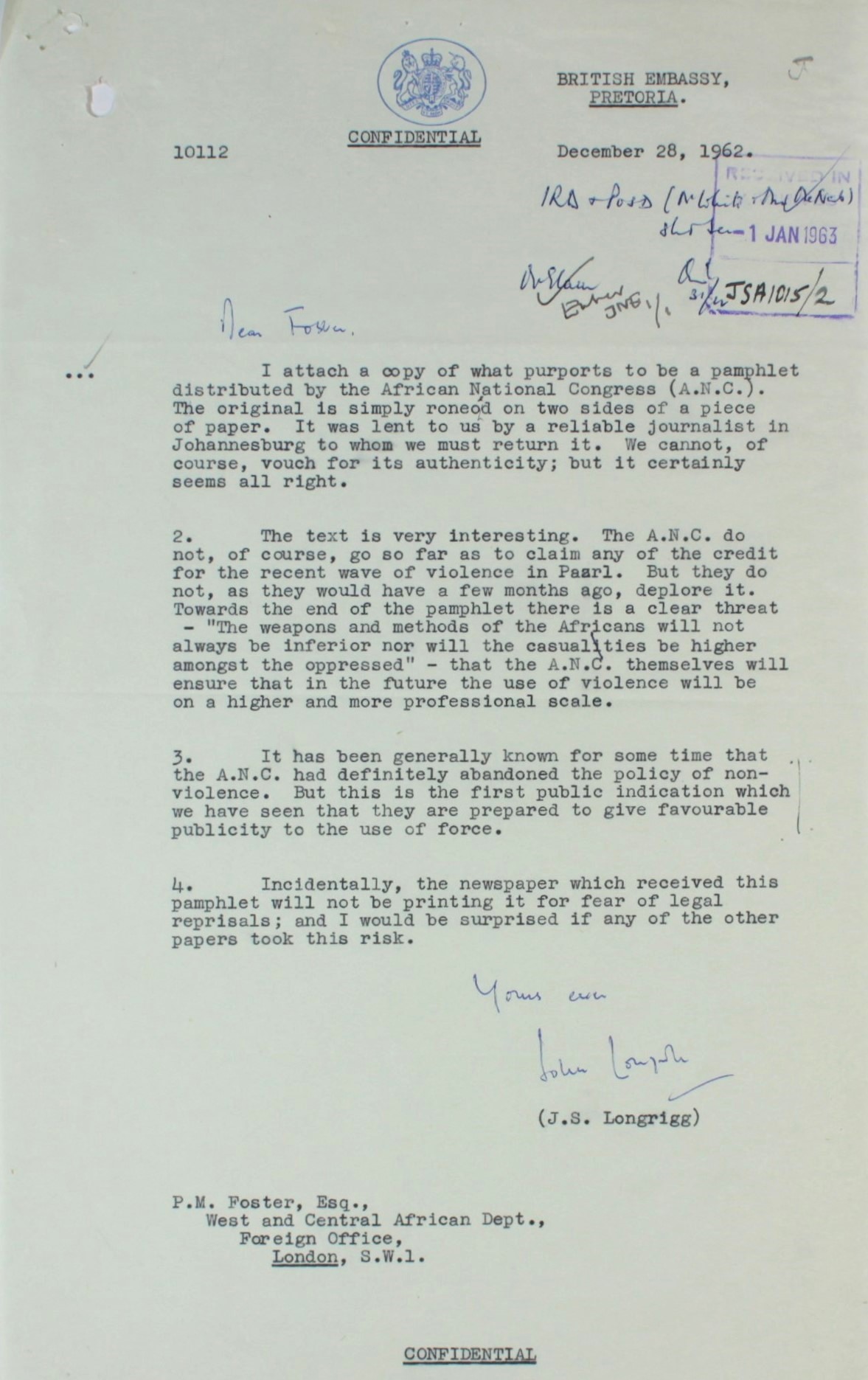
- Why is this letter helpful in explaining why Document 1 exists in the same Foreign Office file?
- The original pamphlet was copied from a stencil using a Roneo machine to create large numbers of copies. What does this fact reveal about the organisation of the African National Congress (ANC)?
- Why did the ANC place this document in the hands of a ‘reliable journalist’?
- Why was the pamphlet unlikely to be printed by the national press in South Africa?
- Why were the British government interested in the pamphlet, Document 1?
- Why do you think the letter is marked twice as ‘Confidential’?
Transcript
BRITISH EMBASSY,PRETORIA.
CONFIDENTIAL
10112 December 28, 1962.
Dear Forster,
I attach a copy of what purports [appears] to be a pamphlet distributed by the African National Congress (A.N.C.). The original is simply roneod on two sides of a piece of paper. It was lent to us by a reliable journalist in Johannesburg to whom we must return it. We cannot of course, vouch for its authenticity; but it certainly seems all right.
- The text is very interesting. The A.N.C. do not, of course, go so far as to claim any of the credit for the recent wave of violence in Paarl. But they do not, as they would have a few months ago deplore it. Towards the end of the pamphlet there is a clear threat- “The weapons and methods of the Africans will not always be inferior, nor will the casualties be higher amongst the oppressed”- that the A.N.C. themselves will ensure that in the future the use of violence will be on a higher and more professional scale.
- It has been generally known for some time that the A.N.C. had definitely abandoned the policy of non-violence. But this is the first public indication which we have seen that they are prepared to give favourable publicity to the use of force.
- Incidentally, the newspaper which received this pamphlet will not be printing it for fear of legal reprisals; I would be surprised if any of the other papers took this risk.
Yours,
John Longrigg
(J.S. Longrigg)
P.M. Foster, Esq.,
West and Central African Dept.,
Foreign Office
London, S.W.1
CONFIDENTIAL
Document 3
Extract from minutes on a dispatch, 25 January 1963, entitled: ‘Illegal opposition parties in South Africa’ from Sir John Maude, High Commissioner in Cape Town, to Lord Home, British Foreign Secretary [Alec Douglas-Home] who later became Prime Minister, Catalogue ref: FO 371/167487.
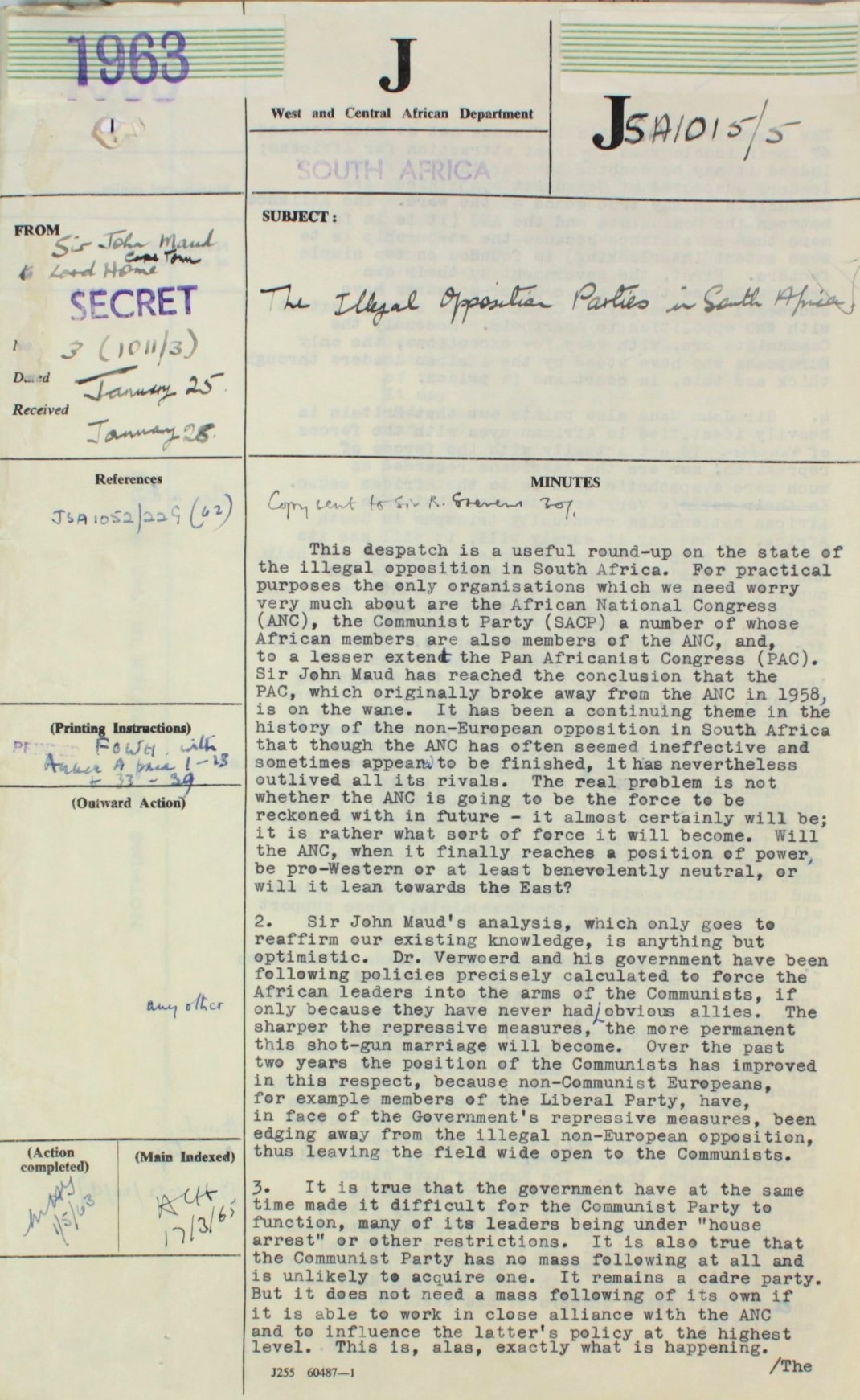
- Describe the appearance of this document.
- How was correspondence/information dealt with when it arrived in the Foreign Office according to the document?
- What concerns did the British government have about (a) the African National Congress (b) the Communist party in South Africa, according to these minutes?
- Explain why the British government had these concerns at this time?
- What was the attitude of the British government towards the National Government of Dr. Verwoerd in South Africa?
- How useful is this document for researching opposition parties in South Africa? What additional primary sources would be helpful?
Transcript
1963 JWest and Central African Department J5A/015/5
SOUTH AFRICA
SUBJECT: The Illegal Opposition Parties in South Africa
MINUTES
… Copy sent to Sir B. Stevens
This despatch is a useful round-up on the state of the illegal opposition in South Africa. For practical purposes the only organisations which we need worry very much about are the African National Congress (ANC), the Communist Party (SACP) a number of whose African members are also members of the ANC, and, to a lesser extent the Pan Africanist Congress (PAC). Sir John Maud has reached the conclusion that the PAC, which originally broke away from the ANC in 1958, is on the wane. It has been a continuing theme in the history the non-European opposition in South Africa that though the ANC has often seemed ineffective and sometimes appeared to be finished, it has nevertheless outlived all its rivals. The real problem is not whether the ANC is going to be the force to be reckoned with in the future- it almost certainly will be, it is rather what sort of force it will become. Will the ANC, when it finally reaches a position of power, be pro-Western or at least benevolently neutral, or will it lean towards the East?
- Sir John Maud’s analysis, which only goes to reaffirm our existing knowledge, is anything but optimistic. Dr Verwoerd and his government have been following policies precisely calculated to force the African leaders into the arms of the Communists, if only because they have never had [any other] obvious allies. The sharper the repressive measures, the more permanent this shot-gun marriage will become. Over the past two years the position of the Communists has improved in this respect, because the non-Communist Europeans, for example, members of the Liberal Party, have, in the face of the Government’s repressive measures, been edging away from the illegal non-European opposition, thus leaving the field wide open to the Communists.
- It is true that the government have at the same time made it difficult for the Communist Party to function, many of its leaders being under “house arrest” or other restrictions. It is also true that the Communist Party has no mass following at all and is unlikely to acquire one. It remains a cadre [elite group revolutionary activists] party. But it does not need a mass following of its own if it is able to work in close alliance with the ANC and to influence the latter’s policy at the highest level. This is exactly, alas what is happening.
Document 4
Extract from a British Foreign Office report 8 July 1963, entitled: ‘South Africa: Internal Political Situation’, Catalogue ref: FO 371/167494
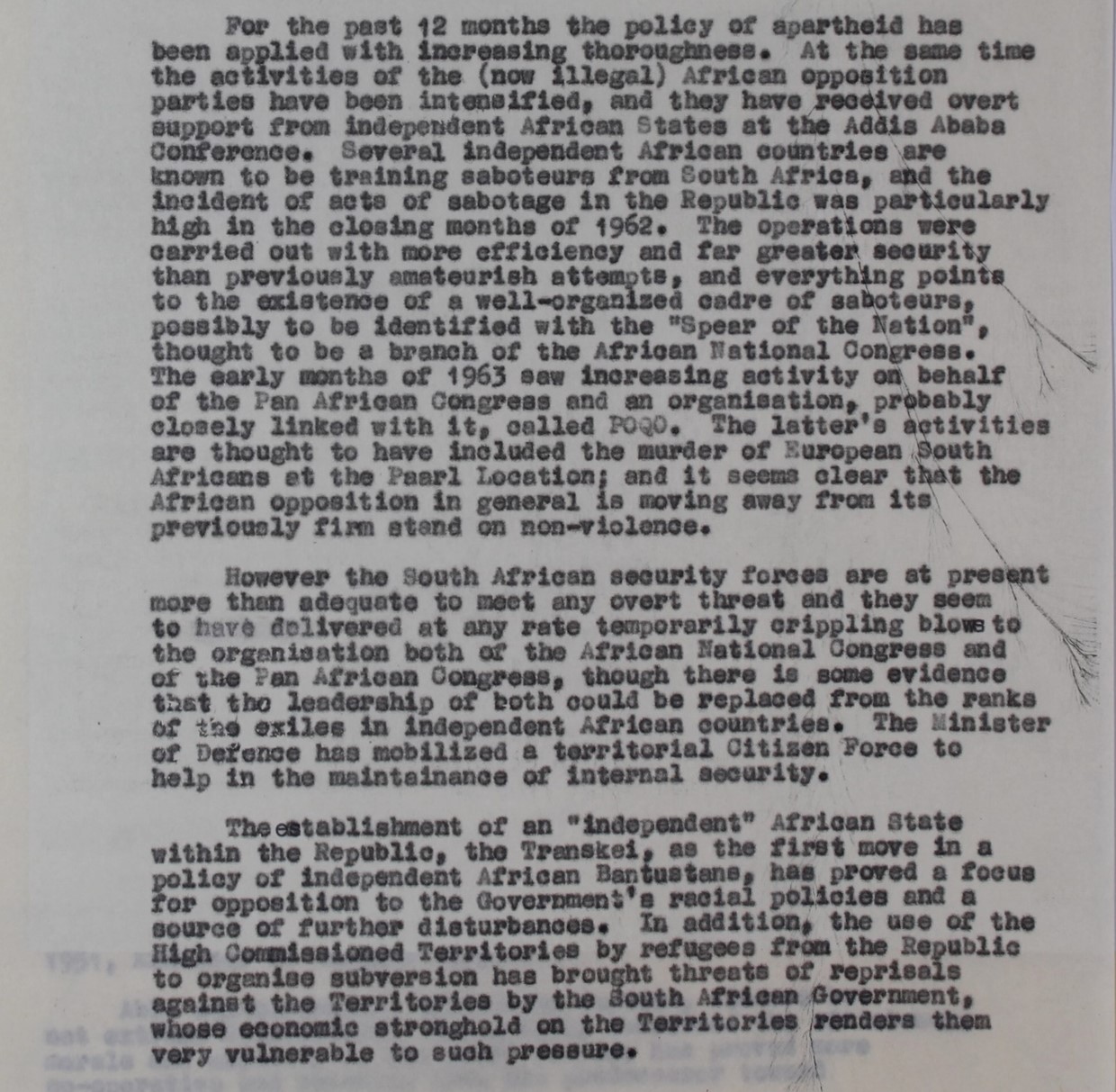
An extract from another report from a Foreign Office file created several months later.
As part of the apartheid policy of ‘separate development’ the government had passed the Bantu Authorities Act in 1951 to initiate the creation of ten Bantustans, or ‘homelands’ to segregate and control the Black population. Some areas were to be self-governing, others like Transkei were granted nominal independence. The Bantustans removed citizenship from Black South Africans within their own country and increased poverty and economic division.
- Why has opposition against apartheid government increased by this time? [Explain using the source and you own knowledge]
- How did the government react to the opposition parties according to this source?
- What support have independent African nations provided to opposition groups? How has this aided resistance?
- What roles have (a) ANC’s ‘Spear of the Nation’/‘Umkhonto ve Sizwe’(b) PAC’s linked POQO organisation played in resistance to apartheid government according to this report?
- Find out more about the Paarl March (November 1962); the actions of POQO; the government response. [also referred to in Document 1.]
- Why do you think this document is held in the Foreign Office collection?
Transcript
…For the past 12 months the policy of apartheid has been applied with increasing thoroughness. At the same time the activities of the (now illegal) African opposition parties have been intensified, and they have received overt support from independent African States at the Addis Ababa Conference. Several independent African Countries are known to be training saboteurs from South Africa, and the incident of acts of sabotage in the Republic are particularly high in the closing months of 1962. The operations were carried out with more efficiency and far greater security than previous amateurish attempts, and everything points to the existence of a well-organised cadre of saboteurs, possibly to be identified with the ‘Spear of the Nation’ thought to be a branch of the African National Congress. The early months of 1963 saw increasing activity on behalf of the Pan African Congress and an organisation, probably closely linked with it, called POQO. The latter’s activities are thought to have included the murder of European South Africans at the Paarl Location, and it seems clear that the African opposition in general is moving away from its previous firm stand on non-violence.
However, the South African security forces are at present more than adequate to meet any overt threat, and they seem to have delivered at any rate temporarily crippling blows to the organisation both of the African National Congress and the Pan African Congress, though there is some evidence that the leadership of both could be replaced from the ranks of the exiles in independent African countries. The minister of Defence has mobilised a territorial Citizen Force to help in the maintenance of internal security.
The establishment of an ‘independent’ African state within the Republic, the Transkei, as the first move in a policy of independent African Bantustans, has proved a focus for opposition to the Government’s racial policies and a source of further disturbances. In addition, the use of the High Commissioned Territories by refugees from the Republic to organise subversion has brought threats of reprisals against the Territories by the South African Government, whose economic stronghold on the Territories renders them very vulnerable to such pressure.
…
Connections to Curriculum
Key stage 4
OCR GCSE History
South Africa 1960–1994: The People and the State: The consolidation of Apartheid – Separate Development and the establishment of the Bantustans; nature and extent of support for Apartheid; methods used by government to maintain the Apartheid regime.
Key stage 5
AQA GCE History
‘The winds of change’, 1947–1967 the growth of nationalist movements and reactions to them.
OCR GCE History
Apartheid and Reconciliation: South African Politics 1948–1999
Edexcel GCE History
South Africa, 1948–94: from apartheid state to ‘rainbow nation’
Exchequer Collection
We hope you enjoyed watching our Education Service video with Kathryn Maude, Medieval Records Specialist at The National Archives looking at legal documents from our Exchequer Collection held at The National Archives. In this video, we focus on documents and source objects that examine the life of Thomas Becket, the murdered Archbishop who became a saint.
Now try and answer the following questions:
- What was the role of Exchequer in the medieval and early modern period?
- What period does the ‘E’ collection cover?
- What type of information is contained in this collection?
- What is one of The National Archives’ most famous ‘E’ records?
- What is parchment?
- What is the usual language used for legal documents?
- What is a deed? Why did they include lists of witnesses?
- What are the limitations of deeds as historical sources?
- Why are ‘E’ collection records valuable sources for historians?
- What other factors should we consider when using them for research?
Document 1
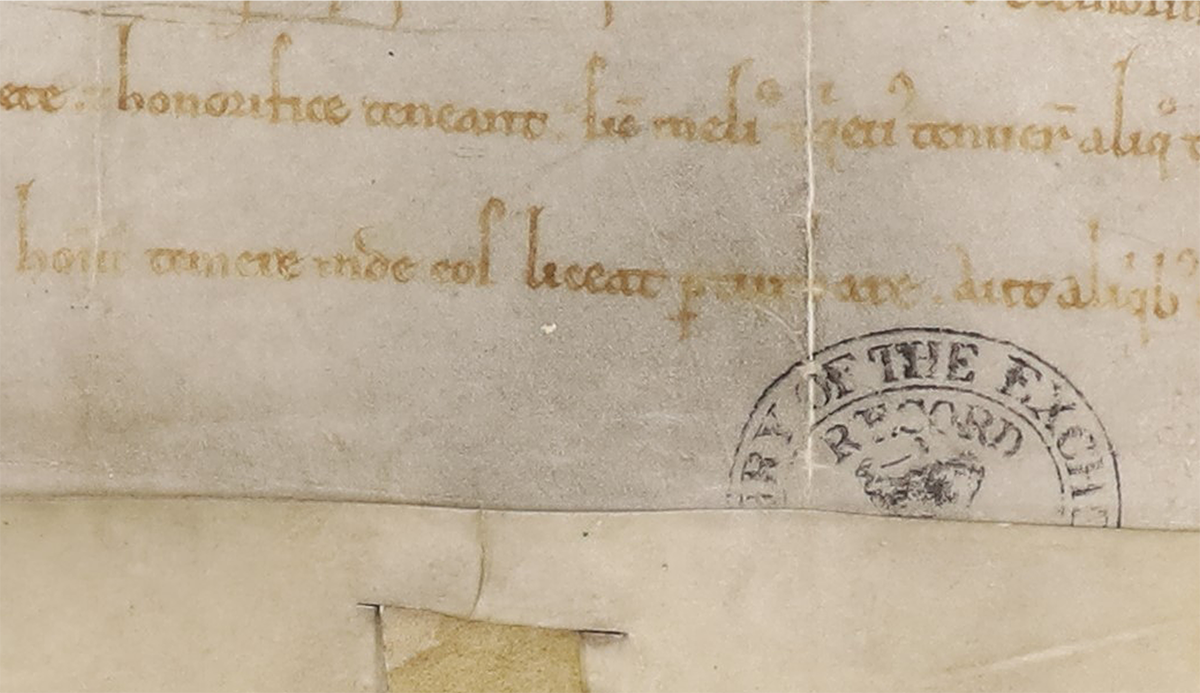
This document is called a charter [written in Latin]. It is grant of land from Archbishop Thomas Becket to Walter, Bishop of Rochester. Catalogue ref: E40/4913.
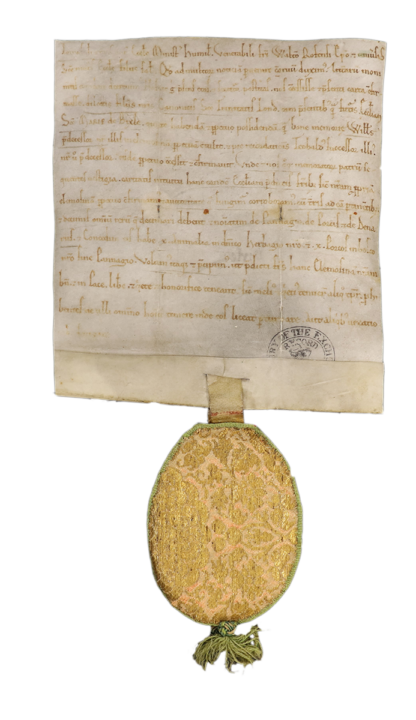
It can be dated from 1162 to Becket’s death in 1170. The charter confirms forever, the land granted by previous Archbishops of Canterbury, William of Corbeil (1123-1136) and Theobald of Bec (1138-1161), to the canons [church officers] of the priory of Holy Trinity Aldgate in London of the church of St Mary, Bexley. The religious community also gained the right to graze ten animals at pasture [allowed to roam to find food] and ten hogs in the wood without having to pay for pannage [the right to feed pigs or other animals in woodland.]
- Describe what you can see in this image.
- What do you think is contained in the decorative fabric pouch attached to the document?
- Why do you think a pouch has been used with this document?
- This document in Latin starts with these words: ‘Thomas by the grace of God, minister of the Church of Canterbury’. According to this statement, how did Thomas Becket see his role as Archbishop of Canterbury?
- What was Thomas Becket’s previous role in Henry II’s government?
- From your knowledge, did Thomas Becket combine his previous job with his role as Archbishop of Canterbury?
Source object 2
The seal of Archbishop Thomas Becket. This was contained in the fabric pouch attached to Document 1. The legend, or wording on seal says: ‘sigillum tome lund’ which means ‘the seal of Thomas of London’. Catalogue ref: E40/4913.
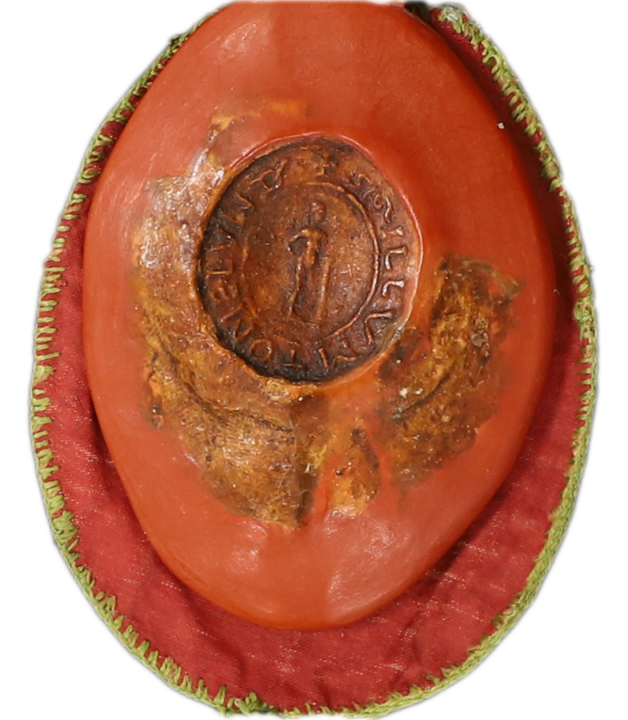
- What is the purpose of a personal seal on a document?
- What does the wording on the seal reveal about Thomas Becket?
- Can you remember why fingerprints were discovered on the seal by the Collection Care Department at The National Archives mentioned in the video?
- This seal became a ‘contact relic’, which means an item that was owned, used, or touched by a saint or holy figure during their lifetime. How does this explain the pouch used for it shown in Document 1?
Source object 3
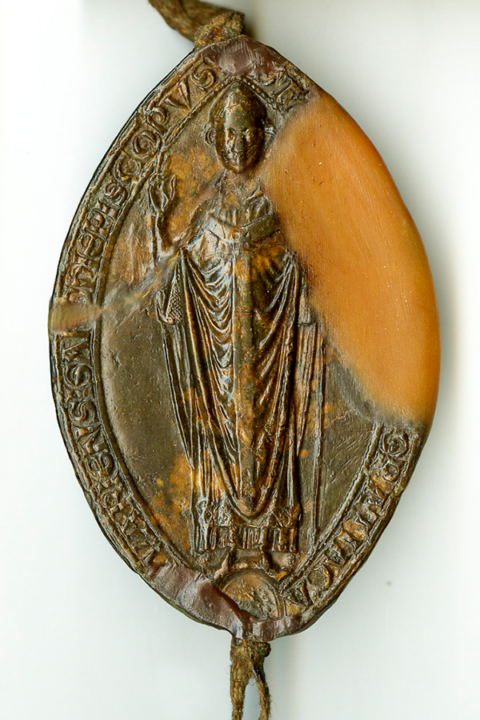
The seal of Stephen Langton, Archbishop of Canterbury, (from 1213 to 1215), showing the obverse (front) and the reverse (back). This was attached to a document from 1214 concerning a land grant, Catalogue ref: DL 27/4.
Obverse
Reverse
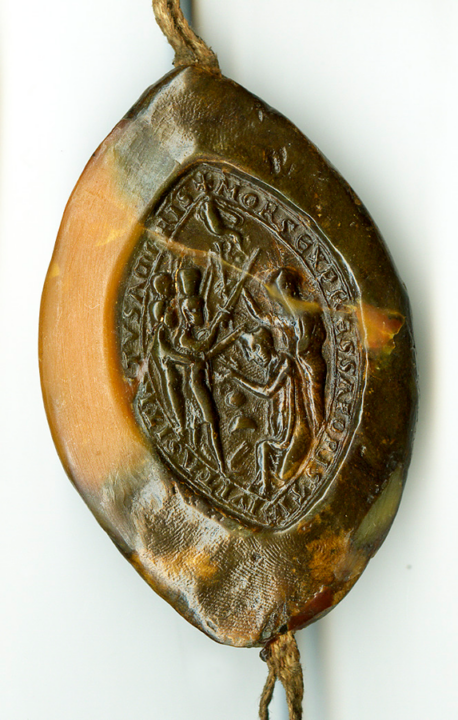
The reverse (back) of the seal has Latin words which say: ‘Mors expressa foris tibi vita sit intus amoris’ meaning ‘May death to your body be your spirit’s life of love’.
- Look carefully at both sides of the seal [The front is called the obverse; the reverse is the back of the seal.]
- Who do you think is depicted on the obverse of the seal?
- Who are the figures shown on the reverse of the seal? Where is the scene taking place?
- How does the design of seal on the reverse suggest the sanctity or holiness of Thomas Becket?
- Why do you think that Archbishop Stephen Langton wanted to show Thomas Becket’s story to anyone who saw his seal?
- Find the legend/motto around the edge of the reverse of seal. Can you explain its meaning? [Clue: see Document 3 caption about the seal.]
- What does the seal show about the importance of religious faith in medieval times?
- What other original sources could help us find out more about the importance of religion at the time?
Source object 4
Alabaster panel showing martyrdom of Thomas Becket circa 1450-1500, England, British Museum. Credit: Wikimedia commons.

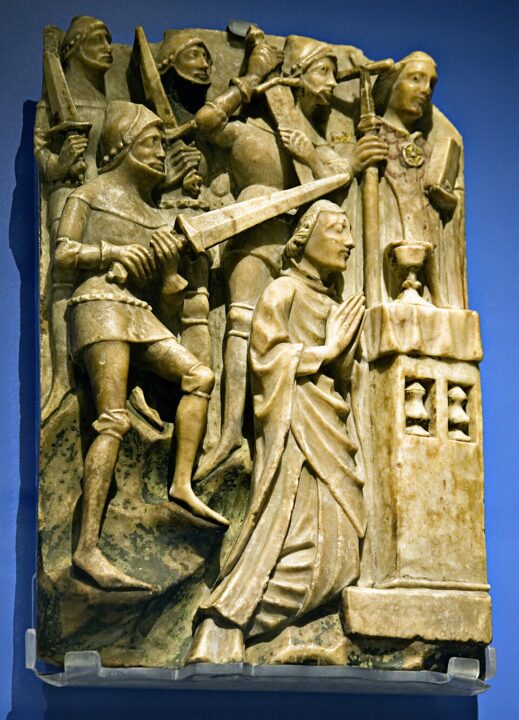
Alabaster is a soft, light-coloured stone, rather like marble. It is often used for carvings and sculptures. English carved alabaster was an important export in medieval times. This panel might have been part of a larger altarpiece.
The knights who killed Thomas Becket were Reginald Fitzurse, Richard le Bret, Hugh de Moreville and William de Tracy. Henry II, argued with Thomas Becket over the rights of Church and State. Henry II denied ordering the death of Thomas Becket who was later canonized as a saint in 1173. Thomas Becket’s shrine at Canterbury Cathedral became a significant centre of medieval pilgrimage.
- Take a close look at the panel.
- Where is Thomas Becket placed in the panel. How does he appear in this sculpture?
- How many knights can you find in the panel. Describe these knights.
- Find the figure holding the cross, Edward Grim, a clerk from Cambridge who witnessed the death of Thomas Becket. Why do you think he is included in the sculpture?
- The murder was committed in a side chapel of Canterbury Cathedral, a sanctified holy place. What protection should this have given Thomas Becket?
Extension question:
What is the value of all the original sources in this lesson for understanding medieval social and religious history?
Connections to Curriculum
Key stage 3
National Curriculum: the development of Church, state and society in Medieval Britain 1066-1509: the struggle between Church and crown.
Related resources
Lesson on Medieval Seals
Also, here is a lesson on The Great Seal
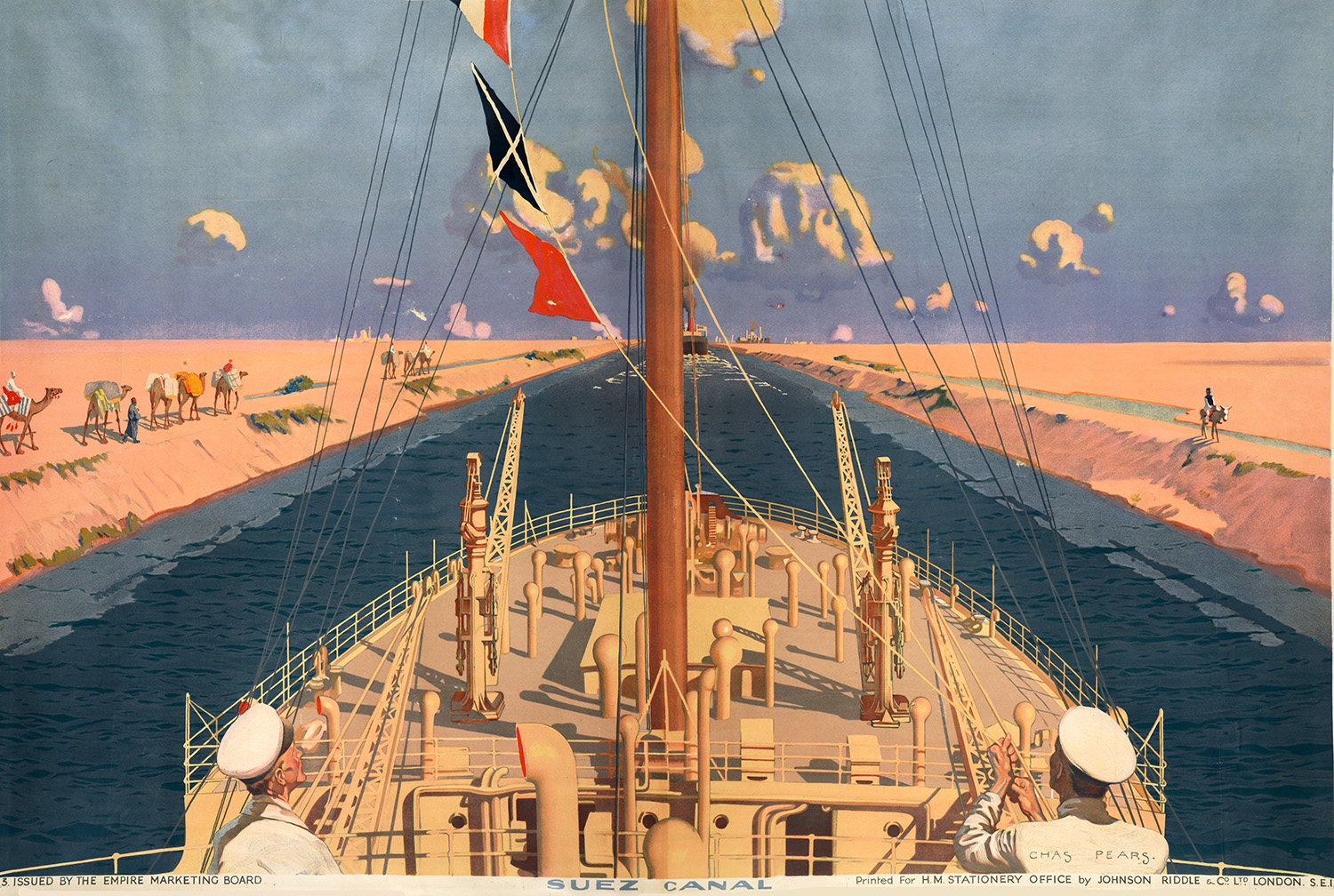
What to expect in the on-site workshop:
In this on-site workshop, students will examine the consequences for Britain, both at home and globally, in the aftermath of the Suez Crisis of 1956.
Regarded as one of the most pivotal episodes in Britain’s postwar history, we will explore how Britain’s position in the world changed, how other countries responded, and what lessons were learned from the crisis.
Students will handle and analyse range of original documents, including Foreign Office files and the Prime Minister’s and the cabinet’s papers and telegrams. Each of these offer a dramatic insight into British concerns at the heart of government at the time and in the years beyond.
The two-hour workshop is led by an experienced history educator and is taught in a unique learning space at The National Archives in Kew.
Curriculum links:
A-level AQA:
2S: The Making of Modern Britain, 1951–2007
1J: The British Empire, c1857–1967
GSCE:
Edexcel-Options 28/29: Conflict in the Middle East, 1945–95
How did the Suez Crisis of 1956 impact Britain’s position in the world?All activities must be booked in advance.
Tel: +44 (0)20 3908 9162
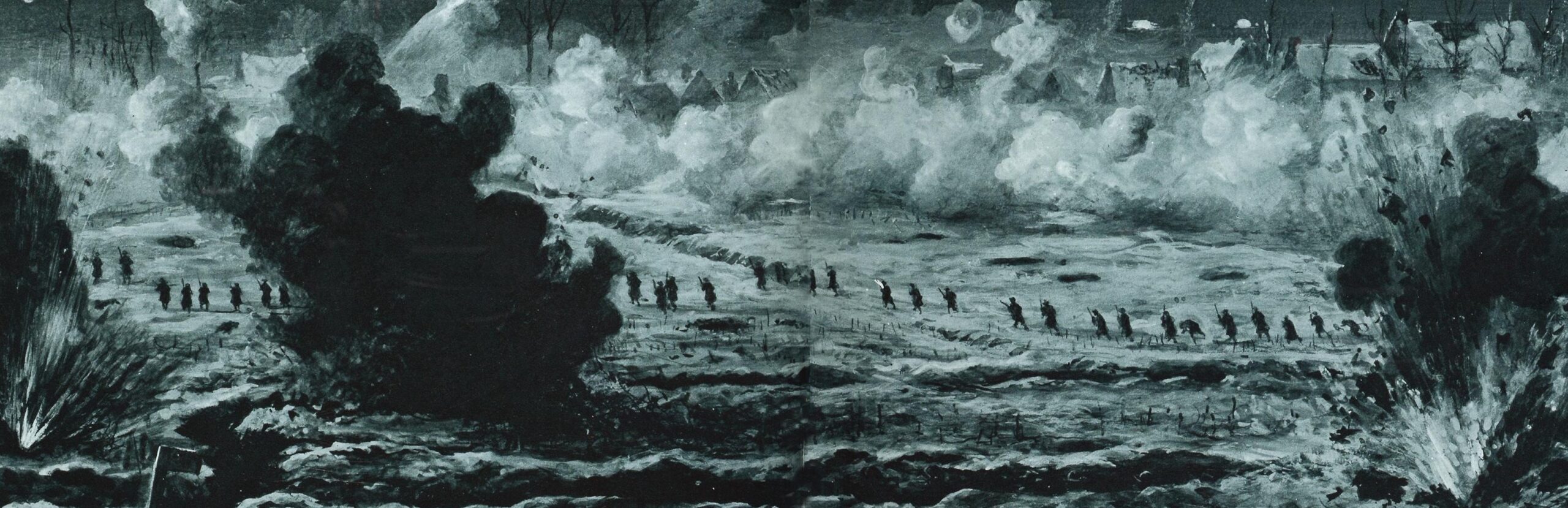
Find out about the men and women of the General Post Office (GPO) who experienced the First World War, as their stories are brought into schools and classrooms across the country.
During a free session delivered onsite in your school, students will spend time with a soldier from the Post Office Rifles (played by an historical actor) as he talks about his involvement in the conflict, his experience of injury and medical treatment and the impact on his loved ones back at home.
Online resources about the GPO and the role of its employees during the conflict, will also be made freely available to schools. These are designed to support the GCSE curriculum, covering the First World War and the inter-war period.
The new sessions and resources are supported by the National Archives Trust and are made possible through the generosity of the Post Office Remembrance Fellowship.
Bookings for school sessions are now available in the autumn term. Session dates have been organised by region, so please select your area for available dates.
Online resources will be published during the autumn term. Please keep your eye on this page for further information.
This session supports schools studying Challenges to Britain and the wider world, 1901 to the present day.
Connections to the curriculum:
- Edexcel GCSE History: Medicine in Britain, c1250 present and The British sector of the Western Front, 1914-18.
Available as: Workshop delivered in your school.
Request a booking in the South East
Request a booking in the South West
Request a booking in the Midlands
Request a booking in the North East
What can we find out about the role of the Post Office Rifles during the First World War?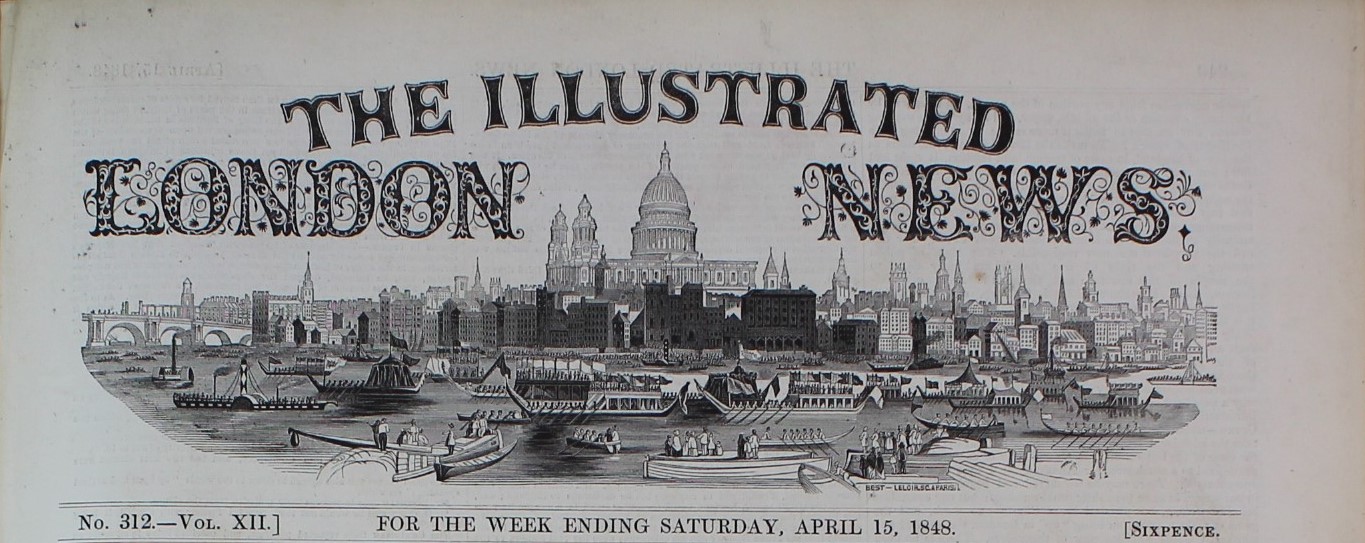
Illustrated London News & Chartism
We hope you enjoyed watching our Education Service video with Sarah Castagnetti Visual Collections Specialist at The National Archives looking at ‘The Illustrated London News’ from the ZPER collection held at The National Archives. This collection consists of periodicals related to transport history and journals and magazines from the British Transport Historical Records Office Library. The focus of this video is how ‘The Illustrated London News’ reported on a Chartist demonstration on 10 April 1848.
Now try and answer the following questions:
- What was ‘The Illustrated London News’?
- When was the paper launched?
- Why has this copy of ‘The Illustrated London News’ been bound into a volume?
- Where did the Chartists hold a demonstration in London on 10 April 1848?
- What were the political aims of the Chartists?
- According to the article, how did the government respond to Chartism?
- What was the subject of the second article examined in this video?
- Why is ‘The Illustrated London News’ an important source for historians and researchers?
Document 1
The Illustrated London News
Extract from the Illustrated London News, 10 April, 1848. Catalogue ref: ZPER 34/12
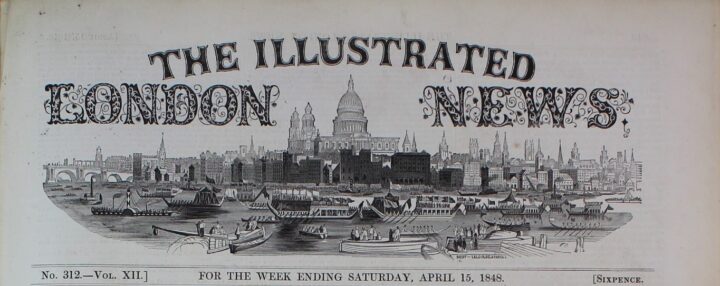
‘The Illustrated London News’ was one of the first illustrated newspapers and began in 1842, published once a week. The paper offered a new way to consume news. Newspapers at the time did not contain photographs as photography was quite new. However, artists created engravings for printing. This was expensive and took time so most daily newspapers had few images. Despite its title, the paper featured world news and stories on science, technology, art, politics, and culture. It also had an emphasis on the royal family and carried advertising.
- How often was ‘The Illustrated London News’ published?
- How much did it cost in 1848? Use The National Archives currency converter to find the cost today.
- Why do you think the paper had a number and volume listed at the top?
- What does the illustration with the paper’s title reveal about London’s buildings and the River Thames in the 1840s?
- Who do you think read ‘The Illustrated London News’?
Document 2
Daguerreotype of a Chartist meeting on Kennington Common
A daguerreotype showing a Chartist meeting on Kennington Common purchased by Prince Albert. The meeting took place 10 April 1848. The daguerreotype was made by William Edward Kilburn (1818-91). Credit: Wikimedia Commons
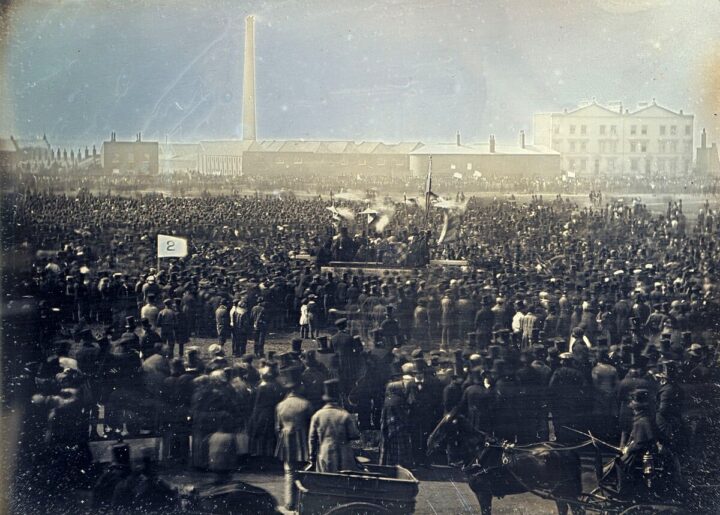
A daguerreotype was an early photograph produced on a silver or a silver-covered copper plate. A printed engraving of this daguerreotype appeared in ‘The ‘Illustrated London News’
- What does the source reveal about support for the Chartist movement?
- Why do you think this ‘photograph’ was taken?
- Why do you think Prince Albert, the husband of Queen Victoria, bought this image?
- What are the advantages of this image compared to a printed engraving?
Document 3
Engraving of a Chartist meeting on Kennington Common
Engraving of a Chartist meeting on Kennington Common from ‘The Illustrated London News’ 15 April 1848, Catalogue ref: ZPER 34/12
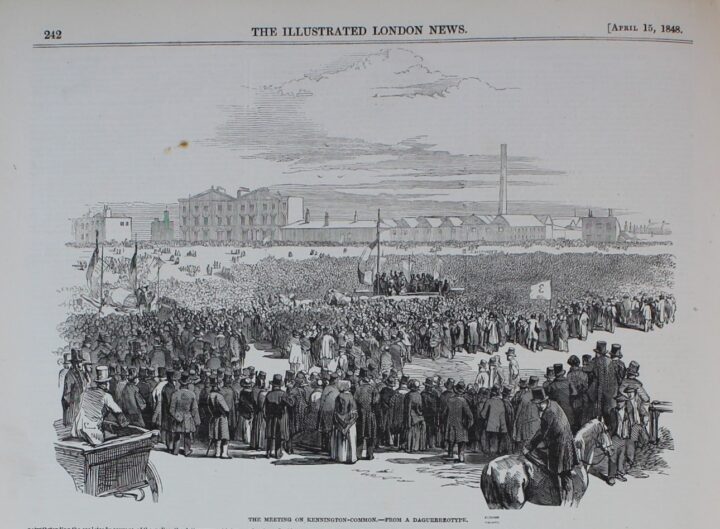
- How does the caption (below the engraving) link to Document 2?
- What differences can you spot between each scene in Documents 2 & 3.
- What are the advantages and disadvantages of the engraving compared to the ‘photograph’?
- Why do you think the engraving was made?
- How would you describe the nature of the crowd and demonstration in both images?
- What do both images suggest about (a) supporters of Chartism (b) the organisation of the chartists?
- Why do you think the ‘Illustrated London News’ reported on the Chartists?
Document 4
Poster for Chartist meeting in Merthyr Tydvil, Wales
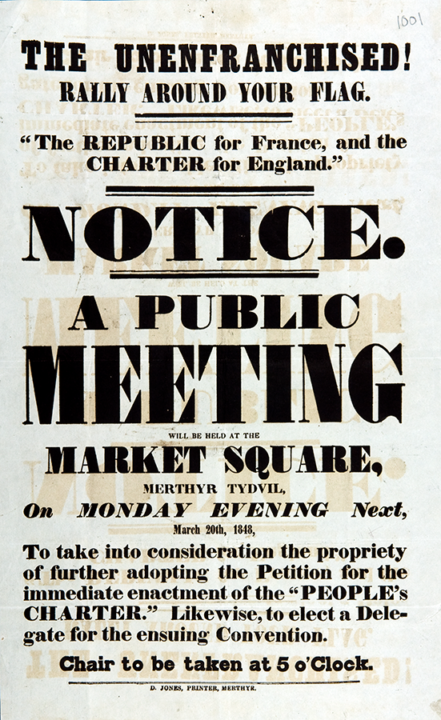
This poster advertised an earlier Chartist public meeting in March 1848, in Merthyr Tydvil in Wales.
- What does it reveal about (a) support for the movement? (b) organisation of the Chartists?
- Why is there a call for ‘The unenfranchised’ [those without right to vote] to ‘Rally round their flag’?
- How does this meeting about the ‘Petition’ for ‘the People’s Charter’ connect to the first previous two images?
- Find out about the February Revolution in France in 1848. Explain why the poster says: ‘The Republic for France, the Charter for England’?
Transcript
THE UNENFRANCHISED!
RALLY AROUND YOUR FLAG
——————————-
‘The REPUBLIC for France, and the CHARTER for England’
————————————
NOTICE.
A PUBLIC
MEETING
WILL BE HELD AT
MARKET SQUARE
MERTHYR TYDVIL
On MONDAY EVENING Next,
March 20th,1848,
To take into consideration the propriety
of further adopting the Petition for the
immediate enactment of the “PEOPLE’s
CHARTER”. Likewise, to elect a Delegate
for the ensuing Convention
Chair to be taken at 5’ o Clock.
D. Jones Printer, Merthyr
Document 5
‘The Illustrated London News’ reports on a Chartist demonstration
Extracts from an article in ‘The Illustrated London’ reporting on Chartist activity in April 1848, Catalogue ref: ZPER 34/12
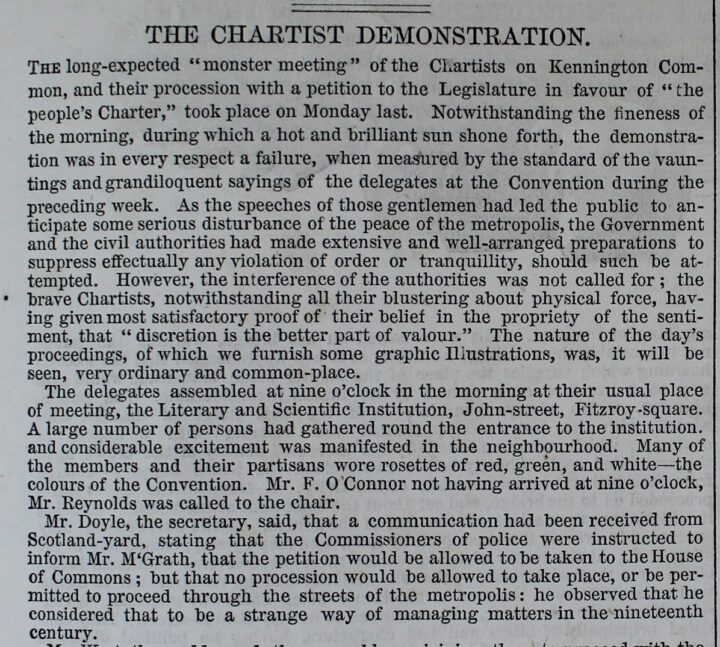
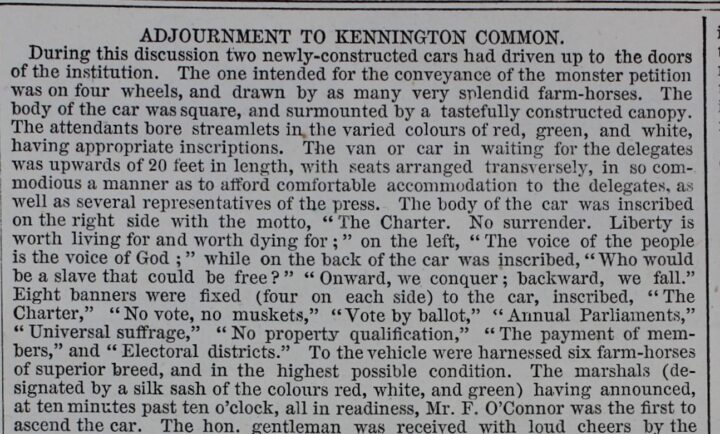
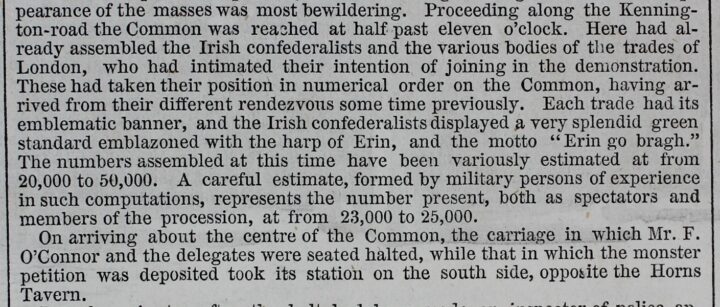
This article gives an account of the Chartist demonstration, and Convention [conference] that took place in April 1848. The Chartists also planned to deliver a signed petition for their six-point charter to parliament. The government saw their demonstration as a huge threat to the public order. The Duke of Wellington, head of the British Army, stationed troops across London and the royal family were moved to Osborne House on the Isle of Wight. In the event, the rally passed peacefully. The authorities closed the city’s bridges to prevent the procession with the petition to present it to the House of Commons. Instead, Fergus O’Connor and other members of the Chartist Association delivered it.
‘Erin go Bragh’ is from Irish Gaelic, meaning ‘Ireland forever’ and often used as a call for independence.
- How is the Chartist movement characterised in this article from ‘The Illustrated London News’? [comment its language and tone]
- What methods did the Chartists use to gain support for their campaign?
- Explain how the recent February Revolution in France might have encouraged the Chartists to protest then and the government’s reaction?
- Find out about the ‘Irish confederalists’. Why do you think they were present at the Chartist demonstration?
- According to the images (Documents 2 & 3), was the government response justified?
- What additional information does Document 5 give about the Chartist movement compared to the images shown here?
Transcript
THE CHARTIST DEMONSTRATION
The long-expected “monster meeting” of the Chartists on Kennington Common, and their procession with a petition to the Legislature [government] in favour of the “the people’s Charter,” took place on Monday last. Notwithstanding the fineness of the morning, during which a hot and brilliant sun shone forth, the demonstration was in every respect a failure, when measured by the standard of the vauntings [boasting] and grandiloquent [extravagant] sayings of the delegates at the Convention [conference] during the preceding week. As the speeches of those gentlemen had led the public to anticipate some serious disturbance of the peace in the metropolis [city of London], the Government and the civil authorities had made extensive and well-arranged preparations to suppress effectually any violation of order or tranquillity, should such be attempted. However, the interference of the authorities was not called for; the brave Chartists, notwithstanding all their blustering about physical force, having given most satisfactory proof of their belief in the propriety [need] of the sentiment [idea], that “discretion is the better part of valour”. The nature of the day’s proceedings, of which we furnish [provide] some graphic [clear] illustrations, was, it will be seen, very ordinary and common-place.
The delegates assembled at nine o’clock in the morning at their usual place of meeting, the Literary and Scientific Institution, John-Street, Fitzroy Square. A large number of persons had gathered round the entrance to the Institution and considerable excitement was manifested in the neighbourhood. Many of the members and their partisan wore rosettes of red, green, and white-the colours of the Convention. Mr. F. O’Conor not having arrived at nine o’clock, Mr Reynolds was called to the chair.
Mr Doyle, the Secretary, said that a communication had been received from Scotland-Yard, stating that the Commissioners of police were instructed to inform Mr. McGrath, that the petition would be allowed to be taken to the House of Commons, but that no procession would be allowed to take place, or be permitted to proceed through the streets of the metropolis; he observed that he considered that to be a strange way of managing matters in the nineteenth century.
…
ADJOURNMENT TO KENNINGTON COMMON
During this discussion two newly constructed cars [carriages] had driven up to the doors of the institution. The one intended for the conveyance of the monster petition was on four wheels and drawn by as many splendid farm-horses. The body of the car was square and surmounted by a tastefully constructed canopy. The attendants bore streamlets in the varied colours of red, green, and white, having appropriate inscriptions. The van or car in waiting for the delegates was upwards of 20 feet in length, with seats arranged transversely [sideways], in so commodious a manner as to afford comfortable accommodation to the delegates, as well as several representatives of the press. The body of the car was inscribed on the right side with the motto, “The Charter. No surrender. Liberty is worth living for and worth dying for”; on the left, “The voice of the people is the voice of God;” while on the back of the car was inscribed “Who would be a slave that could be free?” “Onward, we conquer; backward, we fall.” Eight banners were fixed (four on each side) to the car, inscribed, “The Charter”, “No vote, no muskets,” “Vote by Ballot”, “Annual Parliaments,” “Universal Suffrage,” “No property qualification,” “The payment of members,” and “Electoral Districts,” To the vehicle were harnessed six farm-horses of superior breed, and in the highest possible condition. The marshals (designated by a silk sash of the colours red, white and green) having announced, at ten minutes past ten o’clock, all in readiness, Mr. F. O’ Connor was the first to ascend the car…
…
…Proceeding along the Kennington Road the Common was reached at half past eleven o’clock. Here had already assembled the Irish confederalists and the various bodies of trades of London, who had intimated their intention of joining in the demonstration. These had taken their position in numerical order on the common, having arrived from their different rendezvous some time previously. Each trade had its own emblematic banner, and the Irish confederalists displayed a very splendid green standard [flag] emblazoned with the harp of Erin, and the motto “Erin go bragh.” The numbers assembled at this time have been variously estimated at from 20,000 to 50,000. A careful estimate, formed by military persons of experience in such computations [calculations], represents the number present, both as spectators and members of the procession, at from 23,000 to 25,000.
On arriving about the centre of the Common, the carriage in which Mr. F. O’Connor and the delegates were seated halted, while that in which the monster petition was deposited took its station on the south side, opposite the Horns Tavern…
Document 6
The ‘Illustrated London News’ on the significance of Chartism.
Extracts from an article in ‘The Illustrated London’ reporting on Chartist activity in April 1848, Catalogue ref: ZPER 34/12
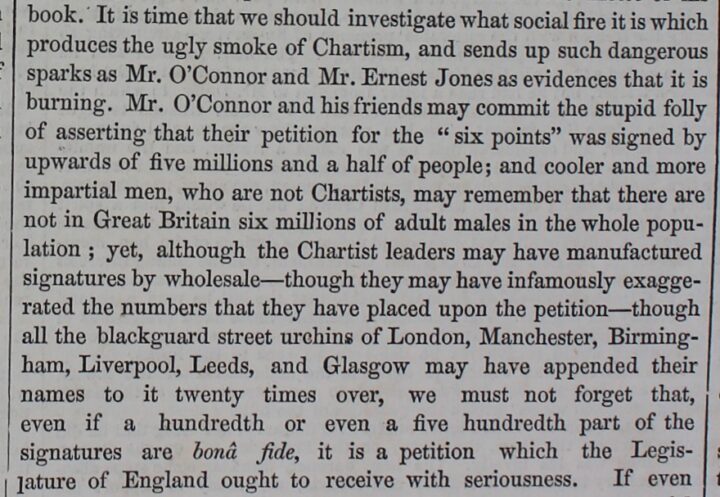
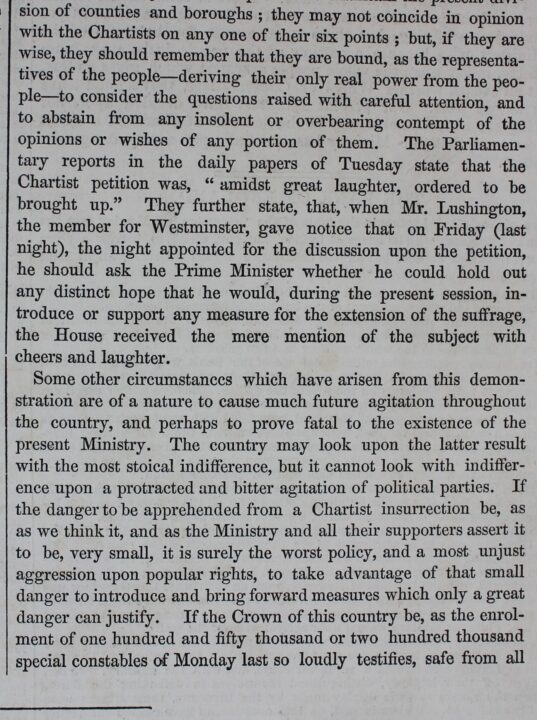
This article gives the writer’s opinion on Chartism and the government’s response to the movement.
- How many signed the Chartist petition, according to Fergus O’ Connor, Chartist leader?
- How is the petition for the Charter criticised in this extract?
- Why does the writer say that the government must take the petition seriously, despite its made-up signatures?
- How has the government viewed the Chartist movement according to the writer?
- Explain why the writer argues that the government’s threat to use a lot of force against the chartists was a mistake.
- What is the value of this article as evidence for the Chartist movement?
- Compare this extract to Document 5. Explain the differences in style and approach.
Transcript
It is time we should investigate what social fire it is which produces the ugly smoke of Chartism, and sends up such dangerous sparks as Mr. O’ Connor and Mr. Ernest Jones as evidences that it is burning. Mr. O’Connor and his friends may commit the stupid folly of asserting that their petition for the “six points” was signed by upwards of five millions and half people; and cooler more impartial [unbiased] men, who are not Chartists, may remember that there are not in Great Britain six millions of adult males in the whole population; yet, although the Chartist leaders may have manufactured [forged] signatures by wholesale-though they may have infamously exaggerated the numbers that they have placed upon the petition- though all the blackguard [dishonest] street urchins [young troublemakers] of London, Manchester, Birmingham, Liverpool, Leeds, and Glasgow may have appended [added] their names to it twenty times over, we must not forget that, even if a hundredth or even a five hundredth part of the signatures are bona fide [genuine], it is a petition which the Legislature [government] of England ought to receive with seriousness…
…
they [government] may not coincide in opinion with the Chartists on any one of their six points; but, if they are wise, they should remember that they are bound, as the representatives of the people- deriving their only real power from the people- to consider the questions raised with careful attention, and to abstain [choose not to make] from any insolent or overbearing contempt of the opinions or wishes of any portion of them. The Parliamentary reports in the daily papers of Tuesday state that the Chartist petition was, “amidst great laughter, ordered to be brought up.” They further state, that when Mr. Lushington, the member for Westminster, gave notice that on Friday (last night), the night appointed for the discussion upon the petition, he should ask the Prime Minister whether he could hold out any distinct hope that he would, during the present session, introduce or support any measure for the extension of the suffrage [vote], the house received the mere mention of the subject with cheers and laughter.
Some other circumstances which have arisen from this demonstration are of the nature to cause much future agitation throughout the country, and perhaps to prove fatal to the existence of the present Ministry [government]. The country may look upon the latter result with the most stoical indifference [emotionally detached], but it cannot look with indifference [ignore] upon a protracted [drawn out] and bitter agitation of political parties. If the danger to be apprehended [feared] from a Chartist insurrection [revolt] be, as we think it, and as the Ministry and all their supporters assert it to be, very small, it is surely the worst policy, and a most unjust aggression upon popular rights [freedoms] , to take advantage of the small danger to introduce and bring forward measures which only a great danger can justify. If the Crown of this country be, as the enrolment of one hundred and fifty thousand or two hundred special constables of Monday last so loudly testifies, safe from all….
Connections to Curriculum
Key stage 4
AQA GCSE History: Britain: Power and the people: c1170 to the present day
Key stage 5
AQA GCE History: The Age of Reform: Britain 1832-1185
Edexcel GCE History: Protest, agitation and parliamentary reform in Britain, c1780–1928
OCR GCE History: From Pitt to Peel: Britain 1783–1853
Related Resources
Lesson about Chartism and what it was
Here you can find a themed collection about protest and democracy in 1816 to 1818
Also another themed collection about protest and democracy in 1818 to 1820