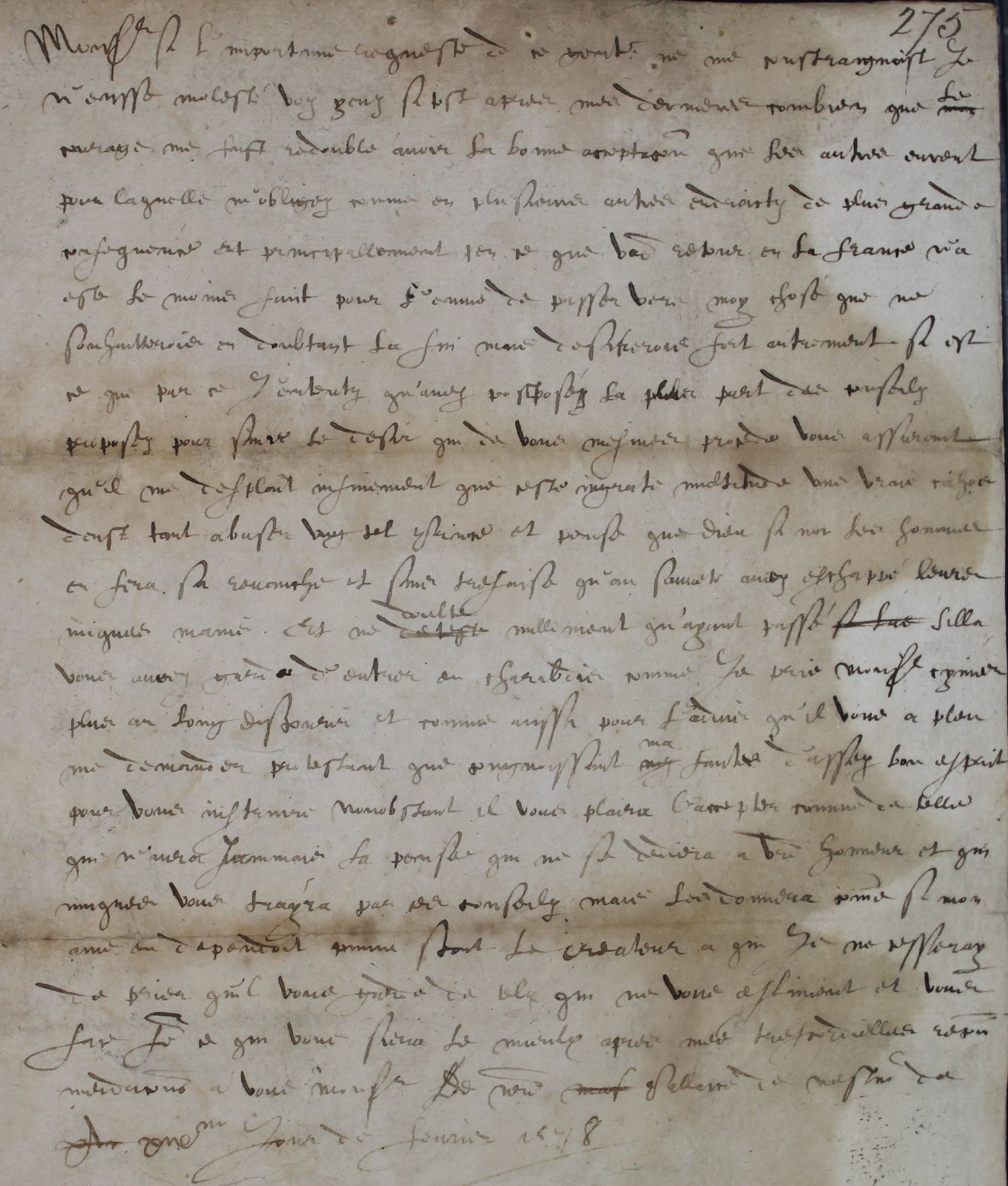
Elizabeth I to François, Duke of Alençon and Anjou, 19 February 1579 (SP 78/3 f.9)
Anjou was the last serious contender for Elizabeth’s hand in marriage. When this letter was written, Elizabeth was 45 and her suitor just 23. Despite the considerable age gap, the pair became very close – aided by the fact that the Duke was the only one of the Queen’s many suitors to court her in person. Perhaps, also, Elizabeth was aware that Anjou represented her last realistic chance of matrimony and of bearing an heir. She referred to him as her ‘frog’ and they exchanged a number of affectionate letters. Much as they wished their queen to take a husband, Elizabeth’s xenophobic subjects disapproved of Anjou and the proposed marriage caused a great deal of discontent, as is clear from this letter. Elizabeth eventually abandoned it in 1581 with apparently genuine regret.
Translation from the original French
If the urgent request of this bearer did not constrain me, I should not have annoyed your eyes with another letter so soon after my last, although my courage was doubled by the good acceptance which the others had; whereby you put me under obligation, as on other occasions of more consequence. Of which your return to France in consequence of your wish to come to me has not been the least. It was not a thing I should have wished, fearing how it might end; but my desire would be quite other if I am to understand by it that you have set aside most of the advice in order to follow the desire which proceeds from yourself. I assure you I am much displeased that that ungrateful multitude, a true mob, should so misuse such a Prince; and I think that God, if not men, will be revenged on them for it, and am glad that you have safely escaped their iniquitous hands. Nor do I doubt that having passed Scylla you will beware of entering Charybdis, as I beg M. Simier [Anjou’s envoy] to set out to you at more length, as also in respect of the advice which you have asked of me; protesting that though I recognise by lack of wit to instruct you, you may accept it as from one who will never have a thought not dedicated to your honour and will never betray you by her advice, but will give it as if my soul depended thereon.
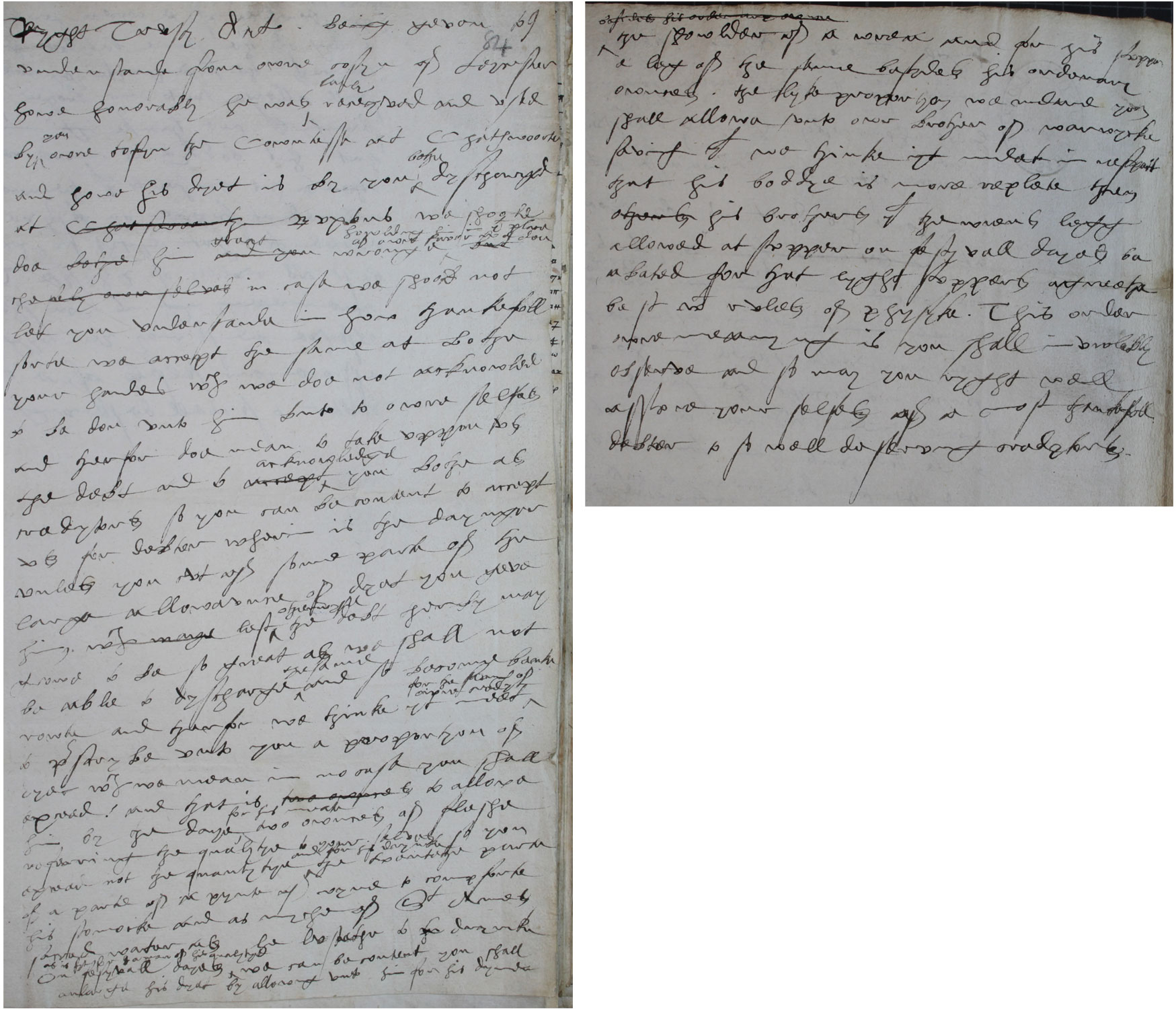
Elizabeth I to George and Elizabeth ‘Bess’ Talbot, Earl and Countess of Shrewsbury, 4 June 1577 (SP 53/10 f.84)
Elizabeth has gone down in history as the Virgin Queen. In stark contrast to her much-married father, she famously declared: ‘I will have but one mistress here, and no master.’ During the course of her long reign, she was besieged by many suitors but gave each one nothing more than ‘fair words but no promises.’ Yet it is generally accepted that there was one man who, more than any other, tempted Elizabeth to relinquish her virgin state: Robert Dudley, Earl of Leicester, to whom she had been close since childhood. Their tempestuous relationship endured for almost 50 years, and the obvious intimacy that existed between the couple prompted endless gossip. Even though she probably remained the Virgin Queen, Elizabeth loved Dudley above all others and missed him whenever he was away from court, as this letter proves. Dudley had stayed with the Earl and Countess whilst visiting Buxton baths for his health. The queen wrote them this lighthearted letter thanking them for their hospitality and prescribing an abstemious diet for her favourite.
Transcript
Right trusty etc. Being geven to understand from owre cosyn of Leycester howe honorably he was lately receyved and used by you, our cosyn the Cowntesse at Chatswoorth, and howe his dyet is by you bothe dyscharged at Buxtons we should doe him great wrong holding him in that place of our favour as we do in case we should not let you understande in how thankfull sorte we accept the same at bothe your handes which wee doe not acknowledg to be done unto him but to owre selves, and therefore doe mean to take uppon us the debt and to acknowledge you bothe as credytors so you can be content to accept us for debtor wherin is the daynger unless you cut off some part of the large allowance of dyat you geve him, lest otherwyse the debt thereby may growe to be so great as we shall not be able to dyscharge the same, and so become bankrowte [bankrupt] and therefore we thinke yt meet for the saving of owre credyt to prescribe unto you a proportyon of dyet which we mean in no case you shall exceed, and that is to allow him by the daye for his meate two ounces of fleshe, reserving the qualytye to your selves so as you excead not the quantytye, and for his drynke the twentyeth parte of a pynte of wyne to comforte his stomacke and as muche of St Anne’s sacred water [probably May dew; early morning dew gathered during May and early June was believed to have special healing powers] as he lystethe to drynke. On festyvall dayes, as is fyt for a man of his qualyty, we can be content you shall enlarge his dyat by allowing unto him for his dynner the shoulder of a wren and for his supper a leg of the same, besides his ordinary ownces. The lyke proportyon we meane you shall allowe unto our brother of Warwycke [Ambrose Dudley, Earl of Warwick, the older brother of Robert] saving that we thinke yt meet that in respectt that his boddye is more replete than his brothers that the wren’s legg allowed at supper on festyvall dayes be abated for that lyght supper agreeth best with rules of physyke. This order owre meanyng is you shall inviolably observe and so may you ryght well assure your selves of a most thankfull debtor to so well deserving a credytor.
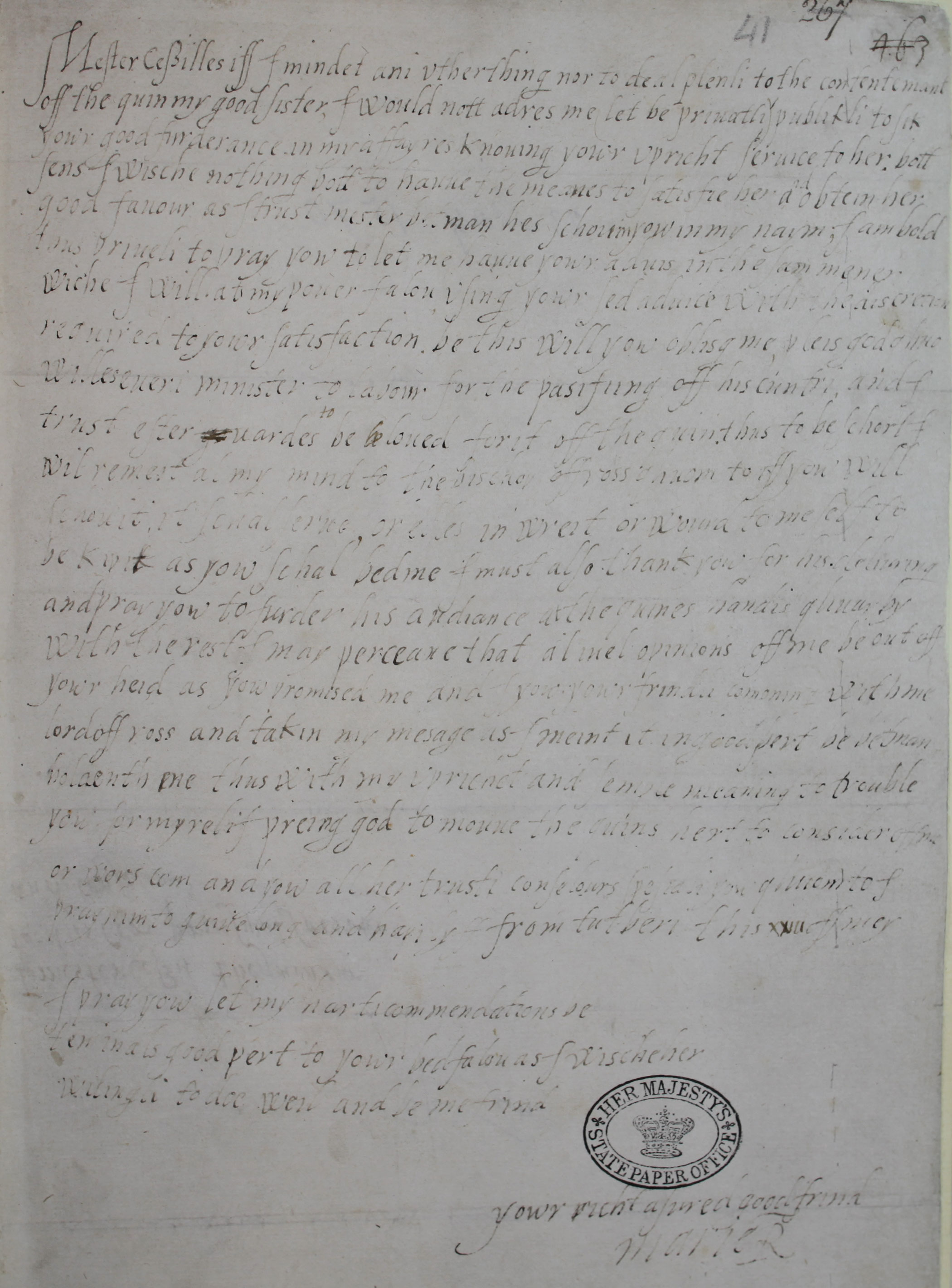
Mary, Queen of Scots to Sir William Cecil, Tutbury, 23 May 1570 (SP53/5 f.72)
Some of Mary’s letters to Cecil during her imprisonment are written in Scottish-English, like this one; others are in French. She refers to John Leslie, bishop of Ross, who was her ambassador to Elizabeth. Leslie also carried on intrigues with her supporters in Scotland and abroad. Early in 1570, he was arrested on suspicion of involvement in the Northern Rebellion, but was freed after four months for lack of evidence. Tutbury Castle was one of several locations where Mary was held prisoner. She was first taken there in February 1569 and complained of its cold, draughty and damp rooms, which she claimed aggravated her already delicate health.
Transcript
‘Mester Cessilles, iff I mindet ani uther thing nor to deal plenli to the contentemant off the quin, my good sister, I would nott adres me (let be privatli) publikli to sik yowr good furderance in my affayres, knouing yowr upricht service to her, bott sens I wische nothing bott to havve the meanes to satisfie her and obtein her good favour… I am bold thus priveli to pray yow to let me havve yowr advis in the sam mener, wiche I will at my pouer falou, using yowr sed advice with the discretion required to yowr satisfaction. Be this will yow oblisg me, pleis God, qhuo [who] willes everi minister to labour for the paisifiing of his cuntri, and I trust efteruardes to be beloved for it off the quin… I must also thank yow for his delivring and pray yow to furder his audiance at the quine’s handis, qhuarby [whereby] with the rest I may perceave that al ivel opinions off me be out off your heid, as yow promised me and I yow… preing god to move the quins hert to considere of me or wors com … I pray yow let my harti commendations be ten in als good pert to yowr bedfalou [bedfellow], as I wisch her wilingli to doe weil and be me frind.
Your richt assured good frind Marie R.
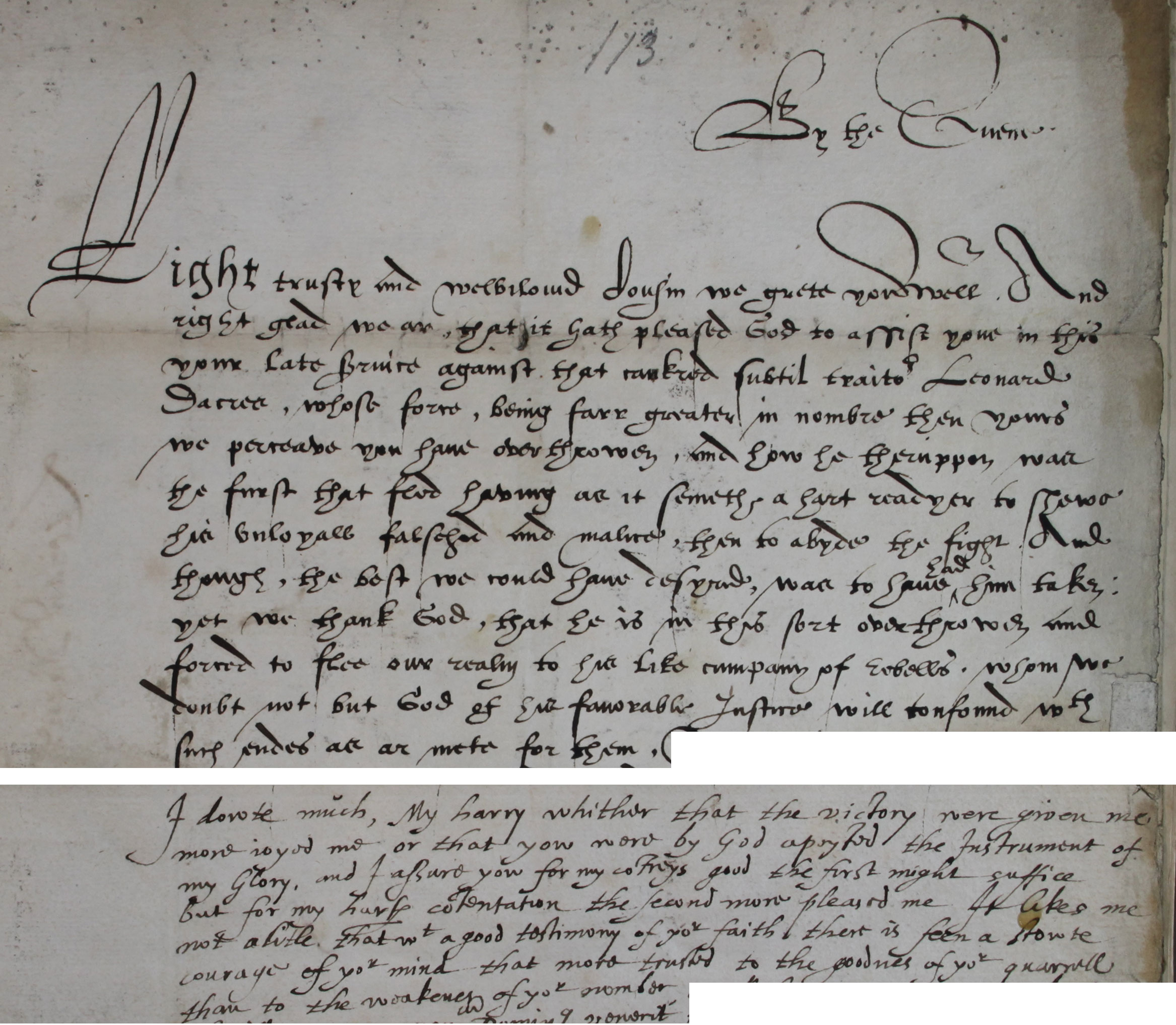
Elizabeth I to Henry Carey, Lord Hunsdon, 26 February 1570 (SP 15/17 f.263)
As a prisoner on English soil, Mary Queen of Scots was even more of a threat to Elizabeth than she had been in Scotland. Now she was tantalisingly within reach for all of the powerful Catholic nobles who wanted to oust the ‘heretical’ Elizabeth from the throne and replace her with her Scottish cousin. One of the first rebellions against Elizabeth’s regime was the Rising of the North in November 1569, led by the Earls of Northumberland and Westmorland. Although it was quickly suppressed, the investigation proved that the tendrils of revolt had spread wider than had first appeared. Another prominent nobleman, Leonard Dacre, had been deeply involved, and when Lord Hunsdon was sent to arrest him, Dacre and his followers engaged him in battle. They were defeated, and Dacre fled to Scotland. In this letter, Elizabeth thanks Hunsdon, who was her first cousin, being the son of Mary Boleyn. It was written the day after Pope Pius V issued a bull of excommunication against Elizabeth, which effectively sanctioned her assassination by those subjects who stayed loyal to the Roman Catholic faith.
Transcript (extract)
[Draft by Lord Burghley] Right trusty and welbeloved cousin we grete you well. And right glad we ar, that it hath pleased God to assist youe in your late service against that cankred subtil traitor Leonard Dacres, whose force, being farr greater in nombre then yours we perceave you have overthrowen, and how he thereuppon was ye first that fled having as it semeth a hart readyer to shewe his unloyall falshood and malice, then to abyde the fight. And though, the best we cold have desyred, was to have had hym taken: yet we thank God that he is in this sort overthrowen and forced to flee oure realme, to his lyke company of rebells, whom we doubt not but God of his favourable Justyce will confounnd with such endes as ar mete for them…
[Added by Elizabeth in her own hand] I dowte much, my Harry whither that the victory were given me more ioyed [joyed] me, or that yow were by God appoynted the Instrument of my Glory, and I assure yow for my countreys good the first might suffice but for my hartes contentation, the second more pleased me. It likes me not a litle that, with a good testimony of your faith, there is seen a stowte courage of your mind, that more trusted to the goodness of your quarrell than to the weakness of your nomber…
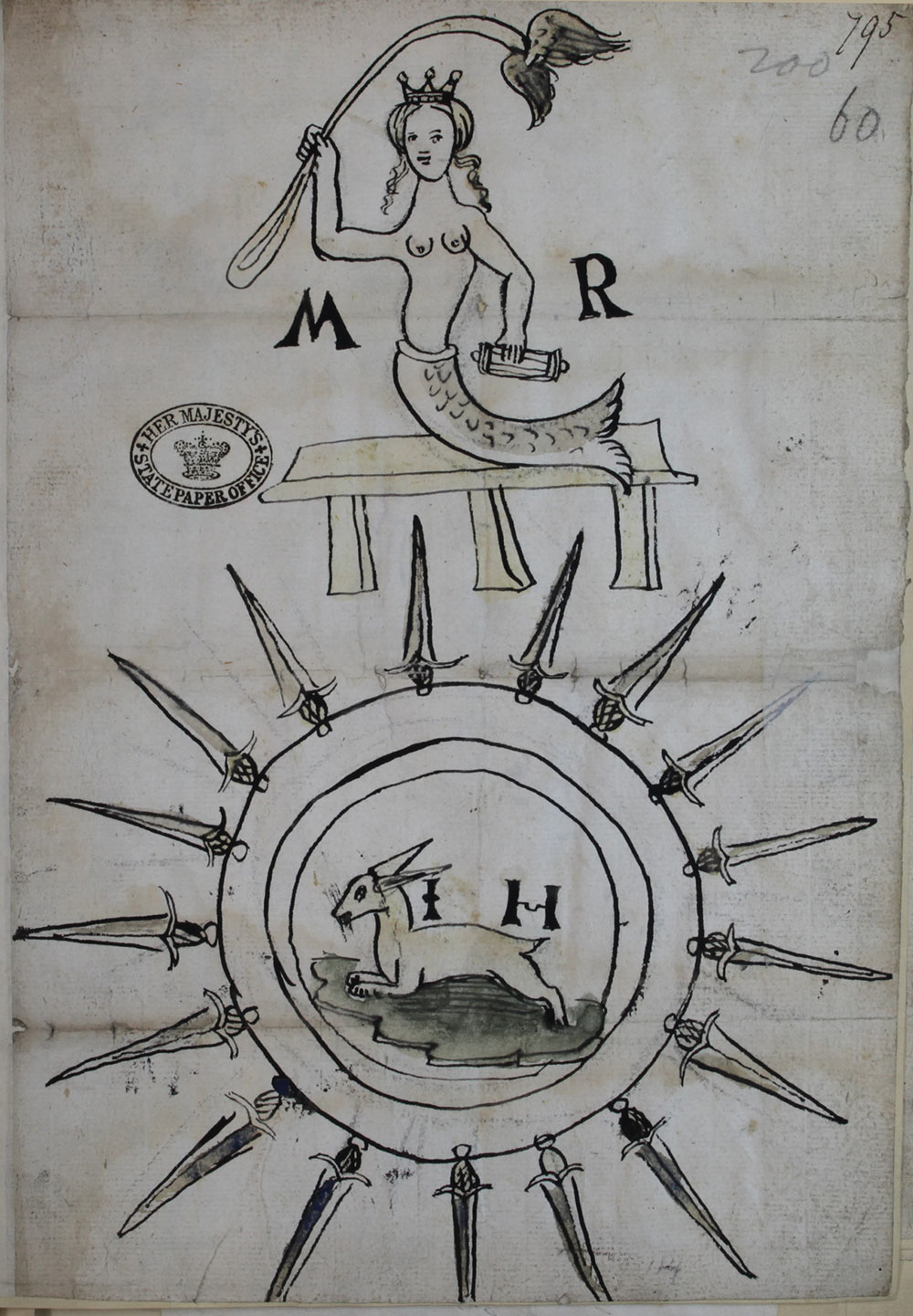
Sketch of Mary Queen of Scots, c.June 1567 (SP 52/13 f.60)
Mary paid a heavy price for her impetuous marriage to James, Earl of Bothwell. Not only did she forfeit her crown, but her reputation. In this allegorical sketch, the fallen Scottish queen is depicted as a mermaid, a symbol of prostitution. Elizabeth made the most of her rival’s disgrace and promoted herself even more vigorously as the virtuous Virgin Queen. It was a vindication of the personal sacrifices that she had made in the interests of her country.
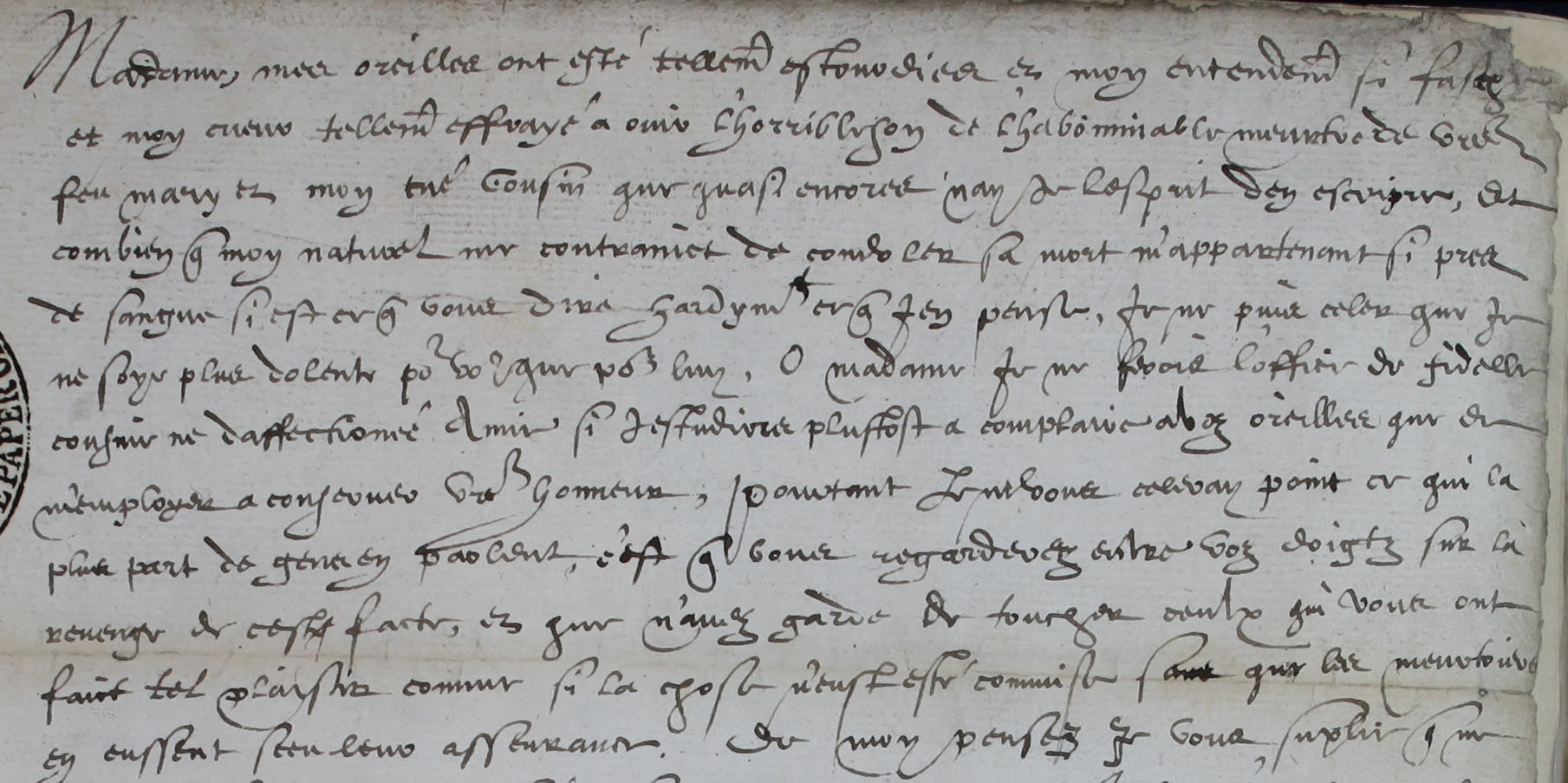
Elizabeth I to Mary Queen of Scots, 24 February 1567 (SP 52/13 f.17)
The finger of blame for Darnley’s murder soon pointed to the Earl of Bothwell and Mary herself. Bothwell had long been suspected of having designs on the throne, and his close relationship with the queen gave rise to rumours they were sexually intimate. Suspicions that Mary had colluded in her husband’s death sparked the downward spiral that led to her loss of the Scottish crown. Elizabeth was so shocked when she heard of this latest turn of events that she wrote at once to urge Mary to prove her innocence and salvage her reputation – and her throne.
Transcript
Madam,
My ears have been so astounded and my heart so frightened to hear of the horrible and abominable murder of your husband and my own cousin that I have scarcely spirit to write: yet I cannot conceal that I grieve more for you than him. I should not do the office of a faithful cousin and friend, if I did not urge you to preserve your honour, rather than look through your fingers at revenge on those who have done you that pleasure as most people say. I counsel you so to take this matter to heart, that you may show the world what a noble Princess and loyal woman you are. I write thus vehemently not that I doubt, but for affection. [Translated from the French; extract – lines 1-12]
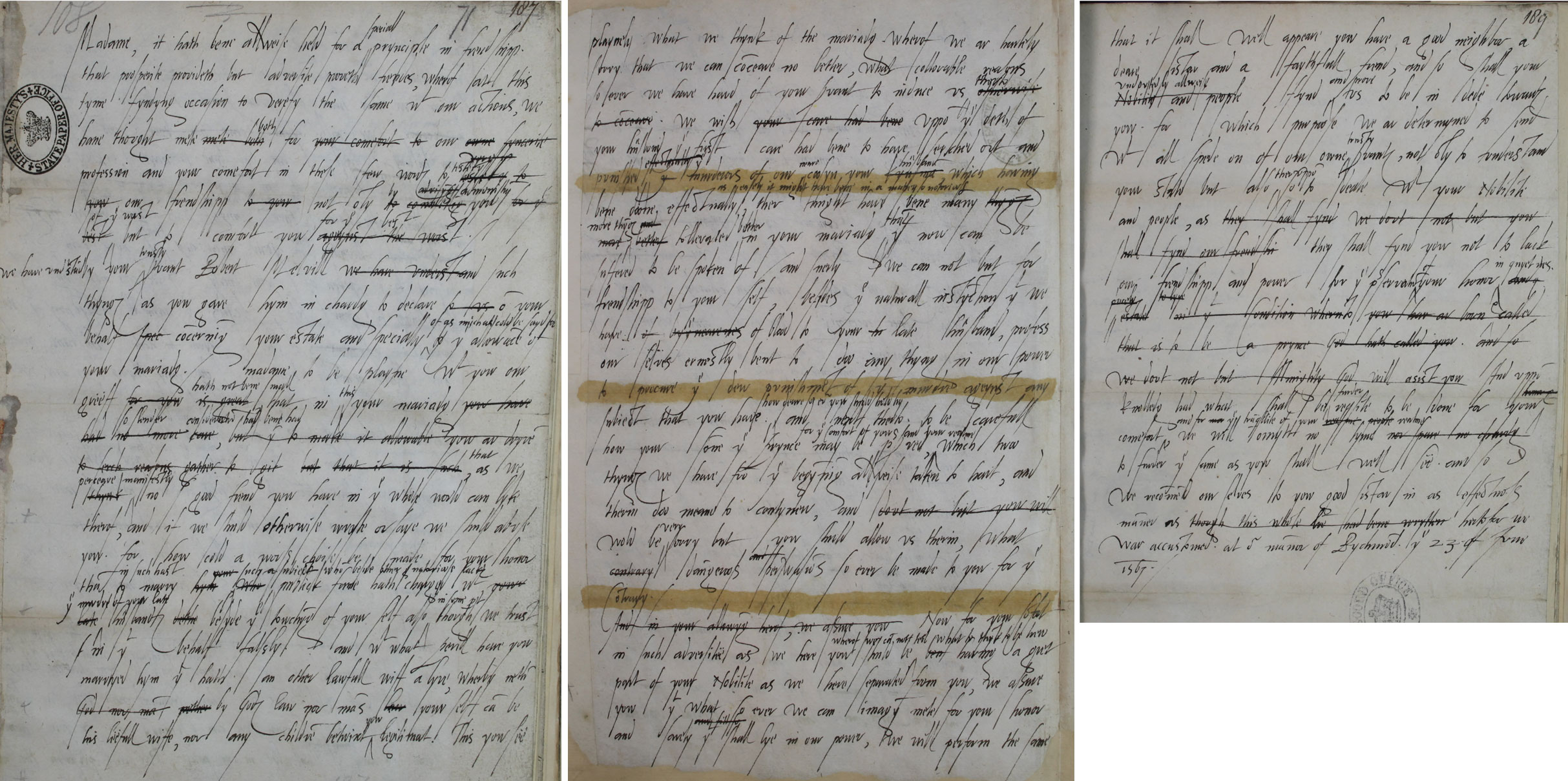
Elizabeth I to Mary, Queen of Scots, 23 June 1567 (SP 52/13 f.71)
Even though Bothwell was formally acquitted of the murder, he continued to be viewed as the chief suspect. In late April 1567, he persuaded Mary to accompany him to Dunbar, claiming that her life would be in danger if she stayed in Edinburgh. But upon arriving, Mary was taken prisoner by Bothwell. What happened next has been the subject of intense speculation ever since. It has been claimed that Bothwell raped Mary in order to force her into marriage. Other sources allege that she was complicit in the act. Either way, they were married on 15 May and Mary soon fell pregnant (she later miscarried twins). Their opposers met them at Carberry Hill on 15 June, and Bothwell fled the country. Mary was forced to surrender both the battle and her crown. Having heard all of this, Elizabeth set aside her accustomed diplomacy and wrote a furious letter full of contempt for Mary, whom she chastised for her reckless actions.
Transcript
[Draft by Lord Burghley] Madame, it hath bene allweise held for a special principle in friendship, that prosperitie provideth but adversite proveth frendes, wherof at this tyme fyndyng occasion to verify the same with our actions, we have thought mete both for our profession and your comefort in these few words, to testify our friendship not only by admonyshyng of your worst but to comfort you for your best. We have understood by your trusty servant Robert Melvill such thyngs as yow gave hym in chardg to declare on your behalf concerning your estate and specially of as much as should be sayd for ye allowance of your mariadg. Madam, to be playne with you our greef hath not bene small that in this marriadg so slender consideration hath bene had that, as we perceave manifestly no good frend you have in ye whole world can lyke thereof, and if we shuld otherwise wryte or saye we shuld abuse you. For how cold a worse choise be made for your honour than in such hast to marry such a subject who besides other notorious lackes publick fame has chargyd with the murdre of your late husband, beside ye touchyng of your self also in some part, though we trust in that behalf falsely. And with what perill have you marryed hym that hath an other lawfull wyfe a lyve, whereby neither by God’s law nor man’s your selff can be his lawfull wiff [wife], nor any children betwixt you legitimate. Thus you see playnely what we thynk of the marriadg wherof we ar hartely sorry that we can conceave no better, what collourable reasons so ever we have hard of your servant to induce us therein. We wish uppon ye deth of your husband that first care had been to have serched out and punished ye murderers of our neare coosyn, your husband, which having bene doone effectually, as easily it might have bene in a matter so notorious, ther myght have bene many more thyngs tollerated better in your mariadg than now can be suffered to be spoken of. And surely we can not but for friendshipp to your self, besides ye natural instynction that we have of blood to your late husband, profess our selves ernestly bent to doo any thyng in our power to procure ye dew punishment of that murdre agaynst any subject that you have, how deare so ever you should hold hym, and next thereto, to be carefull how your sonne ye prynce may be preserved for ye comfort of yours and your realme. Which two thynges we have from ye begyning allweise taken to hart, and therin doo meane to contynew, and wold be very sorry but you shuld allow us therin, what dangerous perswasions so ever be made to you for ye contrary. Now for your Estat in such adversitie as we here you shuld be wherof we [know?] not well what to think to be how having a great part of your Nobilitie as we here separated from yow, we assure you that what so ever we can imagyn mete for your honor and surety that shall lye in our power, we will perform the same that it shall and will appear you have a good neighbour, a deare sistar and a faythfull frend, and so shall you undoubtedly allweise fynd and prove us to be in dede towards yow. For which purpose we ar determyned to send with all spede on [one] of our owne trusty servants, not only to understand your state but also thereuppon so to deale with your Nobility and people, as they shall fynd yow not to lack our friendshipp and power for ye preservacyon of honor in quyetness. And upon knolledg had what shall be furder ryght to be done for your comfort and for ye tranquilitie of your realme we will omytt no tyme to furder ye same as yow shall and will see. And so we recommend ourselves to you good sistar in as affectionate a manner as heretofor we war accustomed. At our manor of Rychmond ye 23 of June 1567.
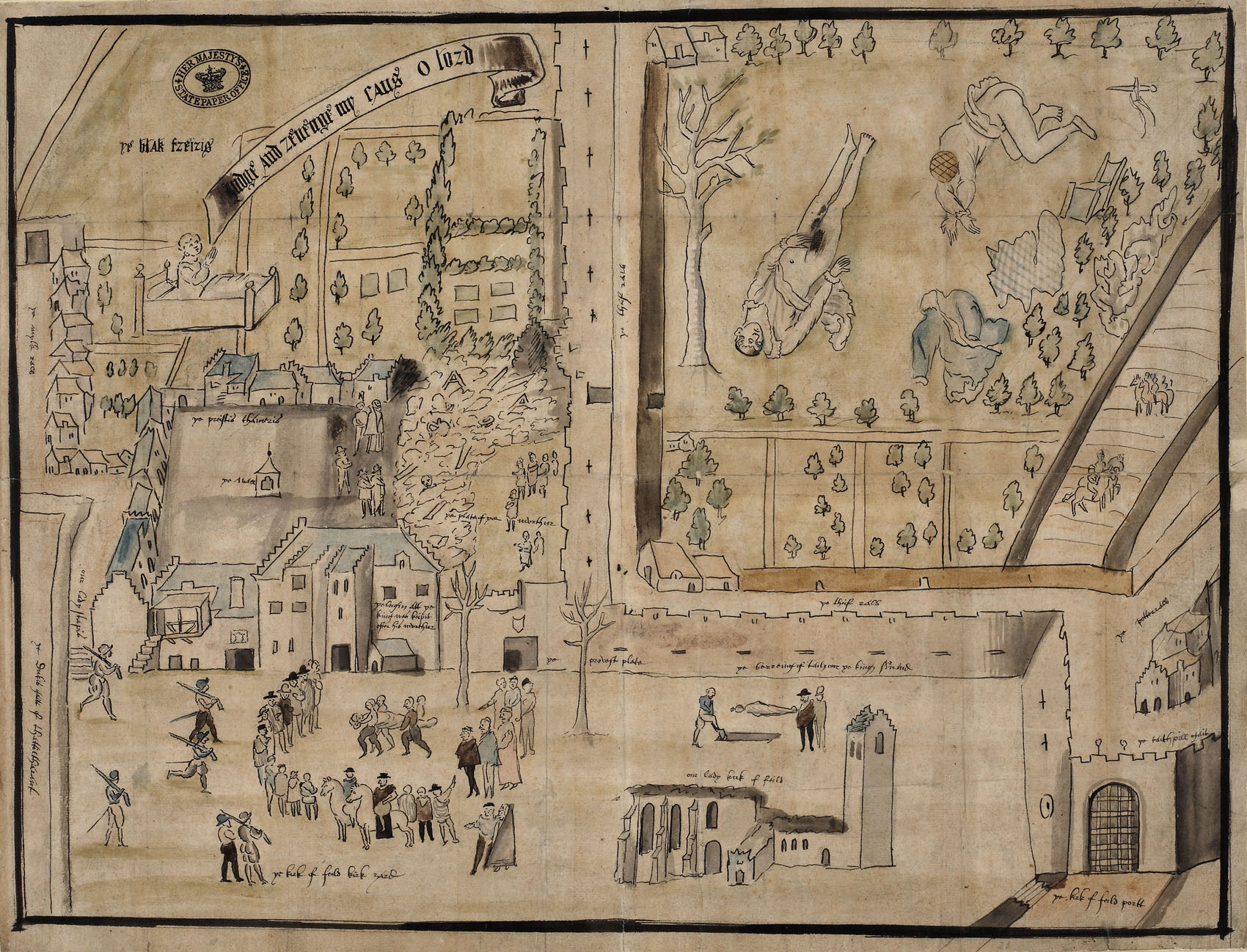
Drawing of Kirk o’Field after the murder of Henry Stuart, Lord Darnley, 1567 (MPF 1/366)
Events in Scotland were now unraveling with frightening speed. Early in the morning on 10 February 1567, Mary’s husband, Lord Darnley, was found murdered. His body and that of his valet were discovered in the orchard of Kirk o’Field in Edinburgh, where they had been staying. The house had been torn apart by two large explosions in the middle of the night. Darnley was undoubtedly the intended victim because two barrels of gunpowder had been placed in a small room underneath his sleeping quarters. Darnley was dressed only in his nightshirt, which suggests he had fled in some haste from his bedchamber. Upon further examination, the bodies had no signs of injuries that could be associated with the explosion, so the blast was not considered to have killed Darnley. It was determined that the two men were killed by strangulation, believed to have taken place after the explosion.
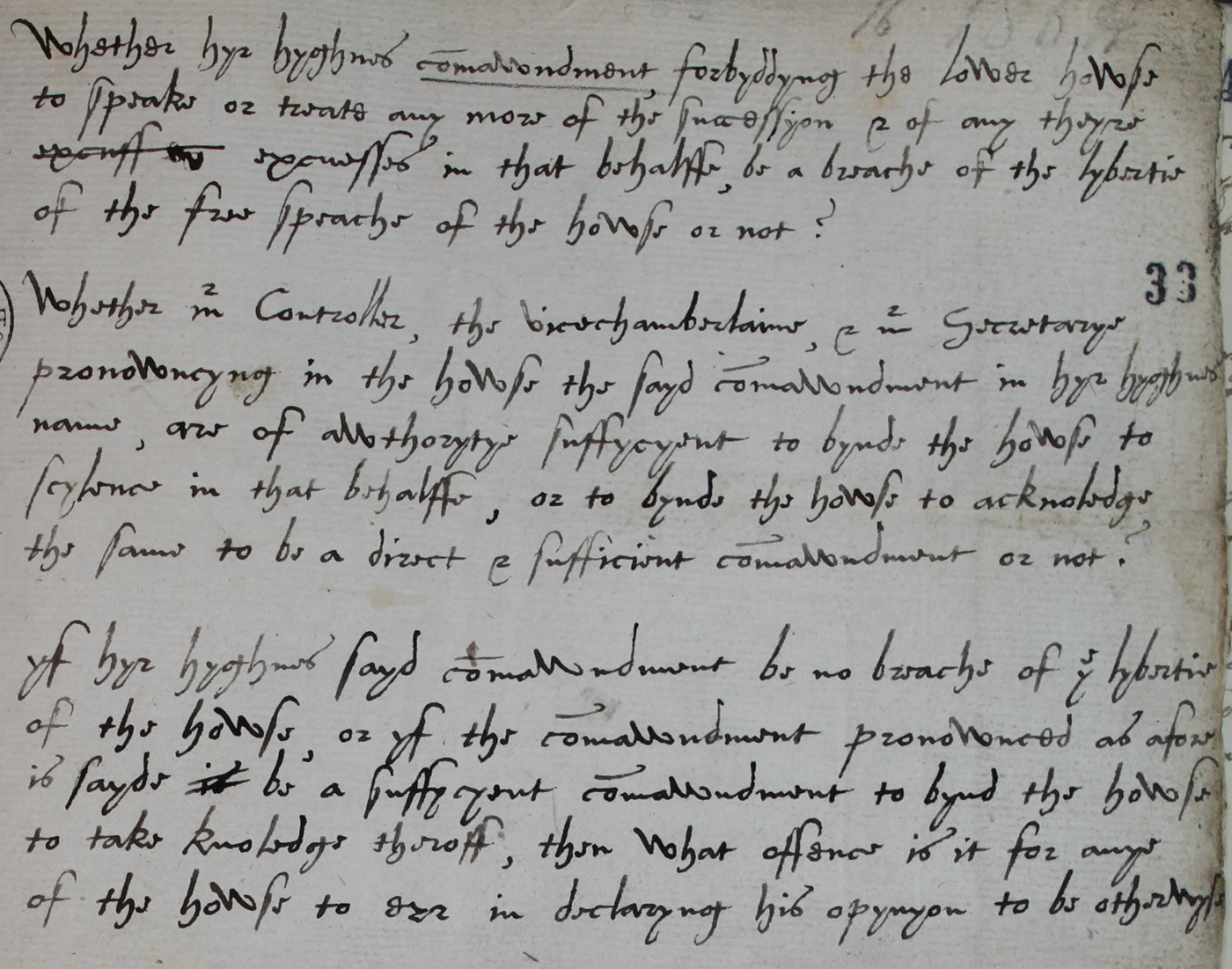
Peter Wentworth’s questions on parliamentary privilege, 11 November 1566 (SP 12/41 f.33)
The queen’s angry response to the parliamentary delegation was followed, on 9 November, by a verbal ‘gagging order’ to Parliament, forbidding them to debate matters of the succession. Their response was no less vitriolic. The issue of monarchical versus parliamentary power was one that would have explosive consequences for Elizabeth’s successors.
Transcript
Whether hyr hyghnes’ commandment, forbyddyng the Lower Howse to speake or treate any more of the succession or of any theyre escewsses in that behalffe, be a breache of the lybertie of the free speache of the howse or not?
Wheter Mr Controller, the vicechamberlaine, and Mr Secretarye pronowncyng in the Howse the sayd commandment in hyr hyghness’ name, are of awthorytye suffycyent to bynde the howse to silence in that behalffe, or to bynde the howse to acknowledge the same to be a direct and sufficient commandment or not?
Yf hr hyghness’ said commandment be no breache of ye lybertie of the howse, or yf the commandment pronownced as afore is sayde be a suffycyent commandment to bynd the howse to take knoledge theroff, then what offence is it for anye of the howse to err in declaryng his opynyon to be otherwys?
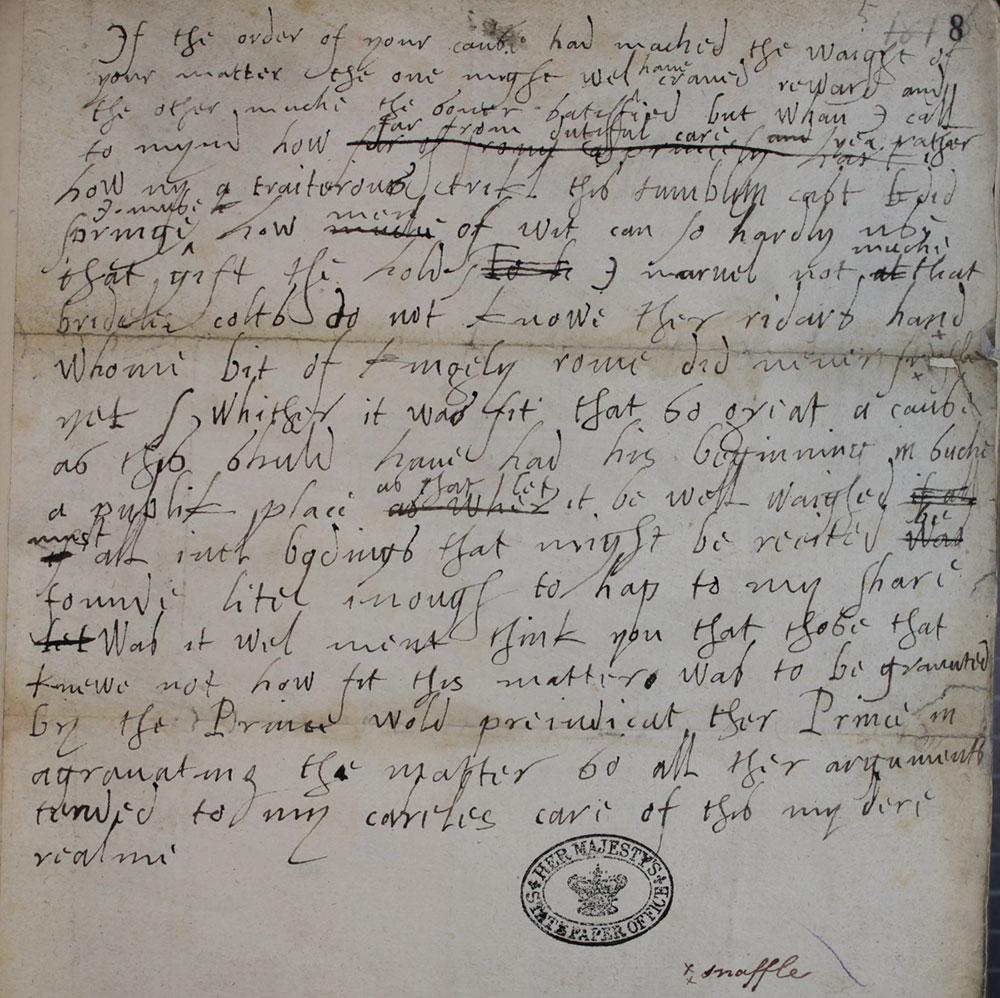
Elizabeth I’s speech to a joint delegation of Lords and Commons, 5 November 1566 (SP 12/41/5 f.8)
In November 1566, a delegation of 60 Lords and Commoners met with the queen to urge the question of her marriage and the succession. By now, eight years into her reign and aged 33, Elizabeth was under more intense pressure about this than ever before. Her response was unusually haughty and immoderate, which betrays the stress under which she was labouring. It was probably spoken impromptu and recorded after the event, then reported to the full Parliament.
Transcript
If the order of your cause had mached [matched] the waight of your matter the one might wel have craved reward and the other muche the sooner satisfyed but whan I call to mynd how far from dutyful care, yea, rather how ny [night] a traitorous trik this tumbling cast did springe I muse how men of wit can so hardly use that gift they hold. I marvel not muche that bridleless colts do not know ether ridars hand whom bit of kingly reine [or ‘reign’, a pun] did nevere snaffle yet, whither it was fit that so great a cause as this shuld have had his beginning in suche a publik place as that, let it be well waighed [weighed]. Must all evill bodings that might be recited bee founde litel inough to hap to my share. Was it wel ment think you that those that knewe not how fit this matter was to be graunted by the Prince wold prejudicat [judge in advance] ther Prince in aggravating the matter so all ther argumentes tended to my careles care of this my dere realme.