


















Teaching resource
Magna Carta 1259–1306

This set of documents relates to the baron's reform movement that began in 1258 and the opposition faced by Edward I when he attempted to raise taxes in 1297.
Teaching resource
This set of documents relates to the civil war in 1215 and King John’s assent to Magna Carta. The documents from 1224 onwards relate to Henry III’s revised version of Magna Carta. Students and teachers can use this resource to develop their own questions about Magna Carta and its legacy.

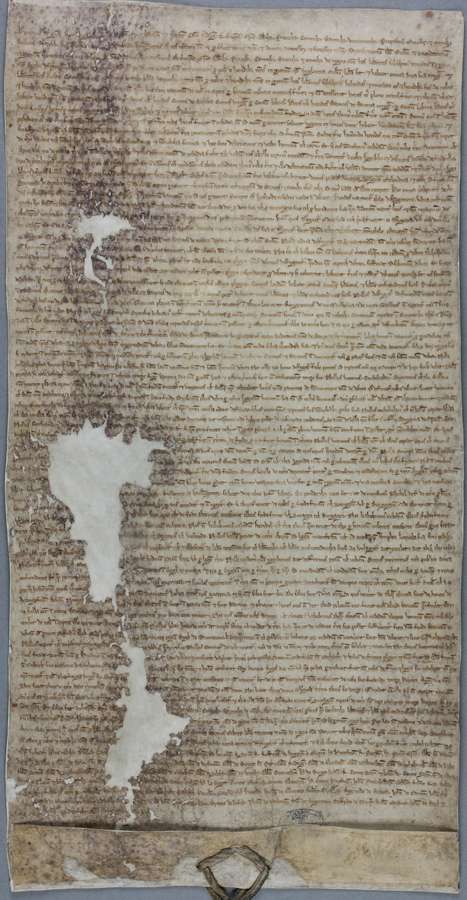
Magna Carta, 1225. Catalogue reference: DL 10/71
Was Magna Carta a medieval revolution?
This set of documents relates to King John’s acceptance of Magna Carta in 1215 and King Henry III’s agreement to a revised version of Magna Carta in 1225.
Discover more original documents in our related themed collections Magna Carta 1259–1306 and Modern use of Magna Carta 1914–1981.
During the reign of Richard I, £100 was recognised as a reasonable ‘relief’ (inheritance tax) to be paid by a baron upon his father’s death. However, owing to legal complications, it was often possible for the king to charge considerably more.

New Payments
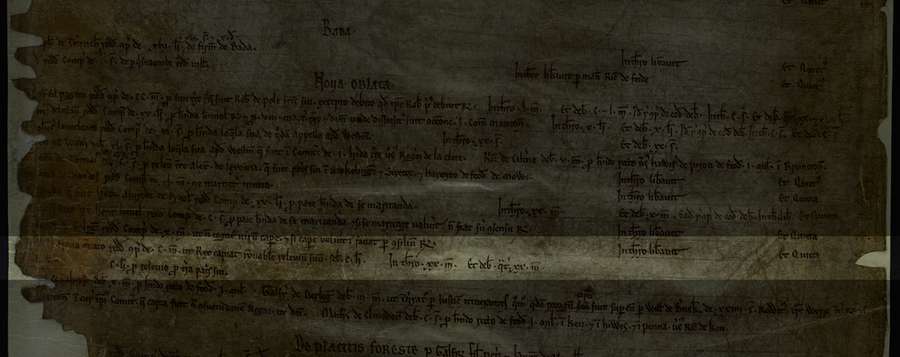
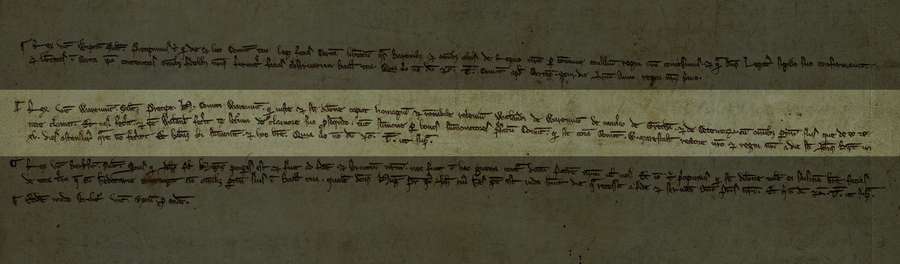
William de Novo Mercato fined 100 marks, so that the King would receive his reasonable relief, that is to say 100 pounds.
And he owes 80 marks.
The same William fined 100 pounds as relief for the land of his father.
Bribe for inheritance tax, 1198. Catalogue reference: E 372/44
In 1214 William FitzAlan, one of King John’s barons, paid a huge inheritance tax of 10,000 marks for his father’s barony. This was documented in the accounts of the sheriff of Shropshire, 1214.

New Payments
William son of William son of Alan owes 10,000 marks for holding the land which belonged to the aforementioned William, his father, next to the land which the same William gave to his daughter Petronilla.
Inheritance tax, 1214. Catalogue reference: E 372/6
Listen
William son of William son of Alan owes 10,000 marks for holding the land which belonged to the aforementioned William, his father, next to the land which the same William gave to his daughter Petronilla.
In 1214 Geoffrey de Mandeville, one of King John’s barons, promised to pay the king 20,000 marks for the privilege of marrying the Countess of Gloucester. When Mandeville failed to pay, his lands were confiscated. This was documented in the accounts of the sheriff of Herefordshire.

Geoffrey de Mandeville gave twenty thousand marks so that he might have to wife Isabel Countess of Gloucester with all the lands and tenements and knights fees, which belong to Isabel herself with the exception of castles in Bristol and the castles outside Bristol which pertain to Bristol, by paying 5,000 marks before the passage of the king in Poitou in the 25th year of the reign of the king and 5,000 marks at Easter of the same year and 5,000 marks at the feast of St John the Baptist in the 26th year and 5,000 marks at the feast of St Michael in the next year.
Marriage tax, 1214. Catalogue reference: E 372/60
Listen
Geoffrey de Mandeville gave twenty thousand marks so that he might have to wife Isabel Countess of Gloucester with all the lands and tenements and knights fees, which belong to Isabel herself with the exception of castles in Bristol and the castles outside Bristol which pertain to Bristol, by paying 5,000 marks before the passage of the king in Poitou in the 25th year of the reign of the king and 5,000 marks at Easter of the same year and 5,000 marks at the feast of St John the Baptist in the 26th year and 5,000 marks at the feast of St Michael in the next year.
John’s letter to his barons in England who had refused to accompany him on his failed military campaign to France, dated 9 July 1214.

The king [sends] greeting[s] to all his earls, barons, knights, and other faithful men constituted throughout the realm of England. Know that we are healthy and uninjured, and that everything amongst us is prosperous and joyous through the grace of God. We send many thanks to those amongst you who have sent your knights to us in our service and for the protection and winning of our rights, and we ask most attentively, just as you value our honour, that those of you who have not crossed over with us, come to us without delay to the aid of our land which needs to be won over, all apart from those who with the counsel of our venerable fathers P. bishop of Winchester, our justice, J. bishop of Norwich, Master R. Marsh and W. Brewer, and of other of our faithful men, are to stay behind in England. Acting thenceforth in such a way that we are held in perpetual gratitude towards you. If indeed any of you may think that we harbour rancour in our soul against him, he will have such rancour entirely remitted by coming to us. And as a testimony to this business, etc. Witness as above.
War propaganda, 1214. Catalogue reference: C 66/12
Listen
The king sends greetings to his earls, barons, knights and other faithful men throughout the realm of England. Know that we are in good health and uninjured, and that everything is prosperous and joyous with us through the grace of God. We send thanks to those amongst you who have sent your knights to serve with us, for the protection and winning of our rights. We ask most attentively, as you value our honour, that those of you who have not crossed over with us, come to us without delay to the aid of our land which needs to be defended. We ask that you act from now on in such a way that we will forever owe you our gratitude. If any of you think that we hold hatred in our hearts against you, by coming to our aid this hatred will be removed.
John orders the seizure of rebel lands in England, and allocates their income to his son, the future Henry III, May 1214.

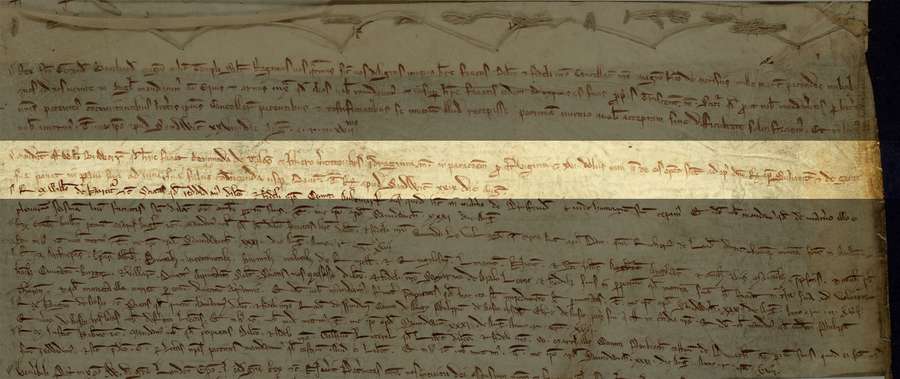
The King to the Sheriff of Devon, greeting. Know that we have given back to our faithful son Earl Henry all of the lands which William of Mandeville held from the same in your jurisdiction. And therefore we order you to give possession of the same aforesaid lands to Henry without delay being made. Witness myself at Trowbridge, 14th day of May.
The King to the Sheriff of Cornwall, greeting. Know that we have given to Henry our son all the lands which were [held by] Robert son of Walter in your jurisdiction. And therefore we order you without delay to give full seisin to the same Henry our son. Witness myself at Trowbridge, 14th day of May.
The King to the Sheriff of Devon, greeting. Know that we have given to our well-beloved and faithful Reginald de Vautort the land of Robert de Vere with all its appurtenances in your jurisdiction. And therefore we order you to give full seisin with all chattels of the same land without delay being made. Witness myself at Trowbridge, 14th day of May.
The King to Geoffrey de Marteny’, greeting. We order you immediately on seeing these letters you take into our hands for your use all the lands of Henry de Braybrooke, demolishing utterly his houses, taking his chattels for your own advantage. But the horse that we have sent to Geoffrey of Corlang’, [you shall give to] Hugh de Boys. Witness as above.
The King to the Sheriff of Dorset and Somerset, greeting. We order that without delay you give possession to our beloved and faithful Ralph de Ralegh of the manor of Gussich’ which belonged to William de Mandeville with all its appurtenances and with all chattels found there which we gave to him with the chattels. Witness as above.
The King to the Sheriff of Gloucester, greeting. We order that you, without delay, give possession to Henry son of the Earl, of all of the land of the lord Bishop of Hereford with all of its appurtenances in your jurisdiction which he holds of us, which belong to our kingship, with our manors of Tetbury and Hamptonet. Witness myself at Trowbridge, 15th day of May.
The King to the Sheriff of Somerset, greeting. We order without delay that you give possession to Henry de Courtenay of all of the lands which [belonged to] Joscei de Bayeux with all its appurtenances in your jurisdiction, which we gave. Witness at Marlborough, 16th day of May.
John seizes rebel lands, 1214. Catalogue reference: C 54/10
Listen
The king sends greetings to the sheriff of Devon. We have granted to our faithful son, Earl Henry, all the lands which previously belonged to William de Mandeville. Therefore, we order you to give possession of these lands to Earl Henry without delay. Witness myself at Trowbridge, 14th day of May.
The king sends greetings to the sheriff of Cornwall. We have given to Henry, our son, all the lands which previously belonged to Robert FitzWalter in your jurisdiction. Therefore, we order you to give full possession of these lands to Earl Henry without delay. Witness myself at Trowbridge, 24th day of May.
The king sends greetings to the sheriff of Devon. We have granted to our well-beloved and faithful Reginald de Vautort, all the lands in your jurisdiction which previously belonged to Robert de Vere. Therefore, we order you to give full possession of the lands and all chattels [material wealth] without delay. Witness myself at Trowbridge, 14th day of May.
The king sends greetings to Geoffrey de Marteny. We order that as soon as you have seen these letters, you take into our hands all the lands of Henry de Braybrook, demolishing utterly his houses, and taking his chattels [material wealthy] for your own advantage. Witness as above.
The king sends greetings to the sheriff of Dorset and Somerset. We order that you give possession to our beloved and faithful Ralph de Raleigh, the manor of Gussage and all chattels [material wealth] found there, which previously belong to William de Mandeville. Witness as above.
The king sends greetings to the sheriff of Gloucester. We order that you give possession to Henry, son of the Earl, all of the land of the bishop of Hereford in your jurisdiction. Witness myself at Trowbridge, 15th day of May.
The king sends greetings to the sheriff of Somerset. We order that you give possession to Henry de Courtenay all of the lands in your jurisdiction which previously belonged to Joscei de Bayeux. Witness at Marlborough, 16th day of May.
The king and the rebel barons negotiated a peace settlement in June 1215. The king agreed to accept the terms of Magna Carta, which is dated 15 June 1215.
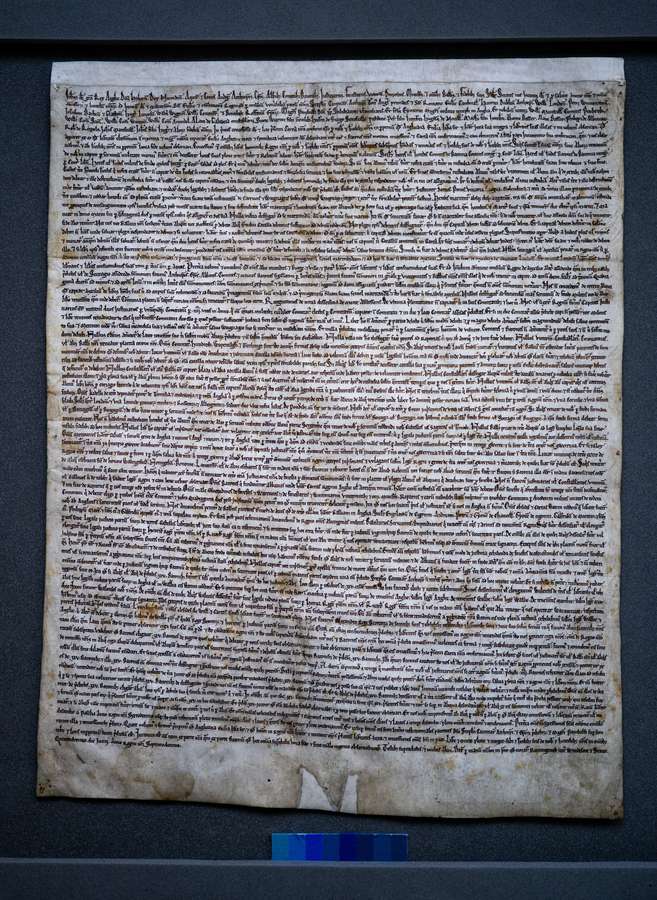
The National Archives does not actually hold an original copy of the document – this version belongs to Salisbury Cathedral.

JOHN, by the grace of God King of England, Lord of Ireland, Duke of Normandy and Aquitaine, and Count of Anjou, to his archbishops, bishops, abbots, earls, barons, justices, foresters, sheriffs, stewards, servants, and to all his officials and loyal subjects, Greeting.
KNOW THAT BEFORE GOD, for the health of our soul and those of our ancestors and heirs, to the honour of God, the exaltation of the holy Church, and the better ordering of our kingdom, at the advice of our reverend fathers Stephen, archbishop of Canterbury, primate of all England, and cardinal of the holy Roman Church, Henry archbishop of Dublin, William bishop of London, Peter bishop of Winchester, Jocelin bishop of Bath and Glastonbury, Hugh bishop of Lincoln, Walter bishop of Worcester, William bishop of Coventry, Benedict bishop of Rochester, Master Pandulf subdeacon and member of the papal household, Brother Aymeric master of the knighthood of the Temple in England, William Marshal earl of Pembroke, William earl of Salisbury, William earl of Warren, William earl of Arundel, Alan of Galloway constable of Scotland, Warin fitz Gerald, Peter fitz Herbert, Hubert de Burgh seneschal of Poitou, Hugh de Neville, Matthew fitz Herbert, Thomas Basset, Alan Basset, Philip Daubeny, Robert de Roppeley, John Marshal, John fitz Hugh, and other loyal subjects:
(1) FIRST, THAT WE HAVE GRANTED TO GOD, and by this present charter have confirmed for us and our heirs in perpetuity, that the English Church shall be free, and shall have its rights undiminished, and its liberties unimpaired. That we wish this so to be observed, appears from the fact that of our own free will, before the outbreak of the present dispute between us and our barons, we granted and confirmed by charter the freedom of the Church’s elections – a right reckoned to be of the greatest necessity and importance to it – and caused this to be confirmed by Pope Innocent III. This freedom we shall observe ourselves, and desire to be observed in good faith by our heirs in perpetuity. TO ALL FREE MEN OF OUR KINGDOM we have also granted, for us and our heirs for ever, all the liberties written out below, to have and to keep for them and their heirs, of us and our heirs:
(2) If any earl, baron, or other person that holds lands directly of the Crown, for military service, shall die, and at his death his heir shall be of full age and owe a ‘relief’, the heir shall have his inheritance on payment of the ancient scale of ‘relief’. That is to say, the heir or heirs of an earl shall pay £100 for the entire earl’s barony, the heir or heirs of a knight 100s. at most for the entire knight’s ‘fee’, and any man that owes less shall pay less, in accordance with the ancient usage of ‘fees’.
[...]
(62) We have remitted and pardoned fully to all men any ill-will, hurt, or grudges that have arisen between us and our subjects, whether clergy or laymen, since the beginning of the dispute. We have in addition remitted fully, and for our own part have also pardoned, to all clergy and laymen any offences committed as a result of the said dispute between Easter in the sixteenth year of our reign (i.e. 1215) and the restoration of peace.
In addition we have caused letters patent to be made for the barons, bearing witness to this security and to the concessions set out above, over the seals of Stephen archbishop of Canterbury, Henry archbishop of Dublin, the other bishops named above, and Master Pandulf.
(63) IT IS ACCORDINGLY OUR WISH AND COMMAND that the English Church shall be free, and that men in our kingdom shall have and keep all these liberties, rights, and concessions, well and peaceably in their fullness and entirety for them and their heirs, of us and our heirs, in all things and all places for ever.
Both we and the barons have sworn that all this shall be observed in good faith and without deceit. Witness the abovementioned people and many others.
Given by our hand in the meadow that is called Runnymede, between Windsor and Staines, on the fifteenth day of June in the seventeenth year of our reign (i.e. 1215: the new regnal year began on 28 May).
[Source: G.R.C. Davis, Magna Carta (London: British Museum, 1963), pp. 23–33. Courtesy of the British Library (CC BY 4.0)]
Magna Carta, 1215.
Salisbury Cathedral/Finnbarr Webster
Following his agreement to rule in accordance with the rules set out in Magna Carta, King John announces the end of the civil war, 19 June 1215.

The king [sends] greeting[s] to the sheriff, the foresters, the warreners, the keepers of the rivers, and to all his bailiffs in the same county (). Know that durable peace has been restored through the grace of God between us and the barons and the freemen of our realm, just as you will have been able to hear and see through our charter which we had made thereupon, [and] which we order yet again through public law to be kept firmly throughout our whole bailiwick; wanting and strictly ordering that you, sheriff, following the form of the aforementioned charter make everyone from your bailiwick swear to the 25 barons, concerning whom mention is made in the aforementioned charter, at the order of the same men or of a majority of them, in front of them or in front of those men whom they will have appointed as a proxy for this purpose through their letters patent, and on the day and in the place which the aforementioned barons or their proxies will have prearranged for this to take place. We wish and we also order that 12 knights from your county, who will be selected from the same county in the first session of the county court which will be held in your region after the reception of these letters, swear concerning the evil customs which ought to be investigated, both relating to sheriffs and their officers, foresters for the fosters, and warreners for the warrens, for the rivers and their keepers, and [any evil customs]are to be abolished by them, just as it is contained in the charter itself. You, therefore, all, just as you love us and our honour, and the peace of our lord, should observe everything contained in the charter without any violation and you should make it be observed by all, lest because of your failure or through your transgression, it may happen that the peace of our realm should (God, forbid!) be again disturbed. And you, sheriff, should proclaim our peace throughout your bailiwick and you should order that it be kept firmly. And we send to you as a testimony to this business our letters patent. With me myself as a witness at Runnymede, on 19 June, in the 17th year of our reign.
Peace announced, 1215. Catalogue reference: C 66/14
Listen
The king sends greeting to the sheriff, the foresters, the warreners, the keepers of the rivers and to all his bailiffs. Know that peace has been restored between us and the barons and the freemen of our realm, through the grace of God.
You will have seen and heard of our charter which we made, and we order that this charter is kept firmly throughout the land according to the law. We strictly order that you make everyone under your jurisdiction swear an oath to the 25 barons mentioned in the charter, either before the barons themselves or before those whom they have appointed for this purpose.
We wish also, and order that 12 knights from each county, who shall be selected in the county courts, swear an oath to remedy the evil customs that are to be investigating, relating to sheriffs, foresters, warreners, and the keepers of rivers. In this way, any evil customs are to be abolished, as is contained in the charter itself.
We order that, just as you love us and our honour, and the peace of Our Lord, should observe everything contained in the charter without exceptions, and you should make the charter be observed by all, in case, God forbid, the peace of our realm should be disturbed once again.
You, sheriffs, should proclaim our peace throughout your bailiwick, and you should order that this peace should be firmly kept. And we send to you as a testimony to this business our letters patent. With me myself as a witness at Runnymede, on 19 June, in the 17th year of our reign.
As well as restoring lands that had been confiscated during the recent civil war, John also resolved some much older disputes over land. King Richard I had refused to accept the count of Aumale’s claim to the manor of Driffield. Dated 1215.

The king to William of Harcourt, etc. Know that we have restored to our beloved and faithful count of Aumale the right which he has in the manor of Driffield and we receive thereupon his homage. And therefore we order you to cause him to have full possession of that manor without delay with all the things which pertain to it. Myself as witness at Sandwich, on the 31st day of August.
Restoration of land, 1215. Catalogue reference: C66/14
Listen
The king to William of Harcourt, etc. Know that we have restored to our beloved and faithful count of Aumale the right which he has in the manor of Driffield and we receive thereupon his homage. And therefore we order you to cause him to have full possession of that manor without delay with all the things which pertain to it. Myself as witness at Sandwich, on the 31st day of August.
By September, King John was no longer prepared to tolerate the restraints placed upon his kingship by Magna Carta, and on 13 September 1215 he sent this letter seeking a declaration of support from Pope Innocent III.

To his reverend lord and most holy father Innocent, by the grace of God, High Priest, John by the same grace, King of England, etc. [sends] greeting[s] and the reverence due to so great a lord and father. Whereas, before we took care to subject ourselves and our land to your dominion, the earls and barons of England had been faithful to us, since then, and for that very reason, as they publicly say, they have risen in violence against us. We, having you after God, as our special lord and patron, believe that the defence of us and the whole kingdom, which is yours, is committed to your holiness, and we resign that care and anxiety to your lordship, humbly beseeching that you apply to our affairs, which are your own, such effectual counsel and aid as shall seem to you most expedient. For this reason, we send to your feet our faithful men of these presents, the venerable fathers W. Archbishop of Bordeaux; H. Archbishop of Dublin; Master R. de Mariscis, our chancellor; the Abbot of Beau-lieux; Master P., precentor of the church of York; H. the archdeacon and Master R. de Arenis, canons of York; and the nobles, John Mareschal and G. Lutterel, our faithful men, for you to hear with favour. For we commit to your holiness the authority which we have over all things belonging to us and our realm; and we will hold ratified and firm whatever, with the advice of our messengers, you shall decide to ordain. Witness myself at Dover, on the 13th day of September.
John appeals to the Pope, 1215. Catalogue reference: C 66/14
With the civil war coming to an end, the government of the young Henry III ordered the sheriffs of each county to publicly read Magna Carta in the county court. This order was designed to encourage rebel barons to defect and reaffirm their allegiance to the king. Dated 23 June 1217.

The king [sends] greeting[s] to the sheriff of Worcestershire. We order you on the day and place of your county court to cause the charters of liberties to be read. We have conceded these charters to the barons and all other men of our realm through the common council of our kingdom and our lord legate has confirmed them through his seal. And [we order] that you cause the liberties included in the charter itself to be firmly observed by all our faithful men in your bailiwicks. Because to you not yet, etc. With the count as witness at Chertsey, on the 23rd day of June in the first year of our reign.
Proclamation of Magna Carta, 1217. Catalogue reference: C54/16
Listen
The king sends greetings to the sheriff of Worcestershire. We order that on the day and at the place that your county court assembles that you cause the charters of liberties to be read aloud. We have conceded these charters to the barons and all other men of our realm through the common council of our kingdom, and our lord legate, representative of the Pope, has confirmed them through his seal. And we order that you cause the liberties included in the charter itself to be strictly obeyed by all our faithful men under your jurisdiction. Witness, 23 June 1217.
In the summer of 1224, the King of France invaded English held territory in France. The mayor of Bordeaux dispatched this letter asking Henry III for aid. Dated September 1224.

To their most excellent Lord, Henry, by the grace of God illustrious king of England, Lord of Ireland, duke of Normandy and Aquitaine and count of Anjou, his men who are faithful to him in all respects, the mayor and the common council of Bordeaux, send him greetings and present themselves to his service in total devotion and humility.
We thought that it ought to be told to your highness that the count of La Marche and the seneschal of the king of France invaded Gascony. Upon their arrival, the village of Blaye and the village of Burgh and the village of Saint Emilion and the village of La Réole and the village of St Macaire and the village of Lingdon’ and the city of Bazas surrendered themselves to these men, without any nuisance or reaction having been made yet against them, along with almost all other land, apart from 11 castles which we retained in your service and we hold at our expenditure and expenses, which are great, and apart from the Lord of Bearnn’ and of the city of Aquensse and the city of Bayonne.
Afterwards the same men, the count of La Marche and the seneschal of the king of France, having acquired the aforesaid lands for themselves as it has been said, admonished us through requests directed towards us by the bishops and the abbots of their region to have a truce with them until one month after the Easter of the Lord, so that in the meantime nothing bad nor any trouble may be inflicted against us or against your land and at the same time we may not do any harm to them, and so that we should be in the same state in which we were on the day they asked the aforementioned things from us; no other agreement was asked from us by these men.
And we ignored their requests and we did not want to have a truce with them. Indeed they themselves, having heard such an answer made to them by us, joined with their armies, wishing to ride against us and to vanquish our city of Bordeaux, but we, wishing to resist them, (just like men who will never retreat from faith and service to you as long as our count may live), had provided for ourselves knights and foot soldiers in advance, so that, we, apart from your men in Bordeaux and a great multitude of knights, had united 100 or more knights and 500 armed foot soldiers and a great multitude of crossbowmen, all of whom we maintain at our expenses in the fortification of your city of Bordeaux.
Indeed the count of La Marche and the seneschal of the king of France did not in any way dare to ride against us from four leagues away, not even against some castle which we would hold defended and thus they went back, but they left in their stead the count of Périgord with a great troop of knights and men in arms. And so that we may resist them in a manly way, we maintain the aforementioned fortification daily at our expenditure and expenses.
This is why we humbly beseech your royal majesty that you deem it fitting to transmit soon such an aid of knights and foot soldiers, through whom the arrogance and strength of your and our enemies may be worn down and rebutted, and [also to transmit] such a monetary aid to us, that we may be able to pay for the expenses and expenditure which we make and have made daily for your service; because our city of Bordeaux is situated in such a place that, if you wished to transmit to us the aid of men and money, you would reclaim the land.
May it please indeed your highness to send back to us without delay our messengers with every decision about these things on account of which we have directed them towards your nobility both with the joy of your status and with assurance.
Gascony invaded, 1224. Catalogue reference: SC 1/2/176
Listen
To their most excellent Lord, Henry, the mayor and the common council of Bordeaux, send him greetings and present themselves to his service in total devotion and humility.
We thought your highness should be informed that the king of France has invaded Gascony. They have offered us a truce, but we have ignored their requests. Wishing to defend ourselves, we united 100 knights and 500 armed foot soldiers, and a great multitude of crossbowmen whom we maintain at our expenses for the fortification of your city of Bordeaux. Because of this force, the king of France dares not ride against us.
We humbly beseech your royal majesty that you dispatch to Gascony knights and foot soldiers, so that our enemies may be vanquished. We also ask that you transport a monetary aid to us, so that we are able to pay for the expenditure which we have made daily for the protection of your lands. If you transport men and money, you would reclaim the land.
May it please indeed your highness to send back to us without delay our messengers with every decision about these things on account of which we have directed them towards your nobility both with the joy of your status and with assurance.
After the death of King John, some of the young Henry’s supporters had issued Magna Carta in the king’s name (in 1216 and 1217), but now King Henry III was old enough to make a personal commitment to rule in accordance with the rules set out in Magna Carta. This 1225 version became the definitive version of Magna Carta, and it was issued by Henry III in his own name.

Henry by the grace of God, king of England, lord of Ireland, duke of Normandy, Aquitaine, and count of Anjou, to the archbishops, bishops, abbots, priors, earls, barons, sheriffs, stewards, servants and to all his bailiffs and faithful subjects who shall look at the present charter, greeting. Know that we, out of reverence for God and for the salvation of our soul and the souls of our ancestors and successors, for the exaltation of holy church and the reform of our realm, have of our own spontaneous goodwill given and granted to the archbishops, bishops, abbots, priors, earls, barons and all of our realm these liberties written below to be held in our kingdom of England for ever,
(1) In the first place we have granted to God, and by this our present charter confirmed for us and our heirs for ever, that the English church shall be free and shall have all its rights undiminished and its liberties unimpaired. We have also granted to all free men of our kingdom, for ourselves and our heirs for ever, all the liberties written below to be had and held by them and their heirs of us and our heirs for ever.
(2) If any of our earls or barons or others holding of us in chief by knight service dies, and at his death his heir be of full age and owe relief he shall have his inheritance on payment of the old relief, namely the heir or heirs of an earl £100 for a whole earl’s barony, the heir or heirs of a baron £100 for a whole barony, the heir or heirs of a knight 100s, at most, for a whole knight’s fee; and he who owes less shall give less according to the ancient usage of fiefs.
(3) If, however, the heir of any such be under age, his lord shall not have wardship of him, nor of his land, before he has received his homage; and after being a ward such an heir shall have his inheritance when he comes of age, that is of twenty-one years, without paying relief and without making fine, so, however, that if he is made a knight while still under age, the land nevertheless shall remain in the wardship of his lords for the full term.
(4) The guardian of the land of such an heir who is under age shall take from the land of the heir no more than reasonable revenues, reasonable customary dues and reasonable services, and that without destruction and waste of men or goods; and if we commit the wardship of the land of any such to a sheriff, or to any other who is answerable to us for the revenues of that land, and he destroys or wastes what he has wardship of, we will take compensation from him and the land shall be committed to two lawful and discreet men of that fief, who shall be answerable for the revenues to us or to him to whom we have assigned them; and if we give or sell to anyone the wardship of any such land and he causes destruction or waste therein, he shall lose that wardship and it shall be transferred to two lawful and discreet men of that fief, who shall similarly be answerable to us as is aforesaid.
(5) Moreover, so long as he has the wardship of the land, the guardian shall keep in repair the houses, parks, preserves, ponds, mills and other things pertaining to the land out of the revenues from it; and he shall restore to the heir when he comes of age his land fully stocked with ploughs and all other things in at least the measure he received. All these things shall be observed in the case of wardships of vacant archbishoprics, bishoprics, abbeys, priories, churches and dignities that pertain to us except that wardships of this kind may not be sold.
(6) Heirs shall be married without disparagement.
(7) A widow shall have her marriage portion and inheritance forthwith and without any difficulty after the death of her husband, nor shall she pay anything to have her dower or her marriage portion or the inheritance which she and her husband held on the day of her husband’s death; and she may remain in the chief house of her husband for forty days after his death, within which time her dower shall be assigned to her, unless it has already been assigned to her or unless the house is a castle; and if she leaves the castle, a suitable house shall be immediately provided for her in which she can stay honourably until her dower is assigned to her in accordance with what is aforesaid, and she shall have meanwhile her reasonable estover of common.
This is the new preamble (introduction), used for the 1225 version of Magna Carta. A longer extract is provided in the extended translation above.
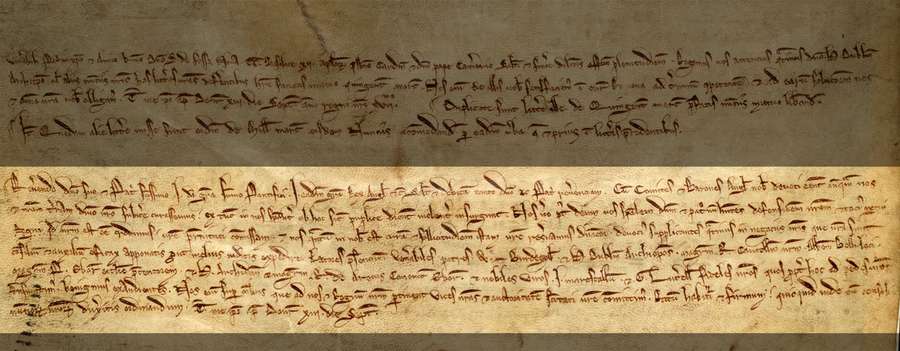
HENRY, by the Grace of God, King of England, Lord of Ireland, Duke of Normandy and Aquitaine, and Earl of Anjou, to the archbishops, bishops, abbots, priors, earls, barons, sheriffs, governors, officers, and all bailiffs, and his faithful subjects, who see this present charter, greeting.
In the presence of God, and for the salvation of our own soul, and of the souls of our ancestors, and of our successors, to the exaltation of the Holy Church, and the amendment of our kingdom, spontaneously and of our own free will, we give and grant to the archbishops, bishops, abbots, priors, earls, barons, and all of our kingdom, the following liberties [legally enforceable rights] to be held in our realm of England for ever.
Magna Carta, 1225. Catalogue reference: DL 10/71
Listen
HENRY, by the Grace of God, King of England. In the presence of God, and for the salvation of our own soul, and of the souls of our ancestors, and of our successors, to the exaltation of the Holy Church, and the amendment of our kingdom, spontaneously and of our own free will, we give and grant to the archbishops, bishops, abbots, priors, earls, barons, and all of our kingdom, the following liberties [legally enforceable rights] to be held in our realm of England for ever.
In 1217, all of the rules that were contained in the 1215 version of Magna Carta and related to the forest were put into a separate charter – the Charter of the Forest. In 1225, some minor adjustments were made, and the charter was issued in its definitive form. Dated 1225.

Edward by the Grace of God, King of England, Lord of Ireland, and Duke of Guyan, to all to whom these presents shall come, sends greeting: we have seen the charter of the Lord Henry our father, sometime King of England, concerning the Forest in these words.
Henry, by the Grace of God, King of England, Lord of Ireland, Duke of Normandy and Guyan and Earl of Anjou, to all archbishops, bishops, abbots, priors, earls, barons, justicers, foresters, sheriffs, provosts, officers, and to all his bailiffs, and faithful subjects which shall see this present charter, greeting.
Know ye, that we, unto the honour of Almighty God, and for the salvation of our soul and the souls of our ancestors and successors, to the advancement of Holy Church, and amendment of our realm, of our mere and free will have given and granted, to all archbishops, bishops, earls, barons and to all of this our realm, these liberties, following, to be kept in our kingdom of England forever.
(1) First, we will that all forests, which King Henry [II] our Grandfather afforested, shall be viewed by good and lawful men; and if he has made forest of any other wood more than of his own demesne, whereby the owner of the wood has been hurt, forthwith it shall be disafforested; and if he has made forest of his own wood, then it shall remain forest, saving the Common of Herbage, and of other things in the same forest, to them which before were accustomed to have the same.
(2) Men that dwell outside of the forest, from henceforth shall not come before the justicers of our forest, by common summons, unless they be impleaded there, or be sureties for some others that were attached for the forest.
(3) All woods which have been made forest by King Richard our uncle, or by King John our Father, until our first coronation, shall be forthwith disafforested unless it be our demesne wood.
(4) All archbishops, bishops, abbots, priors, earls, barons, knights, and other our freeholders which have their woods in forests, shall have their woods as they had them at the first coronation of King Henry [II] our grandfather. So that they shall be quite forever of all purprestures, wastes, and asserts, made in those woods after that time, until the beginning of the second year of our coronation. And those that from henceforth do make purpresture without our licence, or waste, or assert in the same, shall answer unto us for the same wastes, purprestures, and asserts.
(5) Our regarders shall go through the forest to make regard, as it has been accustomed at the time of the first coronation of King Henry our grandfather, and not otherwise.
(6) The enquiry or view for lawing of dogs within our forest shall be made from henceforth when the range is made, that is to say, from three year to three year; and then it shall be done by the view and testimony of lawful men, and not otherwise; and he whose dog is not lawed, and so found, shall pay for his amercement 3 shillings: and from henceforth no ox shall be taken for lawing of dogs. And such lawing shall be done by the Assize commonly used, that is to say, that three claws of the fore foot shall be cut off [by the skin]. But from henceforth such lawing of dogs shall not be, but in places where it has been accustomed from the time of the first coronation of the foresaid King Henry our Grandfather.
(7) No forester or bedel from henceforth shall made scotal, or gather garb, or oats, or any corn, lamb, or pig, nor shall made any gathering, but by the sight and upon the view of the twelve rangers, when they make their range. So many foresters shall be assigned to the keeping of the forests, as reasonably shall seem sufficient for the keeping of the same.
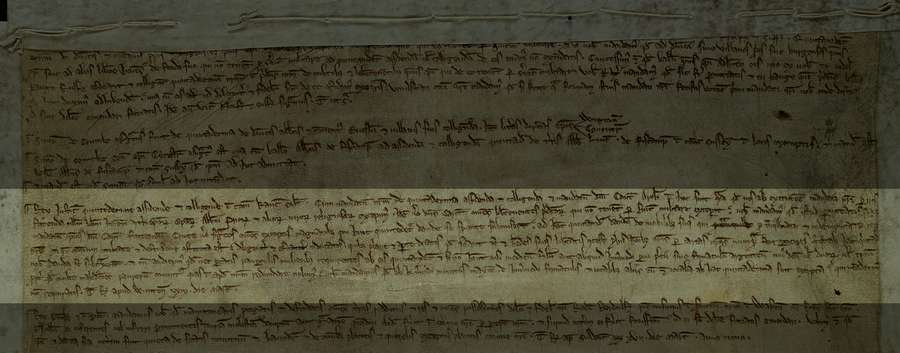
Charter of the Forest. Catalogue reference: C 71/1

The king sends greetings to his justices assigned for the assessment and collection of the tax on a fifteenth on movable goods in the county of Kent. Since our order about the assessment and collection of the fifteenth and the order of the lord, archbishop of Canterbury, are contradictory regarding this: the fact that we do not relieve any of the freemen of the archbishops, bishops, abbots, priors, or any other man of religion, from the execution of our order which is be made through you; [while] the same lord of Canterbury has indeed relieved all freeholders of the above who do not hold land for military service, we order you to allow this to happen following the order of the same lord of Canterbury. Indeed you should diligently and effectually urge those who have taken up the cross, apart from the magnates who have submitted themselves voluntarily, to give the fifteenth of their movable goods, [a tax] which has been constituted for the tranquillity and protection of the our kingdom and the common utility and defence of all, to whom you are to say plainly and openly that they should know that those who will exclude themselves from this payment to us of the fifteenth along with their heirs will not share in the freedom which has been granted to our honest men through our charters. And since we have heard that you do not even spare very poor women, requiring of them the fifteenth, even if they have nothing but the bare minimum, either something of small value or a brooch worth one, two, or three pennies, on account of which many maledictions arise from the poor, which we do not wish to fall on our head, we order that you do not require the fifteenth from small things of that sort especially from brooches of such kind and from other playthings, since such playthings are excluded from this tax. With the king as witness, at Winchester, on 29th March.
Royal letter explaining that general taxation was needed to protect the kingdom. Dated 29 March 1225. Catalogue reference: C 66/32
Listen
The king sends greetings to his justices assigned for the assessment and collection of the tax to the value of a fifteenth of moveable goods. This tax has been imposed for the tranquility and protection of our kingdom and for the common good and defence of all, and you should speak plainly and openly that all those who refuse to contribute to the tax, along with their heirs, shall not share in the freedom which has been granted to our honest men through our charters.
Also, we have heard that you take this tax even from very poor women, and even if they have next to nothing, you take from them something of small value, or a brooch worth one, two or three pennies. Because we do not wish to be blamed for the sufferings of the poor, we order that you do not take small things in the name of taxation, especially brooches or playthings. Playthings are excluded from this tax. With the king as witness, at Winchester, on 29th March.
These orders for the assessment and collection of taxation in 1225 were sent to the sheriffs at exactly the same time (15 and 16 February) as orders to proclaim Magna Carta and the Charter of the Forest. Dated 1225.

The king sends greetings to the sheriffs of Essex and Hertford. We assigned Simon, the son of Richard; Henry, the son of Aucher; Hugh of Clothall; Alexander of Littlebiry; and Richard of Stapleford, cleric; as our justices to assess and collect a fifteenth of all the movable property on our behalf in your counties according to the form of our letters patent which we sent to you, and which are to be communicated to them on our behalf in Chelmsford. Therefore because this work was begun in that place and on that day concerning the county court of Essex, and at Hertford four days later concerning the county court of Hertford, we commanded for our letters close to be transmitted through you to each one of these county courts so that they may assemble on the days and in the places aforementioned. And thus we order you to transmit our letters to each one of them under every haste, with our letters patent being reserved to you to communicate to them on our behalf in Chelmsford on the first day, on which day you should make all the knights of the county of Essex come in front of them, and similarly on the fourth day in Hertford for all the knights of the county of Hertford. Therefore you may introduce yourself in that place in the way described, lest through their failure we have to seize for you those things which belong to you in that area. Witness as above. Likewise concerning the same thing.
Tax assessment, 1225. Catalogue reference: C 66/32
Royal order to the sheriff of Chester, instructing that he should not allow the Earl of Chester to exploit Magna Carta and damage the rights of the crown. Dated June 1225.

The king sends greetings to the sheriff of Chester. Although we have conceded liberties, which we wish to be preserved, to you and to other honest men of your kingdom; no less do we wish for our liberties and our peace, as is fitting and just, to be inviolably observed. Because therefore we have heard that under the pretext of the aforementioned liberties which we have conceded to you and to others, our liberties are insufficiently preserved and our peace is greatly damaged and broken in our regions and lands, which is vexing to us, we order you to be firmly bound in the allegiance in which you are held by us so that you preserve our liberties and our peace greatly uninjured and that you cause it to be preserved to the extent that they pertain to you and your men, lest thereupon a repeated grievance ought to be brought rightly against us. With me as witness at Westminster on the 30th day of June. In the same way written by W. earl of Warenn.
Magna Carta exploited, 1225. Catalogue reference C 54/34
Listen
The king sends greetings to the sheriff of Chester. Although we have conceded liberties to you and to other honest men our kingdom, we also wish for our liberties and our peace to be inviolably observed. We have heard that under the pretext of the liberties we have conceded to you and to others, our own liberties are insufficiently observed and our peace is greatly damaged and broken in our regions and lands. This is vexing to us, and we order that you preserve our liberties and our peace.
The purpose of this document collection is to allow Key Stage 5 students and their teachers to develop their own questions and lines of historical enquiry on Magna Carta and its legacy throughout the Middle Ages and beyond.
The documents themselves are titled on the webpage so it is possible for teachers and pupils to detect different themes and concentrate on documents on similar topics if they wish. Some of the themes include: the relationship between the king and his barons; the relationship between Magna Carta, war and taxation; the intervention of the Pope; and the emergence of parliament as a fundamental part of political life.
Students could work with a group of sources or source type on a certain theme or linked themes. It is hoped that the documents will offer them a chance to develop their powers of evaluation and analysis. Alternatively, teachers may wish to use the collection to develop their own resources or encourage students to ‘curate’ their own exhibition of the most significant sources on the topic or they could attempt the enquiry question on Magna Carta: a medieval revolution? Other possible lines of enquiry could take the form of a debate, where a group of students constructs an argument (by selecting documents) that defends a particular perspective. Alternatively, a group of students could be asked to construct an argument that defends the perspective of either the barons or the king.
All of our sources have been provided with a translation and most have audio files and a transcript. Original translations are by Maroula Perisanidi and Marianne Wilson. Each source is captioned and dated to provide a sense of what the document is about. We hope too that Key Stage 3 teachers may be interested in working with this material in the classroom.
AQA:
A2 Unit 3: The Angevin Kings of England: British Monarchy, 1154-1216
This document collection provides documentary content for section on:
John the barons and Magna Carta; feudal authority and royal finance; John’s loss of his continental lands and the battle of Bouvines; antisemitism and baronial hostility towards the Jews
OCR:
Specification for A level History H505 from 2015:
Unit F965: Historical Interpretations and Investigations
This document collection provides documentary content for section on:
Option D: The reign of King John 1199-1215
The reasons why, and with what results, John quarrelled with his barons
By adding his seal to Magna Carta on 15 June 1215, King John forever changed the nature of kingship in England. No longer could a king be seen as acting on the impulse of his own convictions. His exercise of power was to be regulated by an established set of rules. In 1215, however, Magna Carta failed. King John quickly worked to undo Magna Carta, which he thought of as a peace treaty rather than as a collection of laws, and he convinced the Pope to condemn Magna Carta (see Source 8). Yet, as this document selection shows, time and time again throughout the 13th century, English kings were held to account by their barons and forced to accept the restraints that Magna Carta placed upon their kingship.
Magna Carta meant a new way of doing things. This is because Magna Carta encouraged the barons to seek new political concessions whenever they felt the king was ruling unwisely. In practice, this usually meant that the barons felt they were not been consulted enough by the king. Also, when the king needed money to fight wars in France, he often found himself compelled to reaffirm his commitment to Magna Carta and find solutions to new complaints put forward by his barons. The exchange of taxation for political concessions became the main topic of discussion in medieval parliament, and contributed to the growing importance of parliament in medieval England.
In the century after Magna Carta, parliament became a fundamental part of political life. An important part in this development was played by Simon de Montfort, who led a baronial rebellion against Henry III. Following the battle of Lewes in 1264, where Montfort took Henry III captive, Montfort summoned knights and burgesses (representatives from English towns) to parliament in order to discuss the terms of the king’s release. Although knights and burgesses had been summoned to parliament on previous occasions, Simon de Montfort needed broad political support for his plan to establish a new form of government that would significantly reduce the power of the king. Therefore, Montfort encouraged the knights and burgesses (the ‘commons’) to participate directly in the political discussions, and this established a trend that would continue throughout the Middle Ages. By the end of the 13th century, it was no longer acceptable for a king to tax his people without consulting parliament first, and when King Edward I attempted to do so, he faced rebellion (see Source 13).
Background information written by Dr Matthew Phillips.
King John sails for La Rochelle to begin a military campaign against the French. Many of his barons refuse to accompany him, or send knights to serve in his army.
John’s barons from Poitou (France) desert his army. With his path blocked by the French Prince Louis, John is unable to join his allies in Flanders, and is forced to retreat to La Rochelle.
King John’s allies, the Flemings, Germans and an English contingent led by the earl of Salisbury, are defeated by the French at the Battle of Bouvines (Northern France).
John returns to England following the failure of his military campaign in France that he had spent years planning.
Facing baronial revolt, John declares his intention to go on crusade to the Holy Land. It is hoped that this will secure support from the Pope against his rebellious barons.
The barons renounce their fealty (allegiance) to John, and name Robert fitz Walter as their leader.
The city of London welcomes the rebel barons, dashing John’s hopes for a quick victory and end to the civil war.
John meets the rebel leaders at Runnymede meadow by the River Thames near Staines.
King John sets his seal to a draft of Magna Carta, thereby accepting its terms.
The rebel barons formally make peace with King John, and renew their allegiance.
The pope excommunicates the barons who have rebelled against their king.
Papal bulls (letters) declare Magna Carta null and void.
Civil war breaks out between King John and the rebel barons.
King John dies at Newark.
Henry III is crowned king of England at Gloucester.
Magna Carta is reissued, with some changes to its contents, by royal government on behalf of the young Henry III.
A third version of Magna Carta is issued. All laws relating to the administration of royal forests (which cover around a third of all land in England), are issued in a separate charter: the Charter of the Forest.
The French King invades the territories of Henry III in Poitou and Gascony (France).
Henry III ‘confirms’ Magna Carta and the Charter of the Forest. This means that he reaffirms his intention to govern England in accordance with the laws contained in the charters.
Henry III arranges with the pope that his son, Edmund, should become king of Sicily. He agrees to pay £90,000 to the pope, but parliament refuses to raise the sum.
The pope threatens to excommunicate Henry III if he does not pay £90,000 to the papacy. Henry III had promised this sum so that his son could become king of Sicily.
Henry III desperately seeks advice from his barons concerning the £90,000 he owes to the pope. Henry’s barons agree to help their king, if he agrees to accept major political reforms. Discussions take place at the ‘Mad Parliament’ held at Oxford.
Henry agrees to the Provisions of Oxford. The king is forced to rule with the advice of a council. It is also decided that parliament should meet three times a year to review political developments.
Henry agrees to the Provision of Westminster, a series of twenty-four major legal reforms similar to Magna Carta in their scope and importance.
The pope condemns the reforms that have been forced upon Henry III. All barons in England are absolved from any oaths they have taken to ensure that the reforms are upheld.
Simon de Montfort and the rebel barons defeat a royal army at the battle of Lewes, taking King Henry III captive. Simon de Montfort is now the unofficial ruler of England.
Simon de Montfort calls a parliament to discuss the terms for the king’s release. He orders knights from each of England’s shires, and representatives from England’s towns, to attend.
King Henry III defeats Simon de Montfort and the rebels at the battle of Evesham. Simon de Montfort is killed, marking an end to the reform movement that had begun in 1258.
Dictum of Kenilworth marks the royalist recovery, but in a manner of reconciliation. Many of the reforms issued since 1258 are now issued in the name of the king.
Henry III dies, and is succeeded by his son, King Edward I.
King Philip IV of France declares Edward I’s territories in Gascony forfeit, because Edward refused to attend the French court up following a summons by Philip. War breaks out between England and France.
Two important barons, Roger Bigod and Humphrey de Bohun, refused Edward I’s order to draw up a muster list – those summoned by the king for military service. The king was forced to offer wages for military service, instead of relying on feudal obligations.
Royal writs (instructions) order the collection of tax set at a very high rate. The king falsely claimed that the tax had been granted with the assent of the whole laity of the realm. In reality, the king ordered the collection of a tax without the assent of parliament.
Roger Bigod and Humphrey de Bohun appeared at the exchequer – which managed the kingdoms finances – and stated that the people of England would not pay the tax.
The king’s ‘bad’ tax was cancelled, and replaced with a new tax, which was set at a lower rate and properly granted by parliament.
Edward I confirmed Magna Carta, and agreed to a new set of political reforms put forward by the rebel barons in a document known as ‘Articuli super cartas’, which means ‘Articles in addition to Magna Carta and the Charter of the Forest’. This document set out in detail how Magna Carta could be enforced to prevent the king from breaking its laws.
The pope condemns the ‘Articuli super cartas’, releasing Edward I from his obligation to follow the rules set out in this new document.
Teaching resource
This set of documents relates to the baron's reform movement that began in 1258 and the opposition faced by Edward I when he attempted to raise taxes in 1297.
Teaching resource

These documents demonstrate the lasting legacy of Magna Carta in the modern world, both as a set of laws and as a historical artefact.