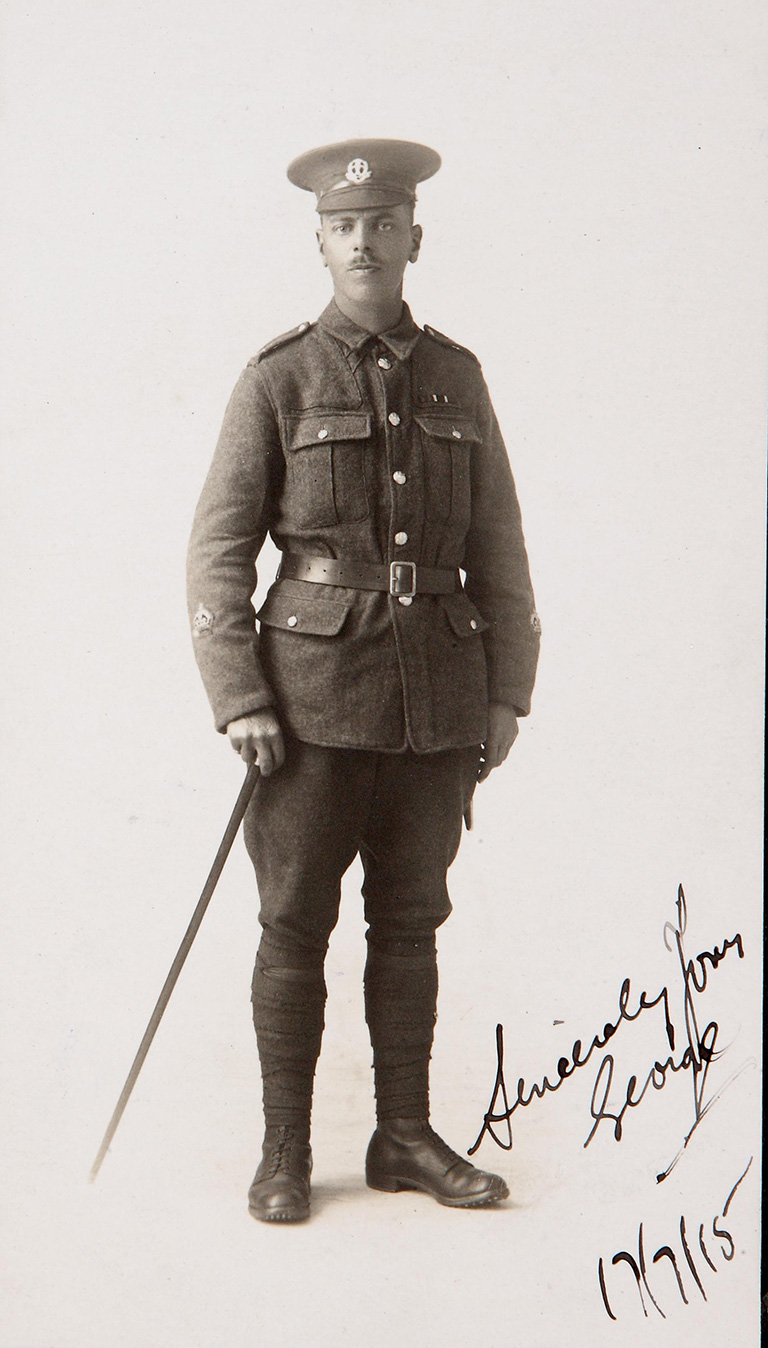
This is a guide to finding records of Royal Navy ratings that served during the First World War.

Servicemen of the Royal Navy are rated according to the skills they have and the tasks they perform, hence the term ‘rating’. A rating is the most junior class of seaman in the Royal Navy – lower in rank than both commissioned officers and warrant officers. Types of rating include:

  • Able Seaman or Ordinary Seaman
  • Petty Officer
  • Quartermaster

How to get started

To uncover details of a rating’s service in the First World War you should begin by searching the Royal Navy First World War Lives at Sea database, the most comprehensive source of surviving records for ratings.

For information on Royal Navy operations, with details of where and when specific ships were involved in combat, among many other things, you should consult our guide to Royal Navy operational records in the First World War.

Online records

Royal Navy First World War Lives at Sea database

Search the Royal Navy First World War Lives at Sea database by name, service number, birth data or a range of other search options. The database, a work in progress, currently contains 41,000 records and is compiled largely from records held at The National Archives. There is no charge for access.

Royal Navy ratings’ service records for ratings enlisted 1853–1929

Search by name or official number and download Royal Navy ratings service records of several different kinds from our catalogue (£).

The records covered by this search include three series that cover First World War service:

  • Registers of Seamen’s Services, for enlistments from 1873 to 1924, in series ADM 188
  • Registers of Seamen’s Services, for enlistments from 1925-1928, in series ADM 362
  • Continuous Record (CR) cards, for enlistments up to 1929 but service as late as 1950, in series ADM 363

These records can include information such as:

  • date and place of birth
  • ships served on with dates
  • character and ability
  • medals awarded
  • physical characteristics on entry
  • any wounds suffered
  • date of death if it occurred during service

Medal rolls (1793–1972)

Search by name for information about the award of campaign, long service and good conduct medals in the Royal Navy medal rolls (ADM 171) using Ancestry.co.uk (£). These rolls do not usually contain biographical information.

Digital microfilm copies of these records are also available to download and browse from our catalogue free of charge.

Records available only at The National Archives in Kew

To access these records you will either need to visit us, pay for research (£) or, where you can identify a specific record reference, order a copy (£).

Service records for ratings of the Royal Navy Armoured Car Division in Russia, 1915-1918

Look at ADM 116/1717 for service records of ratings who served in the Royal Navy Armoured Car Division in Russia, 1915-1918.

Records in other archives and organisations

The National Archives’ catalogue contains collections and contact details of local archives around the UK and beyond. To locate these records, search our catalogue with keywords and refine your results to ‘Other archives’ using the filters.

Other resources

Websites

Search for an announcement of a 19th- or 20th-century gallantry award in the London Gazette on The Gazette website.

Books

Use our library catalogue to find a recommended book list.

The books are all available in The National Archives’ reference library. You may also be able to find them in a local library. You can buy from a wide range of history titles in our shop.

Appendix – Service numbers issued between 1894 and 1923

From January 1894 service numbers were no longer issued in a simple sequential order and were instead assigned according to the branch of the service in which the individual served. From this date onwards, therefore, service numbers also reveal something about a seaman’s job.

The following table shows which sets of service numbers were assigned to the respective branches of the service:

Service numbers issued 1894-1907 Service numbers issued 1908-1923 Branch of service numbers assigned to
178001 – 240500 J 1 – J 110000 Seamen and Communications ratings
268001 – 273000 M 1 – M 38000 Engine Room Artificers
276001 – 313000 K 1 – K 63500 Stokers
340001 – 348000 M 1 – M 38000 Artisans and Miscellaneous
350001 – 352000 M 1 – M 38000 Sick Berth Staff and Ship’s Police
353001 – 366450 L 1 – L 15000 Officer’s Stewards, Officer’s Cooks and Boy Servants

1. Why use this guide?

This guide tells you:

  • which records are included in the state papers foreign
  • how the records are arranged
  • what finding aids and websites can help you search the various state papers foreign series

The state papers foreign are papers produced or received by the secretaries of state as a result of their conduct of British diplomacy abroad. They include:

  • correspondence with English diplomats abroad and foreign diplomats in England
  • original and draft treaties
  • letters between heads of state
  • intercepted despatches and other intelligence
  • working papers of the secretaries
  • material relating to military, naval and colonial policy

The calendars of state papers referred to in this guide are available in many academic libraries as well as in the reading rooms at The National Archives at Kew.

2. What can I see online?

2.1 State Papers Online

The State Papers Online website (institutional subscription required or free to view at The National Archives) includes 16th and 17th century state papers domestic, foreign, Scotland, Ireland and registers of the Privy Council. The calendars are fully searchable, and many entries are linked to a digital image of the relevant state paper.

2.2 British History Online

British History Online includes keyword searchable calendars of the English state papers domestic and the state papers for Scotland and Ireland. A subscription is payable to view these calendars. For the reign of Henry VIII foreign affairs are covered by the letters and papers, foreign and domestic, of the reign of Henry VIII. The calendars to these are free to search at British History Online and are also available in published form (see section 3).

3. How the records are arranged

The main series of papers has been arranged by reign until 1577. After that, it is arranged by country. In general, the state papers foreign series ends in 1782 when the Foreign Office was created, although there are exceptions. See section 6 for a breakdown of the different series by country and date range.

Besides the chronological and country state papers foreign series there are papers which are classified by record type: for example, intercepted despatches, treaties or entry books. This means that you may need to search through several record series for information on a particular event, place, individual or period. See section 7 for a breakdown of these series.

4. Letters and papers of Henry VIII, 1509-1547

Papers relating to foreign affairs in this period are included in the letters and papers of Henry VIII (SP 1 and SP 2), with some items in a variety of other record series.

Calendars of documents in SP 1 and SP 2 can be searched free of charge on British History Online as well as State Papers Online (institutional subscription required).

Published calendars are available in Letters and papers, foreign and domestic, of the reign of Henry VIII, ed J S Brewer, J Gardner and R H Brodie, 21 volumes plus two volumes of addenda (London, 1862-1932). These, together with keys to the references contained in them, are available at The National Archives at Kew and in academic libraries.

5. State papers foreign, 1547-1577

The state papers foreign for this period are arranged by reigns of individual monarchs, as follows:

  • state papers foreign, general series, Edward VI, 1547 to 1553 – SP 68
  • state papers foreign, general series, Mary, 1553 to 1558 – SP 69
  • state papers foreign, general series, Elizabeth I, 1558 to 1577 – SP 70

Calendars of documents in SP 68, SP 69 and SP 70 can be searched using State Papers Online (institutional subscription required).

Finding aids include our catalogue and especially the following calendars, available in the reading rooms at The National Archives at Kew:

  • calendar of state papers foreign, Edward VI, 1547-1553, ed W B Turnbull (London, 1861)
  • calendar of state papers foreign, Mary, 1553-1558, ed W B Turnbull, (London, 1861)
  • calendar of state papers foreign, Elizabeth, 1558-1589, ed J Stevenson, A J Crosby, A J Butler, S C Lomas, A B Hinds, R B Wernham, 23 volumes (London, 1863-1950)

6. State papers foreign, 1577-1782

The state papers foreign are arranged in individual series by area or country:

Country Date range Record series
Barbary States 1577-1780 SP 71
Poland 1577-1781 SP 88
Denmark 1577-1780 SP 75
Portugal 1577-1780 SP 89
Dunkirk 1712-1744 SP 76
Prussia 1698-1780 SP 90
Flanders 1585-1780 SP 77
Russia 1579-1780 SP 91
France 1577-1780 SP 78
Savoy and Sardinia 1577-1780 SP 92
Genoa 1584-1775 SP 79
Sicily and Naples 1584-1779 SP 93
German Empire & Hungary 1578-1780 SP 80
Spain 1577-1780 SP 94
Germany (states) 1577-1784 SP 81
Sweden c.1570-1780 SP 95
Hamburg and Hanse towns 1577-1780 SP 82
Switzerland 1582-1780 SP 96
Holland and Flanders 1577-1584 SP 83
Turkey 1597-1779 SP 97
Holland c.1560-1780 SP 84
Tuscany 1582-1780 SP 98
Italian States and Rome 1544-1773 SP 85
Venice c.1559-1778 SP 99
Malta 1664-1769 SP 86

Calendars for these series can be searched using State Papers Online (institutional subscription required).

Finding aids include our catalogue and The National Archives’ semi-calendared lists in the reading rooms at The National Archives at Kew.

The later volumes of the Calendar of state papers foreign, Elizabeth (volume XI to XXIII), include post-1577 state papers foreign documents from a number of series.

Calendaring of documents continues after 1589 in the List and Analysis of State Papers Foreign, ed R B Wernham, (London, 1964, continuing, seven volumes to date, covering 1589 to 1596).

7. Other state papers foreign series

Some state papers foreign series are arranged by type or format of record and there are several miscellaneous series which often contain material which does not appear in the main state papers foreign series by reign and by country. These are:

  • foreign ministers in England, 1683-1780 – SP 100
  • treaties, 1579-1780 – SP 108
  • treaty papers, 1577-1780 – SP 103
  • royal letters, 1564-1780 – SP 102
  • newsletters, 1565-1763 – SP 101
  • confidential, 1716-1766 – SP 107
  • ciphers, Elizabeth I to George III – SP 106
  • archives of British legations, 1568-1871 – SP 105
  • entry books, 1571-1783 – SP 104
  • various, 1665-1788 – SP 109
  • supplementary, 1600-1871 – SP 110

8. Out-letters from the secretaries of state

Many of the series of out-letters are useful sources for correspondence sent out from the secretaries of state. The entry books in SP 104, the state papers foreign, various, in SP 109 and the state papers foreign, supplementary, in SP 110, all contain books of official out-letters with various periods and countries, containing correspondence from the secretary of state to the representatives abroad. They may also include letters between representatives abroad to each other and are a useful supplement to the main state paper series.

Other out-letter books can also be found among the state papers foreign series arranged by country. Try a catalogue search within the SP series using the keyword ‘out-letters’.

For details of the contents of these series consult the full details of the relevant series description in our catalogue.

9. Other records of foreign relations in the state papers

Until 1782 the secretaries of state had responsibility for both foreign and domestic affairs; there are therefore references to overseas policy in the state papers domestic series.

The Williamson collection, in SP 9 (1463-1828), includes some records concerning the conduct and history of diplomacy. There are several series of foreign gazettes and pamphlets in SP 113-SP 128. Military and naval policy documents can be found in the state papers foreign military expeditions, 1695-1763 (SP 87), the state papers military, 1640-1782 (SP 41) and state papers naval, 1689-1782 (SP 42), as well as in the state papers domestic series.

There are separate state papers series for Scotland, the Channel Islands, the Isle of Man and Ireland. There are also significant overlaps in the date ranges and content with the earliest records of the Foreign Office. For details of these overlaps, facsimiles of documents and finding aids, plus information on associated papers of secretaries of state and diplomats and transcripts of foreign documents held abroad which are available in the National Archives, see Never complain, never explain: records of the Foreign Office and State Paper Office, 1500-c1960 by Louise Atherton (Public Record Office, 1994), available in the library at The National Archives at Kew.

What are these records?

These records are the unit war diaries of the British Army in the First World War and are held by The National Archives in record series WO 95.

They are not personal diaries (try the Imperial War Museum or local record offices for those).

Different parts of the collection cover units serving in different theatres:

  • France and Flanders: WO 95/1-3154, WO 95/3911-4193 and WO 95/5500
  • Mesopotamia, Iraq and North Persia: WO 95/4965-5288
  • East Africa, Cameroon and West Africa: WO 95/5289-5388

Additional operational records for the Royal Naval Division can be found in ADM 137.

Some diaries are available on other websites:

What information do the records contain?

Some diaries record little more than daily losses and map references whilst others are much more descriptive, with daily reports on operations, intelligence summaries and other material. The digitised diaries cover activity in France and Belgium.

The diaries sometimes contain information about particular people but they are unit diaries, not personal diaries. A few contain details about awards of the Military Medal and the Meritorious Service Medal.

Many maps and plans were included in the original diaries but some confidential material was removed before the files were made available. This accounts for the absence of some appendices referred to on the covers of many diaries.

How do I search the records?

You can search (£) for a digitised diary in our catalogue by filling in the form below.

To search the entire collection, digitised or not, use the search advice below in the advanced search of our catalogue restricting your search to reference WO 95.

Each diary is listed in our catalogue under the name of the unit, for example ‘9 Battalion Manchester Regiment’, along with a short description summarising the theatre of operation and the section of the British Army command structure within which the unit existed (usually a division).

Please note, the search results will include the number(s) and term(s) you searched with wherever they appear in the title and short description of the diary. So if you search for the 3rd battalion of a regiment your results may include diaries for units in the 3rd division as well.

The following search tips may prove useful:

  • If you search only by name of regiment (without a battalion number), your search results will include all the battalions in that regiment.
  • You do not need to include the word ‘regiment’, ‘battalion’ or ‘brigade’. For example, to search for a battalion in the Northumberland Fusiliers, you need only search using the word ‘Northumberland’.
  • When searching for unit numbers, use cardinal numbers (i.e. 1, 2, 3 etc.) as opposed to ordinal numbers (i.e. 1st, 2nd, 3rd etc.). For example, to search for the 9th Battalion of the Manchester Regiment search with “9 Manchester”

What do the records look like?

With each download, you will typically see a unit diary that may cover a period of several years. This may be divided into several PDF files, which you can save to your computer. You can then scroll through the PDF files to locate the battalion and dates that you are interested in.

Many of the war diaries were scribbled hastily in pencil and use obscure abbreviations, whilst some are the second carbon copy of the original, so they may be difficult to read.

Why can’t I find what I’m looking for?

Not all the unit war diaries held by The National Archives have been digitised.

Those diaries that haven’t been digitised are available to view in their original form at The National Archives in Kew. They are in record series WO 95.

What do I need to know before I start?

Your best chance of finding a record of an individual who was enslaved is to find them on a slave register. However, there are no registers of enslaved people before 1812. The best place to find information about an enslaved person before 1812 is in the private papers of the slave owner, or in records about the owner or his or her property. Papers might still be with the family or deposited in a local archive or library where the family lived or settled.

A search for records of an enslaved person will be much more difficult if you do not know at least two of the following:

  • the name of the enslaved person and the slave owner, including possible variations in spelling – bear in mind that not all enslaved people had surnames
  • where they lived, including the parish if possible
  • as much information as possible about dates of births, marriages and deaths

Online records

Slave registers, 1813-1834

Search on Ancestry.co.uk by enslaved person’s name, year of birth, owner’s name, colony and sometimes parish where resident in the Slave Registers of former British Colonial Dependencies, 1813-1834 [free to view].

These records are drawn from National Archives series T 71, which includes some records unavailable on Ancestry.co.uk (see below). Information available in these records includes:

  • Parish of residence
  • Age of enslaved person
  • Nationality of enslaved person
  • Gender of enslaved person
  • Name of owner

UK Parliamentary Papers 

Returns, committee reports and other records relating to enslaved people and slave owners from 1715 onwards are available in published Parliamentary papers. These can be accessed online through ProQuest UK Parliamentary Papers.

This is a subscription service available to access at The National Archives. You may also be able to access it via a large reference library, such as a university library.

Records available only at The National Archives in Kew

To access these records you will either need to visit us, pay for research (£) or, where you can identify a specific record reference, order a copy (£).

Slave registers and records of the Slave Compensation Commission, 1812-1851

Search the records of the Office of Registry of Colonial Slaves and Slave Compensation Commission, series T 71, in our catalogue by name of colony and/or parish.

Most registers have indexes to slave owners and estates and give the name of the parish or district where they lived. Some colonies have indexed enslaved persons by name under the name of the slave owner or plantation. The indexes in the slave registers sometimes only include the name of the person who provided the information (or the ‘return’), not the owner.

Records in other archives and organisations

Records held elsewhere

The National Archives’ catalogue contains collections and contact details of local archives around the UK and beyond. To locate these records, search our catalogue with keywords and refine your results to ‘Other archives’ using the filters.

Records held in the archives of other countries

Find contact details for archives elsewhere using Find an archive. More and more archives in British and former British colonial dependencies are indexing and digitising information about enslaved people and slave owners.

Other resources

Websites

Read Researching African-Caribbean family history in the family history section of the BBC website.

Read the articles on slaves and slavery on Your Archives. Also see The National Archives’ exhibition pages on the abolition of slavery.

Use the database on the Legacies of British slave-ownership website to search for a slave-owner or an individual related professionally or personally to a slave-owner. This can act as an index to slave compensation returns in T71 (see above).

Books

Books available to consult at The National Archives’ Library in Kew include:

Tracing Your Caribbean Ancestors by Guy Grannum (Bloomsbury, 2012)

Documents Illustrative of the History of the Slave Trade to America, 4 volumes by Elizabeth Donnan (Carnegie Institution of Washington, 1930-1935)

Judicial Cases Concerning American Slavery and the Negro, 5 volumes by H T Catterall, D M Matteson and J J Hayden (Carnegie Institution of Washington, 1926-1937)


You can also try searching The National Archives’ bookshop for related publications.

What are these records?

These records are the private office papers of Sir Anthony Eden, during his time as British Foreign Secretary between 1935 and 1946. They are also known as the ‘Eden papers’.

The records, held in The National Archives series FO 954, are of both a personal and a political nature and originally they were organised by country, geographical region or subject. They are copies of the original papers.

The original papers are at the University of Birmingham in a collection known as the ‘Avon papers’. It contains further records from Eden’s time as Foreign Secretary from 1951 to 1955. Eden became First Earl of Avon in 1961. You can search our catalogue for ‘Avon papers’ and refine your results to ‘other archives’ and then ‘University of Birmingham’ using the filters.

What information do the records contain?

The records consist of correspondence, reports, memoranda and other papers documenting the work of the Foreign Secretary, and are a particularly rich source for the study of diplomacy during the Second World War.

The records include material additional to or expanding on the papers contained in the main run of Foreign Office political records for this period, where the paperwork passing through the private office was not passed on into the departmental registry system.

How do I search the records?

You can search the records in Discovery, our catalogue, by using the search box below. There is no charge to download and browse the digital microfilm copies.

This is a keyword search so your results will show all instances of the term(s) you searched for within our catalogue descriptions for these records.

  • Use AND to find more than one term in a description
  • Use “double quotation marks” to find exact phrases

You may prefer to browse through the Eden papers in FO 800/750-851.

What do the records look like?

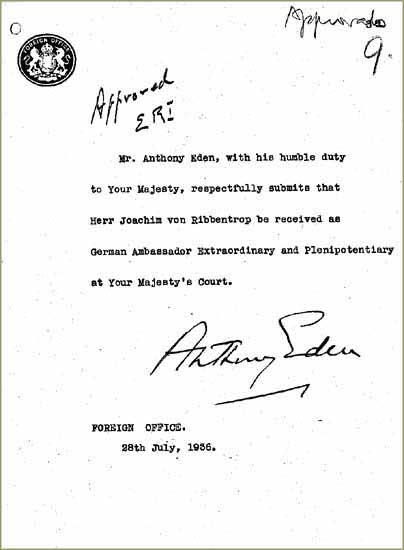
Submission for the appointment of Ribbentrop as German Ambassador FO 954/10a

Submission for the appointment of Ribbentrop as German Ambassador FO 954/10a

1. Why use this guide?

This research guide provides information which will prove useful if you are searching for records of a campaign or service medal awarded to someone who fought with the British armed services prior to the Second World War. Though far less detailed than most service records, documents of campaign medals can provide useful clues to a person’s time in service, particularly where and when they served. These records are distinct from those detailing awards of gallantry and bravery medals, information on which can be found in the British military gallantry medals research guide.

2. Campaign and service medal categories

2.1 What are campaign medals?

Campaign or war medals were awarded to members of the armed services and eligible civilians, for taking part in a campaign or for service in time of war. Awards for service in a particular battle within a war often took the shape of clasps attached to medal ribbons.

2.2 What are long service and good conduct medals?

These medals were awarded to warrant officers, non-commissioned officers and other ranks. They were not dependent on having seen action.

2.3 What are commemorative medals?

Commemorative medals are not awarded for military service and are not worn on service uniforms. Instead, they are awarded for attendance at a particular event or for service in a non-military operation.

3. First World War Campaign and service medal records

3.1 Medal rolls

Information about the award of campaign medals is recorded on medal rolls. These are usually arranged by regiment/battalion (for the Army) or by ship (for the Royal Navy), then by rank, then name. Medal rolls are lists of men entitled to a particular medal, they do not give detailed information about individuals, recording only:

  • the recipients’ regimental/service number
  • a note of the clasps to which he or she was entitled
  • whether the medal was received or not (a tick against the name indicates it was received; a cross against the name indicates that the delivery of the medal failed or that it was returned)

3.2 Medal index cards

Medal index cards were used for recording First World War campaign medals issued to individuals. They contain more detail than the medal roll. Unlike the long lists which make up the medal rolls, for which these cards provided the index, each medal index card is unique to the soldier for whom it was completed.

Typically each card contains:

  • regiment or other unit (but not battalion)
  • service number
  • rank
  • list of medals awarded
  • a reference to the medal roll

Less consistently, cards may also contain:

  • the date the soldier first entered a theatre of war
  • the theatre of war in which the soldier served

In the space on the card headed ‘Remarks’ the following information is sometimes recorded:

  • date of death
  • if the soldier was taken prisoner
  • cause of discharge (usually indicated by a code reference to the King’s Regulations)

4. How to find records of campaign medals

4.1 Before 1914

For records of medals awarded for service before 1914, search by name on the Ancestry (£) website. There are separate search pages for the Army (sourced from WO 100) and for the Royal Navy and Royal Marines (sourced from ADM 171).

4.2 First World War, 1914-1918

All servicemen, some women, and some civilians, were eligible for one or more campaign medals if they served abroad. These records are the nearest we have to a full ‘roll-call’ for the First World War. The medal rolls are variously arranged and accessed for each service. Details of what each medal was awarded for can be found in Appendix 1 below.

a. Army and Royal Flying Corps
For the Army and the Royal Flying Corps there are medal index cards as well as medal rolls. There are medal index cards for over 5.5 million men who served abroad in the First World War. Army officers were not automatically issued campaign medals, they had to apply for them, so there may not be a card for an officer. Each card should contain the soldier’s name, corps (regiment), rank, regimental number, perhaps the first theatre of war served in and the date of entry to it, as well as other remarks and of course the medals awarded. The cards are in document series WO 372 but copies can be viewed online and are name-searchable. Each card also provides a reference number which refers to an entry on the medal rolls (WO 329). These medal rolls are available online via Ancestry (£) and you can search them by name and regimental number. The only additional information sometimes available on the rolls is the soldier’s battalion number, which you will need if you want to find the battalion war diary: see British Army operations in the First World War.

b. Royal Navy, Royal Marines and Royal Naval Air Service
Search for an individual by name on the Ancestry (£) website. The original medal rolls are in series ADM 171, split into several sequences as detailed in the table below. Entries in the medal rolls are in alphabetical order, so there is no need for an index. Explanations of the abbreviations used in some of the medal rolls can be found in Appendix 2 below.

Service and rank Series reference
Royal Navy: Officers ADM 171/89, ADM 171/90 and ADM 171/91
Royal Navy: Ratings ADM 171/94-119
Royal Marines: Officers ADM 171/92 and ADM 171/93
Royal Marines: NCOs and Men ADM 171/167
Royal Naval Reserve: Officers ADM 171/92 and ADM 171/93
Royal Naval Volunteer Reserve: Ratings ADM 171/125
Mercantile Marine Reserve: Ratings ADM 171/130
Miscellaneous: e.g. WRNS, canteen staff ADM 171/133

c. Royal Air Force
Though RAF airmen did receive campaign medals, there are no medal rolls in The National Archives for men who joined after the formation of the RAF in April 1918, only for those who had already served with the Royal Flying Corps and went on to serve in the RAF. See the Royal Air Force personnel research guide for more information.

4.3 Inter-war period, 1920-1939

Army medal rolls for the inter-war period can be searched by name on the Ancestry (£) website. The original documents are available in WO 100/411-493. A number of other campaign medal rolls for the Army up to 1939 can be found in WO 100/398-410, including medal rolls for operations in Iraq, Africa and India. Royal Naval and Royal Air Force campaign medal rolls for the inter-war period are not kept at The National Archives. Write to the relevant Medal Offices at the addresses given in section 7 below.

4.4 Second World War, 1939–1945

Second World War army medal cards are available to search and download through Forces War Records (charges apply).

The medal cards are application cards, known as C.S. 20, which soldiers of the British Army and other units administered by the War Office could fill out and send to the War Office after the war to claim the campaign medals that they were entitled to. There are approximately 1.7 million cards for personnel from various army units. Read the blog on Forces War Records for more information.

The cards are in boxes with many cards having closed information, access to individual cards is only available online.

4.5 Post 1945

For campaign medal records for after the Second World War contact the Armed Services Medal Office at the address given in section 7 below.

5. How to find records of long service and good conduct medals

These medals were awarded to warrant officers, non-commissioned officers and other ranks. They were not dependent on having seen action.

5.1 Army

Use Discovery (£), our catalogue to browse record series WO 101 and WO 102 and to search WO 32, using ‘code 50’ as your keyword.

5.2 Royal Navy and Royal Marines

See ADM 171, ADM 1 and ADM 201.

5.3 RAF

Search the Air Ministry Orders in series AIR 72 for Long Sevice and Good Conduct Medal, George V.

6. How to find records of commemorative medals

For recipients of the Jubilee Medal 1897; the Royal Victorian Medal 1901 (for taking part in Queen Victoria’s funeral); the Coronation Medals 1901 and 1911; and the Delhi Durbar Medals 1903 and 1911, see WO 100, WO 330 and ADM 171.

Rolls for the 1935 Jubilee are in QLIB 4 and for the 1937 Coronation in QLIB 5.

The 1953 Coronation and 1977 Jubilee rolls are available in The National Archives’ Library.

Medals have been awarded for service in the Arctic between 1818 and 1855 and 1875 and 1876. Service between these dates included the search for the North West Passage and the searches for Sir John Franklin. The Polar Medal was introduced for Arctic and Antarctic exploration from 1904.

The National Archives’ Library has a copy of The Polar Medal Roll (1902-1999), which includes alphabetical and chronological lists of awards, with National Archives references to the main sources in ADM 1, ADM 171 and the London Gazette (online and in ZJ 1).

7. Replacing and claiming medals

Refer to the Ministry of Defence Medal Office for details of medals and eligibility.

8. Further reading

Visit the National Archives’ bookshop for a range of available publications about British military campaign and service medals. The following recommended publications are available in the The National Archives’ library. The National Archives’ library also holds medal rolls for all major wars.

‘A Handbook of British and Foreign Orders, War Medals and Decoration Awarded to the Army and Navy’: chiefly described from those in the collection of A A Payne, IRCP, MRCS of which there are some 2,500 (Polstead, 1981)

W H Fevyer and J W Wilson, ‘The 1914 Star to the Royal Navy and Royal Marines’ (London, 1995)

Lawrence L Gordon, ‘British Battles and Medals’: A description of every campaign medal and bar awarded since the Armada, with the historical reasons for their award and the names of all the ships, regiments and squadrons of the Royal Air Force whose personnel are entitled to them (1979)

E C Joslin, A R Litherland and B T Simpkin, ‘British Battles and Medals’ (London, 1988)

William Spencer, ‘Medals: The Researcher’s Guide’ (Kew, 2006)

9. Appendix 1: First World War campaign medals and what they were awarded for

Medal Awarded for
1914 Star For service under fire in France and Belgium, 5 August to 22 November 1914. Includes sailors serving ashore.
1914-1915 Star For service in all other theatres of war, 5 August 1914 to 31 December 1915; and for service in France and Belgium, 23 November 1914 to 31 December 1915.
British War Medal For service abroad (including India) 5 August 1914 to 11 November 1918, or 1919-1920 in Russia.
Victory Medal For military and civilian personnel who served in a theatre of war.
Territorial Force War Medal For members of the Territorial Forces who joined before 30 September 1914 and served in a theatre of war between 5 August 1914 and 11 November 1918.

10. Appendix 2: Abbreviations found in ADM 171

Interpretation of the abbreviations used in some of the medal rolls:

1914 ST. or 14 ST. = 1914 Star 1914 ST. C. = 1914 Star and Clasp
ST. = 1914–1915 Star B. = British War Medal
V. = Victory Medal

Comments and remarks:

R. = Run (See F. below)
D. = Discharged with Disgrace
DUPS. = Duplicates issued
I.C.1000/1914, etc. = Refers to relevant N.L. (Wills paper)

Issued details:

S. = Self A.M. = Issued to Air Ministry for disposal to man
FR. = Father W.O. = Issued to War Office for disposal to man
MR. = Mother B.o.T. = Issued to Board of Trade for disposal to man
SR. = Sister By A.M. = Issued by Air Ministry (for service in RAF)
BR. = Brother By W.O. = Issued by War Office (for service in Army)
W. = Wife By B.o.T. = Issued by Board of Trade (for service in the Merchant Service)
WW. = Widow F. = Forfeited (“R”(Run) or “D”(Discharged with Disgrace) normally a code or reason is given
DR. = Daughter C. of P. = Commissioner of Police
GODMR. = Godmother N.O…… = Navy Office Wellington etc.
GODFR. = Godfather D.N.D. Ottawa = Dept.of National Defence Ottawa
GRDMR. = Grandmother Nav.Rep. = Naval Representation, Commonwealth of Australia
GRDFR. = Grandfather B.N.M. Athens = British Naval Mission to Greece
UNIV. LEG. = Universal Legatee D.R.I.M. = Director Royal Indian Marine
RES. LEG. = Residual Legatee 392000 etc. = Refers to relevant medal issue paper
LEG. REP. = Legal Representative
EXECR. = Executor
EXECX. = Executrix
ADMINR. = Administrator
ADMINX = Administratix

1. Why use this guide?

This guide will help you find records containing details of officers and ordinary soldiers who served with the Militia between 1522 and 1907.

The Militia was a part-time voluntary force organised by county. Modern militias were created by the Militia Act of 1757. They became the Special Reserve in 1908.

For records of the Yeomanry, Volunteers and Territorials see our guide on Volunteers and Territorials.

2. How to begin your research

In 1881, the army was reorganised and militia regiments were attached to units of the regular army, taking on the new regiment’s name in the process.

To search our catalogue for records from a specific regiment, you will need to use the right name according to the date.

To find out which militia regiments were associated to which regular army regiments you will need to look at the Army Lists from 1881 onwards. Each volume has an alphabetical list of regular army regiments and includes details of the militia regiments attached to them.

The Army Lists are available in the reading rooms at Kew.

Please note, where we direct you to online records there may be a charge to view them off site, but you can view them for free at the National Archives in Kew.

3. Soldiers’ records of service 1757-1914

3.1 Documents available online

  • search militia attestation papers (WO 96) on findmypast.co.uk (£). Most of these date from the mid-19th century. They are often annotated until the date of discharge so provide a complete service record
  • search discharge certificates (WO 97) by name on findmypast.co.uk (£).  These cover a few soldiers who qualified for pensions following the French Revolutionary and Napoleonic wars
  • browse and view disability pensions (WO 116) by date through our catalogue
  • browse and view long service pensions (WO 117) by registered Chelsea number through our catalogue

3.2 Documents available only at The National Archives

Click on the following series references to search for records within each respective series using keywords (such as names and regiments) and dates.

The records listed below can only be viewed at The National Archives, Kew:

  • Enrolment books and casualty books (WO 68) 1759–1925. Search using the name of the regiment from before or after 1881
  • Muster rolls and paylists (WO 13) 1780–1878. Search by county or by regiment using pre-1881 names
  • Muster rolls of some London and Middlesex Volunteer and Territorial regiments (WO 70) 1860–1912. Search using the name of the battalion
  • Militia pension registers of the Royal Hospital Chelsea (WO 23) 1821–1829. Search using the name of the battalion

4. Officers records of service 1757-1907

4.1 Documents available online

  • Use our catalogue to search and download officers’ service records (WO 76) 1764–1914 by officer’s name or regiment
  • Use our catalogue to search registers of militia officers (WO 25) 1812–1824 by regiment. Some are searchable by officer’s name

4.2 Documents available only at The National Archives

Click on the following series references to search for records within each respective series using keywords (such as names and regiments) and dates.

The records listed below can only be viewed at the National Archives in Kew:

  • Records of militia regiments (WO 68) 1759–1925. Search using the name of the regiment. This is a logical place to start your research as it contains exclusively militia records. However you can find references to militia officers among records of the regular army
  • Royal warrants for establishment of militia (WO 24) 1759–1829. Search using the keyword ‘militia’
  • Militia muster rolls and paylists (WO 13) 1780–1878. Search using county or pre-1881 regiment names
  • Lists of Commissions (HO 50) 1782–1840. Search using a place name or ‘militia’
  • Entry books of commissions, appointments, and warrants (HO 51) 1758–1855. Search using keywords ‘militia AND commissions’, or ‘militia AND correspondence’

4.3 Specific documents

  • A register of commissions is in HO 51/136
  • Militia officers’ original commissions (1780–1874) is in WO 43/1059
  • Irish Militia commission books (1794) are in WO 25/118 and can be viewed online

4.4 Other sources for officers

  • Annual militia lists from 1794 onwards are available in The National Archives’ library in Kew
  • Each volume lists all the officers who served that year with any militia regiment. Some have name indexes
  • Lists of officers’ commissions appear in the London Gazette, on The Gazette website

5. Casualties and deserters 1744-1925

Search our catalogue using keywords such as deserter AND militia. You can filter your results using the options on the left of the results page.

Alternatively, click on the following series references to search for records within each respective series using keywords and dates.

  • WO 68 – casualty lists. Use keyword ‘casualty’
  • WO 13 – references to deserters. Use a place or county name as a keyword
  • E182 – names of deserters for whom a reward was offered. Use the county name as a keyword

The references below are to specific records that might be useful:

6. Medals

In general militiamen did not receive campaign medals. For those that did:

  • search and download campaign medal rolls (WO 100) at Ancestry.co.uk (£). They list militiamen who received the Queen’s (or King’s) South Africa Medal or the Queen’s Mediterranean Medal, while serving with the regular army
  • use our catalogue to search and download Militia Long Service and Good Conduct medal records (WO 102/22)

7. Muster records: 1522-1649

The militia muster rolls listed all those liable for military service.

7.1 Finding Tudor and Stuart musters

Unlike later musters, Tudor and Stuart muster rolls do not represent a complete census of the male population.

The essential guide to finding muster rolls in The National Archives is Gibson and Dell’s Tudor and Stuart Muster rolls (see further reading booklist).

Arranged by county, and then by hundred, wapentake, lathe and so on, it lists:

  • what is held by The National Archives
  • what is held by local archives
  • what has been transcribed and published

Many publications by local record societies are held by The National Archives’ Library.

7.2 Finding the right district

You can find the right hundred, wapentake or lathe using one of the following sources:

7.3 What information do the militia musters contain?

It is estimated that, on average, a muster roll for this period is likely to omit one third of the names it was supposed to contain.

The earliest preserved muster roll is from 1522 and is unique in listing:

  • landowners
  • the value of their lands
  • all males over 16 and the value of their goods
  • some 1522 returns also give occupations and the names of lords of the manor. See Cornwall or Hoyle in the further reading booklist.

From 1523 to 1569 muster rolls list only:

  • the names of those liable for military service
  • the equipment required of the militiaman

From 1570 only muster rolls (also known as certificates of musters) for ‘trained bands’ (those selected for special training) listed names. All others only listed the total number of men but no names.

7.4 Hard to find muster records

Some musters are amongst other records held at The National Archives. They are not mentioned in the document descriptions so can be hard to find. The documents listed below are known to contain musters.

Record series or part series Dates Printed and online finding aids
E 101 bundles 58–62 and 549; E 36/16 to E 36/55a; E 315/464 and E 315/466 and SP 1 and SP 2 1522–1547 Letters and Papers of the Reign of Henry VIII
SP 10/3–4 1548
SP 1, SP 2 and SP 10 1509–1547, 1516–1539, 1547–1553 State Papers Online (institutional subscription required) and British History Online (£)
SP 12 and E 101 bundles 64–66 1559–1603 and 1569, 1573, 1577 and 1580 State Papers Online (institutional subscription required) and British History Online (£)
SP 14 1603–1625 (James I)
SP 16 and SP 17 1625–1640 (Charles I)

Some muster rolls have only survived with the private papers of local gentry families who served as commissioners of array or deputy lieutenant – these may be in local archives.

Look for contact details for archives elsewhere using Find an archive or search our catalogue for records and refine your results using the filters.

You can try searching our catalogue for a specific person. Use the person’s surname followed by ‘AND’ and then ‘muster’.

A search for “Daniell AND muster” returns the private papers of John Daniell of Daresbury. These papers include musters, commissions, and several muster rolls of the trained band he captained.

8. Records in other archives

8.1 Local militia lists 1758–1831

Every parish in England and Wales was obliged to create lists of males aged 18 to 45, and to hold a ballot to choose those who had to serve in the Militia.

Two lists were created each year from 1758–1831:

  • militia lists (of all men)
  • militia enrolment lists (of men chosen to serve)

The lists should provide an annual male census for the local area, giving details about men and their family circumstances. They are held in local archives but the coverage of the country is not complete. Consult Gibson’s and Medlycott’s Militia lists and musters 1757–1876 to find where local militia lists are held.

Local archives also hold poor law records which can include orders for the maintenance of children of militiamen.

8.2 Parliamentary Papers

Lists of officers were presented to the House of Commons in 1839, 1840 and 1862. Look in Parliamentary Papers (institutional subscription required) for these lists using the references below:

  • HC 1839, xxxi, 267 (1839)
  • HC 1840, xxx, 253 (1840)
  • HC 1862, xxxii, 583 (1862)

9. Further reading

Use our library catalogue to find related books.

You may also be able to find books in a local library. You can buy from a wide range of history titles in our bookshop.

Also see J Cornwall, ‘A Tudor Domesday: The musters of 1522’, Journal of the Society of Archivists, vol 3 (1965–1969)

1. Why use this guide?

If you know of an individual who received a British military medal or award for an act of bravery, gallantry or for meritorious service between 1854 and c1990 and you want to find out whether a record of the award and why it was awarded exist, this guide will be of use. Among the numerous medals and awards covered by the guide are the:

  • Victoria Cross (VC)
  • Distinguished Service Order (DSO)
  • Military Cross (MC)
  • Military Medal (MM)
  • Mention in Dispatches (MiD)

For advice on civilian gallantry awards consult our Civilian gallantry medals guide. There are separate records for the award of campaign medals (awarded purely for service) – see our British Army campaign and service medals guide for advice on finding these.

2. The records of gallantry medals and awards

2.1 Public announcements

Almost all gallantry awards to British nationals are publicly announced in the official government newspaper, the London Gazette. This public announcement is often the only record that survives of an award. Announcements also appeared, where appropriate, in the colonial or dominion gazettes.

2.2 Recommendations and citations

A recommendation is a full statement, usually supplied by a commanding officer, of why a medal should be awarded to an individual.

A citation is a brief official statement, taken from the recommendation, of why a medal was awarded.

Whether a record of a citation or a recommendation survives depends, largely, on the type of award. Occasionally citations are published in the London Gazette but not always at the same date as the announcement. A citation or recommendation may sometimes survive in the service record of the individual.

2.3 Registers

For some medals there are registers and lists of recipients covering a specific war, year or range of years.

3. How to find records

Find out where to look for records of a particular medal by consulting the table below. The following general advice will also help you get started:

3.1 Online records

In some cases, to view records you will need to find document references and either order copies or visit us to view the original documents in person. The following records, however, can be viewed or downloaded online:

3.2 Basic search tips for finding original documents

You can use our catalogue to search for records. Search with the name of a medal using the advanced search to target the records of the respective record departments for each branch of the military, as follows:

  • British Army, 1854-1990 – the majority of medal records are held in WO and DEFE
  • Royal Air Force, Royal Flying Corps and Royal Naval Air Service, 1914-1985 – the majority of medal records are held in AIR and, more precisely, for 1914-1918 in AIR 1, and from 1939 in AIR 2
  • Royal Navy and Royal Marines, 1854-1982 – the majority of surviving recommendations are in series ADM 1 (accessed by using the indexes and registers in series ADM 12) and ADM 116

3.3 Public announcements and published citations

In most cases, the best place to start is the London Gazette, available on The Gazette website, though for many medals a citation was not published (see the table below for medal-by-medal details). You can search the Gazette by name, service number, publication date and type of award. You will need to know roughly when the award was announced or ‘gazetted’. There was always a delay between the gallant deed, the actual award of a medal, and publication in the London Gazette. The Gazette indexes available at The National Archives can help to establish a date.

3.4 Recommendations, registers and unpublished citations

Check published sources, such as those in the further reading section of this guide, before you start a search for records of recommendations or citations as they may provide exact document references and additional information. The table below provides links to the record series most likely to contain information on individual awards.

3.5 Table of record sources for gallantry medals

Click on the London Gazette links to search the Gazette by name, service number, publication date and type of award. Click on the document series references and search by name of medal. The online records can be searched by name of recipient.

Gallantry medal or award Official announcements and, where noted, officially published citations Record series in which you may find recommendations, citations, registers or lists of medal recipients
Air Force Cross London Gazette (ZJ 1) AIR 1, AIR 2(1) or AIR 30
Air Force Medal London Gazette (ZJ 1) AIR 1, AIR 2(1), AIR 30 or HO 144
British Empire Medal London Gazette (ZJ 1) ADM 1, ADM 116, ADM 171, AIR 2(1), MT 9 or PREM 2. For 1935-1990 see the online copies of WO 373, recommendations for military honours and awards.
Conspicuous Gallantry Medal London Gazette (ZJ 1) ADM 1 code 85, ADM 116, ADM 171/75, AIR 2(1) or AIR 30
Distinguished Conduct Medal London Gazette (ZJ 1) includes citations for First World War awards ADM 171, AIR 1, PMG 34, PMG 36, WO 3, WO 32WO 146 and WO 391. For 1935-1990 see the online copies of WO 373, recommendations for military honours and awards.
Distinguished Flying Cross London Gazette (ZJ 1) includes citations for many Second World War awards AIR 1, AIR 2(1) or AIR 30
Distinguished Flying Medal London Gazette (ZJ 1) includes citations for many Second World War awards ADM 1 Code 85, ADM 116 Code 85, AIR 1, AIR 2(1) or AIR 30
Distinguished Service Cross London Gazette (ZJ 1) ADM 1, ADM 116, ADM 137, ADM 171 or AIR 1
Distinguished Service Medal London Gazette (ZJ 1) ADM 1, ADM 116, ADM 171/75, ADM 137 or AIR 1
Distinguished Service Order London Gazette (ZJ 1) includes citations for First and Second World War awards (although not for First World War New Year or Birthday Honours awards). Extracts from pre-publication copies of announcements are in series WO 389. ADM 1, ADM 116, ADM 171, AIR 1, AIR 2(1), AIR 30 or WO 32. For 1935-1990 see the online copies of WO 373, recommendations for military honours and awards. The DSO register (1886-1945), in series WO 390, is available online – browse the 13 volumes of the register by date (see section 3.1).
Empire Gallantry Medal London Gazette (ZJ 1) ADM 1ADM 116, ADM 171, AIR 2(1), HO 250, T 336 or MT 9. Please note, HO 250 is also available to view online via Ancestry (£).
George Cross London Gazette (ZJ 1) includes citations for many Second World War awards AIR 2(1), MT 9, PREM 2, WO 32, WO 330 or T 336. Search the Civil Defence Gallantry Awards (HO 250) by name on Ancestry.co.uk (£). For 1935-1990 see the online copies of WO 373, recommendations for military honours and awards.
George Medal London Gazette (ZJ 1) includes citations for many Second World War awards ADM 1, AIR 2(1), MT 9, PREM 2 or WO 330 or T 336. Search the Civil Defence Gallantry Awards (HO 250) by name on Ancestry.co.uk (£). For 1935-1990 see the online copies of WO 373, recommendations for military honours and awards.
Indian Distinguished Service Medal Gazette of India, available at the British Library For 1935-1990 see the online copies of WO 373, recommendations for military honours and awards.
Indian Order of Merit Gazette of India, available at the British Library For 1935-1990 see the online copies of WO 373, recommendations for military honours and awards.
King’s African Rifles DCM See the colonial gazettes for the colonies of East Africa.
Read The African DCM by J Arnold for more information.
CO 445 and CO 534
Mentions in Despatches London Gazette (ZJ 1) ADM 1, ADM 116 or AIR 2(1). Search and download Mentions in Dispatches 1914-1920 as recorded on medal index cards (WO 372/24). For 1935-1990 see the online copies of WO 373, recommendations for military honours and awards.
Meritorious Service Medal London Gazette (ZJ 1) and colonial and dominion gazettes. AIR 1, AIR 30, PMG 34, PMG 36, WO 23, WO 32, WO 101. Search and download Meritorious Service Medal awards 1914-1920 as recorded on medal index cards (WO 372/24).
Military Cross London Gazette (ZJ 1) includes citations for First World War awards (although not New Year or Birthday Honours awards). AIR 1, WO 32 or WO 389 online (indexed by WO 389/9-24). For 1935-1990 see the online copies of WO 373, recommendations for military honours and awards.
Military Medal London Gazette (ZJ 1). Usually, announcements in the London Gazette are the only surviving record for the First World War. Citations are very occasionally given in full – usually for women only. ADM 171, AIR 1, WO 32 or WO 326. Search and download awards of the Military Medal 1914-1920 as recorded on medal index cards (WO 372/23). For 1935-1990 see the online copies of WO 373, recommendations for military honours and awards.
New Zealand Cross CO 212 or WO 32
Order of the Bath, Military Division London Gazette (ZJ 1) AIR 2(1), ADM 171, WO 104 or WO 32. For 1935-1990 see the online copies of WO 373, recommendations for military honours and awards.
Order of the British Empire For 1935-1990 see the online copies of WO 373, recommendations for military honours and awards.
Queen’s Gallantry Medal London Gazette (ZJ 1) For 1935-1990 see the online copies of WO 373, recommendations for military honours and awards.
Royal Red Cross London Gazette (ZJ 1) AIR 2 code 30, AIR 30, WO 145 or WO 32 code 50. For 1935-1990 see the online copies of WO 373, recommendations for military honours and awards.
Sea Gallantry Medal ADM 1 or BT 261
Victoria Cross London Gazette (ZJ 1) includes citations for First and Second World War awards ADM 116, ADM 171, AIR 1, AIR 2/5010 (for 1943-1944), AIR 2/5867 (for 1944-1946), AIR 30, CAB 10, PMG 35 or WO 32. For 1935-1990 see the online copies of WO 373, recommendations for military honours and awards. Consult the Victoria Cross register (WO 98/8) online or the alphabetical list of recipients of the Victoria Cross, August 1914 to October 1920 in WO 98/6.
West African Frontier Force DCM See the colonial gazettes for the colonies of West Africa.
Read The African DCM by J Arnold for more information.
CO 445

Footnotes: (1) Recommendations in AIR 2 are arranged by old Air Ministry file reference number, not name. Contact the Ministry of Defence who may be able to supply you with the file reference.

Bear in mind that medals issued by the British Army were not awarded exclusively to British Army soldiers – they could be awarded to personnel from the other armed services too. During the Second World War, for example, some members of the Royal Air Force received British Army awards. The same is true of the Royal Navy and RAF, so that, for example, a number of airmen of the Fleet Air Arm, a branch of the Royal Navy, received RAF awards.

4. Foreign awards to Britons and British awards to foreign servicemen and women (from 1854)

4.1 Announcements

These awards tend to be announced in the London Gazette under the heading ‘Foreign Orders’.

For draft versions of London Gazette announcements 1914-1928 browse WO 388 by reference. Some of these pre-publication announcements are annotated. The documents in this series (WO 388) are arranged by country. WO 388/6 to 15, including indexes in WO 388/8 to 15, are available to download online (you can download the indexes free of charge).

4.2 Recommendations

Military awards exchanged between British and foreign armies from 1946 onwards are searchable by name and award in the recommendations (WO 373) online. These can include those not appearing in the London Gazette.

4.3 Lists

You can find some lists of Foreign Awards within FO 83 (before 1906) and FO 372 (after 1906). Locate files containing these lists using the Foreign Office correspondence indexes at The National Archives. It is thought that these lists are not comprehensive.

5. Regulations and policy files (from 1854)

In general, you can search our catalogue by the medal name or its abbreviation to see if there are any policy files. There are some specific series which document the regulations governing the award of medals. They are:

For policy files on medals, see series ADM 1 code 85, ADM 116 code 85, AIR 1, AIR 2, HO 45 code 30, MT 9 code 6, T 300 and T 333 and WO 32 code 50.

6. The design and manufacture of medals (1805-1986)

Orders for gallantry medals (especially in the 19th century) may be accompanied by details of recipients and of the action that led to the award. Try series MINT 16, MINT 20, MINT 24 and MINT 25. Search our catalogue with key words such as ‘awards’ or ‘decorations’.

7. Replacing and claiming medals

Contact the Ministry of Defence for campaign and other medals issued after 1939. Medals issued before 1939 can no longer be replaced.

8. Further reading and other resources

Online resources

Major military awards of the First World War, available from The Gazette website.

The Ministry of Defence’s British armed forces medals booklet, available from GOV.UK. Lists the medals awarded for service in the British armed forces, accompanied by an image for each medal.

Lists of Victoria Cross recipients announced in The Gazette for the First World War in 1914, 1915, 1916, 1917, 1918 and 1919.

A list of Victoria Cross recipients announced in The Gazette during and after the Second World War

Books

Visit the National Archives’ bookshop for a range of available publications about British military gallantry medals. All of the publications below are available in The National Archives’ Library for consultation at our building in Kew.

Scott Addington, For Conspicuous Gallantry: Winners of the Military Cross and Bar during the Great War. vol. 1, two bars and three bars (Matador, 2006)

Peter Edward Abbott, Recipients of the Distinguished Conduct Medal, 1855-1909 (London, 1975)

Peter Edwards Abbott and John Michael Allen Tamplin, British Gallantry Awards (London, 1981)

Christopher K Bate and Martin G Smith, For Bravery in the Field: Recipients of the Military Medal, 1919-1939, 1939-1945, 1945-1991 (1991)

John D Clarke, Gallantry Medals and Decorations of the World (Barnsley, 2001)

O’ Moore Creagh and EM Humphris, The Distinguished Service Order 1886-1923: A Complete Record of the Recipients of the Distinguished Service Order from its Institution in 1886, to the 12th June 1923, with Descriptions of the Deeds and Services for which the Award was Given and with Many Biographical and Other Details (London, 1978)

Michael Maton, Honour the Air Forces: Honours and Awards to the RAF and Dominion Air Forces during the Second World War (Honiton: Token Publishing, 2004)

Michael Maton, Honour the Armies: Honours and Awards to the British and Dominion Armies during the Second World War (Honiton: Token Publishing, 2006)

Michael Maton, Honour the Officers: Honours Awards to British, Dominion and Colonial Officers during World War I (Honiton: Token Publishing, 2009)

Michael Maton, Honour The Recipents of Foreign Awards (Honiton: Token Publishing 2013)

Phil McDermott, For Conspicuous Gallantry: The Register of the Conspicuous Gallantry Medal, 1855-1992 (Uckfield, 1995)

Philip McDermott, For Distinguished Conduct in the Field: The Register of the Distinguished Conduct Medal 1920-1992 (Polstead, 1994)

Ian McInnes, The Meritorious Service Medal: The Immediate Awards 1916-1928 (Dallington, 1992)

William Spencer, Army Service Records of the First World War (The National Archives, 2001 & 2008)

William Spencer, Army Records for Family Historians (3nd edn, The National Archives, 2008)

William Spencer, Air Force Records: A Guide for Family Historians (The National Archives, 2008)

William Spencer, Medals: The Researcher’s Guide (Kew, 2006)

Rob W Walker, Recipients of the Distinguished Conduct Medal, 1914-1920 (Birmingham, 1981)

List of the Recipients of the Victoria Cross (War Office, 1953)

Victoria Cross and other awards issued with Army Orders…

1. Why use this guide?

This is a guide to researching records of Royal Navy officers held at The National Archives.  We have a separate guide for advice on finding records of pensions paid to Royal Navy officers.

Historically, there were two kinds of officer in the Royal Navy, Commissioned Officers and Warrant Officers. The record sources in this guide may refer to one or both kinds of officer. It can help to know if you are looking for records of a warrant or commissioned officer.

Commissioned officer’s ranks include Admiral of the FleetAdmiralVice-AdmiralRear-AdmiralCommodoreCaptainCommanderLieutenant-CommanderLieutenant, and Sub-Lieutenant. Commissioned officers became officers by being awarded a royal commission, usually after passing an examination. They are different and senior in rank to warrant officers.

A warrant officer was a sailor with specialised skills who became an officer by being awarded a warrant. Warrant officers are junior to commissioned officers and senior to ratings and their ranks include masterpurserengineerboatswaingunnercarpentersurgeonarmourerchaplaincookmaster at armssailmaker and schoolmaster.

Service records of commissioned officers who joined the Royal Navy since 1917 are still held by the Ministry of Defence. For records of officers before 1649, you can try searching for mentions of them in State Papers Domestic 1547-1649.

Service records of warrant officers who joined the Royal Navy since 1931 are still held by the Ministry of Defence.

Published Navy lists can supply basic details of an officer’s career if other records are not available, see section 4 for more information.

2. How do I get started?

Which records it is best to search for first will depend upon the years of service of the officer and whether or not you can visit us in person at Kew to access records unavailable online.

You may be able to get an outline of an officer’s career from a published source before going to the records themselves. Searchable online databases have been created for the First World War and Battle of Trafalgar recording service details of officers and ratings. Navy lists were a published directory listing officers in the Royal Navy and can be used to trace the outline of an officer’s career. During wartime monthly lists were published. A full set is available on site at The National Archives but some volumes are also available online.

In general, the most detailed records are service records so it may be best to target these first but before 1830 they are incomplete and patchy as there were no central service registers for personnel. In lieu of or in addition to a service record, your next best bet are records created for the application and award of pensions, which can include certificates of service and admission papers. To gain access to the full range of pension records you will need to visit us in person. We have a separate guide for advice on finding records of pensions paid to Royal Navy officers.

3. Online databases and indexes

3.1 Royal Navy First World War Lives at Sea database

Search the Royal Navy First World War Lives at Sea database by name, service number and other criteria for free-to-access information relating to all the Royal Navy officers and ratings that served in the First World War.

The database is compiled largely from records held at The National Archives and is an ongoing joint project between The National Archives, The National Maritime Museum and the Crew List Index Project.

3.2 Index of naval officers who died between 1914 and 1920

Search the card index of naval officers killed 1914-1920 (ADM 242/1-5), including some officers of the Royal Marines and Naval Reserve, and of the Canadian and Australian navies, among the records of maritime deaths on findmypast (charges apply).

3.3 Battle of Trafalgar database, 1805

Search the Trafalgar ancestors database by name for transcripts of the records of Royal Navy personnel of all ranks who served in the Battle of Trafalgar.

4. Navy Lists, Black Books and seniority lists

4.1 Published and printed Navy Lists

Consult the published Navy Lists (a set of which is available at The National Archives at Kew) to follow an officer’s career.

There have been several versions of the Navy List covering different periods:

  • Steele’s Navy List, 1782-1814
  • Navy List, the official list from 1814 to present day (now known as The Navy Directory)
  • New Navy List, an unofficial but reliable list from 1841-1856

Navy lists contain:

  • seniority lists of officers
  • from 1810 the official Navy List also shows ships with the officers appointed to them
  • from 1841–1856 the unofficial New Navy List gives potted biographies, often stretching back decades before 1841

4.2 Online Navy Lists

Shorter spans of the lists are available online at Ancestry.co.uk (charges apply) for 1888-1970 and at Findmypast.co.uk (charges apply) for 1827-1945.

4.3 First and Second World War Confidential Navy Lists

Browse through the range of Confidential Navy Lists from the First and Second World Wars (ADM 177) in our catalogue and select lists by date for download. These lists were, at the time, for official use only and indicate where individual officers were serving, with the names of ships and establishments.

4.4 Seniority lists 1780-1886

Seniority lists are arranged by rank and provide the dates on which commissioned officers received their first commission (or warrant officers received their first warrant) to a rank. You can search for the official, printed seniority lists in ADM 118. For sea officers and officers on half pay 1717-1846 browse from ADM 118/1 to find a document by year range.

For warrant officers 1780-1844 browse from ADM 118/186 to find a document by year and rank.

Browse through ADM 104/51-87 to select seniority lists by year for surgeons and other medical officers from 1780-1886.

4.5 Black Books, 1741-1815

The Admiralty kept ‘black books’ to record the names of officers guilty of misconduct and who were not to be employed again. Consult ADM 12/27B-27D, and the name index in ADM 12/27E, for the black books covering commissioned officers 1741-1815.

5. Service records, 1756-1931

5.1 Naval officers’ service records, 1756-1917 and 1756-1931

Search Royal Naval Officers’ service records on our website (ADM 196) by name for

  • commissioned officers who entered the Royal Navy between 1756 and 1917
  • most of the warrant officers who joined the Royal Navy between 1756 and 1931, though there are far fewer records before 1830

The records for the 18th and early 19th centuries are sparse but for the later period almost all of the available service records are accessible in this online collection.

Service records for commissioned officers joining after May 1917 are held by the Ministry of Defence (see below).

Warrant officers could have served as ratings before being awarded a warrant so it may also be worth searching ratings’ service records for career and basic biographical details.

5.2 Naval officers’ service record cards and files, c.1840-c.1920

Search Royal Navy officers’ service record cards and files online (ADM 340/1-150) by name for commissioned officers serving in the Royal Navy between c.1840 and c.1920.

Not all the records in this series are available online. To view the remaining records in ADM 340/151-456 you will need to visit The National Archives at Kew. Search by name for a document reference using the ADM 340 series search.

6. Certificates of Service and pensioner admission papers

Here we cover records created and retained as part of the pension applications process. For records of payments of pensions see our more detailed guide, Royal Navy officer’s pensions.

6.1 Certificates of Service, 1802-1894

Search at Ancestry.co.uk (charges apply) by name for certificates of service 1802-1894 (ADM 29) issued to warrant officers who applied for a pension, gratuity or medal. The date range covers the dates of issue of the certificates rather than the dates of service (the certificate may have been issued many years after a seaman finished his service).

ADM 29/1-73, covering dates 1802-1867, can also be searched by name in Discovery.

6.2 Pensioners’ admission papers, 1790-1865

Search for pensioners’ admission papers 1790-1865 (ADM 73/1-35) among the Royal Navy service and pension records on Findmypast.co.uk (charges apply). These papers supported warrant officers’ applications for admissions as in-pensioners to the Royal Greenwich Hospital. Some applications include details of service dating from the mid 18th century, 40 years or more prior to the application. They provide the officer’s age on joining and leaving the navy, the name of the last ship served on, details of character and sometimes the date of admission to Royal Greenwich Hospital.

Search our own catalogue listings of this series by name to obtain transcriptions, for free, of the dates of service and of admission to the hospital.

7. Passing certificates, 1660-1902

7.1 Passing certificates 1660-1902

Some officers sat an exam to assess their suitability for a particular rank and were awarded a certificate if they passed. These certificates, which can provide information about a man’s service prior to the exam, usually recorded the age, date and place of birth of the officer as well as the names of the ships he had served on. They may be supported by other papers such as birth or baptismal certificates.

Examinations for different ranks were introduced at different times and the surviving passing certificates cover a range of different years, depending on the rank, though they tend to cover year ranges within the 19th century. For:

  • engineers, search by name in ADM 13 (records cover 1863-1902)
  • masters, search for ‘masters passing certificates’ in ADM 6ADM 13 and ADM 106 (records cover 1660-1863)
  • surgeons, search for ‘surgeons qualifications’ in ADM 106 (records cover 1700-1800)
  • other officer ranks, search for ‘passing certificates’ and the name of the rank in ADM 6 and ADM 13 (records cover different year ranges depending on the rank)

7.2 Lieutenants’ passing certificates 1691-1902

In 1677 the Admiralty introduced examinations for prospective lieutenants to test whether individuals had the necessary experience and skills. They were awarded a certificate if they passed. These certificates, which can provide information about a man’s service prior to the exam, usually recorded the age, date and place of birth of the officer as well as the names of the ships he had served on.

Find document references for passing certificates by consulting the name index in Bruno Pappalardo’s Royal Navy Lieutenants’ Passing Certificates 1691–1902 (List and Index Society Vols 289–290), available at The National Archives library. Certificates from 1677-1690 have not survived.

8. Returns of service, 1817-1861

Between 1817 and 1861 the Admiralty sent out a number of surveys for officers to complete and return. Though many officers did not receive or return their forms, some returns do survive.

8.1 Commissioned officers

For commissioned officers, search ADM 9 by name to locate returns of the 1817 survey sent back by admirals, captains, commanders and some lieutenants (they are in ADM 9/1-9). For the rest of the lieutenants’ returns of the 1817 survey and all the returns from the 1846 survey (held in ADM 9/10-61) locate the paper version of the catalogue in the reading rooms at Kew and follow these steps:

  • Step 1: Find the printed name indexes in the ADM 9 folder
  • Step 2: Locate the name of an officer in the index and note the folio number
  • Step 3: Browse from ADM 9/10 in the catalogue (online or the paper version) to find the range of folio numbers which includes the number you noted at Step 2 – this provides you with your document reference

8.2 Warrant officers

The returns of the survey sent back by warrant officers are scattered around several series. For:

9. Records of cadets at the Royal Naval Colleges at Dartmouth and Greenwich, 1876-1964

Among the various records that survive of cadets training to become commissioned officers at the Royal Naval Colleges are the following:

  • examination results from the Royal Naval College, Greenwich 1876–1880 in ADM 203/21-40
  • examination results from the Royal Naval College, Greenwich 1907–1957 in ADM 203/41-44
  • lists of cadets studying at the Royal Naval College, Dartmouth 1931-1942 in ADM 203/104-137
  • lists of cadets studying at the Royal Naval College, Dartmouth 1946-1968 in ADM 203/151-198

10. Leave books, 1783-1846

Leave books usually record the date an officer applied for leave, for what period of time, in what service or to what place and a date of return. Select leave books by year range from the following sets of document references:

  • ADM 106/2972 for captains and lieutenants on leave between 1762 and 1764
  • ADM 6/200-206 for officers granted leave to go abroad while on active duty between 1804 and 1846
  • ADM 6/207-211 for officers granted leave while on half pay between 1783 and 1846

11. Medal rolls, 1793-1972

Search by name for information about the award of campaign, long service and good conduct medals in the Royal Navy medal rolls (ADM 171) using Ancestry.co.uk (charges apply). These rolls do not usually contain biographical information.

Digital microfilm copies of these records are also available to browse and download from our website free of charge.

12. Courts martial records

Courts martial records range from detailed records of proceedings to only the briefest details. The majority are held in ADM 1. Read our research guide on Royal Navy correspondence and papers for advice on how to find records in ADM 1 using the indexes and digests in ADM 12.

13. Service records from the last 90 years

Visit the GOV.UK website for information about how to request a summary of a service records from the Ministry of Defence. These are not available to members of the general public, though next of kin may request access to them.

14. Other resources

The following books are available at the National Archives’ library in Kew:

Bruno Pappalardo, Tracing Your Naval Ancestors (The National Archives, 2003) – an invaluable reference book that covers almost every possible source of material at The National Archives for officers and other ranks alike, including records not covered by this guide.

The above book is among our recommended books list on this subject, all available at the National Archives’ library in Kew.

Ian Waller, My Ancestor was in the Royal Navy (Society of Genealogists, 2014)

N A M Rodger, Naval records for genealogists (PRO Publications, 1998)

Christopher Donnithorne, Warrant officers of the Royal Navy 1695-1751 (List and Index Society, 2013)

Search The National Archives’ shop for other titles.

1. Why use this guide?

Use this guide for advice on how to find records of pensions paid to warrant and commissioned officers in the Royal Navy. The records go back as far as the 16th century and the most recent are from the 1980s.

Though very varied, generally awkward to find and not always very detailed, pension records can nevertheless sometimes provide key details about an officer’s life and career. Details recorded varies considerably between record types and even within the same record type there can be variation. Most only record the payment, name and rank but you can potentially find out from pension records:

  • the names of an officer’s widow or children
  • the officer’s dates of employment
  • the officer’s home address
  • the names of ships on which an officer served

2. Where and how to start

Very few of these records can be viewed online and to see them or even to simply search for them you may need to visit The National Archives at Kew. However, you can usually at least make a start online by searching for document references and descriptions in our catalogue. If you find references you can pay for copies of the records to be sent to you but you will not be able to view the records beforehand unless you visit us.

2.1 Search for a certificate of service where pension issued before 1894

When an officer applied for a commission, warrant or pension, the Navy Pay Office would issue a certificate to prove his qualifying service. These were the only official evidence of a Navy career until service registers were introduced in the mid 19th century.

The National Archives holds collections of the certificates issued to the requesting departments and also the Navy Pay Office’s entry books showing that certificates had been issued. The certificates give rank, ships served on and length of time in each, but they only record service up to the date they were issued. Sometimes the departments in receipt of the certificates made further notes on them.

See our other guide to records of Royal Navy commissioned and warrant officers for advice on searching for certificates of service online.

2.2 Search for document references in our online catalogue using the links in this guide

To view original records at The National Archives you must know their document references. To locate document references you must use our catalogue but rather than search across the tens of millions of records which a basic catalogue search provides, you can target specific series of Admiralty records to narrow your search significantly. All document references consist of a department code (the code for the Admiralty department is ADM), a series number and a piece number (each piece is a single file or bundle of files). The series and piece numbers are separated by a forward slash – for example ADM 23/32.

The majority of Royal Navy pension record series are listed in the following sections of this guide. Click on the series links in any section (for example, ADM 7) and follow the advice on how that series can be searched. Many of these records are not searchable by the name of an officer in our catalogue. You will sometimes have to search by year only and in these cases, even if you locate a document reference for the year/s you are interested in, you will have no way of knowing whether your officer appears in the record until you see the record itself.

You can also try browsing an entire series in reference order. You can do this by clicking on the series links and then clicking on ‘reference’ near the top of the page.

2.3 Consult our printed publications on Royal Navy records

For a more detailed explanation of the content and arrangement of these records we recommend the following publications:

  • B Pappalardo, Tracing Your Naval Ancestors (PRO, 2002)
  • NAM Rogers, Naval Records for Genealogists (PRO, 1998)

3. Government bodies responsible for paying Naval pensions

The arrangement of Royal Navy pension records is complicated by the number of government bodies that have had responsibility for administering pensions at different times. While all of these bodies were overseen by the Admiralty, each office created its own records and these are now spread across a wide range of different record series. The different bodies have been:

  • The Navy Pay Office/Admiralty
  • The Royal Greenwich Hospital
  • The charity for the payment of pensions to widows of sea officers
  • The Compassionate Fund/List (from 1885)
  • The Chatham Chest, later the Greenwich Chest (warrant officers only)

4. Records organised by rank and role

If you know the rank of an officer, you can target one of the specific documents listed in this section.

Armourers
1911-1932 ADM 23/151, ADM 23/164
Artificers
1831-1837 ADM 22/52
Artificer engineers
1897-1899 ADM 23/121-123 1897-1920 PMG 16/25
1899-1932 ADM 23/145, ADM 23/151, ADM 23/161-164
Boatswains
1653-1657 ADM 82/1-2 1675-1799 ADM 82/12
1831-1837 ADM 22/52 1867-1921 PMG 16/3
1871-1900 ADM 23/89 1885-1921 PMG 18/21
1916-1931 ADM 23/206-207, ADM 23/144 1917-1919 PMG 42/13-14
Cadets
1836-1921 PMG 16/1, PMG 16/3, PMG 16/8, PMG 16/13
Canteen managers
1914-1928 PMG 56
Captains
1673-1781 ADM 18/53 1689-1785 ADM 7/809
1809-1836 ADM 6/222, ADM 6/323 1809-1851 ADM 22/22, ADM 22/239, ADM 22/253
1836-1850 PMG 16/1, PMG 16/3 1837-1921 PMG 18
1837-1837 ADM 23/23 1851-1920 PMG 16/8
1857-1900 ADM 23/24, ADM 23/32, ADM 23/42, ADM 23/76-77, ADM 23/89, ADM 23/95 1916-1928 ADM 23/206-207
1917-1919 PMG 42/13-14 1928-1931 ADM 23/144
Carpenters
1653-1657 ADM 82/1-2 1675-1799 ADM 82/12
1831-1837 ADM 22/52 1867-1921 PMG 16/13
1871-1900 ADM 23/89 1885-1921 PMG 18/21
1916-1931 ADM 23/206-207, ADM 23/144 1917-1919 PMG 42/13-14
1928-1931 ADM 23/144
Chaplains
1653-1657 ADM 82/1-2 1830-1878 ADM 23/29, ADM 23/45-46, ADM 23/55, ADM 23/106-107
1836-1870 PMG 16/2-5, PMG 16/7 1866-1909 ADM 6/446
1871-1932 ADM 23/84, ADM 23/89, ADM 23/161-164, ADM 23/144-145, ADM 23/168, ADM 23/206-207 1882-1919 PMG 20/6, PMG 20/8, PMG 20/10, PMG 20/12, PMG 20/17, PMG 20/22-23
1916-1920 PMG 43/1 1916-1920 PMG 44/8-9
1917-1919 PMG 42/13-14
Chief masters at arms
1911-1932 ADM 23/151, ADM 23/164
Coastguard
1830-1878 ADM 23/106-107
Commanders
1673-1781 ADM 18/53 1809-1851 ADM 22/239, ADM 22/253, ADM 22/22
1809-1836 ADM 6/323, ADM 6/222 1836-1920 PMG 16/1, PMG 16/3, PMG 16/8
1837-1921 PMG 18 1857-1900 ADM 23/76-77, ADM 23/32, ADM 23/42, ADM 23/95, ADM 23/24, ADM 23/89
1916-1931 ADM 23/206-207, ADM 23/144 1917-1919 PMG 42/13-14
Cooks
1653-1657 ADM 82/1-2 1831-1837 ADM 22/52
1675-1799 ADM 82/12
Electricians
1911-1932 ADM 23/151, ADM 23/164
Engineers
1847-1921 PMG 18/7 1848-1920 PMG 16/6, PMG 16/8
1857-1880 ADM 23/30, ADM 23/31, ADM 23/76-77 1870-1882 PMG 20/1-4
1871-1900 ADM 23/89 1874-1924 PMG 69
1916-1931 ADM 23/206-207, ADM 23/144 1917-1919 PMG 42/13-14
Flag officers
1673-1781 ADM 18/53 1809-1836 ADM 6/323, ADM 6/222
1809-1851 ADM 22/239, ADM 22/253, ADM 22/22 1836-1920 PMG 16/1, PMG 16/3, PMG 16/8
1837-1921 PMG 18 1837-1837 ADM 23/23
1857-1900 ADM 23/76-77, ADM 23/32, ADM 23/42, ADM 23/95, ADM 23/24, ADM 23/89 1916-1931 ADM 23/206-207, ADM 23/144
1917-1919 PMG 42/13-14
Gunners
1653-1657 ADM 82/1-2 1675-1799 ADM 82/12
1831-1837 ADM 22/52 1867-1921 PMG 16/13
1871-1900 ADM 23/89 1885-1921 PMG 18/21
1916-1931 ADM 23/206-207, ADM 23/144 1917-1919 PMG 42/13-14
Lieutenants
1673-1781 ADM 18/53 1689-1785 ADM 7/809
1781-1821 ADM 22/1, ADM 22/16 1809-1836 ADM 6/323, ADM 6/222
1809-1851 ADM 22/239, ADM 22/253, ADM 22/22 1836-1920 PMG 16/1, PMG 16/3, PMG 16/8
1837-1921 PMG 18 1857-1900 ADM 23/89, ADM 23/76-77, ADM 23/32, ADM 23/42, ADM 23/95,
1916-1931 ADM 23/206-207, ADM 23/144 1917-1919 PMG 42/13-14
Masters
1653-1657 ADM 82/1-2 1675-1799 ADM 82/12
1689-1785 ADM 7/809 1708-1818 ADM 181/1
1809-1836 ADM 6/323 1809-1851 ADM 22/239, ADM 22/253, ADM 22/22
1836-1920 PMG 16/1, PMG 16/3, PMG 16/8 1837-1921 PMG 18
1866-1900 ADM 23/24, ADM 23/32, ADM 23/76-77, ADM 23/89 1916-1931 ADM 23/144, ADM 23/206-207
Mates
1840-1920 PMG 16/3-6, PMG 16/8 1867-1876 ADM 23/76-77
1882-1919 PMG 20/6, PMG 20/8, PMG 20/10, PMG 20/12, PMG 20/17, PMG 20/22-23 1899-1932 ADM 23/144-145, ADM 23/161-164, ADM 23/168-169
1916-1920 PMG 43/1 1916-1920 PMG 44/8-9
1916-1928 ADM 23/206-207 1917-1919 PMG 42/13-14
Midshipmen
1857-1900 ADM 23/24, ADM 23/76-77, ADM 23/89 1867-1921 PMG 16/13
1874-1920 PMG 16/18 1917-1919 PMG 42/14
1916-1931 ADM 23/144, ADM 23/206-207
Ordnance officers
1911-1932 ADM 23/151, ADM 23/164
Pursers
1653-1657 ADM 82/1-2 1809-1836 ADM 6/323
1830-1836 ADM 22/22-23 1836-1920 PMG 16/1, PMG 16/3, PMG 16/8
1837-1921 PMG 18 1866-1900 ADM 23/24, ADM 23/32, ADM 23/76-77, ADM 23/89
1916-1928 ADM 23/144, ADM 23/206-207 1917-1919 PMG 42/13-14
RFA officers
1914-1928 PMG 56
Schoolmasters
1889-1932 ADM 23/115, ADM 23/145, ADM 23/161-164 1889-1920 PMG 16/23
Stewards
1911-1932 ADM 23/151, ADM 23/164
Sub-lieutenants
1851-1920 PMG 16/8 1857-1900 ADM 23/14, ADM 23/32, ADM 23/76-77, ADM 23/89
1916-1931 ADM 23/144, ADM 23/206-207 1917-1919 PMG 42/13-14
Surgeons
1675-1799 ADM 82/12 1689-1785 ADM 7/809
1708-1818 ADM 181/1 1809-1836 ADM 6/323
1809-1851 ADM 22/239, ADM 22/253, ADM 22/22 1836-1920 PMG 16/1, PMG 16/3, PMG 16/8
1837-1921 PMG 18 1866-1900 ADM 23/24, ADM 23/32, ADM 23/76-77, ADM 23/89
1916-1931 ADM 23/144, ADM 23/206-207 1917-1919 PMG 42/13-14
Ward masters
1900-1915 ADM 23/161-164 1900-1932 ADM 23/145
1900-1920 PMG 16/26
Warrant officers
1874-1924 PMG 69 1909-1928 PMG 36
1909-1928 PMG 33
Writers
1911-1932 ADM 23/151, ADM 23/164
Wireless telegrapher ranks
Instructors in cookery 1911-1923 ADM 23/151, ADM 23/164
Mechanicians 1910-1920 PMG 16/28-31
Stewards 1910-1920 PMG 16/28-31
Telegraphists 1911-1932 ADM 23/151, ADM 23/164
Telegraphists 1910-1920 PMG 16/28-31
Writers 1910-1920 PMG 16/28-31

5. Superannuation (retirement) pensions

Superannuation, or retirement pensions, became available to different ranks at various points in the Navy’s history, but there was no general retirement pension for officers until 1836. A summary of when superannuation was introduced to different ranks is shown below:

  • 1666 yard officers and some captains
  • 1672 some of the most senior warrant officers
  • 1737 most senior lieutenants
  • 1747 yellow admirals
  • 1786 captains
  • 1836 all officers

Key series for records of superannuation are:

Description of records Dates Catalogue references Tips for searching our catalogue
Miscellaneous files from the Admiralty 1563-1956 ADM 7 Search using keyword ‘pension’
Office of bills and accounts: bill books 1642-1831 ADM 18 Search by date
Registers of salaries and pensions 1734-1934 ADM 22 Search by date and keyword ‘pension’
Registers of pensions and allowances 1830-1934 ADM 23 Search using keyword ‘pension’
Miscellaneous services, wounds, widows and pensions 1836-1920 PMG 16 Browse

6. Full and half pay pensions

Full pay records show payments made to officers who were actively employed. They give the name and dates of employment and can be used to compile a record of an officer’s career.

Half pay was a retainer paid to officers who were no longer serving. These records are mainly lists of names and the money paid but they sometimes include addresses and other information. Half pay was abolished in 1938.

Description of records Dates Catalogue reference Tips for searching our catalogue
Service records, registers, returns and certificates 1673-1960 ADM 6 Search with keywords ‘half pay’
Officers’ half pay registers 1693-1924 ADM 25 Search by date
Registers of pensions and allowances 1830-1934 ADM 23 Search using keywords ‘half pay’
Half pay and retired pay Naval officers 1836-1920 PMG 15 Browse or search by date
Salaried officers’ civil pensions 1836-1929 PMG 24 Search by date

7. Royal Greenwich hospital pensions

‘Out-pensions’ were paid by the Royal Greenwich hospital to those who had served in the Navy or Marines. The pensions were small but recipients were allowed to earn extra money by working.

The Royal Greenwich hospital admitted a fixed number of former servicemen to live as ‘in-pensioners’ of the hospital, many of whom were still young men in full employment.

Both in and out-pensioners could re-enter the Navy. Their pensions would stop while they served, but would start again when they were discharged.

To find records relating to the in and out pensions from the Royal Greenwich hospital, search or browse the following record series in our catalogue:

Description of records Dates Catalogue reference Tips for searching our catalogue
Royal Greenwich hospital out-pensions pay books and miscellaneous registers 1704-1981 ADM 73 Search by date
Registers of salaries and pensions 1734-1934 ADM 22 Search by keywords ‘gunner’, ‘carpenter’, ‘engineer’, ‘boatswain’ or search by date
Registers of pensions and allowances 1830-1934 ADM 23 Search by date
Miscellaneous services, wounds, widows and pensions 1836-1920 PMG 16 Browse
Greenwich out-pensions and pensions & gratuities to seamen and marines. Also masters out-pensions 1846-1921 PMG 71 Browse
Greenwich hospital pensions and civil superannuation allowances 1866-1928 PMG 70 Browse
Royal Greenwich hospital pensions to Naval marine officers 1871-1961 ADM 165 Browse

8. Wounds and disability pensions

Wounds and disability pensions were paid by the Admiralty to masters and surgeons, and by the Chatham Chest to warrant officers.

The key records relating to these pensions are:

Description of records Dates Catalogue reference Tips for searching our catalogue
Indexes to pensioners receiving payments 1695-1797 ADM 82/120-123 Not applicable
Registers of pensions and allowances 1830-1934 ADM 23 Search using keyword ‘wounds’
Miscellaneous services, wounds, widows and pensions 1836-1920 PMG 16 Browse
Disability pay 1917-1920 PMG 42 Browse

9. Widows’ pensions

In 1732 the ‘Charity for the payment of pensions to the widows of sea officers’ was established. It paid pensions to the poor widows of all sea officers regardless of how or when they died, but not to those who were left comfortably off.

The charity received money from parliamentary grants and from a compulsory deduction of three pence in the pound from officers’ wages. It was administered by trustees but in reality it was more an official pension fund than a private charity.

Between 1830 and 1864 widows of warrant officers lost their entitlement to a widows’ pension. This change applied to widows of warrant officers appointed in 1830 or afterwards, and not to the widows of men killed in service. In 1864 the entitlement to a pension was reinstated.

In 1836 the Admiralty took over responsibility for widows’ pensions and made them payable regardless of the widows’ income.

From 1848, widows of engineers became eligible for pensions.

For information relating to pensions to widows and other relatives, the following records series will be useful and can be searched in our catalogue by date, name or keywords:

Description of records Dates Catalogue reference Tips for searching our catalogue
Chatham Chest pay books 1617-1807 ADM 82 Search by date or browse
Papers of the commission of the charity for relief of officers’ widows 1673-1960 ADM 6 Search by name
Registers of salaries and pensions, pay books of widows’ pensions 1734-1934 ADM 22 Search by date
Marriage certificates of officers 1806-1861 ADM 13/70 Search by name
Registers of pensions and allowances 1830-1934 ADM 23 Search with keywords ‘widow’ and/or ‘relative’
Miscellaneous services, wounds, widows and pensions 1836-1920 PMG 16 Search with keyword ‘widow’ and/or ‘relative’
Widows of Naval officers’ pensions 1836-1929 PMG 19 Search by date (arranged alphabetically)

You can browse the following series in our catalogue to identify pension records relating to widows and other relatives:

Description of records Dates Catalogue reference Tips for searching our catalogue
Bill books 1673-1826 ADM 18/53-154 Browse
Salary and pension books 1694-1832 ADM 7/809-822 Browse
Marriage certificates 1866-1902 ADM 13/186-192 Browse
Pensions and allowances to widows and relatives of officers, pilots and others killed on duty 1870-1919 PMG 20 Browse
Pensions to relatives of deceased officers 1916-1920 PMG 44 Browse
Widows’ pensions 1917-1919 PMG 45 Browse

The following records might also be of interest:

Description of records Dates Catalogue reference
Documents relating to Royal Marines’ widows’ pensions 1712-1831 ADM 96/523
Sworn statements relating to applications to charity for relief of sea officers’ widows 1801-1818 ADM 30/57
Widows’ pensions 1831-1840 ADM 7/615

10. Royal bounty and compassionate fund

10.1 Royal bounty 1675-1822

The royal bounty was a lump sum of one year’s wages which was paid to widows, dependent children or mothers (aged over 50) of officers killed in action. When relatives applied for a payment they often submitted marriage and death certificates as well as documents to prove their age, relationship or poor financial situation.

Pay lists of the royal bounty give the name, address and relation of the payee, the name, rank and ship of the dead man, and the sum paid.

Description of records Dates Catalogue reference
Papers submitted to the Royal Bounty 1675-1822 ADM 106/3023-3028
Pay lists of the Royal Bounty 1739-1787 ADM 106/3018-3020

10.2 Compassionate fund

The compassionate fund (later the compassionate list) was voted by Parliament and administered by the Admiralty. From 1809 it paid grants and pensions to the orphans or other dependents of officers killed in action. Warrant officers’ dependents became eligible for the compassionate list from 1885.

Search or browse through the following record series in our catalogue for records relating to the compassionate fund and compassionate list:

Description of records Dates Catalogue reference Search tips
Registers of pensions and allowances 1830-1934 ADM 23 Search using keyword ‘compassionate’
Service records, registers, returns and certificates 1673-1960 ADM 6 Search by name
Naval establishment compassionate list 1837-1921 PMG 18 Browse
Compassionate fund 1810-1836 ADM 22/239-253 Browse
Letters to compassionate fund 1809-1845 ADM 2/1085 Not applicable

11. Miscellaneous pension records

From 1871 some Greenwich hospital pensions (including pensions paid from special funds like Travers, Popeley and Canada) were paid to deserving warrant officers.

From 1837 good service pensions were paid to deserving flag officers and captains, and later to civil officers of equivalent rank. They could be paid even if the officer was receiving full or half pay, but not once he was promoted.

Description of records Dates Catalogue reference Search tips
Travers estate pensions 1866-1928 PMG 70 Browse or search by date
Victoria Cross and conspicuous bravery medal pensions 1857-1859 PMG 16/10 Not applicable
Accountant General’s department: officers and civilians’ effects papers 1830-1860 ADM 45 Search by name, online records
Alphabetical register of pensions paid to French pilots 1802-1809 ADM 30/40 Not applicable
Medical officers on retired list 1805-1875 ADM 104/66 Not applicable
Superannuation lists 1809-1814 ADM 106/3009 Not applicable
Officers in Holy Orders 1836-1840 PMG 15/4, PMG 15/8 Not applicable

Also in Help with your research