
The part of a letter sent to the Secretary of State for the Colonies concerning working conditions for sugar workers in Jamaica. 26 January 1943, Catalogue ref: CO 137/852/7
This is part of a letter about Jamaican sugar workers who worked on large estate [for Tate and Lyle] where the sugar crop was grown. The Secretary of State for the Colonies, or Colonial Secretary was the British Cabinet minister in charge of managing the United Kingdom’s various colonies. A colony is a country or territory controlled to by another country. Jamaica at this time was a British colony and gained independence in 1962.
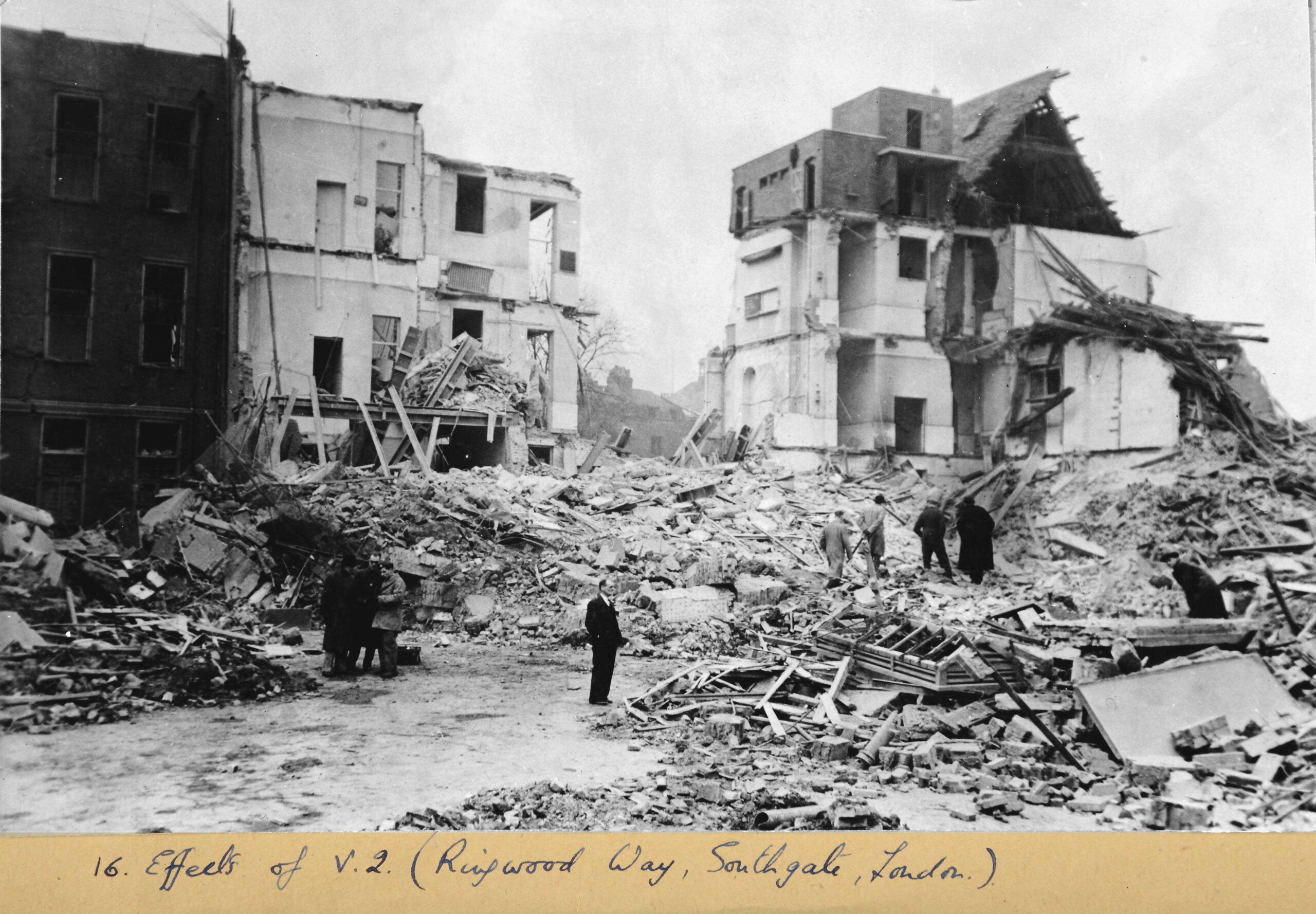
Photograph from 1944 called: ‘Effects of V2 (Ringwood Way, Southgate, London) Catalogue ref: HO 338/27
Try and read the caption. Use a map of London to find the location of the photograph if possible.
The ‘V2’ was a rocket, a long-distance weapon that could travel at the speed of sound. They were used by Germany against British towns and cities from 1943 during the Second World War.
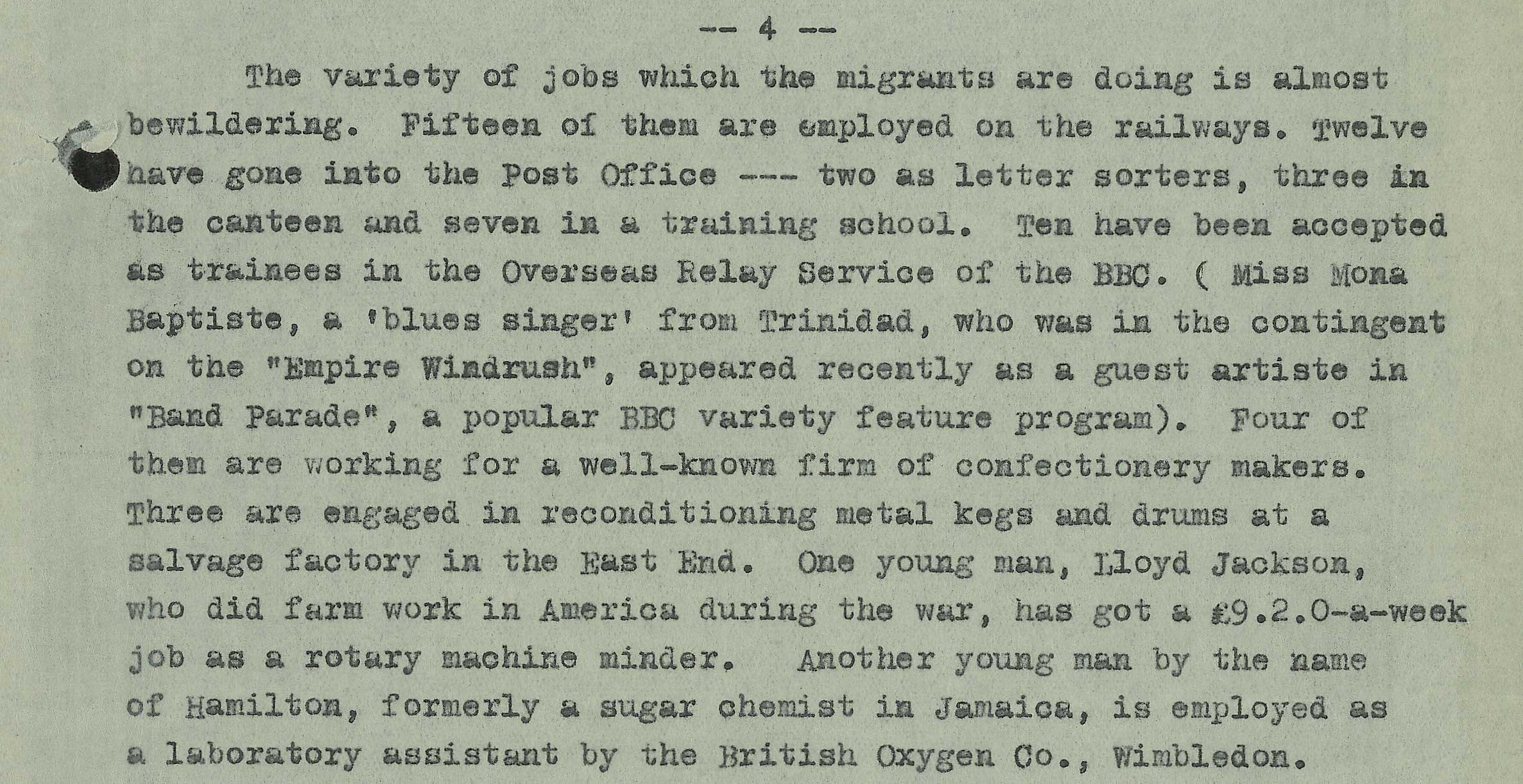
Extract from Report by Eric Walrond entitled ‘Negro migrants in Britain, 1947 December-1948 October, Catalogue ref: CO 876/88
Contains original language used at the time which is not appropriate today.
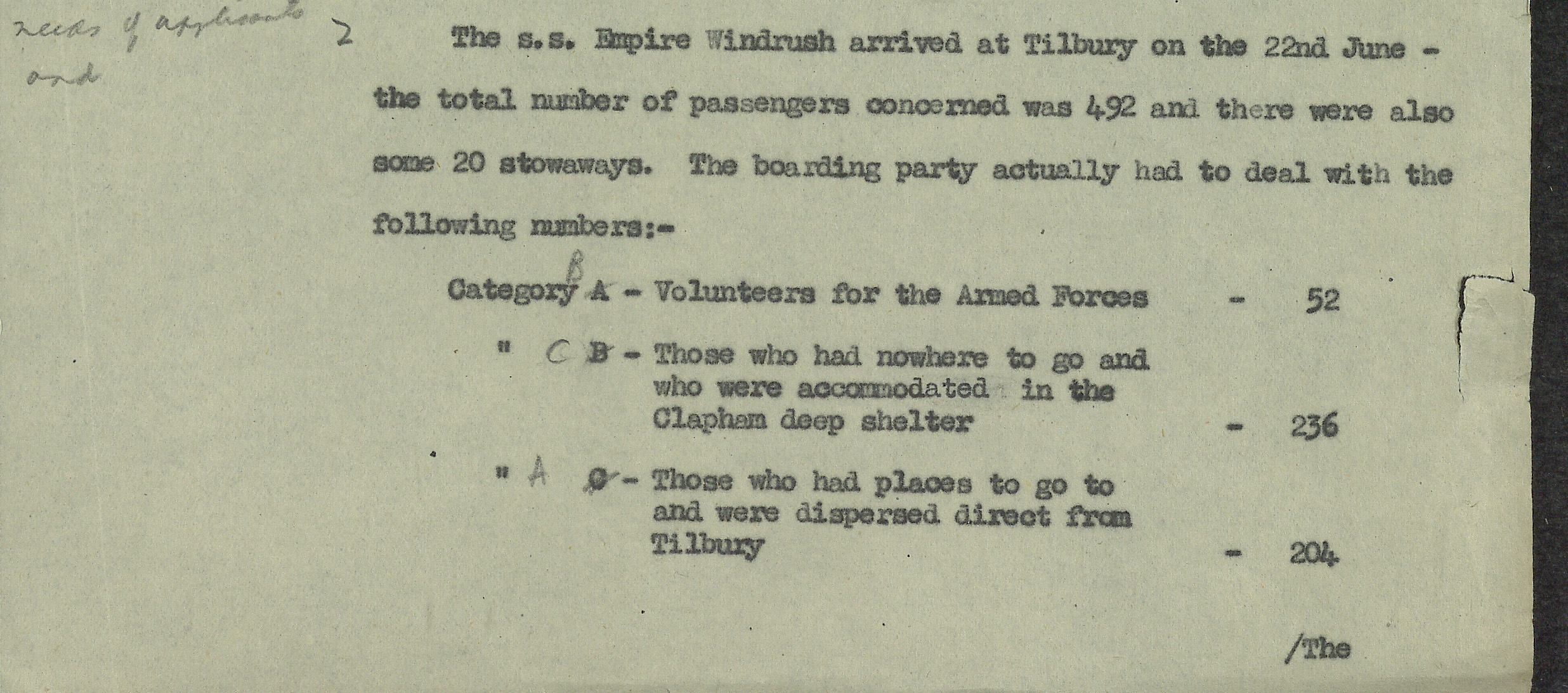
Extract from a Memorandum from the Assistance Board about arrangements for the Windrush passengers, including information about treatment of stowaways. 1948, Catalogue ref: AST 21/8
The rest of this document also tells us that the Ministry of Labour and National Service set up a small job centre in the shelter to help place people in work. With the publicity about the arrival of ‘Empire Windrush’, job offers came in from different employers. Some men got work at the Stanton Iron Works, Nottingham, British Railways Works, Swindon, Tin Plate Works at Neath in South-West Wales and in the catering trades around London. Of the 492 who came on the ship, 241 accepted the Colonial Office’s offer to help them find jobs and housing. The other 251 made their own arrangements on arrival.
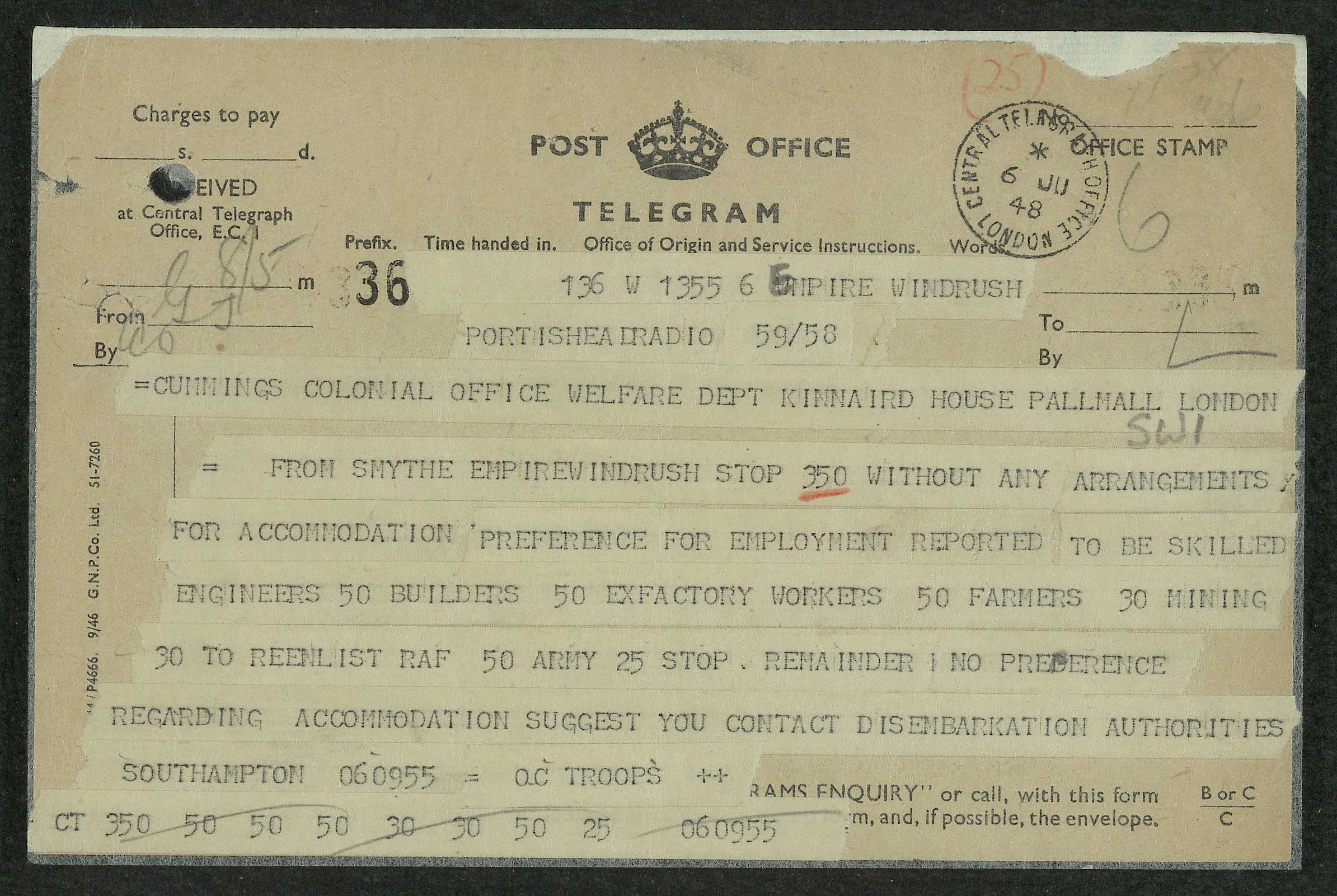
A telegram to Mr Cummings, Colonial Office in London, from Mr Smythe about passengers on the Windrush, 6 June 1948, Catalogue ref: CO 876/88
This telegram was sent on 6th June before the arrival of the Empire Windrush to share information about the passengers. Explain that a telegram is a message that is sent by electricity or radio and then printed and delivered to someone’s home or office. ‘STOP’ was used in the telegram to mean ‘full stop’ as the telegram lacked punctuation marks.
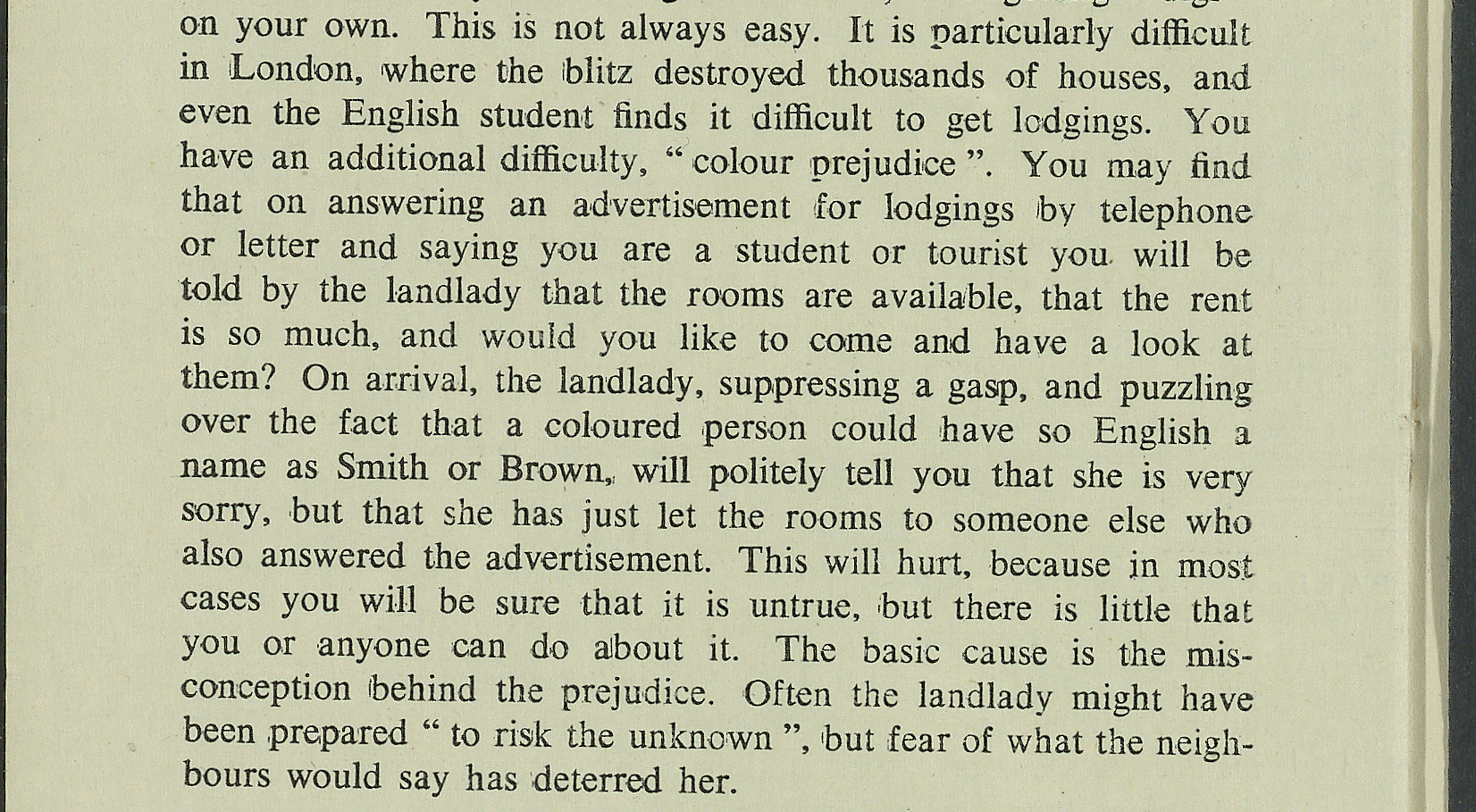
Extract from an information booklet written by H.D. Carberry and Dudley Thompson called ‘A West Indian in England.‘ Catalogue ref: CO 875/59/1
The booklet aimed to give immigrants information about life in Britain. It was distributed by the Colonial Office to colonies in the Caribbean, 1949-1951. This part describes the difficulties in finding accommodation.
Contains original language used at the time which is not appropriate today.
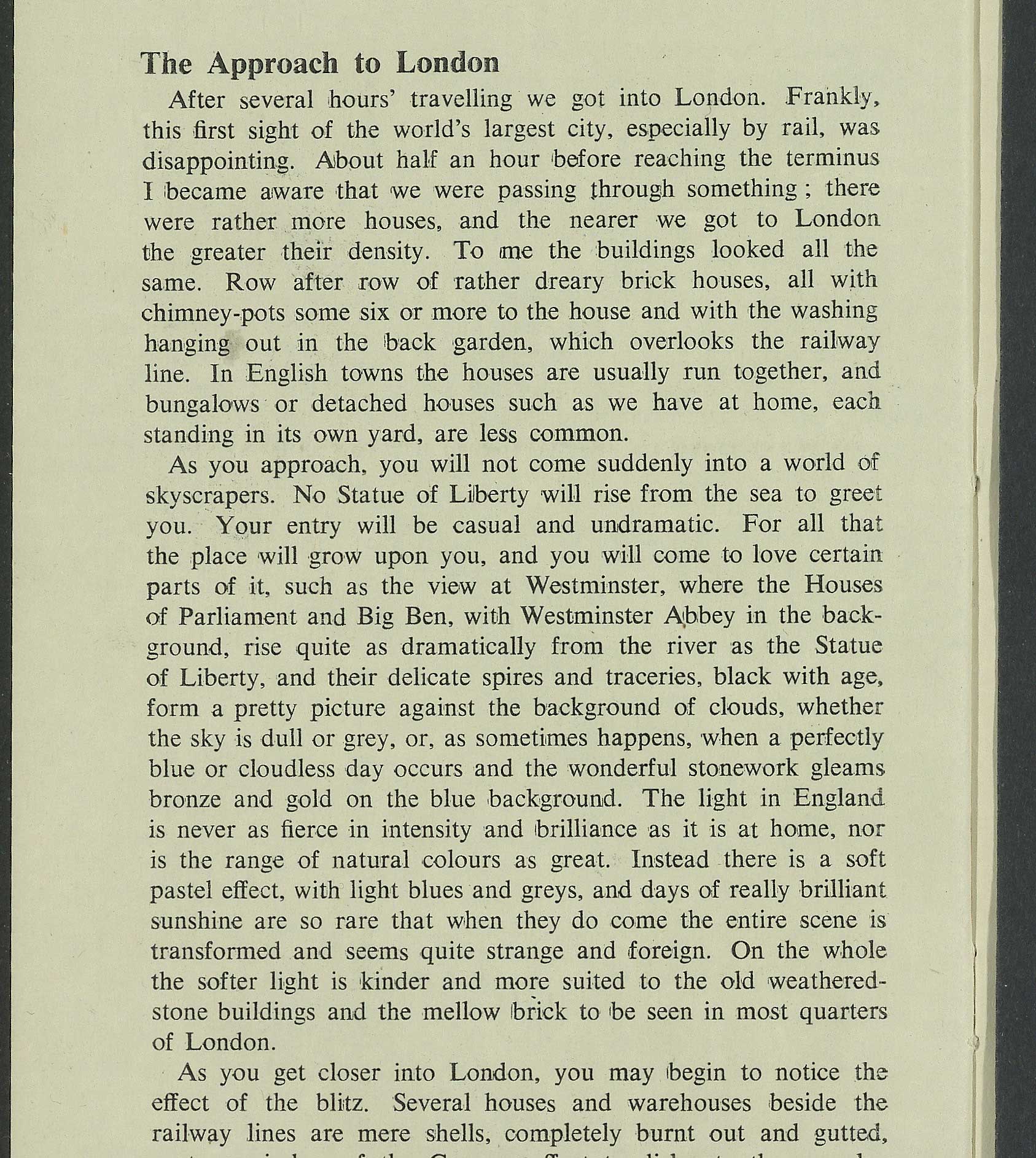
Extract from an information booklet written by H.D. Carberry and Dudley Thompson called ‘A West Indian in England’, Catalogue ref: CO 875/59/1
The booklet aimed to give immigrants information about life in Britain. It was distributed by the Colonial Office to colonies in the Caribbean, 1949-1951. This part describes the approach to London for those arriving in the country for the first time.
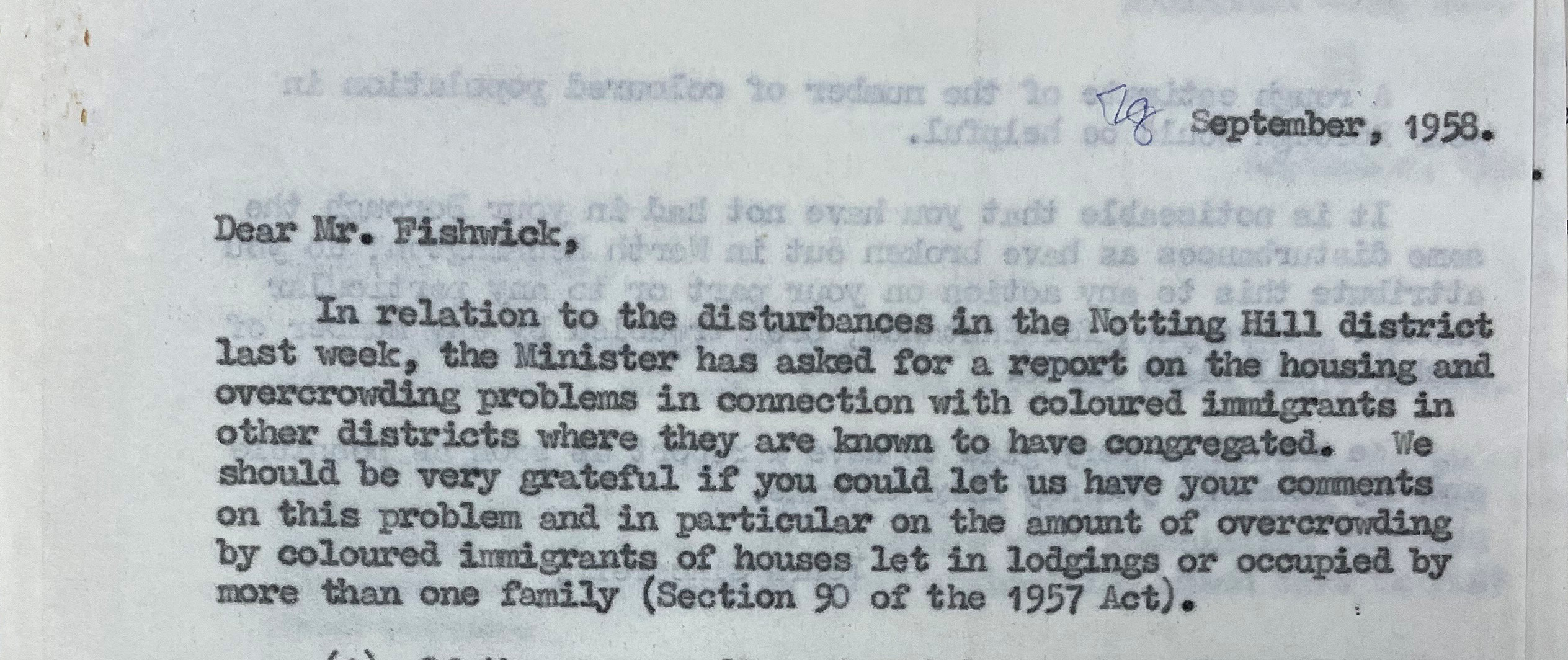
Extract from a letter sent to town halls in Islington, Paddington and Euston asking about their local housing problems, 28 September 1958, Catalogue ref: HLG 117/122
Contains original language used at the time which is not appropriate today.
For several nights at the end of August 1958, young white men known as ‘teddy boys’ attacked West Indian residents and their homes in Notting Hill, London. These disturbances became known as the Notting Hill riots.
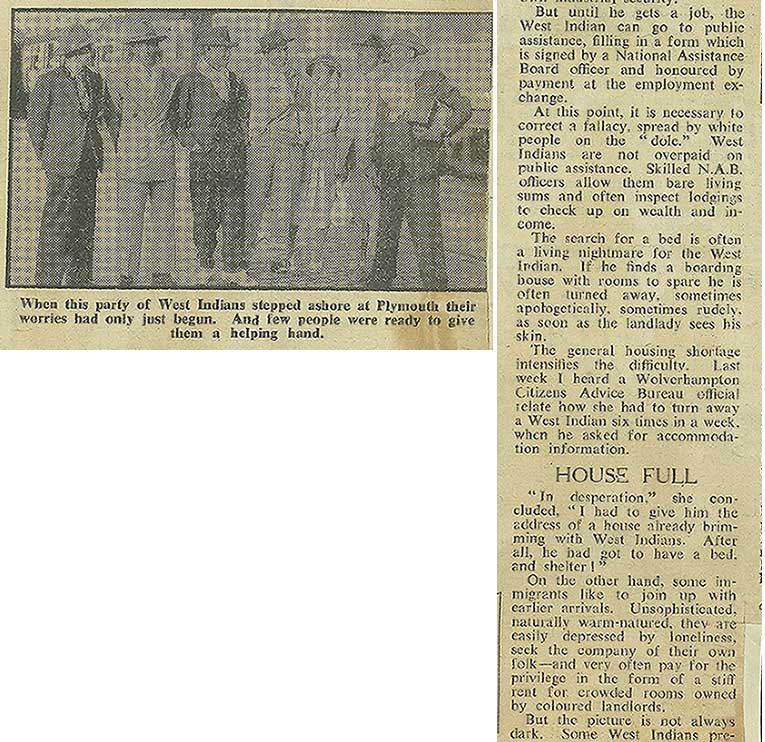
Newspaper story called ‘Little help here for the bewildered West Indian’ by John Baker from the ‘Express and Star’ [Wolverhampton] 9 August 1956 Catalogue ref: AST 7/1125
Contains original language used at the time which is not appropriate today.
Look at the photograph and caption (words below the photograph).
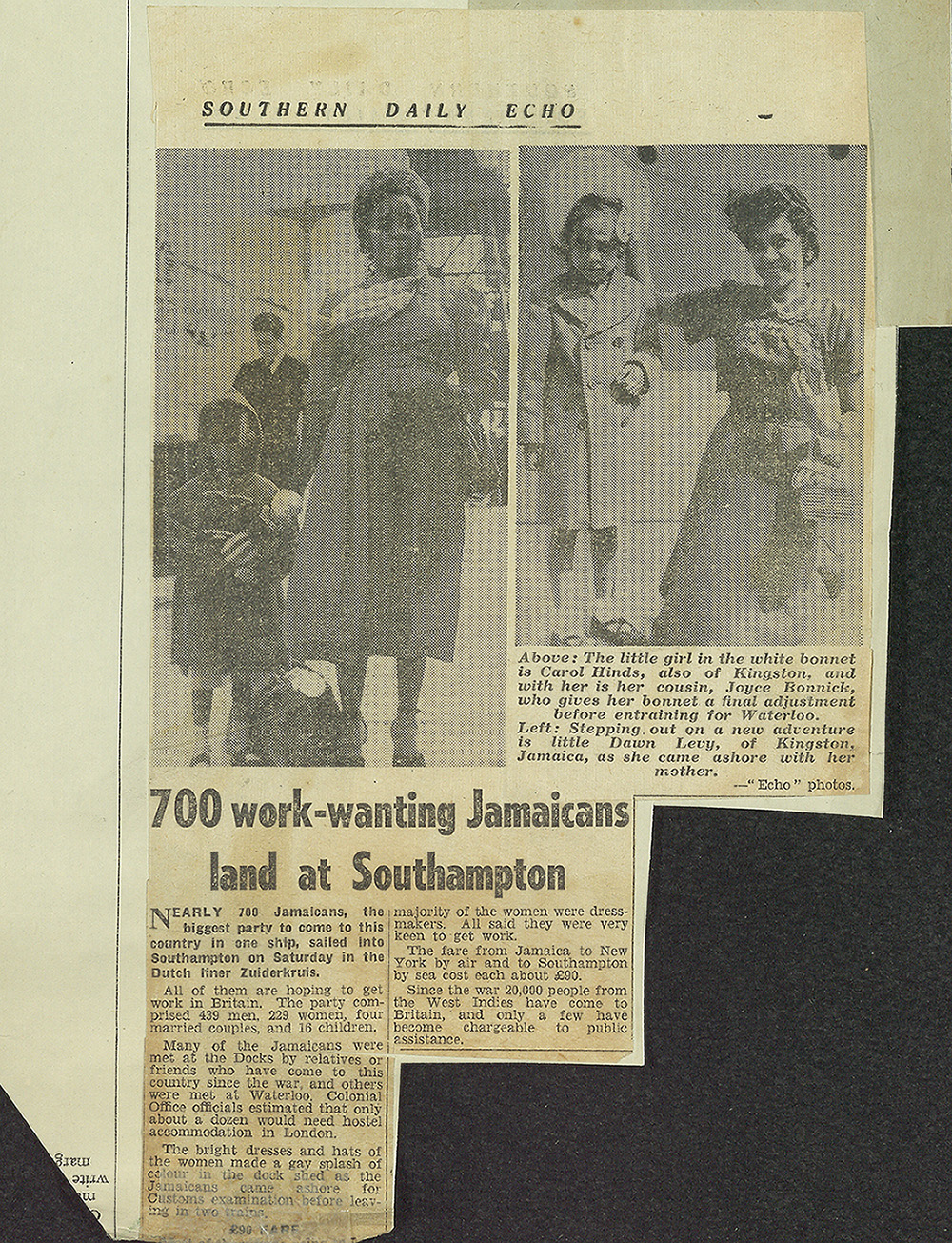
Newspaper story from the ‘Southern Daily Echo’ [Southampton] entitled ‘700 work- wanting Jamaicans arrive at Southampton’, 3 May 1954, Catalogue ref: AST 7/1125