


KB Series: Trial records related to the Gordon Riots of 1780. Catalogue Reference: KB8/79 and KB33/5/12.
We hope you enjoyed watching our Education Service video with Legal Records Specialist, Daniel Gosling looking at records relating to the Court of King’s Bench, which was the most senior criminal court for most of its existence. This video focusses on documents from 1780 concerning the Gordon Riots in London.
Now try and answer the following questions:
- What type of cases were heard by the Court of the King’s Bench?
- How did the King’s Bench also work as a court of appeal?
- How did the court get its name?
- What are the two other names used for this court?
- Explain the difference between the ‘files’ and the ‘rolls’ found in the King’s Bench collections.
- What does the letter ‘P’ stand for as seen on King’s bench rolls?
- In what language are the rolls written?
- How often did the King’s court sit in a year?
- What religious festivals were these sessions named after?
- How do the King’s Bench rolls differ from Chancery rolls?
- Which King’s Bench series recorded the most serious crimes of treason and rebellion?
- Why is this series named the ‘Bag of Secrets’?
Document 1
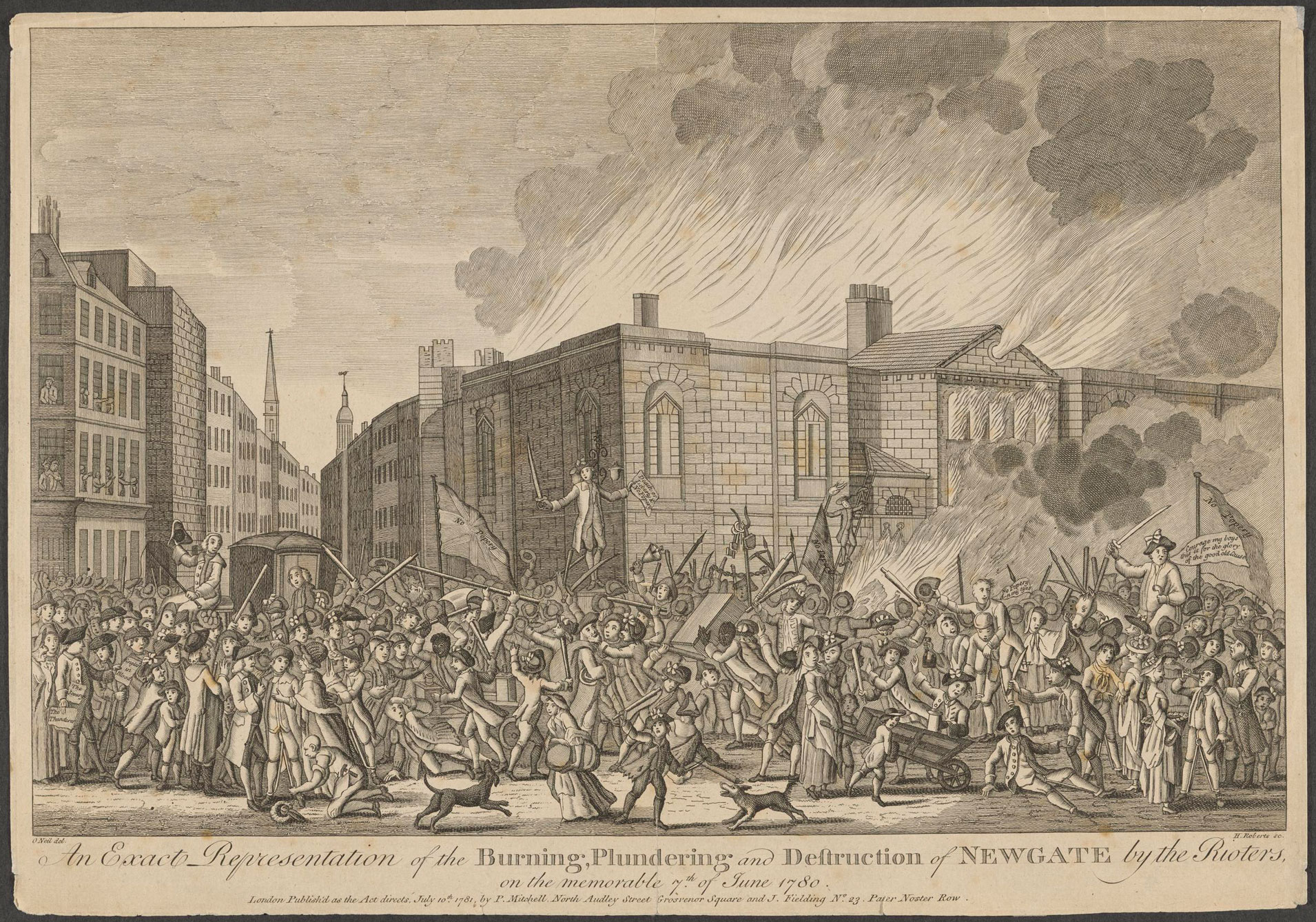
Etching entitled: ‘An exact representation of the Burning, Plundering and Destruction of NEWGATE by the rioters on the memorable 7th of June 1780 published July 10th, 1781, by P. Mitchell North Audely Street, Grosvenor Square and J. Fielding, 23 Pater Noster Row. Wikimedia commons © The Trustees of the British Museum.
The Gordon Riots broke out in London on 2 June 1780 triggered by resistance to the Catholic Relief Act of 1778. The act granted certain civil rights to Catholics. Lord George Gordon, leader of the Protestant Association joined by a large crowd marched to parliament to insist on its repeal and present a petition, later rejected by Parliament. Following this, rioters attacked and burnt Catholic churches, businesses, and homes. The riots continued for a week and government buildings and institutions were attacked and damaged including Newgate, Fleet, and King’s Bench prisons and their prisoners released. King George III called out troops to stop the riots. It is hard to give exact figures, but approximately three hundred people were shot dead, and many wounded. 450 people were arrested and at least twenty-five hanged. Lord George Gordon was tried and not found guilty of treason.
Take a close look at this image and identify the following:
- Newgate prison in flames.
- A man on a ladder holding a torch and a hammer.
- Three ‘No Popery’ flags.
- A man on horseback (on right) holding a sword, he is saying ‘Courage my boys this is for the glory of the good old Cause’.
- Released prisoners (on right) in irons who are talking and drinking with women.
- At the front (on left) a smith removing leg irons from a prisoner.
- In centre of the crowd a person of colour wields an axe, another holds a large box.
- On the left a man is holding three pamphlets: ‘England in Blood’, ‘The Scourge’, and ‘The Thunderer’ which were directed against the Government, the King, Lord Mansfield, Chief justice of the Court of King’s Bench (1756-1788.)
- A man stands on a platform holding a sword and a paper called ‘Death or Liberty & No Popery’.
- The keys of the prison held up on a pitchfork.
- A man with a handbell.
- A man (on left) sitting on the box-seat of a coach waving his hat.
- A woman wheeling a drunken man in a wheelbarrow.
- A released prisoner in irons sitting on a man’s shoulders, saying ‘No Popery d—m my eyes’.
- Men wearing ribbons in their hats, the blue ribbon of the Protestant Association.
Questions
- Can you briefly describe this scene?
- Why do you think this image was produced?
- How helpful is the caption in explaining its perspective?
- How are males and females portrayed in the crowd?
- Define the term ‘popery’. Why is this used in the speech bubbles and flags?
- What other sources would help us understand this topic?
- Find out more about the following:
(a) Protestant Association (b) Catholic Relief Act of 1778 (c) Lord George Gordon
Document 2
Extracts from ‘A Kalendar of the prisoners to be tried by a Special Commission’ on Riots’, 10 July 1780, held in the borough of Southwark, county of Surrey, Catalogue ref: KB 33/5/12.
This ‘Kalendar’ is one of the documents shown in the video which relates to the trial of Lord Gordon for treason. The ‘Kalendar’ gives information about people tried for their part in the Gordon Riots. There are 72 descriptions in the ‘Kalendar’. Seven examples are shown here. In some cases, prisoner details have been annotated to give the outcome of their trial as ‘convicted’ or ‘acquitted’.
Glossary for all extracts
Committed: The magistrates decided that there was sufficient evidence for a trial in court.
Charged on oath: A person was charged to be responsible for a crime by a person who had given evidence on oath that they had told the truth. The oath-taker would be prosecuted for the crime of perjury if they lied in a sworn statement spoken in a trial or given as written statement (deposition).
Stave: wooden post or plank.
Bludgeon: thick heavy stick used as weapon.
Feloniously: in an illegal manner, criminal activity that could be punishable by a prison sentence.
Riotously: in a loud and uncontrolled way.
Routously: as an assembly of people intent on committing an illegal act which would mean an offence of riot.
Watch house or cage: small type of prison where a person(s) was kept under guard under temporary arrest.
Breach of the peace: This happens when harm is done or likely to be done to a person or (in their presence) to their property, or when a person is in fear of being harmed through an assault or disturbance.
Extract 2a
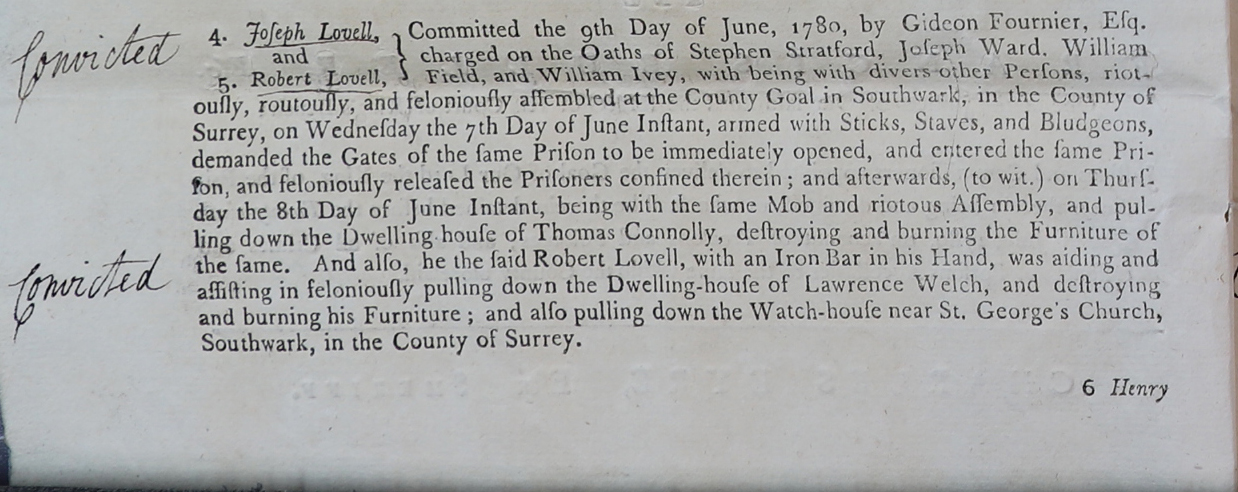
Transcript
Convicted
4. Joseph Lovell and 5. Robert Lovell Committed 9th of June 1780 by Gideon Fournier, [Esquire] charged on the Oaths of Stephen Stratford, Joseph Ward, William Field and William Ivey, with being divers [various] other Persons, riotously, routously and feloniously assembled at the County Goal in Southwark, in the County of Surrey, on Wednesday the day 7th of June Instant [last], armed with Sticks, Staves, and Bludgeons, demanded the Gates of the same Prison to be immediately opened, and entered the same Prison, and feloniously released the Prisoners confined; and afterwards (to wit.) on Thursday the 8th Day of June Instant, being with the same Mob and riotous Assembly, and pulling down the Dwelling house of Thomas Connolly, destroying and burning the Furniture of the same. And also, he, the said Robert Lovell, with an Iron Bar in his hand, was aiding and assisting in feloniously pulling down the Dwelling-house of Lawrence Welch and destroying and burning his Furniture; and also pulling down the Watch-house near St George’s Church, Southwark, in the county of Surrey.
- What is the purpose of the document extract?
- For what crimes are (a) James Lovell (b) Robert Lovell convicted?
- Can you conclude anything from their names? Give you reasons.
- What does the extract infer about the Gordon riots?
- What does this extract reveal about the justice system at the time?
- What does it reveal about the government response to the Gordon riots? [Clue see document caption.]
Extract 2b
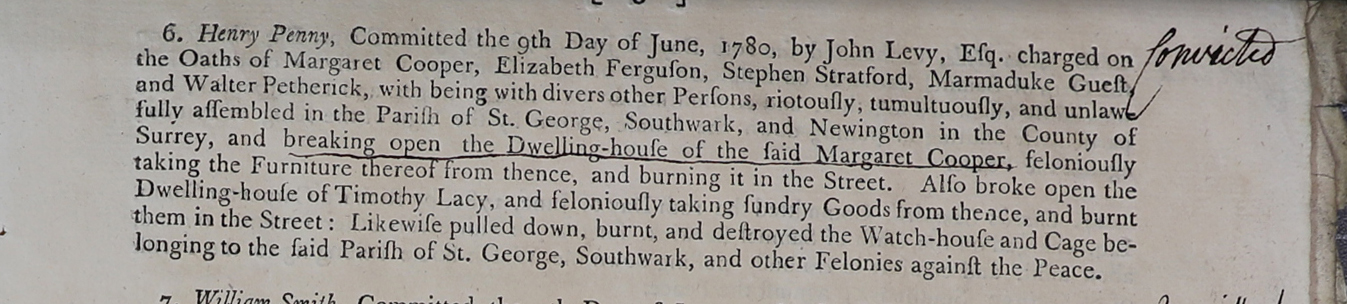
Transcript
Convicted
6. Henry Penny, Committed the 9th Day of June, by John Levy, Esq. charged on the Oaths of Margaret Cooper, Elizabeth Ferguson, Stephen Stratford, Marmaduke Guest and Walter Petherick, with being with divers other Persons, riotously, tumultuously [full of confusion/or noise] and unlawfully assembled in the Parish of St. George, Southwark, and Newington in the County of Surrey, and breaking open the Dwelling-house of the said Margaret Cooper, feloniously taking the furniture thereof from thence, and burning it in the street. Also broke open the Dwelling-house of Timothy Lacy, and feloniously taking sundry Goods from thence, and burnt them in the street: Likewise pulled down, burnt, and destroyed the Watch-house and Cage belonging to the said Parish of St George, Southwark, and other felonies against the Peace.
- For what crimes has Henry Penny been convicted?
- How many people were charged on oath to give testimony in his case?
- Why do you think according to this extract, and extract 2a, the crowd also attacked ‘the Watch-House’ in the Parish of St George?
Extract 2c

Transcript
8. Thomas Greham, Committed the 9th of June 1780, by Gideon Fournier, Esq. charged on the Oath of Margaret, the Wife of Robert Chaffers, entered the Dwelling-house of the said Robert, in the Parish of St Olave, in the County of Surrey, Yesterday, after the Riot at the Dwelling-house of Thomas Connolly, demanded of her some Liquor, and her saying she had none in the House, he immediately replied damn you, your House shall be down in less than two hours, to the great Terror of the said Margaret, and in the Breach of the Peace.
- How does this conviction differ from those described in extracts 2a & 2b?
- What does the extract infer about the victim of these events?
- What does this extract infer about the Gordon Riots?
- What is meant by the term ‘in Breach of the Peace’ [Clue: see Glossary]
Extract 2d
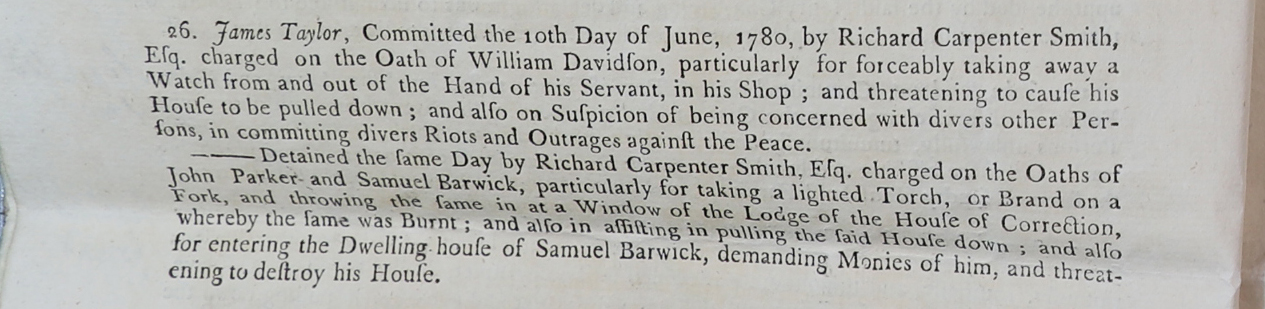
Transcript
26. James Taylor, Committed the 10th Day of June, 1780 by Richard Carpenter Smith, Esq. Charged on the Oath of William Davidson, particularly for forcibly taking away a Watch from out of the Hand of his Servant, in his Shop, and threatening to cause his House to pulled down; and also on Suspicion of being concerned with divers other Persons, in committing divers Riots and Outrages against the Peace.
—– Detained the same Day by Richard Carpenter Smith Esq. charged on the Oath of John Parker and Samuel Barwick, particularly for taking a lighted Torch, or Brand on a Fork and throwing the same in at a Window of the Lodge of the House of Correction whereby the same was burnt and also in the assisting in the pulling the said House down and also for entering the Dwelling house of Samuel Barwick demanding Monies of him and threatening to destroy his House.
- How many crimes was John Taylor committed for?
- What does this extract possibly infer about the causes of crime?
- There is no note to say if Taylor was convicted, as in extracts 2a & 2b. Do you think it was likely he was convicted? Explain your reasons.
Extract 2e

Transcript
Acquitted
49. Edward Richardson, committed the Day of 17th June by Herbert Thomas and Gideon Fournier, Esquires, charged on the Oaths of Andrew Boror, and William Rose with being with divers other Person riotuously, routously and tumultuously assembled in Order to be adding and abetting to each other, in felonious burning the King’s Bench Prison, and discharging Prisoners therein.
- What crime was Edward Richardson committed for?
- Why do you think he was acquitted (not found guilty)?
- Why do you think the King’s Bench Prison was attacked and prisoners released during the Gordon Riots?
Extract 2f

Transcript
Not Guilty consent
51. Sarah Harwell and 52. Elizabeth Harwell Committed 19th June , 1780 by Samuel Gillam and Herbert Thomas Esquires charged on the Oaths of Elizabeth Currie, Thomas Valance, Robert Davies, and Ann Hunter, with exciting and abetting a certain numerous and unlawful Assembly of People, in East-Lane on the seventh Day of this Instant, feloniously to pull down the Dwelling-house of the said Elizabeth, whereby some of her windows was broke and other ills against the Peace.
- What crimes were Sarah Harwell and Elizabeth Harwell charged with?
- What seems to be the verdict on this case written next to the description?
- Can you conclude anything from their names? Give you reasons.
- What does this extract infer about the Gordon Riots?
Extract 2g

Transcript
Acquitted (Mann committed for perjury)
68. Robert Barks, Committed the 30th Day of June 1780, by John Evans charged on the Oath of Jonathan Mann, for that he, together with divers other Persons, were unlawfully assembled together at the King’s Bench Prison, and was there aiding and assisting in the late Riot, which Prison was soon after burnt down and destroyed.
- What was Robert Barks charged with?
- Why was Jonathan Mann charged with perjury? [Clue: see glossary]
- How does this explain why Robert Barks was acquitted (found not guilty)?
- Can you explain if extracts 2a- 2g support information inferred in the image, Document 1.
- What do extracts 2a- 2g infer about crime and punishment in the Eighteenth Century?
Connections to Curriculum
Key stage 5
OCR GCE: Making of Georgian Britian: Social and economic developments c.1700–1780: Gordon Riots
Key stage 4
OCR GCSE: History Crime and punishment, c.1250 to present
Edexcel GCSE History Crime and punishment in Britain, c1000–present
Key stage 3
Ideas, political power, industry, and empire: Britain, 1745-1901
External links
Royal Proclamation 1780 for the Suppression of the Gordon Riots
London lives 1690-1800 find more archival sources and datasets.
Ignatius Sancho describes the Gordon Riots in 1780.
Barnaby Rudge: ‘A Tale of the Riots of Eighty’ (known as Barnaby Rudge) is a historical novel by Charles Dickens set in the time of the Gordon Riots. Read it online.
A National Archives Blog about the series known as the Bag of Secrets’.
Related Resources
https://www.nationalarchives.gov.uk/education/resources/georgian-britain-age-modernity/
https://www.nationalarchives.gov.uk/education/resources/crime-punishment/
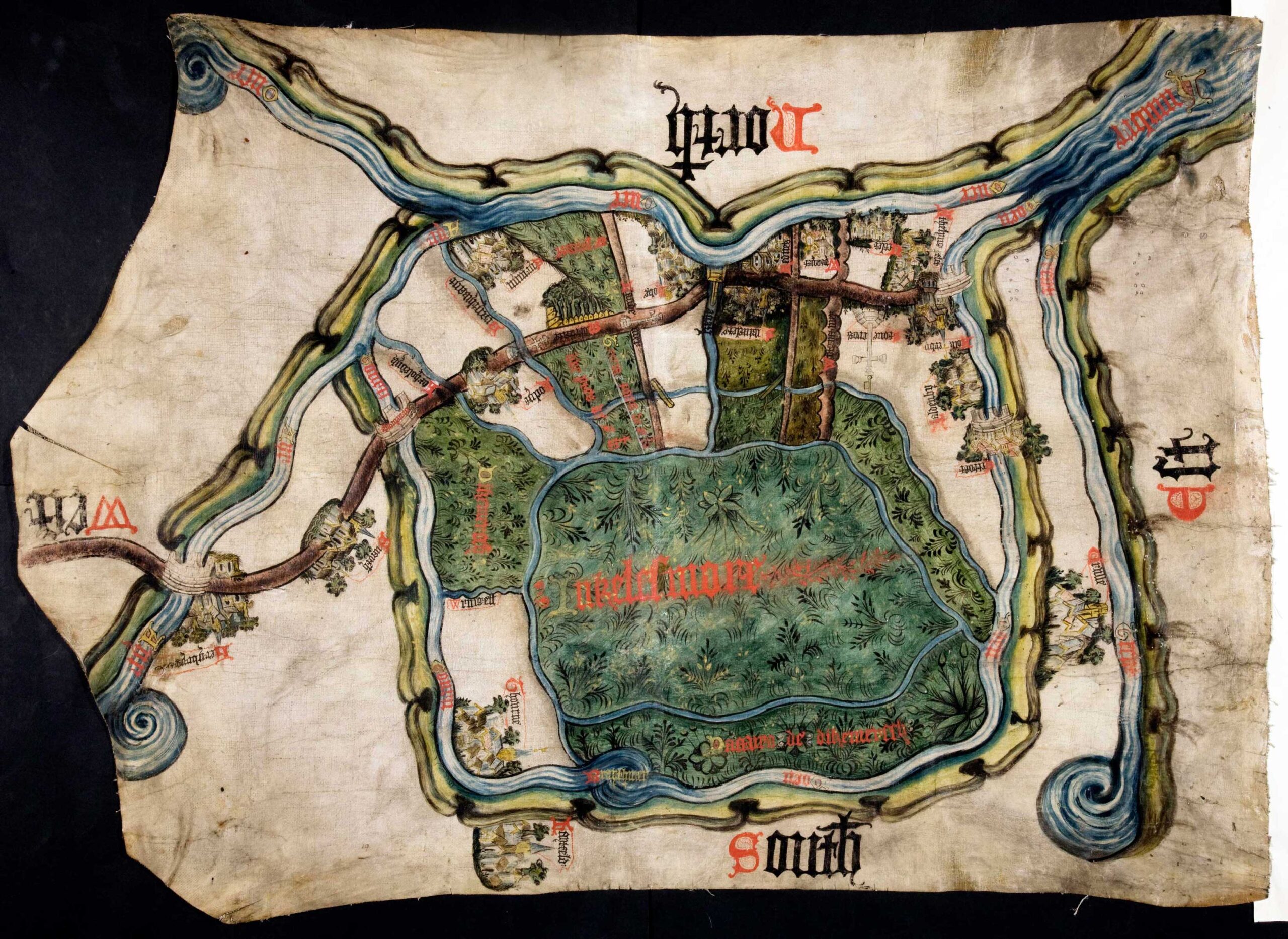
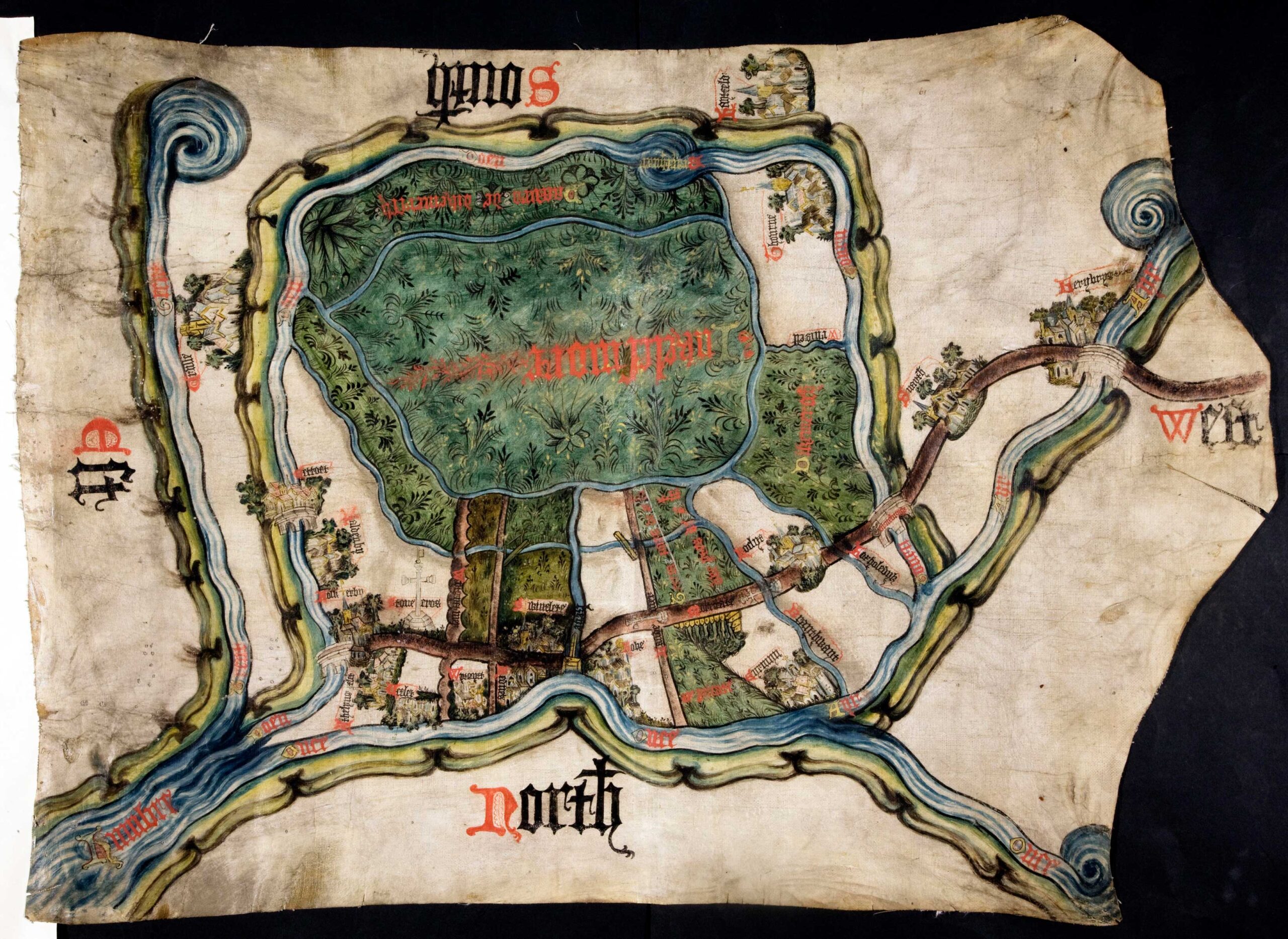
This document is a map from 1407 and records a final agreement in a long-running land dispute between the Duchy of Lancaster, a powerful land-owning family and the abbot of St Mary’s Abbey in York. Catalogue ref: MPC 1/56.
The dispute concerned whom had the right to cut peat to sell for fuel and use different areas of the moor.
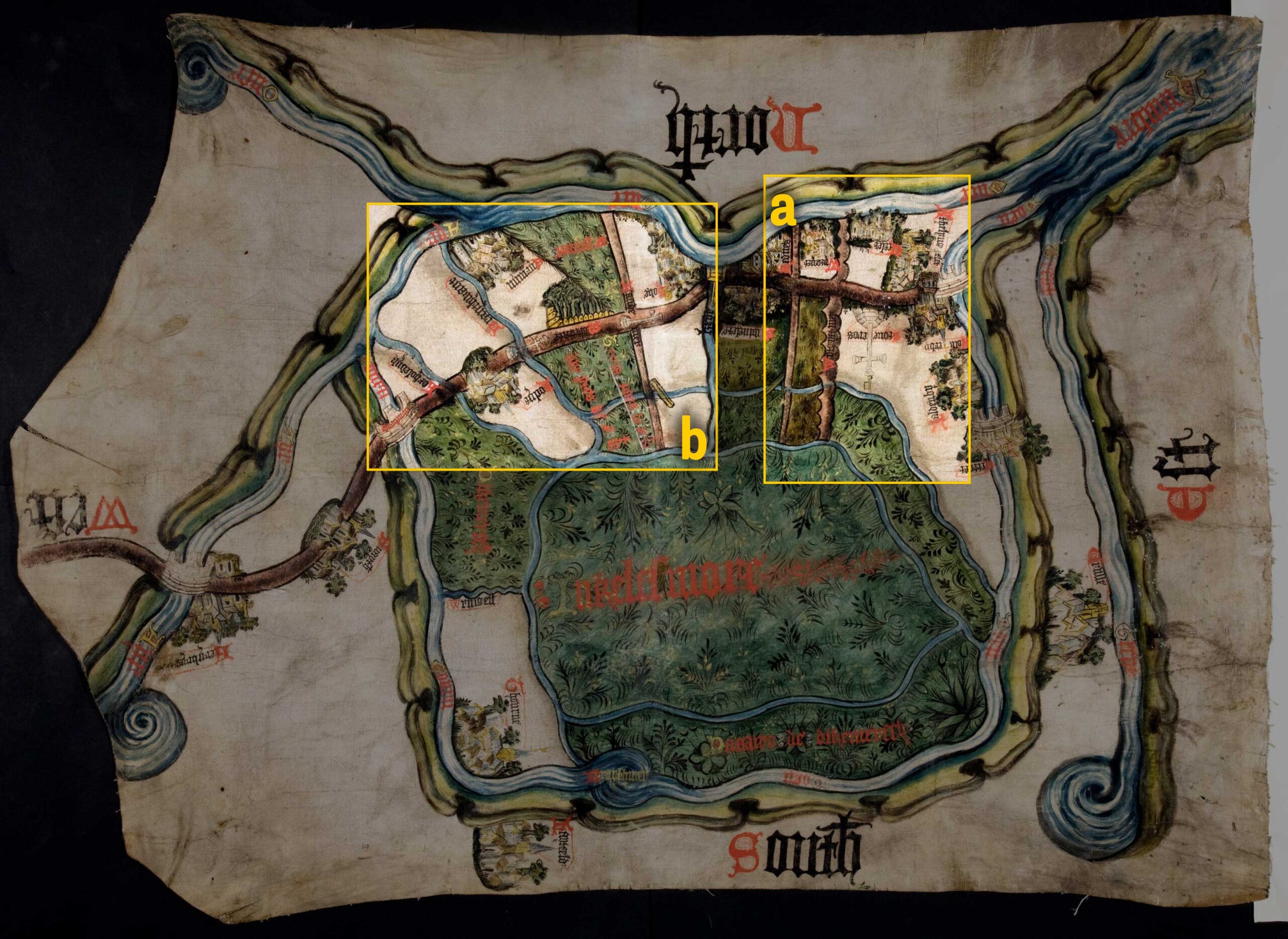
The map was meant to be put on a table so the people involved in the argument could see it. That’s why the words North, South, East and West are written in different directions. In the middle of the map in red it says ‘Inclesmore’, which was the old name for this piece of land. The large stone cross drawn on the map and labelled ‘Stone cros’ (a) is to mark the edge of the land that the abbey was allowed to keep sheep on. The two small stone crosses on the left side of the map (b) drawn on the path mark the land that the abbot and the Duchy shared to cut peat in. The section of land between these two crosses was split into one-third for the Duchy and two-thirds for the abbey. The National Archives also has a simplified version of the map, which was copied into the Duchy’s book of agreements alongside the relevant court cases in case arguments broke out again.
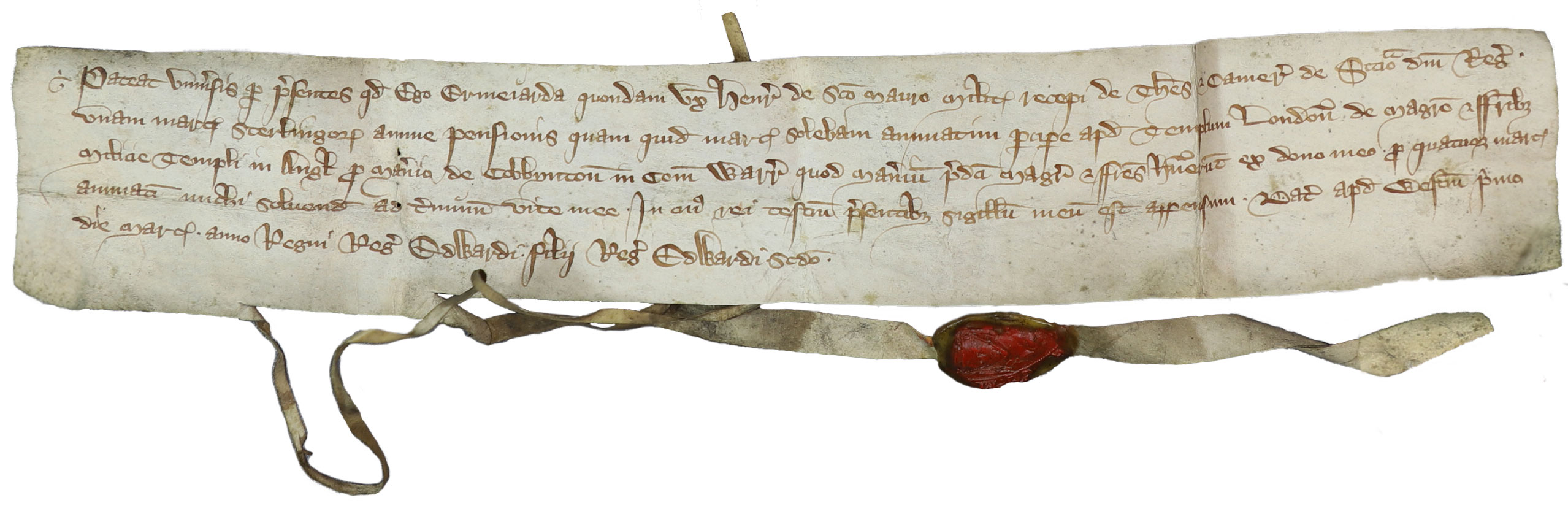
This document is a receipt from a woman called Ermengarda given to the treasury. Catalogue ref: E 42/78
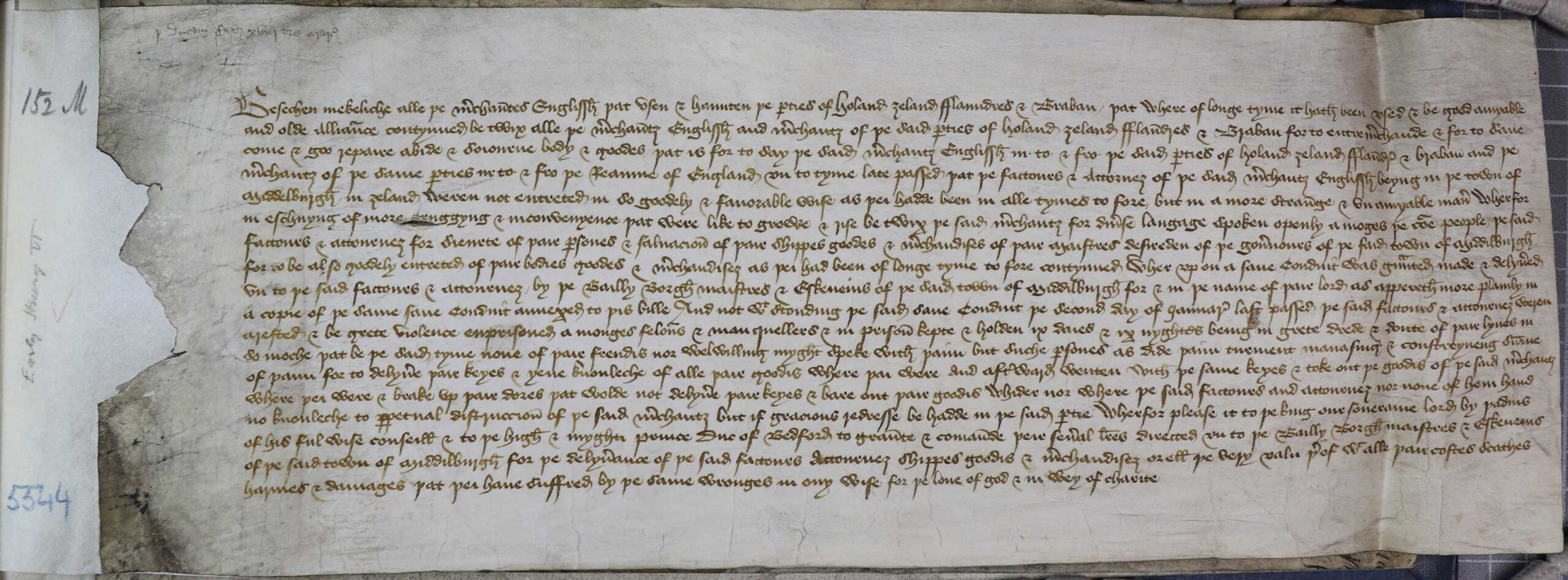
This is a petition from English merchants to the king, about a disagreement over trade in Middelburg in the Netherlands. It was sent in 1426. Catalogue ref: SC 8/126/6265.
The English merchants ask the King to send letters to the officials of Middelburg to return goods taken from certain merchants. They say that although relations between the merchants and the authorities were good, recently some merchants have been badly treated. Therefore, they asked for letters of safe conduct from the authorities of Middelburg. These letters were given but certain merchants were still arrested and imprisoned. They were forced to hand over their keys and goods.
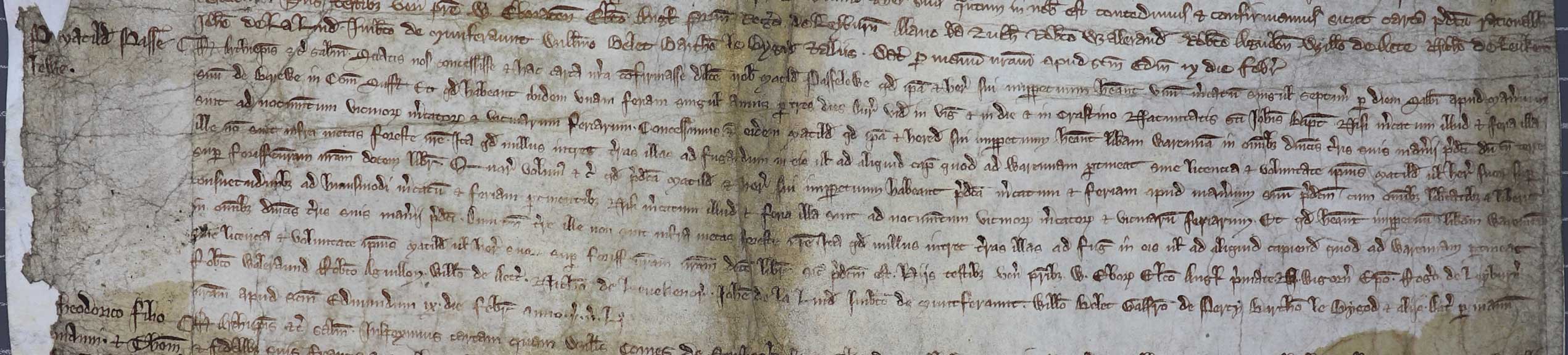
This document is a charter from 9 February 1267. It was from King Henry III to Matilda Passelewe. A charter is a document that the king uses to give rights to someone, so it is a record of an agreement between the king and someone else. Catalogue ref: C53/56 m. 8

This is a document from 1291 about a court case between the people of Grimsby, a town on the River Humber, and the people of Ravenser Odd, a medieval island in the Humber that has since disappeared. It records the argument that they had and how the court case resolves it. Catalogue ref: KB 27/129.
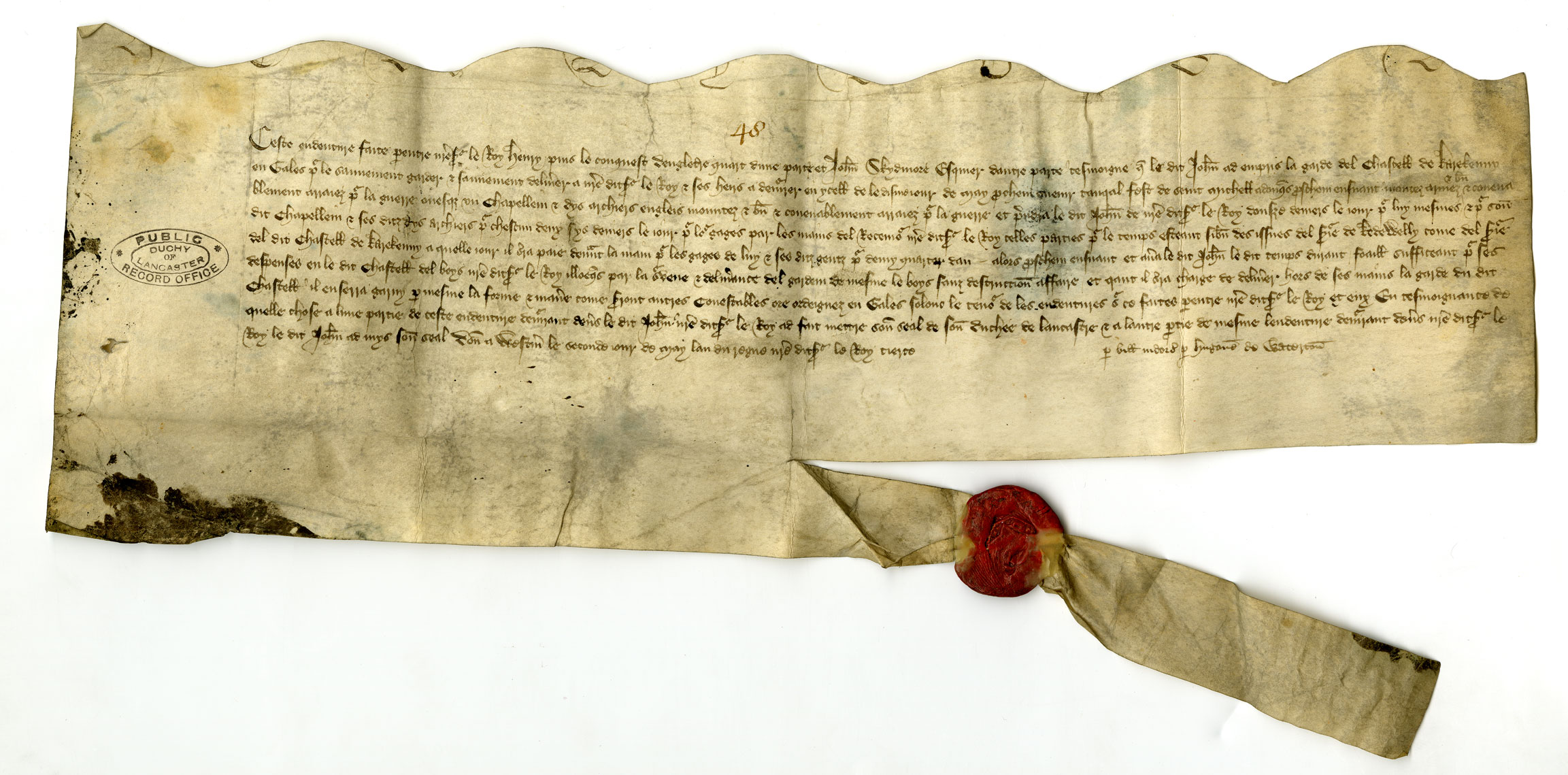
Just like today, people had arguments in the Middle Ages about money, trading rights and land ownership. There are many documents at The National Archives that record these disagreements and the ways used to resolve them. Some of these documents concern the rich and powerful, but others show what ordinary people argued about and how they tried to settle matters. Use the different documents in this lesson to explore how people managed their relationships with each other and settle their disputes.
What do medieval documents reveal about people’s agreements and disagreements in the Middle Ages?In the Middle Ages there were many ways to solve arguments between people and record agreements that people made between themselves. The collections at The National Archives are a particularly good place to look for these kinds of documents because we have central records of government and court cases.
At that time the government was made up of the monarch (a king or queen) and their council, who advised them on important matters. The two important departments in the king’s household were the Exchequer (which managed the money) and the Chancery (which wrote the king’s documents and issued orders in his name). The Exchequer controlled the government’s money and was in charge of taxation. It also recorded payments made to and from the royal household. The Chancery produced charters (granting land or status) and writs, which called people to come to court. As well as these two offices there was also a central criminal court that heard more serious crimes, called the Court of King’s Bench.
People outside the royal household would encounter these offices in different ways. If the king granted a charter to a town or person, then there would be a record of the charter kept in the Charter Rolls at the Chancery. If a person got a payment from the Treasury, they might need to give the Exchequer a receipt for that payment. If there was an argument that could not be resolved between two people, one of them might take the other one to court and there would be a record of the court case in the plea rolls of the King’s Bench.
If someone, or a group of people, wanted to ask the king for something they would send a petition that would be considered by the king and often by parliament. They are often a complaint about something specific like someone taking someone else’s property and a request for the king to intervene. Sometimes the king intervened personally, but often the people who petitioned were told to take the case to court. These petitions are a way for us to find out about people’s problems in the Middle Ages, because they came directly from the group of people who were complaining.
Rather than use a year date as we might expect (March 1st, 1309), most medieval documents are dated using the year of the king’s reign or regnal year (March 1st, the second year of King Edward II’s reign). The majority of the documents are in Latin, the language of documents and the law for the majority of the Middle Ages in England, but some are in English (the map in this lesson is in both languages!). All of the documents are written on parchment, the skin of an animal (normally either sheep or cows, though we do have some goat and deer in the collection). There is evidence of paper in England from the early 1300s, but it is not commonly used in England until the sixteenth century.