
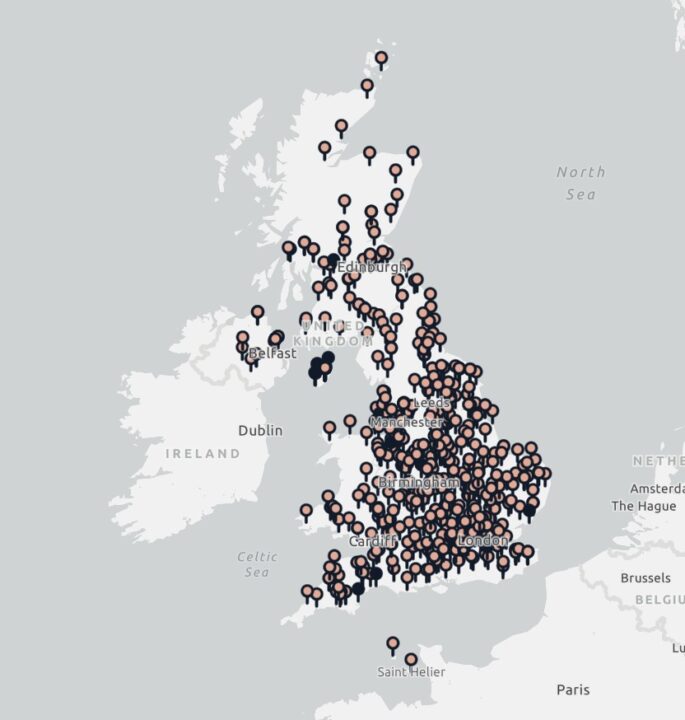
 Explore our map of Prisoner of War & internment camps across the British Isles
When numbers were at their highest, over half a million German and Italian POWs were held in hundreds of camps across the United Kingdom, while many more were transported to other Allied nations.
This map shows the locations of POW and internment camps around the UK and Isle of Man in the 20th Century. It was created alongside our new exhibition, Great Escapes.
Discover the history of your area or explore the stories of camps featured in our new exhibition ‘Great Escapes.’
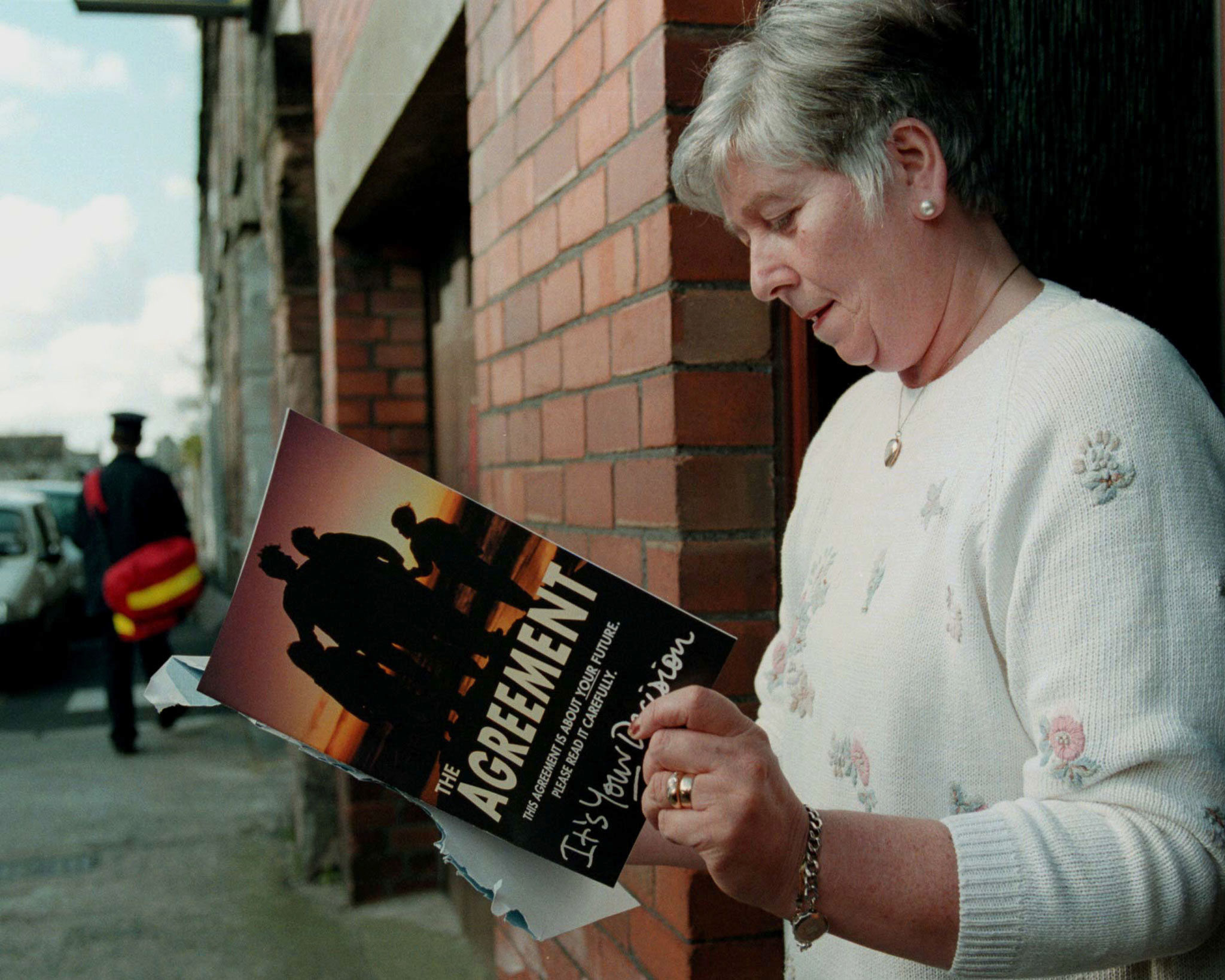
The resources on this page have been designed for different levels. Please note, the transcripts of the resources retain any typographical errors included in the original documents.
Key Stage ThreeKey Stage FourKey Stage Five
They are designed to complement our short film and assembly pack ‘From Conflict to Peace – 25 Years On.’ This 7-minute video gives an overview of the conflict and the peace process that brought it to an end, plus details about what the Agreement did and the results of it. This can be used as part of an assembly presentation which should take around 15-20 minutes depending on the amount of time allowed for discussion at the beginning about what students know already about Northern Ireland and the Agreement.
Key Stage Three:
The Road to the Belfast Good Friday Agreement

Why was it so difficult to make peace?
- Explore two key moments on the road towards the Belfast (Good Friday) Agreement.
- Learn about why it was so difficult to make peace.
- Use contemporary documents to deepen your understanding.
72 Hours to the Belfast Good Friday Agreement
 How was peace achieved in the final 72 hours of negotiations?
- Know what barriers stood in the way of an agreement, 7-10 April 1998.
- Understand how the Belfast (Good Friday) Agreement was finally achieved.
- Use contemporary documents to deepen your understanding.
Key Stage Four:
The Belfast Good Friday Agreement
 What was the significance of the Belfast (Good Friday) Agreement? How can we use the documents as evidence to one of more of the lines of argument?
- Explore the significance of the Belfast (Good Friday) Agreement of 1998.
- Examine how historians use sources to develop a line of argument.
- Develop your own line of argument based on your learning.
Downing Street Declaration
 What was the significance of the Downing Street Declaration?
- Explore the significance of the Downing Street Declaration.
- Examine how historians use sources to develop a line of argument.
- Develop your own line of argument based on your learning.
Key Stage Five:
What led to the Belfast Good Friday Agreement
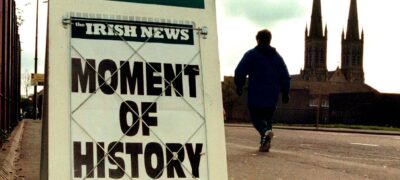 What was the most important factor which led to the achievement of the Belfast (Good Friday) Agreement?
- Explore what role the key figures in the peace process played?
- Consider if it is possible to argue that there was one key figure or group?
- Explore interpretations from historians
- Test interpretations against historical evidence
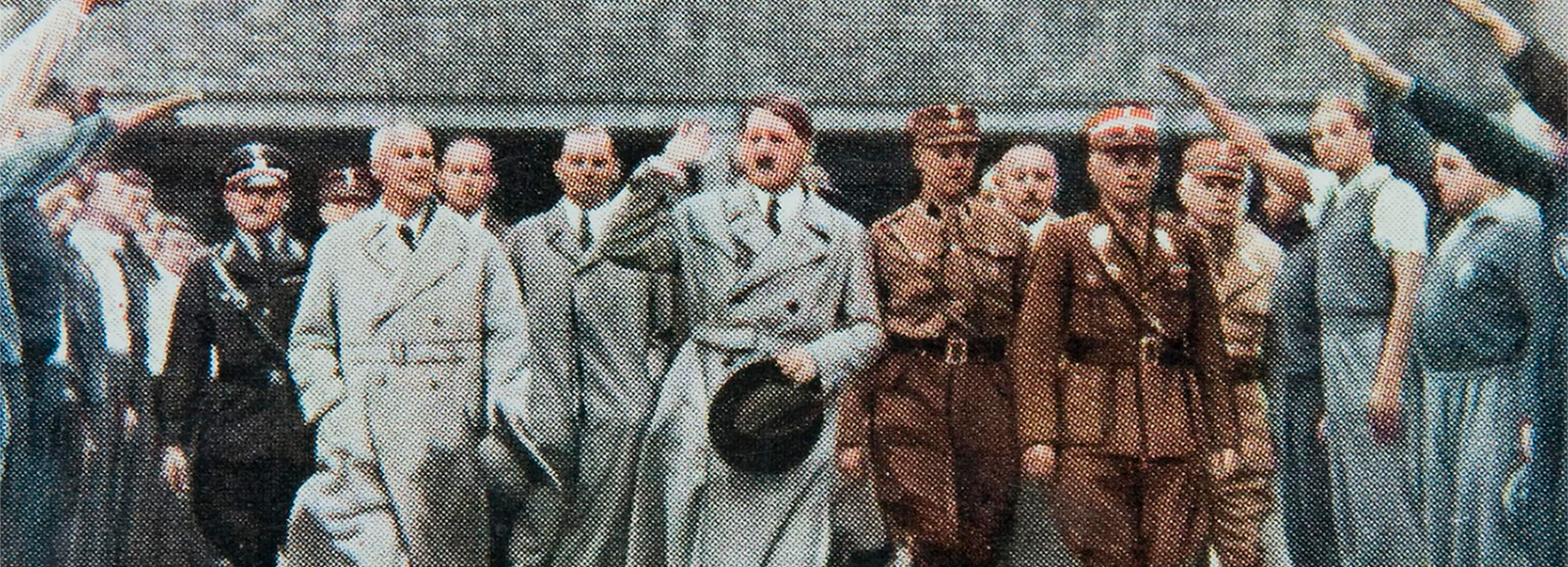
How much do you know about Adolf Hitler and the rise of Nazism in Germany?
Learn about this topic in our educational videos and learning resources:
How much do you know about the Suffragettes and women’s right to vote?
Learn about this topic in our educational videos and learning resources:

How much do you know about these historical figures?
In this quiz, you’ll encounter six illustrated portraits of significant individuals throughout history, illustrated by Fiona McDonnell. Figure our who each figure is and then answer some questions about them!
Learn about this topic in our educational videos and learning resources:
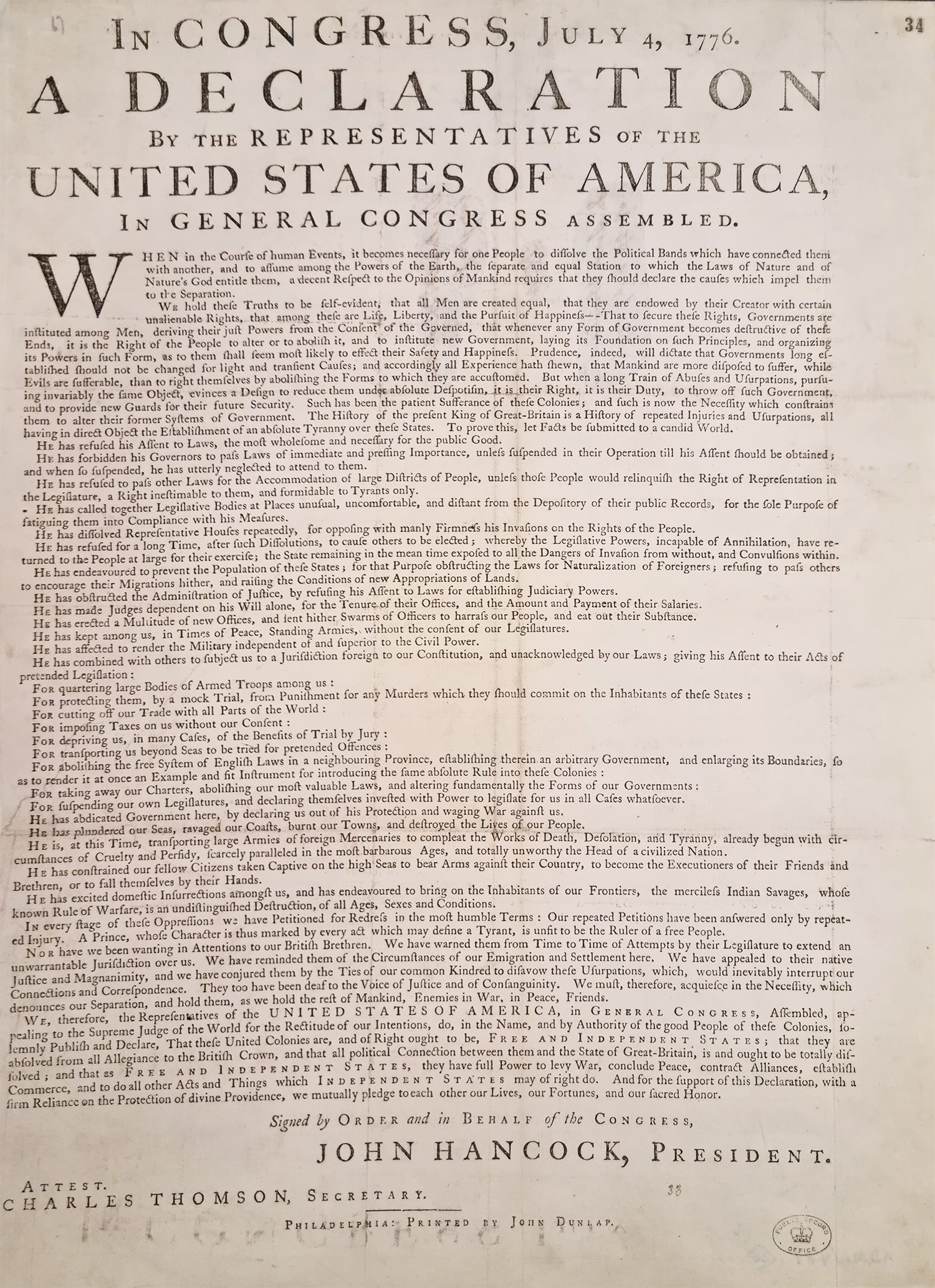
Declaration of Independence, 1776, Catalogue ref: EXT 9/1.
A Declaration by the Representatives of the United States of America in General Congress Assembled. One of the Dunlap Broadsides printed on the night of 4 July 1776. In this document George III is referred to as a traitor and the American colonies declare their independence from Britain.
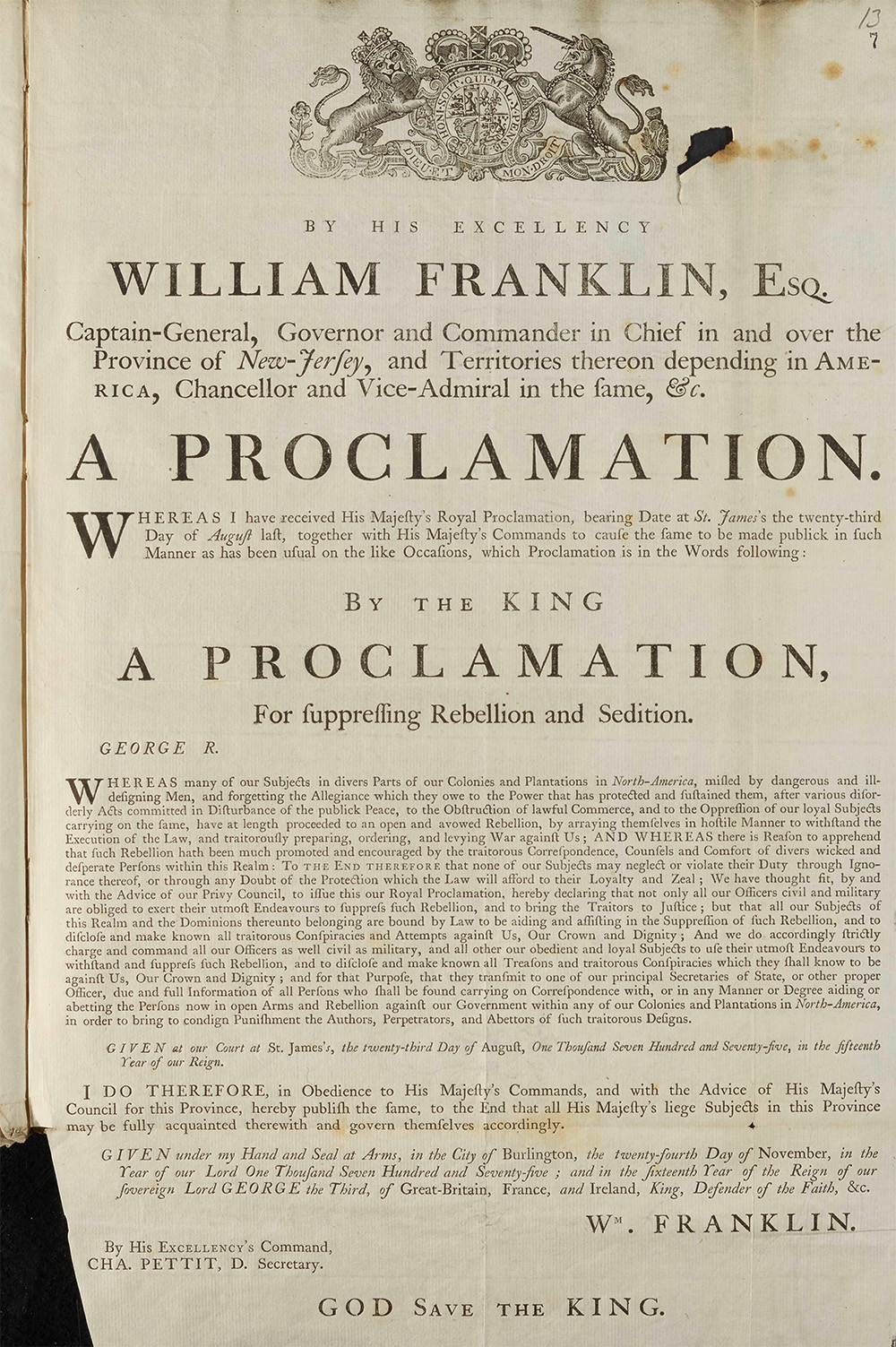
Proclamation for Suppressing Rebellion 1775, Catalogue ref: CO 5/993 f.7.
In this document, King George III referred to the American colonists as traitors. The proclamation was printed and distributed by William Franklin, the Colonial Governor of New Jersey (1763–1776), a Loyalist during American Revolutionary War. Benjamin Franklin, his father, however, became one of the most important Patriot leaders of the American Revolution and a Founding Father of the United States.
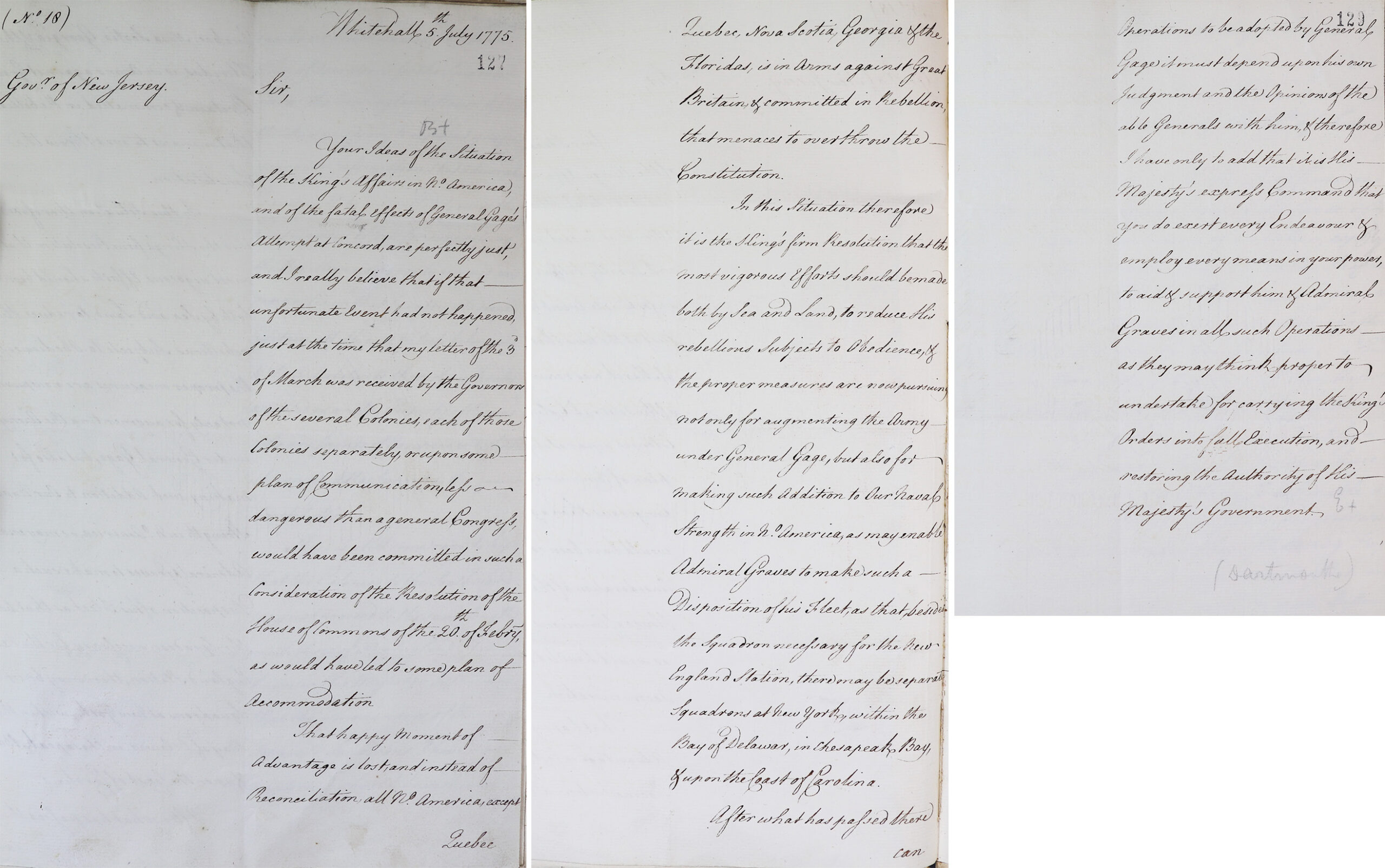
Lord Dartmouth, British Secretary of State to New Jersey Governor William Franklin, 5 July, 1775, Catalogue ref: CO 5/992, folios 127-129d.
Thomas Gage was appointed commander in chief of all British forces in North America in 1763. Had it not been for General Gage’s failed attempt at Concord, colonies separately or together possibly might have come to some plan of accommodation. Instead, almost all North America rose against British control.
On April 19, 1775, General Gage sent out regiments of British soldiers from Boston to Lexington to arrest colonial leaders Sam Adams and John Hancock and then move to Concord to supress any resistance. The plan failed as the colonists became aware of the plan and Paul Revere and other ‘Minutemen’ warned the local population that the British were coming.
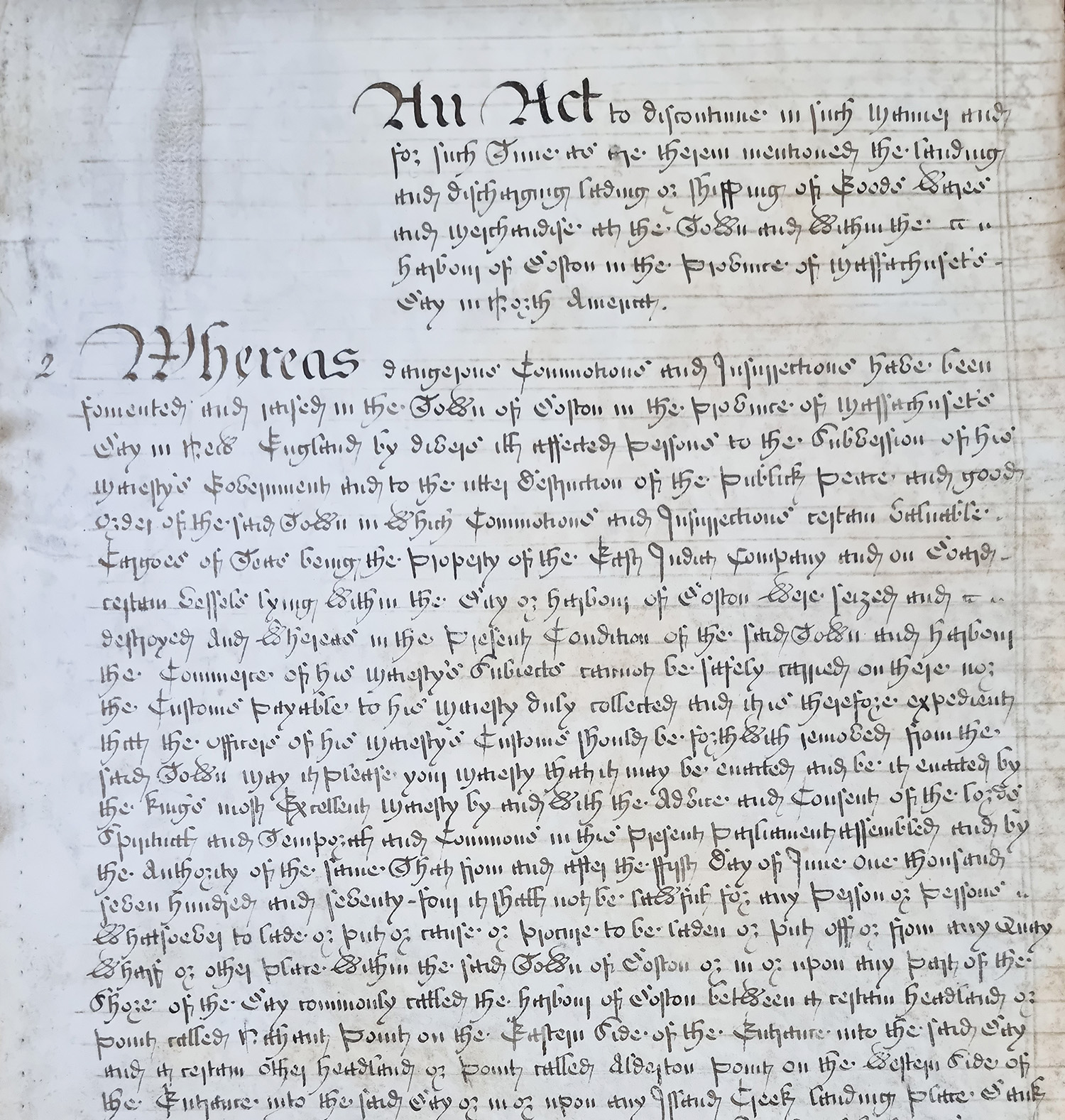
Extract from Boston Port Act, 1774 (14 George III, c19) Catalogue ref: C65/56
The Coercive Acts, which became known as the Intolerable Acts to the colonists, were passed in 1774. According to the Boston Port Act, the British Parliament closed the port of Boston until the colonists compensated the East India Company for the tea destroyed at the Boston Tea Party. These also included the Massachusetts Government Act which replaced elected local government in the colony of Massachusetts with direct rule by British Crown. The powers of the military governor, Thomas Gage were also increased. British troops could now be quartered in any occupied dwelling.
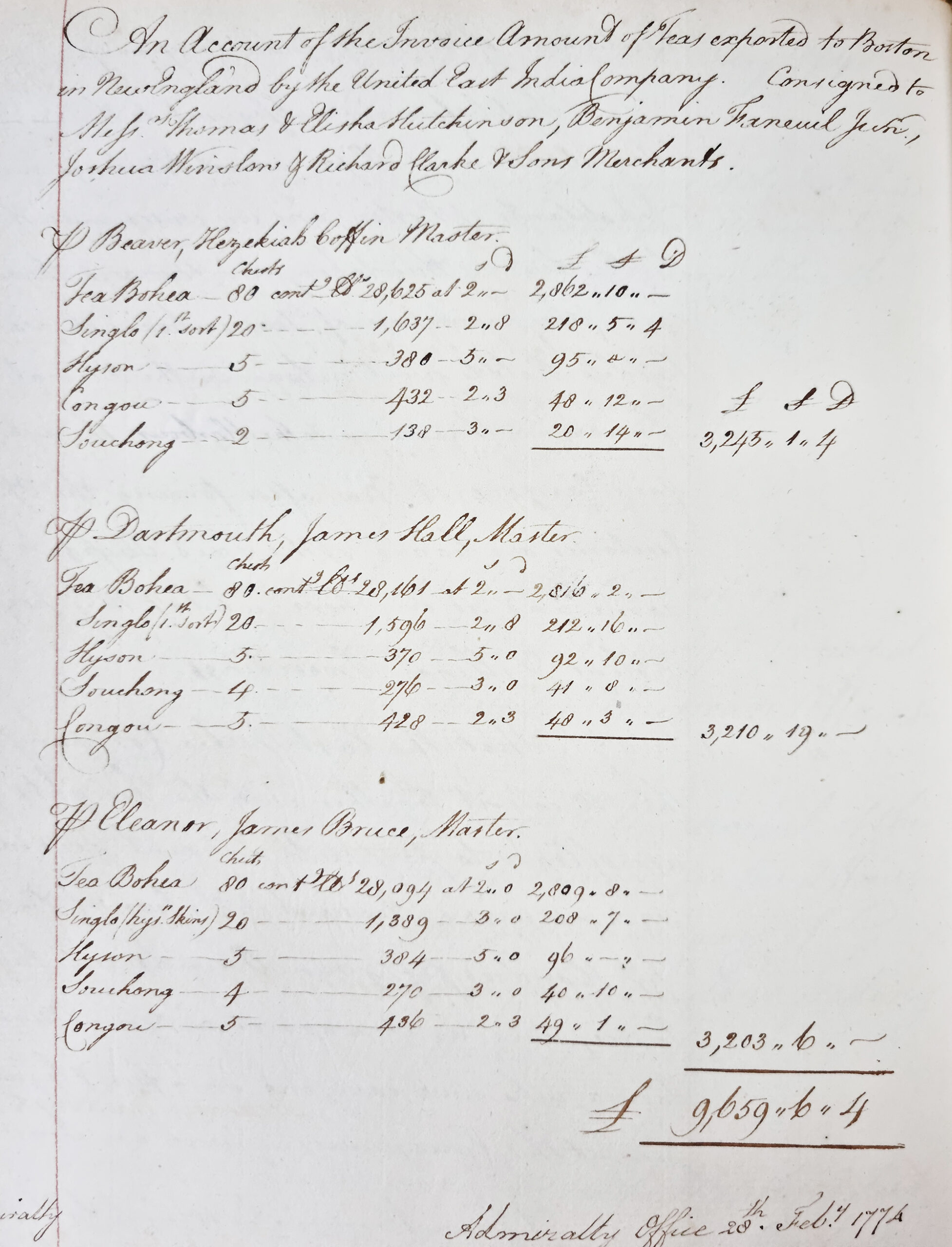
Invoice, dated February 1774 from the East India Company for the destroyed tea from the Boston Tea Party, Catalogue ref: CO 5/247 pp.185-187.