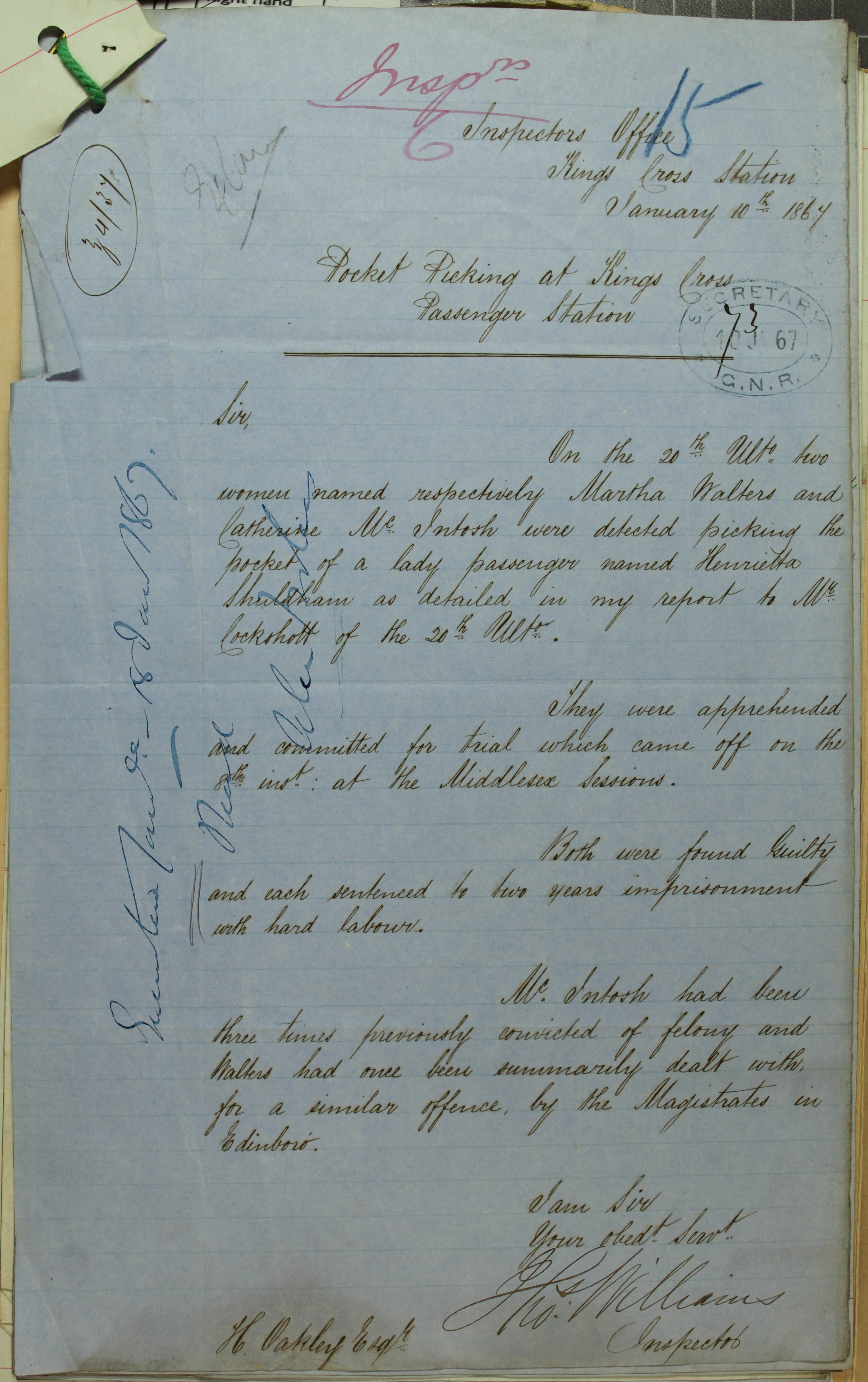
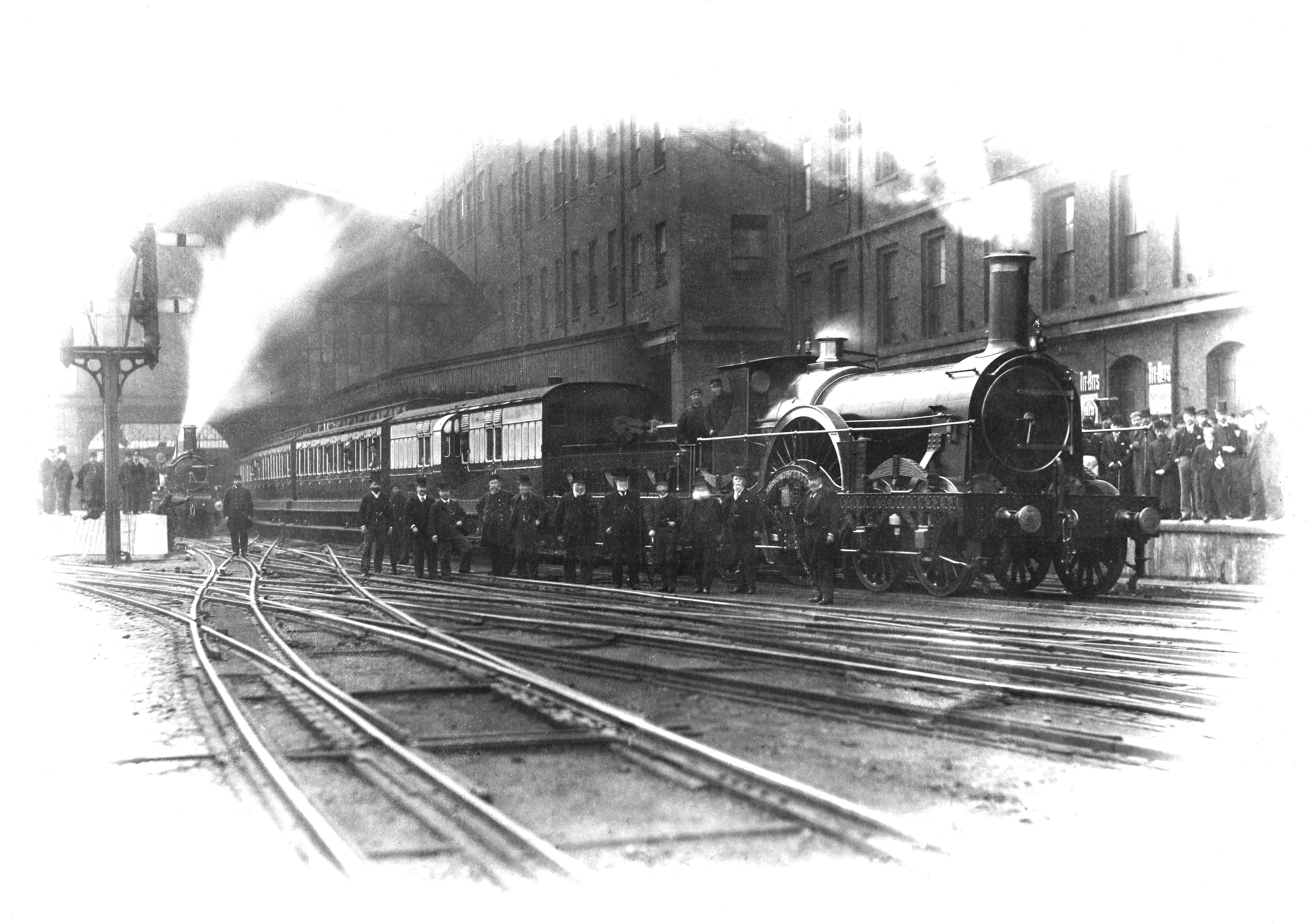
In Victorian times, Britain’s railway network grew rapidly. In the 1840s ‘Railway Mania’ saw a frenzy of investment and speculation. £3 billion was spent on building the railways from 1845 to 1900. In 1870, 423 million passengers travelled on 16,000 miles of track, and by the end of Queen Victoria’s reign over 1100 million passengers were using trains.
The railway system offered new chances for travel, holidays, transporting goods, developing businesses and the growth of towns and cities. The distance between town and countryside was erased. Dairy produce and fish could be delivered easily to different parts of the country within hours. Increased communication allowed for the spread of ideas and national newspapers. A standardized time was introduced across Britain as trains were timetabled. The mobility of labour and maintenance of law and order were made easier. Of course, the railway network also stimulated the coal and iron industries but led to the decline of the canal system.
However, with more people and goods on the move, trains and railway stations arguably, offered new opportunities for crime. The first carriages were unlit and unconnected by corridors, so there were cases of lone travellers being robbed or attacked. Railway stations were often packed and busy which made theft easier. The first railway murder took place in 1864 on train travelling from Fenchurch Street towards Hackney on the North London Railway and caused a great deal of public concern about travel safety.
Use this lesson to explore sources relating to criminal activity based around railways.
Did they create more crime?Thomas Briggs, a sixty-nine year old banker was found severely injured on the railway tracks of the North London Railway line near Hackney. He had been travelling in a first class carriage from Fenchurch Street to Hackney, and his compartment was found soaked in blood. When he was discovered and examined, it seemed that Briggs had sustained several serious blows to the head and he later died from the attack. His hat and gold watch with chain were missing and after an intensive police investigation, the prime suspect, Franz Muller was caught by British police who arrested him in New York. Muller was extradited and charged with murder. In Britain, he faced trial and was found guilty then publically hanged.
The crime revealed that in terms of safety, wealth and position made no difference, the assault on Mr. Briggs took place in an isolated first class carriage. The Daily Telegraph, dated 13th July 1864 seems to capture sense of public panic: “There is one general feeling which this dark crime has excited among the population there must be an end put to the absolute imprisonment…which railway travelers endure”
In order to improve train safety, a bill was introduced in 1866 for the use of communication cords in railway carriages to enable passengers to stop the train at any sign of danger. This was later made compulsory by the Railways Regulation Act of 1868.

Explore extraordinary images, taken from the Foreign and Commonwealth Office photographic collection (CO 1069), which span the globe and more than 100 years of history.
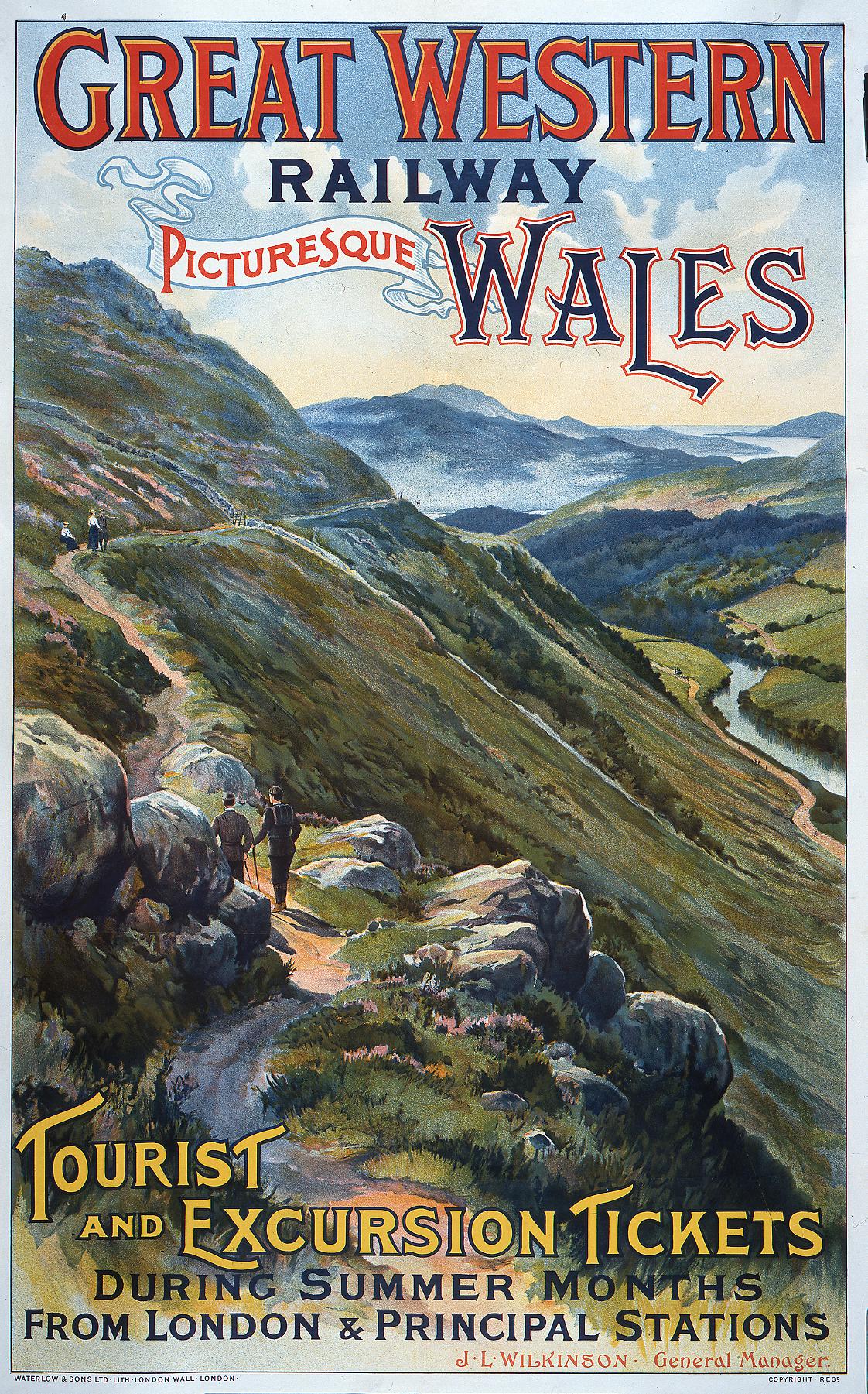 What's in a place?
From pyramids, palaces, public buildings, particular counties to holiday destinations, this selection of sources, based on records held at The National Archives, can be used in the primary classroom to support the National Curriculum element focussing on location. The collection is by no means exhaustive but contains some of the popular choices used for exploring historical places and help to provide more context for significant figures or events selected studied in the classroom.
The collection can offer a starting point for developing a sense of historical perspective by placing pupils’ growing knowledge into different contexts and help them to discover the link between local, national and international history. Again, the sources can be used within any scheme of work based on developing a sense of chronology where pupils can see that a particular locality or place might fit into a time frame. Working with sources in this way will help pupils to register similarities and differences between aspects of life between periods, Other ‘place’ sources can be used to consider questions around significance: what we are remembering and why? Have things always been the same? Why have some things changed?
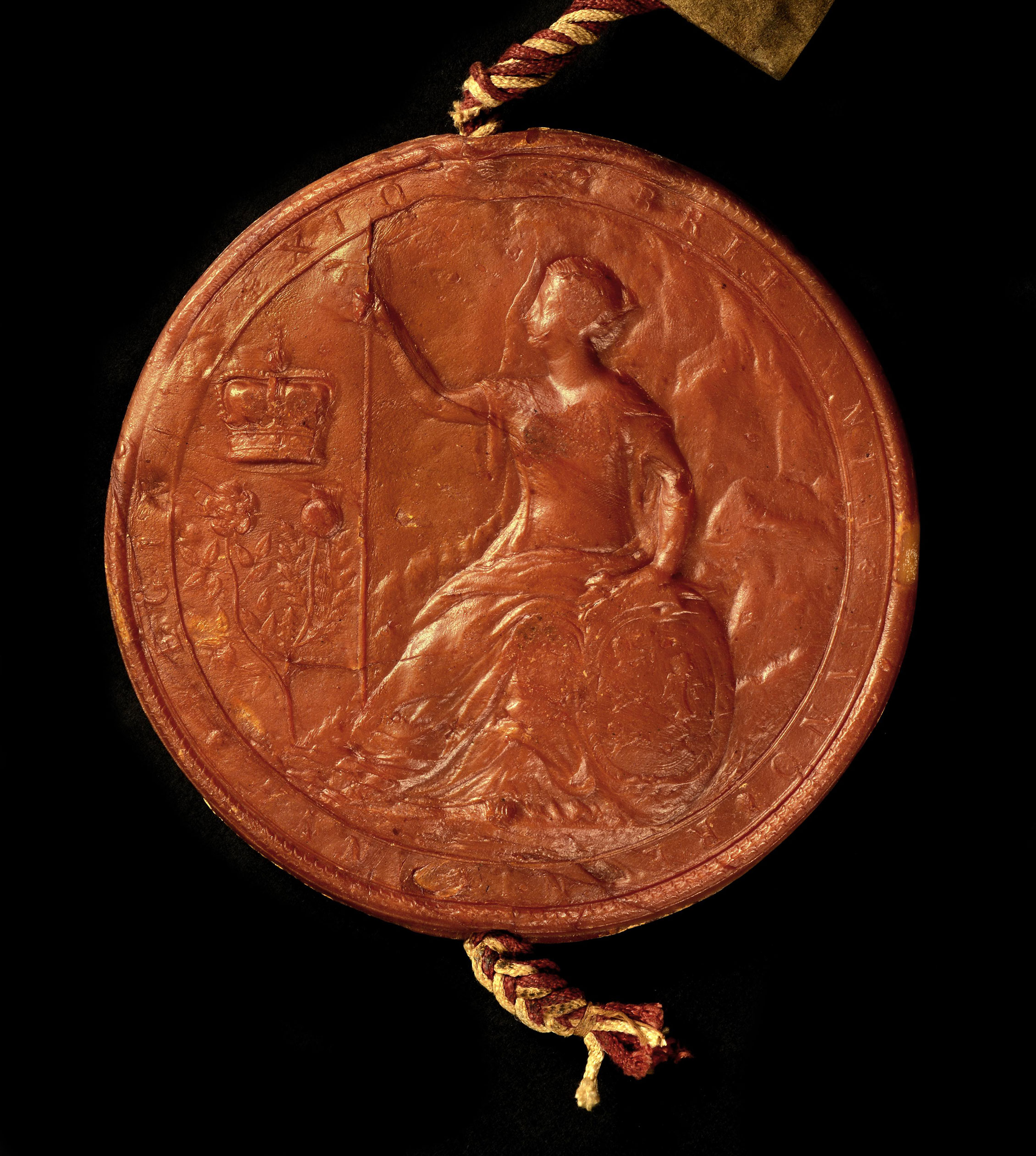
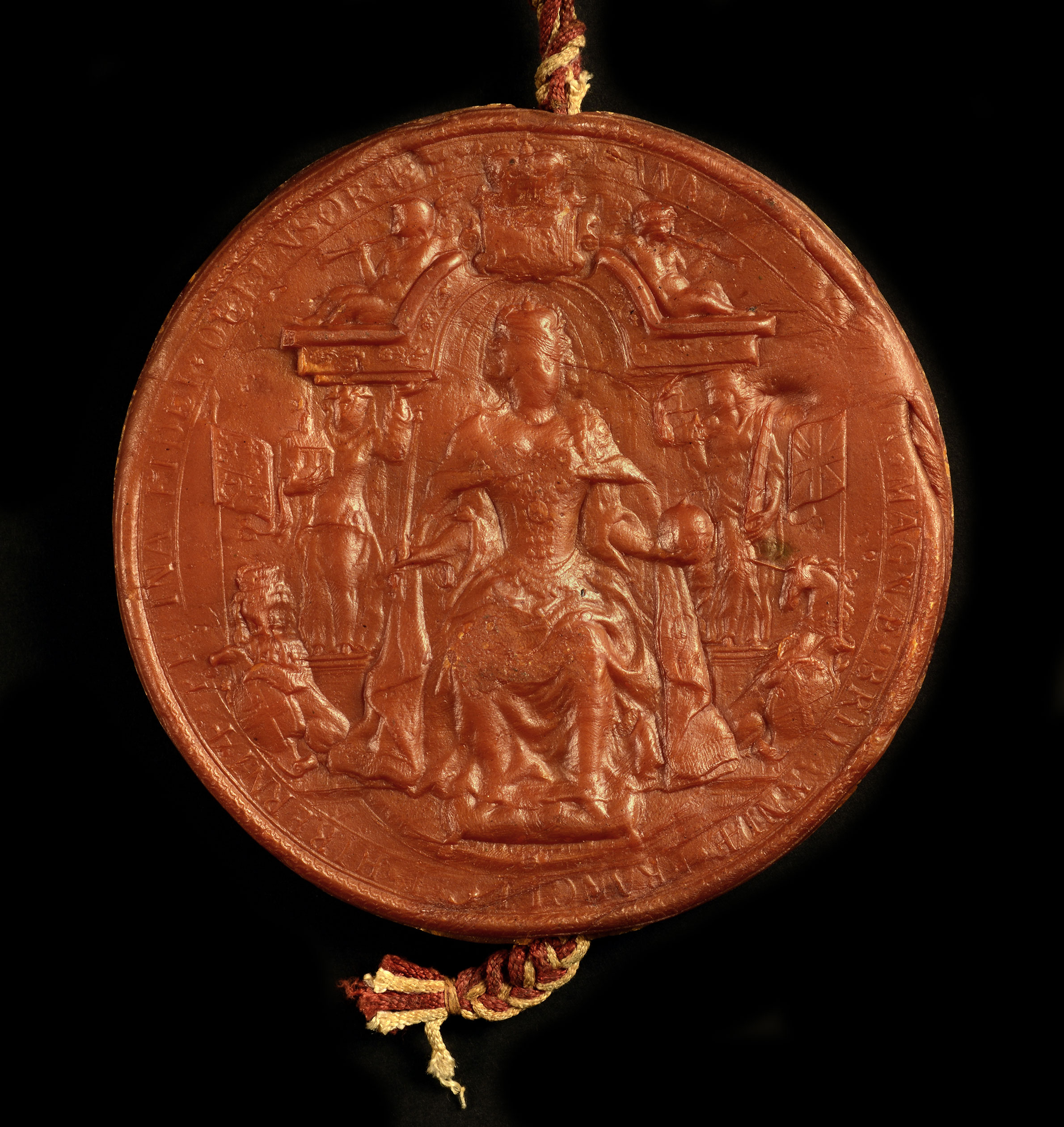
The Second Great Seal of Queen Anne, used from 1707-1715 (Reverse: back)
The Second Great Seal of Queen Anne, used from 1707-1715, (Obverse: front)
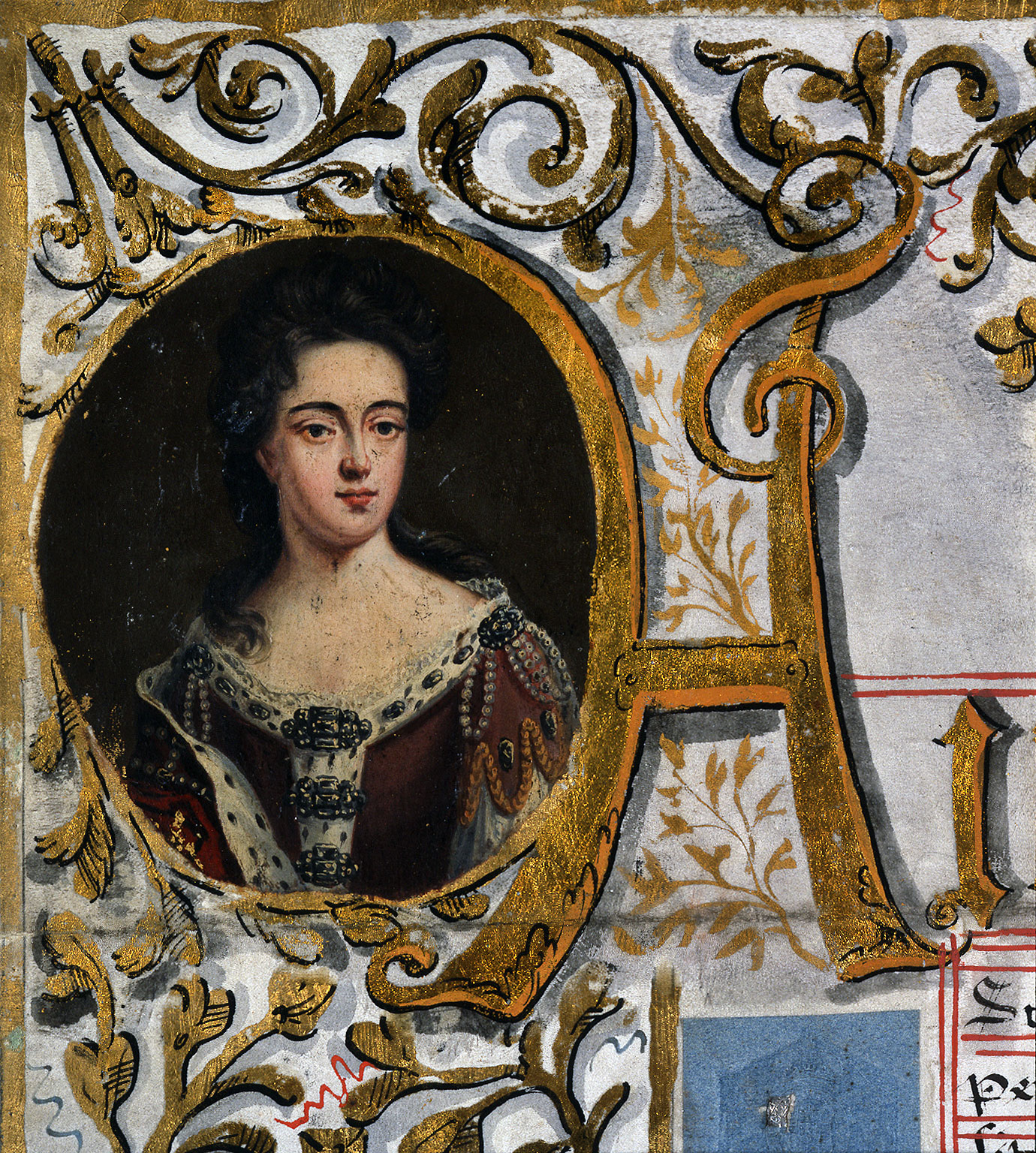
Initial portrait of Queen Anne on document from the Treasury, the office responsible for the funds of the monarch, 1702.
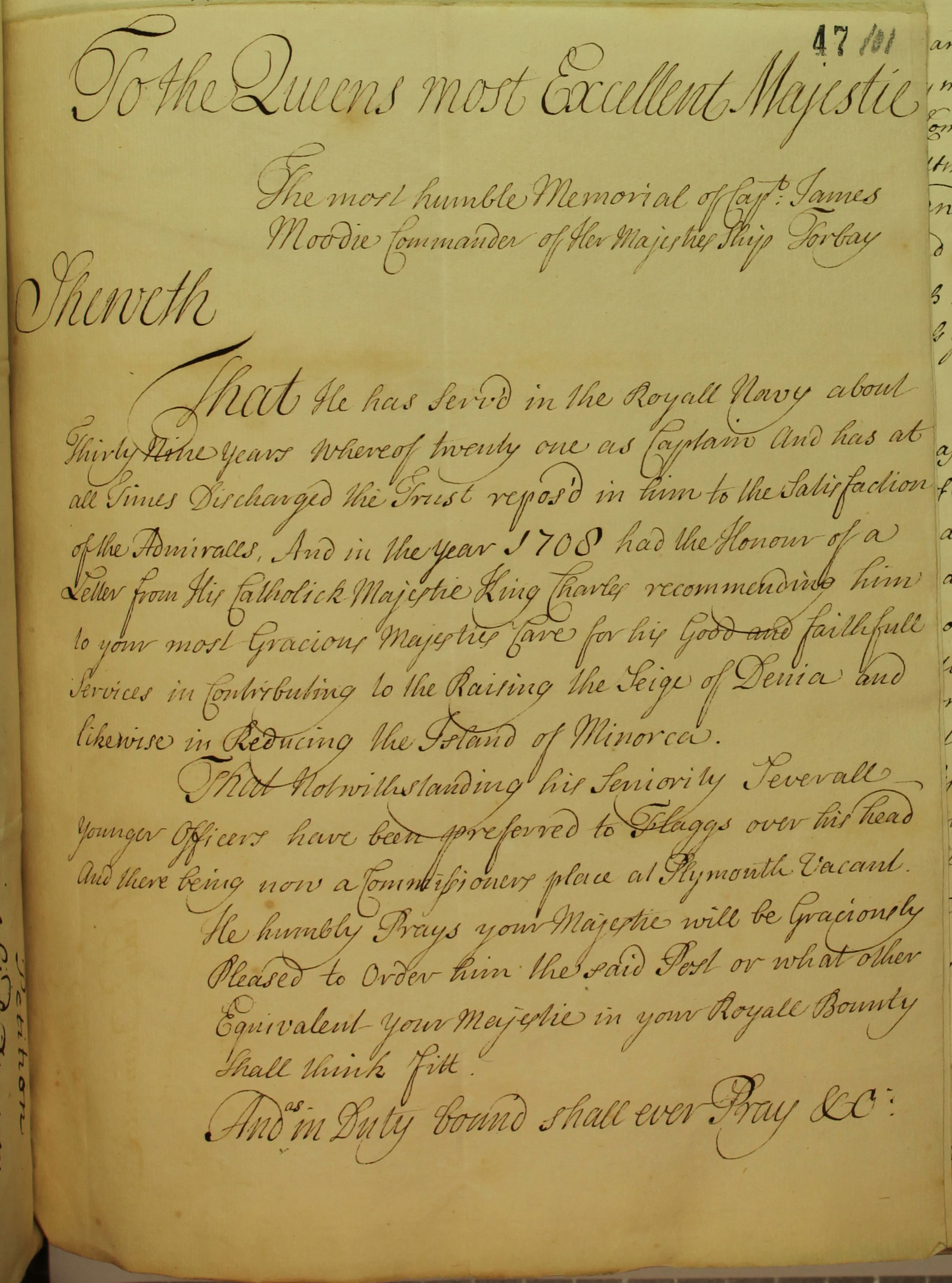
Petition from Captain James Moodie to Queen Anne. (Catalogue ref: SP 34/31 f44)
[Petition was a formal written request to the monarch by a person or group of people for a specific purpose]
During her brief reign, Queen Anne received numerous petitions. A petition was a formal written request to the monarch by a person or group of people for a specific purpose. They included appeals from people against being sent to prison, or requests concerning religion, the sale of goods, pleas for jobs in the government or the Navy and so on. These requests therefore, can give insight as to how a monarch was expected to govern and carry out their role.
Likewise, seals, used on most documents in the past to ‘close’ them and to prove that a document really was actually from the sender are useful sources for finding out about the monarchy. A Great Seal was particularly significant as it belonged to the monarch and was attached to all important documents which came from the crown. If a document had this seal, it had the monarch’s ‘seal of approval’ and reflected their commands. The seal used in this lesson is the Second Great Seal of Queen Anne and gives us clues about her image and how she wanted to be seen.
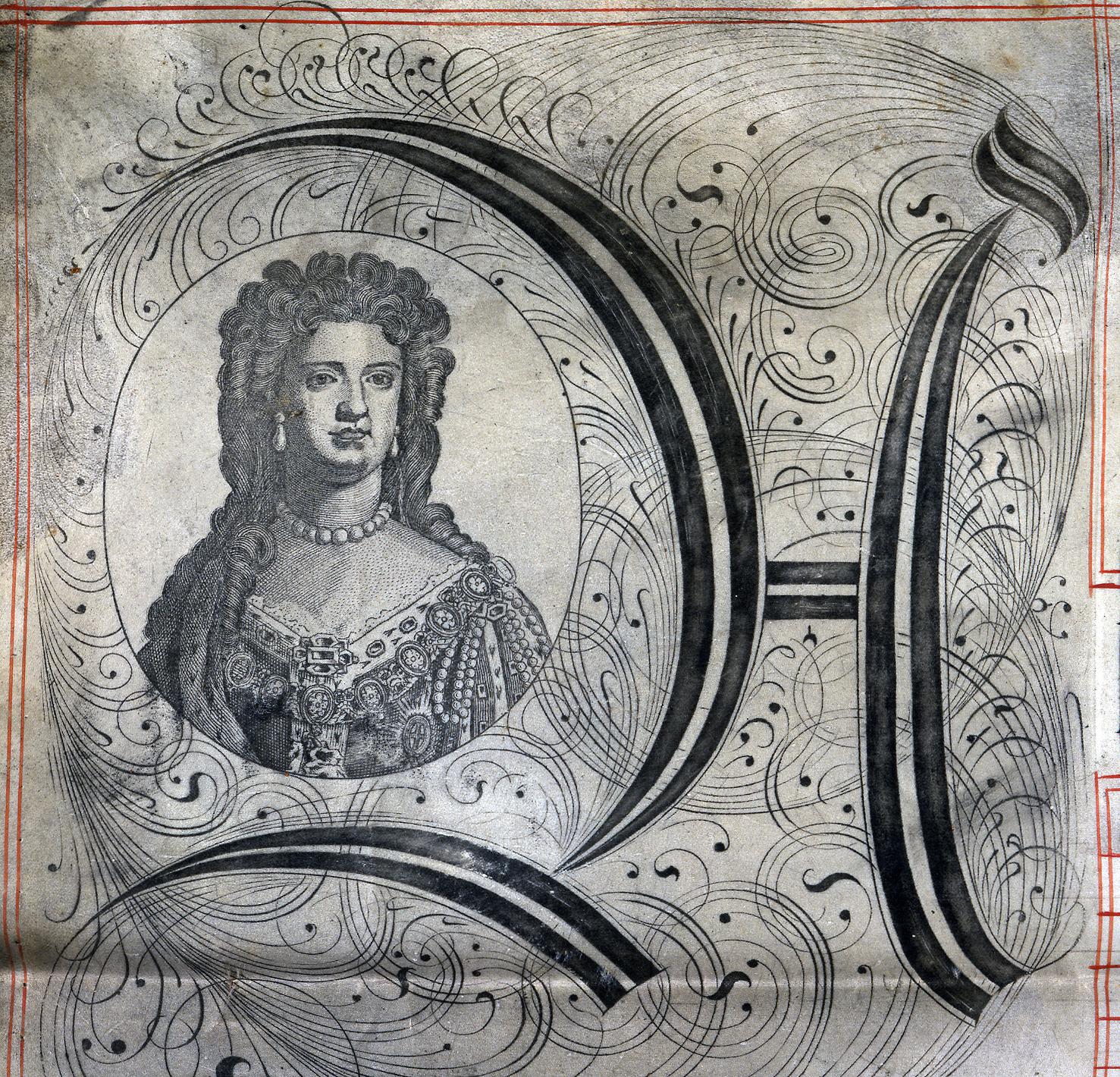
Finally, some documents were decorated with images of the monarch to show that their contents relates to a particular ruler. This lesson contains an official treasury document which reveals an initial portrait of Queen Anne. Can you use the sources in this lesson to find out more about this Queen?
How can we find out about her?Anne was born in 1665, the last Stuart Queen and the first monarch of Great Britain. Her parents were the heir in waiting, James II, Duke of York, and Anne Hyde. Her elder sister Mary was to become Queen before Anne succeeded as monarch.
Anne had poor health all of her life and her early years were spent in France until her mother’s death when she returned to England. Her father remarried a Catholic Princess, Mary of Modena in 1673. Anne and her sister Mary as royal children did not live with their parents and were brought up as Protestants. In 1683 she married Prince George of Denmark. Anne experienced many miscarriages, gave birth to six still-born infants, two babies who died soon after being born, two daughters who died as toddlers and a son who survived to age 11. In her later years she suffered from gout, a condition which gave her pain in her legs and made it difficult for her to walk, when she became Queen she had to be carried to her coronation.
Her father, James II became king in 1685, but was deposed in ‘The Glorious Revolution’ of 1688 and her elder sister, Mary, ascended the throne with her husband, William III of Orange of the Netherlands. After the death of Mary, and later William, Anne, heir to throne, became Queen of England in 1702.
One of the lasting achievements of her reign was the Act of Union of 1707. It meant that England and Scotland were united. From 1603 with the reign of James I of England and King James VI of Scotland, there existed a union under one monarch but the Act of Union formally united the English and Scottish crowns to create the Kingdom of Britain, with the new union Jack and coinage to reflect this in the reign Queen Anne.
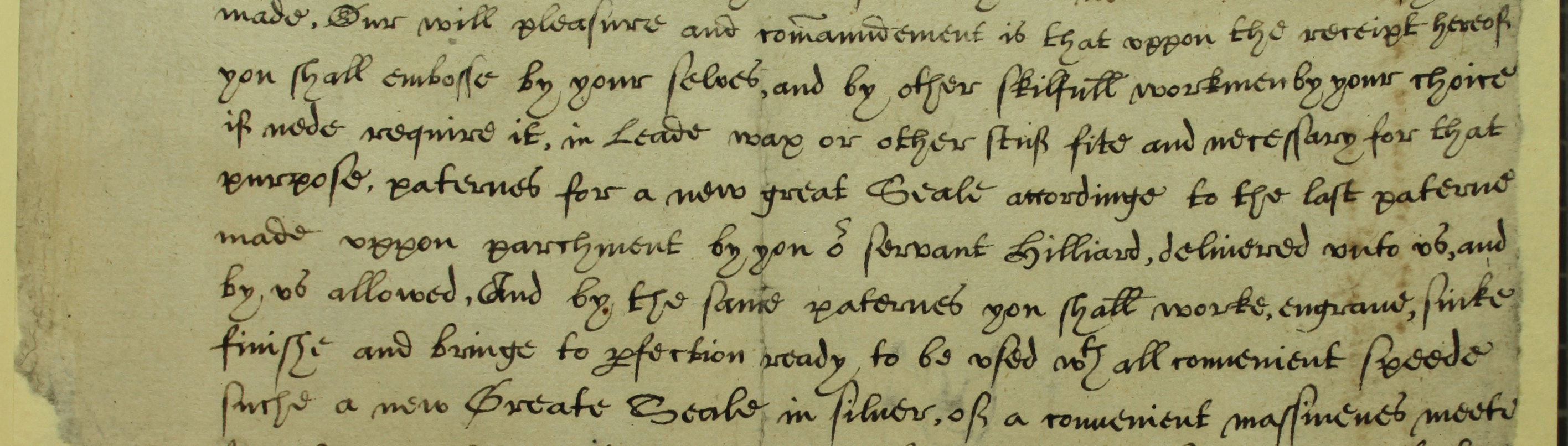
An extract from a warrant, a document giving a royal command. Catalogue ref: SP 15/28 f79