History and Archives in Practice
History and Archives in Practice (HAP) is a partnership between The National Archives, Royal Historical Society, and the Institute of Historical Research. At HAP, historians and archivists come together to consider shared interests in archive collections, their interpretation and use.
About this image
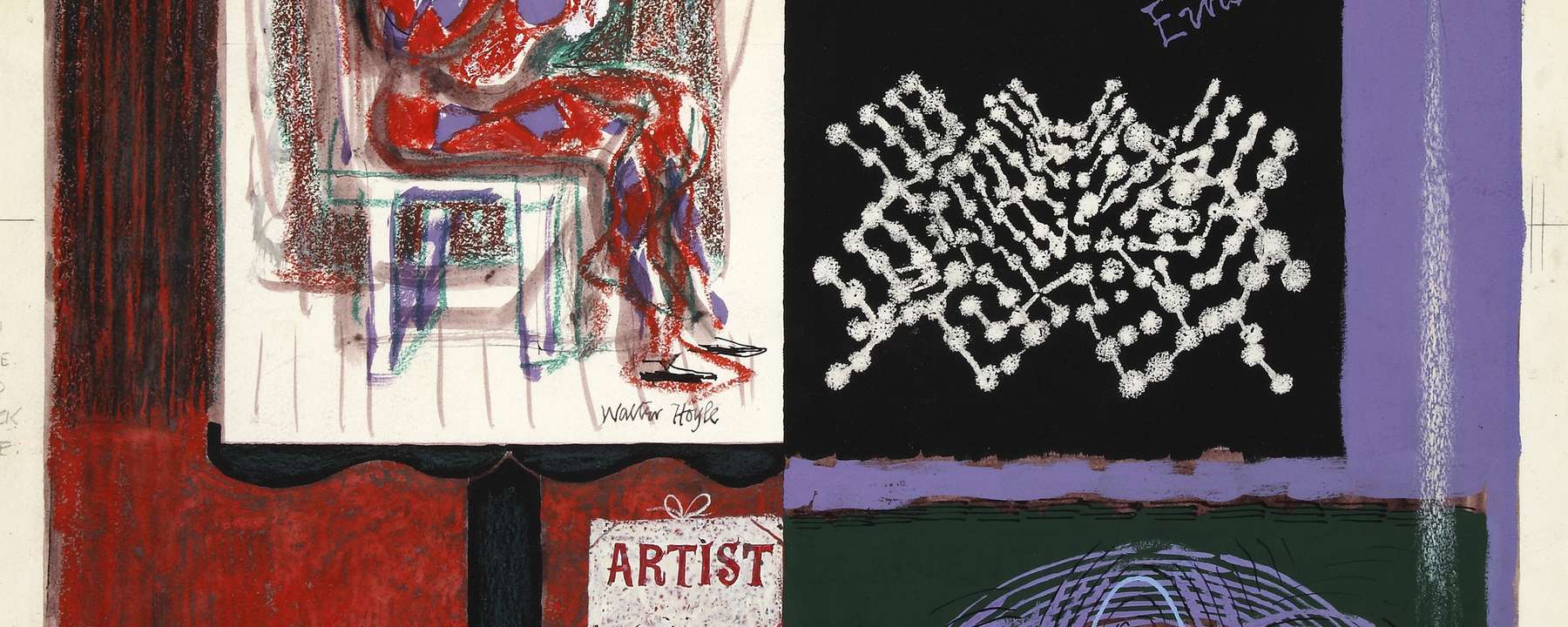
Art and Science Artist Walter Hoyle, Post Office Savings Bank Publicity, 1935–1985. Catalogue reference: NSC 61/49
History and Archives in Practice (HAP) is an annual event, building on its partners’ long experience of bringing archivists and historians into close conversation.
Central to HAP is a focus on archival and research ‘practice’: creating opportunities to demonstrate and discuss how we work with historical collections, and what historians and archivists can achieve collectively. By making ‘practice’ central to HAP, we’ll also make more of collections – with time to learn about selected archives and how historians and archivists work better together.
History and Archives in Practice 2027
Call for participation
Engaged pasts, meaningful futures: The value of archives, practice and historical inquiry
- Call for participation deadline
Friday 16 October 2026, 11:45 pm BST
- Event date
Wednesday 28 April 2027
- Location
Senate House, London (in-person only)
History and Archives in Practice, now in its fifth year, demonstrates the enduring value of bringing people together around a shared passion for the past. It creates a welcome space where historians, archivists, researchers and practitioners from all backgrounds can connect, exchange ideas and discover new ways of working with collections.
By encouraging meaningful dialogue across sectors and disciplines, it empowers participants to reimagine how historical study and archival collections can inform and enrich our futures. As a supportive environment, it invites colleagues to share approaches to overcoming adversity and insight into the ways in which we are adapting to change, while considering how as a collective, we might address the challenges the face our sectors.
For History and Archives in Practice 2027 (HAP27), we invite participants to reflect on the value of collections, archival practice and historical inquiry in connecting past to future. We are particularly interested in how collections, researchers and practitioners can work purposefully - through engagement, collaboration and innovation - to generate meaningful impact and contribute to more informed, inclusive and sustainable futures.
HAP27 aims to explore, but is not limited to, some of the following topics:
- Advocacy and the value of history
In what ways are we demonstrating the importance and value of our work, training, and collections, in our institutions, our sectors, and in broader society? How can we work across sectors and disciplines to advocate for the importance of history within/on society, while navigating financial restrictions and change within institutions and regions?
- Applied History and social impact
In what ways are archives and historical research having real-world impact and affecting meaningful change beyond our institutions? How can historical knowledge, methods, and perspectives be applied to contemporary challenges in public policy, education, culture, and civic life? What opportunities exist for historians, heritage professionals, and graduates to contribute more directly to decision-making, future planning, and public debate?
- Embracing technologies as enabling tools
How are historians and archivists approaching emerging technologies critically and creatively? How can we embrace technologies as enabling tools to support deeper inquiries, to enrich our interpretations and open up our collections in meaningful ways?
- Meaningful collaborations, co-creation and co-production
How are meaningful partnerships and initiatives with audiences, communities and stakeholders shaping more inclusive and impactful approaches to history and collections? In what ways are universities, archives, and the practitioners within each, connecting with people and projects outside of their institutions and within their region?
- Purposeful practice and engaged research
What constitutes 'impactful' engagement in different contexts? How are practitioners and engagement professionals critically and creatively leveraging collections to generate meaningful impact? How are archival collections and historical research actively contributing to furthering social cohesion, civic participation, and a shared sense of place and belonging?
- Sustainable futures
When considering the future of historical research and collections, what responsibilities do practitioners have in embedding sustainability into their work, be it environmental, organisational, financial and/or sectoral? How do we articulate the social and economic value of historical research and collections, ensuring they are recognised not only as cultural assets but also as contributors to community wellbeing, education, innovation, and economic growth?
As with previous HAP events, we approach our theme by profiling and debating projects and ideas which embrace novel approaches to historical research and archival practice, and the potential to affect positive change. In doing so, we seek to offer attendees examples of practice, and lessons from practitioners from which we can all benefit, showcasing projects delivered by - and in partnership with - archivists, historians, practitioners and communities.
HAP27 is particularly keen to highlight and support smaller organisations, underrepresented collections and marginalised voices as well as new and emerging research.
Submit a proposal
Please submit a title and abstract (300 words) by 11:45pm BST on Friday 16 October 2026.
International contributions
Please note that HAP is an in-person only conference, and therefore contributors will have to present in person at Senate House, London.
We have a limited number of small bursaries (more information below), but these cannot be used to support international travel.
Bursaries for contributors
A limited number of bursaries will be available for contributors to support their participation, such as travel and childcare.
Contributors will be informed of the outcome of their submission and invited to apply for bursaries the week beginning Monday 23 November.
They will be informed of the outcome of their bursary application before Friday 18 December.
What format can I submit?
History and Archives in Practice encourages a wide range of formats that best showcase a collection and the experience or lessons of collaborative working between archivists and historians on shared projects.
Papers
Papers will be 10-minute presentations, with or without accompanying slides. Proposals may have up to a maximum of two speakers (any more can be submitted as a panel, see below) Papers may also take the form of a case study that explore a concrete project or initiative that relate to the HAP27 theme.
Organisers will programme panels based on the common themes within paper submissions, with a particular focus on the differences and similarities in approach to specific topics (such as the ones suggested above).
Panels
Panels should consist of three 10-minute papers and include a named panel chair (max of 3 people presenting). They can be submitted on any pertinent topic within the theme and can include papers relating to an individual project, emerging initiatives, or relevant overview.
Submissions should include a suggested panel title and demonstrate clear relevance to the theme.
Workshops
Workshops are practical sessions of up to one hour. Workshops aim at bringing people together to creatively problem solve a particular topic or issue, with or without a technological focus.
All proposals should clearly demonstrate a high level of interactivity and audience participation. Proposals should also articulate clear objectives for the session, including an idea of desirable solutions or outcomes, as well as any requirements for consideration (e.g. technology, materials, venue space).
Roundtable
A roundtable discussion is a themed conversation with one moderator and no more than four additional speakers, up to one hour long.
The idea is to bring a variety of perspectives to actively discuss a subject rather than formally presenting. We encourage professional networks and societies to lead on these sessions discussing issues relevant to the conference theme. Roundtables should be open to all conference delegates and require no prior knowledge or preparation.
A roundtable audience can simply observe or participate by asking questions - interactivity should be clarified in the proposal.
Long table
A long table is an experimental open public forum designed to facilitate free-flowing dialogue by gathering together people with common interests. Any attendee can participate by getting up and joining the long table.
This format works best for discussions that may be provocative, challenging and that will benefit from a wide range of perspectives. The long table may be up to one hour long.
Other proposals and formats
Other proposals and formats for communicating activity, experience, and research are also welcome as we look to explore from traditional conference models.
Get in touch with HAP organisers with any questions
Past videos and recordings
Watch recordings of previous events as well as videos about the collections, projects, and practice of our video contributors on YouTube.
HAP values
Collaboration and community
A collective endeavour between the Institute of Historical Research, Royal Historical Society and The National Archives, History and Archives in Practice brings together communities of researchers (archivists and historians) to discuss topics of mutual interest, in particular the nature of archival research and the use of historical collections.
Growing practice
This annual event prioritises research practices and encourages innovation and experimentation. It provides a space in which those of all stages and specialisms can share, learn and network, embracing new formats by which we can exchange knowledge while also envisaging unique and varied ways of working with history.
Innovation
This annual event prioritises research practices and encourages innovation and experimentation. It provides a space in which those of all stages and specialisms can share, learn and network, embracing new formats by which we can exchange knowledge while also envisaging unique and varied ways of working with history.
Possibilities
This collaborative event endeavours to highlight the diverse and unique nature of historical research. This will demonstrate and create new possibilities for researchers and practitioners to collaborate, co-produce and consider how we work with history and archives.
HAP is dedicated to providing a harassment-free experience for everyone, regardless of sex, gender identity and expression, age, sexual orientation, disability, physical appearance, body size, race, ethnicity, or religion (or lack thereof).
Previous topics
- 2026: Shaping Societies, Improving Lives: The Impact of Archives and Historical Research (in partnership with University of Sheffield Library)
- 2025: Working with Memory: History, Storytelling and Practices of Remembrance
- 2024: Historical Legacies (in partnership with Cardiff University)
- 2023: Collecting Communities, Working Together and With Collections
- 2021: New Ways to Work – future directions for archival and historical practice (watch the short videos from our speakers on YouTube)
- 2020: Co-production and collaboration in the archives (listen to audio recordings of the 2020 seminar)
- 2019: Digital and the archive
- 2018: Diversity among the documents? The representation of Black, Asian and Minority Ethnic (BAME) communities within the UK’s archives
- 2017: Strongroom to seminar: archives and teaching in higher education
- 2016: The Experience of the Archive
Accessibility statement
History and Archives in Practice is a space in which colleagues at any career stage and from diverse specialisms can share, learn and network, embracing new ways to exchange knowledge and exploring unique and varied ways of working with collections.
We are dedicated to providing a harassment-free experience for everyone, regardless of sex, gender identity and expression, age, sexual orientation, disability, physical appearance, body size, race, ethnicity, or religion (or lack thereof).
If you would like to ask us any questions, please contact research@nationalarchives.gov.uk.