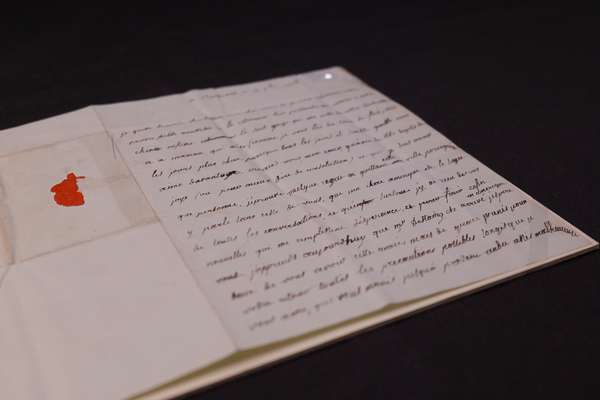
The war in America
From around the 1760s, many British-American colonists resented the British government’s heavy-handed control and taxation. In 1775, this anger erupted into an armed conflict and the start of the Revolutionary War. By 1779, rebels were rapidly organising themselves into an armed resistance, ultimately facing both British troops and their Loyalist neighbours in a bloody and vicious civil war.
Initial rebel success, including a daring push through the colony of New York all the way to Quebec City in Canada in 1775, provoked a strong military response from Britain. In May 1776, British general John Burgoyne arrived on the continent with a 9,000-strong army to break the rebel siege of Quebec City. By the next spring, British Canada was secured, and Burgoyne prepared his army for a counter-offensive further south.

Dates of Bills of Lading
1776 April
12
Lord Lewisham
Hudson
Pounds Bread 25760; Pounds flour 29400; Pounds Beef 21944; Pounds Pork 87776; Pounds Butter 9447; Bushels Peas 600; Pounds Rice 12770; Pounds Oatmeal 18592.
15
Minerva
Coulson
Pounds Bread 142016; Pounds flour 162400; Pounds Beef 43680; Pounds Pork 174720; Pounds Butter 19129; Bushels Peas 900; Pounds Rice 25029; Pounds Oatmeal: 37296.
15
Lonsdale
Grayson
Pounds Bread 33600; Pounds flour 51800; Pounds Beef 26624; Pounds Pork 10660; Pounds Butter 11536; Pounds Rice 15324; Pounds Oatmeal: 22848.
Pounds Bread 201376; Pounds flour 51800; Pounds Beef 92248; Pounds Pork 369096; Pounds Butter 40112; Bushels Peas 1500; Pounds Rice 53123; Pounds Oatmeal: 78736.
Add the Bread to the Flour 201376, the Beef to the Pork 52713 & the Rice to the Oatmeal 53123
Total: Pounds bread Pounds Flour 444976, Pounds Beef Pounds Pork 421809, Pounds Butter 40112, Bushels Peas 1500, Pounds Rice Pounds Oatmeal 131859
Sufficient to serve 10,000 Men with: Flour – 44 Days, Pork – 73, Butter – 75, Peas – 22, Oatmeal - 184
An account of provisions shipped at Cork, Ireland, to supply the British army in North America, 15 April 1776. Catalogue reference: PRO 30/55/2/54
There were two large British armies active in North America in 1777: Burgoyne’s force in Canada, and another under general William Howe, which had recently pushed George Washington’s Continental Army out of New York City. As Washington retreated into New Jersey, the British planned to join their two armies at Albany, the then capital of New York. To achieve this, Burgoyne would march down the Hudson River Valley from Canada, whilst Howe headed up the Hudson from New York City.
However, a failure of communication between the two generals led to an embarrassing defeat. Unknown to Burgoyne, Howe decided to strike at Philadelphia – home of the rebel Continental Congress and nerve centre of the Revolution – instead. This left Burgoyne stranded near Albany, facing a rebel army over double the size of his own.
In September and October 1777, Burgoyne was defeated in the Battles of Saratoga and surrendered to the rebels under the terms of a ‘convention’ treaty. Known as the Convention Army, Burgoyne’s force of over 6,000 soldiers were taken prisoner. Most of them would remain in captivity, often enduring extremely poor conditions, until the conflict ended in 1783.

Articles of Convention between Lieut.
General Burgoyne and Major General Gates
1st
The Troops under Lieutenant General Burgoyne, to
march out of their Camp with the Honours of War, and
the Artillery of the Intrenchments, to the Verge of the River,
where the old Fort stood; where the Arms and Artillery
are to be left. The Arms to be piled by Word of Command
from their own Officers.
2nd
A free Passage to be granted to the Army under […]
Articles of Convention signed as part of Burgoyne’s surrender to the rebels at Saratoga,16 October 1777. Catalogue reference: PRO 30/55/6/112
Ann Nevil's role
Landmark battles like Saratoga were major turning points in the Revolution, but do not tell the whole story. Some of the most exciting stories in the American Revolution are those of the extraordinary, yet ordinary, men and women whose everyday actions were now shaped by a life-changing choice: to stay loyal to Britain, or rebel?
Both options were risky. This is shown in the story of Ann Nevil, a woman from Sussex County in New Jersey, a rural and sparsely populated area, some 50 miles northwest of New York City. We can trace Ann's story through several records we hold, including a petition written in her own words made to British officers in 1779.

A map of colonial North America, representing territories agreed at the 1763 Treaty of Paris. Catalogue reference: CO 700/AmericaNorthAndSouth35
New Jersey’s colonial population was starkly divided between rebels and Loyalists. Although the colony was controlled by a rebel government for most of the conflict, its Loyalists also contributed one of the largest colonial regiments (the New Jersey Volunteers) to the British war effort.
In December 1778, our records show Ann Nevil volunteered as a pilot for the British. She used her knowledge of New Jersey and New York’s geography to guide a group of escaped British soldiers from the Convention Army to New York City, then a British stronghold.
In November 1778, the Convention soldiers were removed from their internment in Cambridge, Massachusetts, embarking on an arduous forced march to Charlottesville, Virginia. By December, they were passing through New Jersey. Although closely guarded by the rebels, an estimated 400 Convention soldiers managed to escape during the winter’s march. It is probable that the ‘part of General Burgoins Men’ Ann described in her petition were among these escapees.

To the Worthy General Clinton,
The Humble Petition of Ann Nevil
Most Humbly Sheweth
That Petitioner, being always loyally inclined to
Exert herself in all Respects Attending his Majesty King George’s Interest
or Subjects, last December went from Sussex County
to New York as Pilot with part of General Burgoyne’s Men, some
time was Suspected by the Rebels to be the most Notorious
Malafactor Imaginable.
That Petitioner returned to her place of Residence,
was Informed of the Rebels Malignant Intention; they made
a Close Scrutiny for her, she made her Escape from place to
place for Sanctuary, at last being Apprehended by them & Committed
to Sussex Gaol where there were several other loyal
men in Company with her Confined in Irons &c.
That Petitioner last April was Enlarged out of her
Confinement by the Contrivance of her fellow Sufferers, being then
two Months in Gaol & Violently disordered with an Intermitting
Fever; it remained when redeemed; was Obliged to Expose herself
to the Inclemency of the Weather in the fields for her
better safety, suffering bitterly by her disorder in a most deplorable
Condition not able to Adjust herself.
That Petitioner, after a Dilatory strife to appear before
you, is become your Real Object of Charity & Compassion, having no
other way to support her from Perishing with want, as she is
destitute of friends & superannuated, but by Applying to your
Excellency; & hope you’ll take her under your Mature Consideration
& she as in duty bound,
(will Infinitely Pray)
Ann Nevil’s petition to general Henry Clinton (June 1779). Catalogue reference: PRO 30/55/17/66
Risking alienation
Like many Loyalists in rebel-controlled territory, Ann faced harsh repercussions for her active role supporting the British. Returning to Sussex County, she found that her actions had earned her a reputation: she was, as she described in her petition, ‘suspected by the Rebels to be the most Notorious Malafactor Imaginable’. For her own protection, she went on the run, fleeing ‘from place to place for Sanctuary’ before she was finally apprehended and imprisoned.
Confined in the Sussex County gaol in Newton, Ann quickly fell ill with ‘an Intermitting Fever’. Her health declined further after she was released, as Ann fled towards British lines in New York in fear of further violence from rebel sympathisers. To do so, she was ‘Obliged to Expose herself to the Inclemency of the Weather in the fields for her better Safety’.
Ann's petition for help
Arriving in New York City, Ann was one of many Loyalist refugees who petitioned the local commander-in-chief (Henry Clinton) for financial relief. Refugees like Ann cited their unswerving Loyalism, as well as any losses sustained in direct service to the Crown, to support their cases. Ann’s emphasis on her active role as a pilot, as well as the ongoing physical ailments incurred by her imprisonment (which prevented her gainful employment upon arrival in New York), enabled her to describe herself as ‘your Real Object of Charity & Compassion’.
Loyalist refugees also sought certificates from British officers to support their petitions. Ann gained signatures from two officers: Joseph Barton and John André. Lieutenant-Colonel Barton was a Loyalist from Sussex County (like Ann), and a commander in the New Jersey Volunteers. He would have been able to accredit Ann’s claim that she was ‘always loyally Inclined’.
Nevil’s connection to André, however, is unclear. In 1779, John André was aide-de-camp (assistant) to Henry Clinton, the commander-in-chief of British forces in North America. Later that year, he would rise to the rank of Major and take control of British army intelligence operations on the continent.
André’s career as spymaster was brief but sensational, ending abruptly with his controversial execution by the rebel Continental Army in 1780. Women played active roles in intelligence networks on both sides of the American Revolution, and André likely accredited Ann’s petition on account of her covert role as a pilot in New Jersey.

Sir,
The Bearer Nancy Nevil has Been
of Great Service in Conducting & Guiding
a number of General Burgoyne’s Men from Sussex
to New York – for which she has suffered long
in Sussex Gaol. She Being poor & in[capable]
to help her self I wish she might have
Rations allowed here.
I am Sir
your most Obedient
& most Humble
Servant
Jo. Barton Lieutenant-Colonel
in B. No. 9 M.
Camp Staten Island
7th July 1779
Colonel Morris New York
Certificate signed by Lieutenant-Colonel Joseph Barton, supporting Ann ‘Nancy’ Nevil’s case for refugee allowance in New York City (June 1779). Catalogue reference: PRO 30/55/17/74
As the conflict continued, displaced Loyalists flooded into the city. Refugees who, like Ann, could prove their loyalty and service to the Crown, were entered into lists highlighting their eligibility for a financial allowance.
Ann appears in the list of refugees present in New York from January to March 1783, amongst other Loyalists who had fled New Jersey to seek safety behind British lines. For these three months, she was allotted an allowance of £3 and 15 shillings in New York currency (which held a lower value than British pounds sterling). The list shows that 555 refugees had successfully claimed financial support for those months, for a total of £9,501, 12 shillings, and 6 pence.
We can trace Ann until the final version of these lists, which shows Loyalists claiming support up until 30 September 1783. This is the last known mention of Ann Nevil in our archive. Like so many others displaced by conflict, she then disappears from our view of history.

List of Loyalist refugees in New York claiming allowance for financial support (1 January to 31 March 1783). Ann Nevil is listed second from bottom, row 52. Catalogue reference: PRO 30/55/65/95
Peace
In September 1783, Britain signed a peace treaty with the United States of America, formally recognising the new nation. Although this treaty protected Loyalists’ property from being confiscated, many states refused to return what had been seized during the war. Loyalists who looked to return to their old homes were often met with mistrust, and sometimes aggression, by their communities. Most migrated around the British Empire, with large numbers settling in Canada.
The Carleton papers at The National Archives hold many petitions like Ann’s. They offer a rare glimpse into the lives of the ordinary people, particularly women, who are sometimes forgotten within the wider story of the revolutionary period. If anything, the fleeting nature of Ann’s appearance in our records makes her story more important. From these records, we can see that she was not just a ‘Notorious Malafactor’, but had a vital untold story from the American Revolution.
Read more
Find out more about the experience of women and Loyalists during the American Revolution.
- Women in the American Revolution: Gender, Politics, and the Domestic World, by Barbara B. Oberg
- Liberty’s Daughters: The Revolutionary Experience of American Women, 1750–1800, by Mary Beth Norton
- Captives of Liberty: Prisoners of War and the Politics of Vengeance in the American Revolution, by T. Cole Jones
Records featured in this article
-
- From our collection
- PRO 30/55/17/66
- Title
- Ann Nevil’s petition for support
- Date
- 1779
-
- From our collection
- PRO 30/55/17/74
- Title
- Certificate supporting Ann Nevil’s case
- Date
- 1779
-
- From our collection
- PRO 30/55/6/112
- Title
- Articles of Convention signed as part of Burgoyne’s surrender
- Date
- 1777
-
- From our collection
- PRO 30/55/65/95
- Title
- List of Loyalist refugees in New York
- Date
- 1783
Exhibition
Revolution 250: America's Independence Story 1763–1783

Marking the 250th anniversary of The US Declaration of Independence, this powerful free exhibition charts the emergence of the United States of America.