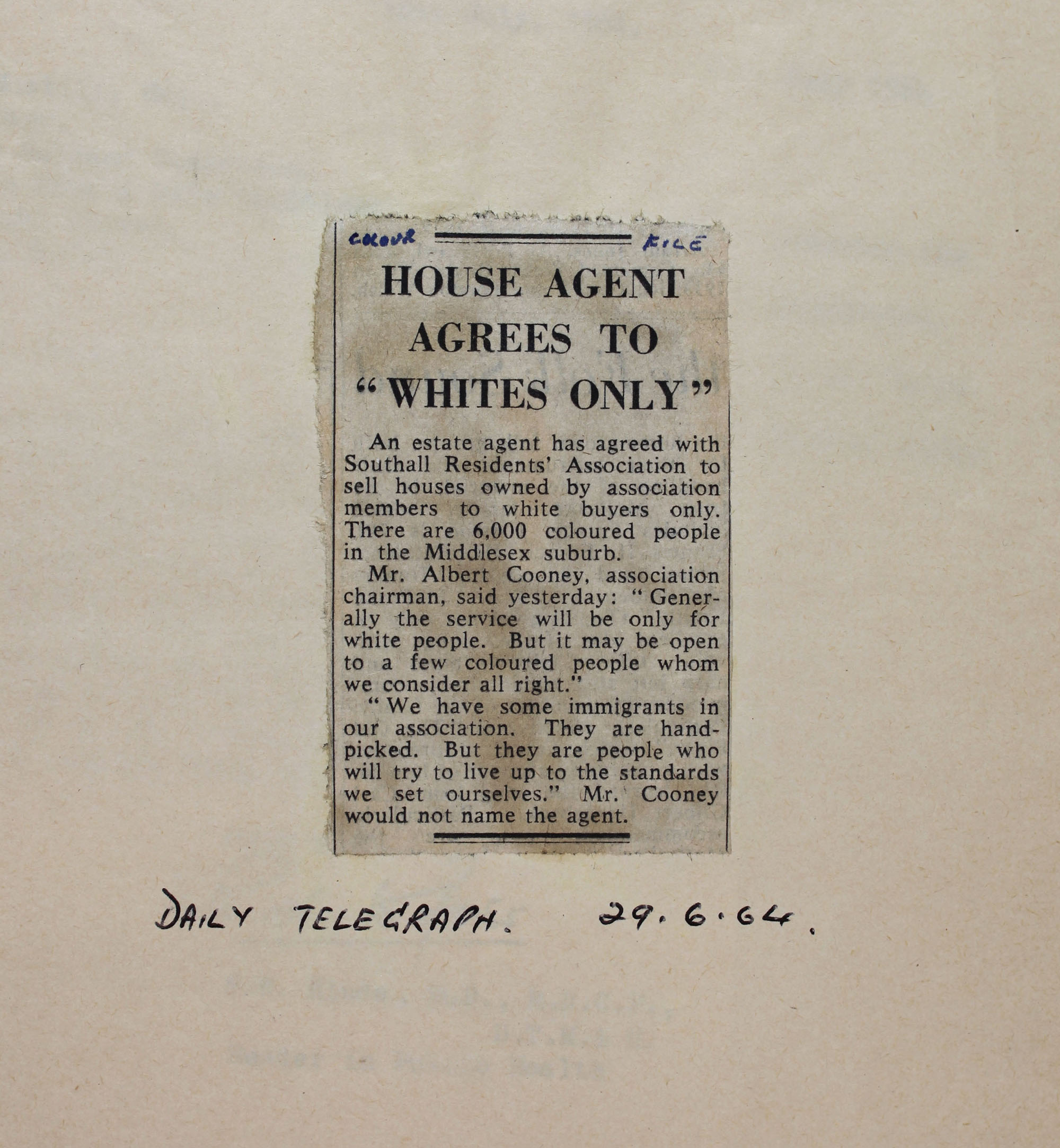
Extract from Daily Telegraph, 29 June, 1964, Catalogue ref: HGL 39/32/9
This newspaper clipping was included in a file concerning discussion of housing issues affecting Commonwealth immigrants, including the ‘colour bar’ as practised by landlords, overcrowding in tenement blocks and the resultant fire hazard and effect on public health.
[Please note that this source contains offensive language used at the time which is unacceptable today].
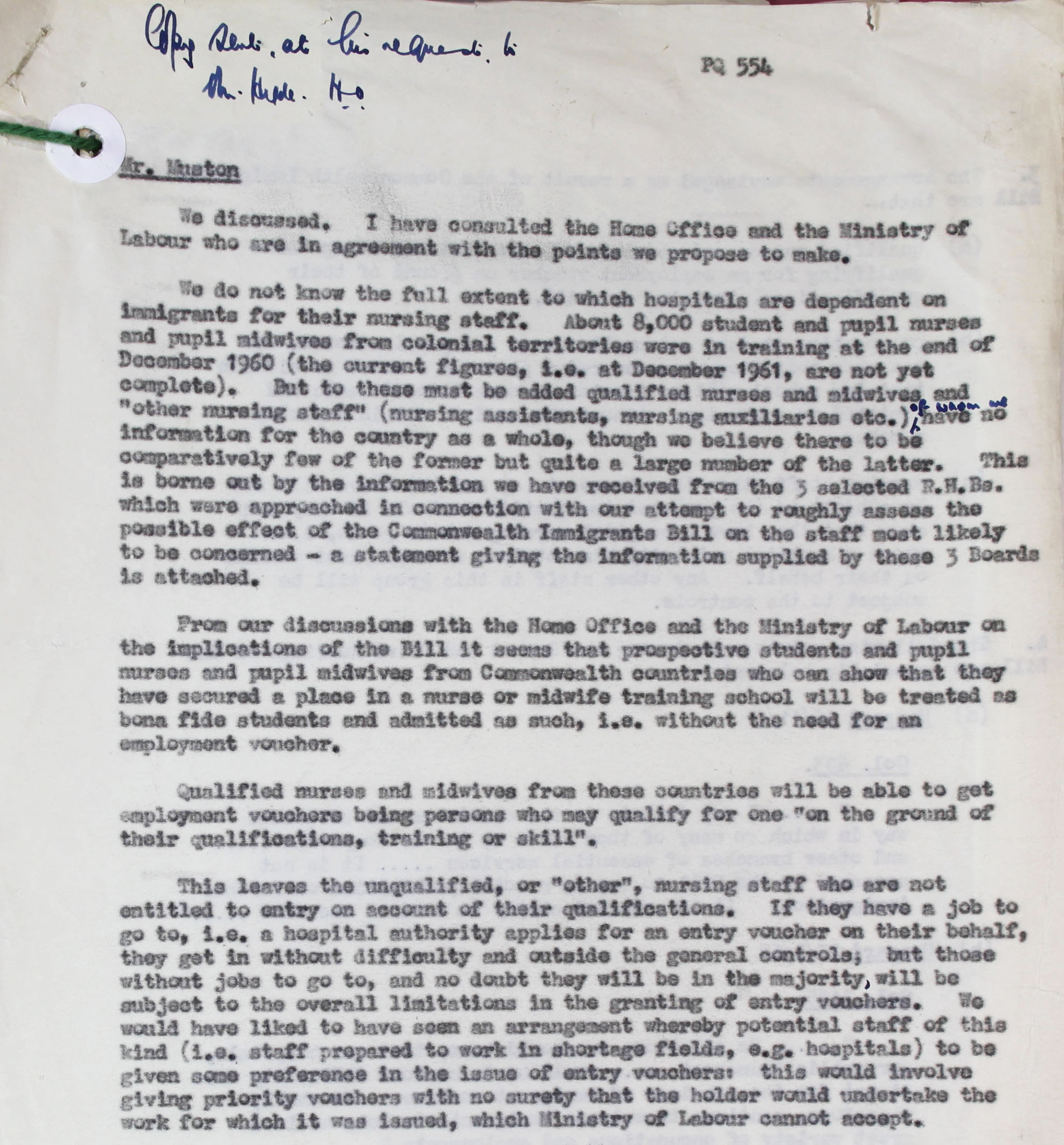
Extract from a document concerning the recruitment of students and staff from Commonwealth countries at the time of the Common Immigrants Bill, 1962, Catalogue ref: MH 55/2789
Recruitment from the Commonwealth and colonies in the 1950s and 1960s was important to deal with the shortage of nurses and hospital domestics to work in the new National Health Service. Each colony or member of the Commonwealth assessed candidates from the educational and health perspectives and then reported to a panel which included the Colonial Office (Commonwealth Office in 1966) and the Ministry of Health.
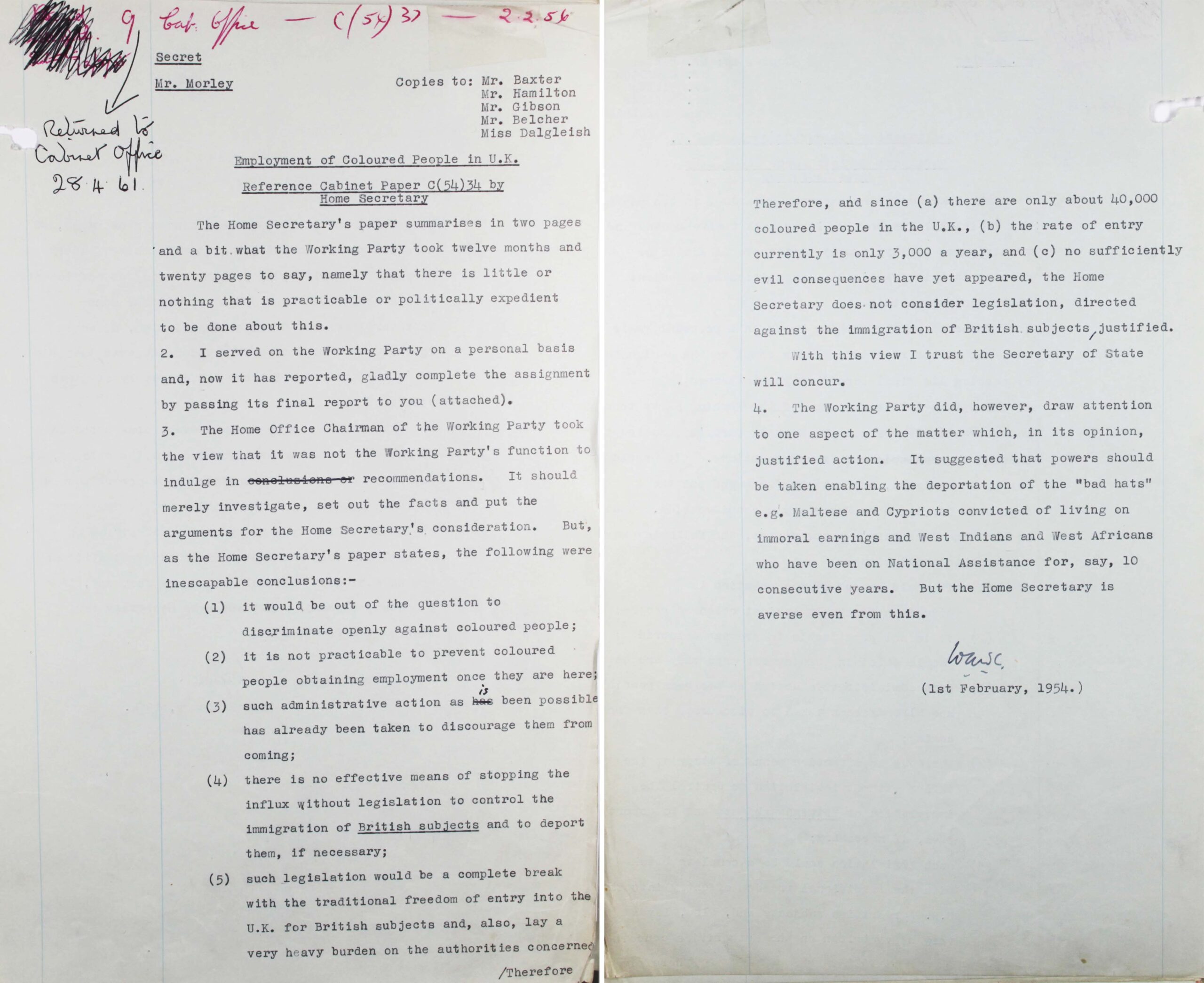
Note sent to Mr Morley at the Commonwealth Relations Office from W. Clark representing the C.R.O. on a Home Office Committee, 1st February, 1954, DO 35/5216
[Please note that this source contains offensive language used at the time which is unacceptable today].
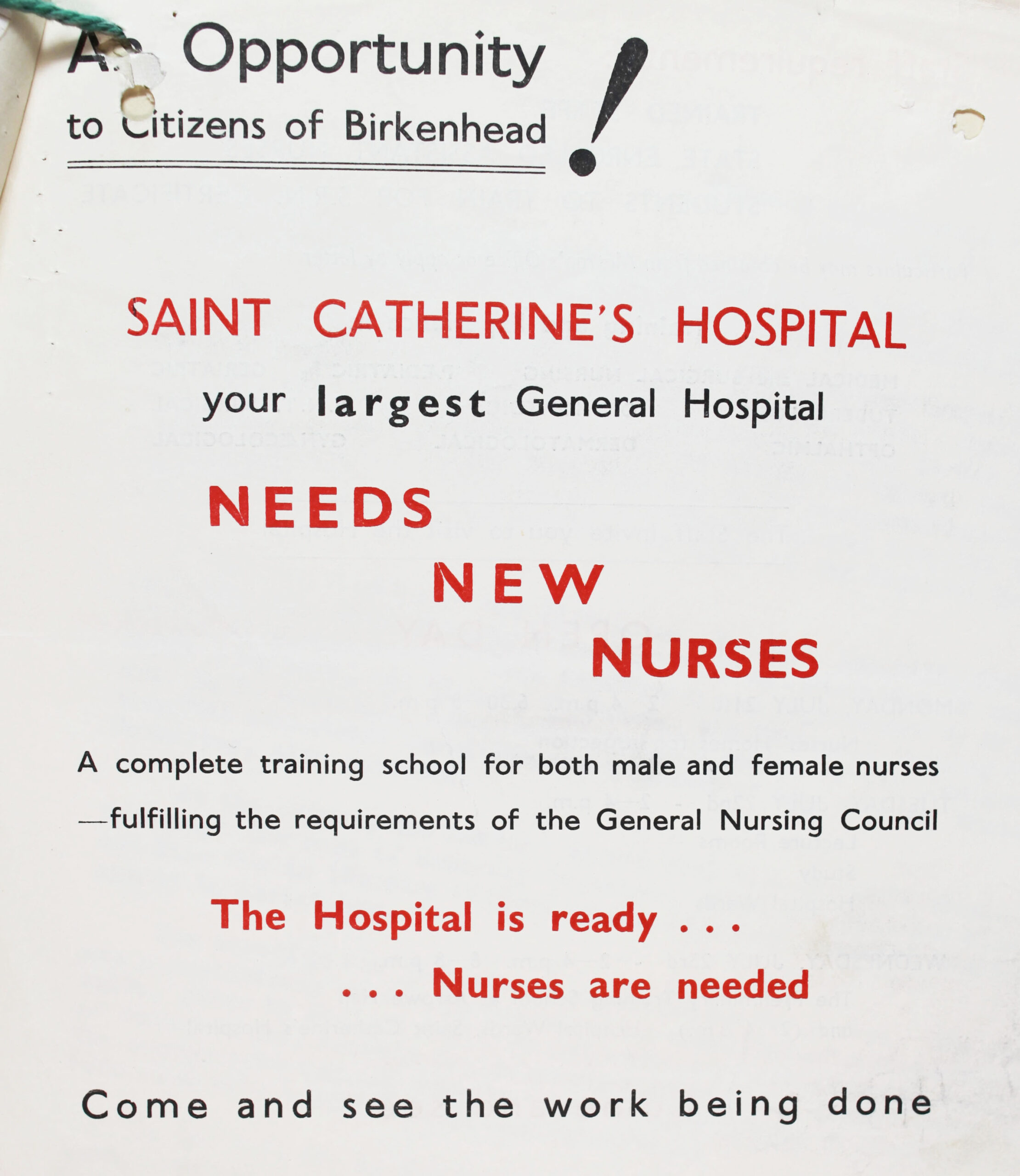
This leaflet was produced at a time when many hospitals needed more nurses in Britain after the Second World War. This is an example of a leaflet aimed at recruiting nurses at Saint Catherine’s Hospital, Birkenhead, 1952, Catalogue ref: MH 55/944
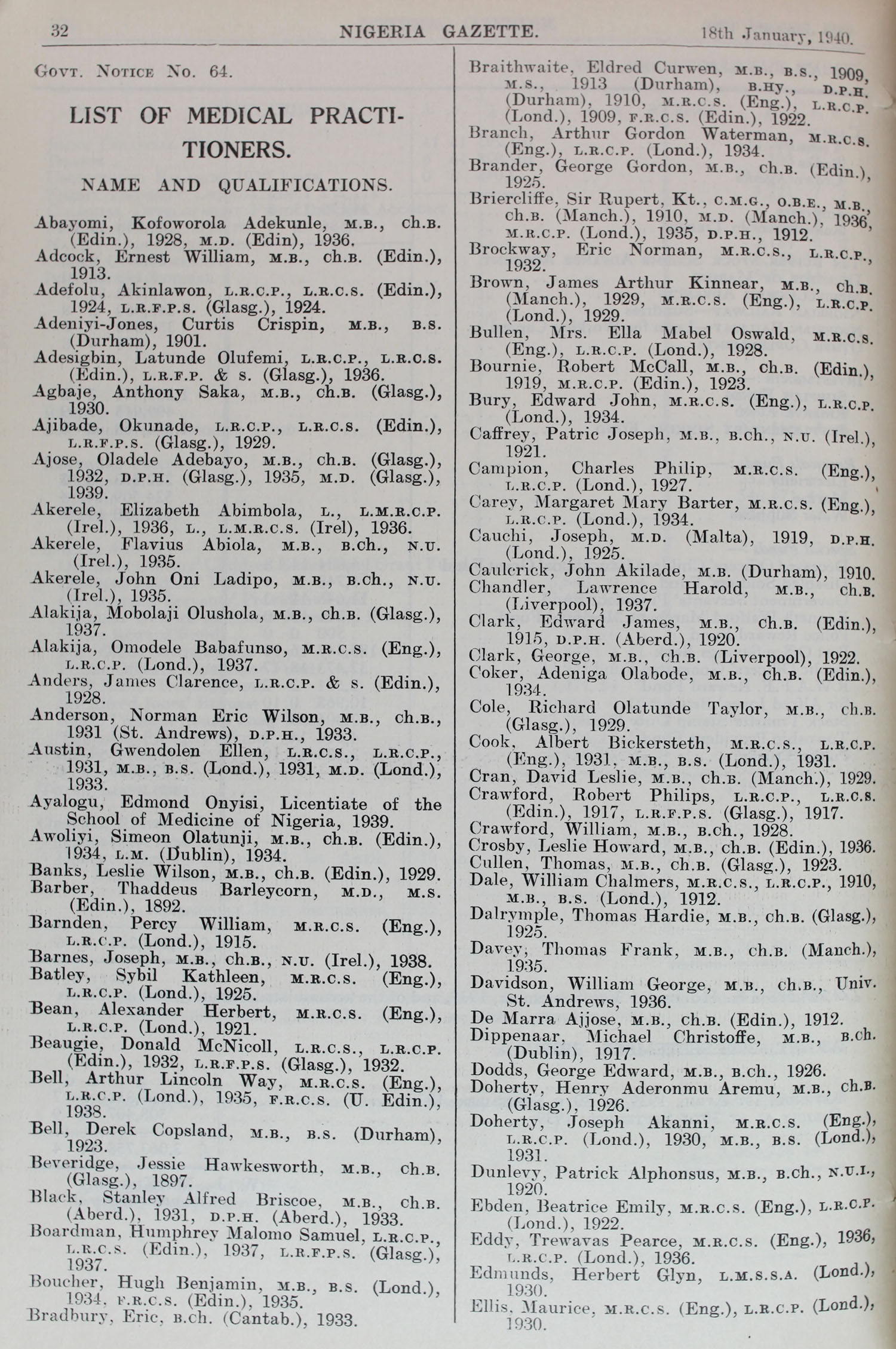
Extract from Nigerian Government Gazette which features both Nigerian and British medical practitioners, women and men, 1940, Catalogue ref: CO 658/44
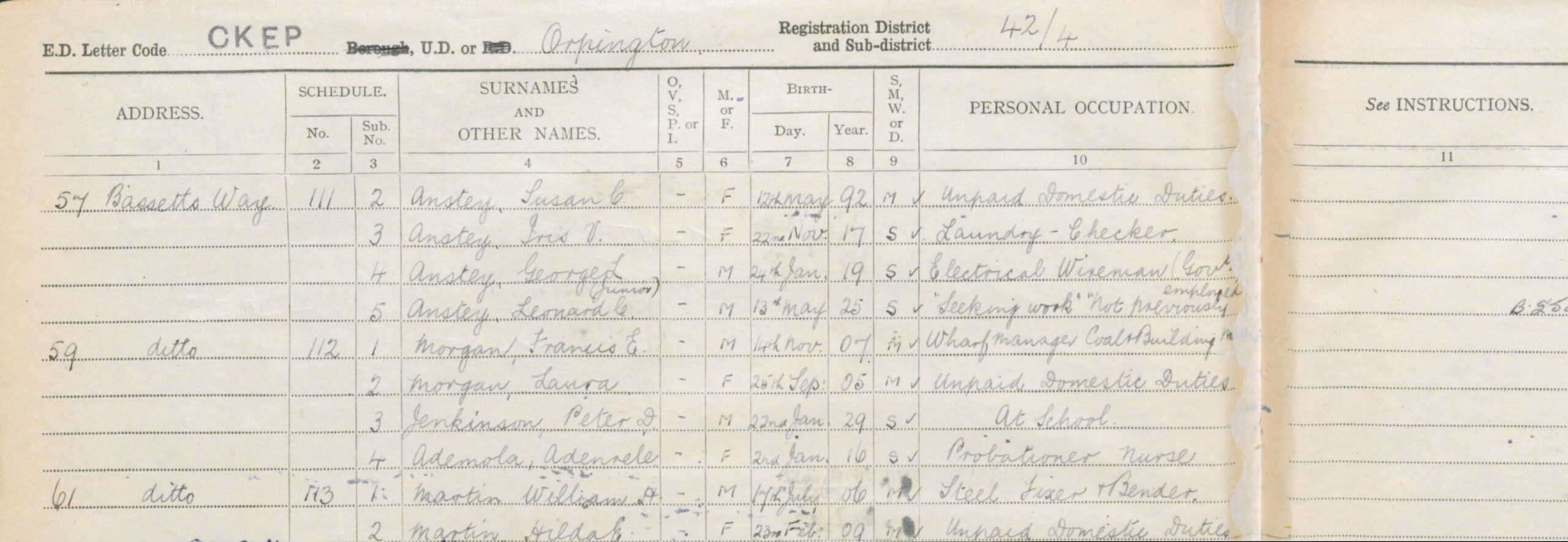
This shows Princess Ademola on the 1939 Register, Catalogue ref: RG 101/1268G
The 1939 register was an emergency step taken at the start of the Second World War to help the government set up the rationing system and identity cards. Later on it was used to track the movement of the civilian population and to help create the National Health Service Register in 1948.
The 1939 register thus provides the most complete survey of the population of England and Wales between 1921 and 1951 as the 1931 census was destroyed during the Second World War and no census was carried out in 1941 during wartime.
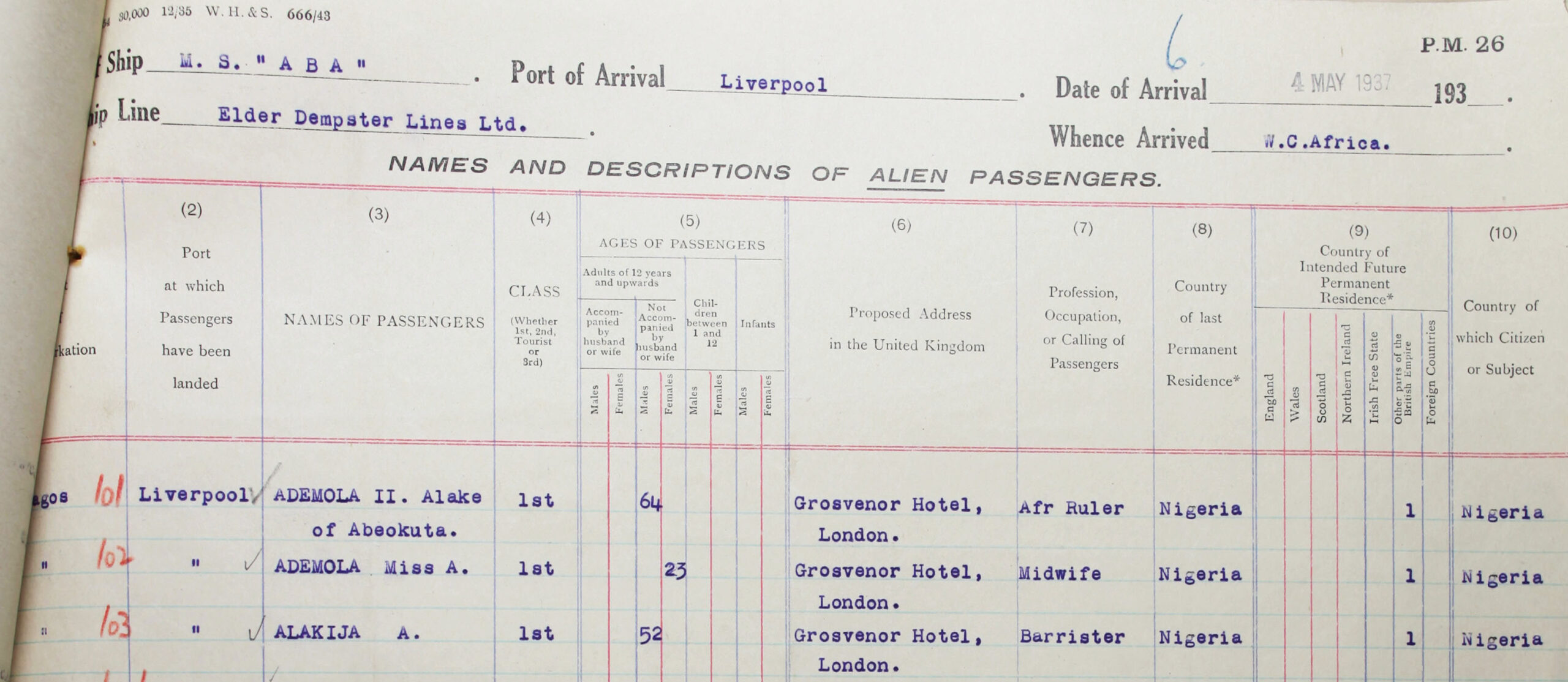
Passenger list showing Princess Ademola’s return to Britain in 1937. Catalogue ref: BT 26/1118/32
Omo-Oba Adenrele Ademola was the daughter of an important African Chief in Northern Nigeria. Princess Ademola trained as a nurse in London at Guy’s hospital where she finished her training in 1941.
This lesson has been developed in collaboration with the Young Historians Project and their project ‘A Hidden History: African women and the British health service’. Other educational resources can be accessed via their website. For an essential activity for students using this lesson consult their blog post on Princess Ademola listed in external links below.
The recruitment of African women into the National Health Service from British colonies began in the period after the Second World War. However, nurses, doctors and other medical professionals had trained in Britain before this, as the colonial power did not provide the full facilities for medical training in the colonies.
Despite their long history of work within health services in Britain, the role of African women is rarely highlighted in discussions of the history of the NHS or of health work more generally. Current narratives on Black women in the British health service tend to focus on the ‘Windrush generation’ and Caribbean contributions”: Young Historians Project.
Use this lesson to find original documents which explore the role of African nurses in the health services of Britain.
Please note that some sources contain offensive language that was used at the time and is unacceptable today.
What part did they play in British health services?Before the Second World War, African men and women came to train in Britain to work in British healthcare services. These individuals usually came from affluent backgrounds – or, less commonly, were the children of one African parent and one British parent – and chose to pursue careers in healthcare.
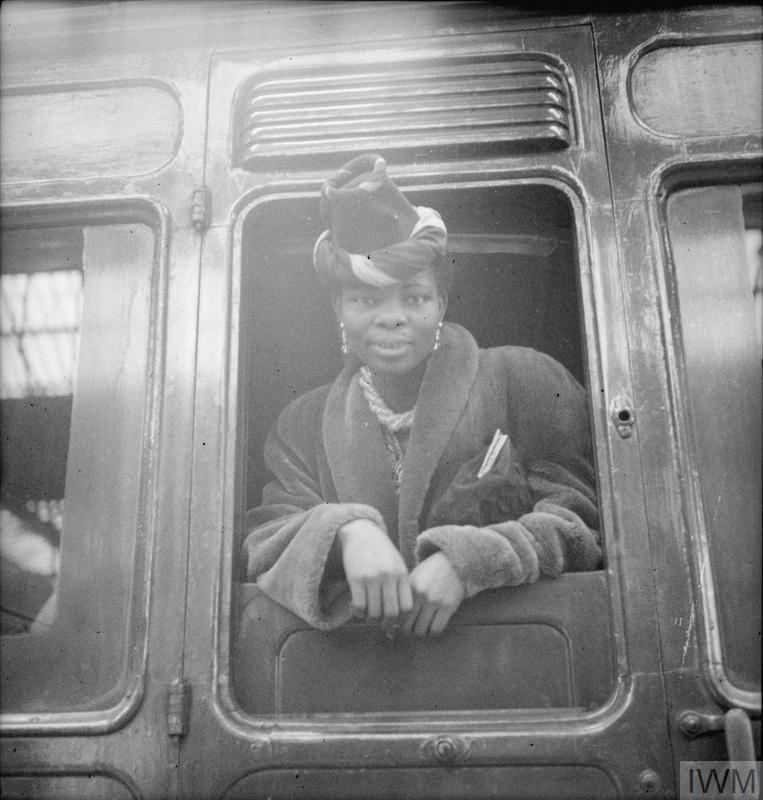
During the Second World War, the Colonial Film Unit made a film titled ‘Nurse Ademola’ about the life and career of Princess Ademola. The film was created as propaganda for West Africa in order to showcase the role of the British colonies and gain their support for the war effort. However, the film also signifies the importance of Princess Ademola herself as a nursing role model, not only for Africans but also for the British Empire. The film has been lost; however, there are some stills from the film in the Imperial War Museum photographic archive.
After the Second World War, increased numbers of Africans from Nigeria and the Gold Coast (Ghana), and West Indian citizens as part of the Windrush Caribbean migration, came to Britain to assist with the growing staffing crisis across the healthcare professions. Many experienced discrimination and racism, not only from British people but also within the services they worked. It was often difficult for these immigrants to find decent housing and many women, especially those training as nurses, were pushed to apply for courses for which they were overqualified.
Indeed, there were a growing number of government reports and research into the experience of those who migrated to Britain in the 1940s, 1950s and 1960s that reflect racist attitudes towards those who chose to settle and show the difficulties of finding decent accommodation, employment and treatment as British citizens. There were serious race riots in 1958 in London and Nottingham attacking Black communities.
In 1962, the Immigration Act created stricter guidelines for migration into Britain for all Commonwealth citizens, including citizens of the UK and its colonies. Migration was only possible if a person was a Commonwealth citizen born in the UK, a Commonwealth citizen with a passport issued by the UK government in UK or Ireland, or a Citizen of the UK and Colonies with a passport from the UK Government.
Further legislation followed with the Commonwealth Immigrants Act of 1968 and 1971, which put greater restrictions on who could be granted British citizenship and added to a climate of hostility.
Many of the underlying issues of racism, poor housing and education facing immigrant communities remain today.
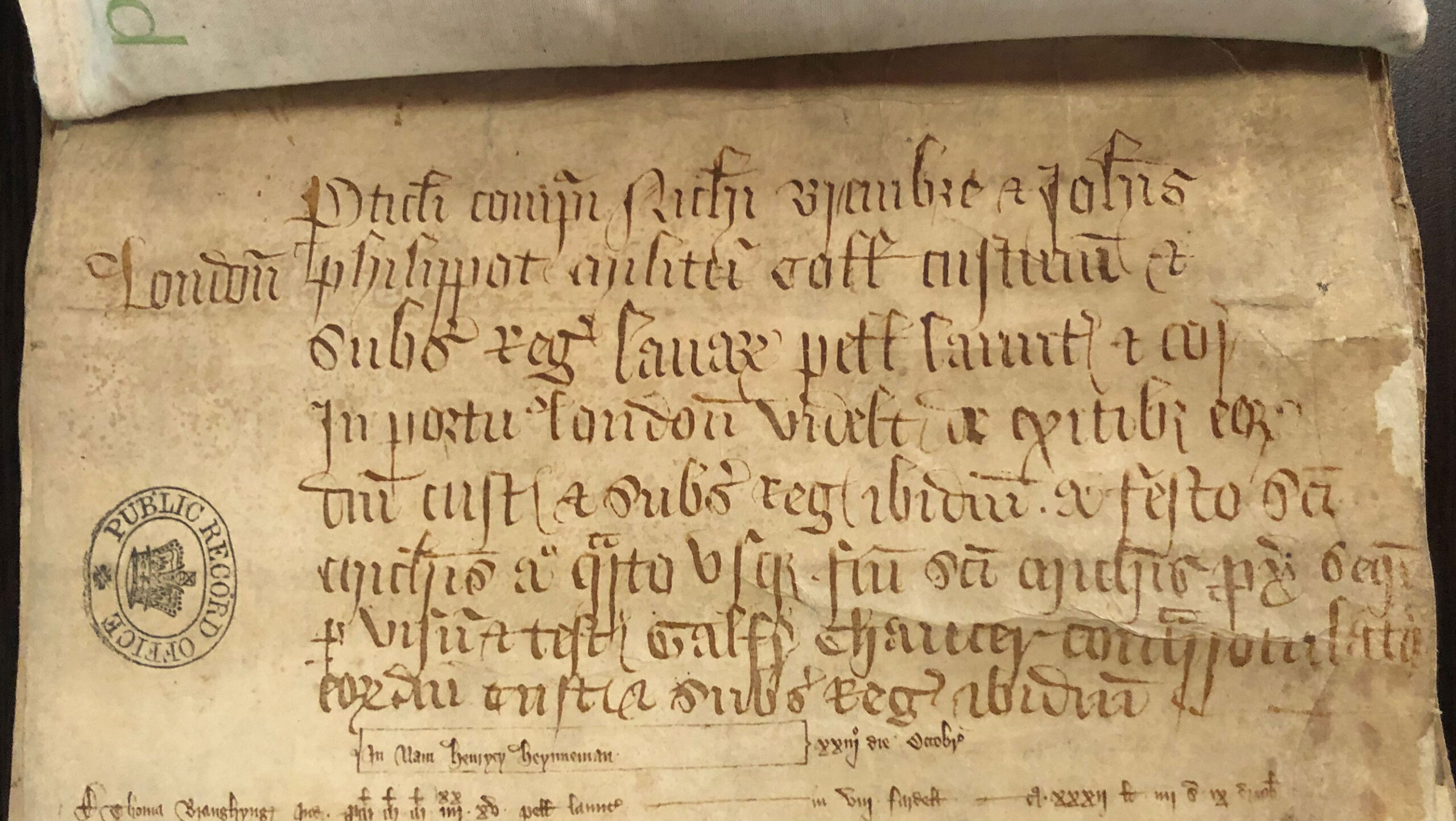
Dr Euan Roger introduces E122/71/4 – a customs account from 1380-1381.
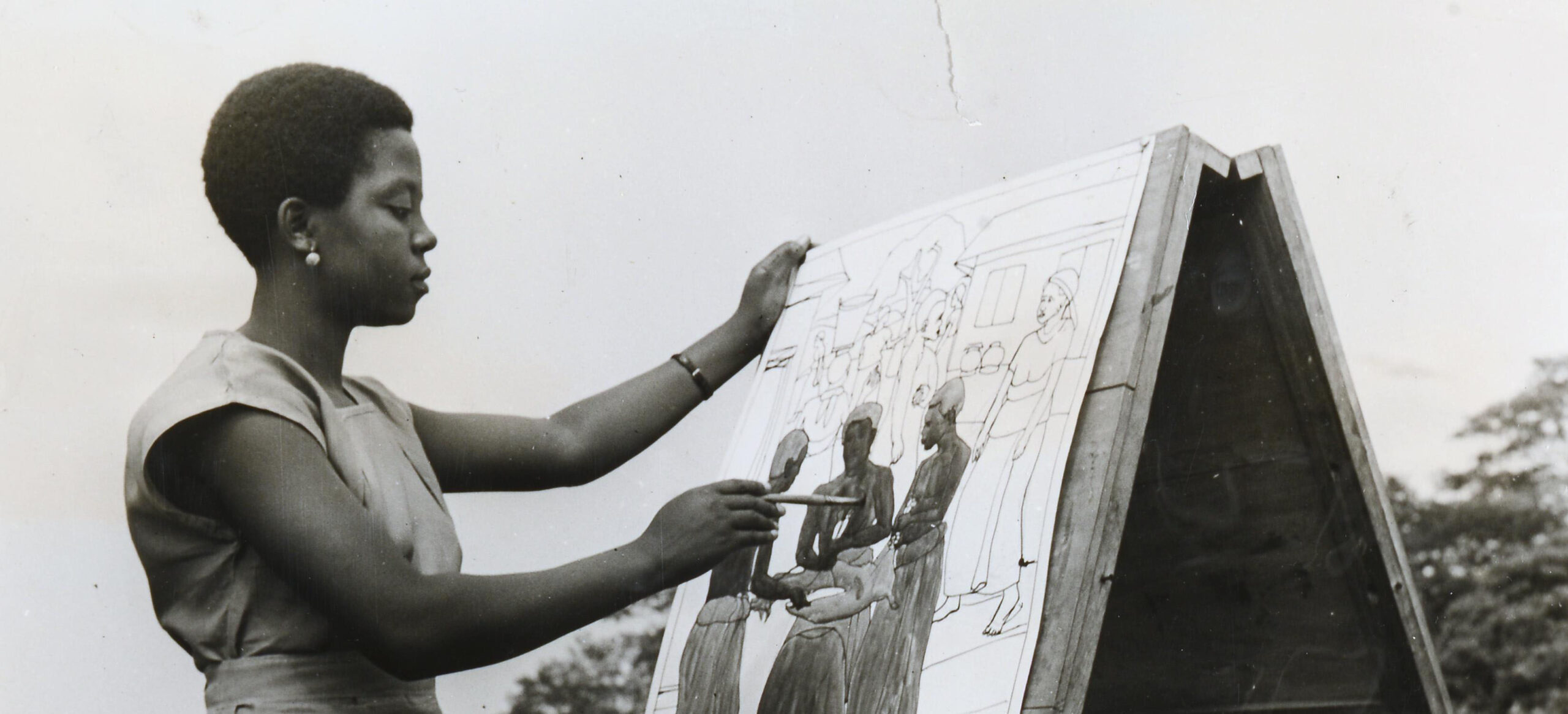
There are quite a lot of things you need to watch out for when using photographs as sources. Just like documents they must be treated with caution. Seeing is not necessarily believing!
Use the resources below to help develop your skills when using photographs as sources. Don’t miss our video tutorial as well.
Key Stages
This resource is suitable for students in Key Stages 3-5.
Connections to Curriculum
Working with historical primary sources