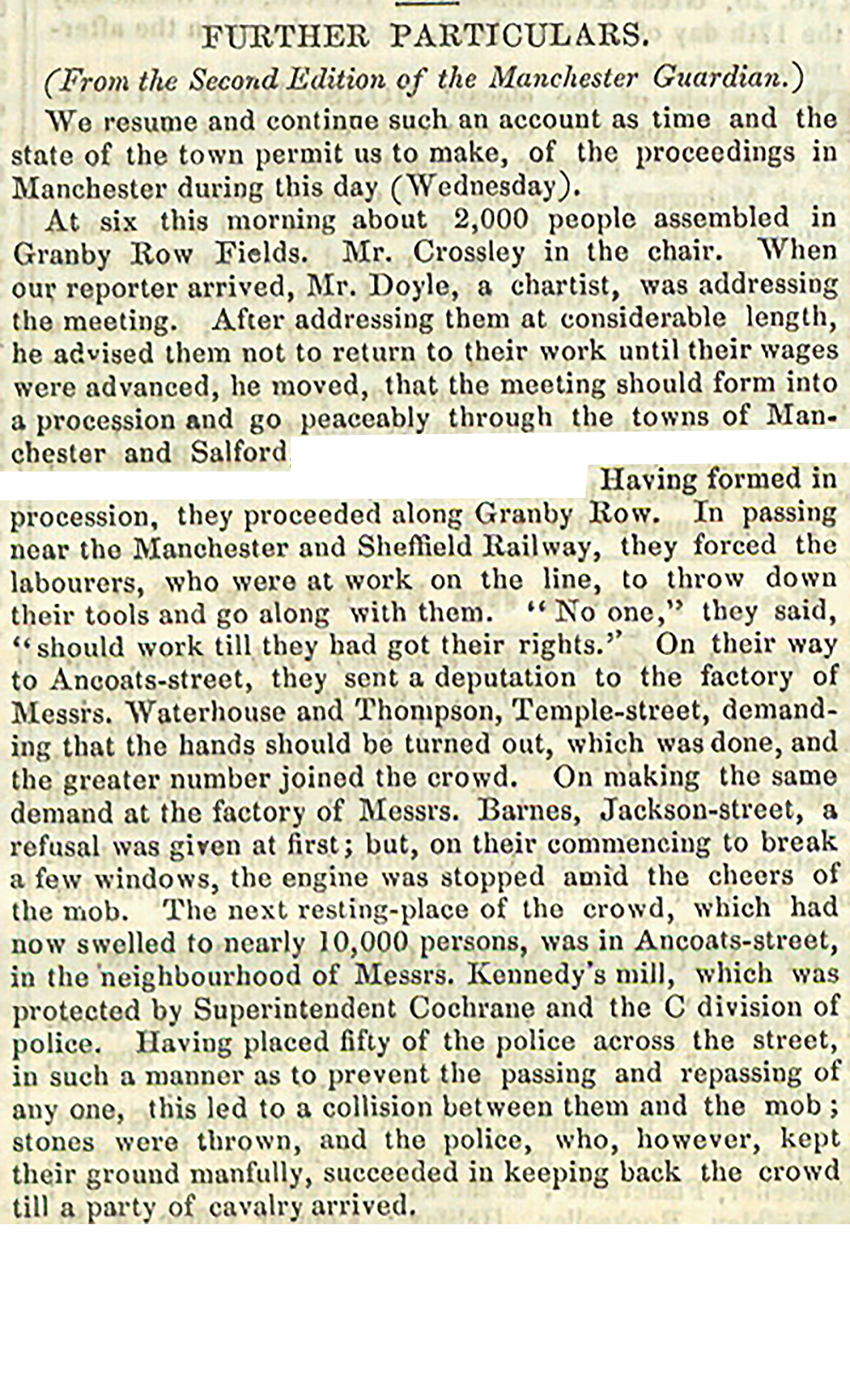
Extracts from an article about trouble in Manchester and its surroundings in ‘The Preston Chronicle and Lancashire Advertiser’, 13 August, 1842, Catalogue ref: HO 45/249A f28
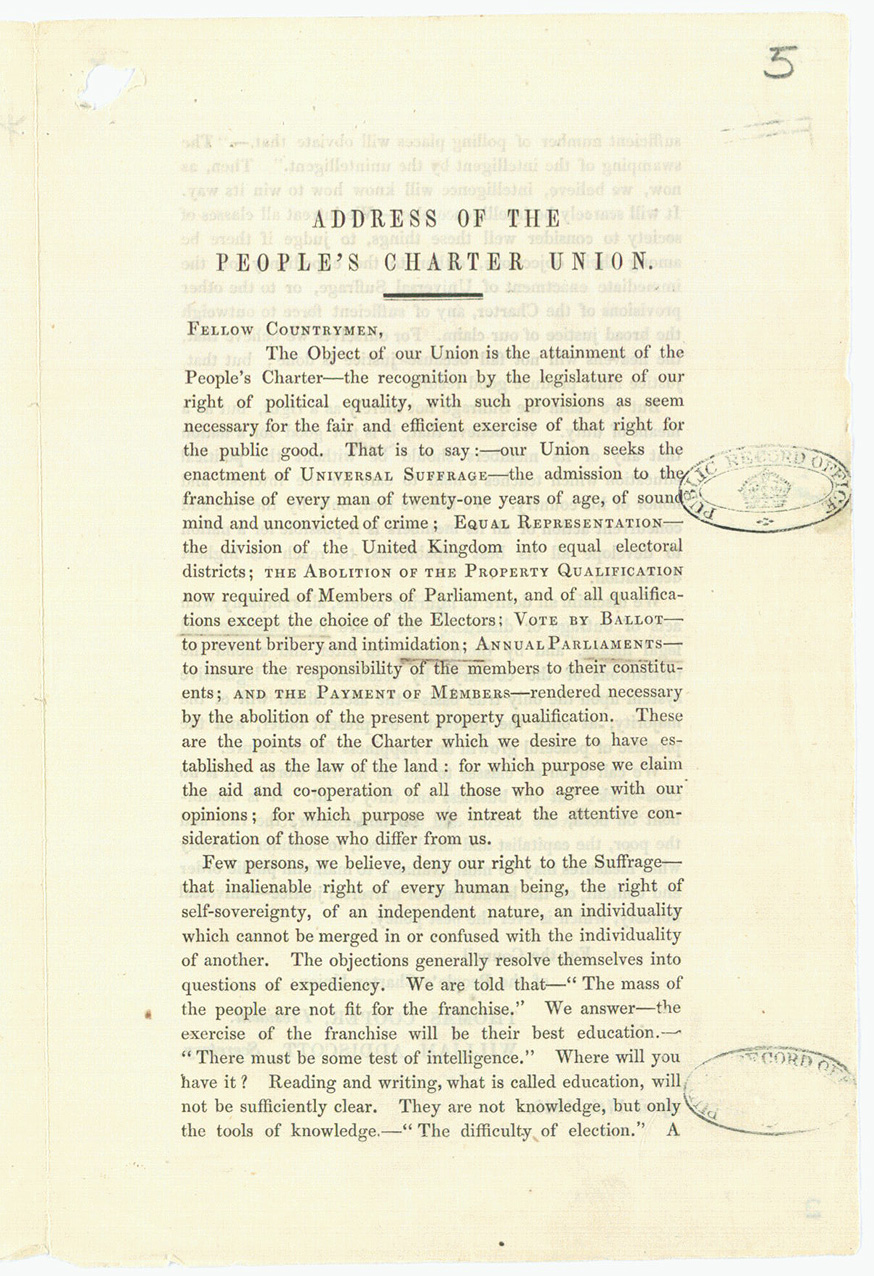
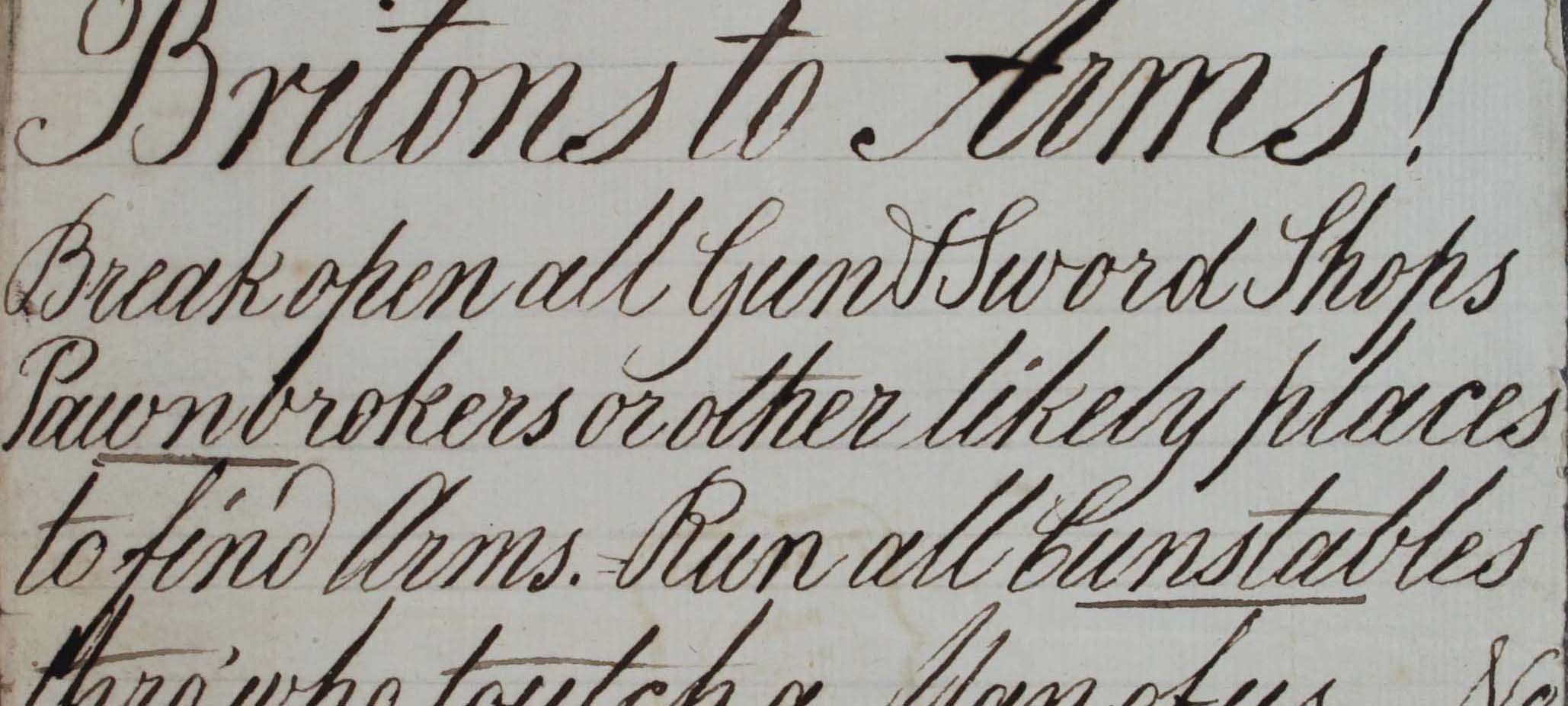
Extracts from the handbook of the People’s Charter Union, 17 April 1848, Catalogue ref: HO 45/2410A, part 4, f. 5
Universal suffrage, the right of everyone to vote is defined in this source as the right of every man of 21 years of age and over, but today it is defined more widely.
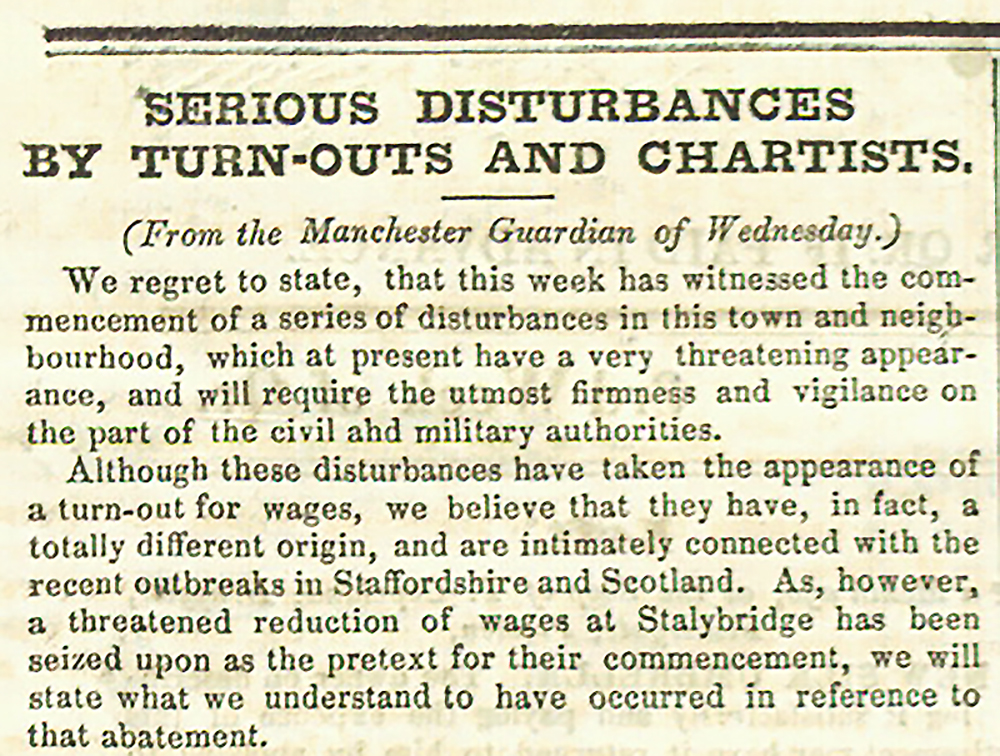
Extracts from an article about trouble in Manchester and its surroundings in ‘The Preston Chronicle and Lancashire Advertiser’, 13 August, 1842, Catalogue ref: HO 45/249A f28
With the Great Reform Act 1832, voting rights were given to the property-owning middle classes in Britain. However, many working men were disappointed that they could not vote.
Chartism was a working class movement which emerged in 1836 in London. It expanded rapidly across the country and was most active between 1838 and 1848. The aim of the Chartists was to gain political rights and influence for the working classes. Their demands were widely publicized through their meetings and pamphlets. The movement got its name from the People’s Charter which listed its six main aims:
- a vote for all men (over 21)
- secret ballot
- no property qualification to become an MP
- payment for MPs
- electoral districts of equal size
- annual elections for Parliament
Why did the Chartists make these demands? Use the original documents in this lesson to find out more about Chartism.
Political and social reform in 19th century BritainThe Chartists presented three petitions to Parliament to make their six point charter law in 1839, 1842 and 1848. Each petition was rejected. The final Chartist petition of 1848, it was claimed, had six million signatures. The Chartists planned to deliver it to Parliament after a peaceful mass rally on Kennington Common in London. According to the ‘Illustrated London News’ on 15th April 1848, ‘One hundred and fifty thousand special constables, watchful for the preservation of order, have grasped their useless truncheons and have paraded the streets without meeting a foe’. 15,000 Chartists were said to have turned up. The demonstration was considered a failure and the rejection of this last petition marked the real decline of Chartism. The petition itself was ridiculed and said to contain 1,975,496 names and many forgeries, including the signatures of Queen Victoria and Mr. Punch. Chartist conventions continued until the 1850s but without mass support.
Opponents of the movement feared that Chartists were not just interested in changing the way Parliament was elected, but really wanted a revolution. They also thought that the Chartists, who said they disapproved of violent protest, were in fact stirring up a wave of riots around the country. On 4 November 1839, 5,000 men marched into Newport, in Monmouthshire, and attempted to take control of the town. Led by three well-known Chartists: John Frost, William Jones and Zephaniah Williams, they gathered outside the Westgate Hotel, where the local authorities were temporarily holding a number of potential troublemakers. Troops protecting the hotel opened fire, killing at least 22 people, and brought the uprising to an abrupt end.
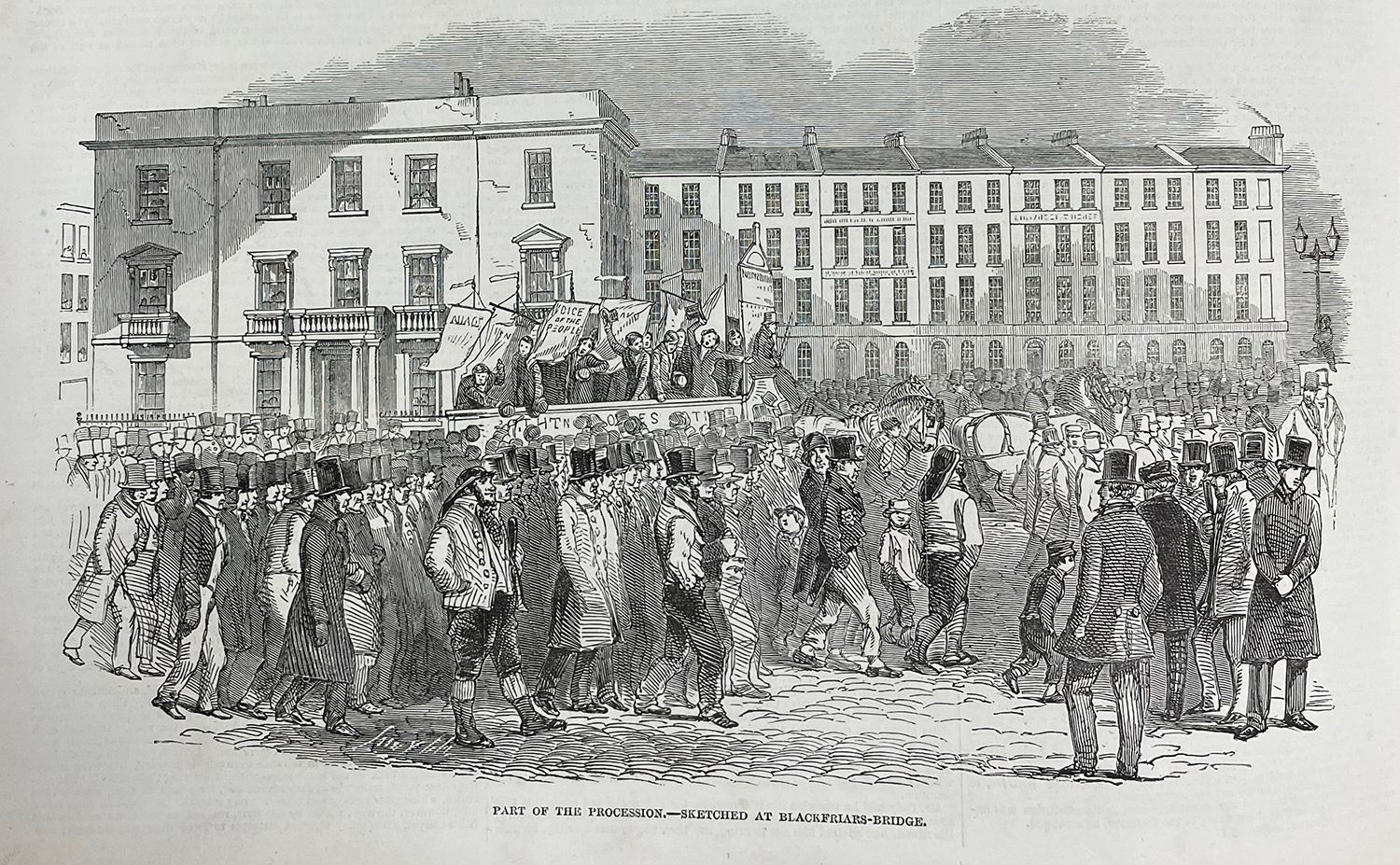
Support for Chartism peaked at times of economic depression and hunger, in 1839, 1842 and 1848. In 1842, for example there was rioting in Stockport, due to unemployment and near-starvation, the new union workhouse was attacked. Also in Manchester workers protested against wage cuts, wanting ‘a fair day’s pay for a fair day’s labour’. The ‘Plug Plots’ were a series of strikes in Lancashire, Yorkshire, the Midlands and parts of Scotland that took place in the summer of 1842. Workers removed the plugs from the boilers in order to bring factory machinery to a halt. Wage cuts were the main issue, but support for Chartism was also strong at this time. In 1848 as trade was still depressed and interest in political reform peaked again with news of revolution in France and a third Chartist petition was planned.
Chartism is often described as a working class movement, but it had some middle class supporters who were hoped it would promote education reform and teetotalism. It was not necessarily a revolt against industrialisation either. Many chartist supporters worked in the domestic industry as handloom weavers, stocking makers, shoemakers or carpenters however, the latter two trades were not impacted by industrialisation at that point.
Although the Chartist movement ended without achieving its aims, the fear of civil unrest remained. Later in the century, many Chartist ideas were included in the Reform Acts of 1867 and 1884. At the time, the six point charter proved too radical for a Parliament representing the middle and upper classes to make into law.
Possibly the movement could have made more progress had its leadership been more united. There were also regional differences in the nature of Chartist support, for example in Wales, Chartism was often associated with Nonconformist chapels but in Leeds some Chartists worked to enter local government. Despite its failure, it was a significant movement because it gave the working classes a sense of class consciousness and valuable political experience in campaigning, organizing publicity and holding meetings.
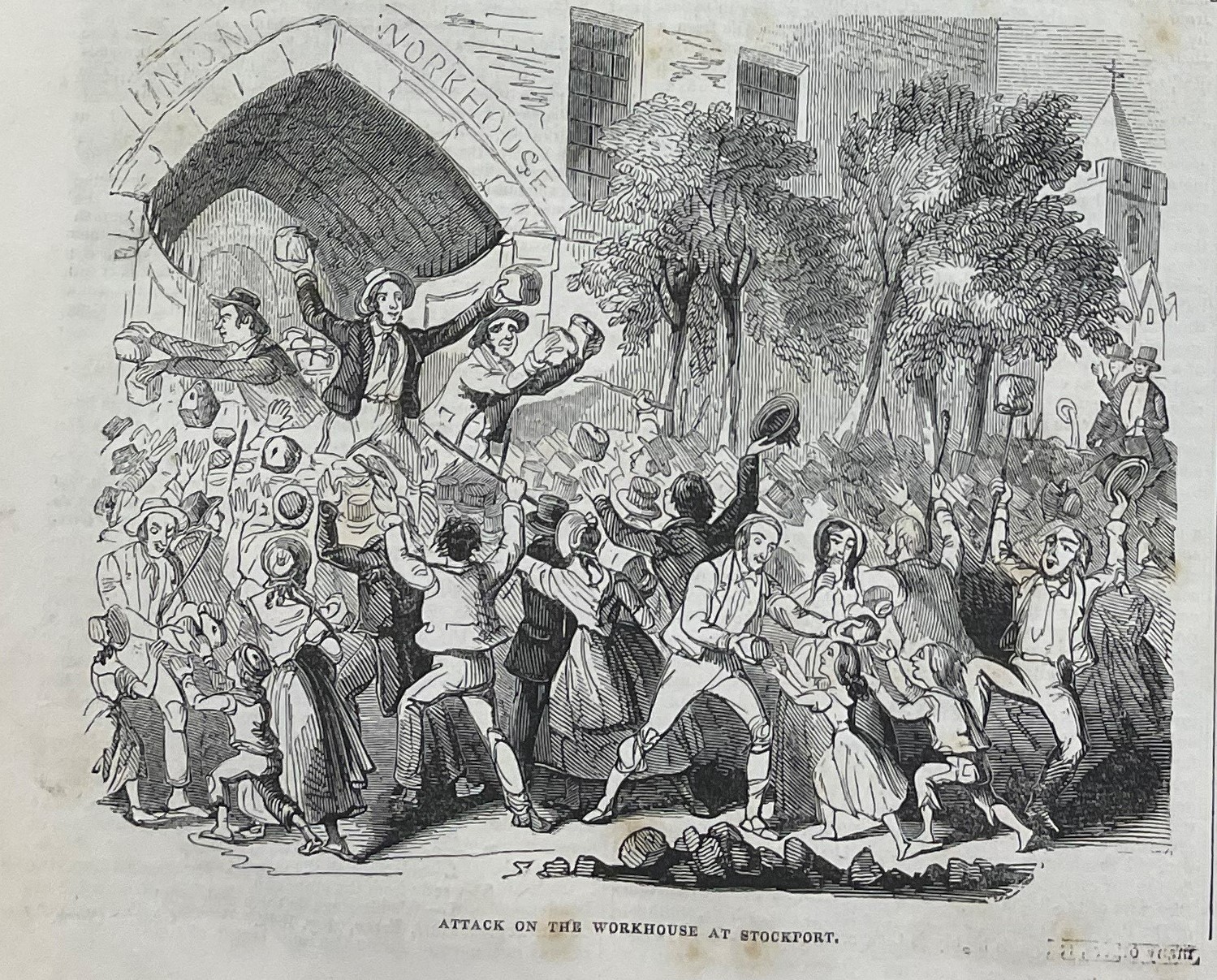
Cartoon entitled: ‘Attack on the workhouse at Stockport’ from Illustrated London News, 20 August 1842, Catalogue ref: ZPER 34/1 f.236
 Was this the start of mass politics in Britain?
The final defeat of the Emperor Napoleon at Waterloo in 1815, after 22 gruelling years of war, saw peace celebrations but no ‘peace dividend’ – at least for working people. Half a million soldiers and sailors were demobilised into an economy just as wartime industries were contracting. On top of this came deep trade slumps in the northern manufacturing districts in 1816-17 and 1819, and the terrible ‘lost summer’ of 1816 caused by the dust from a massive volcano in Indonesia. Social unrest was inevitable; radical reformers sought to harness this to build a mass movement for political change.
Radicals, like Joseph Mitchell of Liverpool in his ‘Address to the People’, argued that the true causes of distress were political. Wealthy landowners and financiers who had profited from the war continued to milk the public purse in peacetime, exacting high interest on loans to government and drawing huge unearned state salaries. While the propertied classes welcomed the end of the wartime income tax, the poor continued to pay taxes on essentials like soap, salt, malt and candles. The Corn Law of 1815 protected the incomes of farmers and landowners by keeping out foreign corn – but this raised the price of flour and bread for consumers: it was known as the ‘bread tax’. A radical reform of Parliament was needed to put power back in the hands of the people.
In the autumn of 1816, reform societies were founded in towns all over the country, but particularly in the industrial midlands and north. Open-air public meetings were held in Birmingham, Manchester and elsewhere to demand the right to vote, which (it was claimed) England’s ‘ancient constitution’ had once allowed to all male citizens.
At the second of two mass meetings in London’s Spa Fields, addressed by ‘Orator’ Henry Hunt, a small group of ultras led a section of the crowd off towards the Tower of London. It was a dramatic attempt to stage an English version of the storming of the Bastille, the event which had set off the French Revolution in 1789. The elite, London-based Hampden Club launched a national petitioning campaign for parliamentary reform: a printed petition form survives in The National Archives.
Hundreds of petitions, sent in from all over the country, were rejected by the House of Commons in early 1817. Radicals in Manchester responded by organised a march on London: several thousand men carrying blankets and knapsacks, the so-called ‘Blanketeers’. ‘I am a trew reformer,’ wrote young Jonathan Hulton to his parents from Ashbourne in Derbyshire, just before the last remaining marchers were turned back by troops. Further risings were again attempted in Manchester, Huddersfield, and in Pentrich in Staffordshire, aided and abetted by the government spy and agent provocateur ‘Oliver’, who left his own, self-serving account of the affair.
Dozens of reformers were imprisoned without trial. Some sent touching letters home, including the Lancashire radical Samuel Bamford who told his beloved Jemima that a reformer’s wife should be a heroine.
The attempted risings and rebellions of 1817 may appear futile from a present-day perspective, but this was a time when there was no democratic process to give hope of real change to working people. The mass petitioning campaign had nonetheless mobilised between half a million and a million people for reform – an effort not far short of the first petition for the People’s Charter, which mustered 1.2 million signatures from a larger population in 1839. Working people were rapidly learning about mass politics.
Dr Robert Poole
University of Central Lancashire [UCLAN], author of ‘Return to Peterloo’
Design your own commemorative stamp
A commemorative stamp is a postage stamp issued to remember a person, place or event. Can you design a special stamp to celebrate Queen Elizabeth II’s Platinum Jubilee?
- Who could you show in your design?
- Which important achievements or events from Queen Elizabeth’s 70 year reign could you remember?
- What else will you include in your design?
Wordsearch
| S | J | P | M | O | N | A | R | C | H | R | U | G | J | K | P | E | V | Z | G |
| B | M | X | L | O | P | L | C | O | R | O | N | A | T | I | O | N | H | O | W |
| C | W | Q | Z | L | K | W | S | E | Q | I | M | L | S | P | V | A | I | P | E |
| W | I | C | P | A | B | B | E | Y | S | A | T | P | B | Y | E | A | R | S | S |
| X | N | E | L | M | I | K | Q | Z | D | T | S | M | J | D | D | W | Z | V | T |
| C | D | L | S | E | R | B | U | C | K | I | N | G | H | A | M | E | M | S | M |
| Q | S | E | W | Y | B | N | E | M | I | Z | N | S | U | T | O | L | V | D | I |
| S | O | B | I | L | X | N | E | V | C | R | O | W | N | F | S | I | S | Z | N |
| R | K | R | U | B | D | O | N | B | W | S | Y | I | V | P | Y | Z | Q | L | S |
| E | V | A | P | S | Q | P | O | V | K | G | C | J | P | L | G | A | E | M | T |
| J | X | T | C | A | S | T | L | E | U | S | M | U | K | A | B | B | I | P | E |
| U | M | I | A | K | B | I | E | A | B | C | S | N | T | T | V | E | M | R | R |
| B | I | O | N | S | J | D | W | R | T | L | P | E | T | I | U | T | K | I | O |
| I | H | N | G | E | K | A | I | E | O | P | A | Z | W | N | E | H | A | N | E |
| L | B | S | J | V | D | Z | A | I | Q | H | F | N | Q | U | T | X | P | C | M |
| E | N | T | I | E | M | T | B | G | M | I | C | K | D | M | P | U | A | E | S |
| E | Q | U | W | N | L | D | R | N | S | L | Z | O | F | T | Z | L | F | W | J |
| Z | Z | T | L | T | S | E | S | O | J | I | U | Y | B | P | A | M | X | D | X |
| X | Y | D | U | Y | H | K | P | N | S | P | I | L | R | P | S | D | C | O | Z |
| T | N | W | C | F | C | O | M | M | O | N | W | E | A | L | T | H | J | S | D |
Can you find the following words?
Queen, Platinum, Jubilee, Buckingham, Coronation, June, Monarch, Westminster, Prince, Windsor, Commonwealth, Years, Seventy, Palace, Crown, Celebration, Elizabeth, Reign, Abbey, Philip, Castle
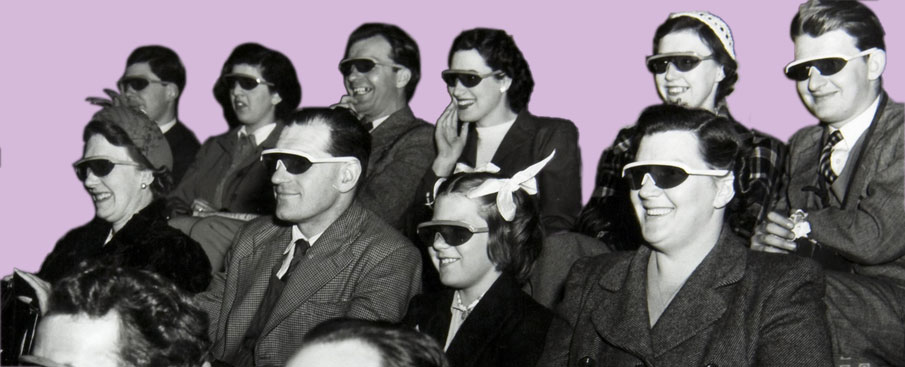
Download the timeline as a PDF
1950
- C. S. Lewis published The Lion, the Witch and the Wardrobe.
- British troops were sent to Korea, they fought with American forces as the first military action of the Cold War. Around 60,000 members of the British armed forces served, many were National Servicemen.
1951
- Winston Churchill became Conservative Prime Minister, aged 77 years after leading the country during the Second World War.
- On the 100 years anniversary of the Great Exhibition of 1851, the Festival of Britain in 1951 showcased British achievement since the Second World War. This was a bright look at the future. The festival celebrated the arts, sciences and architecture. The Royal Festival Hall, on the Southbank was built as part of the Festival and remains today as part of the South Bank development on the Thames.
- Two members of a Soviet spy ring Donald Maclean and Guy Burgess escaped to Moscow. They infiltrated the intelligence system in Britain and passed information to the Soviets during Second World War and start of the Cold War.
- The UK’s first National Park, the Peak District was introduced. This was soon followed by the Lake District, Snowdonia and Dartmoor. National Parks protected by the government, allow the public to visit areas of great natural beauty, plants, or animals.
- The European Coal and Steel Community founded, the forerunner of the European Union.
1952
- King George VI died, Britain’s wartime monarch. Elizabeth, his eldest daughter became Queen Elizabeth II, our longest reigning monarch
- 4,000 people die in London’s ‘Great Smog’
- Britain tested an atom bomb in the Monte Bello Islands off the coast of Western Australia.
1953
- James Watson and Francis Crick discover the structure of DNA and how it served as the ‘building blocks’ of life.
- Ian Fleming published the first James Bond book, Casino Royale.
- New Zealander Edmund Hillary and Nepalese Tenzing Norgay are the first to reach the summit of Everest.
- The DH.106 Comet launched as the world’s first commercial jet airliner.
- New edition of the highway-code was published as there more cars on the roads.
1954
- Medical student Roger Bannister ran a mile in under 4 minutes.
- Rationing, in place since the Second World War ended.
1955
- Winston Churchill resigns due to ill health, Anthony Eden takes over as Prime Minister.
- Television with adverts began, the first commercial channel was ITV.
- Mary Quant opened her first shop, ‘Bazaar’ in Chelsea, London.
- Ruth Ellis was the last woman to be hanged in Britain. Her execution played a major part in the movement to abolish the death penalty.
- USSR forms the Warsaw Pact, in response to NATO.
1956
- The Clean Air Act was introduced in response to London’s Great Smog of 1952 to prevent pollution from smoke.
- Britain’s first nuclear power station at Windscale.
- Dodie Smith published 101 Dalmatians.
- Suez Crisis – Britain and France invade Egypt after the Suez Canal is nationalised, but are forced to withdraw under American pressure.
- Elvis Presley has his first hit in the UK, Heartbreak Hotel.
1957
- Anthony Eden resigned. Harold MacMillan became Prime Minister and said “most of our people have never had it so good”.
- The Gold Coast became the first African state to become independent of Britain, renamed Ghana.
- The Treaty of Rome signed by Belgium, France, Italy, Luxembourg, the Netherlands and West Germany created the European Economic Community, later the E.U.
1958
- 22 out of 40 people on board BEA Flight 609 died at take-off from Munich airport. Those killed included eight members of Manchester United’s football team who were nicknamed ‘the Busby Babes’.
- Britain’s first motorway opens, the Preston by-pass, a section of the M6. This motorway now covers 230 miles from the Midlands to the Scottish border.
- Britain’s first parking meters introduced in Mayfair, London.
- Michael Bond published A Bear Called Paddington.
- Europe feared nuclear conflict in the 1950s. CND, the Campaign for Nuclear Disarmament, was launched in London.
1959
- The first Mini motor car was built by British Motoring Corporation, became an icon for the 1960s. The cars used less petrol and were a cheaper to run!
- The first postcodes introduced by the Post Office in Norwich.
- Stevenage had been designated as Britain’s first New Town. It was built with the first traffic-free shopping zone which was officially opened in 1959 by the Queen Elizabeth II.
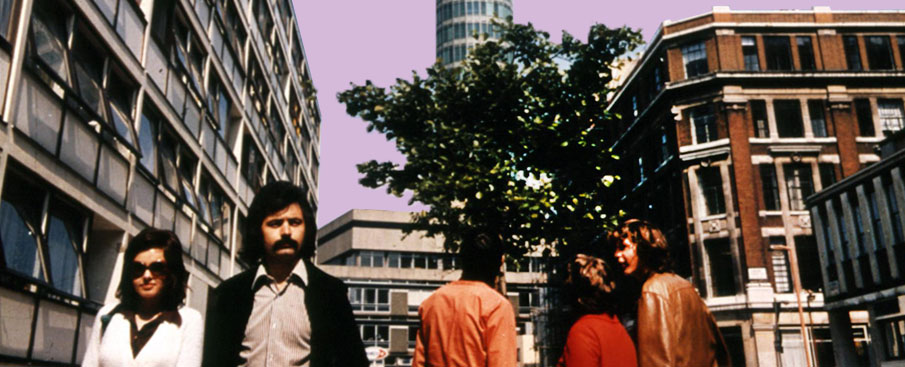
Download the timeline as a PDF
1960
- The United States of America enters the Vietnam War.
- NASA’s space probe, Pioneer 5 is launched into orbit between Earth and Venus.
- The Beatles perform their first public performance at the Indra club in Hamburg, Germany.
1961
- John F. Kennedy is sworn in as the 35th President of the United States, succeeding Dwight D. Eisenhower.
- Ham the Chimp becomes the first ape in space, climbing to a distance of 157 miles above Earth in the Mercury-Redstone 2 Launch Vehicle.
- George Blake, a British spy found guilty of working as a double agent for the Soviet Union, is imprisoned for 42 years.
- Construction begins on the Berlin Wall, with the purpose of restricting movement within Berlin and forming a solid boundary between East and West Germany.
- American involvement in the Vietnam War begins officially, as helicopters and four-hundred U.S. personnel land in Saigon.
1962
- Prime Minister Harold Macmillan dismisses one third of his Cabinet in what the press dubs the ‘Night of the Long Knives’.
- The Beatles release their first single, “Love Me Do“.
- “Dr. No“, the first ever James Bond film, premieres in United Kingdom cinemas.
- The South African government arrests Nelson Mandela in Howick and charges him with incitement to rebellion.
1963
- The Big Freeze of 1963 begins, with temperatures reaching as low as -16C (3.2F) in places. The ice and snow finally starts to thaw in early March.
- The Beatles release their first album, “Please Please Me“.
- 70,000 marchers arrive in London from Aldermaston, to demonstrate against nuclear weapons.
- The Great Train Robbery of 1963 takes place in Buckinghamshire. £2.6 million is stolen, but thirteen men are later convicted and jailed for the crime.
- Alec Douglas-Home succeeds Harold Macmillan as Prime Minister.
- U.S. President John F. Kennedy is shot dead in Dallas.
- “I Want to Hold Your Hand” and “I Saw Her Standing There” are released in America, marking the beginning of full-scale ‘Beatle-mania‘.
1964
- The Beatles arrive at New York City’s JFK International Airport, receiving a reception from a mass of screaming fans. This is the first occurrence of “Beatle-mania” in the United States.
- BBC Two begins broadcasting in the United Kingdom.
- Nelson Mandela and seven others are sentenced to life imprisonment in South Africa and sent to the Robben Island prison.
- The 1964 Summer Olympics are held in Tokyo.
- The House of Commons votes to abolish the death penalty for murder in Britain.
1965
- Lyndon B. Johnson is sworn in for his full term as U.S. President.
- The State funeral of Sir Winston Churchill takes place with the largest assembly of statesmen in the world until the 2005 funeral of Pope John Paul II.
- The Beatles perform the first stadium concert in the history of rock, playing at Shea Stadium in New York.
- The Post Office Tower opens in London.
- A seventy miles per hour speed limit is imposed on British roads.
1966
- The Rubber Soul album by The Beatles goes number 1 and stays at the top position for 6 weeks.
- Georges Pompidou is re-appointed the French Prime Minister and forms a new government.
- Harold Wilson, leader of the Labour party, wins the British general election.
- USSR’s Luna 10 becomes the first spacecraft to orbit the Moon.
- The White House Conference on Civil Rights is attended by 2,400 people.
- England beat West Germany 4-2 to win the FIFA World Cup.
- Queen Elizabeth II officially opens The Severn Bridge.
- In Aberfan, South Wales, 116 children and 28 adults are killed as a coal waste heap slid and engulfed a school.
- Both America and USSR sign a treaty to prohibit nuclear weapons in outer space.
1967
- The Beatles release “Sgt. Pepper’s Lonely Hearts Club Band“, nicknamed “The Soundtrack of the Summer of Love”.
- BBC Two transmits tennis coverage from Wimbledon in colour. This is the first time that television is broadcast in colour in the United Kingdom and a full colour service begins on the channel from 2nd December.
- BBC Radio One, BBC Radio Two, BBC Radio Three and BBC Radio Four are all launched.
- The Concorde is unveiled in Toulouse, France.
1968
- Queen Elizabeth II appoints Cecil Day-Lewis as British Poet Laureate.
- The Beatles’ album Magical Mystery Tour goes to number 1 in the charts.
- At the age of 87, Jeannette Rankin, a congresswoman from Montana, leads some 5,000 women on a march in Washington D.C. to protest the Vietnam War.
- Elvis Presley receives a gold record for the album How Great Thou Art.
- The My Lai massacre occurs; one of the most controversial incidents of the Vietnam War, in which 400 unarmed Vietnamese civilians are killed.
- Martin Luther King Jr.’s funeral takes place, and he is buried in Atlanta.
- The Northern Ireland Prime Minister Terence O’Neill meets the British Prime Minister Harold Wilson for talks about Northern Ireland.
- The Beatles’ White Album goes to number 1 in the charts and stays there for 9 weeks.
1969
- Richard Milhous Nixon succeeds Lyndon Baines Johnson as the 37th President of the United States of America.
- The Beatles give their last public performance, on the roof of Apple Records.
- The Boeing 747 takes-off on its maiden flight.
- Prince Charles is invested with the title ’Prince of Wales’ at Caernarfon in a televised ceremony.
- Neil Armstrong becomes the first man to walk on the Moon.
- Regular colour television broadcasts begin on BBC One and ITV.
- John Lennon returns his MBE medal in protest to the British government’s support of the war in Vietnam.
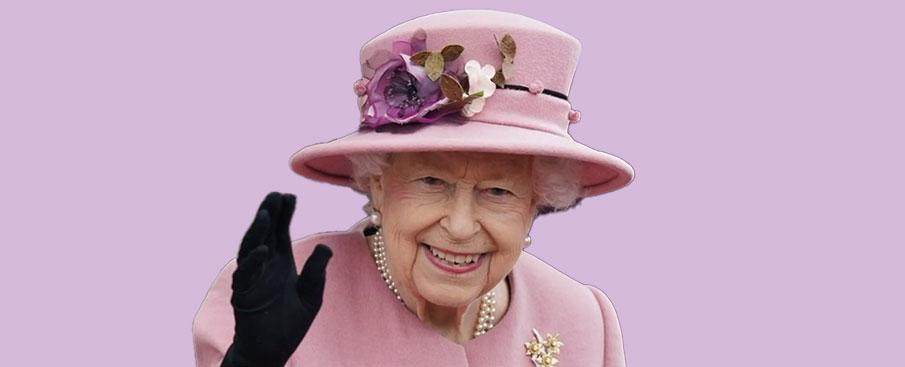
The National Archives has created some resources for you to use in your classroom with our video to celebrate Her Majesty Queen Elizabeth II’s Platinum Jubilee.
The film tells the story of Elizabeth II’s 70 years as Queen using genuine historical sources from The National Archives and The Royal Collections. It includes music and some original footage from the period. Pupils take a historical journey through the decades, from the 1950s to 2020s. We hope that the commentary and documents will encourage your pupils to explore the past and ask questions about how the Queen’s role has changed and life in Britain altered over time.
You can find out more about the Queen’s Jubilee with the Royal Collection Trust’s School Resources.
These resources were produced for our Royalty on Record programme in June 2022, commemorating Queen Elizabeth II’s Platinum Jubilee. Some information may now be out of date.
Download the resource pack (.zip, 4.6MB)