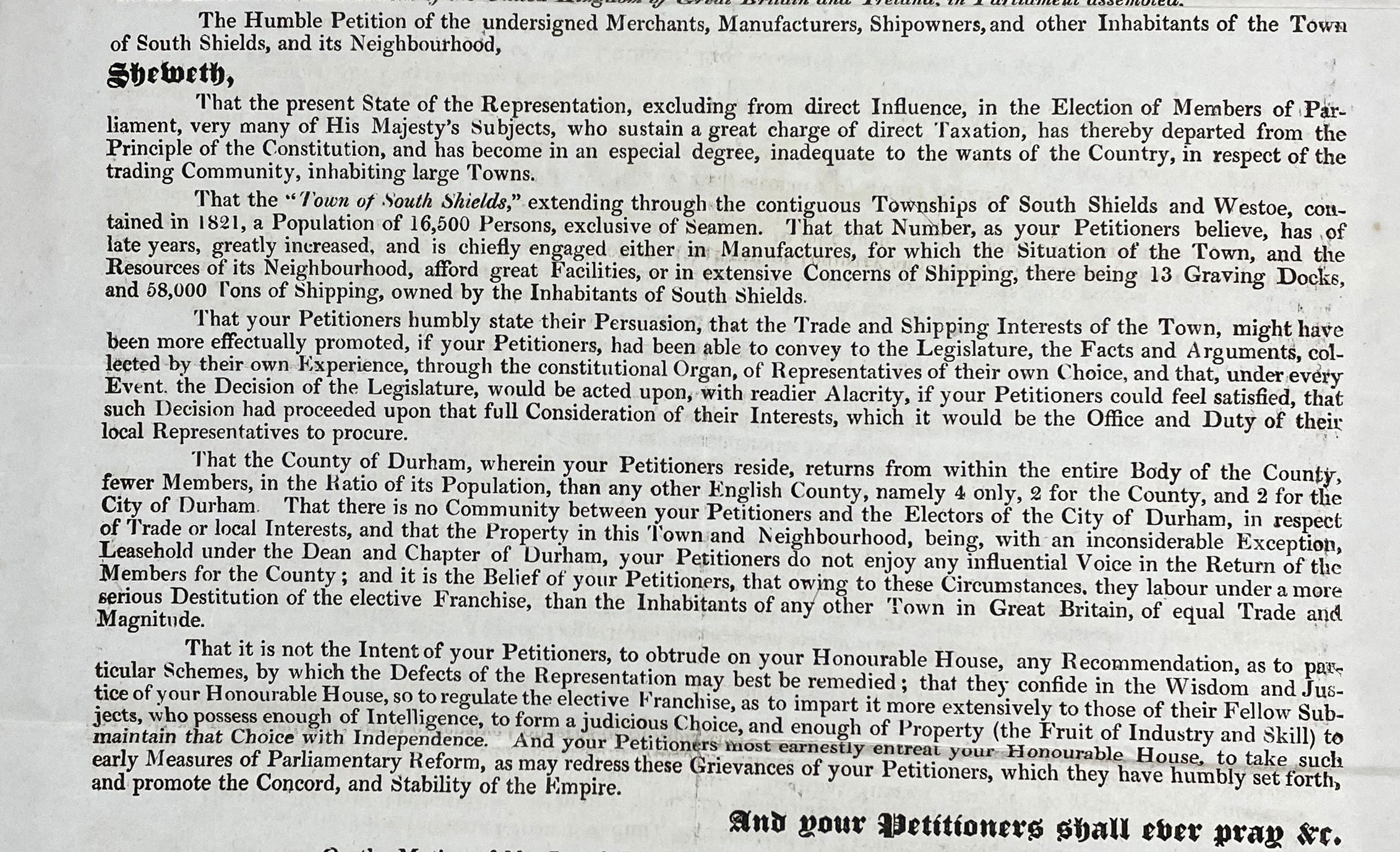
The people of South Shields and the surrounding neighbourhood held a meeting in their town hall on 31 December 1830. The purpose of the meeting was to discuss petitioning Parliament about reform. The town wanted to be able to elect their own MPs. The meeting was called by the magistrates and chaired by a local Justice of the Peace. They debated the wording of a petition and made it available in the town hall and in shops so that all classes of people could sign it. This is the petition that was adopted.
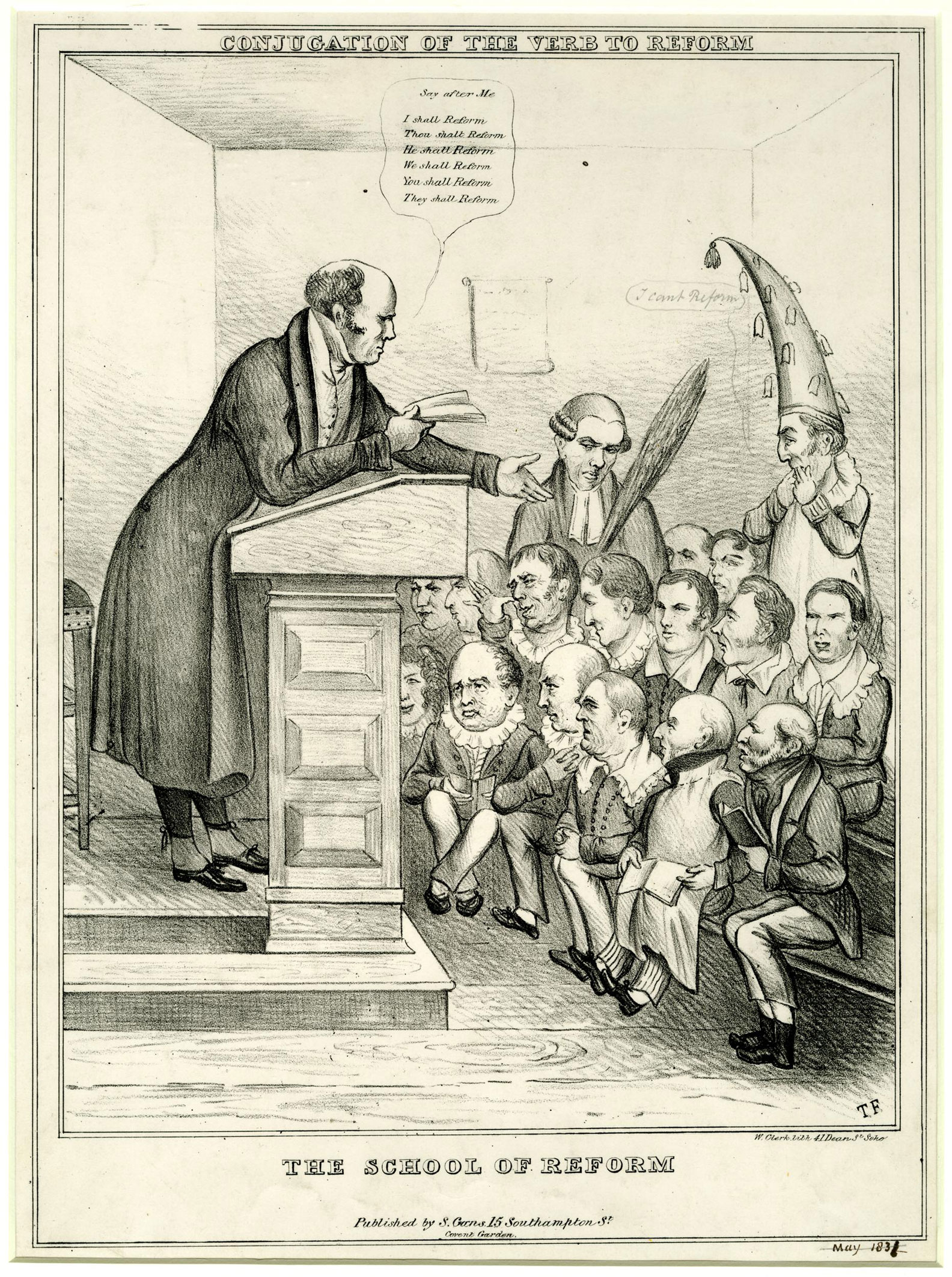
In 1832, Parliament passed a law that changed the British electoral system. It was known as the Great Reform Act, which basically gave the vote to middle class men, leaving working men disappointed.
The Reform Act became law in response to years of criticism of the electoral system from those outside and inside Parliament. Elections in Britain were neither fair nor representative. In order to vote, a person had to own property or pay certain taxes to qualify, which excluded most working class people. There were also constituencies with several voters that elected two MPs to Parliament, such as Old Sarum in Salisbury. In these ‘rotten boroughs’, with few voters and no secret ballot, it was easy for those standing for election to buy votes. Industrial towns like Manchester or Birmingham, which had grown during the previous 80 years, had no Members of Parliament to represent them. In 1831, the House of Commons passed a Reform Bill, but the House of Lords, dominated by the Tory party, defeated it. This was followed by riots and serious disturbances in London, Birmingham, Derby, Nottingham, Leicester, Yeovil, Sherborne, Exeter and Bristol.
In this lesson use original documents from 1830-31 to explore demands for change in the voting system.
Political and social reform in 19th century BritainThe riots in Bristol were some of the worst seen in England in the 19th century. They began when Sir Charles Wetherall, who was opposed to the Reform Bill, came to open the Assize Court in his role as Recorder, or senior judge. Assize courts were held in the main county towns and presided over by visiting judges from the higher courts based in London. Public buildings and houses were set on fire, there was more than £300,000 of damage and twelve people died. Of 102 people arrested and tried, 31 were sentenced to death. Lieutenant-Colonel Brereton, the commander of the army in Bristol, was court-martialled.
There was a fear in government that unless there was some reform there might be a revolution instead. They looked to the July 1830 revolution in France, which overthrew King Charles X and replaced him with the more moderate King Louis-Philippe who agreed to a constitutional monarchy.
In Britain, King William IV lost popularity for standing in the way of reform. Eventually he agreed to create new Whig peers, and when the House of Lords heard this, they agreed to pass the Reform Act. As result, 57 ‘rotten and pocket boroughs’ were removed and the new towns like Birmingham, Bradford, Leeds, and Sheffield for example given the right to elect MPs, although constituencies were still of uneven size. However, only men in the boroughs who owned property worth at least £10 could vote. In the counties only adult men owning property worth £2 a year and adult males renting land worth more than £50 a year. Most working class men were excluded from the vote owing to these property qualifications – which varied across the country depending upon house prices and only men who could afford to pay to stand for election could be MPs. All women were excluded. In effect most middle class men gained the vote and some skilled craftsmen. This reform did not go far enough to silence all protest.
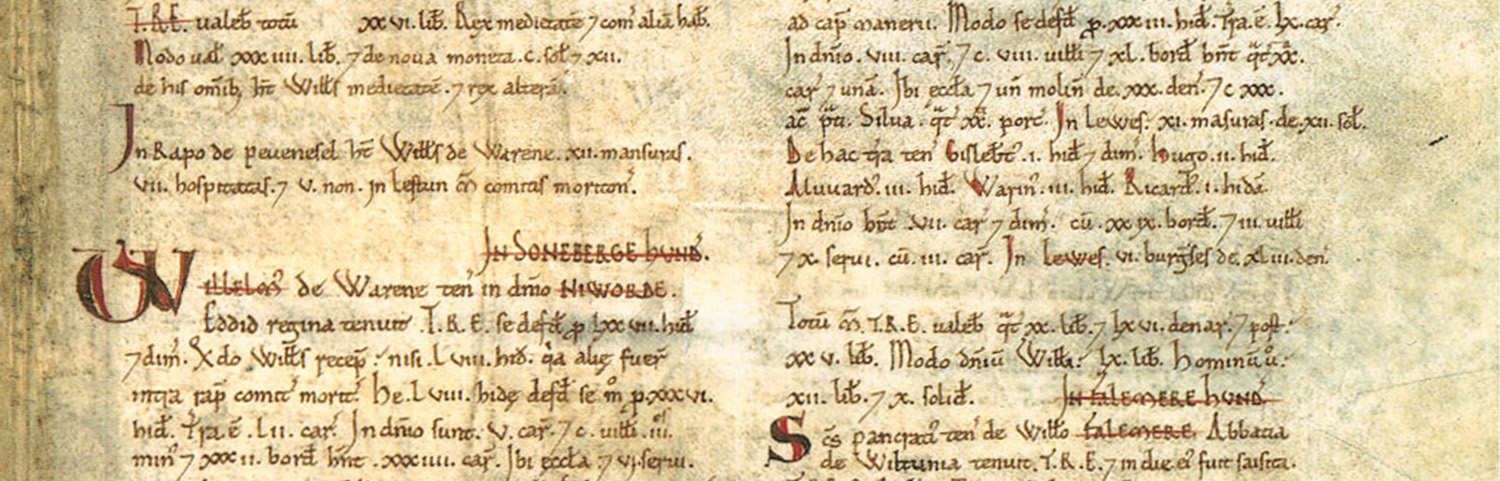
Exchequer: Domesday Book, 1086
We hope you enjoyed watching our Education Service video with collections expert Jessica Nelson looking at the Exchequer series. This video focuses on Domesday Book, one of The National Archives’ most iconic documents.
Watch the video then try and answer the following questions:
- What type of document is it?
- What about the appearance of the document?
- What is the date?
- Who has produced it?
- What does it say?
- Who is it for?
- What is the purpose of the document?
- How is this document useful for understanding early medieval society during the time of William the Conqueror?
- Why does the National Archives have it?
Download Domesday Resource Pack
Related Resources
- Domesday Book
- What can we learn about England in the 11th century?
- Domesday: Britain’s finest treasure
- Online exhibition about Britain’s earliest public record.
- Anglo-Saxons – Gift from a King
- What was Anglo-Saxon society like?
- Chertsey
- What was Chertsey like in the Middle Ages?
- Edward the Confessor
- What does the Domesday Abbreviato tells us about Edward the Confessor?
Connections to Curriculum
Key stage 3
- The development of Church, state and society in Medieval Britain 1066-1509: Then Norman Conquest
Key stage 4
- AQA GCSE History
- Norman England, c1066–c1100 including: Feudalism and government: roles, rights, and responsibilities; landholding and lordship; land distribution; the Domesday Book.
- Edexcel GCSE History
- Period study: Anglo-Saxon and Norman England, c1060–88
- OCR GCSE History
- The Norman Conquest, 1065–1087 Domesday Book, its creation and purpose. The social structure of Norman England including changes in land ownership and the elite.
Key stage 5
- Edexcel GCE History
- Anglo-Saxon England and the Anglo-Norman Kingdom, c1053–1106
- OCR GCE History
- Anglo-Saxon England and the Norman Conquest 1035–1107 (Enquiry topic: Norman England 1087–1107
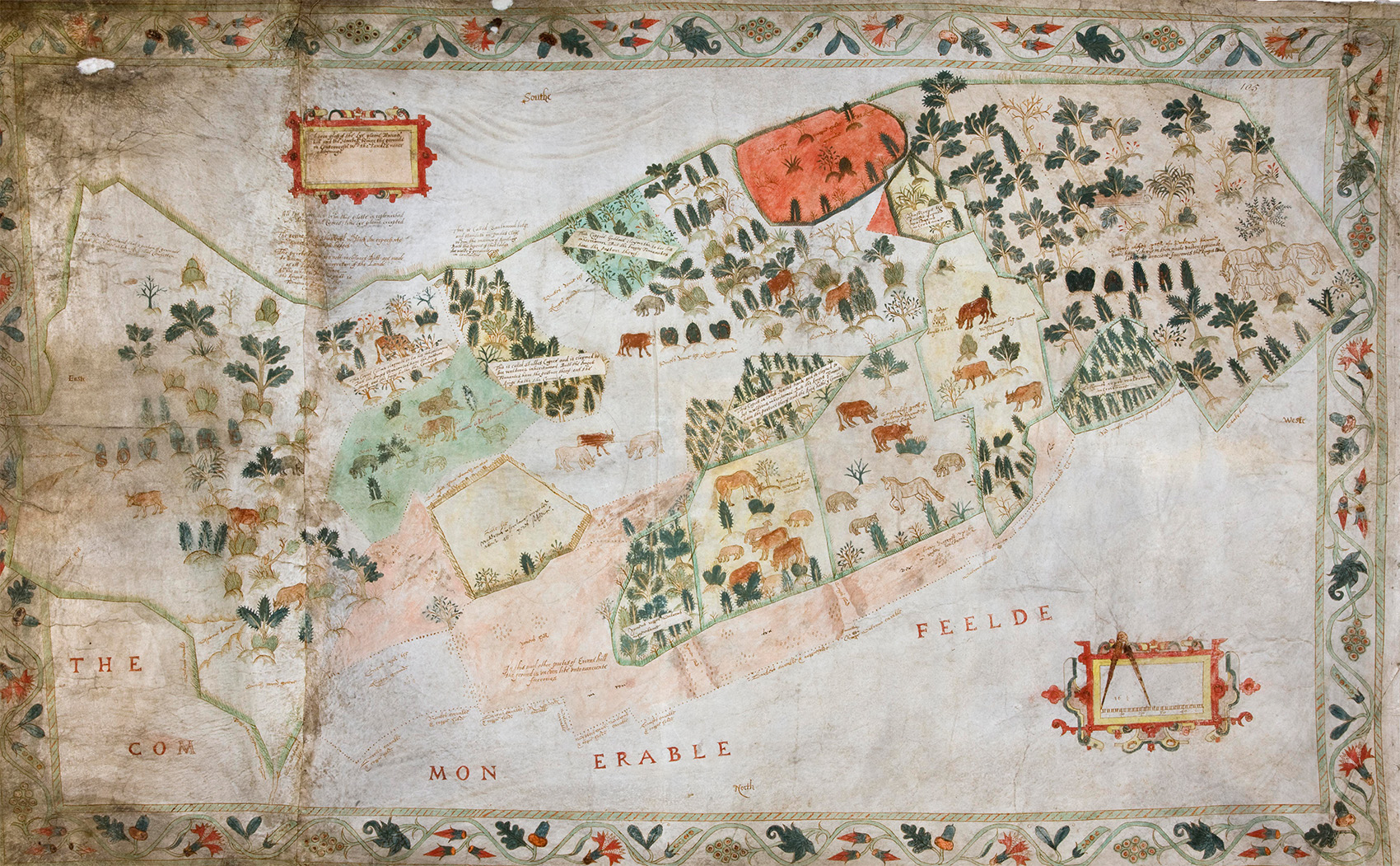
Maps: Aldbourne Chase map from 1608
We hope you enjoyed watching our Education Service video with collections expert Rose Mitchell looking at an example from our collection of maps. This video focuses on the beautiful Aldbourne Chase 1608 map from the records of the Duchy of Lancaster, which was created because of a dispute about the royal rabbit warren. Aldbourne Chase is situated north of Salisbury Plain, in Wiltshire.
Watch the video then try and answer the following questions:
- What type of document is it?
- What about the appearance of the document?
- What is the date?
- Who has produced it?
- Who is it for?
- What is the purpose of the document?
- How is this map useful for understanding early Stuart society during the reign of King James I of England, and James VI of Scotland?
- What is the value of a visual source like this map as opposed to a written document?
- How do the other documents mentioned in the video relate to the map?
- Why does the National Archives have this map?
Related Resources
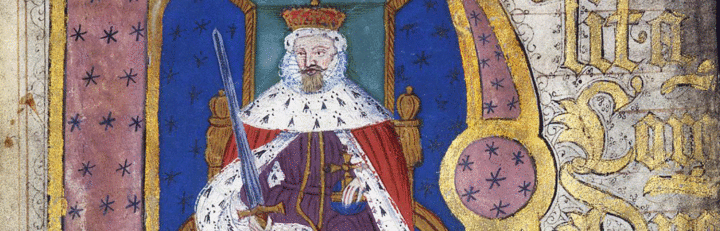
- James I
- What were the key areas of dispute?
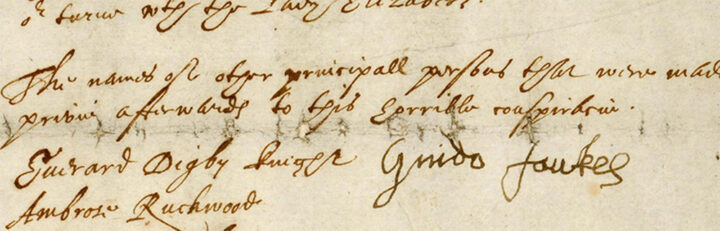
- Gunpowder Plot
- Can you uncover the plans of the plotters?
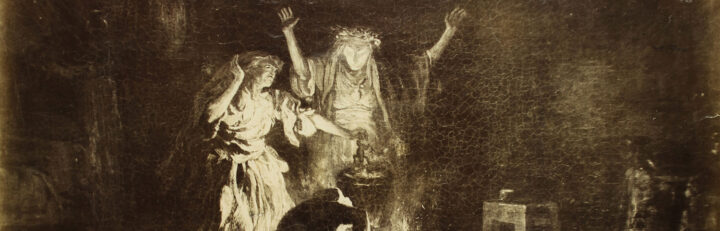
- Early Modern witch trials
- Who was accused?
Connections to Curriculum
Key stage 5
- AQA GCE History
- Stuart Britain and the Crisis of Monarchy, 1603–1702
- OCR GCE History
- The Early Stuarts and the Origins of the Civil War 1603–1660
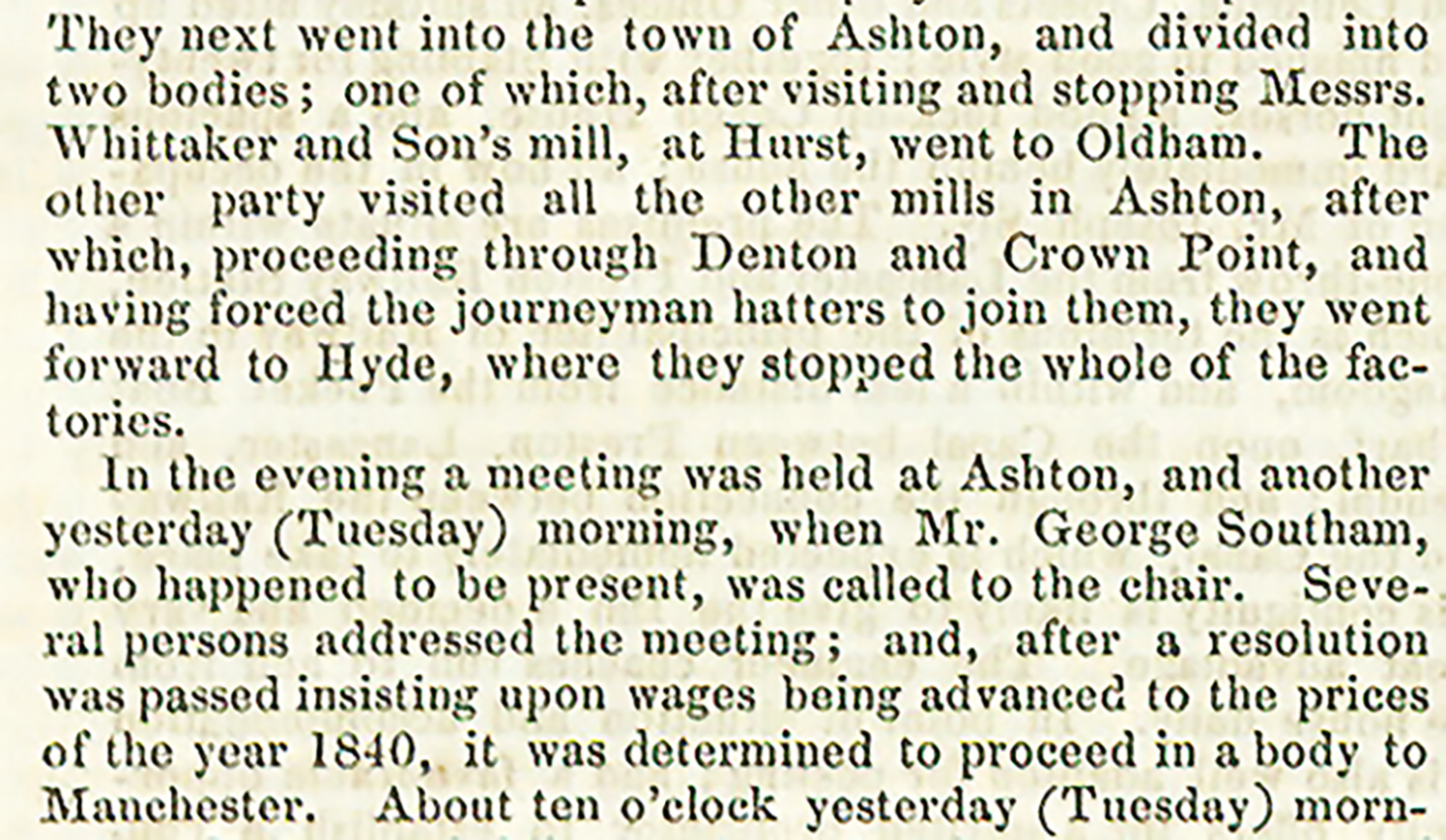
Extracts from an article about trouble in Manchester and its surroundings in ‘The Preston Chronicle and Lancashire Advertiser’, 13 August, 1842, Catalogue ref: HO 45/249A f28
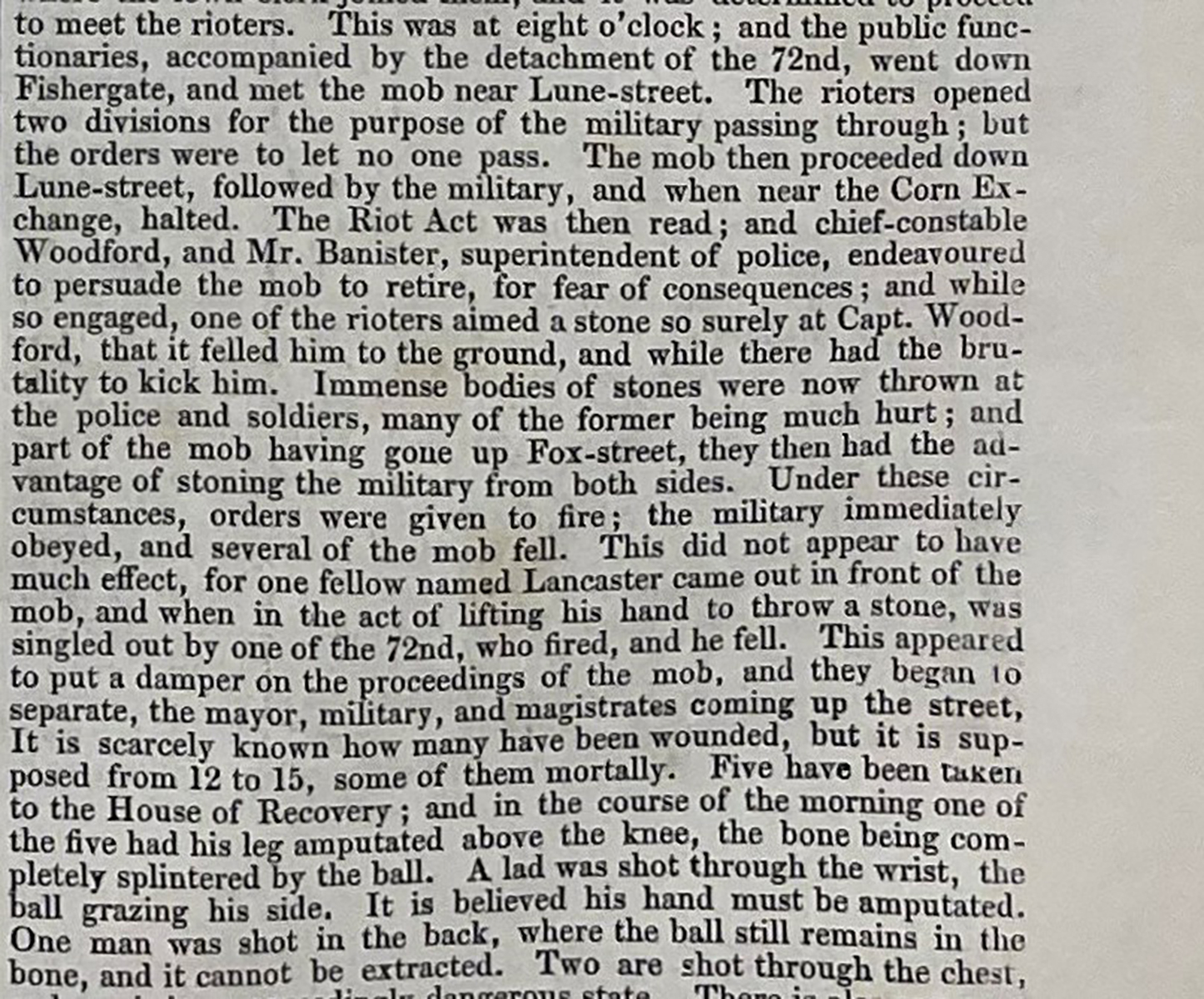
Extract 3b: Article on a riot in Preston from the ‘Illustrated London News’, 20 August 1842, Catalogue ref: ZPER 34/1 f.236
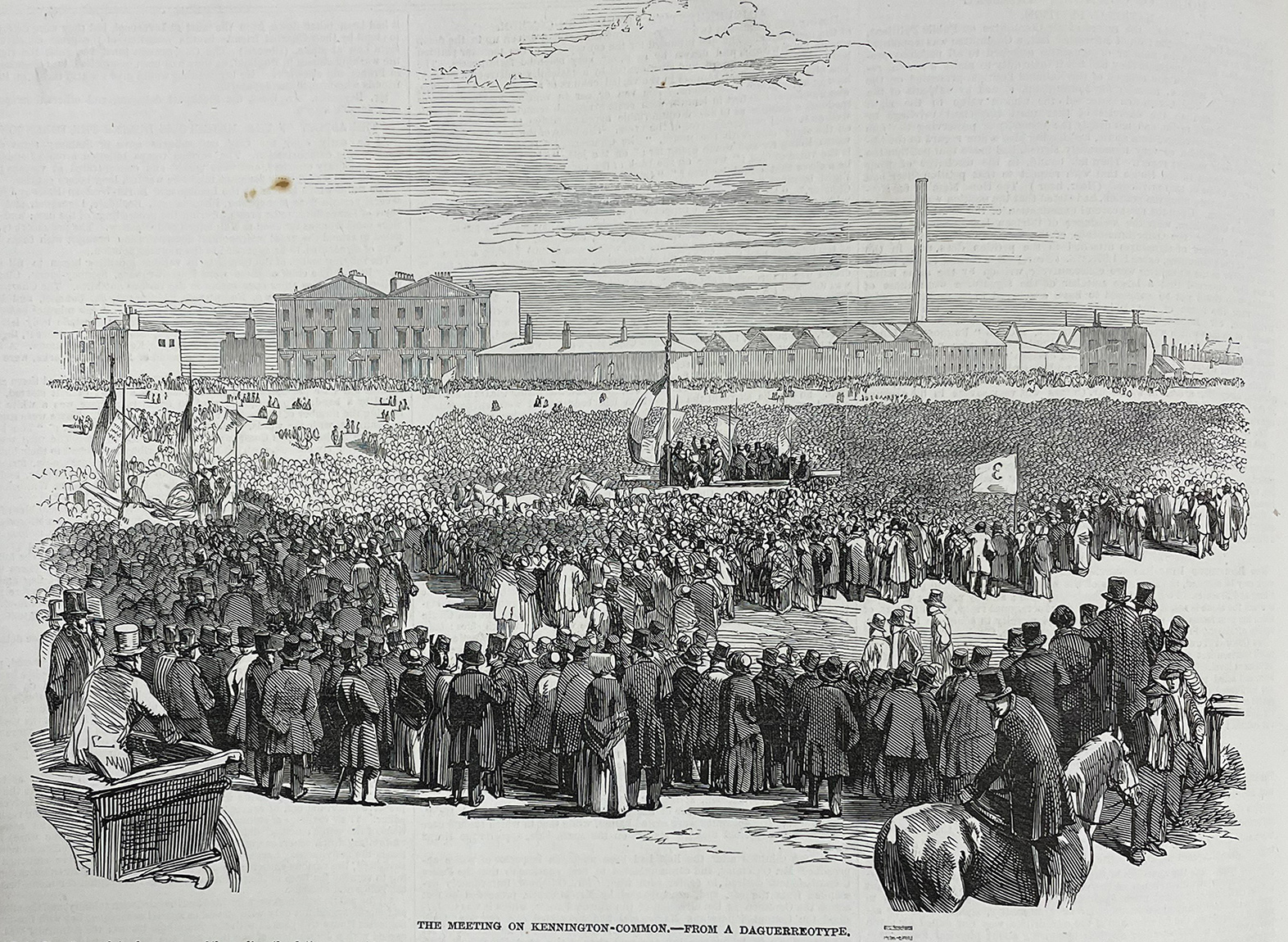
Picture entitled: ‘The meeting on Kennington Common-from a Daguerreotype’, 15 April 1848, the Illustrated London News, Catalogue ref: ZPER 34/12.
This shows a Chartist meeting held on Kennington Common, London. There was a platform for speakers to stand and address the crowd. A daguerreotype was an image created by a photographic process popular in 1840s and 1850s.
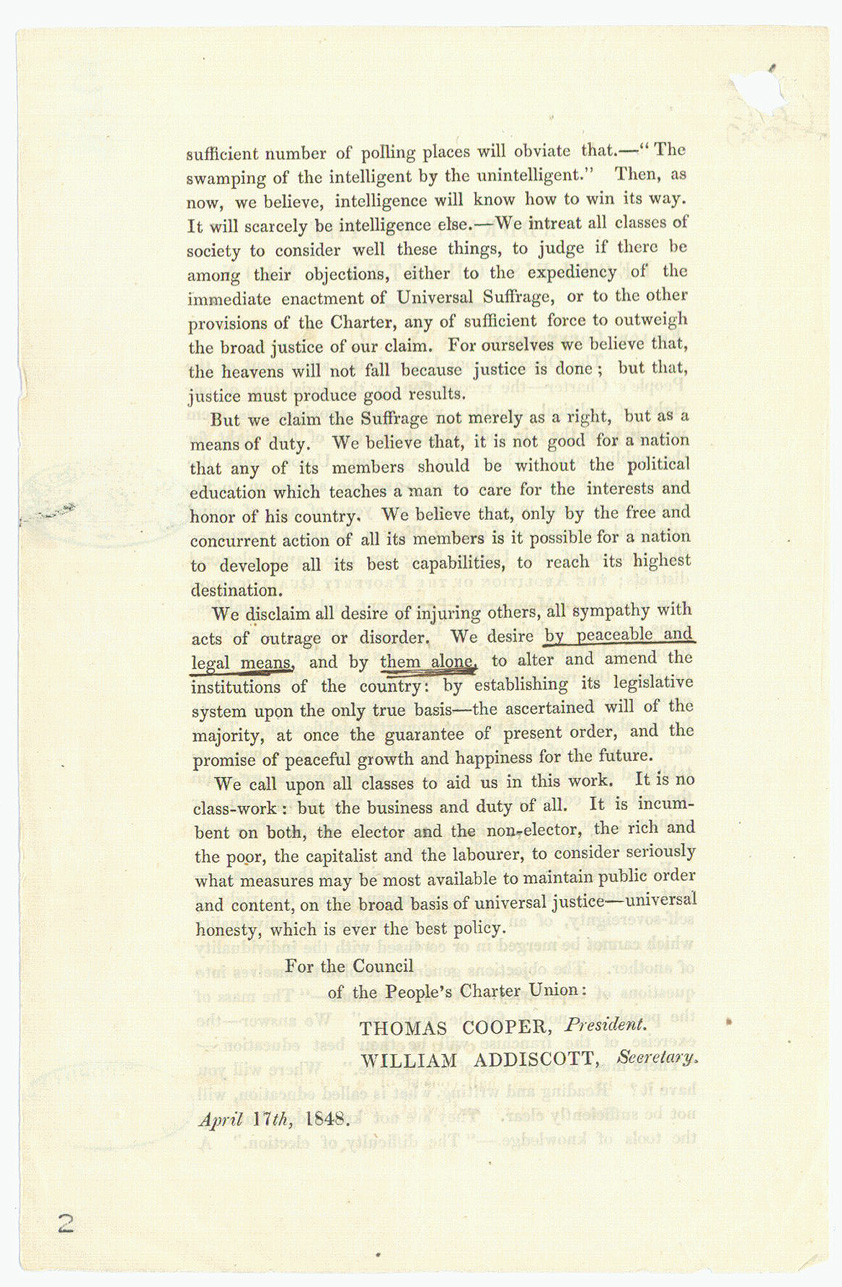
Extracts from the handbook of the People’s Charter Union, 17 April 1848, Catalogue ref: HO 45/2410A, part 4, f. 5
Universal suffrage, the right of everyone to vote is defined in this source as the right of every man of 21 years of age and over, but today it is defined more widely.
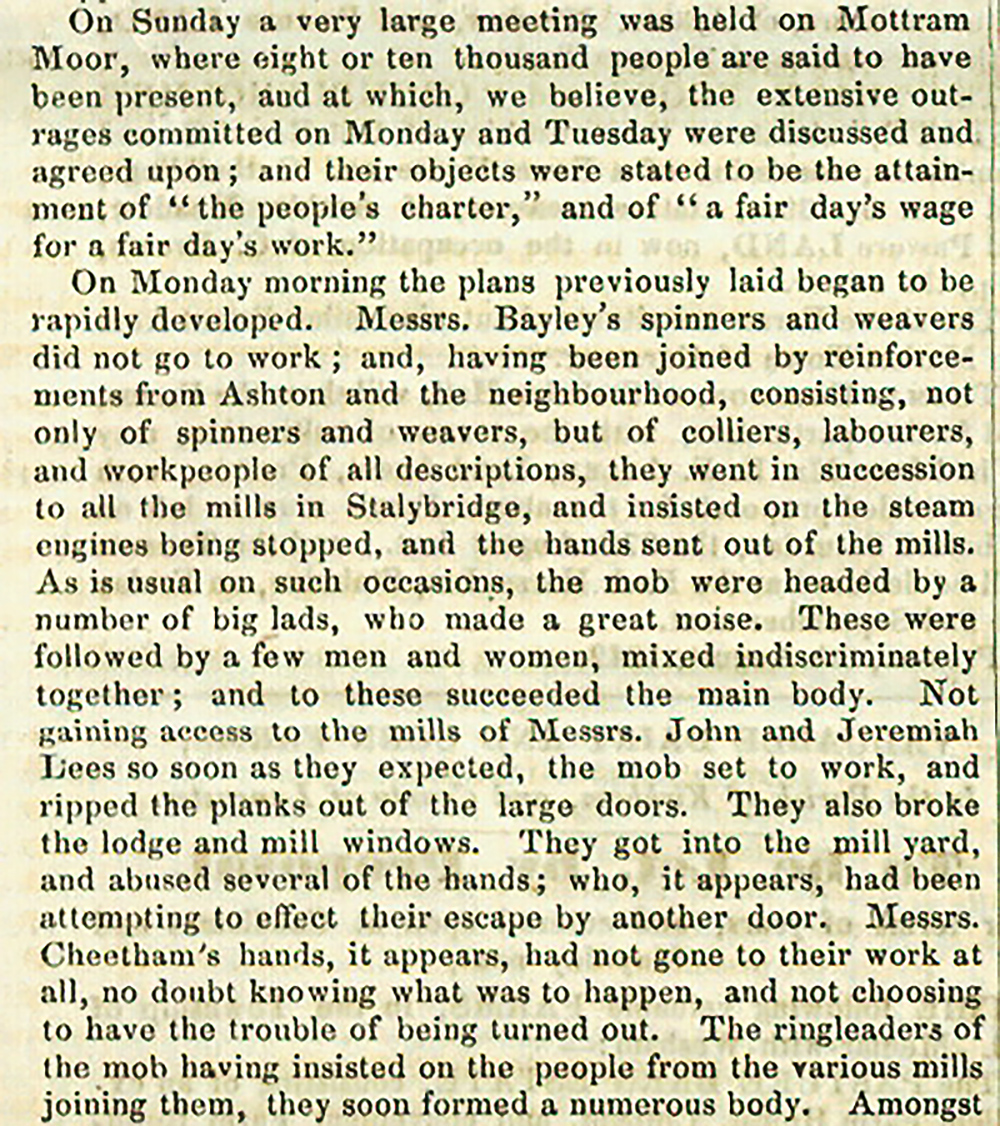
Extracts from an article about trouble in Manchester and its surroundings in ‘The Preston Chronicle and Lancashire Advertiser’, 13 August, 1842, Catalogue ref: HO 45/249A f28
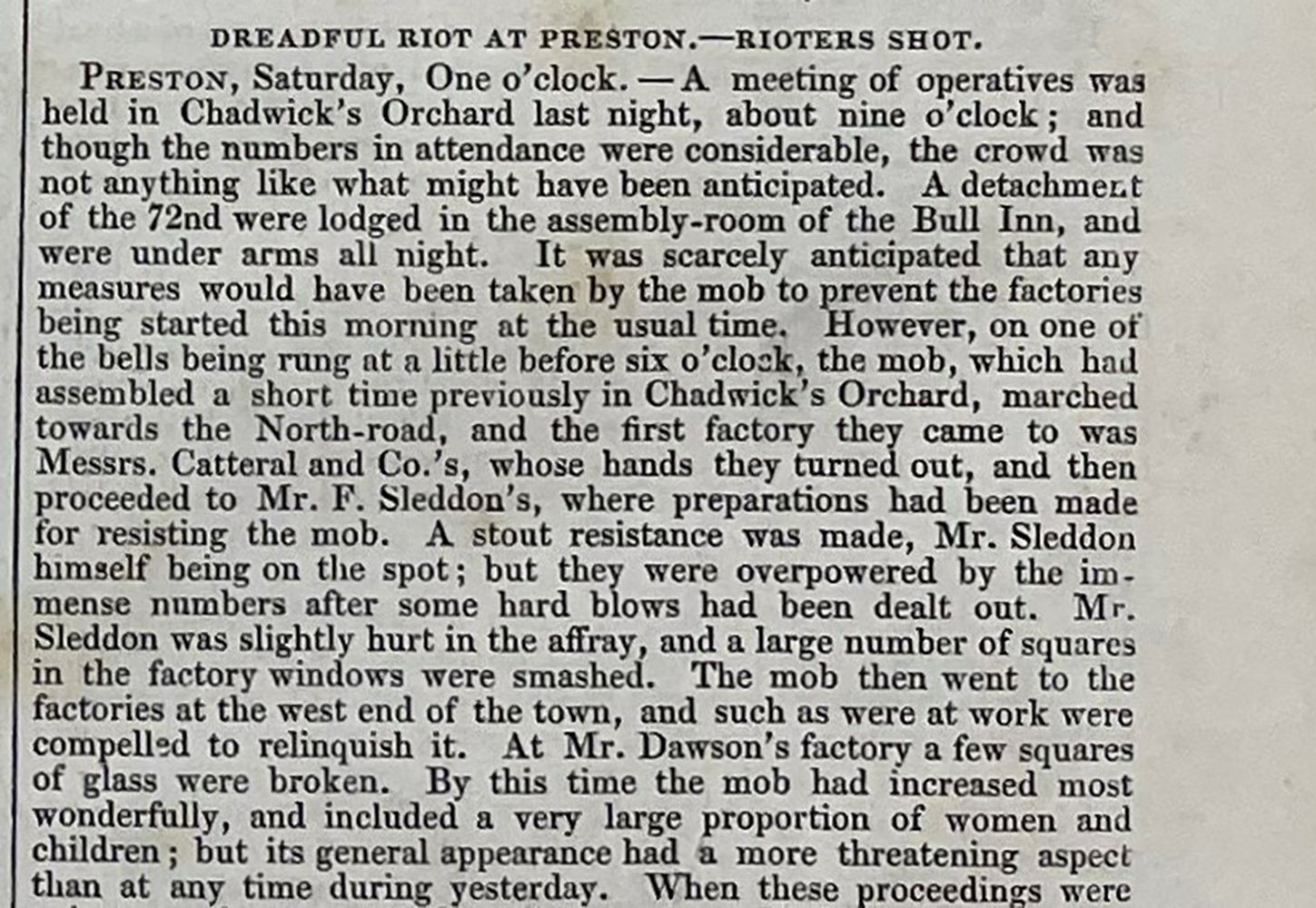
Extract 3a: Article on a riot in Preston from the ‘Illustrated London News’, 20 August 1842, Catalogue ref: ZPER 34/1 f.236