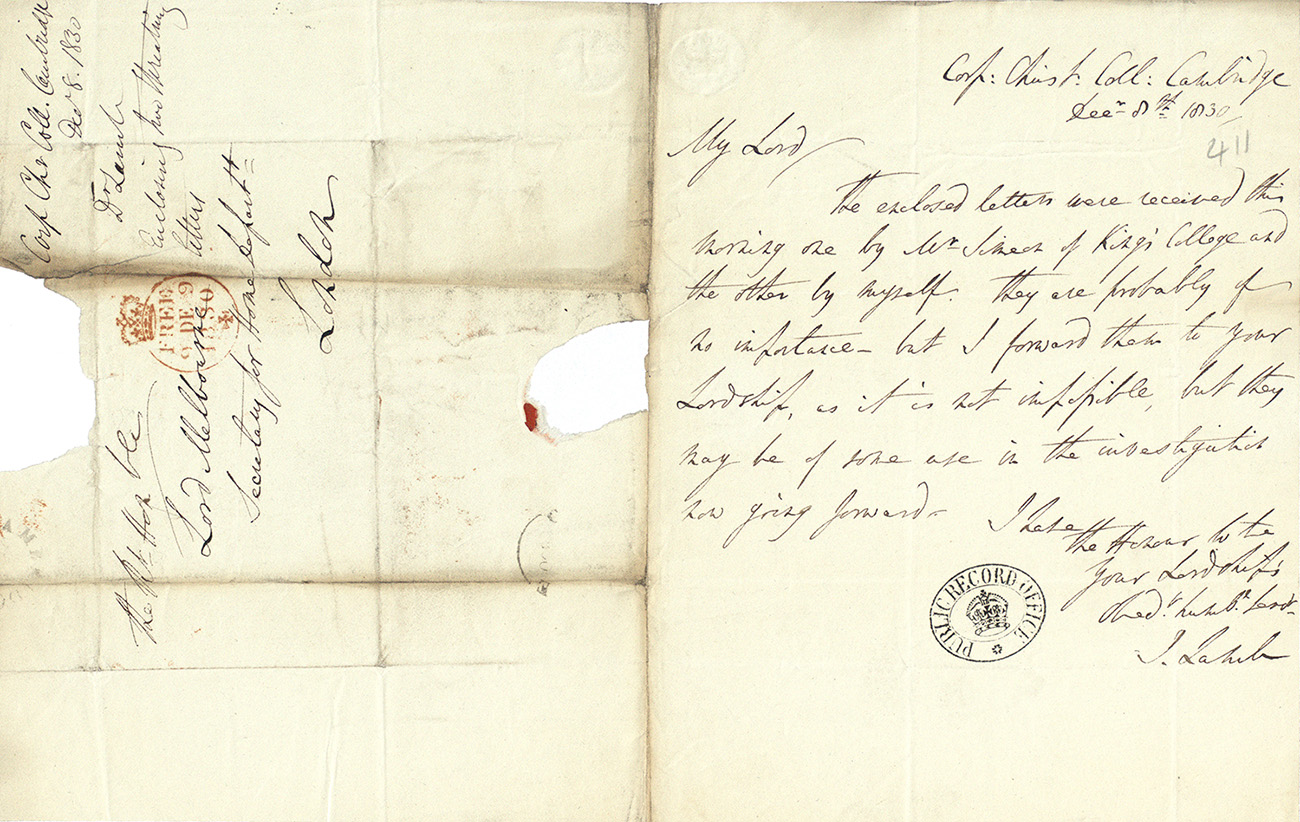
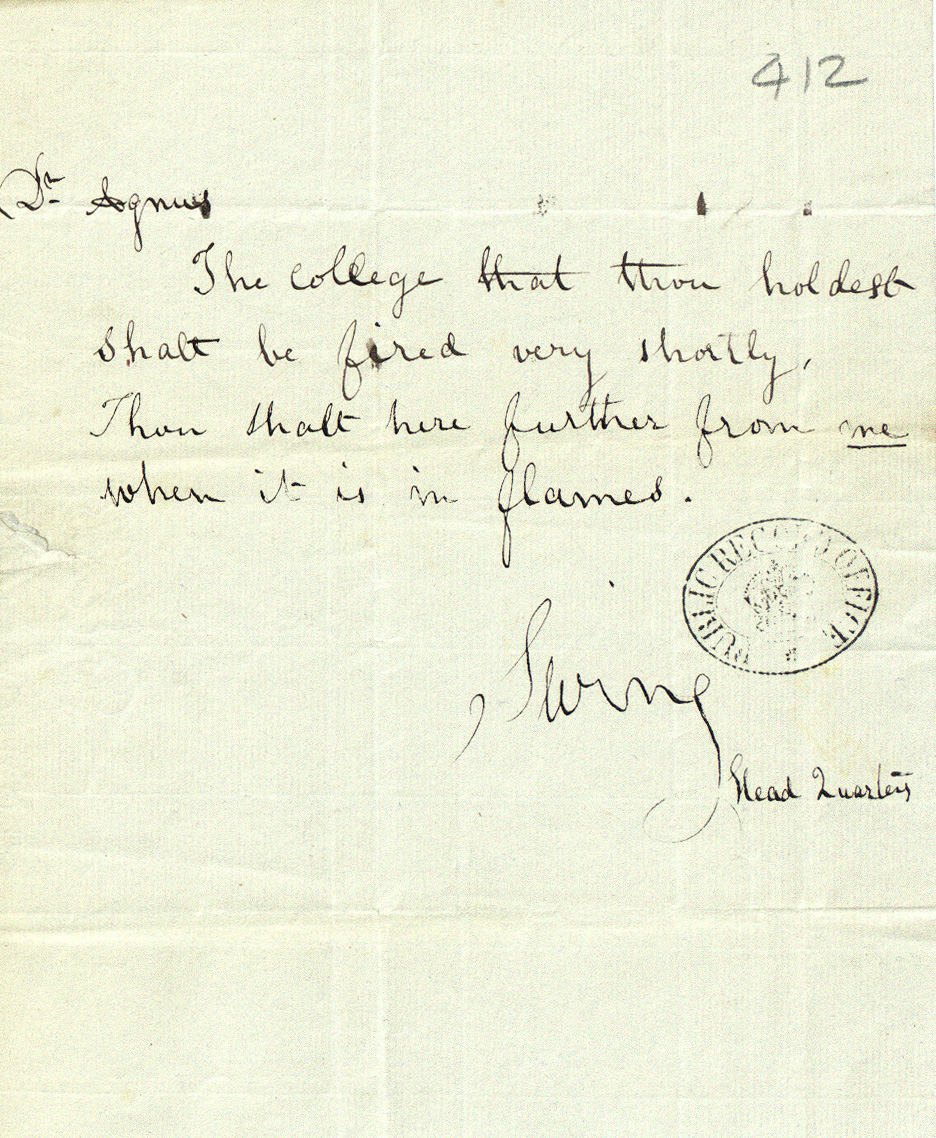
‘Swing’ letter, sent to two colleges at the University of Cambridge and forwarded to Lord Melbourne, ‘Secretary for the Home Department’, 8 December 1830. Catalogue ref: HO 52/6
Swing’ letters were often sent to farmers demanding that they increased wages for farm workers. Farmers were warned if they did comply, their property would be damaged or burnt.
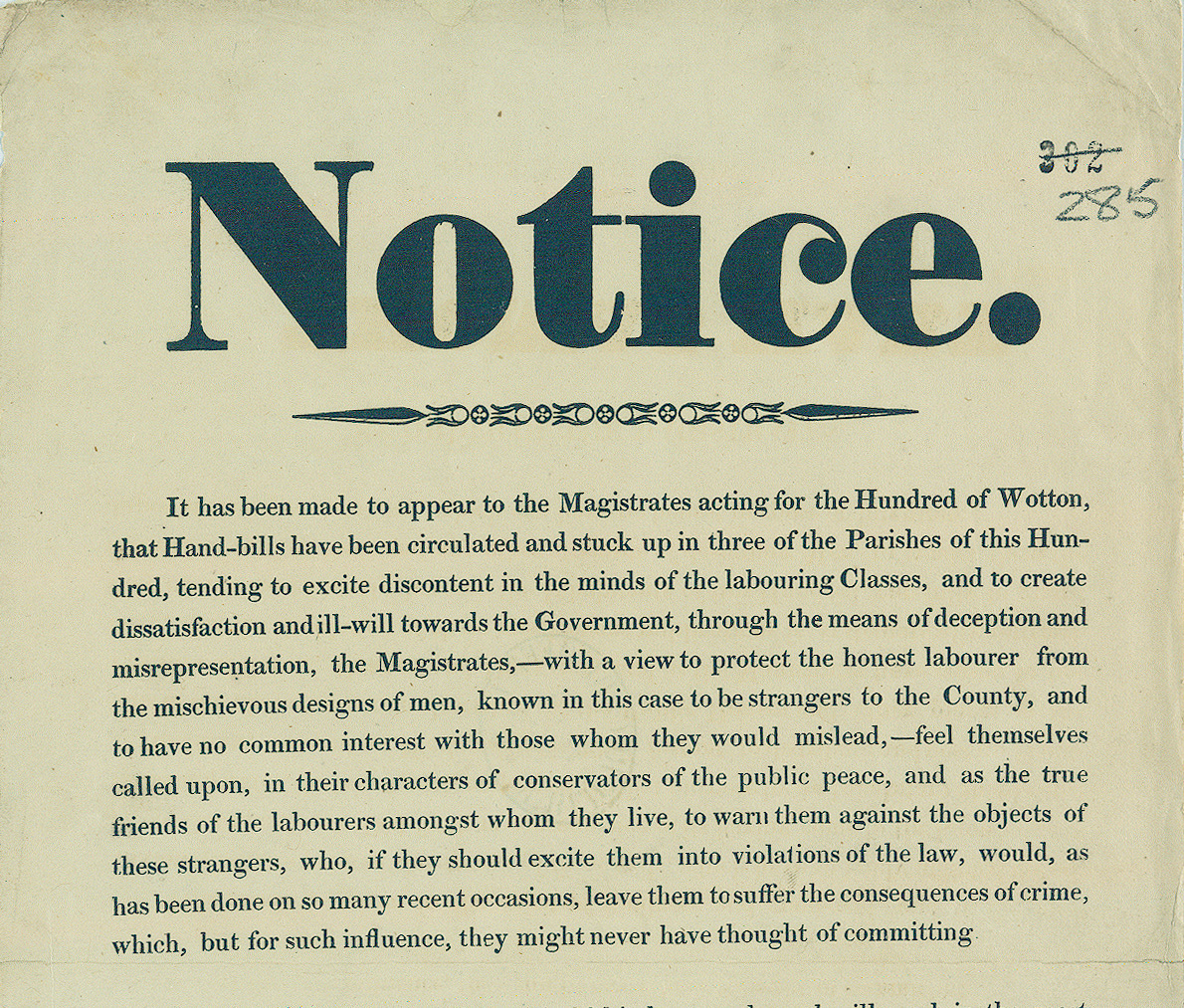
Extract from a poster produced in Dorking, Surrey, in December 1830. Catalogue ref: HO 52/10 f.285
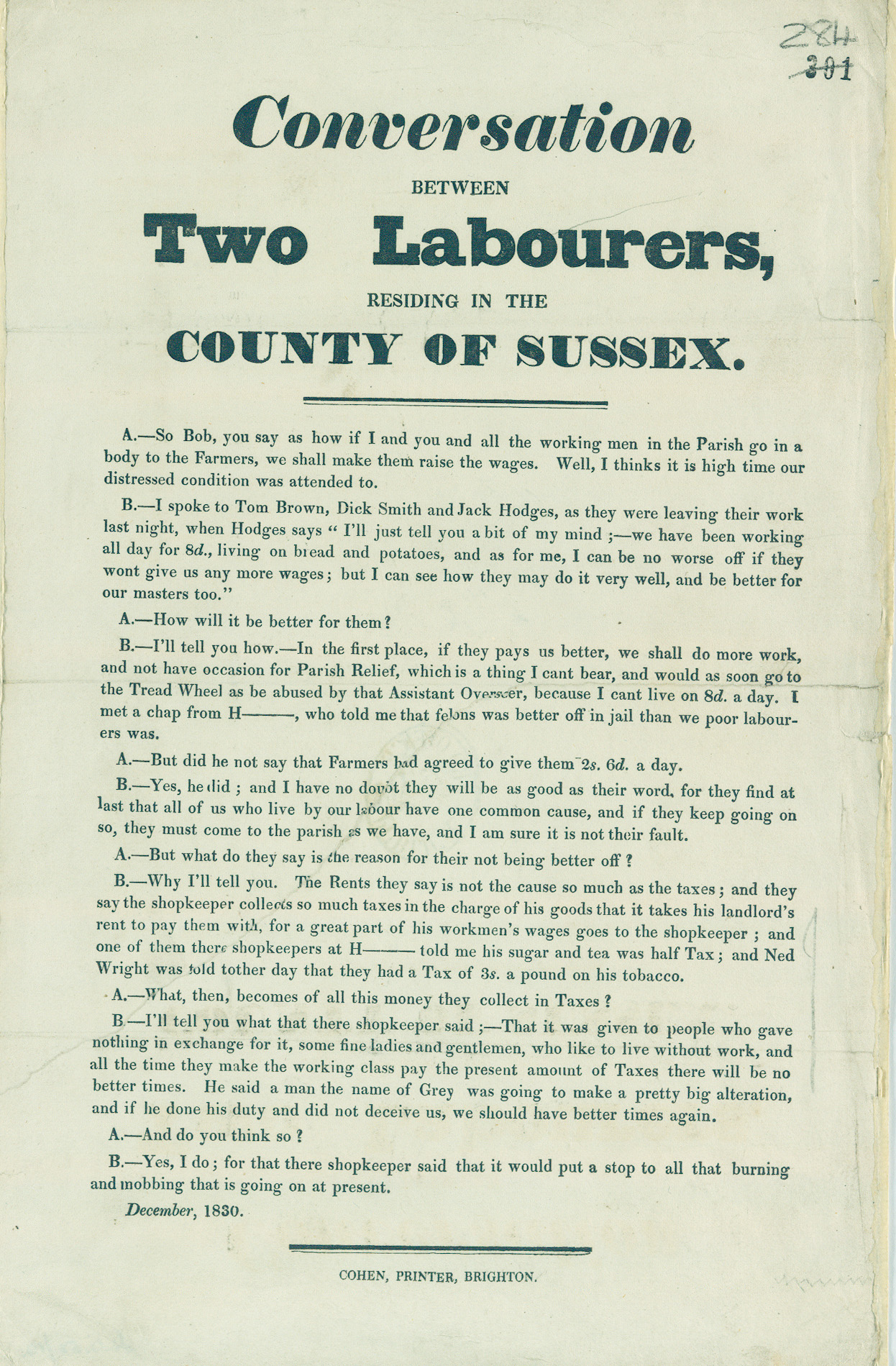
A poster distributed in Surrey in December 1830. Catalogue ref: HO 52/10 f.284
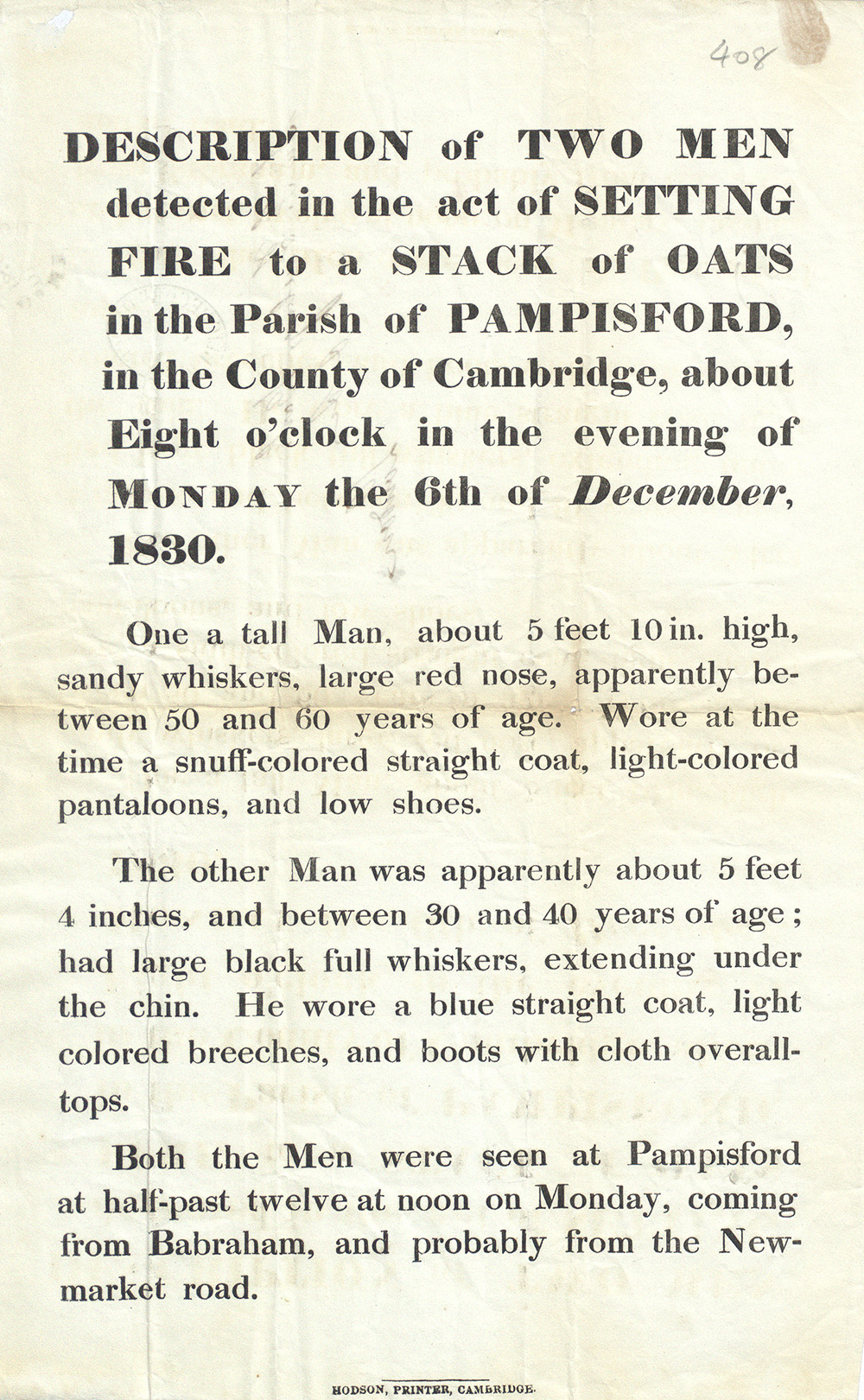
A poster about a fire in Pampisford, Cambridge, December 1830. Catalogue ref: HO 52/6
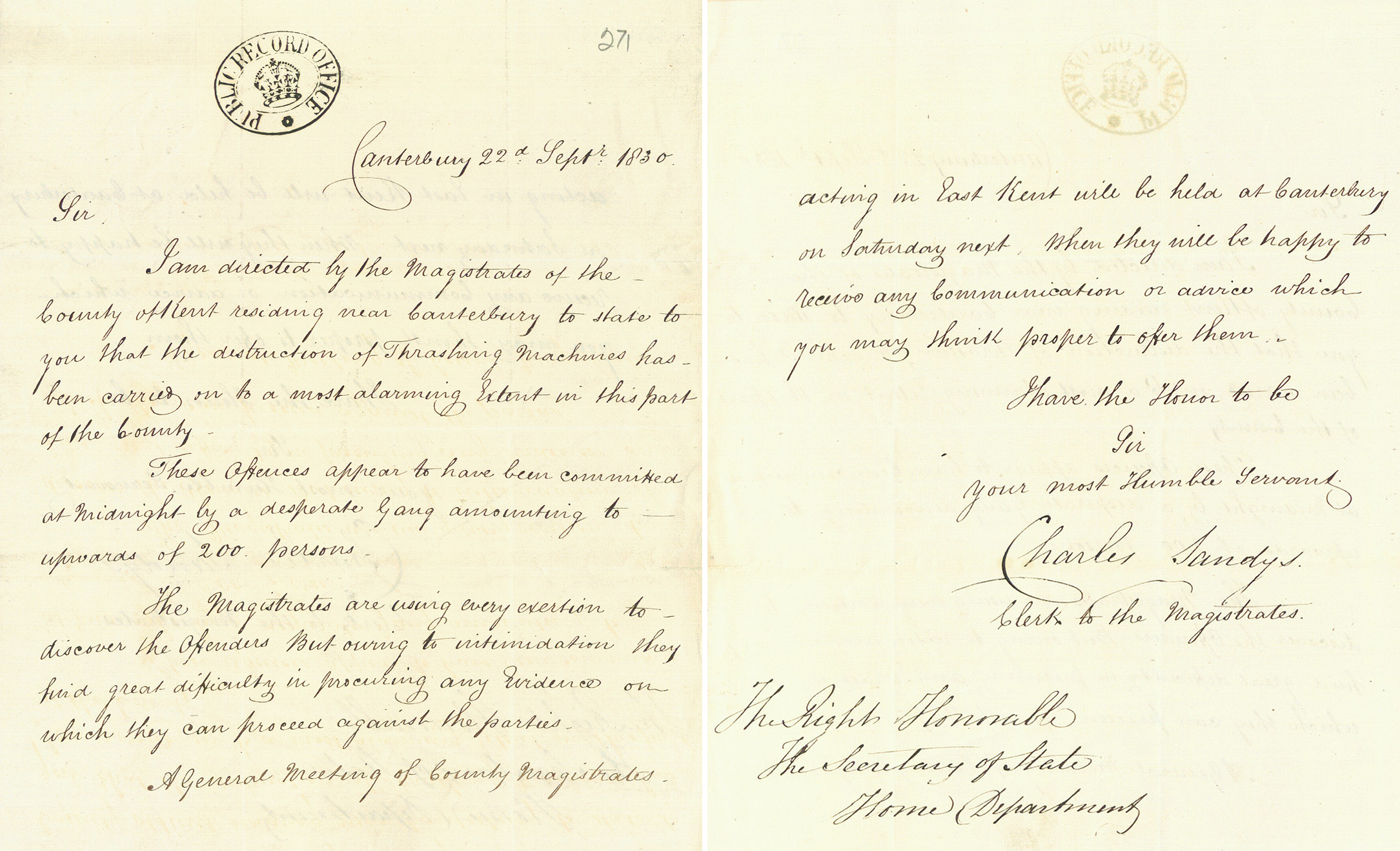
Letter about the destruction of threshing machines in Kent, 22 September, 1830. Catalogue ref: HO 52/8
A ‘thrashing machine’ was invented in the later years of the eighteenth century to separate grain from the stalks and husks of corn- threshing machine in modern spelling.
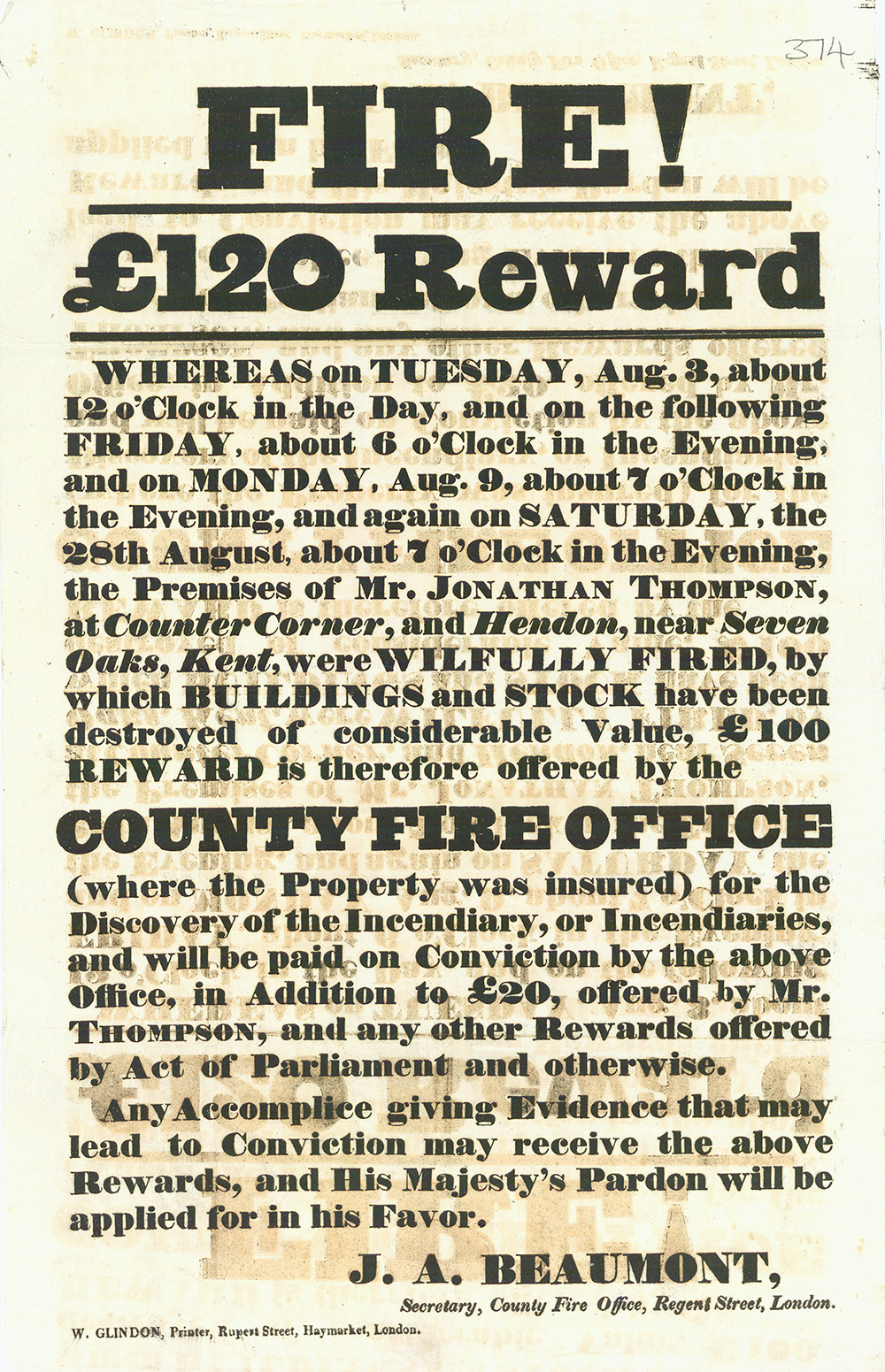
A reward poster from Kent, probably posted in August or September 1830. Catalogue ref: HO 52/8
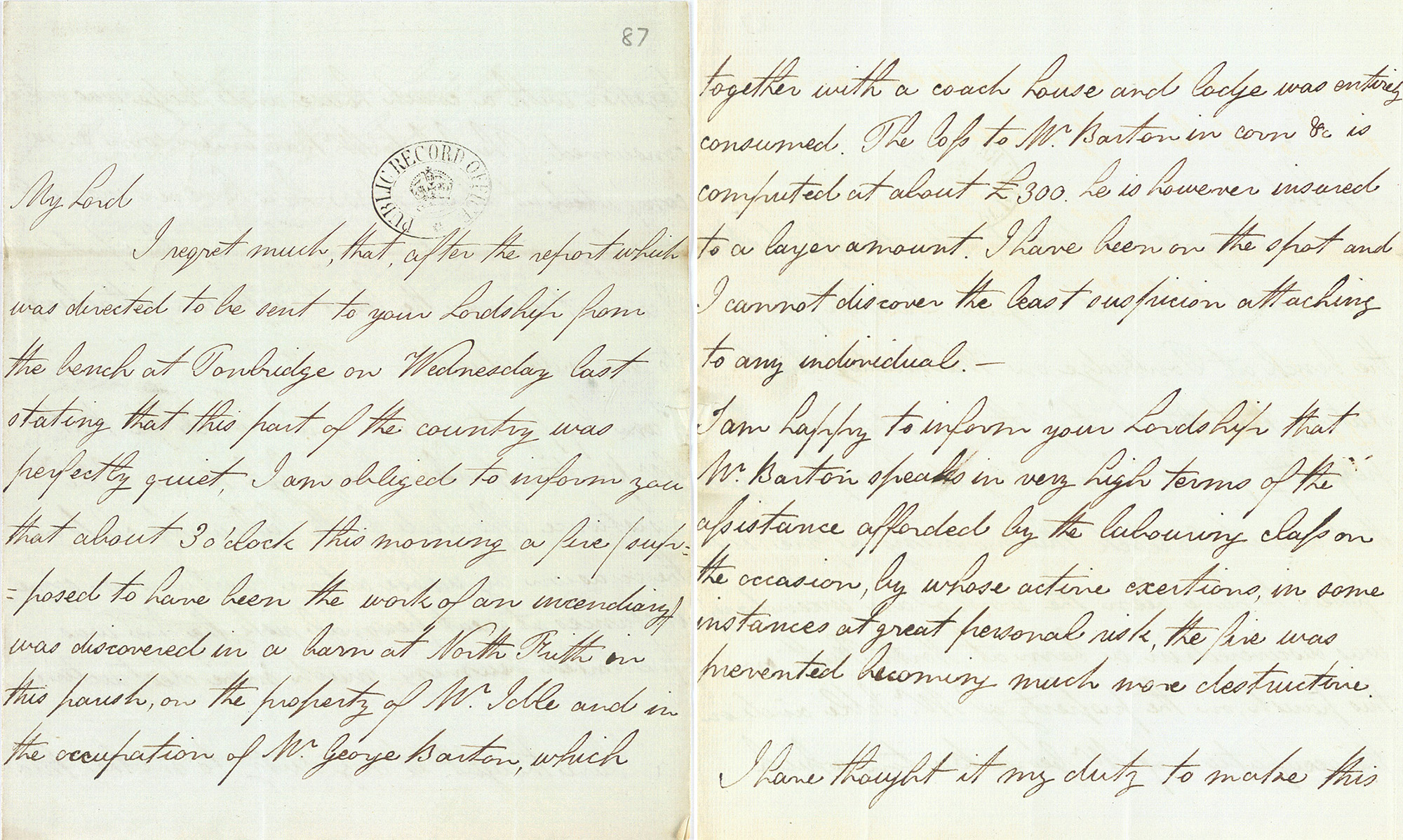
Pages from a letter from Hadlow in Kent to the Home Office about a suspicious fire, 1830. Catalogue ref: HO 52/8 folios 87& 88
An incendiary was a person who deliberately sets fire to property or a person who stirs up political quarrels.
In the eighteenth century, one of the main autumn and winter jobs for farm workers was threshing. This meant separating the grain from the stalks of corn by beating it. In the late 1820s and early 1830s, farmers began to introduce threshing machines to do this work. This put large numbers of labourers out of work and without enough money to support themselves during the winter months.
Low wages and unemployment, plus poor harvests in 1829 and 1830, resulted in hunger, protests and disturbances in the countryside, especially in the east and south of England. Farmers were sent threatening letters demanding that wages increase or at least stay the same. These letters often demanded farmers not to use threshing machines. Farmers and landowners also had their hayricks and farm buildings burnt.
The protesters used the name ‘Captain Swing’. This made-up name was intended to spread fear among landowners and protect the protesters from discovery. Use the original documents in this lesson to find out more about the ‘Captain Swing’ disturbances in the 1830s.
Political and social reform in 19th century BritainThe 1830s began badly for the government with numerous acts of arson, machine breaking and the sending of threatening letters. Popularly known as the ‘Swing Riots’, this series of disturbances engulfed parts of rural England in the second half of 1830. Prompted by a decline in the prices of agricultural produce and wages, the introduction of threshing machines, and an influx of Irish labour, the rioters wished to restore their standard of living.
Most of the ‘Swing Riots’ took place in rural south and south east England, but some took place elsewhere. Some were aimed at industrial rather than agricultural targets, such as the attacks on Buckinghamshire paper mills. Most ‘Swing’ activity was not overtly political but was phrased in terms of a defence of ‘traditional rights’ of the past.
The reaction of the government to the Swing disturbances was harsh. Following riots, 19 people were executed, 505 transported to Australia and 644 imprisoned. The story of individual incidents can often be put together, as in this lesson, from handbills and posters that offered rewards for the capture of rioters (and pardons for those who helped in their arrest). The labourers gained little from their protest.
It is helpful to see the riots in the context of a government under pressure to extend political rights. Although in early November 1830, Tory Prime Minister Duke of Wellington declared against parliamentary reform, the government was defeated a few weeks later. This led to his resignation and the formation of a new administration under the Whig, Earl Grey. Over the next 14 months, campaigns inside and outside Parliament were waged. Their aims were to increase the numbers of people entitled to vote and to redistribute some seats from the poorly populated ‘rotten boroughs’ to the new urban centres such as Birmingham, Bradford and Manchester.
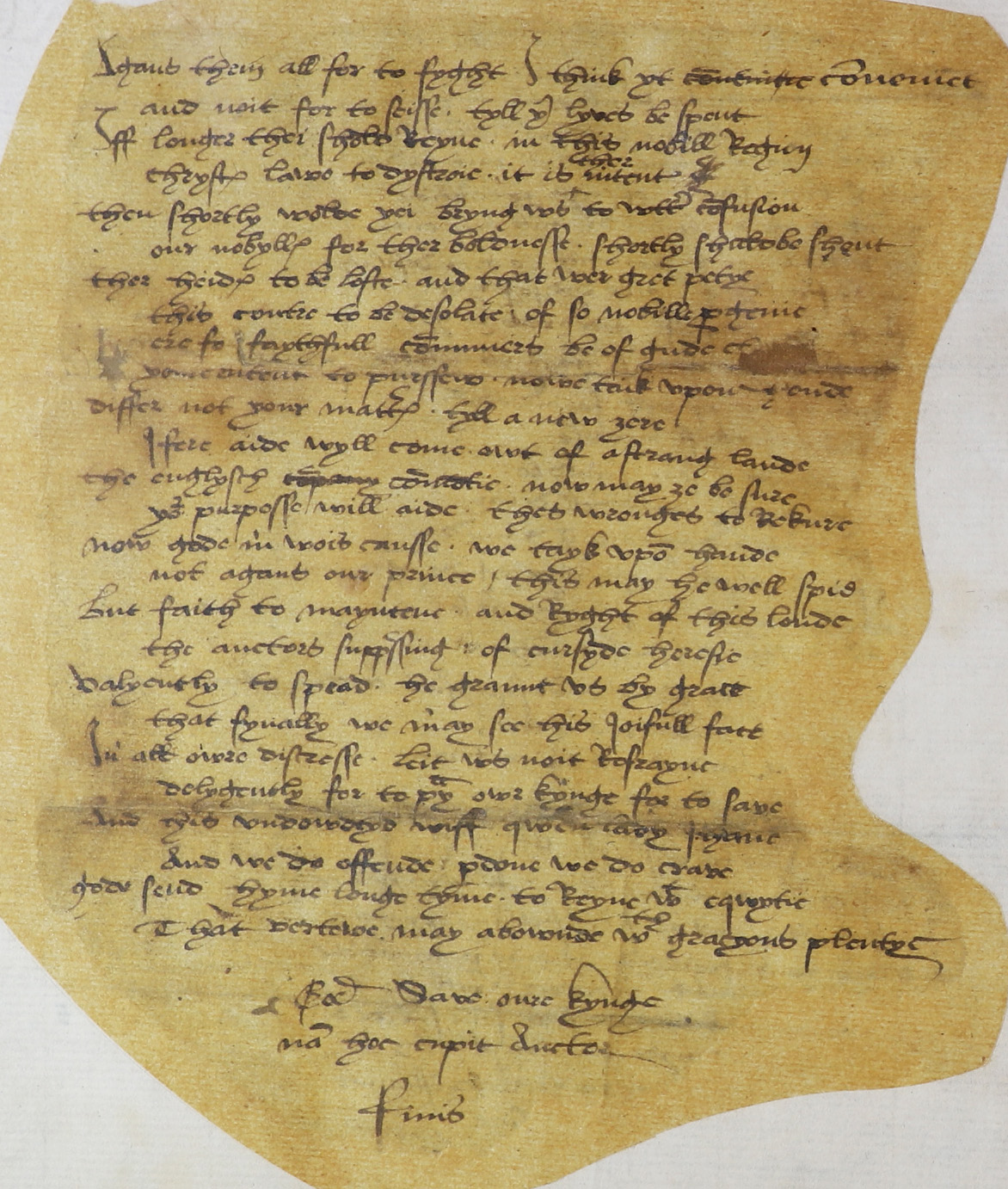
State Papers: rebellion ballad, 1537
We hope you enjoyed watching our Education Service video with collections expert Sean Cunningham looking at records from our State Papers collection. This video focusses on a ballad relating to the Pilgrimage of Grace in 1536-7 from SP1, our series of State Papers relating to Henry VIII.
Watch the video then try and answer the following questions:
- SP1 covers the reign of which English King?
- What time period is covered by the entire State Papers collection?
- What type of information can we find within the State Papers?
- Why does the document box seen in the video have a code?
- Why are the documents found in the box bound into a volume?
Document: SP 1/118
- What is the date of the document discussed in the video?
- What is unusual about the form of the document?
- Why is this particular document in the collection of State Papers?
- The document is titled as an ‘Exhortation’. How does this explain the purpose of the document? Check out the meaning of this term.
- Who wrote this document?
- Who did the writer criticise in this document?
- Why do you think that Henry VIII is not criticised directly?
- Why is this document significant in understanding the causes of the Pilgrimage of Grace?
- Can you find out more about how the government responded to this rebellion and others in different parts of the country?
- Why is it important to look at other sources within the State Papers collection concerning this and other Tudor rebellions?
- How does the ballad suggest there is a division between people of the north and the south?
- What does the reference in the ballad to ‘all abbeys supressed’ mean?
Download Spotlight On: State Papers Resource Pack
Related Resources
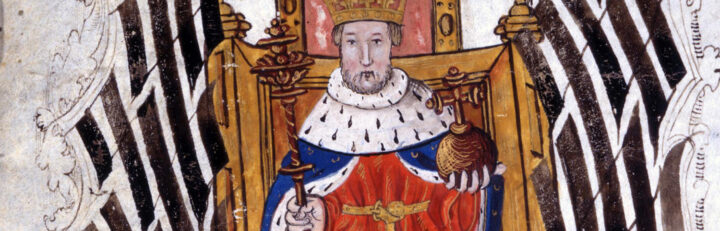
- English Reformation c1527-1590
How did state and people respond to religious change?
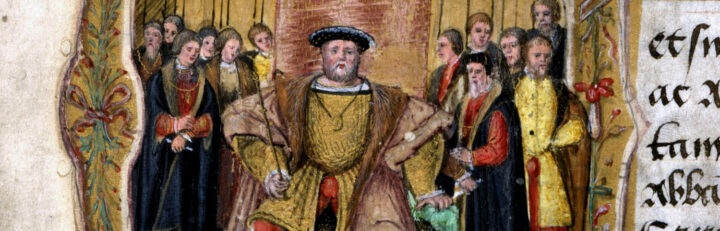
- Henry VIII court rules
How did Henry VIII get up in the morning?
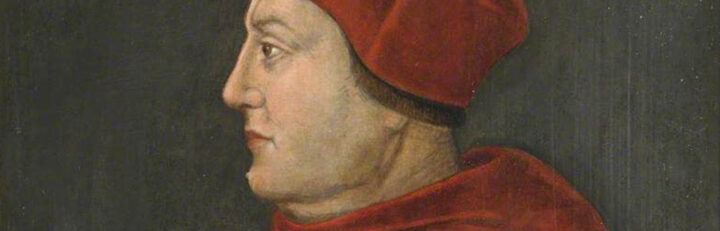
- Cardinal Wolsey
Dr Dan Gosling introduces documents related to the fall of Cardinal Wolsey.
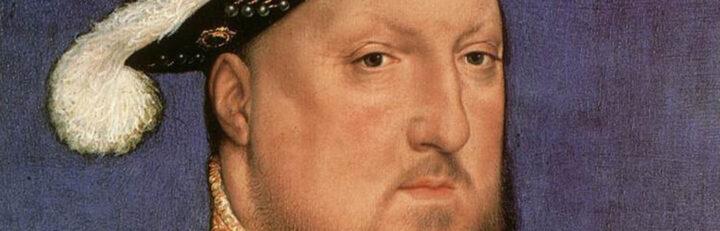
- Henry VIII
Marking the 500th anniversary of Henry VIII’s accession to the throne.
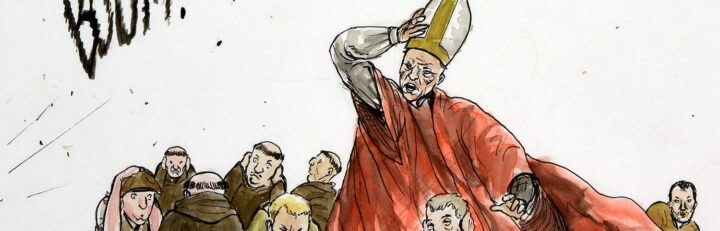
- Chronicles of the Dissolution
A graphic arts project illustrated by eight students who spent a week at The National Archives.
Connections to Curriculum
Key stage 5
AQA: GCE History: The Tudors: England, 1485–1603
Edexcel GCE History: Rebellion and disorder under the Tudors, 1485–1603
OCR GCE History: Rebellion and Disorder under the Tudors, 1485–1603
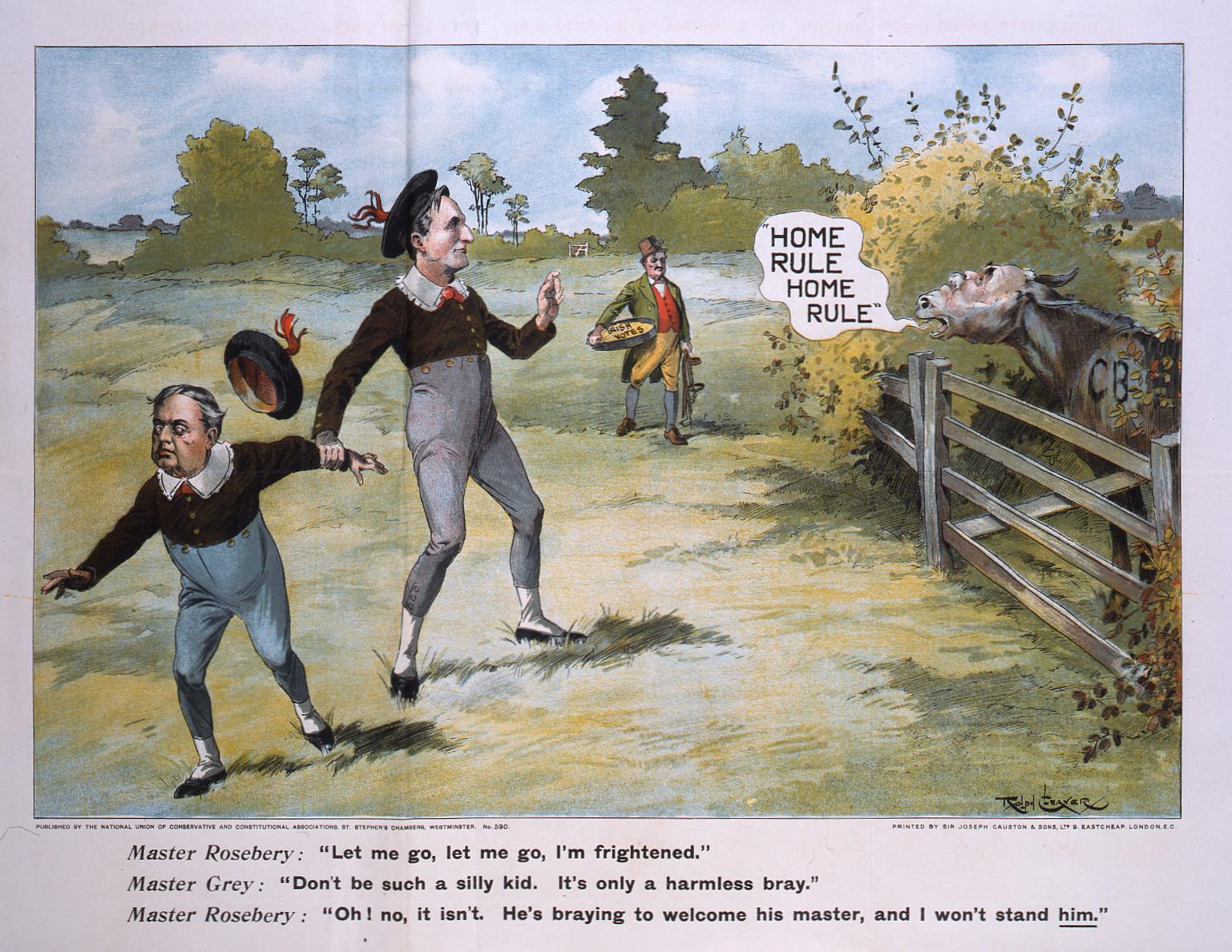
Resistance to British rule in Ireland had existed for hundreds of years. Irish nationalists, the majority of them Catholic, resisted this rule in a number of peaceful or violent ways up until the start of the First World War. Irish nationalists wanted Ireland to be independent from British control.
At the start of the twentieth century, Irish ‘Home Rule’, the name given to the process of transferring rule from British to Irish hands seemed likely and, as a result the Unionist minority, a largely Protestant population, loyal to Britain and British rule, began to more actively resist the idea.
Eventually, Irish Home Rule was granted, but it excluded the six mainly Protestant counties of the province of Ulster (one of the four provinces of Ireland) in the north-east corner of the island. This established Northern Ireland in 1920, which continued to be part of the United Kingdom, while the Anglo-Irish Treaty, signed in December 1921, established the Irish Free State as a Dominion of the British Empire. This meant that the Irish Free State was a self-governing nation of the Commonwealth of Nations which recognised the British monarch as head of state.
Use the original sources in this lesson to find out how Ireland was partitioned.
Why was Ireland divided in 1921?Britain ruled over the island of Ireland for hundreds of years and, during that time, there had, to varying degrees, always been some form of resistance to that rule. This was either demonstrated through violence, or through politicians taking up issues in Parliament.
Broadly speaking, there were two political viewpoints in Ireland. Irish nationalists, most of them from the majority Catholic population, had attempted on a number of occasions to bring about Home Rule for Ireland, and this idea started to gain momentum and became a real possibility during the last decades of the 19th century. MPs in the Irish Parliamentary Party, led by John Redmond, had allied themselves with the Liberal Party, who broadly supported the cause of Irish Home Rule. Eventually, after a third attempt to pass through Parliament, Home Rule became law in 1914.
There was also a large Protestant minority in Ireland, located largely in the north-eastern county of Ulster, who believed that Ireland should remain as part of the United Kingdom. These Unionists actively resisted calls for Home Rule, fearful that, as a Protestant minority, should Home Rule be granted, they would be ruled by a Catholic majority.
Both sides reached the brink of civil war in 1914. The question of Home Rule was suspended for the duration of the First World War, but immediately came back on the agenda at the end of hostilities. So called Advanced Nationalists, led by the now dominant Sinn Fein, had won most of the seats at the 1918 General Election and had decided to establish their own Parliament in Dublin.
Conflict once again occurred, the Irish War of Independence lasting over two years, until the signing of the Anglo-Irish Treaty in December 1921 which brought it to a close and established the Irish Free State. Not long before this, the Government of Ireland Act 1920, had also allowed for the creation of a separate Parliament in Northern Ireland, which came into being in June 1921, essentially partitioning the island of Ireland.