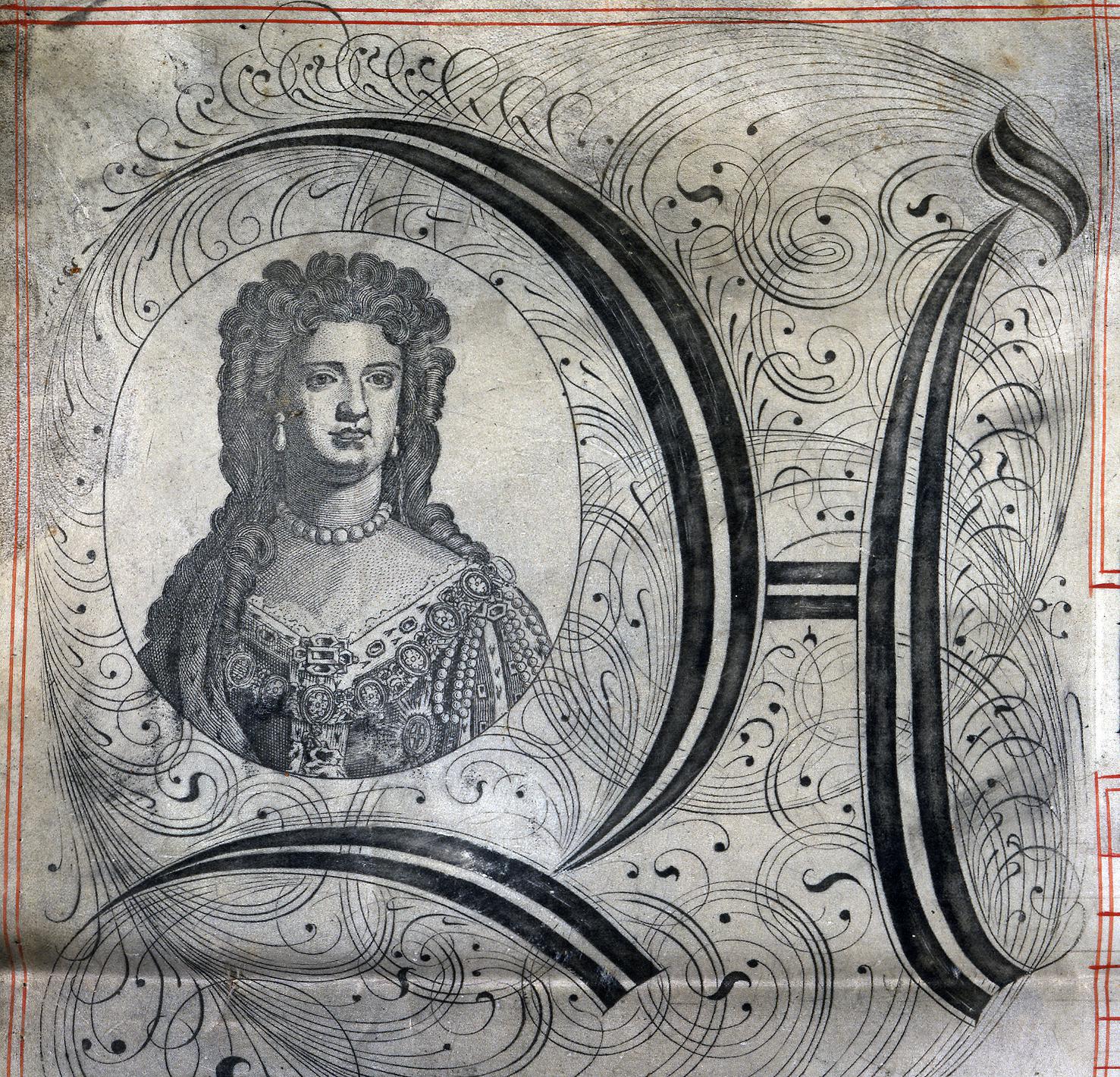
During her brief reign, Queen Anne received numerous petitions. A petition was a formal written request to the monarch by a person or group of people for a specific purpose. They included appeals from people against being sent to prison, or requests concerning religion, the sale of goods, pleas for jobs in the government or the Navy and so on. These requests therefore, can give insight as to how a monarch was expected to govern and carry out their role.
Likewise, seals, used on most documents in the past to ‘close’ them and to prove that a document really was actually from the sender are useful sources for finding out about the monarchy. A Great Seal was particularly significant as it belonged to the monarch and was attached to all important documents which came from the crown. If a document had this seal, it had the monarch’s ‘seal of approval’ and reflected their commands. The seal used in this lesson is the Second Great Seal of Queen Anne and gives us clues about her image and how she wanted to be seen.
Finally, some documents were decorated with images of the monarch to show that their contents relates to a particular ruler. This lesson contains an official treasury document which reveals an initial portrait of Queen Anne. Can you use the sources in this lesson to find out more about this Queen?
How can we find out about her?Anne was born in 1665, the last Stuart Queen and the first monarch of Great Britain. Her parents were the heir in waiting, James II, Duke of York, and Anne Hyde. Her elder sister Mary was to become Queen before Anne succeeded as monarch.
Anne had poor health all of her life and her early years were spent in France until her mother’s death when she returned to England. Her father remarried a Catholic Princess, Mary of Modena in 1673. Anne and her sister Mary as royal children did not live with their parents and were brought up as Protestants. In 1683 she married Prince George of Denmark. Anne experienced many miscarriages, gave birth to six still-born infants, two babies who died soon after being born, two daughters who died as toddlers and a son who survived to age 11. In her later years she suffered from gout, a condition which gave her pain in her legs and made it difficult for her to walk, when she became Queen she had to be carried to her coronation.
Her father, James II became king in 1685, but was deposed in ‘The Glorious Revolution’ of 1688 and her elder sister, Mary, ascended the throne with her husband, William III of Orange of the Netherlands. After the death of Mary, and later William, Anne, heir to throne, became Queen of England in 1702.
One of the lasting achievements of her reign was the Act of Union of 1707. It meant that England and Scotland were united. From 1603 with the reign of James I of England and King James VI of Scotland, there existed a union under one monarch but the Act of Union formally united the English and Scottish crowns to create the Kingdom of Britain, with the new union Jack and coinage to reflect this in the reign Queen Anne.
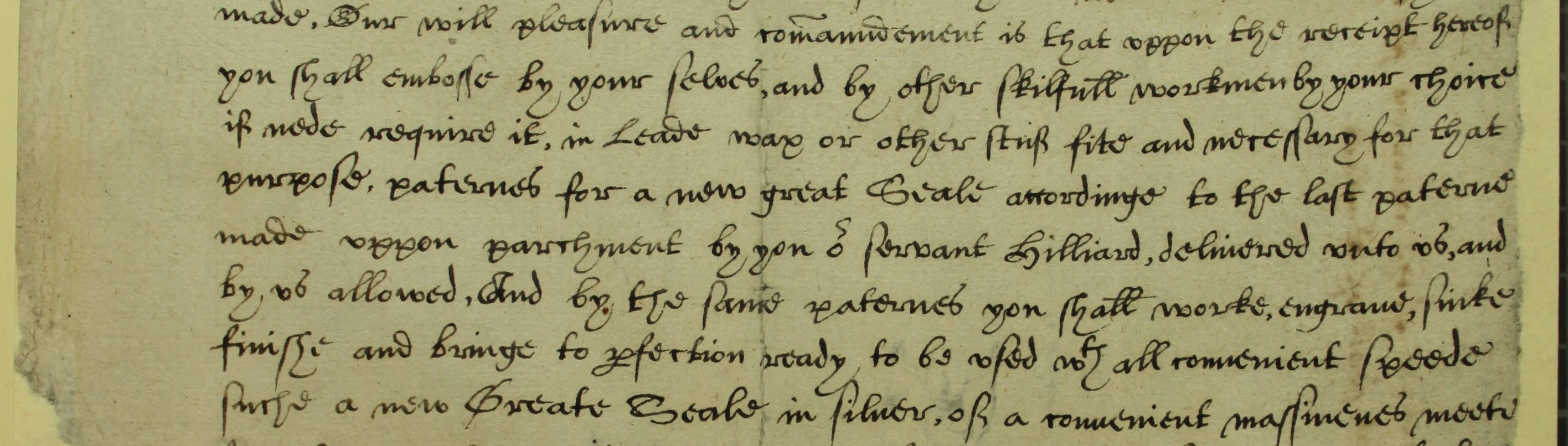
An extract from a warrant, a document giving a royal command. Catalogue ref: SP 15/28 f79

An extract from a warrant, a document giving a royal command. Catalogue ref: SP 15/28 f79
 Why did the Cold War emerge?
Who first coined the phrase “Cold War”? The general consensus among historians is that it was the celebrated author and journalist, George Orwell, in his essay ‘You and the Atom Bomb’ published in the Tribune magazine on 19 October 1945 (though one biographer has traced his use of the phrase back to 1943). In the 1945 article Orwell reflected on the repercussions of ‘a state which was at once unconquerable and in a permanent state of “Cold War” with its neighbours’. He envisaged ‘the prospect of two or three monstrous super-states’ dominating the world, and possessing weapons which can kill millions in seconds. Orwell concluded that the atomic bomb was likely ‘to put an end to large-scale wars at the cost of prolonging indefinitely a “peace that is no peace”.
Seeing into the future
Looking back at Orwell’s predictions, he possessed amazing foresight. The Cold War (1945-1991) was a confrontation, both military and ideological, between two superpowers, the capitalist United States and the communist Soviet Union (and their respective allies), made all the more tense by the threat of nuclear war. This highly charged stand-off was a thread running through historic developments such as the iron curtain, the Cuban missile crisis and the construction and dismantling of the Berlin Wall.
Because there was so much at stake – arguably, the very future of civilisation – the superpowers avoided direct confrontation but fought a series of savage proxy wars, in Asia, Africa and Latin America, supporting local factions. Orwell’s “peace that is no peace” prediction was borne out.
Revelations
Contemplating the Cold War from today’s perspective, one aspect cannot be predicted – the surprises that can emerge from documents you haven’t seen before. Many narratives are available for the Cold War: it is the subject of many books, documentaries and films. However, this package of documents from The National Archives shows us that archives still have the capacity to surprise us about this period in history. There are many instances of this. For example, it is well-known that Churchill’s famous quotation “from Stettin in the Baltic to Trieste in the Adriatic, an iron curtain has descended across the Continent” was part of a speech given in Fulton, Missouri, USA, on 5 March 1946. But did you know that he used the phrase ‘iron curtain’ almost a year earlier, in a personal telegram to President Truman on 12 May 1945? This is a heartfelt message in which Churchill expresses his ‘deep anxiety’ about Russian intentions in Eastern Europe.
Another surprise is a report by the Joint Planning Staff which puts forward a plan, (little known today) entitled ‘Operation Unthinkable’, advocating an attack on Soviet Forces in order to push them out of East Germany and Poland in July 1945. This document has real ‘shock value’: ‘If they [the Russians] want total war, they are in a position to have it’. The strident language of this document is striking: the intention was ‘to impose on Russia the will of the United States and the British Empire’. However, it is acknowledged that ‘to win would take us a very long time’.
Dramatic language is also a feature of a report called ‘The Threat to Western Civilisation’ from the Foreign Secretary to the British Cabinet in March 1948. This refers to the possibilities of the Soviet Union establishing a ‘world dictatorship’ or the ‘collapse of organised society over great stretches of the globe’. The writing style is so powerful, the words leap from the page. Yet another example of vivid writing can be seen in a Foreign Office telegram reporting back to London about the uprising in Hungary on 25 October 1956: ‘the populace are terrified of massive reprisals’.
In some cases, document content is not dramatic in itself but is, none the less, surprising. A great example of this is the last paragraph of Atomic Spy Klaus Fuch’s confession on 27 January 1950, when he suddenly begins to ‘wax lyrical’ about his admiration for English people: ‘since coming to Harwell I have met English people of all kinds, and I have come to see in many of them a deep rooted firmness which enables them to lead a decent way of life. I do not know where this springs from and I don’t think they do, but it is there’. This incongruous piece of reflectiveness at the end of a confession statement shows how Fuchs was somewhat detached from reality at the time he made it – the does not seem to realise the import of what he had just confessed to, the giving of vital atomic secrets to the Soviet Union.
As well as the textual documents, visual sources can also tell a powerful story. Grainy black and white photographs of the early days of the construction of the Berlin Wall make us reflect on the predicament of Berliners, looking on at the partially constructed wall, the barbed wire, the turrets, and the ‘death strip’. For another striking example of visual material, see the illustrations in the leaflet advising householders on protection against nuclear attack (1963), which are strangely cosy, hinting at elements of normality even during fall-out conditions.
Value of archives
The National Archives is the nation’s memory – we preserve the integrity of the public records, stretching back some 1,000 years. George Orwell truly understood the value of authoritative records: Winston Smith, the anti-hero of Orwell’s 1984, worked in the ‘Ministry of Truth’, falsifying back-numbers of The Times so that the information contained in them corresponded with the current pronouncements of Big Brother’s regime. The corollary of this imagined scenario, of course, is that archives you can trust are essential for a true understanding of the past.
Mark Dunton
Principal Records Specialist
The National Archives
During the autumn term 2018, Graphic Design students from the University of Worcester took part in an exciting project with The National Archives. They were given a brief as part of their Children’s Book Design module, to create activities inspired by the archives’ enormous collection of maps, for use by family audiences visiting the site in Kew.
The students were given the choice of a wide selection of maps to choose from, along with historical information about the provenance of each map. They also took part in a taught workshop with the Education Team, which gave them the opportunity to find out about The National Archives and to explore some of the original maps from the collection.
The resulting activity booklets, inspired by the maps, were designed and submitted to the Education Team for evaluation. Here are some examples of the finished designs:


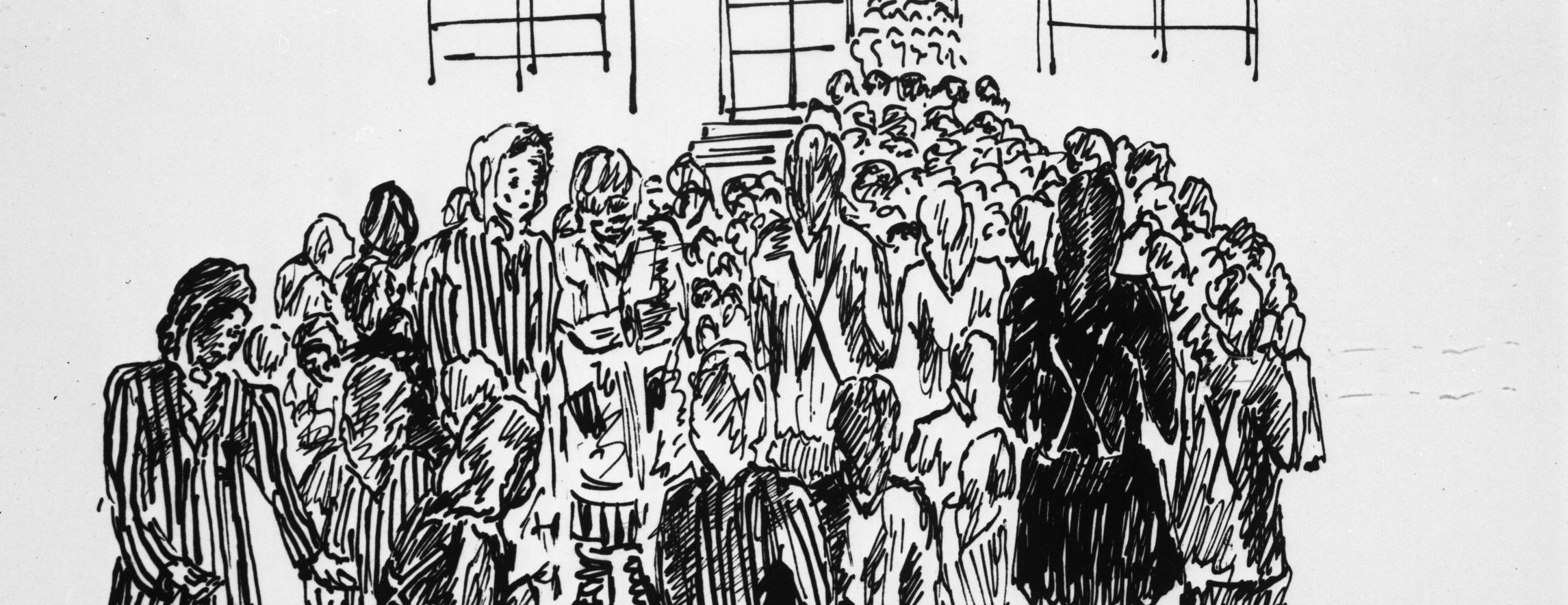
In this thought-provoking onsite workshop students investigate the Holocaust using a range of original documents, from a Foreign Office telegram about Kristallnacht, to a map of Auschwitz drawn by a survivor of the camp. Pupils have to consider what documents we hold in the British Government Archive and why. This workshop develops students’ skills at assessing the usefulness and limitations of historical documents, while addressing misconceptions and provoking discussion.
The two-hour workshop is led by an experienced history educator in an inspiring learning space at The National Archives in Kew. Students view a range of original documents including illustrations from a survivor of a concentration camp and photographs taken inside the Warsaw ghetto.
This workshop is aimed at Key Stage 3 students who have begun learning about the Holocaust.
Connections to the curriculum: History
What can British government documents tell us about what happened in the Holocaust?All activities must be booked in advance.
Tel: +44 (0)20 8392 5365
Fax: +44 (0)20 8487 9202
Holding History is a stop motion animated film created by students during a week-long workshop at The National Archives. The film was designed to highlight key historical stories from within our collection and covers a variety of time periods and themes. Many thanks to the Friends of The National Archives for their support on this project.
When making the film, students were asked to consider:
What is The National Archives? How has it changed and developed over the centuries? And what are the challenges, threats and importance of an archive in today’s world?
Each student was then given a specific story to research within our records before they could storyboard, design, create and capture their stop motion sets.
These finished film clips can now be used by teachers and students as brief overviews, introductions or interest points for the various topics explored within the film. These accompanying questions are designed to work alongside the film clip, to guide students in thinking about what they have learned from the clip or from their lessons and previous knowledge. Some questions can be answered from the film itself, others are intended to be answered after class discussion or independent thought.
The clips can also work as a model for student’s creative exploration of history, allowing students to see what can be done to tell stories from history and inspire their own creative work – either through animation, drawing, storytelling or other creative exploits.
NOTE TO STUDENTS
You will need to listen to the narrator of the film clip to answer some of these questions. Other questions require you to study images included within the film clip or require your own ideas and opinions based on your own knowledge.
Read through the questions before you view the clip.
You can now view the video in full here, or download our lesson pack complete with questions and clips using the button above.
What is 'The National Archives'?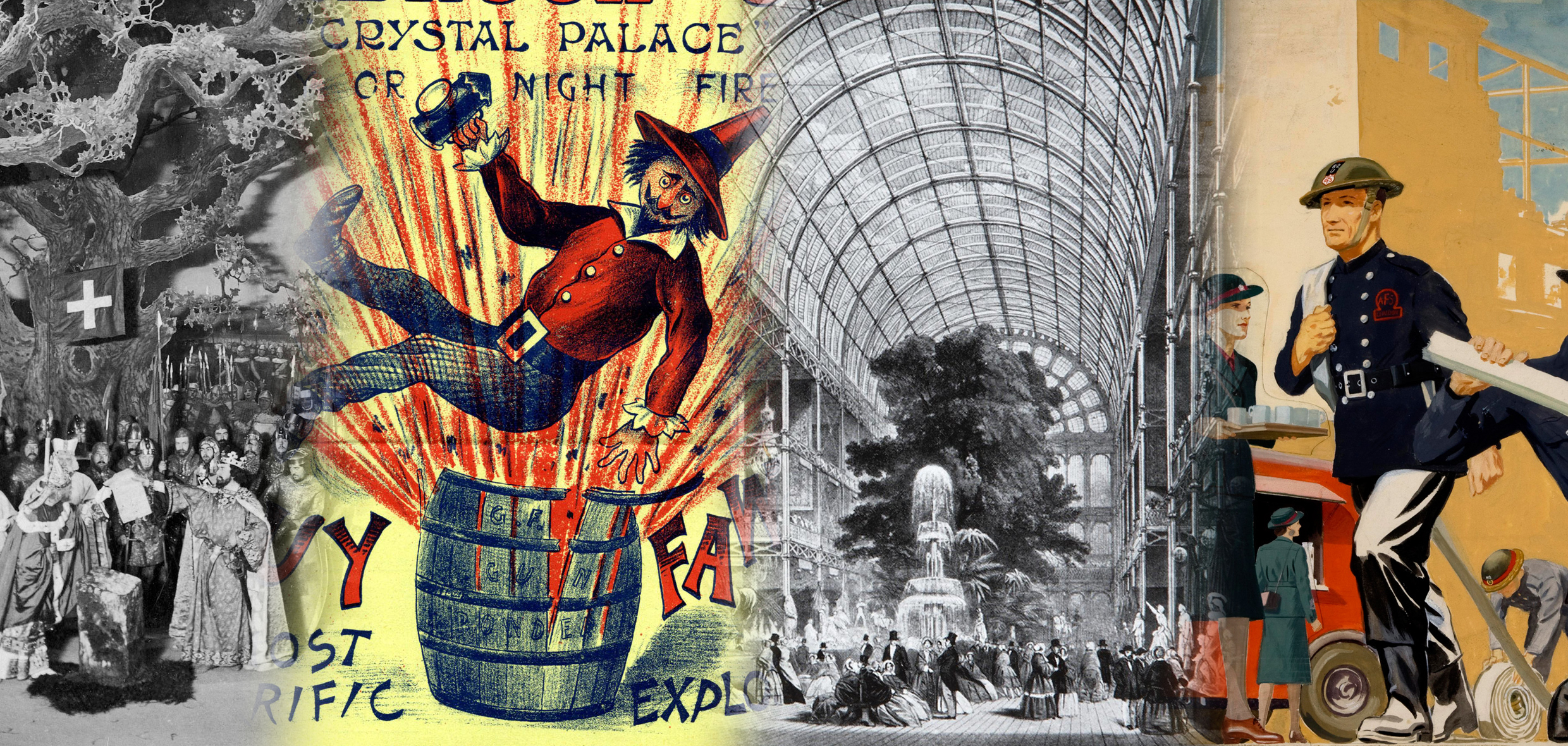 What happened then?
From the sealing of Magna Carta, the coming of the Armada, the Great Fire of London, a Christmas ceasefire on the Western Front in 1914 to Decimalisation in 1971, this selection of sources, based on records held at The National Archives, can be used in the primary classroom to support the National Curriculum element ‘significant events’ beyond living memory. The collection is by no means exhaustive, but contains some of the popular choices and other suggestions for teaching this topic. We hope to add to the collection over time. In addition, we have provided links to other useful resources for ‘significant’ events.
The sources can be used within any scheme of work which is based on developing a sense of chronology where pupils can see that a particular ‘significant event’ fits into a time frame. Again working with sources in this way will help pupils to register similarities and differences between aspects of life between periods, for example comparing the Great Exhibition of 1851 with the Festival of Britain in 1951. Other ‘events’ sources can be used to consider questions of what we are remembering and why? Have things always been the same? Why have some things changed?

Nicola de la Haye famously defended Lincoln castle from attack in 1191 when Prince John tried to seize the throne from Richard I. She had inherited her father’s land in Lincolnshire and his position as keeper of the castle. This seal was used after she was widowed and is attached to a land grant. (Catalogue ref: DL 25/2890)
 Who is who?
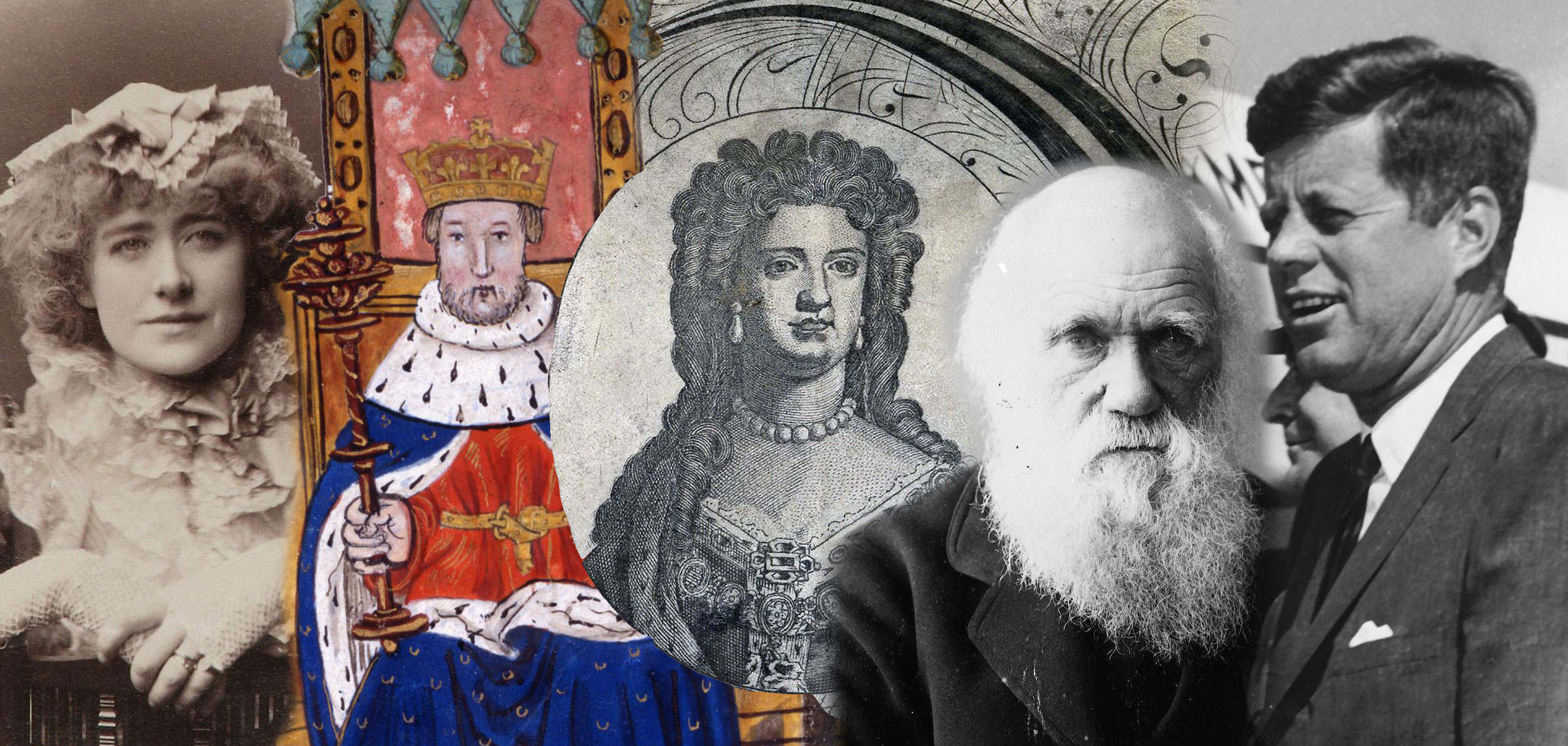
From writers to royals, politicians, artists, inventors or campaigners, this selection of sources, based on records held at The National Archives, can be used in the primary classroom to support the National Curriculum element ‘significant individuals’ who have contributed to national or international achievements. The collection is by no means exhaustive but contains some of the popular choices and more for teaching this topic. We hope to add to the collection over time. In addition, we have provided links to other useful resources for ‘significant’ figures.
The sources can be used within any scheme of work which is based on developing a sense of chronology where pupils can see that a particular ‘significant individual’ fits into a time frame. Again working with sources in this way will help pupils to register similarities and differences between aspects of life between periods, for example comparing Queen Anne to Queen Victoria or Florence Nightingale to Edith Cavell. Other ‘people’ sources can be used to consider questions of what we are remembering and why? Have things always been the same? Why have some things changed?