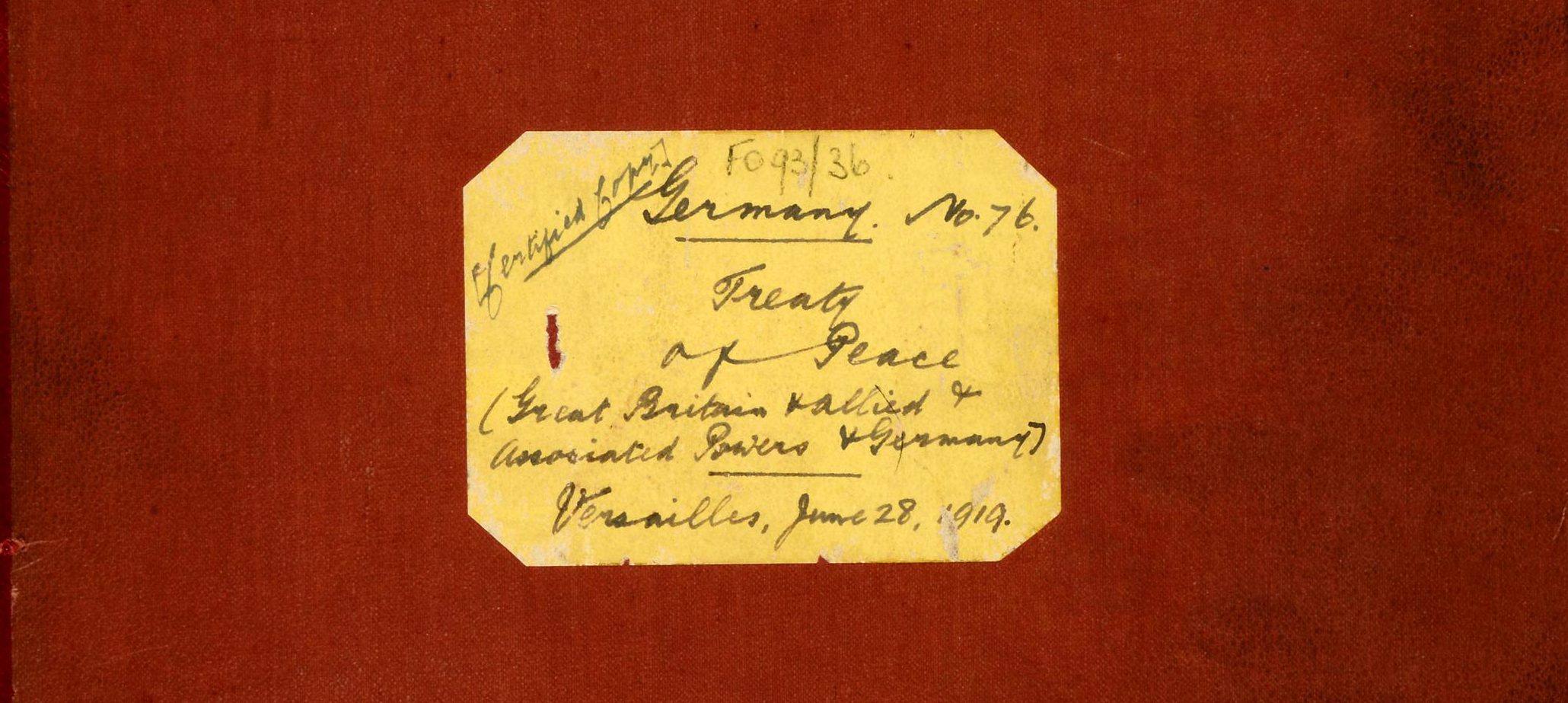
Behind the Hall of Mirrors: Versailles study day – 24 June 2019
To commemorate the centenary anniversary of the Treaty of Versailles, students will have the opportunity to take part in our exciting event taking place on 24 June 2019!
We’re all familiar with historians’ arguments about the Treaty of Versailles paving the way for the Second World War, but what do we really know about process that took place in 1919? The logistics involved; the stress and anxieties of those at the negotiating table; Germany’s involvement and the role of ‘new’ diplomacy?
As part of this fascinating study day, students will use original documents to explore the glossy public image of the peace process, before looking at the anxieties and the difficult processes that existed beneath this veneer. How was such a huge task planned and undertaken? What role did women play in this process? And why did one diplomat describe the work of the British Foreign Office as a ‘messy muddle’?
In the afternoon, guest historian Ben Walsh will give a talk about his research into the Versailles Treaty and its legacy.
Designed for upper KS3/ KS4
We have limited space on this study day so please do get in touch if you are interested in bringing your class.
What to expect in the onsite workshop:
Using original documents, from medical cards completed in the trenches to army service records, students explore fascinating personal stories from the First World War.
In the onsite workshop students explore fascinating personal stories from the First World War using original documents, from medical cards completed in trenches, to army service records. This session develops skills in selecting sources for particular historical enquiries. Students will investigate diverse experiences including a soldier with gas poisoning and a nurse suffering the psychological effects of working in a hospital.
The two-hour workshop is led by an experienced history educator in an inspiring learning space at The National Archives in Kew. Students handle a range of original documents.
What to expect in the online workshop:
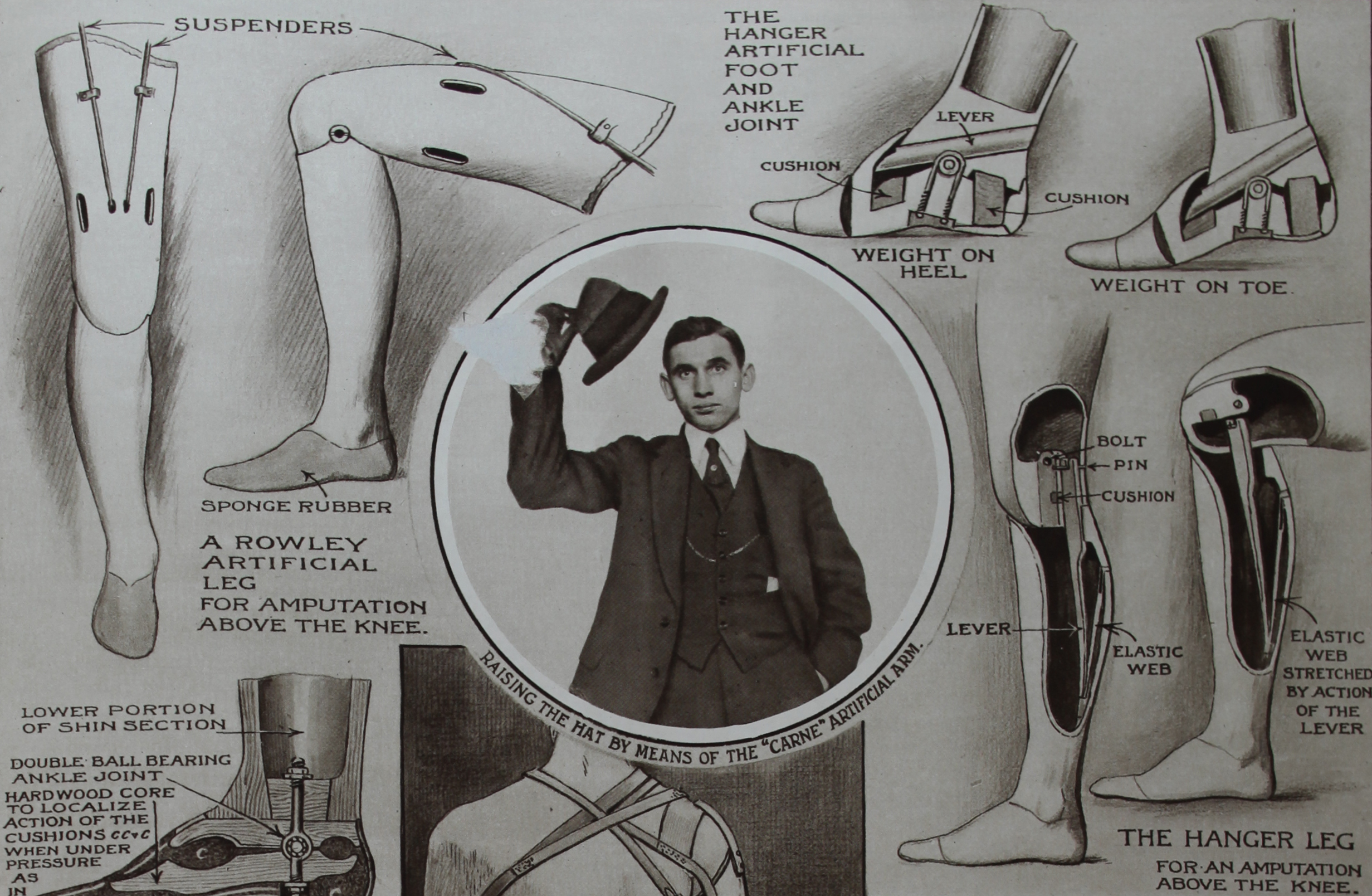
In the online workshop in your classroom students will investigate the effectiveness of medical treatment in the First World War, through examining historical documents. Students will gain a deeper understanding into different types of historical documents, from medical forms to government reports. This session develops skills in assessing the usefulness of documents.
The one-hour online session in your classroom is led by an experienced history educator, you only need a microphone, large screen and webcam to take part. Interactive activities encourage students to discuss their ideas and work in groups using high-quality materials provided in advance by the Education team.
*Note we will adapt the timing of the workshop to fit with your lesson times.
Connections to the Curriculum:
- AQA GCSE History: Conflict and tension: the First World War, 1894–1918 The Western Front: military tactics and technology, including trench warfare
- Edexcel GCSE History: Medicine in Britain, c1250 present and The British sector of the Western Front, 1914 18.
- OCR GCSE History: War and British Society c.790 to c.2010: The First World War: the beginnings of ‘total war’, including the impact on people’s lives.
- Edexcel GCE ‘A’ level History: British Experience of Warfare c1760-1918: Trench warfare on the Western Front 1914-1918
All activities must be booked in advance.
Tel: +44 (0)20 3908 9162
While the fight for votes for women has been long been regarded as a movement led and supported by women, it is important to recognize that men participated in the struggle, both in and outside Parliament.
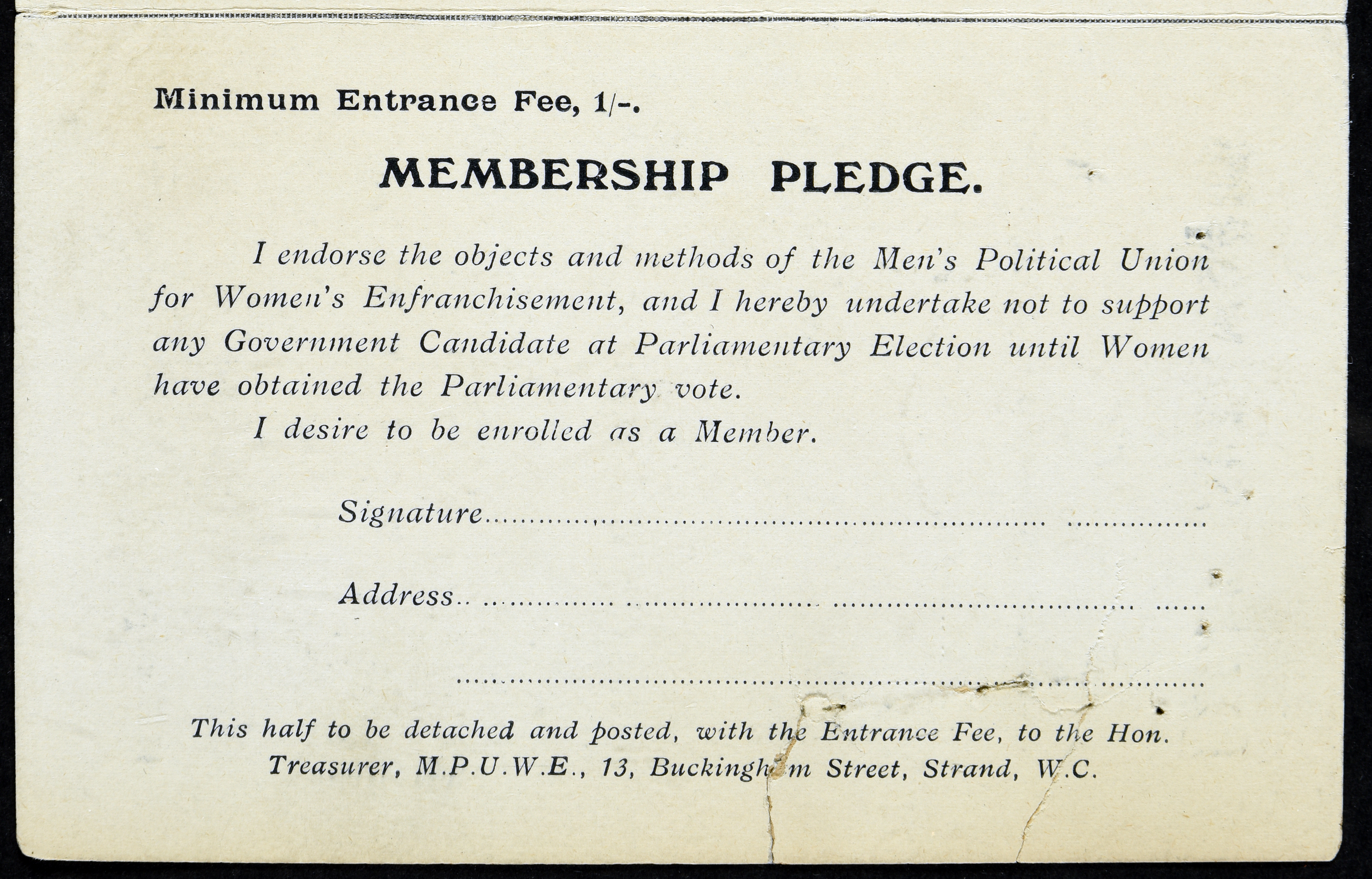
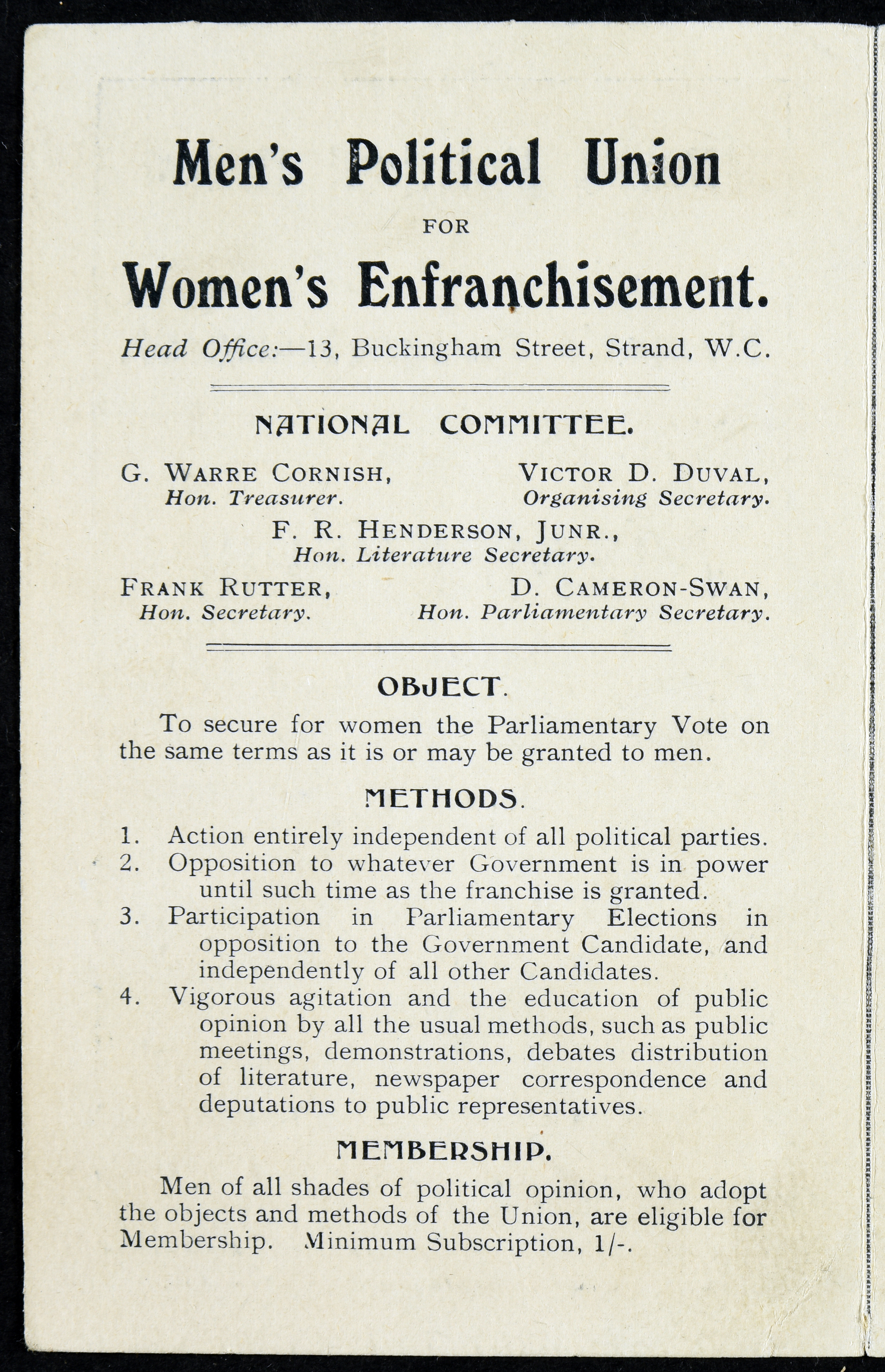
Also, men’s suffrage societies contributed to the general campaign with the Men’s League for Women’s Suffrage (1907) and The Men’s Political Union for Women’s Enfranchisement (1910).
With the coming of the First World War the National Union of Women’s Suffrage Societies and Women’s Social and Political Union called off their fight for enfranchisement.
In 1918, women were given limited voting rights with the Representation of the People Act. Universal suffrage, that is, the vote for men and women on equal terms, was finally achieved with the Equal Franchise Act in 1928 when all men and women were given the vote at 21 years. In 1969 the voting age for men and women was lowered to 18.
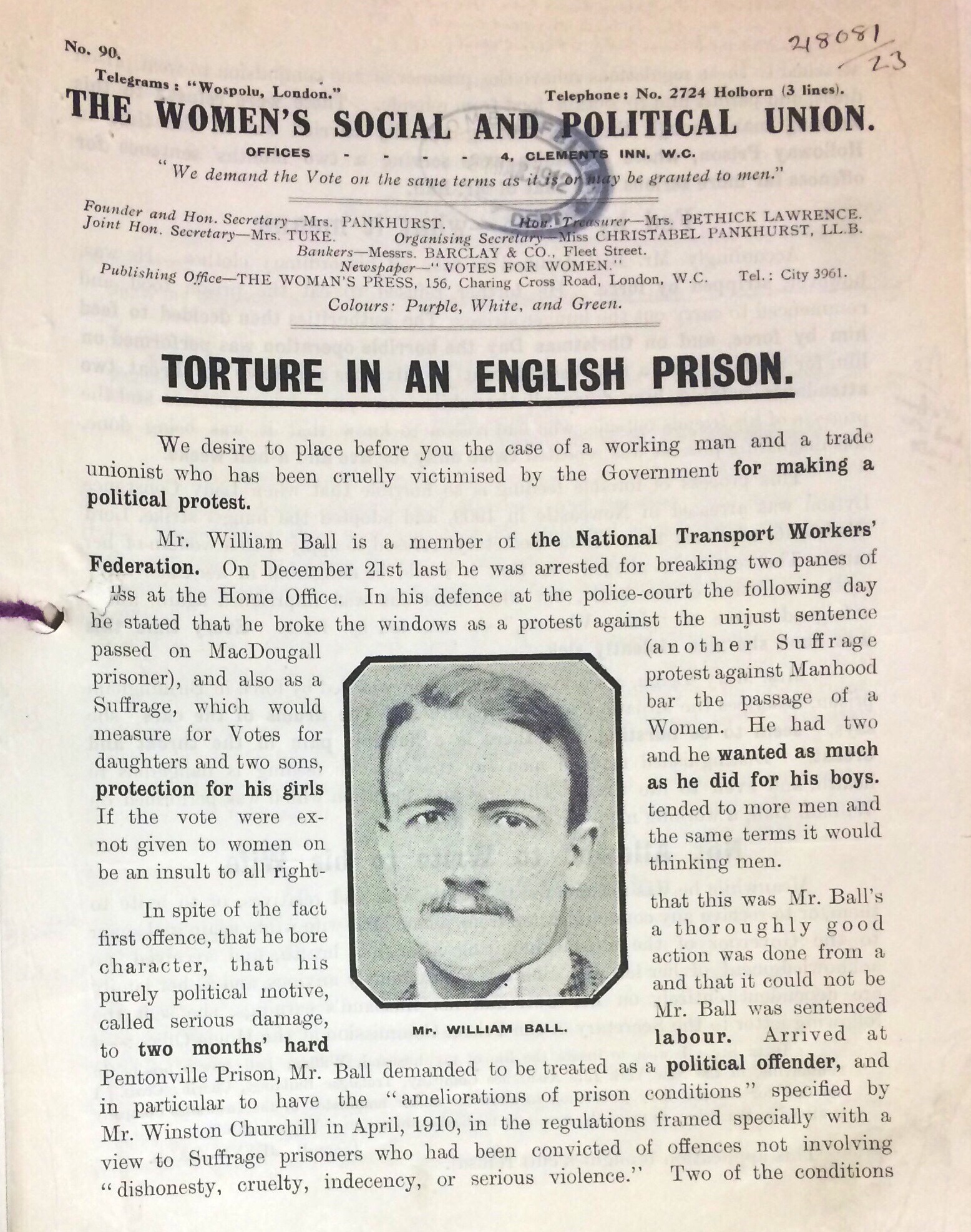
Use the sources in this lesson to investigate the role played by male supporters, or ‘suffragettes in trousers’ during the campaign for votes for women.
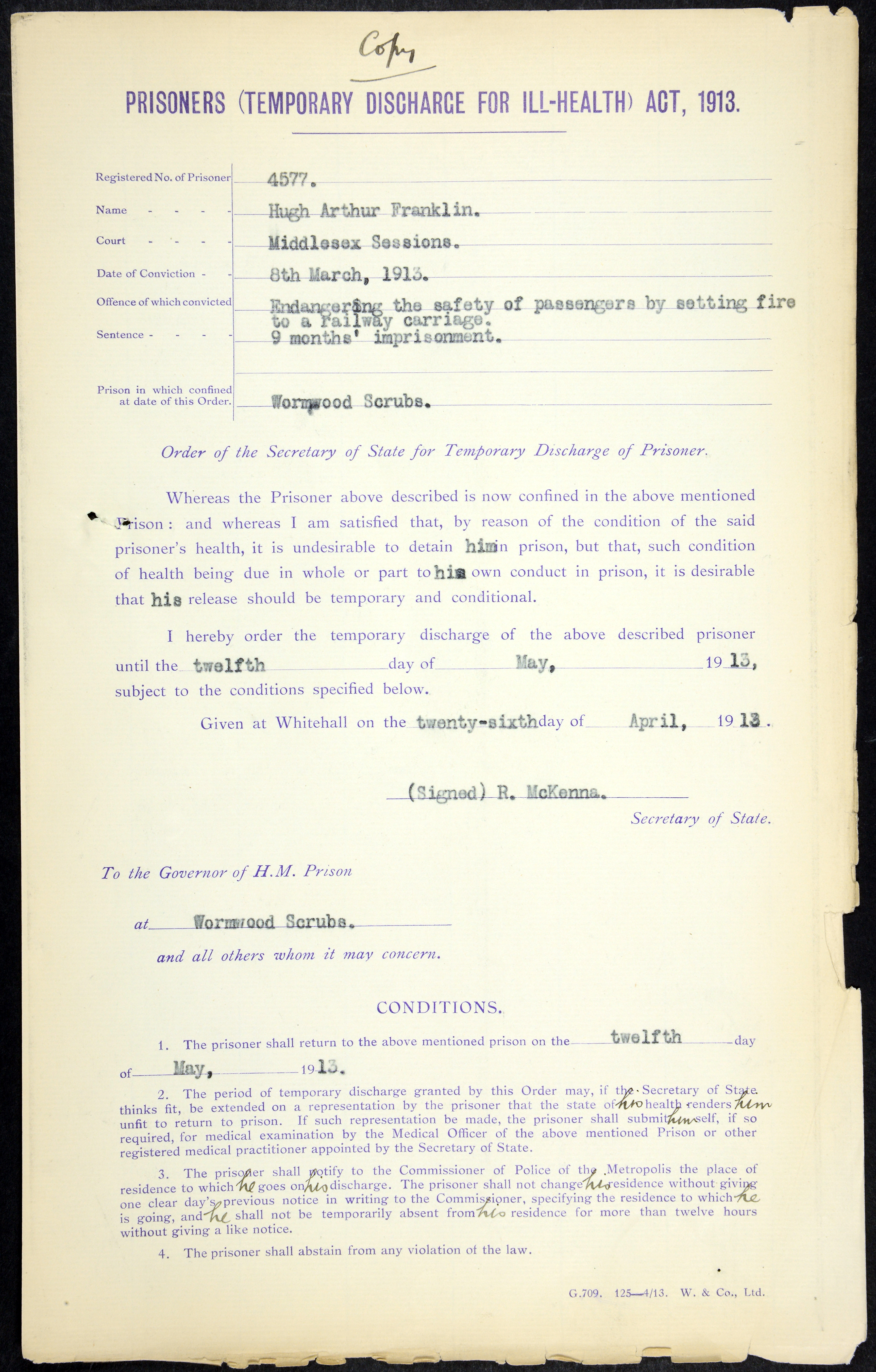
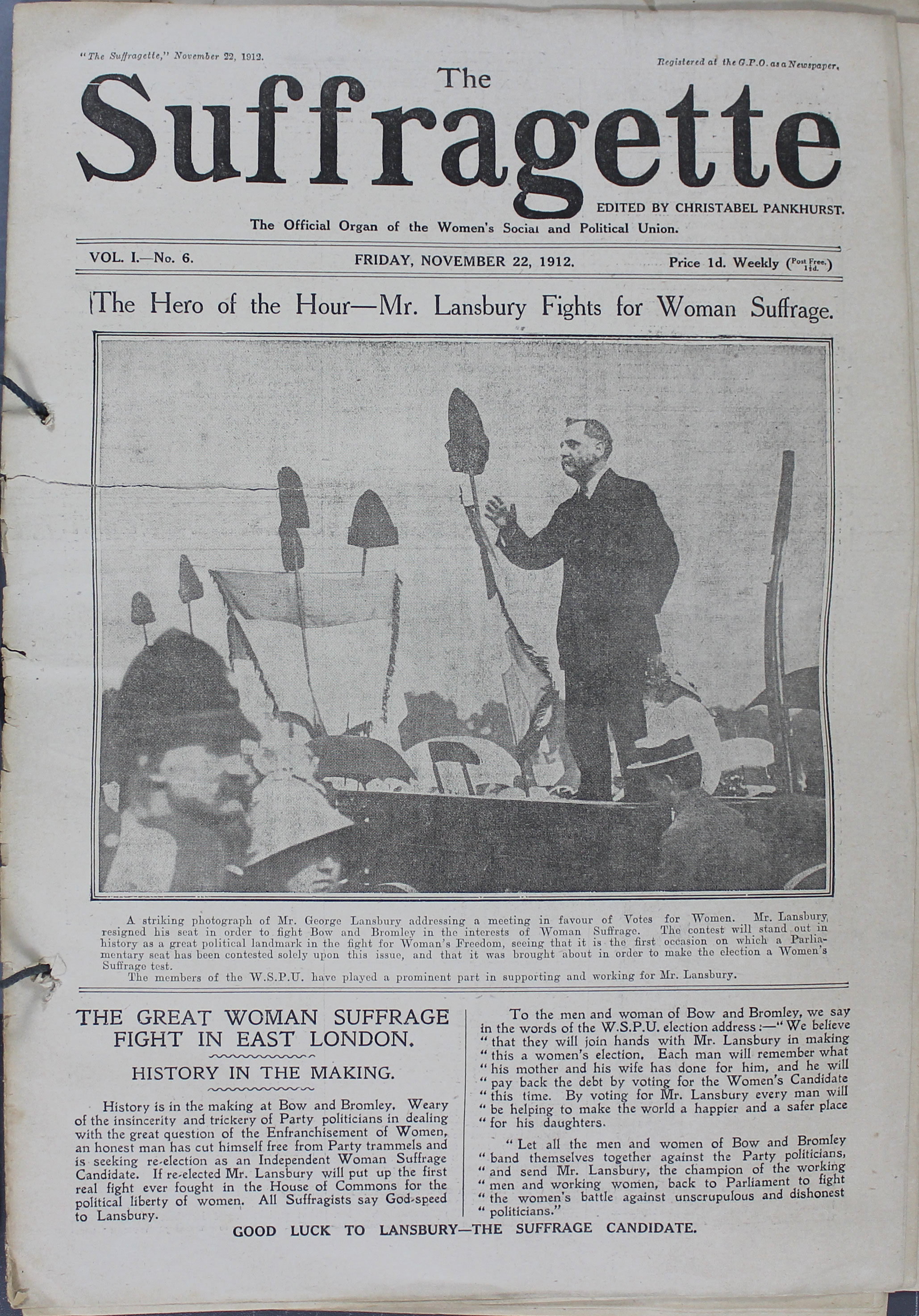
How did men support votes for women?In the nineteenth century, John Stuart Mill had presented an amendment to the Second Reform Bill in 1866 to include votes for women when the issue of the franchise was aired. Henry Fawcett, reformer of the Post Office, was also a keen supporter of the suffrage movement. He worked with his wife Millicent on her campaigns with the National Union of Women’s Suffrage Societies and provided financial backing. Similarly, barrister Frederick Pethick-Lawrence worked with his wife Emmeline, leading suffragette campaigner and publicist. Labour M.P. Kier Hardie often raised the issue in the House of Commons and fellow member George Lansbury resigned his seat in 1912 so that he could fight a by-election on the suffrage question, although he did not regain his seat until 1922. He served time in prison for making speeches in support of members of the Women’s Social and Political Union who committed criminal acts. Whilst serving time in Pentonville Prison he went on hunger strike.
Other high profile male supporters included philosopher Bertrand Russell- who had stood at the Wimbledon by-election in the 1907 on the votes for women ticket. In his campaign pamphlet he said: “I consider that the exclusion of women from direct political action is unjust and inexpedient, and that no reason exists for prolonging this exclusion. If elected I should urge the claims of women to enfranchisement at every opportunity.” He argued in an article entitled Liberalism and Women’s Suffrage (1908) that “it is plain that no man can call himself truly a democrat if he is in favour of excluding half the nation from all participation in public affairs”.
Dr Richard Pankhurst, in 1883 had stood as an Independent candidate for a by-election in Manchester for universal adult suffrage. Later he concentrated on the struggle for women’s rights and in 1889 helped form the Women’s Franchise League with his wife Emmeline. The organisation’s main objective was to secure the vote for women in local elections.
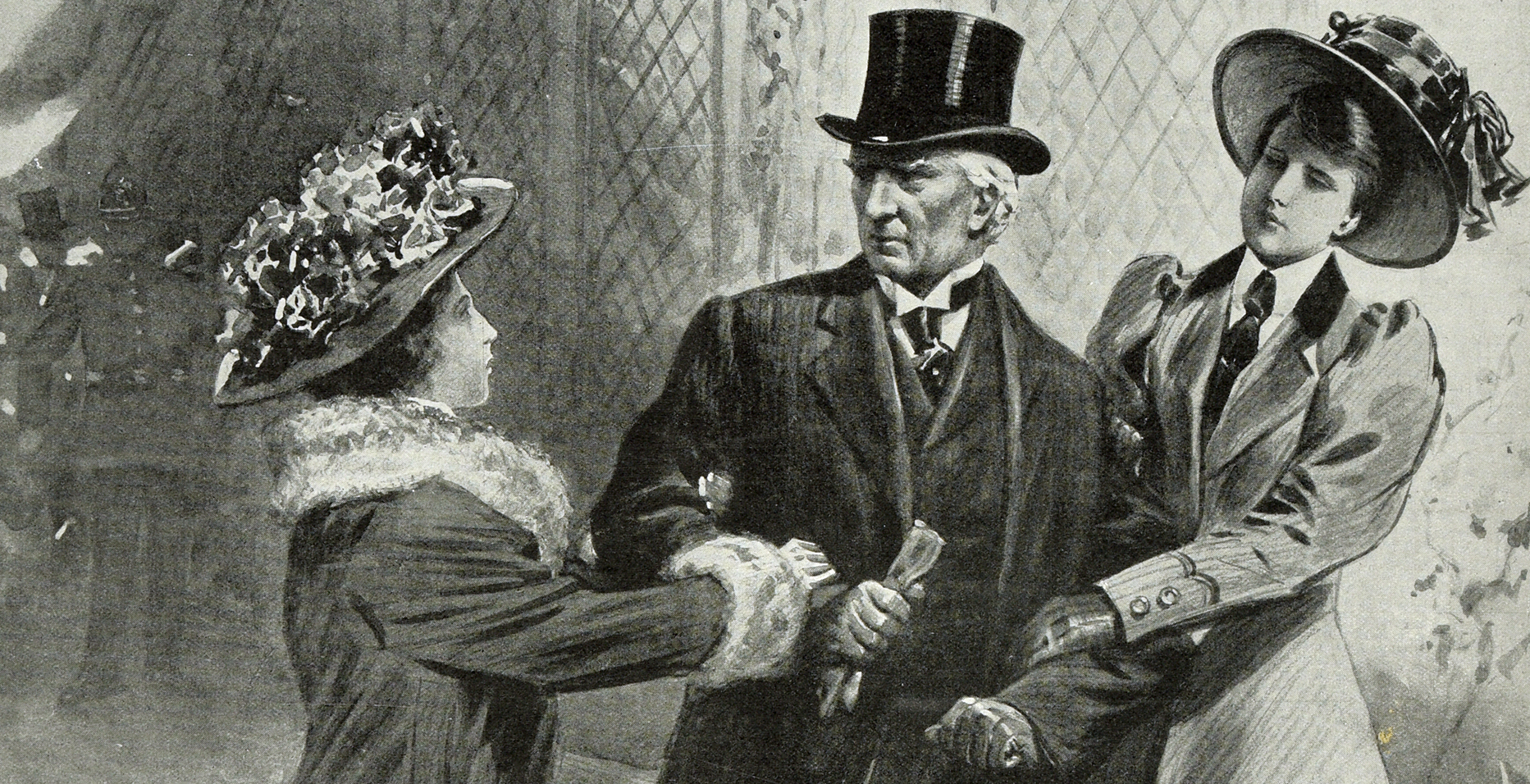
Victor Storr and Thomas Bayard Simmonds started a series protests in Parliament later called the ‘Grille Protest’, vividly described in the London Illustrated News at the time. From the public gallery they called for justice for women and showered the M.P.s below with suffrage leaflets. As part of this coordinated protest, some women chained themselves to the metal grille which concealed them from the chamber, Some men called for the protection of women at public meetings and spoke out against the brutality of their treatment by the authorities. Others were ridiculed or forcibly removed from political meetings for protesting against the exclusion of women from the franchise.
Support for the female franchise also came from male writers such as E.M. Foster, H.G. Wells, George Bernard Shaw, Thomas Hardy and the economist John Maynard Keynes. Henry Selfridge also supported votes for women, there must have been some self-interest here in wanting to secure the female market for his department store, but nevertheless he promoted the Women’s Social and Political Union with a flag on the building and advertised in the suffragette paper Votes for Women and used the suffragette colours in his department store’s windows.
Of course the campaign was not just supported by those men who had the advantage of making themselves heard through access to political power, money or privilege. There were ordinary working class and middle class men who wanted the vote for their female relatives and friends. There were whole suffrage families that showed shared commitment to the cause. Documentary evidence exists for men going on hunger strike, publishing suffragette campaign material and supporting pressure groups such as The Men’s League for Women’s Suffrage (1907) and The Men’s Political Union for Women’s Enfranchisement (1910) founded by Victor Duval who in the same year published a pamphlet entitled An Appeal to Men. Duval prior this had been active supporter of The Women’s Social and Political Union and the Women’s Freedom League. He was also charged in July, 1909 for “Aiding and abetting Marion Wallace Dunlop, in wilful and malicious damage to the stone work of St. Stephen’s Hall, House of Commons, by stamping it with an indelible rubber stamp, to the value of ten shillings.”
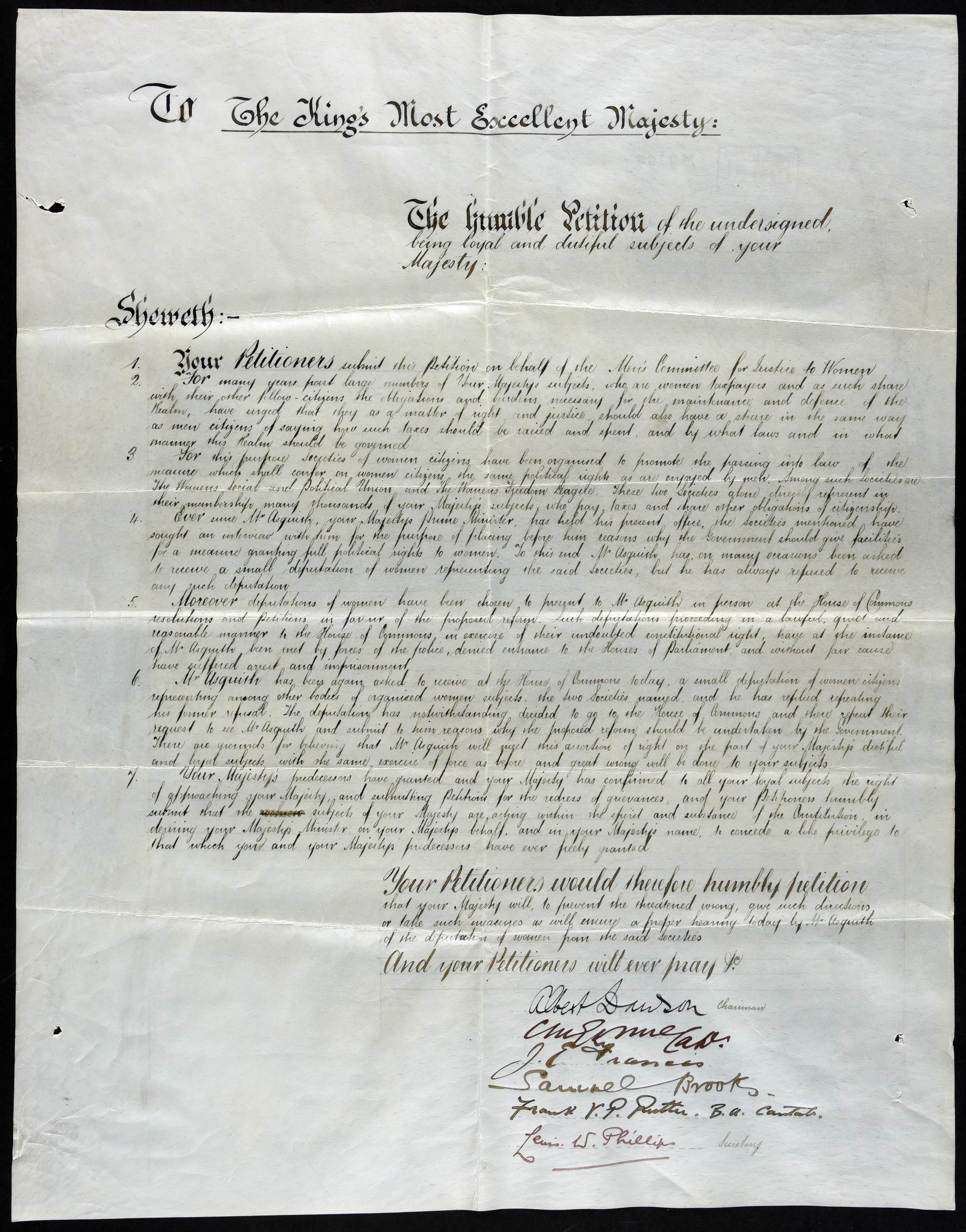
Men’s Committee for Justice to Women was founded in 1909 after the Women’s Freedom League deputation to parliament was arrested and imprisoned. The Committee watched cases where women were prosecuted for suffrage protests. Albert Dawson was its chairman. One of their petitions is included as a source for this this lesson.
According to Israel Zangwill, member of The Men’s League for Women’s Suffrage, “the petticoat no longer makes the Suffragette. We are suffragettes – suffragettes in trousers.” The men who set up and joined these pressure groups wanted to use their position as voters to secure the vote for women. However, there were differences between the organisations. The Men’s League favoured a more legalistic approach and discussed the ethical arguments in favour of votes for women. The Men’s Political Union, formed later, favoured more direct action. Another organisation, founded by Mrs Arncliffe-Sennett in 1913, was The Northern Men’s Federation for Women’s Suffrage and sent a delegation of Scotsmen to meet the Liberal Prime Minister, Herbert Henry Asquith. Some suffrage societies allowed men to be members; the Women’s Social and Political Union however, did not.
The Representation of the People Act passed in 1918 did not give all women the right to vote. Only those aged 30 or over and were home owners could vote. This meant that a further 8.4 million women attained the right but working class women did not get the right to the ballot. Full suffrage for all women over the age of 21, on equal terms as men, was granted ten years later with the Second Representation of the People’s Act in 1928.
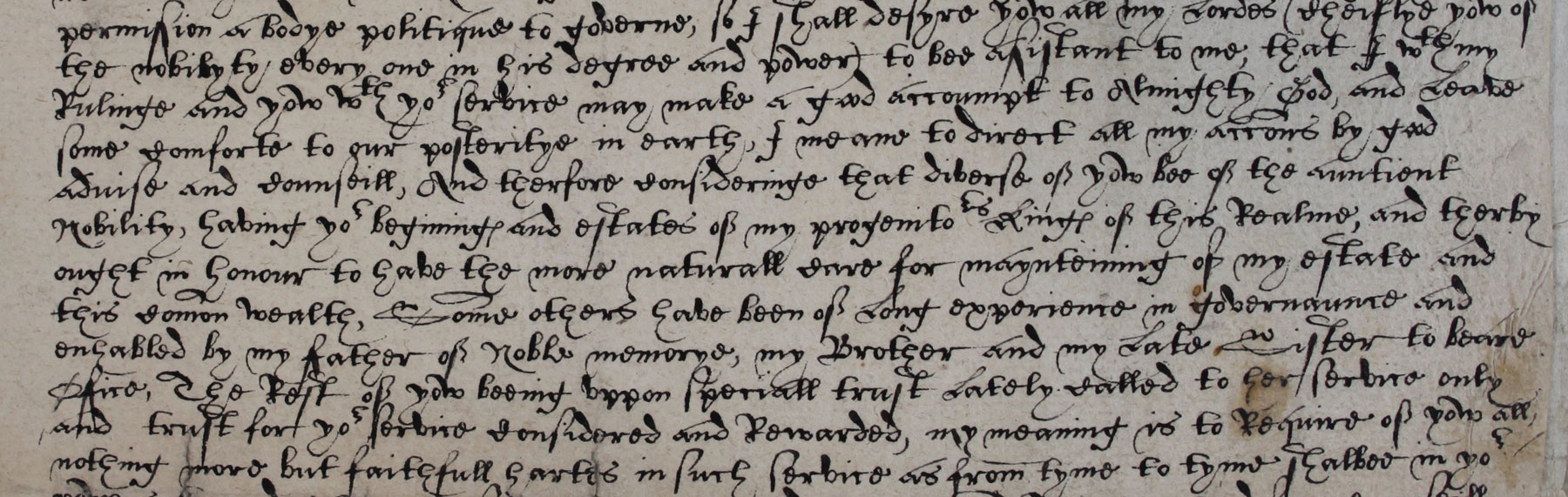
Palaeography is the study of old handwriting. This web tutorial will help you learn to read the handwriting found in documents written in English between 1500 and 1800.
At first glance, many documents written at this time look illegible to the modern reader. By reading the practical tips and working through the documents in the Tutorial in order of difficulty, you will find that it becomes much easier to read old handwriting.
This tutorial has been developed in partnership with the School of Library, Archive and Information Studies (SLAIS), University College London
This resource has been archived as the interactive parts no longer work. You can still use the rest of it for information, tasks or research. Please note that it has not been updated since its creation in 2005.
You can find handwriting to practice on in our other resources:
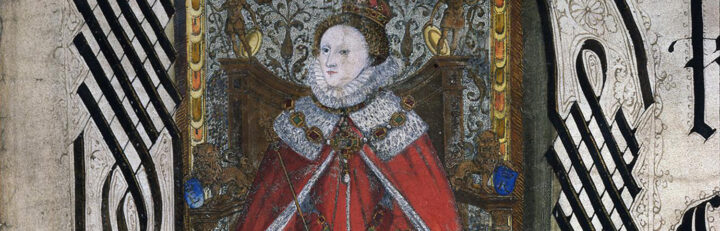
- Elizabeth I’s monarchy
Rule of a ‘weak and feeble’ woman? - English Reformation c1527-1590
How did state and people respond to religious change? - James I
What were the key areas of dispute?