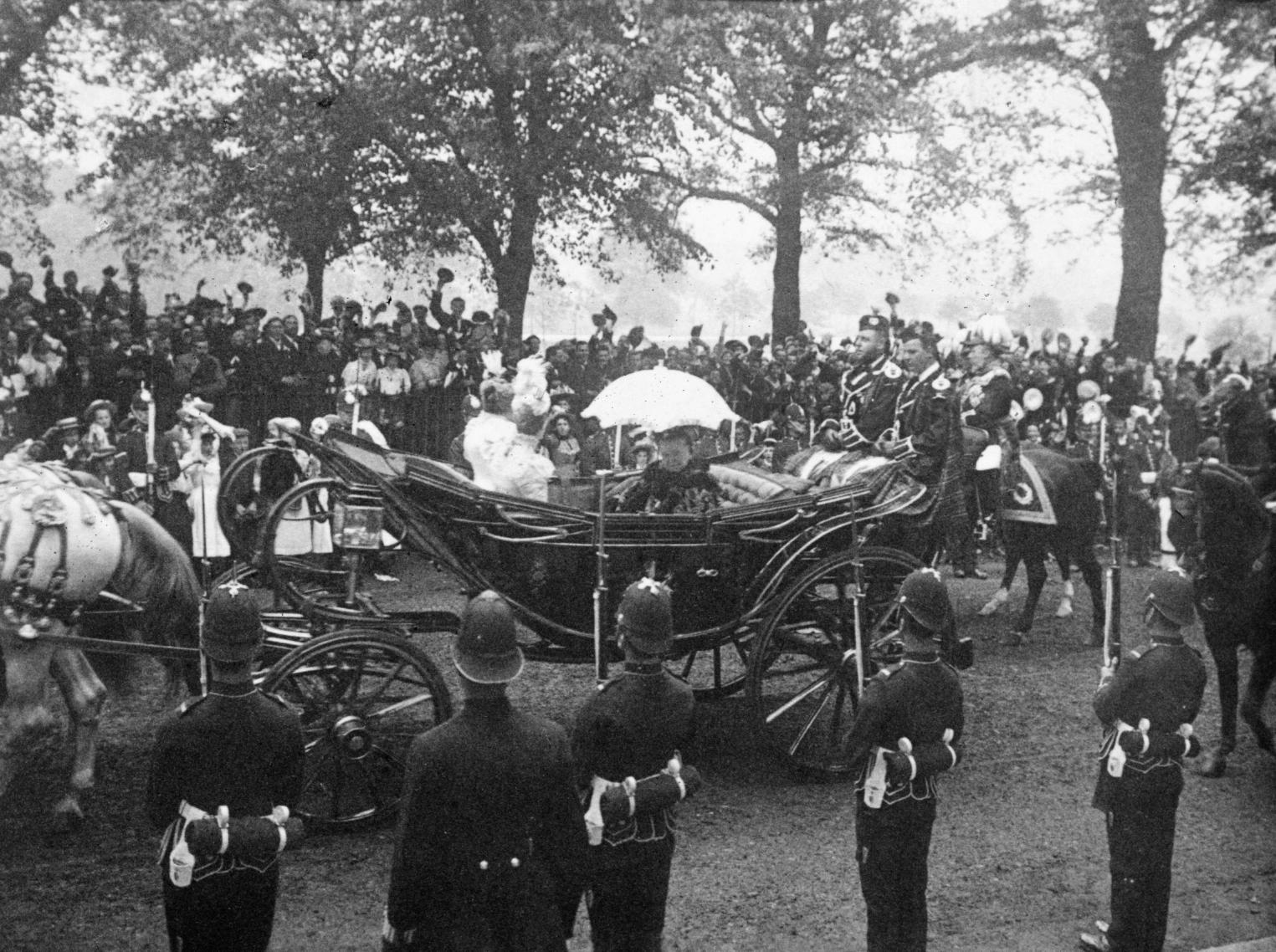
Queen Victoria Diamond Jubilee, 1897, Catalogue ref: COPY 1/431/3
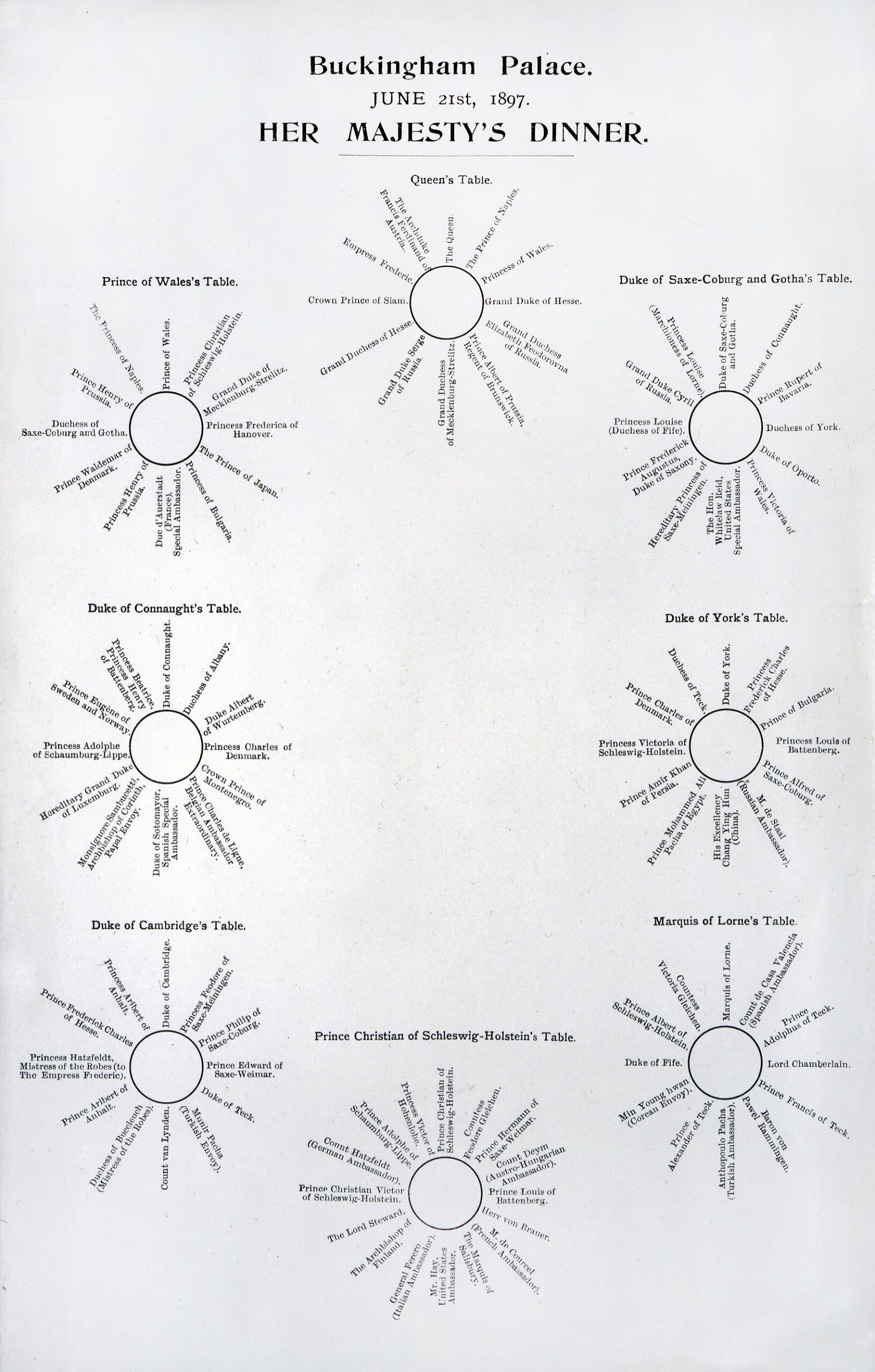
Buckingham Place, June 21st, 1897, Her Majesty’s Dinner. Catalogue Ref: LC 2/146
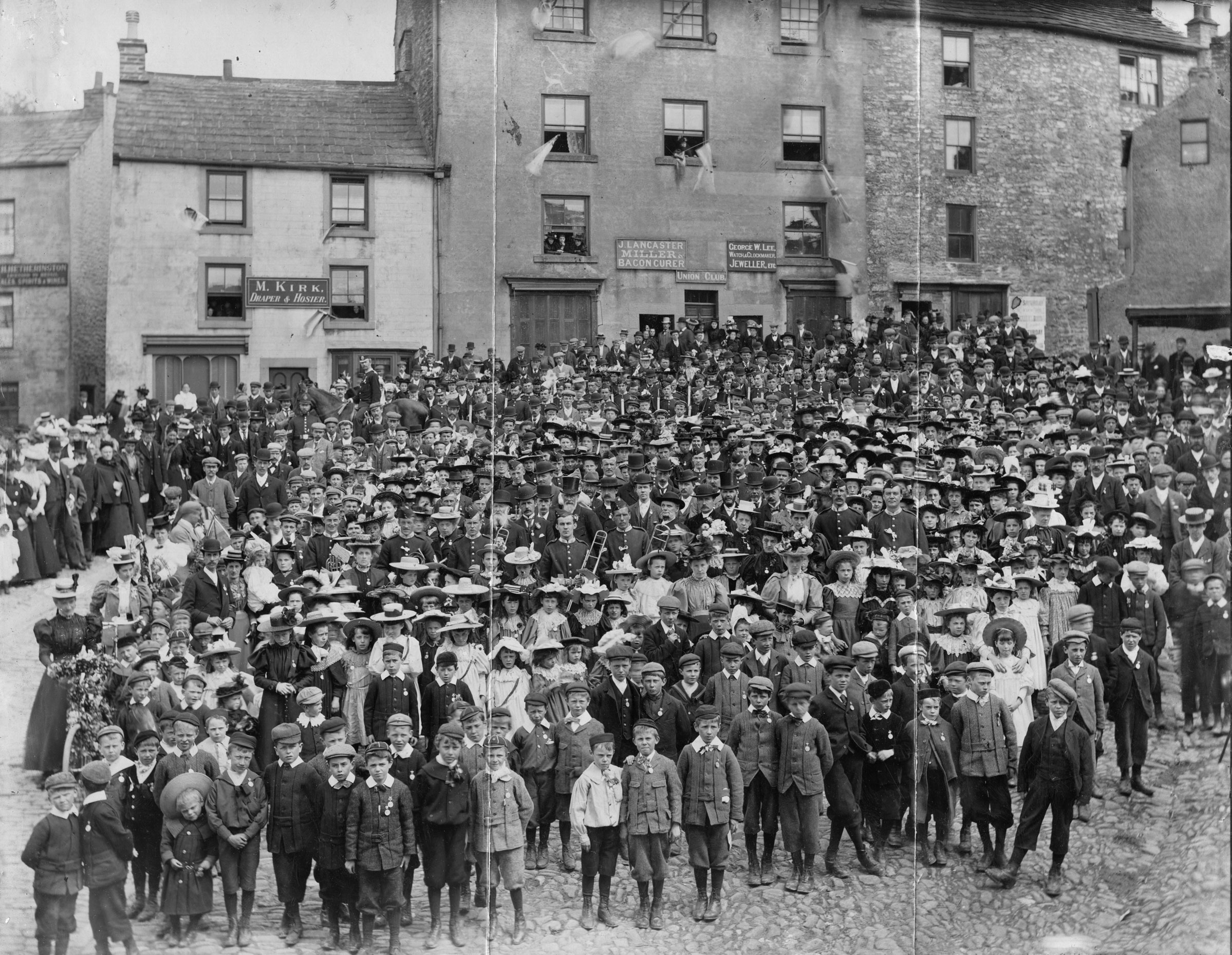
Queen Victoria’s Diamond Jubilee Celebrations, Alston, Cumberland, June 1897, Catalogue ref: COPY 1/430/711
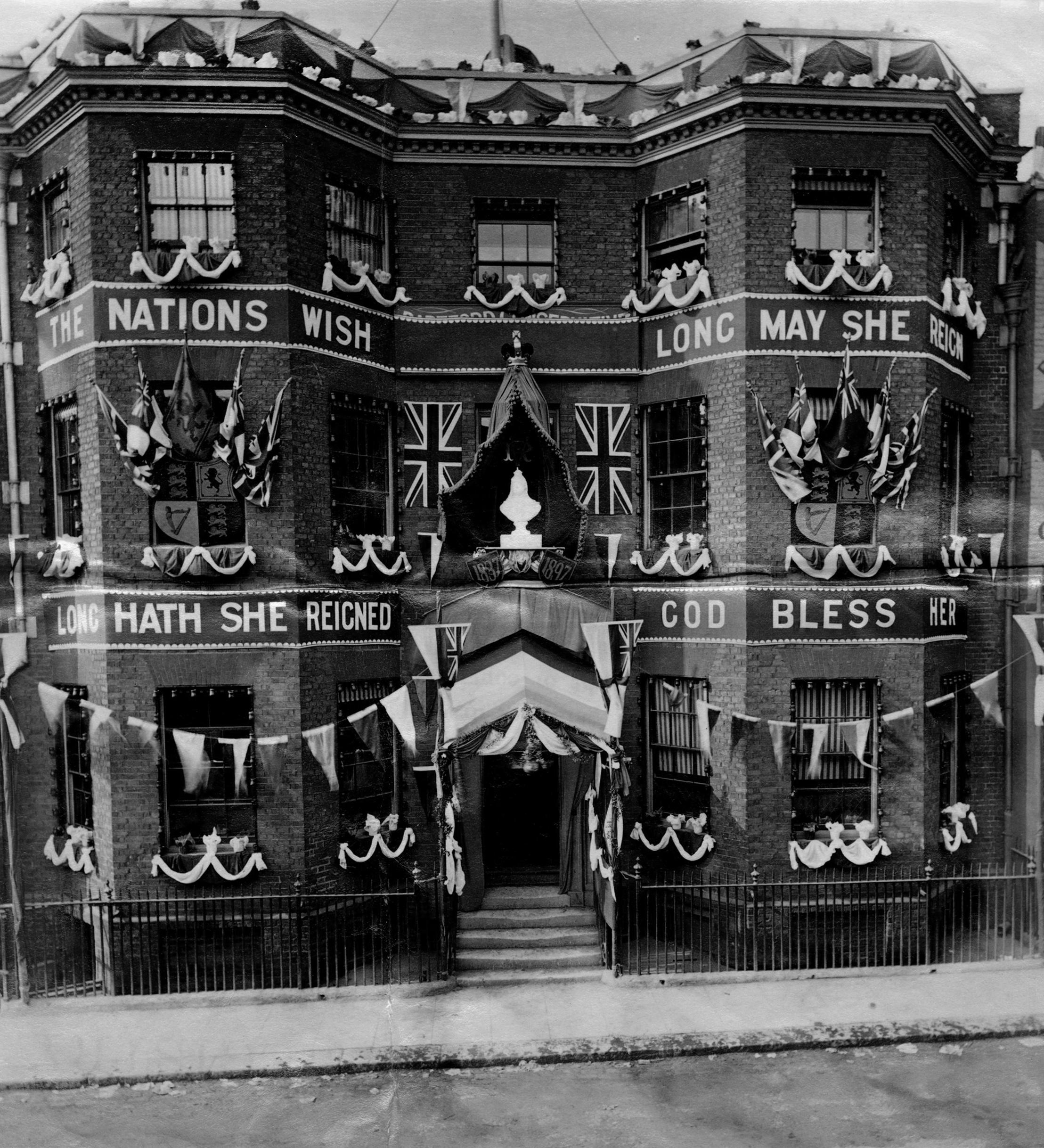
‘Dartford Bank House Club with Victoria Jubilee decoration’ 1897, Catalogue ref: COPY 1/431/34
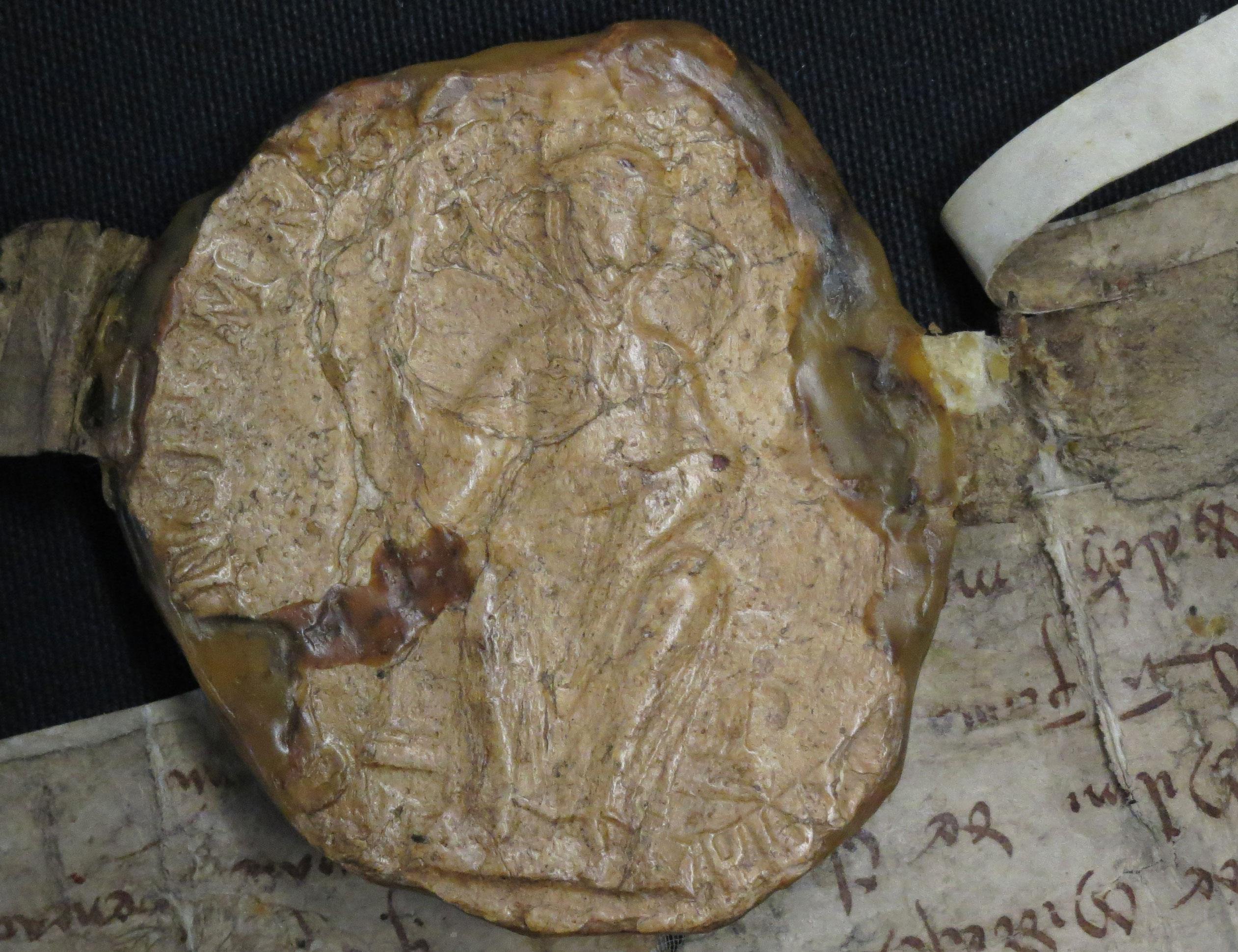
Show the image of Queen Matilda’s seal to the class on a whiteboard/printed copies.
Teacher asks the pupils if they can identify the type of source. If not, explain it is a seal. During the ‘Middle Ages’ instead of signing important documents or providing your password to prove who you are, you would attach your seal to a document to prove your identity. Seals are usually made of beeswax (though the Pope used lead) and usually have a design on them, created by pressing a stamp known as a matrix into softened wax
This is Matilda’s seal and the front shows her seated on a throne. The letters around the edge said ‘SIGILLVM MATHILDIS DEI GRATIA ROMANORVM REGINA’ which means ‘Seal of Matilda, by God’s grace queen of the Romans’. Matilda used her title as ‘Queen of the Romans’ to refer to her first marriage in 1114 to Heinrich V, Holy Roman Emperor and King of the Germans. She used this seal to show her royal connections in Europe and to assert her position in England, where she was not secure enough to commission a Great Seal during her struggle for the throne.
- What does is this seal attached to?
- Why would a seal be used in this way?
- Why do you think a seal had a motto or important words around the edge?
- Why was Matilda’s motto important?
- What picture is shown on the seal?
[The seal shows Matilda sitting on throne holding a sceptre wearing a crown, the image is now very worn. These objects represent the powers of a monarch]
- What impression did Matilda want to create by her seal?
- What other sources from the past could we use to find out about the life of Matilda?
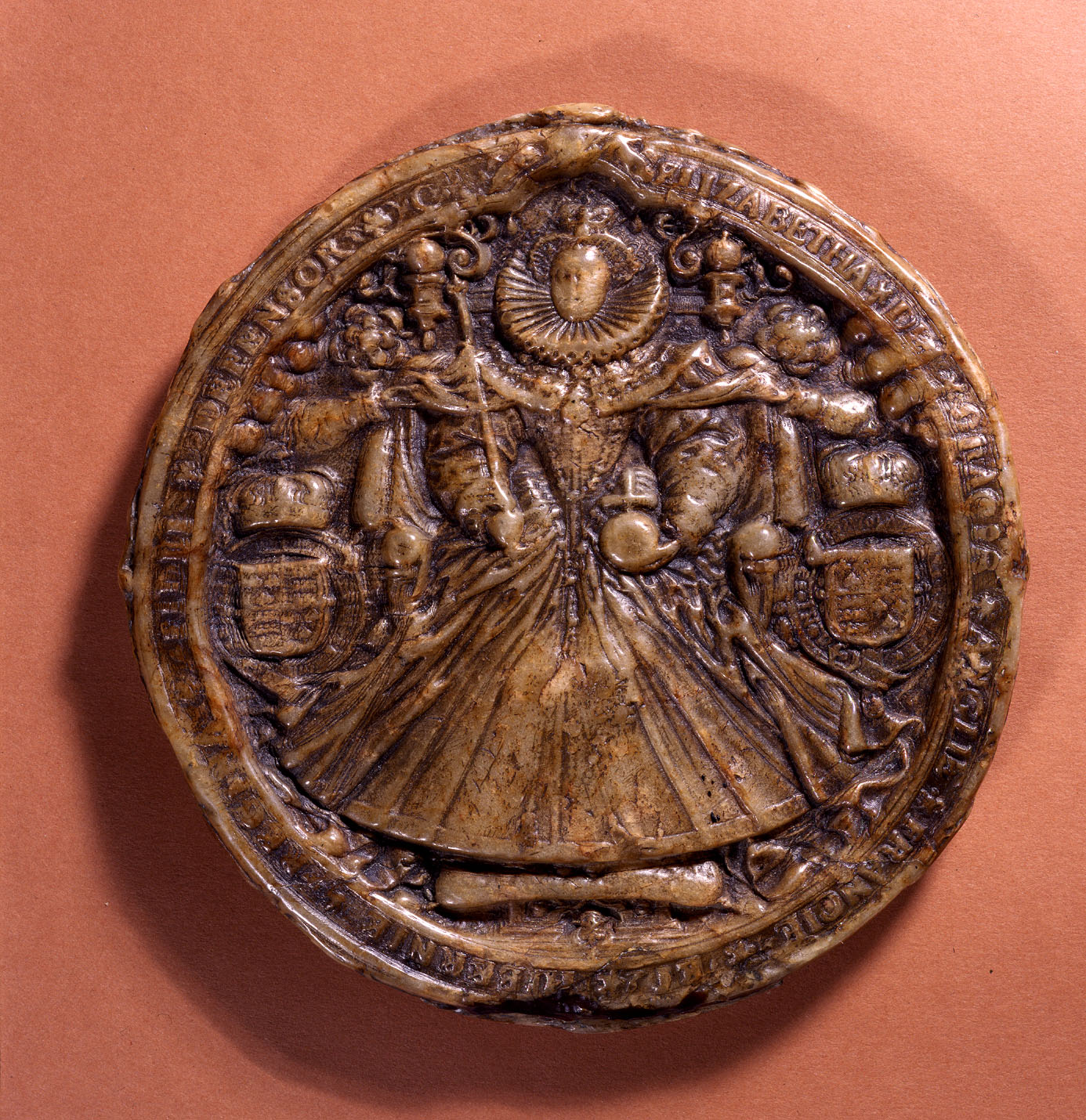
Show the image of Queen Elizabeth I’s Great Seal to the class on a whiteboard/printed copies.
Discuss with the pupils the following questions as a class/in pairs/groups to feedback. Pupils could also add their own annotations to a projected version of the seal.
- Can you find the following objects in the seal?
Pair of hands coming from clouds to hold Elizabeth’s cape; a crown, an orb, sceptre, ruff, coat of arms, Tudor Rose and other leaves and flowers. The Tudor Rose was the symbol for the Tudor monarchs.
- Can you find the motto? It says, in Latin: ‘Elizabetha Dei Gracia Anglie Francie Et Hibernie Regina Fidei Defensor’. It means:‘Elizabeth, by grace of God, Queen of England, France and Ireland, Defender of the Faith’.
- Can you describe Elizabeth I’s dress and hairstyle?
- Why does she hold an orb and sceptre? Do you know what they mean?
- What do the hands coming from the clouds to hold her cape suggest?
- Elizabeth was Head of the Church of England. Which part of the seal tells us this?
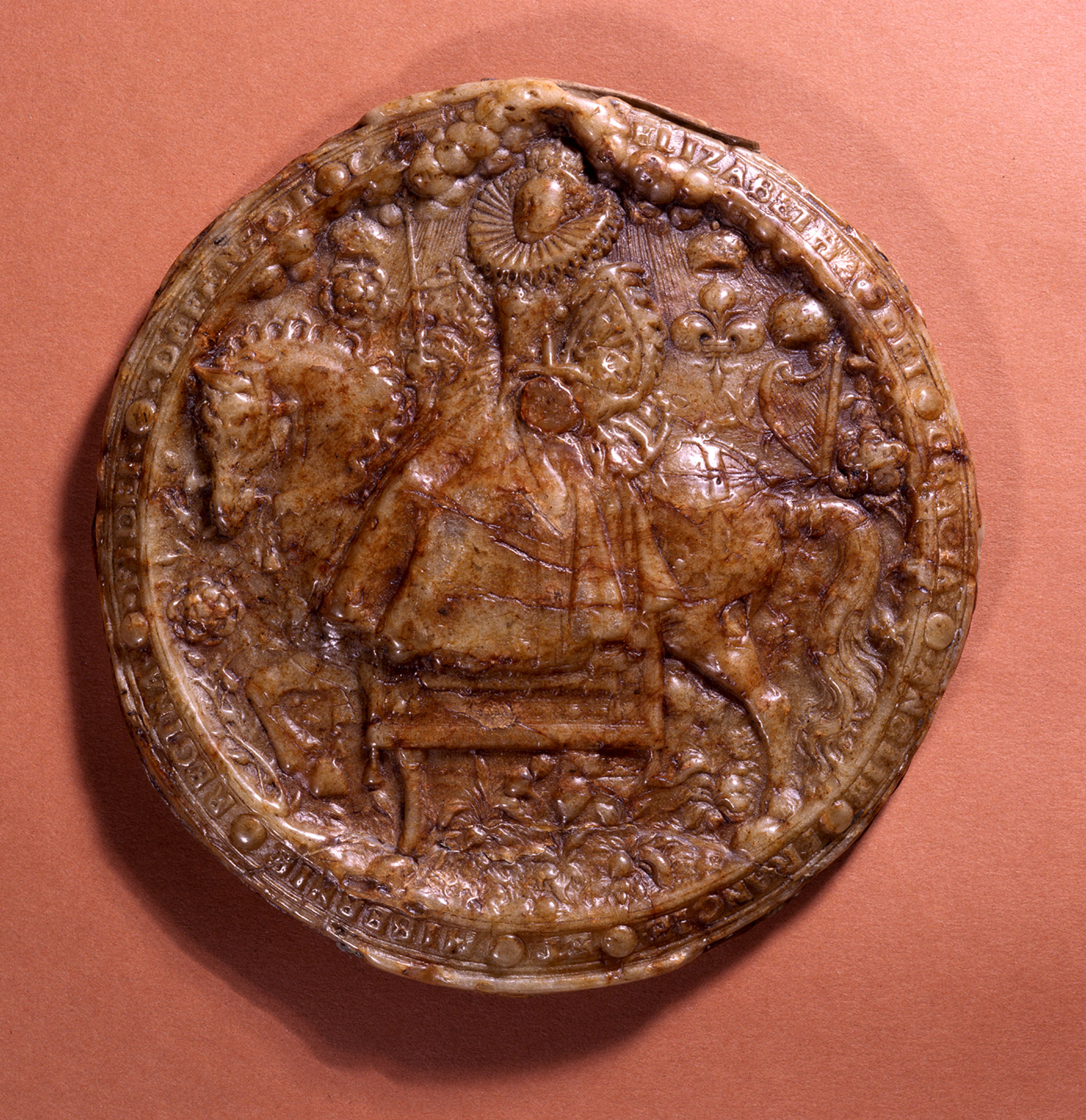
Show the image for the reverse of Queen Elizabeth I’s Great Seal to the class on a whiteboard/printed copies.
Can you find the following objects on the reverse of the seal?
A fleur de lys; harp; clouds and rays around the Queen’s head; a horse with plaited mane; Tudor Rose.
- Why do you think the Tudor Rose appears on both sides of this seal?
- A fleur-de-lys stands for France, which country does the harp stand for?
- Why would she want to include these symbols?
- Why do think Elizabeth is shown seated on a horse?
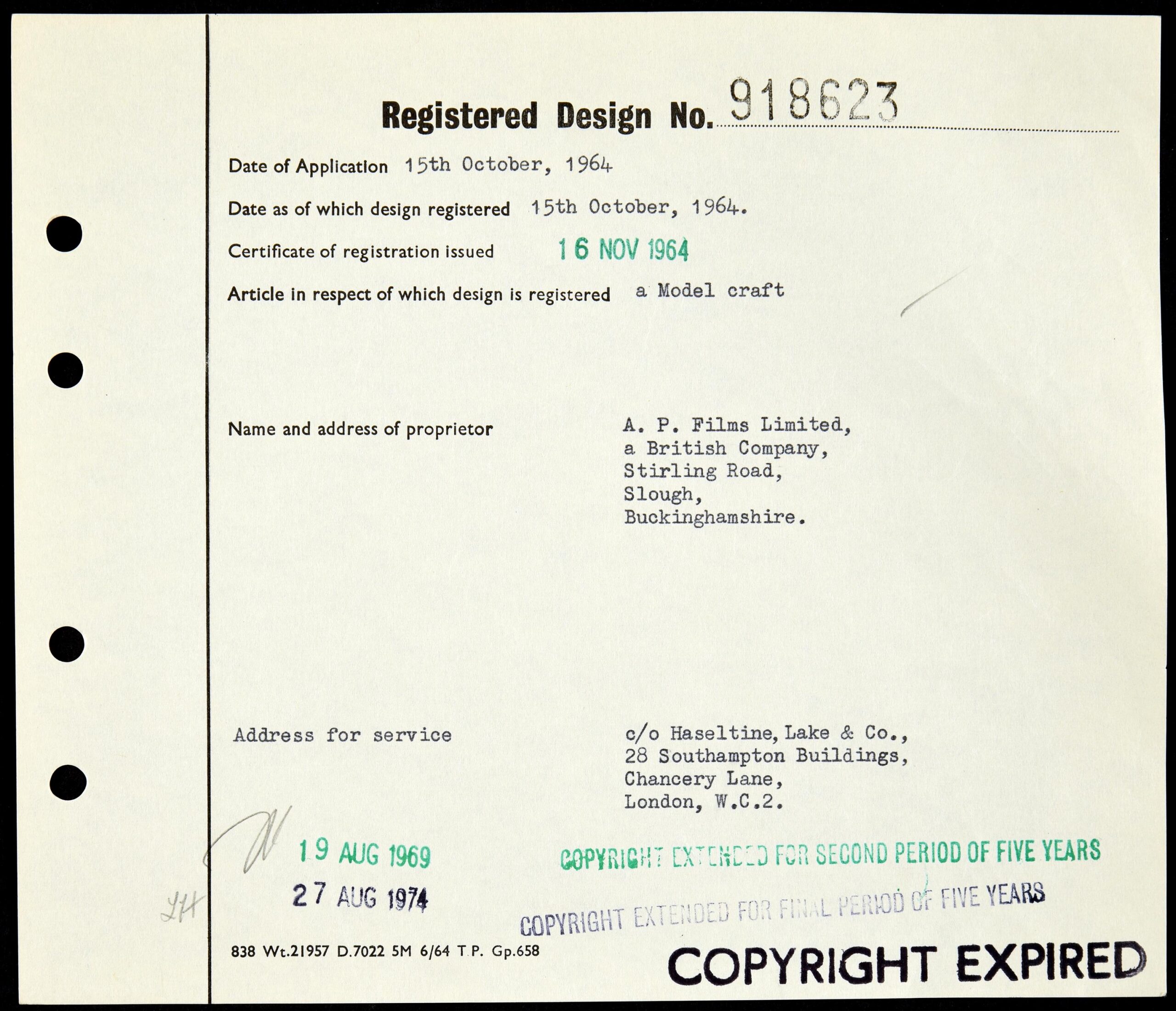
Pupils design their own toy for a child today, remembering to complete the accompanying form of registration for their design! Here is the form that was used for the toy design for Thunderbird 3.
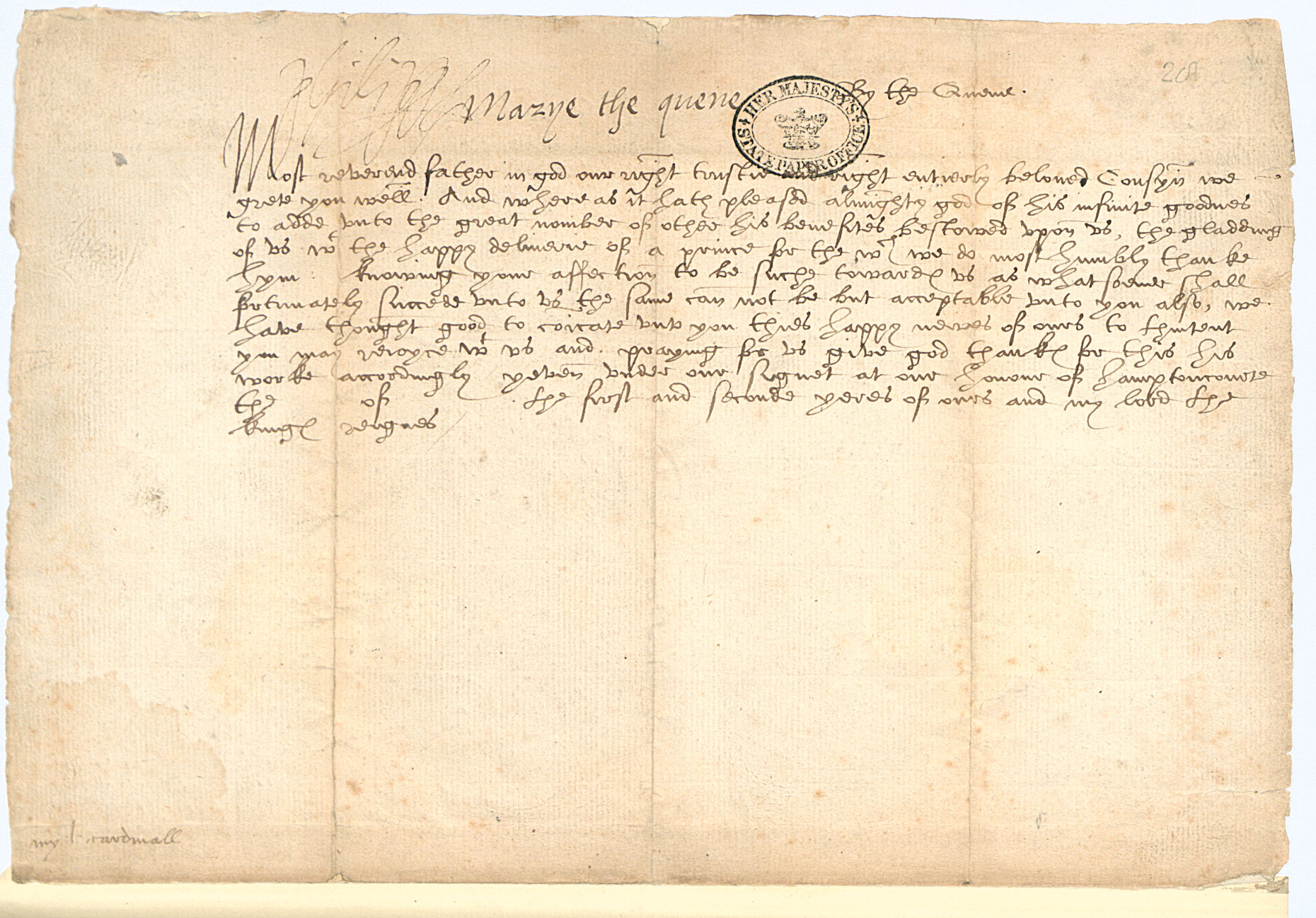
Explain to the pupils that at this stage, you are not going to tell them anything about the document, but you are going to ask them to make their own observations. Encourage them to look really carefully; what do they notice? Explain that you don’t want them to try to read the words in the document, but just describe what they can see.
Ask them to think about: the colour of the document, how it’s been produced, any images they can see and how the information has been set out on the page.
Based on these observations, do the pupils have any idea when the document might have been made? Do they think it is a modern document? Why/ why not? What type of document could it be? Why do they think this?
Now explain that you’re going to give the pupils a challenge! Provide them with copies of the document to look at together in pairs.
- Can they spot any letters or words that they recognise?
- Can they spot any names?
Give them a few minutes to spend looking at the document and encourage them to annotate straight onto the copy. Explain that you’re not expecting them to be able to read every single word, and that just spotting a few words or letters could be tricky, but to have a go together to see what they can work out!
Bring the pupils back together as a class to share their findings. Draw their attention to the title at the top of the page ‘Mary the Queen’. Who do they think this might be? Does this give us any clues about when the document might it have been made?
This document is an official Tudor record about Henry VIII’s oldest daughter Mary I. Explain that lots of professional historians find Tudor documents very difficult to read, so the pupils have done a great job! Fortunately there are printed transcripts and summaries of many Tudor documents for historians to use.
Show pupils this simplified transcript on the whiteboard.
Simplified transcript:
[Date left blank] Hampton Court
The King and Queen to…….
God has brought happiness to the King and Queen with the birth of a prince.
- What event has taken place?
- Why is this such a happy event?
- Why hasn’t the date of the baby’s birth been included on the document?
- Why was it so important for the queen to have a baby, and in particular a boy?
- Who would have received this document?
This document was prepared when Mary I believed she was pregnant. Her clerks prepared lots of documents just like this that could be completed when the baby was born and sent out to the different Queens and Kings across Europe.
Sadly Queen Mary was not pregnant after all but actually very unwell. She never had a child to pass the throne to.
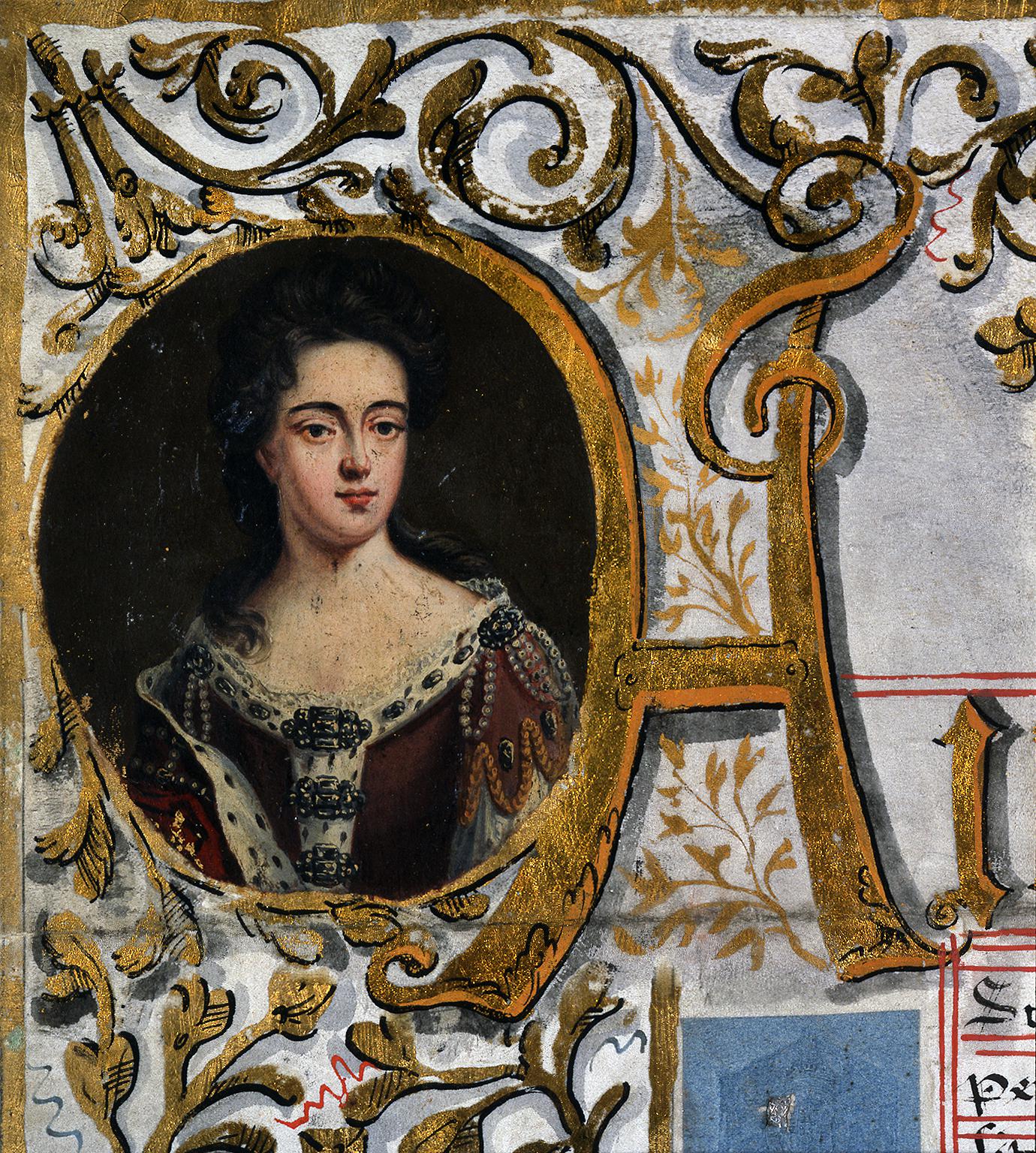
Ask the pupils to look carefully at the image. What can they see?
- How is this person dressed?
- What does this reveal about her wealth and importance?
- How old might she be?
- Who do you think she might be?
- Why do you think this image was painted?
Explain that this is a portrait of Queen Anne and that it is painted on an official document from the Treasury. The Treasury were responsible for the money/ funds of the Queen.
- Who might have seen this portrait?
- Would these people have been important to Queen Anne?
- Why would she have wanted them to see her in a particular way?
- What does this reveal about how Queen Anne wanted to be viewed?
Explain that some of Queen Anne’s contemporaries (people alive at the same time as her), described her in an unflattering way: they said that she was very overweight, that her skin was red and spotty, and her clothing mismatched and untidy. Why do the pupils think these descriptions and the portrait of Anne don’t match? Who might have said these things and why? The image and impression that Queen Anne wanted to show to her people was very important. In a time without social media, television and photographs, Anne needed to be shown as impressive and powerful; the role of Queen demanded this.