You can find a PDF version of the below help box in our downloadable resource pack.
| Census help box | |
| Head of family | This was normally the man in the family at this time, often the father/husband. |
| “Do” | This means the same as the person above. For example, they could have the same surname or the same job. |
| Occupation | Job |
| Carman | A person who drove horse drawn carriage to transport goods. |
| Brass moulder | A person who makes moulds from patterns. |
| Dock labourer | A manual labourer who loads and unloads cargo from ships at a port. |
| Scholar | A school pupil |
| General Dealer | A shop keeper who deals in many kinds of goods. |
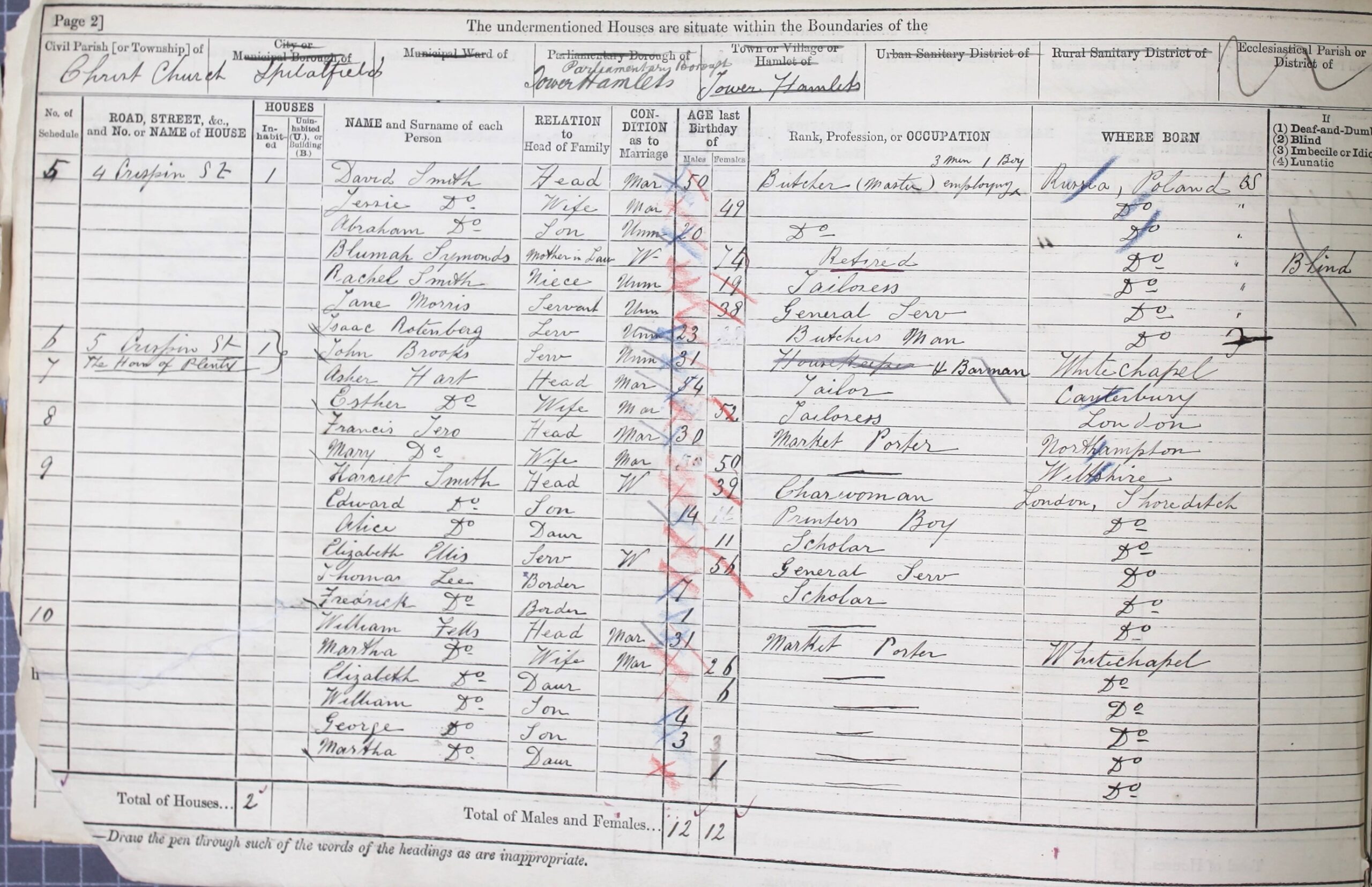
Census activity 2 (Jewish migration story) – photo and transcript. Catalogue Ref: RG 11/437
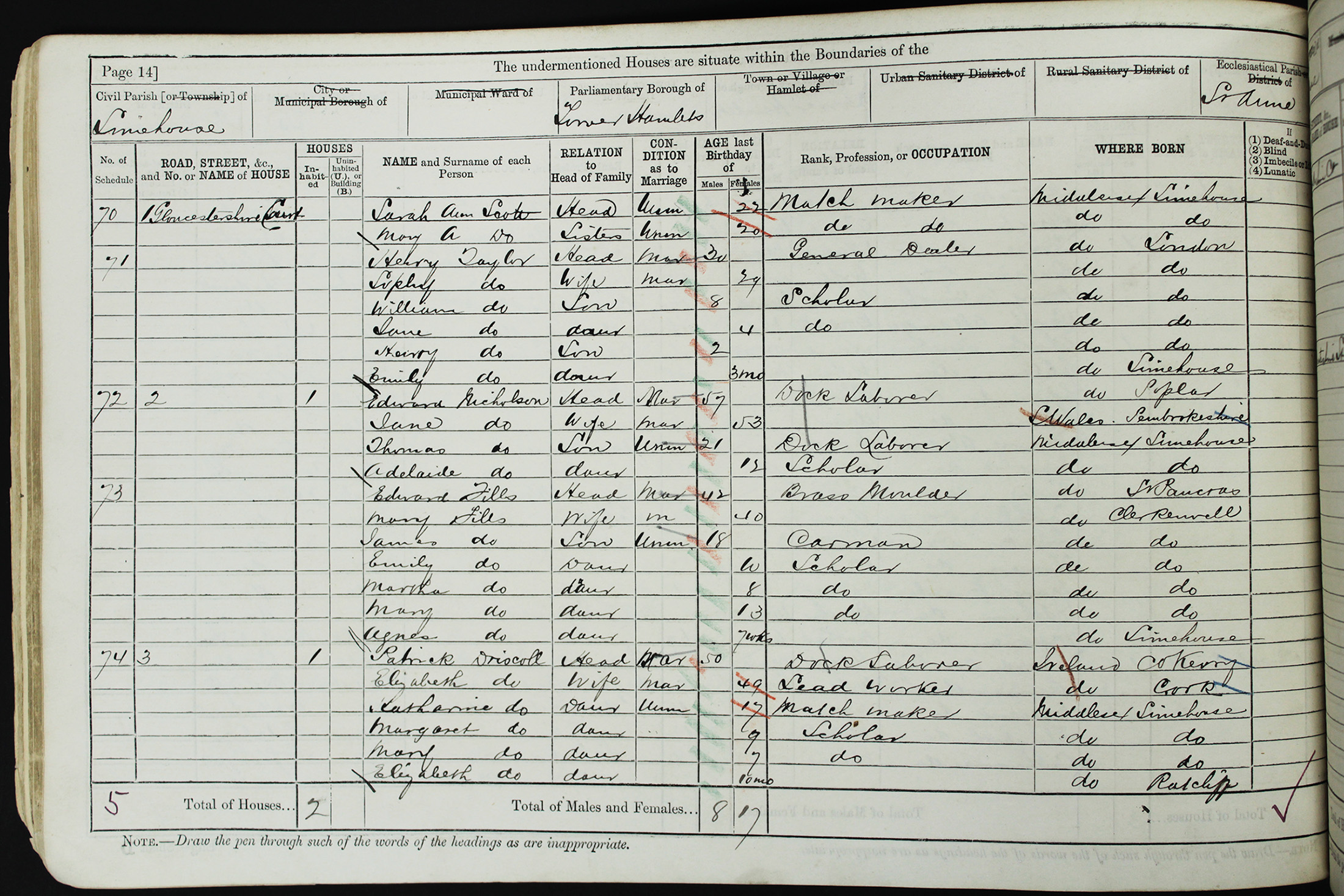
Census activity 1 (Irish migration story) – photo and transcript. Catalogue Ref: RG 11/467
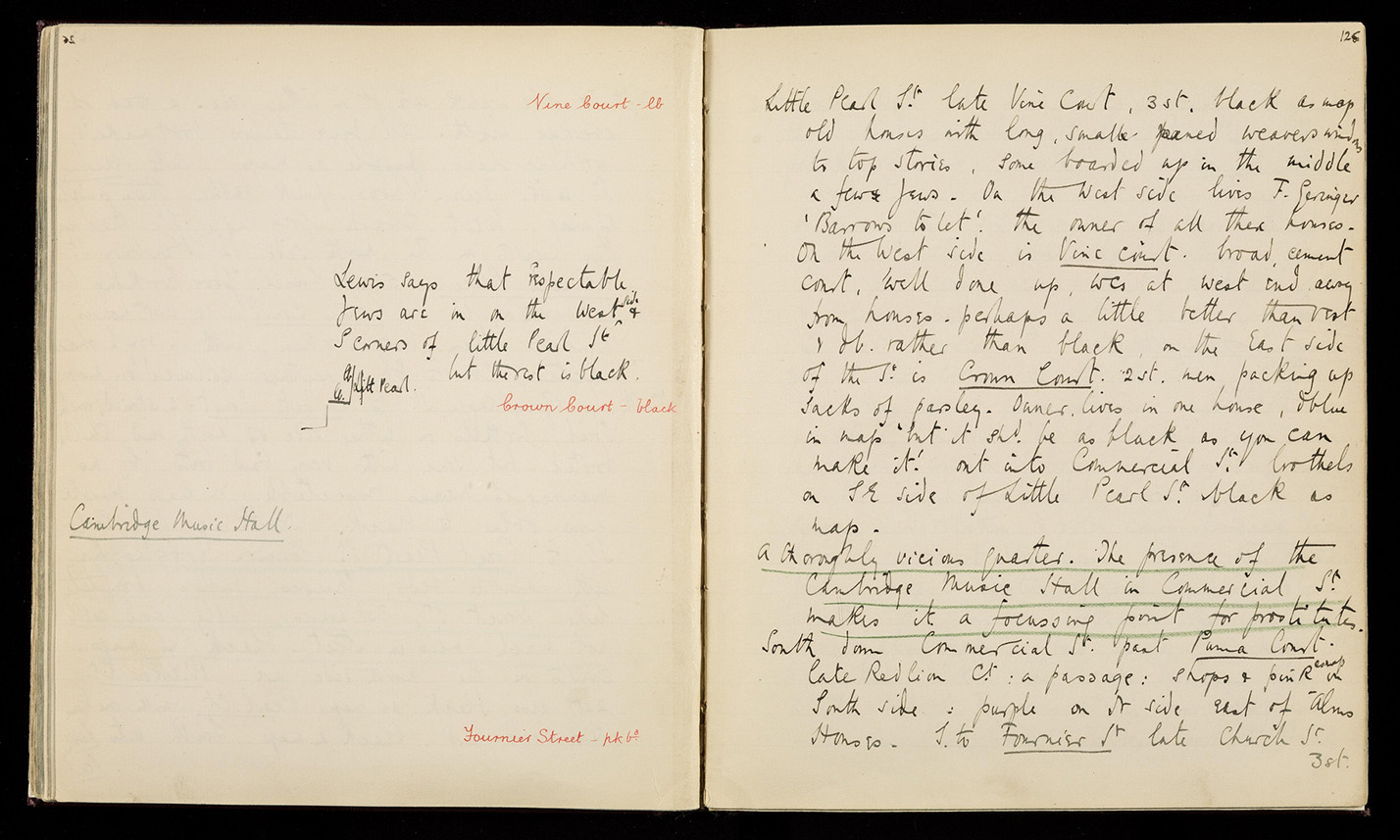
Page from notebook from Charles Booth’s Inquiry into Life and Labour in London (1886-1903). LSE Library, BOOTH/B/351 p131
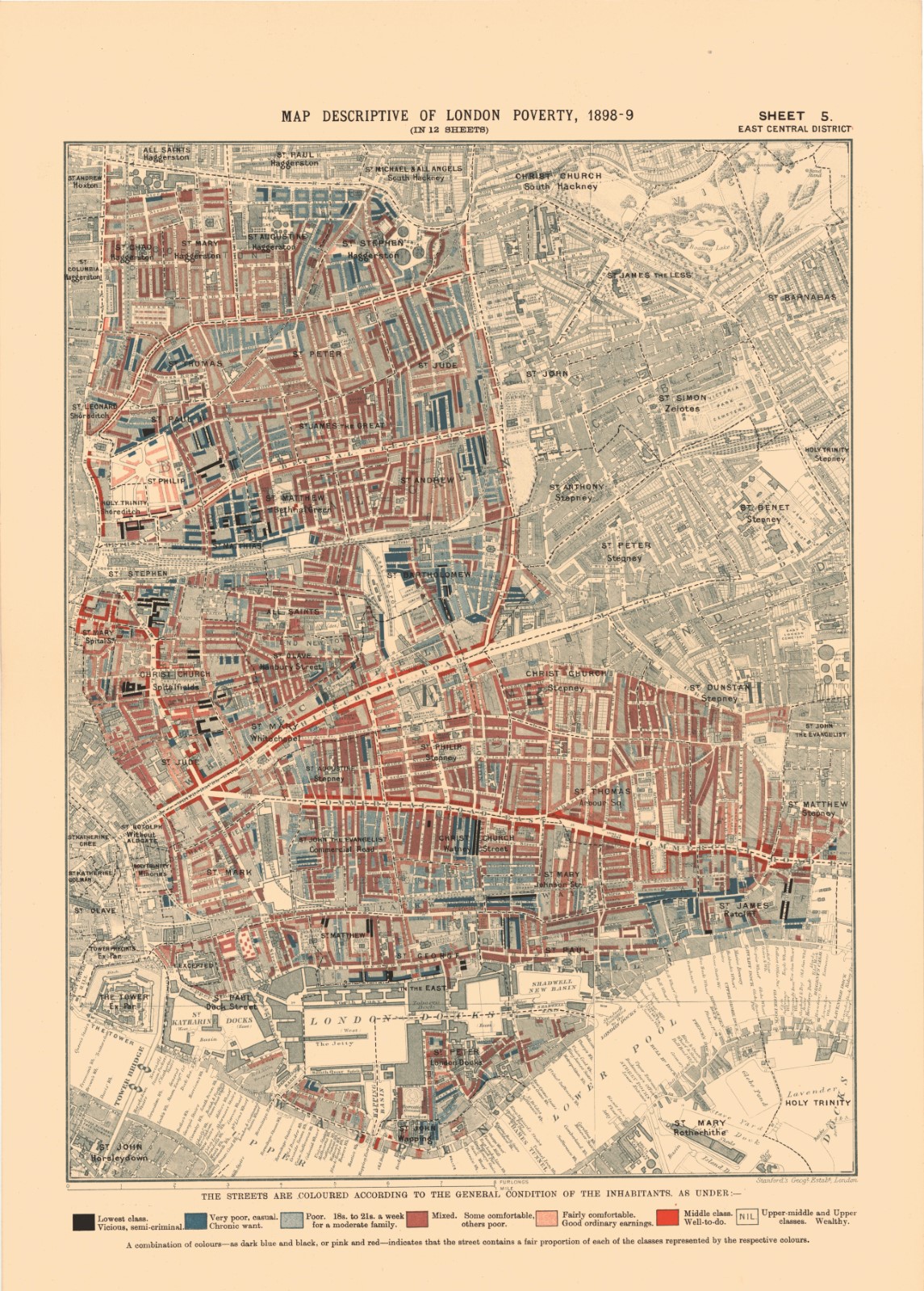
Charles Booth’s poverty map of London, 1898-9, sheet 5. LSE Library
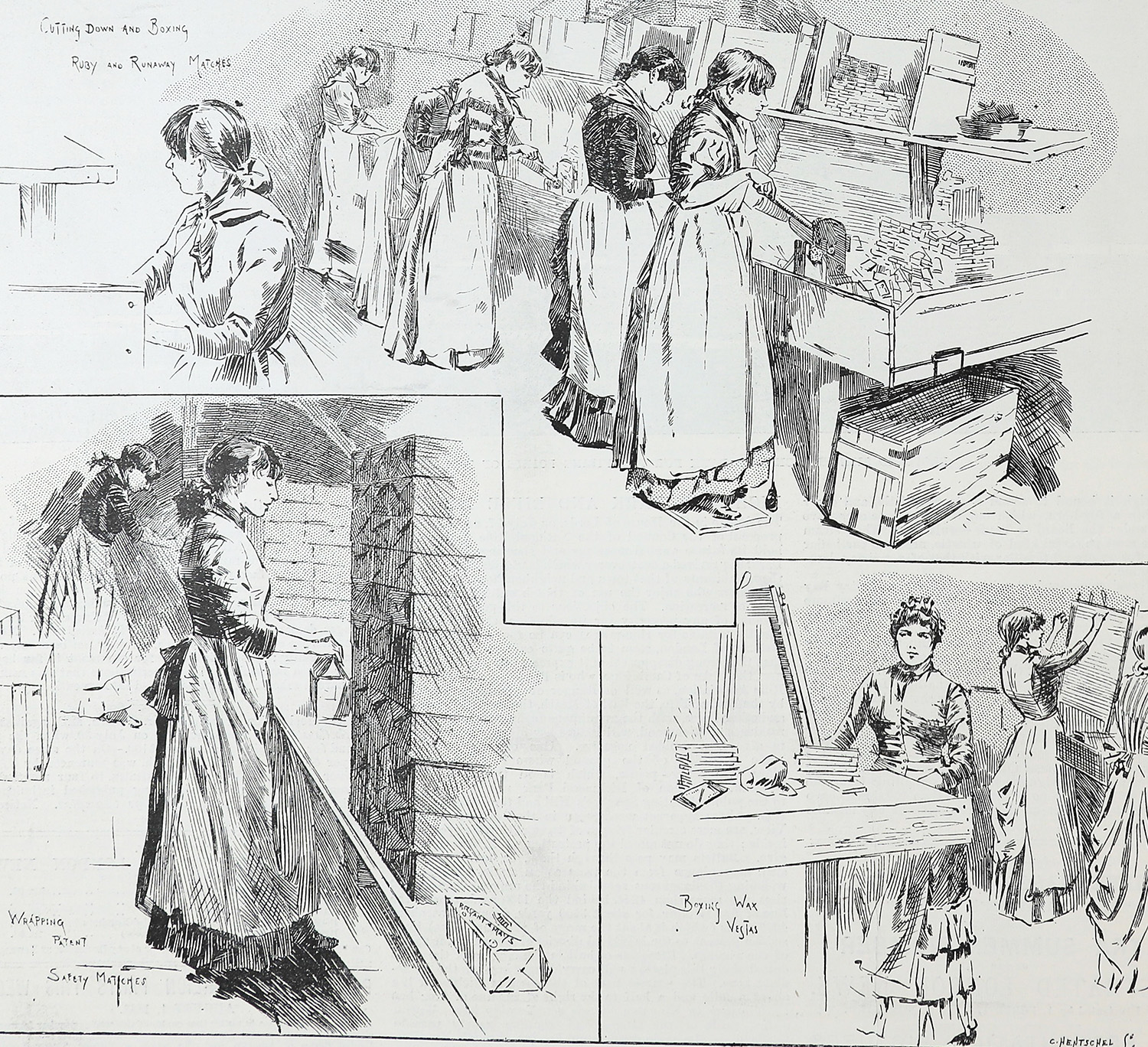
Illustrated London News, 1888. Catalogue ref: ZPER 34/93
During the event, a variety of documents will be displayed on the screen for each of the three stories. One of the documents we will refer to for the Irish migration story is the below document from The Illustrated London News. It shows women and girls undertaking different stages of the match making process at the Bryant and May factory. If time permits, you may find it useful to print out copies of this image and discuss the following questions with your students:
- Describe the types of work you can see in the image.
- Can you spot any potential dangers?
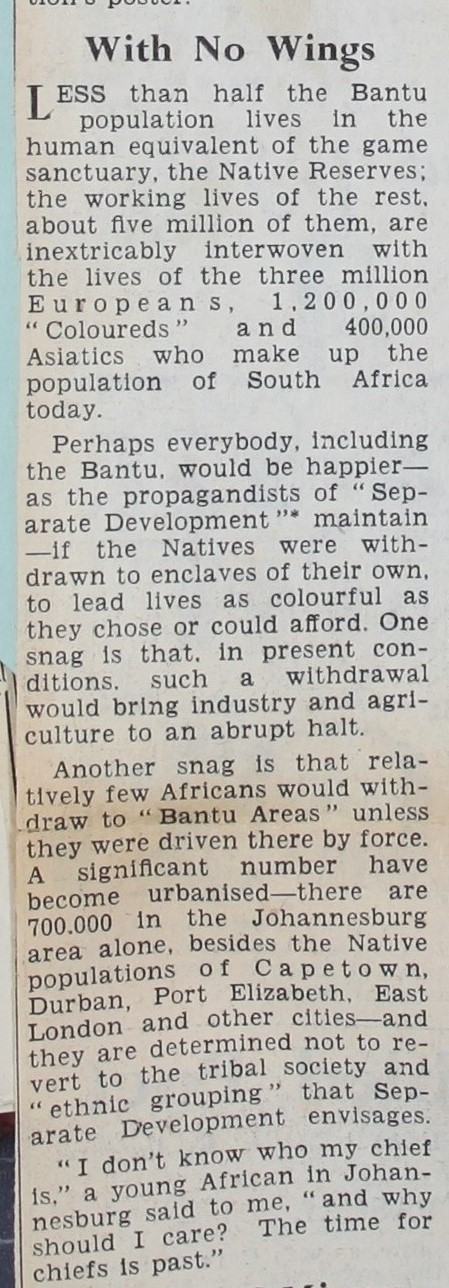
Extract from a Sunday Times article by Iain Lang entitled ‘Tragic South Africa: 2. Beyond the White Barriers’, 12 January 1958, Catalogue Ref: DO 35/6715
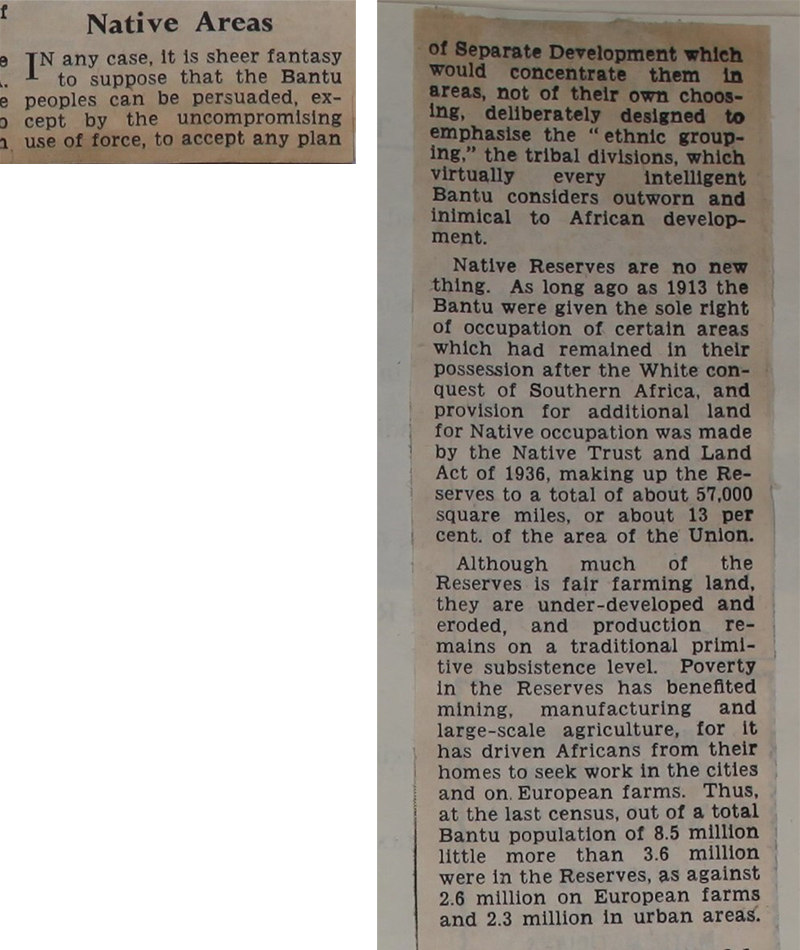
Extract from a Sunday Times article by Iain Lang entitled ‘Tragic South Africa: 1. Where Apartheid leads’, 5 January 1958, Catalogue Ref: DO 35/6715
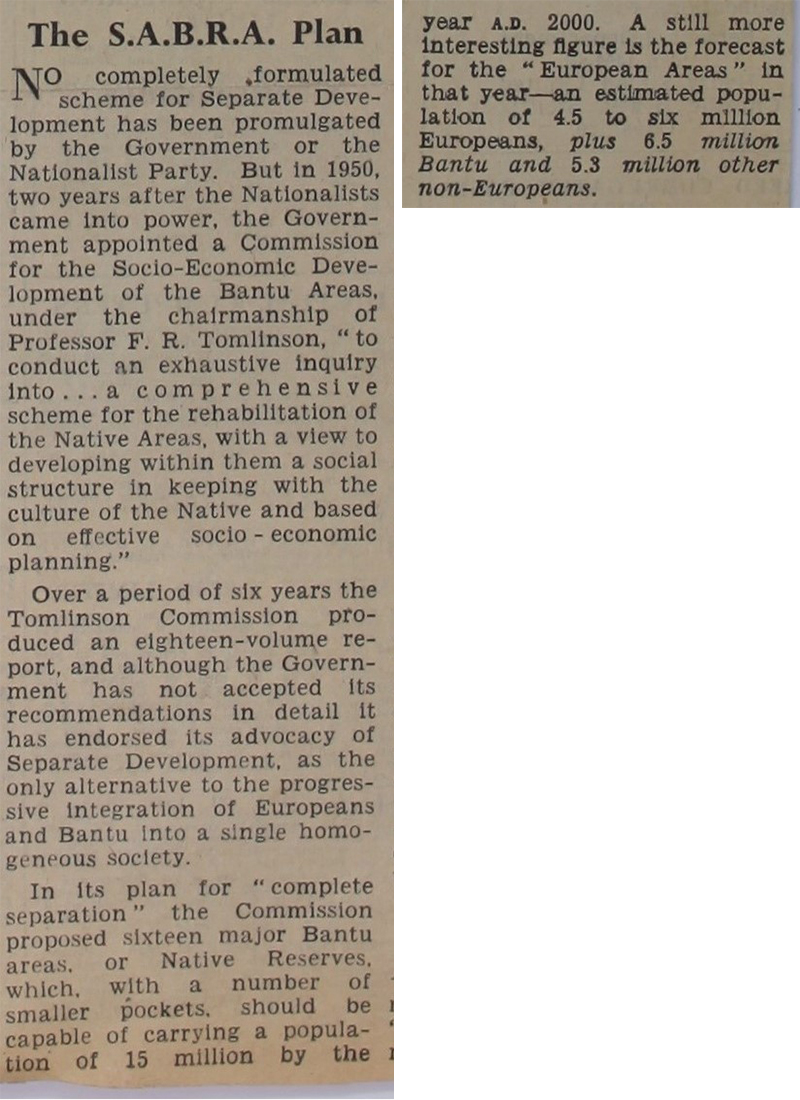
Extract from a Sunday Times article by Iain Lang entitled ‘Tragic South Africa: 1. Where Apartheid leads’, 5 January 1958, Catalogue Ref: DO 35/6715
The South African government Tomlinson Commission investigated the economic development of the native reserves, later formed as Bantustans or homelands. The Tomlinson report was published in 1954.
The South African Bureau for Racial Affairs (SABRA) was set up in 1948 at to provide an alternative to the South African Institute of Race Relations (SAIRR). The organisation provided academic justification for the apartheid policy.
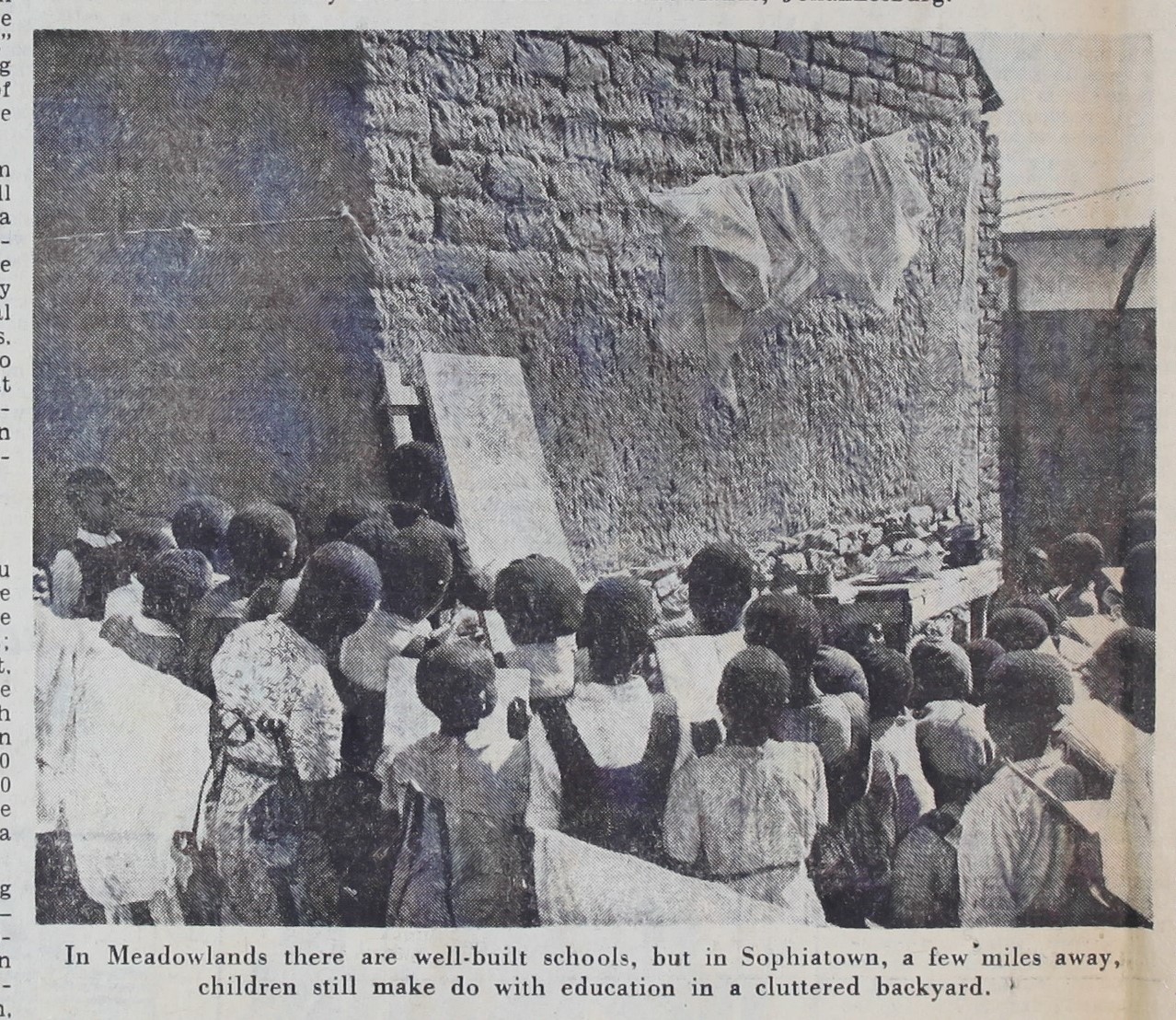
Photograph captioned ‘In Meadowlands there are well built schools, but in Sophiatown, a few miles away, children will make do with education in a cluttered backyard’.
This photograph appeared in a Sunday Times article by Iain Lang entitled ‘Tragic South Africa: 2. Beyond the White Barriers’, 12 January 1958, Catalogue Ref: DO 35/6715