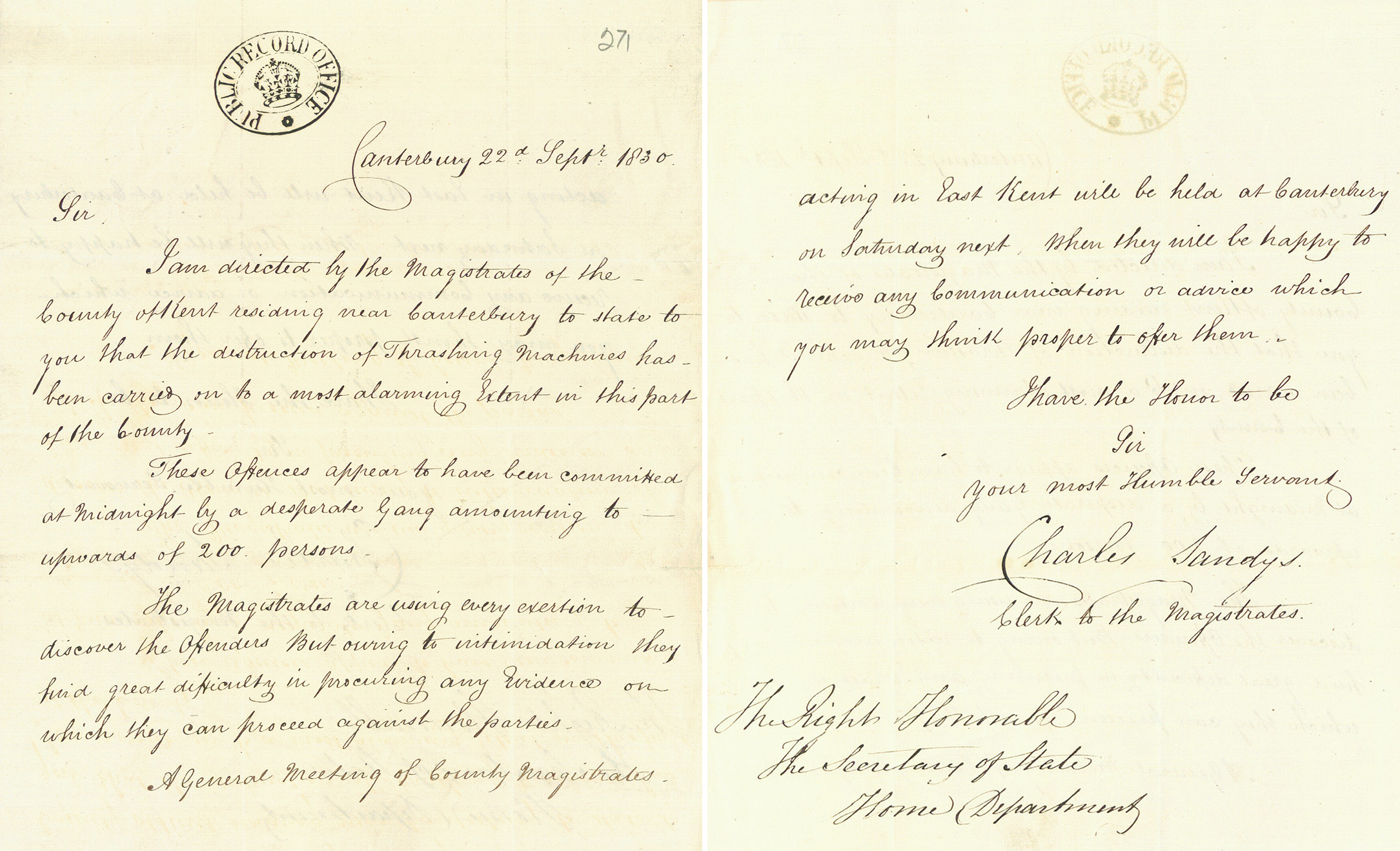
Letter about the destruction of threshing machines in Kent, 22 September, 1830. Catalogue ref: HO 52/8
A ‘thrashing machine’ was invented in the later years of the eighteenth century to separate grain from the stalks and husks of corn- threshing machine in modern spelling.
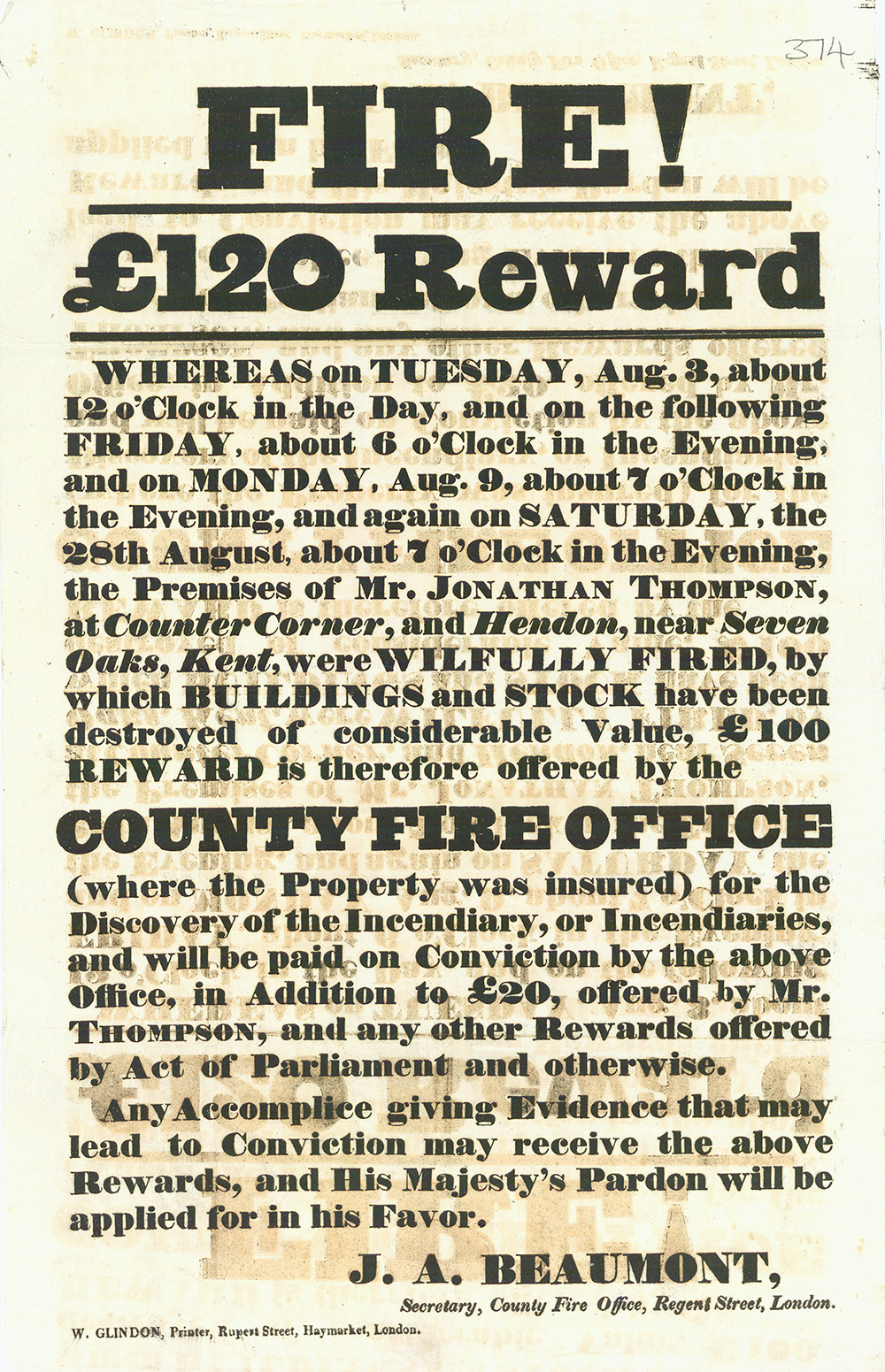
A reward poster from Kent, probably posted in August or September 1830. Catalogue ref: HO 52/8
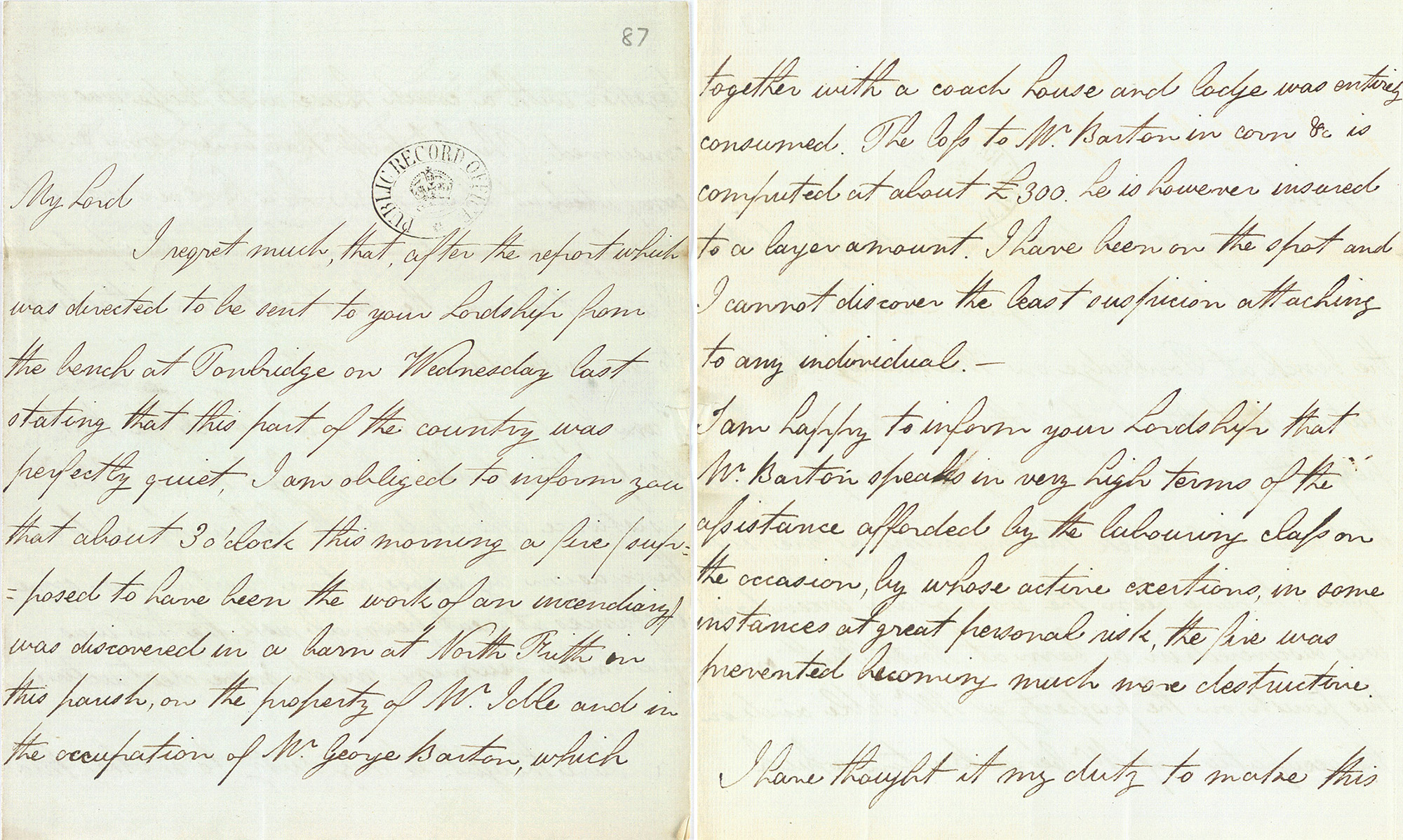
Pages from a letter from Hadlow in Kent to the Home Office about a suspicious fire, 1830. Catalogue ref: HO 52/8 folios 87& 88
An incendiary was a person who deliberately sets fire to property or a person who stirs up political quarrels.
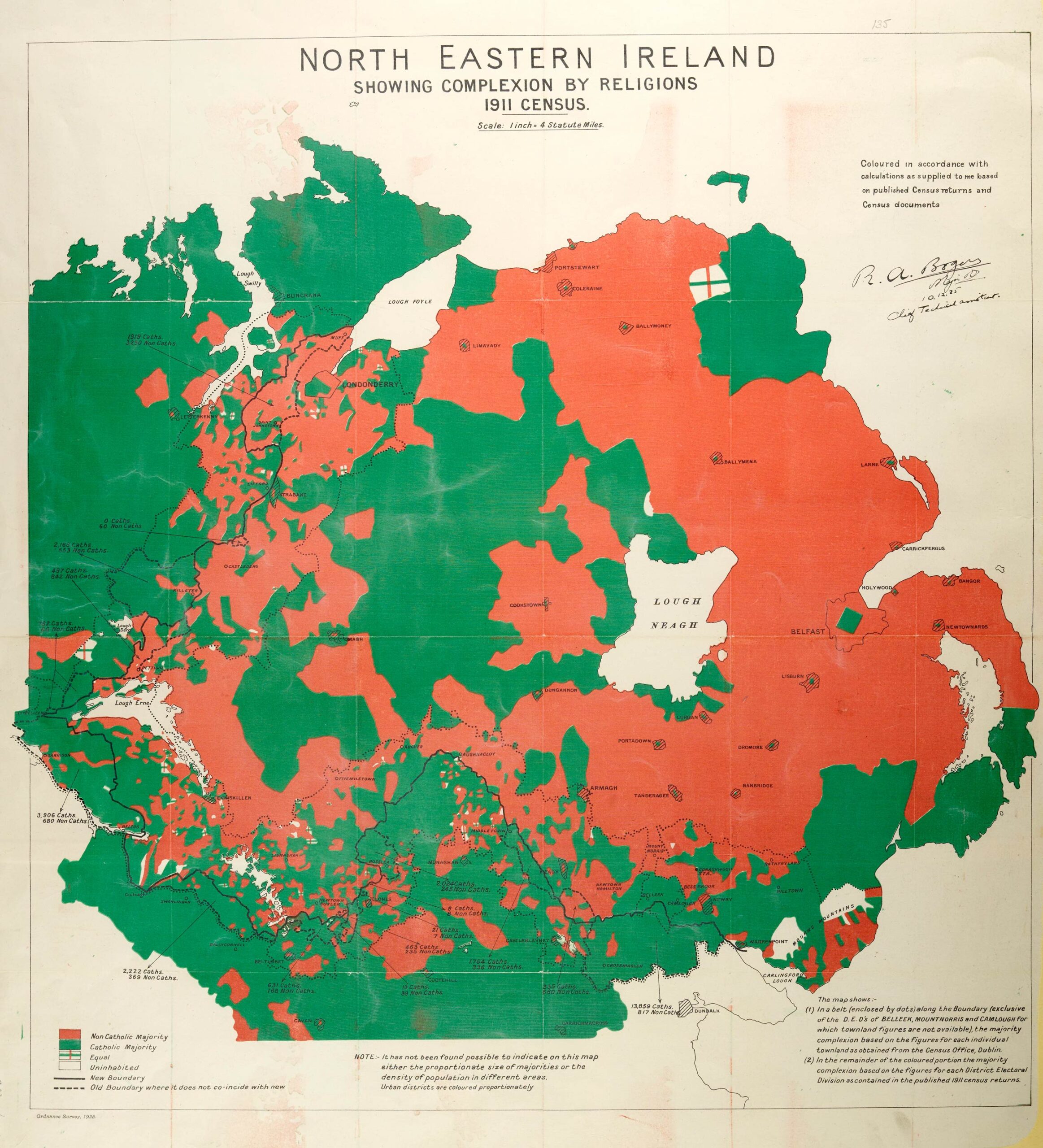
Map of Northern Ireland showing the religious breakdown taken from the Irish Boundary Commission, Catalogue ref: MPI 1/402
The Anglo-Irish Treaty had set out that an Irish Boundary Commission would be formed to finalise the border between the Irish Free State and Northern Ireland. It did not report until 1925, and recommended only minor changes to the border which had been set out in 1922.
It was feared that the decisions made by the Commission might cause additional unrest and so it was agreed by the Irish Free State, Northern Ireland, and the British Government, that the borders would remain as originally drawn. The Commission’s report was not made public until 1969.
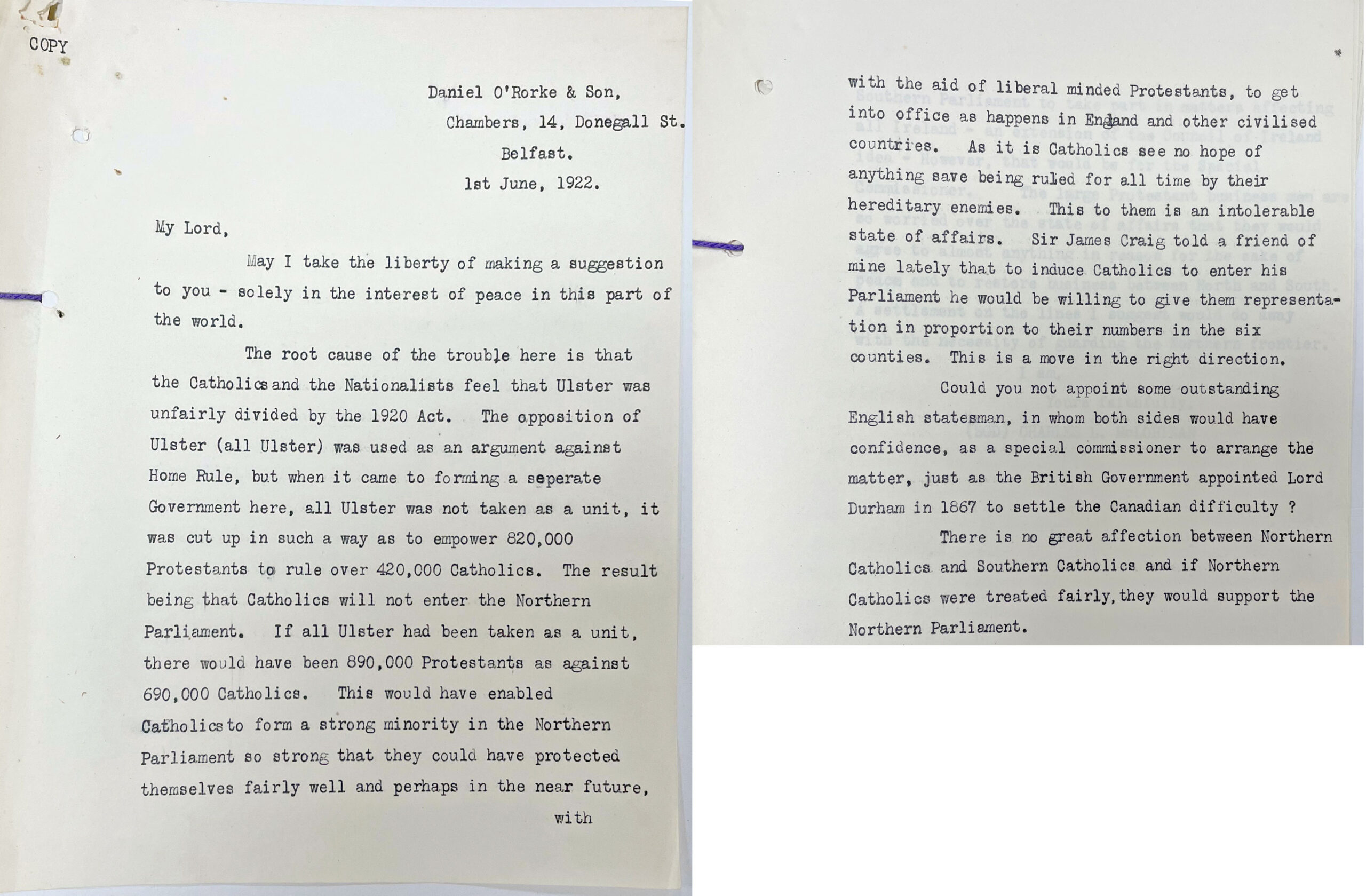
Letter addressed to the British Lord Chancellor from Charles McLorinan, a Catholic living in Northern Ireland, 1 June 1922, Catalogue ref: HO 45/24812
When Northern Ireland was formed in 1920, it was decided, partly because of where Catholic and Protestant populations lived, to only include six of the nine counties of Ulster within the new state. Thus, the remaining three counties eventually formed part of the Irish Free State.
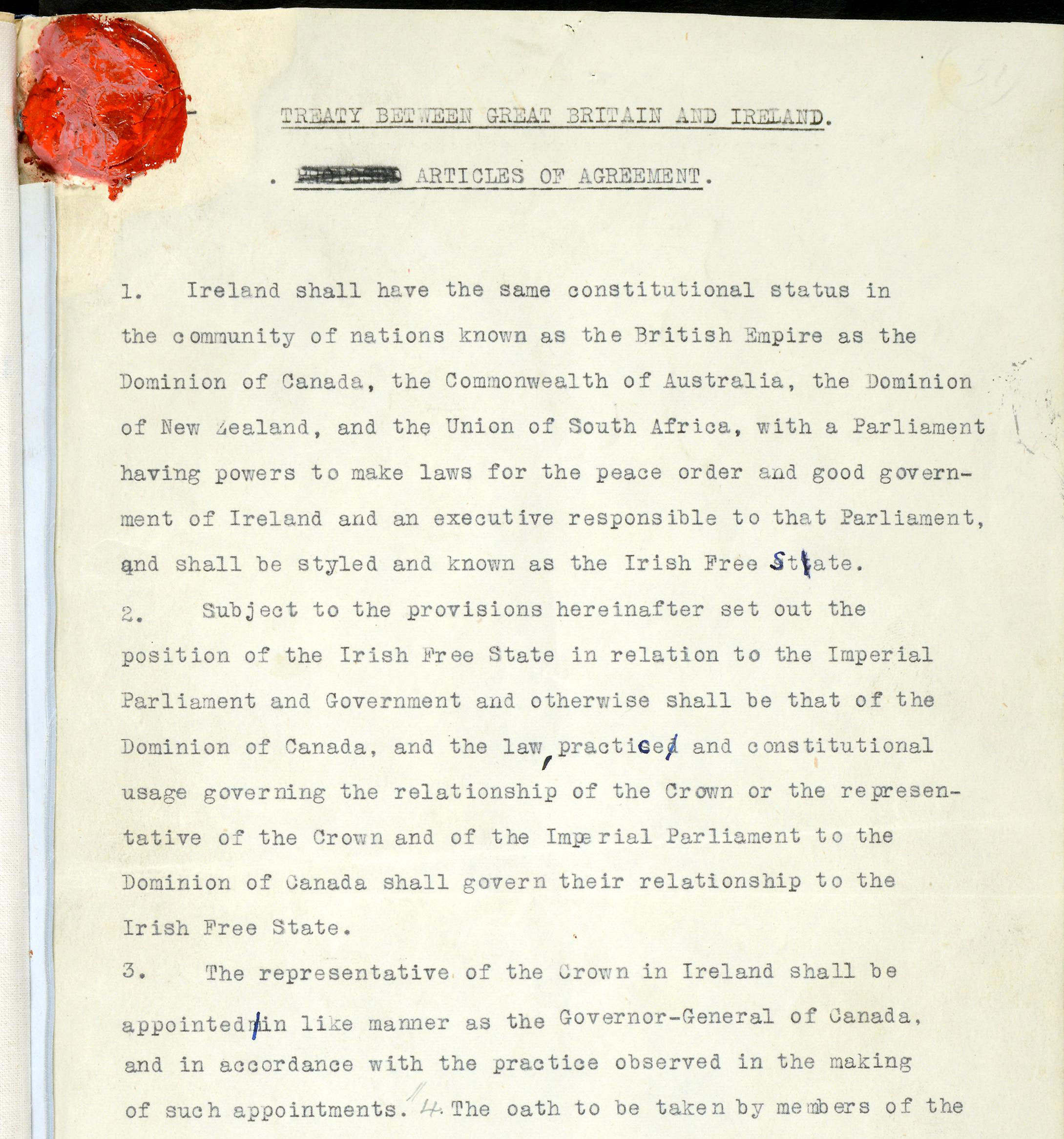
First page of the Article of the Anglo-Irish Treaty, December 1921, Catalogue ref: DO 118/51
Immediately after the First World War, Home Rule was further delayed. Therefore, Irish nationalists led by Sinn Fein, meaning ‘we ourselves’, an Irish Republican party, took up arms against British rule. This would become the Irish War of Independence.
After over two years of fighting, a treaty was finally signed in late 1921, which set out terms for an Irish Free State, free from direct British rule.
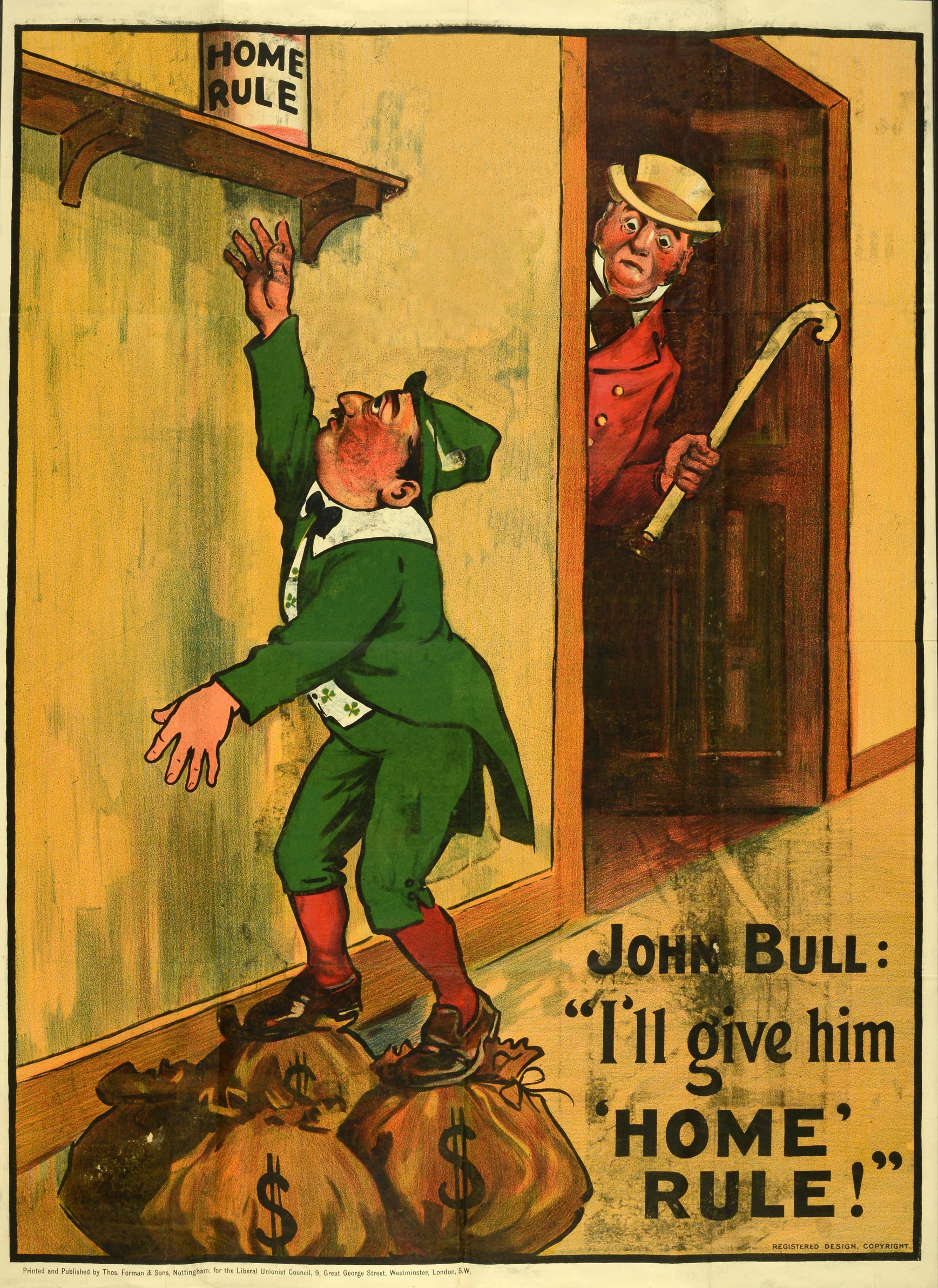
This poster from 1910 shows the Irish nationalist leader, John Redmond, who had been pressing the Liberal Party Government to pass the Home Rule Bill, giving self-government for Ireland. Catalogue ref: COPY 1/353
Herbert Asquith’s Liberal government remained in power after two General Elections in January 1910 and December 1910 with the support of the Irish Parliamentary Party led by John Redmond. Liberals did not have a majority of seats in the House of Commons and the Irish Parliamentary Party held the balance of power in Parliament. They were in a strong position to push for Home Rule.
Irish Home Rule was finally granted in 1914, but was delayed because of the start of the First World War, and partly also because Unionists, especially in the north-eastern province of Ulster, were not happy with this outcome, and continued to threaten civil war.
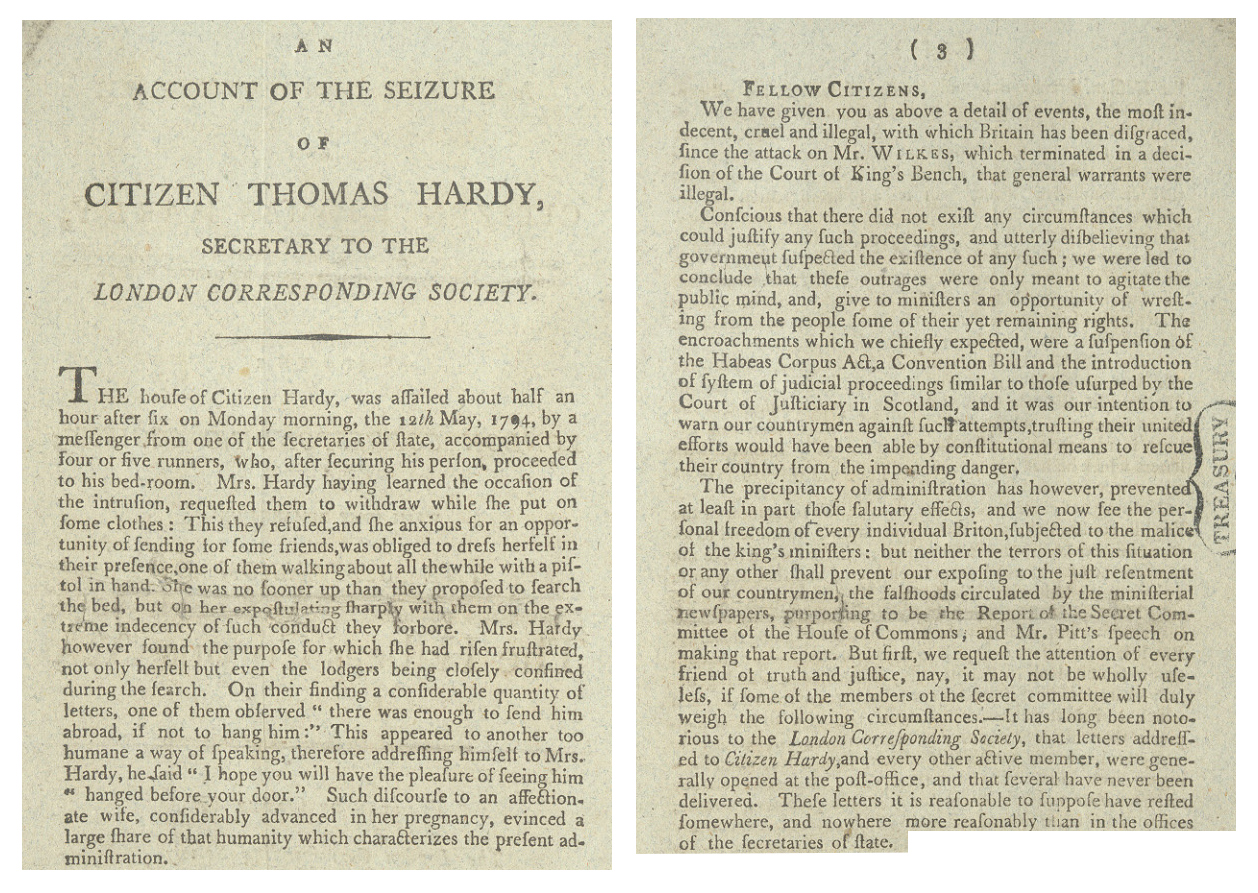
Extract from a printed account by the London Corresponding Society on the arrest of Thomas Hardy, 12 May 1794, Catalogue ref: TS 24/3/33
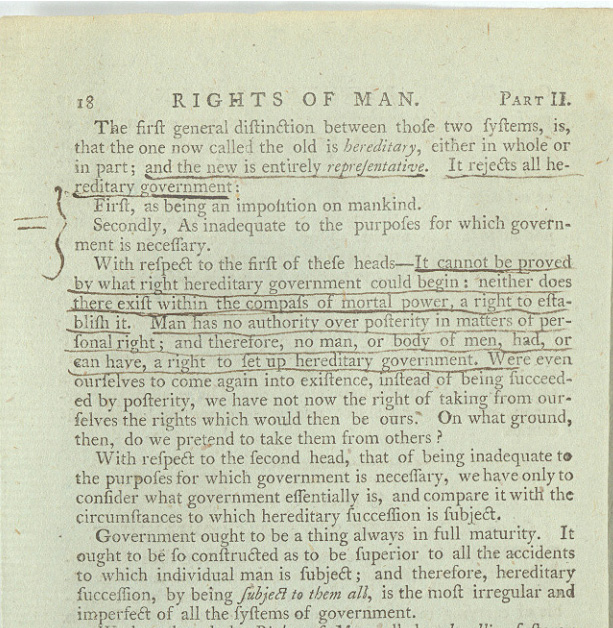
Extract from the second part of ‘The Rights of Man’ by Thomas Paine, 1792
Catalogue ref: TS 24/3/10, pp.18-19
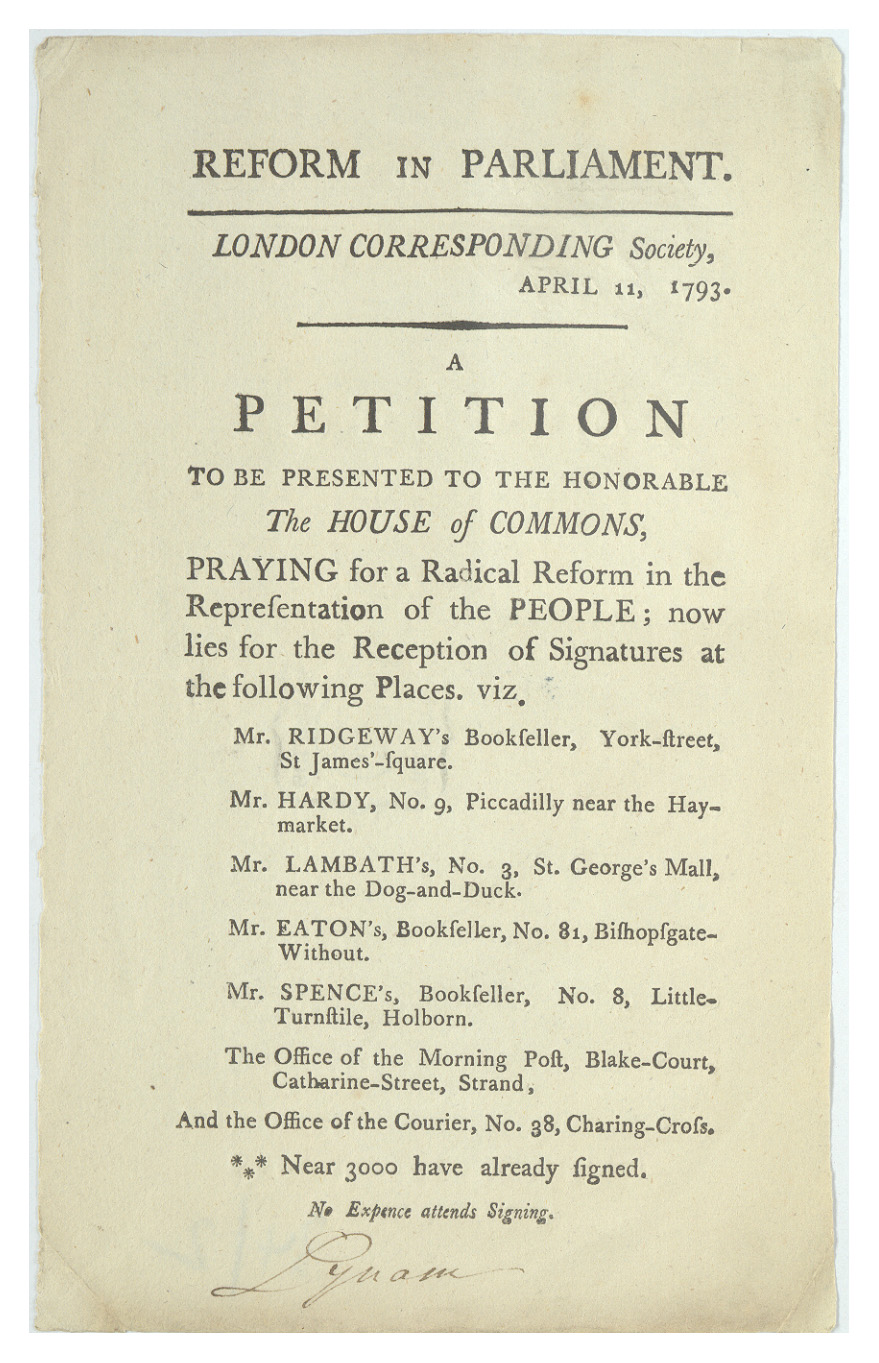
London Corresponding Society handbill, 1793 , Catalogue ref: TS 24/3/34