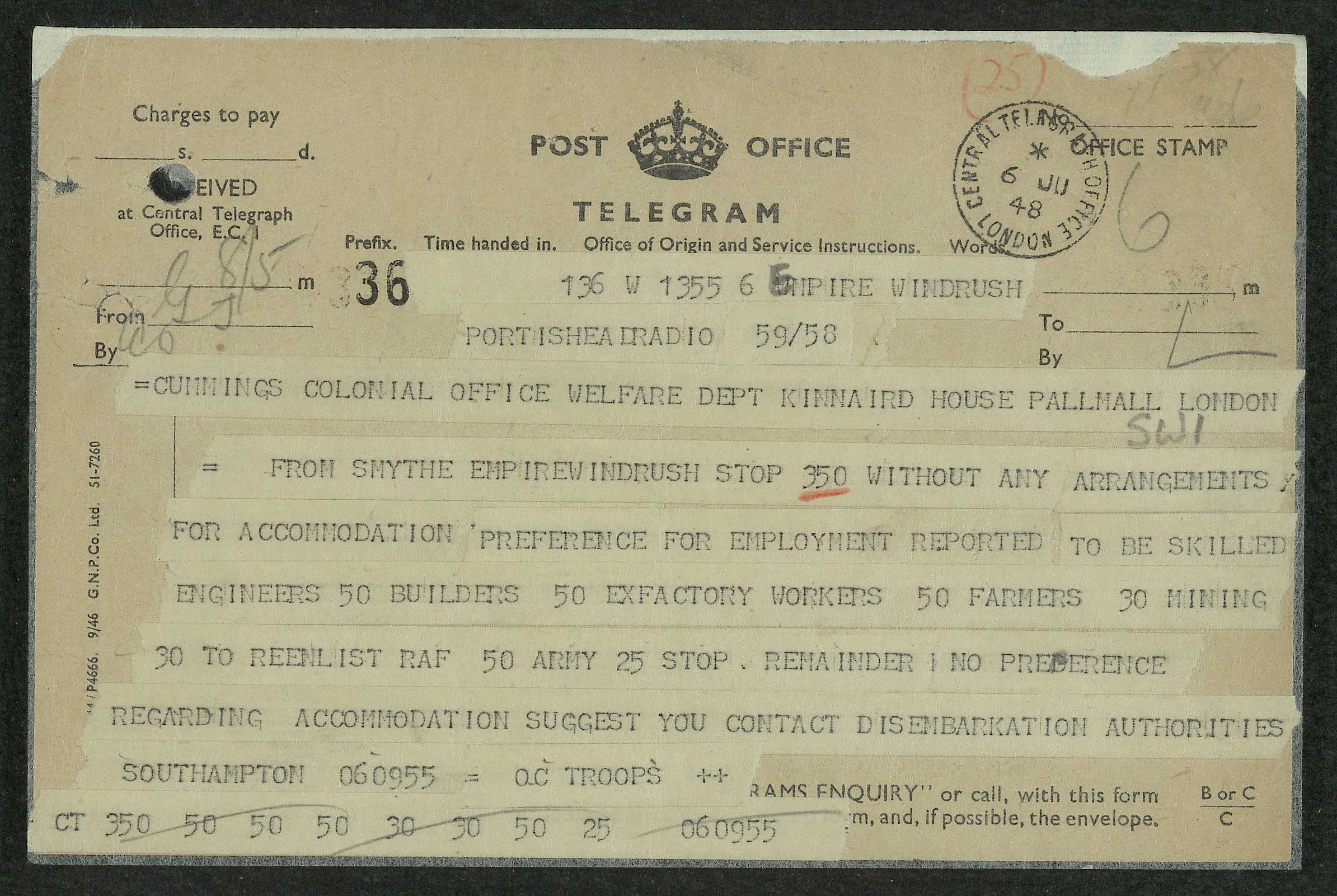
A telegram to Mr Cummings, Colonial Office in London, from Mr Smythe about passengers on the Windrush, 6 June 1948, Catalogue ref: CO 876/88
This telegram was sent on 6th June before the arrival of the Empire Windrush to share information about the passengers. Explain that a telegram is a message that is sent by electricity or radio and then printed and delivered to someone’s home or office. ‘STOP’ was used in the telegram to mean ‘full stop’ as the telegram lacked punctuation marks.
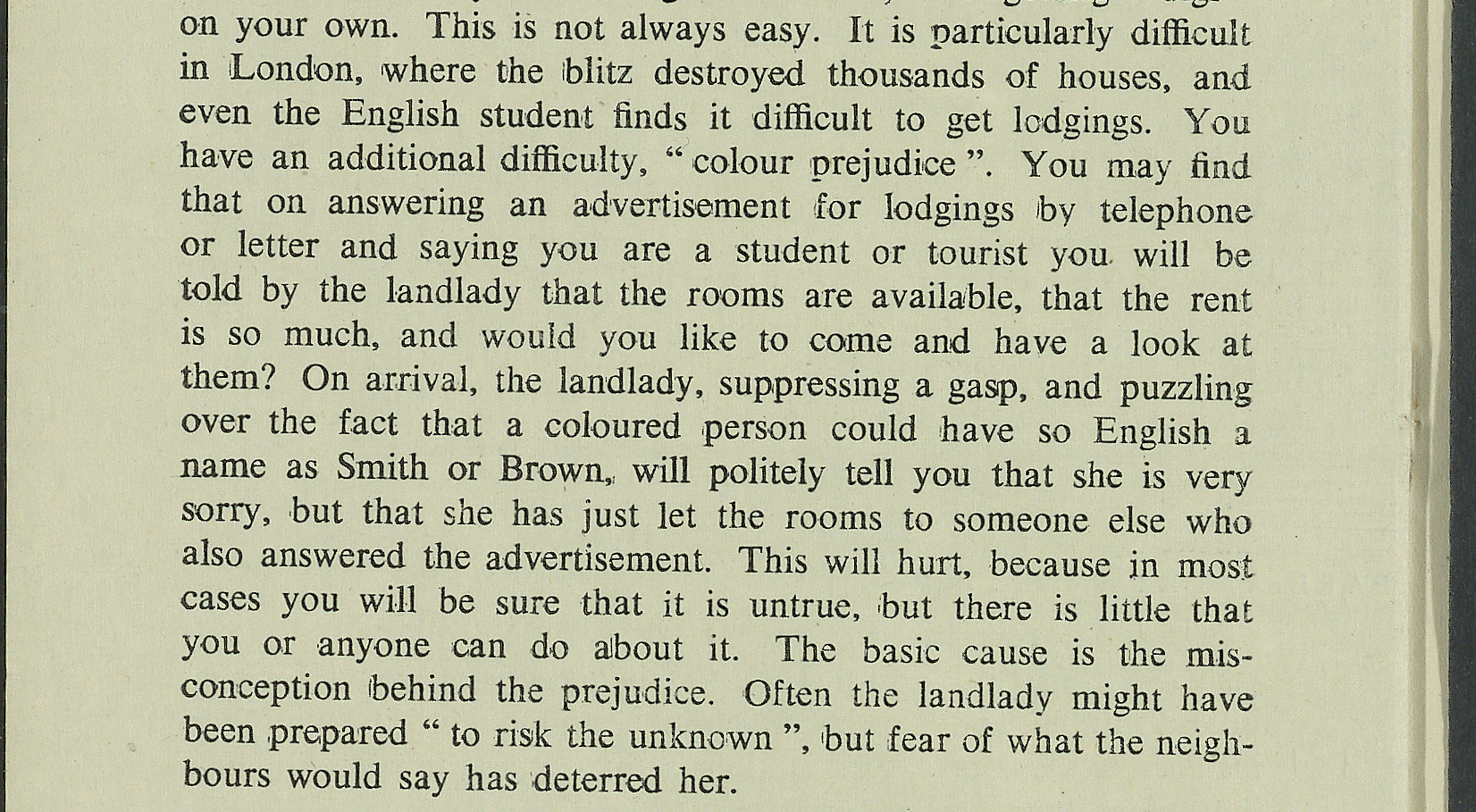
Extract from an information booklet written by H.D. Carberry and Dudley Thompson called ‘A West Indian in England.‘ Catalogue ref: CO 875/59/1
The booklet aimed to give immigrants information about life in Britain. It was distributed by the Colonial Office to colonies in the Caribbean, 1949-1951. This part describes the difficulties in finding accommodation.
Contains original language used at the time which is not appropriate today.
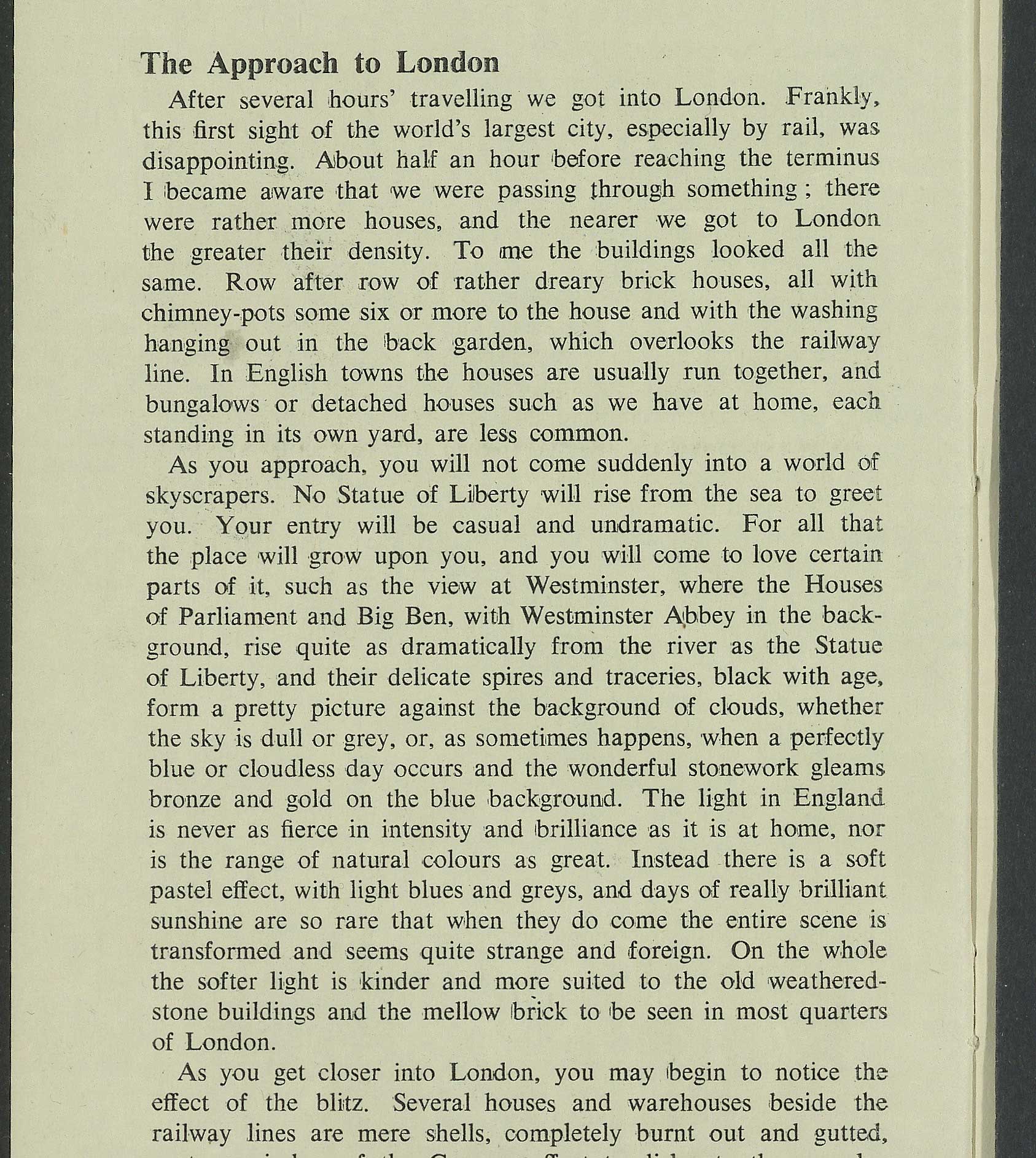
Extract from an information booklet written by H.D. Carberry and Dudley Thompson called ‘A West Indian in England’, Catalogue ref: CO 875/59/1
The booklet aimed to give immigrants information about life in Britain. It was distributed by the Colonial Office to colonies in the Caribbean, 1949-1951. This part describes the approach to London for those arriving in the country for the first time.
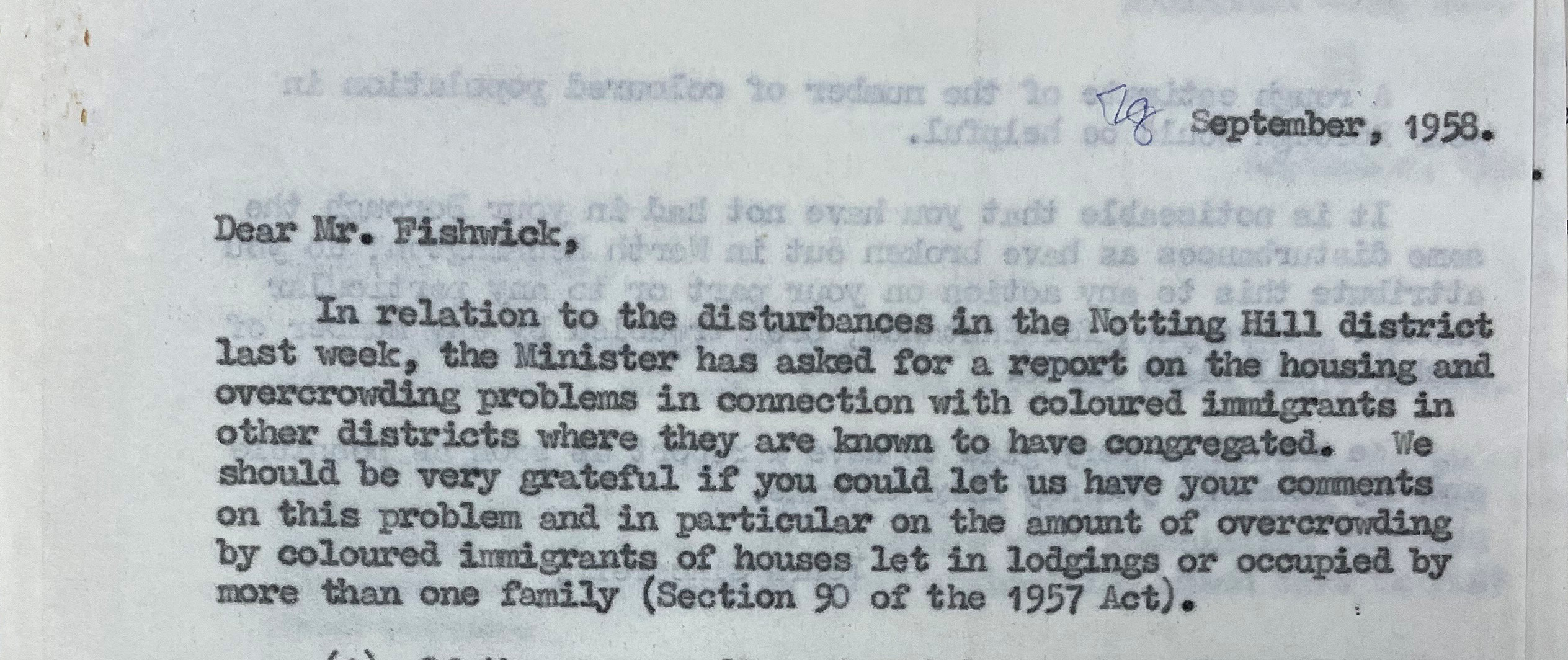
Extract from a letter sent to town halls in Islington, Paddington and Euston asking about their local housing problems, 28 September 1958, Catalogue ref: HLG 117/122
Contains original language used at the time which is not appropriate today.
For several nights at the end of August 1958, young white men known as ‘teddy boys’ attacked West Indian residents and their homes in Notting Hill, London. These disturbances became known as the Notting Hill riots.
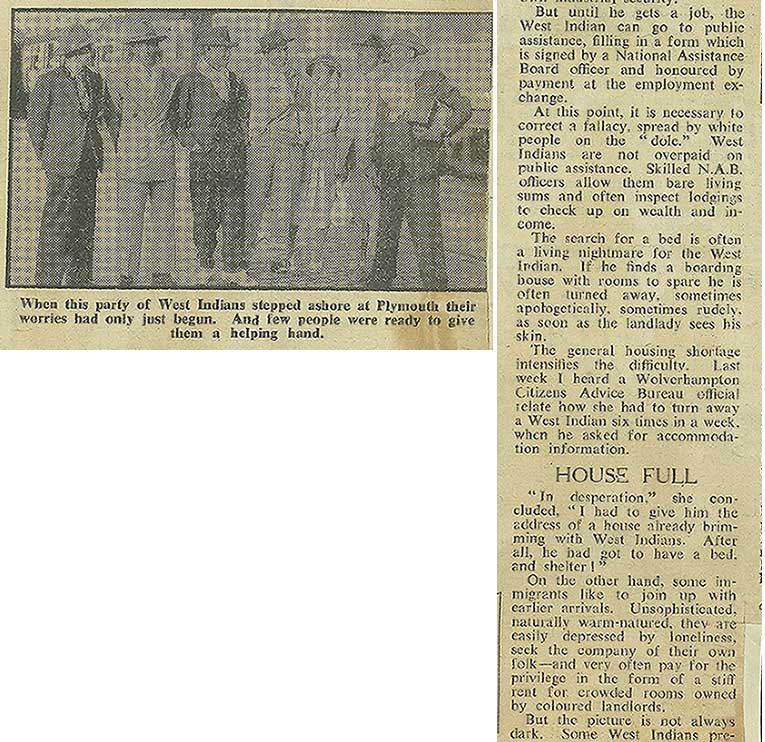
Newspaper story called ‘Little help here for the bewildered West Indian’ by John Baker from the ‘Express and Star’ [Wolverhampton] 9 August 1956 Catalogue ref: AST 7/1125
Contains original language used at the time which is not appropriate today.
Look at the photograph and caption (words below the photograph).
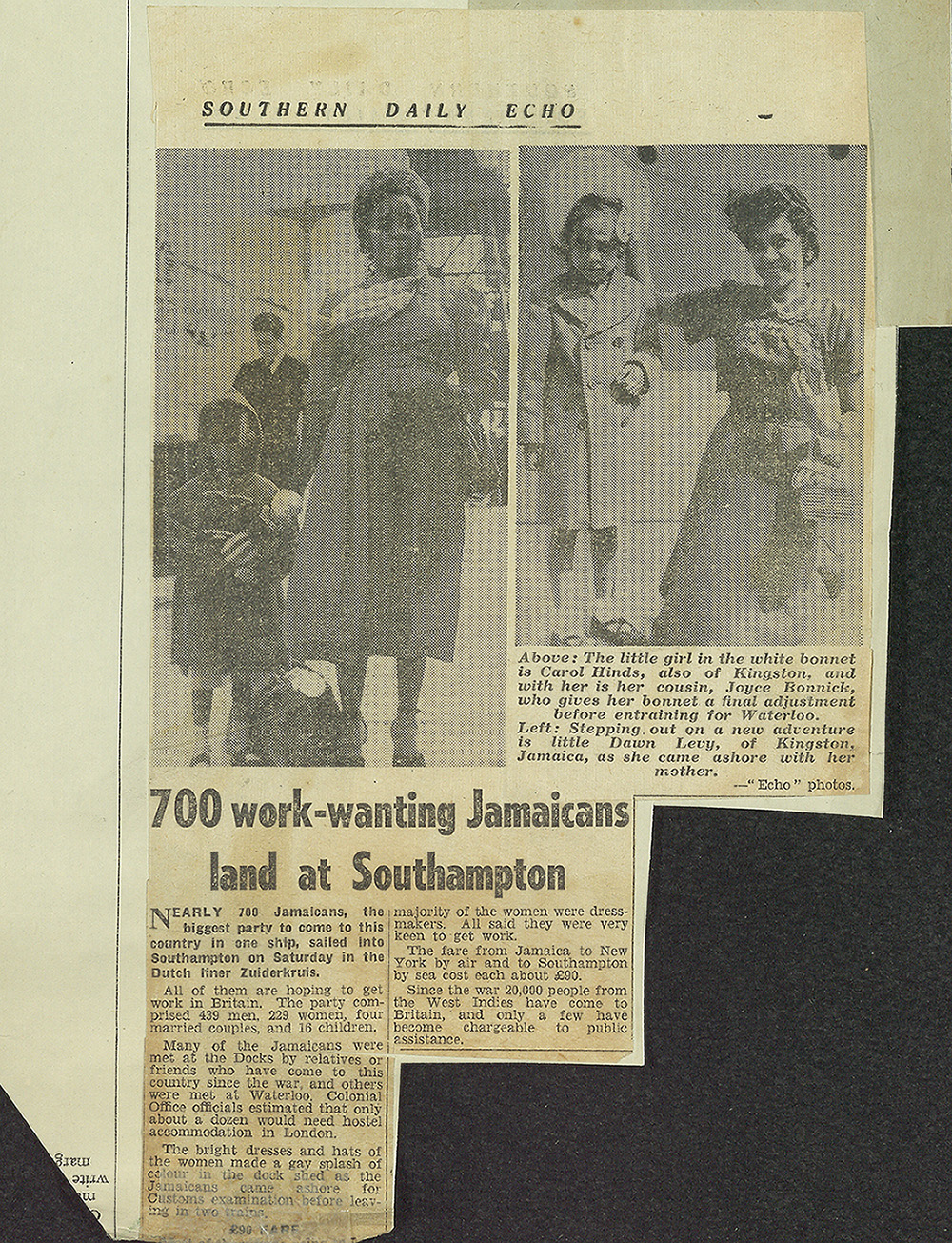
Newspaper story from the ‘Southern Daily Echo’ [Southampton] entitled ‘700 work- wanting Jamaicans arrive at Southampton’, 3 May 1954, Catalogue ref: AST 7/1125
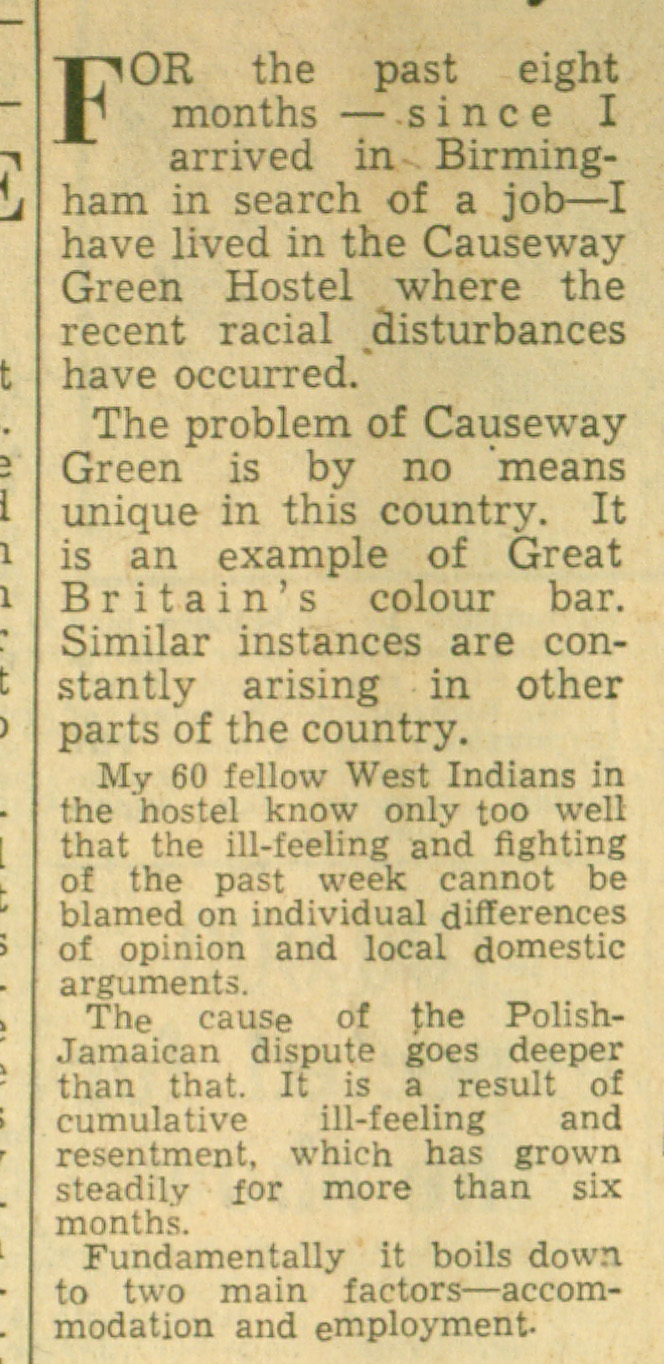
This is an extract taken from a story printed in the ‘Birmingham Gazette’ by Horace Halliburton, 10th August 1949. Catalogue ref: LAB 26/198
Housing for the new migrants, near to their places of work was often provided by National Service Hostels Corporation (NSHC).
There had been reports about some disturbances between the Poles and the Jamaicans living at Causeway Green hostel. On 8th August, a riot with serious fighting occurred. The Causeway Green Riot and events leading up to that night, mainly consisted of Polish men fighting a smaller group of Jamaicans. Those in charge of the hostel decided to evict the Jamaicans, not the Poles or others involved. The Jamaicans refused to leave and therefore the NSHC made a rule to limit the number of ‘West Indian’ residents ‘up to 10% of the total’ with ‘a ceiling of 30%’.
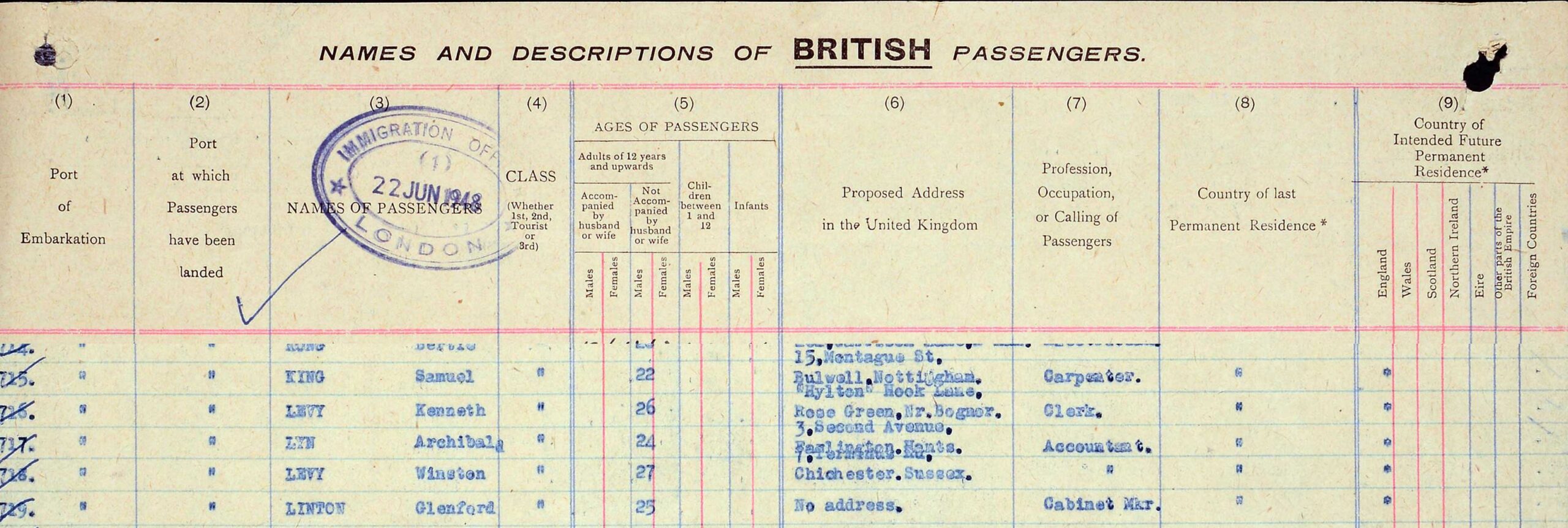
Extract from the passenger list of the Empire Windrush, Catalogue Ref: BT 26/1237. This is from one of the pages from the Board of Trade passenger list of the Empire Windrush, one of the ships that brought people from the Caribbean to the UK and arrived at Tilbury on 21st June 1948.
Front cover of the Caribbean Carnival Souvenir programme, dated 1960.
Please access the image online, as the original of this document is kept in The British Library: Claudia Jones’ Caribbean Carnival Souvenir programme, 1960 | The British Library (bl.uk)
Programme of events for the Caribbean Carnival, page 4 of the online record.
Please access at: Claudia Jones’ Caribbean Carnival Souvenir programme, 1960 | The British Library (bl.uk)