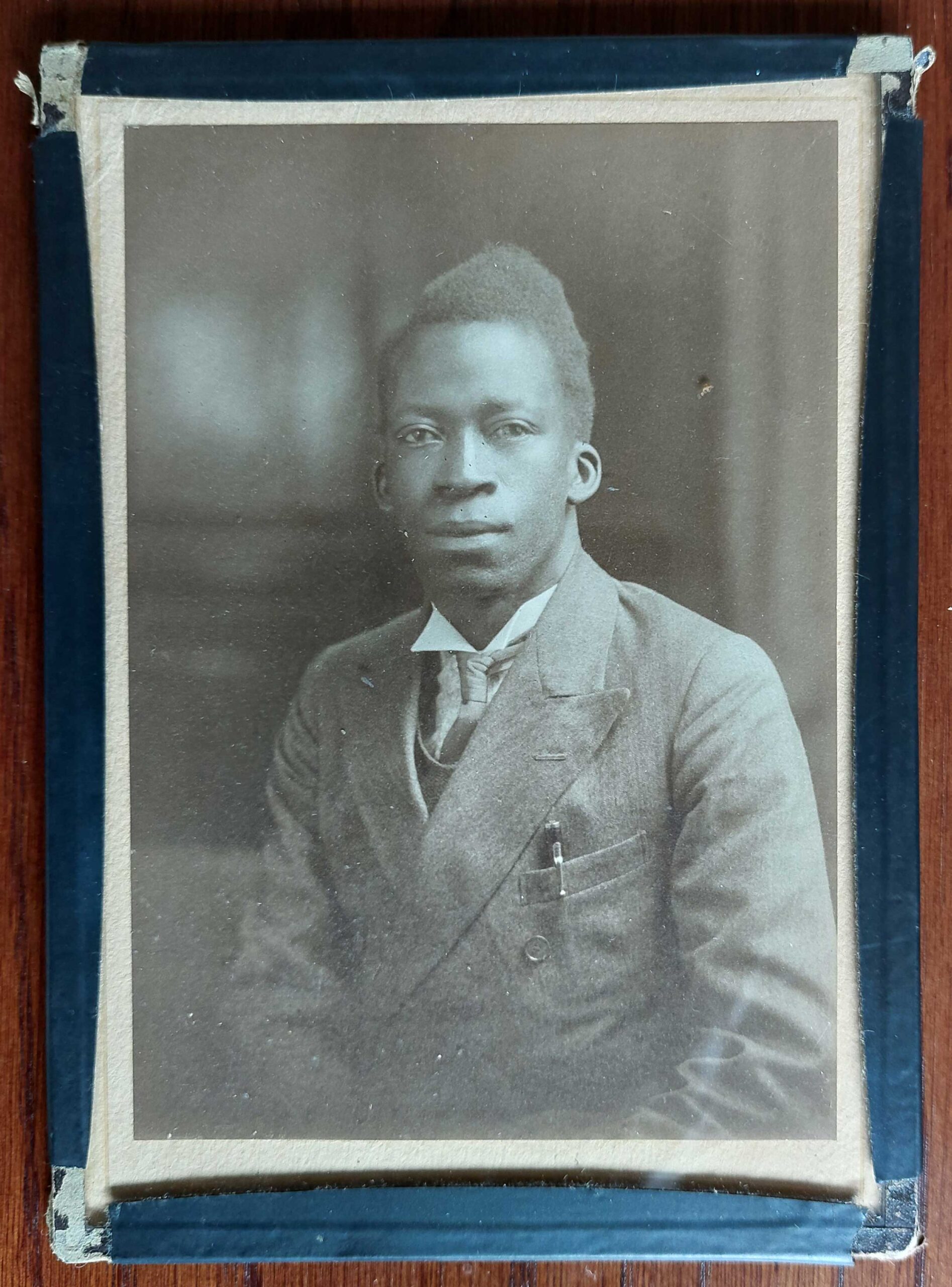
Photographs Source 2a and Source 2b: [Joan Robson (nee Luale), Personal archive].
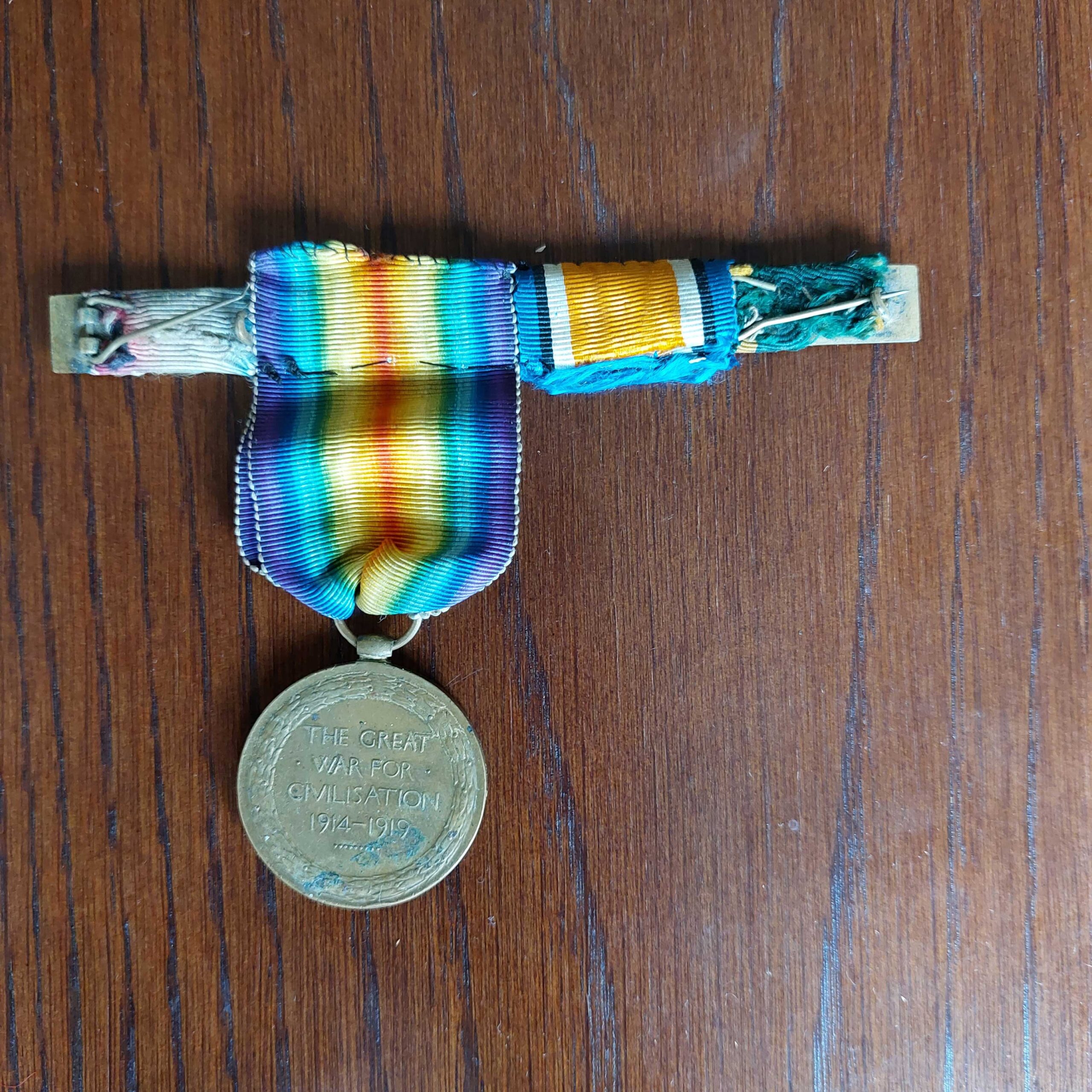
Source 1a shows the Victory Medal of 5027 Private Samson Jackson, 19th London Regiment. [Joan Robson (nee Luale) Personal archive].
Samson Jackson also uses the names ‘Chanda Bulaya’ and ‘Chief Luale’ according to correspondence in the Colonial Office and research by historian Robert I. Rotberg, ‘Black Heart: Gore-Brown and the Politics of Multiracial Zambia’ (Berkely, University of California Press, 1977), p.70.
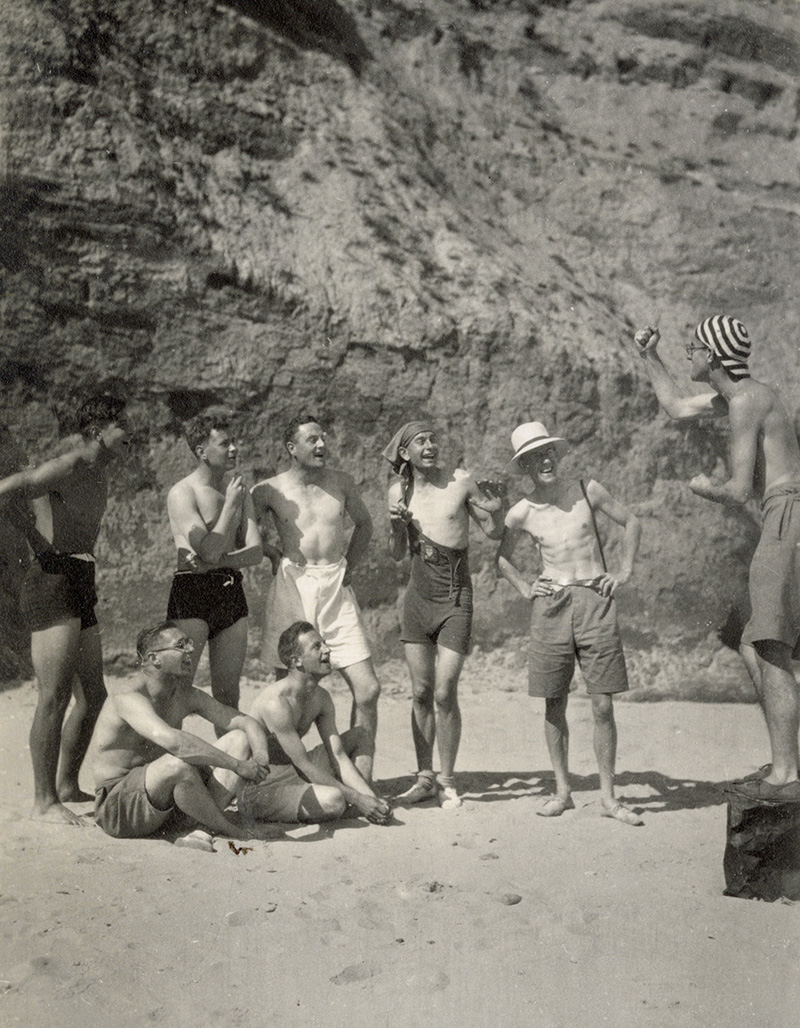
1928-31: A group of likely gay men having a beach day. Emmanuel Cooper Archive, Bishopsgate Institute.
This photo, taken between 1928 and 1931, is from a series of photos of a group of men having day out on the beach somewhere in the UK. It was collected by potter, art historian and LGBTQ+ activist Emmanuel Cooper when he was writing his book ‘Photographing the Male Nude’. Unfortunately, there is no further information on who the men were or where the photos were taken.
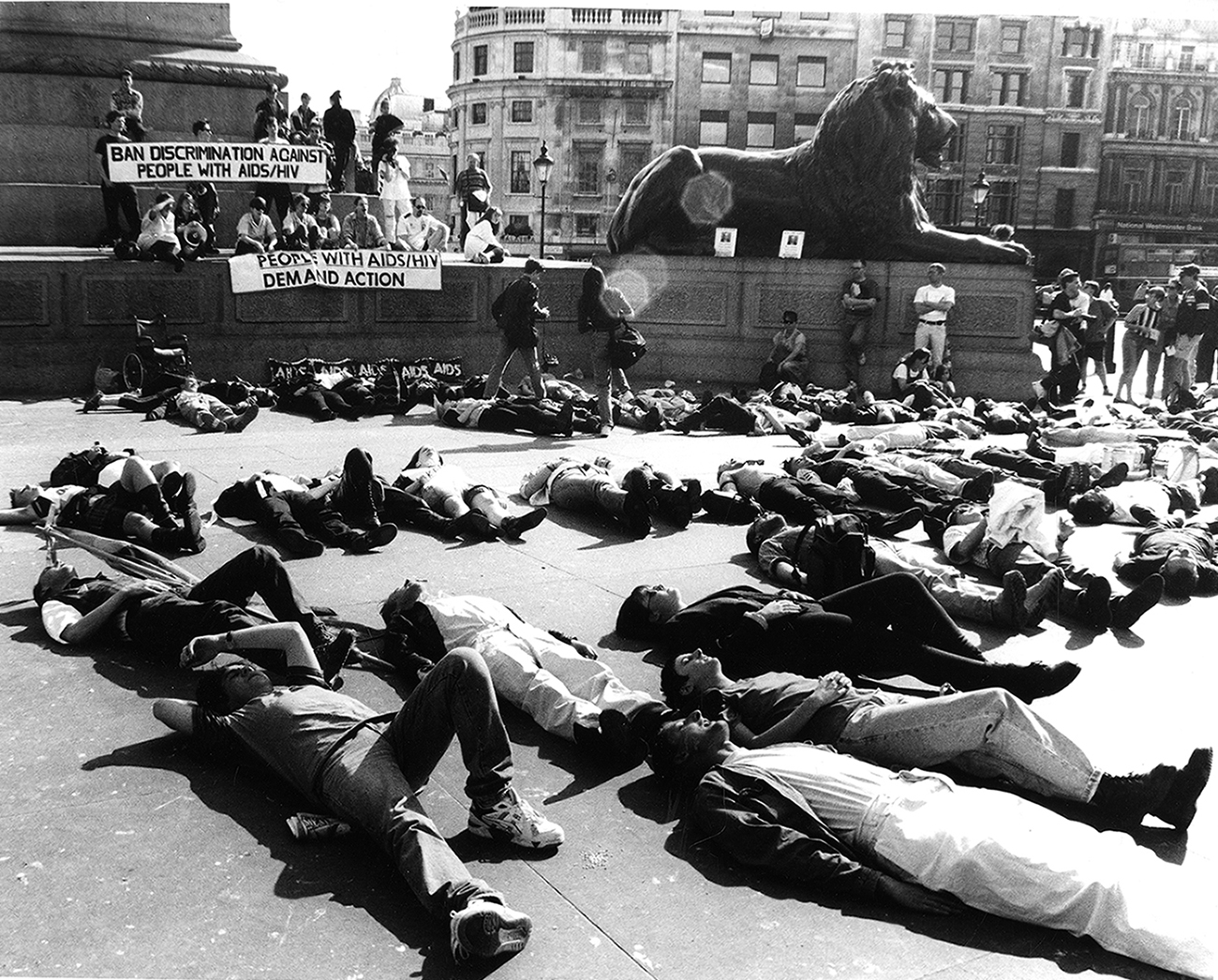
1993: Die-in, UK AIDS Coalition March from Hyde Park to Trafalgar Square, 28 August 1993. Gordon Rainsford Archive, Bishopsgate Institute.
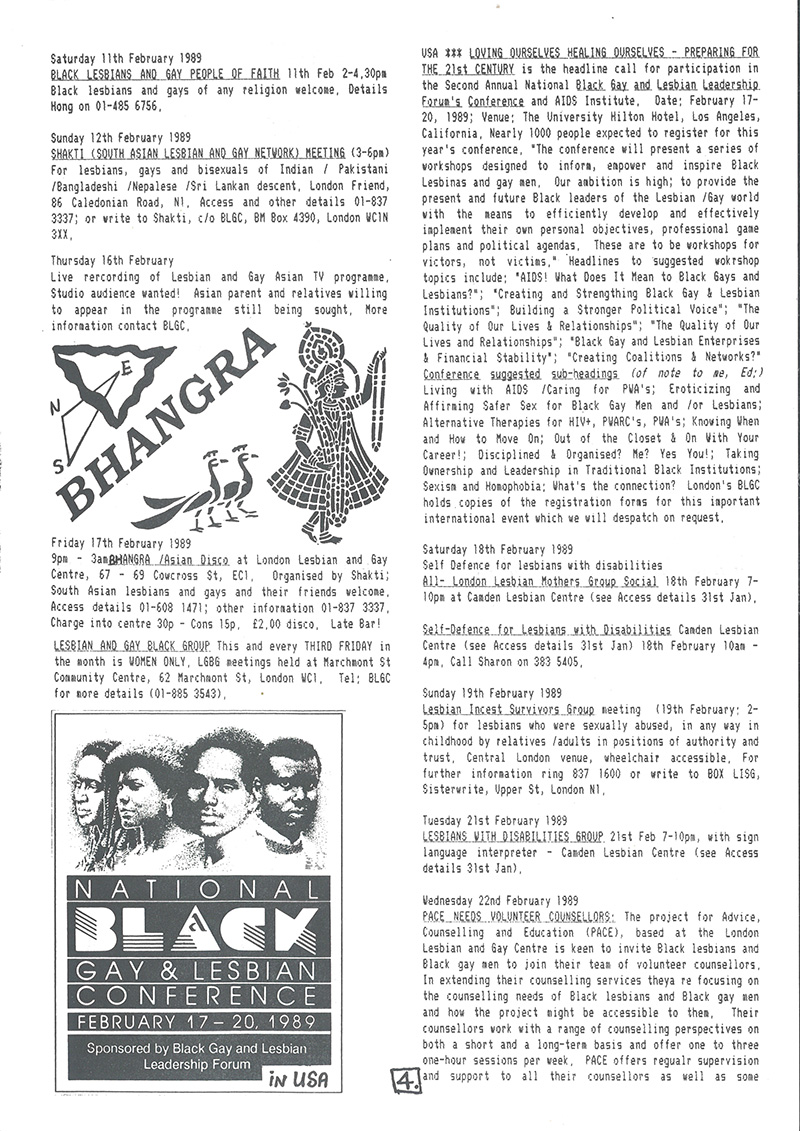
1989: Page from the Black Lesbian and Gay Centre newsletter showing community activities. LGBTQ+ Archives, Bishopsgate Institute
The Black Lesbian and Gay Centre opened in 1985 to address issues facing LGBTQ+ people of colour. It provided a telephone helpline, advice and counselling, a library, a social space, and other community resources. It also produced the magazine Blackout along with newsletters such as the one shown here. The Centre was active into the 1990s.
Find more examples of BLGC newsletters online at the Bishopsgate Institute.
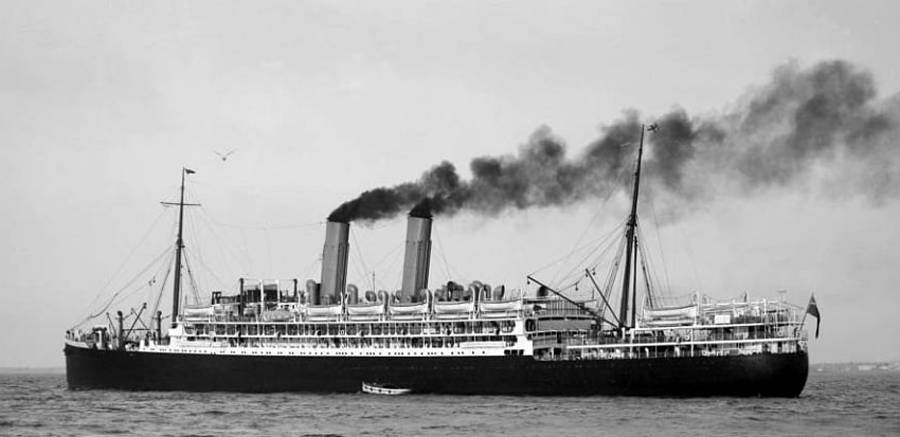
A 1930s photograph of the ex-troop ship SS Ormonde. This was one of the first of the lesser-known ships that carried post-war migrants. It docked in Liverpool on 31 March 1947 for over a year before the Empire Windrush. By courtesy of Nick Messenger www.pandosnco.co.uk.
‘S.S.’ means ‘screw steamer’ and often defined as ‘steam ship’. ‘MV’ is also used as prefix for ships and means ‘motor vessel’.
A troop ship is a ship used to carry soldiers, either in peacetime or wartime. The passenger list for the ship reveals that there were 241 onboard, including 11 stowaways and six distressed seamen. It shows a wide range of professions. Due to an unofficial colour bar in Britain, many could only find employment with low wages and poor conditions. Find out more about this and other ships in this National Archives blog.

The part of a letter sent to the Secretary of State for the Colonies concerning working conditions for sugar workers in Jamaica. 26 January 1943, Catalogue ref: CO 137/852/7
This is part of a letter about Jamaican sugar workers who worked on large estate [for Tate and Lyle] where the sugar crop was grown. The Secretary of State for the Colonies, or Colonial Secretary was the British Cabinet minister in charge of managing the United Kingdom’s various colonies. A colony is a country or territory controlled to by another country. Jamaica at this time was a British colony and gained independence in 1962.
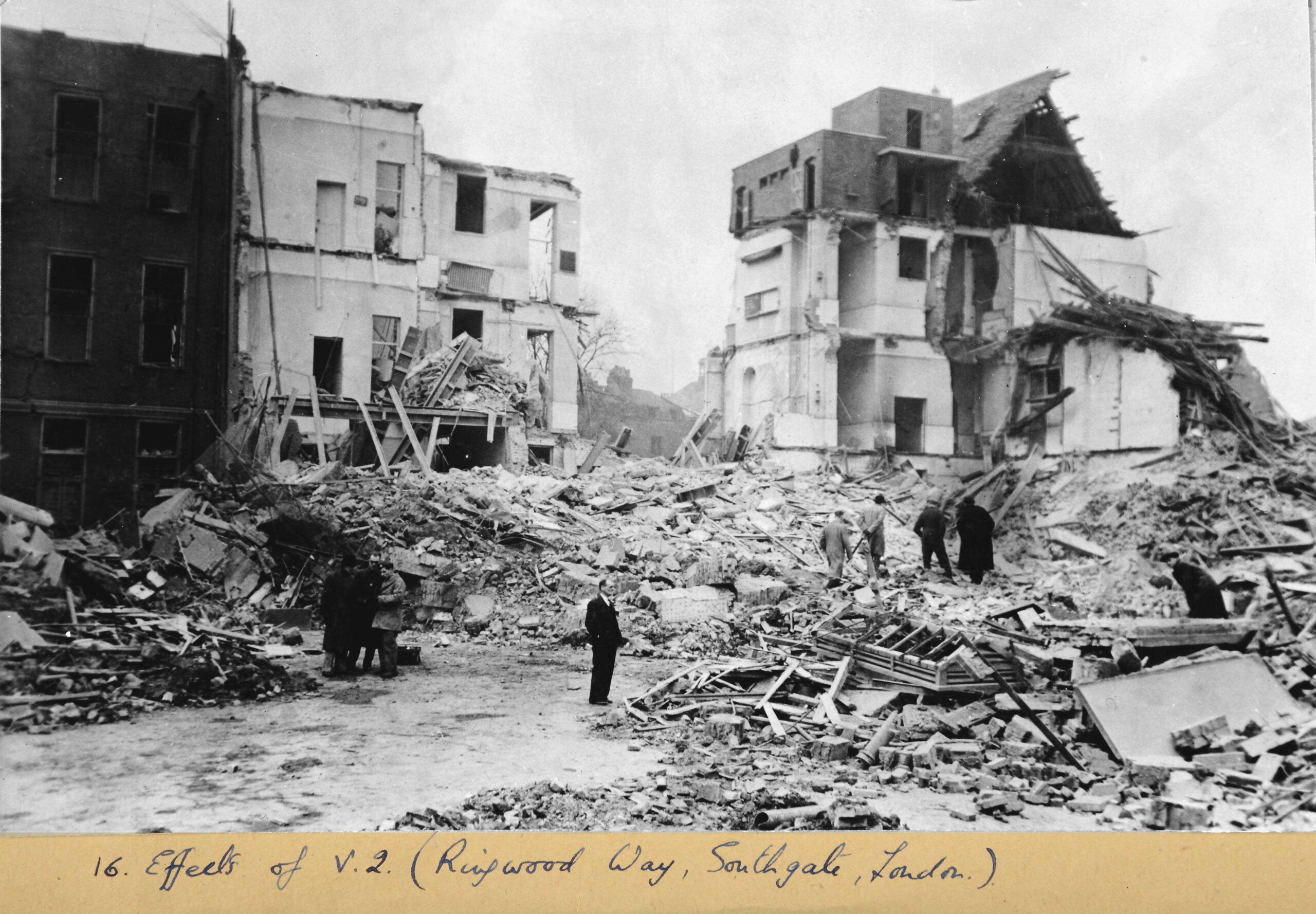
Photograph from 1944 called: ‘Effects of V2 (Ringwood Way, Southgate, London) Catalogue ref: HO 338/27
Try and read the caption. Use a map of London to find the location of the photograph if possible.
The ‘V2’ was a rocket, a long-distance weapon that could travel at the speed of sound. They were used by Germany against British towns and cities from 1943 during the Second World War.
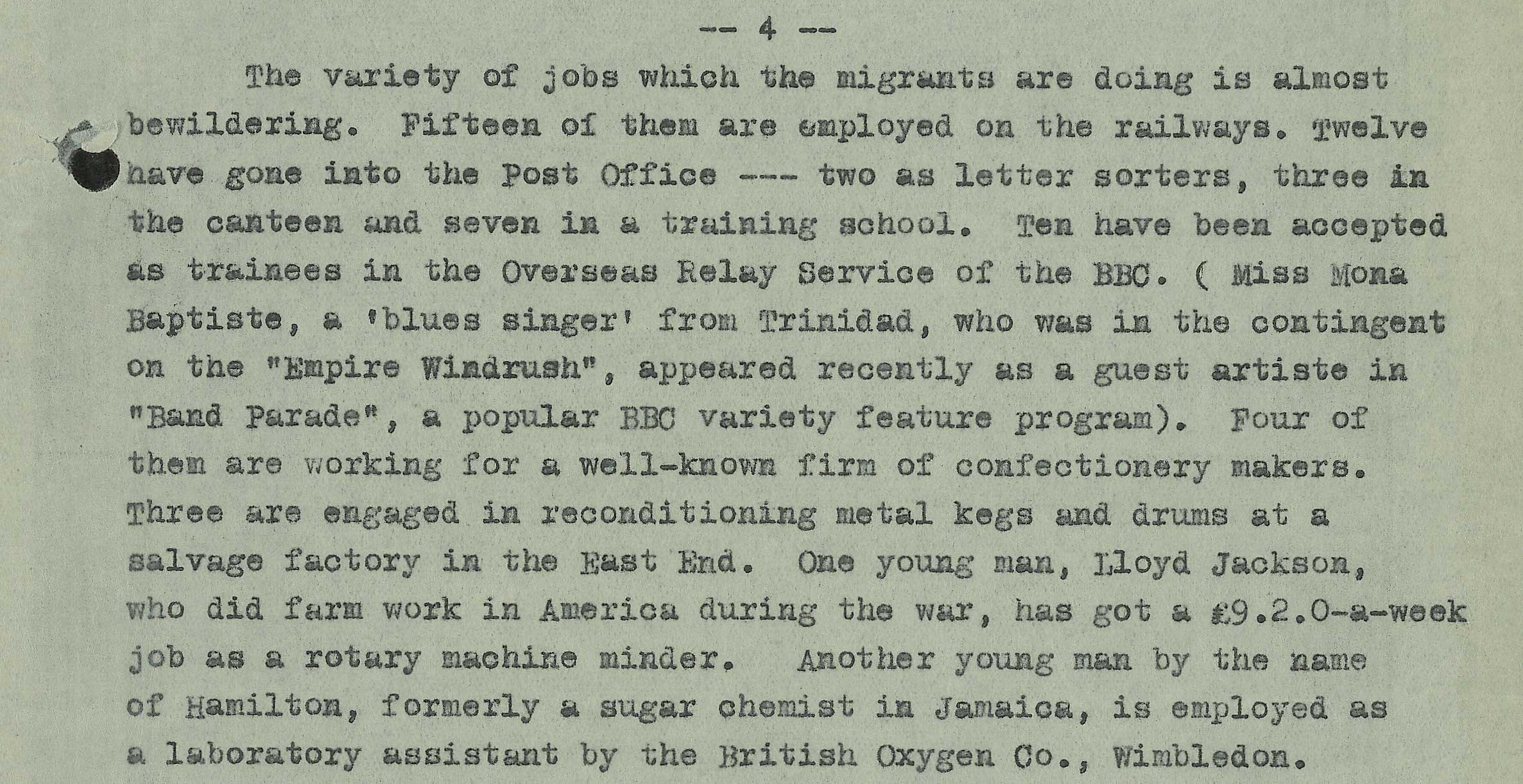
Extract from Report by Eric Walrond entitled ‘Negro migrants in Britain, 1947 December-1948 October, Catalogue ref: CO 876/88
Contains original language used at the time which is not appropriate today.
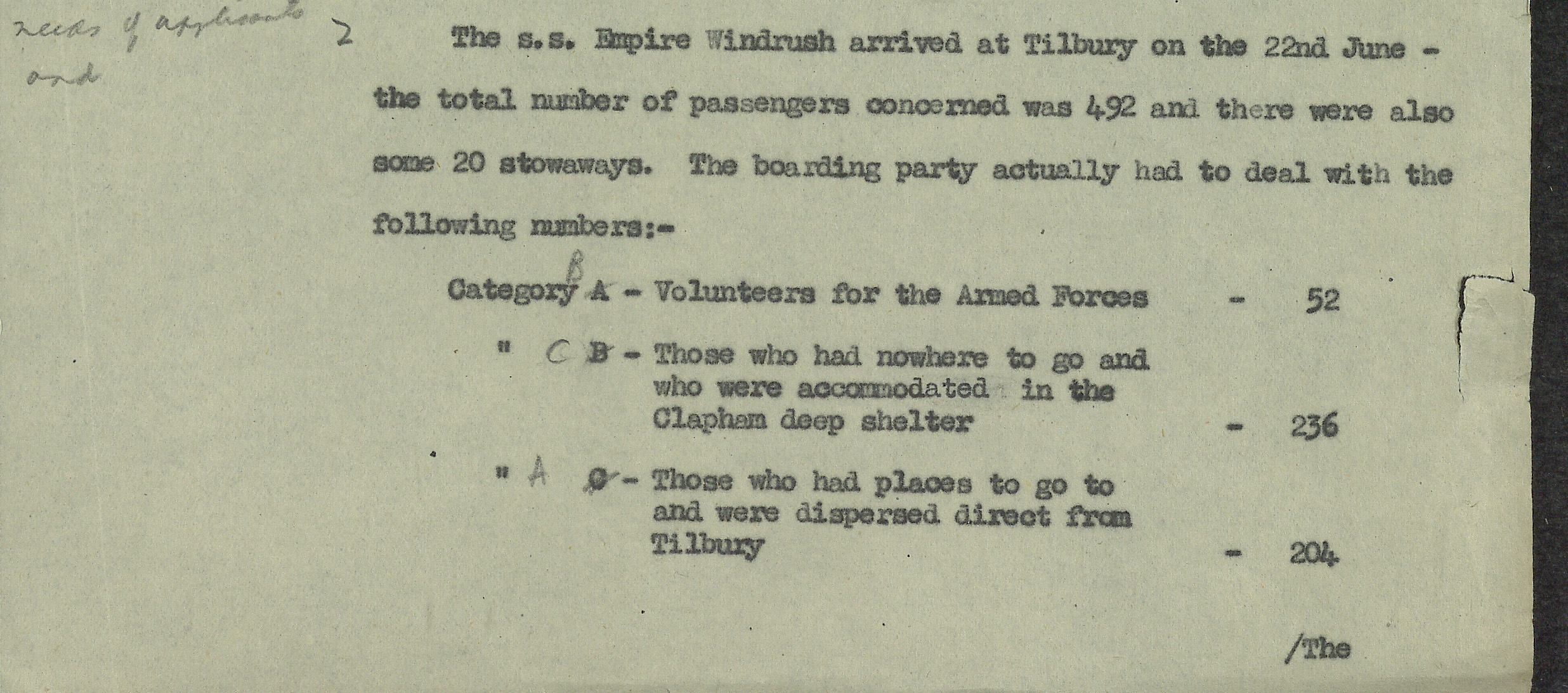
Extract from a Memorandum from the Assistance Board about arrangements for the Windrush passengers, including information about treatment of stowaways. 1948, Catalogue ref: AST 21/8
The rest of this document also tells us that the Ministry of Labour and National Service set up a small job centre in the shelter to help place people in work. With the publicity about the arrival of ‘Empire Windrush’, job offers came in from different employers. Some men got work at the Stanton Iron Works, Nottingham, British Railways Works, Swindon, Tin Plate Works at Neath in South-West Wales and in the catering trades around London. Of the 492 who came on the ship, 241 accepted the Colonial Office’s offer to help them find jobs and housing. The other 251 made their own arrangements on arrival.