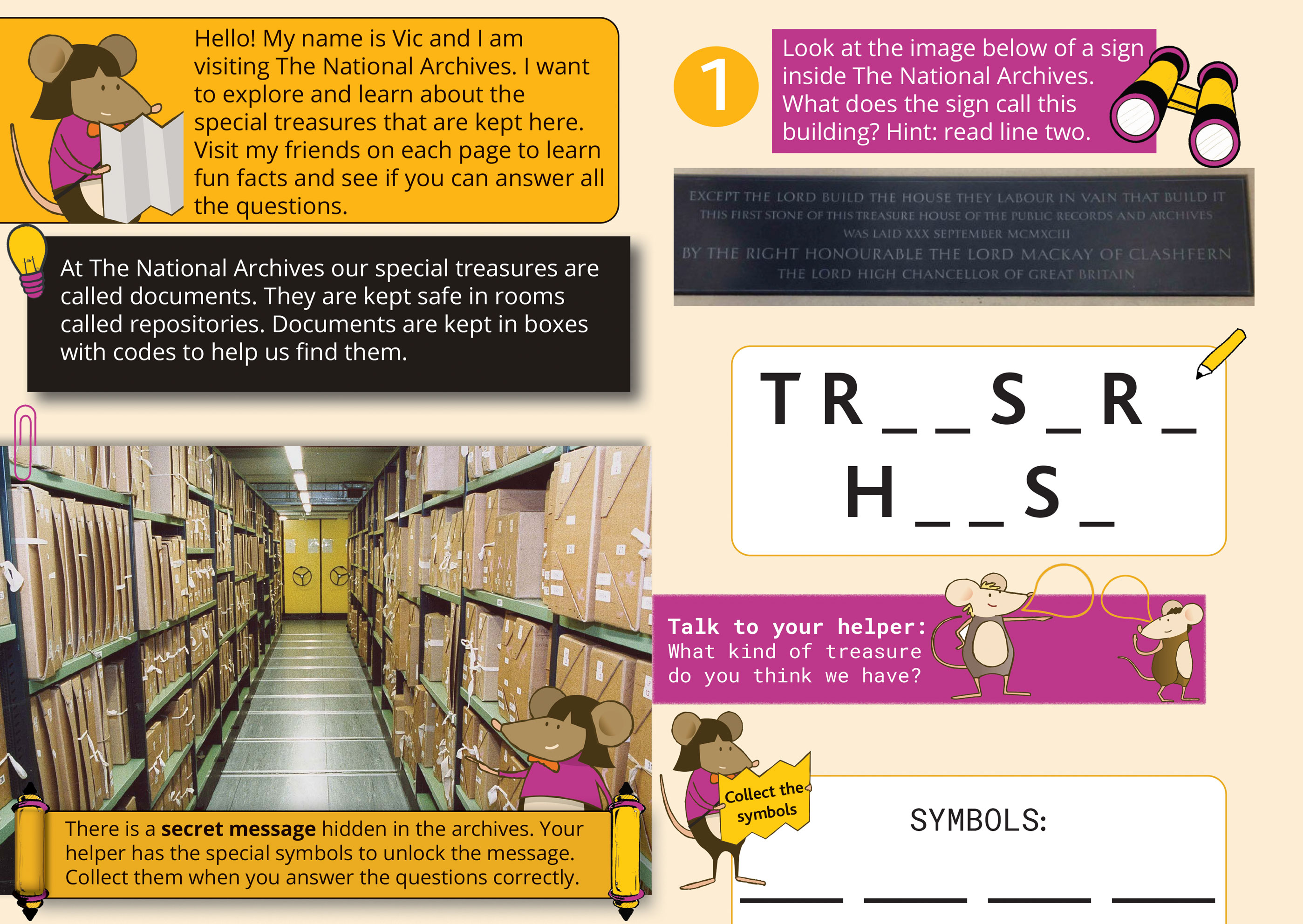

Join Vic and her friends as they visit the National Archives in this activity pack for young children.
Download the printable pack as a PDF here:
Colour: Download now [PDF, 16.8MB]
Black and White: Download now [PDF, 6.5 MB]
Discovering The National Archives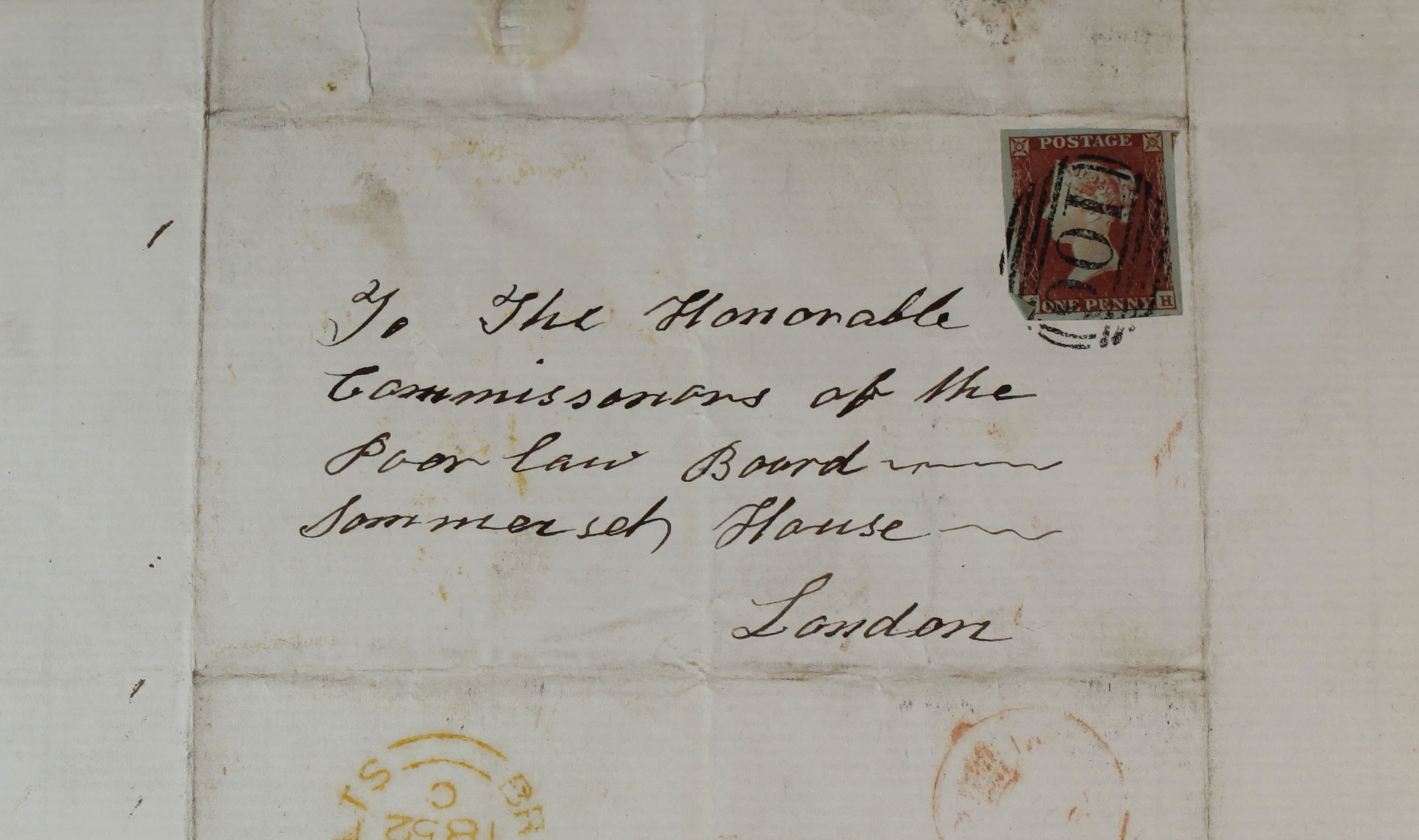
Students and teachers can discover the voices of the poor who wrote to the Poor Law Commission and explore how they understood, experienced and exercised agency under the New Poor Law from 1834.
This collection of documents represents a small sample of the letters that have been identified and transcribed as part of ‘In Their Own Write’, an Arts Humanities Research Council funded project, 2018 to 2021, which uses letters from paupers and other poor people, and other material such as petitions, sworn statements and advocate letters written on behalf of paupers to investigate the lives of the poor between 1834 and 1900. It is run jointly by The National Archives and the Department of History at the University of Leicester.
The majority of work focuses on the thousands of volumes of poor law correspondence (MH12) held by The National Archives much of which has been little used by historians.
What did paupers say about the Poor Law?Dr Peter Jones, Research Assistant, ‘In Their Own Write: Contesting the New Poor Law, 1834-1900’, The University of Leicester.
The question of what to do with the poorest members of society is one that has exercised human communities for as long as those communities have existed. All the major religions teach compassion and encourage charity towards the poor; but by the early-modern period in Europe, population increase and a gradual move towards urbanisation, meant that local piecemeal responses were no longer sufficient to contain the growing problem of poverty. In England and Wales, the response was to establish a set of national regulations in the 16th and 17th centuries that required local communities to look after their own poor (the ‘Old Poor Law’). The so-called ‘deserving poor’ (that is, the elderly, widows, orphans, the sick and disabled) were given ‘relief’ in money or goods. Those who were thought to be less deserving – in particular, the ‘able-bodied’ poor who, it was thought, should be able to look after themselves – were put to work for their relief. This system of welfare was administered at the level of the parish (which commonly overlapped with a village or township) and it continued in place until the early-19th century.
By the 1830s, however, as the population rocketed and urban poverty became endemic, the rising cost of relief alarmed large ratepayers and those who governed England and Wales. The response of the authorities was (as it very often is) to drive down costs by deterring people from seeking relief in the first place. In 1834 the Poor Law Amendment Act was passed, ushering in the New Poor Law which, in theory at least, made the welfare landscape a much less hospitable place. Poor relief would now be administered by local boards of guardians, who oversaw whole groups of parishes (known as ‘unions’), and instead of money and food being given to paupers in their own homes unions were given the right to place their poor in local workhouses; large prison-like institutions where families were separated and individuals were required to perform hard labour for meagre rations. Unsurprisingly, the new system, and particularly the workhouse, was hated by many paupers. Not all paupers were sent to the workhouse (most were not), however most of the so-called ‘deserving poor’ who were given relief in their own homes often felt that it was completely inadequate for their needs.
The Central Authorities and Pauper Letters
Sometimes, paupers felt so aggrieved at their treatment that they wrote to the central poor law authorities in London to complain. The Poor Law Commission was set up in 1834 to ensure that relief was administered properly under the New Poor Law. Its main focus was on ensuring consistency of practice in unions across England and Wales, but paupers soon realised that if they had a complaint about ill-treatment or the rules being broken by local officials then the Commission ought to do something about it. Many such complaints were received between 1834 and 1900 by the Commission and the bodies that succeeded it (the Poor Law Board in 1847, and the Local Government Board in 1871), and these were bound up volumes along with all the other correspondence received by the Commissioners. These volumes are now held at The National Archives, and there are more than 16,000 of them in total!
As you will see from the letters in this sample, paupers complained about all kinds of things; but there are some broad themes which it is useful to tease out. Perhaps unsurprisingly, the most common complaints were about the workhouse. In particular, paupers felt that they should not have to go there in the first place when their only ‘crime’ was poverty. Many in our sample complain that the relief they were given in their own homes was either inadequate, or was reduced or stopped altogether, so that their only alternative was to become an inmate in the ‘house’. Others complained bitterly about the treatment they received once there, whether it was the terrible food, the appalling living conditions or the arduous work. A large proportion of the letters come from those who were traditionally considered as the ‘deserving poor’: the elderly, young widows with children, and the sick or disabled, who felt that they deserved different treatment from the able-bodied, or ‘idle’ poor.
Sometimes, the letters reveal really terrible treatment, beatings or abuse by the officials and other paupers; and taken together it is easy to conclude (as many historians have done) that the New Poor Law really was an inhuman and cruel system. But it is important to remember that these letters are a ‘self-selecting’ sample; that is, paupers rarely wrote to say what a fine time they were having in the workhouse, and how generous the master and matron were (although there are one or two examples of more positive letters, even here)! But despite this note of caution, the one thing that comes through loud and clear in these letters is the voice of the paupers themselves, and the multitude of fascinating stories they had to tell.
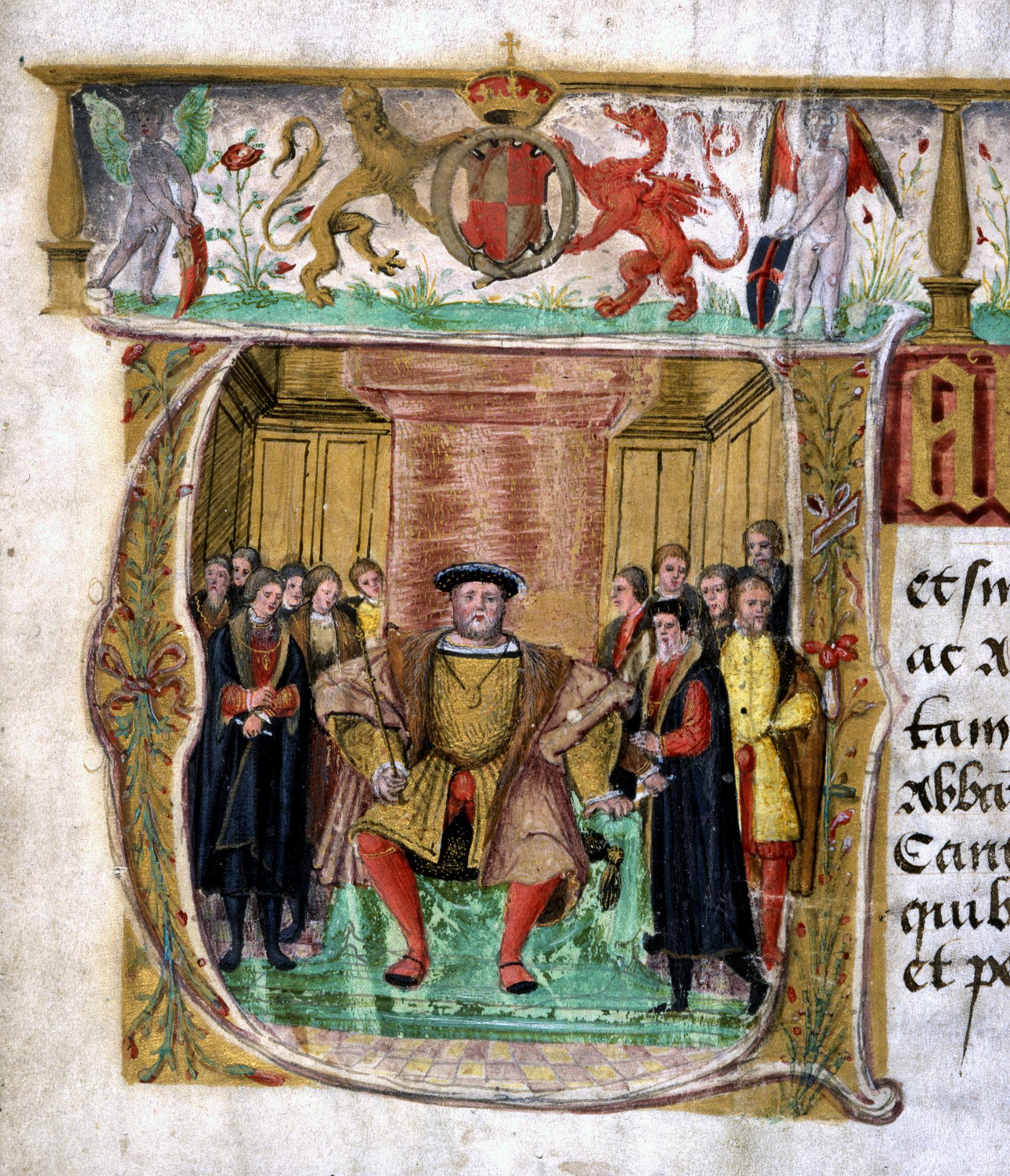
Discover the Dissolution is a national enrichment project run by The National Archives for schools and history groups. The aim is to allow students of all ages to practice their research skills.
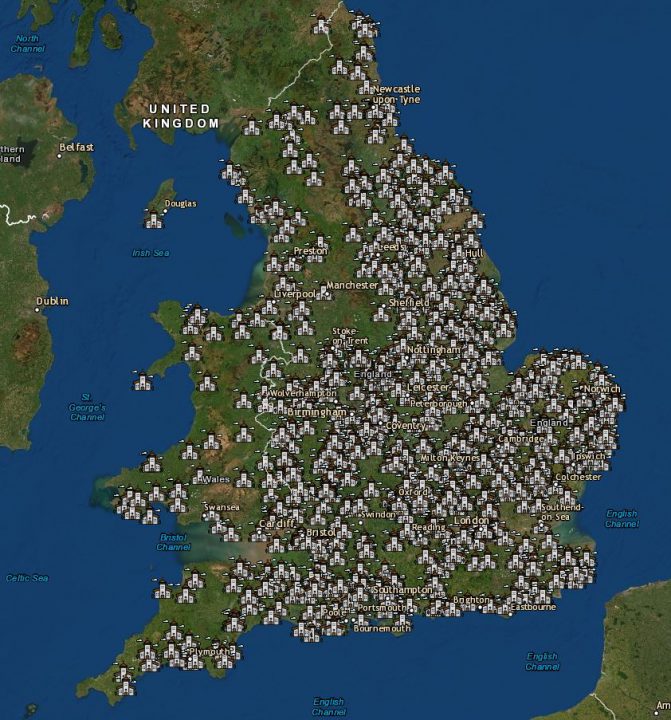
Groups are encouraged to use the Discover the Dissolution resources to locate a local monastery or nunnery that was involved in the Dissolution of the Monasteries in 1530s. They can then use the internet, libraries, local archives or other resources available to them to explore the story of the site.
Once the research is complete, students can present their findings to others in the school and submit their work to the Discover the Dissolution Schools Map to be published online and made available for other students to use as an educational resource.
You can find the main Discover the Dissolution Resource here: https://storymaps.arcgis.com/stories/eabbb11e62b941c1bf1474a83b5ce8a1

‘Mental Health on Record’ is a stop-motion animation film made by young filmmakers during the summer of 2019. The group worked with professional filmmaker Nigel Kellaway to create the film. The National Archives partnered with Richmond Borough Mind and Jon Bartlett, a mental health first aid instructor, on the project.
Mental Health on Record explores the stories of nine individuals who experienced mental health issues during the nineteenth and early twentieth centuries. It looks at the provision available at this time to care for people with mental health challenges, and considers the attitudes and the common misconceptions that existed. At KS3 and KS4, students learn about attitudes to mental health and how misconceptions can be addressed and challenged. This film can be used to spark discussion and consider case studies from the past.
Many thanks to the Friends of The National Archives for their support on this project. 
You can now view the video in full here, and explore our lesson activities to use the film as part of your history or PSHE studies.
What do the documents reveal about the understanding of mental health in the past?
A series of short films made by BBC Teach looking at the importance of sources, at The National Archives and other historical sites, and their use in investigating key historical events. From Magna Carta to the Cuban Missile Crisis.
Suitable for: History at KS3 in England, Wales and Northern Ireland and 3rd and 4th level People, past events and societies in Scotland.
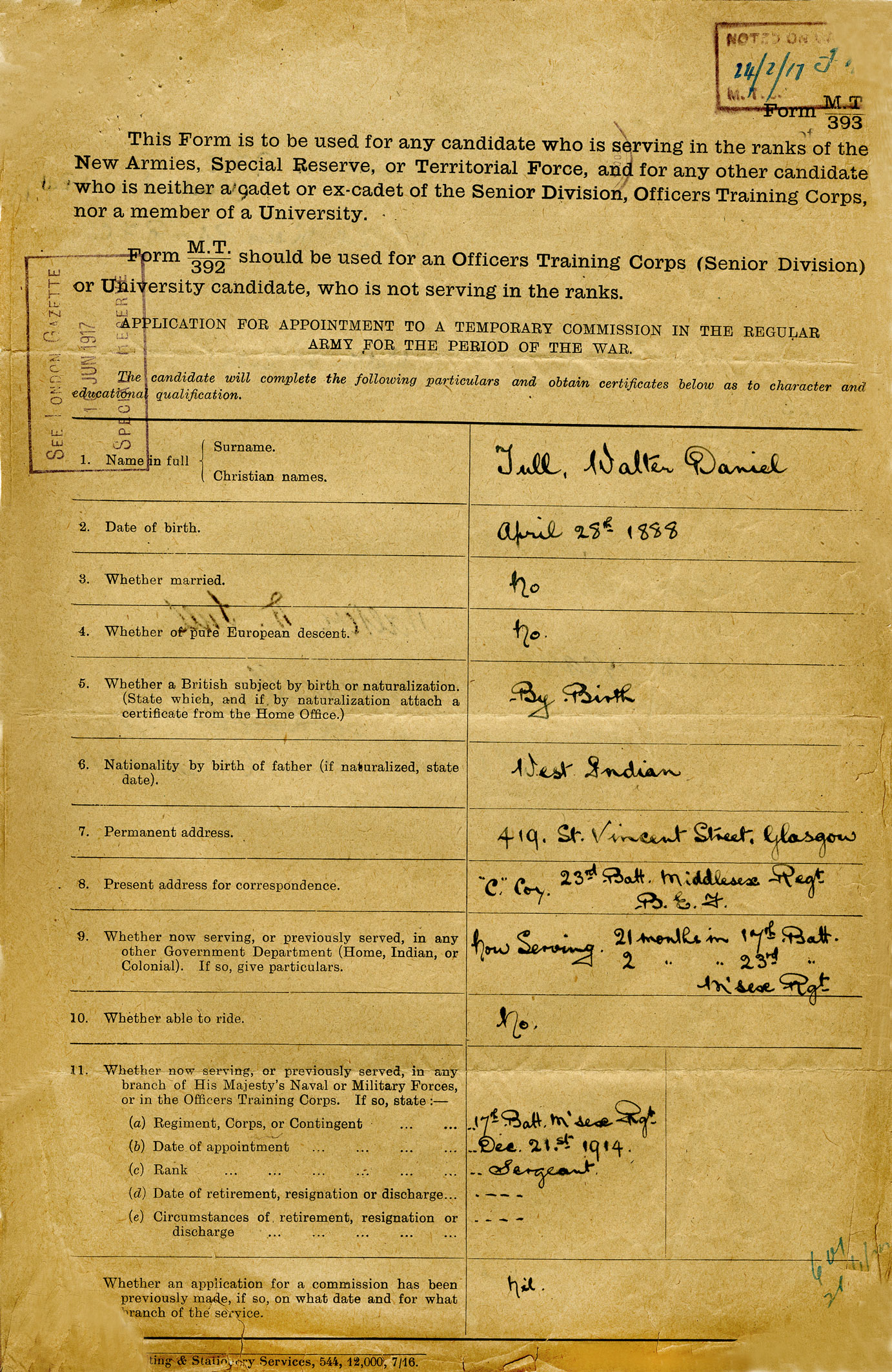
Walter Tull (1888-1918) was of dual heritage, his mother was white British and his father was African-Caribbean. Tull was commissioned* as an officer in 1917 at a time when the army required officers to be of ‘pure European descent.’ This was an important challenge to a racist policy. For his army service he was recommended a Military Cross. This is his application for a temporary commission form, 1917, (Catalogue ref: WO 339/90293)
*A commissioned officer commands a military unit.
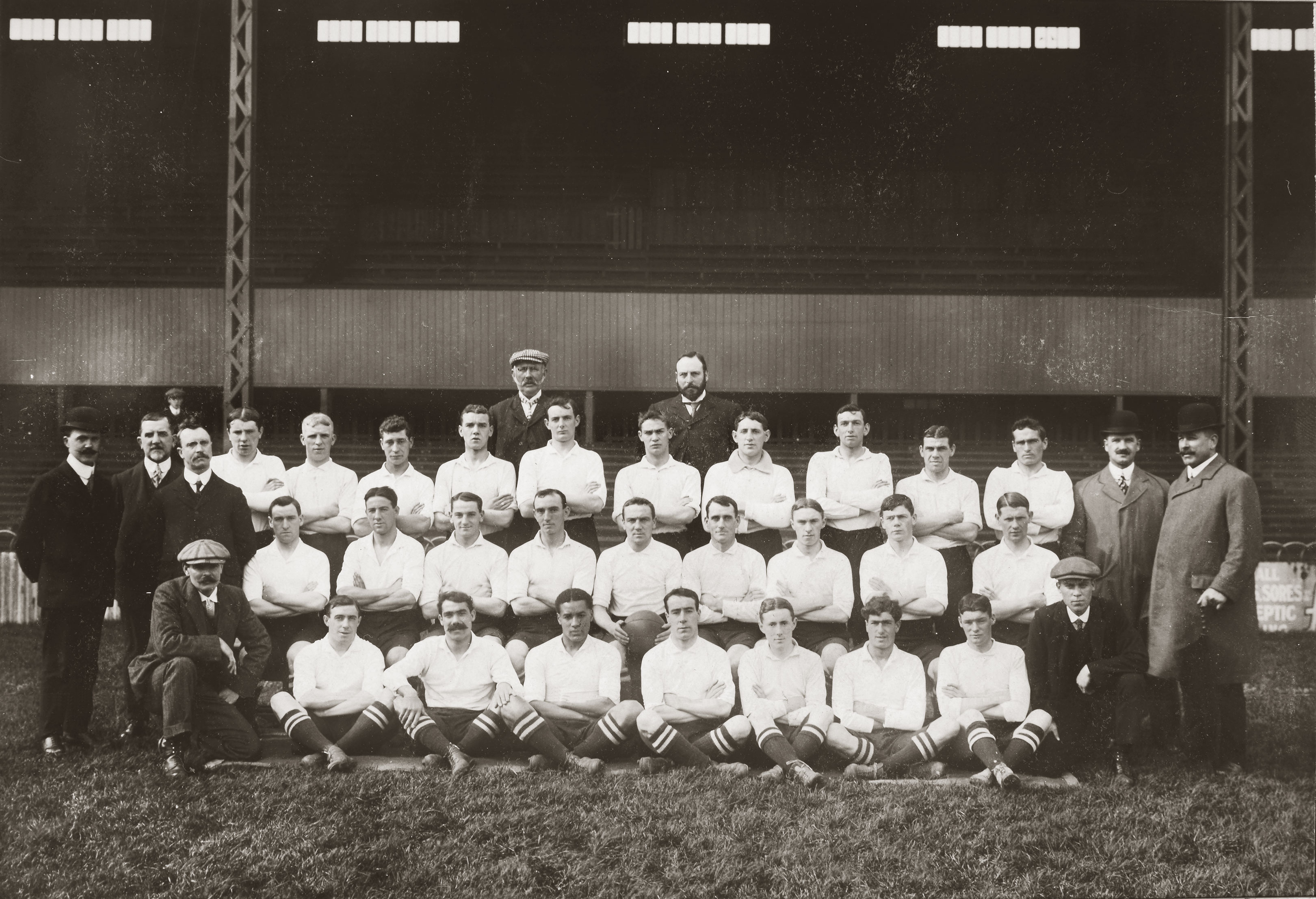
Football team picture Tottenham Hotspur F.C. 1909, (Catalogue ref: COPY 1/538 f18)
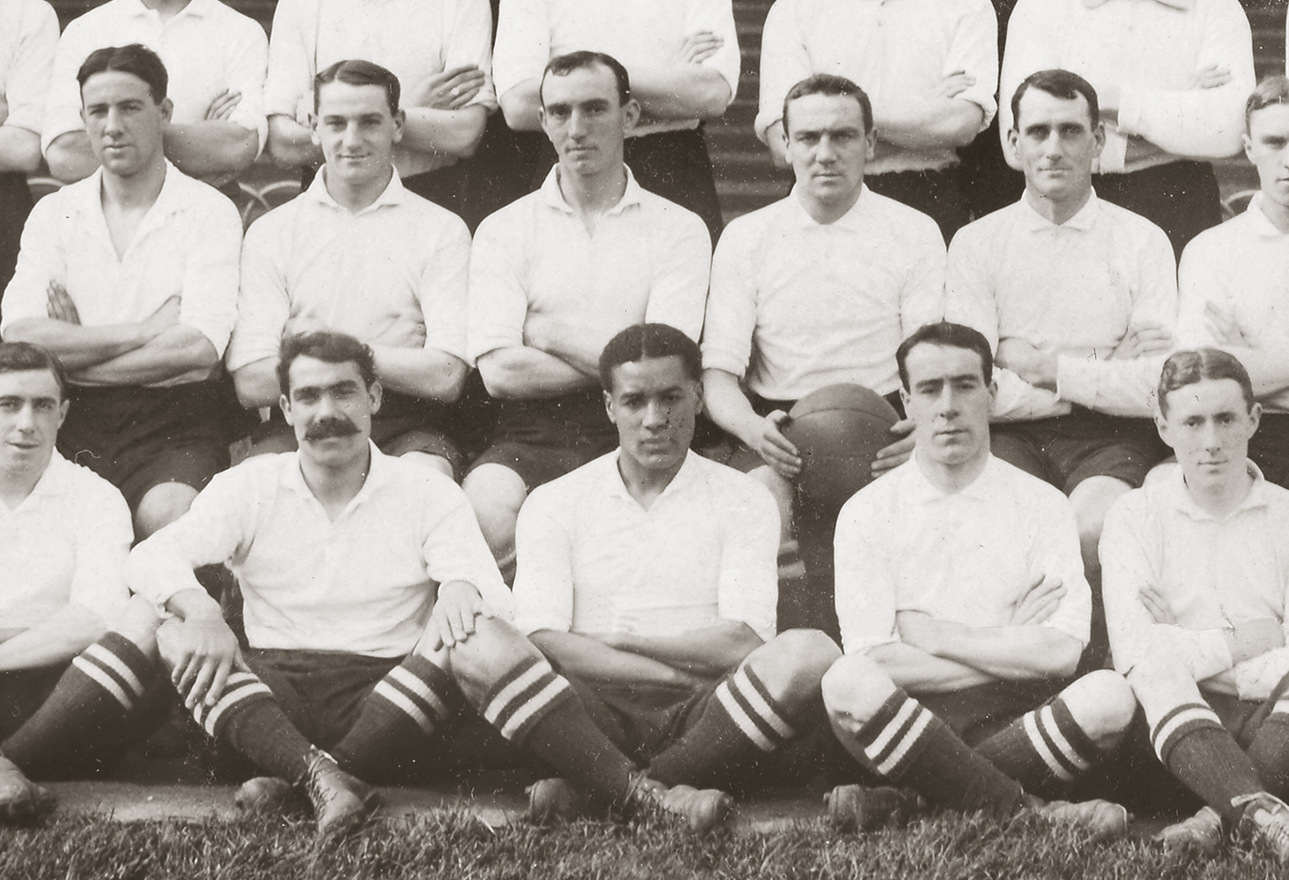
Walter Tull was born on 28 April 1888 in Folkstone, Kent. His father was from Barbados and his mother from Kent. His parents died when he was aged 9 years old. Walter and his brother were brought up in an orphanage in Bethnal Green, East London. From 1908 he started to play football and was signed by Clapton FC, then the following year by Tottenham Hotspur F.C. He was the second person of African-Caribbean mixed heritage to play in the top division of the Football League. He later moved to Northampton Town F.C. in 1911 where he played half-back.
At the start of the First World War Tull joined the 17th (1st Football) Battalion of the Middlesex Regiment as a Lance-Corporal. In 1915 he served in France and was later placed in hospital for shell shock. In 1916, he returned to action in September and fought in the Battle of the Somme, afterwards attending officer training in Britain then going back to serve in the 23rd Battalion of the Middlesex regiment as a second lieutenant.
Despite army rules which forbade a ‘person of colour’ being commissioned as an officer (a leader of men), Walter was promoted to lieutenant after officer training school at Gailes, Scotland. In 1917. Tull is widely considered the first African-Caribbean mixed heritage man to be commissioned as an infantry officer in the British Army.
Walter Tull died aged 29 in 1918 while leading an attack on the Western front during the Second Battle of the Somme in March. The Commanding Officer of the 23rd Battalion recommended him for a Military Cross for bravery.
The two original sources in this lesson can used to find out more about the life of Walter Tull.
How can we use sources to find out about him?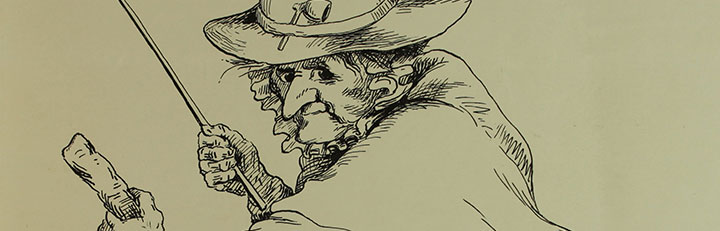 Who was accused?
Dr Hannah Worthen, University of Hull
In early modern society there was a genuine fear of witchcraft and those suspected of consorting with the Devil could be put on trial and executed, occasionally in large numbers. From a modern perspective, the so-called ‘witch crazes’ can be difficult to understand. What sorts of people were accused of witchcraft? Why? How genuine were people’s suspicions? And what evidence was required for somebody to be executed? This resource helps to highlight some of the reasons why people were accused of witchcraft, who they were, and what happened to them as a result.
The fear of witches, witchcraft, and bewitchment originated in the medieval period when the Roman Catholic Church taught the dangers of witchcraft and printed texts, such as Malleus Maleficarum, illustrated the horrors of witchcraft. Witchcraft remained within the popular imagination into the early modern period, and after the Reformation it was still perceived to be a threat to the church and a well-ordered society. In times of uncertainty and upheaval witchcraft accusations would increase, and so there were often more witchcraft accusations during times of war and famine. General fears of witchcraft within society could also feed into specific accusations that originated within local community so that somebody disliked by their neighbours might be more vulnerable to being accused. In this resource there are lots of examples of ordinary people being accused of witchcraft by their neighbours. For example, Joan Guppie, whose neighbours believed her to be a witch and who took it upon themselves to try to punish her. There were also waves of accusations as groups of people were rounded up and put on trial together such as the Lancaster witches: a group of women who were tried together 20 years after the famous Pendle witch trials.
Witchcraft was particularly associated with women in the early modern period, and this continued into the modern era. In this resource there are several examples of modern images of witches who were women, often riding on broomsticks with a pointy hat: the image that we most associate with witchcraft today. However, an image of a witch taken from the seventeenth century shows some aspects of this witchcraft stereotype have been around for a long time. Women were more likely to be accused because of the church’s teaching that women were the weaker sex, seen as more vulnerable to the seductive powers of the Devil. Therefore, accusations of witchcraft became another way for women to be oppressed in early modern society. However, men were also suspected and accused of witchcraft, such as the male witches of Edmonton.
Lots of the sources in this resource are legal documents that relate to witchcraft trials. When a person was accused of witchcraft an Indictment would be drawn up, then witnesses would be called, an examination of the accused would be carried out and sometimes a confession drawn out, possibly with torture. Those found guilty would be executed. Not all accusations of witchcraft were believed, however. Even in this period, people were suspicious of attempts to pretend to be bewitched, or pretending to be a witch, and were aware that not all cases of witchcraft were genuine. For example, in this resource is the case of Katherine Malpas, who’s relatives pretended she was a witch for their own financial benefit.
Witchcraft caused great fear within society, but it also often became a function of normal life. Somebody new to a community might be accused of witchcraft because his or her neighbours were suspicious of them. Sometimes a person might pretend to be bewitched because it was a way of making money. People were more suspicious of witchcraft when the harvest failed, as they looked to find a cause. Witchcraft trials became ways for grievances and disputes to be aired, and for people to stand in testimony for or against their neighbours. In many ways, therefore, understanding the history of witchcraft tells us less about the supernatural than it does about the realities of everyday life for ordinary people in early modern England.