Old Bailey records reveal that thousands of children were transported to Australia as criminals between 1787 and 1868.
However, from 1869-1930, 80,000 children were forced to migrate to Canada. Behind this forced migration were individuals such as Maria Rye, Annie Macpherson, and Thomas Barnardo, and institutions such as the poor law unions, local government board, and the Home Office.
Use this lesson to find out why children were sent abroad in the period 1869-1913. What was the justification for doing this?
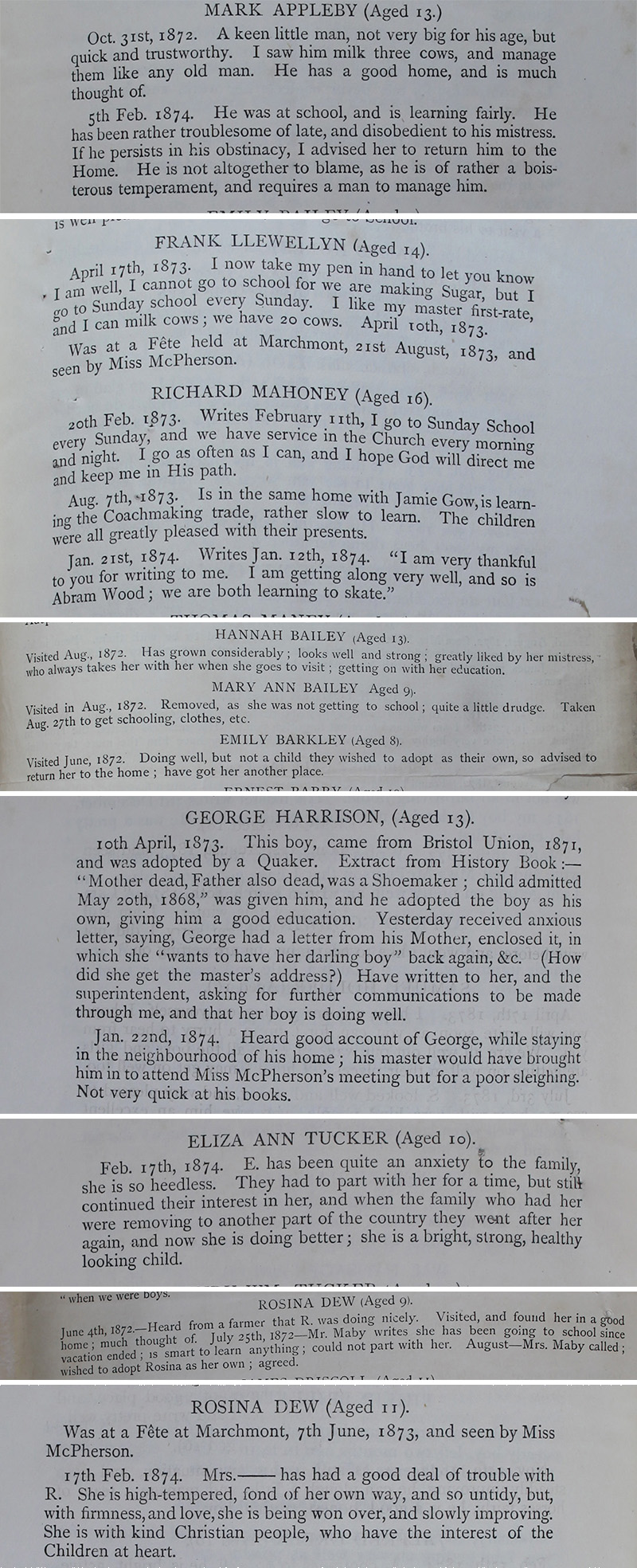
Why were children sent to Canada in 1869-1913?For thirty years from 1869 onwards, Maria Rye’s agency brought 3,623 girls to Canada. The children were first sent to a reception centre in a converted court-house and jail at Niagara-on-the-Lake, Ontario, later called ‘Our Western Home’. The children sent there were called ‘Home children’. They were fostered by farming families, where they were destined to become domestic servants and farm workers. Some children were adopted within these families.
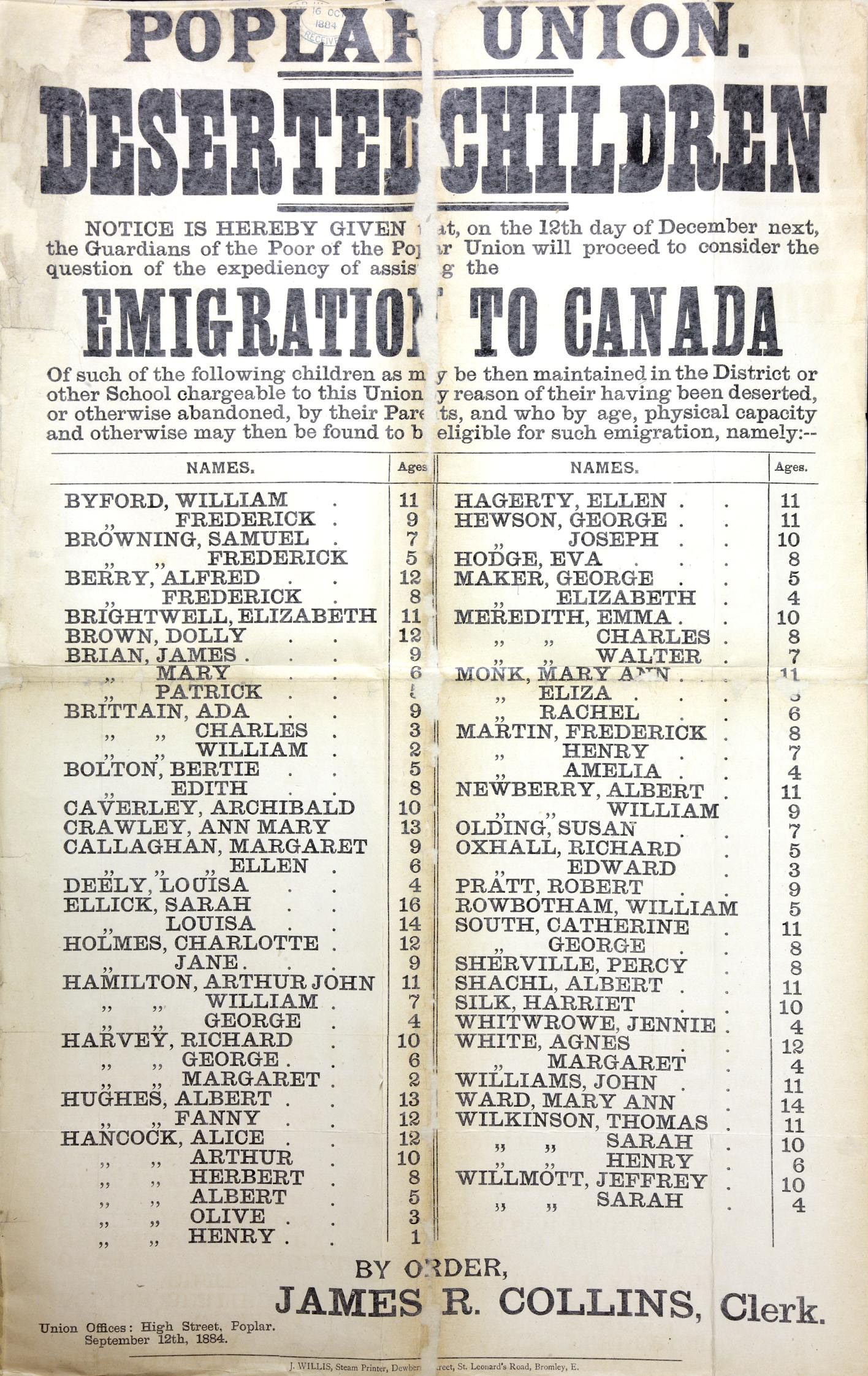
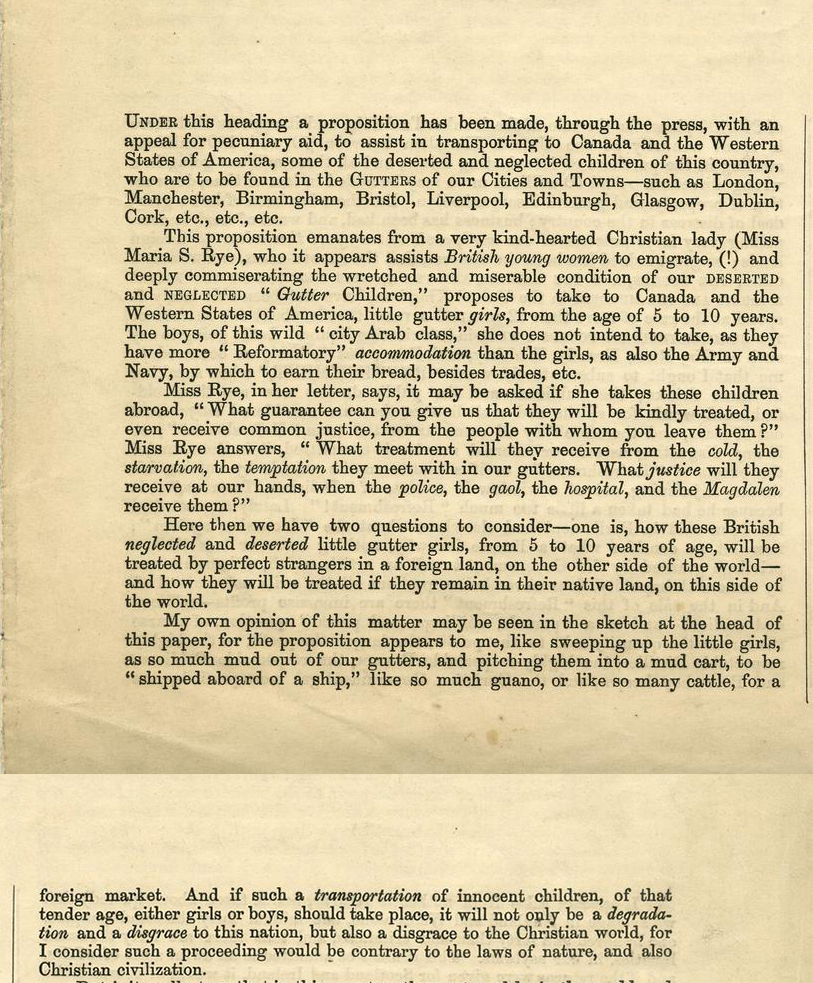
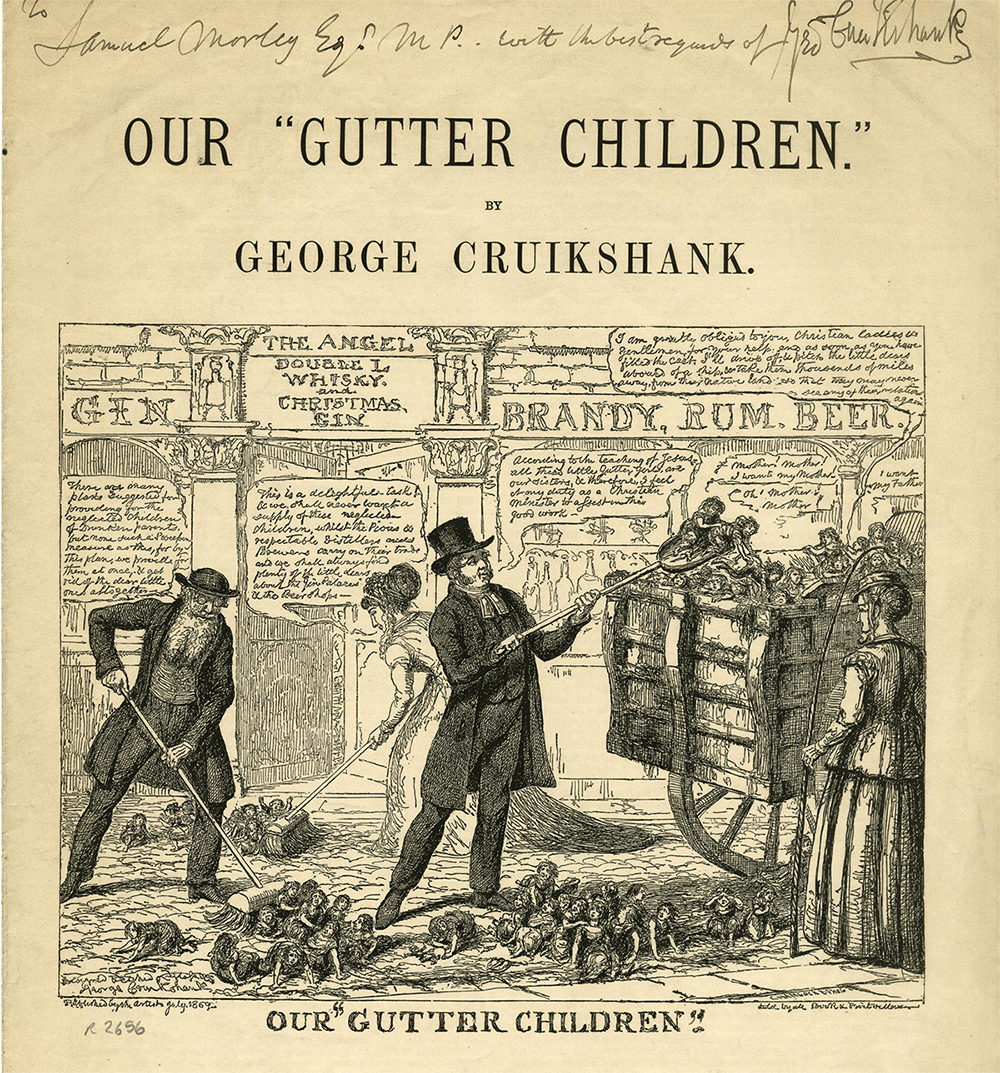
Out of the 1,100 girls Rye brought to Canada before 1875, 900 came from English poor-law unions, which sponsored their emigration. Workhouse girls had some form of education and were not the ‘gutter children’ she is pictured gathering up in the cartoon shown in this lesson.
For twenty years, Rye brought girls to Canada supported by Lord Shaftesbury and the public. She retired in 1895, after which her reception centres in Peckham (London) and Niagara were run by ‘Church of England Incorporated Society for Providing Homes for Waifs and Strays’, known today as the Children’s Society.
Another philanthropist, Annie Macpherson, set up her Home of Industry in Spitalfields, London, in 1869. It provided shelter, work, education and religious instruction to children. From this home she took groups to Canada who were first received at Bellville and others at Knowlton or Galt. Again, these children were later placed with families to work on farms and become domestic servants. According to information provided to the Canadian government, Macpherson brought out 2,000 children from 1870 onwards. Out of that total, 300 were girls and 1,700 were boys. This represented ‘350 from various workhouses and 1,650 from distressed and orphaned families or waifs gathered from the streets of London or other large cities’.
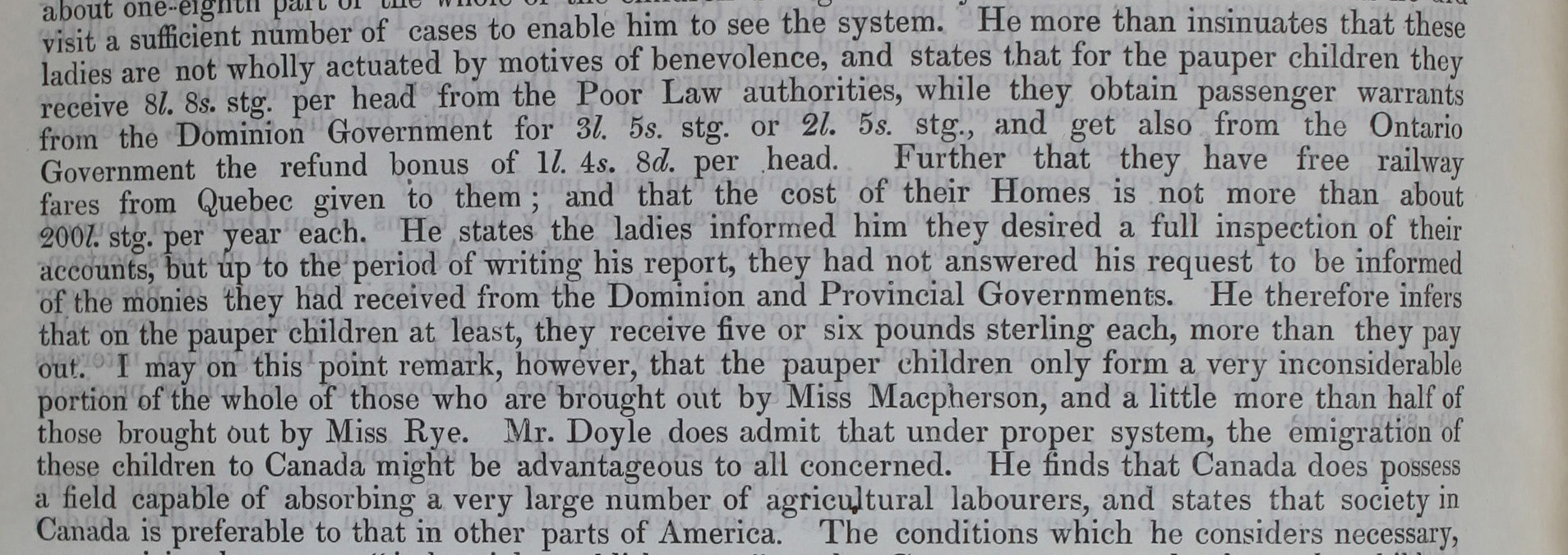
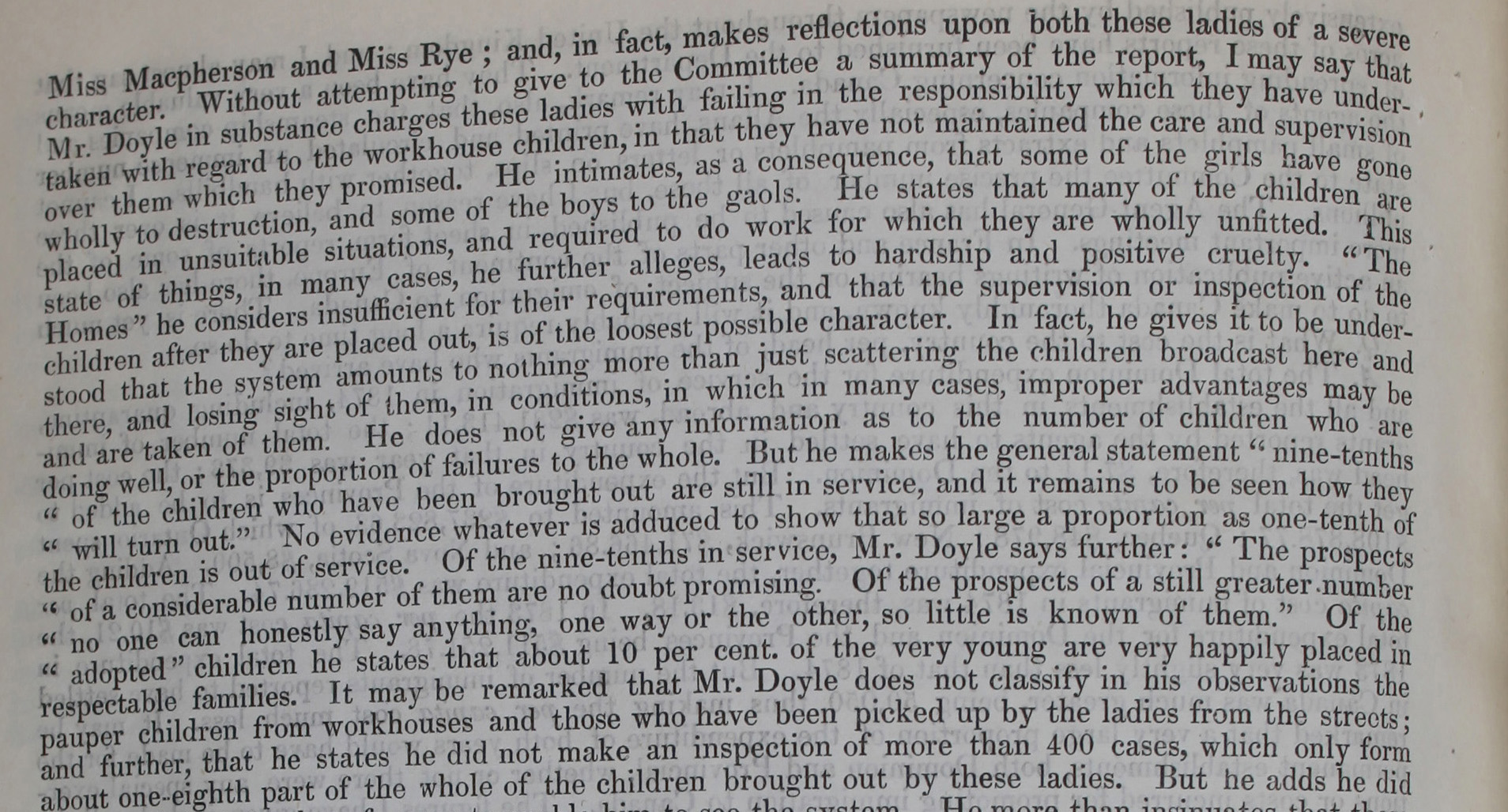
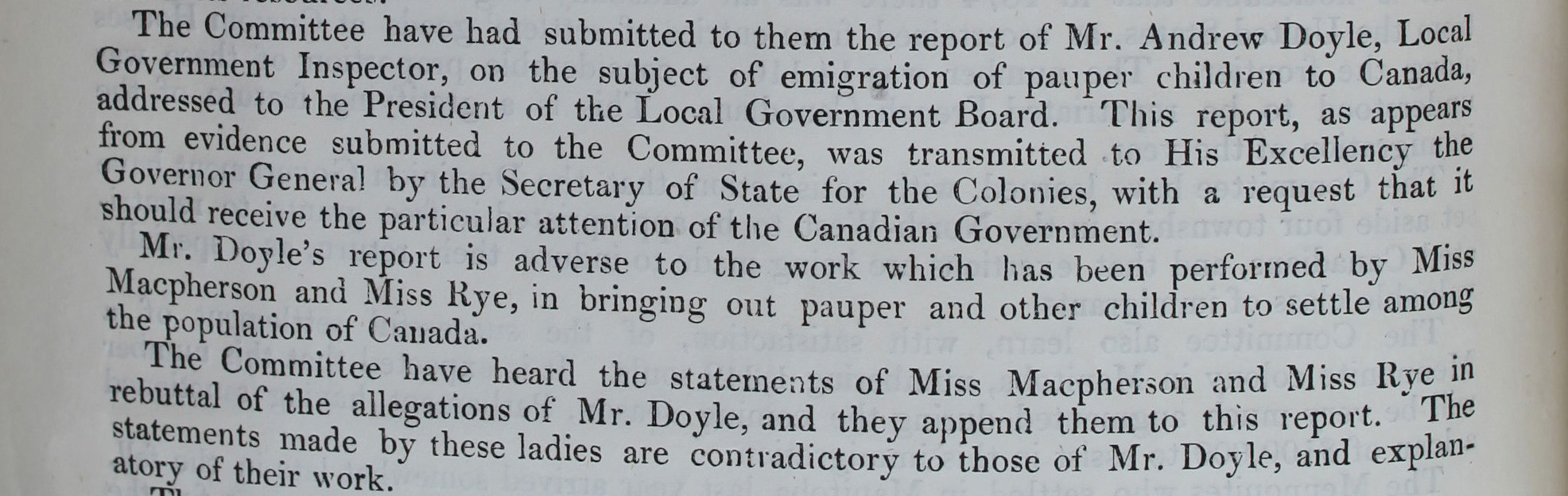
Andrew Doyle, a Local Government Board inspector, inquired into the Canadian migration schemes for workhouse children in 1874. His report, ‘Boarded out to Canada: Report on Child migrants in 1874’, concluded that they merely provided cheap labour for farmers in Canada. He was particularly disapproving of how children were placed in families and the lack of aftercare given by Rye’s scheme. The Canadian Government justified their position and rejected the findings of Andrew Doyle.
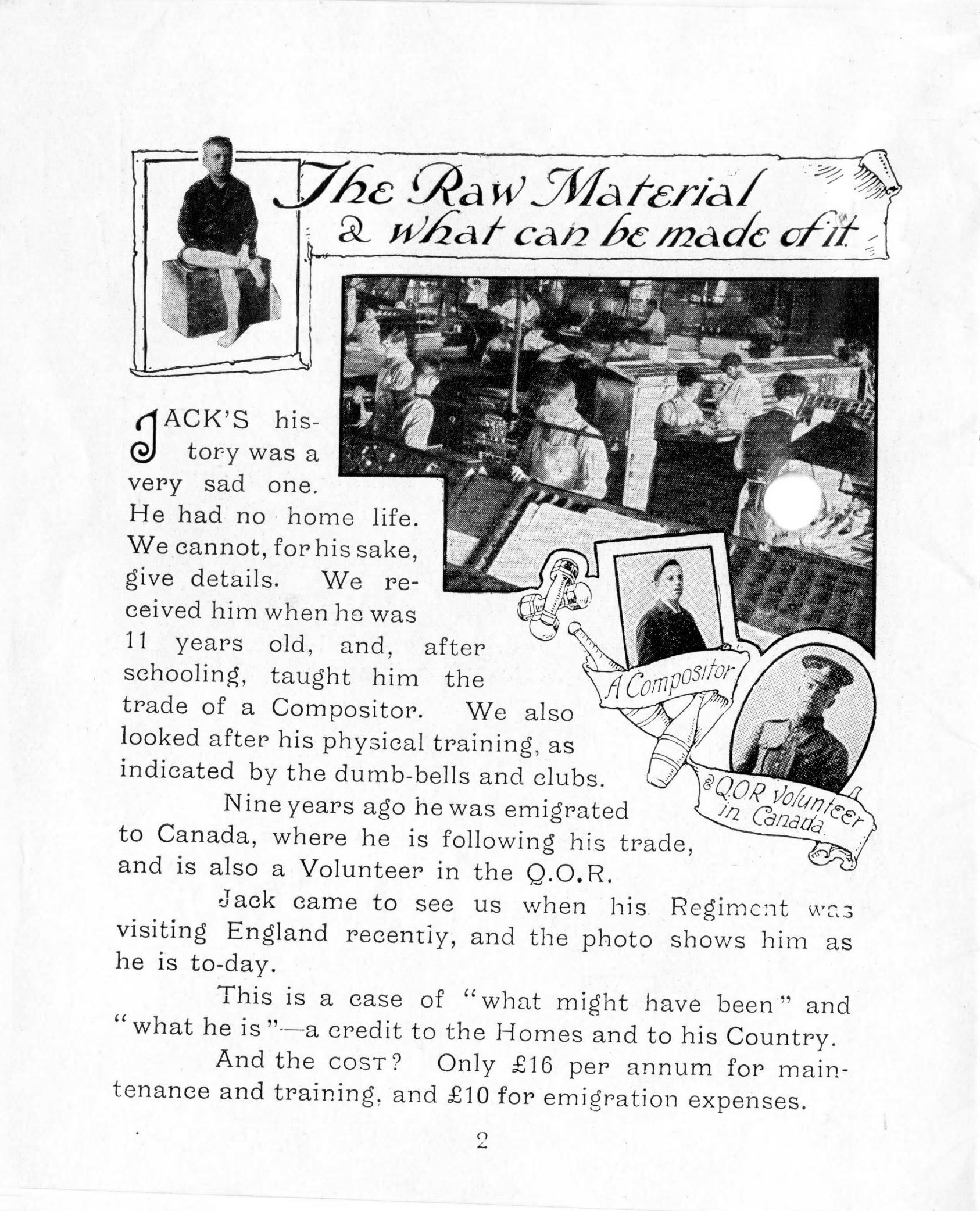
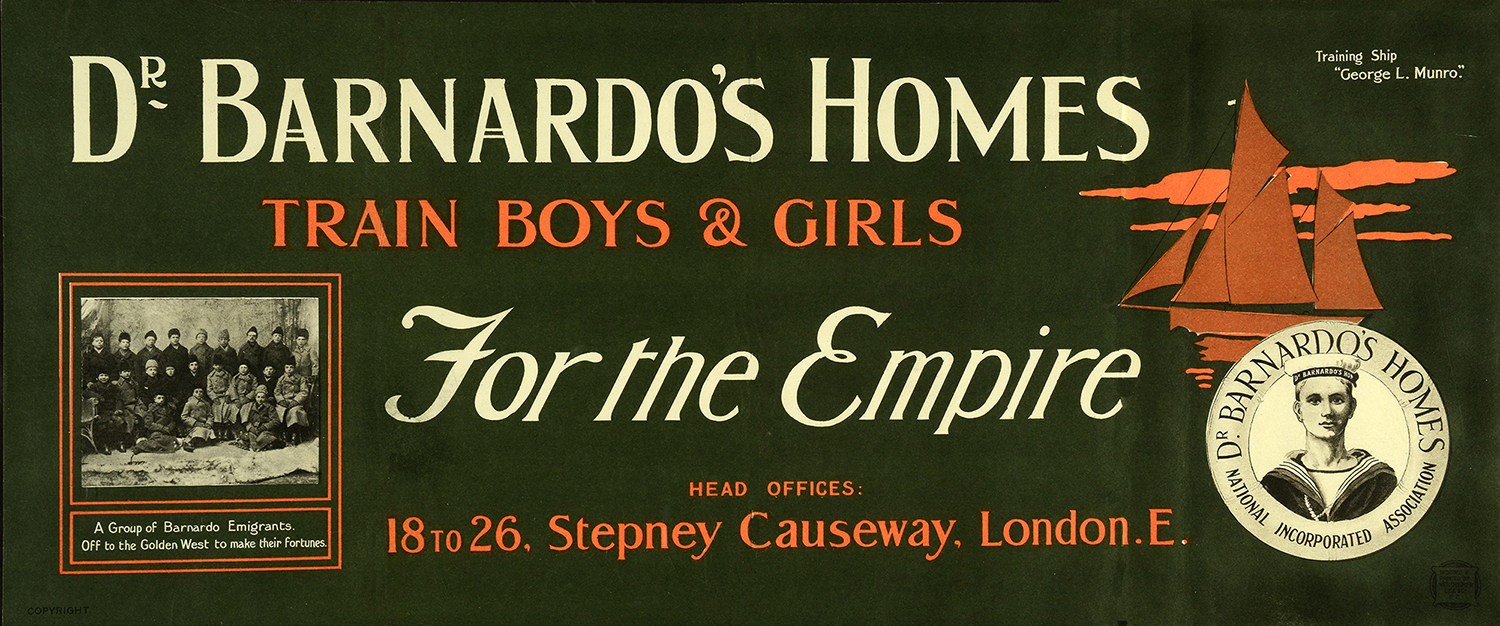
Dr Thomas Barnardo also became a crucial figure in child migration. 30,000 children were sent to Canada from 1882 to 1939 from his homes. He saw it as an opportunity to help grow the population of the Empire. These children would settle, marry and have their own children thus contributing to the labour market and economy. However, the numbers sent to Canada declined with the impact of losses caused by First World War accompanying a fall in the birth rate.
It seems incredibly sad that the actual feelings of these child migrants were not considered at the time. They were taken away from all that was familiar and placed in a harsh physical environment, away from any family or people they knew. It is hard for us today to contemplate their reality. However, the letters used in this lesson that concerned the case of Mr Rowe and his daughters give us a glimpse into this world.
Both of Mr Rowe’s children were placed in Dr Barnardo’s Girls Village Home in Ilford in 1907 under the Prevention of Cruelty to Children Act 1904. Their mother had died and their father had been sent to prison for neglecting his daughters on two occasions. His heartfelt plea failed to prevent their migration to Canada from Southampton in June 1911.
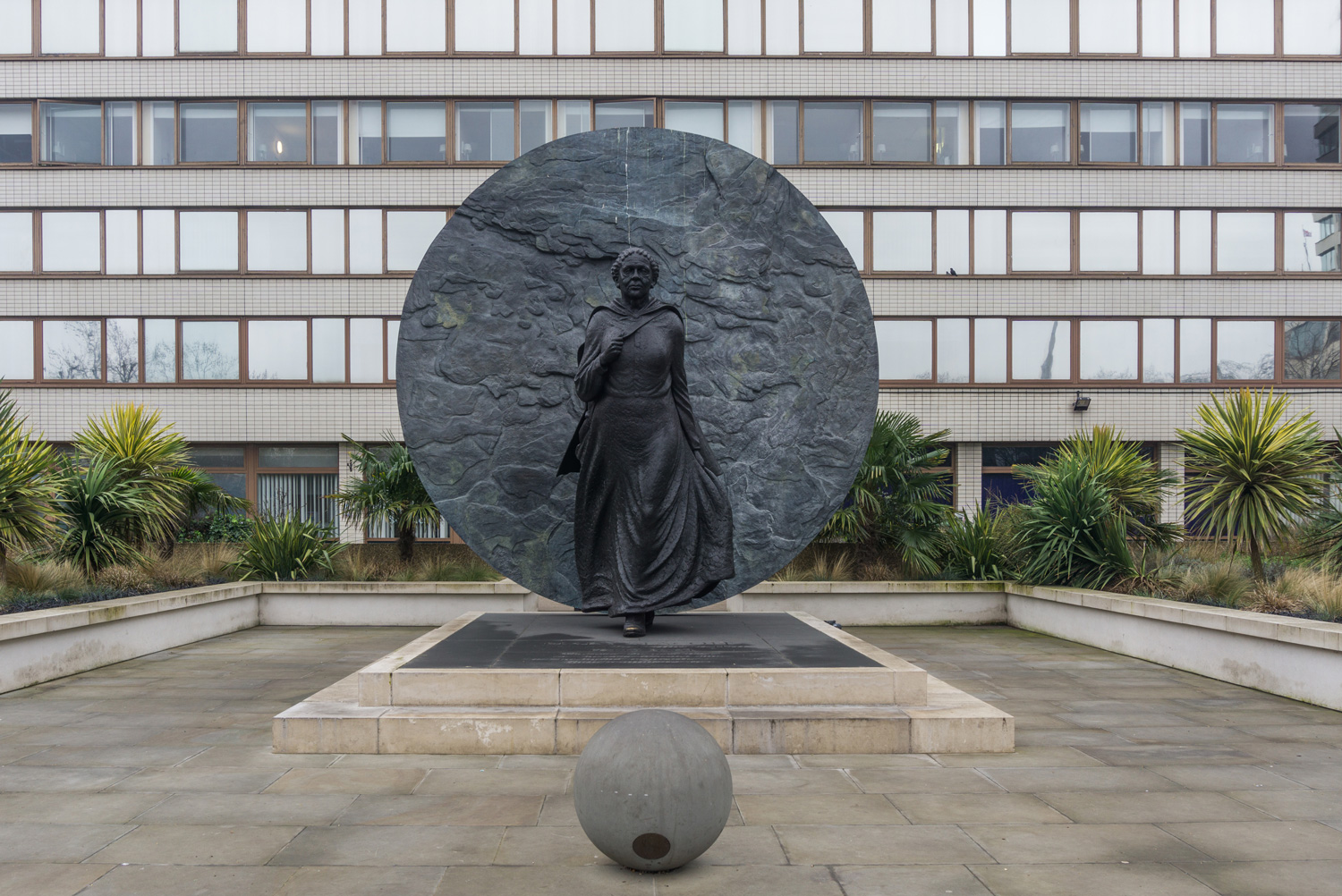
Photograph of the statue of Mary Seacole, Jamaican born nurse unveiled at St Thomas’s Hospital, 2016 © Wikimedia Commons
When the Crimean War broke out Mary Seacole was determined to help. She was rejected by British authorities and Florence Nightingale in 1854 to nurse and so paid for her own passage to the Crimea. She worked on the battle front giving out medicine and food and set up the “British Hotel” with Thomas Day behind the frontline near Balaklava where they cared for the wounded.