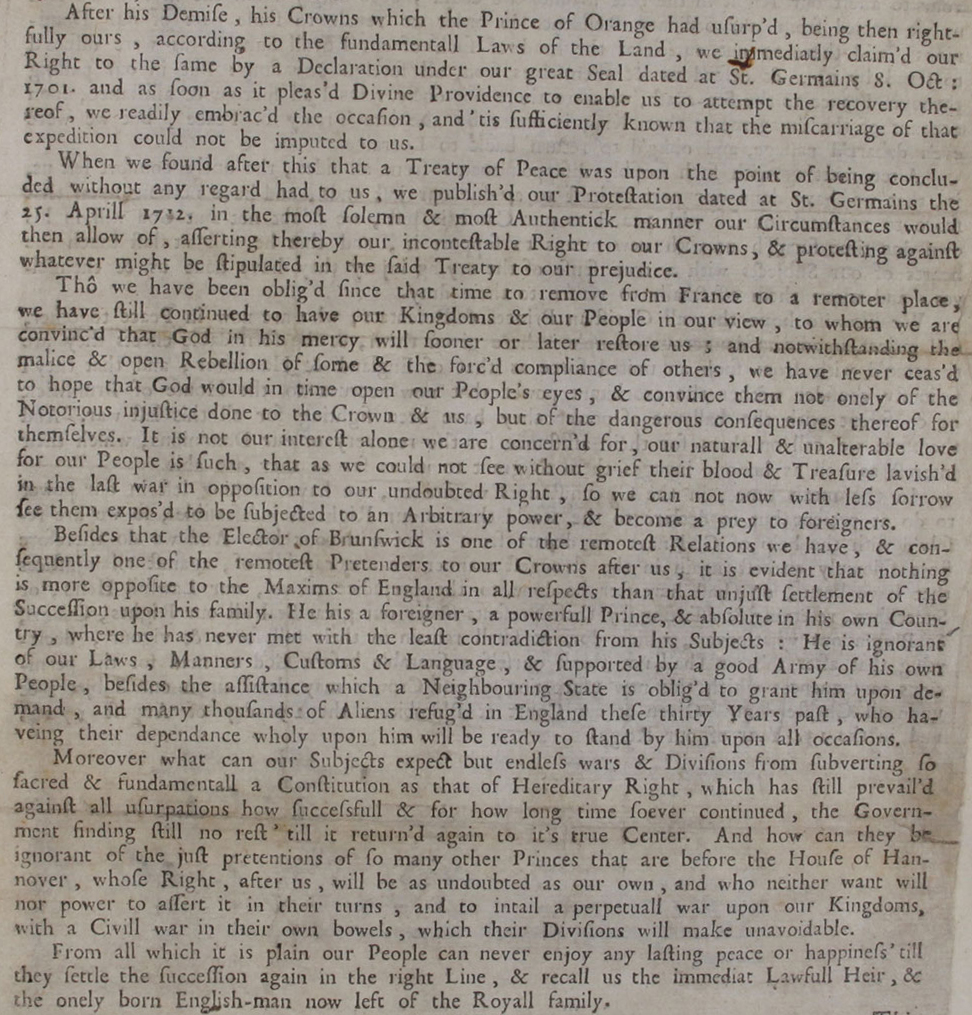
Extract from handbill from James Francis Edward Stuart, August 1714 (SP 35/1/f30)
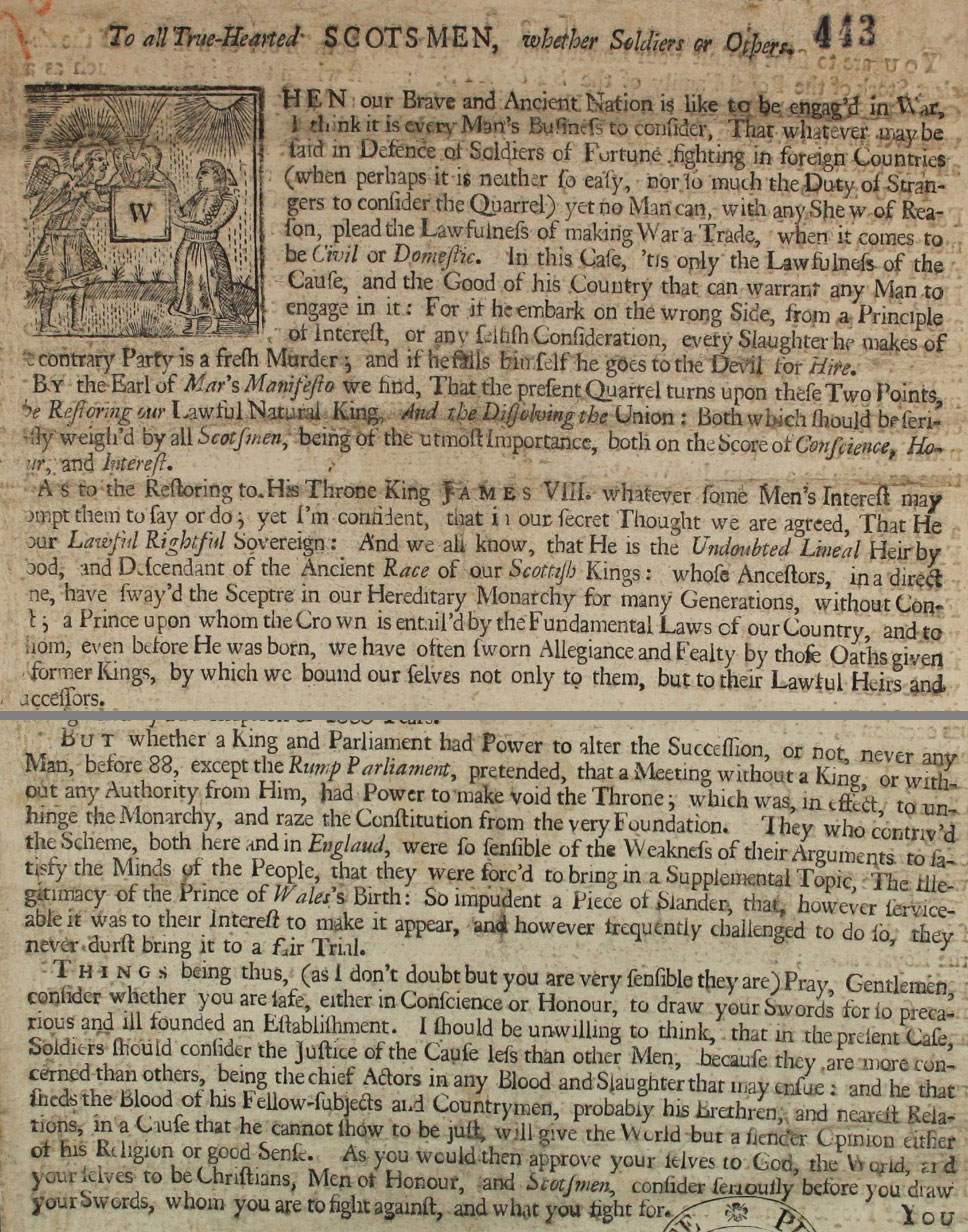
A handbill addressed ‘to all true-hearted Scotsmen’ to restore James Francis Edward to the throne, 1 January 1715 (SP 54/10/173)
Magna Carta is called the most important document in history. So important that people still call upon it 800 years later. But where did it come from and why did people die for it? Jump into the 13th century and decide for yourself why Magna Carta keeps coming back…
The National Archives produced this award-winning resource together with Parliament.


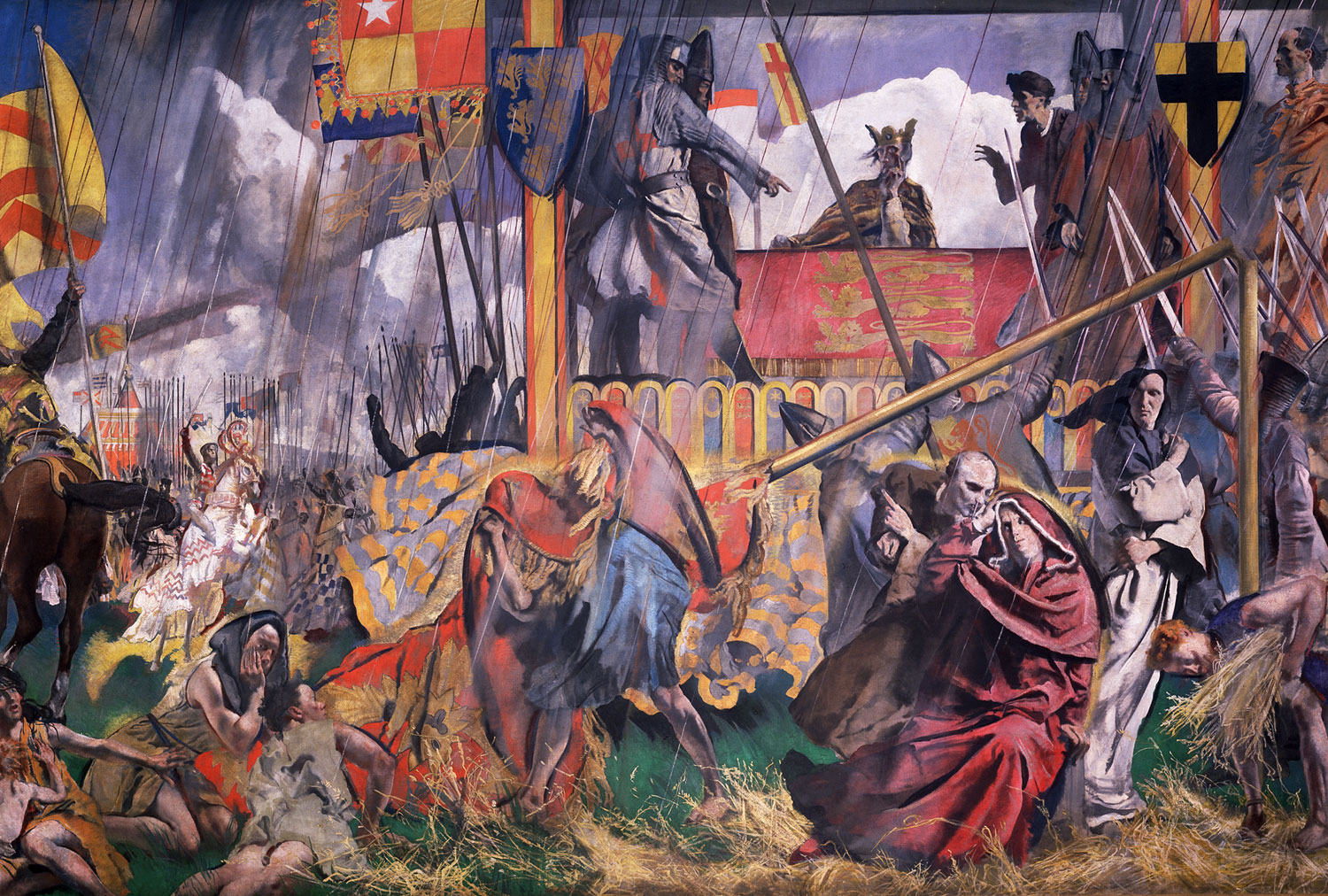 A medieval revolution?
By Dr Matthew Phillips
By adding his seal to Magna Carta on 15 June 1215, King John forever changed the nature of kingship in England. No longer could a king be seen as acting on the impulse of his own convictions. His exercise of power was to be regulated by an established set of rules. In 1215, however, Magna Carta failed. King John quickly worked to undo Magna Carta, which he thought of as a peace treaty rather than as a collection of laws, and he convinced the Pope to condemn Magna Carta (see John appeals to the Pope). Yet, as this document selection shows, time and time again throughout the thirteenth century, English kings were held to account by their barons and forced to accept the restraints that Magna Carta placed upon their kingship.
Magna Carta meant a new way of doing things. This is because Magna Carta encouraged the barons to seek new political concessions whenever they felt the king was ruling unwisely. In practice, this usually meant that the barons felt they were not been consulted enough by the king. Also, when the king needed money to fight wars in France, he often found himself compelled to reaffirm his commitment to Magna Carta and find solutions to new complaints put forward by his barons. The exchange of taxation for political concessions became the main topic of discussion in medieval parliament, and contributed to the growing importance of parliament in medieval England.
In the century after Magna Carta, parliament became a fundamental part of political life. An important part in this development was played by Simon de Montfort, who led a baronial rebellion against Henry III. Following the battle of Lewes in 1264, where Montfort took Henry III captive, Montfort summoned knights and burgesses (representatives from English towns) to parliament in order to discuss the terms of the king’s release (see Montfort’s Parliament). Although knights and burgesses had been summoned to parliament on previous occasions, Simon de Montfort needed broad political support for his plan to establish a new form of government that would significantly reduce the power of the king. Therefore, Montfort encouraged the knights and burgesses (the ‘commons’) to participate directly in the political discussions, and this established a trend that would continue throughout the Middle Ages. By the end of the thirteenth century, it was no longer acceptable for a king to tax his people without consulting parliament first, and when King Edward I attempted to do so, he faced rebellion (see Justification for taxation).
The document selection is grouped around four events that allow students to explore the significance of Magna Carta, not only in 1215 but throughout the thirteenth century. The first set of documents relates to the civil war in 1215 and King John’s assent to Magna Carta. The second set of documents relates to Henry III’s reaffirmation of a revised version of Magna Carta in 1225, where it can be seen how this was closely related to taxation for war (see Gascony invaded, Justification for taxation, and Tax assessment). A third set of documents relates to the baronial reform movement that began in 1258 and lasted until the defeat and death of Simon de Montfort in 1265 (see Battle of Evesham). Finally, the fourth set of documents relates to the baronial opposition faced by Edward I when he attempted to raise taxation in 1297 without the assent of Parliament. Notably, the barons tried, and failed to have a number of new chapters added to Magna Carta (see Articuli super cartas and Papal Bull, 1306). There are also a number of additional documents which have been selected to demonstrate the lasting legacy of Magna Carta in the modern world, both as a set of laws (see British Empire), and for its importance as a historical artefact (see Proposed gift to the USA).
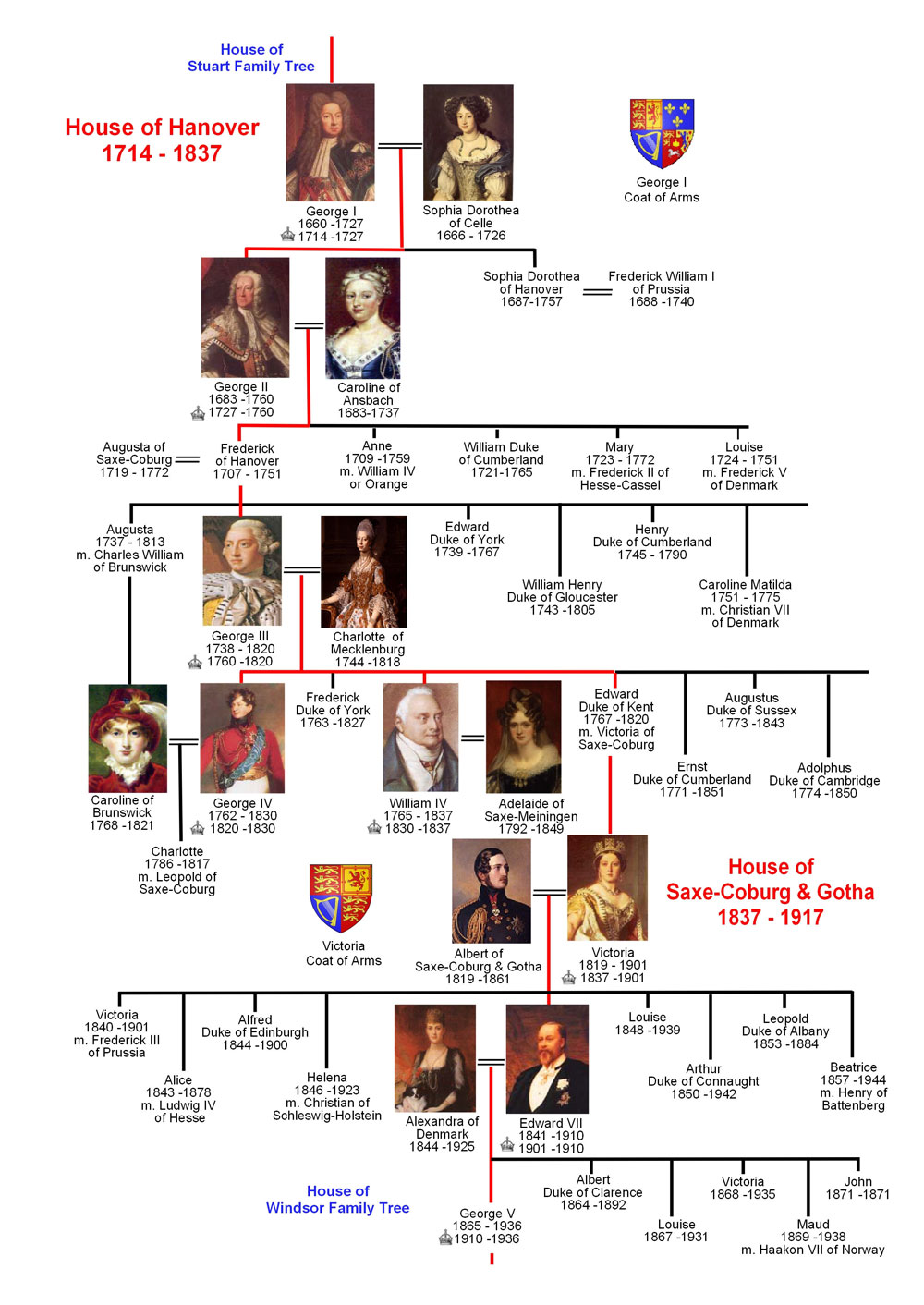
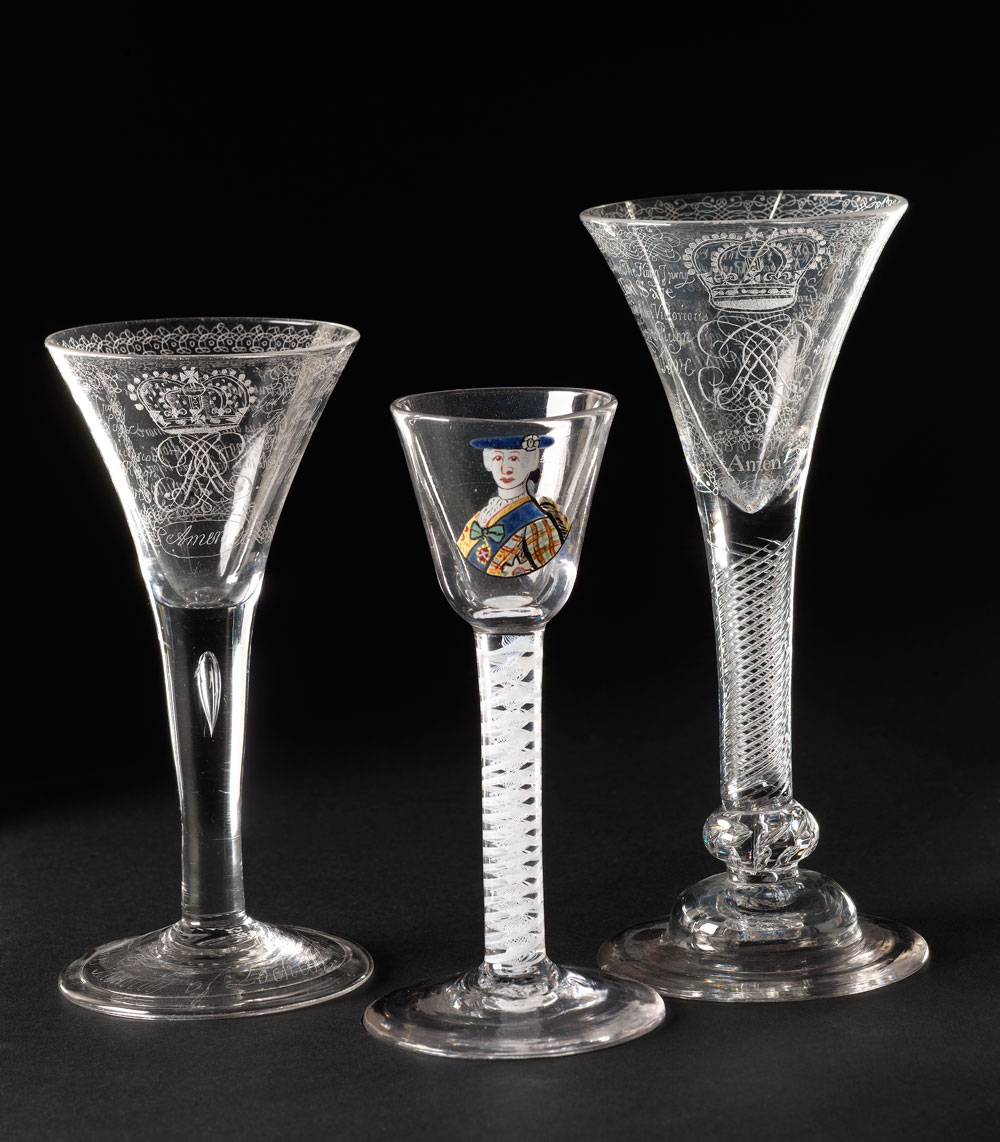
Two of the glasses are decorated with crowns and the symbol ‘JR’ intertwined with the figure eight referring to James VIII. The glass is engraved with two verses of the Jacobite anthem, and with ‘To the Prosperity of the Family of Lochiell’ engraved on the base. The smallest glass has a portrait of Charles Edward Stuart painted on it, c1750.
© National Museums of Scotland
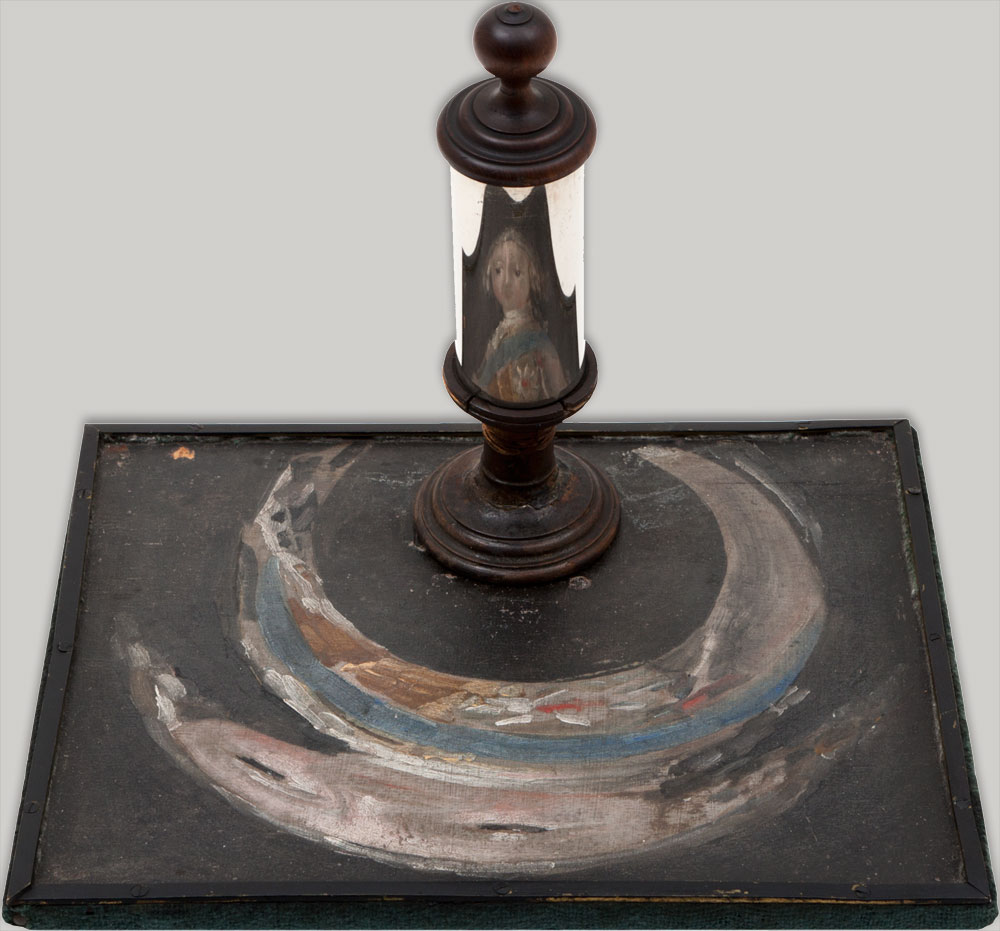
The ‘secret’ anamorphic (deliberately distorted) image of Prince Charles Edward Stuart is a mess of paint on a wooden board. When viewed through a metal cylinder placed on the tray, the portrait of the Prince is apparent as a reflection. The objects were used when drinking toasts to the exiled Prince and Stuart family. If a non Jacobite came to the house, the cylinder could be removed from the tray so hiding a person’s support for the Stuart cause. The artist who painted it is unknown.
By courtesy of the West Highland Museum © www.westhighlandmuseum.org.uk
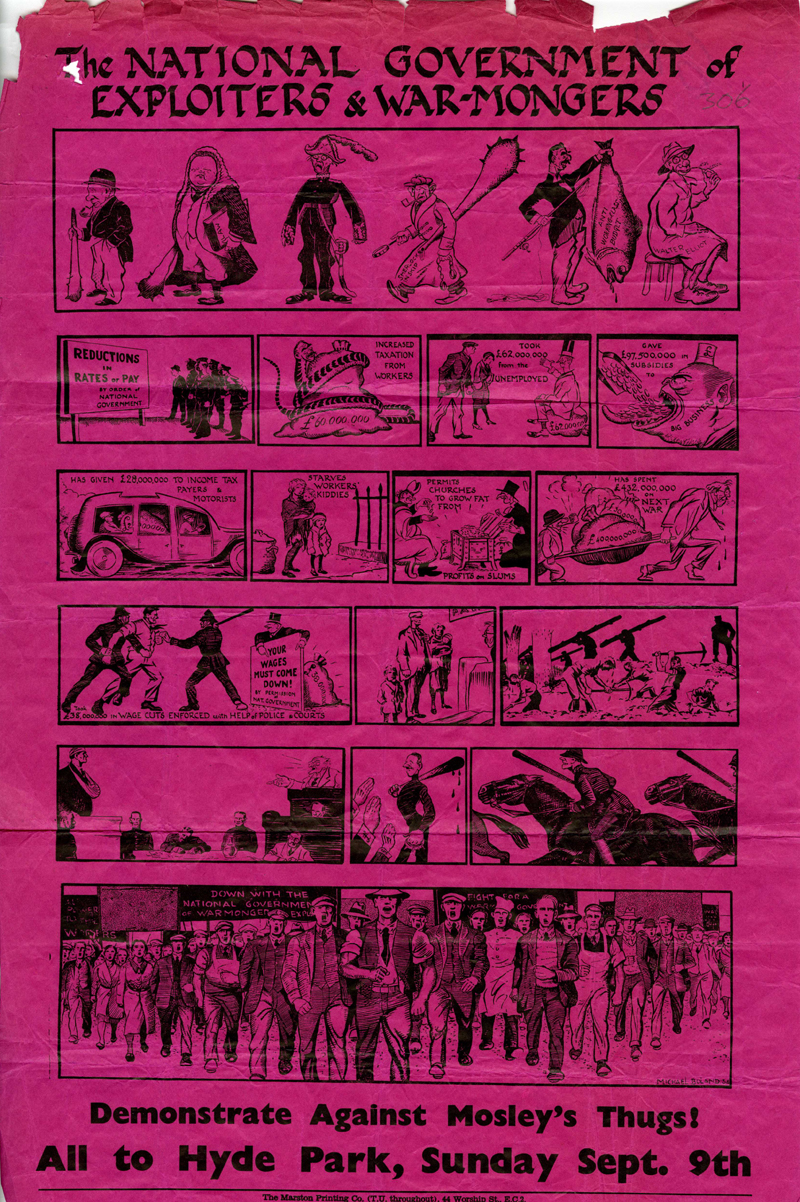
Poster attacking the coalition National Government of Ramsey Macdonald as well as calling on readers to demonstrate their opposition to the British Union of Fascists. BUF leader Oswald Mosley led a march to Hyde Park in September 1934. (MEPO 2/3074)
William Joyce (“Lord Haw-Haw” in the Second World War) attempted to prosecute the Daily Worker newspaper for incitement to violence because it urged anti-fascists to counter-demonstrate against the Blackshirts in this way.
The figures depicted on the top row (left to right):
Stanley Baldwin. Lord President of Council, later Prime Minister (1935).
Viscount Hailsham. Secretary of State for War and Leader of the House of Lords, later Lord Chancellor (1935).
Eyres-Monsell. First Lord of the Admiralty
Thomas Inskip. Attorney General
Chamberlain, Chancellor of the Exchequer
Walter Elliot, Minister for Agriculture
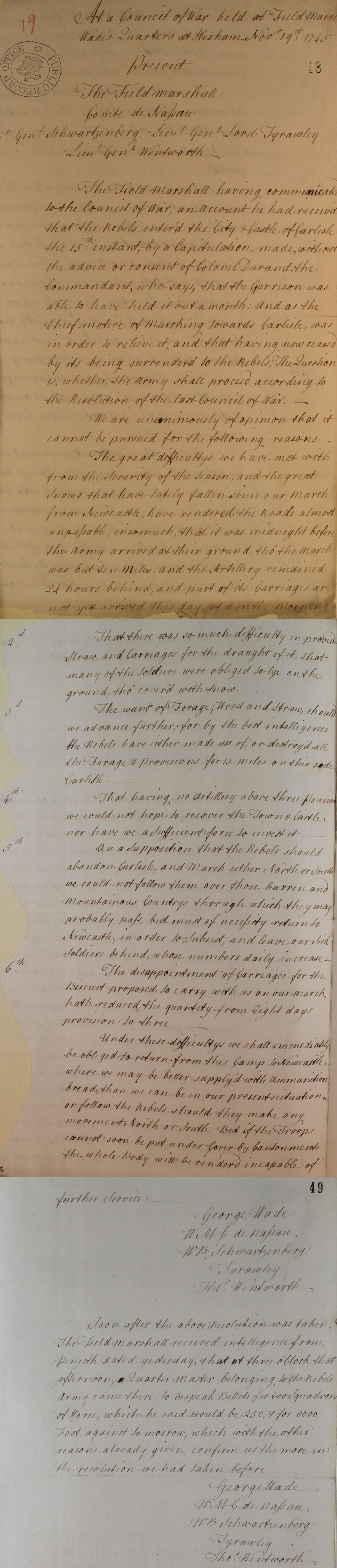
Resolutions from General Wade’s Council of War regarding Carlisle. The council conclude they cannot continue to try and recapture Carlisle. They do not have sufficient supplies, the roads are bad and weather conditions harsh. If the rebels leave Carlisle, it would be dangerous to pursue them into the highlands (SP 36/74/19).
Transcript
At a Council of War held at Field Marshal Wade’s Quarters at Hexham, November 19th 1745
Present
The Field Marshall
Comte de Nassau
Lieutenant General Schwartzenberg. Lieutenant General Lord Tyrawley
Lieutenant General Wentworth
The Field Marshall having communicated to the Council of War, an account he had received that the Rebels enter’d the City & Castle of Carlisle the 15th instant, by a Capitulation, made, without the advice or consent of Colonel Durand, the Commandant who says, that the Garrison was able to have held it out a month: and as the Chief motive of marching towards Carlisle, was in order to relieve it and that having now ceased by its being surrendered to the Rebels, The Question is whether, the Army shall proceed according to the Resolution of the last Council of War.-
We are unanimously of opinion that it cannot be pursued for the following reasons-
The great difficultys we have met with from the severity of the season, and the great snows that have lately fallen since our march from Newcastle, have rendered the Roads almost unpassable, insomuch, that it was midnight before the Army arrived at their ground [though] the march was but ten miles and the Artillery remained 24 hours behind, and part of its carriages are not yet arrived this day at 11 in the morning
2nd That there was so much difficulty in providing straw and carriages for the draught of it, that many of the soldiers were obliged to lye on the ground, [though] covered with snow.
3rd The want of Forage [food found by hunting and gathering], wood and straw, should we advance further, for by the best intelligence the Rebels have either made use of or destroyed all the Forage & provisions for 15 miles on this side of Carlisle.
4th That having no artillery above three pounds we could not hope to recover the Town & Castle nor have we a sufficient force to invest it.
5th And a supposition that the Rebels should abandon Carlisle, and march either North or South we could not follow them over those barren and mountainous countrys through which they may probably pass but must of necessity return to Newcastle, in order to subsist, and leave our sick soldiers behind, whose numbers daily increase.
6th The disappointment of carriages for the Biscuit proposed to carry with us on our march hath reduced the quantity from eight days provision to three.
Under these difficultys we shall immediately be obliged to return from this camp to Newcastle where we may be better supply’d with ammunition, bread, than we can be in our present situation or follow the Rebels should they make any movement North or South. But if the Troops cannot soon be put under cover by cantonments the whole body will be rendered incapable of further service.
George Wade
W.M.C. De Nassau
W.B. Schwartzenberg
Tyrawley
Thomas Wentworth
Soon after the above Resolutions was taken, the Field Marshall received intelligence from Penrith dated yesterday, that at three o ’clock that afternoon, a Quarter Master belonging to the Rebels Army, came there to bespeak Billets [arrange lodgings] for two squadron of Horse, which he said would be 250, & for 8000 Foot against tomorrow, which with the other reasons already given, confirm us more in the resolution we had taken before.
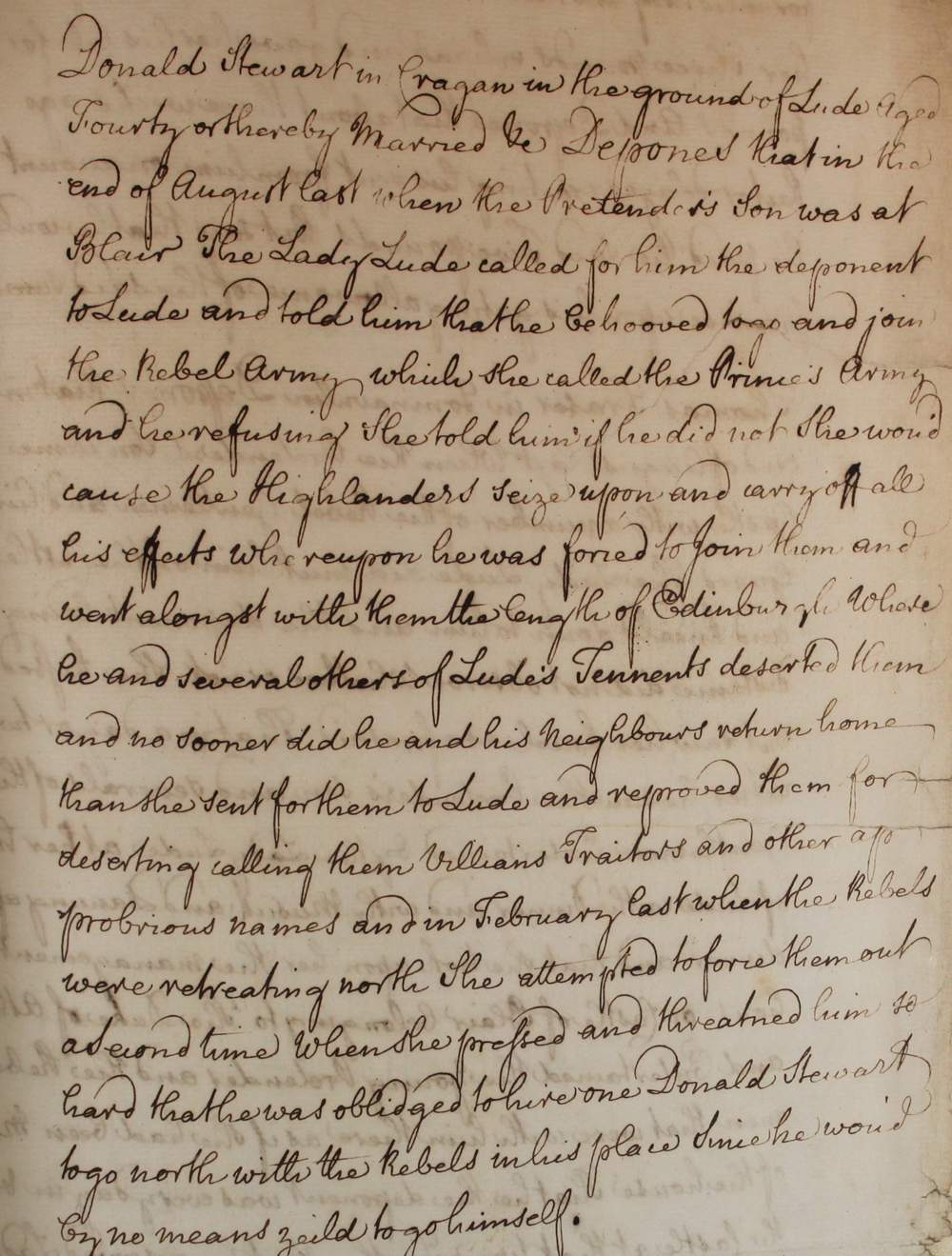
Extract from a statement about Lady Lude who was recorded to have forced her tenants into the rebel army of the Young Pretender, 5 August 1746 (SP 54/33/26D).
Transcript
Donald Stewart in Cragan in the ground of Lude aged fourty or thereby married. He Deponed [declared under oath] that in the end of August last when the Pretender’s son was at Blair, The Lady Lude called for him the deponent [witness under oath] to Lude and told him that he behooved [to be necessary] to go and join the Rebel Army which she called the Prince’s Army and he refusing she told him if he did not she would cause the Highlanders seize upon and carry off all his effects [possessions] whereupon he was forced to join them and went alongst with them the length of Edinburgh, where he and several others of Lude’s [tenants] deserted them and no sooner did he and his neighbours return home that she sent for them to Lude and reproved them for deserting calling them villains Traitors and other approbrious [shameful] names and in February last when the Rebels were retreating north she attempted to force them out a second time when she pressed and threatened him so hard that he was obliged to hire one Donald Stewart to go North with the rebels in his place since he would by no means yield to go himself.