
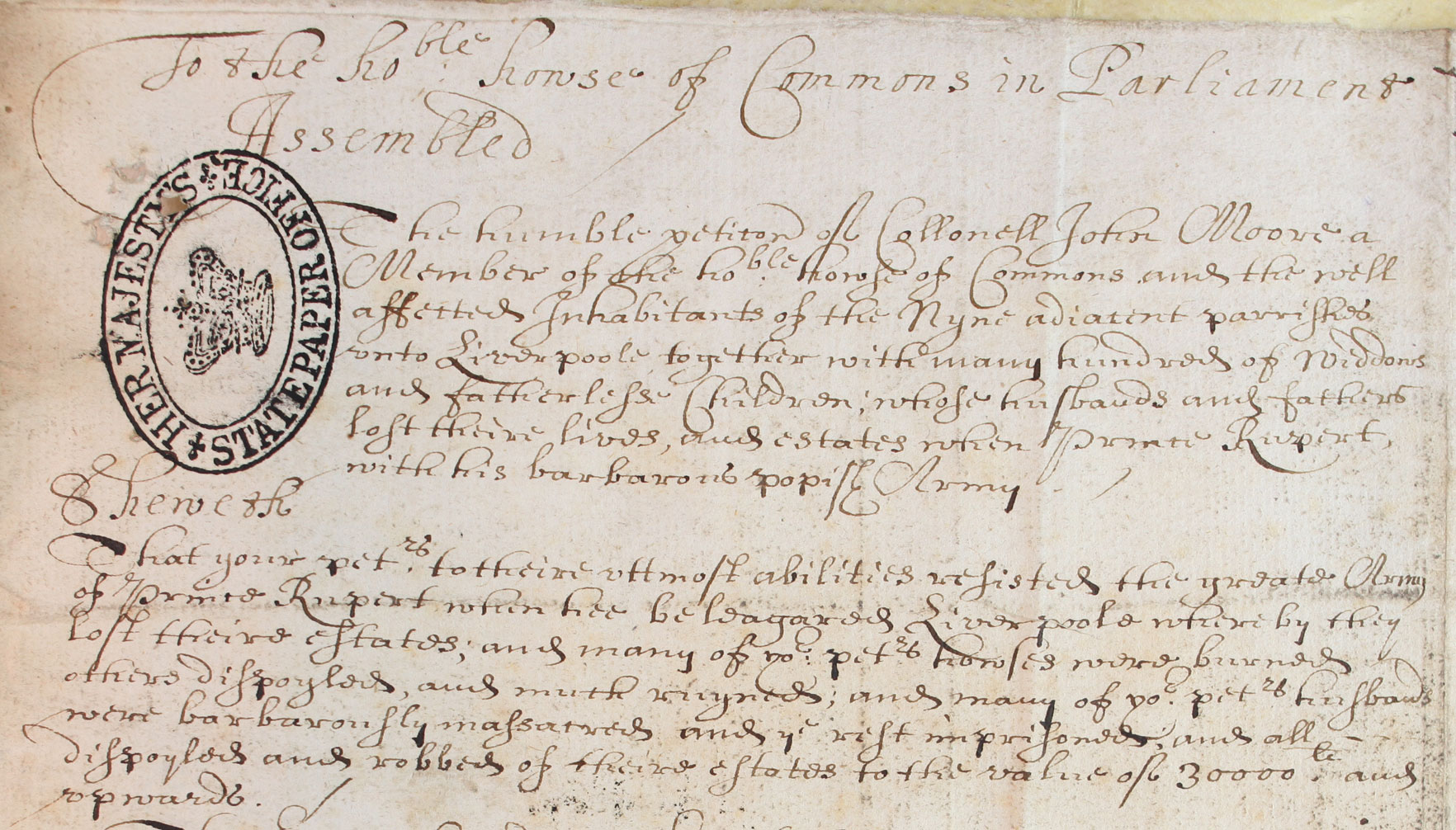
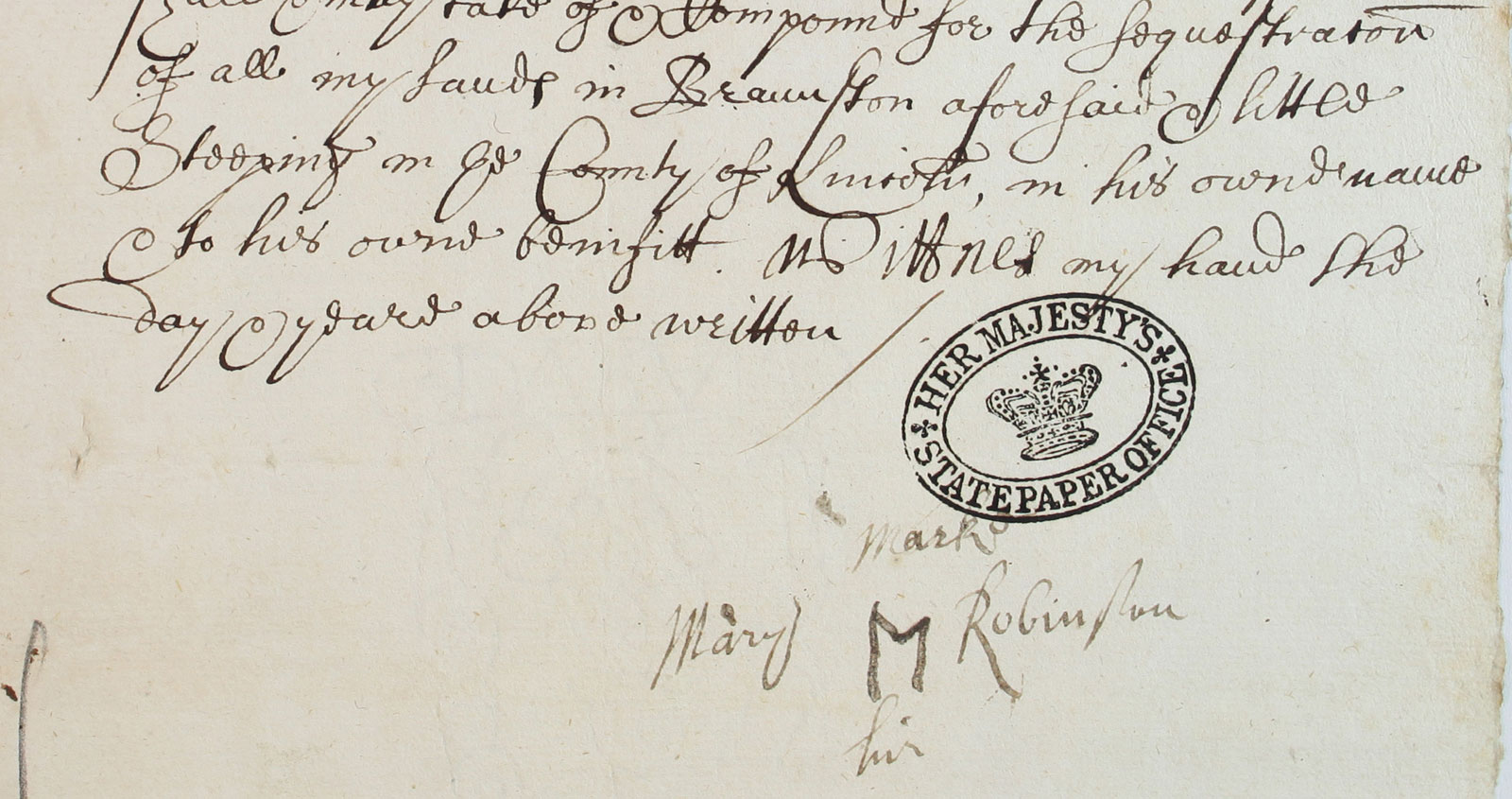
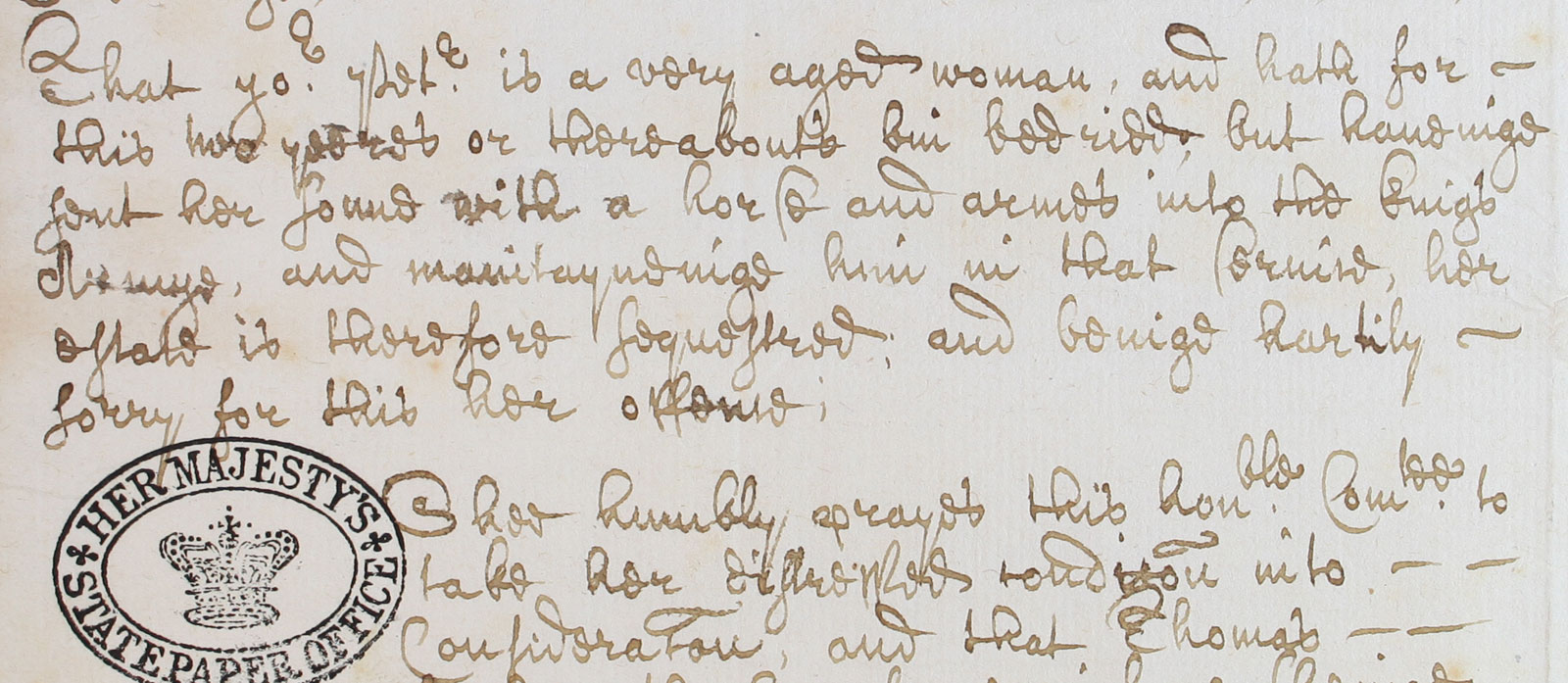
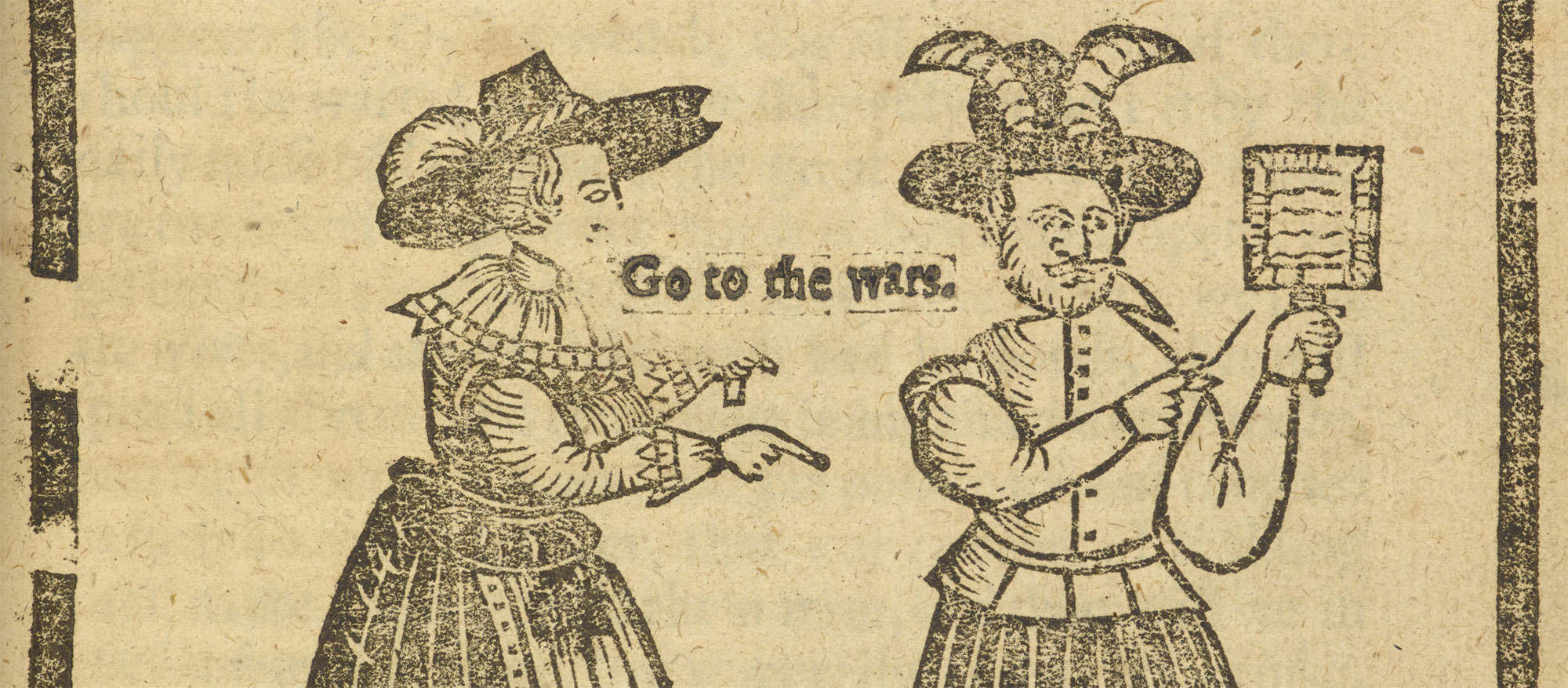
Historians have estimated that during the English Civil wars, 1642-1649 perhaps as many as 7% of the population died as a result of the fighting and from diseases spread by moving armies. People from all parts of society were impacted by these wars, and this included women. Many women were the wives and mothers of soldiers, some of whom never returned from war, as well as carrying out other wartime activities such as nursing.
Use the sources in this lesson to find out about the lives of these women during the English Civil Wars and focus on the different roles that they played. Each original document, or an extract from one, that was created or received by Parliament at the time. Some of the documents contain the words of women themselves, others are about women, but all contain interesting stories about how women participated in the events of this period.
How did these conflicts affect their lives?In 1642 war broke out between King and Parliament. Both sides called up men to fight for them as a result of a series of disagreements about religion and the way that the country should be ruled. During the 1630s King Charles I ruled without calling a Parliament. Many changes and events during this period caused distrust between the King and the people.
In the 1630s the Archbishop of Canterbury, William Laud, endeavoured to reform the church by ensuring that church buildings were made beautiful again and services made more elaborate. William Laud wanted to raise the Church of England to its former glory, but many people thought that he was returning it to the ways of the Roman Catholic Church and how it had been before the Reformation. Puritans, groups of radical Protestants, in particular disliked these changes.
Parliament was one of the main ways that monarchs raised money, by asking for taxes to be raised. As King Charles did not summon a Parliament during this time he had to use alternative ways of finding money. Some of these made him unpopular. For example, he raised money from people across the country via a tax known as Ship Money. However, because this was traditionally raised from coastal counties and only in times when the coastline was threatened, many resented it.
Finally, when rebellion broke out in Scotland in 1637 against Laud’s unpopular prayer book reforms, Charles I was forced to call a Parliament. Relationships between Charles and the MPs were now so strained that they struggled to agree on matters of religion and finance. Some people had also began to question whether the King ruled by ‘Divine Right’ (meaning that his power came directly from God and not from any earthly power). When war broke out in Ireland in 1641 an army was needed to subdue it, but the mistrust had grown so great that neither trusted the other in charge of armed forces. In August 1642 the country descended into civil war.
War was fought between King and Parliament in a series of prolonged campaigns between 1642 and 1651. In 1649 Charles I was executed and rule without a King was established until 1660 when Charles II, his son, returned to England.
 How did these men experience the conflict? (1916 - 18)
‘Our family has had to pay the penalty of war that so many thousands of families have done, for I am now the only one out here’
These few words, written by Frederick Ernest Andrews on 16 October 1917 from France, come from this collection of letters from staff at the Audit office for the Great Western Railway (GWR) based at Paddington, London.
What makes this collection of soldiers’ letters so different from all others is the fact that it reveals the stories of a particular group of men who varied in class and education, who were writing back to their colleagues and bosses in the office while on active service during in the First World War. Many men enlisted from the GWR to fight, but these letters come exclusively from those worked at its Audit office. Staff at Paddington covered a range of different roles in insurance, accounting or ticketing for the Great Western Railway.
The letters (RAIL 253/516) belong to the RAIL series (which includes the records of the railway companies) at The National Archives. They are arranged in 12 carefully bound folders, rather like a series of scrapbooks. Starting from August 1915, each part represented what was known as the office newsletter, a collection of letters, photographs postcards, field cards and contemporary newspaper cuttings from those who had gone to fight. Every newsletter opened with a news section listing those who had written and sent photos to the office and those who recently left to company to serve at the front. The totals of all men in khaki from the Audit office were given too. The news section also provided information about those who had died, been injured, visited the office on leave or been promoted. The newsletters were circulated within the office departments and read by men when they came home on leave. Friends or relatives who had been sent their own letters or photographs often lent them or typed them out to be circulated as part of the regular Audit office newsletter.
The Audit office raised enough money through collections and the sale of Christmas cards, to create a temporary roll of honour for the office at Paddington to commemorate those who had fallen in battle by August 1915. Photographs of the Roll of Honour were sent out to several employees as their correspondence reveals.
After the war had ended and troops had returned, the G.W.R. was able to quantify the contribution that it had made to the cause. The contribution made by the Audit office was high: 55.5% of male staff enlisted, whereas the average rate of enlistment across the GWR was 32.6%. This amounted to 184 men, 17 of whom lost their lives.
On 11 November 1922, The Great Western Railway War Memorial, dedicated to all 2,524 staff who had died in battle was unveiled on platform 1, Paddington station.
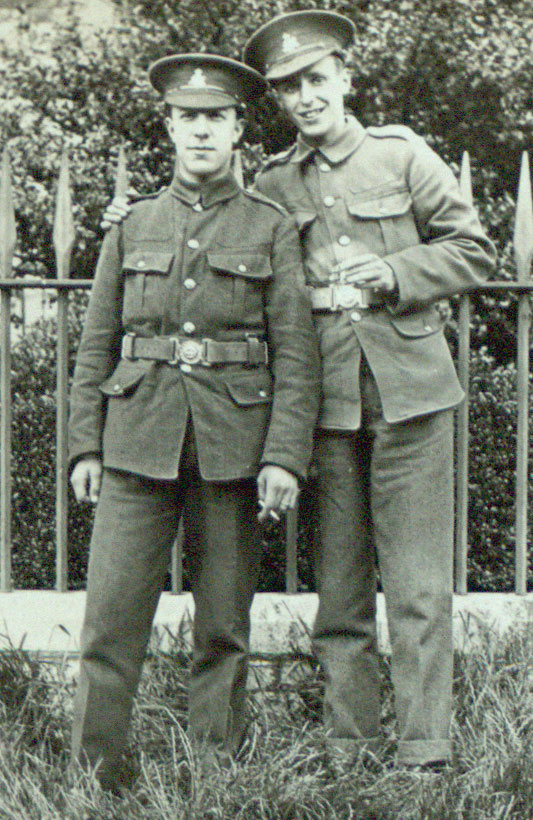 How did these men experience the conflict? (1915)
‘Well old chap, I am glad I am wounded to get out of that hell, and if you ever meet a chap that says he wants to go back call him a liar’
These few words written by Albert Edwin Rippington, from a hospital in England, come from this collection of letters from staff at the Audit office for the Great Western Railway (GWR) based at Paddington, London, who had enlisted to fight in the First World War.
What makes this collection of soldiers’ letters so different from all others is the fact that it reveals the stories of a particular group of men who varied in class and education, who were writing back to their colleagues and bosses in the office while on active service during in the First World War. Many men enlisted from the GWR to fight, but these letters come exclusively from those worked at its Audit office. Staff at Paddington covered a range of different roles in insurance, accounting or ticketing for the Great Western Railway.
The letters (catalogue reference RAIL 253/516) belong to the RAIL series (which includes the records of the railway companies) at The National Archives. They are arranged in 12 carefully bound folders, rather like a series of scrapbooks. Starting from August 1915, each part represented what was known as the office newsletter, a collection of letters, photographs postcards, field cards and contemporary newspaper cuttings from those who had gone to fight.
Every newsletter opened with a news section listing those who had written and sent photos to the office and those who recently left to company to serve at the front. The totals of all men in khaki from the Audit office were given too. The news section also provided information about those who had died, been injured, visited the office on leave or been promoted.
The newsletters were circulated within the office departments and read by men when they came home on leave. Friends or relatives who had been sent their own letters or photographs often lent them or typed them out to be circulated as part of the regular Audit office newsletter.
The Audit office raised enough money through collections and the sale of Christmas cards, to create a temporary roll of honour for the office at Paddington to commemorate those who had fallen in battle by August 1915. Photographs of the Roll of Honour were sent out to several employees as their correspondence reveals.
After the war had ended and troops had returned, the GWR was able to quantify the contribution that it had made to the cause. The contribution made by the Audit office was high: 55.5% of male staff enlisted, whereas the average rate of enlistment across the GWR was 32.6%. This amounted to 184 men, 17 of whom lost their lives.
On 11 November 1922, The Great Western Railway War Memorial, dedicated to all 2,524 staff who had died in battle was unveiled on platform 1, Paddington station.
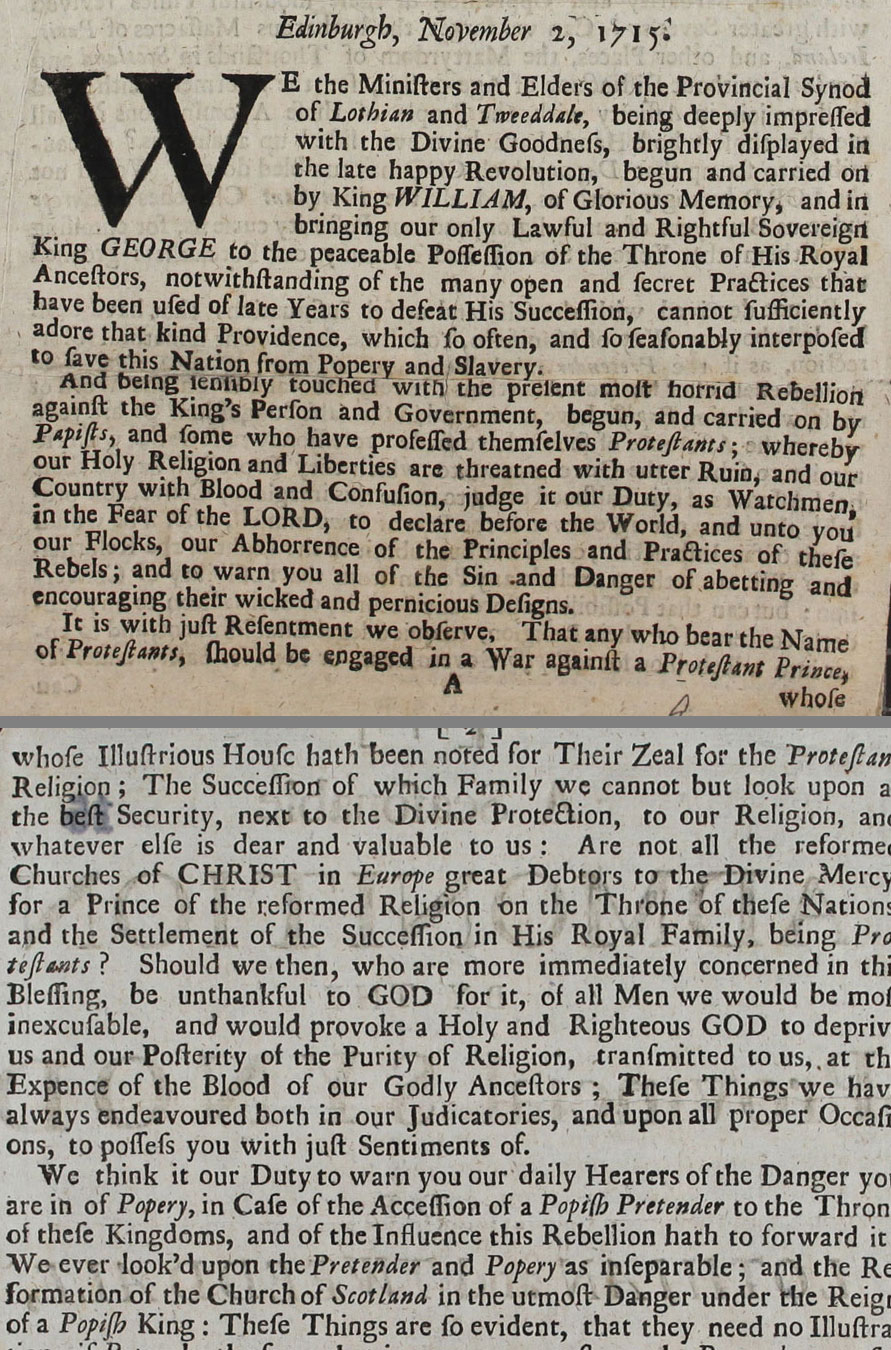
Extracts from a Scottish Church pamphlet addressed to the people of Lothian and Tweeddale, 2 November 1715 (SP 54/10/5B)
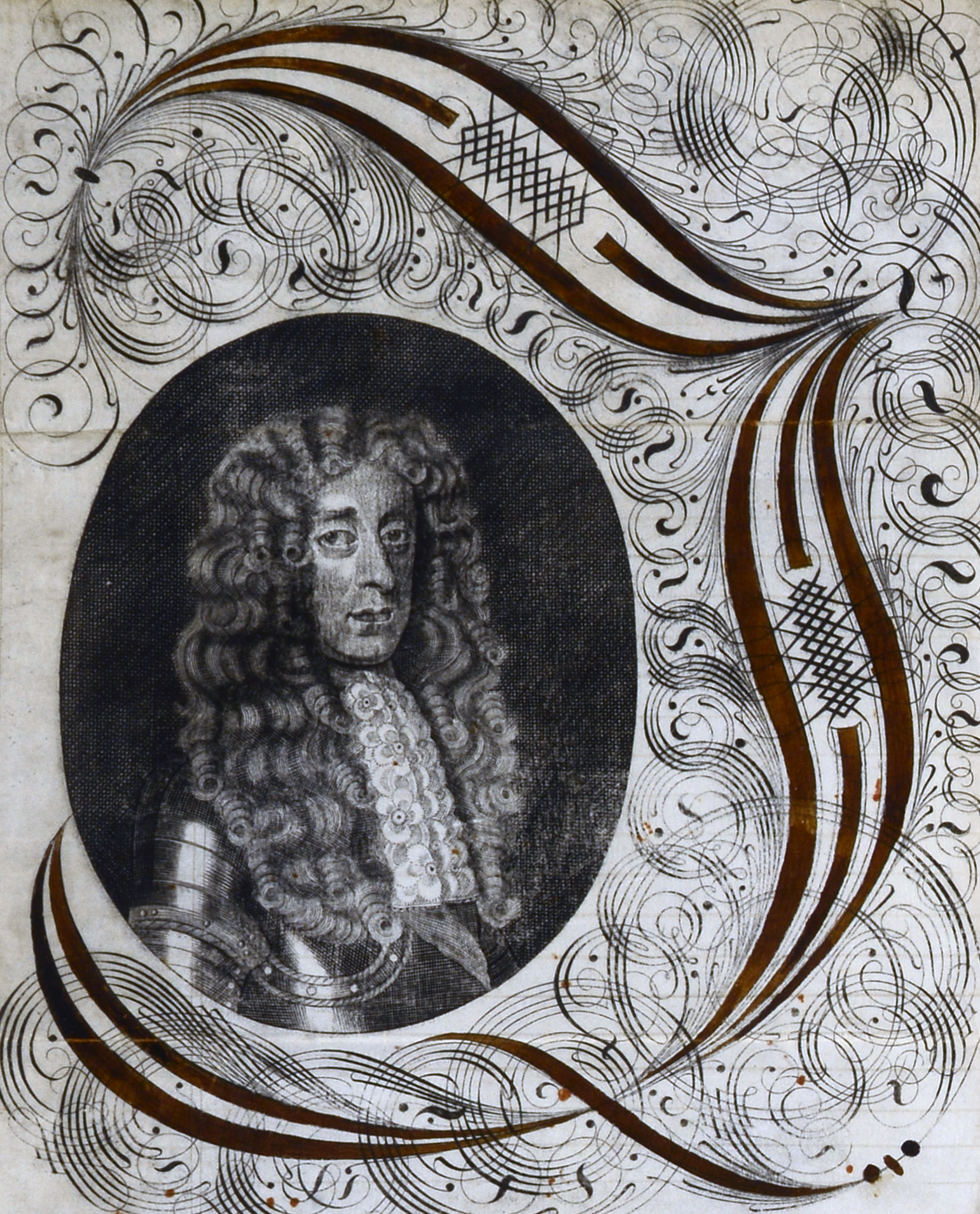
Propaganda is information made to influence public opinion. In this lesson you are going to look at extracts from three examples of printed propaganda produced by the Jacobites and another from the protestant Scottish Church which opposed them.
The term Jacobite comes from the word Jacobus, Latin for James. The first three sources are examples of how the supporters James Francis Edward Stuart (also referred to as ‘The Old Pretender’) son of James II, deposed king of England, tried to persuade the people of Scotland to restore the Stuarts and their heirs to the thrones of England, Scotland and Ireland.
In these documents the Jacobites attacked the government of Britain and criticised the House of Hanover’s right to the throne. It was difficult to control this material as printing presses were cheap and easy to get hold of and it was possible to print broadsheets, handbills or songs anonymously. This made it hard for the authorities to stop the spread of these papers and arrest the publishers. What tended to happen was that supporters of the British government printed their own propaganda in return to attack the Jacobites, an example of this is provided by the fourth source. However, it could be argued that as the Whig government produced their own pamphlets in response to the Jacobites, it strengthened, rather than weakened the cause in the early decades of the 18th century.
Use this lesson to explore the nature of Jacobite propaganda and how they promoted their cause.
What was the point of Jacobite propaganda?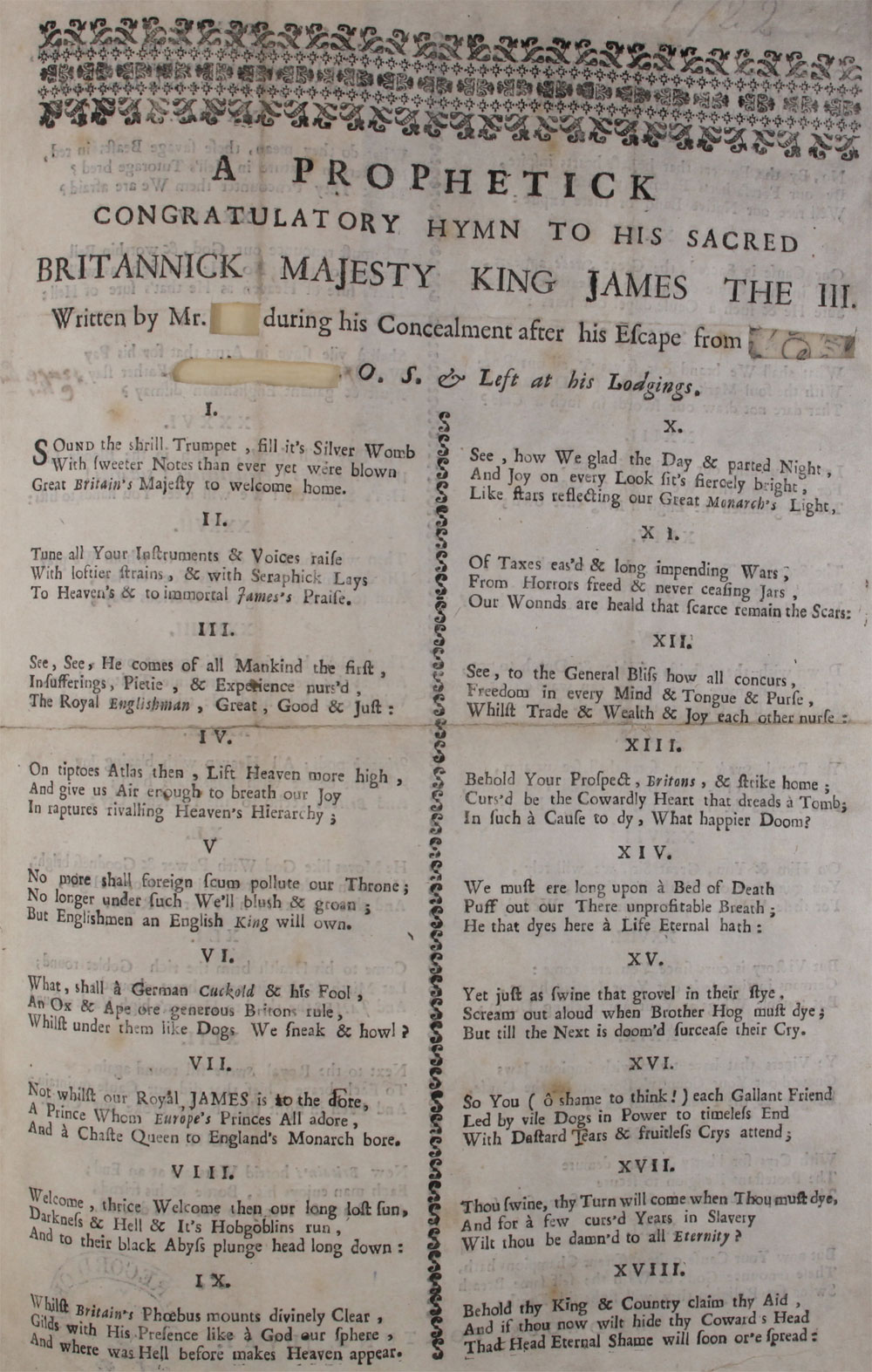
Extract from a Jacobite song, consisting of 43 verses, calling for the return to the throne of James Francis Edward Stuart and end to rule by George I, House of Hanover, 1722 (SP 35/40 f179)