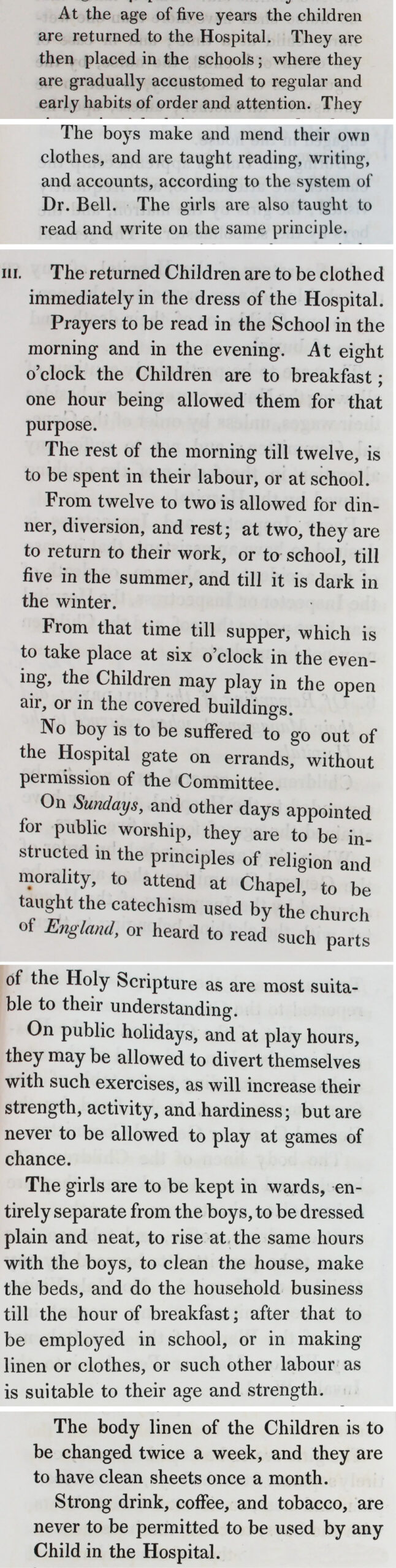
Guidelines on how children between the ages of five and fifteen were to be cared for whilst at the hospital. (CHAR 2/384)
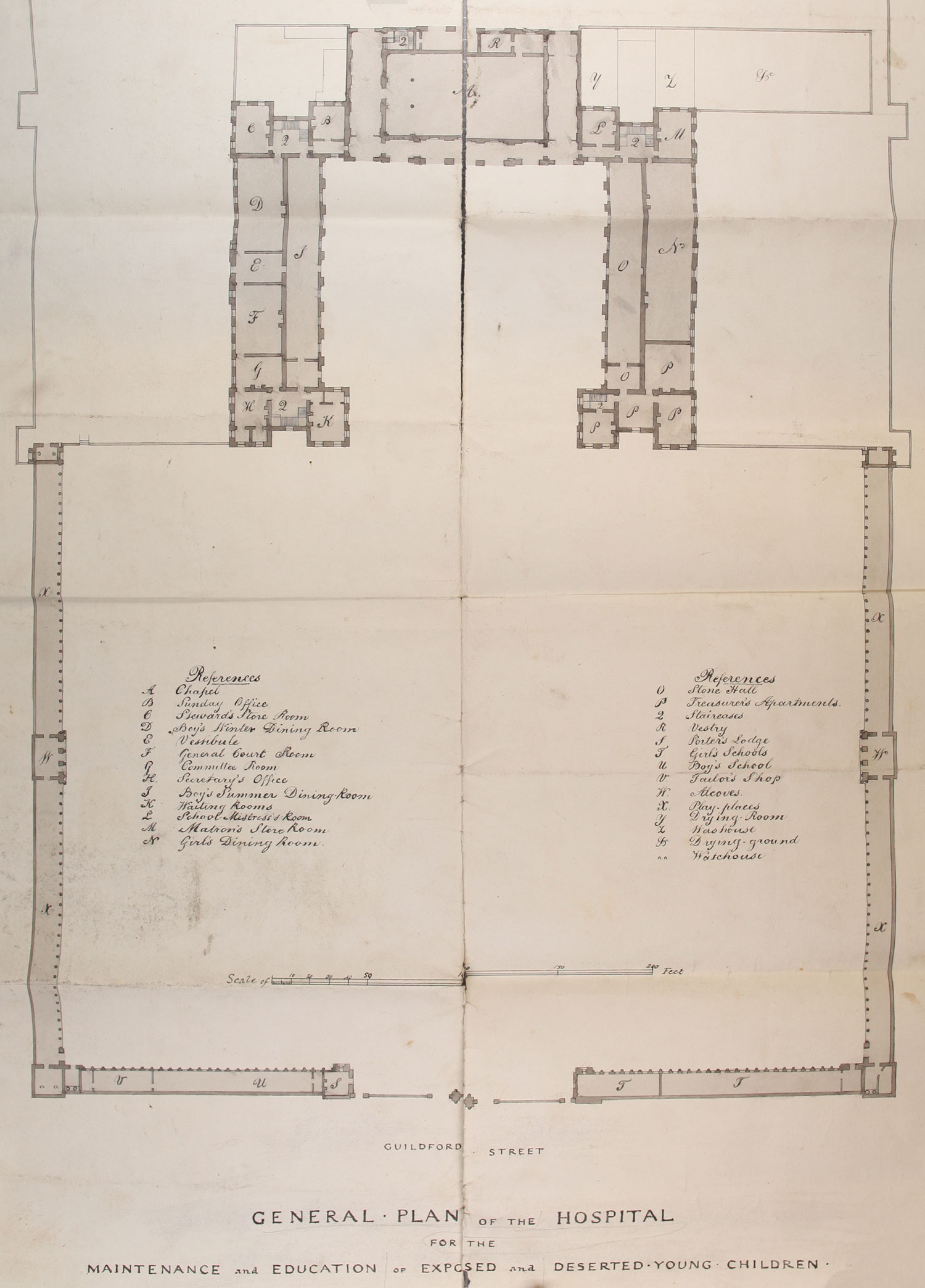
A plan of the hospital for the maintenance and education of exposed and deserted young children. (CHAR 2/384)
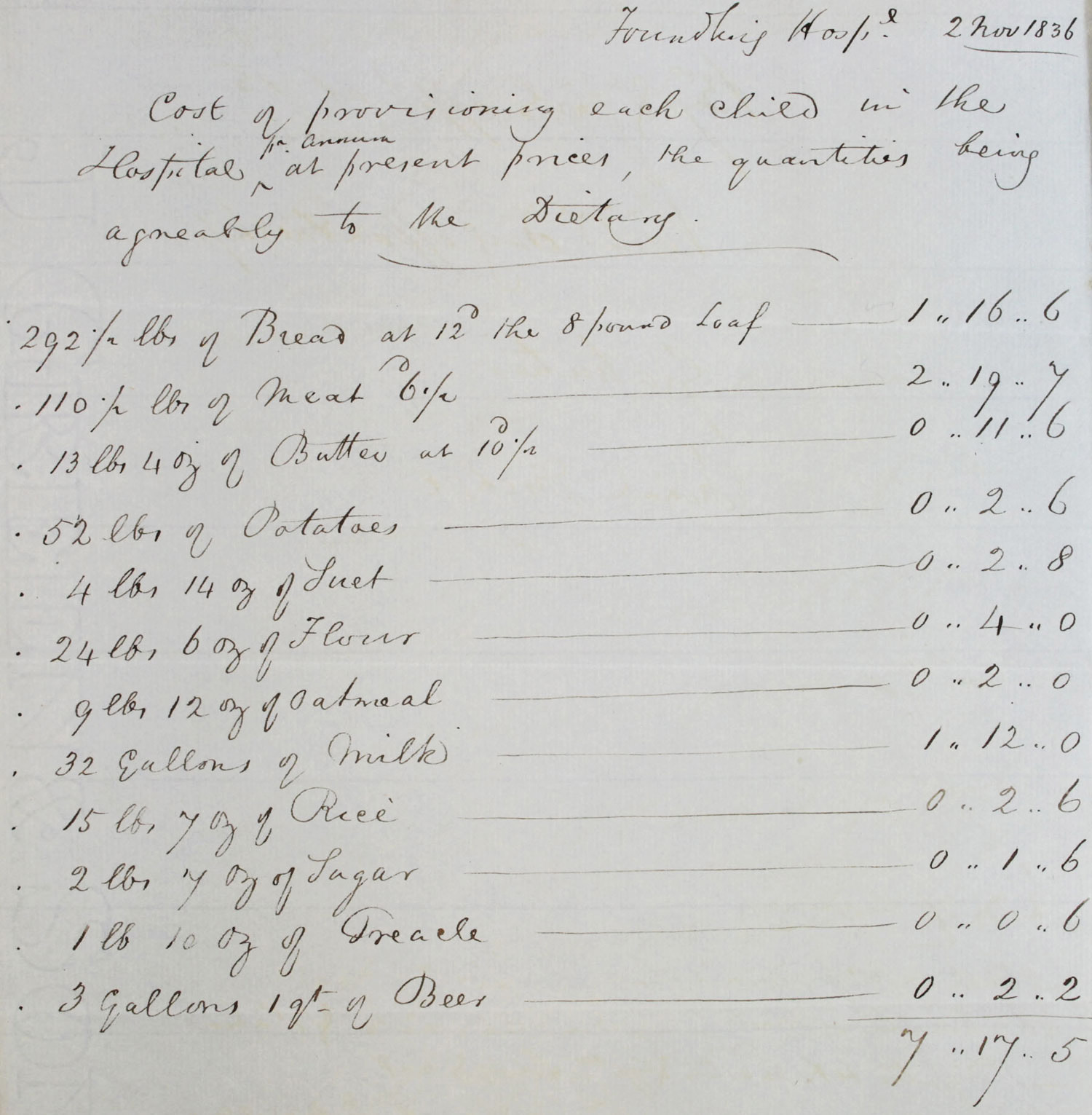
A table listing the food and drink given to each child in a year. (CHAR 2/384)
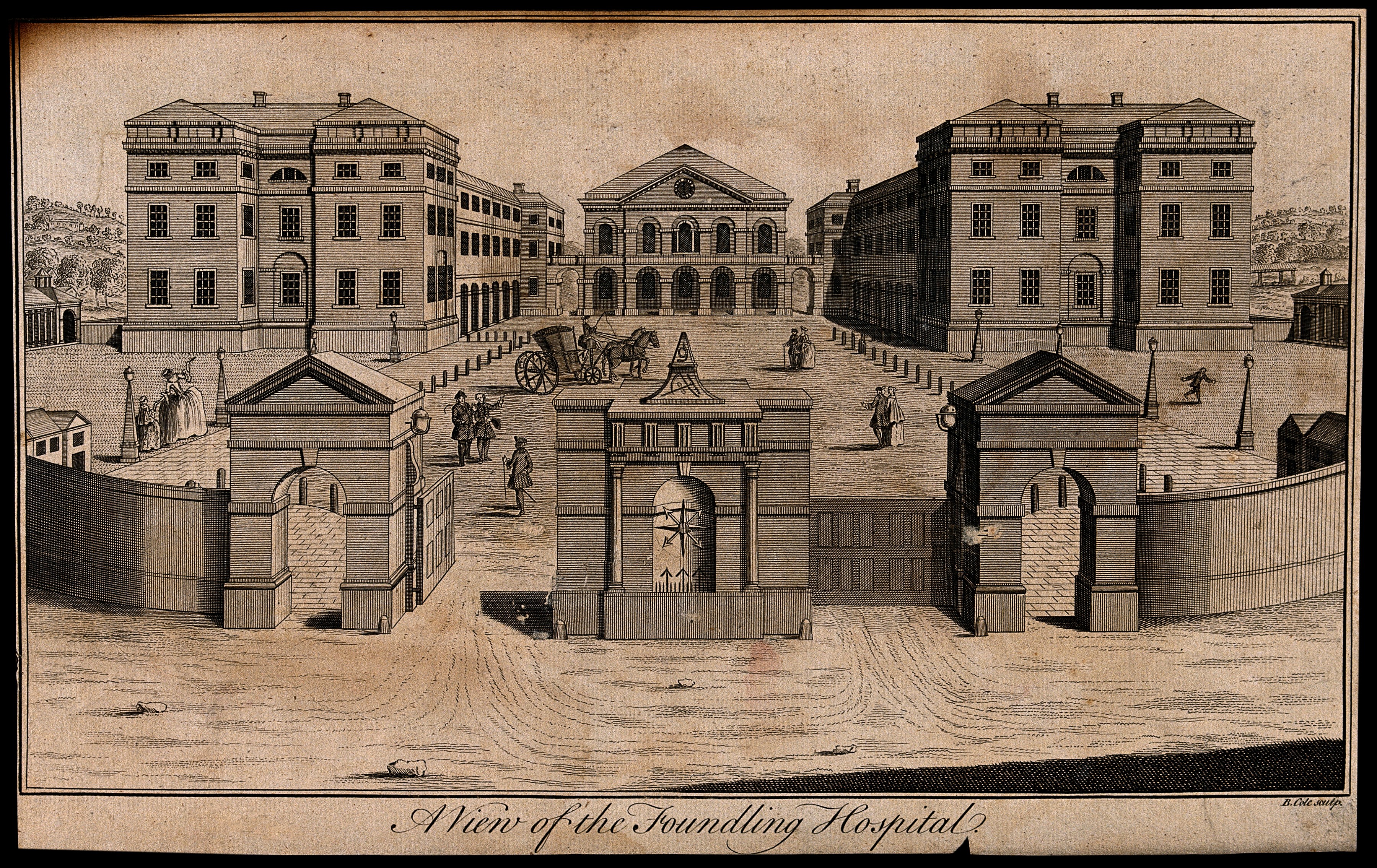
This lesson gives you the chance to look at primary sources from the Foundling Hospital which are held at The National Archives in Kew, London. The Hospital began in 1741 and although it is no longer open, the charitable work continues to this day under the Coram foundation.
The Foundling Hospital was started by Thomas Coram, a philanthropist who was appalled to see children and babies dying on London’s streets. The word ‘hospital’ implied the hospitality shown to children in their care, rather than a place for the sick. Mothers brought their babies to the Hospital, where they would be given a new name. However, mothers left a token with the hospital, such as a scrap of fabric or a coin, so that the child could be identified if the mother enquired about or wanted to claim the child.
The first children were admitted in 1741. In 1745 their purpose built children’s home was opened in Bloomsbury, London, which at that time was surrounded by fields. By the early 19th century, the hospital mainly wanted to help illegitimate children: ‘the design of the founder… being twofold- to hide the shame of the mother, as well as to preserve the life of the child’ (CHAR 2/384). Children had to be under 12 months of age, and were admitted after the mother had been interviewed and deemed to fit the criteria set out by the hospital. Once they had been accepted, children were registered, and were sent to live with a ‘nurse’ or foster family in the country. When they reached four or five years of age, children were sent to live at the Foundling Hospital in London, where they received schooling until they were 15 years old, and then were apprenticed, usually to work in domestic or military service.
These documents come from the early 19th century, when the hospital was well established. Use this lesson to find out about what it was like to be a child in the care of the Foundling Hospital in the late Georgian era.
What were conditions like for children in the care of the Foundling Hospital?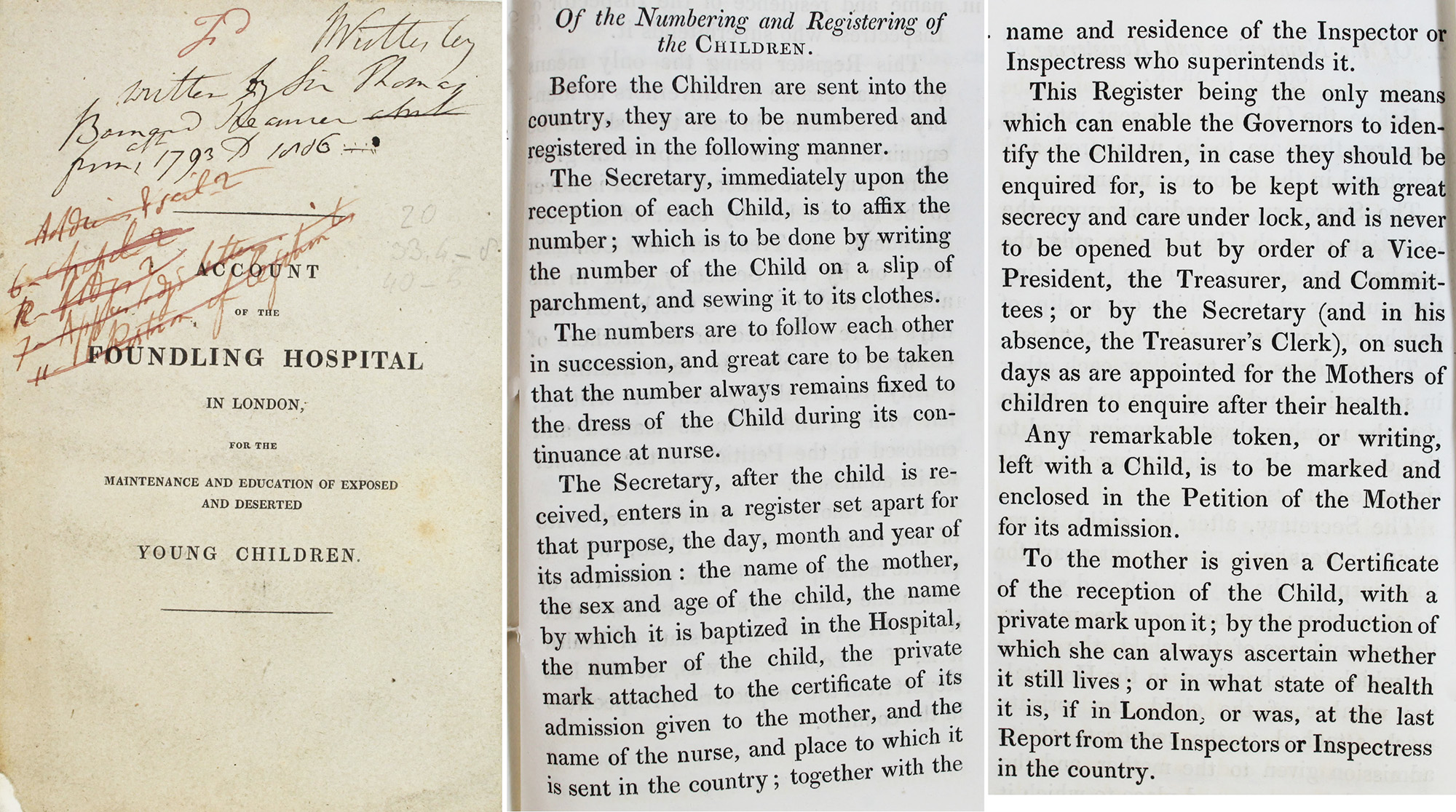
Extract from a handbook for staff of the Foundling hospital. (CHAR 2/384).
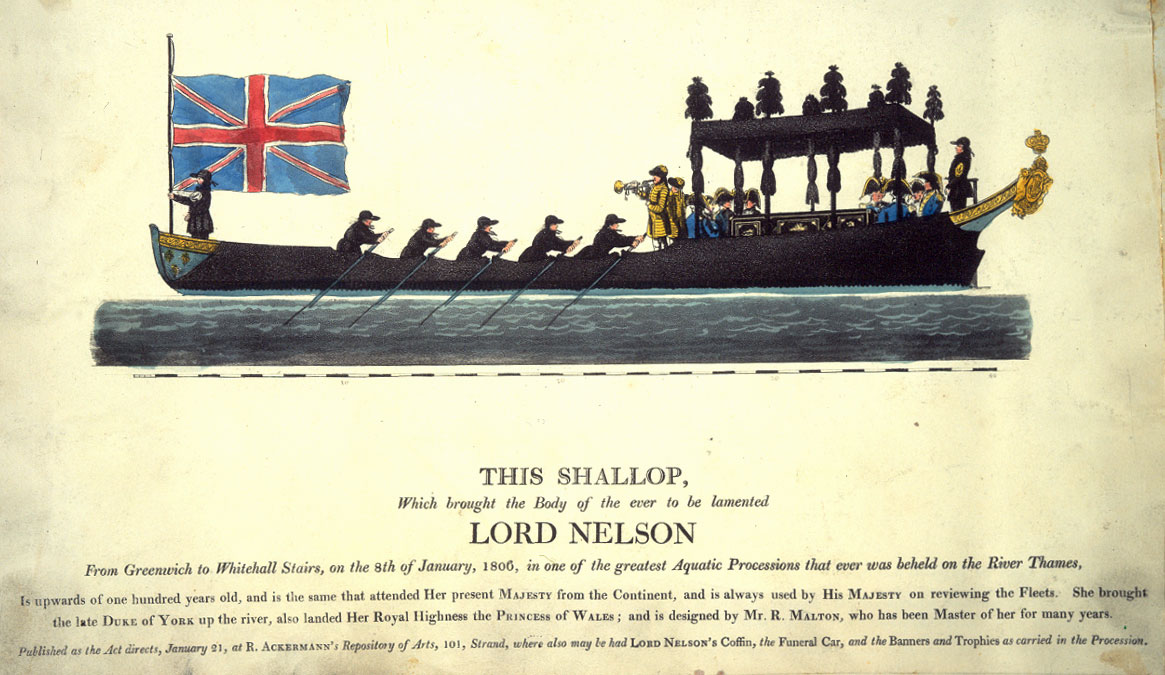 Age of modernity?
by Professor Amanda Vickery
No educated continental European would have bothered to read or even speak English in 1700. By 1800 fluent English was a necessity. Why did this happen?
In the 17th century, the British Isles were seen as backward, politically unstable and irrelevant to the rest of Europe. By 1850, Britain was the ‘Workshop of the World’, the centre of the global economy, the richest, most powerful and advanced nation of earth. The 18th century represents one of the most transformative ages in British history.
What caused this transformation? One fundamental factor is immediately clear if we look at British politics and foreign policy. With the Glorious Revolution of 1688, which involved the overthrow of the Catholic king, James II, and the coming to the throne of the Protestant Dutchman, William III, British foreign policy and military potential were driven by a consistent policy hostile to French expansion, both in Europe and beyond. By the time of the victory at Waterloo in 1815, Britain had become the most powerful state in Europe, the prime architect of the victory over Napoleon and ruler of large parts of India.
Already, in the wars between 1689 and 1714, the British, with their allies, had defeated the previously unbeatable French armies of Louis XIV. This was made possible by the employment of the resources which the political settlement of 1689 had put in place. This settlement meant the King had to accept limitations on the power of the crown, in conjunction with a bill of rights, permanent parliaments and religious toleration, in return for finance for military operations. It brought into being the remarkably effective state financial apparatus (such as the Bank of England) that was to underpin Britain’s military success and commercial boom.
Foreigners emphasised that much of Britain’s prosperity was commercial; indeed that this was a distinctively commercial society. They noticed the flourishing ports, the exciting new turnpike road network, and impressive canal system. This was a country of trade, traffic and movement. An 18th century German pastor who walked round England, said, with evident feeling, that the country was ‘a land of carriages and horses.’
Commerce and affluence were intertwined. In 1763 Casanova (an interesting social commentator, not just a famous lover) noted ‘the general cleanliness, the beauty of the country and the excellent cultivation, the nourishing quality of the food, the beauty of the roads, and of the post chaises, and the reasonableness of the prices they charged, … the speed of the post horses, although they only went at a trot, finally the construction of the towns from Dover to London, such as Canterbury and Rochester.’ Britain seemed exciting, shiny, busy and rich.
Georgian industry was thriving too. The 18th century was acclaimed as ‘an age of manufacturers’. For centuries the only product the English exported on any scale was wool; the only commodity that was remotely competitive on the international market. Domestic manufactured goods were mostly poor quality, inferior to the luxuries of France, Germany and Italy. However by 1750, the British could now manufacture a range of products to the highest European standards of technique and design: cottons in Manchester, ribbons in Coventry, boots and shoes in Northampton, wool and worsteds in Leeds, Bradford and Halifax, soap and glass in St Helens, steel in Sheffield or metal goods in Birmingham. ‘The most common trades here seem to partake of the perfection of arts’, noted the Abbé le Blanc in 1737. ‘With regard to the neatness and solidity of work of all kinds they succeed better in the least towns of England than in the most considerable cities of France.’ The term ‘manufacturing town’ was coined in the 1750s. The manufactories of Birmingham and Manchester were places considered so remarkable that they deserved to be visited by rich tourists.
The British saw themselves as a polite and commercial people. Most foreigners were struck by the affluence, vivacious commerce and great manufacturing capacity of the Georgians. It was Napoleon who first called the British a nation of shopkeepers, not Hitler. It was the Georgians who ushered in the first modern, industrial society.
Amanda Vickery is the author of ‘Behind Closed Doors At home in Georgian England’
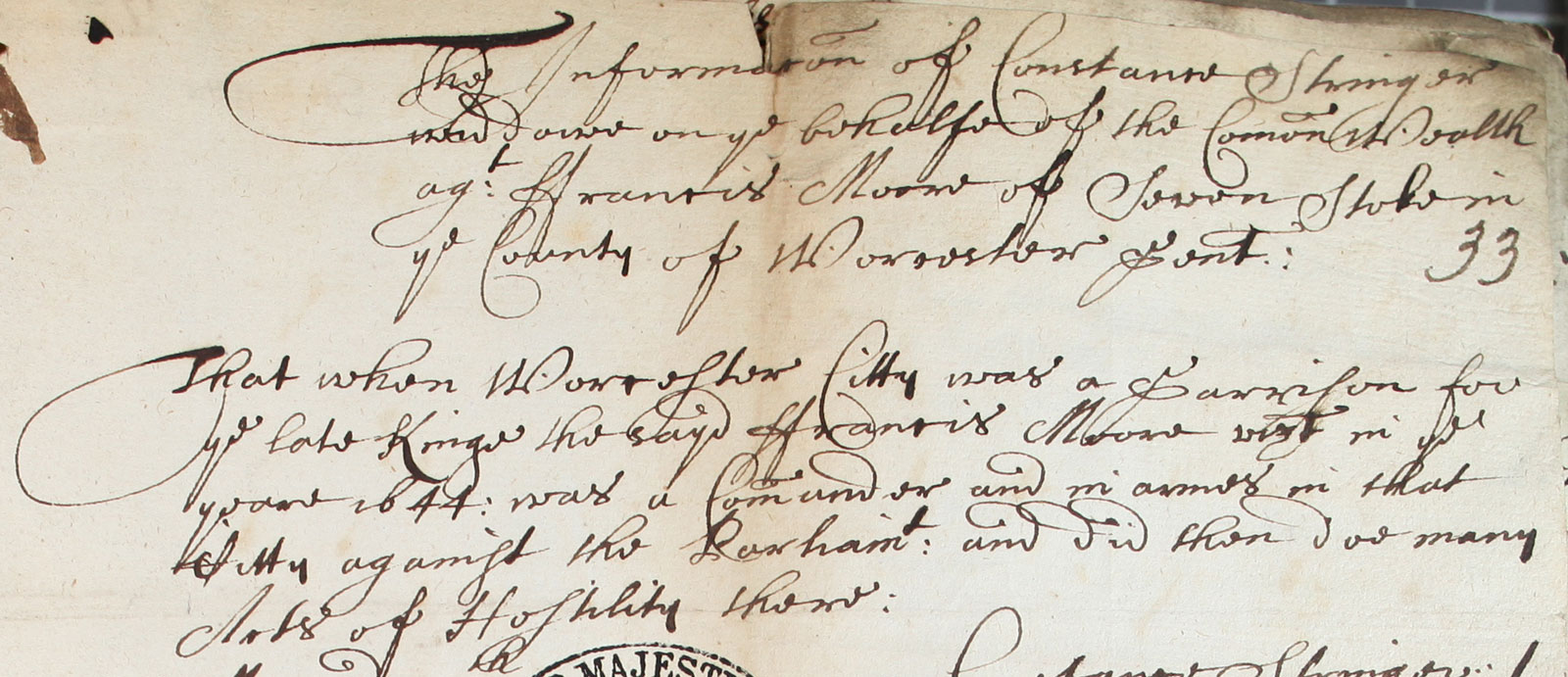
Constance Stringer was also a spy, or ‘informer’ for Parliament, like Elizabeth Alkin. They passed on information about who was fighting for the King to Parliament.
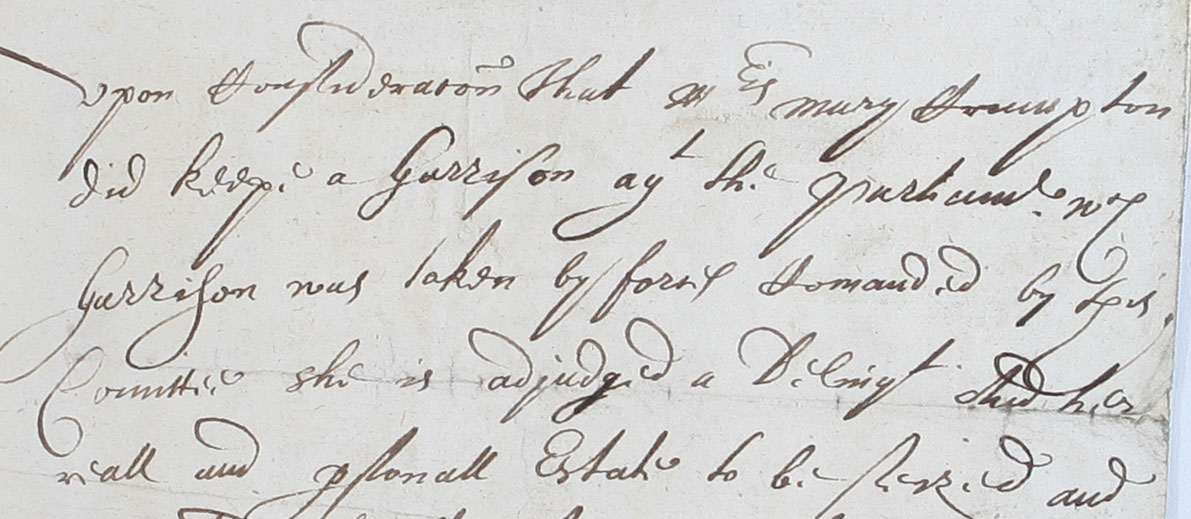
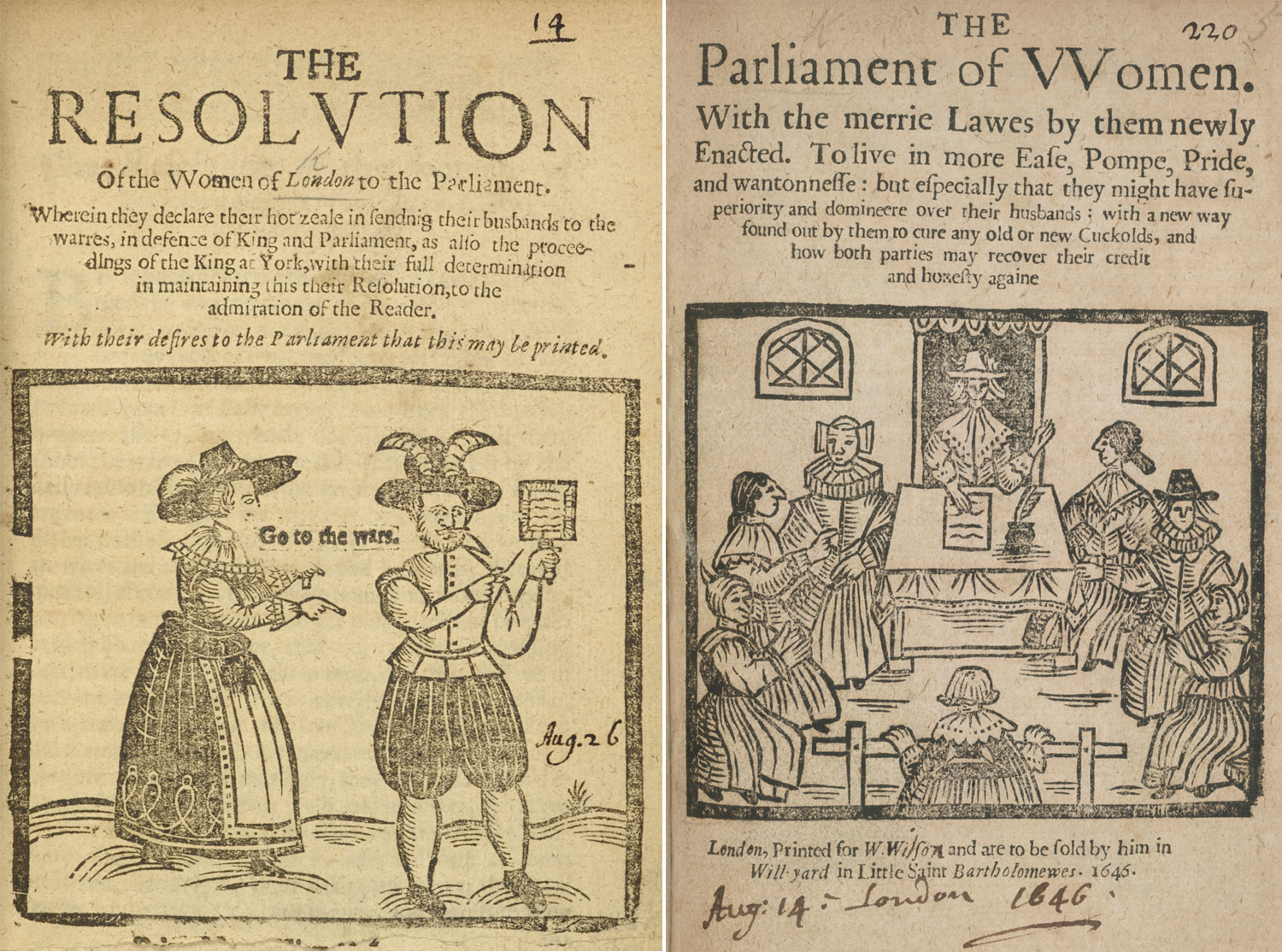
So far in this lesson you have looked at manuscript sources which were handwritten and either produced by a government department or sent into the government. At the time they would probably only have been read by a small selection of people.
However, during the Civil War the use of print increased dramatically. More people had access to pamphlets and newsletters that were produced by the printing press.
Both of these images come from the front pages of pamphlets that were available for members of the public to purchase and read. Some pamphlets would contain news or gossip, and some were official publications of Parliament. These pamphlets have images of women on them and tell us something about the ways in which people at the time represented women and thought they should act.
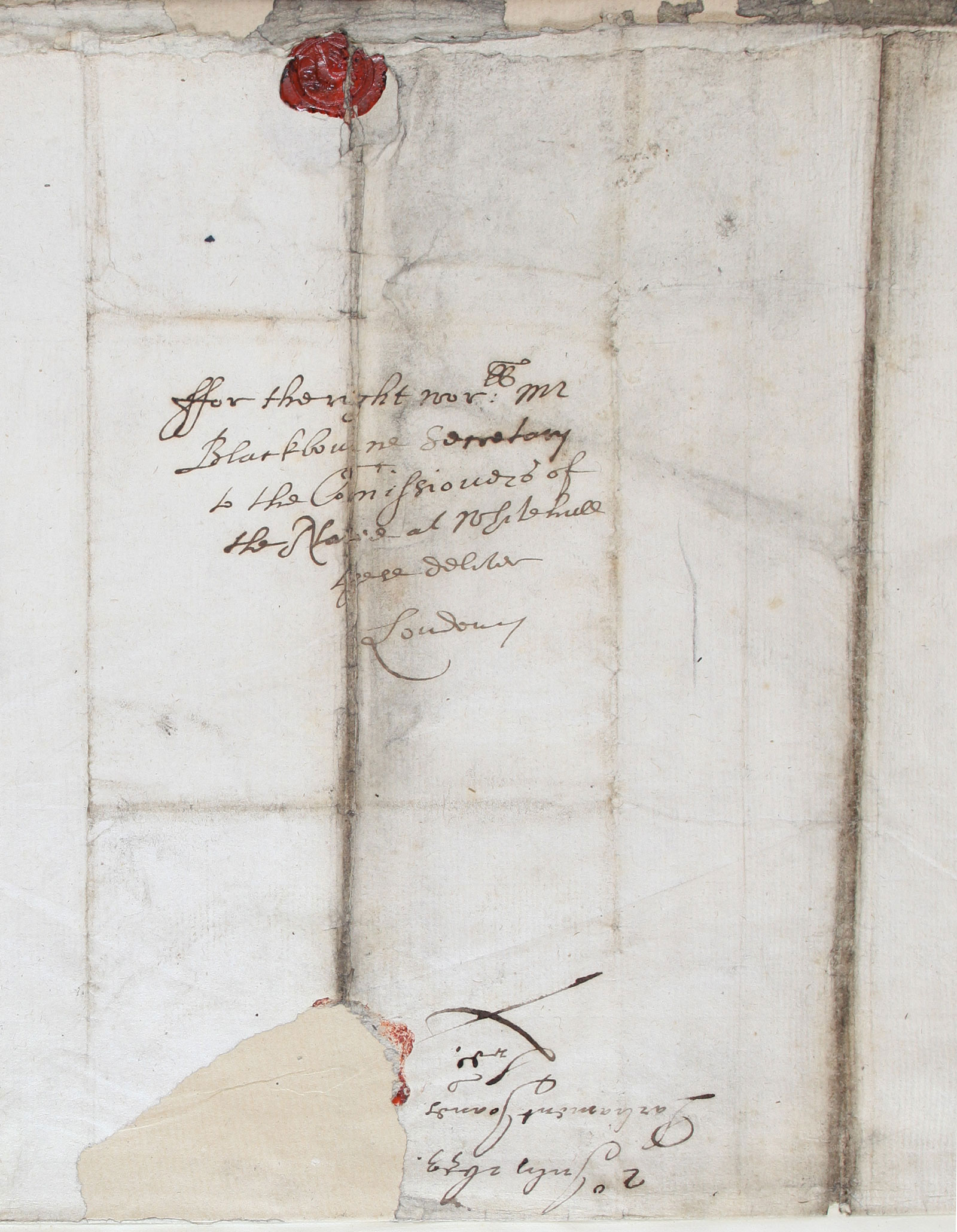
The back of a letter often gave the address details of the recipient as people did not use envelopes in this period. Instead, letters were folded and sealed.
The author of the letter was written on the back when it was filed: ‘Parliament Joan’, another name for Elizabeth Alkin. As well as being a nurse, she carried out more secret duties for Parliament.