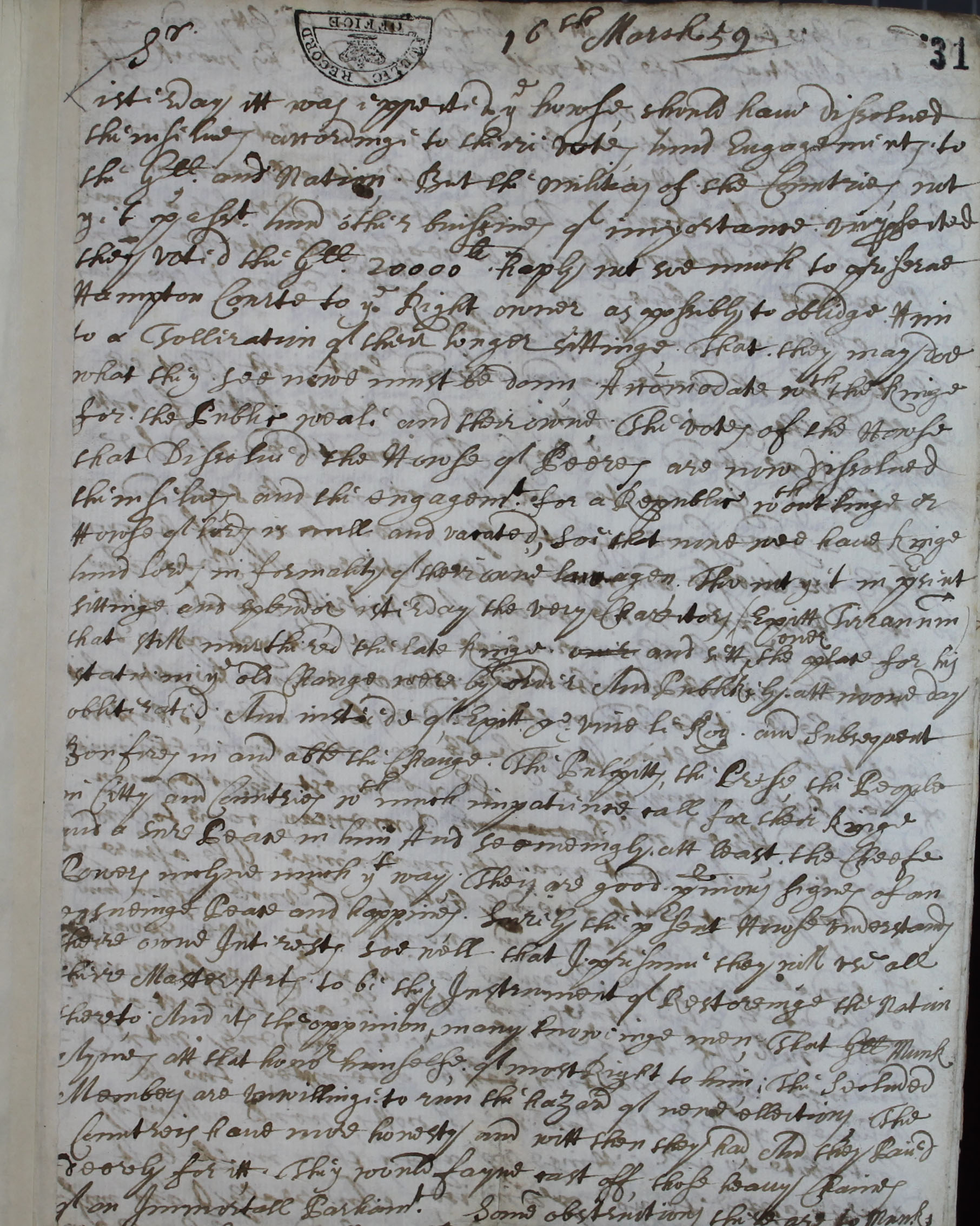
After the death of Oliver Cromwell, his son Richard failed to effectively govern the country. George Monck, first Duke of Albemarle, played a key role in the Restoration settlement that brought back Charles II, the son of the executed Charles I, to return as King in 1660.
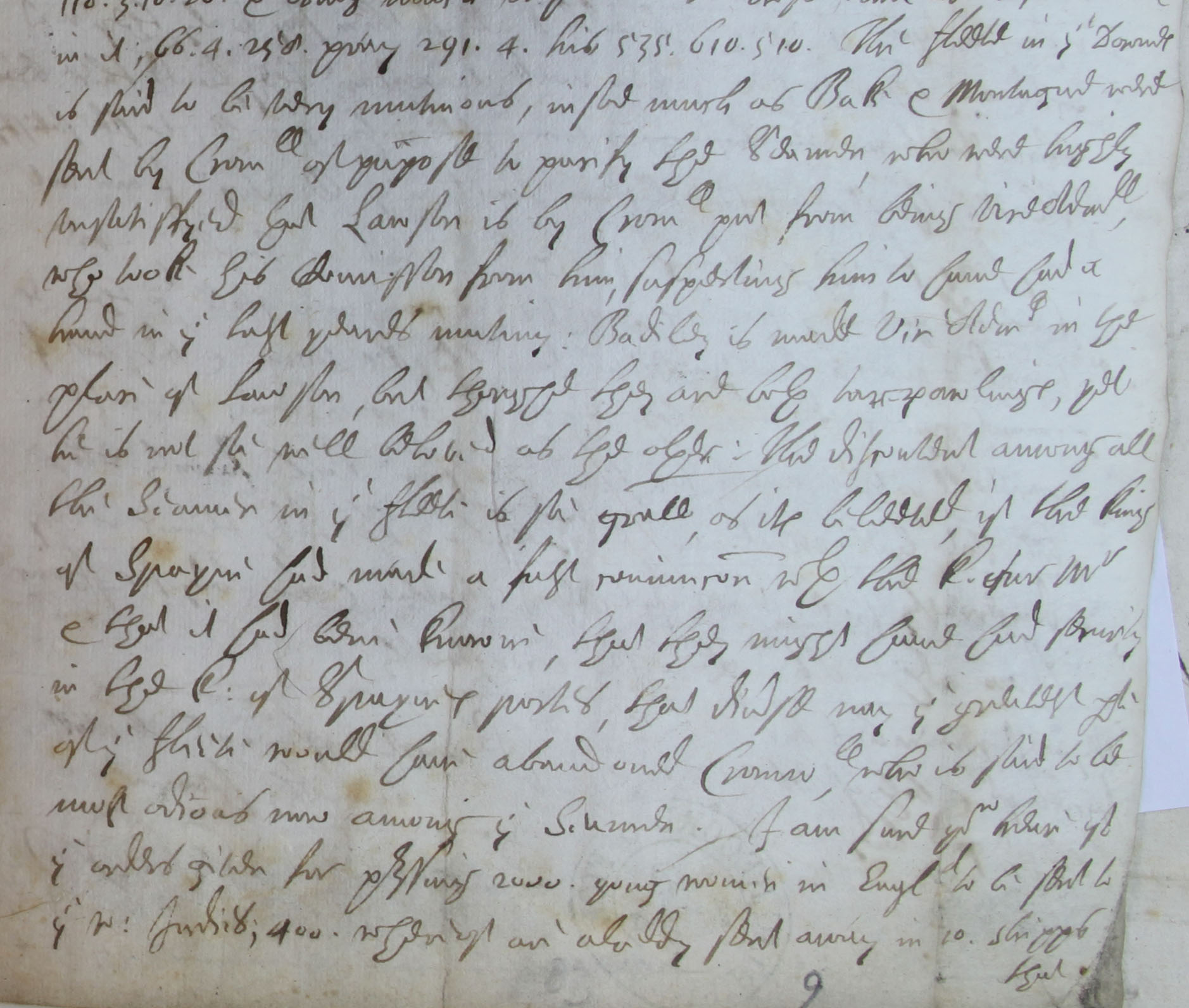
During the 1650s England had ambitions to capture and settle overseas colonies in the Caribbean which were controlled by the Spanish. Fleets were sent by sea to islands such as Barbados and Jamaica but these met with limited success and were unpopular.
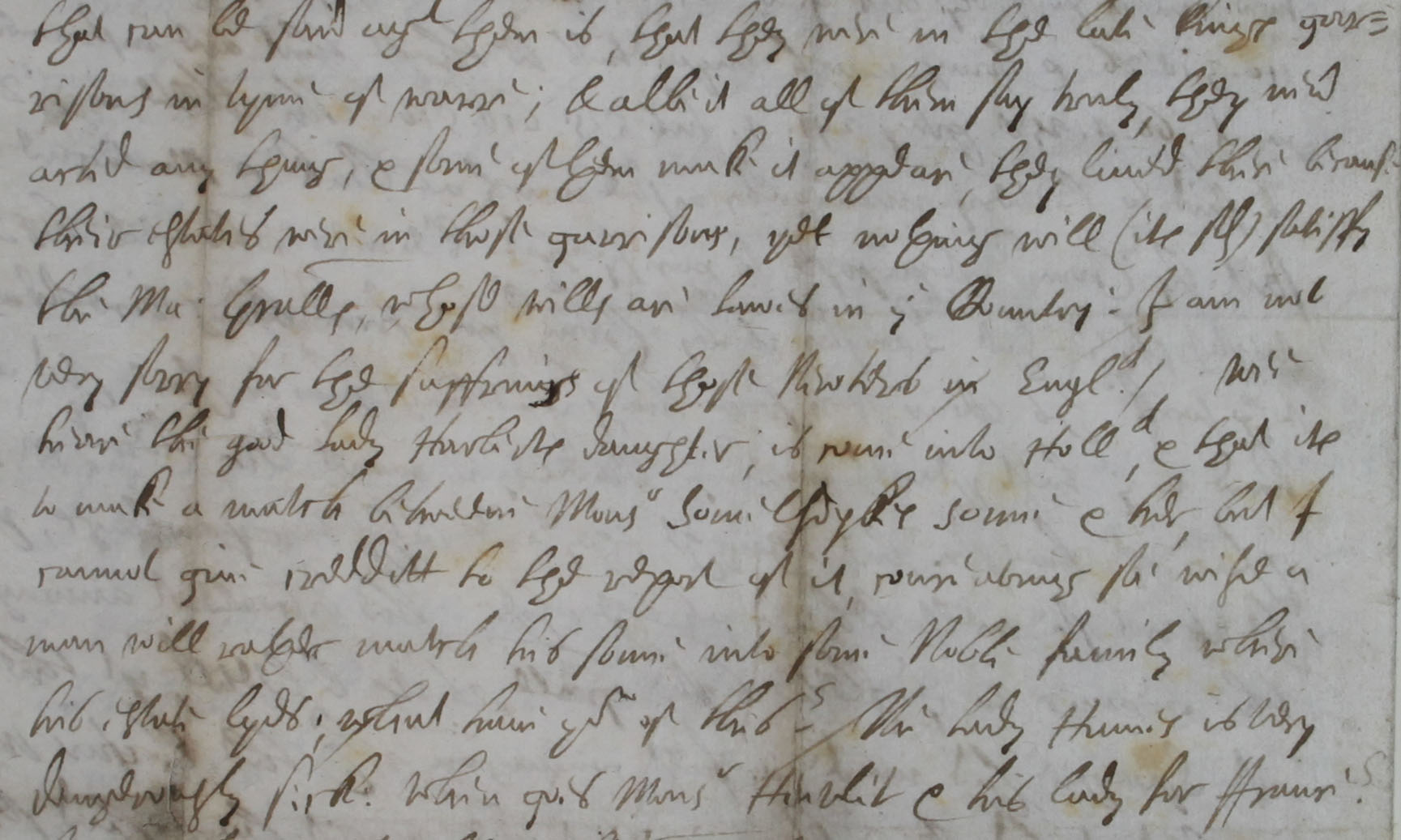
From 1655 Cromwell ordered that each County in England be governed by a Major-General. This was a form of military government which was an attempt to provide better law enforcement in the country as well as to reform the nation’s morals. One of their responsibilities was to punish those who had fought for the King.
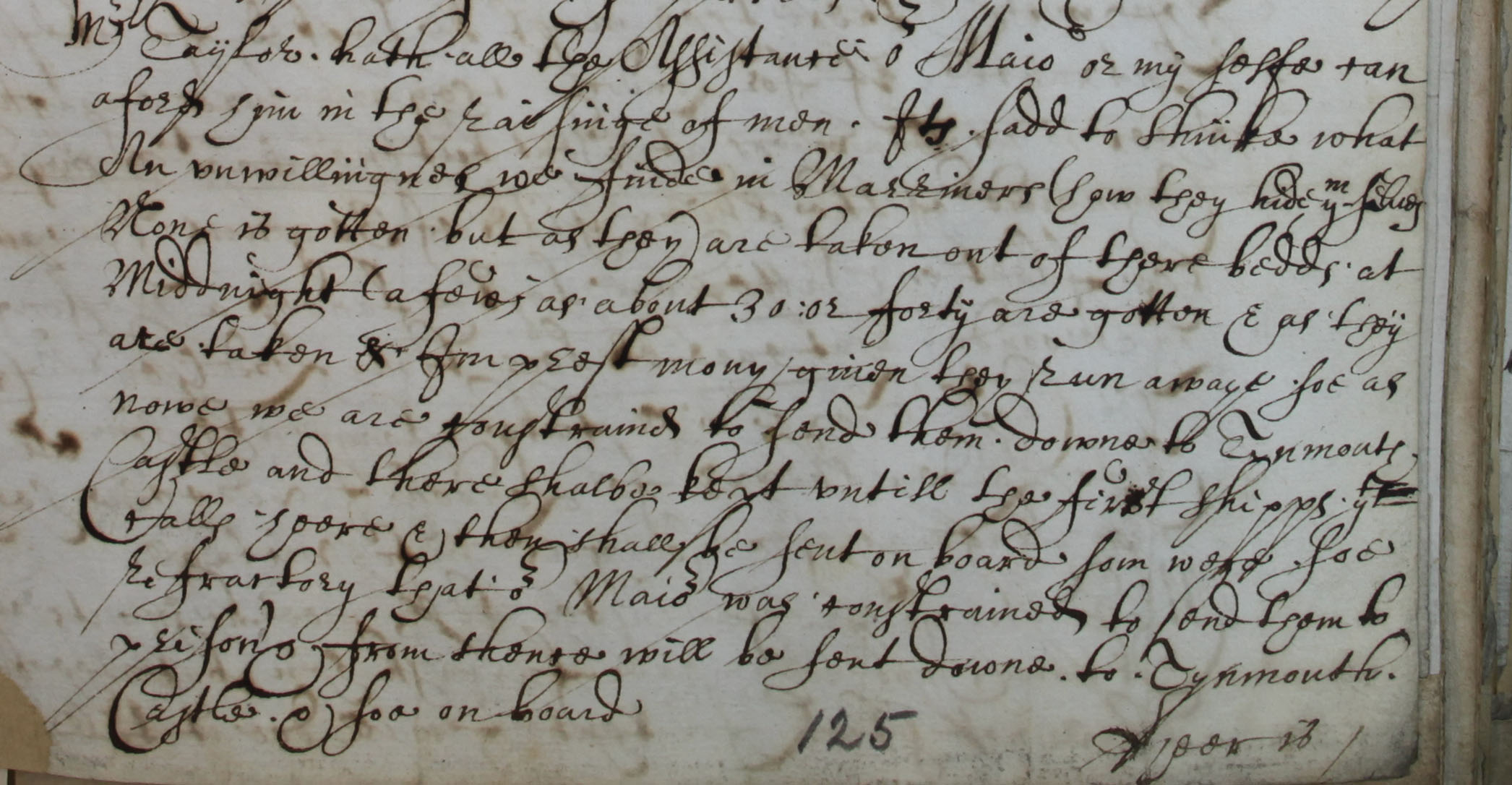
Between 1652 and 1654 England was at war with the Dutch Republic as a result of a dispute about trade rights. The war took place at sea so many sailors and soldiers were called up to serve, including keelmen who worked on coal ships [keels were the large boats used to carry coal from the river bank to waiting collier ships].
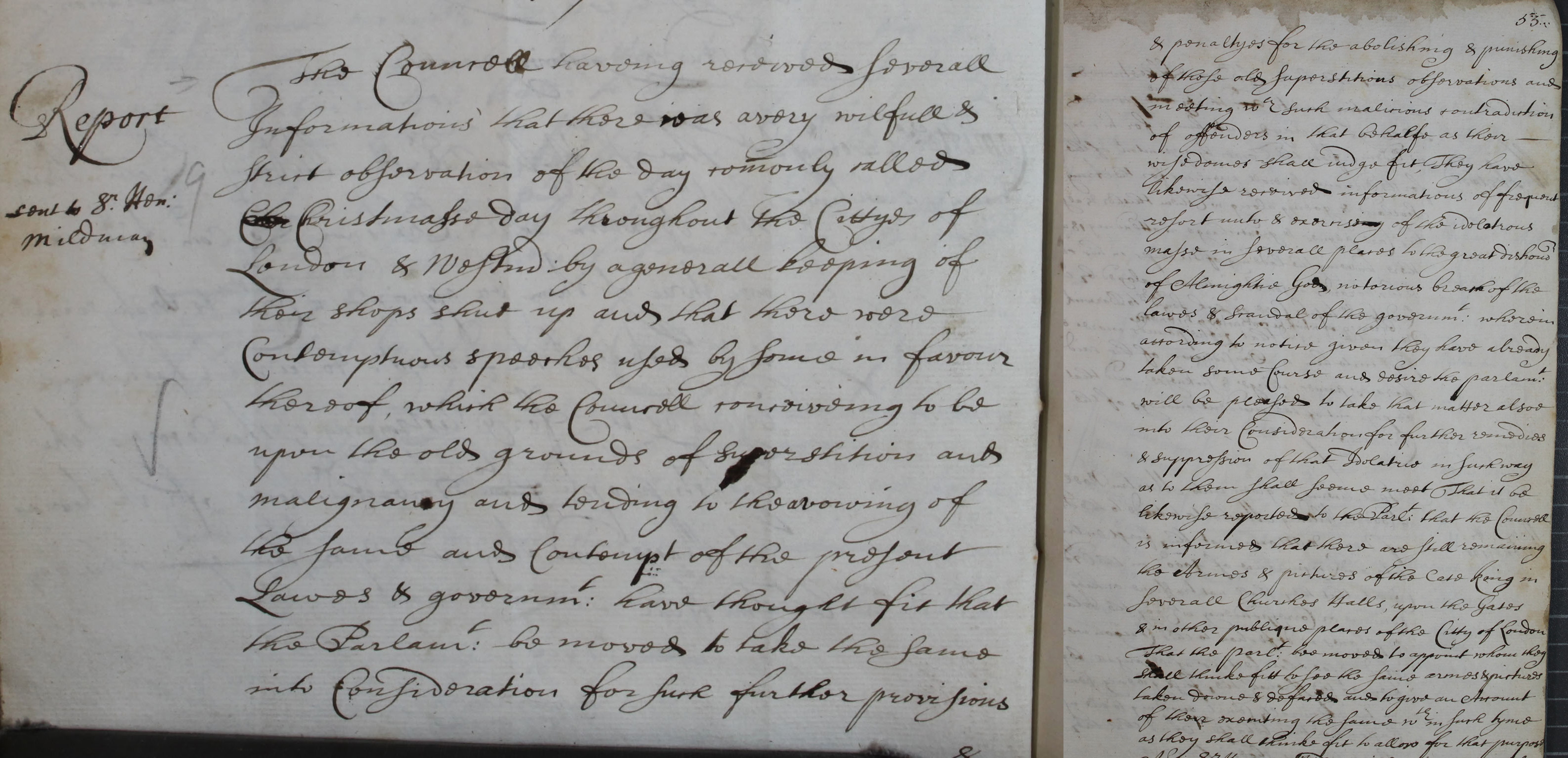
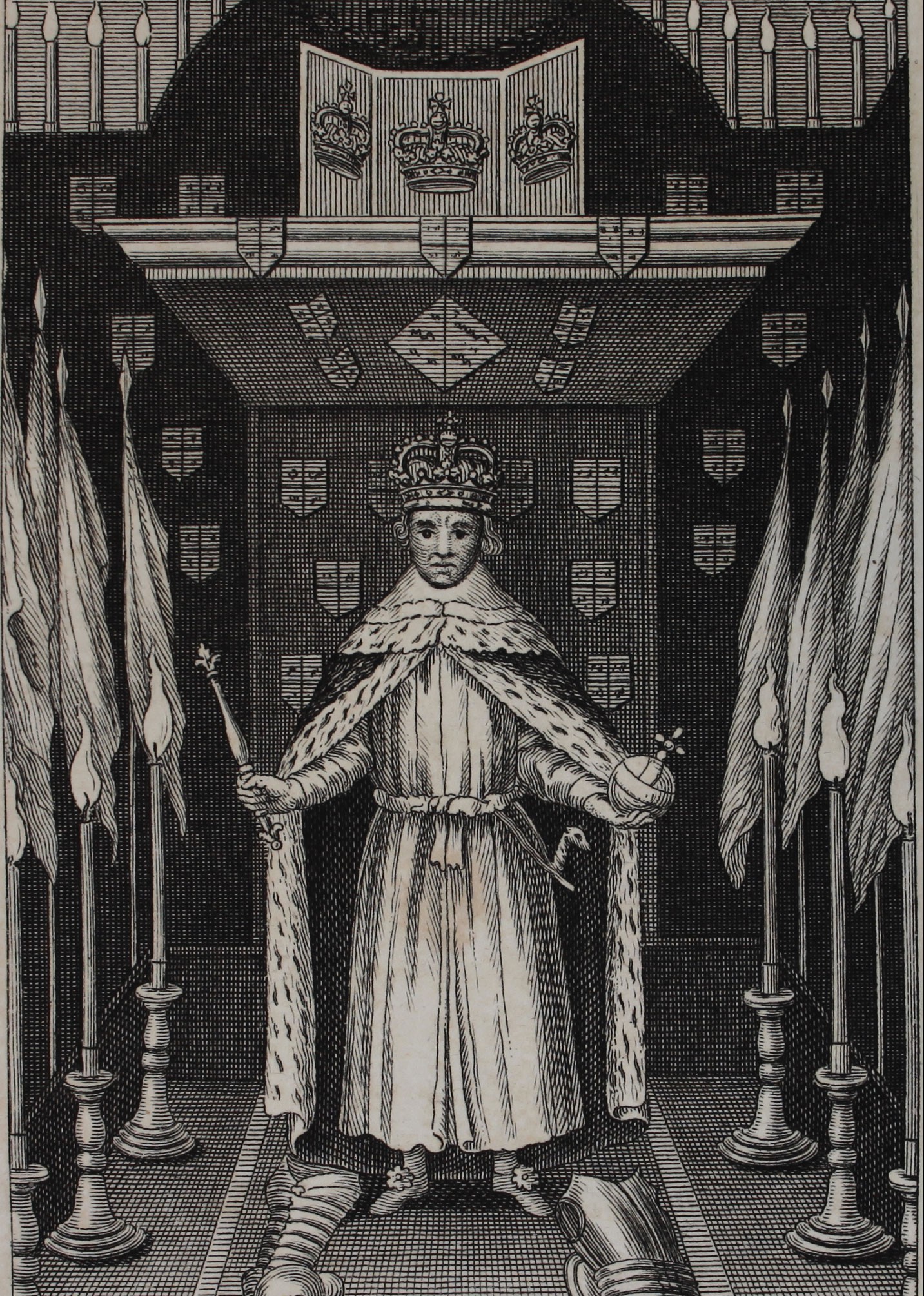
On 30 January 1649 Charles I the King of England was executed. Since 1642 civil war had raged in England, Scotland and Ireland and men on opposite sides (Royalists and Parliamentarians) fought in battles and sieges that claimed the lives of many. Charles I was viewed by some to be the man responsible for the bloodshed and therefore could not be trusted on the throne any longer. A trial resulted in a guilty verdict and he was executed outside Banqueting House in Whitehall. During the wars Oliver Cromwell had risen amongst Army ranks and he led the successful New Model Army which had helped to secure Parliament’s eventual victory. Cromwell also achieved widespread political influence and was a high profile supporter of the trial and execution of the King.
After the King’s execution England remained politically instable. For example, Charles I’s son joined with the Scots in a failed attempt to recapture the throne at the Battle of Worcester in 1651. The Parliament then in power was known as the ‘Rump Parliament’ because it was made up of men who had been elected in 1640 (‘The Long Parliament’) but now only contained those who had been allowed to stay after a purge of Parliament in 1648 by the Army. Over the course of the war the leaders of the Army were increasingly radicalised and soon became impatient with the inactivity of this parliament. In 1653 Oliver Cromwell forcibly removed ‘The Rump’ from power and replaced it with a new group called the Nominated Assembly (also known as ‘Barebone’s Parliament’ or the ‘Parliament of Saints’). This was religiously motivated and designed to put in government those who would push forward religious reform in line with Puritan ideas. These men were unelected, and despite initial feelings of optimism, the experiment failed and lasted less than six months.
A new constitution was proposed: an elected governor known as The Lord Protector who would rule with the assistance of a Council of State. In December 1653 Oliver Cromwell was installed as Lord Protector and he moved into the former residence of Charles I at Whitehall Palace. The regime gradually gained more of the trappings of monarchy and there were those who thought Cromwell should be offered the crown in order to promote stability and peace. Cromwell refused to be made King but when he was re-installed as Lord Protector in 1657 his ceremony was reminiscent of a traditional coronation. He also named his heir and successor: his son Richard Cromwell.
In September 1658 Oliver Cromwell died and the government was thrown into turmoil. His elected successor Richard came into power but his reign was fraught with difficulties and in less than a year he resigned as Lord Protector. The ‘Rump Parliament’ was reinstated but soon there were calls for the original members, who had been expelled by the Army in 1648, to be reinstated. In February 1660 these men were allowed to return and so the original ‘Long Parliament’ (elected in 1640) once again sat in Westminster and was now known as the Convention Parliament. In May 1660 this Parliament declared Charles II to have been King since the execution of Charles I and invited him to return to England to take up the throne.
The decade between the execution of Charles I and the Restoration of the monarchy in 1660 was a turbulent period in British history. There were many in the country who wanted to see reforms in religion to make it more Puritan and less like the Catholic Church. However, some groups of people took these ideas further and formed radical groups such as the Quakers who were seen by many as a threat to the regime. There were also political differences over how the country should be governed and whether Cromwell should rule as a monarch rather than as Lord Protector. Finally, despite the end of the civil wars, warfare continued. Parliament embarked on a series of wars with the Dutch Republic over trade and Cromwell went on campaigns in Scotland and Ireland to try to establish the Commonwealth and subdue opposition.
This resource contains original sources written by people who observed and reported on these events. Their accounts contain clues about Cromwell’s main aims during this period, as well as the difficulties that he came up against trying to implement them.
What were Cromwell’s main political and religious aims for the Commonwealth 1650-1660?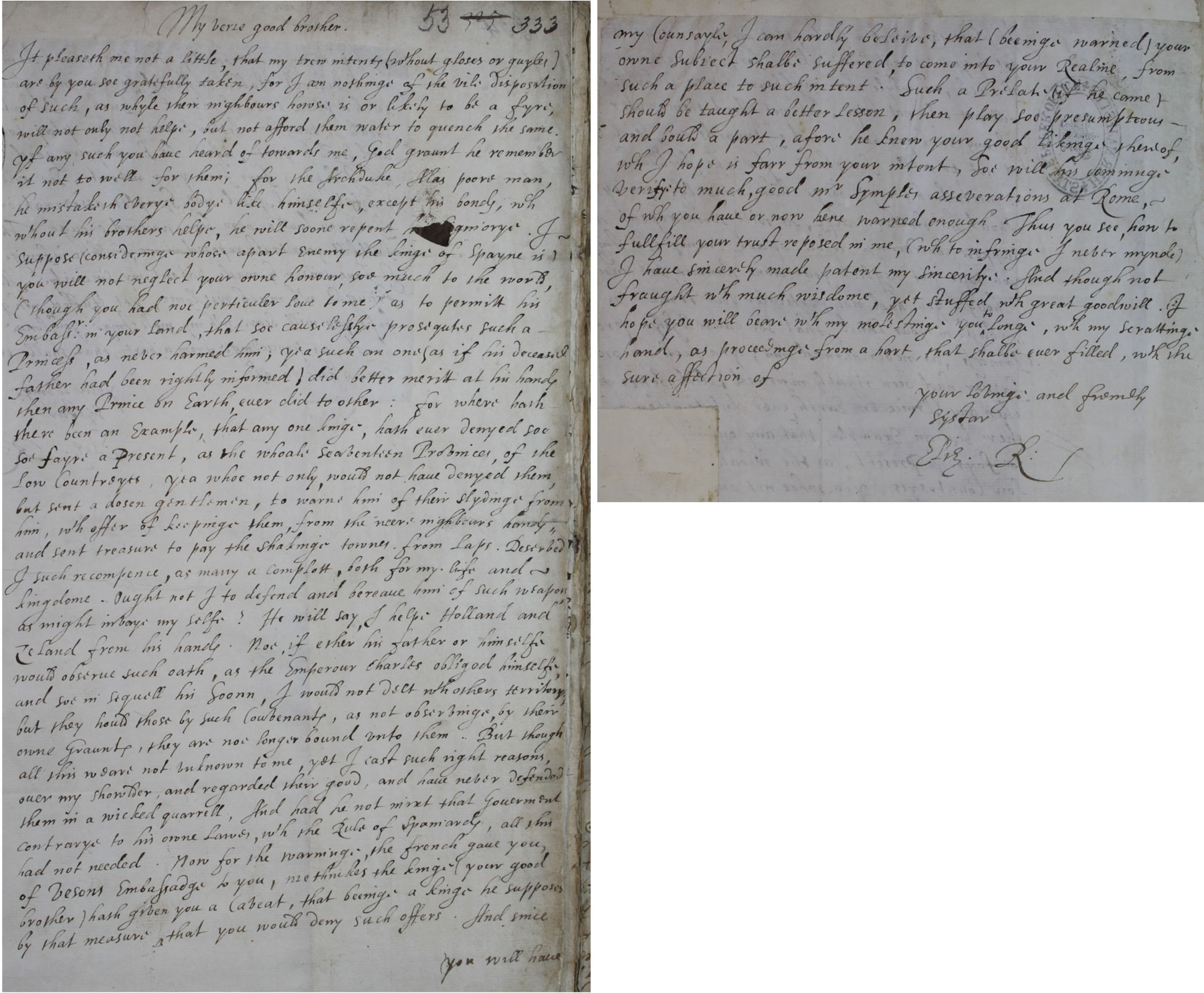
Elizabeth I to James VI, 5 January 1603 (SP 52/69 f.53)
This is the last known letter written by Elizabeth to the man whom she knew would succeed her. Conciliatory in tone, it provides a justification for her foreign policy, notably the defence of the Dutch rebels against Spain – an alliance that she no doubt hoped James would uphold when he became king of England. Even though Elizabeth herself, and the vast majority of her subjects, knew that James would soon take the throne, even now, in the last few weeks of her life, she refused to name him her heir. Shortly after writing this letter, she retreated to her ‘warm box’, Richmond Palace, to live out her days. Only on her deathbed, when pressed by a minister to formally name the King of Scots as her heir, did she draw a circlet above her head to indicate assent.
Transcript
‘My verie good brother.
It pleaseth me not a little, that my trew intents (without gloses or guyles) are by you soe gratefully taken, for I am nothinge of the vile disposition of such,as whyle their nighbours howse is or likely to be a fyre, will not only not helpe, but not afford them water to quench the same. Yf any such you have heard of towards me, God graunt he remember it not to well for them; for the Archduke [of Austria] Alas poore man, he mistaketh everye bodye like himselfe, except his bonds, which without his brothers helpe, he will soone repent… I suppose (consideringe whose apart enemy the kinge of Spayne is) you will not neglect your owne honour, soe much to the world, (though you had noe perticuler love to me) as to permitt his Embassador in your land, that soe cause […] prosequtes such a Princess, as never harmed him; yea such an one as if his deceased father had been rightly informed) did better merit at his hands then any Prince on earth, ever did to other: for where hath there been an example, that any one kinge, hath ever denyed soe soe fayre a present, as the whoale Seaventeen Provinces, of the Low Countreyes, yea whoe not only would not have denyed them, but sent a dosen gentlemen, to warne him of their slydinge from him, with offer of keepinge them from the neere nighbours hands and sent treasure to pay the shakinge townes from […] Deserved I such recompence, as many a complot, both for my life and kingdome. Ought not I to defend and bereave him of such weapons as might innoye my self? He will say I helpe Holland and Zeland from his handes. Noe, if ether his father or himselfe would observe such oath, as the Emperour Charles obliged himselfe and soe in sequell his soonn, I would not delt with others territory but they hould those by such couvenantes, as not observinge, by their owne grauntes, they are noe longer bound unto them. But though all this weare not unknown to me, yet I cast such right reasons, over my shoulder, and regarded their good, and have never defended them in a wicked quarrel, And had he not mixt that Government contrarye to his owne lawe, with the Rule of Spaniardes, all this had not needed. Now for the warning, the Frenche gave you, of Besons Embassadge to you, methinkes the kinge (your good brother) hath given you a caveat, that beeinge a kinge he supposes by that measure that you would deny such offers. And since you will have any counsayle, I can hardly believe, that (beeinge warned) your own subject shalbe suffered, to come into your Realme, from such a place to such intent. Such a Prelate (if he come) should be taught a better a lesson, then play soo presumptuous and bould a part, afore he knew your good liking thereof, which I hope is farr from your intent, soe will his comminge verify to much, good Mr Symples asservations at Rome, of which you have or now here warned enough. Thus you see, how to fullfill your trust reposed in me, (which to infringe I never mynde) I have sincerely made patent my sincerity. And though not fraught with much widome, yet stuffed with great goodwill. I hope you will beare with my molestinge you to [too] longe, with my seratting hand, as proceedinge from a hart, that shalbe ever filled, with the sure affection of your lovinge and frendly systar Elizabeth R:
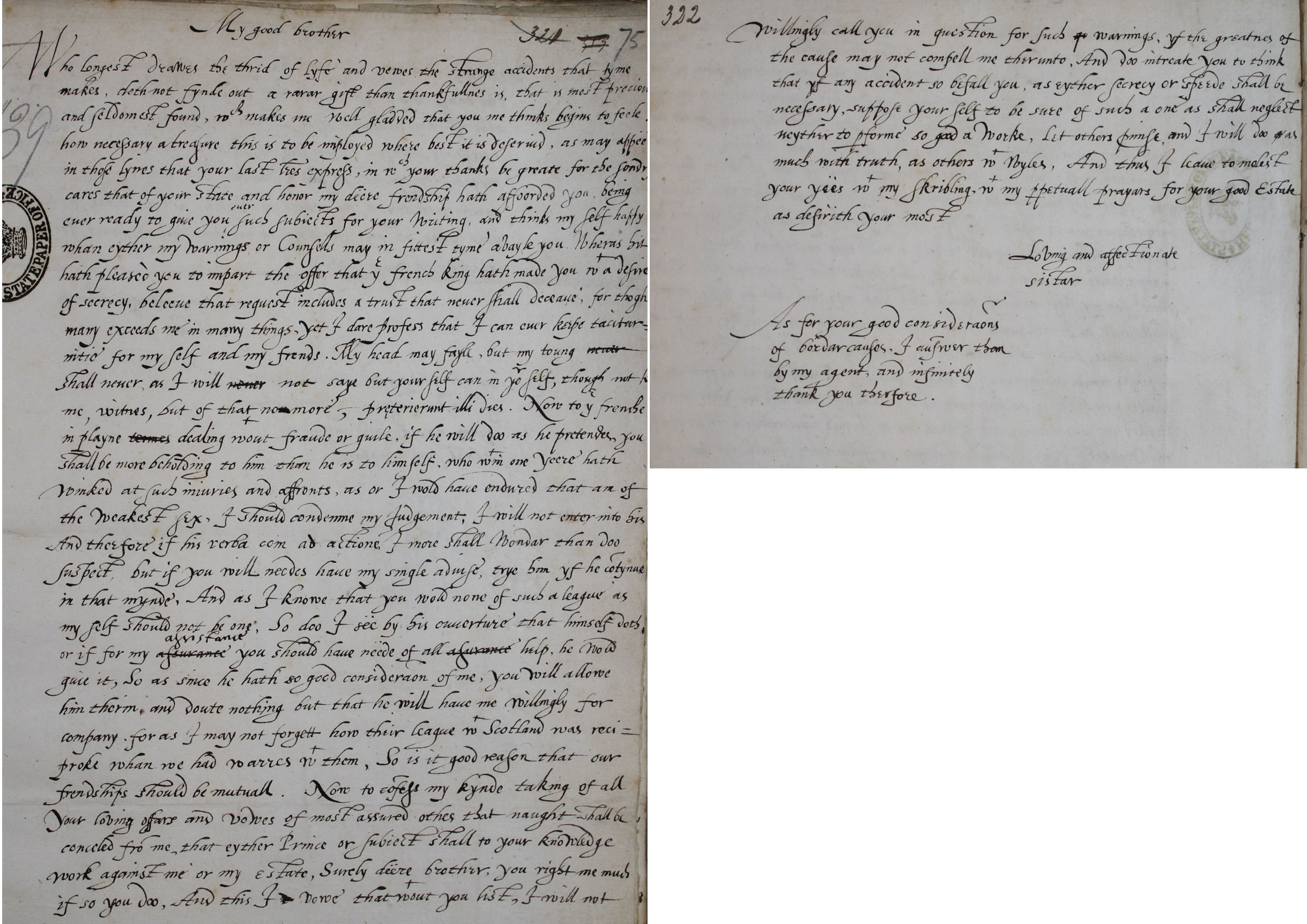
Elizabeth I to James VI, 4 July 1602 (SP 52/68 f.75)
This letter is an affirmation of her friendship towards the King of Scots, and also concerns a proposed league of their two kingdoms with France against Spain. The King of France, Henry IV, had sent an ambassador to James that summer to broach the matter. Although England and France had traditionally been rivals, Henry was a great admirer of Elizabeth, and is reported to have remarked on her superior skill in suppressing rebels against the crown: ‘She only is a king! She only knows how to rule.’ By the closing years of her reign, Elizabeth had finally won not just acceptance but respect as a female sovereign in a man’s world.
Transcript
My good Brother. Who longest drawes the thryd [thread] of life, and viewes the strange accidents that Tyme makes doth not fynd out a rarer gift than thanckfulnes is, that is most pretious and seldomest found, which makes me well gladded that you me thinkes beginnes to feele, howe necessary a Treasure this is to be imployed where best it is deserved, as may appeare in those lynes that your last letters express, in which your thanckes be great for the sondry cares that of your state and honour my dere friendshipp hath afforded you being ever ready to give you ever such subjects for your wrytinge, and thinckes my self happie, when ether my warnings or counsells may in fittest tyme avayle you. Wheras it hath pleased you to impart the offer that the French King hath made you with a disyre of secresie, believe that request includes a trust, that never shall deceave; for thoughe many exceed me in many thinges, yet I dare professe, that I can ever kepe taciturnity for my self and my freindes. My hedd may faile but my tounge shall never, as I will not say but your self can in your selfe thoughe not to me wytnes: but of that no more, preterierunt illi dies [‘those days will be past’]. Nowe to the Frenche in playne dealing without fraude or guile, if he will doe as he pretends, you shalbe more beholdinge to hym then he is to himself, who within one yeare hathe wyncked at suche injuries and affronts as or [ere] I would have indured that am of weakest sex I should condemne my Judgement, I will not enter into his, And therefore if his verba come ad Actionem [‘words come to action’], I more shall wonder then doe suspect, but if you will needes have my single advice, try hym if he contynue in that mynde; And as I knowe that you would none of suche a league as my self should not be one, so doe I see by his ouvreture, that hymself doth, or if for my assistance you should need of all help he would give it; so as synce he hath so good consideration of me you will allowe hym therein, and doubt nothing but that he will have me willingly for Company. For as I may not forgett howe their League with Scotland was recyproke when wee had warres with them: so is it good reason that our freindships should be mutuall. Nowe to confesse my kind taking of all your loving offers and vowes of most assured oathes that nought shalbe concealed from me, that ether Prynce or subject shall to your knowledge worck against me or my estate; surely (dere brother) you right me muche if so you doe. And this I vowe that without you list, I will not willingly call you in questoon for suche warninges, if the greatnes of your cause may not counsell me thereunto, And do intreat you to thincke that if any accydent so befall you, as ether secrecy or speed shalbe necessary, suppose your self to be sure of suche a one as shall neglect neyther to performe so good a worck; let others promise and I will do as muche with truth as others with wyles, And thus I leave to molest your eyes with my scribling with my perpetuall prayers for your good estate as desyreth your most loving and affectionat syster.
[postscript] As for your good considerations of border causes I aunswere you by my Agent and infinitely thanck you therefore.
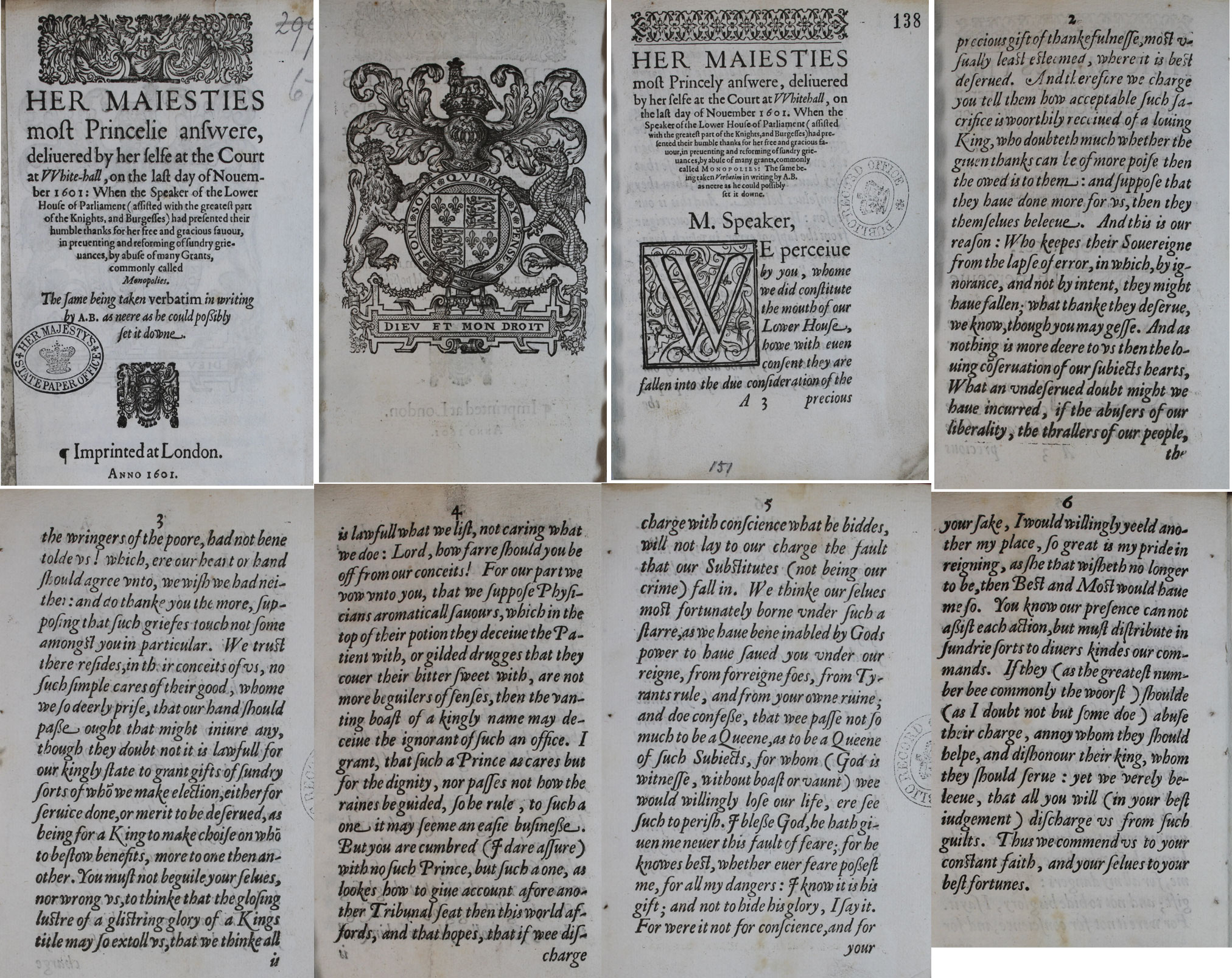
The ‘Golden Speech’, 30 November 1601 (SP 12/282 ff.137r-141v)
On 30 November 1601, Elizabeth addressed 141 Members of the House of Commons (including the Speaker) in what would be her last Parliament. Her speech was expected to address their concerns about pricing, based on the recent economic issues facing the country. But to everyone’s surprise, Elizabeth instead used the occasion to express the love she felt for her subjects, and how she viewed her position as their queen. This version of what became known as the ‘Golden Speech’ was recorded by one who was in attendance. Printed with the royal arms as its frontispiece, it may have been the ‘official’ version of the speech, published under the auspices of the court. It is more of a summary than a transcription, and may have stimulated others who were present to produce their own more detailed accounts of the speech.
Transcript
Her Majesties most Princelie answere, delivered byher selfe at the Court of Whitehall, on the last day of November 1601: When the Speaker of the Lower House of Parliament (assisted with the greatest part of the Knights, and Burgesses) had presented their humble thanks for her free and gracious favour, in preventing and reforming of sundry grievances, by abuse of many Grants, commonly called Monopolies. The same being taken verbatim in writing by A.B. [possibly Anthony Blagrave] as neere as he could possibly set it downe.
Mr Speaker, we perceive by you, whome we did constitute the mouth of our Lower House, howe with even consent they are fallen into the due consideration of the precious gift of thankefulnesse, most usually least esteemed, where it is best deserved. And therefore we charge you tell them how acceptable such sacrifice is woorthily received of a loving King, who doubteth much whether the given thanks can be of more poise [i.e. weight] then the owed is to them: and suppose that they have done more for us, then they themselves beleeve. And this is our reason: Who keepes their Sovereigne from the lapse of error, in which, by ignorance, and not by intent, they might have fallen; what thankes they deserve, we know, though you may gesse. And as northing is more deere unto us then the loving conservation of our subjects hearts, what an undeserved doubt might we have incurred, if the abusers of our liberality, the thrallers of our people, the wringers of the poore, had not bene tolde us! Which, ere our heart or hand should agree unto, we wish we had neither: and do thanke you the more, supposing that such griefes touch not some amongst you in particular. We trust there resides, in their conceits of us, no such simple cares of their good, whome we so deerly prize, that our hand should passe ought that might injure any, though they doubt not it is lawfull for our kingly state to grant gifts of sundry sorts of whom we make election, either for service done, or merit to be deserved, as being for a King to make choise on whom to bestow benefits, more to one then another. You must not beguile your selves, nor wrong us, to thinke that the glosing lustre of a glistring glory of a Kings title may so extoll us, that we thinke all is lawfull what we list, not caring what we doe: Lord, how farre should you be off from our conceits! For our part we vow unto you, that we suppose Physicians aromaticall favours, which in the top of their potion they deceive the Patient with, or gilded drugges that they cover their bitter sweet with, are not more beguilers of senses, then the vanting [vaunting] boast of a kingly name may deceive the ignorant of such an office. I grant, that such a Prince as cares but for the dignity, nor passes not how the raines be guided, so he rule, to such a one it may seeme an easie businesse. But you are cumbred (I dare assure) with no such Prince, but such a one, as lookes how to give account afore another Tribunal seat then this world affords, and that hopes, that if wee discharge with conscience what he biddes, will not lay to our charge the fault that our Substitutes (not being our crime) fall in. We thinke our selves most fortunately borne under such a starre, as we have bene inabled by Gods power to have saved you under our reigne, from forreigne foes, from Tyrants rule, and from your owne ruine; and doe confesse, that wee passe not so much to be a Queene, as to be a Queene of such Subjects, for whom (God is witnesse, without boast or vaunt) wee would willingly lose our life, ere see such to perish. I blesse God, he hath given me never this fault of feare; for he knowes best, whether ever feare possest me, for all my dangers: I know it is his gift; and not to hide his glory, I say it. For were it not for conscience, and for your sake, I would willingly yeeld another my place, so great is my pride in reigning, as she that wisheth no longer to be, then Best and Most would have me so. You know our presence can not assist each action, but must distribute in sundrie sorts to divers kindes our commands. If they (as the greatest number bee commonly the woorst) shoulde (as I doubt not but some doe) abuse their charge, annoy whom they should helpe, and dishonour their king, whom they should serve: yet we verely beleeve, thatall you will (in your best judgement) discharge us from such guilts. Thus we commend us to your constant faith, and your selves to your best fortunes.
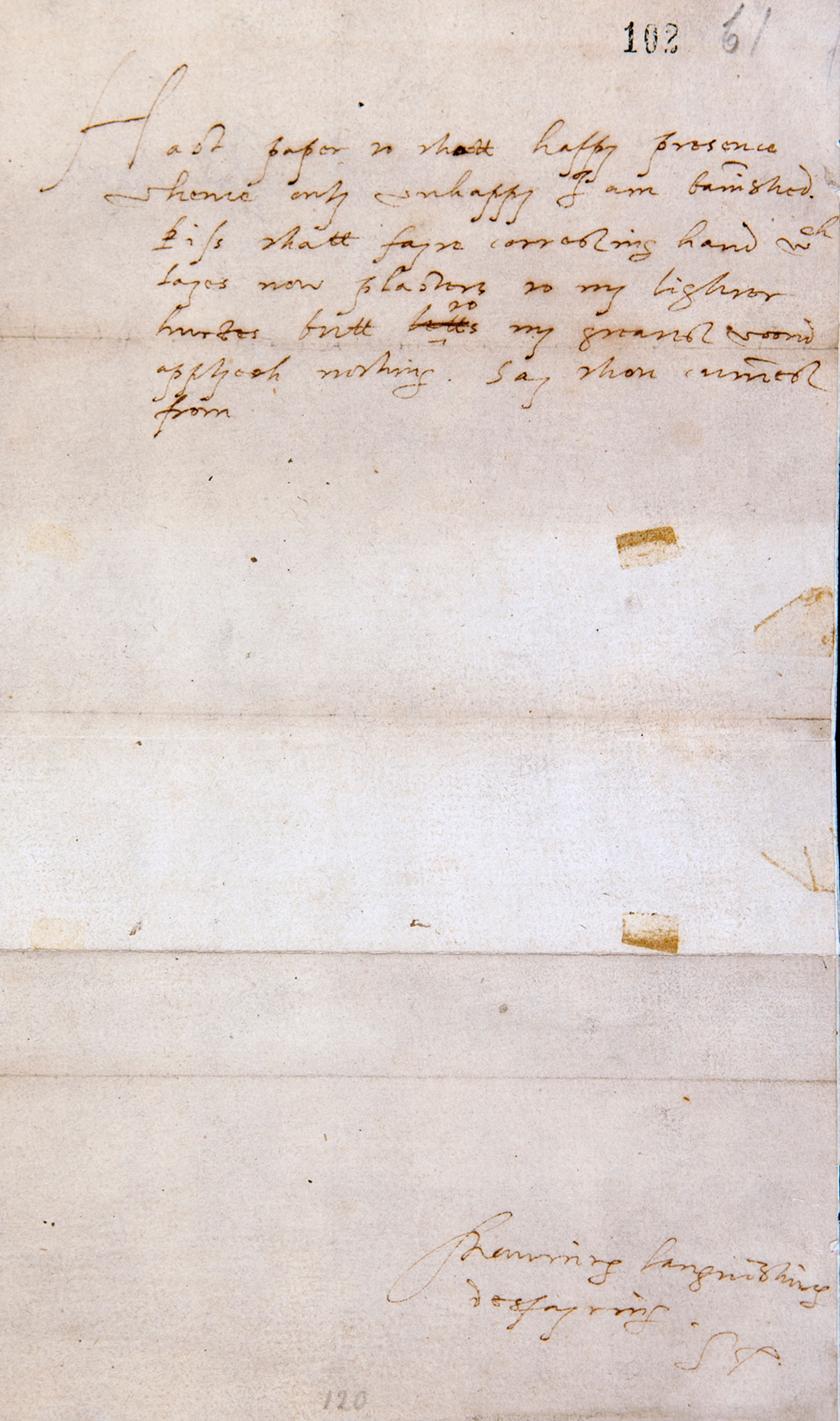
Robert Devereux, Earl of Essex to Elizabeth I, 6 September 1600 (SP12/275 f.102)
At the time of writing this letter, Essex had been banished from court for his actions as Lord Lieutenant of Ireland. Despite leading the largest expeditionary force ever sent to Ireland, he failed to crush the rebellion and eventually made terms with its leader, Tyrone. He also overstepped the bounds of his authority by conferring numerous knighthoods on his officers. The Irish rebels joked that ‘he never drew sword but to make knights’. Despite pleading for forgiveness from the queen who had held him high in favour for many years, he would never again enjoy her good graces. Frustrated by his loss of power, he staged a badly organised rebellion and was executed in February 1601.
Transcript
Hast [hasten], paper, to thatt happy presence whence only unhappy I am banished. Kiss thatt fayre correcting hand which layes new plasters to my lighter hurtes, butt to my greatest woond applyeth nothing. Say thou cummest from shaming, languishing, despayring, S.X. [Essex]