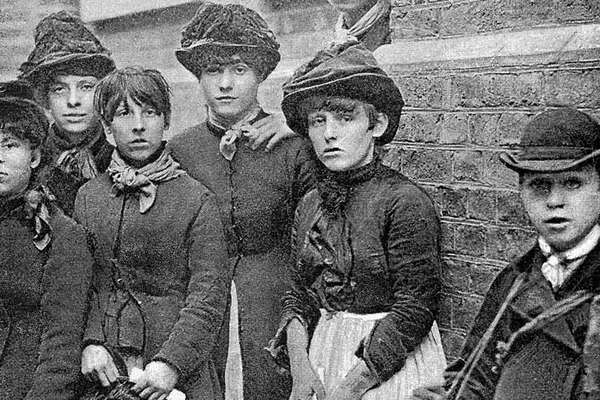
Origins of the industrial unrest
The General Strike of 1926 grew out of long-running disputes in the coal industry. Britain’s coal mines were returned to private ownership in 1921, after a period of nationalisation during the First World War. Private mine owners wanted wage cuts, prompting strong opposition from the Miners’ Federation of Great Britain, which was supported by the General Council of the Trades Union Congress (TUC).
In 1925, a Royal Commission on the coal industry was set up by Conservative Prime Minister Stanley Baldwin. In March 1926 it published its report, which rejected re-nationalisation and recommended wage reductions. Mine owners then demanded significant pay cuts and an eight-hour day, to commence on 1 May. They also insisted on a return to district settlements, which many believed would lead to further pay cuts in the future. When negotiations failed, more than a million miners were ‘locked out’ until they accepted the new terms of employment.
A special trade union conference voted in favour of a general strike in support of the miners, to begin on 3 May, while the TUC kept negotiating with the government. The strike was finally triggered when printers of the Daily Mail refused to print a leading article denouncing the general strike. In response the government announced that negotiations had broken down.
On the evening of 2 May, the Cabinet met in Downing Street. At the meeting it was recorded that:
Authentic information was received to the effect that certain employees in the office of the “Daily Mail” had declined to print a leading article, and that the “Daily Mail” would not be published on the morrow. This information, coupled with the evidence of specific instructions directing members of certain Trades Unions in several of the most vital industries and services of the country to carry out a General Strike on Tuesday next, was felt to introduce a new factor in the situation, and it was agreed that negotiations could not be continued without a repudiation by the Trades Union Council Committee of the actions referred to and an immediate and unconditional withdrawal of the instructions of a general strike.
Cabinet meeting minutes, 2 May 1926. Catalogue reference: CAB 23/52/23
Workers walk out
At one minute to midnight on 3 May, the General Strike began. Over 1.5 million people halted work in solidarity with the miners. Strikers included workers from iron, steel, electricity, gas, docks, transport and printing industries. The transport system ground to a halt and deliveries of food were delayed. The government called in the army and brought in thousands of volunteers to support industry and provide public services.
Printers were on strike, so newspapers stopped circulating, making it difficult to get news about the strike. The government began publishing The British Gazette, which presented the government’s critical view of the strikers, while in response the TUC issued The British Worker to challenge this criticism.

Great Western Railway
Whom do you serve?
The Agreement of Service provides that each man will "abstain from any act that may injuriously affect the interests of the Company" and that "seven days' previous notice in writing of termination of service shall be given."
NOTICE TO THE STAFF
The National Union of Railwaymen have intimated that railwaymen have been asked to strike without notice tomorrow night. Each Great Western man has to decide his course of action but I appeal to all of you to hesitate before you break your contracts of service with the old Company before you inflict grave injury upon the Railway Industry, and before you arouse ill feeling in the Railway service which will take years to remove
Railway Companies and Railwaymen have demonstrated that they can settle their disputes by direct negotiations. The Mining Industry should be advised to do the same
Remember that your means of living and your personal interests are involved, and that Great Western men are trusted to be loyal to their conditions of service in the same manner as they expect the Company to carry out their obligations and agreements.
Felix J. C. Pole,
General Manager.
Paddington Station.
May 2nd, 1926.
Great Western Railway Magazine cover, May 1926. Catalogue reference: ZSPC 11/496
Staff magazines for some industries continued to be printed. The Great Western Railway Magazine published a notice asking ‘Whom do you serve?’ It contained a statement from the General Manager of the GWR warning against the strike, alongside a statement from the National Union of Railwaymen in support of it.
With the strike came demonstrations and some outbreaks of violence, including vandalism and clashes between police and strikers. On 10 May, miners in Cramlington in Northumberland derailed a train by removing a section of track. They had intended to target a strike-breaking coal train, but inadvertently derailed a Flying Scotsman passenger train. As the train was travelling a low speed, there were no casualties.

Passenger train London and NER from north derailed about one mile south of Cramlington Station this afternoon engine upset first portion of train badly damaged oneperson injured no fatalities otherwise no serious disturbances = Chief Constable Morpeth
Telegram reporting train derailment near Cramlington, 10 May 1926. Catalogue reference: HO 144/10671
With the context of recent revolutions in Europe and the rise of communism, there were genuine fears that the General Strike would lead to organised revolutionary violence. However, overall violence was fairly limited and sporadic, and unions specifically advised members to avoid clashes and allow essential supplies to be transported.
The government’s response
At a meeting on 5 May, the Cabinet discussed emergency measures to deal with the impact of the strike. Practical problems relating to production and the supply of food and other goods became a large concern for the government. At the same time, they were also concerned about public unrest and considered restricting public gatherings.
The Cabinet minutes report that ‘the Cabinet were informed that racing had already been stopped. There was general agreement that cricket should not be stopped.’ There was also a decision to recruit more Special Constables and that ‘special efforts should be concentrated on the recruiting of young and vigorous men for this purpose.’

The INDUSTRIAL CRISIS – The Supply and Transport Organisation
5. The Cabinet discussed generally the emergency measures taken to deal with the situation created by the general strike. The Cabinet were informed that racing had already been stopped. There was general agreement that cricket should not be stopped. The particulars of the latest information did not differ materially from the latest Strike Bulletin. As regards food prices the Cabinet were informed that satisfactory arrangements had been made by the President of the Board of Trade with the head of the principal sections of the food trade in London in regard to prices, the only difficult outstanding being with certain America interests who controlled the chilled beef trade.
Cabinet meeting minutes discussing the General Strike, 5 May 1926. Catalogue reference: CAB 23/52/24
On 7 May Cabinet discussions about security continued in light of concerns about the impact of the strike on the movement of foodstuffs. The Cabinet agreed to the use of the army to protect docks but stated that ‘regular troops should only be used in the last resort, and should, as far as possible, be kept away from the disturbed areas until the moment for their use had arrived.’
Chancellor of the Exchequer Winston Churchill took a hardline stance against the strike. He took charge of The British Gazette as editor and used it to portray strikers as a revolutionary threat. The government also took control of paper supplies to limit the printing of the TUC’s paper, The British Worker.

That the general principles on which protection should be based on should be as follows:-
(i) Regular troops should only be used in the last resort, and should, as far as possible, be kept away from the disturbed areas until the moment for their use had arrived:
(ii) (ii) That the first line on whom fell the responsibility for providing protection was the regular Police, and that the Home Secretary should have authority to augment them by recruiting Special Constables on the present lines up to the largest scale deemed practicable and necessary, both in London and in the country. In London, for example, he was given discretion to announce that the number of Special Constables would be increased up to 50,000:
Cabinet meeting minutes discussing the General Strike, 7 May 1926. Catalogue reference: CAB 23/52/25
The role of volunteers
To support the mobilisation of volunteers, the government took over the independent Organisation for the Maintenance of Supplies and recruited volunteers from its membership. Most volunteers were drawn from the middle and upper classes, and included ex-servicemen and students. Many volunteers were considered unsuitable for much of the heavy manual labour required, and so most were involved in driving and power station work. Some worked in printing, producing The British Gazette for the government.
The volunteers were applauded as heroes by the government and the Conservative press. However, they were treated with suspicion and animosity by some strikers, who viewed them as undermining the struggle for workers’ rights. This had the effect of deepening existing class divisions in Britain.
Image 1 of 3

Photograph showing volunteer porters loading eggs at Paddington Station during the General Strike. Catalogue reference: RAIL 253/76
Image 2 of 3

Photograph showing a volunteer worker driving a motor van at Paddington Station during the General Strike. Catalogue reference: RAIL 253/76
Image 3 of 3
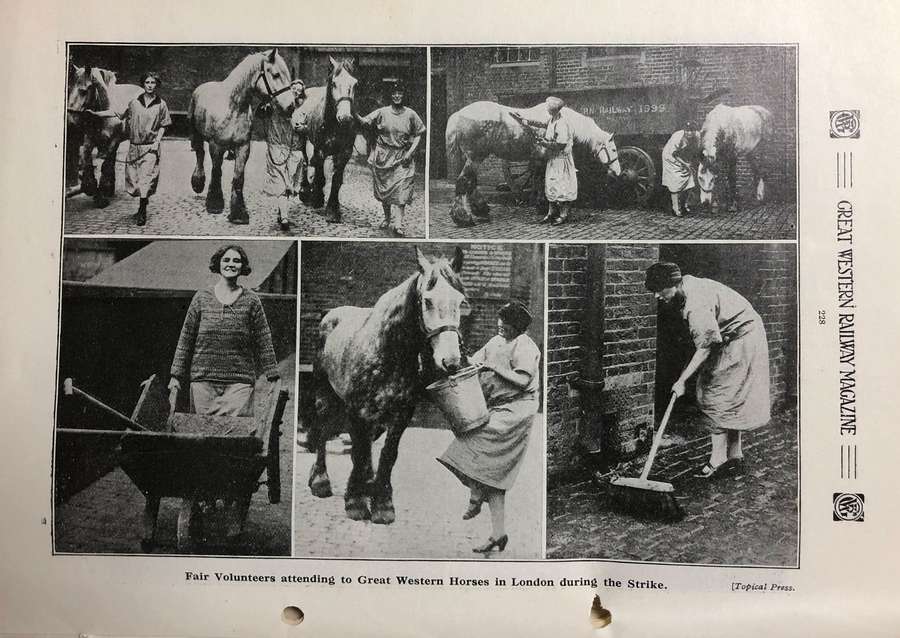
Photographs showing volunteers during the General Strike, published in the Great Western Railway Magazine. Catalogue reference: ZSPC 11/496
The end of the strike
The strike lasted for nine days. Trade unions were struggling financially as they continued to provide support to striking members. By 7 May, the TUC sought to end the strike, beginning negotiations in secret. On 12 May, the TUC General Council visited 10 Downing Street to put their proposals to the government. Although Prime Minister Stanley Baldwin refused to accept their proposals, the TUC called off the strike unconditionally.

The British Worker
Official Strike News Bulletin
Published by The General Council of the Trades Union Congress
No. 8 Wednesday Evening, May 12, 1926. Price one penny
STRIKE TERMINATED TO-DAY
Trades Union Congress General Council Satisfied That Miners Will Now Get a Fair Deal
HOW PEACE CAME
Telegrams Already Sent to All Unions Concerned to Instruct Their Branches at Once: Miners Call Delegate Conference
The General Strike is over.
Copy of The British Worker saying ‘Strike terminated today’, 12 May 1926. Catalogue reference: PRO 30/69/1830
The Miner’s Federation was highly critical of the TUC’s concession. In its ‘Statement on the General Strike of May 1926’, it argued that ‘from first to last there was never any possibility of the forces arrayed against the miners accepting anything but lower wages, longer hours and district agreements-unless compelled to do so by the united strength of the working class.’

Miners’ Federation of Great Britain
Statement on the GENERAL STRIKE Of May, 1926
Statement of the Miners Federation of Great Britain, May 1926. Catalogue reference: PRO 30/69/1791

Fellow Trade Unionists!
I.-Introductory remarks
After seven months of grim struggle, on a scale the like of which has not been known in Trade Union history in this or in any country of the world, the M.F.G.B., in common with the other Trade Unions, is called to give its judgment on the events of the first fortnight of that struggle.
II.
The population of these islands had never previously experienced anything resembling the situation created by the General Strike of May 4th to May 12th. Limited though it was both in number of workers affected, in the objective aimed at and in the time it lasted, the General Strike showed the working class to be possessed of qualities of courage, comradeship, and disciplined resource that had not hitherto been called forth and that gave a good omen for future solidarity.
Introductory remarks from the Statement of the Miners Federation of Great Britain, May 1926. Catalogue reference: PRO 30/69/1791
The strikers gradually returned to work while the miners continued to fight on, until they were eventually forced to return to work – for lower wages and longer hours – in November 1926. Trade Unions were significantly weakened by the strike. A year later, the Trade Disputes and Trade Unions Act was passed. This limited the power of unions by banning sympathetic strikes and any industrial action that coerced the government, either directly or indirectly.
While the General Strike ultimately failed in its objectives, it still has a powerful legacy as one of the largest and most significant industrial disputes in British history. It was a notable moment of cross-sector working-class solidarity and demonstrated the collective strength of organised labour to disrupt the economy.
-
- From our collection
- CAB 23/52/23
- Title
- Cabinet meeting minutes discussing the General Strike
- Date
- 2 May 1926
-
- From our collection
- CAB 23/52/24
- Title
- Cabinet meeting minutes discussing the General Strike
- Date
- 5 May 1926
-
- From our collection
- CAB 23/52/25
- Title
- Cabinet meeting minutes discussing the General Strike
- Date
- 7 May 1926
-
- From our collection
- ZSPC 11/496
- Title
- Great Western Railway Magazine
- Date
- May 1926
-
- From our collection
- HO 144/10671
- Title
- Telegram reporting train derailment near Cramlington
- Date
- 10 May 1926
-
- From our collection
- RAIL 253/76
- Title
- Photographs showing volunteer workers during the General Strike
- Date
- May 1926
-
- From our collection
- PRO 30/69/1830
- Title
- Copy of The British Worker
- Date
- 12 May 1926
-
- From our collection
- PRO 30/69/1791
- Title
- Statement of the Miners Federation of Great Britain
- Date
- May 1926