1. Why use this guide?

The National Archives holds one of the largest and most significant collections of photographs in the United Kingdom. Running into millions of individual items, these photographs have been amassed during the working lives of central government departments and cover the historical time-span of the medium itself.

This guide will help you to find individual photographs among our vast holdings, some of them in discrete collections but many scattered more haphazardly among the documents of the scores of central government departments, past and present, that commissioned and collected them.

You can view and purchase high-quality copies of many thousands of our photographs through our Image Library. The Image Library is the easiest way to get a sense of the breadth and depth of what we hold but most of our photographs are not available to view online. To see anything that is not available from the Image Library you will need either to visit us or pay for copies to be sent to you.

The National Archives does not hold any cinematographic film. Archived film of government origin is held at the British Film Institute.

2. The span of the collection

The National Archives holds central government and court records that have been selected for permanent preservation. Our photographs are among these records, all of which, broadly speaking, have played some part in the working life of their government department of origin, whether commissioned as part of a survey, collected by British diplomats overseas, inherited, donated or acquired in some other way. The subject matter, however, goes beyond the business of government, though that in itself encompasses an enormously wide range of material, from transport, housing and crime to war, heavy industry and British interests overseas. Many thousands of our photographs arrived in our repositories via the offices of copyright, depicting anything that any amateur or professional photographer chose to point a camera at and register the resulting image for copyright protection.

A sequence of ten photographs showing a man in a boating hat, with a cane and a bag, walking and turning. The first five show him side on; the second five show him from behind. They are part of a collection of 'motion pictures' from 1887, registered for copyright by Eadweard Muybridge (catalogue reference COPY 1/383/53).

This sequence of photographs are part of a collection of ‘motion pictures’ from 1887, registered for copyright by Eadweard Muybridge (catalogue reference COPY 1/383/53).

The earliest identified photographs in our collection date from the early 1850s and appear in significant numbers from the 1860s onwards, with tens of thousands of separate images dating from the 19th century alone.

Though many of the images depict scenes from the United Kingdom, large numbers of our photographs depict land, events and people from countries around the world.

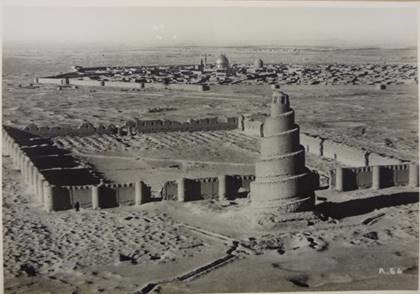
This image of Samarra in Iraq, circa 1935 (catalogue reference OS 1/384), is among a collection of aerial photographs of sites of archaeological interest in the Middle East, dated 1925-1936, sent to The National Archives from the Ordnance Survey agency. The picture shows a temple in the foreground and a walled town in the background.

This image of Samarra in Iraq, circa 1935 (catalogue reference OS 1/384), is among a collection of aerial photographs of sites of archaeological interest in the Middle East, dated 1925-1936, sent to The National Archives from the Ordnance Survey agency.

It is almost certain that many photographs remain undiscovered in volumes, files and papers buried within our collection. We know for sure that countless photographs have not been formally identified or catalogued. If you come across any photographs in our records that are not listed in our catalogue, we’d be grateful if you could let us know. You can alert us to any photographs you find using the ‘Let us know’ link on the catalogue description page of any piece.

See Appendix 1 for an overview of the photographic collections we have so far identified.

You may find some of our photographs, such as those related to criminal court cases, distressing.


3. How to search for photographs

Sections 4 to 13 list some of our more significant collections of photographs by theme but there are many more photographs on the same themes that are not highlighted in these sections so it’s always worth trying a search in our Image Library or catalogue with keywords – this section of the guide provides advice on how to do this.

3.1 Use The National Archives’ Image Library

Our Image Library contains over 75,000 images available to download (£) immediately. Some of these images are of written documents or artwork but many thousands are digitised versions of original photographs. You can search the Image Library using keywords.

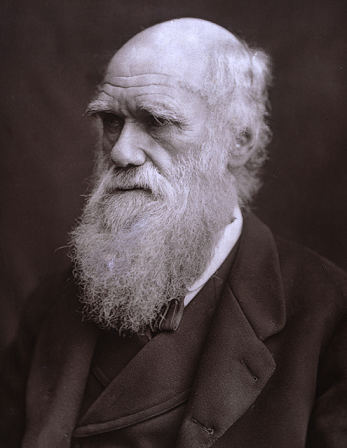
A photographic portrait of Charles Darwin, 1882. He is shown from the chest up, dressed in a waistcoated suit.

Charles Darwin, 1882 (catalogue reference COPY 1/57/225).

If you don’t find what you are looking for, you can search the full collection in our catalogue (see 3.2).

3.2 Use our catalogue to search the whole collection by keywords

Several million photographs are either wholly or partly described in our catalogue. To find them search our catalogue by keyword(s), using the following kinds of combinations:

  • ‘photograph’ AND subject such as ‘war’
  • ‘photograph’ AND key term such as ‘plantation’
  • ‘photograph’ AND name such as ‘ Alfred Tennyson’
  • ‘photograph’ AND type of photograph such as ‘aerial’
  • ‘photograph’ AND place such as ‘China’

Search results provide short descriptions and document references. A small proportion of these photographs have been digitised and you can download these direct from the catalogue (£) or from the Image Library (see above) but in most instances you will need either to visit us or pay for copies to be sent to you to see them.

You can use the filters on the left hand side of search results pages to refine your search by department code, such as FO for Foreign Office, and date. For more search advice, read catalogue search help.

3.3 Use ‘series searches’ to search specific parts of the collection

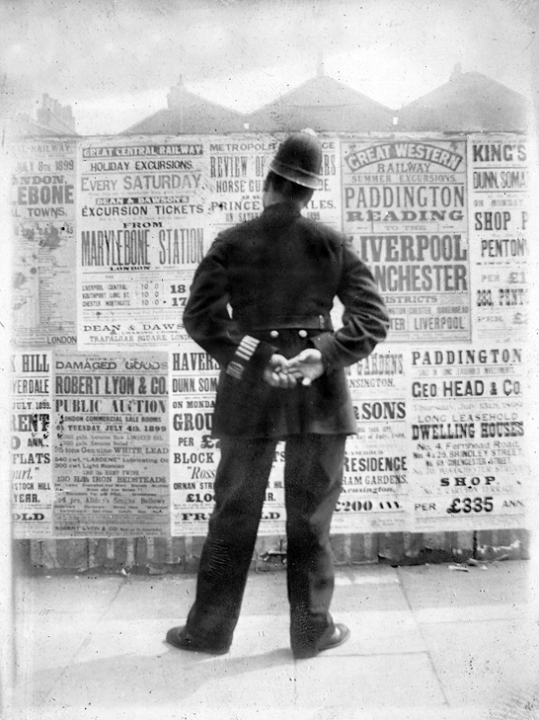
A rear view of a policeman stood in front of a wall of bill posters with his hands behind his back, apparently reading the posters.

Policeman, 1899 (catalogue reference COPY 1/441/109).

This is another way to use our catalogue. A large number of photographs are only identified in the record series descriptions of our catalogue. Each record series has its own ‘series search’. There are hundreds of series that contain photographs, many of them listed in Appendix 1 of this guide and in sections 4 to 13, where the same series are organised by theme. Once you have established that a series contains photographs you can use the series search, and the keyword tips in section 3.2, to try finding them. However, in some cases searches may have to be much more speculative as some series do not contain descriptions of individual photographs. You will need to look through the original documents within the series to discover where the photographs are located.

3.4 Incomplete paper index for places and people

A paper index to photographs, with listings by place names and people/groups, is available at The National Archives building in Kew. Most of the references are included in our online catalogue, making the paper version largely redundant – but browsing in this way presents an alternative way of searching and may occasionally turn up something unfindable in the online catalogue.

4. Photographs registered for copyright

One of the largest single collections of photographs held at The National Archives was originally accumulated by the Stationers’ Company, the government office responsible for copyright registration. Between 1842 and 1924, alongside paintings, drawings and written works, tens of thousands of photographs were registered for copyright, covering a multitude of subjects. Some photographs are artistic, others are purely documentary. Among the images depicted are people from all walks of life, from monarchs to paupers; landscapes, buildings and famous landmarks in Britain and around the world; military and war scenes; and innumerable other subjects.

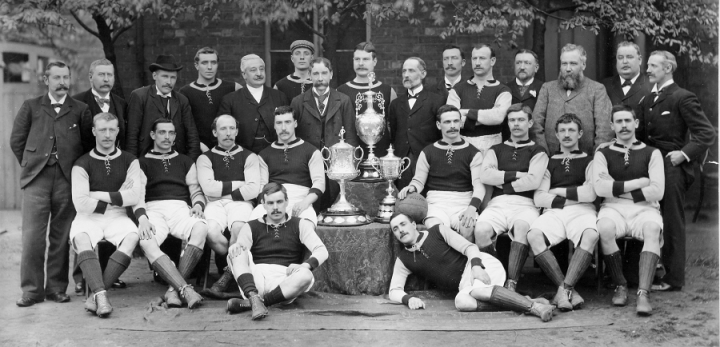
A cropped version of a photograph of Aston Villa Football Club, showing the whole team in club colours and ten older men in suits, gathered around three trophies. The photo was registered for copyright in 1896 (catalogue reference COPY 1/424/87).

A cropped version of a photograph of Aston Villa Football Club, registered for copyright in 1896 (catalogue reference COPY 1/424/873).

You can search by keyword for these photographs in COPY 1 but for more detailed advice on searching see our guide to copyright records.

5. First and Second World Wars

Click on the record series references in the tables to search the respective series by keywords (for tips on how to do this see sections 3.2 and 3.3). There are also photographs from the war years in the series listed in section 6.

5.1 First World War

Originating department Description of subject matter Record series Description of collection
Admiralty Photographs showing various forms of harbour defence and the protection of ships against torpedoes. ADM 244 Discrete collection
Air Ministry An album of aerial photographs from the First World War among reports and photographs which otherwise date from 1939-1952. AIR 34 An album and scattered individual photographs
War Office Aerial and ground photographs taken in Flanders during the First World War. The majority, taken from aircraft, were used for intelligence, mapping and reconnaissance purposes, but the series also contains artillery panoramas which show views of the battlefield taken from artillery positions. WO 316 A discrete collection of 58 photographs
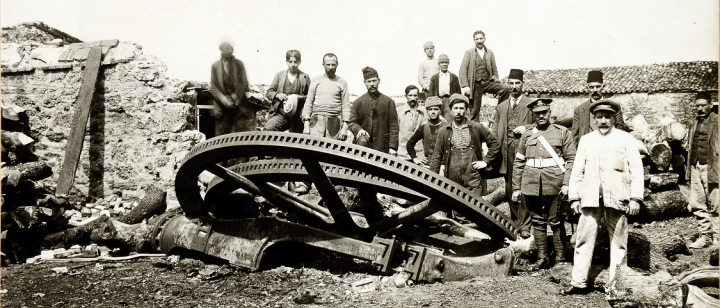
A picture of a group of men (a cropped version of the original), some in military uniform, others in civilian clothing, gathered around a destroyed 28cm gun, is among an album of 170 photographs taken during the Gallipoli Campaign (catalogue reference WO 317/1/30).

This picture (a cropped version of the original) is among an album of 170 photographs taken during the Gallipoli Campaign (catalogue reference WO 317/1/30).

War Office Photographs of the Gallipoli Campaign including aerial shots of captured equipment, ships and battle sites, replete with accompanying statements and sketch maps. WO 317 Discrete collection with accompanying material; a number of photographs have been formed into collages
War Office Photographs, sketches and accompanying maps from various theatres of operations including some from the Western Front in WO 153/1268-1275 and others of the Salonika Campaign in Greece in WO 153/1345 and WO 153/1346. Includes battlefield panoramas. WO 153 Photographs scattered among files
War Office Six photographs taken during the campaign in Palestine. They were taken from aircraft for survey purposes and show the terrain and towns being fought over, 1916-1918. WO 319 Discrete collection
War Office Twelve photographic panoramas of the fighting in the Alpine region near the Austrian border, during the Italian campaign, 1916-1918. WO 323 Discrete collection
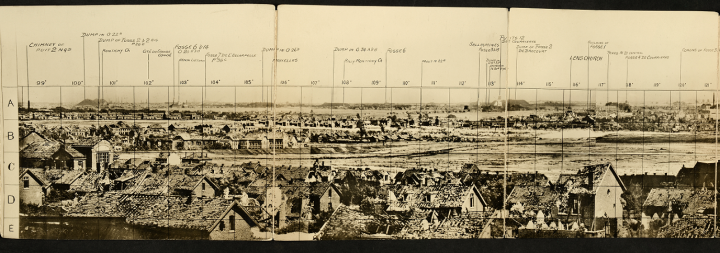
Cross-section (around a third of the full length) of a monochrome panorama of Lens in June 1917 (catalogue reference WO 316/28). The photograph shows houses and fields and has been labelled to show the locations of various features.

Cross-section (around a third of the full length) of a panorama of Lens in June 1917 (catalogue reference WO 316/28).

5.2 Second World War

Originating department Description of subject matter Record series Description of collection
Admiralty Admiralty papers assembled by official historians as background information for the ‘official history’ of the Second World War. There are photographs throughout these papers as well as five distinct volumes of photographs showing, among other things:

  • Boulogne (including aerial views)
  • artificial harbours used during Operation Neptune
  • silhouettes of the French coastline (three volumes)
ADM 199 Five volumes of photographs plus scattered individual items
Admiralty Photographs showing various forms of harbour defence and the protection of ships against torpedoes. ADM 244 Discrete collection
Admiralty Numerous photographs accompany reports and narratives of operations and incidents showing damage to naval craft, 1939-1959. ADM 267 Photographs scattered among files
Air Ministry Squadron operations record books. A number of volumes include or wholly comprise appendices, a number of which include photographs, most commonly of personnel. These may be groups or individuals, posing or carrying out tasks, or participating in a ceremonial (for example, medal decoration) or social (station sports day) activity. AIR 27 Photographs scattered among files
Air Ministry Air force stations operations record books. As with the squadron record books, a number of volumes include or wholly comprise appendices, a number of which include photographs, most commonly of personnel. AIR 28 Photographs scattered among files
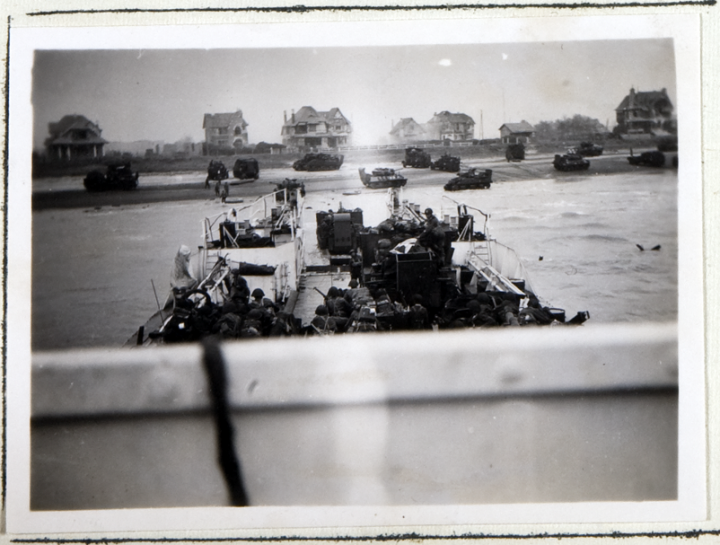
Operation Neptune landing craft during the D-Day Landings in June 1944 (catalogue reference ADM 199/1660). In the foreground are troops and landing craft readying to leave a boat approaching the shore; int he background are tanks and other vehicles on a beach in front of several detached houses.

Operation Neptune landing craft during the D-Day Landings in June 1944 (catalogue reference ADM 199/1660).

Air Ministry Miscellaneous air force units operations record books. As with the squadron record books, a number of volumes include or wholly comprise appendices, a number of which include photographs, most commonly of personnel. There are also two files containing photographs taken during training courses held at the staff college, RAF Andover, 1922-1946, and the Central Gunnery School, 1940-1945. AIR 29 Photographs scattered among files
Air Ministry Reports and photographs from the Central Interpretation Unit. A large number of photographs and/or printed pictures are scattered among these files. The largest portion of this material comprises aerial photographs taken by reconnaissance aircraft. Additionally, there are numerous ground level shots obtained from a variety of sources. Most prominent of these are those taken by tourists, before the advent of war, and subsequently passed to the ministry. AIR 34 Photographs scattered among files
Ministry of Home Security Papers of the Research and Experiments Department containing observations of and research into allied and enemy bombs, bombing methods and effects, fire prevention and air raid damage both in the United Kingdom and in enemy occupied territories. Many are technical reports and surveys of air raid damage to towns, buildings and transport facilities, with photographs as supporting evidence. HO 192 Photographs scattered among files
Ministry of Information Allied military and civilian personnel, military and political leaders, including the King and Sir Winston Churchill, as well as events and scenes from the Home Front and liberated areas of Europe. INF 2/44 670 photographs
Ministry for Agriculture, Fisheries and Food Includes a significant number of photographs depicting the work activities of the Women’s Land Army. MAF 59 Photographs scattered among files
National Savings Committee for England and Wales The photographs in this series were mainly taken in 1940 and 1943 in connection with the war savings campaign. Most of the photographs were originally used in window displays. There are a few post-war photographs of industrial and school savings groups. NSC 32 Discrete collection
War Office War Crimes Case Files from the Judge Advocate General’s Office consisting of daily transcripts of proceedings, prosecution and defence summations. Most files have photographs, most often of the defendant, but some also depict the scene of the crime – they were used as exhibits. WO 235 Photographs scattered among files
War Office A miscellaneous collection of 1,388 photographs of the Mulberry Harbour in various stages of construction and during transit across the Channel WO 240 Discrete collection
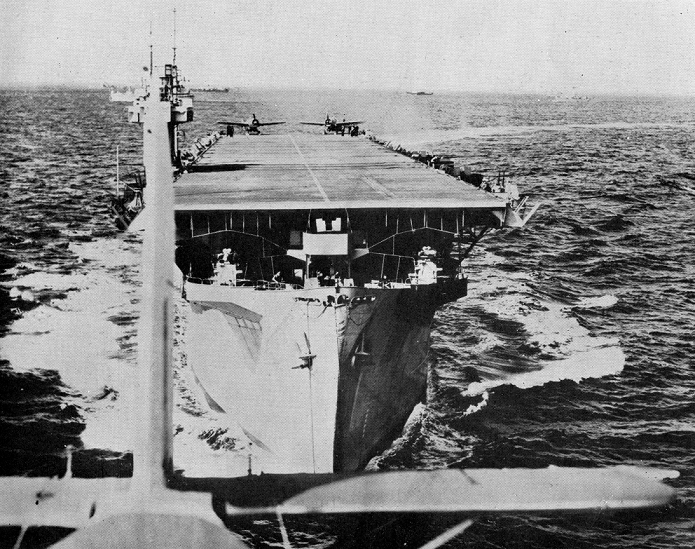
A shot of HMS Biter, a convoy escort carrier, at sea, taken from the back of an aeroplane which has apparently just taken off from the carrier, in 1944 (catalogue reference ADM 199/2061).

HMS Biter, a convoy escort carrier, in 1944 (catalogue reference ADM 199/2061).

6. Military establishments, hardware and transport

Click on the record series references in the tables to search the respective series by keywords (for tips on how to do this see sections 3.2 and 3.3). See section 5 for more series of photographs of military establishments, hardware and transport.

Originating department Description of subject matter Record series Description of collection
Admiralty Royal Navy ships afloat or in dry dock, 1854-1945, from the Naval Construction Department. Within each sequence photographs are arranged alphabetically by ship’s name. ADM 176 First 782 photographs are mounted on card; remaining 359 are not
Admiralty Naval dockyards and other establishments in the British Isles and abroad, 1857-1961, from the Architectural and Engineering Works Department, later the Civil Engineer in Chief’s Department. ADM 195 A discrete collection of 126 photograph albums
Admiralty Photographs showing various forms of harbour defence and the protection of ships against torpedoes. Includes boom defence equipment, 1916-1946, and at least one file of enemy defence booms (at the approaches to Kiel). ADM 244 A discrete photographic collection of 26 files
Admiralty and Air Ministry Airships, balloons and associated technical equipment and facilities in Britain, Germany, the United States, Canada, Egypt and India, 1911-1939. Photographs once held by the Naval Aircraft Works and later the Royal Airship Works. AIR 11 A subseries within this series, comprising 27 pieces, and several further files
Admiralty and Air Ministry Airship sheds, aeroplane hangers and seaplane bases, plus related buildings and equipment, 1914-1932, at stations in Bedford, Cardington, Howden, Pulham and Felixstowe, among others in Britain, and at Karachi, Pakistan. AIR 59 A discrete collection of ten volumes of photographs
Air Ministry Photographs of research into aircraft, airships, balloons, engines and equipment found in monthly reports from the Directorate of research, 1919-1925. AIR 60 Reports with original photographs (but most are printed copies of original photographs)
Air Ministry Aircraft engines and components in development 1935-1952, from the papers of Air Commodore Sir Frank Whittle. AIR 62 Photographs within 37 files and volumes
Department of Scientific and Industrial Research Photographs taken during tests of models of sea-planes and flying boats carried out for the Air Ministry and private aircraft constructors, 1918-1929. DSIR 42 Photographs accompanying reports
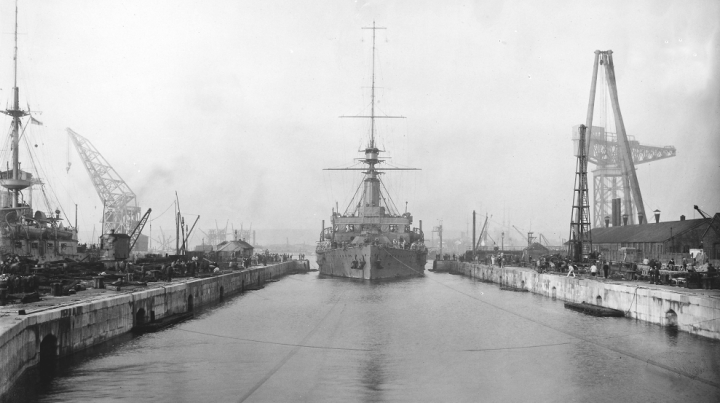
Portsmouth Dockyard, 1914. This is HMS Hindustan entering Dock No.14 (catalogue reference ADM 195/84). Cranes are visible on either side of the canal into which the ship is docking.

Portsmouth Dockyard, 1914. This is HMS Hindustan entering Dock No.14 (catalogue reference ADM 195/84).

Ministry of Supply (Ordnance Board) British and American military and naval aircraft, 1941-1945. These photographs are attached to Aircraft Data Sheets but not all data sheets have a photograph attached. SUPP 9 Photographs attached to data sheeets
War Office and Ministry of Supply Photographs taken as part of research into chemical weapons and protective devices, 1916-1985, from the Chemical Defence Research Department and Chemical Defence Experimental Establishment. WO 188 Numerous photographs scattered among papers
War Office Mulberry Harbour in various stages of construction and during transit across the Channel. WO 240 A miscellaneous collection of 1,388 photographs
War Office Atomic trials at Maralinga, Australia, 1956-1966. WO 320 A discrete collection of 10 volumes of photographs

7. Landscapes, urban scenery and geographical surveys

Click on the record series references in the tables to search the respective series by keywords (for tips on how to do this see sections 3.2 and 3.3). See section 5 for links to series containing aerial photographs taken during the First and Second World Wars.

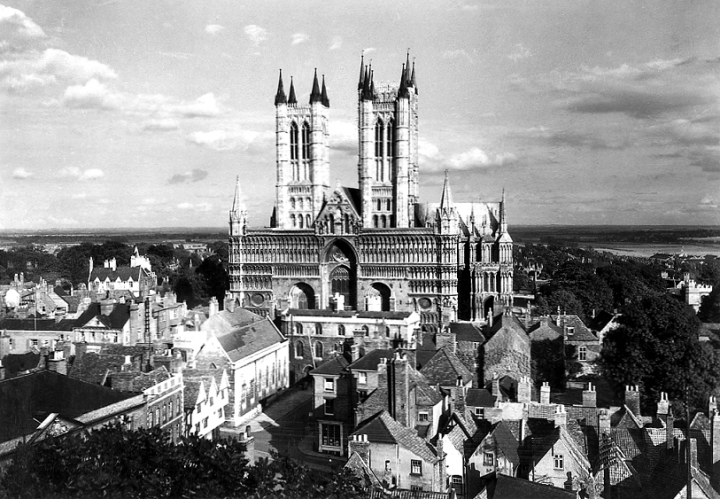
A wide shot of Lincoln Cathedral from the front and the surrounding landscape, with houses in the foreground and flat countryside in the background. The photo is from the 1930s (catalogue reference INF 9/699).

Lincoln Cathedral and the surrounding landscape in the 1930s (catalogue reference INF 9/699).

Originating department Description of subject matter Record series Description of collection
Admiralty and Ministry of Defence (Naval Intelligence Division and Defence Intelligence Staff) Coasts and inland waterways of the British Isles, 1945-1992, photographed for beach surveys and beach intelligence reports. They include Operation SANDSTONE reports, a comprehensive survey carried out between 1946 and 1966 by the Naval Intelligence Department (NID) and the Directorate of Intelligence (DI 19). The files are arranged geographically, covering the west coast of Scotland and outlying islands, then from north to south, the east coast of Scotland and the remainder of the British Isles in a clockwise direction; Northern Ireland, Eire and Jersey are also covered. ADM 326 Photographs among 1326  policy files
Town and Country Planning Division of the Welsh Office Photographs, 1949-1973, in support of applications for either residential development or mineral extraction. BD 28 18 files with photographs
Countryside Commission National parks, areas of outstanding natural beauty, heritage coasts, uplands, lowlands and other landscapes illustrating conservation, countryside management, visitor services and access. They were produced by the Visual Resources Unit for use by the Countryside Commission for mainly public purposes, 1971 to 1992. COU 11 40 Colour slides (35mm) and photographs
Central Office of Information Photographs of the British Isles: The Dixon-Scott collection, 1926-1948. The great majority of these photographs depict places in the British Isles, arranged topographically. There are also photographs of a few people and some thematic subjects. Digital images from this collection can be downloaded from our website. INF 9 Around 13,000 photographs
Ministry of Transport Streets and amenity service vehicles in Liverpool and Manchester, 1919-1949. MT 162 18 photographs
War Office Places and areas in theatres of war in Europe, Asia, Africa, the Atlantic and the Pacific, 1913-1968. WO 252 Photographs among 1486 files and volumes

8. Former British colonies and other countries

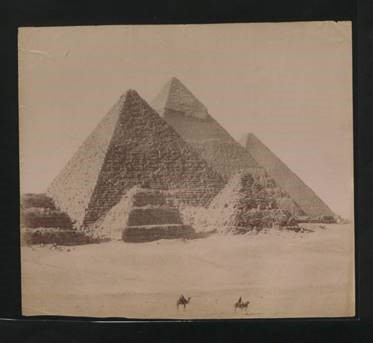
The pyramids at Giza in Egypt, 1890s, with two tiny images of camels in the foreground (catalogue reference CO 1069/179).

The pyramids at Giza in Egypt, 1890s (catalogue reference CO 1069/179).

There are large numbers of photographs held here that were taken or collected by British diplomats and other government officials stationed overseas. Most are held among the records of the government departments responsible for handling foreign affairs and British interests abroad, including the Colonial Office, the Dominions Office, the Foreign Office and its successor the Foreign and Commonwealth Office.

There are also a great many photographs taken on foreign soil among the records of the various branches of the military and many such collections are listed in section 5 and section 6.

Click on the record series references in the tables to search the respective series by keywords (for tips on how to do this see sections 3.2 and 3.3).

Originating department Description of subject matter Record series Description of collection
Colonial Office, Dominions Office, Commonwealth Office and Foreign and Commonwealth Office The Foreign and Commonwealth Office Library Photograph Collection, 1815 to 1990. Most of these photographs were originally collected by the Colonial Office, for many years somewhat haphazardly, beginning in 1869 when the Colonial Secretary asked governors to arrange for the taking of photographs of ‘noteworthy buildings and scenery…together with individuals of various races peculiar to the colony’. They were only relatively recently brought together into a more coherent collection, sorted into several broad categories, loosely described as:

  • topographical
  • miscellaneous conferences (most commonly visual accounts of diplomatic events and activities)
  • portraiture (these remain at the FCO archive in Hanslope Park)
  • architectural (retained by the FCO to support their building maintenance work)
CO 1069 Photographs and artistic and literary works collected by four of the five overseas departments of state, the exception being the India Office
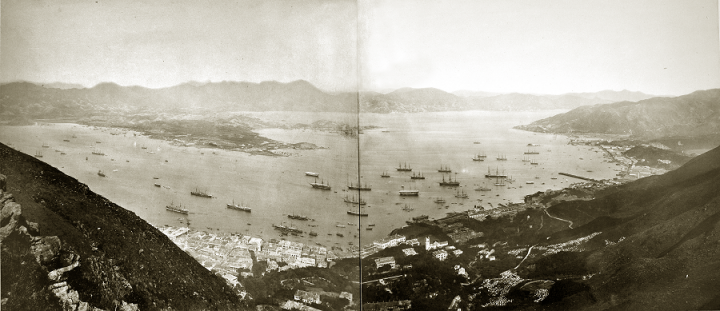
Hilly landscape surrounding a bay in which many boats are anchored. One of several panoramic shots of Hong Kong in the 1890s held in CO 1069 (catalogue reference CO 1069/447).

One of several panoramic shots of Hong Kong in the 1890s held in CO 1069 (catalogue reference CO 1069/447).

Foreign Office Photographs taken in the Mediterranean, Turkey, Syria, Persia, Egypt and elsewhere in the Middle East among the personal and official papers of the diplomat Sir Percy Loraine (1880-1961). FO 1011 Includes 19 photograph albums, and three family portrait photographs
Central Office of Information British Empire Collection of photographs, 1945-1965, illustrating the geography and way of life in British colonial and Commonwealth territories. The material is arranged topographically by colony or dominion. INF 10 A collection of about 8,000 photographs
Central Office of Information India by Cecil Beaton: over 170 photographs taken by Cecil Beaton whilst in India, 1944-1945 in INF 14/432 to INF 14/447, among a disparate collection of photographs from around the world and the UK used to illustrate publicity material issued by the department. INF 14 A discrete photographic collection in 447 files
Office of Works and successors British consulates in China, Japan, Korea and Thailand, as well as a few other buildings in Hong Kong and Indonesia, 1907-1947 WORK 55 Six volumes of photographs

9. People and personalities

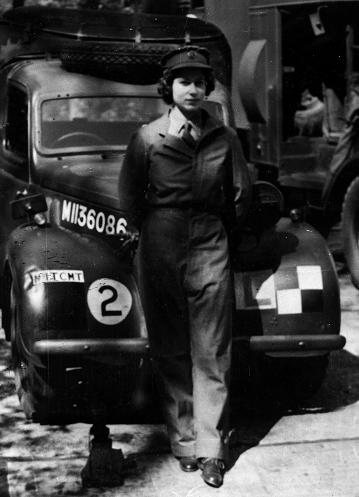
HRH Princess Elizabeth, later Queen Elizabeth II, in her Auxiliary Territorial Service uniform, stood in front of a military car, in 1945 (catalogue reference INF 2/44/612).

HRH Princess Elizabeth, later Queen Elizabeth II, in her Auxiliary Territorial Service uniform in 1945 (catalogue reference INF 2/44/612).

Historically, official photographs of government employees, whether of the military, civil service or elsewhere in government have not been routinely taken, much less preserved permanently at The National Archives. It is therefore unlikely that you will be able to locate a photograph of a specific individual who served in the military or any branch of government within our collections. There is, however, one anomaly: merchant seamen who were discharged from the navy between 1913 and 1972 (see series BT 372 in table below).

On the other hand, photographs of renowned statesmen, royal figures and numerous other famous personalities both inside and outside government, from artists to engineers, are relatively easy to locate. You can search our catalogue with the name of the person and the word ‘photograph’.


Originating department Description of subject matter Record series Description of collection
Registrar General of Shipping and Seamen (Board of Trade) Photographs of individual merchant seamen held with papers in seamen’s ‘pouches’ (a file created for each seaman). Of the approximately 500,000 pouches, around half contain photographs. BT 372 Around 250,000 photographs
Copyright Office People, some famous, from all walks of life depicted in photographs registered for copyright protection at Stationers’ Hall, 1842-1912. There are many other subject matters among these photographs (see section 4). COPY 1 Tens of thousands of photographs among other items registered for copyright
Foreign Office Passport photographs in a collection illustrating the many different types of passports issued in Britain and in British colonies between 1802-1961. Passports issued after 1 January 1915 normally include a photograph of the holder. FO 655 Hundreds of passport photographs
Foreign Office and Foreign and Commonwealth Office Passport photographs among a representative sample of Passport Office case papers, 1916-1983 for British passports issued in Britain and overseas. Most cases include photographs of applicants as photographs on most forms of passport applications became compulsory from 1 January 1915. FO 737 Hundreds of passport photographs
Metropolitan Police, Aliens Registration Office A sample of around 1,000 Aliens’ Registration Cards for aliens resident in London since 1914 – some 75% include a photograph of the individual registered. MEPO 35 Around 750 passport-sized photographs
Home Office and Prison Commission Portraits of individual prisoners, taken between 1870 and 1885. PCOM 2 Ten photograph albums (photographs of Wandsworth prisoners are available online)
Home Office and Prison Commission Photographs of male prisoners, 1870s-1887 among Male Licenses 1853-1887. PCOM 3 770 boxes, each containing several files on individual prisoners – from the 1870s the majority of these files contain at least one, annotated photograph of the prisoner
Home Office and Prison Commission Photographs of female prisoners, 1870s-1887 among Female Licences, 1853-1887. PCOM 4 Around 200 files – from the 1870s the majority of these files contain at least one, annotated photograph of the prisoner
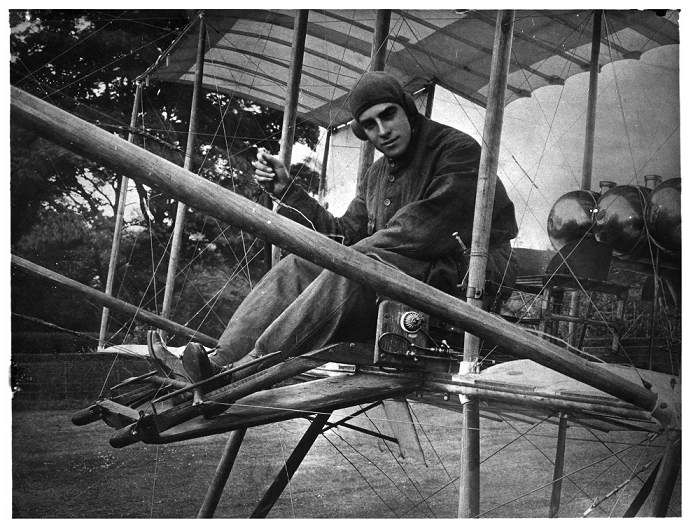
Claude Grahame White, a pioneer of aviation, in 1910 sat in an early aircraft (catalogue reference COPY 1/548/279).

Claude Grahame White, a pioneer of aviation, in 1910 (catalogue reference COPY 1/548/279).

10. Public inquiries and criminal trials

Click on the record series references in the tables to search the respective series by keywords (for tips on how to do this see sections 3.2 and 3.3). For photographs of some 19th-century prisoners see section 9.

Originating department Description of subject matter Record series Description of collection
Central Criminal Court The files in this record series, dating from 1835 to 1992, are a rich source of photographs maintained as exhibits in criminal trials.

WARNING: THESE PHOTOGRAPHS MAY CAUSE DISTRESS WHEN VIEWED

CRIM 1 Several thousand photographs from hundreds of cases.
Director of Public Prosecutions Departmental prosecution files from 1931 to 1992, many relating to murder cases but included in each year are other significant prosecutions representative of the department’s work.

WARNING: THESE PHOTOGRAPHS MAY CAUSE DISTRESS WHEN VIEWED

DPP 2 Many of these files contain photographs
Home Office Proceedings and report of the Widgery Tribunal of Inquiry into the events in Londonderry on Sunday 30 January 1972. HO 219 18 pieces have photographs enclosed, submitted in evidence to the Inquiry
Home Office Scarman Inquiry into Red Lion Square Disorders, 1974-1975. HO 233 Amongst the material given in evidence is a selection of photographs, gleaned from press photographers, the police and members of the public

11. Railways

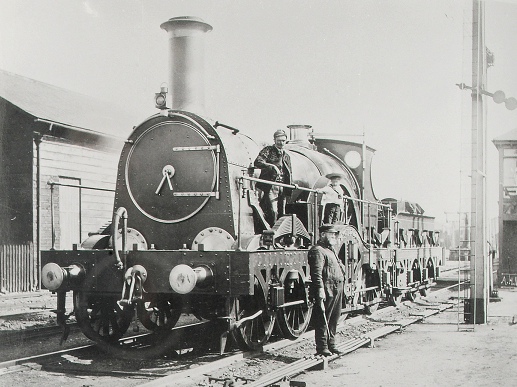
A broad gauge 'Lightning' locomotive of the Great Western Railway, stationary in a yard, 17 July 1889 (catalogue reference RAIL 1014/19). A man and a child are shown stood on the side of the locomotive and another man is stood on the ground in front.

A broad gauge ‘Lightning’ locomotive of the Great Western Railway, 17 July 1889 (catalogue reference RAIL 1014/19).

As the bulk of the railway records at The National Archives are those of the private railway companies before they were nationalised in 1947, so most of the related photographs we hold are from the pre-nationalisation era too.

The collection runs into many thousands of images, capturing scenes from the Golden Age of Steam, and beyond, both in Britain and around the world. Locomotives, train stations and crashes all feature heavily.

The series listed below contain the greatest concentrations of railway photographs but there are many more scattered throughout the wider collection. Click on the record series references in the tables to search the respective series by keywords (for tips on how to do this see sections 3.2 and 3.3).

Originating department Description of subject matter Record series Description of collection
British Railways Publicity photographs and posters, 1948-1976. Subjects include locomotives, offices, posters, rolling stock and stations. Many of the posters were issued to publicise holiday resorts and places of interest to railway travellers. Most of the files, folders and volumes contain material from all four regional groups. However, a few comprise a selection covering just Eastern Region Services. AN 14 Discrete collection of photographs and posters
British Railways Eastern Region, Civil Engineer’s Records, 1949-1971.  Contains:

  • Architects photographs from the Eastern Region’s Civil Engineer’s Office, 1953-1956 – a subseries of four volumes.
  • Facilities, staff and training procedures at the railway workshops, Darlington, 1951-1958 – a subseries of five volumes

Several other records have selections of photographs showing damage and repairs to track and buildings, compiled for training new engineers.

AN 28 Two subseries of photograph collections
British Railways Stations in the London Midland Region, 1948-1966. AN 31 Five undated volumes of station photographs
British Railways British Railways publicity material relating to special events, 1948-1976.

  • Visit of HM Queen Elizabeth II to Eastern Region, 1962
  • Visit of Duke of Edinburgh to opening of Engine Research Laboratory, Derby, 1964 – 24 colour photographs
  • Visit of Sir Cyril Hurcomb, Chairman of the British Transport Commission, to Eastern Region headquarters, 1948
AN 91 Photographs among files
Ministry of Transport Railway equipment and crashed train, near Carlisle, 1934, but most of the photographs in this series show streets and amenity service vehicles in Liverpool and Manchester, 1919-1949. MT 162 A discrete collection of 18 photographs
Pre-nationalisation railway companies Great Western Railway photographs of staff (group shots or shots at work), buildings and facilities, locomotives and rolling stock, technical equipment, postal facilities, holiday ventures and a wide range of other subjects believed to date from the 1840s to the 1940s. RAIL 1014 Small collections and individual photographs scattered among volumes and files
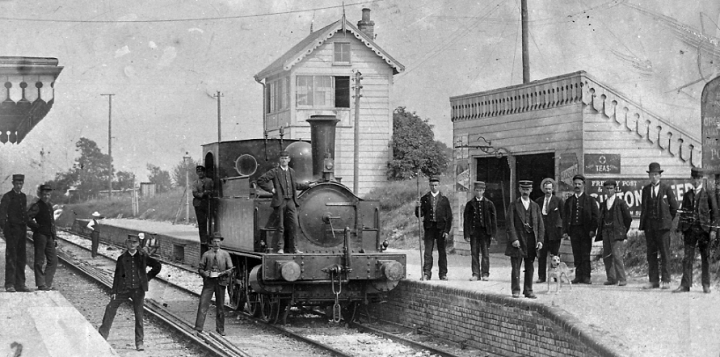
A locomotive engine stationary at Ludgershall train station, on the Midland and South Western Junction Railway, in 1901 (catalogue reference RAIL 1014/36/16). Fourteen men pose for the camera, stood side by side across the platform, on the tracks and on the locomotive itself.

Ludgershall train station, on the Midland and South Western Junction Railway, in 1901 (catalogue reference RAIL 1014/36/16).

Pre-nationalisation railway companies London, Midland and Scottish Railway Company photographs collected principally from the records of the various companies merged to form this new company under the 1921 reorganization. Most photographs are undated but the vast majority are post-1900. RAIL 1015 Photographs filed among other records
Pre-nationalisation railway companies Retired Railway Officers’ Society members’ portraits dating from 1909 to 1960. RAIL 1156 15 volumes of photographs
Pre-nationalisation railway companies The Tomlinson Collection. Photographs used by W W Tomlinson in writing and illustrating his history of the North Eastern Railway, published in 1914. Subjects covered include tickets, medals, paintings owned by the company, railway stations, facilities and staff, locomotives and rolling stock, and ancillary industries. Most of the photographs are undated but were taken between the mid-19th century up to the First World War. RAIL 1157 Numerous photographs among papers
British Transport Historical Records Office Library WE Hayward Collection. Material compiled by WE Hayward of Weston-super-Mare on railways both in Britain and abroad. ZSPC 11 Numerous photographs, original and printed, scattered among papers, files and volumes

12. Buildings and housing

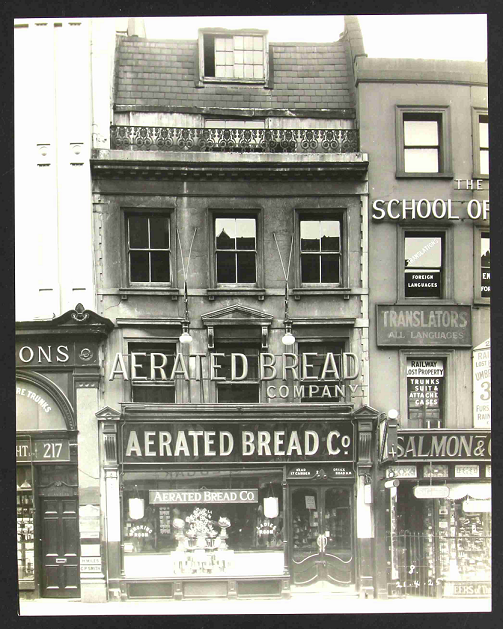
A four-storey, terraced building occupied by the 'Aerated Bread Company' at No. 216 Piccadilly, London, 1925 (catalogue reference CRES 43/151/8).

No. 216 Piccadilly, London, 1925 (catalogue reference CRES 43/151/8).

Many of these collections depict public buildings used by branches of government and other public bodies and agencies, though there are plenty of images of architectural works of every other ilk, including ordinary housing. Among them are images of hospitals, police stations, museums, post offices and the buildings of The National Archives itself, and its predecessor the Public Record Office.

There are also photographs of historic buildings, some off them commissioned for preservation projects.

Click on the record series references in the tables to search the respective series by keywords (for tips on how to do this see sections 3.2 and 3.3).

For pictures of buildings from outside the UK, from the pyramids to embassies, see section 8.

Originating department Description of subject matter Record series Description of collection
Department of the Environment Photographs from Historic Buildings Council for England, 1953-1984, used to assist consideration of grant-aided renovation and preservation schemes. AT 16 A large number of photographs among  files
Department of the Environment Photographs, 1968-1973, of properties and their interiors from around the country which had been modernised with the help of home improvement grants. AT 62 Photographs within files
Resettlement Agency Photographs of resettlement units and facilities in the British Isles, 1977-1994 AST 33 24 photographs
Local government divisions of the Welsh Office Buildings clearance in Caernarvon (a volume of photographs accompanying a report) and photographs relating to improvements in housing stock during the 1950s and 1960s. BD 11 Photographs within files
National Dock Labour Board The headquarters of the NDLB, including the official opening, and local offices, call stands, medical centres, sports and welfare facilities, both under construction and after completion, throughout the country. There are also photographs used during a touring exhibition on dock labourers, organised by the Central Office of Information, 1953-1963. BK 12 14 photographs
Office of Woods, Forests and Land Revenues Photographs and prints of Crown properties taken since 1878. Nearly all the properties are in London, but photographs of Eltham Palace, Lindisfarne Priory and some at Windsor are included. CRES 43 Over 2,000 black and white photographs, mostly loose but many mounted onto card; several albums too
General Nursing Council Properties owned or used by the General Nursing Council for administrative purposes, 1900-1983. DT 21 104 files and photographs
Central Office of Information British Council Collection
Photographs taken during the 1930s and 1940s, including pictures of London Metropolitan Police buildings, other buildings and sites around London, Windsor Castle and the Staffordshire potteries.
INF 11 32 photographs
Metropolitan Police Police Stations, 1857-1983, within the Metropolitan Police area. One set was taken between 1980 and 1983 by the Photographic Branch to provide a complete record of police station buildings; the other contains earlier photographs, with brief histories of the stations attached. For other Metropolitan police buildings try MEPO 13. MEPO 14 Discrete photographic collection
Post Office Savings Department Post Office Savings Bank buildings (exteriors and interiors) and locations in a collection of photographs illustrating aspects of the work and history of the savings departments from 1880 to 1961. NSC 27
Ordnance Survey Exterior and interior of buildings occupied by Ordnance Survey, 1950-1969, as well as equipment used in surveying and the printing of maps. OS 51 1477 glass lantern slides among other records
Public Record Office Exterior and interior images of buildings of the Public Record Office, the predecessor of The National Archives. Included are the Chancery Lane building, 1896-1965, the Hayes  repository, the site at Kew and the British Transport Historical Records building at Porchester Road in London. PRO 50
PRO 55
PRO 62
PRO 65
Volumes of photographs among other records
General Register Office and Office of Population Censuses and Surveys Staff sorting and indexing at the Central National Registration Office in England in 1940 and at the census office in Acton, London in 1931. RG 54 5 photographs
Ministry of Supply Buildings, bookshops, machines, central and regional staff from throughout the history of HMSO, 1875-1991. STAT 20 A discrete collection of 448 photographs
Office of Works Interiors and exteriors of public buildings used by Government departments and staff in England and Wales. WORK 69 Books of photographs
Office of Works Photographs of models showing proposals for development of Whitehall, 1869-1870, 1972 and 1979. WORK 96 Digital copies of photographs

13. National infrastructure and industry

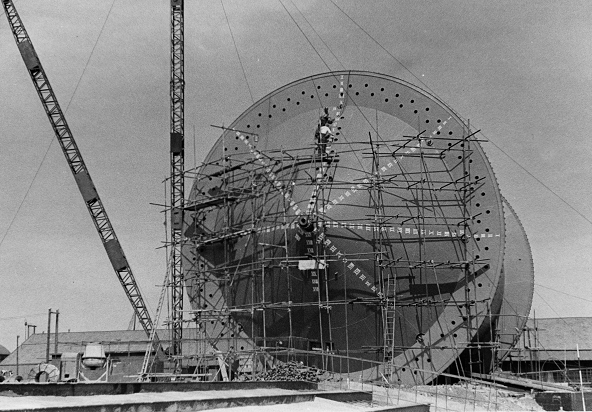
A giant metal cylinder covered in scaffolding supporting two workmen. This is the construction of the 'Conun' drum in 1943, used to lay pipe under the English Channel for the Pipe Line Under The Ocean (PLUTO) project (catalogue reference POWE 45/61).

Construction of the ‘Conun’ drum in 1943, used to lay pipe under the English Channel for the Pipe Line Under The Ocean (PLUTO) project (catalogue reference POWE 45/61).

Among our holdings are photographs of factories, power stations, mines, roads, harbours, reservoirs, airports, train stations and almost every other element of the national infrastructure.

For most photographs of military infrastructure, including Royal Naval dockyards, British Army establishments and Royal Air Force bases see section 5 and section 6. However, photographs of Operation Pluto in the Second World War are below as they are held among the records of the Ministry of Power, a non-military department.

For railway infrastructure see section 11.

Click on the record series references in the tables to search the respective series by keywords (for tips on how to do this see sections 3.2 and 3.3).

Originating department Description of subject matter Record series Description of collection
Town and Country Planning Division of the Welsh Office Photographs, 1949-1973, in support of applications for either residential development or mineral extraction. BD 28 18 files with photographs
Transport, Highways and Planning Group, Welsh Office Photographs taken during the construction of major roads in Wales, 1976-1988, including the Welsh extension of the M4 and the Heads of the Valley Road (A470). They were presented to the Welsh Office as part of the road building contract, and show scenes prior to the commencement of work and then showing each stage of construction. BD 39 A discrete photographic collection
National Dock Labour Board The headquarters of the NDLB, including the official opening, and local offices, call stands, medical centres, sports and welfare facilities, both under construction and after completion, throughout the country. There are also photographs used during a touring exhibition on dock labourers, organised by the Central Office of Information, 1953-1963. BK 12 14 photographs
Board of Trade and successors Foreshore structures and establishments. BT 355
BT 356
Photographs among marine maps and plans
National Coal Board The collieries of the former Barber Walker and Co (mostly at Moorgreen and Brinsley) around Eastwood, Nottinghamshire, 1907-1917. The collection is entitled ‘From Pit to Fireplace’ and would appear to have been used to illustrate a talk on the history of coal mining. COAL 13 116 slides, taken by the Rev FW Cobb, Rector of Eastwood, Nottinghamshire
National Coal Board All aspects of the British coal mining industry, including personnel, equipment, buildings and special events, 1890 to 1990. COAL 80 2063 photograph prints and negatives, some arranged in albums
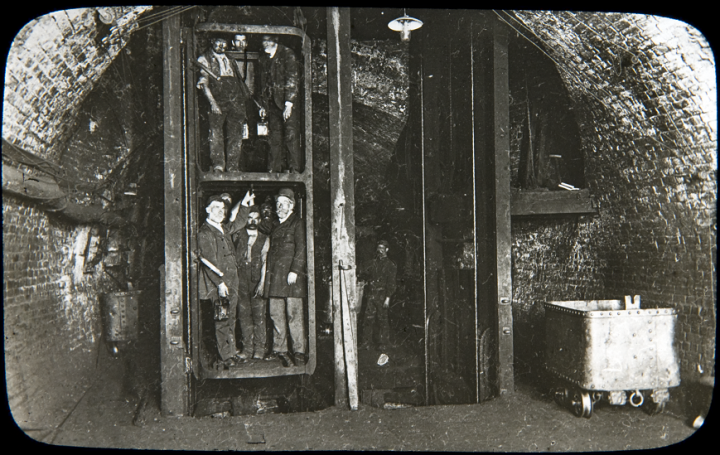
Miners squeezed into an underground lift in an underground chamber. This image is from a collection of photographs, inherited by the National Coal Board, taken by Reverend FW Cobb, Rector of Eastwood, Nottinghamshire between 1907 and 1914 (catalogue reference COAL 13/24).

Miners on an underground lift. This image is from a collection of photographs, inherited by the National Coal Board, taken by Reverend FW Cobb, Rector of Eastwood, Nottinghamshire between 1907 and 1914 (catalogue reference COAL 13/24).

Civil Aviation Authority Air traffic control facilities at airports, air traffic centres and navigational aids, 1959-1975. Photographs brought together by the Records and Archives Branch of the Civil Aviation Authority. DR 81 38 files and photographs
Ministry of Transport Photographs of motorway and trunk road schemes in Britain, 1929-1981, most commonly depicting structural foundations, especially of bridges. MT 95 Photographs scattered among files
Ministry of Transport Photographs accompanying reports and assessments made by the Vehicle Safety Divisions, 1931-1978 concerning technical aspects of road safety and practical safety measures. MT 98 Photographs scattered among files
Ministry of Power Photographs of the development and deployment of PLUTO (Pipe Line Under The Ocean), 1942-1946 POWE 45 Photographs scattered among files

14. Collections from multiple departments

In the 1970s the Public Record Office (the predecessor of The National Archives) began to create discrete series of photographic material, mostly prints and negatives, organised by department. Selections of photographs from the Ministry of Defence, the War Office, the Foreign Office, the Colonial Office, the Home Office and 25 other departments have been collected together within a department created specifically for these extractions: CN. Split into 30 separate CN series, you can search each series by keywords or browse the material.

15. Collections held elsewhere

There  are numerous other photographic collections held by public institutions around the United Kingdom. To find out what is available locally, contact a local archive. They include:

Museum, gallery and royal society collections

DC 13 has been been deposited at the Museum of London – London Museum: Photographs of interior and exterior views.

DH 27 has been deposited at the British Library – British Library and the British Museum Library: Document Supply Centre and its predecessors: Photographs of the lending division facilities.

Library collections

Aerial photography collections

  • the National Collection of Aerial Photography (part of Historic Environment Scotland) has a large collection of aerial imagery covering the United Kingdom and the rest of the world. The bulk of the photographs have been declassified and released by the United Kingdom Ministry of Defence
  • the Central Registry of air photography for Wales indexes all aerial survey cover of Wales by the RAF, Ordnance Survey and commercial air survey companies. The register is the only comprehensive source on aerial photography of Wales
  • the Historic England website offers access to the largest reference collection of air photographs in England

Military and maritime collections

Appendix 1: Alphabetical list by series of photographic material

The list below provides a quick reference, ordered by series reference, of many of the significant collections of photographs held at The National Archives but it is by no means an exhaustive list. The series listed are described in more detail in sections 4 to 13 of the guide. As the table indicates, there are some record series that are discrete photographic collections in themselves, consisting entirely of photographs, whilst other sets of photographs are scattered among files, folders and volumes.

Series reference Originating department Dates Discrete photographic collection or photographs among files
AB 7 United Kingdom Atomic Energy Authority and predecessors 1944-1990 Photographs among files
AB 11 United Kingdom Atomic Energy Authority and predecessors 1946-1965 Photographs among files
AB 13 Ministry of Supply: Atomic Energy Research Establishment 1946-1954 Photographs among files
AB 18 United Kingdom Atomic Energy Authority 1946-1954 Discrete photographic collection
ADM 176 Admiralty: Naval Construction Department 1854-1945 Discrete photographic collection
ADM 195 Admiralty 1857-1961 Discrete photographic collection
ADM 199 Admiralty: War History Cases and Papers, Second World War 1922-1968 Photographs among files
ADM 244 Admiralty: Records of the Surveyor of the Navy and successors 1916-1946 Discrete photographic collection
ADM 267 Admiralty: Department of the Director of Naval Construction 1939-1959 Photographs among files
ADM 326 Admiralty and Ministry of Defence: Naval Intelligence Division and Defence Intelligence Staff 1945-1992 Photographs among files
AIR 11 Admiralty and Air Ministry: Naval Aircraft Works, later Royal Airship Works 1911-1939 Photographs among files
AIR 27 Air Ministry 1911-1917 Photographs among files
AIR 28 Air Ministry 1913-1977 Photographs among files
AIR 29 Air Ministry 1912-1977 Photographs among files
AIR 34 Air Ministry: Central Interpretation Unit 1916-1952 Photographs among files
AIR 59 Admiralty, Directorate of Works, and Air Ministry, Directorate of Works and Buildings 1914-1932 Discrete photographic collection
AIR 60 Air Ministry: Directorate of Research, later Directorate of Research and Technical Development 1919-1925 Photographs among files
AIR 62 Papers of Air Commodore Sir Frank Whittle 1935-1952 Photographs among files
AN 14 British Railways 1948-1976 Photographs among files
AN 28 British Railways: Eastern Region 1949-1971 Photographs among files
AN 31 British Railways: London Midland Region 1948-1966 Photographs among files
AN 91 British Railways 1948-1976 Photographs among files
AST 33 Resettlement Agency 1977-1994 Discrete photographic collection
AT 16 Department of the Environment 1953-1984 Photographs among files
AT 62 Department of the Environment 1968-1973 Photographs among files
AVIA 30 Ministry of Aircraft Production 1936-1947 Photographs among files
AY 7 Department of Scientific and Industrial Research 1933-1965 Photographs among files
BD 11 Welsh Office 1950s and 1960s Photographs among files
BD 28 Welsh Office 1949-1973 Photographs among files
BD 29 Ministry of Housing and Local Government: Wales Office 1943-1975 Photographs among files
BD 39 Welsh Office: Transport, Highways and Planning Group 1976-1988 Discrete photographic collection
BK 12 National Dock Labour Board 1953-1963 Discrete photographic collection
BT 220 Ministry of Civil Aviation and Ministry of Transport and Civil Aviation 1946-1971 Photographs among files
BT 372 Board of Trade: Registrar General of Shipping and Seamen 1913-1972 Photographs among files
CO 1069 Foreign and Commonwealth Office 1815-1990 Discrete photographic collection
COAL 13 National Coal Board 1907-1917 Discrete photographic collection
COAL 80 National Coal Board 1890-1990 Discrete photographic collection
COPY 1 Stationers’ Hall 1842-1912 Photographs among files
COU 11 Countryside Commission 1971-1992 Discrete photographic collection
CRES 43 Office of Woods, Forests and Land Revenues 1878-1967 Discrete photographic collection
CRIM 1 Central Criminal Court WARNING: THESE PHOTOGRAPHS MAY CAUSE DISTRESS WHEN VIEWED 1800s-1992 Photographs among files
DPP 2 Director of Public Prosecutions WARNING: THESE PHOTOGRAPHS MAY CAUSE DISTRESS WHEN VIEWED 1931-1992 Photographs among files
DR 81 Civil Aviation Authority 1959-1975 Discrete photographic collection
DSIR 42 Department of Scientific and Industrial Research: National Physical Laboratory 1918-1929 Photographs among files
DT 21 General Nursing Council 1900-1983 Photographs among files
FO 655 Foreign Office: Chief Clerk’s Department and Passport Office 1802-1961 Photographs among files
FO 737 Foreign Office and Foreign and Commonwealth Office: Passport Office 1916-1983 Photographs among files
FO 1011 Foreign Office: Loraine Papers 1836-1973 Photographs among files
HO 192 Home Office: Ministry of Home Security: Research and Experiments Department 1939-1948 Photographs among files
HO 219 Home Office: Ministry of Home Security 1972 Photographs among files
HO 233 Home Office: Ministry of Home Security 1974-1975 Photographs among files
INF 9 Central
Office of Information
1926-1948 Discrete photographic collection
INF 10 Central
Office of Information
1945-1965 Discrete photographic collection
INF 11 British Council 1930s- 1940s Discrete photographic collection
INF 14 Ministry of Information and Central Office of Information 1939-1979 Discrete photographic collection
MAF 59 Ministry for Agriculture, Fisheries and Food 1916-1985 Photographs among files
MEPO 13 Metropolitan Police: Public Information Department 19th-20th c. Discrete photographic collection
MEPO 14 Metropolitan Police 1857-1983 Discrete photographic collection
MEPO 35 Metropolitan Police: Aliens Registration Office 1857-1983 Photographs among files
MT 95 Ministry of Transport: Highways Engineering Division 1929-1981 Photographs among files
MT 98 Ministry of Transport: Vehicle Safety Divisions 1931-1978 Photographs among files
MT 162 Ministry of Transport 1919-1949 Discrete photographic collection
NSC 27 Post Office Savings Bank 1880-1961 Discrete photographic collection
NSC 32 National Savings Committee for England and Wales 1950-1960 Discrete photographic collection
OS 51 Ordnance Survey 1950-1969 Photographs among files
PCOM 2 Home Office and Prison Commission 1870-1885 Photographs among files
PCOM 3 Home Office and Prison Commission 1853-1887 Photographs among files
PCOM 4 Home Office and Prison Commission 1853-1887 Photographs among files
POWE 45 Ministry of Power 1942-1946 Photographs among files
PRO 24 Public Record Office Photographs among files
PRO 30/69 Public Record Office 1793-1937 Photographs among files
PRO 30/89 Public Record Office 1858-1977 Photographs among files
PRO 50 Public Record Office 1896-1965 Photographs among files
PRO 55 Public Record Office 1953-1973 Photographs among files
PRO 62 Public Record Office 1928-1996 Photographs among files
PRO 65 Public Record Office 1957-1977 Photographs among files
RAIL 1014 Railways: Great Western Railway 1740-1967 Photographs among files
RAIL 1015 Railways: London, Midland and Scottish Railway Company 1825-1970 Photographs among files
RAIL 1156 Railways: Retired Railway Officers’ Society 1900-1963 Photographs among files
RAIL 1157 Railways: Tomilinson Collection 1728-1917 Photographs among files
RG 54 General Register Office and Office of Population Censuses and Surveys 1931 – 1940 Photographs among files
STAT 20 Stationery Office and HMSO 1875-1991 Discrete photographic collection
SUPP 9 Ministry of Supply and successors: Ordnance Board 1941-1945 Discrete photographic collection
WO 188 War Office and Ministry of Supply: Chemical Defence Research Department and Chemical Defence Experimental Establishment 1916-1997 Photographs among files
WO 235 War Office: Judge Advocate General’s Office 1940-1970 Photographs among files
WO 240 War Office 1855-1964 Photographs among files
WO 252 War Office: Inter-service Topographical Department 1913-1966 Photographs among files
WO 316 War Office 1914-1918 Photographs among files
WO 317 War Office 1915-1919 Photographs among files
WO 318 War Office 1914-1918 Discrete photographic collection
WO 319 War Office 1916-1918 Discrete photographic collection
WO 320 War Office: Directorate of Weapons and Development 1956-1966 Discrete photographic collection
WO 323 War Office 1914-1918 Discrete photographic collection
WORK 55 Office of Works and successors
1898-1962
Discrete photographic collection
WORK 69 Office of Works and successors 1892-1958 Discrete photographic collection
WORK 96 Office of Works and successors 2002 Discrete photographic collection
ZSPC 11 British Transport Historical Transport Records Office Library 1831-1977 Photographs among files

Appendix 2: Photographic publications held in our library

The National Archives library holds a number of publications that may be of interest.

Family Photographs, 1860-1945

Foreign and Commonwealth Office Library Collection Catalogue

Directory of British photographic collections

Our Photographic Legacy: Treasures of the National Photographic Collections 1839-1989

The RAF in Camera, 1946-1995: Archive Photographs from the Public Record Office and the Ministry of Defence

RAF in Action 1939-1945: Images from Air Cameras and War Artists

Railways in Camera: Archive Photographs of the Great Age of Steam from the Public Record Office, 1860-1913

The National Archives does not hold records that will help you to trace a living person but this guide provides some brief advice on other institutions that may be able to help. The advice is not intended for tracing long-lost ancestors or people who were adopted.

Where to go for records and advice

There are many organisations that may be able to help you to trace somebody. Some are covered in this guide, but there are many others.

Birth and marriage records

Go to GOV.UK to find out where to search birth, marriage and death indexes.

Electoral registers

If you know what area a person lives or lived in you may be able to find their address in an electoral register.

Missing people websites

  • Go to look4them.org.uk, a joint website of eight of the main UK organisations involved in tracing people who are missing.
  • Go to cyndislist.com/finding.htm, a portal site with links to a large number of other sites around the world concerned with finding missing people.
  • Go to missing-you.net, a website for people searching for lost relatives, where you can also post messages.

Employment records

You could try employers’ records, as many companies have their own archives and may be willing to deal with enquiries.

1. Why use this guide?

This is a guide to the records of prison management, administration and policy, as well as records of prison staff, held at The National Archives (for advice on finding records of prisoners, see our guide to prisoners and convicts). For records from the last 30 years contact the HM Prison & Probation Service.

The records covered here include, amongst others, records of:

  • management
  • finance
  • rules and regulations
  • the daily business of prisons
  • prison staff
  • land and buildings

There is also some advice on how to search for photographs of prisons.

2. What is held here and what is held elsewhere?

Records of prisons and prison staff are held in various locations, including The National Archives, the prisons themselves and local archives.

In 19th century England, there were two distinct types of prisons: local prisons and convict prisons. You are likely to find records of and relating to convict prisons at The National Archives because they were run by central government. These include records of penitentiaries, public work prisons, and prison ships (known as hulks). Local prisons such as gaols, bridewells, and lock-ups were managed locally, so their records are typically held in their respective local or county archive. Use the Find an archive tool to search for local and county archives.

The Prisons Act of 1877 established the Prison Commission, which brought local gaols under government management. Its duties included the maintenance of all prisons, the inspection of prison buildings, and the condition of prisoners. In April 1963, the Prison Commission was transferred to the Home Office as its new prison department. The surviving records of the Prison Commission are held at The National Archives, as are all Home Office record selected for permanent preservation.

3. Online records

No significant sets of records of prisons held at The National Archives are viewable online and in general you should expect to have to either visit us in Kew or order copies to see the records. There are, however, some related records held by other institutions available online:

3.1 Parliamentary Papers,1801-present

Search Proquest UK Parliamentary Papers. This is a subscription website you can access on The National Archives’ computers by visiting us at Kew. You may also be able to access it via a large reference library such as a university library. These papers are an important source of information about prison policy, covering issues such as the efficacy of transportation and the diet of convicts.

Discussions in Parliament can be found in Hansard, which is available online on the Parliament website. Please note there are some volumes missing from the online data.

Our research guide to Hansard details different ways of accessing the reports and records of Parliamentary debates.

3.2 Online newspaper collections

Search the British Newspaper Archive (£), also available on Findmypast (£), and The Gazette website for articles relating to the management of a specific prison.

Local libraries may have their own subscriptions to these online archives that you can use.

4. How to use this guide and search for records

A search for records of prisons at The National Archives usually begins in our online catalogue which contains descriptions for records held by us in Kew and at over 2,500 other archives across the UK. You can search the catalogue using the prison name and/or dates – keep your eye on the ‘Held by’ field to establish whether the records are here or at a local archive.

Catalogue search results provide short descriptions of our records and a document reference for each one – you will need the document reference to see the record itself. The majority of records covered in this guide are not available to view online and to see those records you will have to either visit us in Kew or order copies.

The following sections of this guide provide links to key record series that you can search within our catalogue, helping you to target your searches more precisely. By clicking on the series, you will arrive on the respective ‘series description’ pages from where you can search the series, using keywords (such as ‘prison staff’ or the name of a prison, such as ‘Brixton Prison’) and/or dates. Series description pages provide information on the arrangement of the records and sometimes some of the historical context in which they were created, as well as suggesting related series you could explore.

Use the advanced catalogue search to target the records of an entire government department. Use the department reference, which is always a letter code, to do this: for example, HO for Home Office, or PCOM for Prison Commission.

5. Searching for records of prisons under government management

In 1877, the Prisons Act established the Prison Commission (PCOM), which brought local prisons under government management. Its duties included the maintenance of all prisons, the inspection of prison buildings, and the condition of prisoners. In April 1963 the Prison Commission was transferred to the Home Office (HO) as its new Prison Department.

To search across all Prison Commission and/or Home Office records use the advanced search option in our catalogue. Search using the prison name, for example ‘Pentonville Prison’, and/or keywords such as ‘clothing’ or ‘inspection’. You can restrict your search to a date range.

5.1 Record series for prisons under government management

The following list of record series are among those that hold the largest number of records of prison management and include records covering a variety of themes, including prisoner welfare, staff policy, governance, and administration. Click in the record series for more detail and to search the series by keyword:

PCOM 2 – 1770-1951– contains prison minute books, visitors’ books, journals, records relating to Gibraltar prison and some ship prisons.

HO 21 -1812-1884 – entry books of out-letters which relate to the administration of British and Irish prisons. Files relate to prison accounts, exequaturs, land purchases and construction.

HO 20 – 1820-1843 – includes original in-letters and reports of inspectors, administration of convict, ship, and local prisons, criminal lunatics at Bethlem Hospital, journal of the prison ship, Mandarin, 1843.

PCOM 7 -1838-1938 – contains records concerned with the business of administering convict prisons, local prisons and borstal institutions and treatment of the inmates of those establishments.

HO 45 – 1839-1979 – This is the main series of Home Office papers. Files relate to the management and staffing of prisons, prison policy and decision making.

PCOM 13 – 1849-1946 – files relate to expenditures by the directors of convict prisons, including records of salaries, pay and allowances, expenses for prisoner clothing and medical treatment.

HO 22 – 1849-1921 – contains entry books of out-letters (after 1849), consisting of instructions to prison inspectors and officials of county prisons.

PCOM 9 – 1901-1973 – holds files dealing with the management and staffing of prisons, borstals, and the treatment of inmates. Files relate to prisoners convicted of murder, courts martial, advisory bodies.

HO 323 – 1933-1981 – files relate to instructions and circulars issued to all prison establishments by the Prison Commission and (after 1963), the Home Office Prison Department.

HO 391 – 1959-1993 – contains files on prison system policy including material on treatment of prisoners, sentences, disturbances, and prison building.

HO 383 – 1964-1974 – files include a small collection relating to prison inspections annual reports from governors and the Welfare Department.

HO 413 – 1967-1981 – files relate to the organisation and management of the Prison Service including staffing policy, procedures and includes senior management meetings minutes.

HO 475 – 1969-1987 – contains files on the administration of prison farms and industries, includes senior management meetings minutes.

HO 475 – 1969-1987 – contains files on the administration of prison farms and industries, includes senior management meetings minutes.

HO 383 – 1964-1974 – files include a small collection relating to prison inspections annual reports from governors and the Welfare Department.

HO 535 – 1986-1990 – files relate to the employment of prisoners, production of goods and services for use within the prison estate, including horticulture, farming, and manufacturing.

5.2 Records of the management of early government run prisons

Until the 19th century most prisons were administered locally and were not the property or responsibility of central government. Exceptions were the following prisons:

  • King’s (Queen’s) Bench Prison
  • Marshalsea Prison
  • Fleet prisons

These prisons were primarily debtors’ prisons attached to the central courts . However, they also housed a small number of prisoners charged or convicted of crimes at the courts, such as for sedition or crimes at sea.

Records that relate to the day-to-day management and administration of these prisons can be found in the following record collections. To search, follow the links listed below and enter keywords, or browse using the ‘reference’ option at the top of the page.

PRIS 9 – 1842-1862 –contains the miscellaneous books for the Queen’s Prison. The books concern the management of the prison and the welfare of prisoners.

PRIS 10 – 1697-1862– contains King’s (Queen’s) Bench, Fleet, Marshalsea and Queen’s Prisons miscellaneous books relating to the day-to-day prison management and administration.

Consult our guide to bankrupts and insolvent debtors for more information on bankruptcy debtors records held at The National Archives.

6. Records of prison buildings and land

Records of the Office of Works (WORK) and its successors contain over 500 files that relate to the planning, construction, and maintenance of prison buildings amongst other records.

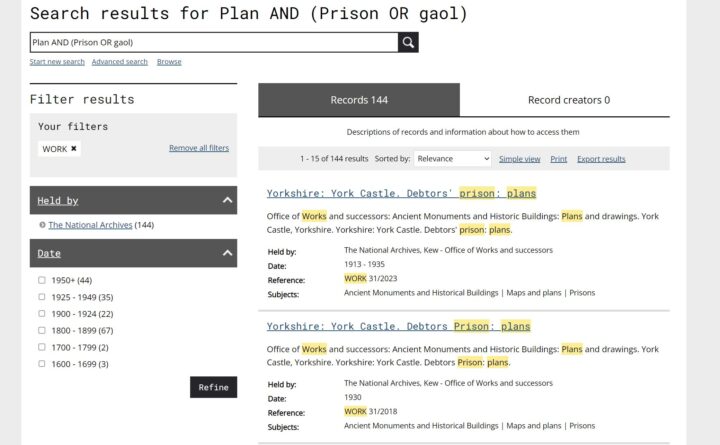
Use the advanced search option in our catalogue. Search using department code WORK as a reference. Search with keywords, such as ‘prison’, ‘gaol’ or use a specific prison name, combined with terms such as ‘plan’ or ‘land’. You can also restrict your search to a date range.

7. Correspondence and reports relating to prisons in ex-British colonies

The National Archives holds records that relate to the management, policy and administration of prisons held in ex-British colonies. The records of the Colonial Office (CO) and Dominions Office (DO) are the primary sources of information on the colonial period.

Use the advanced search option in our catalogue using department code CO and/or DO as a reference. Search using the colony/territory name combined with ‘prison’ or ‘goal’ for example ‘Jamaica AND prison’. You can also restrict your search to a date range.

8. Searching for records relating to prison staff

The National Archives holds a variety of records that relate to the employment of prison staff, including the appointment of staff, pensions, and welfare.

Use the advanced search option in our catalogue, use the department codes listed in the next section as reference. Search using keywords such as ‘prison staff’ and combine them with other words such as ‘pension’ and/or ‘appointment’.

8.1 Records of individual prison staff

PCOM 2 – 1770-1951– holds a small collection of prison staff registers for Portland Prison, Dorset and Chatham Prison, Kent. These records have been digitised and can be searched through Findmypast (£).

HO 160 – 1887-1898– holds prison staff appointment books from 1887-1898. Browse by date of appointment, transfer, or dismissal of prison staff. These records are not complete and do not provide any additional personal information.

PMG 28 – 1834-1925– contain registers recording the payment of superannuation and retired allowances to staff of convict establishments from 1834 to 1921. Browse by date of retirement and then under ‘P’ for records of prison staff.

8.2 Records relating to the management of prison staff

CO – 1570-1990 – includes records that relate to prison staff in ex-British colonies (see section 6 for further information.)

PCOM 7 and PCOM 9 -1838-1973 – contain registered papers relating to the prison staff including welfare, pay, pensions.

T -1974-1990 – includes reports and draft minutes which relate to prison staff welfare, pay, pensions and other allowances (see section 9 for advice on searching by department code).

HO 539 – 1991-1995 – contains records which relate to prison staff procedures and conditions, equality and diversity, industrial relations, and information technology.

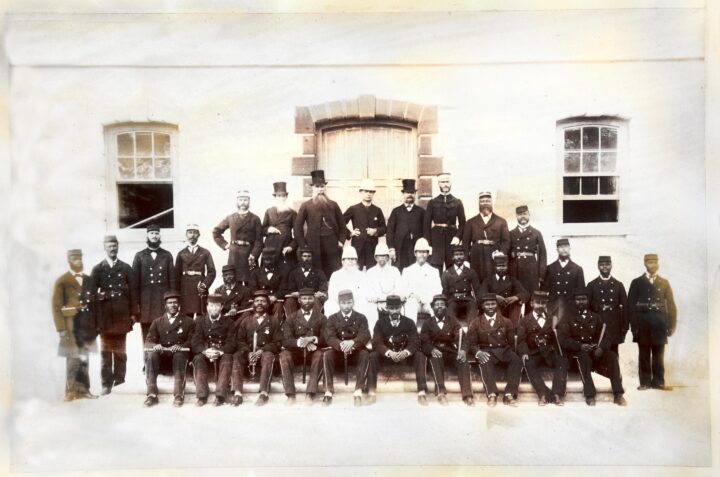
Image of Staff at Glendairy Prison, Barbados from 1872 (catalogue reference : CO 1069/243)

9. Photographs

The National Archives holds some photographic records that relate to prisons, their management, and daily life. Use the advanced search option in our catalogue, using the department codes listed below as references. Search using keywords such as ‘prison’ or use the name of the prison.

The Image Library is a way to get a sense of what we hold, but most of our photographs are not available to view online. The main record series for photographs relating to prisons and prison staff are:

COPY 1 – 1837-1912 – contains a significant collection of photographs of prisons, prison staff and daily life at prisons.

WORK 65 – 1920-1983 – includes photographs of prison supplies.

CO 1069 – 1815-1986 – a photographic collection which includes Images of prisons and prison staff from ex-British colonies.

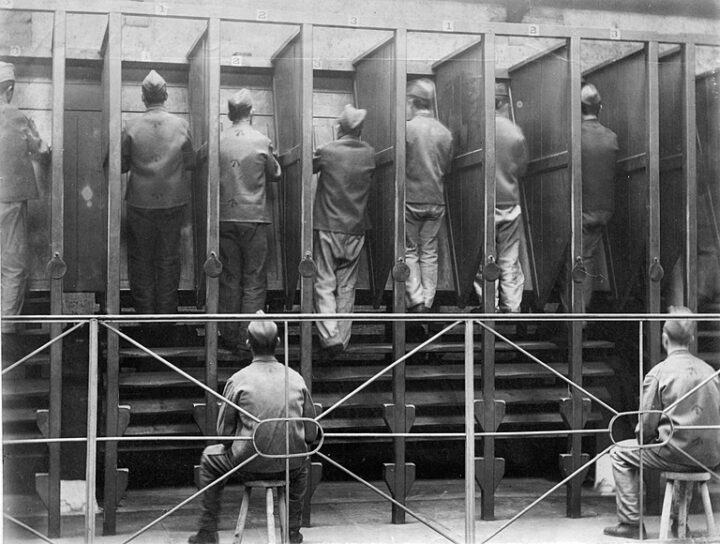
Image of Pentonville prison treadmill from 1895 (catalogue reference COPY 1/420)

10. Searching for records of prisons and prison staff held in other archives

The Prison History website has a searchable database to find information on surviving records relating to prisons and prison staff records. You can search the database here. Use the tools box on the left-hand side to refine your search or enter the name of a specific prison and click ‘submit’.

Then click “List View” on the right-hand side and then “View” for information relating to the records of a specific prison. Once you have selected the prison, click “Records” for a breakdown of the surviving records and where they are held.

11. Further reading

The Prison History website contains some useful essays on 19th century prisons, local lock-ups and other subjects.

Visit The National Archives’ bookshop for a range of publications on prisoners and prison staff.  Alternatively, look in The National Archives’ Library to see what is available to consult at Kew.

This short guide will help you to research records of children evacuated during the Second World War. Most of the records at The National Archives that relate to evacuation are central government policy files.

What do I need to know before I start?

Finding records from the Second World War is complicated because no central government files were kept (no official records were created during the First World War as evacuations were arranged individually by families).

Evacuation plans had been prepared well before the outbreak of the Second World War, and an evacuation policy was soon established by the government. Small scale evacuations of women and children took place at the height of the Munich Crisis in September 1938, but the major evacuation began in September 1939.

The government had planned to evacuate about 3,500,000 people but in fact only 1,500,000 made use of the official scheme. Almost all had been evacuated to the reception areas by the evening of 3 September, a few hours after the official declaration of war.

It may help you with your research if you can find out:

  • the name of the evacuee’s school
  • where they were evacuated from and to (see the Appendix at the foot of this guide for a list of evacuation areas)
  • when they were evacuated

Online records

Search the 1939 Register for England and Wales at Findmypast.co.uk (£) for evacuees and their helpers – search for ‘evacuee’ in the Occupation field. The mass evacuation of children and other vulnerable people took place in early September 1939, before National Registration on 29 September that year. As a result, many evacuees appear in the register.

Individual records will only be open if the person is now deceased, but if the evacuee is still alive they can request a transcript of their own record. See our research guide on the 1939 Register for more information.

There are no lists or registers of evacuees available online.

Records available only at The National Archives in Kew

The National Archives does not hold any evacuee records for individuals.

Search Discovery, our catalogue, for files relating to evacuation policy. Restrict your search to relevant government departments such as Cabinet Office (CAB), Ministry of Education (ED), Ministry of Health (MH), Ministry of Information (INF), Registrar General (RG) and Home Office (HO).

Records in other archives and organisations

Local archives are the best places to find out about individuals who were evacuated. For example, they might have records from the schools that were evacuated or the schools that the evacuated children attended while in their new homes.

The National Archives’ catalogue contains collections and contact details of local archives around the UK and beyond. To locate these records, search our catalogue with keywords and refine your results to ‘Other archives’ using the filters.

Local authorities may have records relating to the arrangements for children being evacuated to their area.

Other resources

Websites

Evacuees Reunion Association

Imperial War Museum

Second World War Experience Centre

Books

Search The National Archives’ bookshop to see whether any of the publications below may be available to buy. Alternatively, look in The National Archives’ library catalogue to see what is available to consult at Kew.

R Samways, ‘We think you ought to go – the evacuation of London’s children’ (London Metropolitan Archives, 1995)

Mike Brown, ‘A child’s war: growing up on the Home Front 1939–1945’ (Stroud, 2000)

Stewart Ross, ‘Evacuation’ (London, c.2002)

The Imperial War Museum, ‘The schools in wartime’ (London, 1995)

Appendix: designated evacuation, reception and neutral areas

In 1939 the Government Evacuation Scheme listed places in England and Wales that were designated as evacuation areas, from which young children and vulnerable people were to be removed to safer locations. In most cases this meant removals from the most densely-populated areas, not the whole district. Others districts were classified as neutral areas, and any places not on the evacuation or neutral lists were scheduled as reception areas.

The following were designated evacuation areas:

County Designated evacuation areas
Cheshire Birkenhead and Wallasey County Boroughs, Runcorn Urban and Rural Districts
Derbyshire Derby County Borough
Durham Gateshead, South Shields, Sunderland and West Hartlepool County Boroughs, Hartlepool and Jarrow Municipal Boroughs, Felling, Hebburn and Whickham Urban Districts
Essex East Ham and West Ham County Boroughs, Barking, Chingford, Dagenham, Ilford, Leyton, Walthamstow and Wanstead & Woodford Municipal Boroughs, Hornchurch, Thurrock and Waltham Holy Cross Urban Districts
Hampshire Southampton and Portsmouth County Boroughs, Gosport Municipal Borough
Kent Bexley, Chatham, Dartford, Erith, Gillingham, Gravesend and Rochester Municipal Boroughs, Crayford, Northfleet and Swanscombe Urban Districts
Lancashire Bootle, Liverpool, Manchester and Salford County Boroughs, Crosby, Stretford and Widnes Municipal Boroughs, Litherland Urban District, Warrington and Whiston Rural Districts
Lincolnshire Grimsby County Borough, Cleethorpes Municipal Borough
London All Metropolitan Boroughs, Cities of London and Westminster
Middlesex Acton, Brentford & Chiswick, Ealing, Edmonton, Hornsey, Tottenham, Willesden and Wood Green Municipal Boroughs, Enfield Urban District
Northumberland Newcastle-on-Tyne and Tynemouth County Boroughs, Wallsend Municipal Borough
Nottinghamshire Nottingham County Borough
Staffordshire Smethwick, Walsall and West Bromwich County Boroughs
Surrey Croydon County Borough, Barnes, Mitcham and Wimbledon Municipal Boroughs, Merton & Morden Urban District
Warwickshire Birmingham and Coventry County Boroughs
Worcestershire Oldbury Municipal Borough
Yorkshire Bradford, Kingston-upon-Hull, Leeds, Middlesbrough, Rotherham and Sheffield County Boroughs

Most counties containing evacuation areas also contained a mixture of neutral and reception areas; London was the only county which had no reception areas at all.

The following were reception areas in England:

Bedfordshire Berkshire Buckinghamshire Cambridgeshire
Cumberland Dorset Isle of Ely Herefordshire
Huntingdonshire Lincolnshire* Northamptonshire Oxfordshire
The Soke of Peterborough Rutland Shropshire Suffolk
Sussex Westmorland Isle of Wight Wiltshire

*Holland and Kesteven divisions

The following were reception areas in Wales:

Anglesey Brecknockshire Caernarvonshire Cardiganshire
Carmarthenshire Denbighshire Flintshire Merionethshire
Pembrokeshire Radnorshire

The following counties were reception areas, with the exception of the neutral areas listed in the table:

County Neutral areas within the county
Cornwall Saltash County Borough, Torpoint Urban District
Devon Plymouth County Borough
Gloucestershire Bristol County Borough, Kingswood and Mangotsfield Urban Districts
Hertfordshire Watford Municipal Borough, Barnet, Bushey Cheshunt and East Barnet Urban Districts, Barnet Rural District
Leicestershire Leicester County Borough
Norfolk Norwich and Great Yarmouth County Boroughs
Somerset Portishead Urban District
Glamorgan Cardiff and Swansea County Boroughs, Neath and Port Talbot Urban Districts, Barry, Bridgend and Penarth Municipal Boroughs
Monmouthshire Newport County Borough

Records of prisoners and prison staff are held in a number of different places, including The National Archives, prisons themselves and local archives. There is no national register of prisoners, so it is often best to start your search in local archives.

What do I need to know before I start?

To search for records of prisoners at The National Archives you will usually need to know the name of the prison where they were held, or the name of the county where the prison is or was located. If you only know the prisoner’s name you will be largely restricted to the documents published online. Bear in mind that prisoners were not always imprisoned near their home or where the offence was committed and that they were often moved between prisons during the course of their sentence.

Online records

Criminals, convicts and prisoners (1770-1935)

Search among the assorted records of criminals, convicts and prisoners on Findmypast.co.uk (£). Records include:

  • registers of convicts in prison hulks 1818-1831 (ADM6)
  • after-trial calendars of prisoners 1855-1931 (CRIM 9)
  • Home Office calendars of prisoners 1868-1929 (HO 140)
  • Prison Commission prison records 1880-1885 (PCOM 2)
  • registers of criminal petitions 1797-1853 (HO 19)
  • printed lists of prisoners tried at Newgate 1782-1853 (HO 77)

Prisons listed in census records (1841-1911)

Search census records (£) for England and Wales from 1841 to 1911 online. If you find a prison in the census, it will list the names of prisoners present at the time the census was taken.

Prison hulk registers and letter books (1802-1849)

Search by name for convicts held on prison hulks (HO 9) in England 1802-1849 on Ancestry.co.uk (£). The registers contain personal information on the prisoners and where and when they were convicted.

Prison hulks were ships moored near naval bases to house prisoners – often those awaiting transportation.

Licences of parole for female convicts (1853-1871, 1883-1887)

Search by name for licences of parole issued to female convicts (PCOM 4) on Ancestry.co.uk (£). Their contents vary but can include a variety of personal details, reports on behaviour while in prison and (from 1871) photographs.

Records available only at The National Archives in Kew

Searches for the records in this section begin in our catalogue. To access these records you will either need to visit us or, where you can identify a specific record reference, order a copy (£).

Prison registers and calendars of prisoners (1770-1971)

Although some registers and calendars of prisoners are available online at Findmypast (£), others are not. Search our catalogue by date or place, in HO 23, HO 24, HO 140 and PCOM 2 for registers and calendars of prisoners. These are arranged by prison or by county and individual prisoners’ names do not usually appear in our catalogue.

Most of these records are from the 19th century. Calendars in HO 140 extend until 1971 but only those before 1930 are open.

Often the best places to search for prison registers after 1878 are local county archives.

Date range (YYYY):

Quarterly returns of convicts in prisons and prison hulks (1802-1876)

Search our catalogue in HO 8, by name of prison or prison hulk and year, for records of prisoners held in these institutions. Search also T 38 for lists of crews and convicts on convict hulks.

Date range (YYYY):

Petitions for clemency (1819-1853)

Browse or search our catalogue in HO 17 (1819-1839) and HO 18 (1839-1853) for petitions for clemency. Petitions in HO 17 are described in some detail in our catalogue and a cataloguing project is adding descriptions to HO 18. Petitions were registered on receipt in a set of records now in HO 19.

The registers and most of the petitions are available and name searchable online via Findmypast (£).

The registers provide a reference which can help you search for the actual petition. Read section 5 of our guide to criminal transportation for further help.

You can also search for law officers’ reports relating to petitions by date in HO 48 and HO 49 (c1762-1871).

Prisoners tried at the Old Bailey or the Central Criminal Court (1815-1849)

Browse HO 16 for lists of prisoners arranged by date.

Court orders (1842-1871)

Consult PCOM 5 (which is indexed by PCOM 6) to find details of a prisoner’s movements from prison to prison, misconduct, physical description and next of kin.

Indexes of prison licences for men (1853-1887)

Consult the indexes of prison licences in PCOM 6 to locate male prison licences held in PCOM 3.

Prison licences, popularly known as ‘tickets of leave’, allowed convicts of good behaviour to be released before the completion of their sentences.

Registers of superannuation and retirement allowances for prison staff (1834-1925)

You may be able to find mentions of prison staff details (such as name, age, religion or details of service) in PMG 28.

Browse PMG 28 by date of retirement and then under ‘P’ for records of prison staff. The pensioners of the Convict Establishment and Convict Prisons are also generally entered in separate volumes.

Prison staff appointment books (1887-1898)

Browse HO 160 by date of appointment, transfer or dismissal of prison staff. These records are not complete and do not provide any additional personal information.

Records in other archives and organisations

Records held elsewhere

The National Archives’ catalogue has details of collections held by over 2,500 archives across the UK. Search our catalogue and refine your results using the filters.

Other resources

Books

Visit The National Archives’ bookshop for a range of publications on prisoners and prison staff.

Geoffrey Howse, A History of London’s Prisons (Wharncliffe, 2013)

Sarah Paterson, Tracing your Prisoner of War Ancestors (Pen & Sword, 2013)

1. Why use this guide?

Use this guide if you are looking for:

  • criminal cases heard by the Court of King’s/Queen’s Bench from 1675 until 1875, dealt with on the ‘Crown side’ of the court
  • the relatively small number of civil cases dealt with on the ‘Crown side’ of the court from 1675 until 1875 (most civil cases were handled by the ‘Plea side’ of the court – for advice on these records see our guide to Plea Side cases)
  • criminal cases heard by the King’s/Queen’s Bench Division of the High Court 1876 to 1988

The Court of King’s Bench was replaced by the King’s Bench Division of the High Court (also known as the Supreme Court of Judicature) in 1875. The court is called the Court of Queen’s Bench and the Queen’s Bench Division respectively when the reigning monarch is female.

Examples of the sort of criminal cases heard at the Court of King’s Bench, Crown side, include:

  • theft
  • perjury
  • murder
  • criminal libel

Civil cases heard on the Crown side, from 1685-1875, included:

  • custody disputes
  • disputes about appointments to local government office or other temporal or spiritual office, or about local taxes
  • cases involving an appeal from a county court

For guidance on how to look for Kings Bench records of a coroner’s inquest, read our guide on Coroners’ Inquests.

2. What is the Court of King’s Bench (Crown side)?

The King’s Bench was the highest court of common law in England and Wales, with jurisdiction over both civil and criminal actions.

Criminal cases were dealt with on the ‘Crown side’ which dealt mainly with serious offences, although its several jurisdictions enabled it to hear an extensive range of cases, from obstructing the highway to high treason.

The Crown side had three separate jurisdictions:

1. Original jurisdiction over all matters of a criminal and public nature as the custos morum of all subjects of the realm.

2. Supervisory powers over inferior courts.

3. A local jurisdiction, in that its presence within any county extinguished the rights of all other courts to hear and try criminal cases. In practice, since the court had become fixed at Westminster by the 15th century, its local jurisdiction was over Middlesex and its subordinate jurisdictions (principally Westminster and the Tower Hamlets).

Until the 19th century very few cases in the King’s Bench actually went to trial as it was considered a socially unacceptable method of resolving a dispute. Accordingly there was heavy pressure on litigants to come to some agreement without trial.

The way in which a case was initiated was the principal factor in determining its course through the court and its records. The process in the King’s Bench was complex and so are the records.

3. Search tips

Some of these records are viewable online at the Anglo-American Legal Tradition website. To view records which are not online you will need to visit The National Archives at Kew or pay for research.

The way to start a search depends on the type of case. To trace the progress and outcome of a case you will need to use a variety of records such as indictments and plea rolls, often without any finding aids or means of reference.

The formal documents such as indictments, informations, writs and plea rolls are in Latin until 1733.

You will need to distinguish between the sorts of criminal or civil cases in order to search the records. They may have been prosecuted by:

  • information or indictment – in which case the key document will be the indictments files
  • prerogative writ – in which the key document will be in the recorda files

Writs of certiorari could be filed either in the indictments files or in the recorda files. See the sections on Indictments and recorda files respectively for more information.

4. Searching for named defendants in criminal cases 1675-1875

Many cases failed before information was exhibited but records could still have been created – for example through a preliminary hearing.

If you are looking for a named defendant and are sure that he or she was the subject of a successful indictment or information, first check to see if an index to defendants survives for the right period. If they do not appear in the indexes, you will need to search the records.

4.1 Using indexes to locate records: indictment indexes

Please note, there may be occasional omissions in the indexes, especially in the London and Middlesex volumes.

Use the indexes:

Two further volumes index London and Middlesex defendants and some defendants in northern counties for 1682-1699. They are in IND 1/6678-6679.

These indexes are arranged alphabetically by the first letter of the surname, and then chronologically by legal term. Look for the number to the left of the surname which is the number of the indictment or information.

Once you have obtained the name of the accused and the indictment number you can browse the relevant indictment file by year within:

  • the London and Middlesex indictment files from 1675 to 1844 in KB 10
  • the out counties from 1675 to 1844 in KB 11

If you can not locate an entry in the index, see the section 4.2 below

4.2 Using indexes to locate records: other indexes to indictments and controlment files

The index series also includes:

The great docket books show the steps in the process, such as entries of pleas and writs, in chronological order.

It is difficult to find all the entries relating to a single case. If you are able to locate entries, it will give direct references to the controlment rolls and indictment files.

The modern pye books are the successors to the indexes to indictments. They are of limited use in that they are arranged chronologically not alphabetically. They give:

  • names of defendants and attorneys
  • the county of jurisdiction
  • a summary of the proceedings

4.3 The records

If you think that a named defendant has been omitted from the indexes, try searching the controlment rolls in KB 29. They list:

  • all the prosecutions begun in each legal term
  • in the left hand margin, a direct numerical reference to the indictment or information in KB 10 (London and Middlesex until 1844), KB 11 (provincial or ‘out counties’ until 1844) or KB 12 (all counties after 1845)

In order to trace the outcome of the case, go to the second section of the term’s entries on the controlment rolls in KB 29. For cases that proceeded beyond the initial summons, the entries on this section (the ‘roll of entries’) show all the proceedings, from appearance to final judgment. You might need to check several successive terms. More guidance is in the section on controlment rolls.

If you still cannot find an entry, you can try searching all the relevant indictment files in KB 10, KB 11 or KB 12.

For London and Middlesex cases for 1737-1820, you may prefer to use the process books in KB 15/22-29.

They similarly record the proceedings in each case. They are easier to use than the controlment rolls, but are more likely to omit occasional cases. Be aware that the notes of process are placed above rather than below the relevant entries.

The annotations to items in the roll of entries in KB 29 or the process books in KB 15 can help you identify useful keywords for searching our catalogue. Use these keywords to search within:

4.4 Final judgments

As few cases reached trial until the 18th century, there are few judgments prior to 1800. Consequently, you rarely need to consult the final judgments, which may be found in the crown rolls or posteas.

Locate:

  • the crown rolls in KB 28 (for the period 1844 to 1859 only, search our catalogue within the crown rolls KB 28 by names of prosecutors, defendants, places and subject)
  • the posteas in KB 20

Both the crown roll and the postea recite all the process in each case.

The entry in the crown rolls will normally be found in the term in which judgment was given. The crown roll records the formal outcome of cases in which judgment was entered. It does not record the many cases that either failed or were withdrawn before judgment. Further details are in:

  • the rule books in KB 21 for details of the sentence
  • the depositions in KB 1 for statements of witnesses

If the case is concerned with sedition or treason, see the catalogue description for the Baga de Secretis in KB 8 which gives information relating to the prosecution case in trials that were of particular concern to the state.

The procedure for special verdicts changed in 1848 with the creation of the Court for the Consideration of Crown Cases Reserved. The records for this court include:

  • order books (which contain material similar to that previously contained in special verdicts) are in KB 30
  • pleadings for that court are in KB 31

More details are provided in the named sections on the types of records available here.

4.5 Published sources

Some cases may have established important points of case law and therefore may be reported and published in law reports or newspapers.

5. Searching for civil cases of named subjects (prerogative writs) 1675-1875

There are no indexes to these records. As the jurisdiction of the writs covered the whole of England and Wales, it is not possible to search by area.

Use the table below to locate the records:

Type of offence Type of writ issued Record series
Custody disputes such as a runaway wife, child, slave, apprentice or alleged ‘lunatic’ Writ of habeas corpus The annual recorda files in KB 145 until 1690 and in KB 16 thereafter, together with the rule books in KB 21 and depositions in KB 1
Disputes about appointments to local government office or other temporal or spiritual office, or about local taxes An information in the nature of a quo warranto or for a writ of mandamus Read section on searching for named defendants in criminal cases, on the controlment rolls in KB 29 – – using the third or special writ section of the term’s entries
Cases which involves the review of administrative orders (especially one concerned with the removal of a pauper under the settlement laws) Writ of certiorari Reviews of summary convictions should be traced in the records of criminal cases

6. Articles of the peace 1675-1875

Original articles of peace do not generally survive.

The defendant was not permitted to dispute the articles except by means of an indictment or information for perjury.

Some examples survive in KB 32 and KB 33. Otherwise you can only trace them:

  • through the rule books in KB 21 and draft rule books in KB 36
  • occasionally by notices or affidavits relating to bail amongst the depositions in KB 1

Please note, no details of these cases can be reconstructed from these sources, unless there is a related indictment for assault.

7. Indictment files 1675-1875

Indictments may contain the following items:

1. Informations ex officio – – procedurally, informations ex officio were quite distinct from informations exhibited by the master of the crown office (see below), in that it was not necessary for the attorney general to establish any kind of prima facie case against the accused.

2. Ordinary criminal informations were exhibited by the king’s coroner and attorney (usually known as the master of the crown office) on the complaint of a private individual.

After 1692, as a result of the malicious information in the Court of King’s Bench Act, complainants had to establish a prima facie case against the defendant. The defendant was given an opportunity to rebut the accusations. Written affidavits for these are in KB 1.

Ordinary criminal informations were concerned with cases of criminal libel, but they were also used to prosecute forgery, perjury and riot. The evidence copy of an alleged criminal libel may also be in KB 1.

3. Informations quo warranto. They are extremely rare after 1688, having in effect been superseded by informations in the nature of a quo warranto.

The preliminary procedure was similar to that required for ordinary criminal information in respect that they both needed permission of the judge to proceed. Applications therefore generated affidavits from both the prosecution and the defence setting out the material circumstances of the case, even if no information were granted. These affidavits are now in KB 1.

4. Information qui tam. A variety of offences were punishable by information qui tam, but its use was most often associated with offences against the game laws.

The proceedings required an initial affidavit of the facts but they were filed separately from the main class of depositions and do not survive.

5. Indictments removed by certiorari. An indictment , at this time, was an accusation or bill of complaint drawn up in form of law and submitted to a grand jury.

If the grand jury found the accusation to be true the complaint was endorsed ‘a true bill’ and forwarded for trial by a petty (trial) jury.

Until almost the mid 19th century indictments removed by certiorari were mainly for relatively trivial offences.

Depositions made in support of a term-time application for certiorari on indictment are in KB 1 and those made for applications in vacation do not survive.

Summary convictions removed by certiorari. In order to remove a summary conviction, it was necessary to serve notice both on the convicting magistrate and on the informer.

The writ was a discretionary one if the applicant was the party convicted, and by the early 19th century an affidavit of the facts stating the objections to the conviction(s) was also required. Such affidavits and notices, if made in term time, are in KB 1.

6. Special verdicts. These were also removed by certiorari. Special verdicts were returned in cases in which neither judge nor jury knew how to apply the law in particularly difficult cases, nor did they consist of a resume of the facts as found by the jury.

For special verdicts after 1848, see Court for the Consideration of Crown Cases Reserved. See section 3.2.2.

7. Indictments of the first instance. These arise from the local jurisdiction of the King’s Bench in Middlesex, and are therefore only in the London and Middlesex indictments files (KB 10 until 1844 and KB 12 thereafter).

For fuller details of indictments see the catalogue description to ASSI 5.

8. Recorda or writ files 1675-1875

The recorda files contain returned writs, including:

1. Habeas corpus. It was rarely used in connection with people imprisoned for alleged crimes, except (for technical reasons) in Middlesex before 1785.

It was more commonly used to test the legality of a detention by a person or group, such as a press gang, spouse, parent or keeper of a lunatic asylum.

Applications were often supported, or contested, by means of depositions in KB 1. These are usually full and informative.

No depositions survive in the case of writs of habeas corpus issued by, or returned to, a judge in chambers during vacation.

2. Mandamus. This was used to compel the admission or restoration of people to office (whether spiritual or temporal), to university degrees, meeting houses, and so on.

It could also be used to order the production, inspection or delivery of books and papers (including rate books), and to compel the holding of inferior courts.

3. Orders of lower courts were removed by certiorari (usually by the consent of both parties) in order to obtain the opinion of the court on a difficult point of law.

They relate mainly to orders removing paupers under the settlement laws and a high proportion appear in the printed law reports.

9. The controlment rolls 1675-1875

The controlment rolls in KB 29 are very useful for helping you trace a case. Digital copies of the rolls up to the year 1691 are available at the Anglo-American Legal Tradition website.

Original returned writs are in the recorda files in KB 145 or KB 16.

What do the records contain?

The first section (the bag roll) simply lists each prosecution begun in that term, with (in the left hand margin) direct numerical references to the indictment or information in KB 10, KB 11 and KB 12. The left margin also includes the geographical jurisdiction of the prosecution, so that it is easy to pick out indictments relevant to a particular city or county.

The second section (the roll of entries) notes all the proceedings, from appearance to final judgement, in each case that proceeded further than the initial summons. As with other legal records of this period, the notes of process are placed above rather than below the relevant entries.

The third section (the special writ roll) contains copies of special writs that had been issued that term, together with any return. Such writs, if returned, are also enrolled on the crown roll in KB 28.

10. Depositions 1675-1875

Perhaps the most rewarding source for researchers are the depositions and related documents in KB 1. The affidavits are usually very informative both about the subject matter of the case and about pre-existing disputes between the parties.

They also include a mass of incidental detail, which is often extremely valuable in itself. Detailed accounts of costs sometimes also survive, particularly during the later 18th century.

The relationship between the affidavits in KB 1 and KB 2 is not entirely clear. Some of the KB 2 affidavits arise from references to the master and may duplicate those in KB 1.

A separate series of affidavits concerning offences against customs and excise, 1727-1829, is in KB 32/1-4.

Using indexes to locate depositions in KB 1

A contemporary index to the depositions in KB 1 is in KB 39. Its usefulness is somewhat limited.

They probably do not include affidavits filed in failed attempts to exhibit informations.

They do not index the many other documents found with the depositions such as general releases (the formal document recording the settlement of a case before trial).

The volumes after 1768 are more useful as indexes. Even so, they do not normally list affidavits individually but by case, for example ‘6 affidavits to show cause against X’.

11. Rule books 1675-1875

There are no indexes to the rule books.

Rule books record the orders of court. The entries, which are chronological, relate mainly to rules granted in order to enable a case to proceed to the next stage. Digital copies of the Rule Books are available at the Anglo-American Legal Tradition website.

Browse the rule books by date in

The draft rule books sometimes contain material that was omitted from the fair copy.

12. How to find cases from 1876-1988

Separate sets of records exist for cases from 1876, when the court became the King’s Bench Division of the High Court.

12.1 Appeals from lower courts

Motions on appeal from lower courts, especially county courts and magistrates’ courts, are in record series KB 3 for the years 1876 to 1981. For years 1939 to 1978 there are indexes within KB 3, giving case numbers. To find the corresponding orders of the court, browse J 74 for the years 1875 to 1920 and J 95 for the years 1920 to 1987 by date in the catalogue.

12.2 Writs and orders

There are also writs and orders in KB 16 which continue for the years 1876 to 1912. These are mostly writs of certiorari for cases brought from the lower local courts to the King’s Bench Division, mainly by justices of the peace sitting at Petty or Quarter Sessions.

There are selected case files for writs of Habeas Corpus, which concern individuals who are seeking to be released from prison, in J 167 for the years 1951 to 1982. Search J 167 by name.

12.3 Writ books

Writ books record the issue of writs for each case. There are writ books running from 1854 to 1912, referencing the writs in KB 16 (see above), in KB 15.

12.4 Writs and returns

Writs and returns are in J 125 for the years 1913 to 1972. They consist of writs relating to orders removing cases from lower courts and tribunals to the King’s Bench for review.

12.5 Register of Appeals 1905-1910

There is a Register of Appeals covering the years 1905 to 1910 only, in KB 174. These consist of one line entries for cases commenced by private individuals and those by the State.

12.6 Affidavits

The affidavits in KB 1 extend to the year 1985 and the indexes in KB 39 to 1984 both of which are described in section 9 above.

12.7 Case files 1975-1985

For cases from 1975 to 1985 the different types of documents, including judicial reviews, were brought together in a case file system. Search for case files in J 160 by the names of the parties.
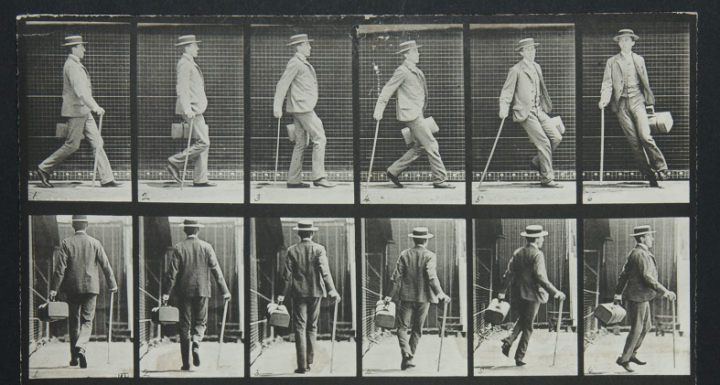
13. Director of Public Prosecutions and Treasury Solicitor files

The Office of Director of Public Prosecutions (DPP) was created in 1879 with powers to institute and conduct criminal proceedings in any of the senior criminal courts – assizes, Crown Court, King’s/Queen’s Bench or Central Criminal Court.

Before 1879, the Home Office gave advice on prosecutions to police forces and magistrates’ clerks and gave directions to the Treasury Solicitor (TS) to institute proceedings in important cases, notably those involving political crimes.

Director of Public Prosecutions and Treasury Solicitor files on cases can be searched for by surname of the defendant.

Search or browse case files of the Director of public Prosecutions in DPP 1 1889-1930, and DPP 2 1931-2016 (recent records are closed), and transcripts of certain trials in DPP 4 1846-1958.

Treasury Solicitor’s files on criminal cases can be found in various series, including case papers in TS 11, TS 18 and TS 22; and transcripts of proceedings in TS 36.

14. Further reading

All of the publications below are available at The National Archives’ library in Kew. You can also browse titles and subject areas at The National Archives’ bookshop.

John Hamilton Baker, An Introduction to English Legal History (Oxford Press, 2007)

Richard Gude, The practice of the Crown Side of the Court of King’s Bench and the practice of sessions (London, 1828)

Douglas Hay, Criminal cases on the Crown Side of King’s Bench: Staffordshire 1740-1800 (Staffordshire Record Society, 2007)

1. Why use this guide?

Use this guide if you are looking for details of who owned land and property in England and Wales, or for details of changes in the ownership of land, from the 13th century up until around 1930.

The National Archives has records of titles to land which were enrolled at the central law courts. It has never been compulsory to register title in this way, therefore it is by no means certain that you will find the records you are looking for at The National Archives.

For changes of ownership of land in England and Wales from 1990, contact the Land Registry.

2. Understanding title, enrolment and registration

Title is the means by which a person has legal possession of their property.

Many purchasers of land chose to try to register their title to the land with the courts of law, both central and local. They could do this by using a fictitious legal dispute, or simply by paying a fee to have it enrolled among the records of the court. The registration of a title deed, either centrally or locally, was known as enrolment, because the information was recorded on rolls of parchment.

After 1535, conveyances of land by one particular method, known as bargain and sale, had to be enrolled either centrally, or locally at the quarter sessions .

3. What information do the records contain?

The information you may find varies depending on the type of record you consult. They may contain details such as:

  • the details of the buyer and seller
  • the whereabouts and nature of land
  • what is being paid for
  • the conditions for purchase
  • the details about previous owners

Before 1733, the records are likely to be in Latin and they can be legally complex.

4. Enrolments in Chancery 13th century-c.1930

4.1 The records

From the 13th century, the backs of the Chancery Close Rolls in C 54 were used to enroll private deeds, for a fee. The majority of enrolments of deeds at The National Archives before 1536 can be found in this series.

From 1536, all conveyances of land by means of bargain and sale had by law to be enrolled by one of the law courts or by the local clerk of the peace. This requirement could be avoided by using other methods of land conveyance instead of bargain and sale.

After the Land Registry was set up in 1862, registration of deeds on the Close Rolls dwindled.

Private deeds continued to be enrolled on the Close Rolls until 1903, when the series of Close Rolls was replaced by the Supreme Court Enrolment Books in J 18. Use the original indexes in the Map and Large Document Reading Room to locate records in J 18.

From 1850, the enrolment of deeds poll of change of name became frequent, and from 1930, little else was enrolled.

4.2 How do I search for deeds in the close rolls (C54)?

The number of finding aids in the table below will help you locate records in the close rolls in C 54. They are arranged by initial letter only (generally by the name of one party), so you may need to scan through several pages of entries.

For further arrangement of the rolls and how the finding aids work, look at the introductory notes in C 54 and C 275 paper version of the catalogue available at The National Archives.

Date range Deeds Access
1227-1509 calendars of Close Rolls (printed) Open access
1509-1837 Name indexes to grantees (buyers) and sometimes places – Rolls Chapel C 275/12-85 : Open access
1837-1848 Name indexes to grantors (sellers) – Rolls Chapel C 275/85-88 : Open access
1573-1902 Name indexes to grantors (sellers) – Enrolment Office C 275/89-169 : Open access
1903- Name indexes to grantors (sellers) – very few Open access
1559-1567 Calendar of enrolled deeds IND 1/9455-9457
1689-1820 Deeds enrolled for safe custody C 275/205

4.3 What to do once I’ve located an entry in the finding aid?

Once you find a likely entry you can convert the old reference given in the finding aids by searching our catalogue using the advanced search by regnal year within C54 or browsing C 54 by regnal year.

You should end up with a document reference for example C 54/4 for the year 9 John 1207-1208.

5. Other court of law records

If you have looked in the close rolls (C 54) but could not find an entry, try other court of law records. There is no single overall index of names or places.

Browse our catalogue to locate document references within:

  • CP 40 for Court of Common Pleas: Plea Rolls
  • CP 43 for Court of Common Pleas: Recovery Rolls
  • JUST 1 for Eyre Rolls
  • KB 27 for Coram Rege Rolls, King’s Bench
  • KB 122 for Judgement Rolls of King’s Bench (after 1702)
  • E 159 and E 368 for Memoranda Rolls of the Exchequer
  • E 13 for Exchequer Plea Rolls
  • E 315 for Miscellaneous Books of the Exchequer
  • CHES 29-30 for Plea Rolls of the Palatinate of Chester
  • DURH 13 for Judgement Rolls of the Palatinate of Durham
  • PL 2 for Close Rolls of the Palatinate of Lancaster

6. Private conveyances by final concord

Final concords, or fines, were a popular device for the conveyances of land .

Final concords were conveyances of land by means of a legal action (normally fictitious after 1300), that resulted in a copy of the final agreement, or concord, between the purchaser and the seller being filed with the records of the king’s court and open to public inspection. This final concord was normally written out three times on a single sheet of parchment. One of these three copies – ‘the foot of the fine’ – was kept by the court as a central record of the conveyance.

Consult the feet of fines (1182-1833) in:

Those for the Palatinate of Chester are enrolled in CHES 32; those for the Palatinate of Durham are in DURH 11 and those for the Palatinate of Lancaster are in PL 18. For further search advice, read our guide on land conveyances by feet of fines.

7. Private conveyances by common recovery

Another fictitious legal dispute was the common recovery . This was in use from the 15th century and was often used to break family trusts that had been set up to prevent an heir selling off the family property

Before Easter term 1583, recoveries are enrolled on the Plea Rolls of the Court of Common Pleas in CP 40.

From 1583-1835, they were enrolled on a separate series of Recovery Rolls in CP 43. Use contemporary finding aids referred to in the catalogue description of CP 43 which may note:

  • the names of the parties in the case
  • the county
  • the relevant membrane number within the roll

Browse:

  • CHES 29-30 for recoveries for the Palatinates of Chester
  • DURH 13 for recoveries enrolled in the Palatinates of Durham
  • PL 15 for recoveries enrolled in the Palatinates of Lancaster

8. Records in other archives

To see what is held in local archives, search our catalogue and refine your results using the filters. There may be:

  • local deeds registries (not just for titles) which existed before 1862
  • property transactions in some cities and boroughs recorded in municipal records

Consult the register at the Land Registry district offices for registration of land for records of:

  • voluntary registrations (from 1862)
  • voluntary registration from 1897 (which was extended throughout counties of England and Wales)
  • compulsory registration (from 1990)

9. Further reading

The publication below may be available to buy from The National Archives’ bookshop. Alternatively, search The National Archives’ library catalogue to see what is available to consult at Kew.

Nathaniel Alcock, Old title deeds (Phillimore, 2001)

Alan Dibben, Title deeds (Historical Association pamphlet, 1971)

Tim Wormleighton, Title deeds for family historians (Family History Partnership, 2012)

What are these records?

These records, in series WO 161, are reports on over 3,000 British and Commonwealth prisoners of war captured during the First World War.

The reports were made by the Committee on the Treatment of British Prisoners of War before the Armistice was signed on 11 November 1918. The Committee appointed examiners who conducted interviews with repatriated, escaped or interned prisoners of war to ask about how they had been treated. The examiners then wrote up the reports.

The reports include:

  • officers
  • medical officers
  • other ranks
  • merchant seamen and civilians (in a minority of cases)

Although the reports contain valuable information, they represent only a tiny percentage of the estimated 192,000 British and Commonwealth captives. They do not include the many prisoners of war who were liberated after the Armistice.

How do I search the records?

You can search and download the records in Discovery (£) by filling in the form below.

You don’t need to complete every field to find a record.

The final two fields allow you to search by other people or organisations mentioned within the reports, such as an embassy.

You can also access these records via Findmypast (£).

What information do the records contain?

Most reports can include details of:

  • unit
  • home address
  • events in no man’s land
  • when and where captured
  • wounds suffered
  • transfer between camps
  • comments on treatment and conditions in camps
  • escape attempts

A few early reports contain straightforward answers to specific questions. Not all standard questions were filled in on the form.

Standard questions from the hospital enquiry sheet include:

  • name, rank and regiment
  • rank
  • home address
  • place and date of capture
  • treatment details

Unlike many other records, the reports often describe what happened after the battle in which the prisoner was captured.

What do the records look like?

Hospital enquiry sheet in WO 161

Hospital enquiry sheet in WO 161

Click on the image to the right to see an example of a hospital enquiry sheet found in a report.

Why can’t I find what I’m looking for?

Not all records survive. Pages 822-1575 of the other ranks reports have not survived in WO 161. Some are in the series FO 383: they have not been digitised, but you can still search them by name in our catalogue.

If you don’t find a report for an officer it might be worth checking to see if it survives in the officer’s service record in WO 339 or WO 374. After repatriation all officers were required to complete a report concerning the circumstances of their capture.

It’s also possible that a soldier’s regiment has its own list of prisoners of war. You can search for the contact details for regimental museums in the Find an archive directory.

1. Why use this guide?

Use this guide for advice on how to locate poor law records at The National Archives, as well as documents in which issues of and connected to poverty are discussed more broadly. The records refer mainly to administration of the poor law unions after their creation in 1834 up to about 1900.

Prior to 1834 poor laws were mostly administered locally at parish level and any surviving records will be in local or county archives.

If you are interested only in records of workhouses, you may wish to refer to our shorter guide for advice on finding records of workhouses at The National Archives and at local record offices.

2. Records before 1834

2.1 Local archives

Most records concerning the operation of the poor laws before 1834 are held by local archives, not The National Archives. Responsibility for providing for the poor in local areas fell to the parish, under the direction of local magistrates.

Paupers were a charge on their parish of settlement, generally the parish of birth, or for a married woman, the parish of the husband’s birth. This could change over a lifetime, for example if someone was apprenticed or lived elsewhere for a set period of time.

Key records may include:

  • accounts kept by parish overseers of the poor and churchwardens
  • local workhouse books/lists
  • vestry minute books
  • examinations – statements made to justices of the peace by people with doubtful settlements
  • quarter sessions records – if a person’s place of settlement was disputed between parishes

Useful books include:

  • An Introduction to Poor Law Documents before 1834 by A Cole (FFHS, 2000) – gives a survey of available records
  • Ancestral Trails by M Herber (Sutton, 2004) – explains the poor relief system, the various poor laws and the idea of settlement (pages 285-305)

2.2 The National Archives

The National Archives holds no systematic material about the operation of the pre 1834 poor laws on a parish by parish basis. However, you can find letters and comments scattered across various collections of government records. For further advice see our guides to State Papers Domestic and Home Office correspondence.

3. The birth of poor law unions in 1834

In 1832 a Royal Commission was set up to examine the existing system of poor relief.

No working records of the Commission survive at The National Archives, but the Commission’s report and evidence were printed by Parliament. See ‘Report from His Majesty’s commissioners for inquiring into the administration and practical operation of the Poor Laws’, House of Commons Papers; Reports of Commissioners 1834 (44), in Proquest UK Parliamentary Papers. This is a subscription website you can access on The National Archives’ computers by visiting us at Kew. You may also be able to access it via a large reference library such as a university library.

The report and its recommendations led to reform of the poor laws.

From 1834 parishes were grouped into poor law unions and these unions reported to the newly created Poor Law Commission (later called the Poor Law Board, and later again, the Poor Law Department of the Local Government Board), based in London.

Each poor law union was run by a board of guardians elected by ratepayers from their constituent parishes. The day-to-day management of the workhouse was supervised by a workhouse master and matron.

The records of the Poor Law Commission, Poor Law Board and Local Government Board are in The National Archives, in the MH (Ministry of Health) department. These records include a large collection of correspondence with the local guardians of poor law unions around the country.

4. How to find records from 1834 onwards

The operational records of the unions and workhouses themselves are not at The National Archives, they are held in local archives.

The National Archives does hold many records of the government departments involved in administering the poor laws, including:

  • correspondence from poor law unions or workhouses
  • workhouse staff registers
  • administrative records of the central authorities

Further guidance on searching for these types of record can be found in the sections below.

To find records at the National Archives you generally need to know the name of the poor law union that administered the workhouse. Since the unions were based on parishes, the name of the union may not be the same as the name of the place where the workhouse was situated, for example, Eton union had a workhouse in Slough. This may be particularly the case for rural unions. In addition to this, more unions were created over time and the boundaries of existing unions sometimes changed.

Consult Poor Law Union Records by Jeremy Gibson and others (FFHS, 4 volumes, 1993-1997) to find out where records for the use of family historians are located, and which parishes belonged to which unions.

For more in depth advice on finding records, at both The National Archives and local archives, and to understand more about their context, see A Guide to Records Created Under the New Poor Law (PDF) by Paul Carter.

5. Poor Law Union correspondence at The National Archives

Correspondence of the poor law unions with the central authorities between 1834 and circa 1900 can be found in our series referenced MH 12. The correspondence is bound in volumes arranged by county, Poor law union and by date. Most correspondence is not catalogued in detail, simply by the name of the union and the date.

Unfortunately, most post-1900 papers were destroyed by fire in the 1940s.

The correspondence in MH 12 contains information about many subjects including:

  • the operation of the Poor Law in the relevant union
  • vaccination, rate and tithe assessment, school attendance, sanitation
  • the employment and dismissal of workhouse staff
  • medical neglect cases and ill treatment
  • you can find sketches of workhouse buildings in MH 12

There are subject indexes to the correspondence (see next section).

Correspondence with other government departments is in MH 19, with registers in MH 20.

MH 25 contains miscellaneous correspondence and papers, with registers for 1899-1920 in MH 60.

Digitised correspondence

Correspondence from some of the unions has been digitised and/or catalogued in more detail, these are listed in the appendix below.

If you are looking for records of these unions, you can search our catalogue within MH 12 for:

  • personal names
  • place names
  • occupations
  • relevant subjects

6. Subject indexes to correspondence

The series MH 15 contains subject indexes to correspondence and papers between 1836 and 1920 and can give an overview of the issues facing the poor law commissioners at a particular time. The indexes may be the only surviving evidence of lost correspondence between 1900 and 1920.

Indexes to 1855 are annual, from 1856 each index covers a number of years but there may be four indexes for the same year range, divided alphabetically by subject. The subject divisions are not obvious to the modern eye and it is advisable to look at all indexes for a given year.

The indexes have a contemporary referencing system using the year, paper number and the union number. So, for example, a reference 64/3178/571 means paper number 3178 for 1864 in correspondence from union number 571 (Keighley). The union number can be found in the MH 12 correspondence catalogue entry, in this case MH 12/15164, Keighley 571, 1861-1864, a volume of correspondence covering 1861-1864. Look for the letter numbered 3178 in 1864.

7. Workhouse staff registers

Use the registers in MH 9 (1837-1921) to find out about the appointments of workhouse staff including:

  • masters
  • matrons
  • chaplains
  • medical officers
  • teachers
  • porters

Search the series in our catalogue by name of union. This series has not been catalogued by the personal names of the staff. The registers include:

  • full names
  • dates of service
  • reasons for resignation
  • salaries
  • notes of allowances granted, for example for light or rations

The registers were only compiled from the 1840s and 1850s onwards, and so early appointments, of those who served for only a short time, will be missing.

You can also find details of workhouse staff and their appointment forms in the Poor Law Union correspondence (see above).

8. Workhouse building plans and improvements

The early reports of the Poor Law Commissioners, printed as House of Commons Sessional Papers, contain appendices with plans of model workhouses drawn by architects such as Sampson Kempthorne. Search for them in Proquest UK Parliamentary Papers.

The series MH 14, 1861-1918, contains plans of workhouse buildings. Most boxes are simply described as poor law union plans but some later files are to do with specific issues for named poor law unions.

There are a few workhouse plans in HLG 6 for the period from 1862 to 1914.

You can trace some details of workhouse building in the registers of authorisation for workhouse expenditure, MH 34. The  volumes are arranged alphabetically by union and give details of the amount of the loan, who advanced it and securities for it, as well as the date of the order authorising the expenditure. These entries can act as a further means of reference to orders in HLG 26.

9. Records of the central government administrative bodies

A series of government departments were responsible for administration of the Poor law unions. These were, successively, the Poor Law Commission, the Poor Law Board and the Poor Law Department of the Local Government Board.

The Poor Law Commission (PLC) sat from 1834 until 1847. Three Poor Law Commissioners were based at Somerset House in London, with Assistant Commissioners acting as their agents in the country. The PLC reported to the Home Secretary.

The PLC was replaced in 1847 by the Poor Law Board (PLB), which lasted until 1871. Responsibilities were then passed to the Poor Law Department of the Local Government Board (LGB).

Browse:

  • the PLC and PLB’s circulars in MH 10 – with registers in MH 10/86-91 and indexes in MH 10/92-99
  • the PLC’s minute books in MH 1 (1834-1842) and rough and classified minute books in MH 2 (1834-1847) – these record correspondence, Assistant Commissioners’ reports and the issue of orders and circulars
  • appendices to the PLC’s minutes in MH 3 – these include a numbered series of ‘riders’ (papers supplementary to the circulars) referred to in the margins of the minute books
  • printed PLB orders in HLG 26 (1842-1871)
  • registers to the orders in HLG 66, arranged by union number (the number can be found in MH 12 listings) and alphabetically from 1876
  • registers of authorisation for workhouse expenditure in MH 34, arranged by union name – these can be a means of reference to the orders in HLG 26

You can find printed PLC, PLB and LGB reports in Proquest UK Parliamentary Papers. They made both annual returns and ad-hoc reports on various subjects over the years. In addition they produced their regular annual report.

The PLB never met formally and therefore created no minutes.

You can also download correspondence between the PLC and the Home Office in HO 73/51-55 (1835-1840). It shows the unrest that the new Poor Law provoked. Read it in association with the minutes in MH 1.

See also:

  • Home Office disturbances correspondence in HO 40, with entry books in HO 41
  • Home Office registered correspondence in HO 45, arranged alphabetically by subject
  • Home Office counties correspondence in HO 52

10. Records of the Assistant Commissioners or Poor Law Inspectors

The Assistant Commissioners (later Poor Law Inspectors) organised the division of England and Wales into poor law unions. They carried out central orders. Each Assistant Commissioner/Inspector was responsible for a particular district which included a collection of unions.

Under the PLC the Assistant Commissioners possessed definite administrative powers, but under the PLB their powers were curtailed and they became Poor Law Inspectors.

You can search for an Assistant Commissioner’s name or a district in the Assistant Commissioners’ correspondence in MH 32 (1834-1904).

You can use the registers in MH 33 to find information about the subject matter covered in the correspondence (1834-1846).

The registers record some papers relating to individual unions: these are indicated by the phrase ‘vide union sheet’ in the column marked ‘particular subject’. You can find these papers in MH 12 by year, paper number and union name.

11. Irish Poverty Relief Loans 1821-1874

Search the Irish Poverty Relief Loans, 1821-1874 (T 91) by name on findmypast.co.uk (£).

Alternatively you can browse by place, county or document reference (such as T 91/10) to locate relevant records.

You can find more details about these records on findmypast.co.uk.

12. Further reading

Visit The National Archives’ bookshop for a range of publications on researching the history of poverty and poor laws. You can also search our library catalogue for titles held at our library in Kew.

Poor Law Union records by Jeremy Gibson and others (Family History Partnership, 4 volumes)

Workhouse by Simon Fowler (The National Archives, 2007)

Poor Law Records for Family Historians by Simon Fowler (Family History Partnership, 2011)

In their own write by Steven King, Paul Carter, Natalie Carter, Peter Jones and Carol Beardmore (Montreal & Kingston: McGill-Queen’s University, 2022)

Shaw’s union officers and local Boards of Health manual (Shaw and Sons, 1854-1875)

13. Appendix: Digitised MH 12 correspondence

Some of the records in MH 12 have been digitised and/or catalogued in detail. these are:

Name of union Years catalogued and digitised
Axminster

 1834-1848

Basford

 1834-1845

Berwick

 1834-1852

Bishops Stortford

1834-1852

Blything

1834-1840

Bromsgrove

1834-1842

Cardiff

1834-1853

Clutton

1834-1853

Keighley

1834-1855

Kidderminster

1834-1849

Liverpool Select Vestry

1834-1856

Llanfyllin

1834-1856

Manchester (not digitised)

1837-1847

Mansfield

1834-1849

Mitford and Launditch

1834-1849

Newcastle under Lyme

1834-1856

Newport Pagnell

1834-1855

Reeth

1834-1871

Rye

1834-1843

Southampton Incorporation

1834-1858

Southwell (digitised to 1871)

1834-1900

Truro

1834-1849

Tynemouth

1834-1855

Wolstanton and Burslem

1834-1851


This short guide provides advice on where to go to locate police records. Only the records of the Metropolitan Police, the Royal Irish Constabulary, Palestine Police and transport police are held at The National Archives.

There is some advice below on the transport police records held here and links to some of the places you can try to find the records of other police forces. See our separate guides for advice on records of the London Metropolitan Police and the Royal Irish Constabulary.

Transport police

The evolution of the transport police

A specific police force for transport began with the railways. The first railway police force in Britain was formed in 1830. From as early as 1826 men were employed as Policemen on the railways but their role was to ‘police’ or direct the trains, like a Signalman, ensuring they were on the right lines. You will therefore find their records amongst the railway staff records for each separate company. Following the Railways Act 1921 , and prior to nationalisation, the four largest railway companies had their own police force controlled by a Chief of Police. They were:

  • Great Western Railway Company (GWR)
  • London Midland and Scottish Railway Company (LMS)
  • London and North Eastern Railway Company (LNER)
  • Southern Railway Company (SR)

During the Second World War the railways were run by the Railway Executive Committee, under which was the Police Committee made up of the four Chiefs of Police. After the war the railways were nationalised and a national railway police force was established. In 1949 the British Transport Commission Police was created, incorporating the old four railway police forces as well as several minor canal and dock forces. In 1958 the London Transport Police was absorbed into the British Transport Police.

The records and how to search for them

The National Archives has administrative records relating to the Railway and Transport Police, but not records relating to its investigation of crime. To access the records held here you will either need to visit us, pay for research (£) or, where you can identify a specific record reference, order a copy (£).

Among the records that we hold are the following (click on the references to search the respective series with keywords):

  • Corresponence and other records relating to railways staff conferences, covering topics which include pay and conditions, in RAIL 1172
  • Personnel department records of the British Transport Commission and British Railways Board, 1928-1994, in AN 174 – including records of pay, conditions and training
  • Administration records of the Railway Executive Committee which governed the railways during the Second World War in AN 2 and AN 3

Use the advanced search option in our catalogue to limit your search to records with department references RAIL and/or AN. Generally, records from before 1921 have the departmental reference RAIL and those from after 1921 have the reference AN. Search with key words which might include:

  • ‘railway police’
  • ‘transport police’
  • the name of one of the railway companies listed above and the word ‘police’

The British Transport Police hold records on its officers and staff. You can request information from the British Transport Police historical group. The organisation holds several thousand staff record cards dating back to the 1860s.

Other police forces

The first modern police force in England was the Metropolitan Police Force, created in 1829. Provincial police forces in England and Wales did not begin in incorporated boroughs until after the Municipal Corporations Act of 1835, and elsewhere until after the County Police Act of 1839. Before that policing was carried out by locally employed watchmen, constables and magistrates.

For all other police records, other than the London Metropolitan Police and the Royal Irish Constabulary you will need to go to other archives and organisations.

Parliamentary records

Parliamentary records may contain information about police forces across the UK, for example Acts of Parliament, private bill plans, private bill evidence and select committee papers. Search Discovery for the name of the police force.

Committee reports and other published papers may be found in Parliamentary papers. You can access these online via Proquest UK Parliamentary Papers. This is a subscription website you can access on TNA computers by visiting us at Kew. You may also be able to access it via a large reference library such as a university library.

Local police forces

Surviving records of local police forces are not public records and are held either by local archives or the respective police force itself. Not all police staff records have survived. Contact the local police force itself for their records or try the respective county or city archive. Search for contact details using our Find an archive tool.

The City of London Police registers (1832 onwards)

Consult registers of The City of London Police. These list every member of the force since warrant numbers were introduced in 1832, together with personal files on 95% of officers who have served since that date. They are held at  The London Archives.

Colonial police forces

Records of the forces may well have been deposited in the archives of the country to which they relate.

Palestine Police personnel files

Service records of just over 900 officers recruited to serve in the Palestine Police between 1920 and 1948 are held at The National Archives in records of the British administration of the League of Nations Mandate for Palestine and Transjordan.

Search series CO 733 by surname.

Correspondence relating to medal claims for service in the Palestine Police can be found in CO 820/70/1-4.

The Middle East Centre Archive at St Antony’s College, Oxford, has a collection of service record cards of Palestine Police.

Overseas railway police

The Control Office for Germany and Austria and the Control Commission for Germany (British Element) were responsible for transport in the occupied territories after the war. They were part of the Foreign Office and their records have the department code FO.

You can search our catalogue within the department code FO with keyword phrases such as:

  • “control commission AND railway”
  • “control office AND railway”

Other records on railway policing overseas were created by the Colonial Office, Dominions Office and Foreign Office. Their records have the departmental codes CO, DO and FO respectively.

You can search our catalogue within CO, DO or FO using keywords such as “railway police”.

Other resources

Websites

Browse the National Police Officers Roll of Honour for details of 4,000 UK police officers who have lost their lives in the line of duty.

Consult the Police archives guide, one of the useful resources on the International Centre for the History of Crime, Policing and Justice pages of the Open University. This guide was published in 1991 and some information will be out of date.

The Police History Society can give general advice to researchers.

The British Transport Police hold several thousand ‘staff record cards’ going back as far as the 1860s, although they are by no means complete. See the British Transport Police website for further details and an email address for enquiries on this material.

Look at British Transport Police website which contains information on historical resource.

Books

Consult details of the recipients of the King’s Police Medal for Gallantry in the volume Police Gallantry: The King’s Police Medal, the King’s Police and Fire Service Medal and the Queen’s Police Medal for Gallantry 1909-1978 by Peter J Farmery (1995).

Also in Help with your research