



The 1919 race riots were the first time many people became aware of the presence of black and minority ethnic people living in Britain, including those who had lived and worked here for many years and served in the war.
At the end of the First World War, the demobilisation of troops caused severe post-war competition for jobs. The perception that foreigners were ‘stealing’ jobs was one of the triggers for the rioting and attacks on black and minority ethnic communities in British port cities.
Use this lesson to find out more about the 1919 race riots in Cardiff and Liverpool. How significant a factor was race in these riots?
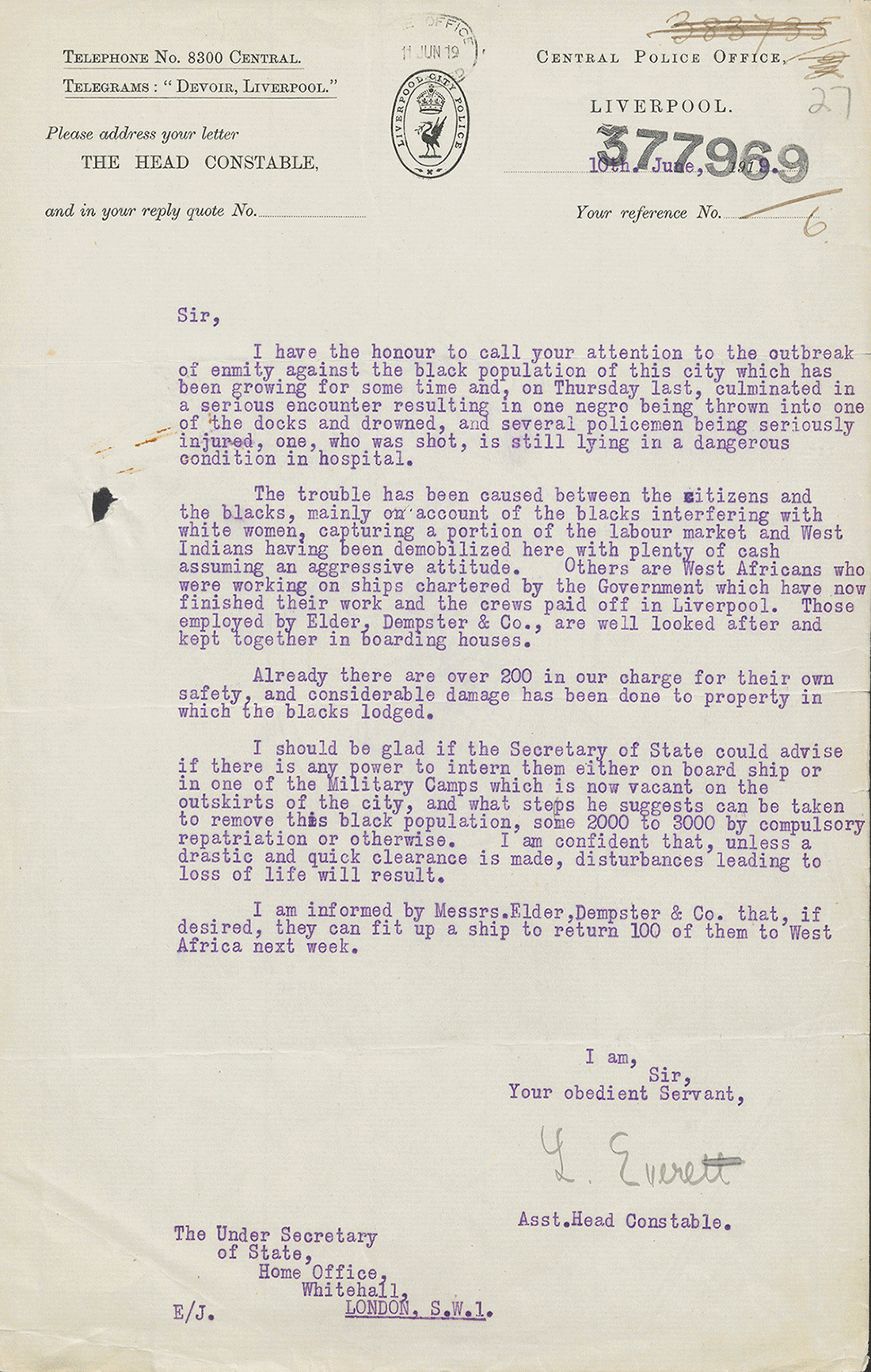
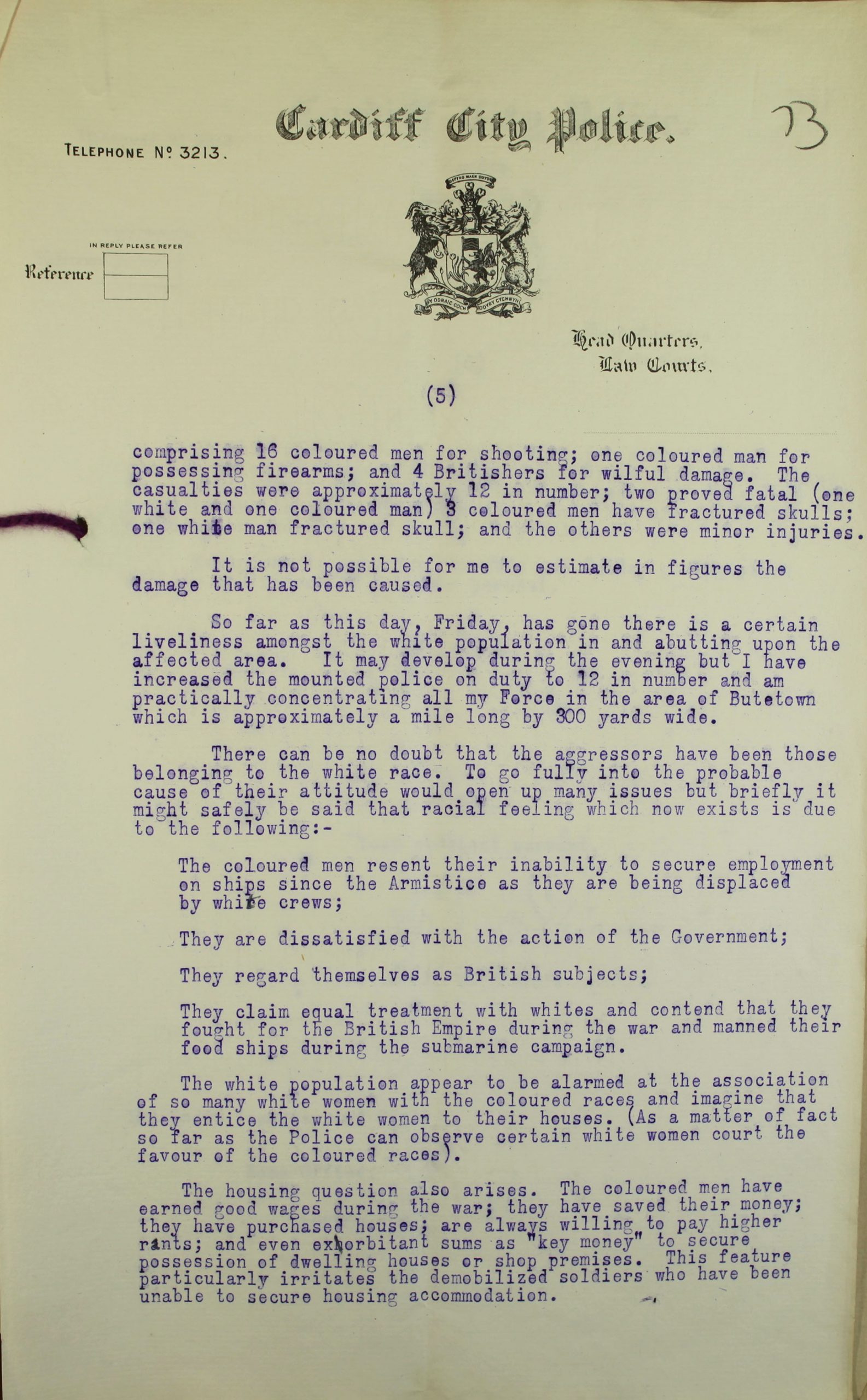
How significant a factor was race in the riots of 1919?In the aftermath of the First World War, street protests, riots and strikes broke out in countries worldwide as millions of workers faced unemployment and housing shortages – rather than the promised peacetime prosperity. In 1919, a series of violent riots in Glasgow, South Shields, Salford, London, Hull, Newport, Barry, Liverpool and Cardiff saw street fights, vandalised properties and five people killed. Thousands-strong white working-class crowds in these port towns directed their anger at black and minority ethnic communities, blaming colonial workers – whose numbers had increased to meet war time shipping needs – for post-war job shortages.
The sense of menace and the lingering effects of racism continued into the 1920s was most evident in the comments of the immigration official E.N. Cooper, who wrote to the Home Office after visiting an employment centre for seamen: ‘…we found ourselves the only white men in a surging sea of 500 negroes pressing around us offering their services, assuming that I was the ship’s captain who had come into the room to engage a crew’ (HO 45/11897/332087/100).
The 1919 riots were one of the most severe incidents of unrest in 20th century Britain. Known as ‘race riots’, they came to national prominence via the newspapers of the day, making many aware of the presence of black and minority ethnic communities in Britain. The coverage was often hostile and racist in tone, suggesting that the problem of communities unable to mix was long-standing.
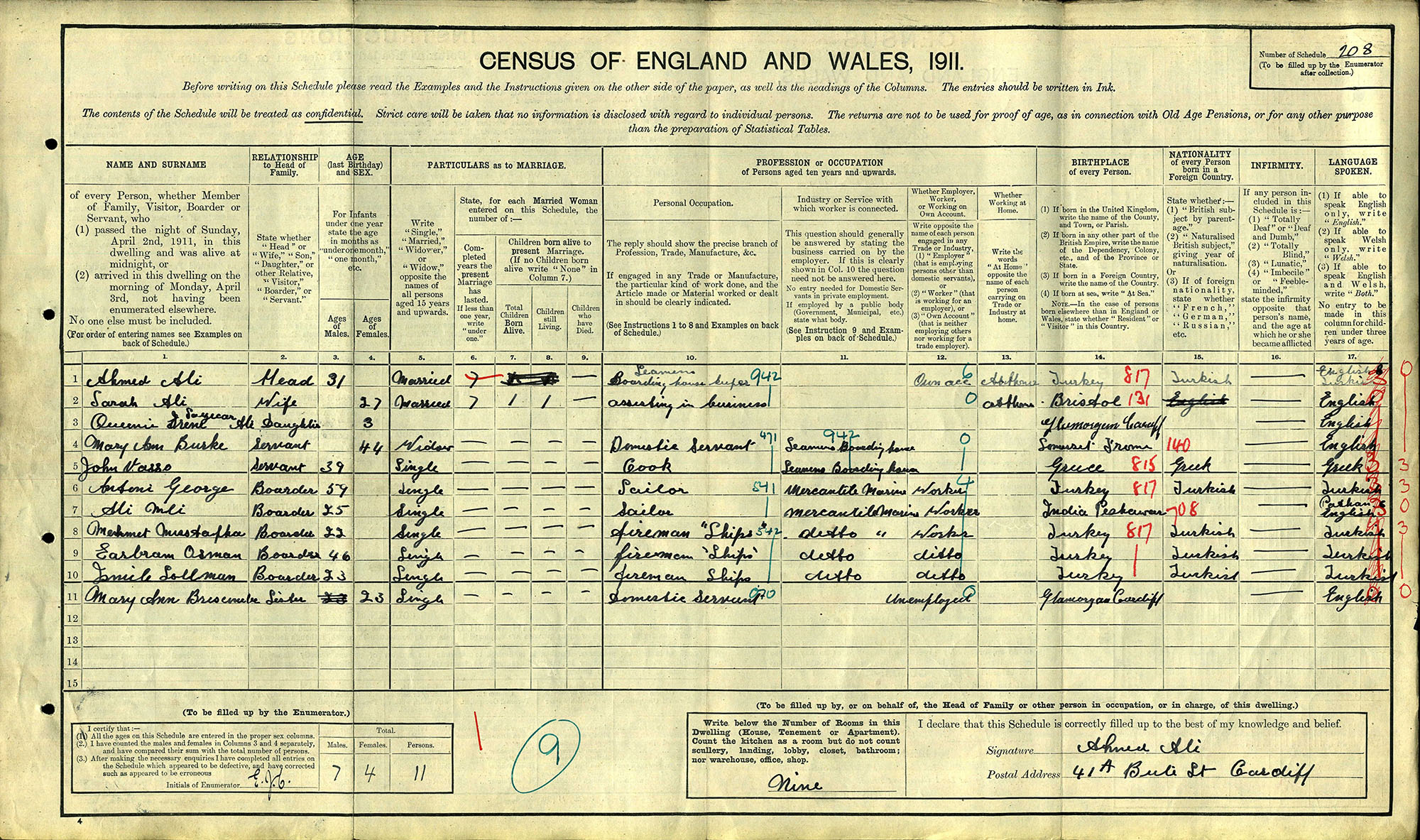
However, census records from 1911 provide a more complex picture. While there were occasional incidents of racial tension, reports testify to a spirit of co-habitation as mariners of many different races and cultures settled with White British women to bring up their families. Before the war, major port cities like Cardiff and Liverpool were international trading centres and home to established black and minority ethnic seafaring communities. They expanded during the war as workers from the colonies were recruited to meet increased demands from shipping. When peace came, the shipping industry contracted and all British workers were affected, including White merchant sailors returning to their home ports after serving in the armed forces. Inflammatory press reports at the time, however, traced the outbreak of the Cardiff riots to widespread racist attitudes towards mixed-race couples, as much as to resentment about rising unemployment.
In February 1919, the Home Office responded to concerns about rising levels of unemployment in British seaports by launching a repatriation scheme to return black and Arab colonial workers to their countries of origin. Local repatriation committees were established in port towns that had experienced riots to promote the scheme. Despite penalties for not taking part, many refused to participate, feeling Britain was their home. The continuing crisis led the government to offer £5 plus £1 voyage allowances to anyone who participated. The Colonial Office, however, were keen that married couples where the husband was black and the wife white should not be repatriated, fearing it would upset the existing social order in the colonies they were removed to.
On one level it was matters of ethnicity that triggered the ‘race’ riots. However, the historian Jacqueline Jenkinson urges caution in seeing the riots as purely a matter of racism and prejudice. She asserts that time and place are very important to keep in mind. In South Shields, Glasgow and Hull, job competition just after the war played a significant role in the disturbances. In Cardiff and Liverpool, where there were far larger and more settled black and Arab communities, race played a more significant role, fuelled by concerns in the media and amongst the public about interracial relationships.
In addition, any analysis of the rioting in 1919 and its fallout needs to take into account other factors. These include:
- The post-war psychological trauma of returning service personnel.
- The significant financial depression, which saw a spike in unemployment.
- The expansion of the franchise (the right to vote), which meant that politicians needed to placate working class voters at the same time as meeting the threat of increasing industrial militancy and the fear of Bolshevik revolution.
- Women were emboldened by their experience of war service, leading to significant changes for post-war society.
- Finally, the ill-defined nature of Britishness further fuelled disputes as to who was British and who was not.

General publicity material used for Sierra Leone, 1944. Catalogue ref: INF 2/5
Take a look at an example of propaganda material for Sierra Leone, a British West African colony.

