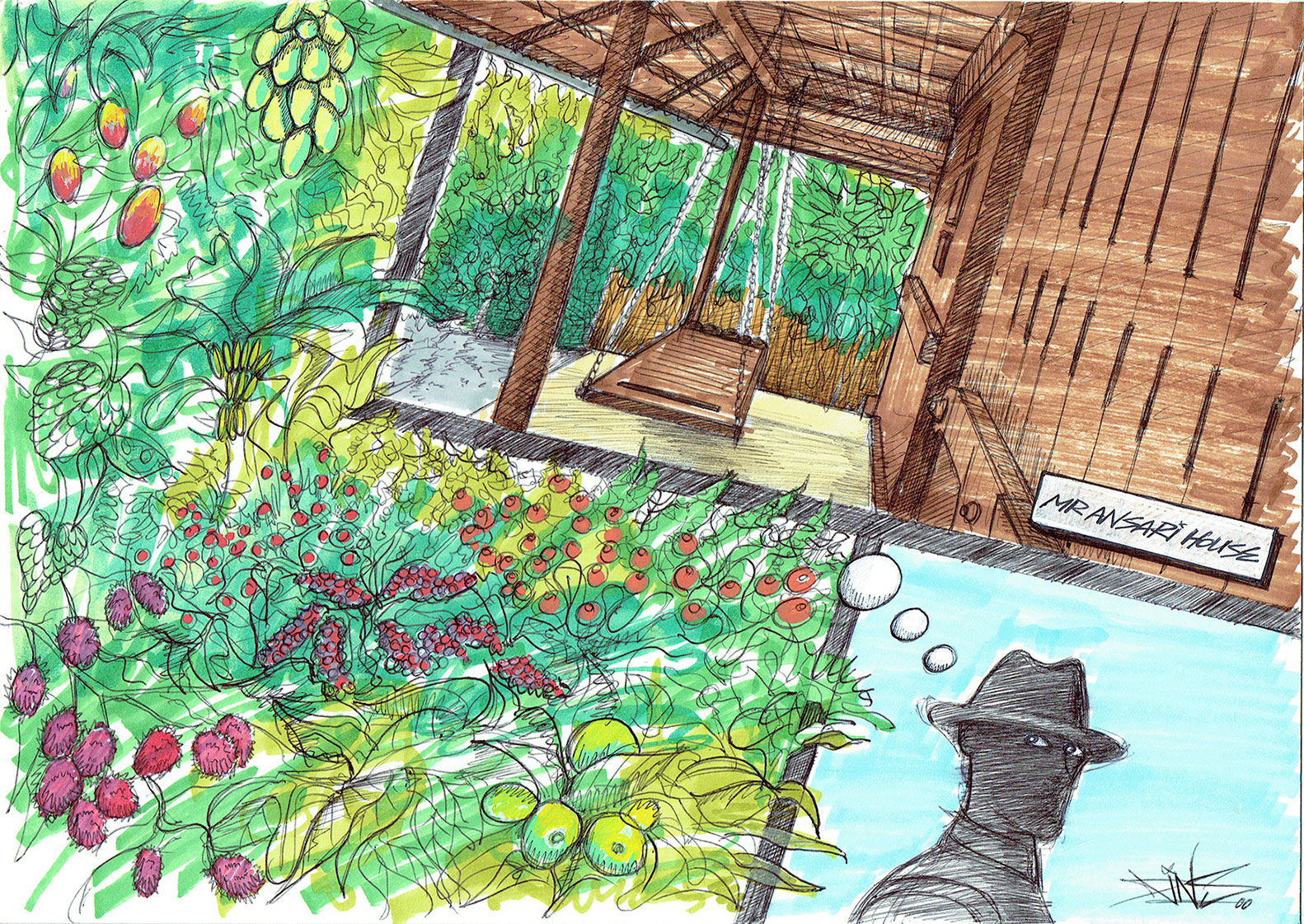
Illustration by artist PINS, inspired by Iqbal’s aunt’s testimony.
Mr Ansari House by PINS © Bhupinder Singh, 2022
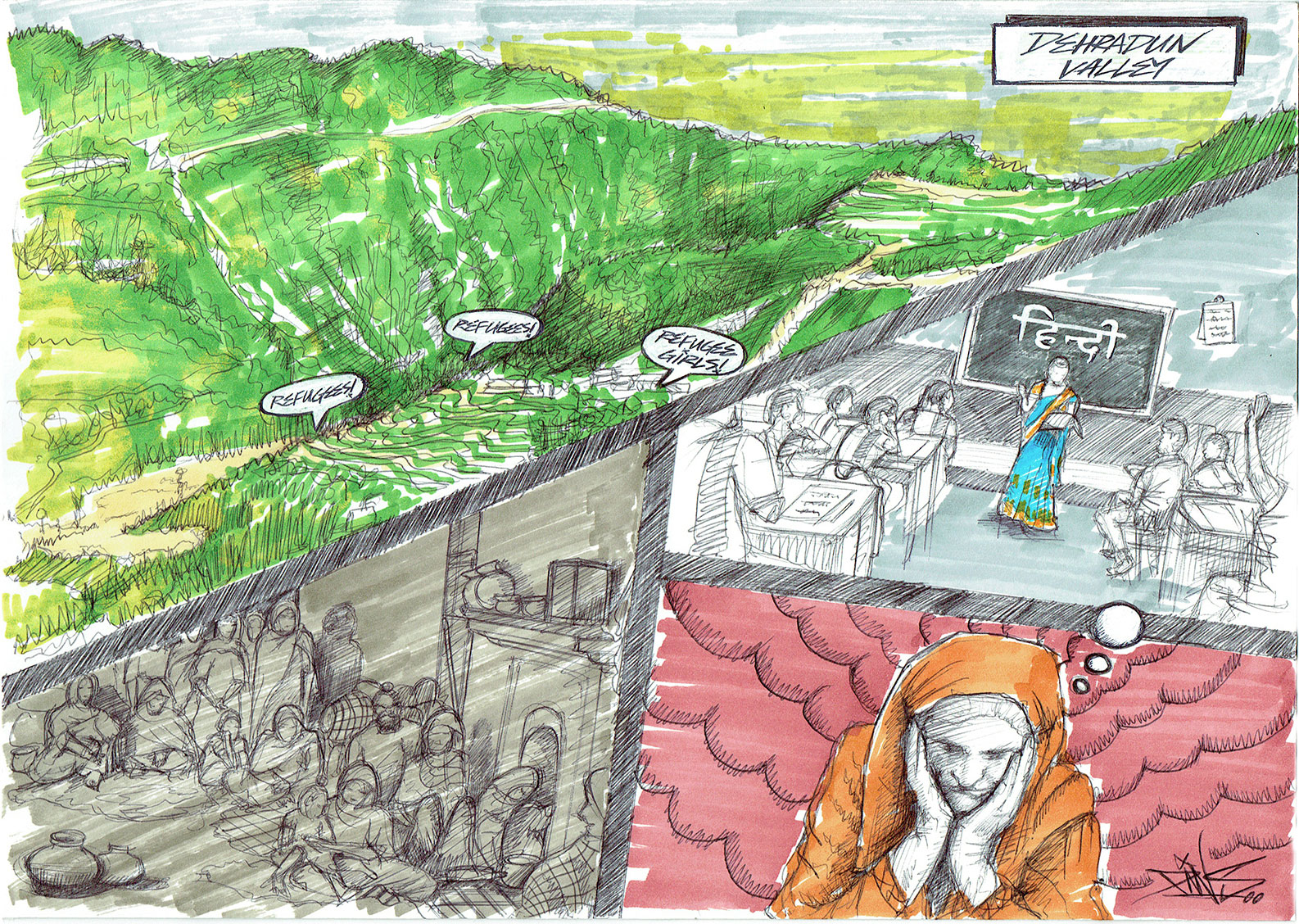
Illustration by artist PINS, inspired by Iqbal’s aunt’s testimony.
Dehra Dun Valley by PINS © Bhupinder Singh, 2022
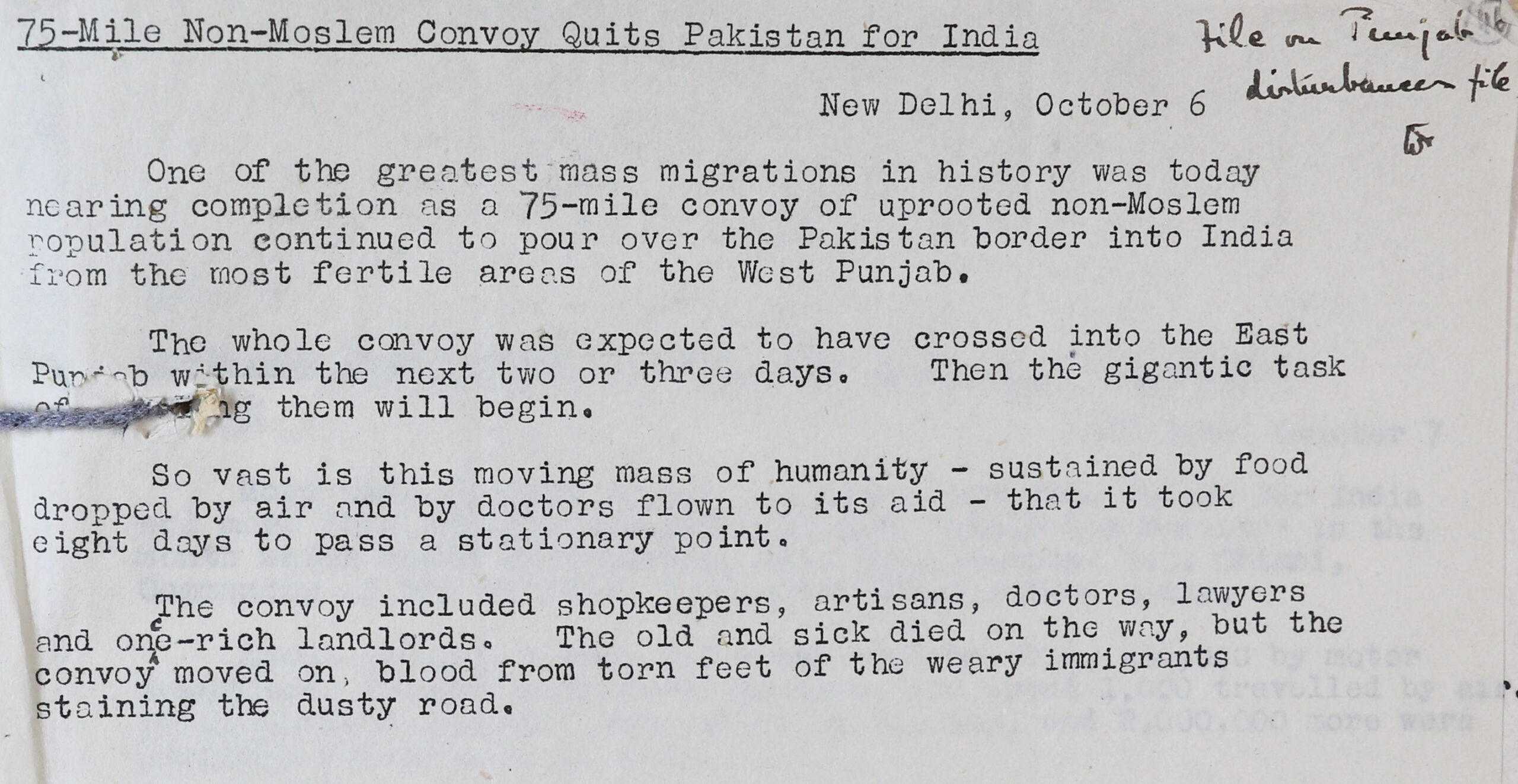
A report on refugee movements after partition. Catalogue ref: DO 142/416
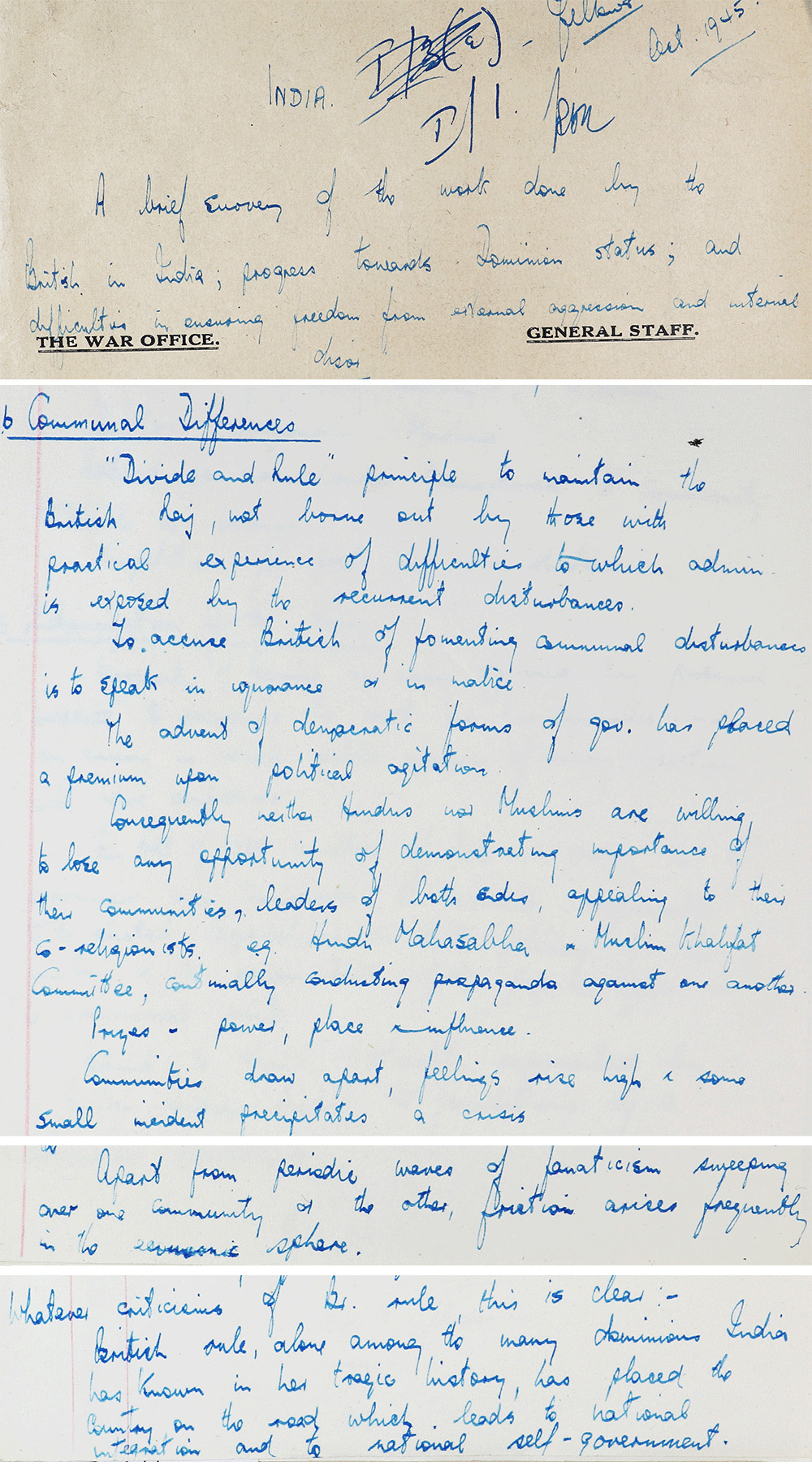
Notes on British involvement in India from 1945. Catalogue ref: WO 208/755
Context – This is a page from a set of notes made by an unknown British official. ‘Communal’ is not a term we use a lot today but was used in British-India by officials to describe tensions between religious groups. It was thought that Indian people had stronger religious beliefs than British people and, as a result were more likely to resolve things through violence.
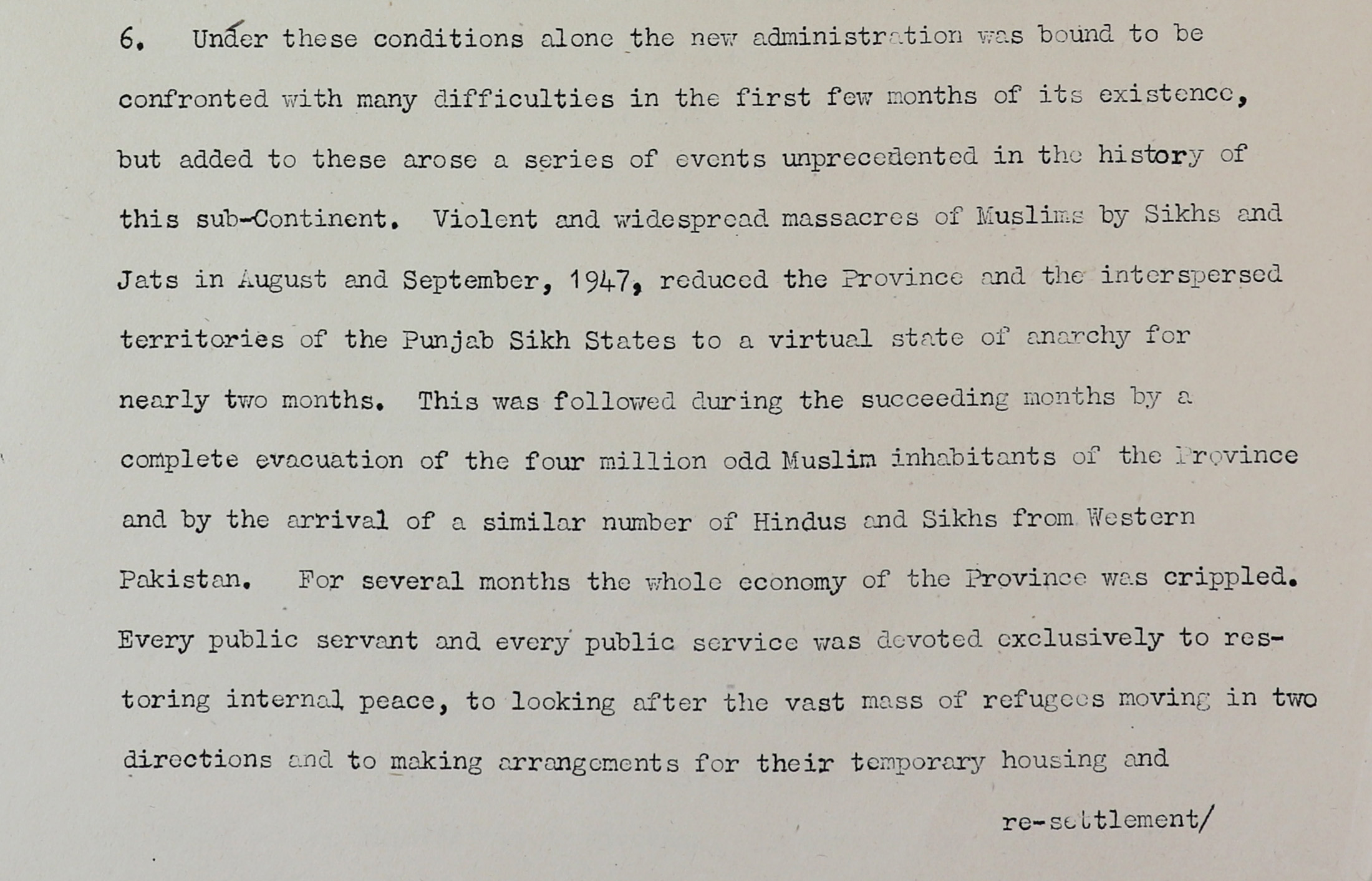
1948 report by J.S.H. Shattock. Catalogue ref: DO 142/439
Context – J.S.H Shattock was based at the British High Commision at Delhi. The British High Commission reported between its offices in India and also informed bodies like the Commonwealth Relations Office in London about what was happening in India.
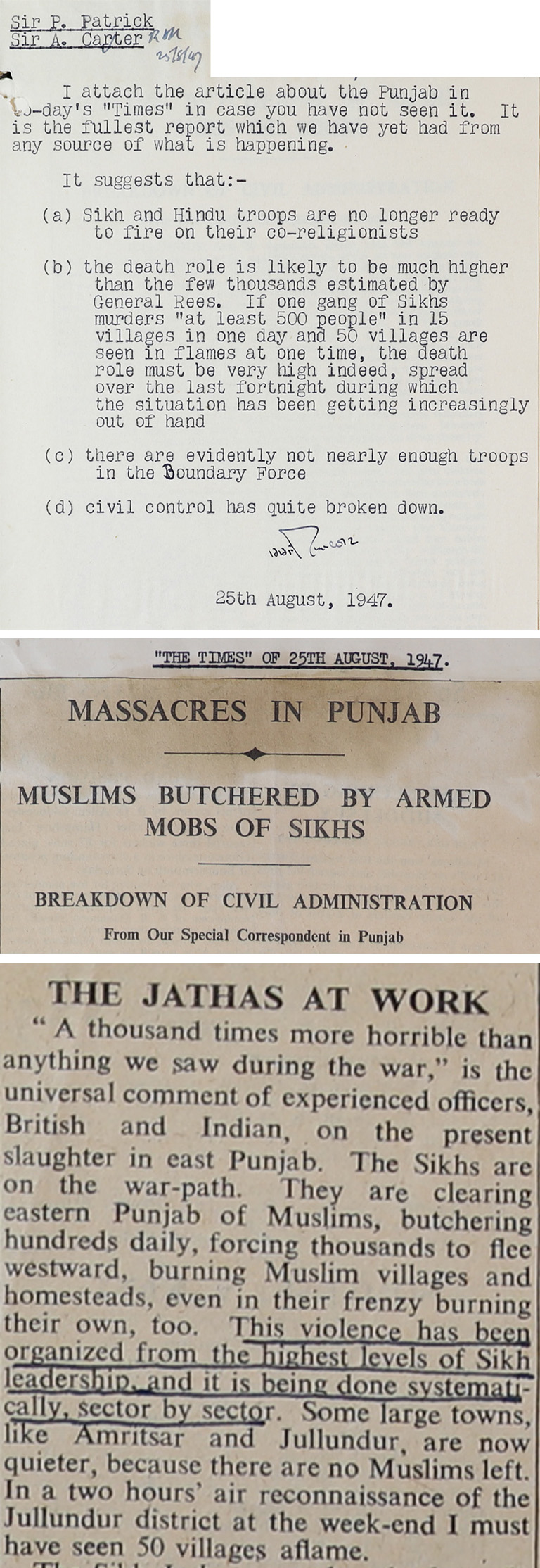
Cover note and extract from a newspaper article from The Times, 25th August, 1947. Catalogue ref: DO 142/416
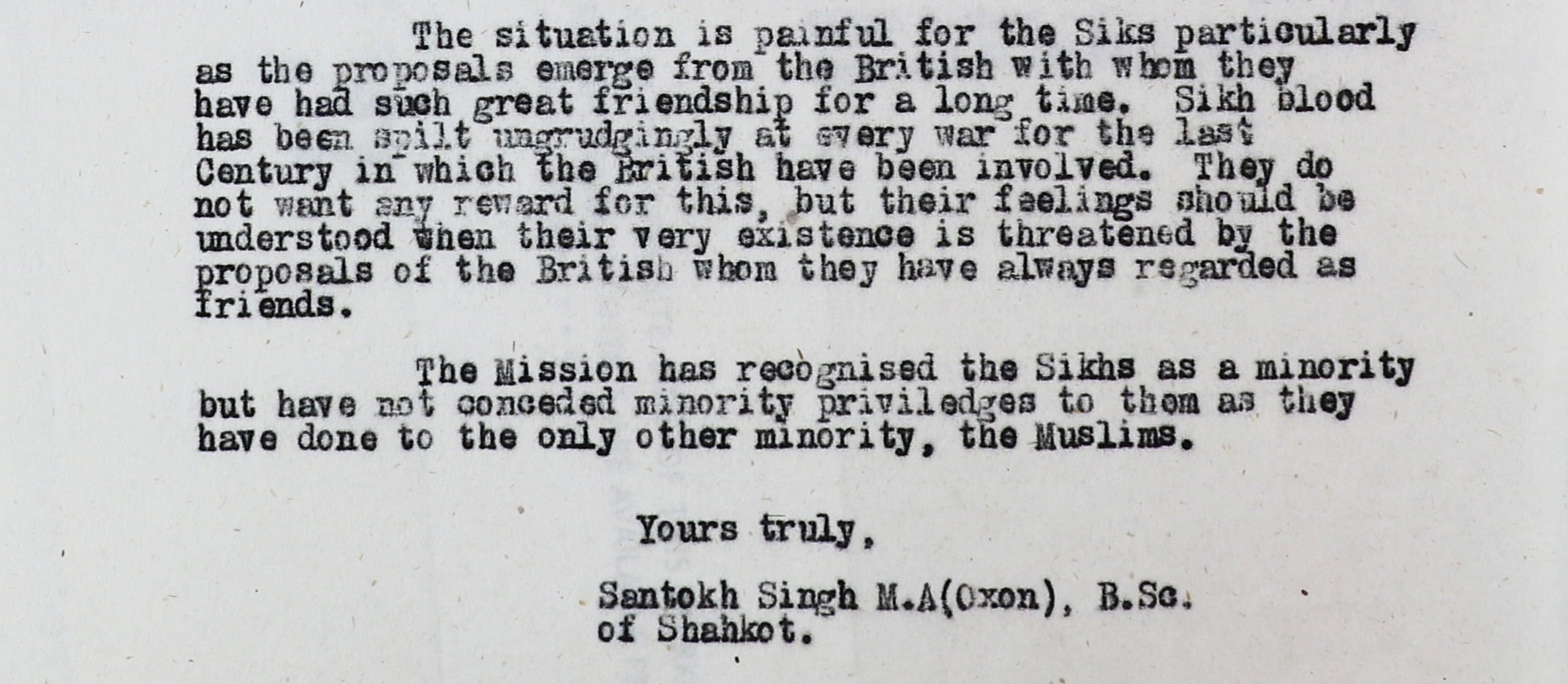
Letter from Santokh Singh, 1 June 1946. Catalogue ref: CAB 127/106
Context – Santokh Singh was a writer who wrote in Punjabi, with a Sikh father and a Hindu mother. He is writing to Lord Pethick Lawrence, a British politician involved in the negotiations leading to the partition of British India.
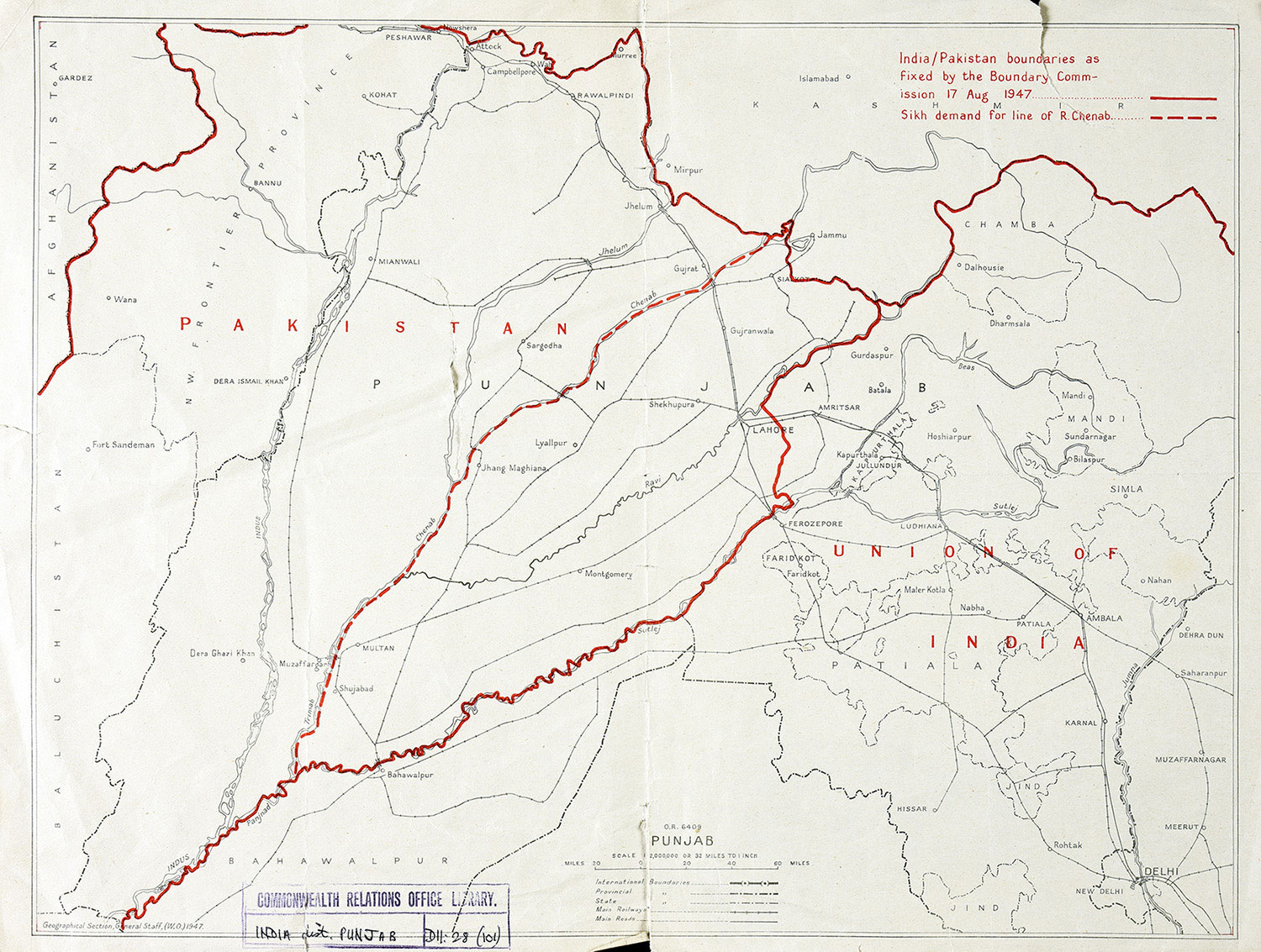
1947 map of the Punjab, India and Pakistan boundaries. Catalogue ref: CO1054/76
Context-
Lahore was a special place for the Sikhs. It was the location of many important Sikh religious and historical sites. In addition Guru Nanak, the founder of Sikhism, was born in Nankana Sahib, near Lahore. However this was a Muslim majority area and was made part of Pakistan. This didn’t take into account that non-Muslim people had strong connections to this area, they had businesses and had played a large role in developing the Punjab. Before the boundary line was drawn there were appeals from many in the Sikh community to give greater acknowledgement to Sikh history and heritage than they feared a focus on Muslim and non-Muslim populations would allow.
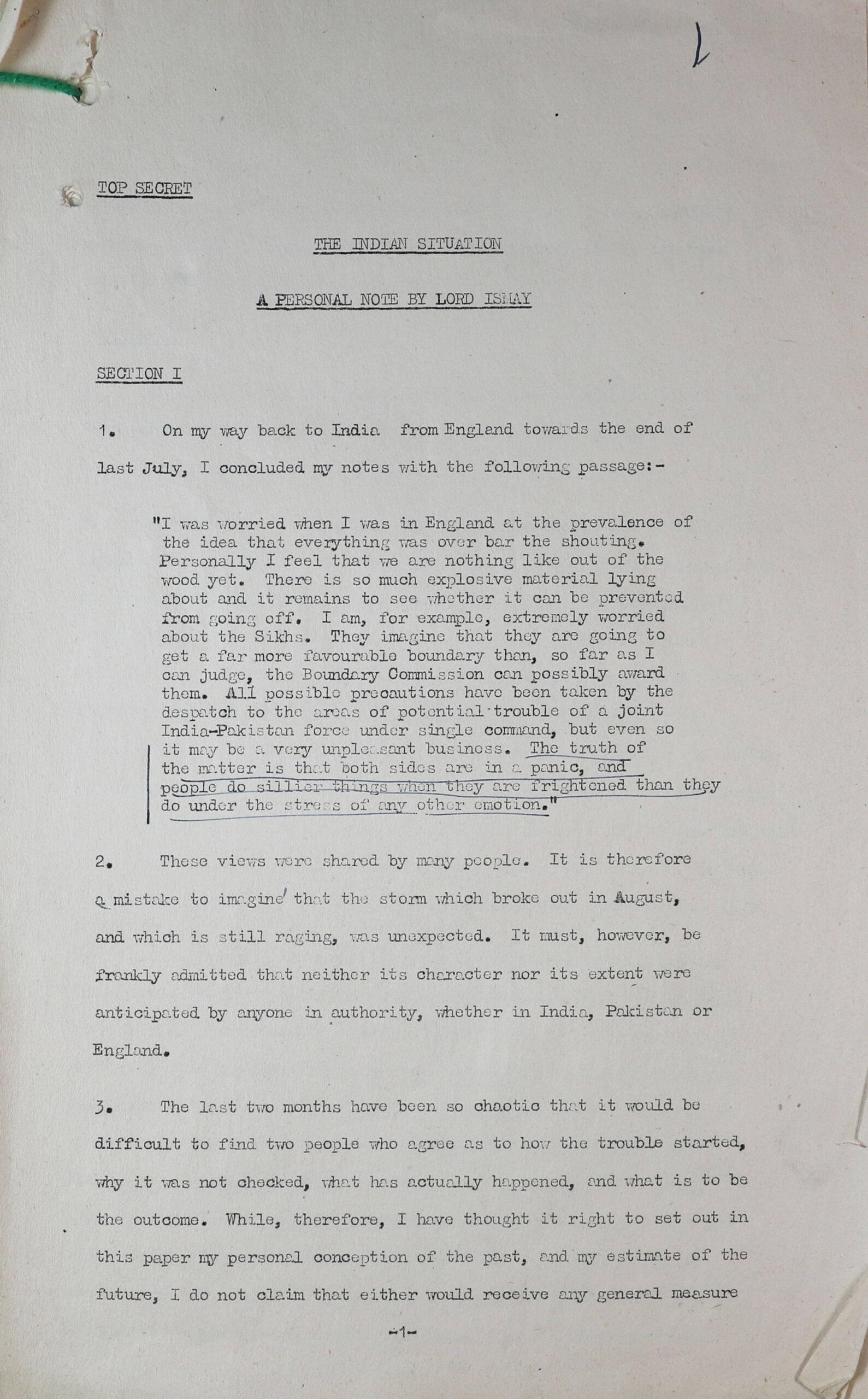
Catalogue ref: DO 121/69
Context – Lord Ismay was chief of Staff to Lord Mountbatten and therefore closely involved in negotiations.

Listen to the oral testimony from Iqbal’s aunt about partition.
Context – These are extracts from a conversation with Iqbal’s aunt whose family were displaced prior to the partition of British India. There are themed audio clips and a typed transcript.
- What type of document is this?
- What challenges did Iqbal’s aunt face when her family were displaced?
- Iqbal’s aunt shows a lot of empathy for Mr Ansari who was Muslim and recognition that he must have felt loss, like her family did.
- How does that challenge some of the simplistic ideas about ‘non- Muslim’ and ‘Muslim’ people in the Starter Source?
- How useful do you think oral testimony is as a source to learn about partition? Explain your answer.
1. Train journey
We were in a train, never seen before, but everyone was quiet, no one was saying anything, later on my mother told me were all wandering where are we going, what’s happening, that’s what she told us and I remember Lahore Station, the railway station, where there were people, people, people and my mother’s sister and her husband they came to see us at the station saying why are we going, are we mad, they still didn’t realise but then grandfather told us we must go, it is going to happen, that everybody will have to leave, those who are not of that religion of Pakistan going to leave. And then the train slowly moves, people are very happy, as children we were going to Ferozepur, Ferozepur, Ferozepur, it was going to be India. And my mother says that everybody was happy, and loud religious things were being said, thank God, we were saved and very sad and very unhappy that they had to leave their homes forever.
2. Learning Hindi
We had to learn a new language, which was Hindi. In Pakistan it was Urdu and English, and here it was going to be Hindi and English, so we had to go to a Hindi learning school to learn Hindi to go into school, to be admitted, and to learn that language. The teacher who was teaching us came from a very good local rich landlord family so that is a very beautiful memory, of learning the language from her. But we could not go to an English medium school because they were more expensive, and the Hindi medium was low fees and my parents could afford only that for the girls and the boys, brother, cousins, they went to the English medium. That trauma of Hindi medium stayed in me, that complex, lasted I think almost forever, but of course we managed with confidence but I remember wherever you went we grew up they would say you know so-and-so’s daughters. They are okay girls but you know they went to the Hindi medium schools, they are simpletons.
3. ‘Refugee girls’
I don’t remember the word refugee. It came only when we decided we are going to Dehradun because all the refugees are going towards Dehradun, towards Dehradun. Saharanpur, Rurki, Delhi. We were about to reach Dehradun, a beautiful place, it’s a valley between the two mountain ranges of the Himalayas. That is where I remember, ‘oh, they are refugees. They are the refugee girls. They are the refugee girls.’
4. My father and Mr Ansari
You see when the refugees were given houses which were left by the Muslims who went to Pakistan and the other way around. One very major trauma that in my mind is I must tell you, is my father, who suffered the maximum and he never, never laughed, never smiled easily because he could not get over it. 23 years after partition when he became ill, subconsciously or unconsciously he kept on saying, let’s go home, let’s go home. And my mother said, we are home. No, no, let’s go home. Because he was thinking home that is left behind.
We were given this place which belonged to Mr. Ansari, had a beautiful garden, seven types varieties of mangoes and lychees and all kinds of fruit. And he was a very nice man, who also had to leave the other way round, and then when I was thinking of my father saying, let’s go home, I wondered, Mr. Ansari must be missing his home, which became our home.