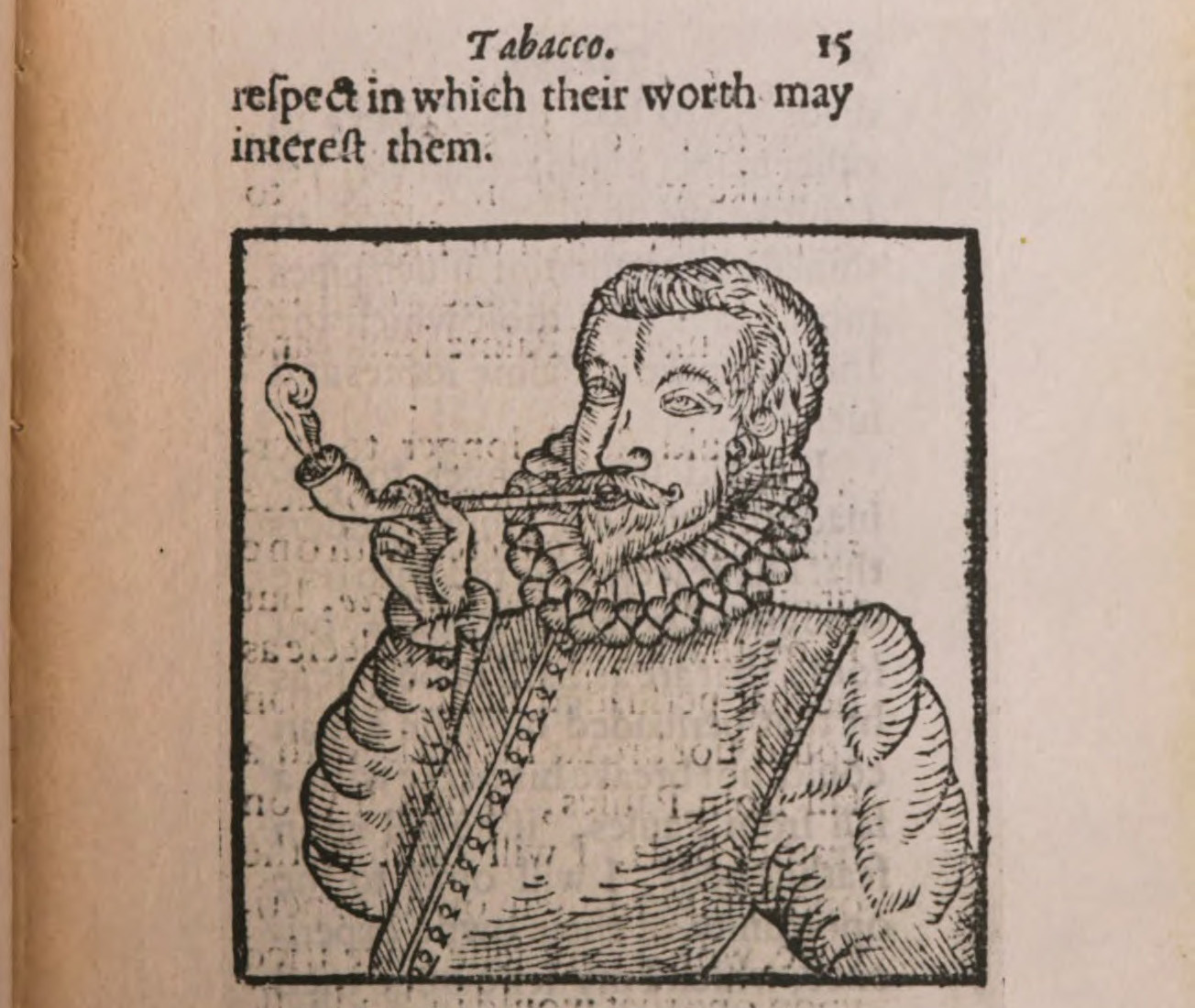
In 1604, James I of England and James VI of Scotland published his ‘Counterblaste to Tobacco’. He condemned the use of tobacco on the grounds of its poisonous effects on the body. He wrote that smoking was a ‘custome lothesome to the eye, hateful to the nose, harmful to the brain, dangerous to the lungs, and in the black and stinking fume thereof, nearest resembling the horrible stygian [very dark] smoke of the pit that is bottomless’.
‘Counterblaste’ also revealed James I’s concern about the potential disruptive effects of tobacco to English society. Writers of the period continuously linked the smoking of tobacco with immorality, disobedience, and even treason. As James I had only just ascended the English throne, it is unsurprising that he felt tobacco might encourage civil disorder and unrest.
Tobacco had been present in England since at least the 1560s, when sailors returning from Atlantic voyages captained by the Merchant Adventurer Sir John Hawkins had brought it home. It was likely that they themselves picked up the habit from Spanish and Portuguese sailors. Despite James I’s protests, there was a tobacco boom in early Stuart England.
Use the documents in this lesson to explore the early Stuart fascination with tobacco, focusing particularly on overseas trade networks and the activity of the Virginia Company, which helped popularise tobacco in England. Find out about the impact of early Stuart colonial ventures on individuals whose stories have often been left out of history.
James I & VI: How was tobacco viewed, consumed, and traded in the Stuart period?During the reign of Elizabeth I and the early 1600s, the English largely consumed Spanish tobacco. The practice of smoking tobacco was popularised by Sir Walter Ralegh in the court of Elizabeth I. One fanciful story described how Sir Walter Ralegh’s servant, seeing him smoking a pipe for the first time, threw a bucket of water on him, assuming that he was on fire.
By the time of James I and James VI, ‘the art of whiffing’ had become so popular that the pamphleteer Barnabe Rich estimated that there were over 7,000 tobacco shops in London by 1614. In 1599, a Swiss traveller to England was astounded at what was quickly becoming a London-wide addiction amongst the elite and middling-sort: ‘They always carry the instrument on them…lighting up on all occasions: at the play, in the taverns, or elsewhere’.
In the context of fraught Anglo-Spanish relations in the period, England was reluctant to remain dependent on Spanish tobacco. As the documents show, many English merchants (along with the French and Dutch) were involved in tobacco-smuggling off the coast of Guyana and Trinidad, engaging in a contraband trade with struggling Spanish settlers. The English had attempted to grow tobacco on the Island of Bermuda but were unsuccessful. 1606 saw the founding of the Virginia Company of London, and by 1607 the Virginia Company settlers landed on Jamestown Island to establish an English colony. John Rolfe brought sweet South American tobacco seeds to the colony and from the mid-1610s tobacco was being exported to England. Members of Parliament, many of whom owned shares in the Virginia Company, were keen to secure an English monopoly on colonial tobacco. Women and physicians had been attempting to grow it in their herb gardens in England, but parliament banned domestic tobacco growing in 1619.
Disease, mismanagement, and poor relations with indigenous peoples of North America eventually resulted in the complete failure of the Virginia Company in 1623. From this point on, the king assumed direct control of Virginia. Despite James I’s early protests against tobacco, and attempts raise the duties on tobacco, his morals gave way to pragmatism. He realised that tobacco could still be a profitable crop in Virginia, so James created a royal monopoly for the crop.
As the English attempted to establish their own colonial outposts, both king and Parliament realised the crucial role of tobacco in furthering imperial ambition and establishing further trading networks. The English used tobacco grown on their plantations to facilitate trade in the Mediterranean, North Africa, and the Levant.
Lauren Working’s recent book ‘The Making of an Imperial Polity’ explores how colonial projects influenced political culture and taste in London, focusing in particular on tobacco and imperial intent. Working explores how tobacco-smoking was made socially acceptable for London gentlemen as they attempted to distance themselves from what they construed as the ‘savage customs’ of Native Americans in their consumption of tobacco. They re-contextualized the crop and invested it with new meanings of civility and refinement in metropolitan locales. This distancing process was achieved largely through the accoutrements of smoking, which included tobacco pipes and precious tobacco boxes made of gold, silver, or ivory, and often stamped with a heraldic coat of arms.
In fact, the smoking of tobacco can even be construed as a patriotic act which furthered national colonial ambition. The gentlemen in Parliament who owned shares in the Virginia Company were the same men who were smoking socially and writing poems that praised tobacco. Not all men were as positive about the potential effects of colonial enterprise. An anti-tobacco poem written by the merchant Josuah Sylvester: ‘Tobacco Battered and the Pipes Shattered’ (1616) provides an early reflection of the damage caused by early mercantile ventures. His words speak not only of the English colonisers, but also of the Native Americans and Black enslaved peoples whose lives were changed irrevocably by England’s colonial ventures in the seventeenth century. Sylvester asks ‘whether [the] discovery of America, that Newfound World, have yielded to our world more hurt than good’.
How was tobacco viewed in the early Stuart period? Tobacco held an ambiguous position in the Stuart imagination. On one level, tobacco was seen as a ‘holy herb’, a miraculous medicinal remedy, which could cure headaches, heal wounds, depression, and to prevent against the plague. It was even recommended for pregnant women, as physicians believed that the warm and moist qualities of tobacco would nurture the baby’s growth in the womb. There were, of course, detractors to this viewpoint, who held opinions akin to James I, believing it corrupted the body and dulled the senses, a medical opinion that chimes with our present knowledge about the harmful effects on smoking on the body. Other individuals believed quite the opposite, suggesting that smoking tobacco would sharpen the brain and aid ‘divine wit’. As the poet Sir John Beaumont wrote in 1602: ‘Take up these lines Tobacco-like unto thy brain, and that divinely toucht, puff out the smoke again’. It is no coincidence that smoking amongst playwrights, actors, and writers was extremely popular; perhaps even William Shakespeare was partial to a puff or two as he wrote his poems and plays.
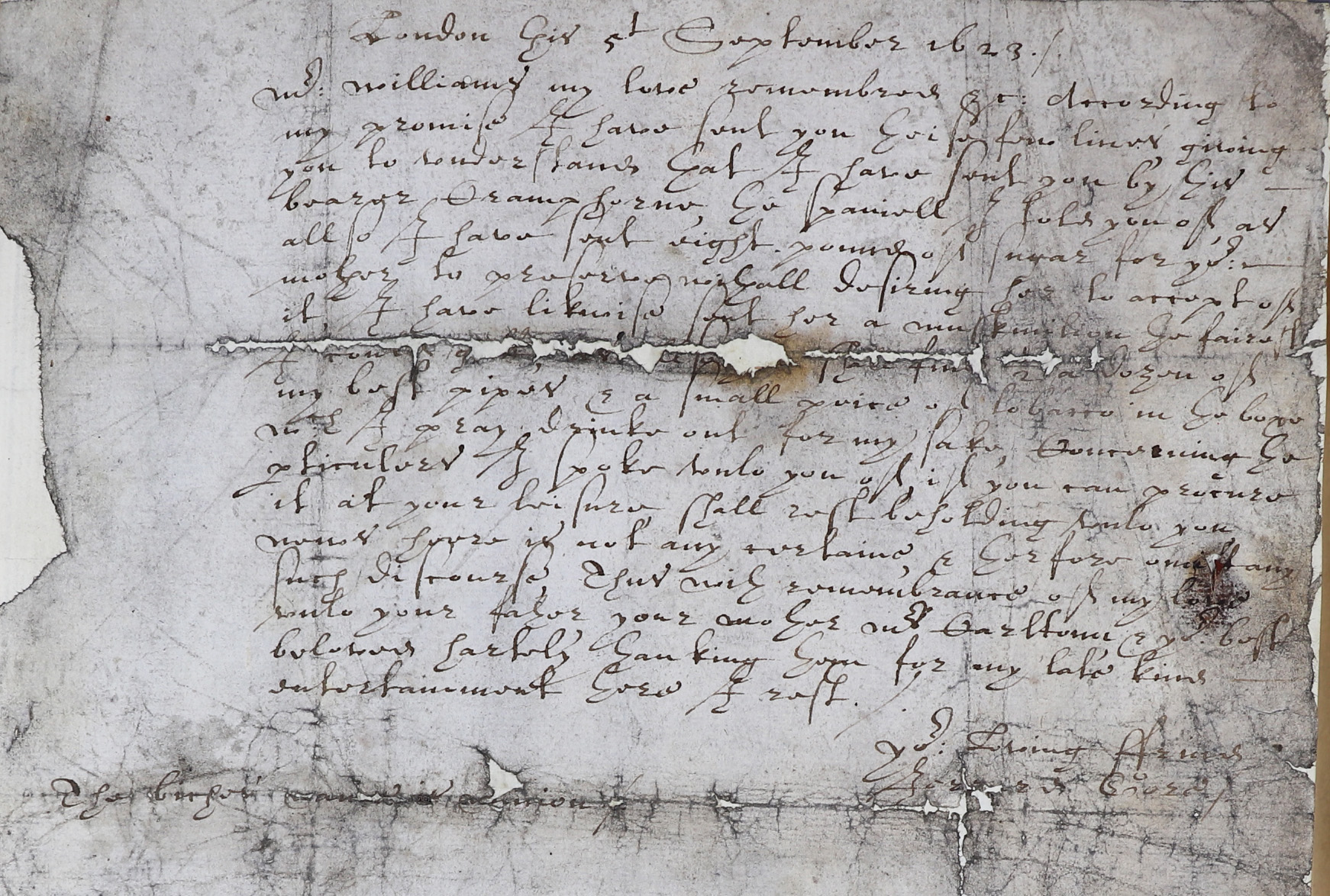
A letter from Jerard Gore to Anthony Williams. Send a spaniel, sugar, pipes, tobacco, 5 September 1623. Catalogue Ref: SP 46/66 f.24.
The letter mentions a muskmelon – a sweet fleshy melon, grown in the Mediterranean area in the Middle Ages. In the fifteenth century, the explorer Christopher Columbus carried seeds of muskmelon on one of his voyages to the Americas and planted it there. By the time this letter was written, muskmelon was being grown in English colonies in North America.
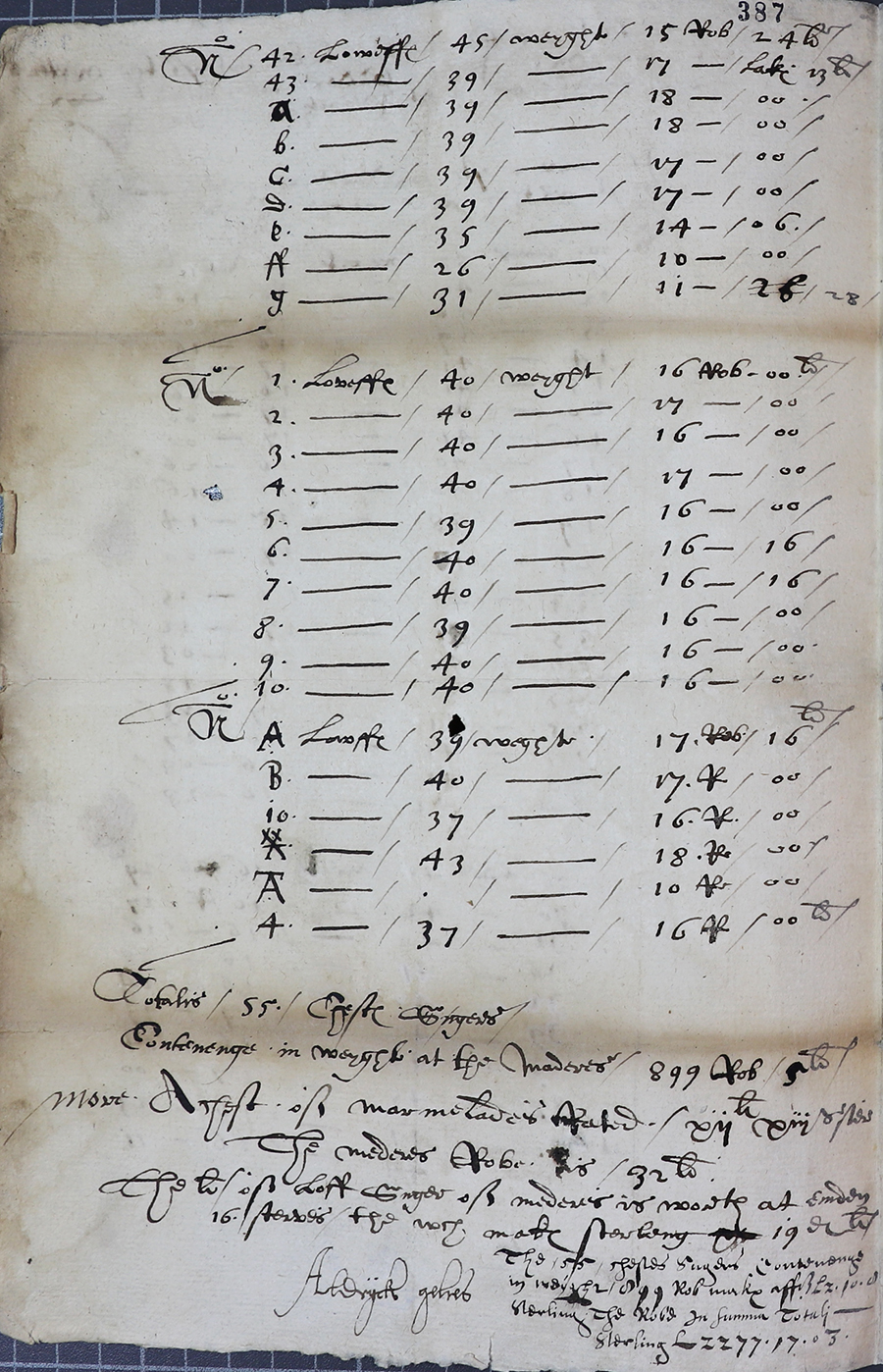
Extracts from an inventory of goods taken from the Neptune of Emden by Sir John Hawkins, 1590, Catalogue Ref: HCA 30/840/171 f.386-389.
Take a look at this list of goods, also known as an inventory. This inventory was used in the High Court of Admiralty as part of a collection of papers called the Prize Papers.
The Prize Papers are a collection of documents that were found on ships immediately after they were captured by an enemy during wartime. These include documents such as bills, inventories, and accounts. These would be used as evidence in the Admiralty Court to determine whether the ship and its goods were ‘lawful’ prize that could be kept by the people who captured it, or whether it had to be returned to its enemy.
Sir John Hawkins was a famous English trader and was son of the famous slave trader and explorer, who went by the same name. John Hawkins took many Spanish ships as Prize during England’s War with Spain (1585-1604). Many of these Spanish ships contained cargoes of goods which had been grown in Brazil. These goods were then taken back to England. This document concerns the Prize goods that were taken from the ship The Neptune by an English captain Sir John Hawkins.
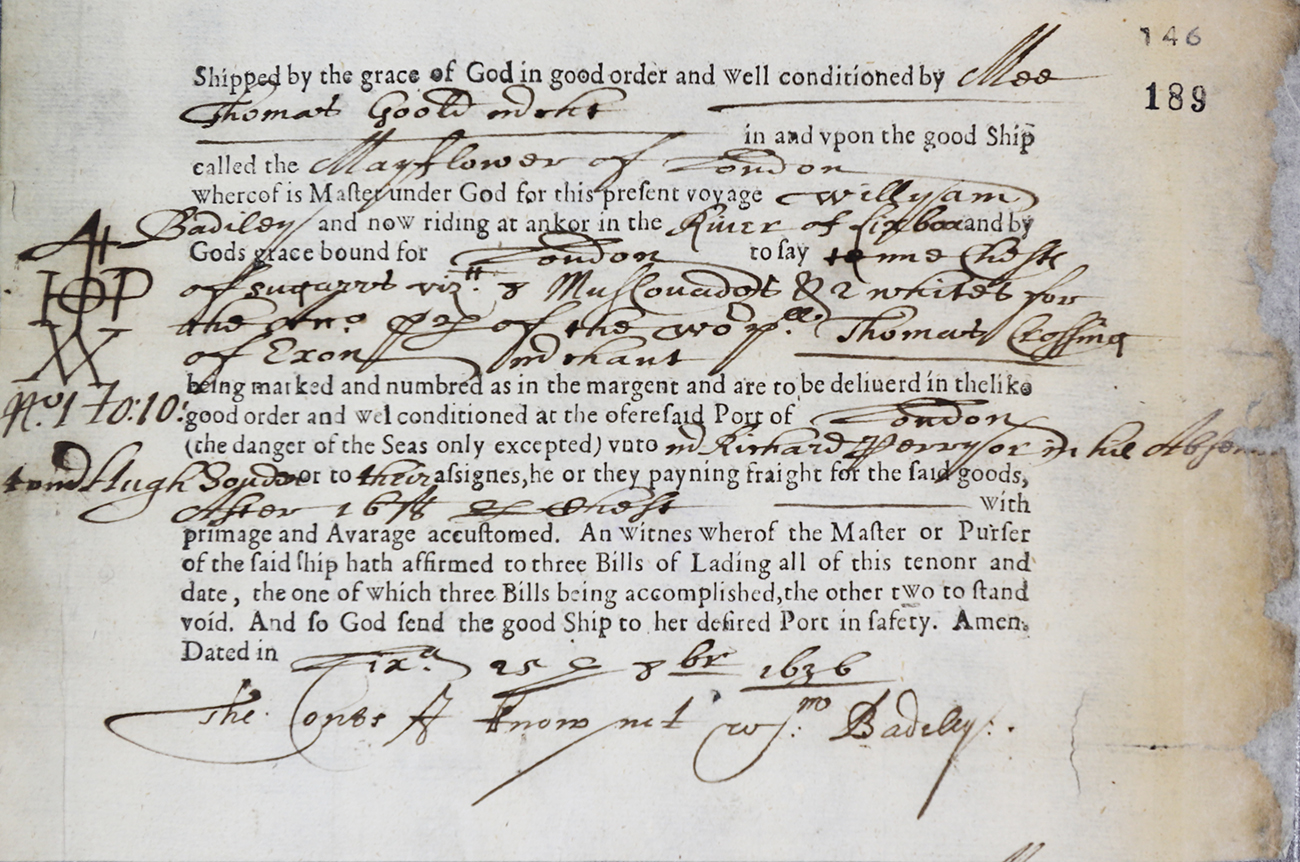
‘Bill of Lading’ for sugar for Thomas Crossing in the Mayflower of London (Master William Badeley), Oct 6. 1636. Catalogue Ref: HCA 30/840/79 f.189.
A ‘Bill of Lading’ was a receipt given by the master of a merchant ship to the person taking their goods. The master of the ship was responsible for the safe delivery of the goods. It was a way of stopping goods from being stolen and sold on to others.
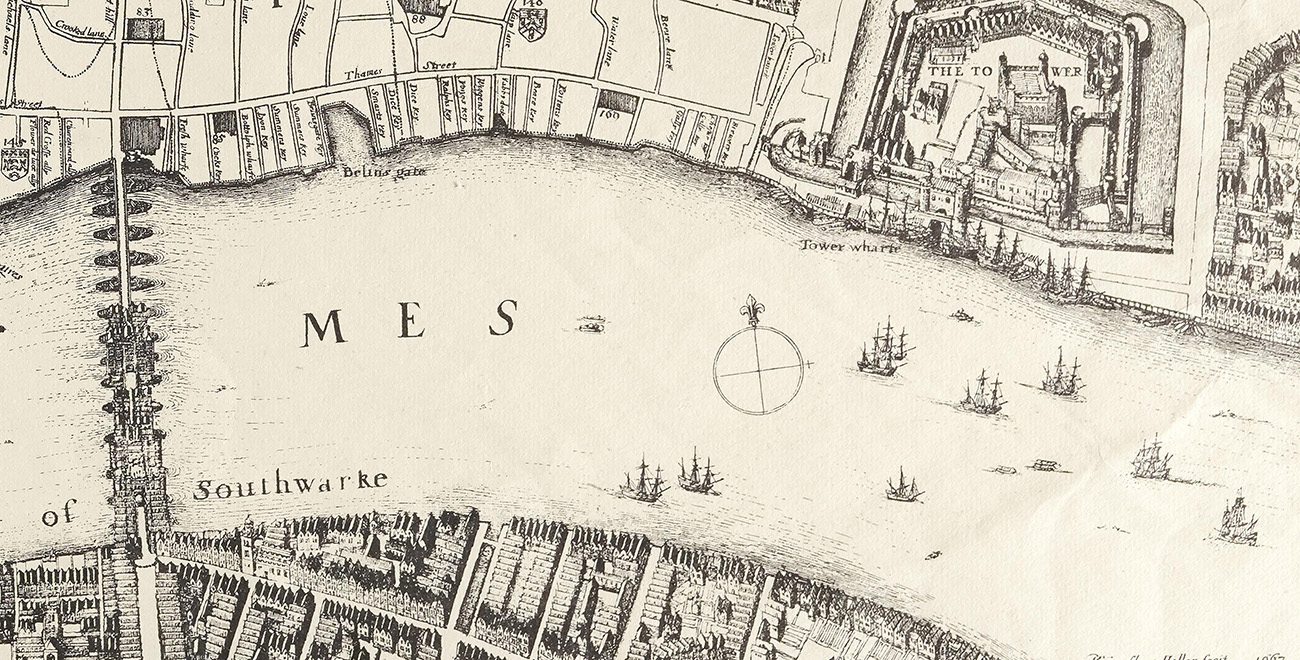
Close-up of the docks. Map drawn by Wenceslaus Hollar, entitled ‘Survey of the City of London’, 1667, Catalogue Ref: ZMAP 4/18
Take a look at this map of London, which shows some of the areas of the river Thames where trading ships would dock to unload their cargoes of sugar.
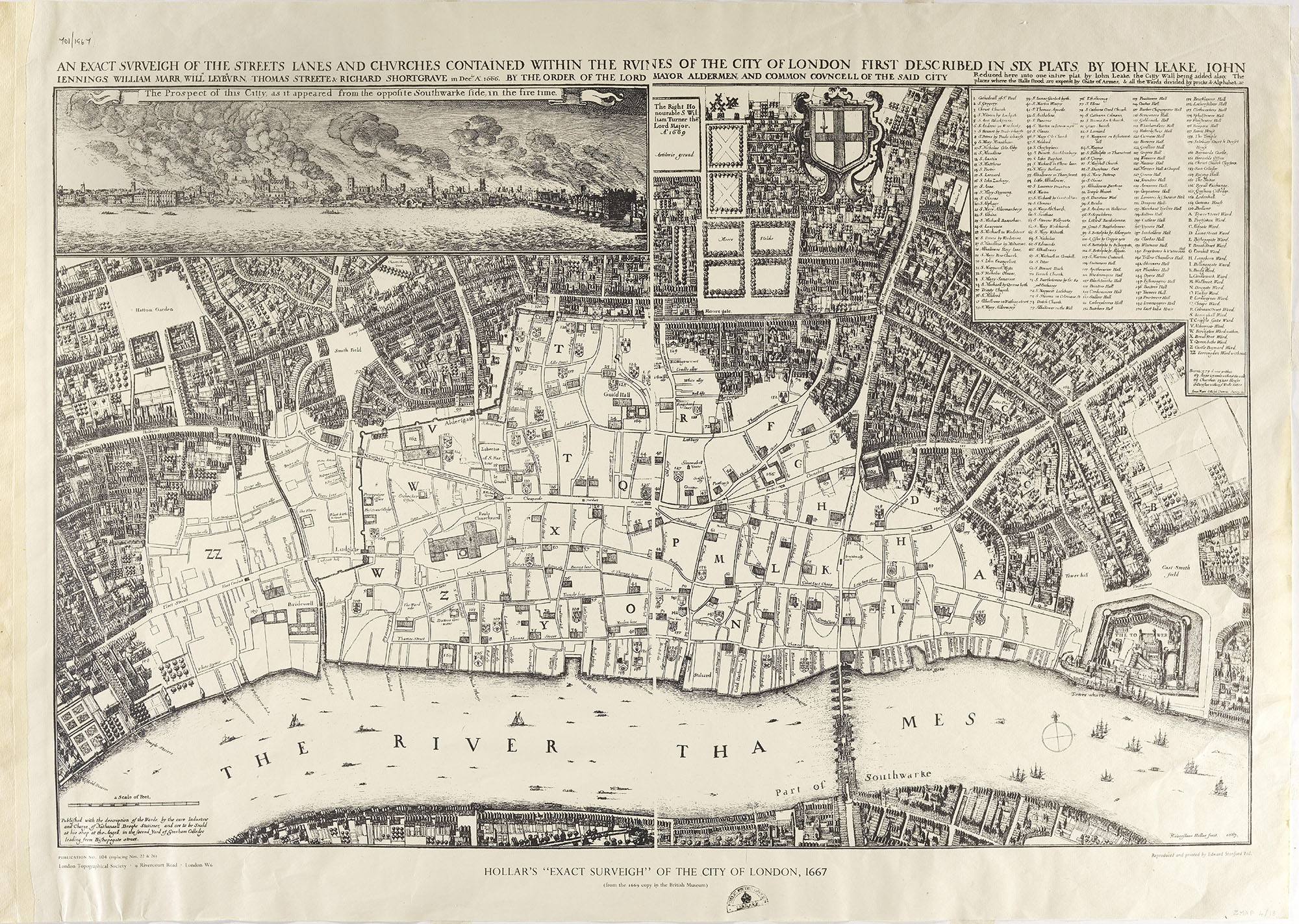
Map drawn by Wenceslaus Hollar, entitled ‘Survey of the City of London’, 1667, Catalogue Ref: ZMAP 4/18
Take a look at this map of London, which shows some of the areas of the river Thames where trading ships would dock to unload their cargoes of sugar.
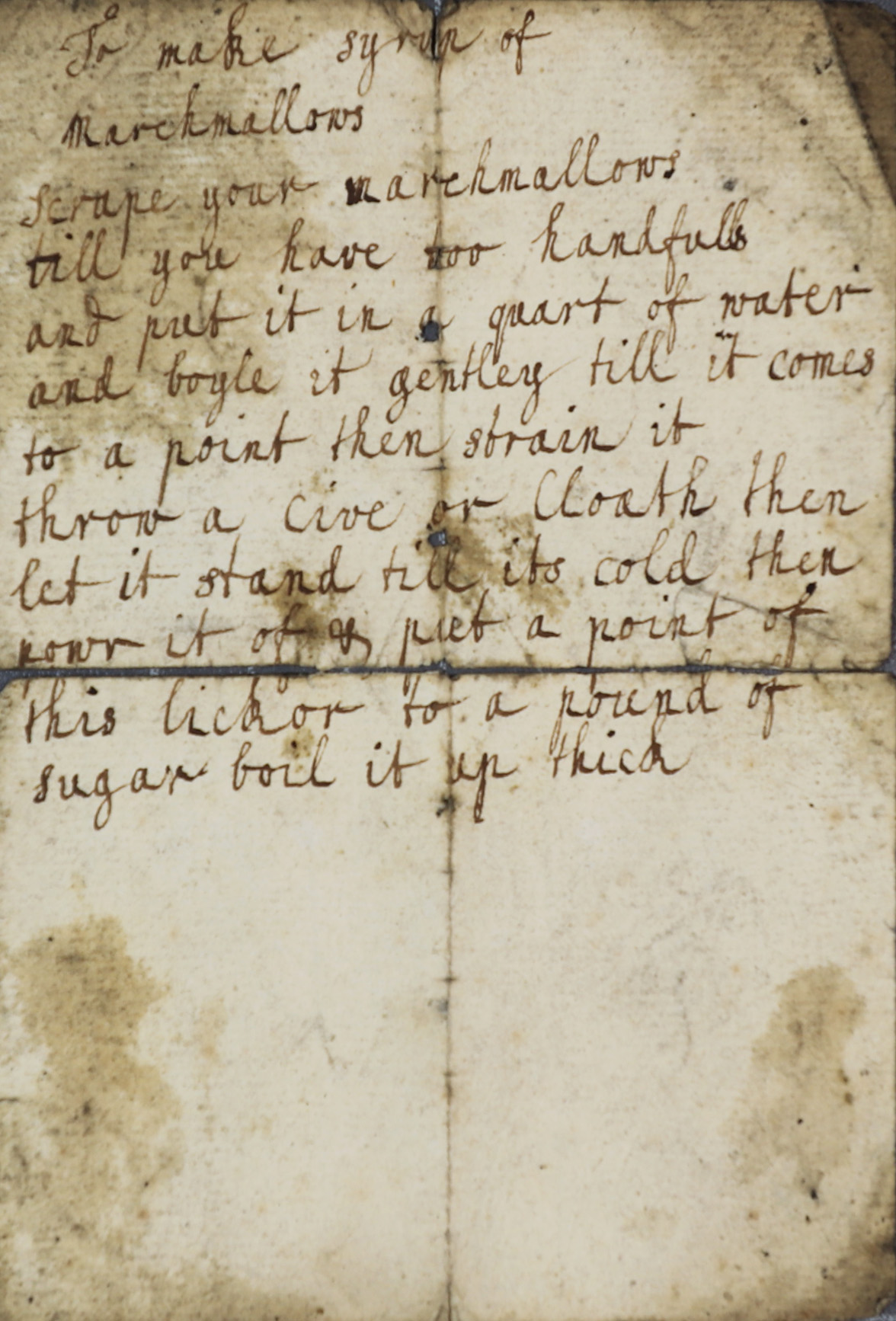
‘A recipe for marshmallow syrup’, Ship: Abraham of London, or perhaps not (master Andrew Hardie), 1633-1637. Catalogue Ref: HCA 30/636/7.
Take a look at this recipe, which was found with other documents from an English ship called Abraham of London, which was involved in trade in Barbados in the 1630s. These marshmallows were not the white fluffy sweets we think of today. ‘Marshmallow’ also means a white flower which was sometimes used in early modern medicine.
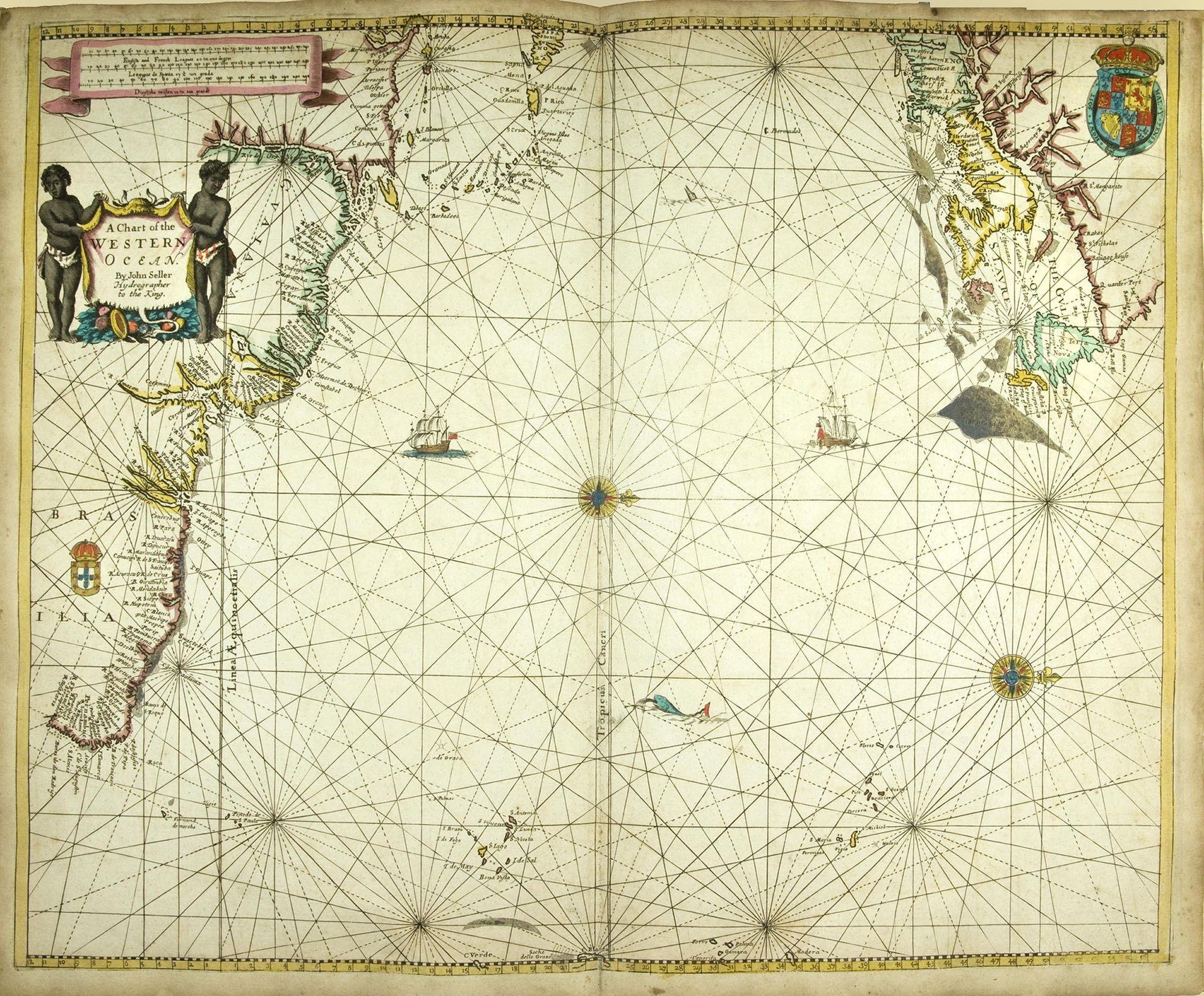
Map that shows the coast of Brazil in South America. Catalogue Ref: FO 925/4111 f.29.
From the sixteenth century there were plantations in Brazil that were growing sugar, which was then transported by ship to European ports.
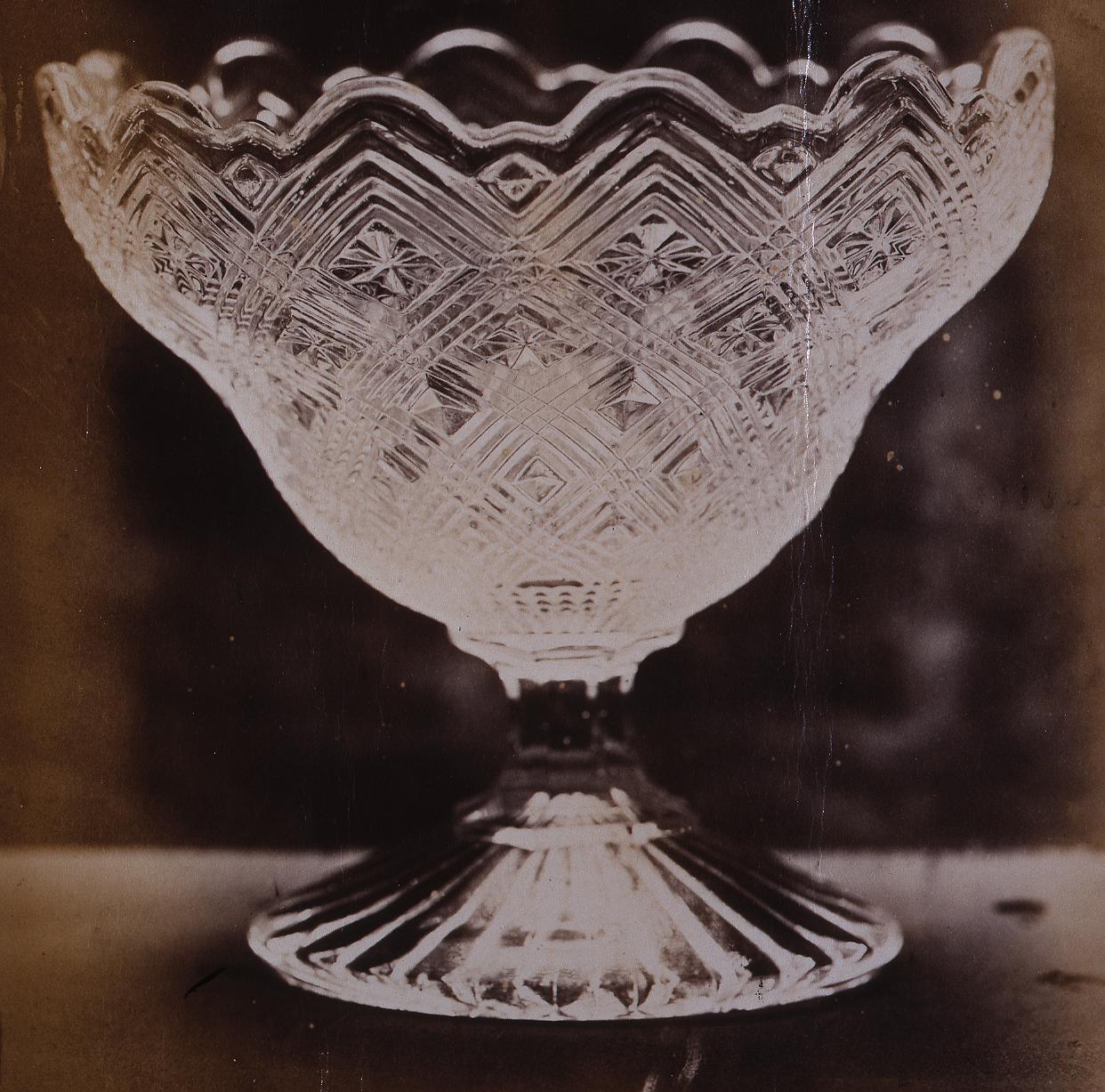
This lesson shows us how we can use a range of historical sources from the early modern period to piece together the history of sugar, a foodstuff that is now a part of our daily life. It explores the time in history when sugar was beginning to become more easily available and affordable in England, due to the transatlantic slave trade, the growth of sugar plantations in the Americas, and the labour of enslaved peoples on these plantations. A large collection of documents that can tell us about the history of sugar can be found in a collection called HCA 30, a varied set of records from the High Court of Admiralty, which include piracy, prize-taking, colonialism, and overseas trade.
Use this lesson to see what you can discover about the history of sugar from six different sources in collections at The National Archives.
What can original documents tell us about the history of sugar?By the end of the sixteenth century, English sugar consumption amongst royalty and the wealthy was so common that it was often remarked upon by foreign travellers in their description of English society. The German traveller Paul Hentzner describes the damage that sugar had done to Elizabeth’s I health and appearance by the time she was 65 years old: “her Lips narrow and her Teeth black…a defect the English seem subject to, from their too great use of sugar”. Hentzner’s witty observation responds to an important shift in how sugar was being consumed in England. In the medieval period, it served as a spice like nutmeg or ginger, as a preservative to stop food rotting, and played an important role as a medicine. By the Elizabethan and Jacobean periods, however, it was used as a delicious sweetener to be consumed in magnificent sugar feasts called banquets. It was also bought by some housewives in London, keen to copy the dining practices of the wealthy. English recipe books containing many recipes for sugary treats, such as Hugh Plat’s Delights for Ladies (1602), were very fashionable between 1575-1650, as sugar slowly became a foodstuff that more people could afford to enjoy and experiment with.
First grown in New Guinea and India as far back as 8000 BCE, by the tenth century BCE sugarcane had spread to Persia and the Arab world. The Arab conquest of vast areas of the Mediterranean from the seventh century onwards introduced sugar cane to Sicily, Cyprus, Malta, the Barbary Coast, the Maghreb, and Spain, opening methods of cultivation and the art of sugar refining across conquered geographical areas. During the crusades of the twelfth and thirteenth centuries, when Christians captured Islamic land, the Europeans experienced their first taste of sugar. Christian Soldiers were supposed to have gnawed on sugarcane and survived on its sap. The Europeans did more than just consume sugar; they became involved in both its cultivation and production. By the fourteenth century, Cyprus and Sicily had become important Mediterranean producers of sugar for the Europeans. This success encouraged Europeans to expand the sugar industry to the Atlantic Islands, South America, and the Americas. By the time of Elizabeth I’s and James I’s rule, increasing amounts of sugar was brought from sugar plantations (engenhos) in Brazil. These engenhos demanded the enforced labour of indigenous peoples, and, increasingly, enslaved Africans, who would work in appalling conditions to crush the sugarcane, extract the juice, and boil this juice at a hot temperature to produce sugar molasses, which would be shipped to Europe in large barrels called hogsheads. The beginning of a global sugar industry is an important part of the history of the early transatlantic slave trade.
The dark brown sugar molasses were brought to Lisbon, Antwerp, and Amsterdam, where they were further refined into coned sugar loaves, closely resembling the white granular sugar we are familiar with today. It was then transported to England to be purchased in grocers and apothecaries’ shops, and used in recipes for marmalades, sugar sculptures, marzipans, biscuits, and other sweet treats. It is in the sixteenth century that England developed its sweet tooth for which it is now so well known. The documents within this teaching resource provide snapshots of sugar’s history in the early modern period.
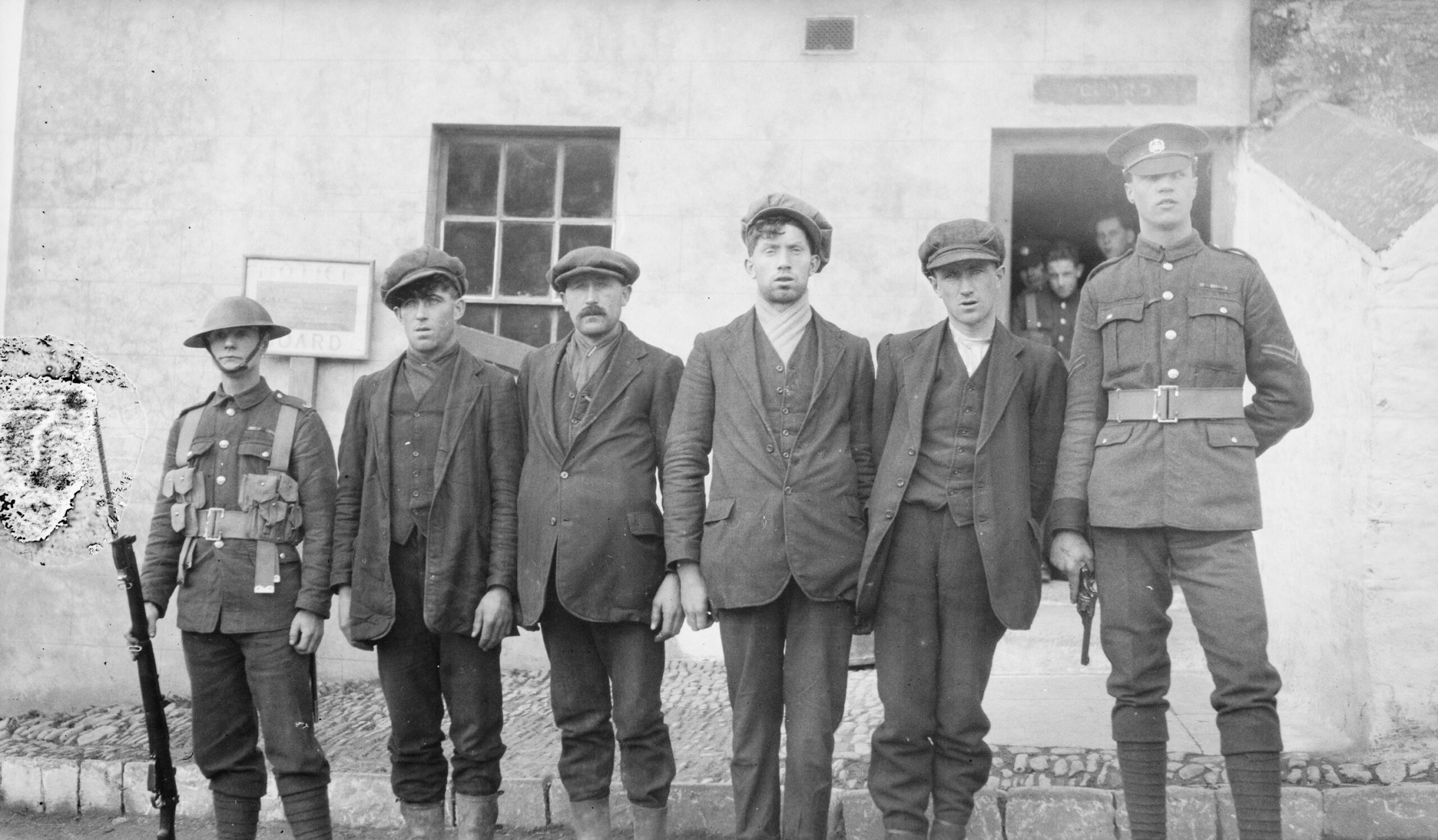
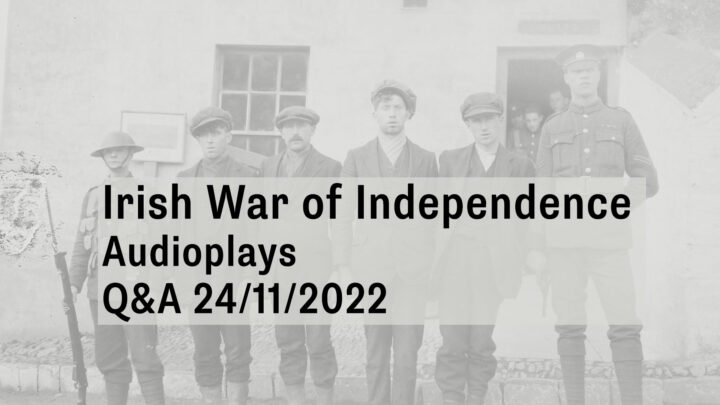
The Irish War of Independence audio plays, The Bulletin and Persons Unknown, were commissioned to help explore more about the military dimensions to the conflict and the efforts on both sides to win the propaganda war. The plays use records at The National Archives to integrate the high politics with the everyday lives of people effected by the conflict in inventive, witty and powerful ways. You can listen to both plays below and also listen to the Q&A that followed the premiere on Thursday 24 November 2022.
The Bulletin and Persons Unknown are an Applied Stories production for The National Archives.
Please be aware that the following plays focus on themes of violence, prejudice, hatred and military occupation and may evoke strong emotions.
Audio dramas
The Bulletin by Barbara Bergin
The Bulletin, by Irish playwright Barbara Bergin, follows an illegal Sinn Fein publication and its daily struggle to document British army actions in an age long before social media. Constantly hunted, the Bulletin’s youthful team were pivotal in maintaining international pressure on Britain, uncovering the hidden cost of the war on Irish civilians, and driving Westminster politicians to the negotiating table.
Persons Unknown by Fin Kennedy
Persons Unknown, by British playwright Fin Kennedy, examines the British army’s Courts of Inquiry, set up in place of coroner’s courts under martial law, and intended to control information reaching the public domain. Staffed by just three unqualified army officers, Persons Unknown looks at the personal and psychological toll on army personnel, themselves fresh from the horrors of the First World War.
Q&A video
The below Q&A session features Iqbal Singh and Michael Mahoney of The National Archives in conversation with the playwrights Fin Kennedy and Barbara Bergin. The Q&A was recorded live following the public listening event on 24th November 2022.
Blog posts
The Irish War of Independence, 1919-21
In the aftermath of the failed 1916 Easter Rising, public opinion underwent an extraordinary shift away from the union with Britain and towards the notion of an Irish Republic. Irish people were outraged by the reports of executions of rebel leaders and imprisonment of hundreds of nationalists.
The British government’s threat to introduce conscription in 1918 further inflamed opinion, and loyalty to the Empire was soon to become a thing of the past. The election of 73 Sinn Fein MPs, representing republicanism, to the Westminster parliament, meant democratic legitimacy for some form of self-rule.
The National Archives’ records help narrate most of the strands of the story of the Irish War of Independence 1919-21, and this blog attempts to illustrate the importance of specific collections.
Image: The IRA suspects guarded by British soldiers at the Bandon Barracks. © IWM Q 71708