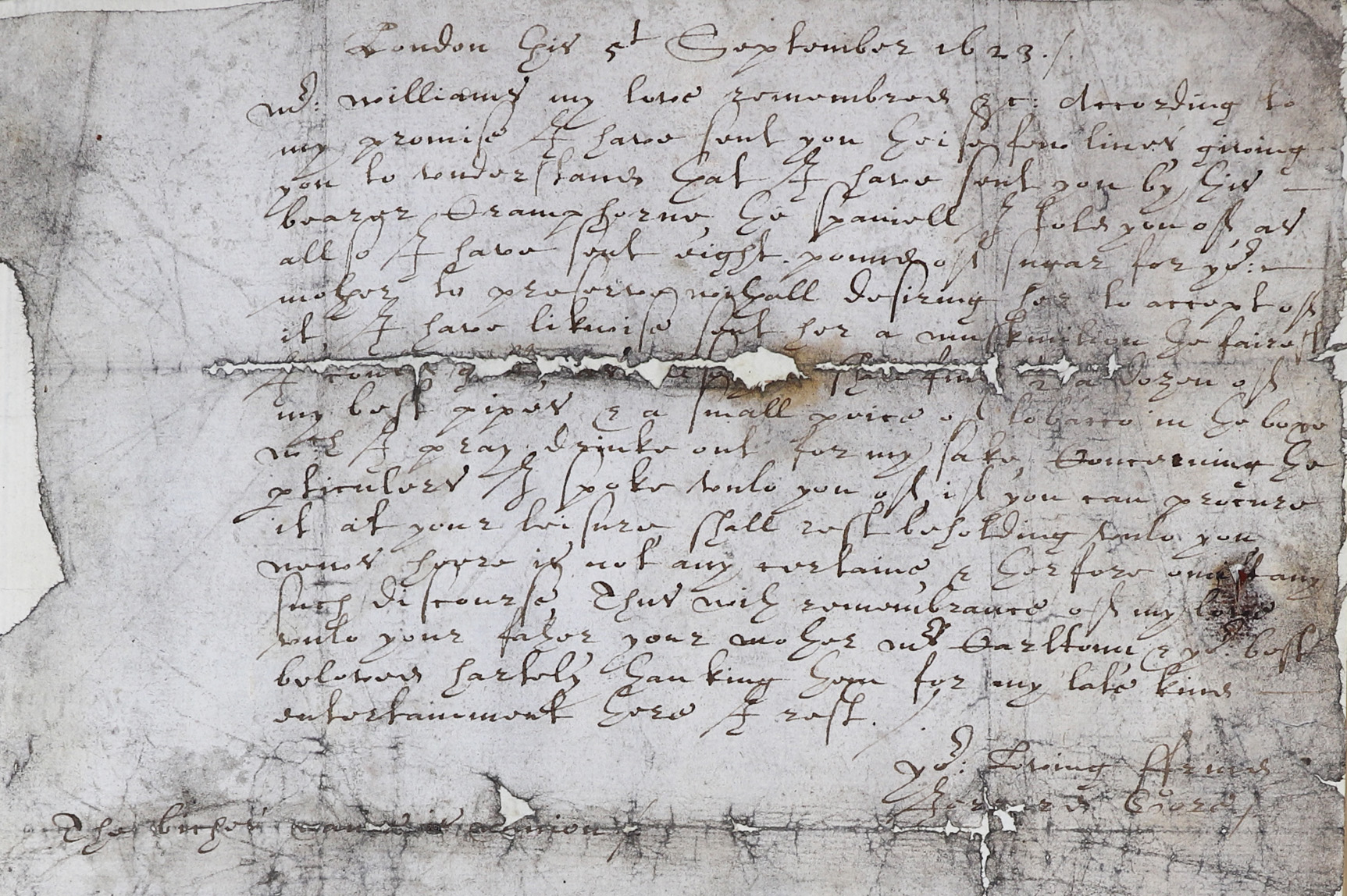
‘A letter from Jerard Gore to Anthony Williams. Send a spaniel, sugar, pipes, tobacco, 5 September 1623. Catalogue Ref: SP 46/66 f.24.
The muskmelon mentioned in this letter was a sweet fleshy melon, grown in the Mediterranean area in the ‘Middle Ages’. In the fifteenth century, the explorer Christopher Columbus carried seeds from the fruit on one of his voyages to the Americas and planted them. By the time this letter was written, muskmelon was being grown in English colonies in North America.
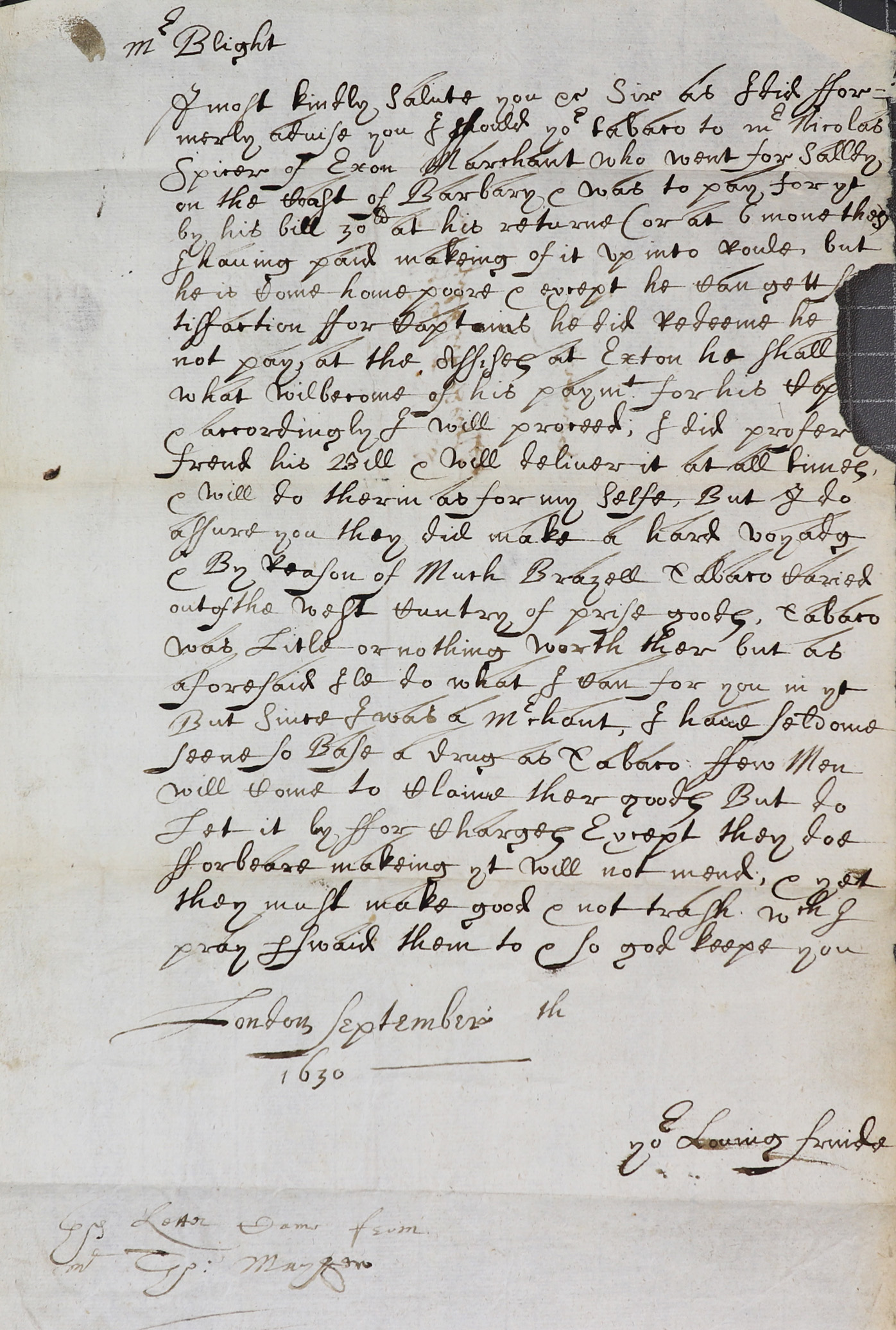
Letter from Thomas Mayhew to Gilbert Blight, 1630, Catalogue Ref. HCA 15/1.
Salé was the main Atlantic port in Morocco. The ‘West Country of Prize goods’ refers to the large amount of tobacco taken as prize or booty during the war between the English and Spanish, which pushed down tobacco prices. ‘Set it by for charges’ meant setting prize goods aside to cover port and legal costs, rather than selling them.
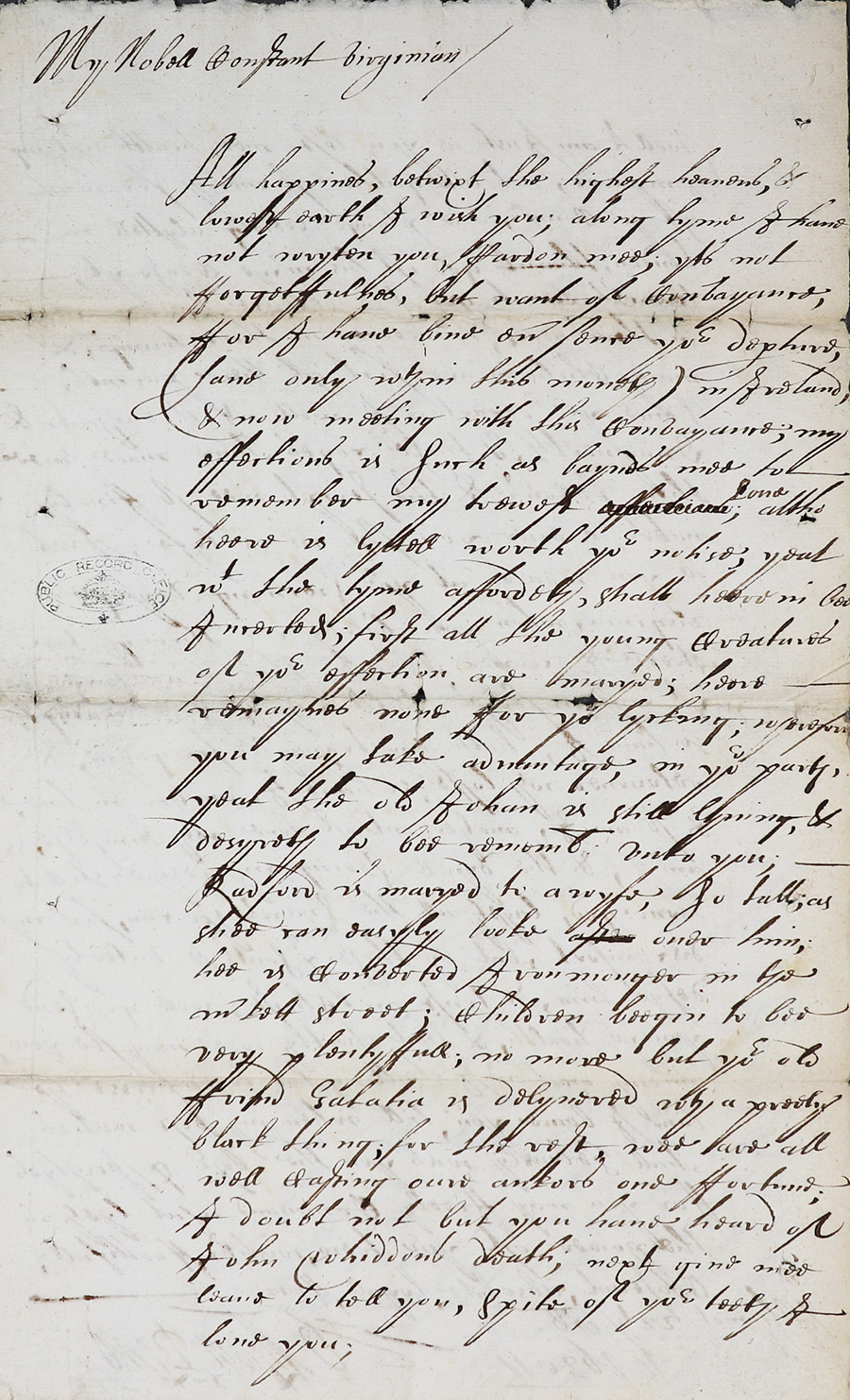
Extracts from ‘Gilbert Blight, letters from Virginia to Plymouth’, 1628-30. Catalogue Ref. HCA 15/1.
Gilbert Blight lived in Jamestown, Virginia, and was involved in the tobacco trade there. Blight would liaise with tobacco planters in Virginia from whom he purchased the tobacco. This tobacco was then transported in merchant ships to England. While in Jamestown, Blight sent and received many letters from business partners and merchants who were involved in this trade, notably including Abraham Jennens, William Bond, and Thomas Mayhew.
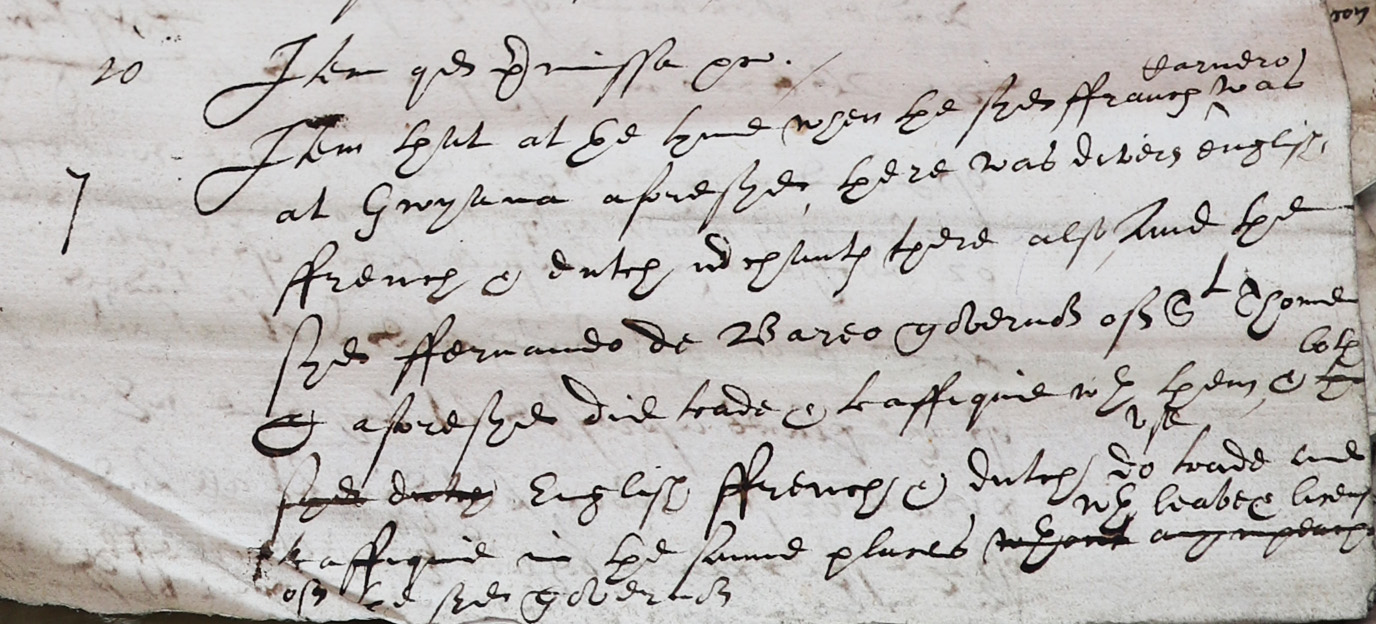
Extract from the ‘Interrogatories of Frances Carnero’, 1611-1613. Catalogue Ref: HCA 24/75
‘Interrogatories’ were written questions asked by one party in a legal case to which the other party has to give written answers under oath.
Frances Carnero appears to be involved an illegal trade in La Margarita, São Tomé and Trinidad. This trade involved the trafficking of enslaved African peoples.
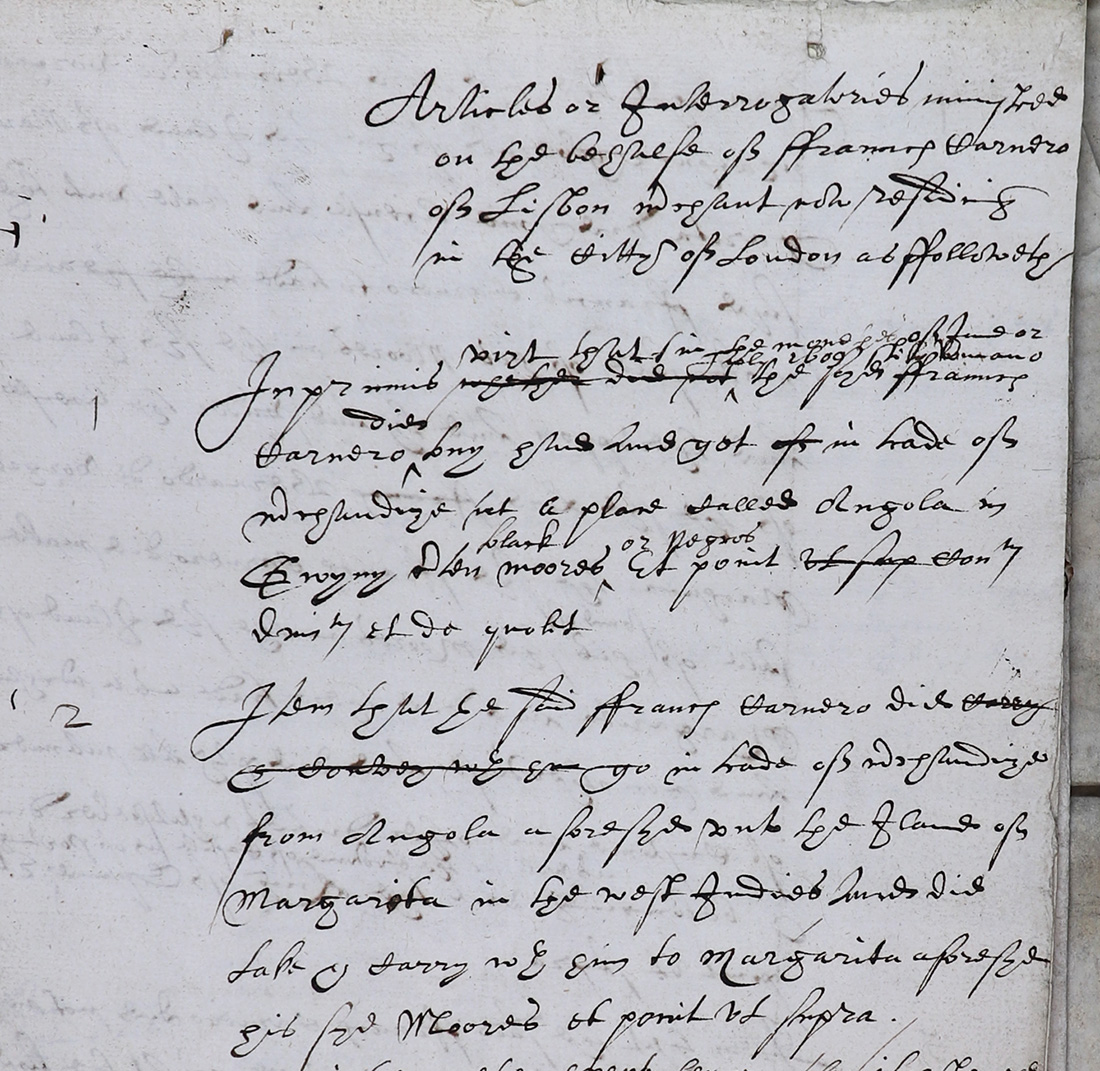
Extract from ‘Interrogatories of Frances Carnero’, 1611-1613. Catalogue Ref: HCA 24/75
‘Interrogatories’ were written questions asked by one party in a legal case to which the defendant or a witness has to give written answers under oath.
Frances Carnero was Portuguese merchant who had been brought back from São Tomé (St. Thomas) Island in the Caribbean to London by a Captain John Moore. Moore was an English captain on the ship ‘The Archangel or The Little John of London’, who had also travelled to São Tomé.
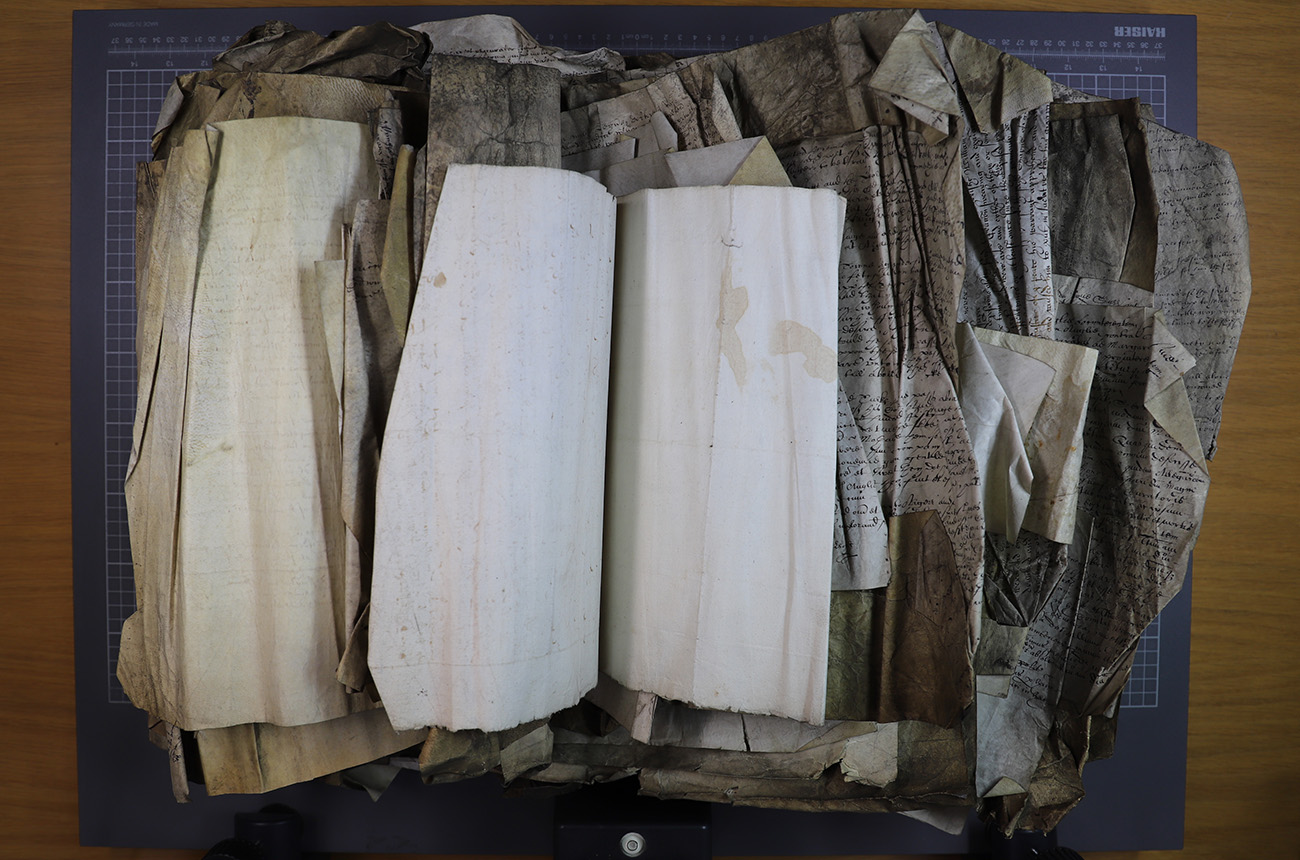
This photograph shows the entire ‘bundle’ of documents that includes the ‘Interrogatories of Frances Carnero’, 1611-1613. Catalogue Ref: HCA 24/75
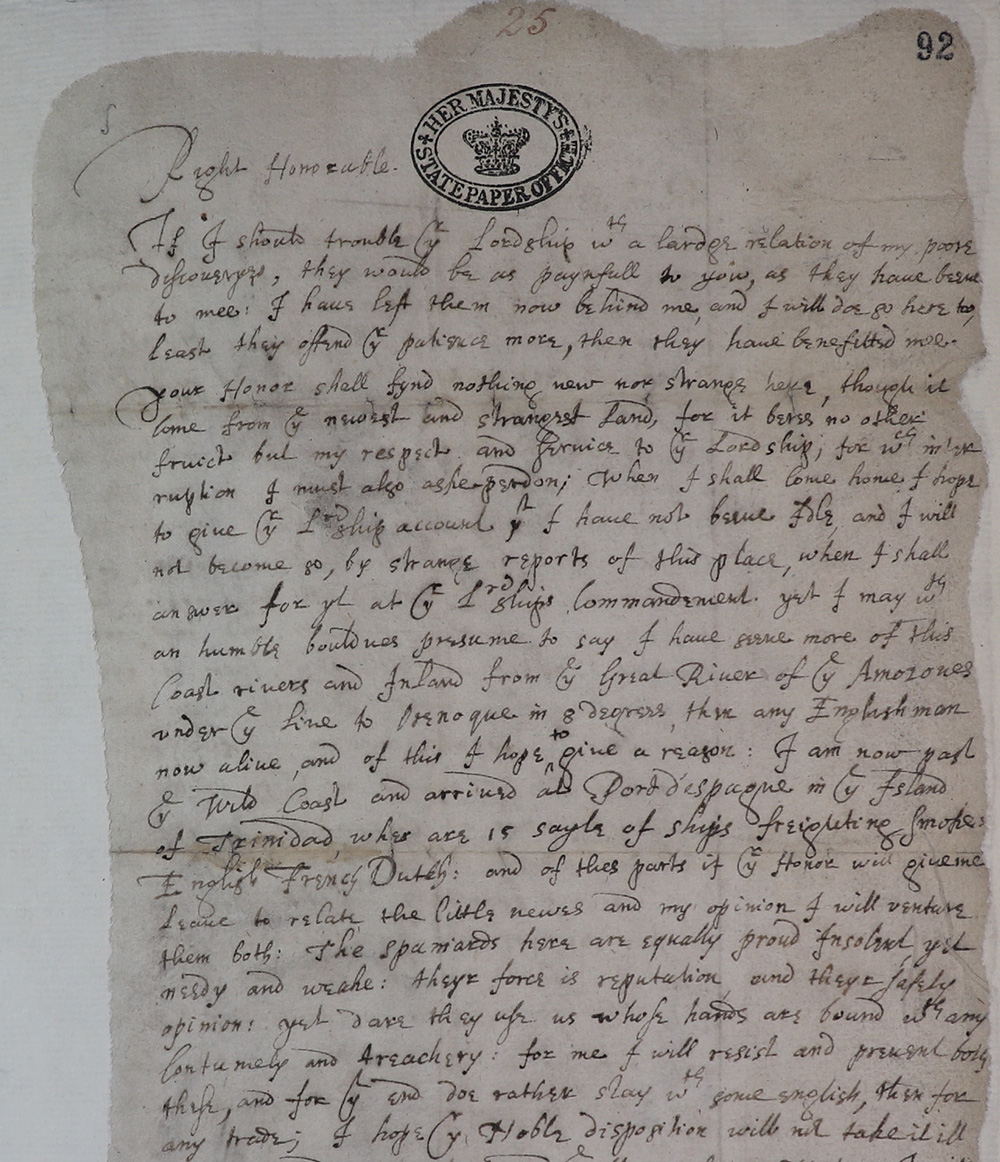
Extract from ‘Report from Thomas Roe to the Earl of Salisbury, on his voyage to Guyana’, 1610-1611. Catalogue Ref: CO 1/1 f.92-3.
This is an extract of a letter from the diplomat and explorer Thomas Roe to the Earl of Salisbury. Thomas Roe described the trading activity he witnessed as he travelled to Guyana and Trinidad. He saw English ships trading in tobacco along the coastline. This was a profitable smuggling trade with the Spanish settlers on Trinidad and the Orinoco.
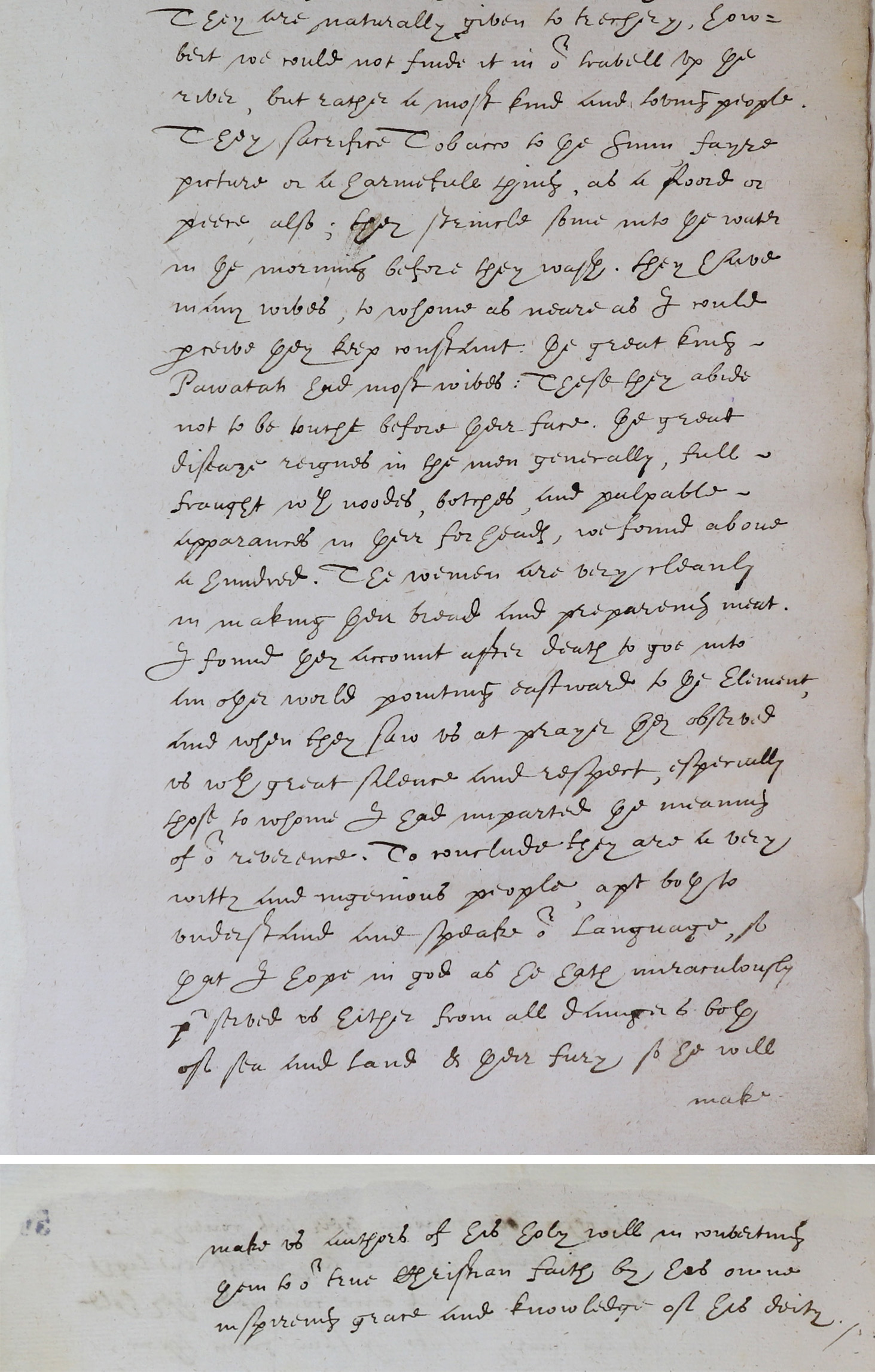
Extracts from ‘A Description of the now discouered Riuer and Country of Virginia, with the liklyhood of ensuing ritches, by Englands ayd and industry’, 1607. Catalogue Ref: CO 1/1 f.53-7.
These extracts come from a document that was written in May-June 1607. They show how an English author viewed the land of Virginia and hoped for the successful growth of new crops for export. It also describes the practices and customs of the Native American tribes who were already living there when the English arrived. It is does not reflect the perspectives of the indigenous peoples of Virginia.
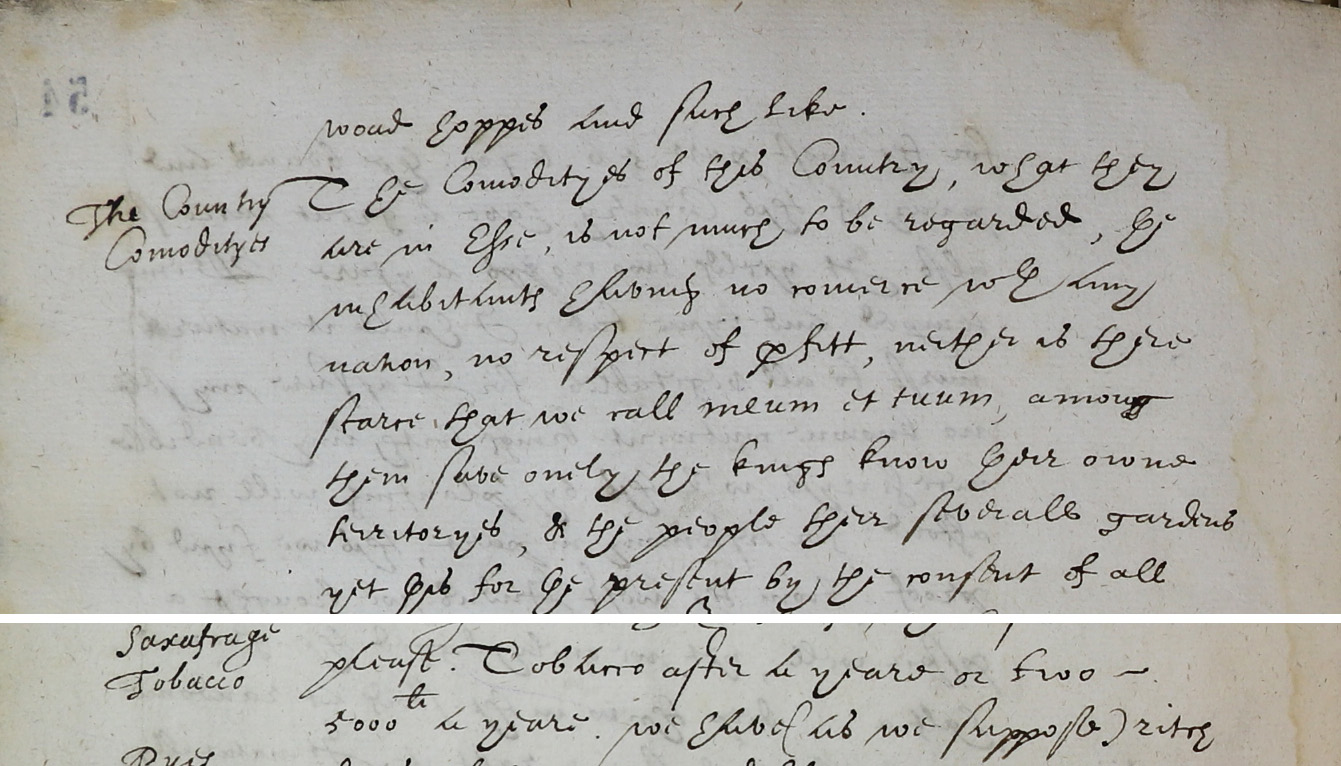
Extracts from ‘A Description of the now discouered Riuer and Country of Virginia, with the liklyhood of ensuing ritches, by Englands ayd and industry’, 1607. Catalogue Ref: CO 1/1 f.53-7.
These extracts come from a document that was written in May-June 1607. They show how an English author viewed the land of Virginia and hoped for the successful growth of new crops for export. It also describes the practices and customs of the Native American tribes who were already living there when the English arrived. It is does not reflect the perspectives of the indigenous peoples of Virginia.
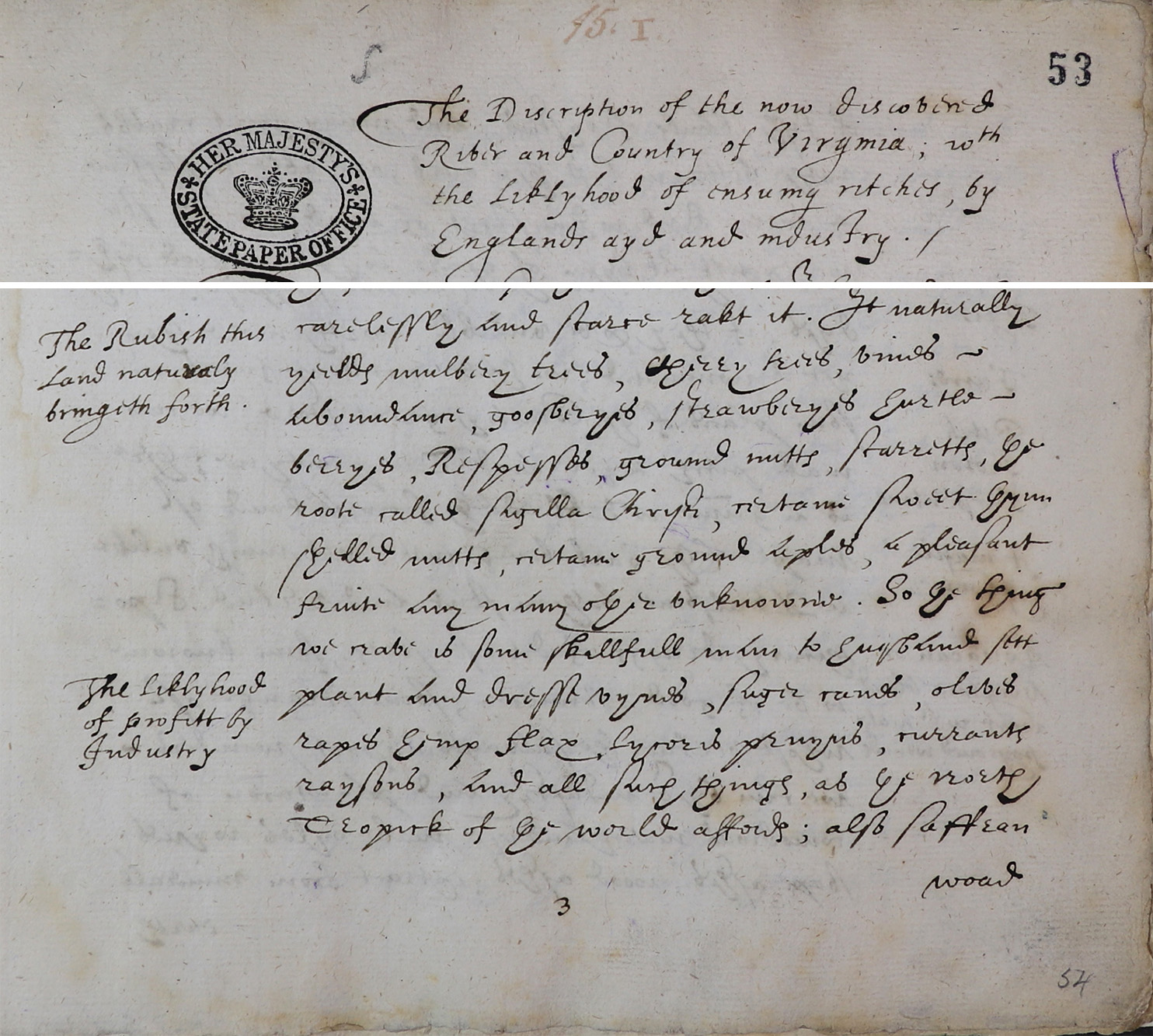
Extracts from ‘A Description of the now discouered Riuer and Country of Virginia, with the liklyhood of ensuing ritches, by Englands ayd and industry’, 1607. Catalogue Ref: CO 1/1 f.53-7.
These extracts come from a document that was written in May-June 1607. They show how an English author viewed the land of Virginia and hoped for the successful growth of new crops for export. It also describes the practices and customs of the Native American tribes who were already living there when the English arrived. It is does not reflect the perspectives of the indigenous peoples of Virginia.