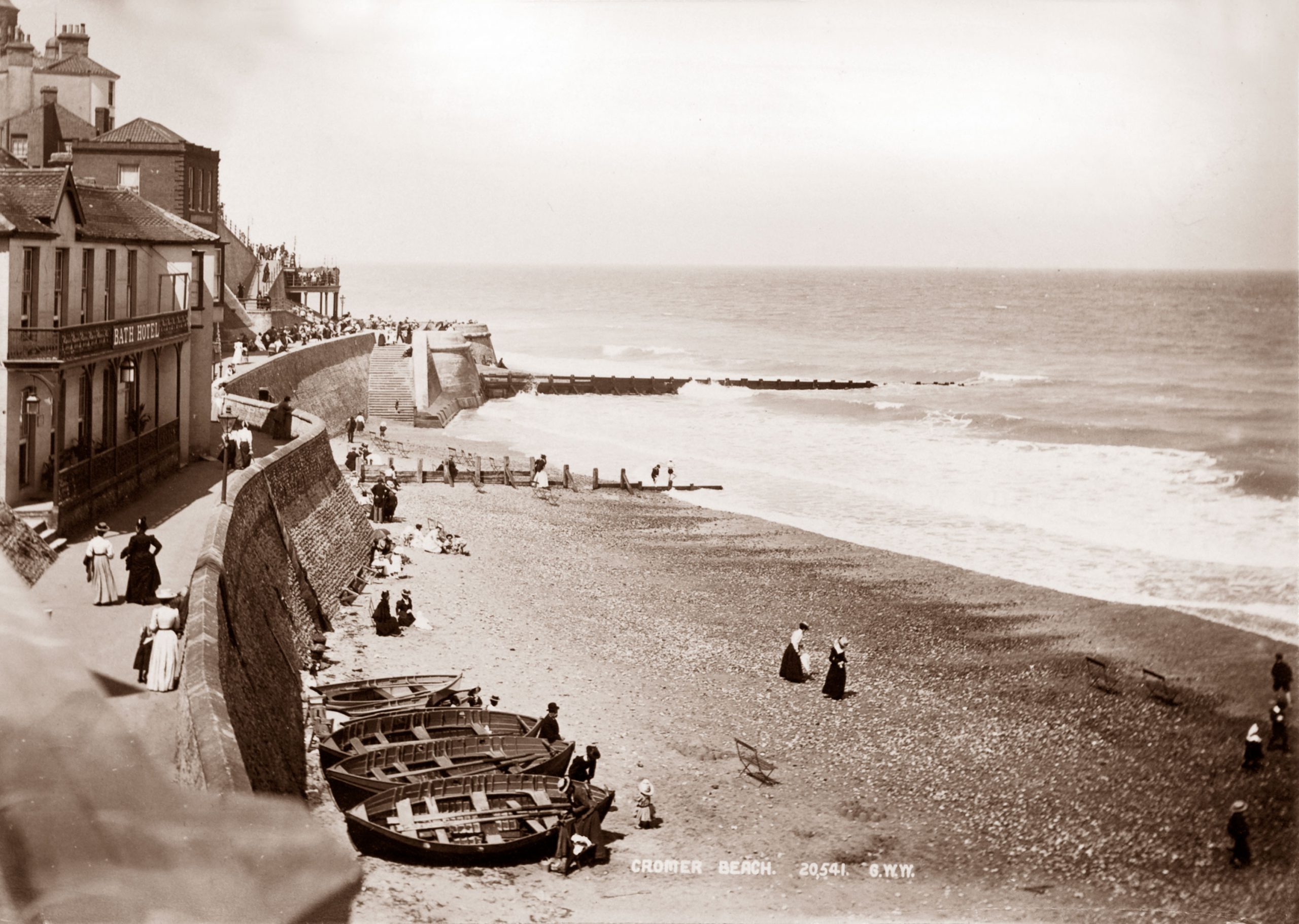
Cromer Beach, Norfolk 1899. Catalogue Ref: COPY1/443/324 (A)
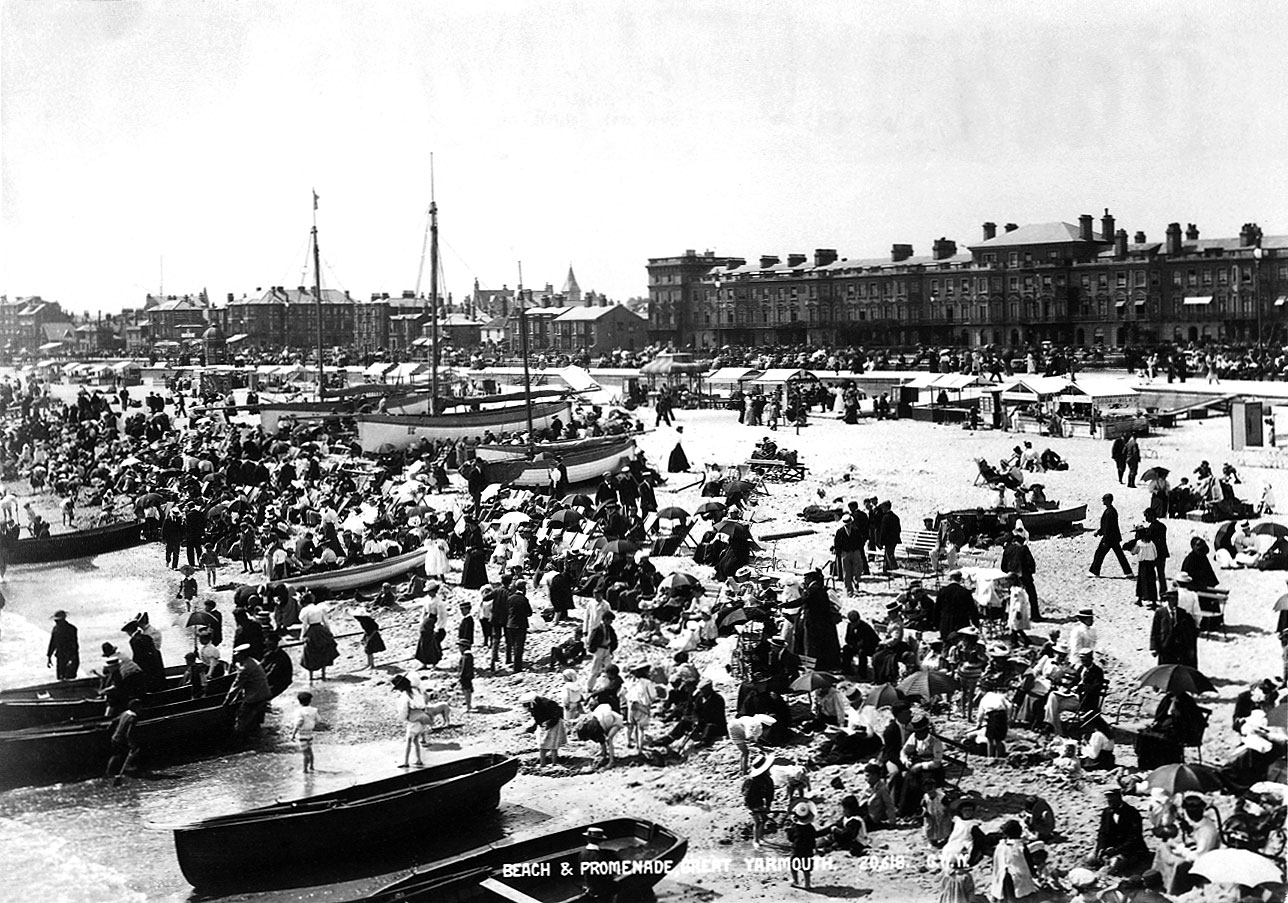
Great Yarmouth, Norfolk, Beach and Promenade, 1899. Catalogue ref: COPY1/443
Where do we want to sit on the beach? What activities can we do while we’re here?
The following ‘tasks’ are suggested activities which you can choose from or adapt to make them suitable for your students.
Further information:
Beach Trips
By the 1860s, railway companies were offering cheap excursions to many seaside destinations on Sundays and at holiday times such as Easter and Whitsun. In 1862, 132,000 visitors arrived in Brighton in one day. Its population at the time was less than 80,000.
Swimming at the beach
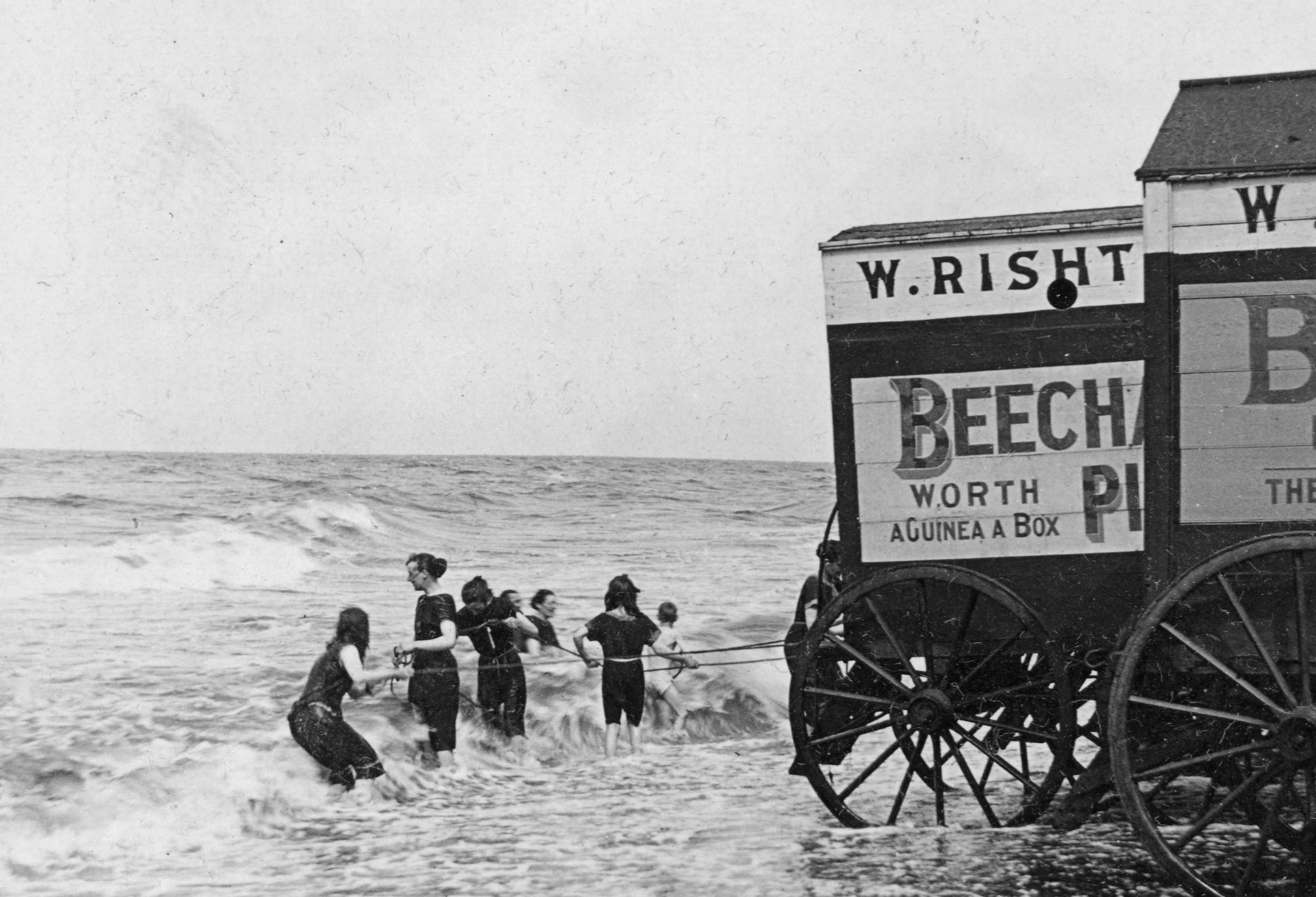
Before the Victorian era, men and women swam separately. Most people used bathing machines or carts. These were first used in the middle of the 18th century and looked like small horse-drawn caravans. The bather walked up the steps to get changed inside while the horse pulled the cart into the water. The bather could then enter the water without being seen. Sometimes chains were used instead of a horse to drag the cart into the sea. If you couldn’t swim, you might be accompanied by a ‘dipper’, someone to help you into the water.
By the 1870s, men usually wore one-piece knitted bathing costumes. Women’s outfits consisted of a knee-length skirt with loose trousers down to the ankles. This was worn with a blouse and sometimes a jacket too.
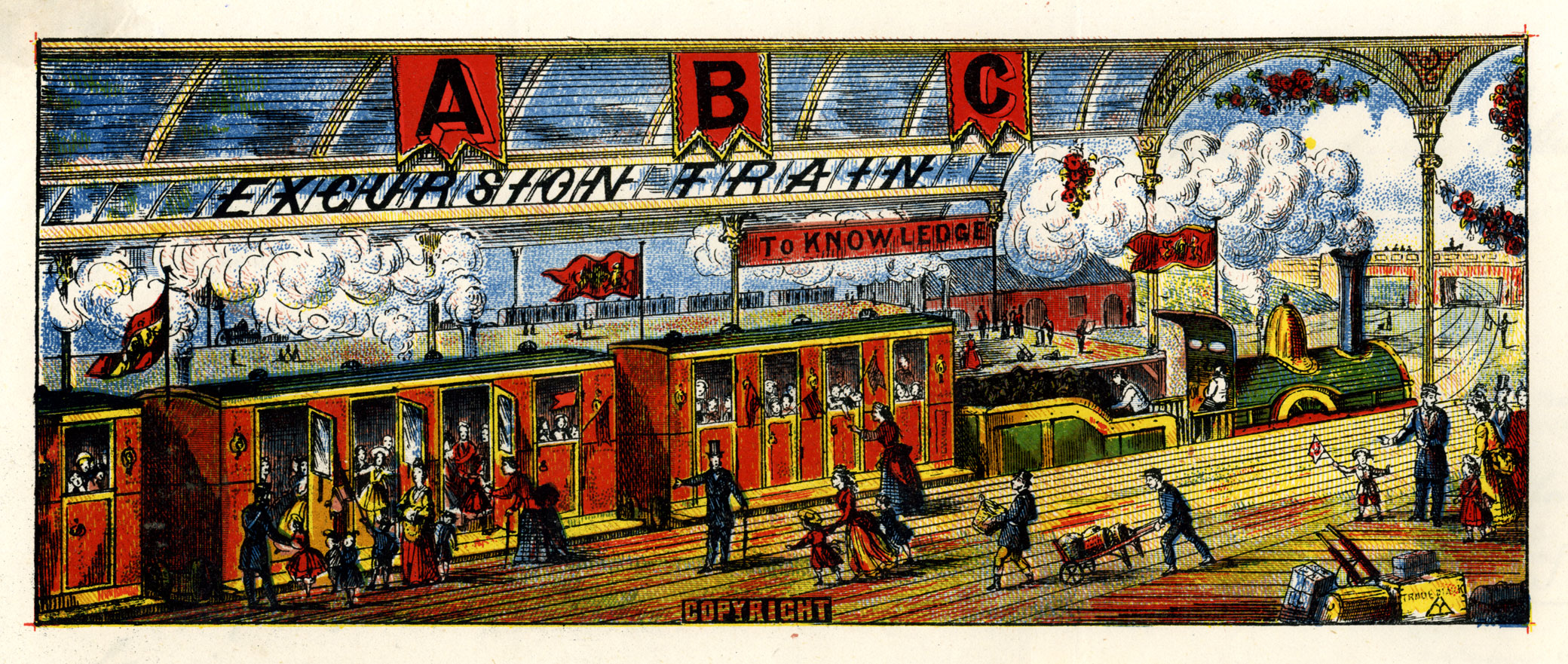
Excursion Train ABC, 1874 Catalogue Ref: COPY1/26 (373)
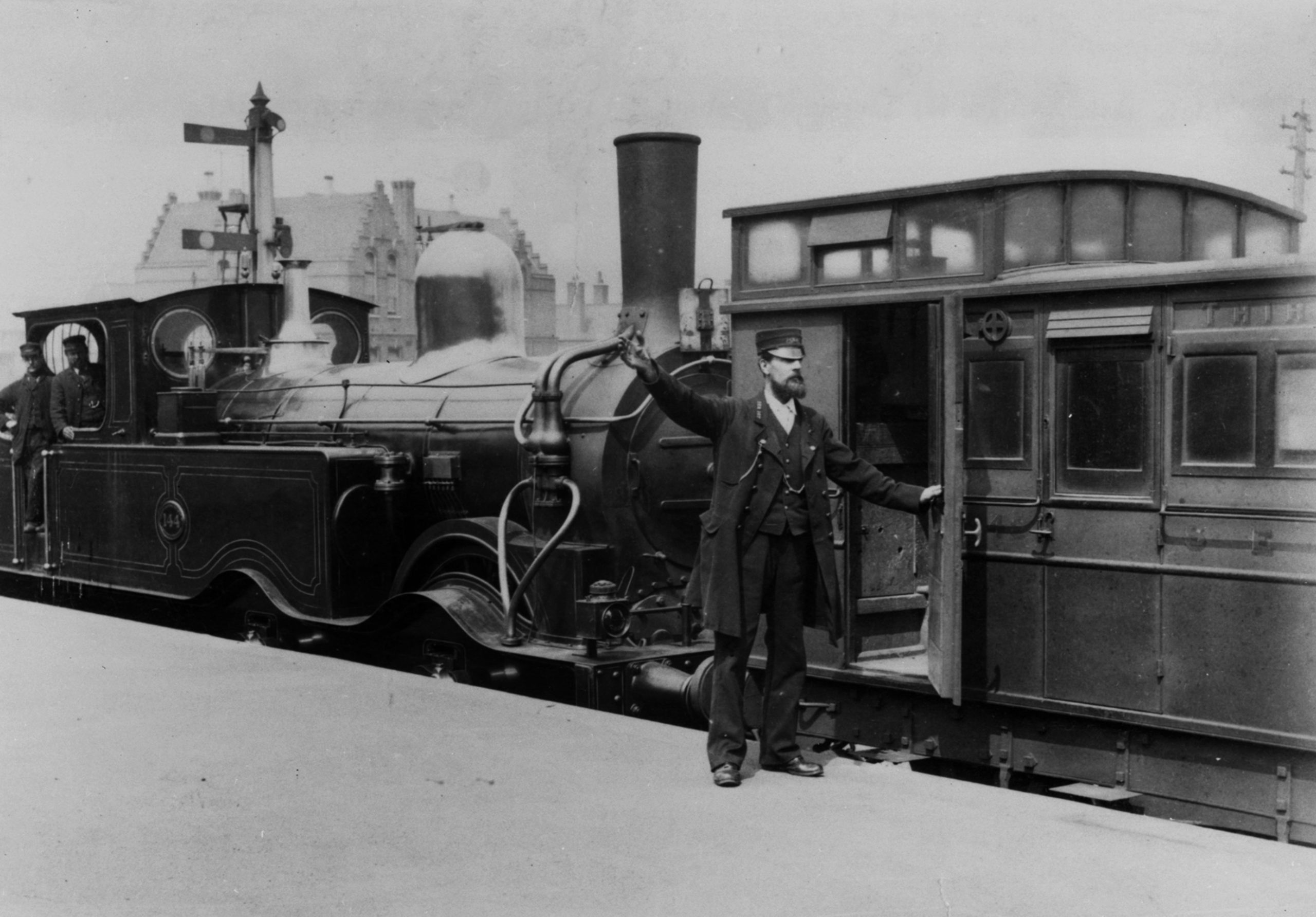
Railway guard, 1884. Catalogue Ref: COPY1/369
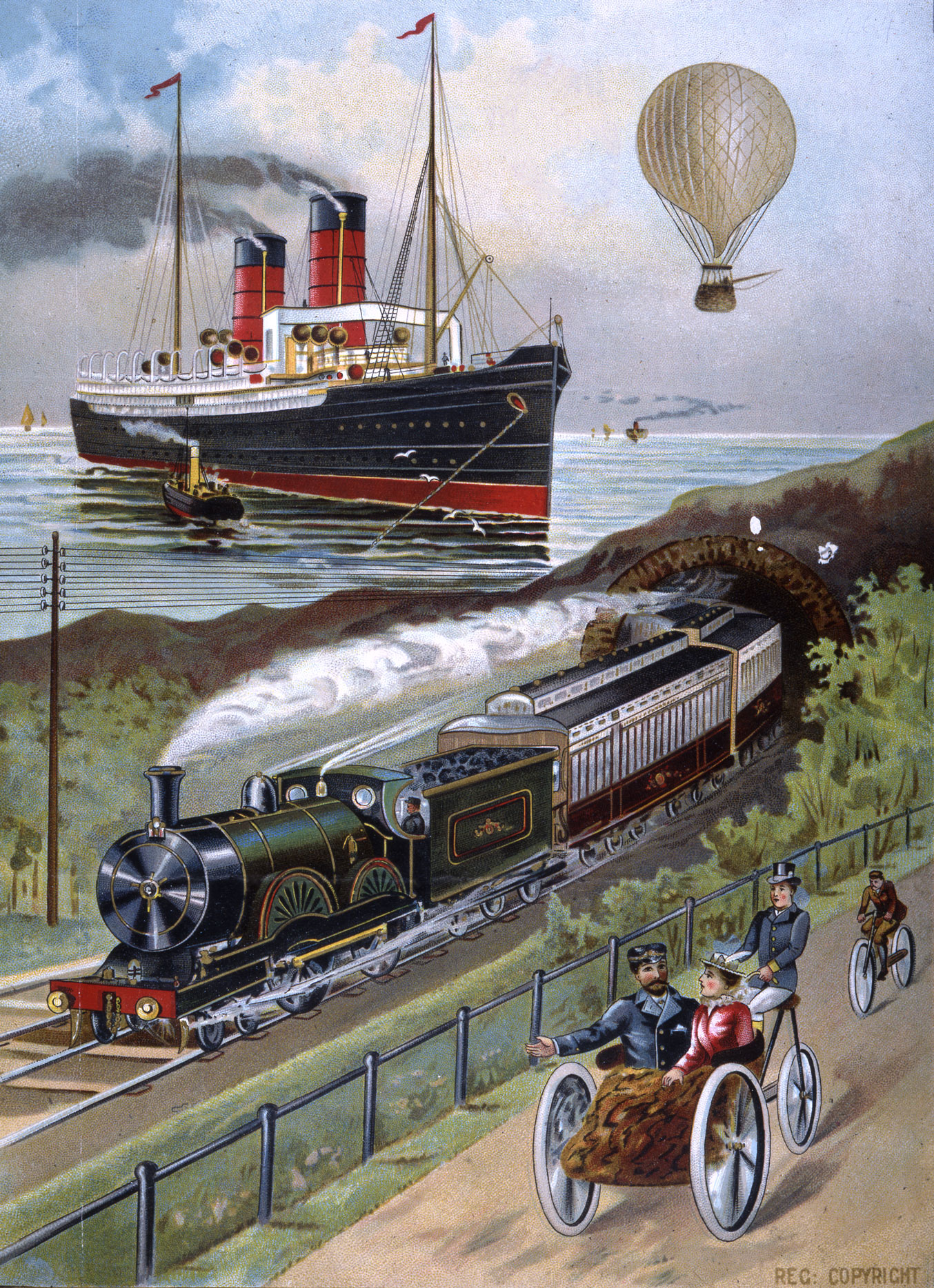
Transport montage Ship, Balloon, Train, Car 1899. Catalogue Ref: COPY1/153 f479
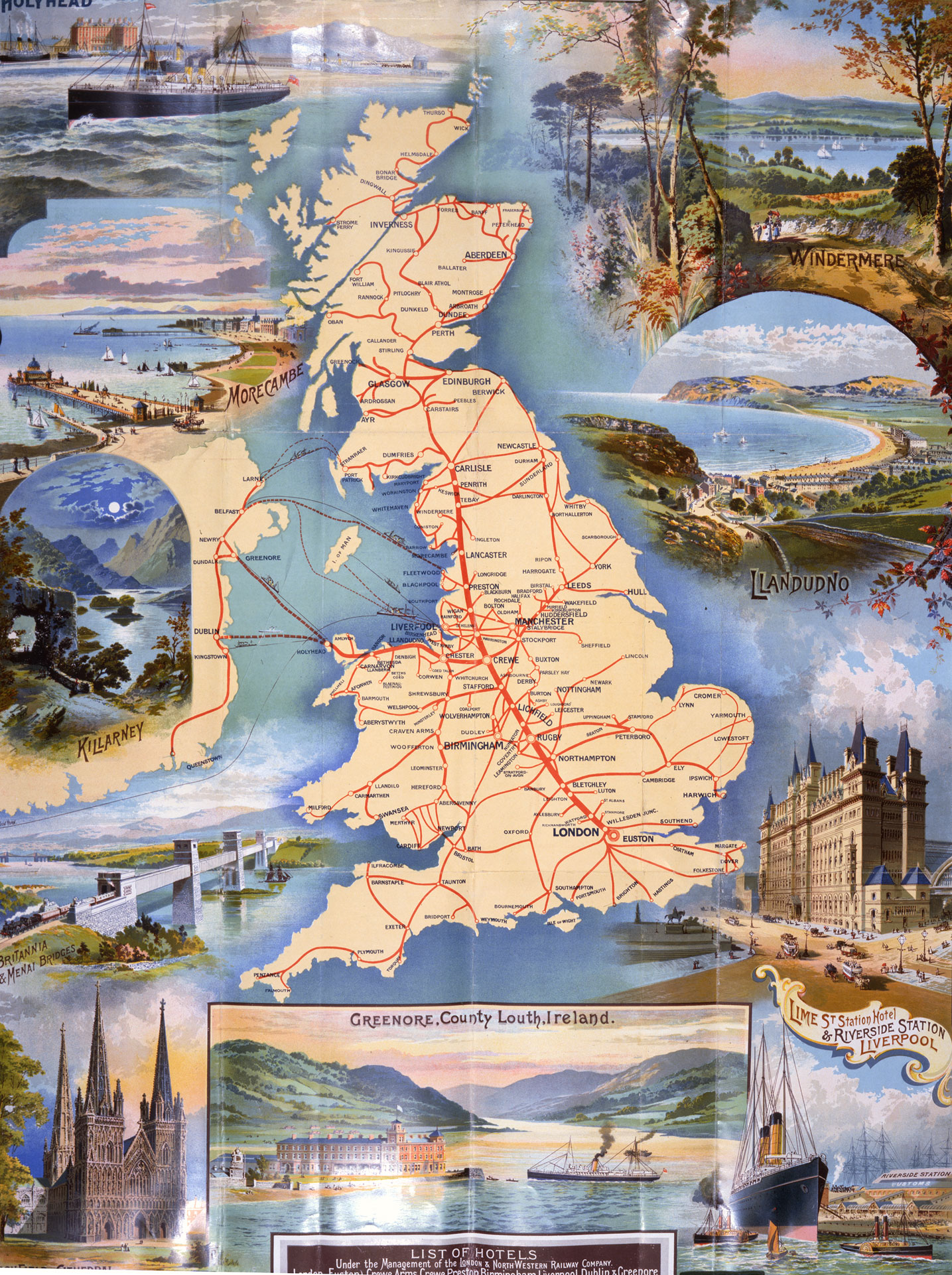
London & North Western Railway Co rail map, 1899. COPY1/148 f127
Let’s take a look at a Victorian map and decide where to go on our trip to the beach.
The following ‘tasks’ are suggested activities which you can choose from or adapt to make them suitable for your students.
Further information:
Working-class men and women worked very long hours for little pay at the start of the Victorian era. Conditions did improve during the century though. For example, the Ten Hours Act of 1847 limited women and young people to working a maximum of 58 hours a week.
In 1871 the Bank Holidays Act established the first ever paid bank holidays in Britain. This, combined with the massive development of the railways in the second half of the 19th century, opened up new possibilities for leisure and relaxation. For the first time, families could experience a day at the seaside as train travel offered a fast and cheap way of getting there.
Many seaside towns grew up because of the railways. Places like Skegness and Bournemouth changed from small coastal villages to thriving seaside resorts during the 19th century and visitors flocked to towns such as Brighton, Blackpool, Llandudno and Scarborough.
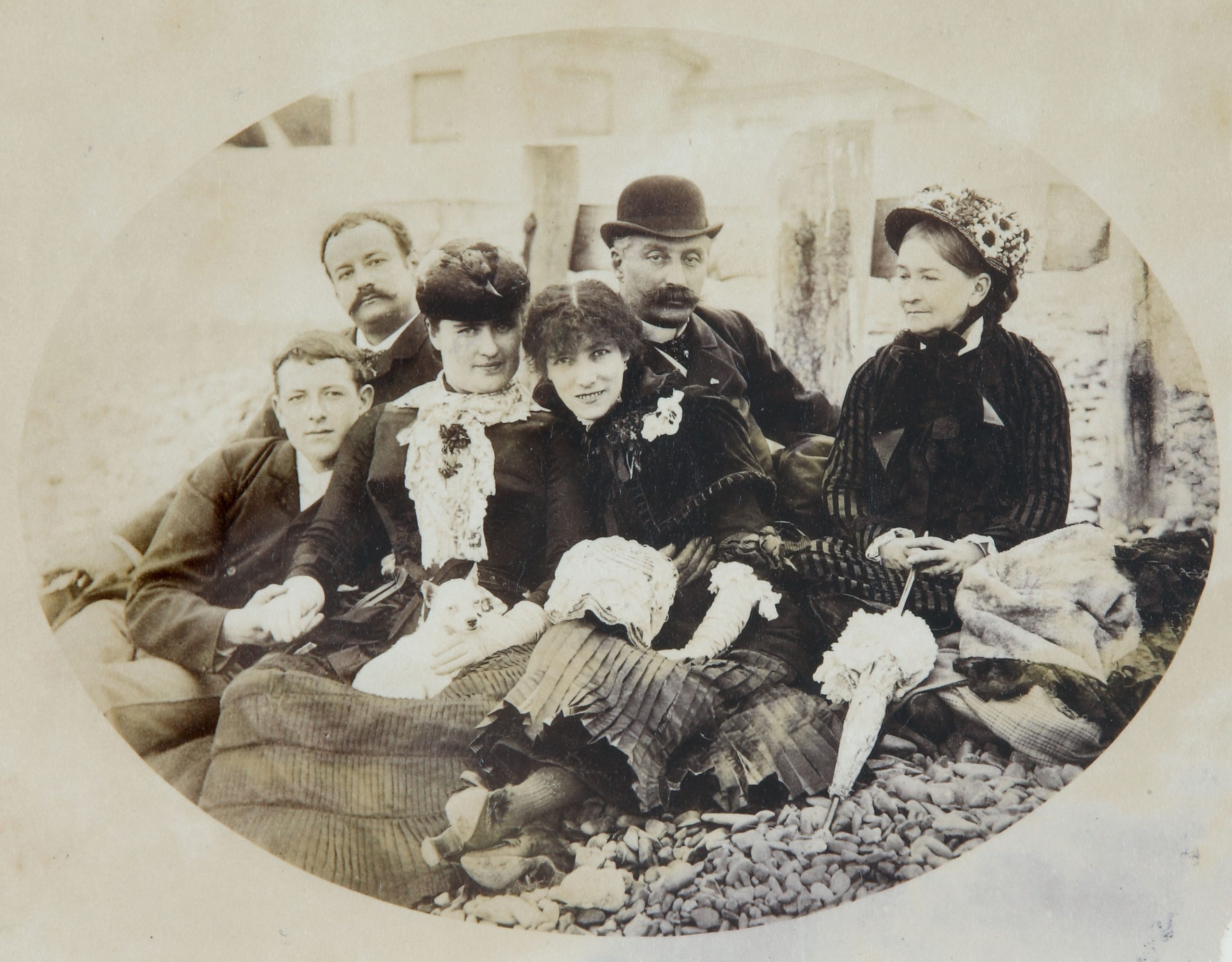
Sarah Bernhardt with friends on the beach 1881. Catalogue Ref: COPY1/54 (117)

Children playing in the street Turnham Green, 1891. Catalogue Ref: COPY1/406 (149)