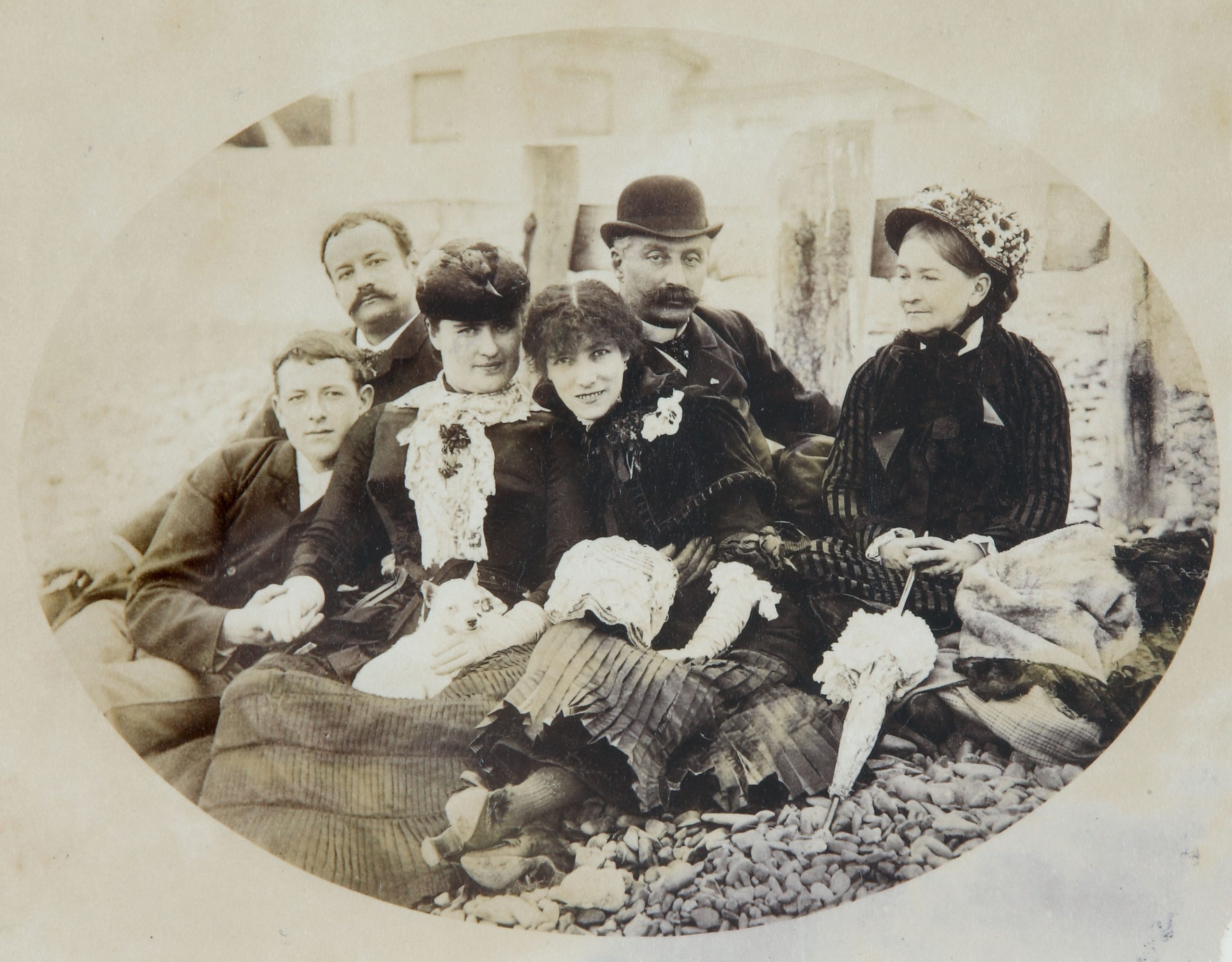
You may not be able to visit The National Archives with your students, but you can literally immerse them in the world of historic documents, paper and parchment. Start your session by wrapping your students in large sheets or rolls of paper. Allow them to pull the paper tight around themselves, scrunch it up and imagine they are entering the Archives.
The following ‘tasks’ are suggested activities which you can choose from or adapt to make them suitable for your students.
Going back in timeFurther information:
The Victorian era saw a huge rise in the population of Britain – from around 14 million in the 1830s to 32 million at the time of Queen Victoria’s death in 1901. In that period, more and more people moved from living in rural to urban areas. By the beginning of the 20th century, three-quarters of the population lived in towns and cities.
Travelling outside one’s local area just wasn’t possible for the vast majority of the population owing to lack of free time, disposable income and practical transport options. However, this was to change with the coming of the railways in the second half of the 19th century. This, combined with improved working conditions for many people, meant that an escape from the city for a day trip to the seaside could become a reality…and the start of a much-loved British tradition.
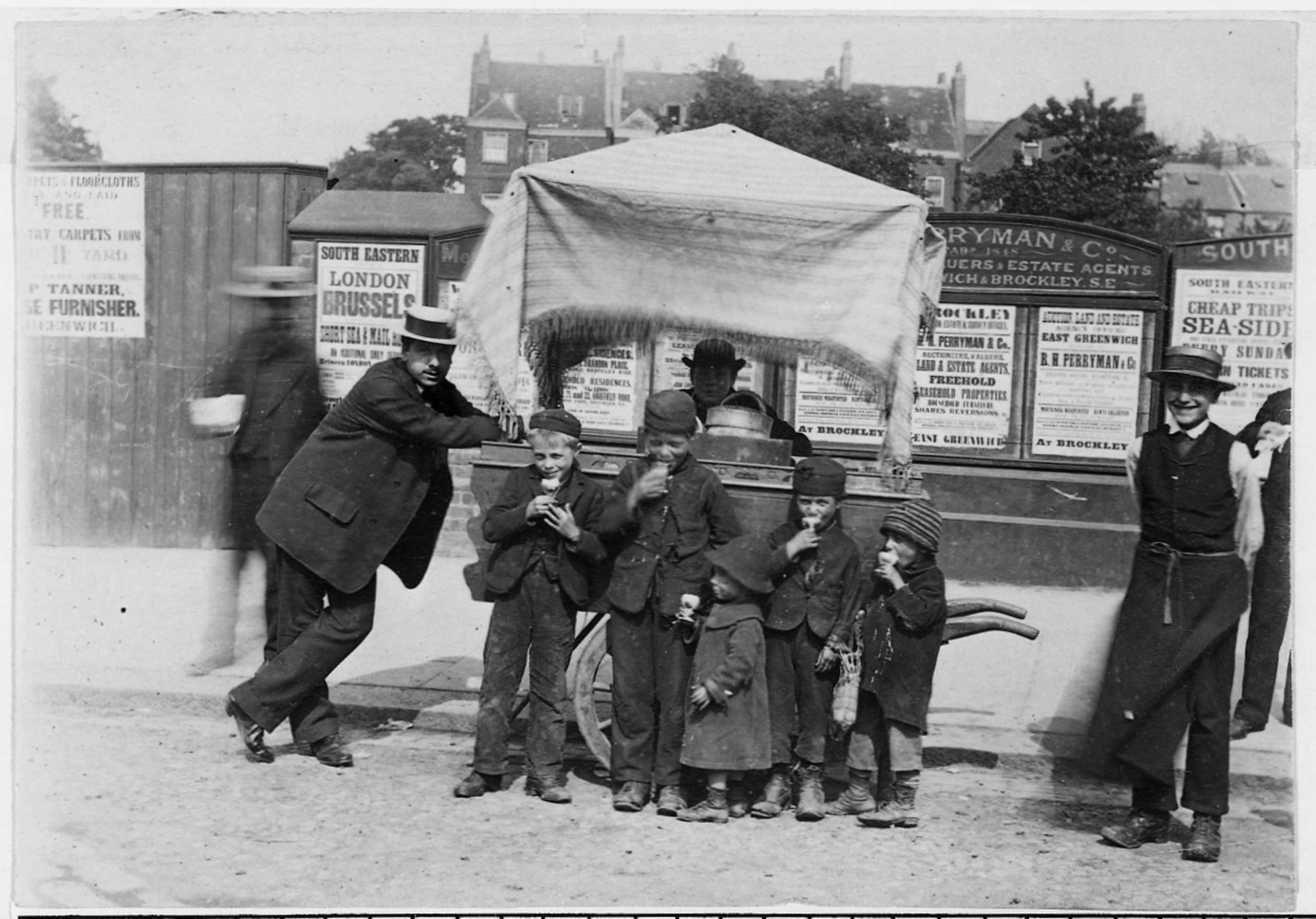
Experience all the fun and excitement of a day out at the seaside in Victorian times without leaving your classroom. We’ve selected some of our favourite Victorian photos, posters and prints from The National Archives’ huge collection of images. You’ll find below lots of suggestions for sensory activities that you can easily do in your classroom. They’ll help you use our images as a starting point to bring all the sights, sounds, smells and experiences of the Victorian seaside to life.
We recommend you follow the six sections below in order, but you don’t need to use every image or do every suggested activity. Just choose or adapt the ones that are most suitable for your students. There are sensory activities, signed videos, sound files and ideas for further discussion – hopefully something for everybody. You may even come up with some ideas of your own for activities based on our images. If you do, we’d love to hear about them!
This resource is suitable to students working up to KS2 and following an informal, semi-formal or formal curriculum.
National Curriculum links:
History – The Victorians Download the activity pack (399MB)
 Stories inspired by letters from the past
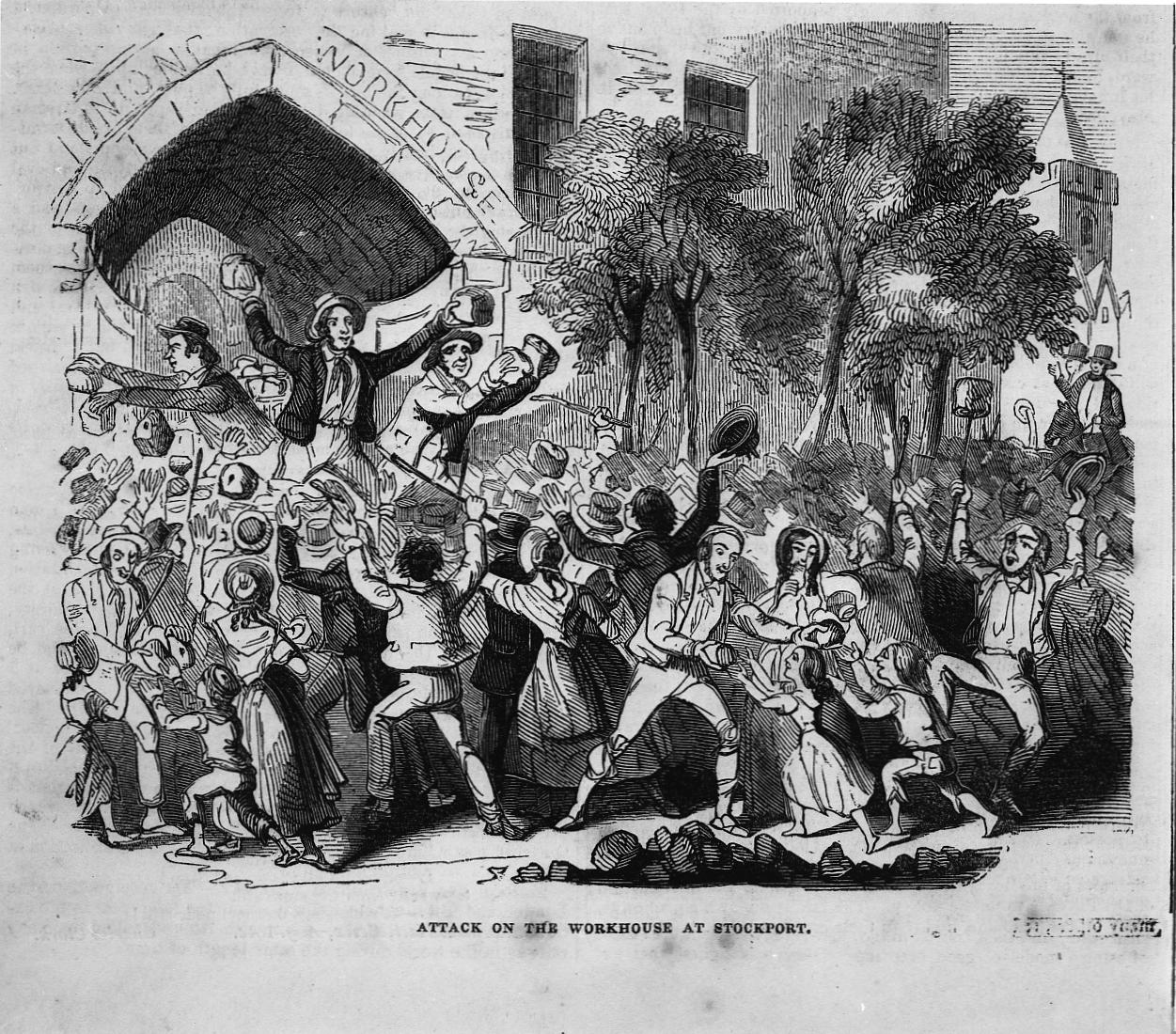
In the spring of 2020 The National Archives Education Service released a themed collection of historical documents entitled: ‘Workhouse Voices: What did Paupers say about the Poor Law’
The collection represents a small sample of the letters that have been identified and transcribed as part of ‘In Their Own Write’, an Arts Humanities Research Council funded project, 2018 to 2021, which uses letters from paupers and other poor people, and other material such as petitions, sworn statements and advocate letters written on behalf of paupers to investigate the lives of the poor between 1834 and 1900.
To celebrate the release of the collection we challenged students to write a short story of no more than 450 words inspired by these documents. We asked for realistic characters, good background detail on the workhouse system, a sense of location, interesting language, description and dialogue which reflects the time.
We received over 350 entries across our three age categories, Key Stages Two, Three and Four, and enlisted the help of author Sharon Gosling to judge our finalists. Sharon is the author of many children’s books including The Diamond Thief, The Golden Butterfly and The House of Hidden Wonders, all set in the Victorian period making her the perfect guest judge for the competition.
Contained within this eBook are the shortlisted stories – twenty five finalists, five from each category. Sharon has kindly given feedback on each story which can be found at the beginning of each section before the winning three stories and the two runners up.
Each of the winners will receive a £25 book token, a copy of Sharon’s latest book and a goody bag from The National Archives shop.
Katie Fox – a teacher at George Green School – created this powerpoint resource which she has kindly allowed us to share to inspire your own Creative Writing activities using our Workhouse Voices Themed Collection.
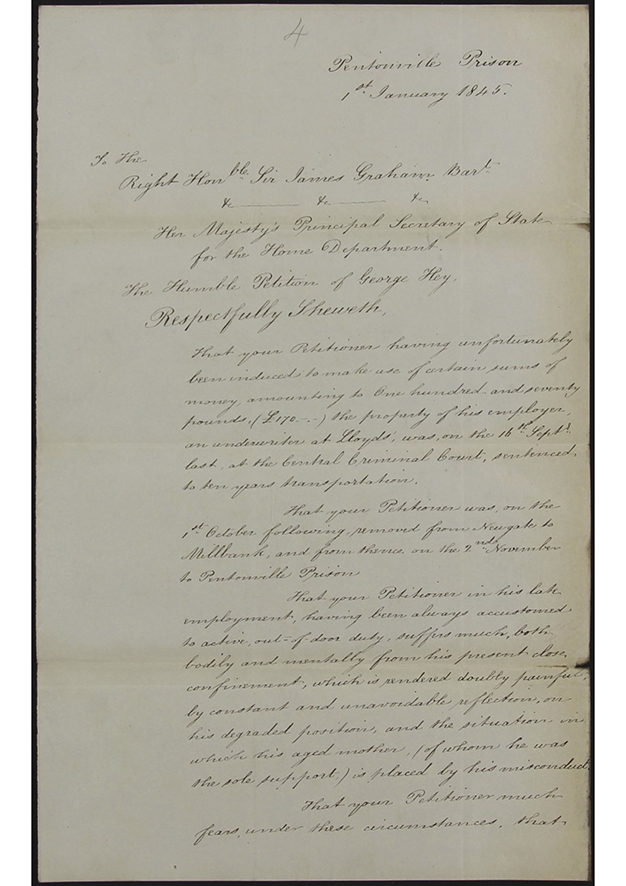
This is a personal petition written directly by the prisoner George Hey who admits being guilty of embezzlement [theft from his workplace] in 1 January, 1845, Catalogue ref: HO18/149/41
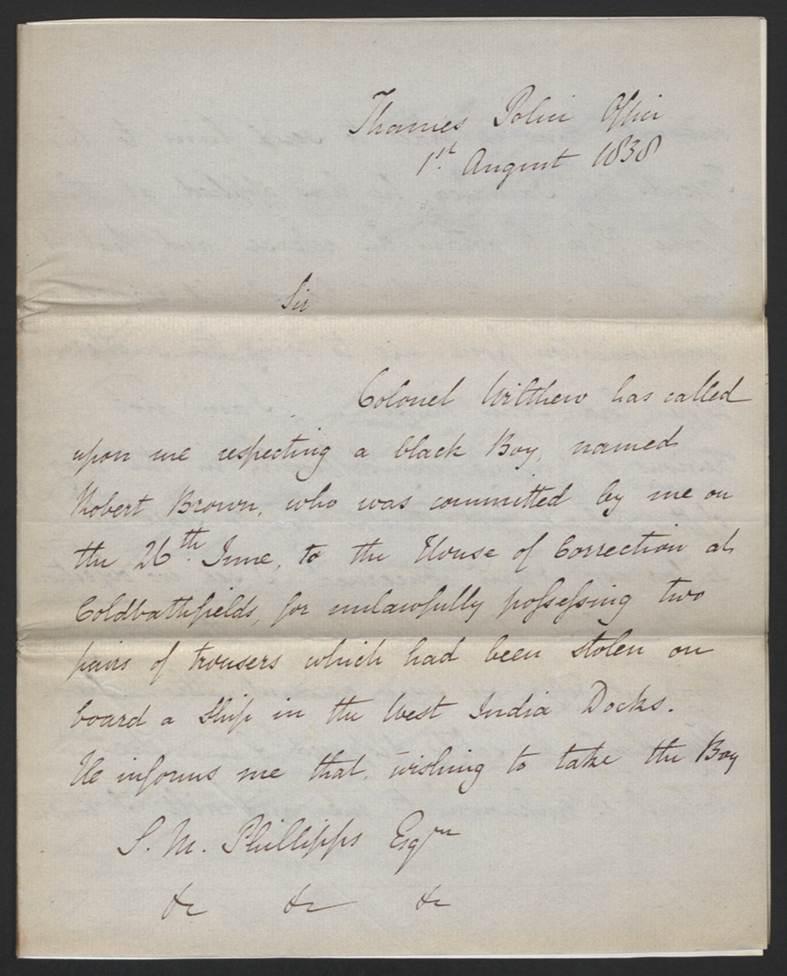
A letter of response by the committing magistrate, William Ballantine at the Thames Police Office about Robert Brown to the Home Office, 2 August, 1838, Catalogue ref: HO 17/121/54
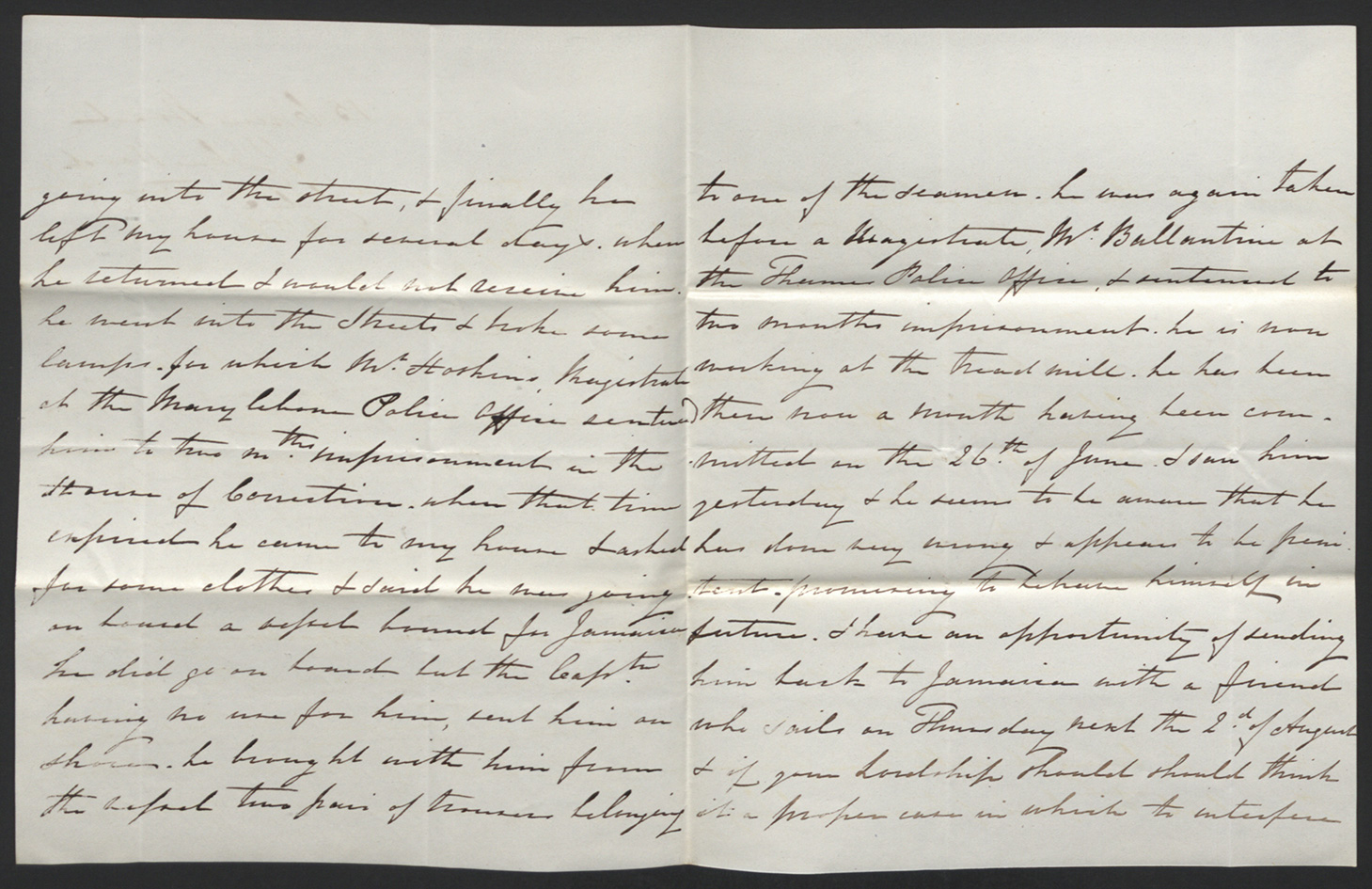
This is a petitioning letter written on behalf of Robert Brown by his former master to the Home Secretary, Lord John Russell, 30 July 1838. Robert Brown was a Jamaican boy convicted of stealing two pairs of sailor’s trousers and sentenced to two months imprisonment, Catalogue ref: HO 17/121/54
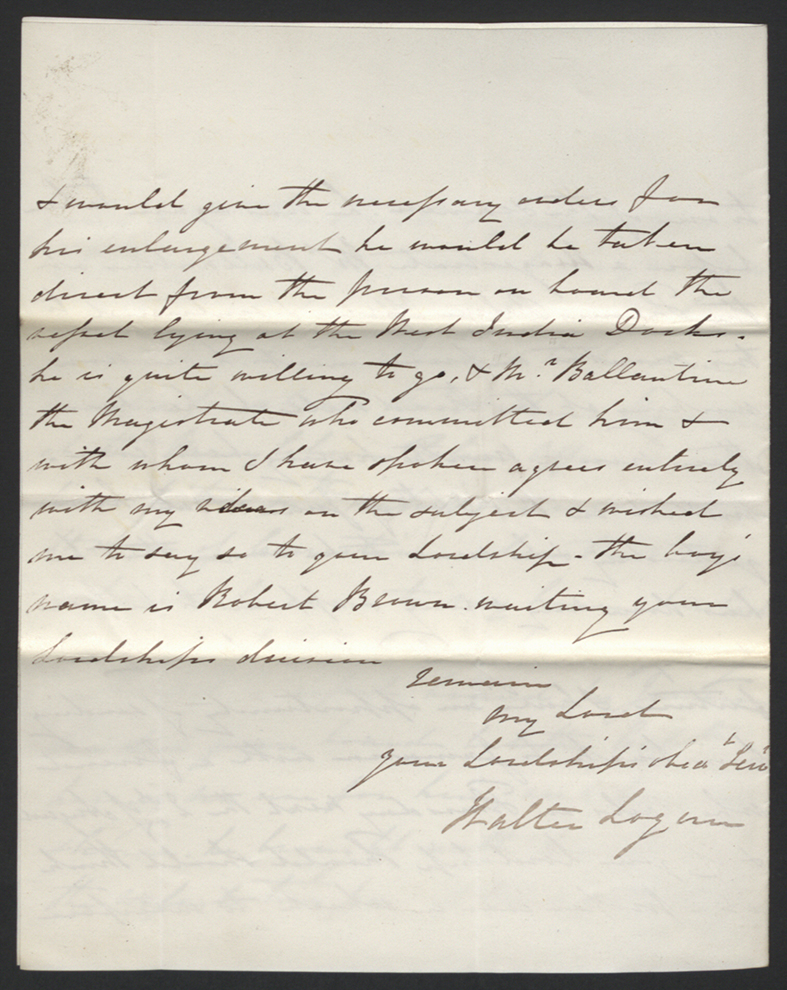
This is a petitioning letter written on behalf of Robert Brown by his former master to the Home Secretary, Lord John Russell, 30 July 1838. Robert Brown was a Jamaican boy convicted of stealing two pairs of sailor’s trousers and sentenced to two months imprisonment, Catalogue ref: HO 17/121/54
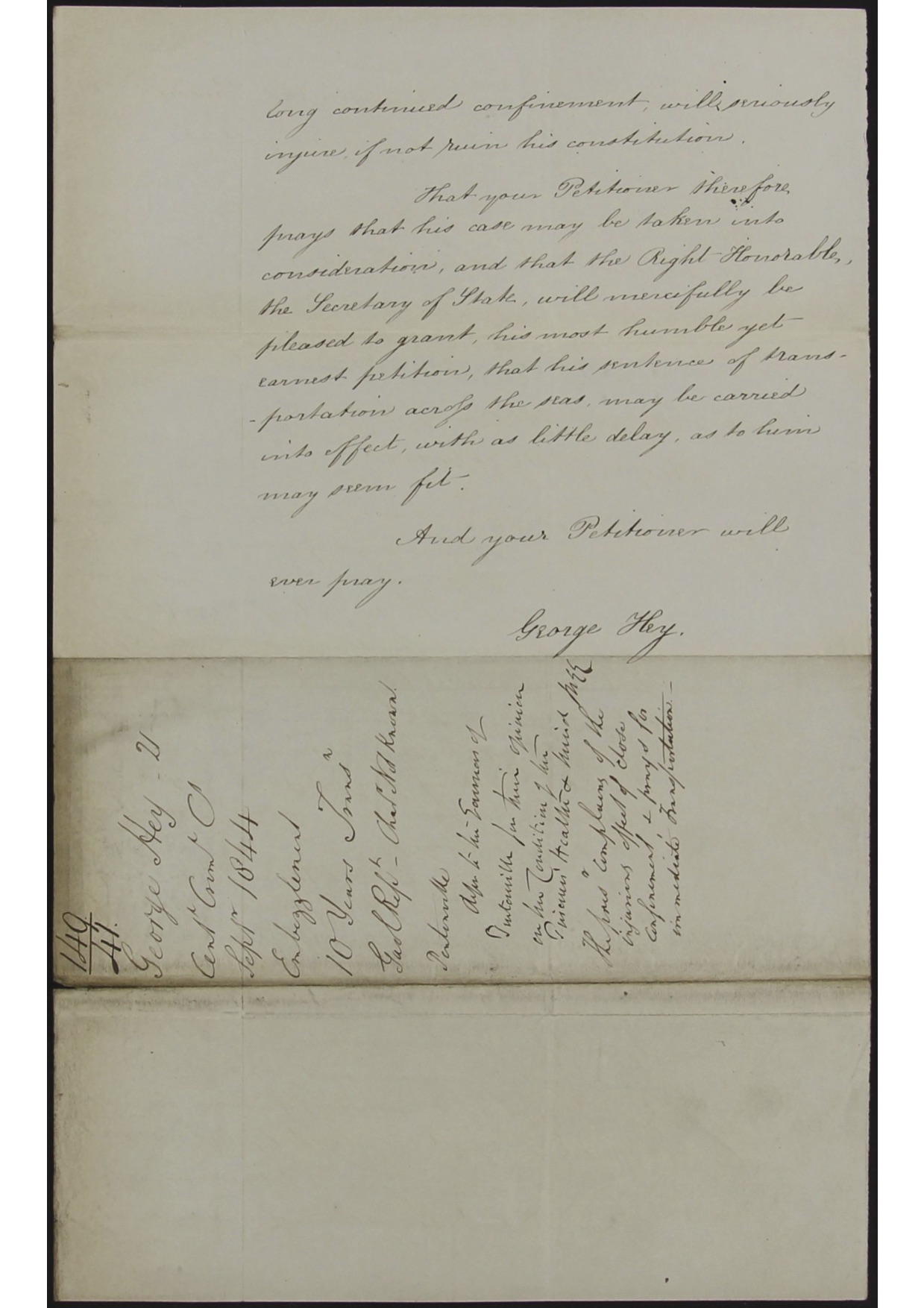
This is a personal petition written directly by the prisoner George Hey who admits being guilty of embezzlement [theft from his workplace] in 1 January, 1845, Catalogue ref: HO18/149/41
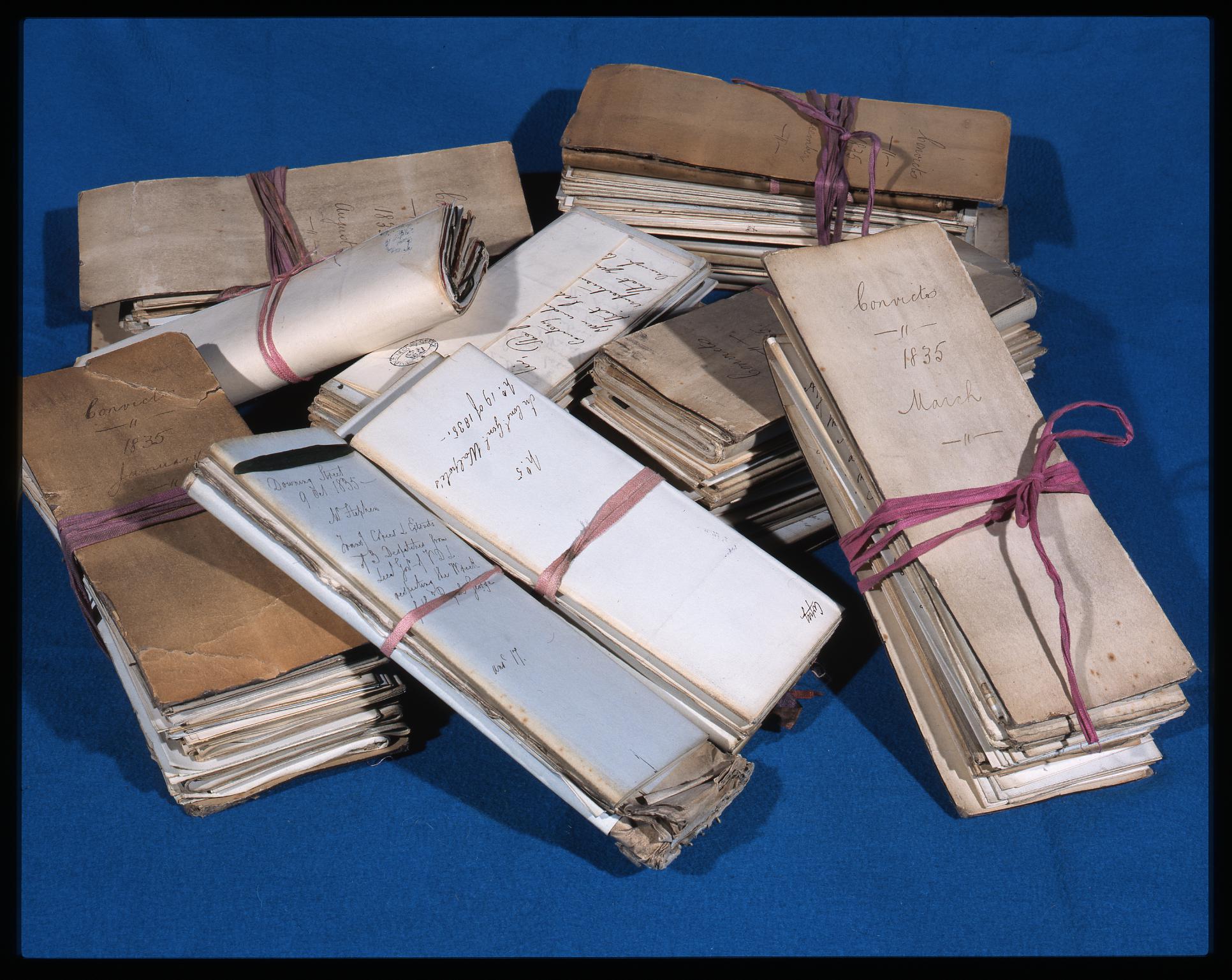
In this lesson you will explore some original nineteenth century criminal petitions held by The National Archives.
Petitions are formal written requests made to an authority such as a monarch or government department. Petitioning was a long-established right to appeal to a higher authority to ask for a favour or correct an injustice.
Petitions could be made by anyone in society, but they were usually written by people who were less powerful or wealthy than those they petitioned. Despite their humble position, by asking for help, petitioners offered their obedience in exchange for valuable assistance from the monarch or government. Those who received petitions were obliged to listen and to respond. However, the outcome of the petition was not always successful.
Although criminal petitions are usually about one individual they also are useful case studies to learn about wider changes in attitudes towards crime and punishment.
What do they reveal about the justice system?Petitioning has a long history dating back to the medieval period. By the nineteenth century, the volume of petitions had greatly increased. Personal petitions, those written about one individual, became the normal way ordinary people could make their voices heard. For the government, petitions could also be a useful way of understanding public opinion on social issues.
Petitions became more accessible to ordinary people due to a rise in literacy and letter writing manuals offering instructions on how to write them. For those who could not read and write they could pay to have their petition written for them.
The decision to whom to direct a petition was an important factor in making it effective. Criminal petitions were usually addressed to the Home Secretary or less commonly to the monarch. In naming the correct recipient, petitioners demonstrated their awareness of how the system worked and that they had been active in taking steps to seek advice on how to craft and submit their petition.
Petitions were written in a set way and respectful style which did not intend to question the established power structure. Those written by or for criminals to the Home Secretary rarely criticised the legal process. Instead they were used as a means to negotiate sentences. In the nineteenth century, the death penalty was often not a final sentence and petitions could help achieve lesser punishment or even pardons.
Some petitioners made their personal case more appealing by using flattering language, often asking for ‘your Lordship[‘s] great humanity’ to gain sympathy and mercy.[1]Petitioners could also make use of their gender to appeal. For example, one petitioner appealed to Queen Victoria as a mother as well as a monarch, writing ‘your Majesty knows as a wife and mother that it is hard to be separated from those we love’.[2] In a system that was discretionary, emotional appeals could sometimes act as a strategy for success.
These documents are interesting because they passed through the hands of many people in society. Each petition offers insights into the social relations of its author, the criminal him/herself or the scribe, with signatures by friends and notable people being added along its journey to show support and provide good character references for their claims. Once delivered to the Home Office via a prison or by post, these were received and read often by more than one person, evaluated and then acted upon.
The increase in petitions was related to rising levels of crime in the late eighteenth and nineteenth century. The pressures and social changes caused by industrialisation, enclosure of land and the end of the Napoleonic Wars meant that jobs were scarce, particularly in the countryside, and unemployment was high. In industrial cities, people suffered as the working conditions were poor exposing them to disease and high risks from industrial accidents. Despite these dangerous working conditions, they saw little improvement in their wages. Cities were perceived as dangerous and there was widespread popular fear that violent gangs of thieves and highwaymen roamed freely.
Petitions were a way for people to explain their actions and beg for mercy. They often did this on grounds that it was their first crime, mentioning their past respectability in society, whether they were influenced by bad company and to ask for sympathy for their young or old age.
Petitions could be submitted from anywhere in Britain and its overseas territories by men and women. Petitions were often multi-authored documents which could be given additional authority by having additional signatures from local supporters.
By the 1830s, social reform was an important issue on the public agenda. Petitions that gained signatures from sympathetic and powerful people interested in their cause, such as church minister, a local MP or magistrate was an important strategy as their position held greater influence. Additional petitions could also be written on behalf of the criminal by spouses, family and friends with no limit on how many times a person could petition.
The outcome was recorded and annotated on the petition. From the Home Office officials’ annotations, it is possible to see how they were investigated with request for prison behaviour reports, comments by the judge and references to precedents for similar cases. In the early nineteenth century, petitions were reviewed by judges which often acted as a re-trial. However, under the Home Secretary, Robert Peel, the system of recording petitions changed. Instead it became the norm for the outcome of petitions to be written directly on the petition with either a new sentence or ‘nil’, meaning no change.
Petitions are personal documents and although they are often emotional and moving accounts, they represent one version of the truth which may be an exaggeration and should be viewed with caution. However, they remain important sources for giving voices to people often forgotten in popular memory and can reveal their agency in negotiating with authorities.
[1] TNA, PC1/74, 1826.
[2] TNA, PC1/92, 1844.
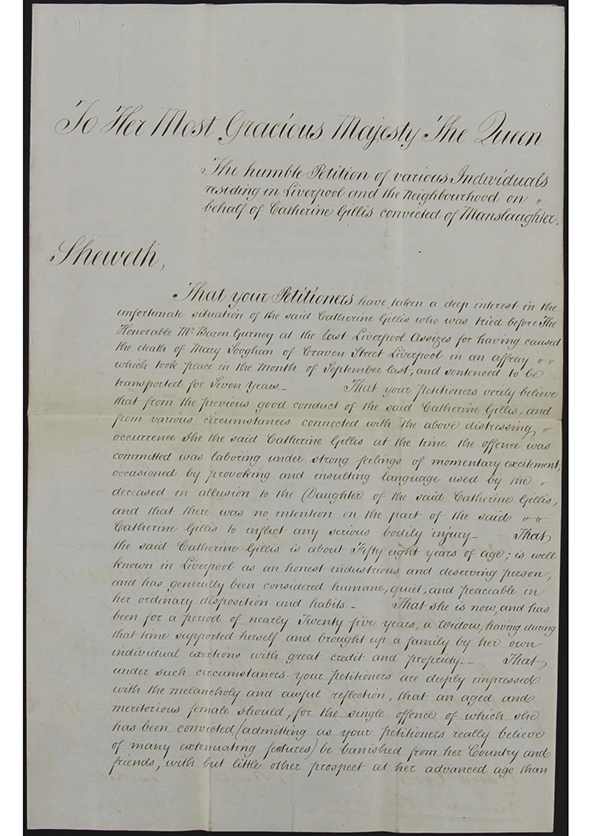
This is a petition written by group of people on behalf of Catherine Gillis who was convicted of manslaughter in 1845, Catalogue ref: HO18/149/40
[Note: Not all the signatories are shown here.]