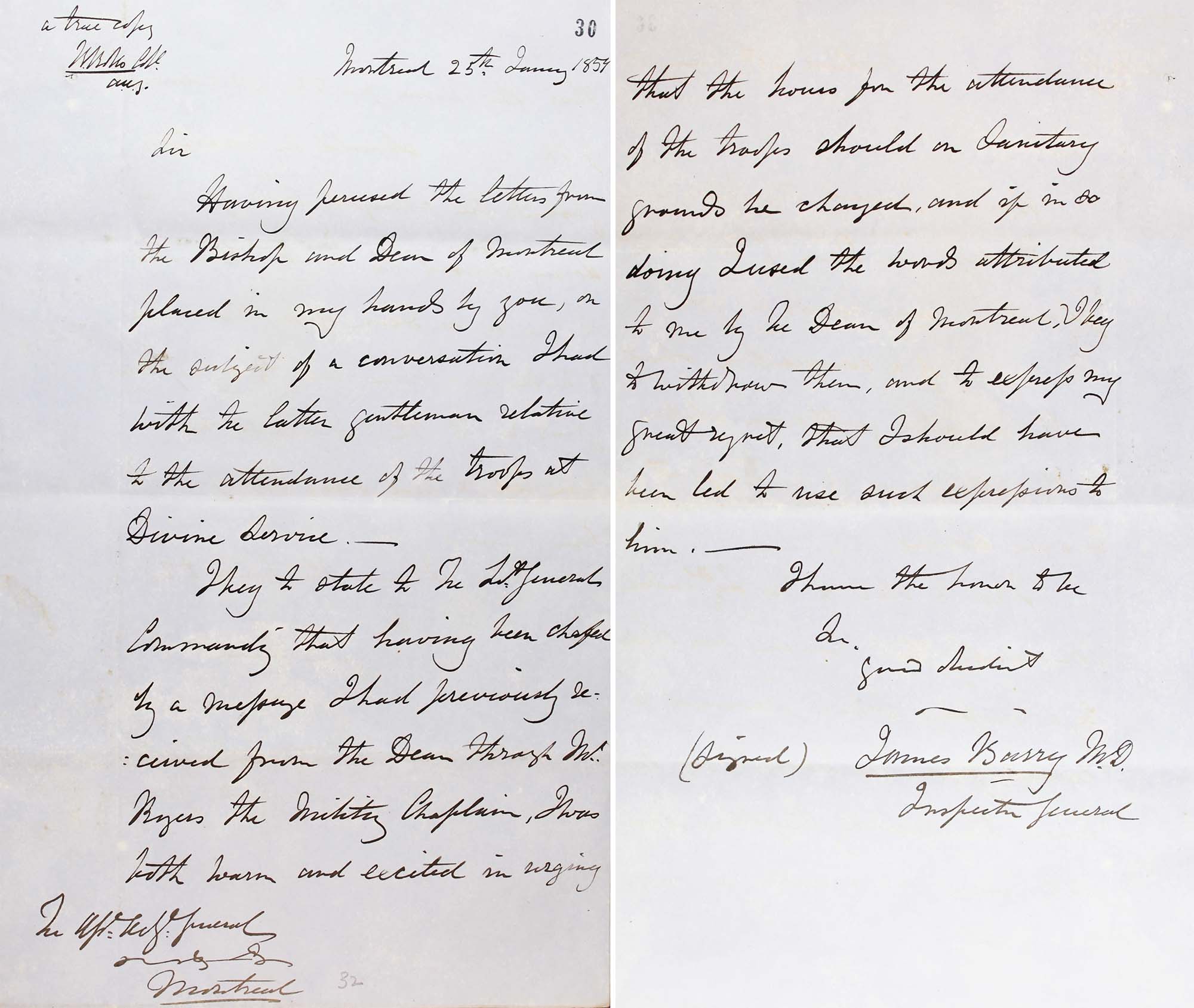
This letter from Dr James Barry to the army General Commanding Officer, 25th January 1859, refers to a disagreement between Dr Barry and two church officials for the Church of St John’s in Montreal, Canada. Catalogue ref: PRO 30/46/18.
Dr James Barry was promoted to the highest rank in the army as Inspector General of Hospitals in the British colony of Canada in 1857.
The disagreement concerned the timing of the church Service held for the army. The churchmen complained to the Bishop of Montreal that Dr Barry had ‘with such violence of manner and language, accused the Archdeacon and me [the Dean] of refusing to allow the military service to be changed from 2pm to 9am, stating that we were callous to the spiritual welfare of her Majesty’s soldiers, with much more to the same effect, and finishing with a threat to publish us in the London Times newspaper’.
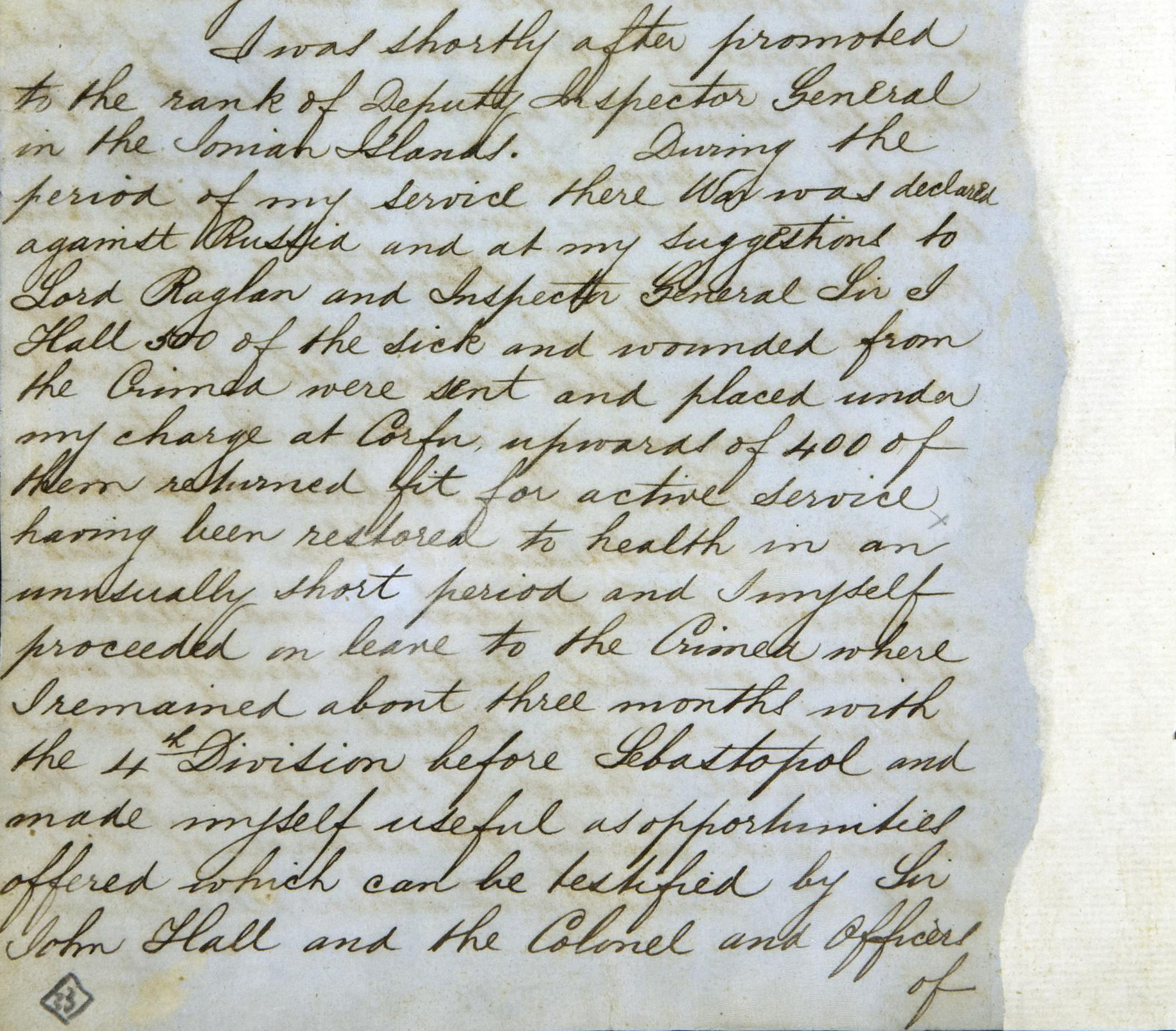
A second extract from a document entitled ‘Memorandum of the Services of Dr James Barry Inspector General of Hospitals’. This was written by Dr Barry at the end of his career after serving in Canada when he returned to London in 1859, although the date stamp on the document is not clear. Catalogue ref: WO 138/1
In this extract Dr James Barry makes refers to the Crimean War (1854-56) fought by an alliance of Britain, France, Turkey and Sardinia against Russia. Whilst serving during the Crimean War, Dr James Barry was supposed to have argued with Florence Nightingale.
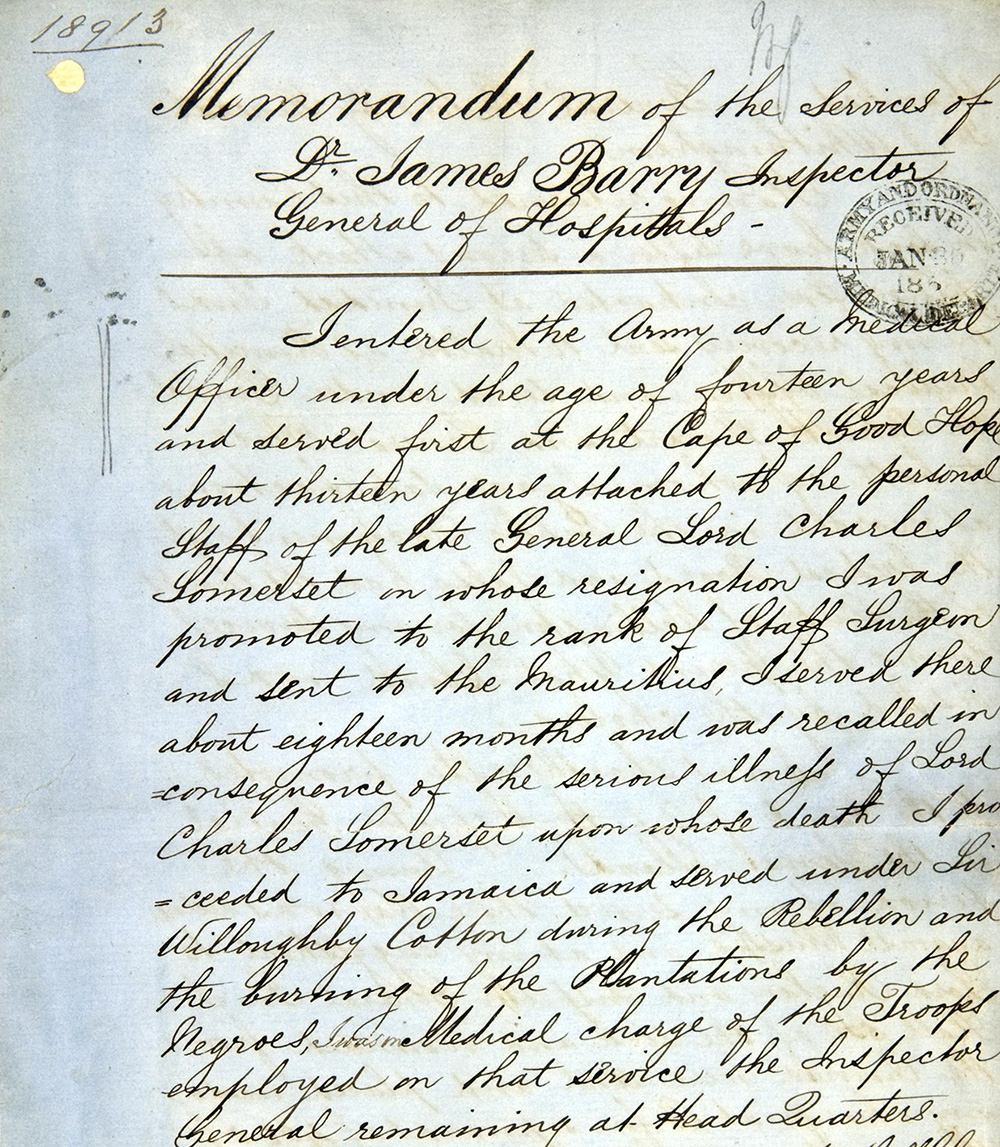
Extract from a document entitled ‘Memorandum of the Services of Dr James Barry Inspector General of Hospitals’. This was written by Dr Barry at the end of his career after serving in Canada when he returned to London in 1859, although the date stamp on the document is not clear. Catalogue ref: WO 138/1.
In this extract Dr James Barry refers to an important rebellion of the enslaved on the island of Jamaica 1831-32.
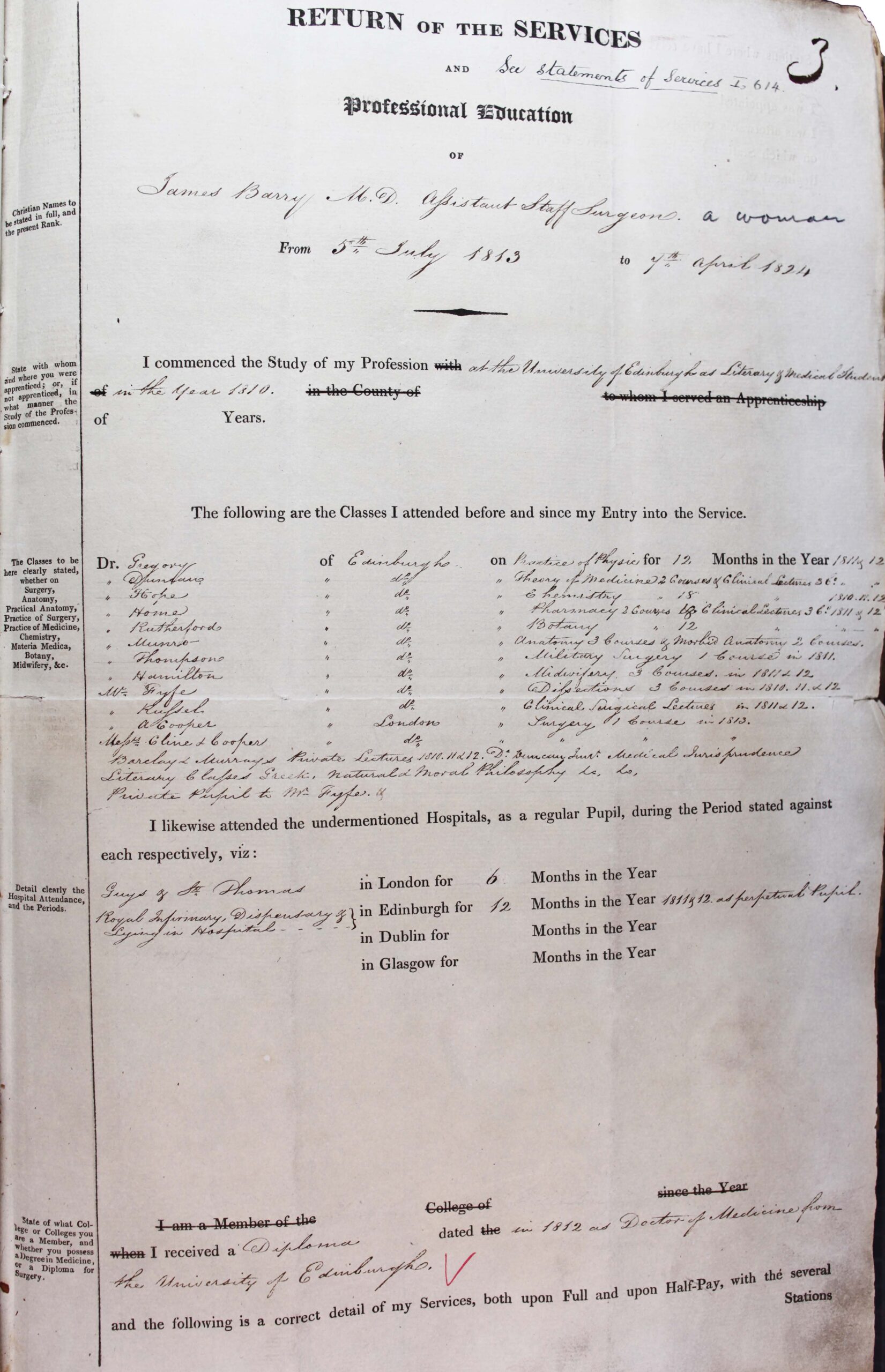
Extract from Dr James Barry’s personal army service record. This page shows his training at Edinburgh University in medicine. Catalogue ref: WO 25/3910.
James Barry, born in 1795 in Cork, Ireland, became a leading doctor with a glittering medical career who did much to raise standards of medical care in and outside the army. He chose to exclusively live and identify as a man, having been assigned female at birth. Sources in The National Archives show how his biological sex became a matter of discussion amongst some of his contemporaries after his death in 1865 and that it was publicly reported. Such an intrusion into a person’s personal life is completely unacceptable today.
Archives can reveal historical sources for LGBTQ+ lives that can help us to understand their stories and how they were treated in society. Sometimes, these histories appear to be ‘hiding in plain sight’, and other times are more difficult to find.
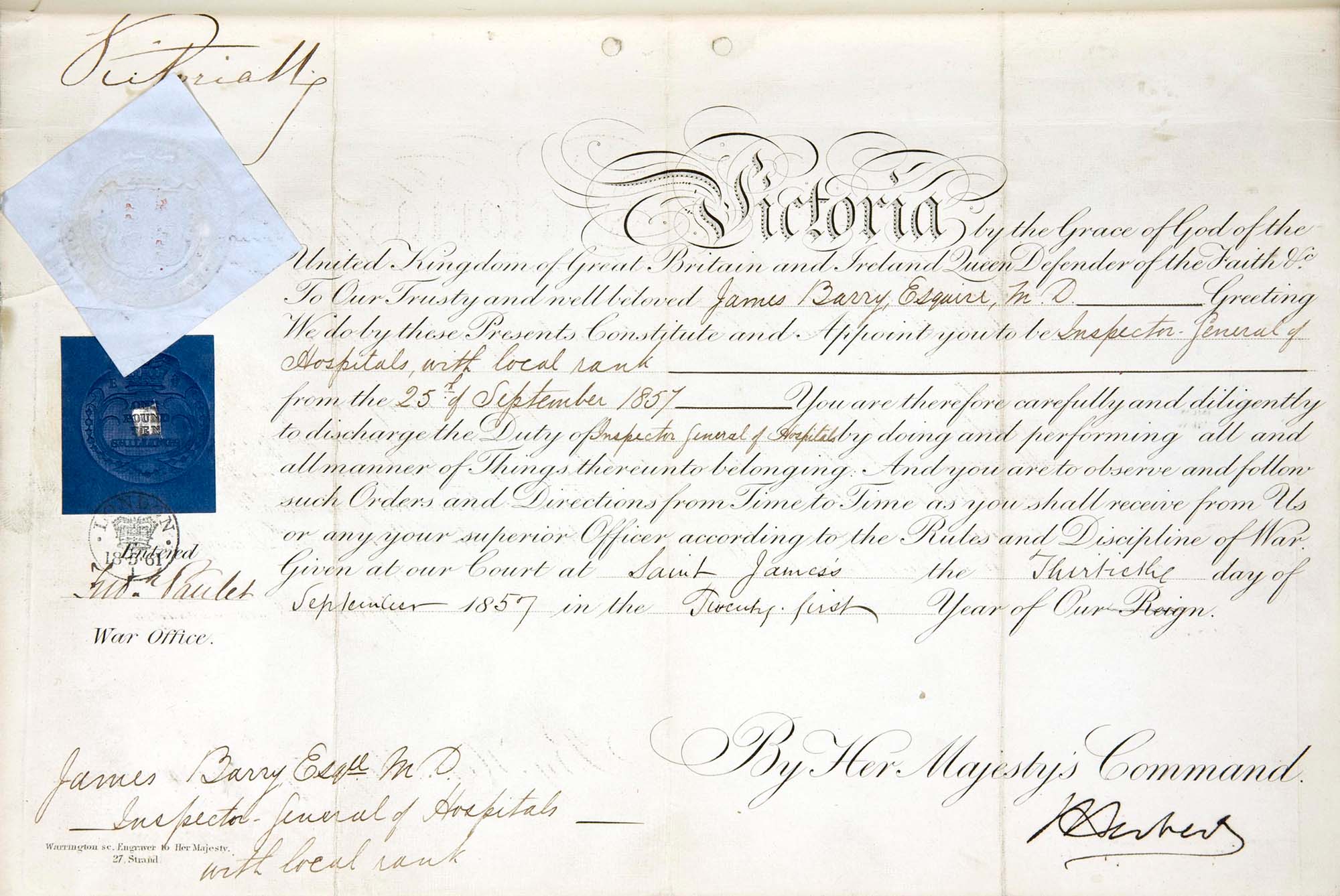
Our understanding of gender and sexuality has changed a lot since the times of James Barry. ‘Transgender’, meaning someone whose gender identity differs from the sex that they were assigned at birth, was not a term used in the 1800s. However, research has highlighted the significance of James Barry as a transgender man in the history of medicine as both a pioneer and reformer. The text here uses the pronouns he/him in accordance with how Dr James Barry identified himself throughout his life. In the first document shown here, which reveals his appointment as Inspector General of Hospitals in 1857, he signed as ‘Dr James Barry, M.D. Esquire.’
Use this lesson to explore archival sources relating to the life of Dr James Barry.
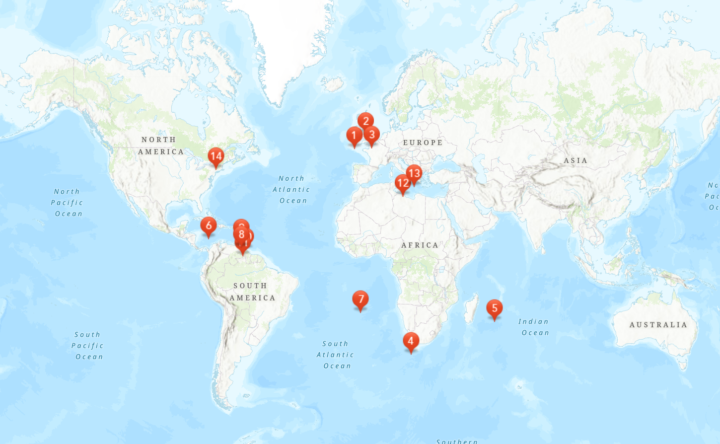
Click on the map above to explore the different places where Dr James Barry lived throughout his life. Read an accessible description of the map here.
According to EE Ottoman, after leaving Ireland, James Barry wrote in 1809 that he was ‘sailing to Edinburgh with his aunt’ who ‘wished to have a Gentleman to take care of her on Board Ship and to have one in a strange country’.
Dr James Barry’s professional service record for the army (WO 25/3910) gives us an outline of his career after qualifying as a doctor at Edinburgh University in 1812. He qualified as a surgeon in 1813 ‘before the College of Surgeons’ in London. He entered the army at the age of fourteen, was commissioned as an army hospital assistant and stationed at military hospitals in Chelsea and Plymouth, and later made Assistant Staff Surgeon in December 1815.
Barry was sent to the Cape of Good Hope (South Africa) in 1817 as a medical officer, and went with the Governor, Lord Charles Somerset, to inspect the frontier settlements. He was then appointed physician to the Governor’s household in 1818. He became Assistant Staff Surgeon in 1822 and Surgeon of the Forces in 1827. During his time at the Cape, Barry did much to improve the sanitary conditions in army hospitals with better hygiene and diet for the patients and helped to reduce the spread of disease. He also attempted to improve the regulation of medicines sold. At this time, Dr Barry also performed an early successful caesarean section on a society woman, Wilhelmina Munnik, saving the life of both mother and baby. He was also accused of having a relationship with Lord Charles Somerset, which caused a scandal at the time.
He went on to serve in Mauritius from 1828 and was recalled owing to the illness of Sir Charles Somerset, who later died. Dr Barry was then posted to Jamaica in 1831/2 and returned on leave to England in 1835. As Principal Medical Officer, he was later ordered to St Helena (1836), and then to the Windward and Leeward Islands for 12 months. Later in Antigua, Barbados (1838) and Trinidad, he was in medical charge of the troops while the Inspector General was absent. He returned to England having contracted yellow fever in Trinidad. He resumed service in Malta as Principal Medical Officer, where according ‘A memorandum of the Services of Dr James Barry, Inspector General of Hospitals’, (WO 138/1): ‘I also had the thanks of the Duke of Wellington for my services during [which] that island (Malta) was visited by the cholera’.
After this, Dr James Barry was promoted to the rank of Deputy Inspector General in the Ionian Islands when he cared for sick soldiers sent to Corfu, wounded during the Crimean War. Barry went on to serve in Crimea for three months where he allegedly had a public spat with Florence Nightingale. After his exceptional work in Greece, which included supporting soldiers of his regiment in Piraeus with ‘medicines, comforts and supplies’, he was also praised by Admiral Lyons for ‘commanding the “Modeste” for my zeal and service having discovered the cause of the malignant fever on board that vessel and for my successful treatment of the sick and the purification of the ship’ (WO 138/1).
He was promoted to the highest rank in the army as Inspector General of Hospitals in the British colony of Canada in 1857. He continued to reform living conditions for soldiers and prisoners and those suffering from leprosy. He returned to London after contracting a severe case of bronchitis in 1859, arriving in March 1860 after a difficult sea voyage. He lived in London in retirement and died in 1865. He was buried in Kensal Green Cemetery following a military funeral.
In a letter from Dr McKinnon replying to George Graham on 24 August 1865 (WO 138/1), it is mentioned that a woman claimed that Dr James Barry ‘was a female’ and wanted money to keep the ‘great secret’. Dr Barry left instructions that his body was not to be examined after his death. In documents he consistently identified himself as male and uses male pronouns. He signs himself as ‘Dr James Barry’ and refers to himself as ‘gentleman’. In character, he appears to have had a reputation for being highly outspoken. The document (PRO 30/46/18) concerning a clash he had with church authorities in Canada gives us a little window into his personality but also highlights his constant concern for the soldiers of his regiment.
The documents reveal Dr James Barry not as woman living as a man choosing a medical career, but as a man living a man’s life within the society he found himself in.
Barry could not have used the term ‘transgender’ to describe himself in the nineteenth century. However, from today’s perspective, he would appear to be a significant figure in the context of trans history. According to Jack Doyle, in his article ‘“The Trans Take”: Towards a Transgender Public History’ (2019), ‘lives like James Barry’s are fascinating precisely because they reveal the ways in which trans and gender-nonconforming people have navigated, embodied, and survived gender across historical and cultural contexts.’
In some cases, we find out about stories like that of Dr James Barry because their privacy has been invaded, in this case after death. The history of some transgender people may remain untold without the legacy of personal records. Hopefully, the archival material held in The National Archives relating to Dr James Barry can serve to reveal the power of this history and its importance for identity.
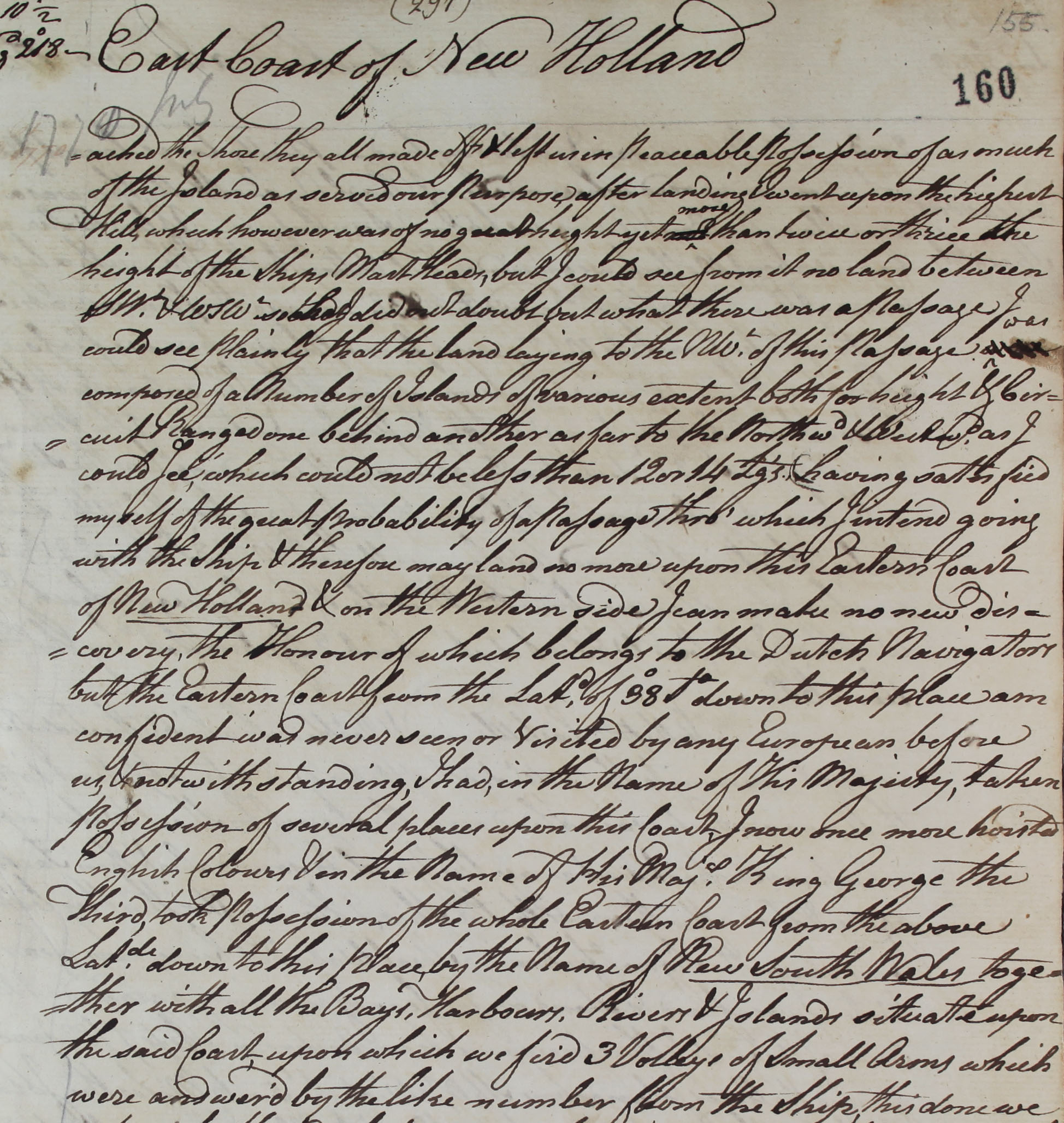
ENDEAVOUR: official copy of journal kept by Captain James Cook. Voyage of discovery, South Indian Ocean. 1768 May 27-1771 July 10. Catalogue ref: ADM 55/40.
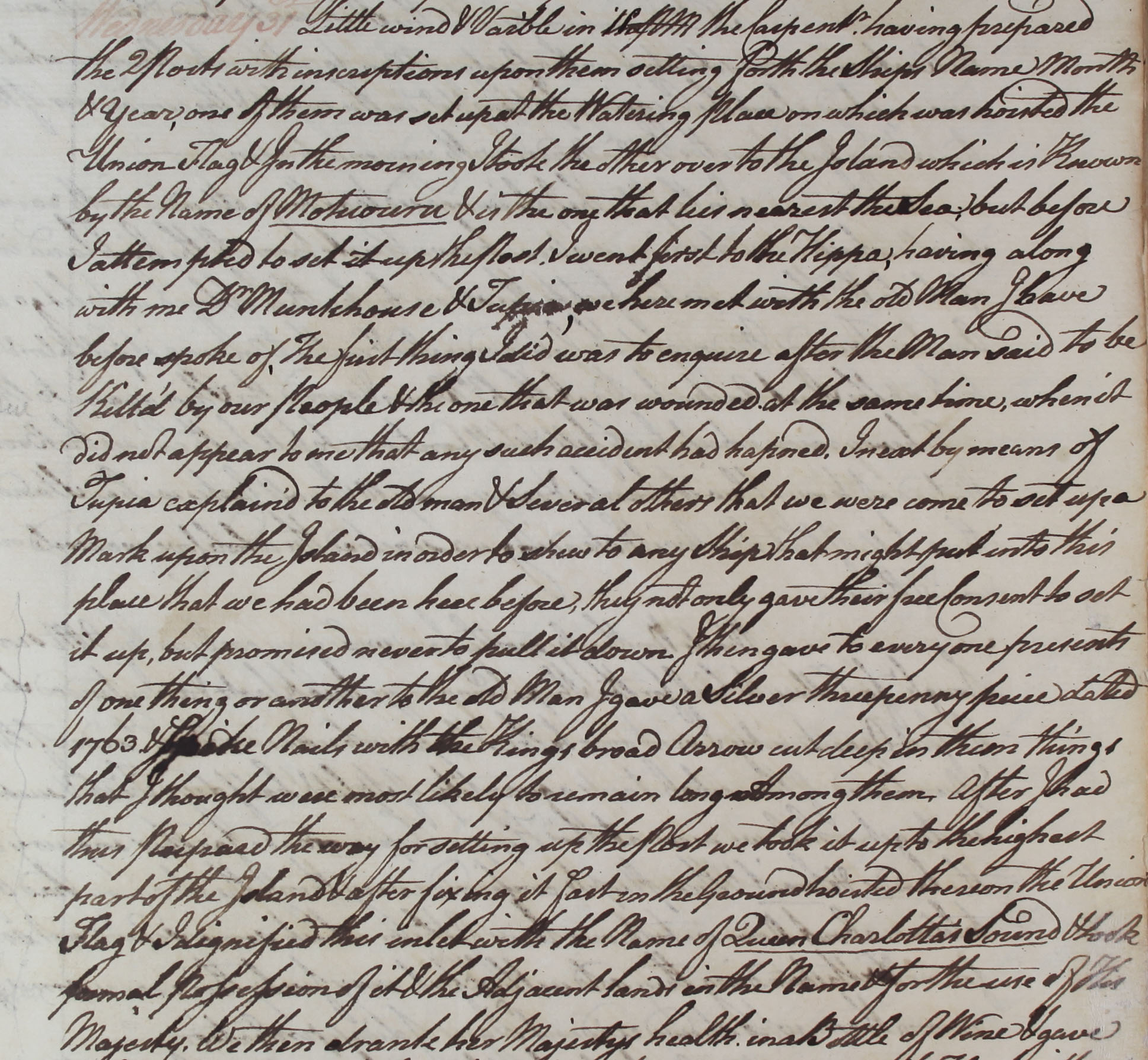
ENDEAVOUR: official copy of journal kept by Captain James Cook. Voyage of discovery, South Indian Ocean. 1768 May 27-1771 July 10. Catalogue ref: ADM 55/40.
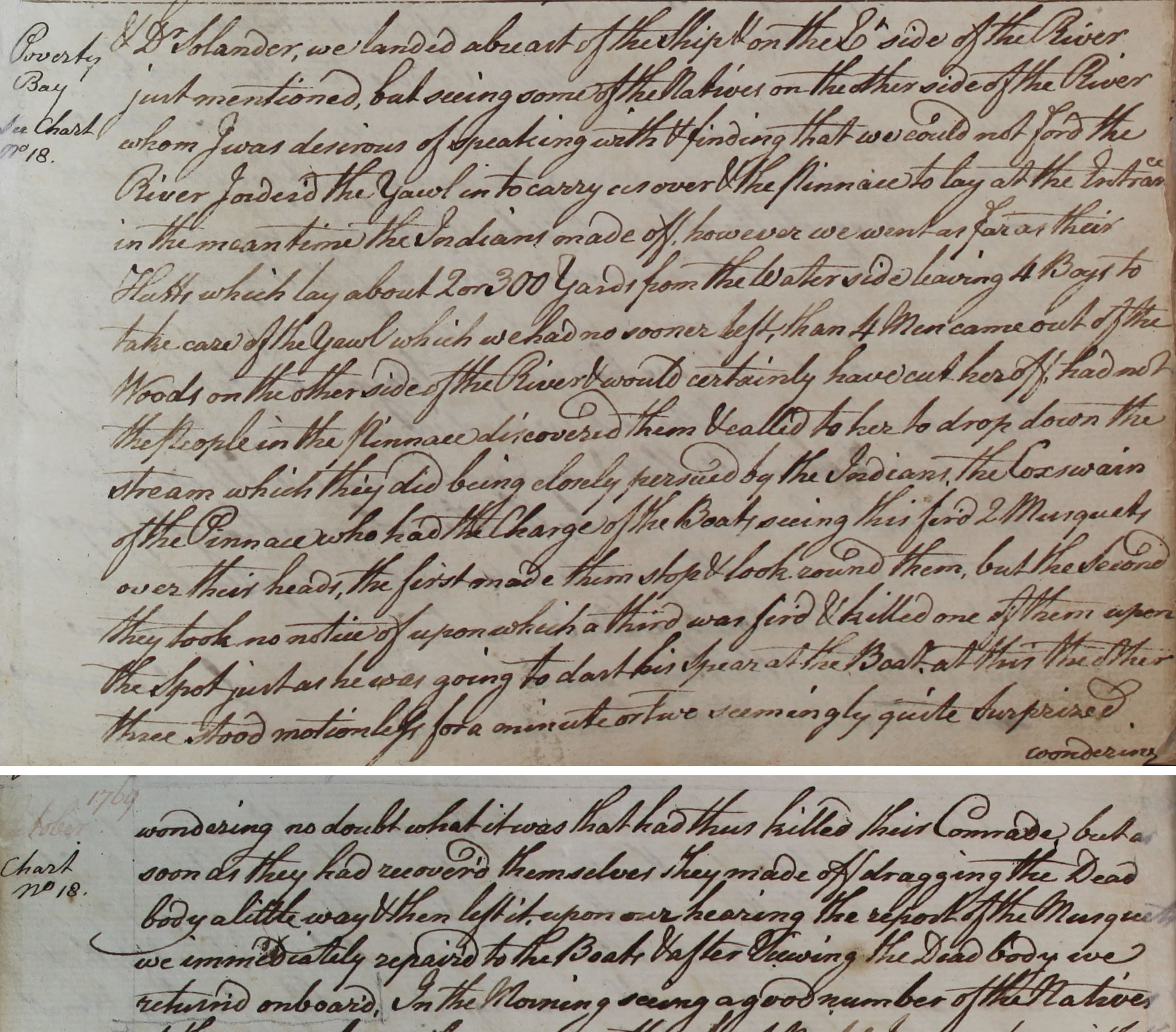
ENDEAVOUR: official copy of journal kept by Captain James Cook. Voyage of discovery, South Indian Ocean. 1768 May 27-1771 July 10. Catalogue ref: ADM 55/40.
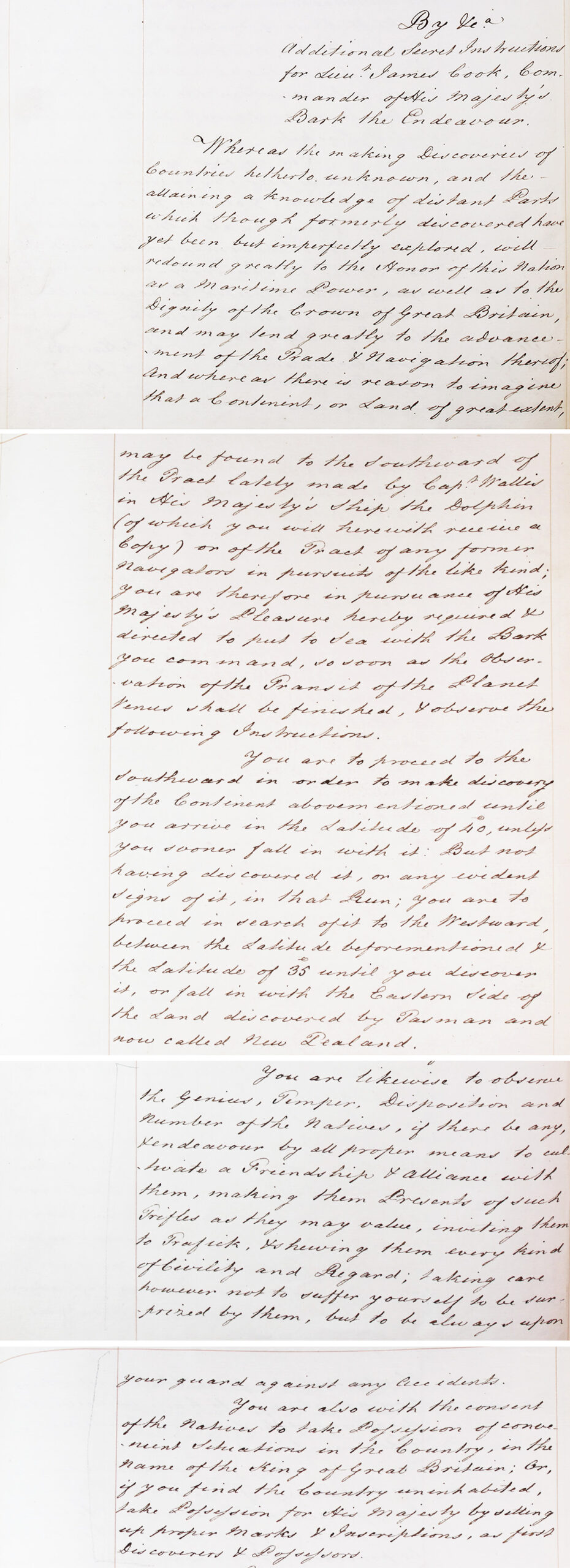
SECRET LETTERS. ADM 2/1332
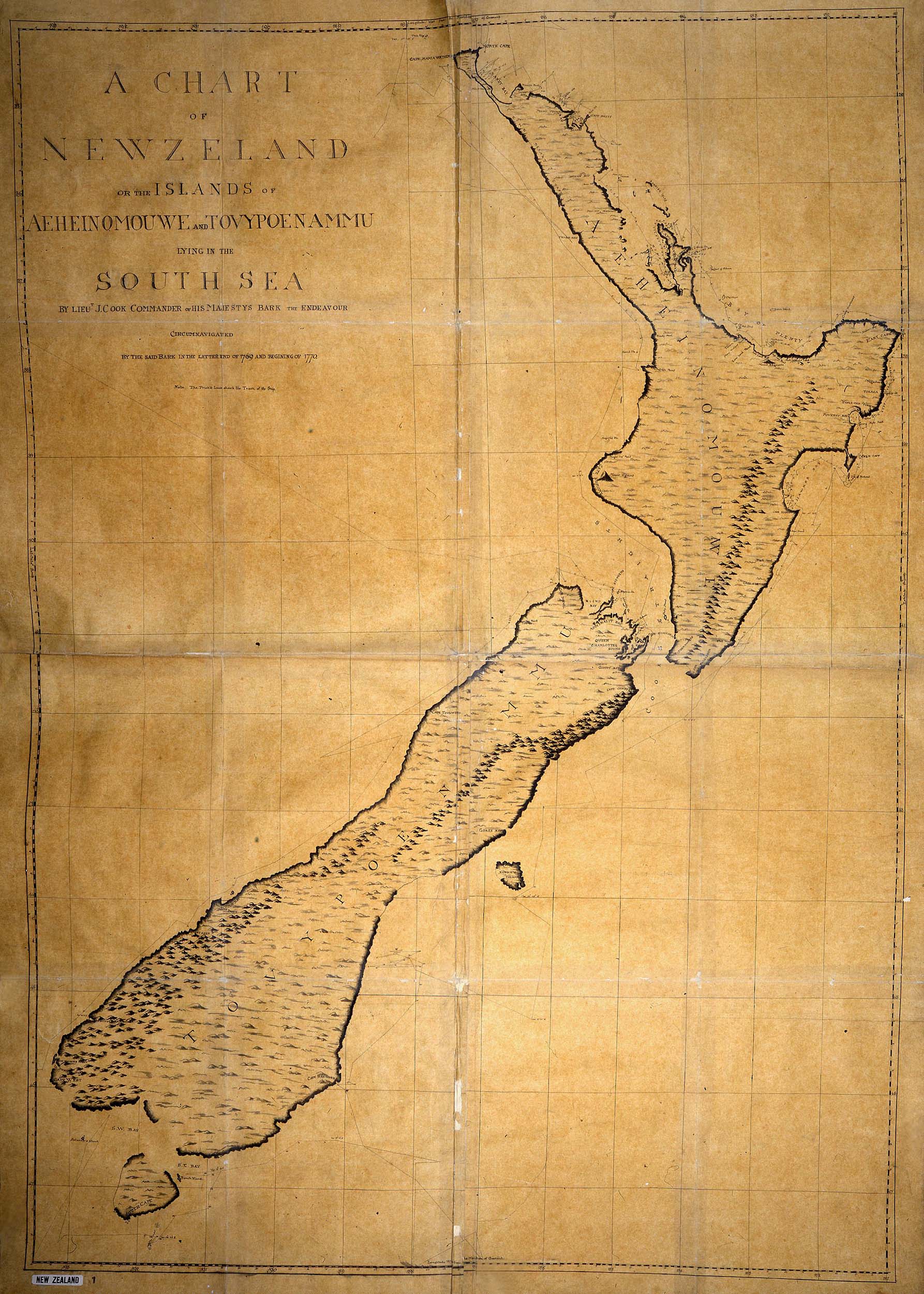
Chart of New Zealand drawn by Cook during his first voyage, around 1770.
CO 700/NEWZEALAND1: New Zealand by Lt James Cook, Commander of the Endeavour c1770, Catalogue Ref: CO 700/NEWZEALAND1