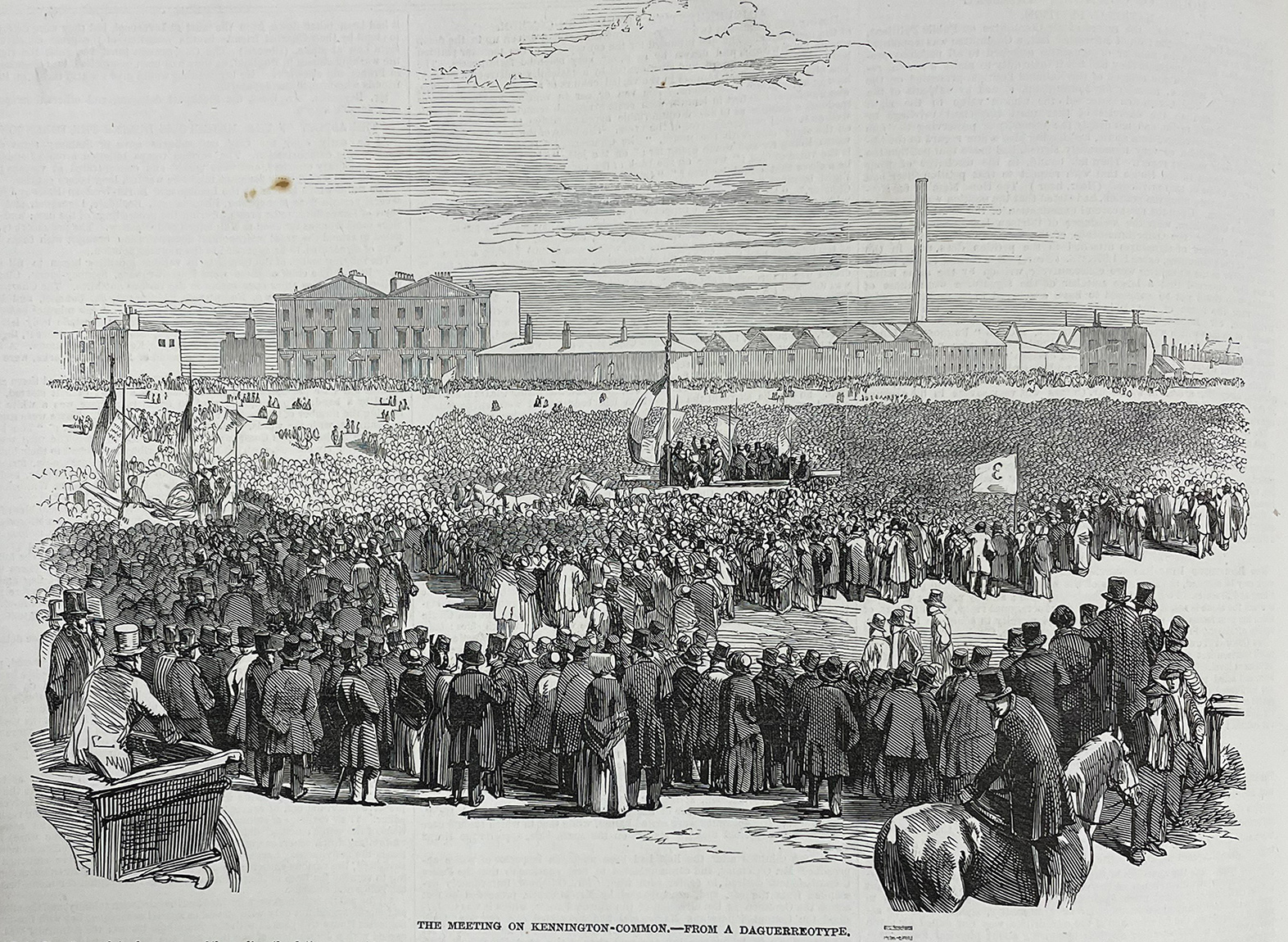
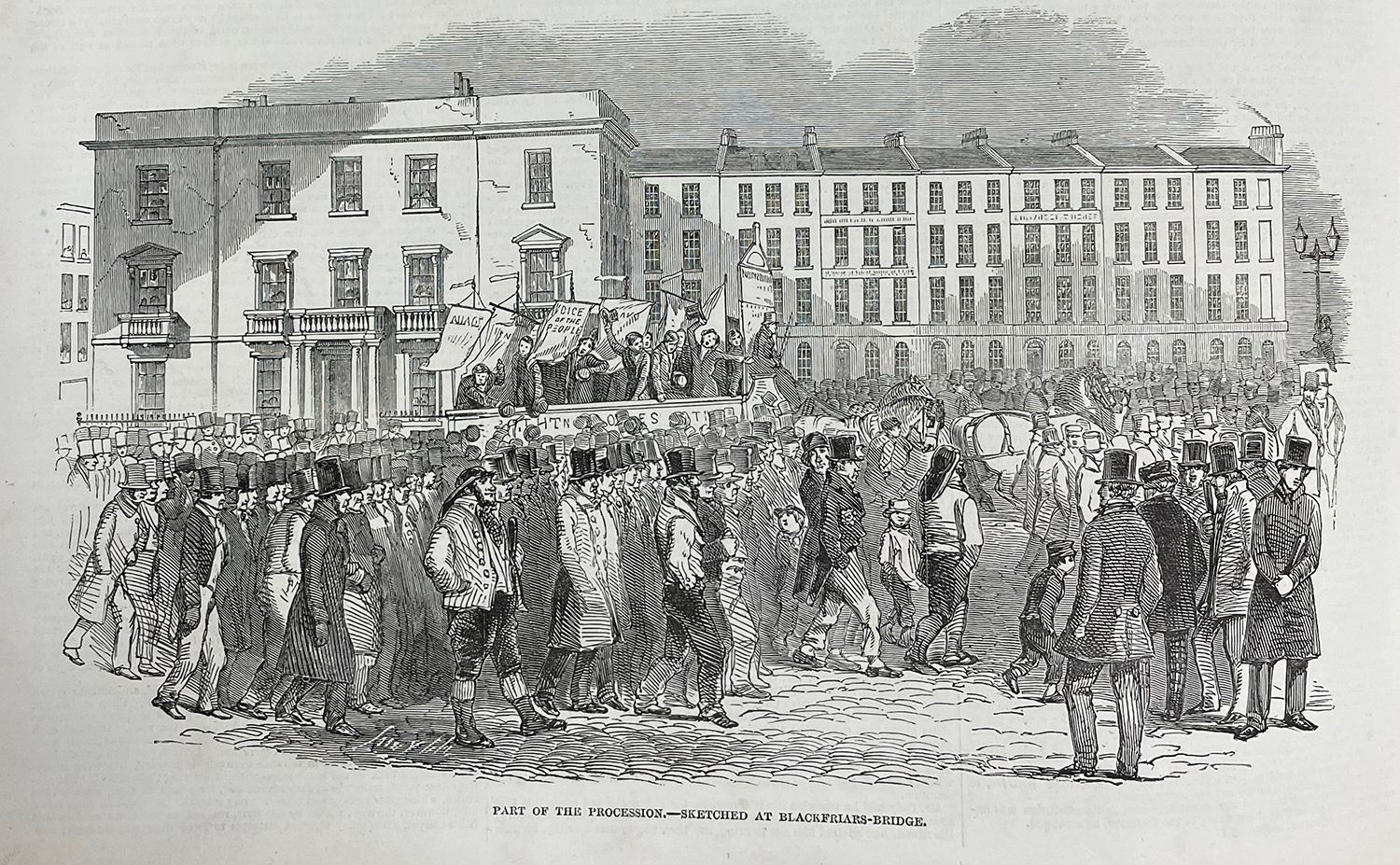
Picture entitled: ‘The meeting on Kennington Common-from a Daguerreotype’, 15 April 1848, the Illustrated London News, Catalogue ref: ZPER 34/12.
This shows a Chartist meeting held on Kennington Common, London. There was a platform for speakers to stand and address the crowd. A daguerreotype was an image created by a photographic process popular in 1840s and 1850s.
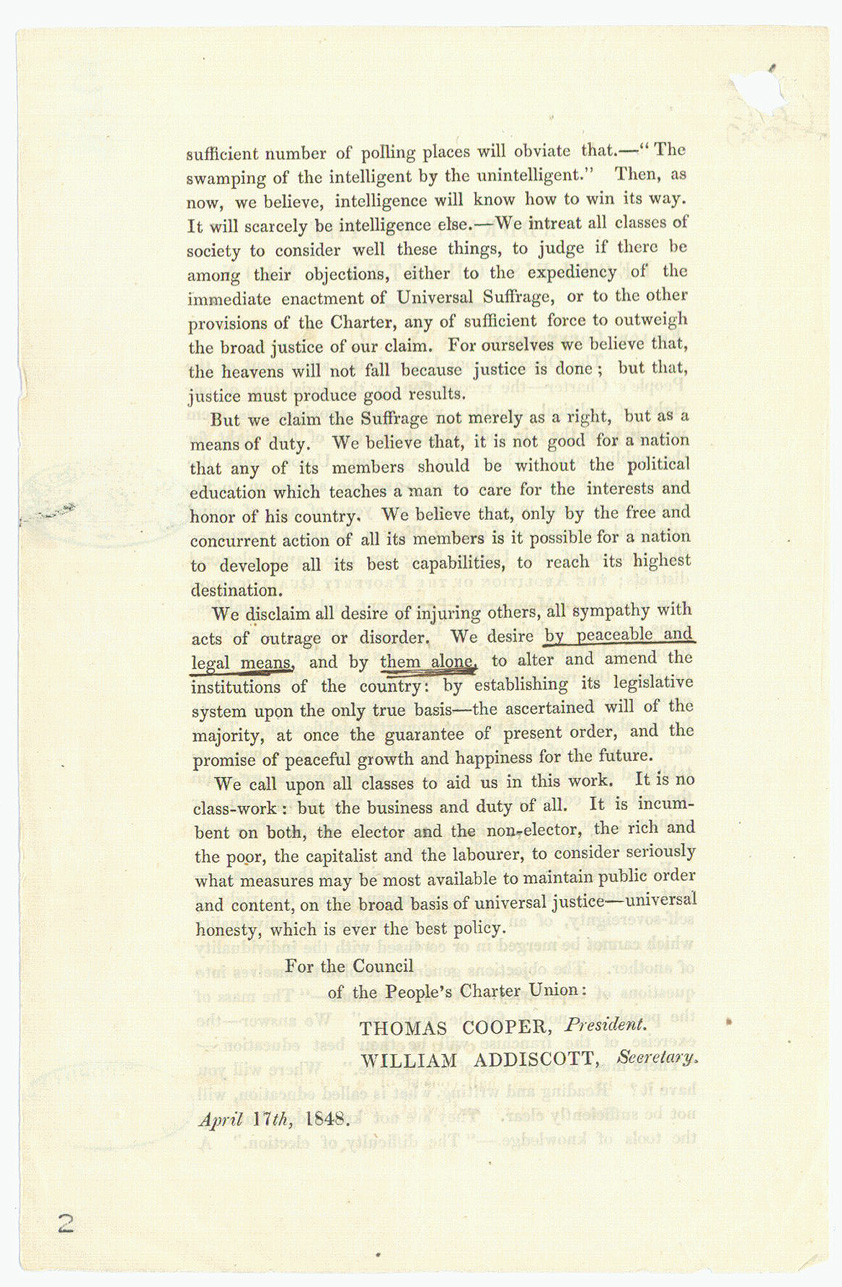
Extracts from the handbook of the People’s Charter Union, 17 April 1848, Catalogue ref: HO 45/2410A, part 4, f. 5
Universal suffrage, the right of everyone to vote is defined in this source as the right of every man of 21 years of age and over, but today it is defined more widely.
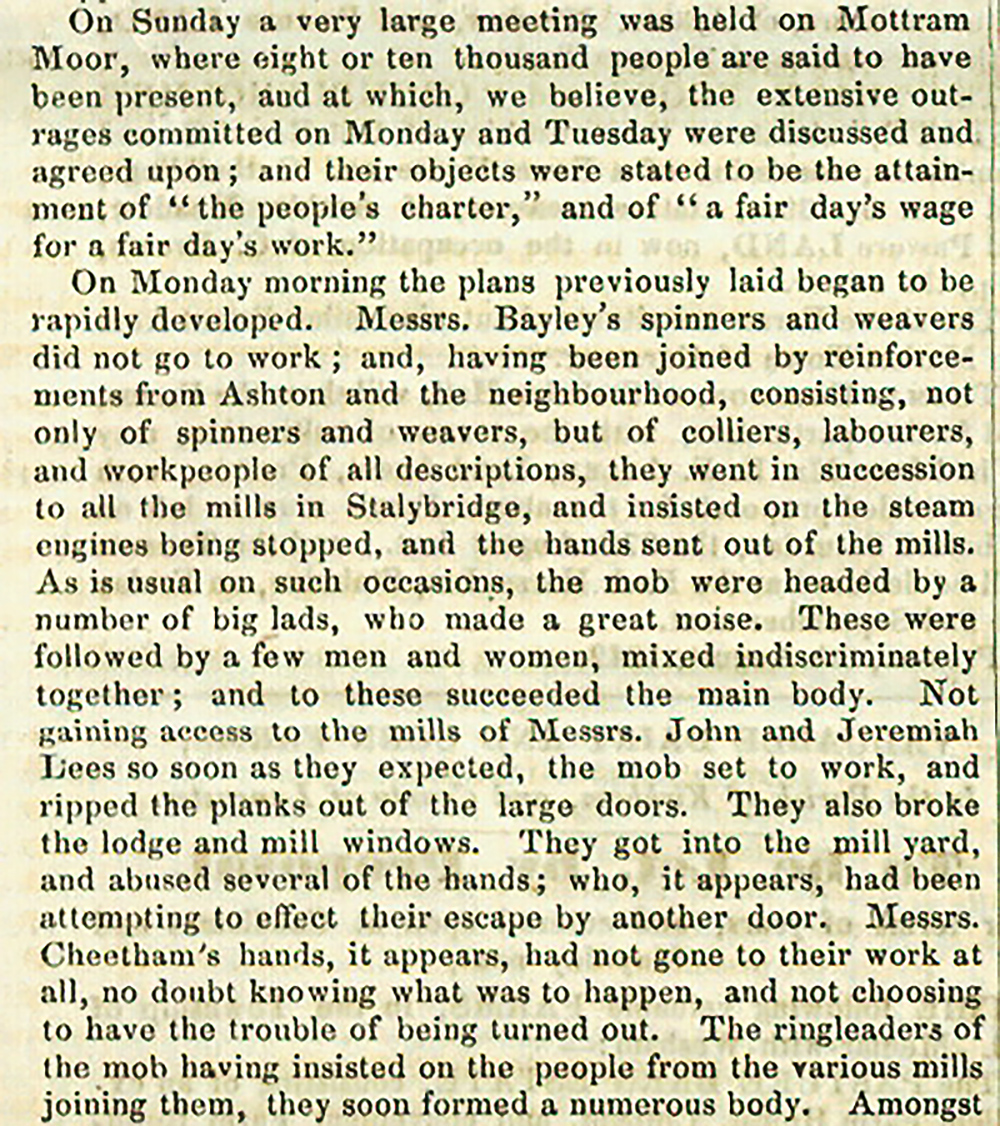
Extracts from an article about trouble in Manchester and its surroundings in ‘The Preston Chronicle and Lancashire Advertiser’, 13 August, 1842, Catalogue ref: HO 45/249A f28
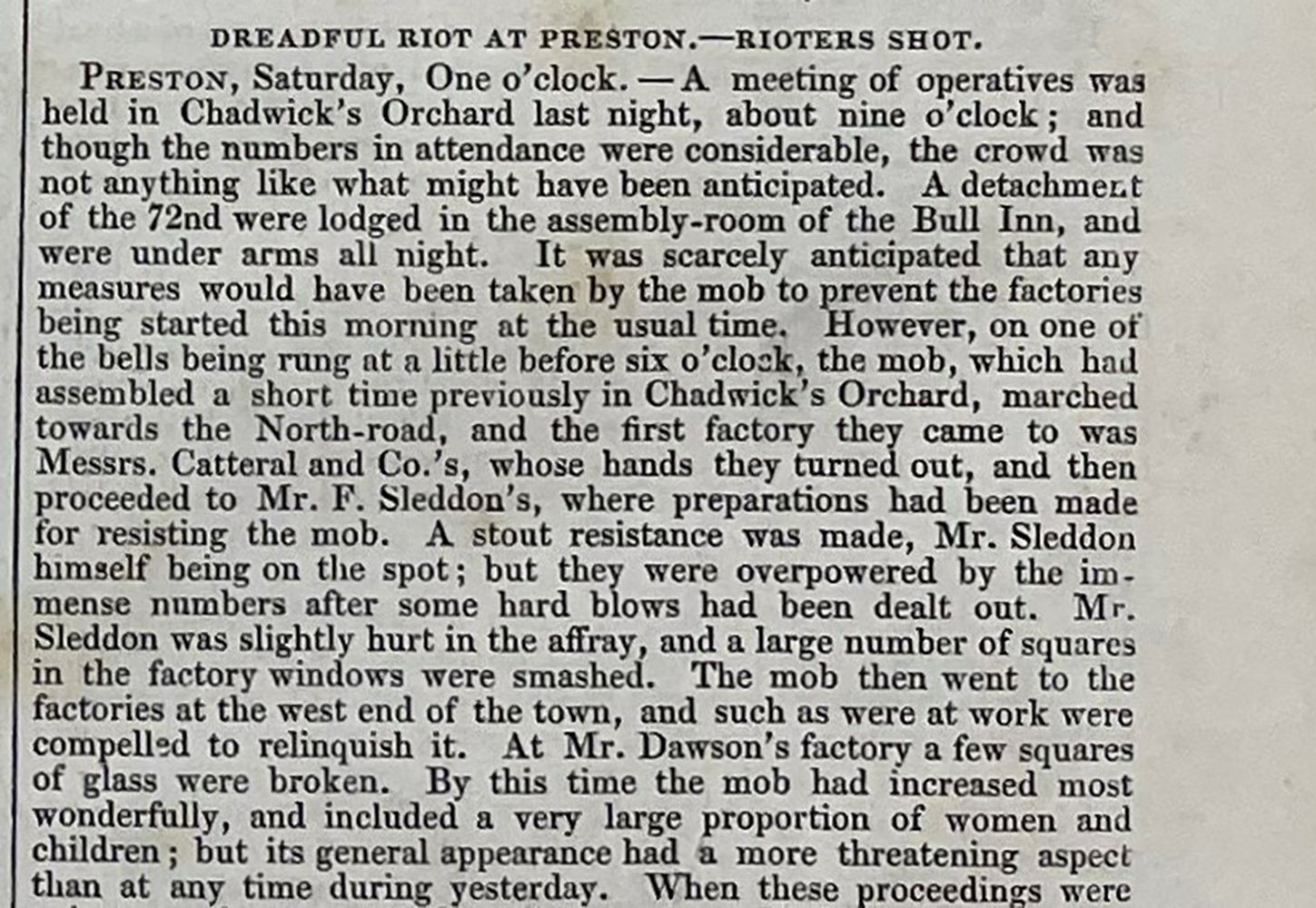
Extract 3a: Article on a riot in Preston from the ‘Illustrated London News’, 20 August 1842, Catalogue ref: ZPER 34/1 f.236
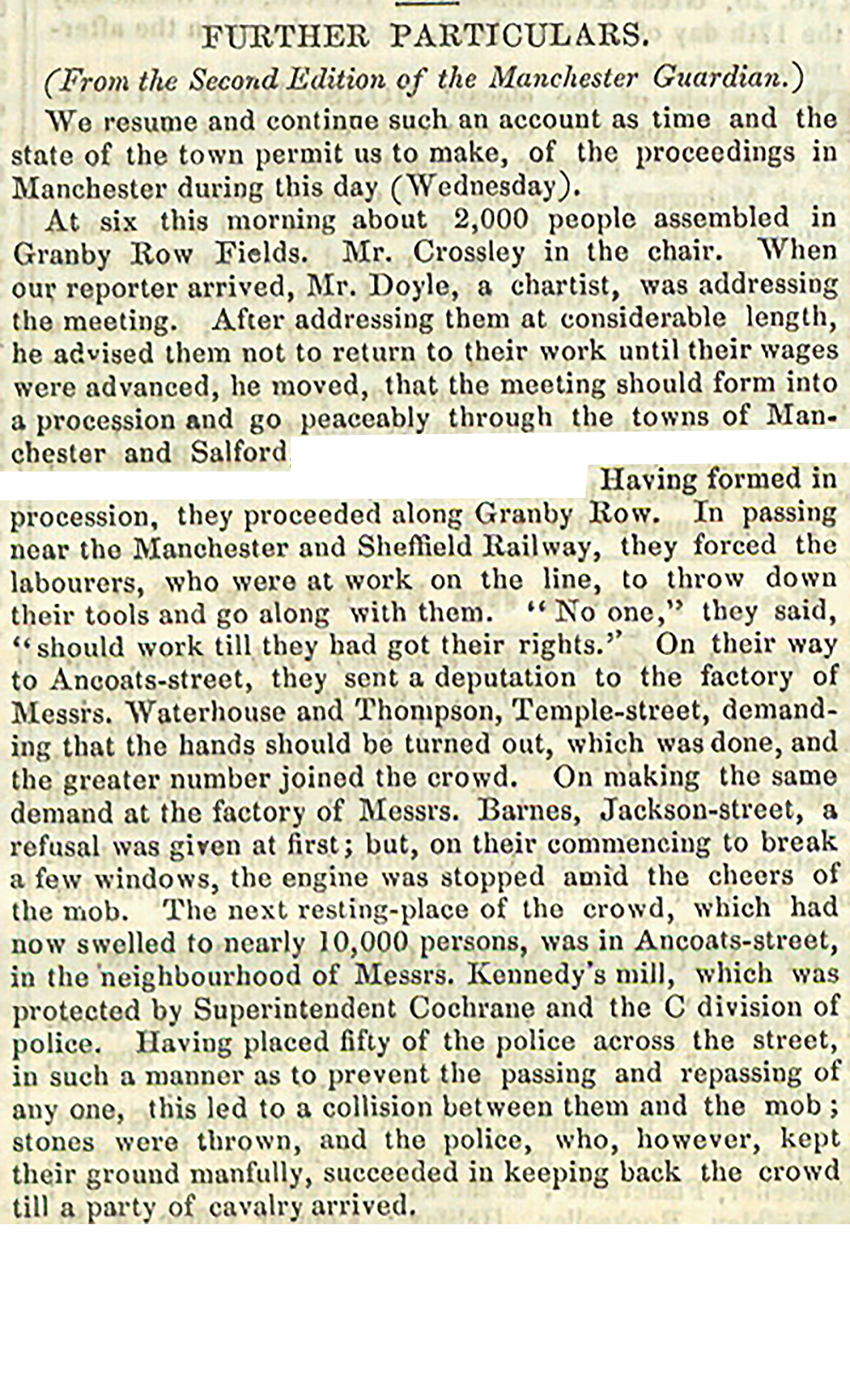
Extracts from an article about trouble in Manchester and its surroundings in ‘The Preston Chronicle and Lancashire Advertiser’, 13 August, 1842, Catalogue ref: HO 45/249A f28
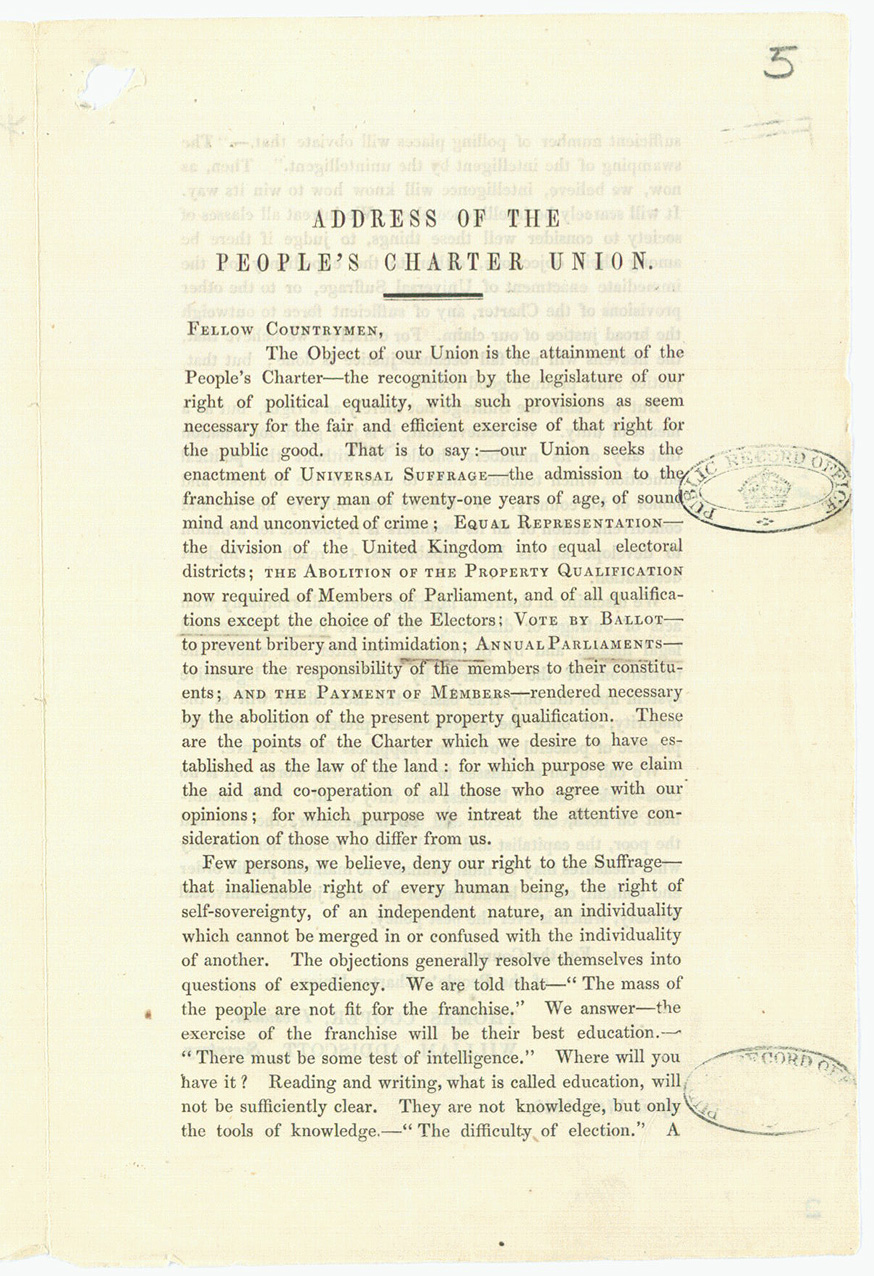
Extracts from the handbook of the People’s Charter Union, 17 April 1848, Catalogue ref: HO 45/2410A, part 4, f. 5
Universal suffrage, the right of everyone to vote is defined in this source as the right of every man of 21 years of age and over, but today it is defined more widely.
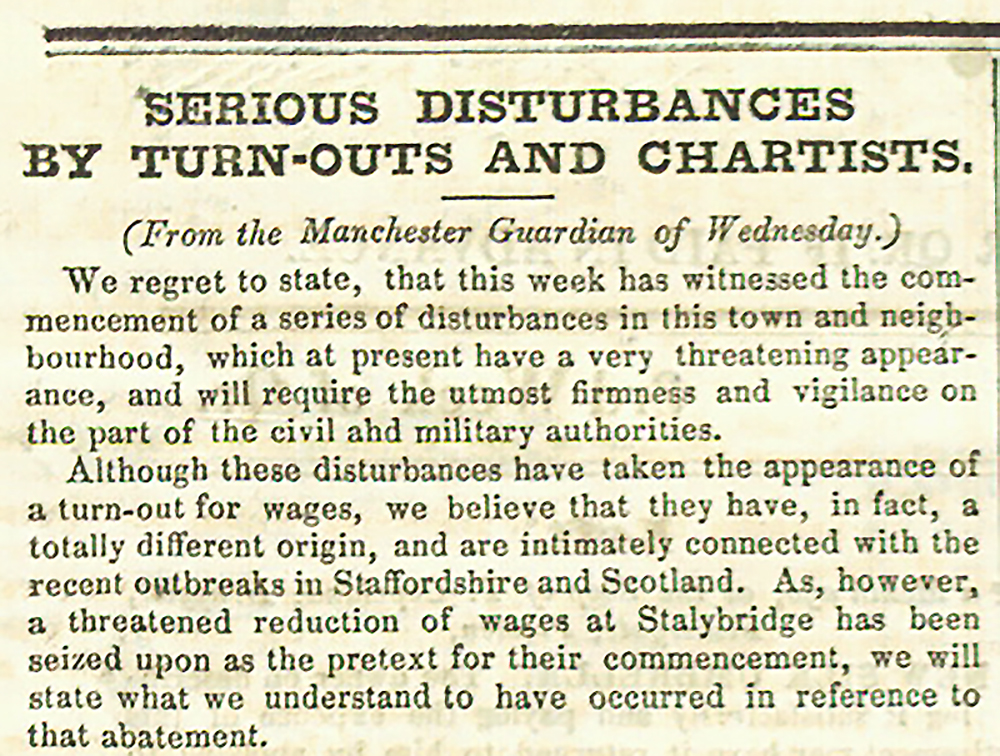
Extracts from an article about trouble in Manchester and its surroundings in ‘The Preston Chronicle and Lancashire Advertiser’, 13 August, 1842, Catalogue ref: HO 45/249A f28
With the Great Reform Act 1832, voting rights were given to the property-owning middle classes in Britain. However, many working men were disappointed that they could not vote.
Chartism was a working class movement which emerged in 1836 in London. It expanded rapidly across the country and was most active between 1838 and 1848. The aim of the Chartists was to gain political rights and influence for the working classes. Their demands were widely publicized through their meetings and pamphlets. The movement got its name from the People’s Charter which listed its six main aims:
- a vote for all men (over 21)
- secret ballot
- no property qualification to become an MP
- payment for MPs
- electoral districts of equal size
- annual elections for Parliament
Why did the Chartists make these demands? Use the original documents in this lesson to find out more about Chartism.
Political and social reform in 19th century BritainThe Chartists presented three petitions to Parliament to make their six point charter law in 1839, 1842 and 1848. Each petition was rejected. The final Chartist petition of 1848, it was claimed, had six million signatures. The Chartists planned to deliver it to Parliament after a peaceful mass rally on Kennington Common in London. According to the ‘Illustrated London News’ on 15th April 1848, ‘One hundred and fifty thousand special constables, watchful for the preservation of order, have grasped their useless truncheons and have paraded the streets without meeting a foe’. 15,000 Chartists were said to have turned up. The demonstration was considered a failure and the rejection of this last petition marked the real decline of Chartism. The petition itself was ridiculed and said to contain 1,975,496 names and many forgeries, including the signatures of Queen Victoria and Mr. Punch. Chartist conventions continued until the 1850s but without mass support.
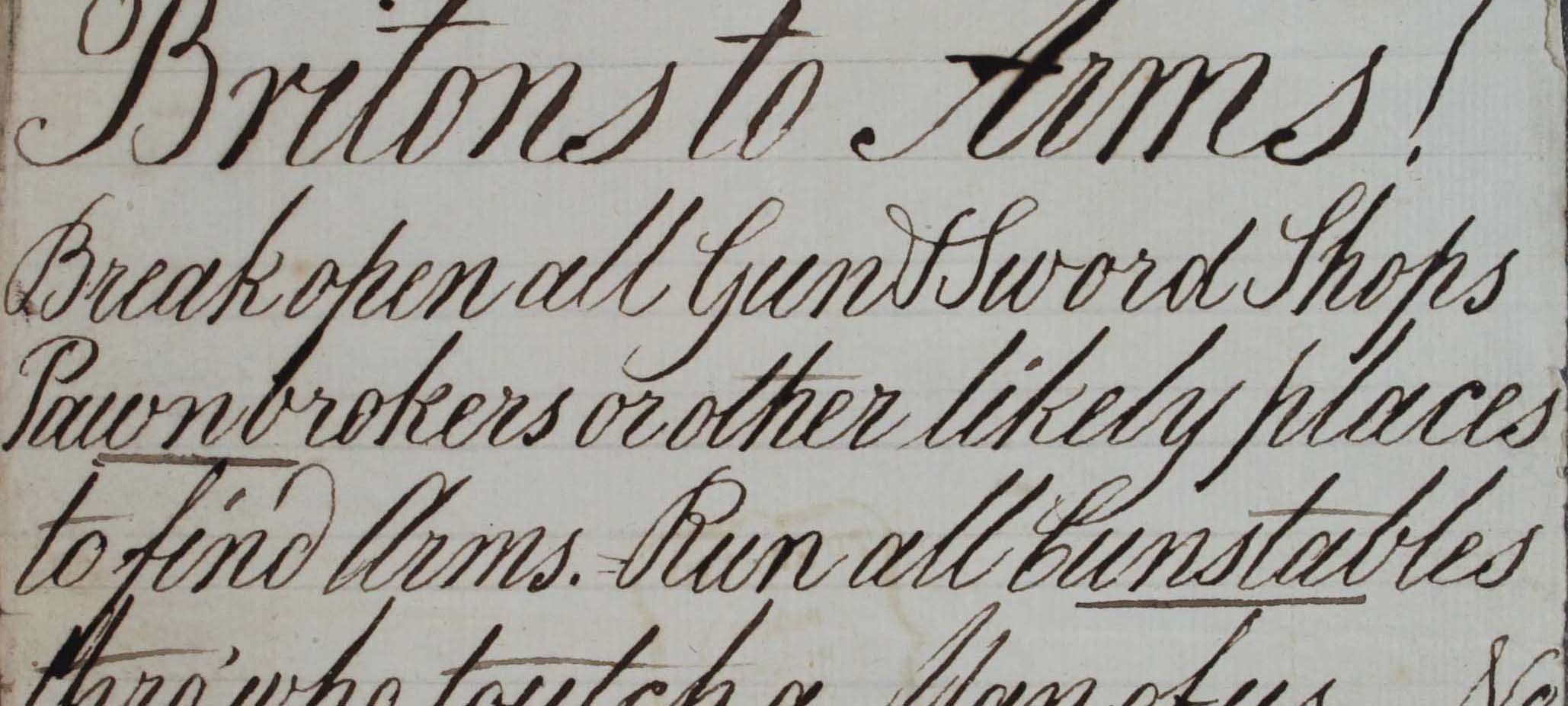
Opponents of the movement feared that Chartists were not just interested in changing the way Parliament was elected, but really wanted a revolution. They also thought that the Chartists, who said they disapproved of violent protest, were in fact stirring up a wave of riots around the country. On 4 November 1839, 5,000 men marched into Newport, in Monmouthshire, and attempted to take control of the town. Led by three well-known Chartists: John Frost, William Jones and Zephaniah Williams, they gathered outside the Westgate Hotel, where the local authorities were temporarily holding a number of potential troublemakers. Troops protecting the hotel opened fire, killing at least 22 people, and brought the uprising to an abrupt end.
Support for Chartism peaked at times of economic depression and hunger, in 1839, 1842 and 1848. In 1842, for example there was rioting in Stockport, due to unemployment and near-starvation, the new union workhouse was attacked. Also in Manchester workers protested against wage cuts, wanting ‘a fair day’s pay for a fair day’s labour’. The ‘Plug Plots’ were a series of strikes in Lancashire, Yorkshire, the Midlands and parts of Scotland that took place in the summer of 1842. Workers removed the plugs from the boilers in order to bring factory machinery to a halt. Wage cuts were the main issue, but support for Chartism was also strong at this time. In 1848 as trade was still depressed and interest in political reform peaked again with news of revolution in France and a third Chartist petition was planned.
Chartism is often described as a working class movement, but it had some middle class supporters who were hoped it would promote education reform and teetotalism. It was not necessarily a revolt against industrialisation either. Many chartist supporters worked in the domestic industry as handloom weavers, stocking makers, shoemakers or carpenters however, the latter two trades were not impacted by industrialisation at that point.
Although the Chartist movement ended without achieving its aims, the fear of civil unrest remained. Later in the century, many Chartist ideas were included in the Reform Acts of 1867 and 1884. At the time, the six point charter proved too radical for a Parliament representing the middle and upper classes to make into law.
Possibly the movement could have made more progress had its leadership been more united. There were also regional differences in the nature of Chartist support, for example in Wales, Chartism was often associated with Nonconformist chapels but in Leeds some Chartists worked to enter local government. Despite its failure, it was a significant movement because it gave the working classes a sense of class consciousness and valuable political experience in campaigning, organizing publicity and holding meetings.
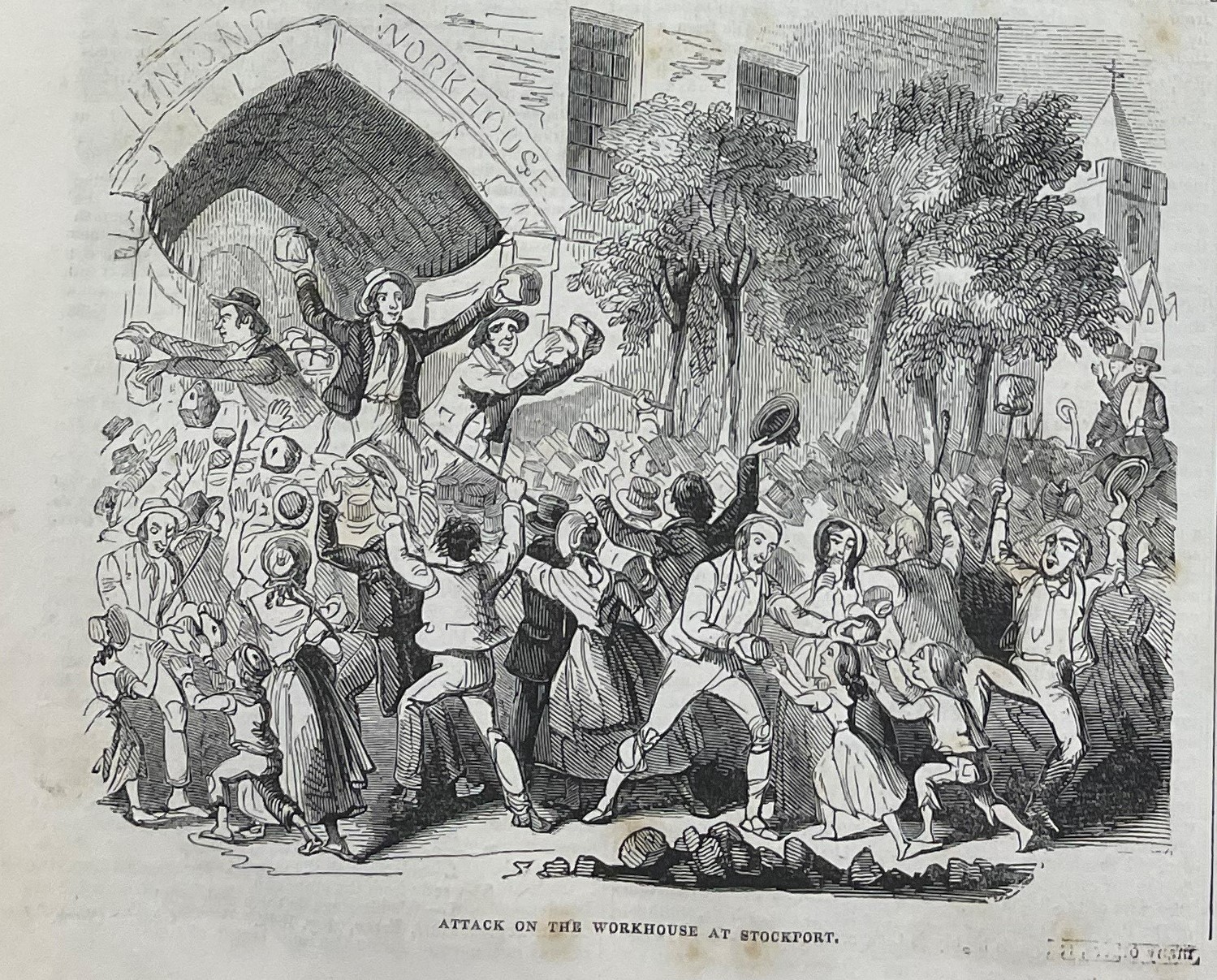
Cartoon entitled: ‘Attack on the workhouse at Stockport’ from Illustrated London News, 20 August 1842, Catalogue ref: ZPER 34/1 f.236
 Was this the start of mass politics in Britain?
The final defeat of the Emperor Napoleon at Waterloo in 1815, after 22 gruelling years of war, saw peace celebrations but no ‘peace dividend’ – at least for working people. Half a million soldiers and sailors were demobilised into an economy just as wartime industries were contracting. On top of this came deep trade slumps in the northern manufacturing districts in 1816-17 and 1819, and the terrible ‘lost summer’ of 1816 caused by the dust from a massive volcano in Indonesia. Social unrest was inevitable; radical reformers sought to harness this to build a mass movement for political change.
Radicals, like Joseph Mitchell of Liverpool in his ‘Address to the People’, argued that the true causes of distress were political. Wealthy landowners and financiers who had profited from the war continued to milk the public purse in peacetime, exacting high interest on loans to government and drawing huge unearned state salaries. While the propertied classes welcomed the end of the wartime income tax, the poor continued to pay taxes on essentials like soap, salt, malt and candles. The Corn Law of 1815 protected the incomes of farmers and landowners by keeping out foreign corn – but this raised the price of flour and bread for consumers: it was known as the ‘bread tax’. A radical reform of Parliament was needed to put power back in the hands of the people.
In the autumn of 1816, reform societies were founded in towns all over the country, but particularly in the industrial midlands and north. Open-air public meetings were held in Birmingham, Manchester and elsewhere to demand the right to vote, which (it was claimed) England’s ‘ancient constitution’ had once allowed to all male citizens.
At the second of two mass meetings in London’s Spa Fields, addressed by ‘Orator’ Henry Hunt, a small group of ultras led a section of the crowd off towards the Tower of London. It was a dramatic attempt to stage an English version of the storming of the Bastille, the event which had set off the French Revolution in 1789. The elite, London-based Hampden Club launched a national petitioning campaign for parliamentary reform: a printed petition form survives in The National Archives.
Hundreds of petitions, sent in from all over the country, were rejected by the House of Commons in early 1817. Radicals in Manchester responded by organised a march on London: several thousand men carrying blankets and knapsacks, the so-called ‘Blanketeers’. ‘I am a trew reformer,’ wrote young Jonathan Hulton to his parents from Ashbourne in Derbyshire, just before the last remaining marchers were turned back by troops. Further risings were again attempted in Manchester, Huddersfield, and in Pentrich in Staffordshire, aided and abetted by the government spy and agent provocateur ‘Oliver’, who left his own, self-serving account of the affair.
Dozens of reformers were imprisoned without trial. Some sent touching letters home, including the Lancashire radical Samuel Bamford who told his beloved Jemima that a reformer’s wife should be a heroine.
The attempted risings and rebellions of 1817 may appear futile from a present-day perspective, but this was a time when there was no democratic process to give hope of real change to working people. The mass petitioning campaign had nonetheless mobilised between half a million and a million people for reform – an effort not far short of the first petition for the People’s Charter, which mustered 1.2 million signatures from a larger population in 1839. Working people were rapidly learning about mass politics.
Dr Robert Poole
University of Central Lancashire [UCLAN], author of ‘Return to Peterloo’