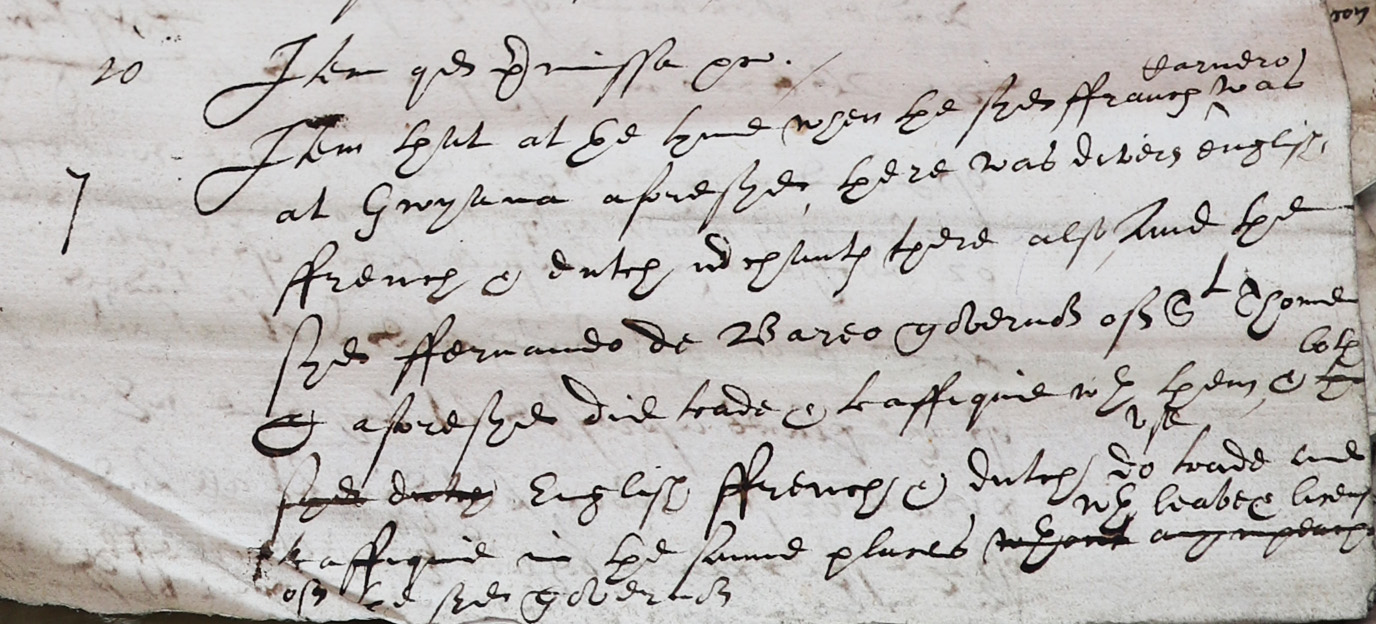
Extract from the ‘Interrogatories of Frances Carnero’, 1611-1613. Catalogue Ref: HCA 24/75
‘Interrogatories’ were written questions asked by one party in a legal case to which the other party has to give written answers under oath.
Frances Carnero appears to be involved an illegal trade in La Margarita, São Tomé and Trinidad. This trade involved the trafficking of enslaved African peoples.
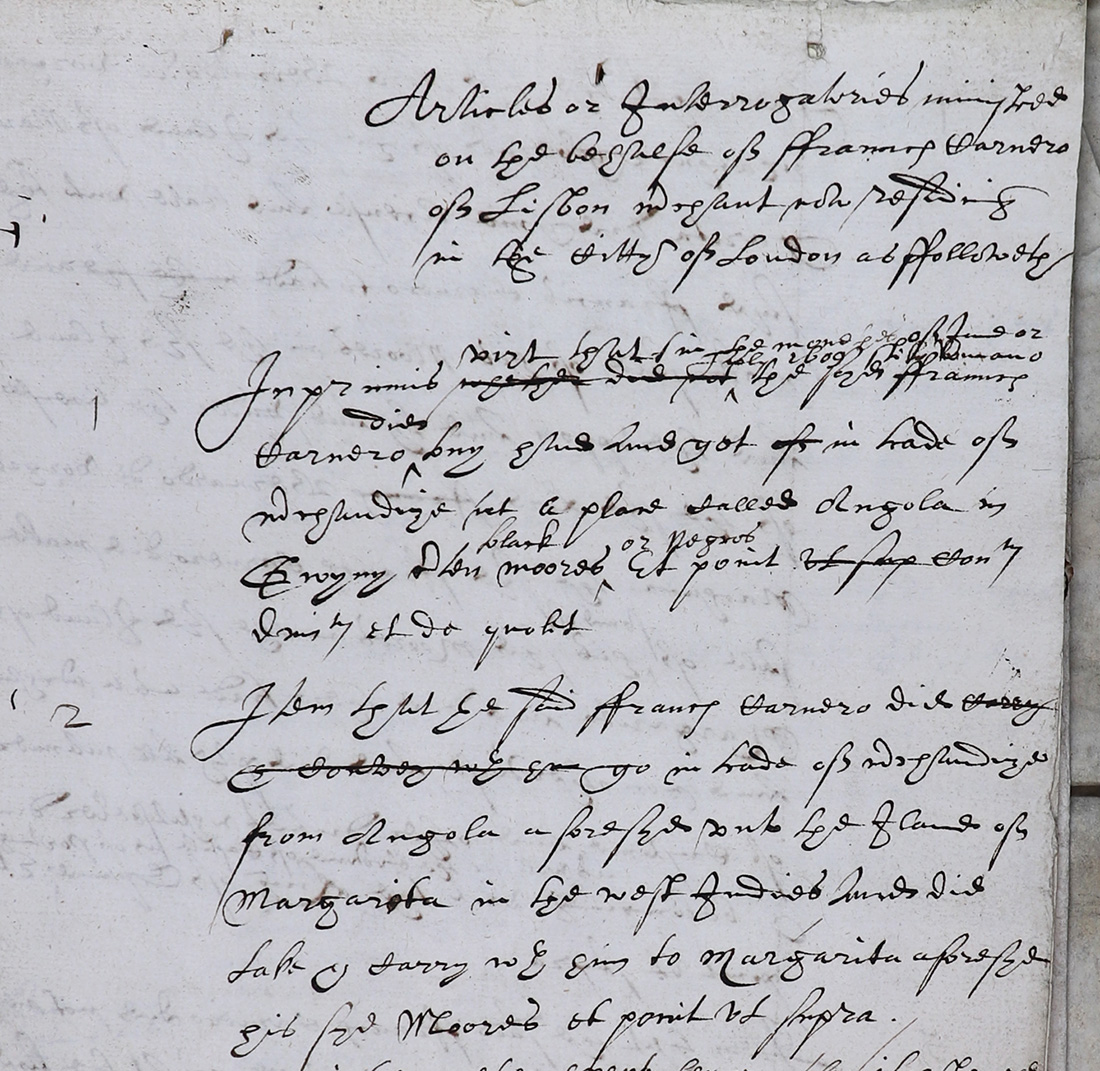
Extract from ‘Interrogatories of Frances Carnero’, 1611-1613. Catalogue Ref: HCA 24/75
‘Interrogatories’ were written questions asked by one party in a legal case to which the defendant or a witness has to give written answers under oath.
Frances Carnero was Portuguese merchant who had been brought back from São Tomé (St. Thomas) Island in the Caribbean to London by a Captain John Moore. Moore was an English captain on the ship ‘The Archangel or The Little John of London’, who had also travelled to São Tomé.
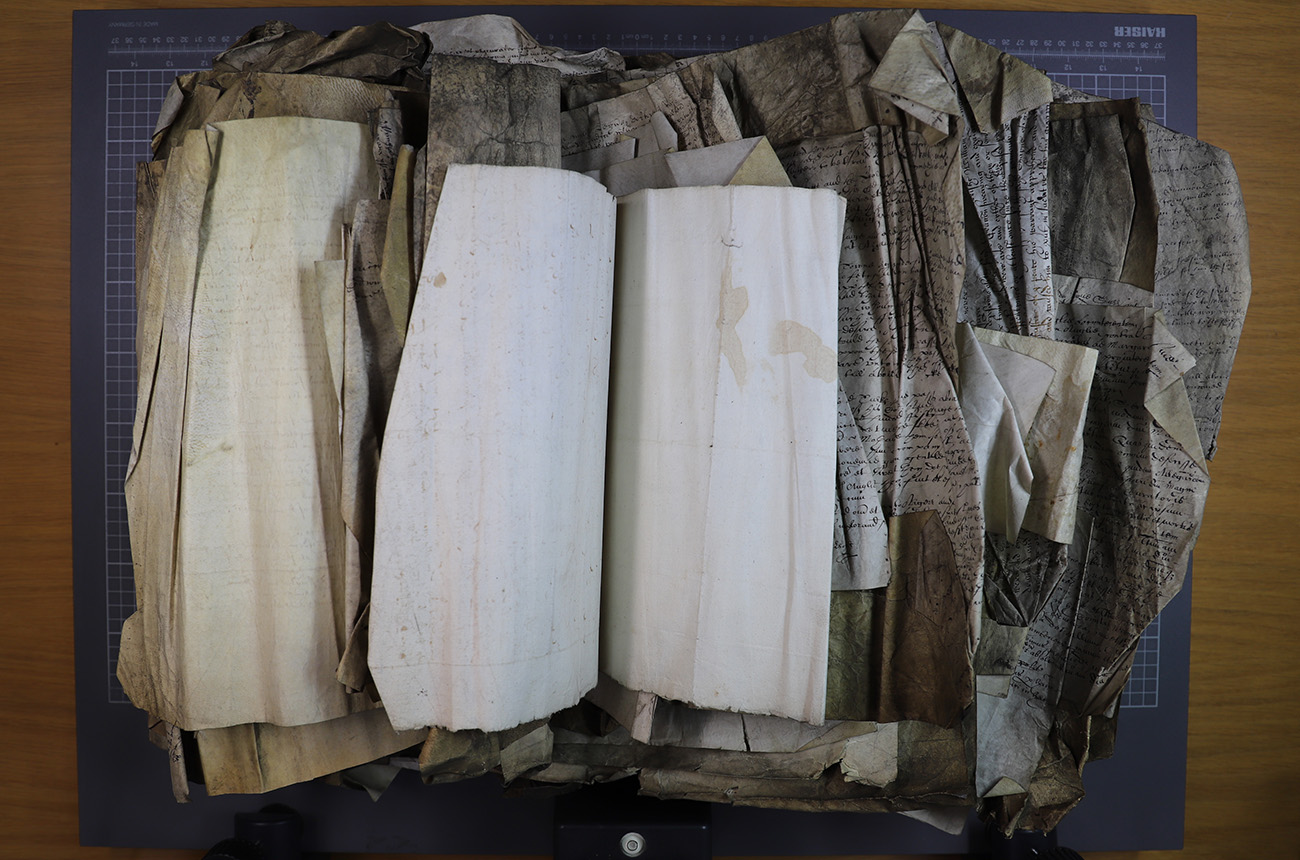
This photograph shows the entire ‘bundle’ of documents that includes the ‘Interrogatories of Frances Carnero’, 1611-1613. Catalogue Ref: HCA 24/75
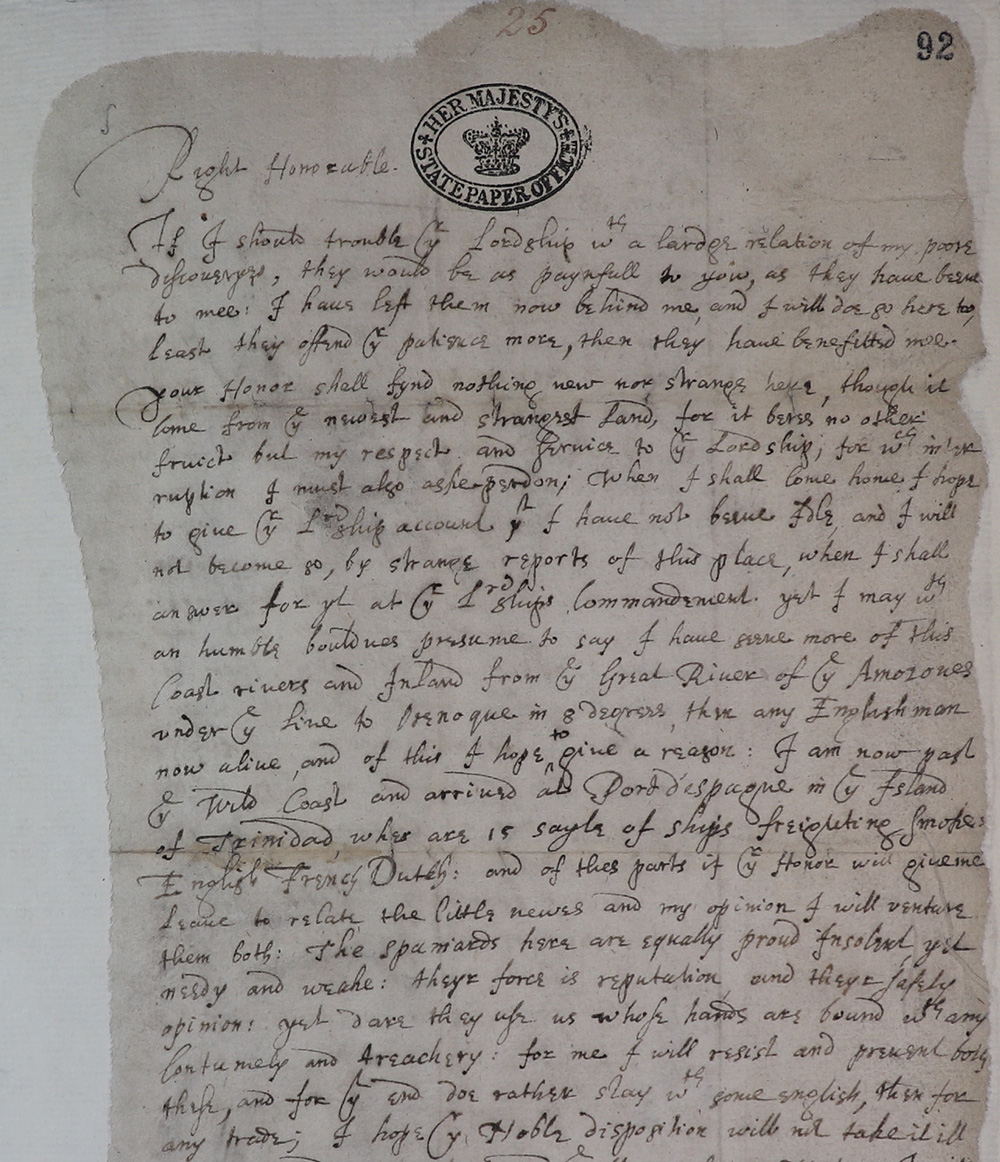
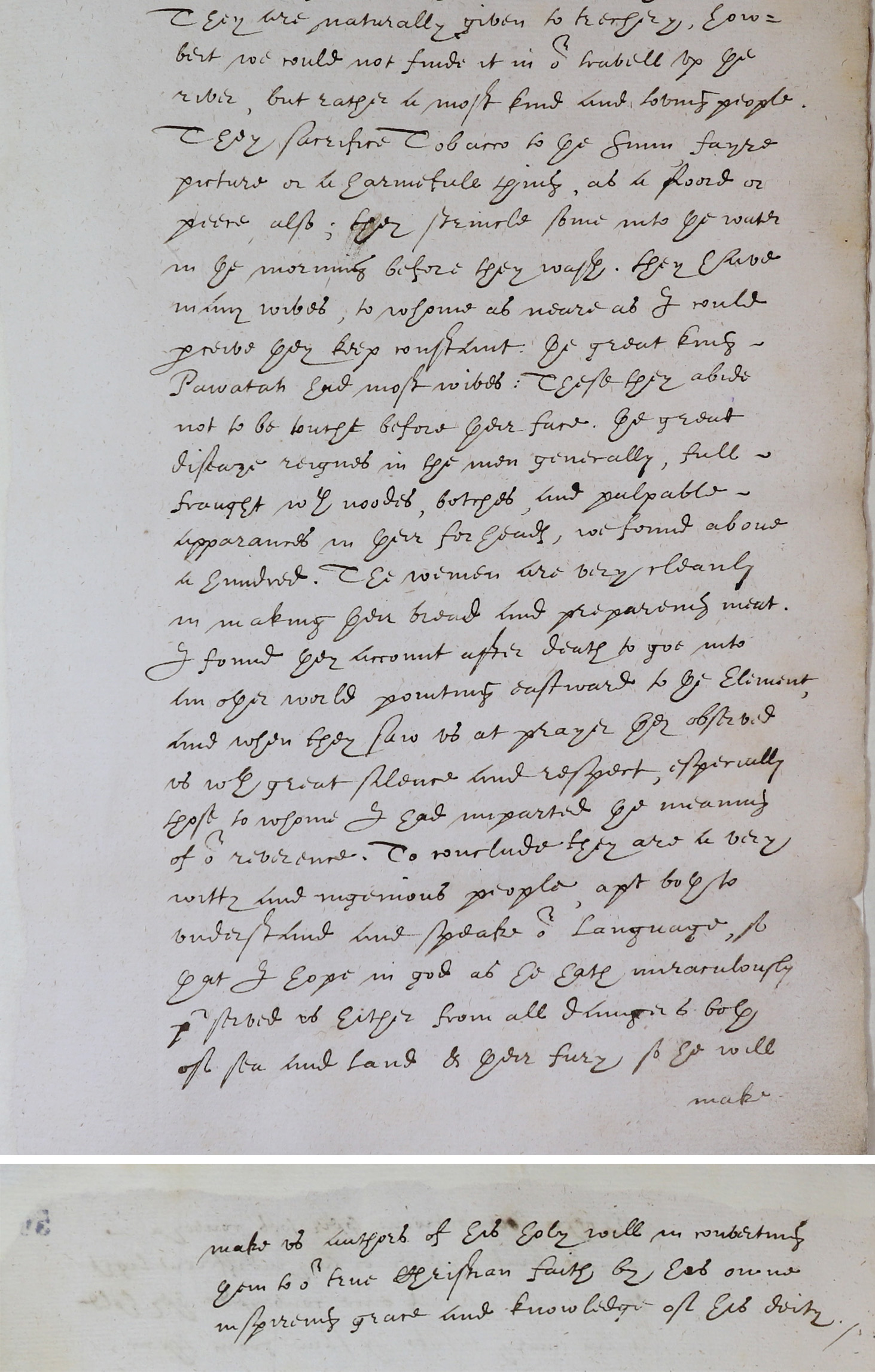
Extract from ‘Report from Thomas Roe to the Earl of Salisbury, on his voyage to Guyana’, 1610-1611. Catalogue Ref: CO 1/1 f.92-3.
This is an extract of a letter from the diplomat and explorer Thomas Roe to the Earl of Salisbury. Thomas Roe described the trading activity he witnessed as he travelled to Guyana and Trinidad. He saw English ships trading in tobacco along the coastline. This was a profitable smuggling trade with the Spanish settlers on Trinidad and the Orinoco.
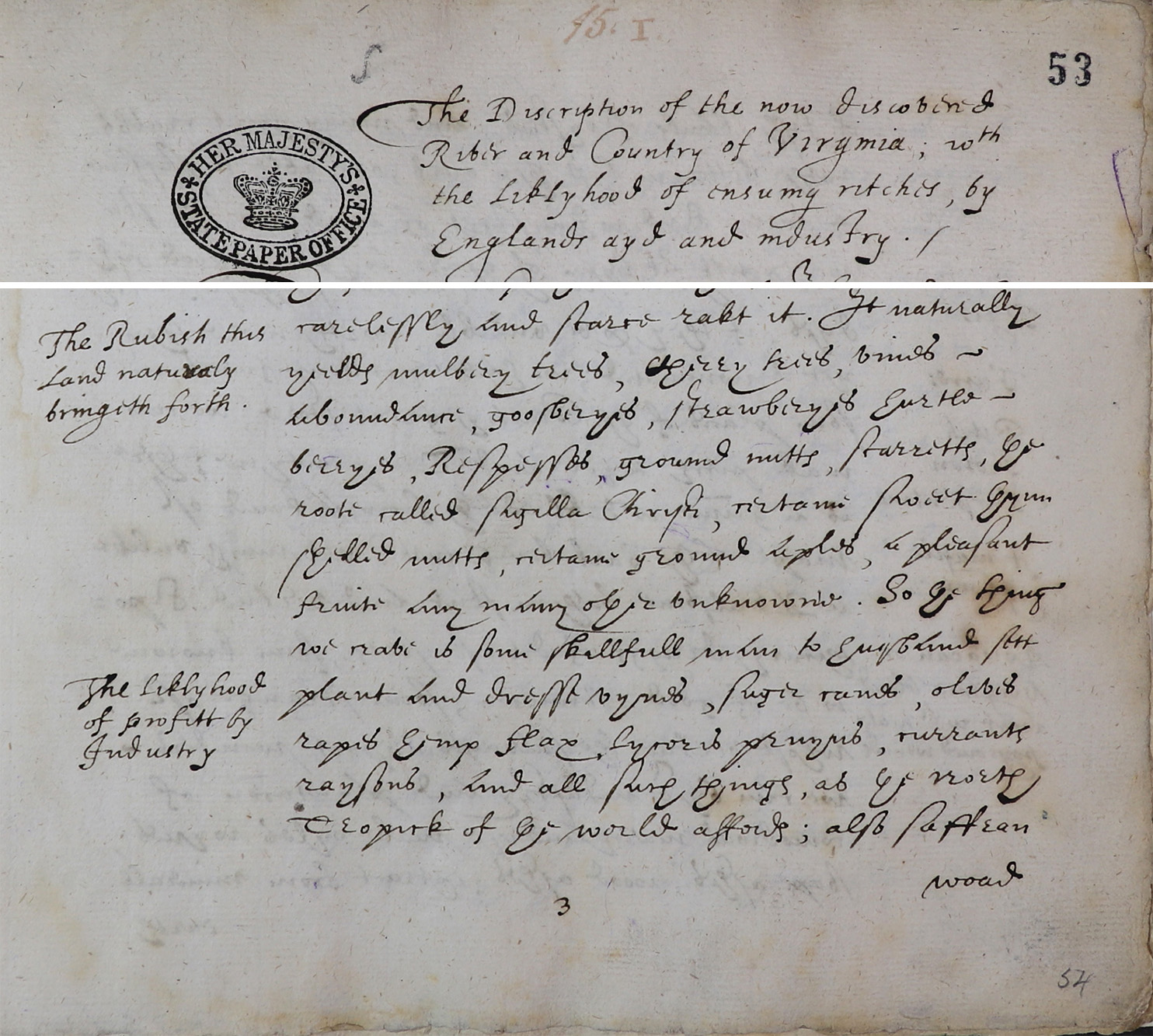
Extracts from ‘A Description of the now discouered Riuer and Country of Virginia, with the liklyhood of ensuing ritches, by Englands ayd and industry’, 1607. Catalogue Ref: CO 1/1 f.53-7.
These extracts come from a document that was written in May-June 1607. They show how an English author viewed the land of Virginia and hoped for the successful growth of new crops for export. It also describes the practices and customs of the Native American tribes who were already living there when the English arrived. It is does not reflect the perspectives of the indigenous peoples of Virginia.
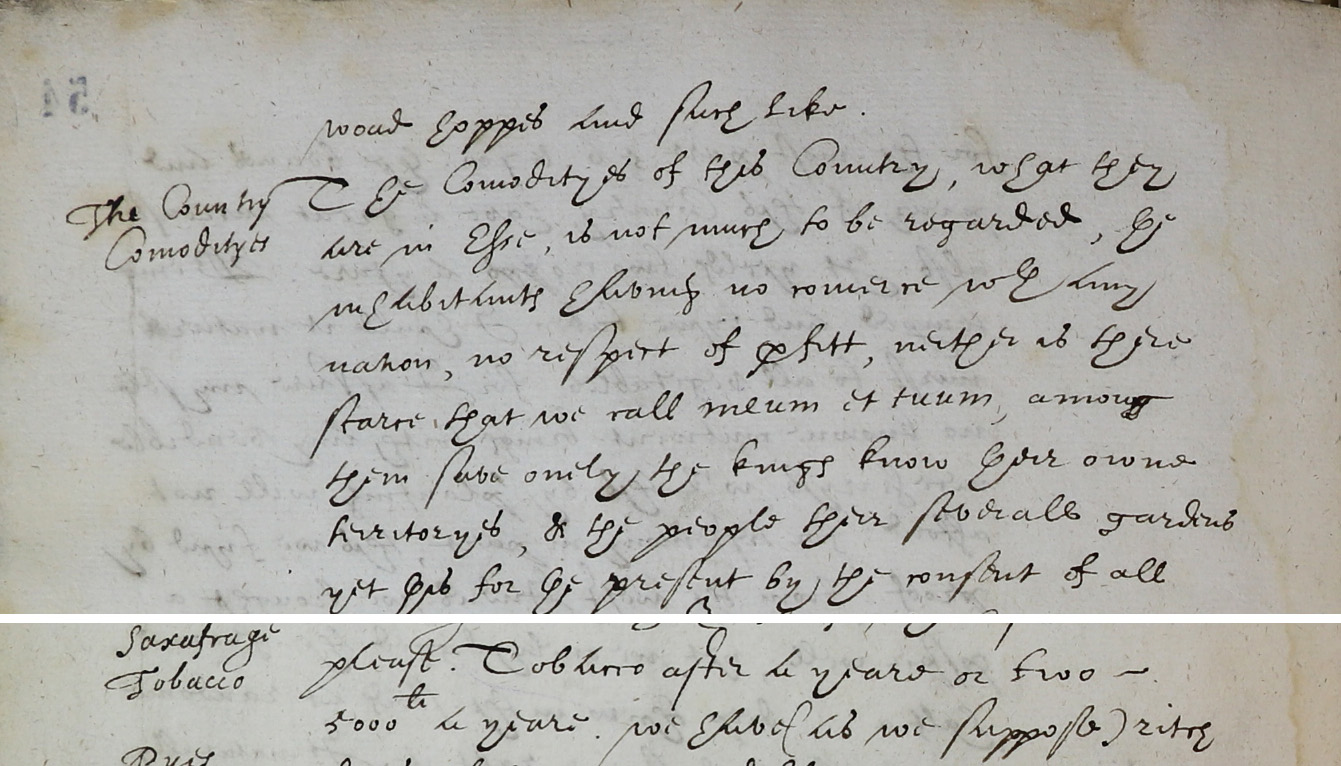
Extracts from ‘A Description of the now discouered Riuer and Country of Virginia, with the liklyhood of ensuing ritches, by Englands ayd and industry’, 1607. Catalogue Ref: CO 1/1 f.53-7.
These extracts come from a document that was written in May-June 1607. They show how an English author viewed the land of Virginia and hoped for the successful growth of new crops for export. It also describes the practices and customs of the Native American tribes who were already living there when the English arrived. It is does not reflect the perspectives of the indigenous peoples of Virginia.
Extracts from ‘A Description of the now discouered Riuer and Country of Virginia, with the liklyhood of ensuing ritches, by Englands ayd and industry’, 1607. Catalogue Ref: CO 1/1 f.53-7.
These extracts come from a document that was written in May-June 1607. They show how an English author viewed the land of Virginia and hoped for the successful growth of new crops for export. It also describes the practices and customs of the Native American tribes who were already living there when the English arrived. It is does not reflect the perspectives of the indigenous peoples of Virginia.
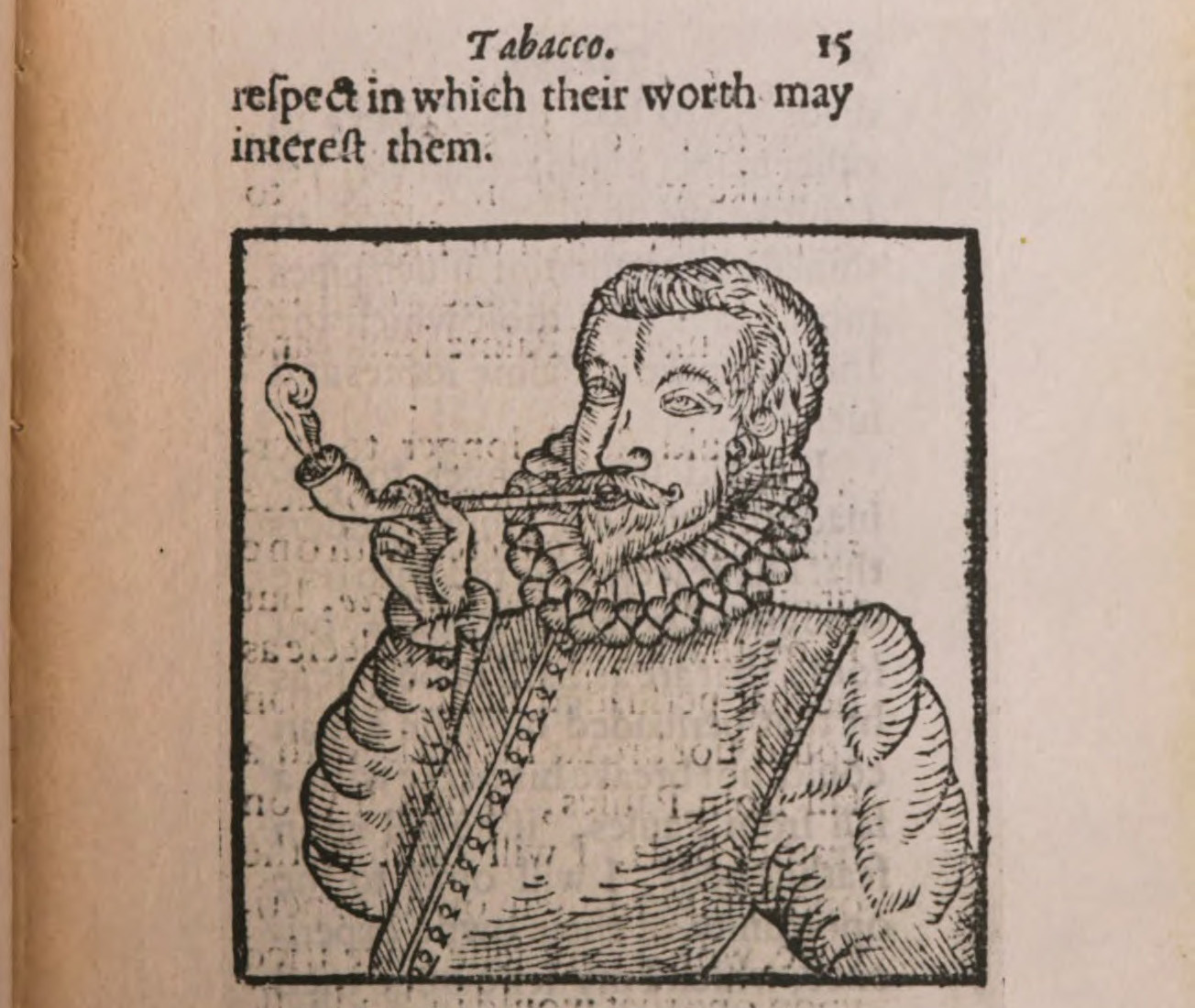
In 1604, James I of England and James VI of Scotland published his ‘Counterblaste to Tobacco’. He condemned the use of tobacco on the grounds of its poisonous effects on the body. He wrote that smoking was a ‘custome lothesome to the eye, hateful to the nose, harmful to the brain, dangerous to the lungs, and in the black and stinking fume thereof, nearest resembling the horrible stygian [very dark] smoke of the pit that is bottomless’.
‘Counterblaste’ also revealed James I’s concern about the potential disruptive effects of tobacco to English society. Writers of the period continuously linked the smoking of tobacco with immorality, disobedience, and even treason. As James I had only just ascended the English throne, it is unsurprising that he felt tobacco might encourage civil disorder and unrest.
Tobacco had been present in England since at least the 1560s, when sailors returning from Atlantic voyages captained by the Merchant Adventurer Sir John Hawkins had brought it home. It was likely that they themselves picked up the habit from Spanish and Portuguese sailors. Despite James I’s protests, there was a tobacco boom in early Stuart England.
Use the documents in this lesson to explore the early Stuart fascination with tobacco, focusing particularly on overseas trade networks and the activity of the Virginia Company, which helped popularise tobacco in England. Find out about the impact of early Stuart colonial ventures on individuals whose stories have often been left out of history.
James I & VI: How was tobacco viewed, consumed, and traded in the Stuart period?During the reign of Elizabeth I and the early 1600s, the English largely consumed Spanish tobacco. The practice of smoking tobacco was popularised by Sir Walter Ralegh in the court of Elizabeth I. One fanciful story described how Sir Walter Ralegh’s servant, seeing him smoking a pipe for the first time, threw a bucket of water on him, assuming that he was on fire.
By the time of James I and James VI, ‘the art of whiffing’ had become so popular that the pamphleteer Barnabe Rich estimated that there were over 7,000 tobacco shops in London by 1614. In 1599, a Swiss traveller to England was astounded at what was quickly becoming a London-wide addiction amongst the elite and middling-sort: ‘They always carry the instrument on them…lighting up on all occasions: at the play, in the taverns, or elsewhere’.
In the context of fraught Anglo-Spanish relations in the period, England was reluctant to remain dependent on Spanish tobacco. As the documents show, many English merchants (along with the French and Dutch) were involved in tobacco-smuggling off the coast of Guyana and Trinidad, engaging in a contraband trade with struggling Spanish settlers. The English had attempted to grow tobacco on the Island of Bermuda but were unsuccessful. 1606 saw the founding of the Virginia Company of London, and by 1607 the Virginia Company settlers landed on Jamestown Island to establish an English colony. John Rolfe brought sweet South American tobacco seeds to the colony and from the mid-1610s tobacco was being exported to England. Members of Parliament, many of whom owned shares in the Virginia Company, were keen to secure an English monopoly on colonial tobacco. Women and physicians had been attempting to grow it in their herb gardens in England, but parliament banned domestic tobacco growing in 1619.
Disease, mismanagement, and poor relations with indigenous peoples of North America eventually resulted in the complete failure of the Virginia Company in 1623. From this point on, the king assumed direct control of Virginia. Despite James I’s early protests against tobacco, and attempts raise the duties on tobacco, his morals gave way to pragmatism. He realised that tobacco could still be a profitable crop in Virginia, so James created a royal monopoly for the crop.
As the English attempted to establish their own colonial outposts, both king and Parliament realised the crucial role of tobacco in furthering imperial ambition and establishing further trading networks. The English used tobacco grown on their plantations to facilitate trade in the Mediterranean, North Africa, and the Levant.
Lauren Working’s recent book ‘The Making of an Imperial Polity’ explores how colonial projects influenced political culture and taste in London, focusing in particular on tobacco and imperial intent. Working explores how tobacco-smoking was made socially acceptable for London gentlemen as they attempted to distance themselves from what they construed as the ‘savage customs’ of Native Americans in their consumption of tobacco. They re-contextualized the crop and invested it with new meanings of civility and refinement in metropolitan locales. This distancing process was achieved largely through the accoutrements of smoking, which included tobacco pipes and precious tobacco boxes made of gold, silver, or ivory, and often stamped with a heraldic coat of arms.
In fact, the smoking of tobacco can even be construed as a patriotic act which furthered national colonial ambition. The gentlemen in Parliament who owned shares in the Virginia Company were the same men who were smoking socially and writing poems that praised tobacco. Not all men were as positive about the potential effects of colonial enterprise. An anti-tobacco poem written by the merchant Josuah Sylvester: ‘Tobacco Battered and the Pipes Shattered’ (1616) provides an early reflection of the damage caused by early mercantile ventures. His words speak not only of the English colonisers, but also of the Native Americans and Black enslaved peoples whose lives were changed irrevocably by England’s colonial ventures in the seventeenth century. Sylvester asks ‘whether [the] discovery of America, that Newfound World, have yielded to our world more hurt than good’.
How was tobacco viewed in the early Stuart period? Tobacco held an ambiguous position in the Stuart imagination. On one level, tobacco was seen as a ‘holy herb’, a miraculous medicinal remedy, which could cure headaches, heal wounds, depression, and to prevent against the plague. It was even recommended for pregnant women, as physicians believed that the warm and moist qualities of tobacco would nurture the baby’s growth in the womb. There were, of course, detractors to this viewpoint, who held opinions akin to James I, believing it corrupted the body and dulled the senses, a medical opinion that chimes with our present knowledge about the harmful effects on smoking on the body. Other individuals believed quite the opposite, suggesting that smoking tobacco would sharpen the brain and aid ‘divine wit’. As the poet Sir John Beaumont wrote in 1602: ‘Take up these lines Tobacco-like unto thy brain, and that divinely toucht, puff out the smoke again’. It is no coincidence that smoking amongst playwrights, actors, and writers was extremely popular; perhaps even William Shakespeare was partial to a puff or two as he wrote his poems and plays.
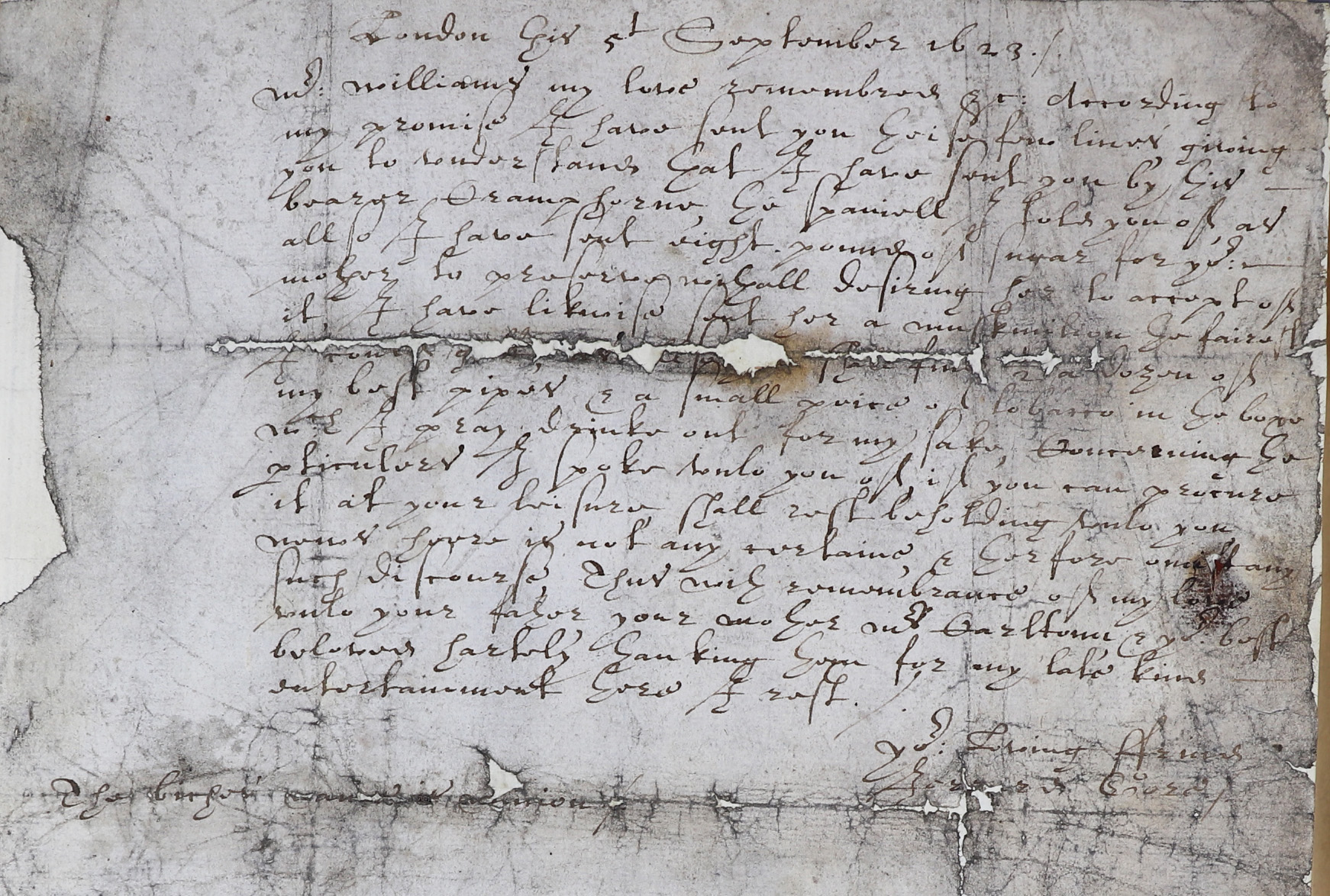
A letter from Jerard Gore to Anthony Williams. Send a spaniel, sugar, pipes, tobacco, 5 September 1623. Catalogue Ref: SP 46/66 f.24.
The letter mentions a muskmelon – a sweet fleshy melon, grown in the Mediterranean area in the Middle Ages. In the fifteenth century, the explorer Christopher Columbus carried seeds of muskmelon on one of his voyages to the Americas and planted it there. By the time this letter was written, muskmelon was being grown in English colonies in North America.
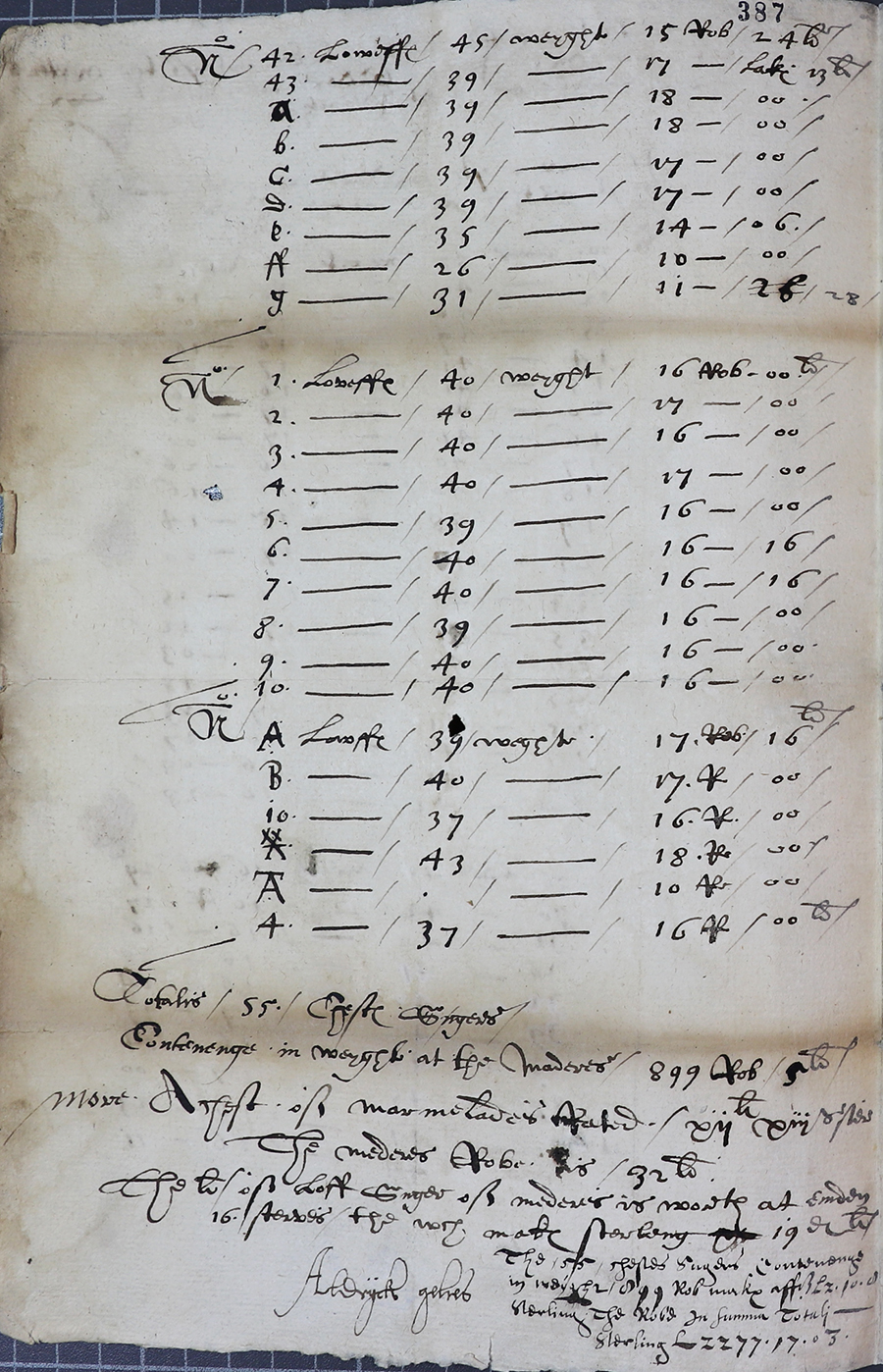
Extracts from an inventory of goods taken from the Neptune of Emden by Sir John Hawkins, 1590, Catalogue Ref: HCA 30/840/171 f.386-389.
Take a look at this list of goods, also known as an inventory. This inventory was used in the High Court of Admiralty as part of a collection of papers called the Prize Papers.
The Prize Papers are a collection of documents that were found on ships immediately after they were captured by an enemy during wartime. These include documents such as bills, inventories, and accounts. These would be used as evidence in the Admiralty Court to determine whether the ship and its goods were ‘lawful’ prize that could be kept by the people who captured it, or whether it had to be returned to its enemy.
Sir John Hawkins was a famous English trader and was son of the famous slave trader and explorer, who went by the same name. John Hawkins took many Spanish ships as Prize during England’s War with Spain (1585-1604). Many of these Spanish ships contained cargoes of goods which had been grown in Brazil. These goods were then taken back to England. This document concerns the Prize goods that were taken from the ship The Neptune by an English captain Sir John Hawkins.