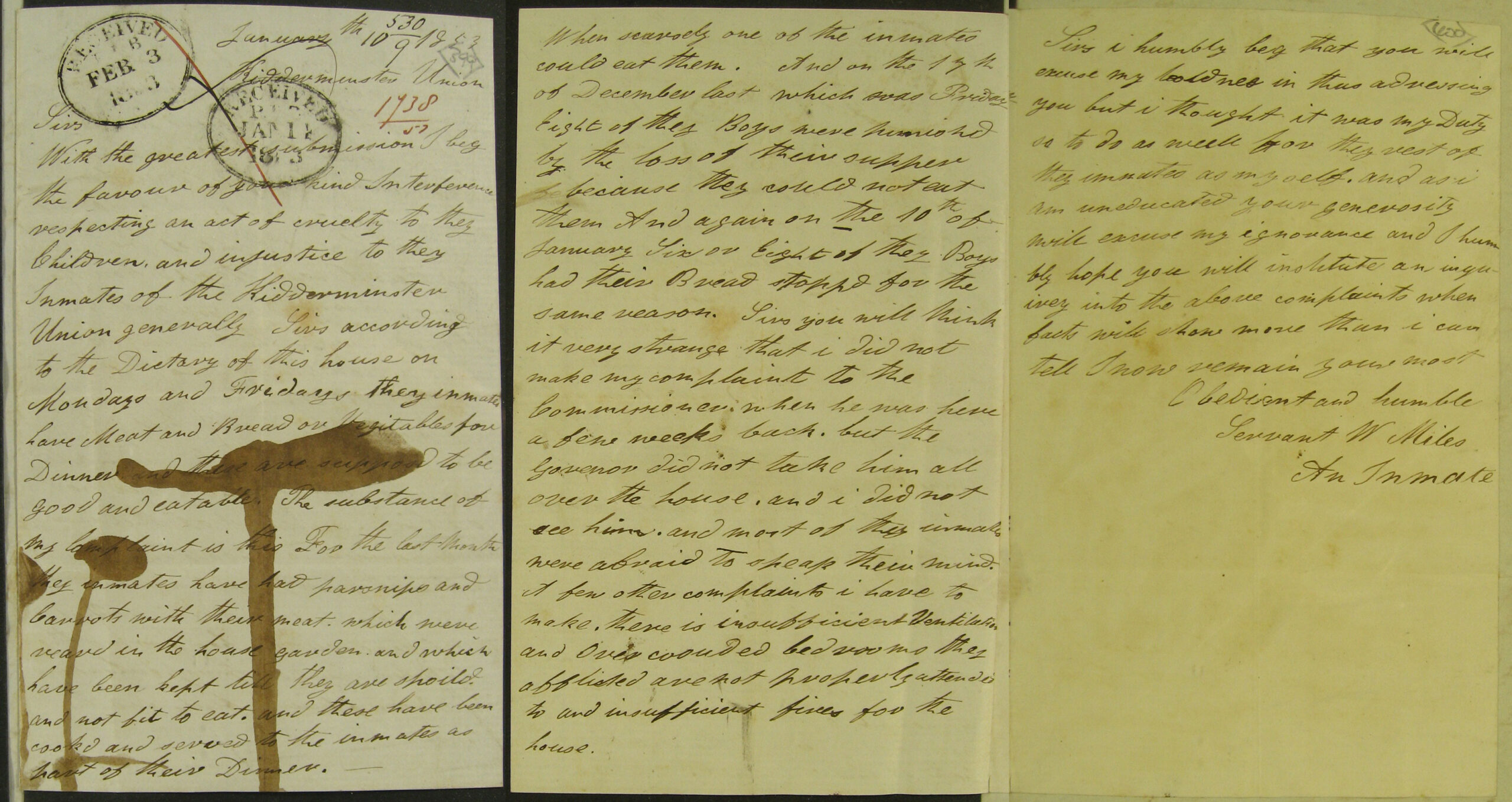
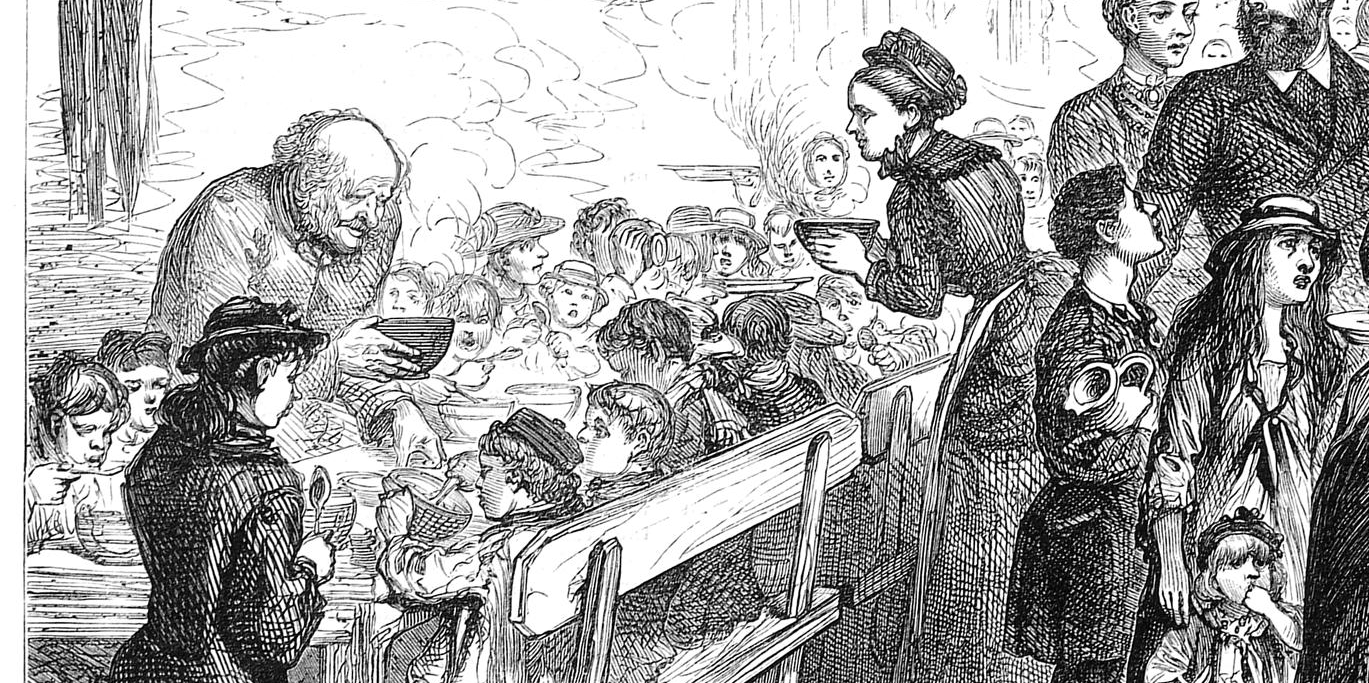
This lesson will explore the topic of food, placing it within the wider context of the enquiry question of ‘What was life like for a child in the Victorian Workhouse?’. This lesson will allow the children an opportunity to explore a range of primary sources, also to draw comparisons towards Charles Dickens’ ‘Oliver Twist’. This will support the children’s’ understanding of historical interpretation.
The key historical aim for this lesson will be to use primary sources to support the understanding of a period in time. They will also be able to draw comparisons between their lives today and understand what life would have been like in the past.
This lesson will support an exploration of the Victorians where it is either your post 1066 unit or linked to local history, for example if you have a local workhouse that is now a hospital or converted for other uses. It could also be used if you were exploring children’s experiences through history.
What was food like for a child in the Victorian workhouse?From 1834, the workhouses fell under the Poor Law Commission, the expectation from each workhouse and what they provided was more in line. However, there were still differences between what each workhouse provided. Some might have gone over and above what needed to be provided, while others provided the bare minimum.
There is a video on the BBC, that provides an example of a diet for a boy over a week and shows how much food they would have. This is a interesting hook for the children, ensure that this has been made for entertainment as well as information. https://www.bbc.co.uk/programmes/p011spj3
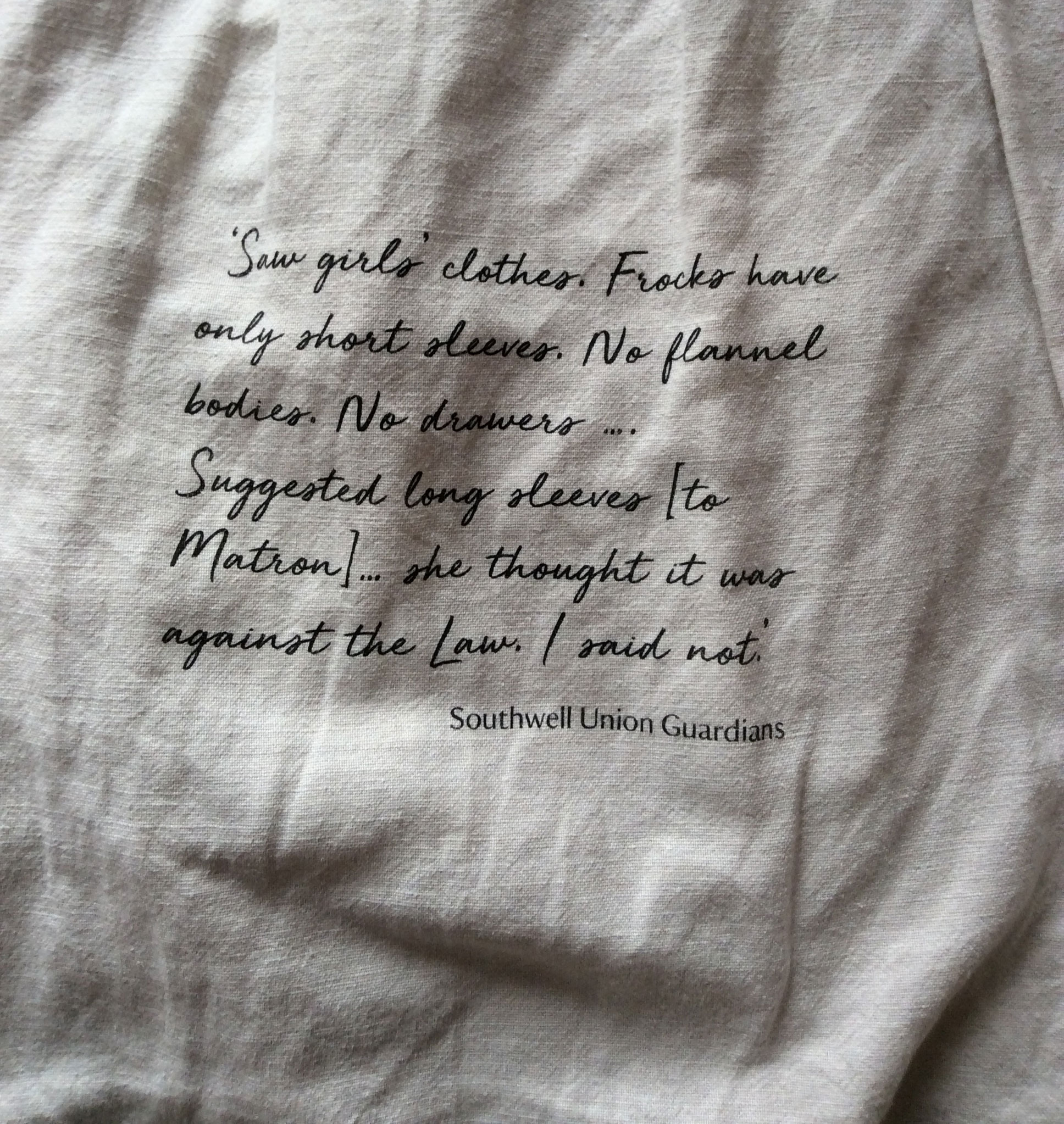
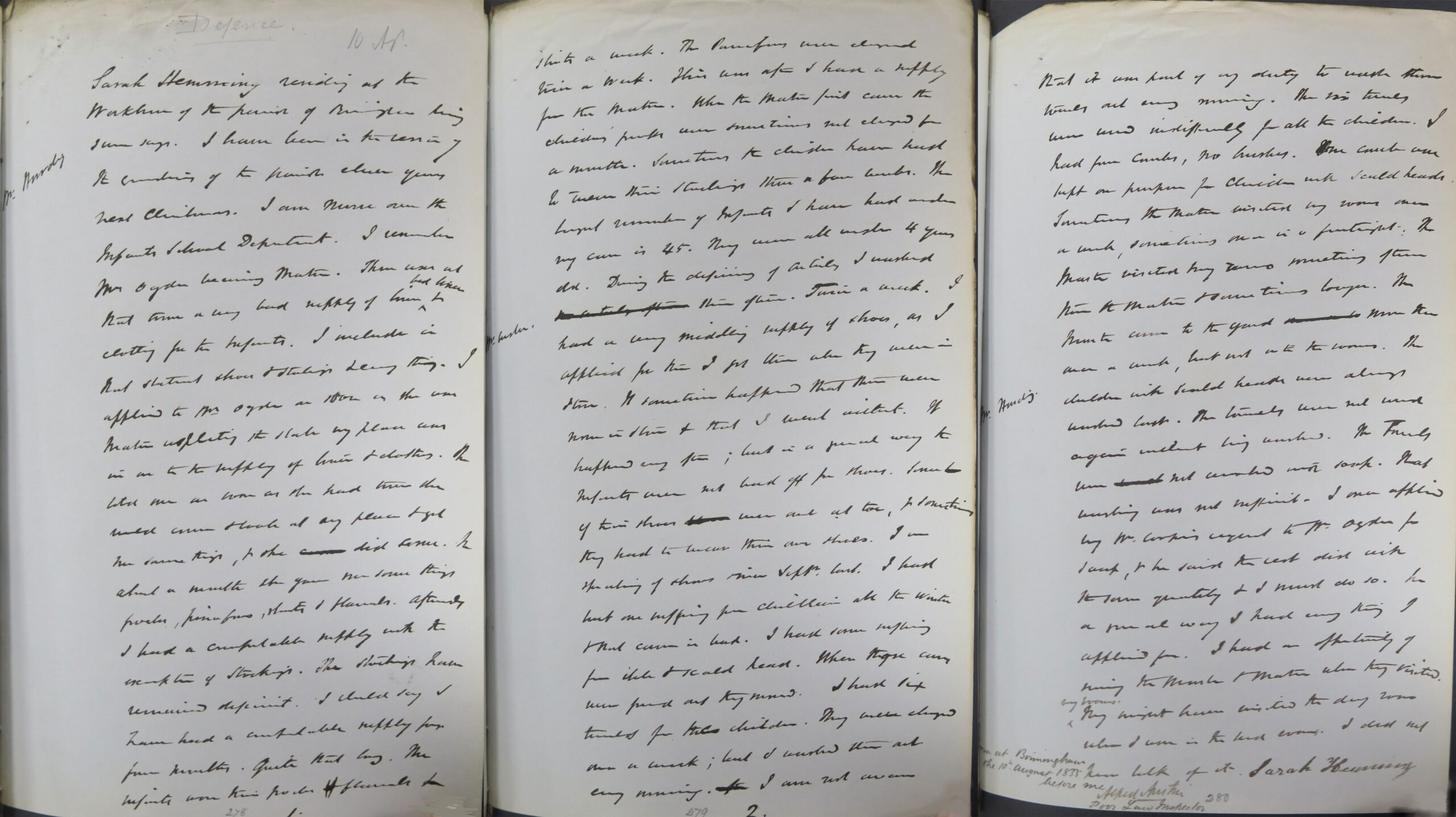
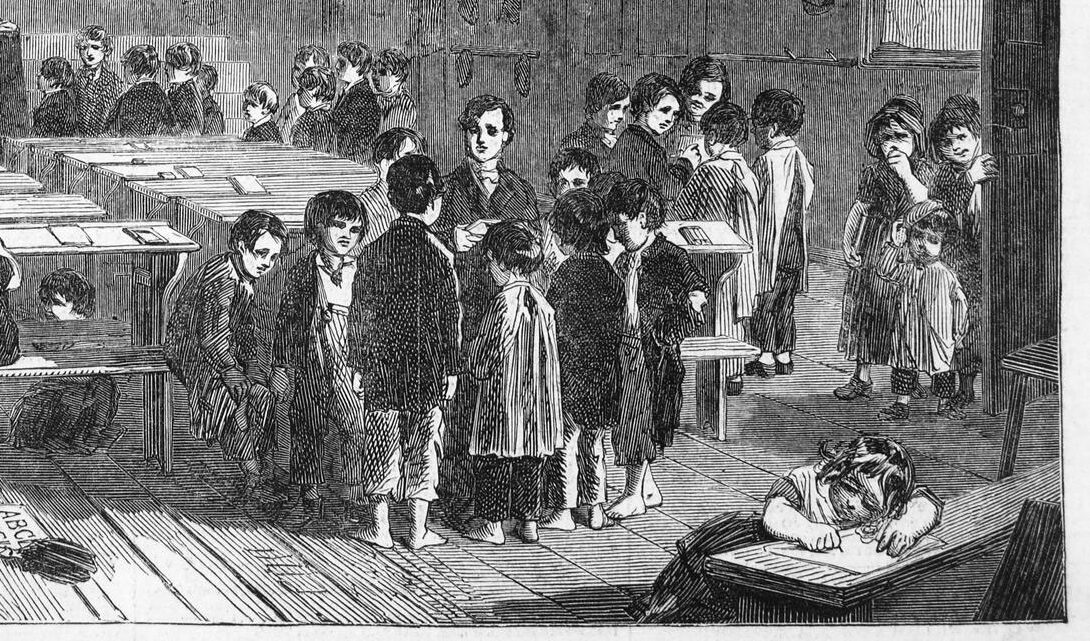
This lesson explores source material in the form of letters written by Paupers which were sent to the Poor Law Commission in London, generally complaining about the treatment and conditions the pauper children were enduring. The pupils will analyse the individual letters to gain an understanding of some of the things which happened to children during this time.
This lesson focuses on clothing and is part of a series of lessons which include a focus on Southwell Workhouse followed by two other lessons focussing on schooling and food.
This lesson will support an exploration of the Victorians where it is either your post 1066 unit or linked to local history, for example if you have a local workhouse that is now a hospital or converted for other uses. It could also be used if you were exploring children’s experiences through history.
What do the letters tell us about pauper children's clothing in the workhouse?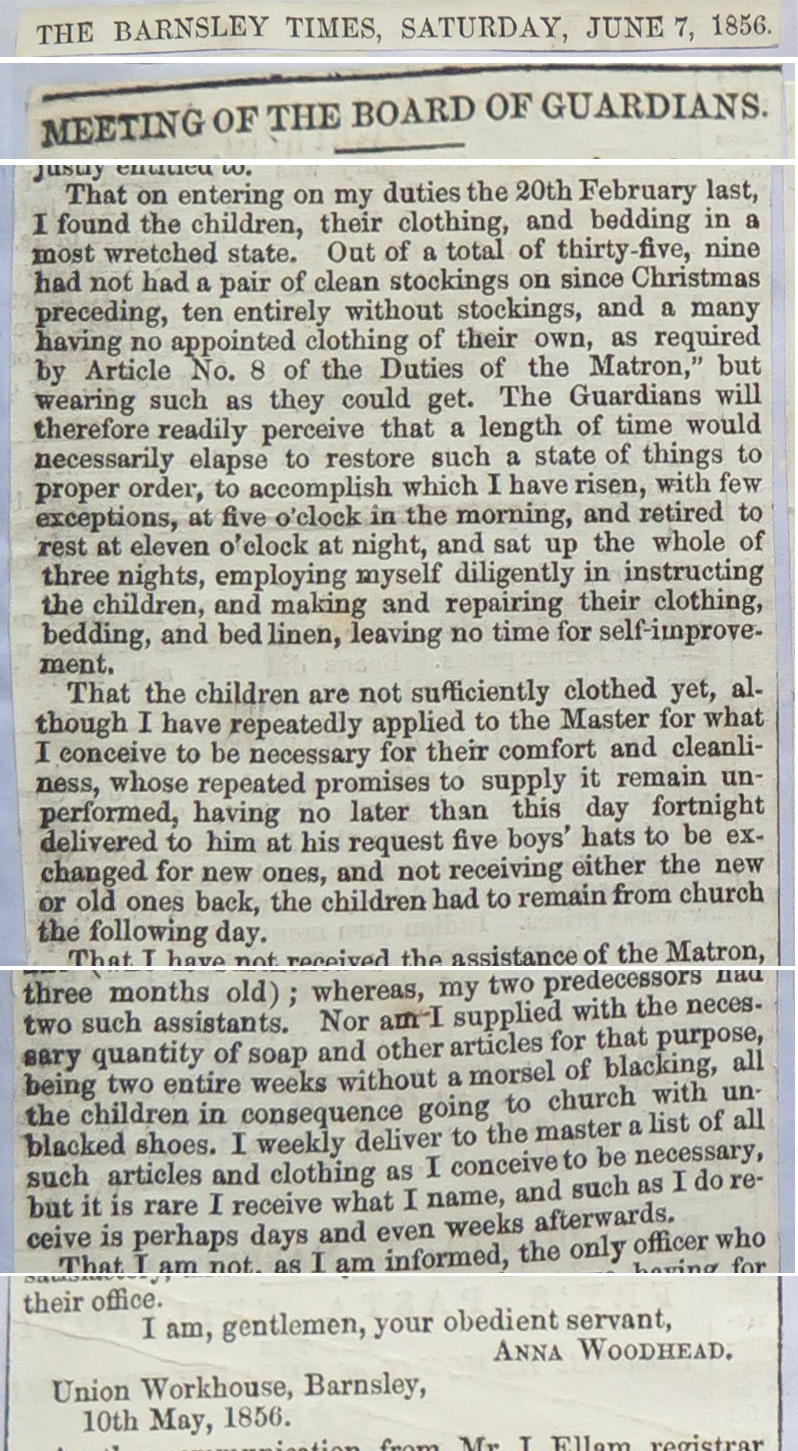
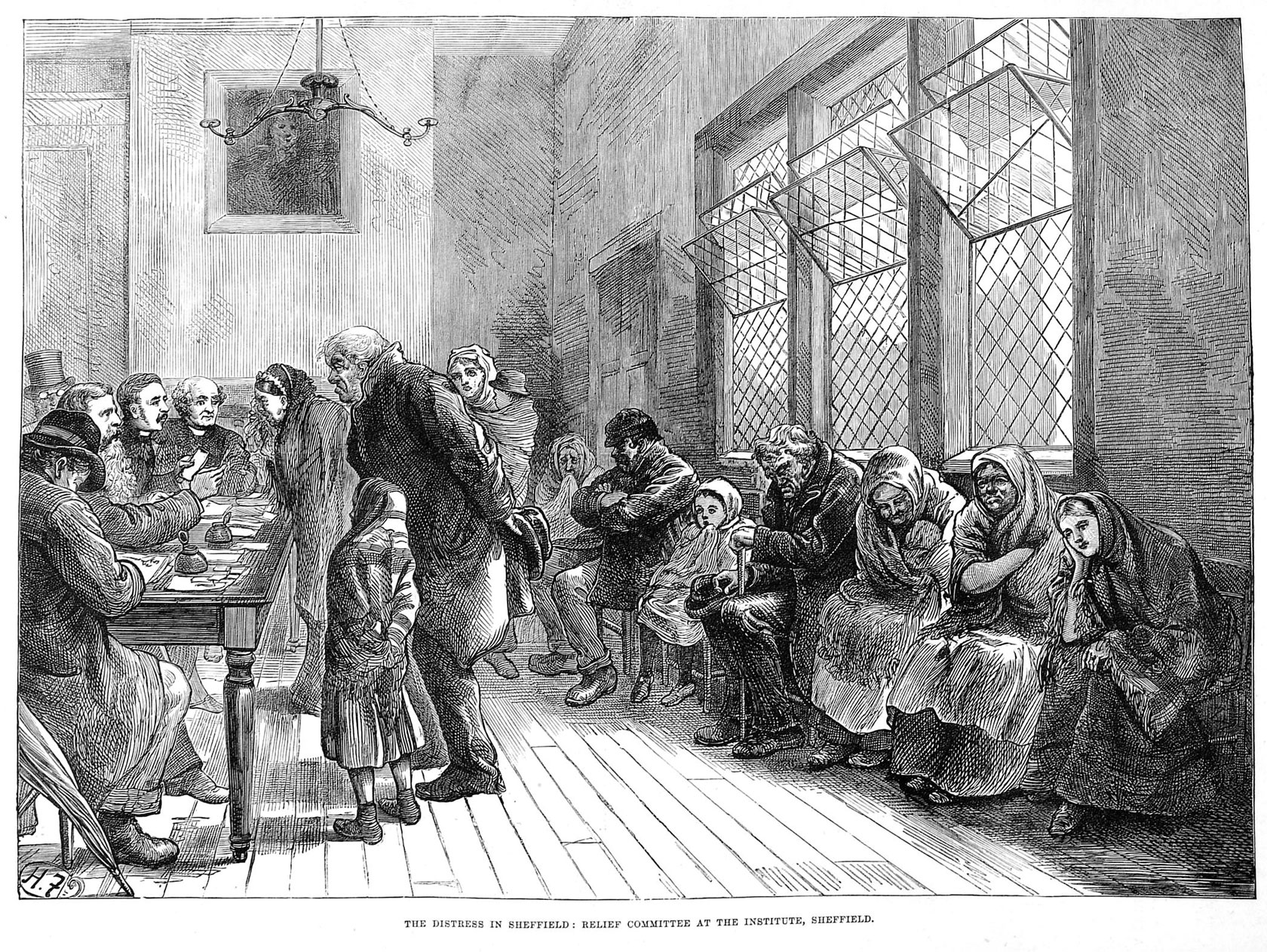
Voices of the Victorian Poor is an open database of letters from paupers, the wider poor and their advocates written between 1834 – 1900. These materials show even the very poorest members of society could be literate, understand the poor laws, regulations and rules, and were able and willing to resist or contest the power of the national and local state. The letters explain their situations in their own words, providing an invaluable insight into the lives of everyday ordinary Victorians whose thoughts and opinions are often considered ‘lost to history.’ The letters are a testament to the agency of the poor and their insistence to be considered citizens with rights.
The site was created as part of a Teacher Scholar Programme, exploring the letters alongside ten teachers to discover elements of these people’s lives that can aid the understanding of students in primary and secondary schools. Each teacher was tasked to create a resource using the letters to be used in classrooms. These free resources are now available for your use below, available online and as downloadable resources.
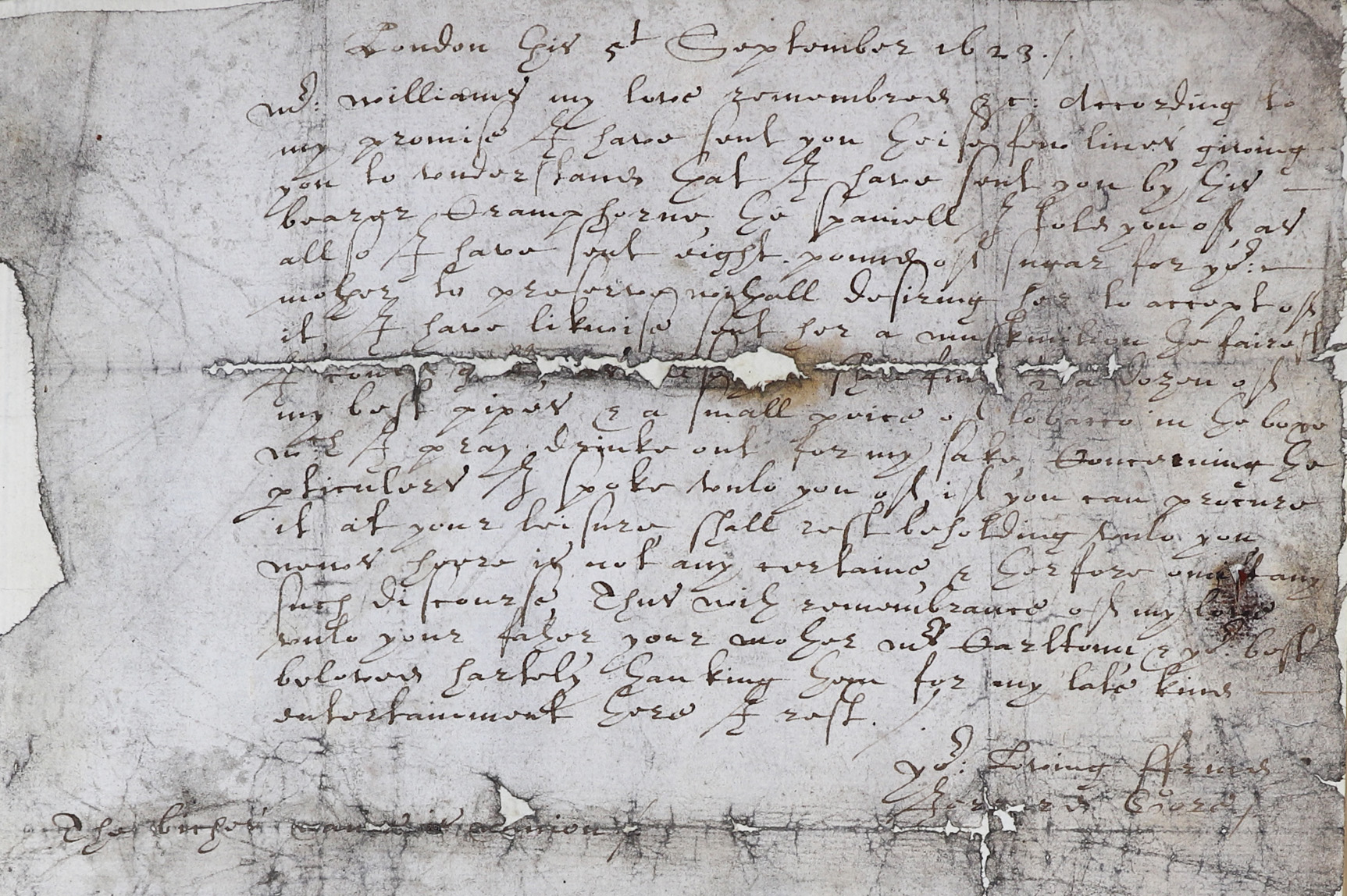
‘A letter from Jerard Gore to Anthony Williams. Send a spaniel, sugar, pipes, tobacco, 5 September 1623. Catalogue Ref: SP 46/66 f.24.
The muskmelon mentioned in this letter was a sweet fleshy melon, grown in the Mediterranean area in the ‘Middle Ages’. In the fifteenth century, the explorer Christopher Columbus carried seeds from the fruit on one of his voyages to the Americas and planted them. By the time this letter was written, muskmelon was being grown in English colonies in North America.
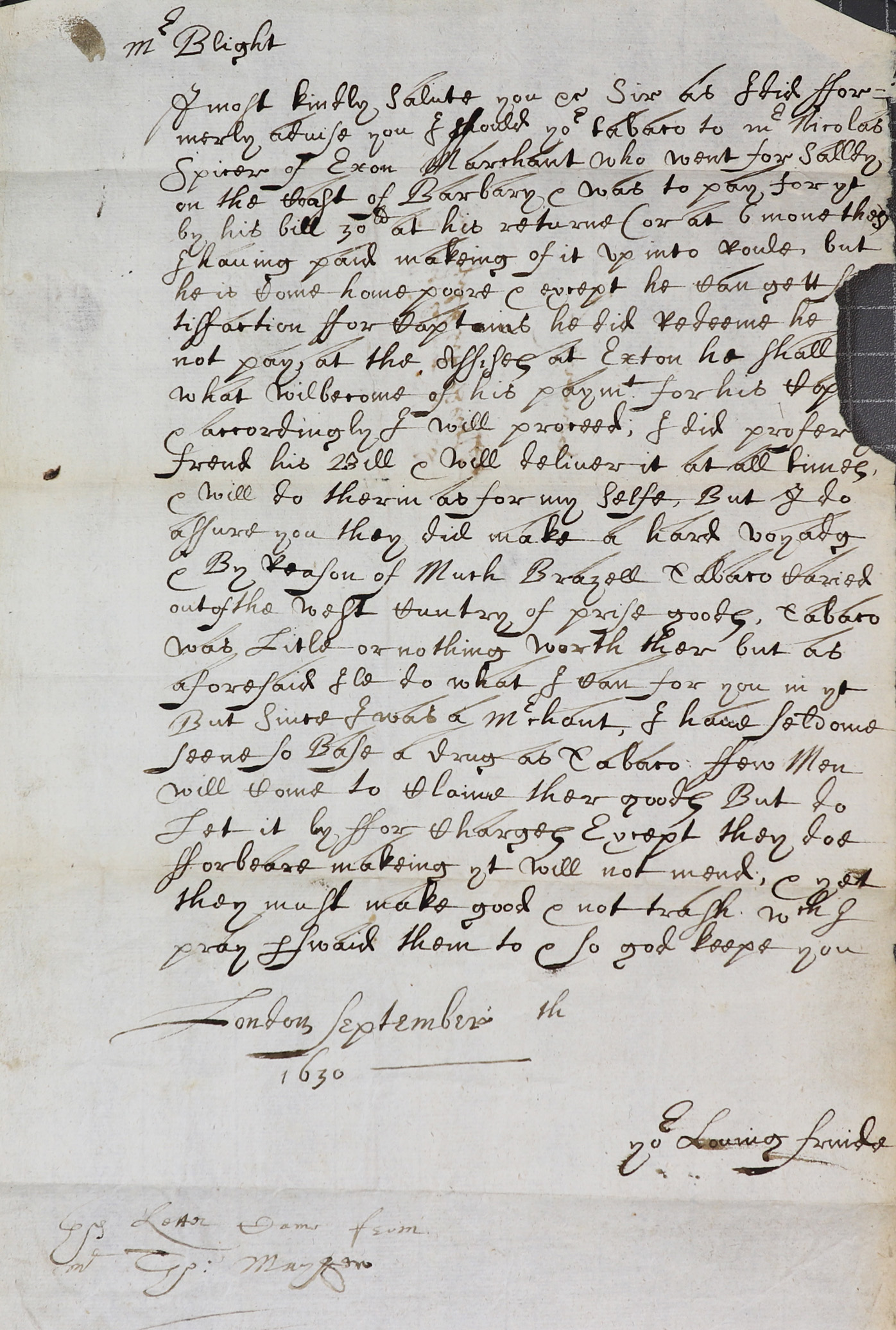
Letter from Thomas Mayhew to Gilbert Blight, 1630, Catalogue Ref. HCA 15/1.
Salé was the main Atlantic port in Morocco. The ‘West Country of Prize goods’ refers to the large amount of tobacco taken as prize or booty during the war between the English and Spanish, which pushed down tobacco prices. ‘Set it by for charges’ meant setting prize goods aside to cover port and legal costs, rather than selling them.
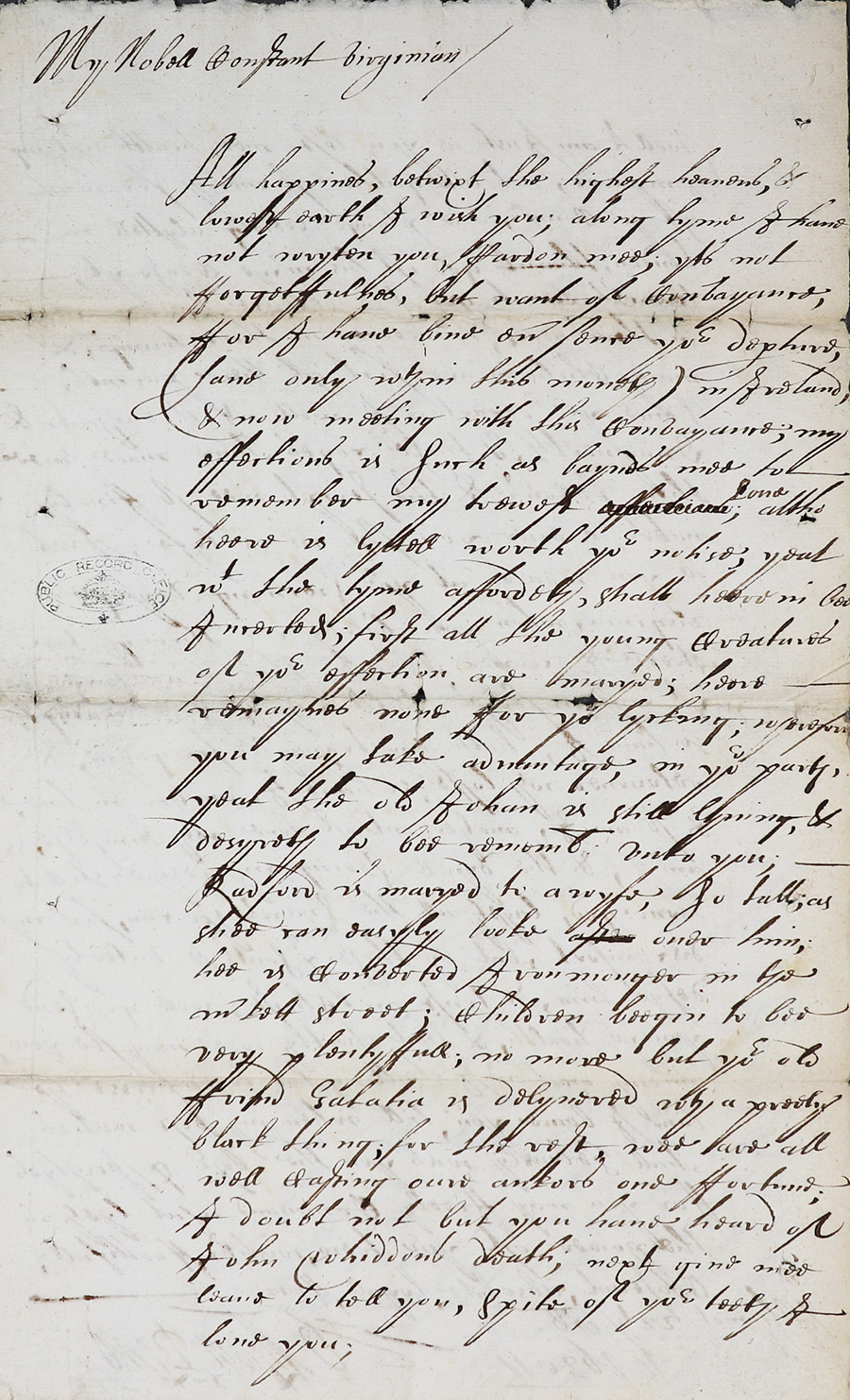
Extracts from ‘Gilbert Blight, letters from Virginia to Plymouth’, 1628-30. Catalogue Ref. HCA 15/1.
Gilbert Blight lived in Jamestown, Virginia, and was involved in the tobacco trade there. Blight would liaise with tobacco planters in Virginia from whom he purchased the tobacco. This tobacco was then transported in merchant ships to England. While in Jamestown, Blight sent and received many letters from business partners and merchants who were involved in this trade, notably including Abraham Jennens, William Bond, and Thomas Mayhew.