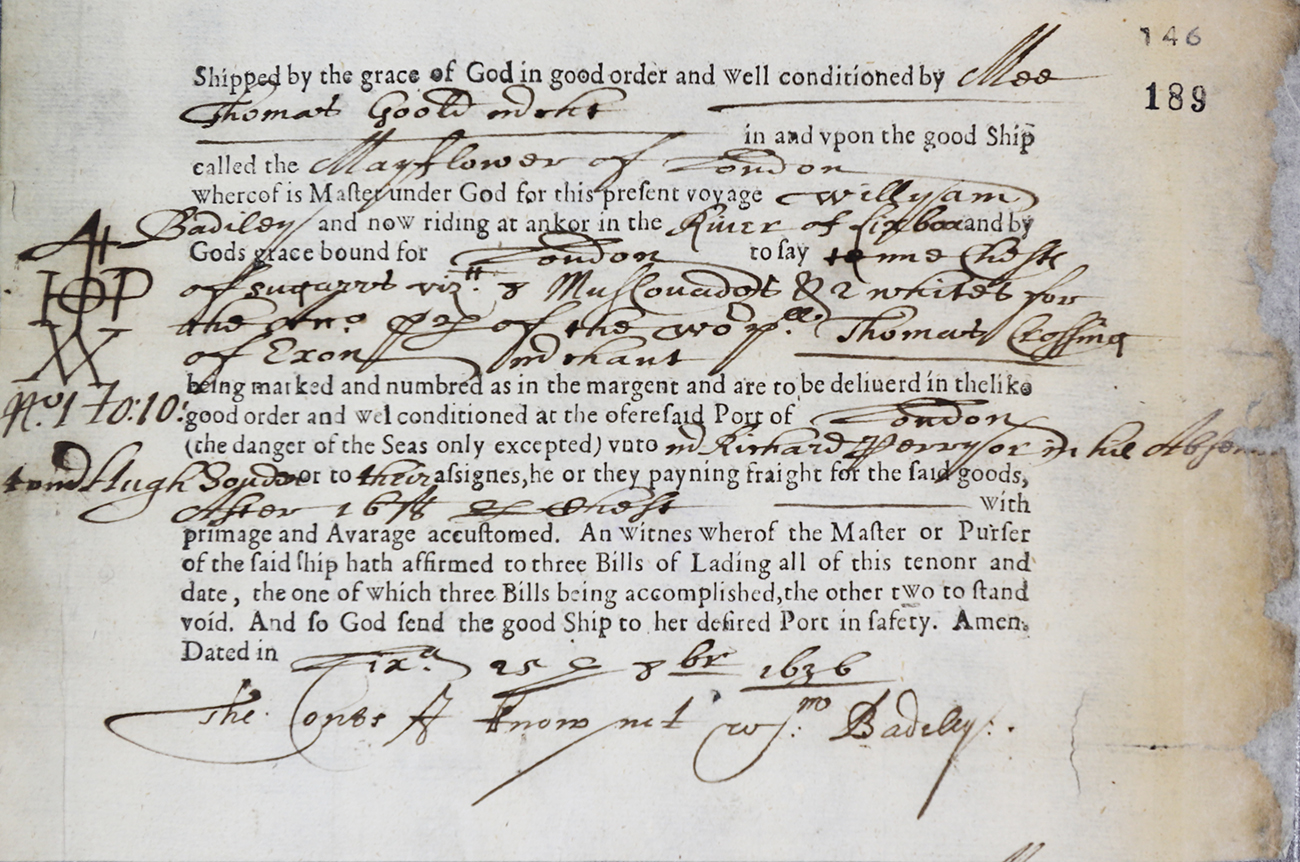
‘Bill of Lading’ for sugar for Thomas Crossing in the Mayflower of London (Master William Badeley), Oct 6. 1636. Catalogue Ref: HCA 30/840/79 f.189.
A ‘Bill of Lading’ was a receipt given by the master of a merchant ship to the person taking their goods. The master of the ship was responsible for the safe delivery of the goods. It was a way of stopping goods from being stolen and sold on to others.
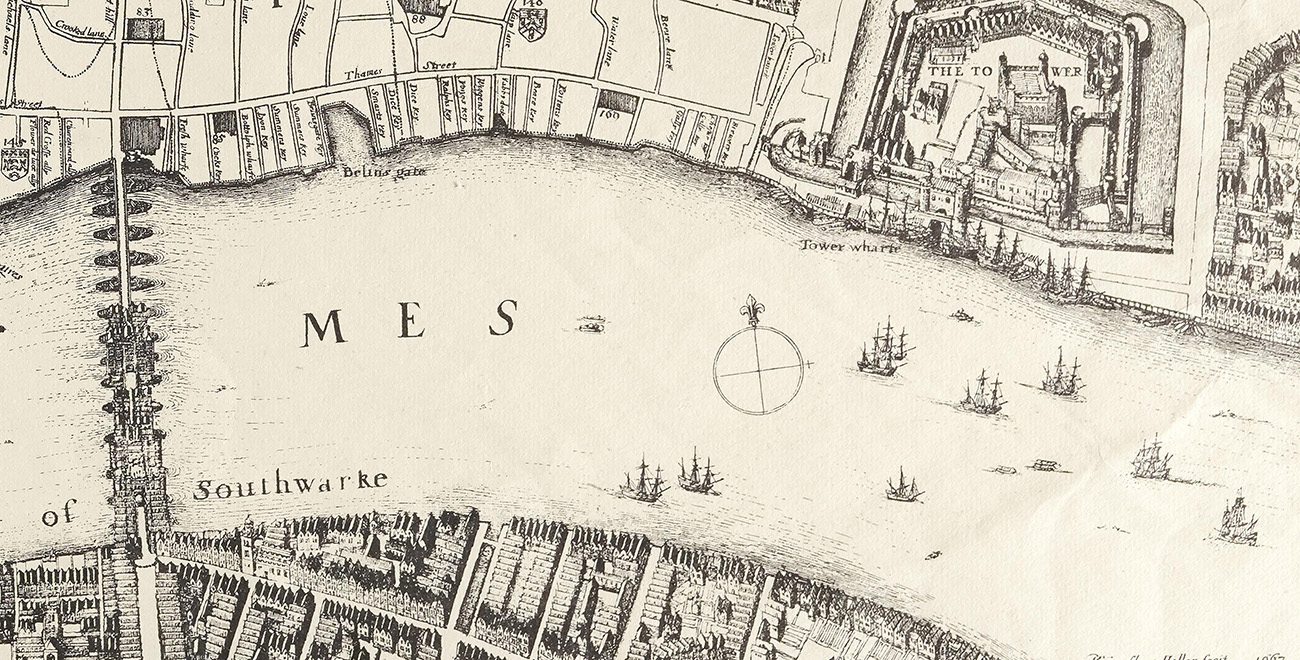
Close-up of the docks. Map drawn by Wenceslaus Hollar, entitled ‘Survey of the City of London’, 1667, Catalogue Ref: ZMAP 4/18
Take a look at this map of London, which shows some of the areas of the river Thames where trading ships would dock to unload their cargoes of sugar.
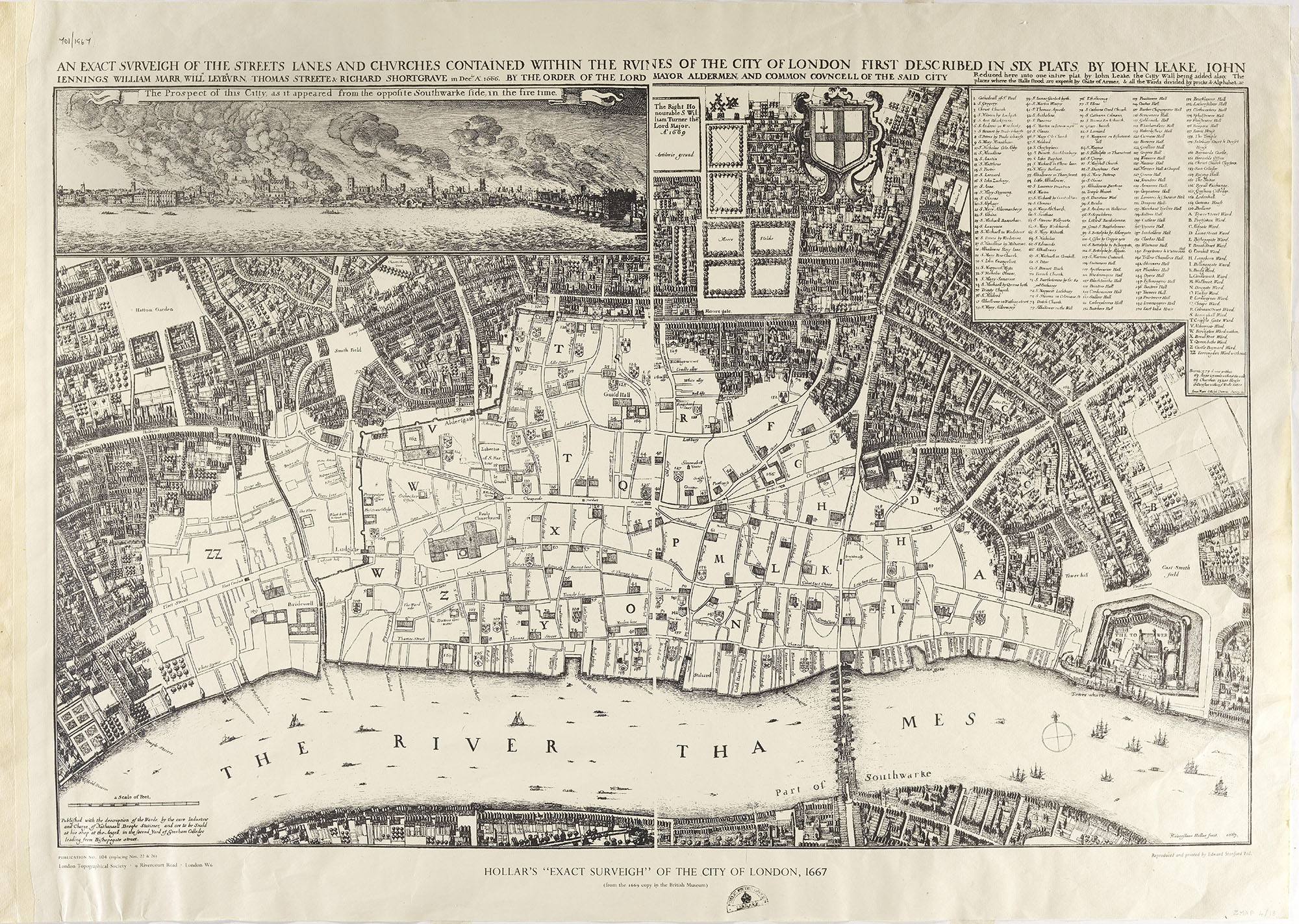
Map drawn by Wenceslaus Hollar, entitled ‘Survey of the City of London’, 1667, Catalogue Ref: ZMAP 4/18
Take a look at this map of London, which shows some of the areas of the river Thames where trading ships would dock to unload their cargoes of sugar.
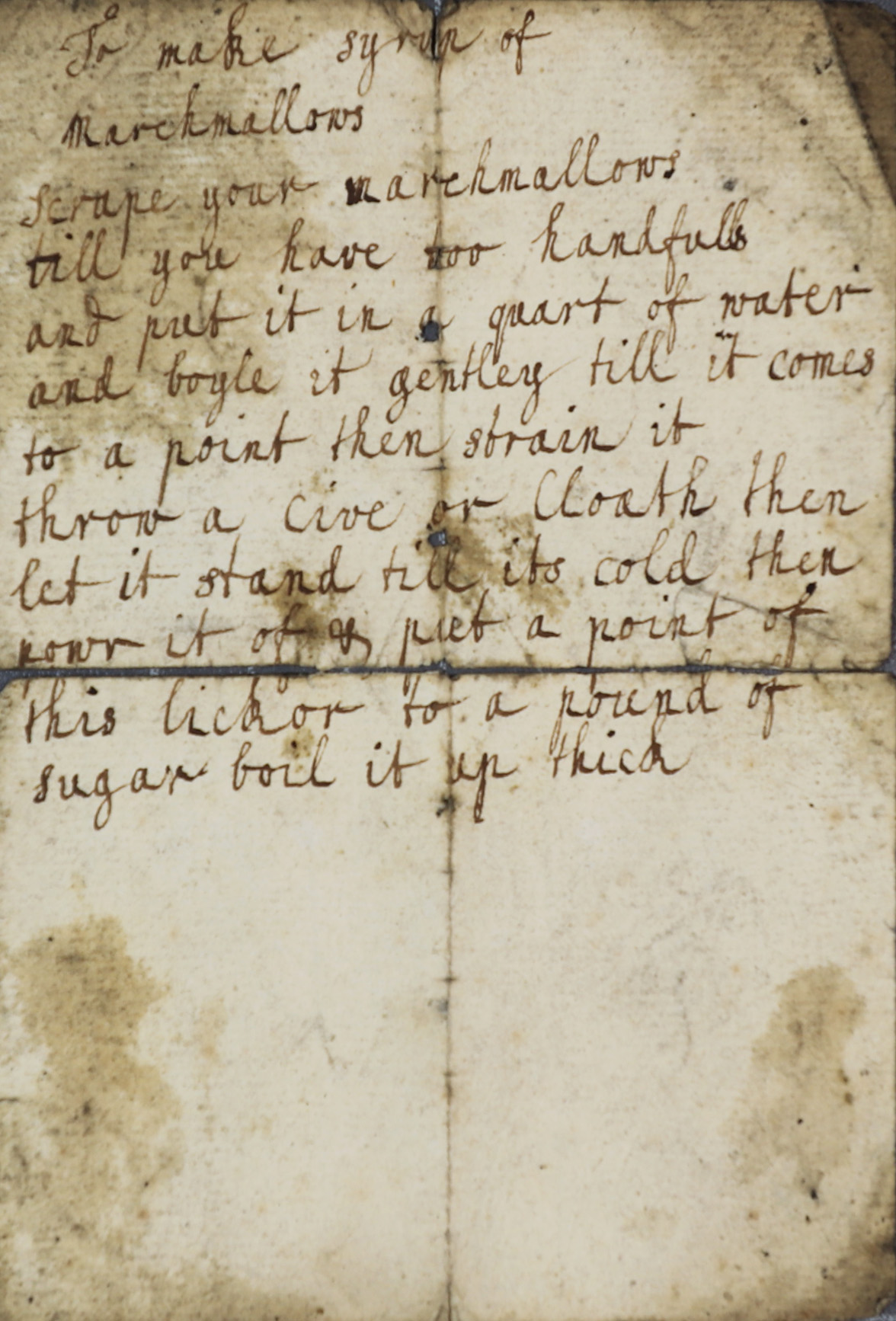
‘A recipe for marshmallow syrup’, Ship: Abraham of London, or perhaps not (master Andrew Hardie), 1633-1637. Catalogue Ref: HCA 30/636/7.
Take a look at this recipe, which was found with other documents from an English ship called Abraham of London, which was involved in trade in Barbados in the 1630s. These marshmallows were not the white fluffy sweets we think of today. ‘Marshmallow’ also means a white flower which was sometimes used in early modern medicine.
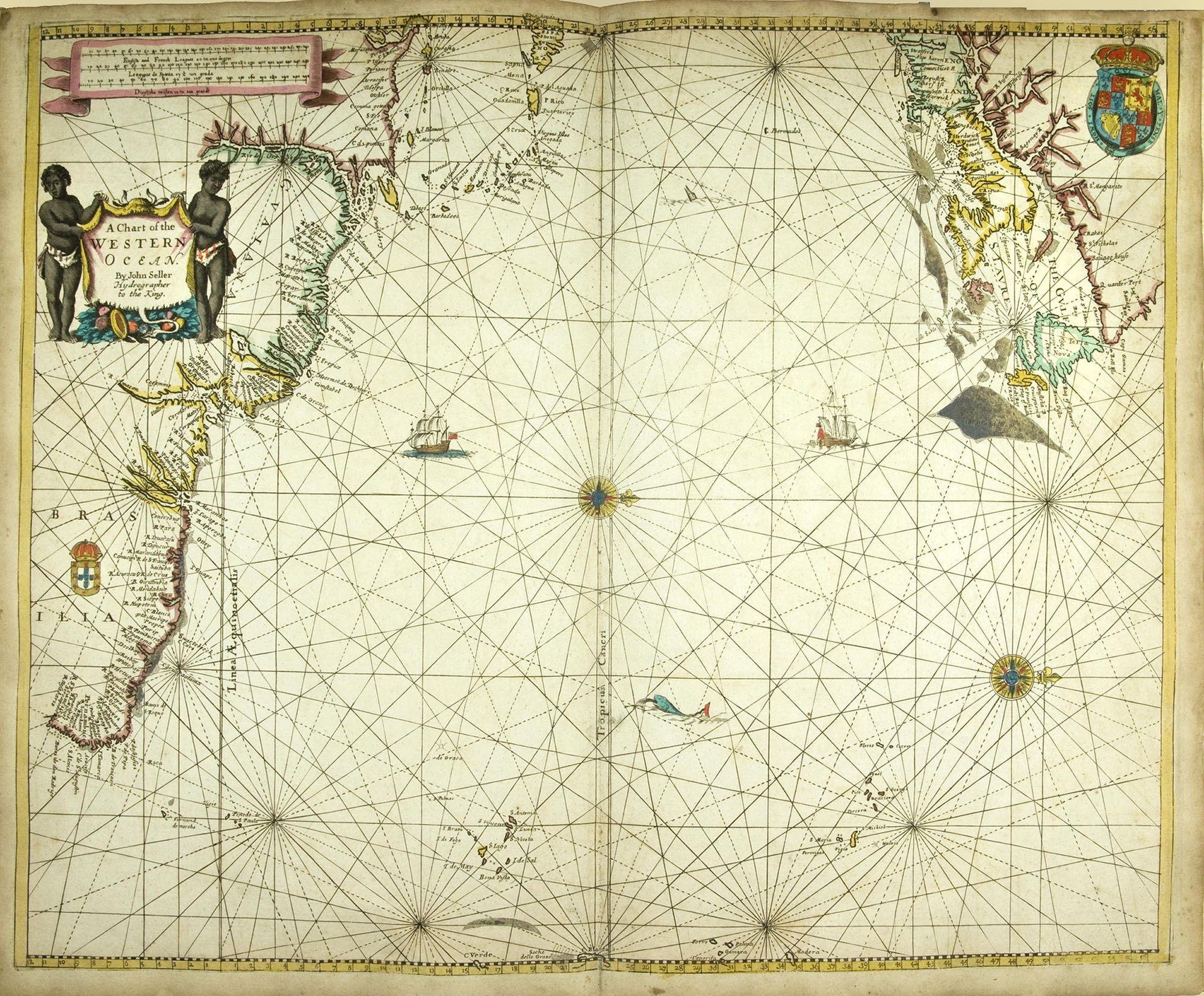
Map that shows the coast of Brazil in South America. Catalogue Ref: FO 925/4111 f.29.
From the sixteenth century there were plantations in Brazil that were growing sugar, which was then transported by ship to European ports.
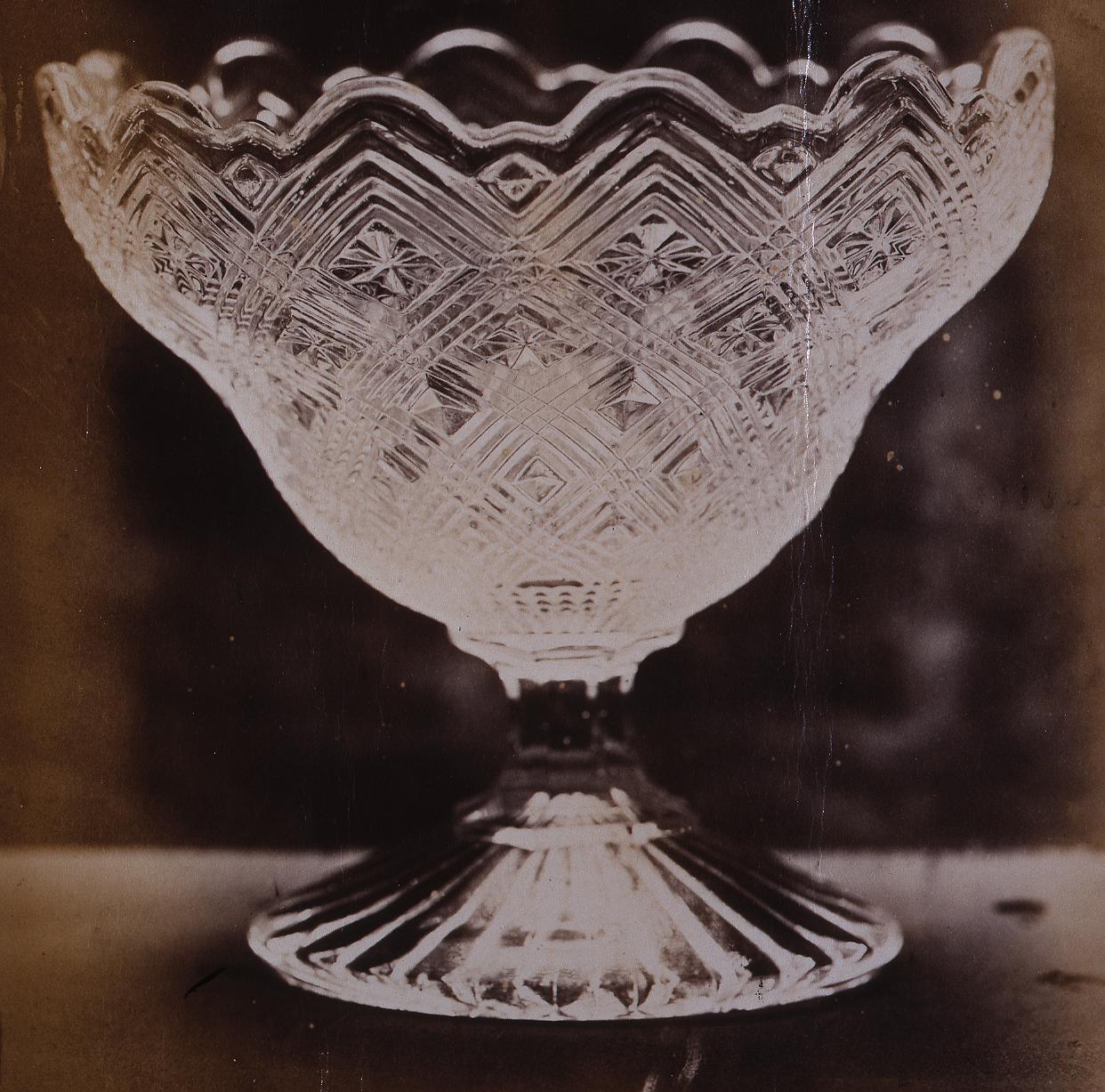
This lesson shows us how we can use a range of historical sources from the early modern period to piece together the history of sugar, a foodstuff that is now a part of our daily life. It explores the time in history when sugar was beginning to become more easily available and affordable in England, due to the transatlantic slave trade, the growth of sugar plantations in the Americas, and the labour of enslaved peoples on these plantations. A large collection of documents that can tell us about the history of sugar can be found in a collection called HCA 30, a varied set of records from the High Court of Admiralty, which include piracy, prize-taking, colonialism, and overseas trade.
Use this lesson to see what you can discover about the history of sugar from six different sources in collections at The National Archives.
What can original documents tell us about the history of sugar?By the end of the sixteenth century, English sugar consumption amongst royalty and the wealthy was so common that it was often remarked upon by foreign travellers in their description of English society. The German traveller Paul Hentzner describes the damage that sugar had done to Elizabeth’s I health and appearance by the time she was 65 years old: “her Lips narrow and her Teeth black…a defect the English seem subject to, from their too great use of sugar”. Hentzner’s witty observation responds to an important shift in how sugar was being consumed in England. In the medieval period, it served as a spice like nutmeg or ginger, as a preservative to stop food rotting, and played an important role as a medicine. By the Elizabethan and Jacobean periods, however, it was used as a delicious sweetener to be consumed in magnificent sugar feasts called banquets. It was also bought by some housewives in London, keen to copy the dining practices of the wealthy. English recipe books containing many recipes for sugary treats, such as Hugh Plat’s Delights for Ladies (1602), were very fashionable between 1575-1650, as sugar slowly became a foodstuff that more people could afford to enjoy and experiment with.
First grown in New Guinea and India as far back as 8000 BCE, by the tenth century BCE sugarcane had spread to Persia and the Arab world. The Arab conquest of vast areas of the Mediterranean from the seventh century onwards introduced sugar cane to Sicily, Cyprus, Malta, the Barbary Coast, the Maghreb, and Spain, opening methods of cultivation and the art of sugar refining across conquered geographical areas. During the crusades of the twelfth and thirteenth centuries, when Christians captured Islamic land, the Europeans experienced their first taste of sugar. Christian Soldiers were supposed to have gnawed on sugarcane and survived on its sap. The Europeans did more than just consume sugar; they became involved in both its cultivation and production. By the fourteenth century, Cyprus and Sicily had become important Mediterranean producers of sugar for the Europeans. This success encouraged Europeans to expand the sugar industry to the Atlantic Islands, South America, and the Americas. By the time of Elizabeth I’s and James I’s rule, increasing amounts of sugar was brought from sugar plantations (engenhos) in Brazil. These engenhos demanded the enforced labour of indigenous peoples, and, increasingly, enslaved Africans, who would work in appalling conditions to crush the sugarcane, extract the juice, and boil this juice at a hot temperature to produce sugar molasses, which would be shipped to Europe in large barrels called hogsheads. The beginning of a global sugar industry is an important part of the history of the early transatlantic slave trade.
The dark brown sugar molasses were brought to Lisbon, Antwerp, and Amsterdam, where they were further refined into coned sugar loaves, closely resembling the white granular sugar we are familiar with today. It was then transported to England to be purchased in grocers and apothecaries’ shops, and used in recipes for marmalades, sugar sculptures, marzipans, biscuits, and other sweet treats. It is in the sixteenth century that England developed its sweet tooth for which it is now so well known. The documents within this teaching resource provide snapshots of sugar’s history in the early modern period.
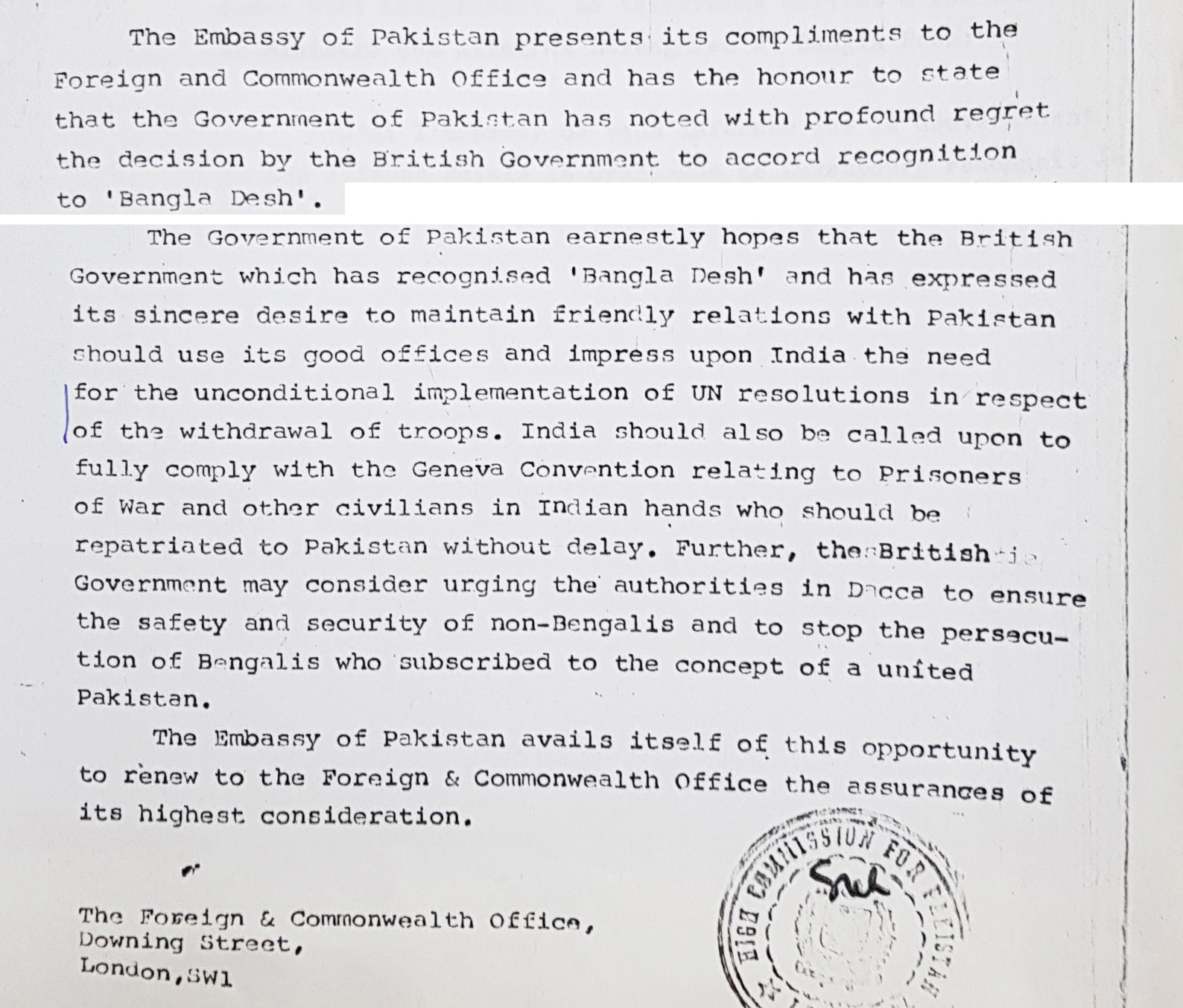
This is a letter from the Embassy of Pakistan sent after Britain officially recognised Bangladesh as a country.
Letter from Embassy of Pakistan to Foreign & Commonwealth Office, 15 February 1972. Catalogue ref: FCO 37/1025
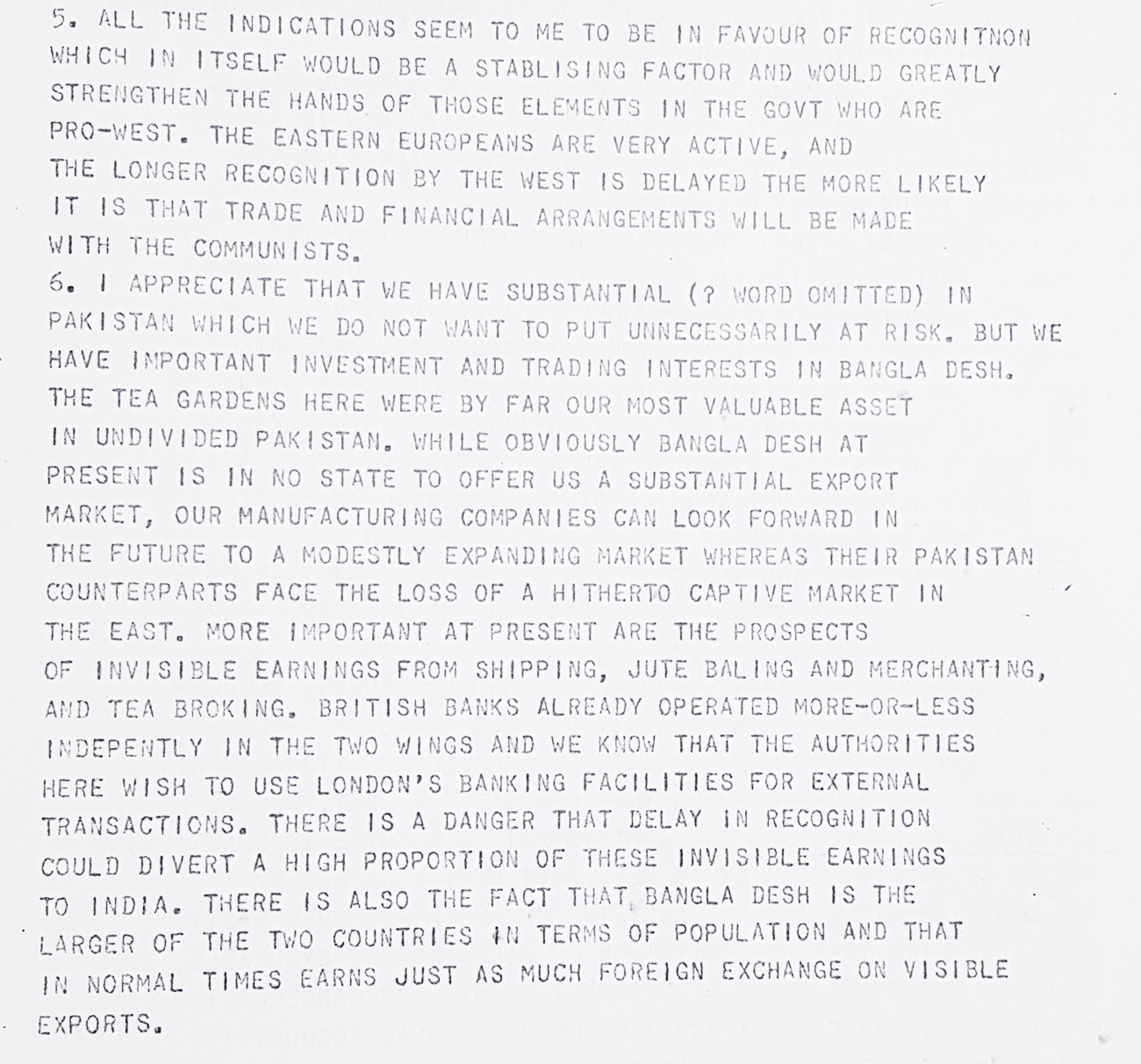
Britain recognised Bangladesh as an independent country on 4 February 1972. There was a lot of internal discussion before this date on the advantages and disadvantages that might come with recognition. Britain wanted to maintain good relationships with both Bangladesh and Pakistan.
This telegram shows British political and financial interests in the 1971 conflict.
Telegram on the recognition of Bangladesh for distribution within the Foreign & Commonwealth Office. 6 January 1972. Catalogue ref: FCO 37/1019
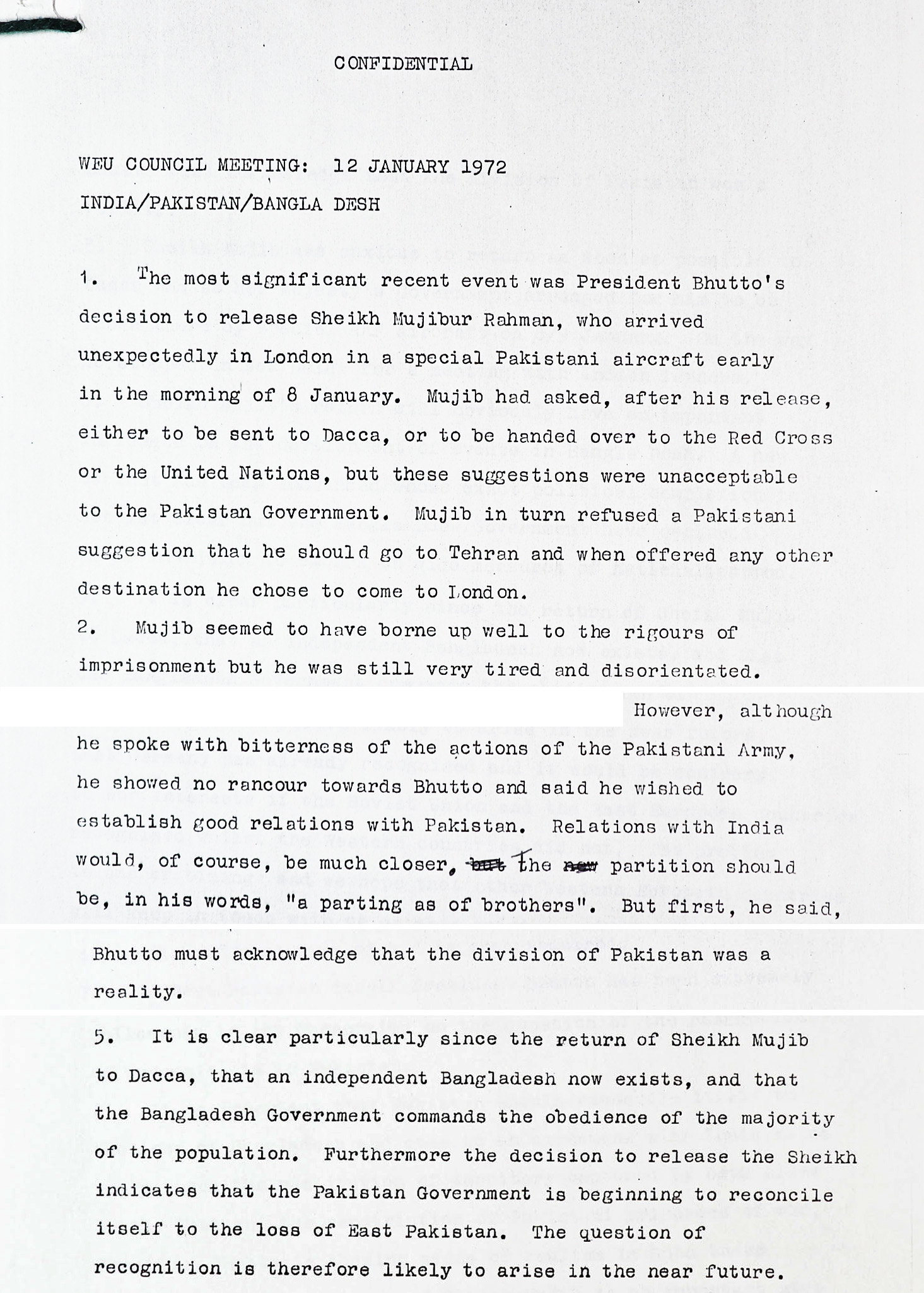
This report shows Sheikh Mujibur Rahman’s surprise appearance in London in January 1972 after being imprisoned by West Pakistan during the war.
WEU Council Meeting notes, 12 January 1972. Catalogue ref: FCO 37/1019
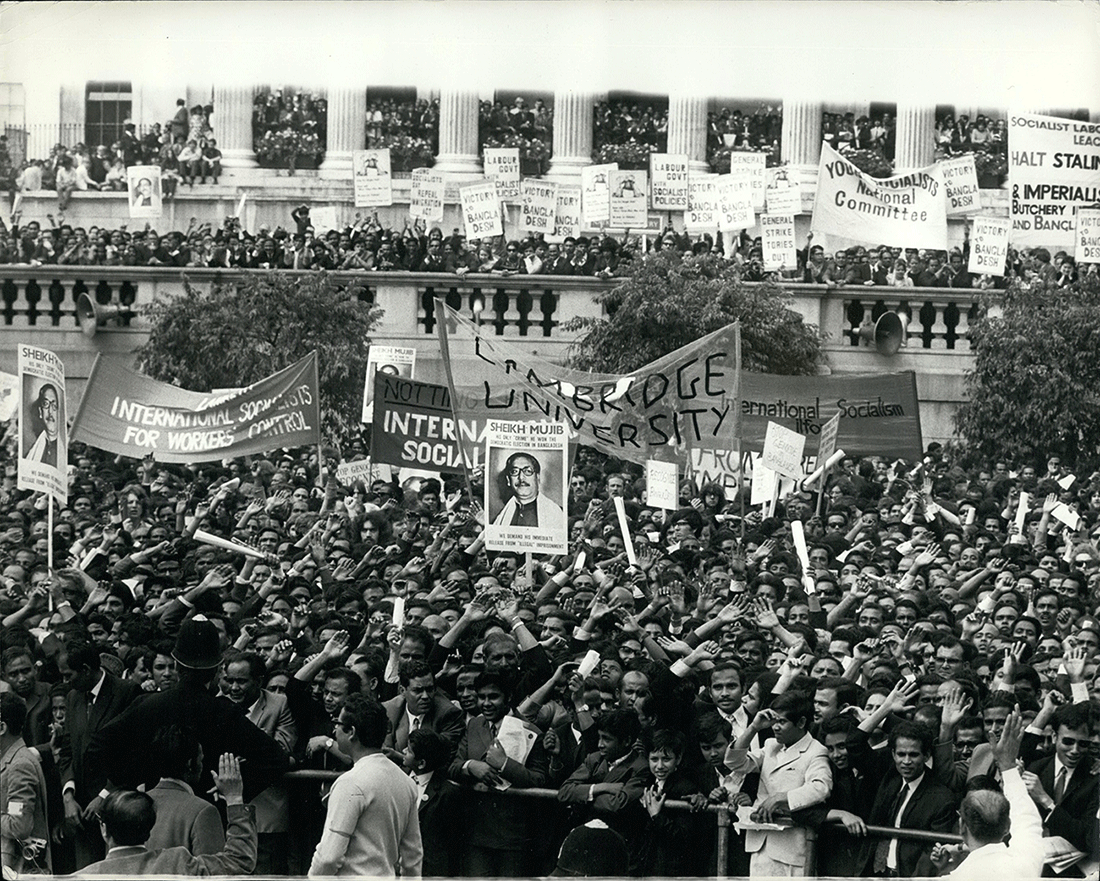
Source 5a is a photograph of the ‘Recognise Bangla-Desh Rally’ in Trafalgar Square, 8 August 1971. Source: Keystone Press/Alamy