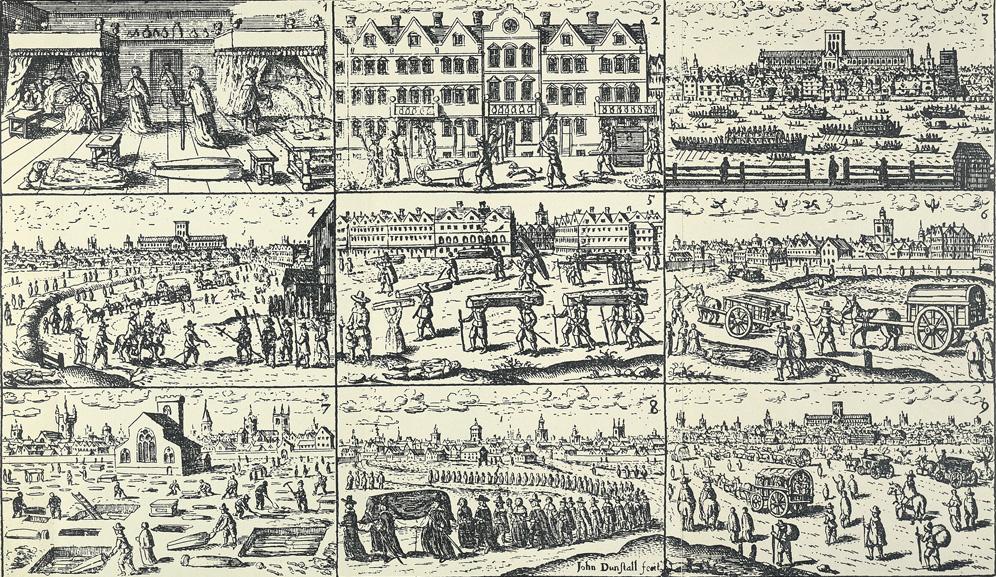
This was the worst outbreak of plague in England since the black death of 1348. London lost roughly 15% of its population. While 68,596 deaths were recorded in the city, the true number was probably over 100,000. Other parts of the country also suffered.
The earliest cases of disease occurred in the spring of 1665 in a parish outside the city walls called St Giles-in-the-Fields. The death rate began to rise during the hot summer months and peaked in September when 7,165 Londoners died in one week.
Rats carried the fleas that caused the plague. They were attracted by city streets filled with rubbish and waste, especially in the poorest areas.
Those who could, including most doctors, lawyers and merchants, fled the city. Charles II and his courtiers left in July for Hampton Court and then Oxford. Parliament was postponed and had to sit in October at Oxford, the increase of the plague being so dreadful. Court cases were also moved from Westminster to Oxford.
The Lord Mayor and aldermen (town councillors) remained to enforce the King’s orders to try and stop the spread of the disease. The poorest people remained in London with the rats and those people who had the plague. Watchmen locked and kept guard over infected houses. Parish officials provided food. Searchers looked for dead bodies and took them at night to plague pits for burial.
All trade with London and other plague towns was stopped. The Council of Scotland declared that the border with England would be closed. There were to be no fairs or trade with other countries. This meant many people lost their jobs – from servants to shoemakers to those who worked on the River Thames. How did Londoners react to this plague that devastated their lives?
Use this lesson to work with original documents which tell the story of the Great Plague 1665-1666.
How did London respond to it?There are three types of plague. Most of the sick in 1665-1666 had bubonic plague. This created swellings (buboes) in the lymph nodes found in the armpits, groin and neck. Plague sufferers experienced headaches, vomiting and fever. They had a 30% chance of dying within two weeks. This type of plague spread from a bite caused by a black rat flea that carried the Yersinia pestis bacteria.
Worse still was pneumonic plague, which attacked the lungs and spread to other people through coughing and sneezing, and septicaemic plague, which occurred when the bacteria entered the blood. In these cases, there was little hope of survival.
Treatments and prevention at the time did not help. Sometimes, patients were bled with leeches. People thought impure air caused the disease and could be cleansed by smoke and heat. Children were encouraged to smoke to ward off bad air. Sniffing a sponge soaked in vinegar was also an option.
As the colder weather set in, the number of plague victims started to fall. This was not due to any remedies used. Nor was it due to the fire of London that had destroyed many of the houses within the walls of the city and by the River Thames. (Many plague deaths had occurred in the poorest parishes outside the city walls.)
Some scientists suggest that the black rat had started to develop a greater resistance to the disease. If the rats did not die, their fleas would not need to find a human host and fewer people would be infected. Probably, people started to develop a stronger immunity to the disease. Also, in plague scares after 1666, more effective quarantine methods were used for ships coming into the country. There was never an outbreak of plague in Britain on this scale again.

Around midnight on Monday 4 November 1605, Sir Thomas Knyvett was ordered to carry out a search of the rooms below the hall in which Parliament, crammed with MPs and Lords, would be opened the following day by King James. There he met a man coming out of a room packed with firewood who gave his name as John Johnson. Knyvett arrested him and searched the wood to find hidden within it 36 barrels of gunpowder, enough to blow up the entire Palace of Westminster and everyone in it. Johnson carried fuses and a timer. He was taken straight to the Tower of London to be questioned.
King James’ men had decided to search the Palace because of a letter that Lord Monteagle had received a few days before. Monteagle took the letter straight to the government.
Use this lesson to see if you can unravel the secrets of these original documents about the gunpowder plot.
Can you uncover the plans of the plotters?During the reign of Queen Elizabeth I, followers of the Roman Catholic religion in England had faced serious difficulties including harsh fines and the risk of imprisonment or violence. Catholic priests, vital to the practice of the religion, were banned and government spies tried hard to round up those who were secretly working in the kingdom.
When James I came to the throne Catholics in England thought that things would get better for them, but James kept all of Elizabeth’s tough laws against Catholics. Very early in his reign a group of Catholic noblemen decided that the King would have to be killed for things to change.
On 26th October 1605 Thomas Ward, a servant of the Catholic Lord Monteagle, was given a letter by an ‘unknown man’ to give to his master. When Monteagle read the letter he found it was a warning to stay away from the opening of Parliament, due in a few days. He gave the letter directly to the Privy Council and the King in Whitehall.
Although the conspirators knew the letter had been passed to the government they decided to go ahead as planned, trusting that their explosives expert was unknown to the authorities.
After the explosion, the plan was that certain plotters would lead an uprising in the Midlands. They would kidnap Princess Elizabeth, James I’s nine year old daughter from her household at Coombe Abbey. Using her as a figurehead, they would rule the country and restore the rights of Catholics. However, their explosives expert was disturbed as he arrived to light the fuse.
The trial of the eight surviving conspirators was held in the same room they had tried to blow up: Westminster Hall, within the Parliament building. All eight were found guilty and by the end of January 1606, all eight had been executed. The plotters were hung, drawn and quartered. Their heads were then set upon poles as a warning to others.
As result of the plot, James I became more popular having survived an attempt on his life. However, it became harder for Catholics to practise their religion or play a part in society. Finally, there is no doubt that Guy Fawkes is remembered incorrectly as the main plotter, a myth perpetuated as generations of children celebrate Bonfire Night.
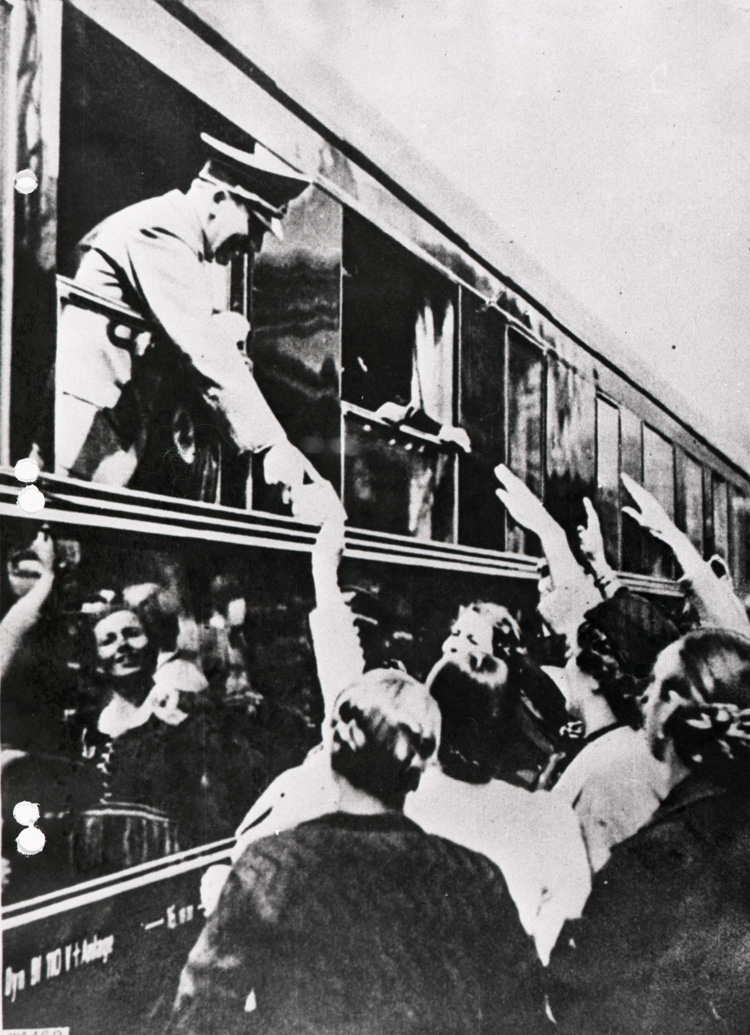
In 1944 the SOE (Special Operations Executive) drew up various plans to kill Hitler. The proposed assassination plans, code-named Operation Foxley, were not attempted in the end. The most likely timing for the operation would have been during one of Hitler’s visits to the Berghof, his residence in the Bravarian Alps near Berchtesgaden, Germany.
These plans were released to the public in July 1998 and at the time they caused world media interest. This lesson is a unique chance to work with some of the original secret documents which formed part of Operation Foxley.
How did the British plan to kill Hitler?Throughout Hitler’s career as a politician and as leader of Germany he was at danger from assassination attempts. Indeed, a number of attempts were made on his life but he survived them all. Bombs were left in a variety of places that either failed to go off, or Hitler changed his plans at the last moment.
In 1944 Hitler was actually injured in an attempt on his life which really should have killed him. He managed to survive only with damage to his hearing. After this attack Hitler claimed he was ‘invulnerable and immortal’. Any attempts on his life by members of his own staff or enemies were brutally dealt with. In May 1942, one of his most senior Gestapo officials had been assassinated by SOE-trained Czechs. In the reprisals that followed 5,000 civilians were murdered.
The SOE was created in 1940 by the British to undertake ‘all action by way of subversion and sabotage against the enemy overseas’ now that much of Europe was under German occupation. The SOE began planning Operation Foxley in 1944 despite some opposition from within their ranks. Some people argued it was better to leave Hitler alive as he was making so many blunders. Nevertheless, a plan was put together and SOE began looking for recruits to perform the attempts. The Allied successes of 1945 overtook the planned assassination attempt and SOE concentrated its energies elsewhere. The existence of such a plan does, however, excite much interest as had it gone ahead and succeeded, it could have changed the course of the war and perhaps history.
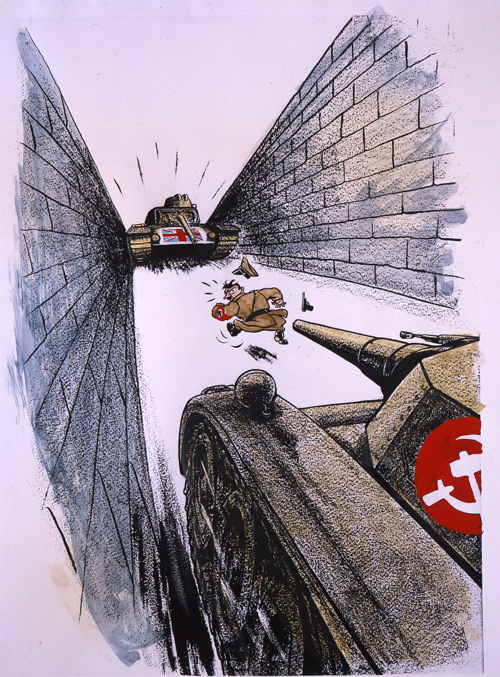
Hitler is perhaps one of the most reviled historical figures of the 20th century. After he became Chancellor of Germany in 1933 parliamentary democracy came to an end. A timeline of these events in Germany can be found here.
Before the outbreak of the Second World War, in the period 1935-38, Hitler acted against the terms of the Treaty of Versailles by re-arming and re-building the German army through conscription (1935). He also moved troops into the di-militarised Rhineland (1936). He also tried to unite Germany and Austria with the ‘Anschluss’ (1938). Later that year he demanded the Sudetenland, the German speaking part of Czechoslovakia. Throughout this time he made passionate speeches about expanding German territory. These words and deeds worried foreign observers.
Use the sources in this lesson to find out how he was viewed by some of these commentators. Was he to be regarded as a ‘passionate lunatic’ who would take over Europe? Or an odd eccentric who was rebuilding Germany?
Was Hitler a 'passionate lunatic'?When Hitler came to power in Germany in 1933 some people regarded him as a strong leader merely getting back German territory and restoring Germany’s national pride. They thought he would stop once he had reversed the terms the Treaty of Versailles which limited the power and strength of Germany. Others feared that this was only the beginning of a far more aggressive foreign policy. They were to be proved right by Hitler’s decision to takeover of the whole of Czechoslovakia in 1939 after annexing the Sudetenland in 1938. Germany then invaded Poland, bringing about the beginning of the Second World War.
How the British government dealt with Hitler in the run up to the outbreak of the Second World War has come under close scrutiny. Of course at the time, Winston Churchill, no longer in Government from the early 1930s, was a significant critic of the Munich Agreement which allowed Germany to take over Sudetenland in Czechoslovakia an attempt to prevent a war. Churchill continued to criticize Hitler and call for Britain to rearm. When war was declared with Germany in 1939 he returned to power as First Lord of the Admiralty and later became wartime Prime Minister of a national government on 10 May 1940.
Appeasement was the name given to Britain’s policy in the 1930s which permitted Hitler to expand German territory unchecked and did little to stop him in his early moves against the Treaty of Versailles. It was closely linked to the Prime Minister at the time, Neville Chamberlain and was popular although is now regarded as a policy of weakness.
Appeasement found support with the British public who wanted to avoid the huge losses of the First World War. There was a strong anti-war or pacifist sentiment. Britain could not afford the financial cost of another war, nor could France, the country’s main ally.
Of course to have stopped Hitler might have meant declaring war – a massive decision when most countries wanted to avoid war at all costs. Britain kept a close watch on developments in Germany. In particular the government was very interested in Hitler’s personality. They wanted to find out what he was like, what he wanted to achieve for Germany, what kind of leader he was and, strangely enough, if he was sane.
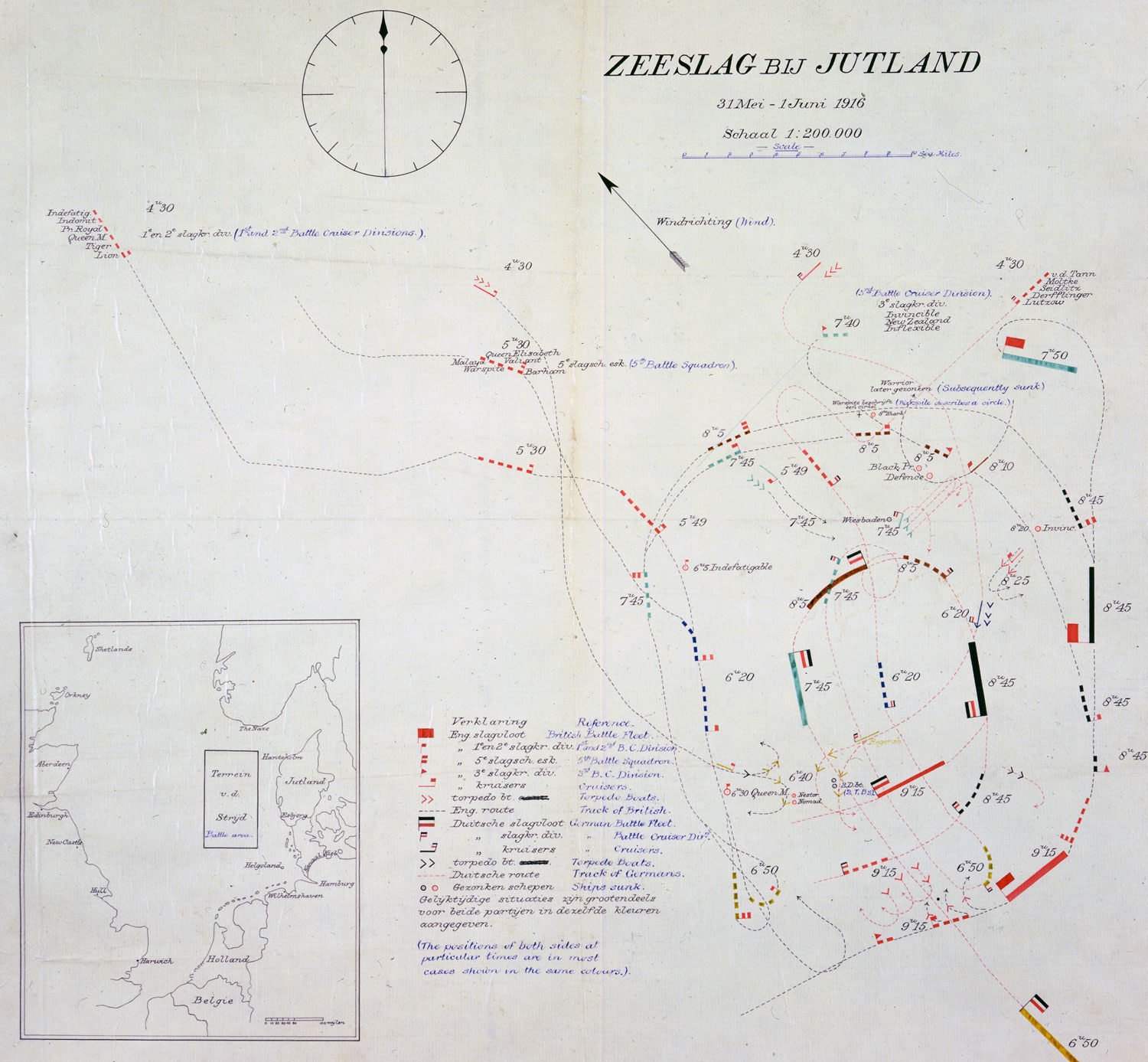
On 31 May 1916 the largest naval battle of the First World War took place off the coast of Jutland in Denmark. Over 6,000 British sailors lost their lives.
These high losses were partly due to the unexpected sinking of three large ships: HMS Invincible, HMS Queen Mary and HMS Indefatigable. At the time the sailors who died were heralded as gallant comrades who died gloriously in battle. However, some historians believe that most of these sailors died because people made careless mistakes. Use this lesson to explore original documents relating to the losses at the Battle of Jutland.
Were lives wasted when the Indefatigable sank?Before 1916 there had been no major sea battles between the world’s largest naval powers, Germany and Britain, despite an arms race creating large fleets in anticipation of great sea battles between the new dreadnought warships and more advanced battle cruisers.
In January 1916, the Germans had a new Naval Commander, Admiral Scheer, and he was eager for action. The German fleet had less than 100 ships compared to the British Grand Fleet of around 150. Sheer planned to lure the British Fleet into battle and trap them, but the German plans were intercepted by the British who prepared to trap the German fleet in return. Around 4pm on 31 May, the swift British battle cruisers lured the Germans towards the Grand Fleet, taking heavy losses in the initial fighting.
Just before 6pm, the full great fleets of Britain and Germany came into contact. Fierce battle went on all evening with high explosive shells ripping into thick armour plating. Sailors burned to death or were drowned in the icy-cold sea. As darkness came Scheer attempted to return back to port, but found the British had manoeuvred to block their path. After a further skirmish between battle cruisers, Scheer managed to retreat whilst the British fleet, concerned about enemy submarines and minefields, chose not to give chase.
Both sides claimed victory. The Germans said they sank more ships but the British claimed Scheer had given up first and fled the scene of the battle. However, when losses were counted Britain seemed to have lost more. Britain lost 14 ships to Germany’s 11 and while Germany lost 2,551 men, Britain lost 6,097.
The German High Seas Fleet stayed in port for the rest of the war, becoming a ‘fleet-in-being’ to threaten but not engage with the British Navy. They chose to rely on U-boats (submarines) instead. German U-boats caused great problems for the British as they sunk an enormous amount of imports and supplies. The British eventually defeated the menace of the U-boats by employing a convoy system where anti-submarine ships protected other ships in a group.
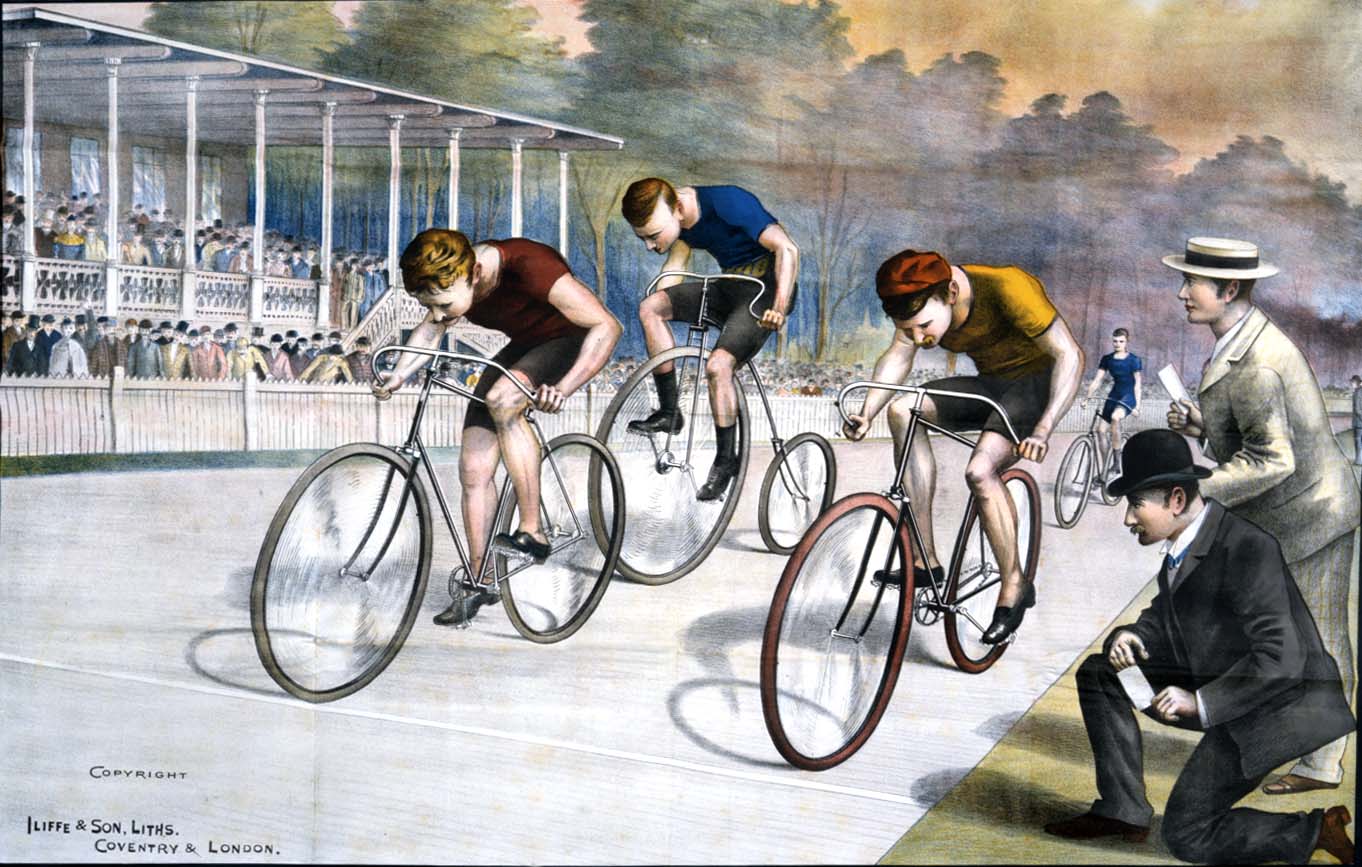
During Queen Victoria’s reign big changes took place in the way people spent their leisure time. Blood sports like bear baiting and cockfighting were banned. With the growth of the railways, people began to travel more and visiting the seaside became a popular pastime. But the railways also allowed local sporting teams to travel and so sports like cricket, football and rugby began to be organised with agreed rules and national competitions, such as the FA Cup. Lawn Tennis was invented in the 1830s and a new sight on the streets of Victorian Britain was the bicycle, in its various different designs.
There were still old favourites such as going to the circus or the theatre but the invention of the moving picture during the 1890s meant that a new dimension was added to theatre-going.
Use the posters, pictures and photographs in this lesson to understand how the Victorians enjoyed their leisure time.
How did the Victorians have fun?During the Victorian era there were many changes to how people lived, and the ways they spent their spare time. The Victorians enjoyed listening to brass bands and attending ‘spectacles’. These shows included hypnotism or even communication with the dead using mediums! Circuses and performing menageries were also popular, with Britain being visited by some of the most famous of the time including the Barnam and Bailey Circus who frequently came over from America.
The rise in photography and moving pictures meant that people started going to the theatre, not only to enjoy plays and spectacles, but also to watch recordings of sporting events as you can see from the sources here. Sporting pastimes, such as cycling, rowing and horseracing were also popular, and large crowds would often attend sailing events like the Henley Regatta and famous horse races such as the Epsom Derby.
One of the largest events of the Victorian calendar was the famous Great Exhibition, held in 1851. This huge event was organised by Prince Albert, the husband of Queen Victora, and was held in Hyde Park in London. At the centre of the exhibition was the famous ‘Crystal Palace’ which was built to house the exhibitions of culture and industry from around the Empire.
History books are often full of the lives of king and queens, famous leaders and thinkers. What about ordinary people? These people are also our ancestors or distant relatives in the past. They lived through the times in history that we now read about. Can we find out about their lives? With a bit of work, the answer to this question is yes!
Every time somebody is born in the UK, a record called a birth certificate is made. It contains facts such as the baby’s name, where and when they were born, the name of their parents, and what the parents do for a job. We all have a birth certificate if we were born in the UK.
Marriages and deaths are also written down in the same way. Making these records is called civil registration. It began in England and Wales in 1837 when Queen Victoria came to the throne. There should be a record of everyone who lived after this date.
The Victorians used another set of records called the census to collect information. The first census records began in 1801 as a simple count of the number of people who lived in each house throughout the country. This was done every ten years. We still carry out the census today.
From 1841 onwards, the name of every person was written down. After 1851, other facts were added such as the age of each person, their relationships within the family (wife, son, daughter), occupation (job) and place of birth. These facts can tell us quite a bit about the Victorian family.
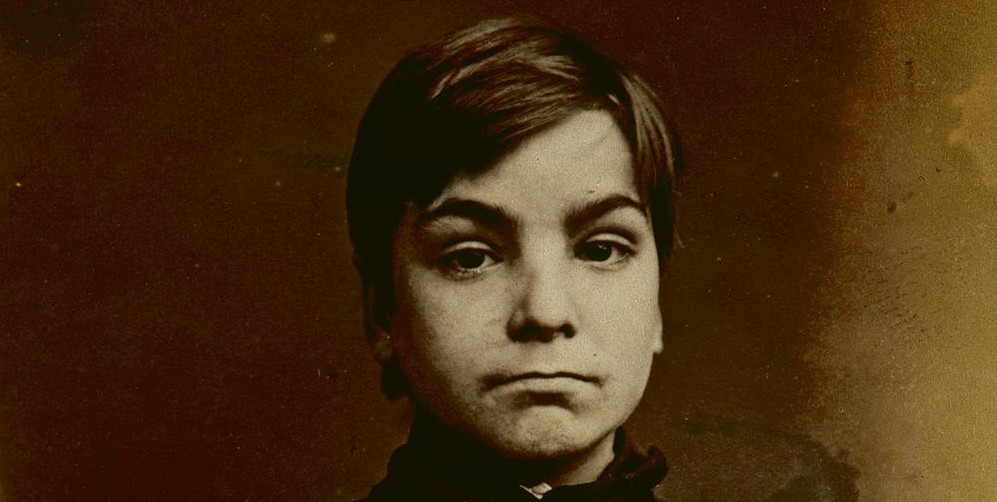
Use the documents in this lesson to discover the family history of William Robert Towers, a young Victorian boy.
How can we find out about the life of a Victorian child?Victorian Britain was a tough place to grow up in if a child survived the high infant mortality rate. Poor children received little or no education and were forced to work from an early age. The concept of a ‘childhood’ as time of protected development as we know it today, was not something understood by many Victorians. Many children lived in crowded industrial cities in poor sanitary conditions, within large families with little money for buy food. They started work from an early age in factories, mines or domestic service. Others worked on the streets selling matches, watercress or road sweeping for example. In the countryside children worked in domestic industries or as farm workers.
Crime was a problem. Punishments were hard for people who broke the law, even if they were children. After spending some time in prison at a young age, according to a document here, we see William Towers at 20 years old listed in the 1881 census living with his family. He worked as a bricklayer with his father. The family had left the area where they were living at the time William was sent to prison, later the family moved to Battersea.
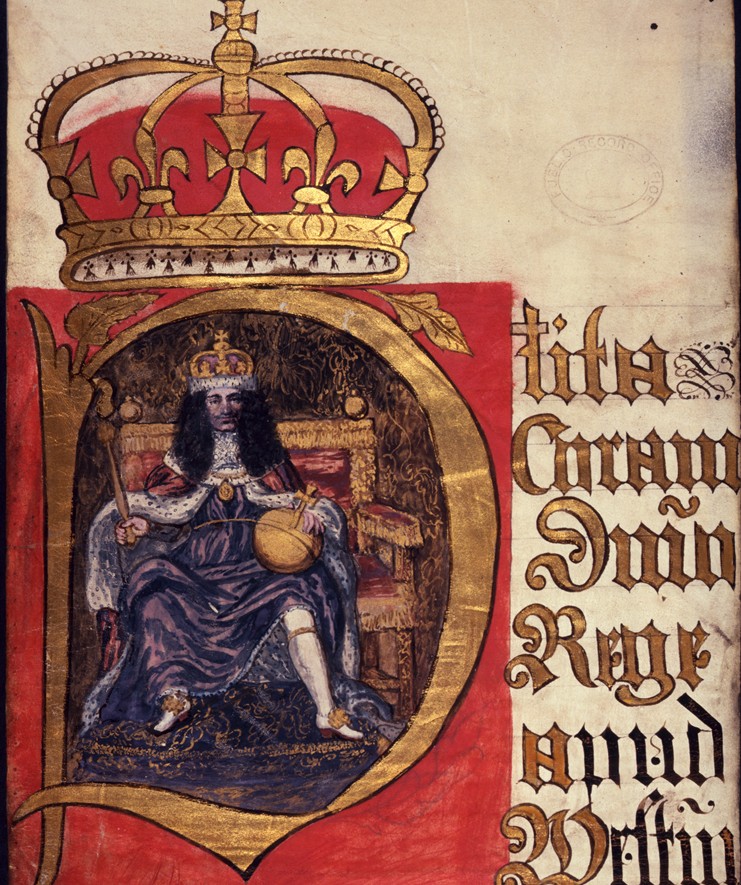
After the execution of Charles I in 1649 many of the Crown Jewels were sold or destroyed. Oliver Cromwell ordered that the orb and sceptres should be broken as they stood for the ‘detestable rule of kings’. All the gemstones were removed and sold and the precious metal was used to make coins.
When the monarchy was restored in 1660, two new sceptres and an orb costing £12,185 were made for the coronation of Charles II in 1661. Can you spot any of these items in the picture above?
During the ceremony, the new King held the Sceptre with the Cross in his right hand and the Sceptre with the Dove in his left. The sceptre was a rod or staff which represents royal power and the dove refers to the Holy Spirit. The King was crowned with St Edward’s Crown. At some point the King also held the orb, a hollow golden sphere decorated with a band of jewels and a jewelled cross on top. The orb refers to the King’s role as protector of the church.
Charles II allowed the Crown Jewels to be shown to members of the public for a viewing fee paid to a custodian (keeper) who looked after the jewels in the Martin Tower at the Tower of London. In 1671 Thomas Blood was the first and only man who attempted to steal them.
After that, the Crown Jewels were kept under armed guard in a part of the Tower known as the Jewel House.
Use the sources in this lesson to find out more about Thomas Blood’s life of crime and his dramatic attempt to steal the Crown Jewels.
How did Thomas Blood try to steal the Crown Jewels in 1671?Thomas Blood (c1618-1680) was a rebel, a republican (supporter of government without a king) and a master of disguise. His adventures had involved him dressing as a priest, a doctor of divinity and a Quaker. He took part in numerous plots.
Blood was called both ‘Captain’ and ‘Colonel’ at the time. After his attempt at stealing the Crown Jewels, Blood even acted as a spy for Sir Joseph Williamson, an important politician in Charles II ‘s government, and he often attended court.
Thomas Blood was born in Ireland. He fought in the Civil War on the side of Parliament and served as an officer in Cromwell’s army in Ireland. He was granted land in Ireland for his services.
After the restoration of the monarchy in 1660, Thomas Blood lost all his lands. He took his revenge when he tried to kidnap James Butler, Duke of Ormonde, and Lord Lieutenant of Ireland at Dublin castle in 1663. The plot was discovered and Blood fled to Holland.
In 1666 Blood fought on the side of the Scottish Covenanters at Rullion Green to resist changes in the law about the conduct of church services made by Charles II. He returned to England and, not long after, rescued his friend John Mason whilst on his way to trial at York under armed escort.
Thomas Blood made a second attempt to kidnap the Duke of Ormonde in London. The plan failed and Blood and his accomplices got away. It has been suggested that the Second Duke of Buckingham, George Villiers, was behind the plan.
In 1671, as part of his attempt to steal the Crown Jewels, Blood and his son had got friendly with the keeper. He even arranged a marriage between his ‘nephew’ and keeper Edward’s daughter. However, Blood and his son were caught and imprisoned in the Tower.
Several petitions were sent from Blood, his wife Mary and their son, to the Secretary of State, Lord Arlington. They claimed that their health was ‘much impaired by close confinement in the Tower’. King Charles II visited Blood in the Tower in private.
Father and son were pardoned and Blood was given a pension in August of that year. It is not clear why Thomas Blood was treated with such generosity. Perhaps it was a reward for previous services. The poet Andrew Marvell even wrote a poem at the time about Blood’s attempt to steal the Crown Jewels.
Blood’s body was dug up after he died in 1680 because of stories that he had faked his own death.
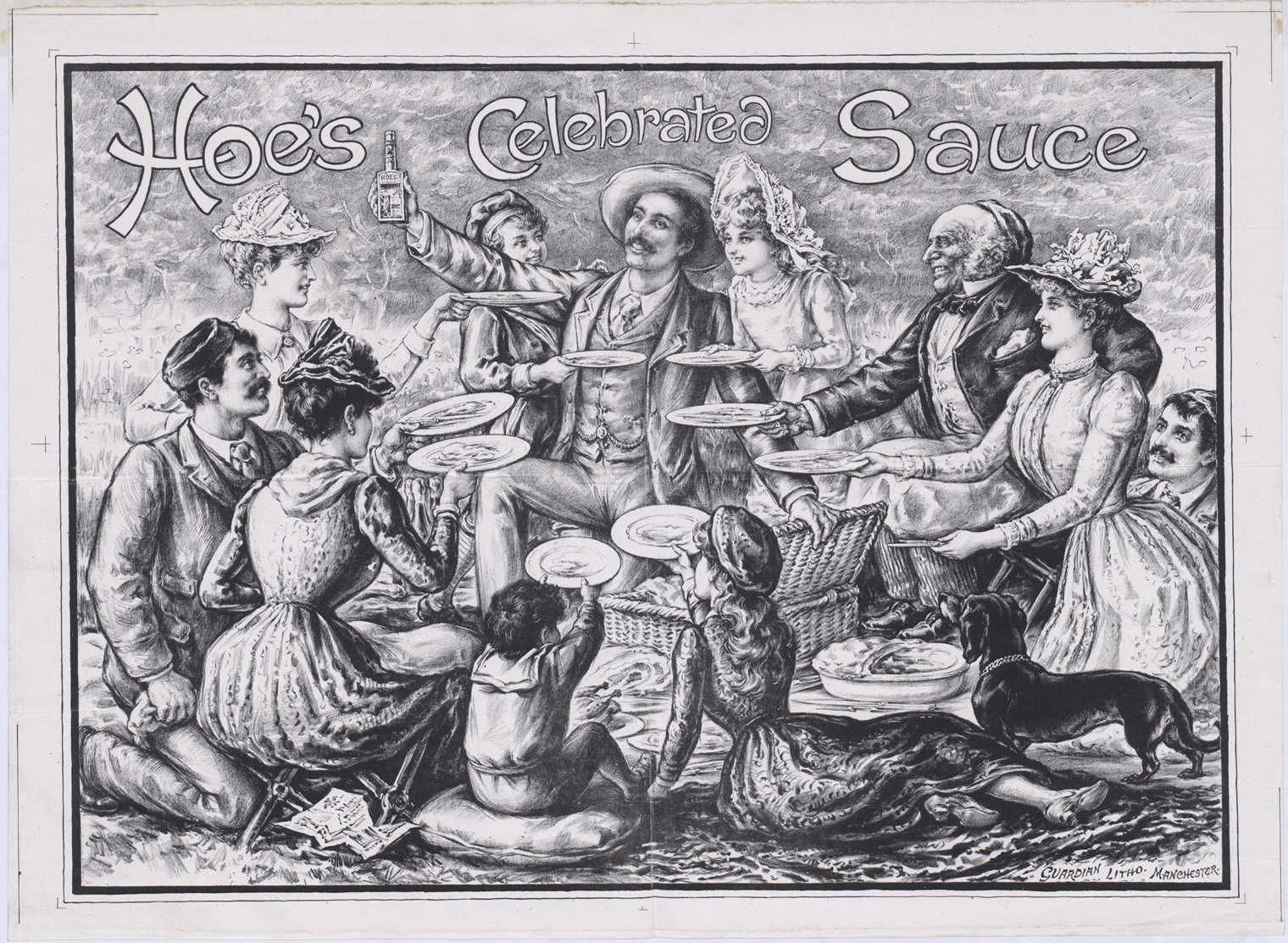
Looking at an old photograph is like looking through a window into the past. We look at the people and we wonder, ‘Who are they?’
Unfortunately, photographs by themselves cannot answer this question. We have to use other sources to figure out as much as we can about the people in photographs and their lives.
For example, look at the photograph below and find out: who the people are; what their names are; where they live; what they do; and whether they are rich or poor. Do not guess. The evidence is in the sources.
What can we tell from this photograph?Photography was invented in the 1820s, with the first photographs taking up to 8 hours per exposure. As photography evolved, images were taken onto plates of glass which would then be turned into photographs. This was a long and expensive process, and because of this, family photographs were mainly reserved for the rich upper classes. In 1884 however, technology evolved enough to allow photographers to use film in their cameras rather than photographic plates, reducing the cost and allowing more people to have photographs taken.
Photographs can be a useful source when looking for information about people. They can give us an idea of how people lived, although we have to consider why the photograph was taken in the first place. Families would not have had their own cameras, instead, they would have to sit for a photographer who would take the image for them.
James Lillywhite, the gentleman in the photograph, was best known as the first ever captain of the English cricket team, although he also went on to become an umpire and umpired all the test matches between Australia and England in the 1881 – 82 season. He came from a well known cricketing dynasty; his uncle was Fredrick Lillywhite, one of the most famous cricketers in the country, and his cousins were also heavily involved in the sport, either by playing, or as cricketing outfitters. His cousin Fred Lillywhite owned a cricketing outfitters warehouse near Euston Square in London, and this was the forerunner of the famous Lillywhites sports stores.
The census return also gives us a great deal of information. Not only does it tell us about James and his family, but by looking at the occupations of his neighbours, we can get an idea of what kind of an area he lived in. A national census has been taken every ten years since 1801. Everyone in Great Britain is counted on the same night. We fill in our own census forms today, but in Victorian times a census enumerator called at every house and filled in the census forms for them.
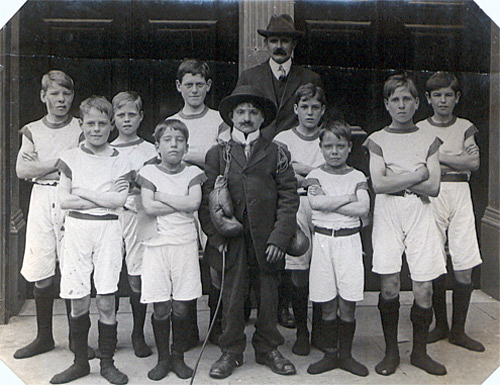
Only in the 20th century were young children no longer regularly expected to work alongside adults. By 1918 school attendance was not only compulsory but the school leaving age was raised from 12 to 14 years old. A generation earlier, in the 1860s, one third of children in England and Wales did not attend school at all and right up until 1881 children were not required to go.
Edwardian schools in the period 1901-1910 were similar in some ways to those of today.
Use the photographs in this lesson to discover how children were taught at the beginning of this century.
What was school like 100 years ago?The Boys’ Home Industrial School, which is featured in these photographs, was based in Regents Park Road, Primrose Hill, London. The school was founded to provide ‘for the maintenance and training of destitute boys not convicted of crime’. Boys who attended the school were trained in a number of disciplines, including baking, printing and shoemaking, and some boys went on to work for the William Morris Company once they had left the school.
Industrial Schools were different in a number of ways from local board or church schools. Children were likely to board at the school because the intention was for them to be separated from bad influences at home. You can see in Sources 1 and 2 that the children wore uniforms, unusual in British schools of the period.
One thing that the school would have shared with others of the period would have been the use of corporal punishment, usually the cane (although Scottish schools used a thick leather strap called a ‘tawse’). Corporal punishment in state schools was outlawed in 1987.
The early 20th century saw the true start of mass education in Britain in the way we would recognise it today. In 1902, the Conservative government of Arthur Balfour passed an Education Act which brought state primary schools and local secondary schools under the control of local councils for the first time.
The Act was needed because the provision of some schools for older children had actually been challenged in court. However Balfour also considered an educated workforce vital to maintaining Britain’s position at the forefront of world trade and technical achievement.
In 1906 the election of the new Liberal government led to considerable social reform. With the growth of the new Labour Party, Liberals were keen to show that they were the real party of working people. The Education (Provision of Meals) Act of 1906 introduced ‘school dinners’ and was followed by a further Act in 1907 which gave local authorities powers to authorise medical examinations in schools. It was hoped these would help diagnose childhood diseases early.