
To mark the 100-year commemorations of the Representation of the People Act, the Education Service worked with professional film-maker, Nigel Kellaway, to engage young people (aged 16-19) with suffrage records held at The National Archives.
‘Suffrage Tales’ is the outcome of this project; a short stop-motion animation film, researched, created and filmed during Sunday 30 July – Friday 4 August 2017. As the power of the vote comes under scrutiny and provokes highly contentious debate, this film throws light upon the historical context of the franchise in a uniquely refreshing way. The young people involved drew upon a wide range of documents from our collection, to produce a film about their interpretations of the fight for women’s suffrage.

Many thanks to the Friends of The National Archives for their support on this project.
You can now view the video in full here, or download our lesson pack complete with questions and clips using the button above.
What would you do?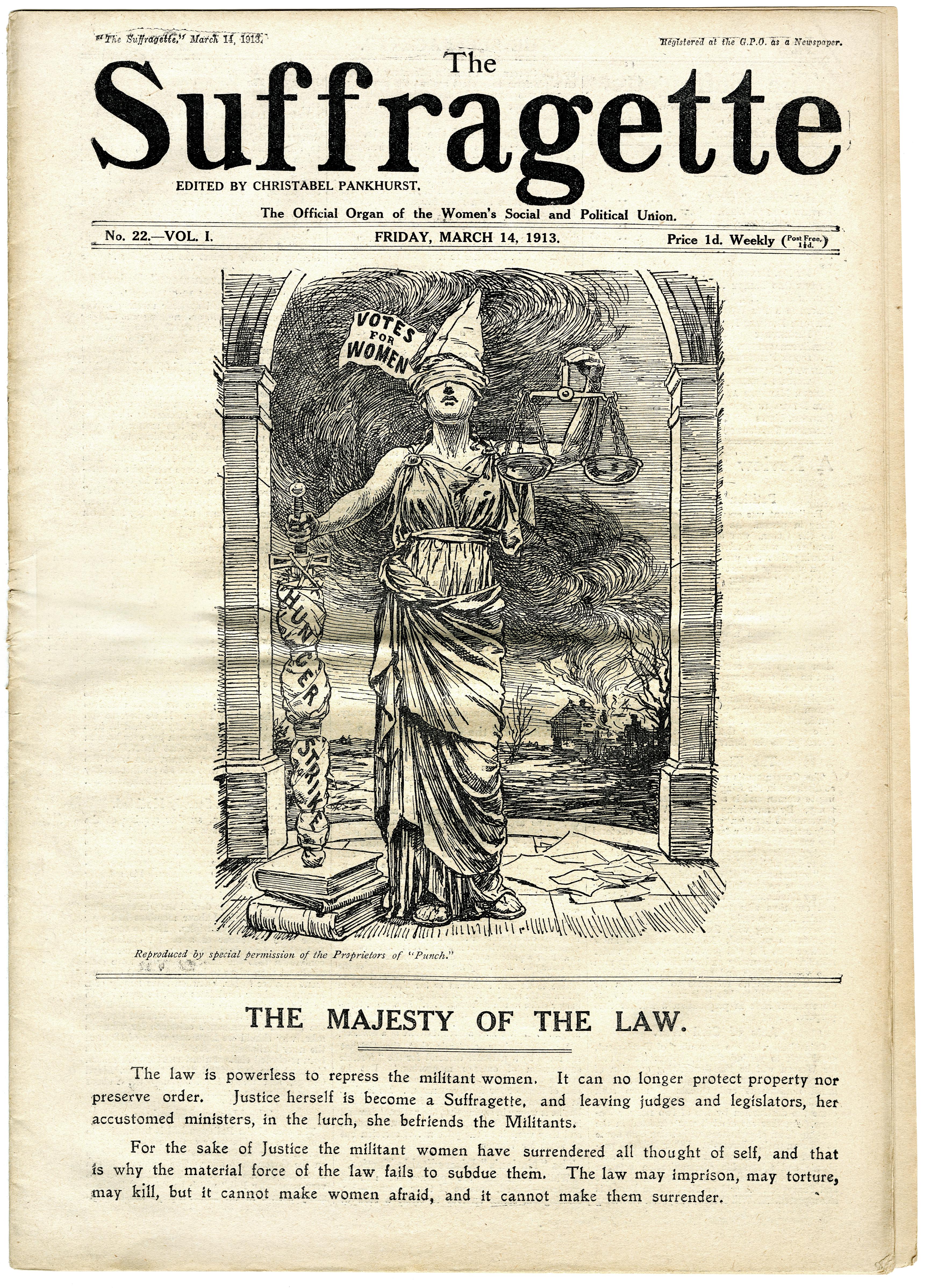 What did the struggle for the vote involve?
Christabel Pankhurst, twenty-three years-old, was impatient for change: ‘the vote question must be settled. Mine was the third generation of women to claim the vote and the vote must now be obtained. To go on helplessly pleading was undignified. Strong and urgent demand was needed. Success must be hastened.’
On 10th October 1903 the Women’s Social and Political Union, a new organisation demanding Votes for Women, pushed its way noisily onto the women’s suffrage scene. Until then the effort was led by Mrs Millicent Fawcett and her National Union of Women’s Suffrage Societies, a movement founded in the 1860s. At Mrs Emmeline Pankhurst’s home in Manchester, the new Union announced its modernity with the three-word slogan: ‘Deeds Not Words.’ Mrs Pankhurst’s eldest daughter Christabel became the strategist for the movement. The campaign was a response to the Great Reform Act of 1832, which had enfranchised only ‘male persons’ with property, excluding, by definition, all women.
The W.S.P.U. demonstrated their agitprop approach in the first of many militant protests: Christabel, and Annie Kenney, a mill girl from Oldham, chose a meeting held by Liberal politicians Winston Churchill and Sir Edward Grey, in Manchester on 13th October 1905. As result of their noisy interruptions and persistent questions, they were ejected and continued to protest outside and were later sent to Strangeways Prison. Today we might now describe their actions as controversial, but at the time they were found deeply troubling and unfeminine. The slogan ‘Deeds Not Words’ had become a reality, and a precedent for their entire campaign.
This public disobedience earned the W.S.P.U. a derogatory nickname, ‘Suffragettes,’ coined by a ‘Daily Mail‘ reporter in January 1906. The ‘Suffragettes’ adopted the term and used it for their militant newspaper, ‘The Suffragette’, launched in the summer of 1912.
The W.S.P.U. moved to London in 1906, and opened a national headquarters at 4, Clement’s Inn. Frederick and Emmeline Pethick-Lawrence funded the office accommodation in the early days. Emmeline’s fundraising and Frederick’s expertise as a barrister initiated a formidable campaign, which has never been seen before or since. By the end 1912, fifty-eight branches existed across the country recruiting women from all backgrounds and occupations. Membership lists were not kept in case of police raids on their premises. Donors listed in their weekly newspaper ‘Votes for Women’ showed that thousands of women supported the campaign financially and actively.
Nowadays we take marketing for granted, but it was first used politically by the W.S.P.U, who created their campaign as a brand. There were well-designed logos, stylish exhibitions, spectacular processions and meetings in London and the major cities. Special colours represented the movement, purple, white and green for freedom, purity, and hope respectively. Supporters wore the colours and they were used on badges, bicycles, chocolate bars, cakes, jewelry and even a motor-car.
Faced with determined opposition from many politicians, the press and the public (including women), Keir Hardie, M.P. (Independent Labour Party) was a good political friend to the women’s suffrage campaigners. While Liberal politicians consistently voted in support of the Conciliation Bills to grant a measure of women’s suffrage in 1910, 1911 and 1912, their wishes were crushed by the anti-women’s suffrage Prime Minister Herbert Asquith and others who refused to steer a Bill through Parliament. The collapse of the 1912 Conciliation Bill was the trigger which propelled the W.S.P.U. into sanctioning extreme militancy which marked the final two years of the campaign until the outbreak of the First World War.
The two men’s organizations which worked for votes for women were the Men’s League for Women’s Suffrage, founded in 1907, and the Men’s Political Union for Women’s Enfranchisement of 1910. Many men supported their wives, sisters and girlfriends, although most men did not. Those who did paid a heavy price for being ‘sex traitors’ and suffered violence whilst offering protection at public meetings, and lost their reputations or jobs.
Until the increased militancy of 1912 the moderate suffragists – the National Union of Women’s Suffrage Societies – and the militant suffragettes worked together. Members of both wore each-others’ badges, and joined the same marches. They all handed out leaflets about enfranchisement of women, canvassed for the private members’ bill and sold newspapers. Yet, these documents reveal that the suffragettes went further: they attempted to enter the House of Commons; heckled meetings; blew up pillar-boxes; smashed windows; burnt down empty buildings and attacked works of art.
By the summer of 1914 the positions of suffragettes and Liberal government were deeply entrenched: the W.S.P.U. was determined to force the government to give women the vote, and the establishment equally stubbornly refused to comply. Over a thousand British suffragettes had acquired a criminal record and many were imprisoned for demanding the vote. These records show that suffragettes were denied the status of political prisoners and treated as ‘common criminals’. In protest many went on hunger-strike and were force fed with terrible consequences for their health. The W.S.P.U. awarded women who experienced this torture with ‘For Valour’ medals: ‘in recognition of a gallant action, whereby through endurance to the last extremity of hunger and hardship, a great principle of political justice was vindicated.’
Dr. Diane Atkinson
‘Rise Up Women! : The Remarkable Lives of the Suffragettes’ (Published by Bloomsbury, February 2018)
 What were the key areas of dispute?
By Dr Hannah Worthen
Post-Doctoral Research Associate, University of Hull
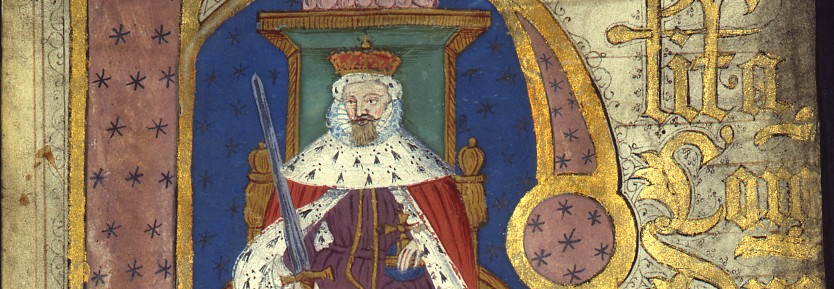
King James I of England, and VI of Scotland, ascended the throne in 1603 following the death of Elizabeth I. He inherited substantial debts from his predecessor, as well as a country that was still struggling with the religious divisions of the Reformation, and significant foreign policy issues. James’ reign has been characterised by historians as one of financial excess and religious tension, most dramatically illustrated by the 1605 Gunpowder Plot. His reign is also regarded as significant because it directly preceded that of Charles I and the subsequent outbreak of the Civil War in England, Scotland and Ireland.
This document collection demonstrates a range of important matters that James I had to contend with. Soon after becoming King of England, he faced complex foreign policy issues as war raged on in Europe. During his reign he made peace with Spain but later saw war with Bohemia. Again, the King’s lavish spending is highlighted in several sources as are the attempts by his Secretary of State, Robert Cecil, to control it. In many ways, James I faced no problem as difficult as trying to unite the kingdoms of England and Scotland. This resource includes several records which showcase the debates surroubnding his ultimately thwarted ambition to see the creation of a united ‘Britain’.
Religion was a key concern for James I as there were particular problems between Roman Catholics (or ‘popish recusants’) and Puritans (Protestants who wanted further reformation of the Church). Several of our documents shed light on these tensions; one, from the desk of England’s chief spymaster, recounts the story of an argument over religion that broke out in a pub. Also, while the Gunpowder Plot may probably be the best-known event of James’ reign, this resource illustrates another less well-remembered threat to the king, with sources relating to a conspiracy called the Bye Plot.
As King, James’ relationship with Parliament was critical, especially so as this broke down during his son’s reign. So, the collection shows records which expose the tensions between them, particularly over such issues as the Divine right and royal prerogative. The resource also includes a few sources from the start of Charles’ reign to reveal what happened when Charles I argued with Parliament, eventually with dramatic consequences.
Most of these sources come from The National Archives’ State Papers collection. That means that they were originally part of the private papers of the Secretary of State (the most important minister for the monarch). These papers represent what he collected, so some of the sources are ‘official’ proclamations or reports of events, whilst others are private letters he received and reports of local news that he must have intercepted. Some of the sources are printed but most were handwritten in a style known as ‘secretary hand’ that is quite different to the one we use today. All of the sources have had sections transcribed, but in some cases occasional words are missing thanks to illegible handwriting or damage the documents have suffered over the centuries.
The reign of James I is essential to understanding this period in history, and the breadth of key issues it encompasses and provides a wider context for the Civil Wars which followed. The collection demonstrates the complexity of issues, both religious and political, that James came up against when he came to the throne. It also highlights the wealth of information available within the state papers at The National Archives that shed light on the reign of this important monarch.
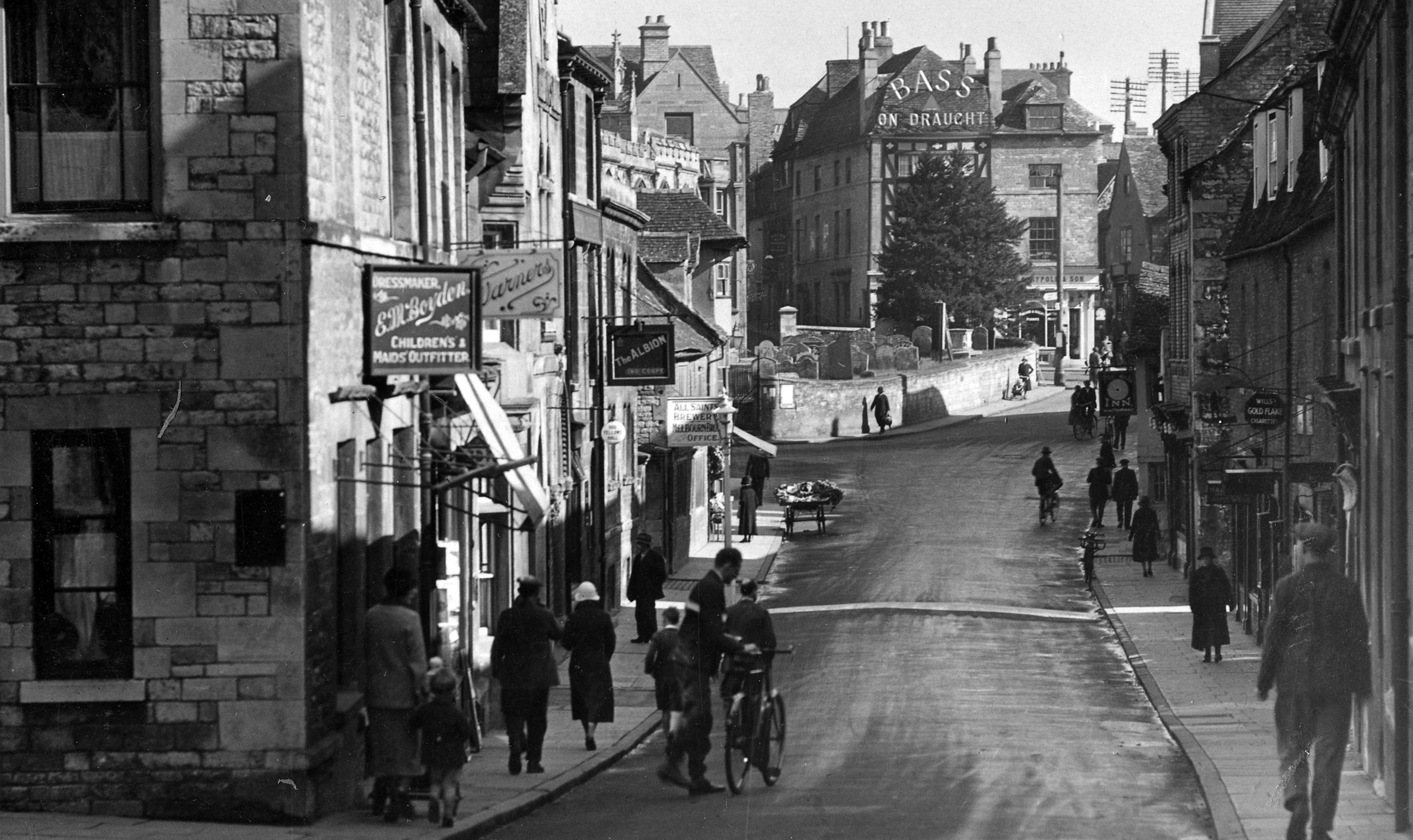 Using images for descriptive and narrative writing