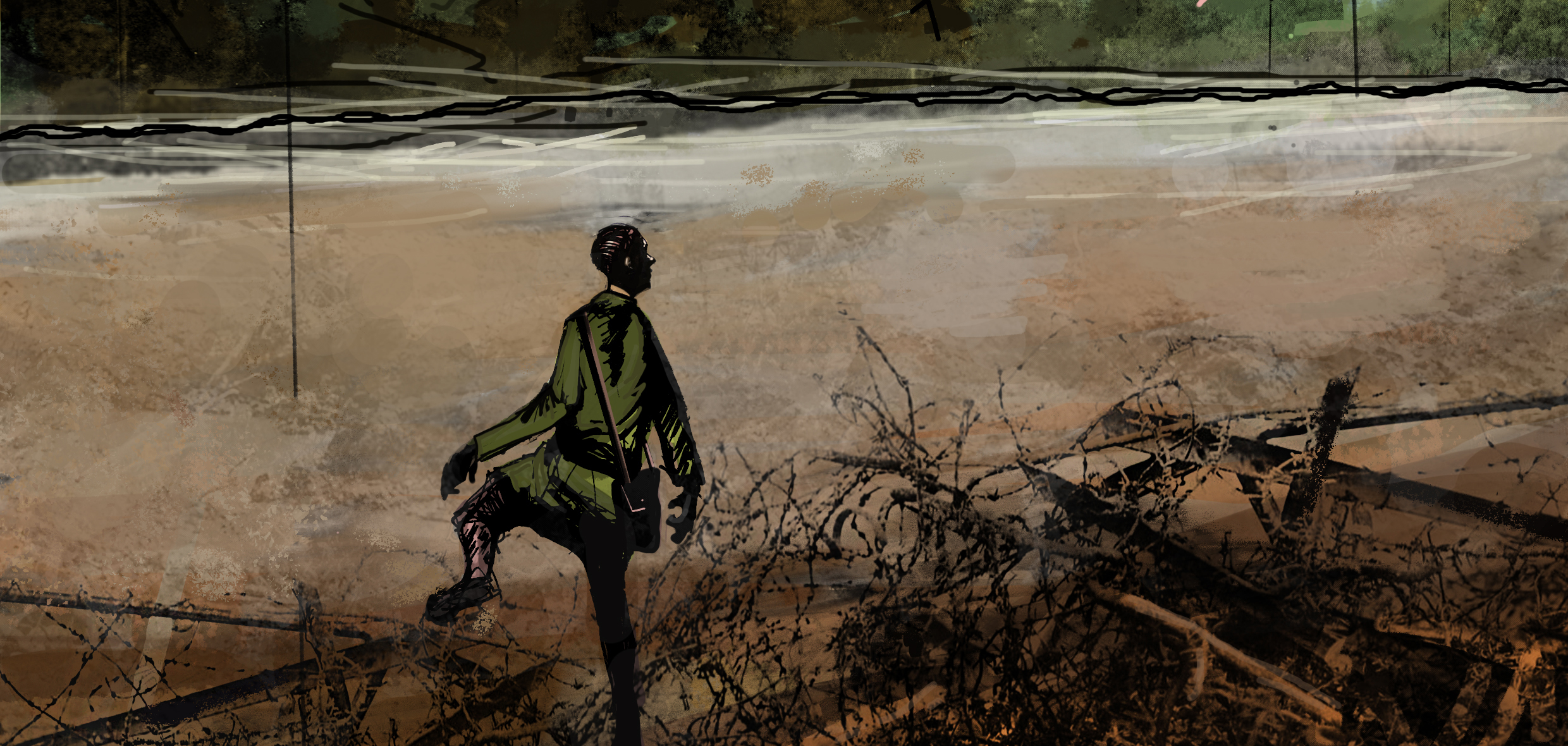
‘Armistice and Legacy’ is a graphic arts project illustrated by nine students who spent a week at The National Archives, illustrating their interpretations of First World War records and the research undertaken by The National Archives staff during the centenary of the war. The tales are told through the eyes of those who served in the war, showing the diverse experiences at the front and at home.
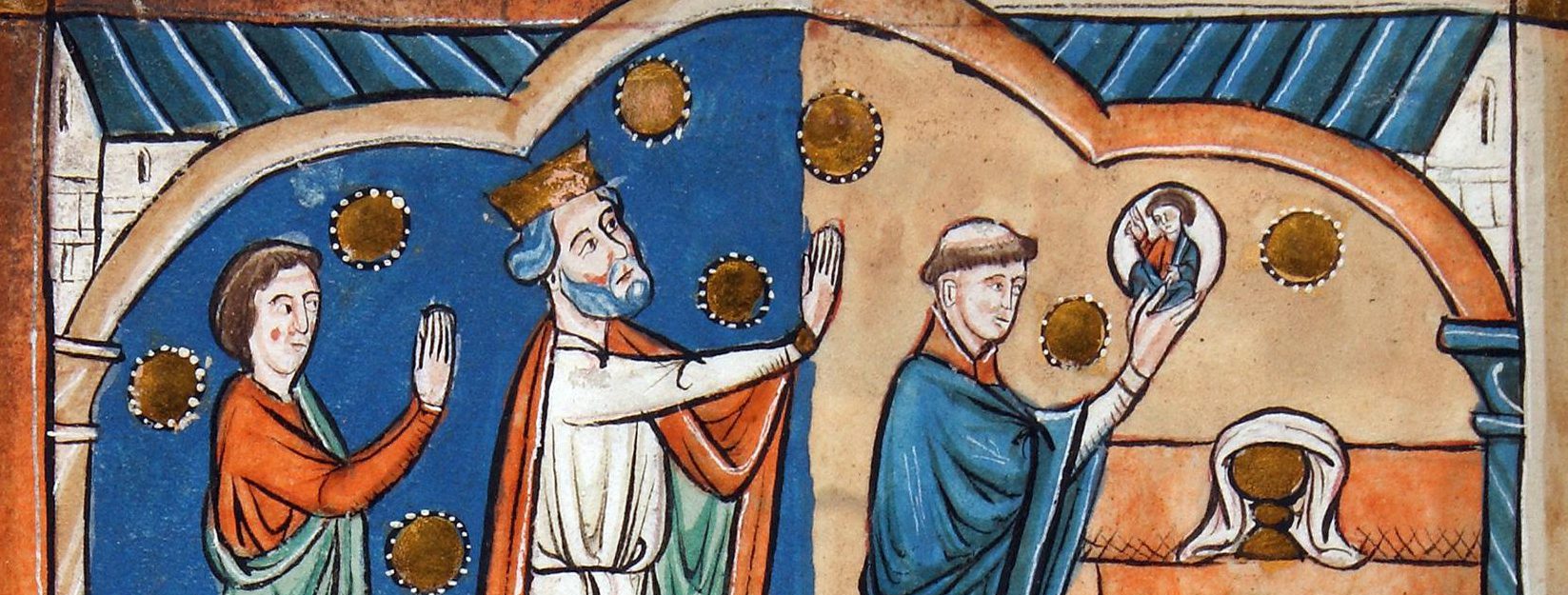
Illuminated manuscripts are luxury items, displaying the wealth and often piety of their owners through golden details on religious or secular imagery. It is unusual, however, to see such religious iconography in the pages of Domesday. The importance of Domesday Book meant that several copies were needed, with three being made in the 13th Century. This copy, the Abbreviato, was made for the Exchequer and presents a shorter (abbreviated) version of the original book. The copy begins with the story of Edward the Confessor, showing scenes from his life to show his religious piety.
Use this lesson to find out more about what the Domesday Abbreviato can tell us about Edward the Confessor. The images are described within their source pages. Click on each image to find out more.
What does the Domesday Abbreviato tells us about Edward the Confessor?Edward was born as the 8th son of King Ethelred II in Islip, Oxfordshire in around 1003. His mother was Ethelred’s second wife, Emma, daughter of Richard I of Normandy.
During the Viking raids on England where Elthelred was forced off the throne, Edward, his brother Alfred, and the rest of his family fled to Normandy for safety. When his father died, his mother remarried the Viking King Cnut, joining him to rule England before ensuring their son Harthacnut became King on Cnut’s death. Harthacnut, however, returned to Denmark to fight for his crown, leaving England under the rule of his elder half-brother Harold Harefoot.
It was at this time that Edward and his brother Alfred received a letter, asking them to return to England to see their mother. When they arrived, they found that they had been betrayed and Alfred was captured by Earl Godwin. He was sent to Harold Harefoot who had seen their return as a threat to his power. Harold had Alfred tortured, blinding him to make him an unsuitable king, but Alfred died from his wounds.
Edward never forgave Earl Godwin for this betrayal and years later, after his own ascension to the throne, during a banquet at Windsor accused Earl Godwin of his brother’s murder. The Earl denied the murder, claiming that if he were guilty the morsel of bread he was eating would be his last. Legend tells that the Earl then choked on his bread, and died.
Edward ruled England for many years, and was known for his religious piety. He commissioned the building of a great Abbey to St Peter to the west of the existing Abbey of St Pauls. It would become known as West Minster, and still stands in its later form today as Westminster Abbey.
Edward had no children, leaving confusion about his line of succession on his death in 1066. Three parties claimed the throne should be theirs, including Earl Godwin’s son, Harold Godwinson, who had been a powerful figure throughout Edward’s reign and had managed to conquer Wales for him. Edward’s connections to Normandy meant his cousin William, who Edward had spent a lot of his childhood alongside, felt he had claim to the throne, while the Viking descendants of King Harthacnut also felt they had a claim due to the earlier wars and Viking Kings. The war for the throne would become infamous with William the Conqueror beginning the Norman reign of England after the Battle of Hastings.
Many years after Edward’s death, people began telling stories of miracles that happened during his lifetime. He had been made a saint, known as ‘confessor’ as he had not died as a martyr for the church. Many of these miracles are proven to be factually inaccurate, but people believed they were true and as time went on the stories became grander.
King Henry III was a devout believer of the cult of Edward the Confessor. Five of these stories are illustrated at the beginning of a copy of Domesday Book created in Henry III’s reign. The book was created at Westminster Abbey by monks who would have been very familiar with his stories.
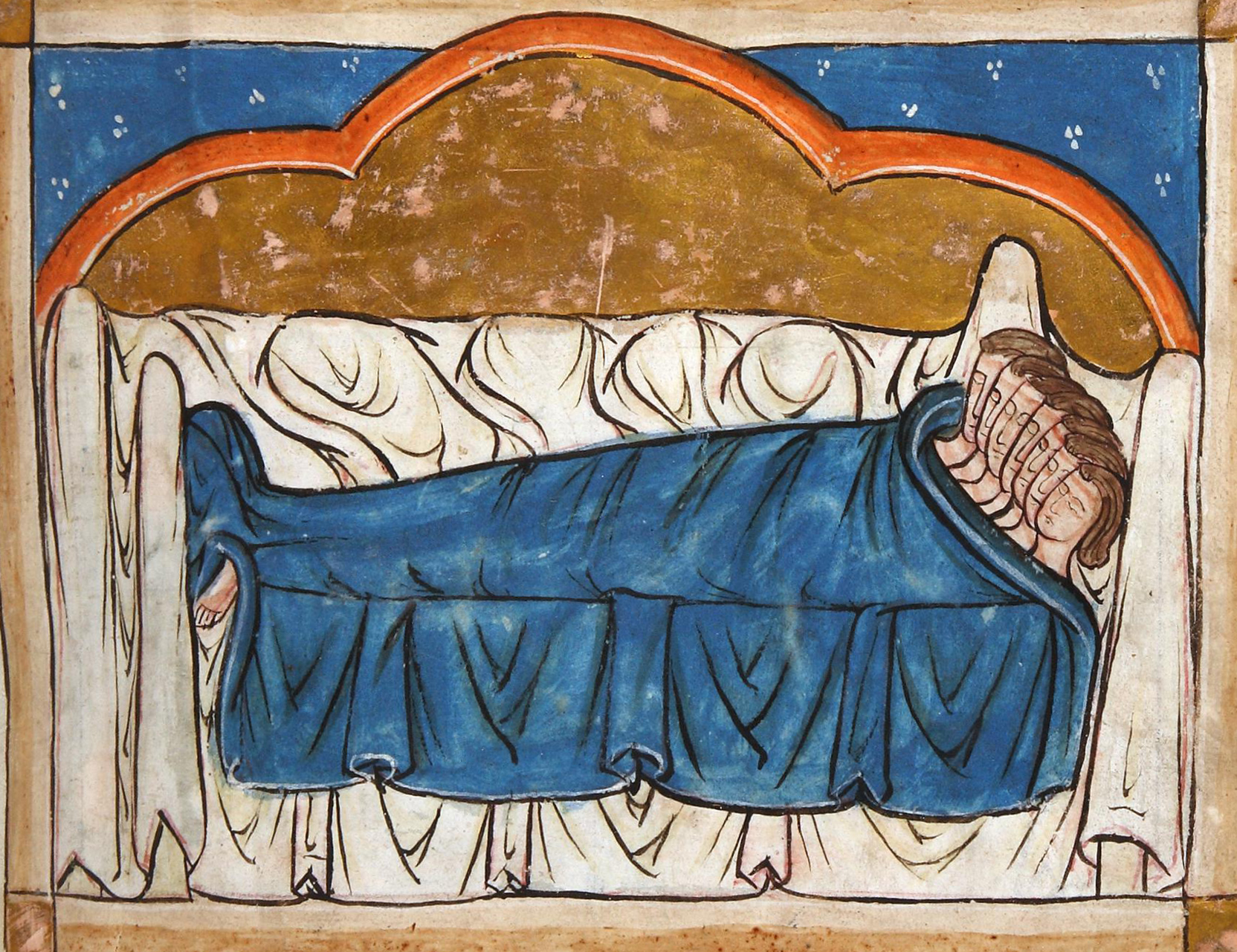
While at a feast with his nobles, King Edward suddenly began laughing. When the nobles asked him why, he told them that he had seen a vision of the Seven Sleepers of Ephesus. In Christian and Muslim religion, the sleepers are said to have hidden inside a cave for hundreds of years to escape religious persecution. In Edward’s vision, he is said to have seen the sleepers roll onto their left side, suggesting many years of bad luck. He predicted that the next seventy four years would be full of war, disease and natural disasters.
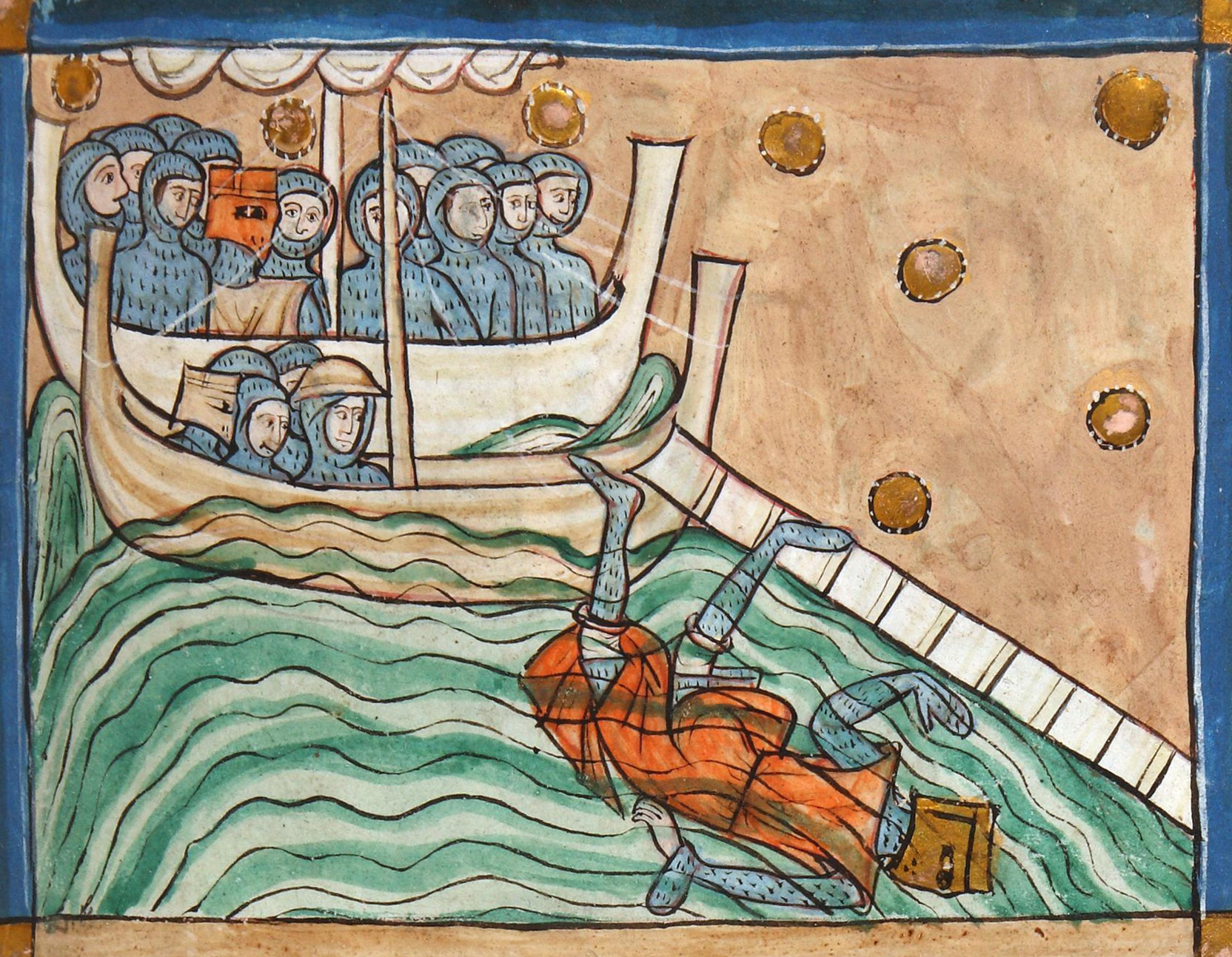
King Edward was known as a king who never laughed. During a court session on Whitsunday Edward is supposed to have broken into uncontrollable laughter during mass. When asked why he was laughing, he explained that he’d had a vision of the King of Denmark drowning on a voyage to invade and conquer England. When they sent messengers to Denmark to investigate, they found that the story was true and the king had indeed died. The image shows the moment where the king fell from his ship. This particular miracle is known to be untrue as King Svein of Denmark did not die until after Edward himself.
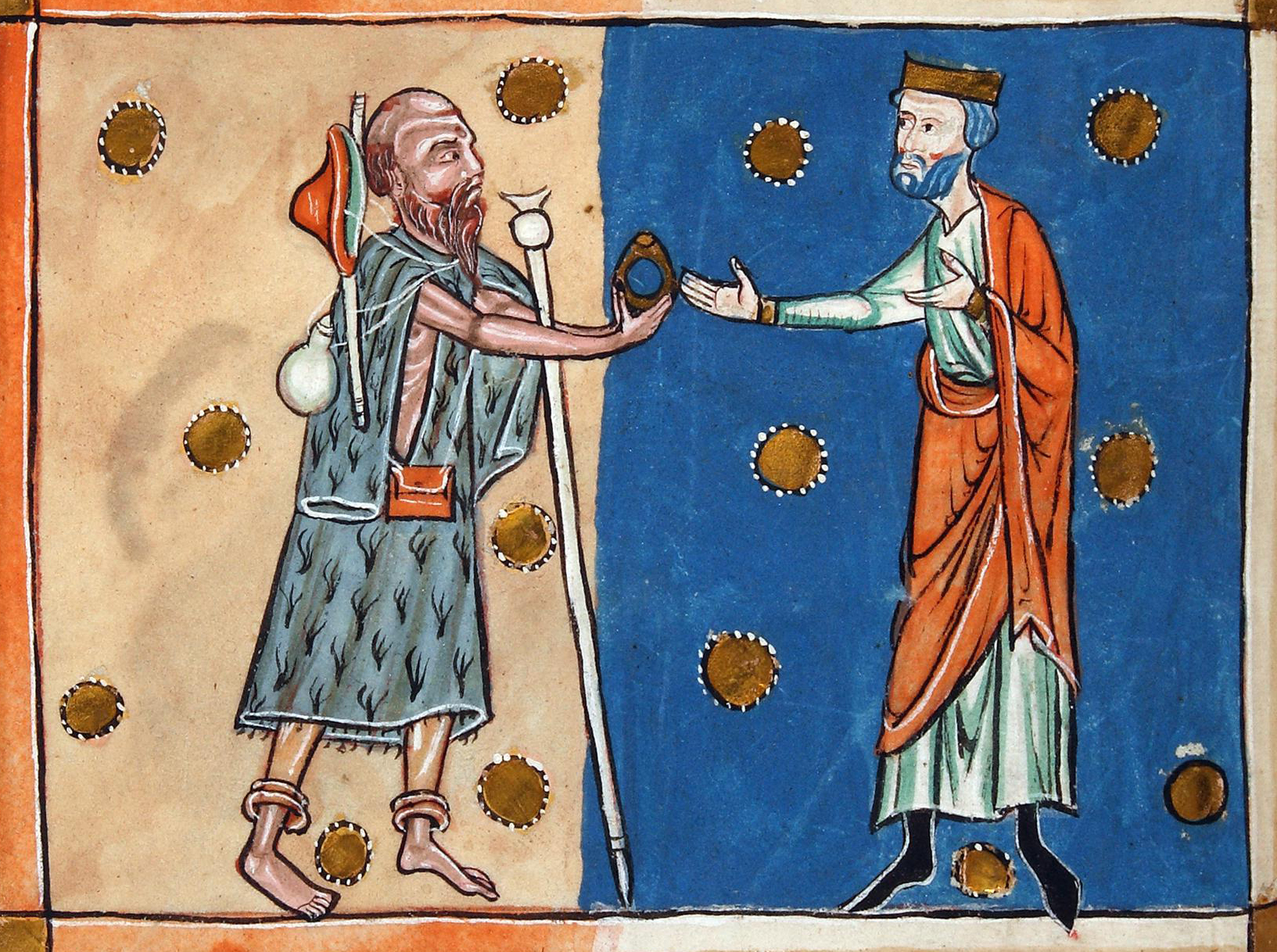
It is said that on a journey back from mass on the feast day of St John the Evangelist, King Edward was stopped by a beggar asking for Alms, or money for the poor. The King who had no money on him, took a ring from his finger and gave it to the man.Some time later, two pilgrims in Jerusalem met an old man who asked them to return the ring that he had been given by the king. He told them that in six months, the King would come to live with him. When the pilgrims asked who he was, the man replied ‘St John the Evangelist.’ Supposedly, this happened six months before King Edward died.
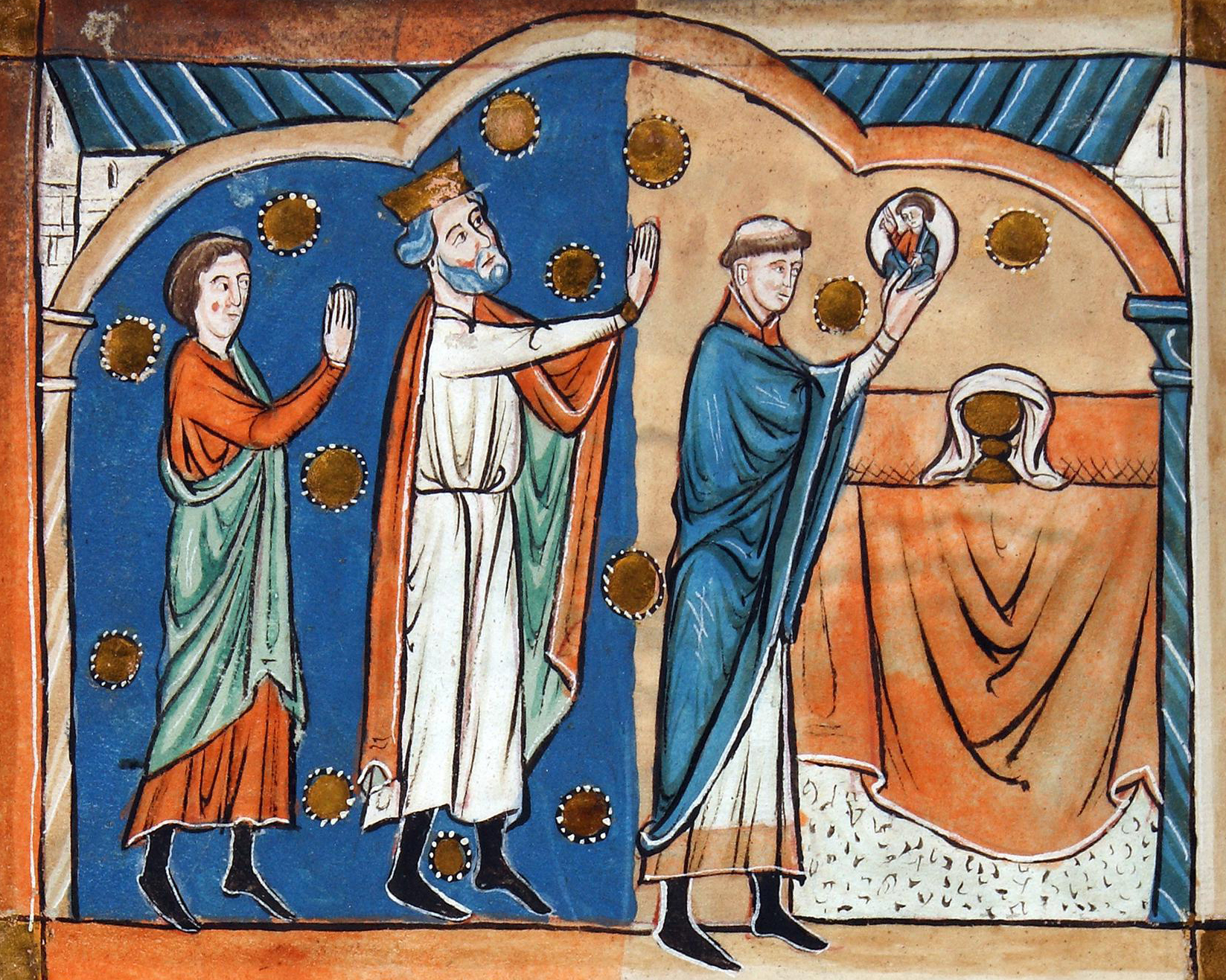
Edward the Confessor was said to be a very pious man, meaning he was devoted to his religion and lived his life according to its rules. While at mass and receiving the Eucharist, a wafer said to represent the body of Christ, Edward looked down to see the Christ child in the wafer. In this image, the Christ child can be seen in the disk held by the priest who is about to turn and hand it to Edward.
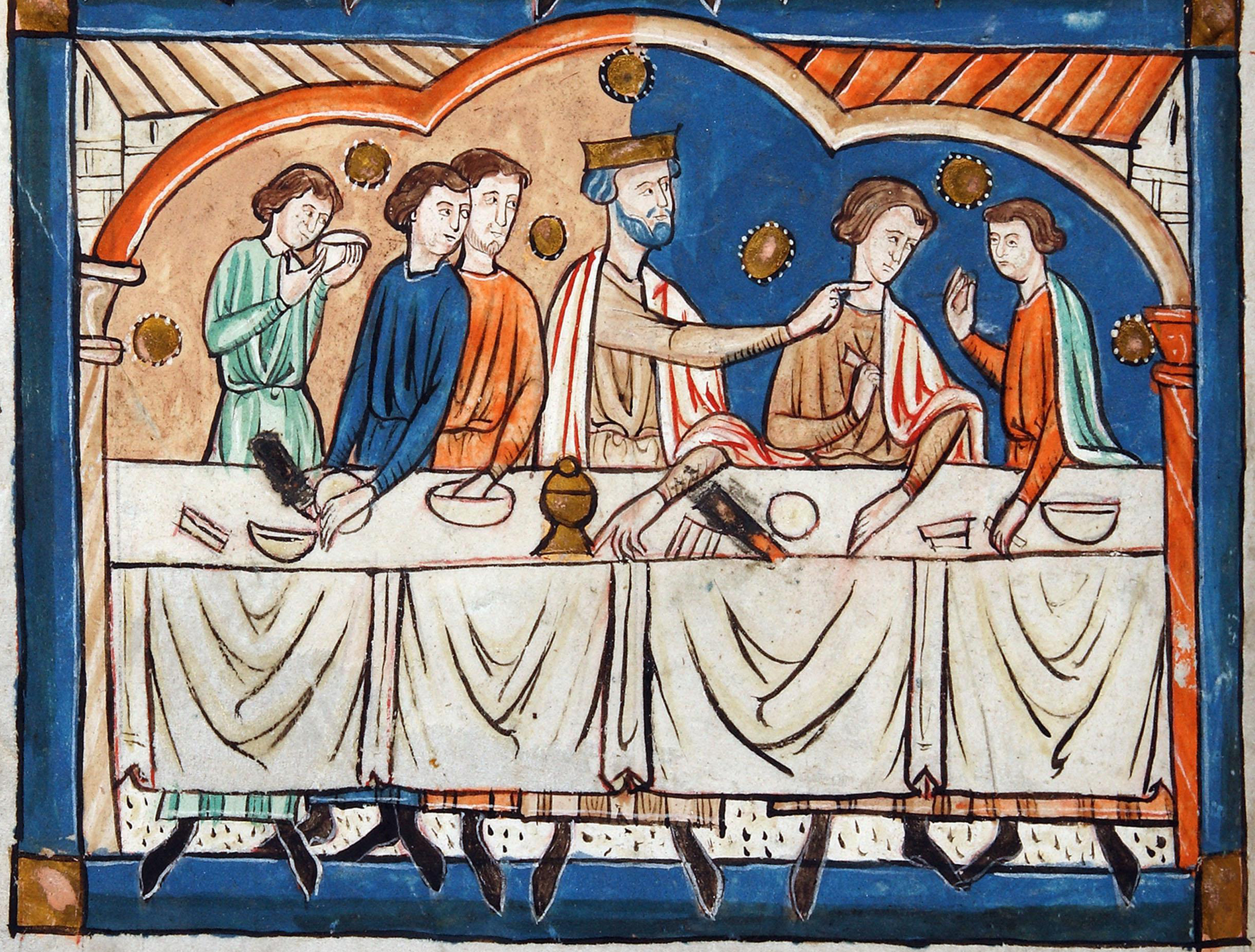
Before Edward returned to England from Normandy, his brother Alfred travelled to England and was captured. Earl Godwin took Alfred to Harold Harefoot who tortured him but Alfred died from his wounds. Edward never forgave Earl Godwin for this betrayal and years later, after his own ascension to the throne, during a banquet at Windsor accused Earl Godwin of his brother’s murder. The Earl denied the murder, claiming that if he were guilty the morsel of bread he was eating would be his last. Legend tells that the Earl then choked on his bread, and died. This scene shows Godwin at the far right of the frame, preparing to eat his bread.
 Decade of conflict, realignment and change?
By Professor Keith Laybourn, Diamond Jubilee Professor of the University of Huddersfield
For 1920s Britain, in terms of education policy, the Establishment assumed that the working classes only required a basic education. The first Labour government argued that children should stay at school for longer and set up the Hadow Committee on Adolescent Education in 1924. This reported in 1926, at the time of a Conservative government and reflected the Establishment mind for ‘equality of opportunity’ rather than ‘universality of provision’. It simply suggested that children over the age of 11 should be educated in a secondary school based on an 11 plus exam deciding whether that should be a grammar school, a central or technical school or merely a secondary modern school. Equality of opportunity, by virtue of the 11 plus test for all, merely perpetuated inequality. Most working-class children found that their education changed little in the 1920s, except from 1921 the official school leaving age was made 14 years old.
The widening of political rights ensured that the working classes, who represented three-quarters of the nation, saw some improvements in their living conditions and their leisure and lifestyle opportunities. Neville Chamberlain introduced the 1923 Housing Act, which provided subsidies to private house builders for the building of private homes. However, as Hemel Hempstead, and many other councils found, the building of private houses did not provide for the rented accommodation which most families needed and the Council ‘raised the question of themselves building some houses at Kings Langley’. There were some subsidies for councils to build rented accommodation under the Chamberlain Act but the big boost for this came with the John Wheatley Housing Act of 1924, introduced by the first Labour government. Providing subsidies for up to forty years this stimulated the enormous growth of relatively cheap council accommodation which has been a major feature of British housing accommodation ever since. These houses were much bigger and better than the slum accommodation they replaced and were partly responsible for some improvement in health and declining infant mortality rates after the First World War. Many towns expanded as a result of both private and public house building and London, particularly, expanded into suburbia as its underground and over-ground railway systems permitted fast, easy and cheap travel.
The opportunities for ‘workers at play’ also increased dramatically during the 1920s with the development of cinemas, the ‘talkies’, and sports such as football. Seaside holidays, in particular, developed rapidly. The British railway system reorganised itself in the 1920s and increasingly targeted the growing seaside towns of Britain – such as Blackpool, Hastings and Scarborough – which became some of the fastest growing urban communities of the inter-war years. Blackpool, with its five million visitors a year, became the leading seaside resort in Britain, and was dubbed ‘Manchester by the Sea’.
Gambling opportunities for the working classes also widened. The football pools grew enormously in the 1920s, with Littlewoods, run by the Moores brothers, soon dominating the leisure expenditure of the working classes. Even more emphatic was the growth of greyhound racing, mushrooming growth from the date of the first meeting at Belle Vue, Manchester, on 24 July 1926. By the end of the 1920s there were upwards of 200 tracks and attendances of more than twenty million per year. Winston Churchill saw greyhound track as an ‘animated roulette wheel’ and John Buchan, MP and author of The Thirty-Nine Steps referring to ‘the illuminated ribbon of turf’, as he unsuccessfully attempted to introduce a Dog Racing Bill in 1928 to allow local authorities to ban the construction and opening of greyhound tracks. The Baldwin Conservative government at the time feared that introduction of such legislation would look like ‘class legislation’.
The formation of the British Broadcasting Company in December 1922 saw the development of listening to the radio for pleasure. Radio broadcasting was limited to eight stations in March 1923. In 1926 this became the British Broadcasting Corporation and with John Reith as Director-General in 1927, claiming an independence from government control which he never demonstrated during the General Strike.
The attempted control of working-class leisure occasionally extended to those areas where the working and middle classes met. The wartime government had imposed some restrictions on night clubs in 1915. Ten years later the Christian churches in Britain, led by the Bishop of London, sought to revive the act to prevent uncontrolled drinking. Indeed censorship remained the theme of the 1920s. Indeed, Jonathan Cape Ltd published Radclyffe Hall’s The Well of Loneliness about lesbian love, which the Home Office in 1928 thought to prosecute for ‘obscene libel’ despite its plea for toleration and the recognition of ‘sexual perversion amongst women’, was subject to a press campaign led by the Sunday Express and a successful prosecution for obscenity.
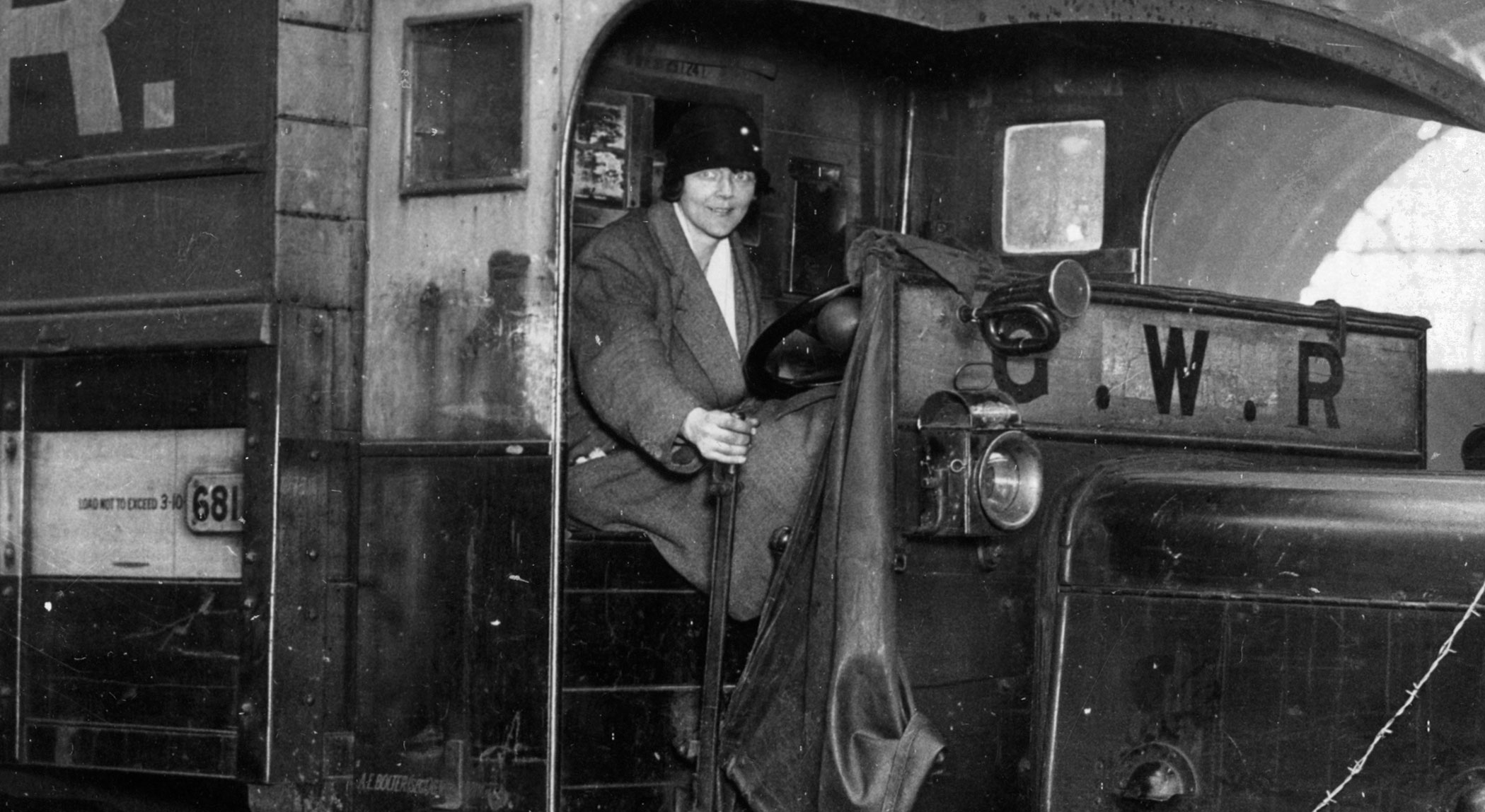
Whilst social change could create battlegrounds of resistance to technological developments were more difficult to deny. Indeed, this was true of the automated engine for the 1920s became the new age of the car. There were around 300,000 motorised vehicles in Britain in 1920 and this number had increased six fold by 1929. Competing with other slower occupiers of the road – horse-driven vehicles, trams and pedestrians, ‘who held the right of saunter’ – motorised vehicles rapidly drove other road users off the road. Cars and motorised vehicles killed about 1,000 people and injured about 50,000 a year in 1920. By 1929 these figures had risen to more than 6,000 deaths and 220,000 injuries per year. The average police constable spent about a sixth of his time on road and traffic duties in the 1920s, directing the traffic, patrolling the roads, and trying to avoid the congestion caused by the narrowness of the streets, which the Bradford City Police and the Metropolitan Police, for instance, saw as the main cause of congestion and accidents. This was at a time when the Home Office and Government were making attempts to control police expenditure as part of a general round of cuts. As a result from the late 1920s onwards experiments with automated policemen, the traffic lights, and moves towards the creation of a Highway Code, began the process whereby the police saved on expenditure and motorists and pedestrians were increasingly separated – the motorists ruling the roads and the pedestrians being channelled into crossing places and pavements in a relationship, sponsored by the AA and RAC, which made the pedestrian rather than the motorist responsible for their own road safety. Policing was transformed as a result of the expansion of the car culture. Police numbers were inadequate to deal with the demands placed upon them. Some faltering steps towards employing women police officers, but by the end of the 1920s there were fewer than a hundred employed.
If the motor age had begun to change British society and policing, the aeroplane transformed the lives of only a few at the time, though many in the future. Aeroplanes had been used for military purposes in the First World War and were then increasingly used for civil aviation in the 1920s as new airports, particularly Croydon in London, were opened. They offered a sense of modernity and adventure in the public mind and Croydon was the starting point of the flight of the famous aviator Amy Johnson, who undertook the first solo flight from England to Australia in 1930. She received her licences to fly ‘All types’ of flying machines on 6 July 1929.
In foreign affairs, although the really serious international issues of the inter-war years occurred in the 1930s, there were immediate post-war concerns about international relations governed by a general desire for continued peace. The Treaty of Versailles of 1919 had organised the post-war peace but imposed upon Germany reparation payments which many feared would lead to further friction and possible war. James Ramsay Mac Donald, the Labour Prime Minister, attempted to get these removed through The Hague Conference of 1924 and to reduce the number of capital ships at the London Conference of 1924 but the Locarno Conference and the seven Treaties of Locarno side tracked this approach by getting Germany and the major powers to simply declare that they would not go to war again and by guaranteeing the western borders of territorial arrangement agreed at Versailles whilst leaving the question of the eastern borders, particularly those between Germany and Poland, open to further discussion. These promises were not to be lasting.
The 1920s can therefore be seen as a decade of crucial important political, economic and social change, shaped particularly by the events and impact of the First World War, the demand for political equality for all men and women, and by technology such as the BBC, the mechanical hare and the car. It was a decade of conflict, realignment and change. Inequalities of employment, education, class and gender persisted but with political power falling into the hands of a working-class electorate, these issue could no longer be easily dismissed and ignored.
 Decade of conflict, realignment and change?
Professor Keith Laybourn, Diamond Jubilee Professor of the University of Huddersfield
The 1920s saw a rapid transformation in British society, almost to the point of fundamentally transforming the basis of its political, economic and social organisation even though there remained many areas of resistance to change: the Labour Party replaced the Liberal Party as the progressive party in British politics, women got the vote, and the car transformed the transport of the age as well as policing and social relations in British society. Such change was partly the result of the First World War but also the consequence of social and technical changes in British society which often pre-dated the War but which became amplified in the 1920s by the impact of war.
The First World War certainly exerted a major impact upon the British economy. The loss of foreign markets for the staple industries of Britain – coal, iron and steel, shipbuilding and cotton led to a rapid rise in unemployment. Post-war governments were immediately faced with the return of soldiers and ex-servicemen and applied the Treasury Agreement with the Trade Unions, made in 1915, that allowed service-men to return to their own jobs in some industries at the expense of women who had replaced them for the duration. A Ministry of Labour scheme to return 50,000 ex-service men to work failed as only 202 men were found jobs and 24,000 of them in the Building and Allied trades were still receiving unemployment benefits in 1921. Therefore, governments widened insurance legislation to provide benefits for the unemployed and offered relief work, trying to avoid forcing the unemployed into the poor houses. There a National Scheme for the Employment of Disabled Men. Yet, governments did little to tackle the underlying problem of industrial decline. Committed as they were to deflating the economy to strengthen the pound in the hope of returning to the Gold Standard, the symbol of international free trade that had made Britain great in the nineteenth century before being suspended in the War, successive governments failed to tackle unemployment. The Geddes Report or Geddes Axe of 1921/2, which brought cuts to government departments, worsened to chances of economic growth. Agitation from the unemployed was led by the Communist Party of Great Britain, formed in 1920, and the National Unemployed Workers (Committee) Movement (NUWM) formed in 1921.
With Communist leader Walter Hannington, the NUWM organised many unemployed, and particularly ex-servicemen in protests against the inadequate unemployment benefits. The miners organised their own protest march. The Miners’ March to London from Wales in November 1927 was supported by the NUWM, communist and socialist groups. The NUWM’S 1929 Hunger March, organised in January-February, saw marchers from nine areas of Britain march on London demanding better unemployment benefits and work for the unemployed.
War had led to Britain going off the gold standard and free trade, the hallmark of nineteenth-century Victorian economic prosperity. It was restored to the pre-war parity of $ 4.86 by Winston Churchill in 1925 when its value was only $4.40 to the £, hence British goods immediately became 10 per cent more expensive to foreign buyers. This added to economic decline and unemployment only to be heightened by the Wall Street Crash in 1929.
The continued policy of deflation, consequent wage reductions and unemployment, lead to strikes and major industrial unrest. The coal miners struck unsuccessfully against wage reductions in 1921, largely because the Miners’ Federation of Great Britain was not supported by the National Union of Railwaymen and the National Transport Workers’ Federation or ‘Triple Alliance.’
When the return to the Gold Standard led to further demands for reduced wages, the resistance of the miners in 1925 eventually led to the General Strike of 1926 when about 1,500,000 trade unionists came out in support of about 800,000 miners who were faced with wage reductions of 10 per cent and an increase in working hours. Although the General Strike failed, lasting only between the 3 and 12 May, employers were afterwards more reluctant to try to reduce the wages of their employees.
Politics in Britain changed because of the war. It divided the Liberal Party in 1916, which led to David Lloyd George to replacing H.H. Asquith as head of a wartime coalition government and leader of peacetime coalition government (1918-1922). By the 1924 general election the Liberals were reduced to 40 MPs, a sharp decline from the 400 returned at the 1906 general election. The Labour Party, now with its socialist constitution of 1918, emerged as the progressive party in British politics, forming minority governments under James Ramsay MacDonald in 1924 and 1929. In 1924 King George V wondered ‘what grandmama [Queen Victoria] would have thought’ at the prospect of a Labour government, even if, as Tom Jones, the Assistant-Secretary to the Cabinet had written that it was ‘Pale pink rather than Turkey Red’. But times had changed. The 1918 Franchise Act had enfranchised all men over the age of 21 and many propertied women of 30 and over, and the wider electorate favoured the Labour Party, endorsed the Conservative Party as the party of the nation, and left the Liberal Party in sharp decline. The minority Labour government formed in 1924 was supported by the Liberal Party but was short-lived because the Liberals withdrew their support owing to its commitment to trading with Russia. Given Labour’s weak political position it would probably, in any case, have lost the 1924 general election but the appearance of the infamous Zinoviev (Zinofieff) Letter, indicating the intention of the Communist International (Comintern) to infiltrate the Labour Party and to use it as a means of bringing about revolutionary change in Britain may have ensured this. It is now regarded as a political spoof to discredit the Labour Party on the eve of a general election. At this time there had been enormous concern in Britain about the Russian Revolutions of 1917, and the formation of the Communist International (Comintern) in 1919 to wage world revolution for Marxism. From the beginning the British Government, through the Home Office MI5, M16, and Special Branch, had kept a close watch upon the revolutionary Communist Party of Great Britain, which had produced an ‘Elementary Course of Communist Party Training’, rejecting parliamentary and constitutional changes of the Labour Party, the Independent Labour Party, and other reformist socialist parties in Britain in favour of class conflict.
These broad realignments in British politics were a reflection of other social developments in British society. Women of property over 30 had gained the parliamentary vote in 1918, but that fight for female enfranchisement was not completed until the passing of the Franchise Act of 1928, that gave the vote to all women over 21. Other women’s issues came very much to the fore in the 1920s. The post-war neglect of widows was, for instance, rectified by the Baldwin Conservative government in 1925 with a ten-shilling pension and additional allowances for children. However, political and social equality for women came slowly and grudgingly. There were never more than eight women in the House of Commons at one time in the 1920s, and only Margaret Bondfield became a female member of the Cabinet, appointed as Minister of Labour in the second Labour government of 1929-1931.
British society was still very much reluctant to offer economic and social equality to women. Marie Stopes was, indeed, among a number of women activists who fought for better birth control options for women, opening clinics in the East End of London for working-class women, and encouraging the formation of the 66 birth control organisations which became the basis of the Family Planning Association in 1930. Throughout the 1920s Stopes had sought to advertise information about birth control and had, for instance, produced a silent film drama of her book ‘Married Love’. It was refused a certificate from the Board of Film Censors in 1923 until the film publishers undertook to remove ‘all incidents from the film, dealing with the question of birth control, and the film was only allowed to be shown subject to the elimination of its main message, and shown, in a highly censored way as ‘Maisie’s Marriage’, advertised as ‘The film they didn’t want you to see in 1923.’ Stopes also campaigned, on behalf of the Society for Constructive Birth Control and Racial Progress, against the ‘growing scandal of the Abortion-mongers and Abortifacient Advertisements’ who were endangering the lives of women wanted terminations. This was set against a background in which the Maternity and Infant Welfare Centres, set up by local authorities and government in the early 1920s should only deal with expectant or nursing mothers and not with those wanting birth control.
British society remained intensely gender and class ridden throughout the 1920s. Women had only slowly, and prosaically, gained political rights in the 1920s and secured little in the way of equality of opportunity in employment and education. Even middle-class women seeking degrees at the older universities had to struggle to obtain equality of treatment and the National Union of Societies for Equal Citizenship at Cambridge and at other British universities. A Married Women’s Employment Bill was discussed, though not passed, in 1927, its aim being to prevent any Government and local authority from dismissing women on grounds of marriage or if about to be married.